STUDENT HANDBOOK 2021-2022 - Thomas Gregg Neighborhood School 2302 E. Michigan St.
←
→
Page content transcription
If your browser does not render page correctly, please read the page content below
Thomas Gregg
 Neighborhood School

      2021-2022
STUDENT HANDBOOK

    2302 E. Michigan St.
 Indianapolis, Indiana 46201
       317-226-4215
                               1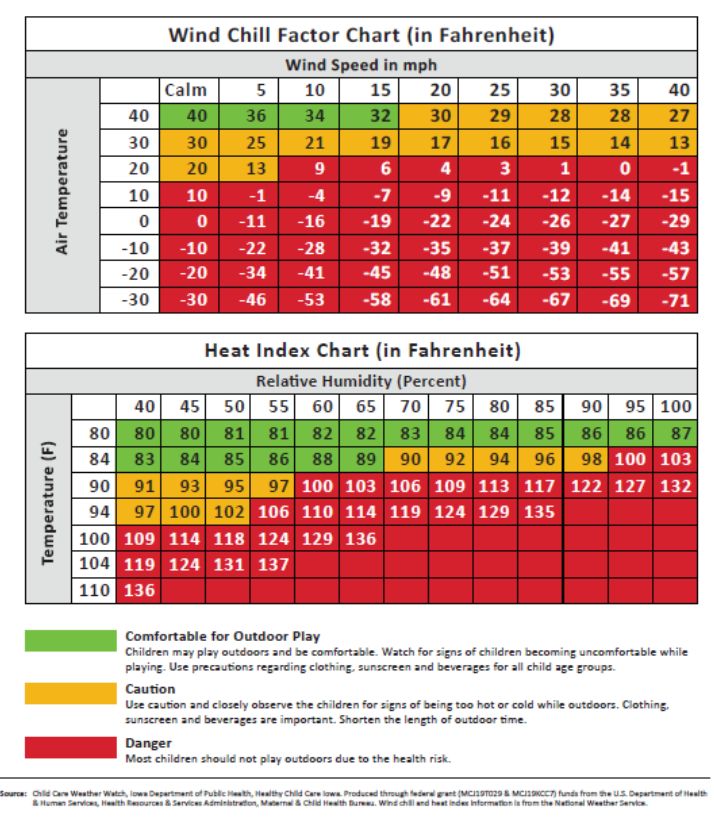
Dear Thomas Gregg Families,

As the Executive Director of Thomas Gregg
Neighborhood School, it is my pleasure to welcome
everyone back to school. It is our goal to provide your
child with a personalized educational experience. We
need your support in helping your child have a successful
time in school to reach their full potential. We are
committed to supporting your child and family in any
way possible to make this happen!

Please do not hesitate to reach out to your child’s
teacher or school staff member if there is anything we
can do for you.

Warmly,

Mr. Ross Pippin
Executive Director

                                                         2
Table of Contents
TGNS Core Values                                      Page 4
TGNS School Administration                            Page 5
TGNS Board of Directors                               Page 5
Important TGNS Phone Numbers                          Page 5
TGNS Important School Dates                           Page 6
The School Day                                        Page 7
School Attendance Policy                              Page 8
Student Attendance Guidelines                         Page 9
Parent/Guardian Visitation Policy                     Page 10
Parent-School Communication                           Page 11
School-Wide Core Values Matrix                        Page 12
Student Dress Code                                    Page 13
Examples of Restricted Attire                         Page 14
Personal Items at School                              Page 15
School Bus Conduct and Safety                         Page 16
Illness, Injuries and Medication at School            Page 17
Lunch Procedures and Cafeteria Guidelines             Page 18
Understanding the Elementary Menu: A Parent’s Guide   Page 19
Modified Meal Requests                                Page 20
Textbook and Other Educational Benefits               Page 20
Family Supports and Assistance                        Page 20
Preschool                                             Page 20
Fire, Tornado and Emergency Drills                    Page 21
School Closings and Delays                            Page 21
School Property                                       Page 21
Recess                                                Page 22
Student Activities                                    Page 23
Photographing/Videotaping Students                    Page 23
Lost and Found                                        Page 24
Special Area Classes                                  Page 24
Service Learning and Science/Social Studies           Page 24
Field Trips                                           Page 25
Report Cards and Grading                              Page 26
Homework and Promotion/Retention                      Page 27
School Discipline Plan                                Page 28

                                                                3
TGNS Core Values

  Take care of
    yourself.
Take care of each
     other.
Take care of this
     place.

                        4
TGNS School Administration
                      Ross Pippin, Executive Director
   Anuja Petruniw, Director of Operations and Neighborhood Engagement
                    Dana Larson, Director of Academics

                   TGNS Board of Directors
                         Susan Adams (Board Chair)
                         Breanca Merritt (Vice Chair)
                           Susan Vogt (Secretary)
                              Beth Uselmann
                                James Taylor
                             Marie Mackintosh
                               Valerie Davis
                              Shayna Sangster
                               Mike Bowling
                                 Chris Cesnik
                           Mariana Lopez-Owens
                                Ashley Acuff

              Important TGNS Phone Numbers
Front Office                            317-226-4215
Fax Number                              317-226-4600
IPS School Police                       317-226-4633
Transportation/IPS Information          317-226-4000
TGNS Information                        info@thomasgregg.org

                                                                        5
Important Dates
7/26-7/30 Staff Summer Institute (No Student Attendance)
8/2/2021 First Day of School
9/6/2021 Labor Day (No School)
9/7/2021 Staff Professional Development (E-Learning Day for Students)
10/7/2021 Parent/Teacher Conferences (E-Learning Day for Students)
10/8/2021 Staff Professional Development (E-Learning Day for Students)
10/11-10/15 Fall Break (No School)
11/24-11/26 Thanksgiving Break (No School)
12/20-12/31 Winter Break (No School)
1/13/2022 Parent/Teacher Conferences (E-Learning Day for Students)
1/14/2022 Staff Professional Development (E-Learning Day for Students)
1/17/2022 MLK Jr. Day (No School)
2/21/2022 President's Day (No School)
3/7-3/18 IREAD-3 Assessment Window (Grade 3)
3/21-4/1 Spring Break (No School)
4/14/2022 Parent/Teacher Conferences (E-Learning Day for Students)
4/18-5/13 ILEARN Assessment Window (Grades 3-6)
5/23/2022 Last Day of School for Students
5/24/2022 Staff Work Day (No Student Attendance)
6The School Day
School Opens/Breakfast 7:10am
Classes Begin/Tardy Bell 7:30am
Dismissal 2:30pm
Arrival
Walkers and Car Riders will enter through Door #4 on Beville Ave.
PARENTS MUST DROP STUDENTS OFF GOING NORTH ON BEVILLE AVE.
so our students are not crossing through traffic.
Dismissal
Bus Riders will be dismissed first beginning at 2:25pm.
Walkers will be dismissed out Door #2 on Michigan Ave at 2:30pm. Car
Riders will be dismissed through Door #4 on Beville Ave. Teachers on
Car Rider duty will come to each vehicle and dismiss students
individually. PARENTS MUST WAIT IN THEIR CARS HEADING NORTH ON
BEVILLE AVE.
If the mode of transportation will be changed for your child, it must be
done in writing or by calling the front office before 1:45pm. Teachers
will not send students home any other way except the way it was
communicated for student to go home.
Parents/Guardians Please Note: Students will not be dismissed from
the Front Office at dismissal time. Parents should pick up their child
from the appropriate dismissal site (Door #2 for Walkers and Door #4
for Car Riders)
STUDENTS CANNOT BE DROPPED OFF AT
SCHOOL BEFORE 7:10 A.M.
THERE IS NO SUPERVISION AVAILABLE.
7School Attendance Policy
Absences: The state of Indiana has a compulsory attendance law (Indiana Code 21-1, 1-3)*.
Ensuring regular school attendance in elementary school is the responsibility of the parent.
*Although kindergarten is not mandated by the State, under this law, once a child is enrolled in
Kindergarten, the provisions of the attendance law apply to that child.
If a child must miss school for any reason, please call 317-226-4215 by 8:00 a.m. the day of the
absence. The school may attempt to call the parents of any absent student who has not
reported the absence to the school.
If you are unable to call, please send a note to school with your child the following day, signed
by a parent, indicating the date of the absence and the reason for the absence.
Absences that do not follow the directions above will be marked “unexcused.” Although
children always have access to “make up” work, the active participation of students in a
classroom cannot be reproduced at home.
Tardies: Having students enter class after 7:30 a.m. is disruptive to the class as well as to your
child. Students need to be in their classrooms ready for instruction by 7:30 a.m. each day.
Please help your child make the most of instructional time by preparing them to arrive on time.
Those students who are tardy to school on a repeated basis will be referred to the social
worker.
Early Drop-Off: There is NO ADULT SUPERVISION at the school until 7:10am. Students will not
be allowed to enter the building until this time. Please do not drop your child off early or leave
them outside the school.
Early Pick-Up: Parents/Guardians must come into the Front Office to sign a student out when
they are leaving early. Please be prepared to show ID when picking up your child. Under no
circumstances will children be released to someone other than a parent/guardian listed in
Power School unless prior notification and proof of identification is presented. Students will
not be released to parents after 1:45pm without prior notification to the Front Office. Please
wait until dismissal time at 2:30pm to ensure students are present for all instructional time.
Student Safety: If for some reason your child is not to be released to a particular person, we
must have a copy on file of a court order or divorce decree stating that this particular person is
not permitted visitation or contact with the child. If you would like to add or take off someone
from the approved pick-up list, please visit the Front Office for assistance.
8Student Attendance Guidelines
Absences are defined as not being present at school and/or in classes at the designated/required time.
There are three basic reasons for absences: Excused, Unexcused and Exempt.
Excused Absences: Excused absences are defined as absences the school district regards as legitimate
reasons for being out of school, as included in the district’s policy.
• Documented personal illness (medical concerns/emergencies) verified by a note from a
physician
• Health facilities verification note
• Death or loss in the immediate family
• Personal tragedy (administratively approved)
• Absences related to maternity
• Religious holidays
Unexcused Absences: An unexcused absence is defined as any absence not covered under the school
district’s definition of excused or exempt absence. The definition of a child who is designated as a
habitual truant is a student who is chronically absent by having unexcused absences from school for
more than ten (10) days of school in one (1) school year.
• Truancy (absent without knowledge or permission of the parent/guardian or school official )
• Absent without notification to the school
• Vacation or trips during school days
Exempt Absences: Pursuant to I.C. § 20-33-2-14 through 17.2, a student is excused from attending
school under some circumstances. The student is excused from school, is not recorded as absent and
may not be penalized in any way by the school.
• Participating in an election
• Duty as a page or honoree of the Indiana General Assembly
• Testifying in court under subpoena (documented)
• Serving with the National Guard for no more than 10 days
• Serving with the Civil Air Patrol for no more than 10 days
A student who attends an educationally related, non-classroom activity may be absent and excused if
the activity meets the conditions set out in I.C.§20-33-2-17.5
A school leader may allow students to be excused to attend religious instruction (not to exceed 120
minutes in any week) if it meets the conditions set out in §20-33-2-19.
9Parent/Guardian Visitation Policy
Parents and guardians are an extremely valuable part of the educational community at Thomas Gregg!
You are welcome to visit the school and come into the building pending IPS COVID guidelines. However,
the safety and welfare of our students is our greatest priority followed by the importance of maintaining
our instructional time.
For these reasons, it is important to have a school visitation policy in effect at Thomas Gregg:
Scheduling a Visit/Meeting
• Parents/Guardians wishing to visit their child’s classroom, meet with their child’s teacher or
meet with an administrator will need to make an appointment.
• Appointments need to be made at least 24 hours in advance by visiting the Front Office or
calling 317-226-4215.
• Our Front Office staff are very knowledgeable about each classroom’s schedule and can assist
you with selecting the best time to visit that minimizes interruption to instructional time.
• We believe regular communication with your child’s teacher is very important so we encourage
you to set up meetings to address your child’s needs. However, in order to ensure that you
have the teacher’s full attention, meetings with them will need to be scheduled either before or
after school hours or during their teacher “prep” times. These times vary for each teacher, so
please work with our Front Office staff to determine the best date/time for a meeting.
• The Front Office staff will ask that you provide some details as to the nature of your meeting
request so that the teacher may be prepared to address your concerns in the time allotted for
the meeting.
• These guidelines also apply should you want to schedule a meeting with an administrator or
school social worker. Our administrators and social worker are happy to meet with
parents/guardians when necessary but do have extremely busy schedules. The further ahead
you can request a meeting, the better they will be able to accommodate your request.
Visitation Expectations
• Please check in at the Front Office prior to your scheduled visit to receive a visitor’s pass. Please
be prepared to show a valid ID.
• Whenever possible, a school staff member will escort parents/guardians to their child’s
classroom.
• Please enter the classroom quietly and remain in an area so as not to disturb instruction.
• Please do not speak to the teacher or students unless the teacher begins the conversation.
• All cell phones and other electronic devices need to be silenced.
• No siblings or other children will accompany parents into the classroom.
• Parents/guardians must follow the same rules as the students.
• If there is a concern you would like to address, please schedule an appointment through the
Front Office to discuss it with the teacher at a later time.
• If you would like to volunteer at the school, please schedule a meeting through the Front Office
to discuss the details and to complete your background check.
10Parent-School Communication
Strong communication between home and school is vital to the success of our students! We will do all
we can to keep communication active and open with parents and guardians.
Parent-Teacher Communication
• If you have a question or concern about something at school, you are encouraged to contact
your child’s classroom teacher to discuss the question.
• Please note that we will not transfer your call to the teacher during instructional hours. Our
Front Office staff will happily take a detailed message for you and forward it to the teacher. The
teacher will reach out to you at a suitable time.
• We are also happy to help you schedule a meeting with your child’s teacher. Please follow the
process outlined in the Visitation section of the Handbook to schedule a meeting with a teacher
or administrator.
Classroom Information
• Teachers are able to select the form of communication that best suits their classroom. Many
teachers will send home a weekly or bi-weekly classroom newsletter that contains important
school information.
• Other teachers may send a text message via the Remind app or Class Dojo. This is a great way to
stay in touch with one another! Some teachers may choose to send a daily communication sheet
home with each child that parents are asked to sign.
• All teachers and staff are expected to conduct a Positive Phone Call to each child’s
parent/guardian at least once a month.
Parent Phone Calls
• We aim to avoid interrupting instructional time as much as possible during the day. We will not
transfer parent phone calls to the classrooms during instructional time unless the teacher has
notified the office that they are expecting a call from a parent. We expect parents/guardians to
make after school plans before children leave for school in the morning.
• We will not take class time for a child to call home or have a child take a phone call during the
day. If plans for your child’s dismissal change during the day, please call the Front Office at 317-
226-4215 no later than 1:45pm so that we have plenty of time to ensure that your child’s
teacher is aware of the change.
• The office gets VERY busy after 1:30pm and we cannot guarantee that late messages will be
delivered in time. To ensure your child’s safety during Dismissal, please make changes to after
school plans as early as possible!
Birthdays: Although we realize how important and special each child’s birthday is, we cannot take time
out of the instructional day to deliver snacks, cupcakes, balloons, etc. to the classroom. Please do not
schedule these types of deliveries or visits to the classroom unless you have scheduled with the
teacher in advance. You can expect your child’s classroom to have 3 class parties per year: Fall, Winter
and a Valentine’s Day Party. During these times, we welcome parents to bring treats to school to help
make it an enjoyable time for students!
11Thomas Gregg Neighborhood School
School Wide Core Values Matrix
Core Values Classroom Cafeteria Restrooms Hallways Bus Playground
● Listen and follow ● Follow directions ● Flush the toilet ● Walk quietly ● Listen and follow ● Keep hands and
directions ● Use appropriate ● Throw away trash without talking bus drivers’ and feet to yourself
● Participate and listen language ● Wash hands ● Keep hands and monitors’ ● Use appropriate
actively ● No talking when ● No talking or feet to yourself directions language
Take Care ● Raise your hand to talk cones are up playing ● Go straight to your ● Keep hands and ● Line up quickly
● Use appropriate ● Whisper when ● Line up quietly destination feet to yourself and quietly
of Yourself language cones go down ● Walk on the right ● Use quiet voices ● Take ownership of
● Take care of personal ● Use good manners side of the hallways ● Stay seated while your actions
property ● Stay in assigned ● Walk on 1st brown bus is moving ● Enter building
● Complete and turn in seat tile ● Keep your body silently
assignments on time ● Use good manners and belongings
inside bus
● Work cooperatively ● Wait in line for ● Respect others ● Respect learning in ● Share your seat ● Invite others to
with others your turn privacy the classrooms (be with others play
● Share materials ● Say please and ● Wait your turn. quiet) ● Be aware of ● Take turns and
● Listen when others thank you ● Be aware of personal space share equipment
Take Care speak ● Line up silently personal space ● Wait patiently in ● No pushing,
of Each ● No bullying and respect others’ line to get on and hitting, fighting.
● Keep your hands and space off the bus ● Agree on rules
Other feet to yourself ● No pushing, before playing
hitting, fighting
● Clean up after ● Report problems ● Keep hands off the ● Report any ● Stay in designated
● Remain in assigned yourself immediately to wall problems area
location ● Throw trash into teachers ● Don’t eat in the ● Stay in your seat ● Use equipment
● Walk and move safely the garbage can ● Keep the restroom hallway ● Enter and exit one correctly
Take Care ● Take care of school ● Place unwanted clean ● Don’t write on the at a time ● Close the gate
of This property food in designated ● Do not write on the walls or tear things ● Do not eat on the when leaving
Place area walls or put objects off the wall bus. ● Do not lean on the
● Do not throw food. in the toilets, sinks ● No jumping or ● Throw away all fences
● Keep feet off the or water fountains hitting signs or trash.
seats doors ● No drawing on the
● No food on the ● No sliding down seats
floor banisters
12Student Dress Code
Shirts/Blouses • Solid Colors
• Straight, button-down collar, turtleneck or mock turtleneck
• Long or short sleeves
• Polo-style (logo size may not exceed 1 ½”)
• Must be tucked into pants/shorts/skirts at all times
• No T-shirts (unless school spiritwear)
Pants/Shorts/Skirts/Capri • Solid Colors: khaki, black or navy blue (no denim/blue jeans please)
Pants/Jumpers • Pleated or flat-front
• Fastened at the waist
• Must be worn with a belt and set above the hip (grade 3 and above)
• “Walking” length shorts limited to 2” above the knee
• Solid navy blue or black shorts may be worn under skirts, provided
they do not show
Sweaters/Sweater • Solid Colors
Vests/Fleece Jackets • Must be worn over an approved shirt
• V-Neck, Crew Neck or Cardigan
• Logo size may not exceed 1 ½”
• Hooded items are not permitted
Sweatshirts • Solid Colors
• Must be worn over an approved shirt
• Shirt collar must extend over sweatshirt
• Hooded items are not permitted
Shoes • Any color acceptable
• Closed toes
• Closed heel or strap heel
Boots • No restrictions
Socks • No restrictions
Tights/Leggings • Must be worn under an approved skirt/skort/short
• No restrictions on patterns/colors
Belts • Required for Grades 3-6
• No logos
• Any color acceptable
• Made of fabric or leather
• Required for all pants/shorts made with belt loops (elasticized
waistbands without loops are excluded)
• Buckled and woven through belt loops appropriately
Accessories • No clothing (such as shawls) can be worn over pants, skirts or shorts
• Handbags, purses, totes, fanny packs and similar items are not
permitted
13Examples of Restricted Attire
Hats or hoods during the school day Denim items
Pants worn below the waist or “sagging” Sweatpants, jogging pants, athletic pants
Skintight dresses, pants, or tops Tank tops, tube tops, spaghetti strap tops
Sunglasses during the school day Pajama tops or bottoms
Flip-flops, sandals, bare feet “heelies” or “wheelies”
Clothing/buttons/jewelry with offensive, Clothing/buttons/jewelry/accessories
lewd, vulgar, obscene or hate language, advocating or advertising use of drugs or
slogans or pictures alcohol
Hair rollers, combs, picks Scarves, head rags, doo rags, bandanas,
sweatbands
Visible undergarments Clothing altered by cuts, slits or holes that
exposes skin
Detachable gold teeth (unless required by Any other items that school leadership deem
dentist with written documentation on file), inappropriate or disruptive to education
grills or fangs environment will be prohibited.
**Note** Outside Jackets/Coats may not be worn during the school day. These
items may be worn while entering and exiting the building. During class time,
jackets/coats must be put away in Student Cubbies.
14Personal Items at School
The safety and welfare of our students are at the forefront of everything we do. There are
certain items that must not be in school, as they do not contribute to the educational process,
and in some cases, can cause great harm. Some prohibited items are listed below:
Weapons: Any article which is potentially dangerous or interferes with the educational process
is prohibited in school. This includes, but is not limited to: pocket knives, hunting
knives, lighters, scissors, nail clippers, handcuffs, and guns of any kind (toy or
otherwise). Students bringing such items to school risk suspension, expulsion, or
possible arrest by law enforcement. Any such article which is found in a child’s
possession may be held by school police while the decision on expulsion is being
finalized.
Valuables: We ask that students not bring valuable items or large amounts of money to school.
If there is an occasion when this must occur, the child should leave the item or
money with their teacher for safekeeping during the day. Valuables should not,
under any circumstances, be carried around by a child or left in a desk.
Gum/Candy/Chips Students should not bring gum, candy, or chips to school. It is very difficult to
remove gum from the floors. In addition, it is not helpful to the educational process.
Any such items may be taken from children. An exception is when candy or chips are
brought as part of a complete lunch from home and even then, should be a snack-
size portion. Large bags of chips such as Takis or hot fries should not be brought to
school.
Electronics (Cell Phones, Electronics such as cell phones, handheld video games, iPods, headphones, and any
Headphones, Video such equipment should not be brought to school. If they are in sight during class or
Games, etc.) found to disturb the learning environment, school staff may confiscate the item,
notify the parent or guardian and will need to be picked up at the school by a parent
or guardian.
If a parent or guardian wants their child to have a cell phone at school, the student
must turn it in to their teacher every day. The teacher will keep the phone in a
locked and safe place and return it to your child at the end of the day.
Toys: Please do not bring toys or games to school as they can be a disruption to the
learning environment. This includes items such as video games, fidget spinners,
trading cards, laser pointers, etc. If such items are allowed for a project or recess,
your student’s teacher will specifically request particular items via a note home to
parents.
Bicycles: IPS offers bus transportation to most students. If you ride a bike to school, please be
sure to secure your bike to the racks located near Door #3.
Note: Thomas Gregg Neighborhood School is not responsible for lost or stolen
items described on this page.
15School Bus Conduct and Safety
The Bus Conduct and Safety guidelines are designed to promote safety on the school bus at all times. The
safety of all students is our top priority. Therefore, each student is to cooperate with the bus guidelines.
The bus driver and monitor are the adults entrusted with the job of transporting our students to and from
school safely and efficiently. They must be recognized and supported by all. For everyone's safety, the bus
driver must be heard, be able to hear traffic sounds such as sirens, and students should adhere to directions
given by the driver and monitor.
Students should demonstrate the Thomas Gregg Neighborhood School Core Values while on the bus:
Take Care of Yourself
Take Care of Each Other
Take Care of This Place
Bus Conduct and Safety Guidelines:
• Arrive at the bus stop 10 minutes before pick-up time. The driver is NOT permitted to wait for students.
• When the bus arrives, stand well back from the curb or stopping point and wait until the bus comes to a full
stop.
• Never reach through the window to take an item from anyone or to dispose of an item.
• Keep your head, arms and feet inside the bus at all times.
• Students should remain in their seat at all times while the bus is in motion and should not move from seat to
seat.
• Do not eat or drink on the bus. (This includes candy and snacks.)
• Students are expected to be courteous, respectful and follow the instructions of the driver and monitor.
• Tobacco, drugs, and alcohol are prohibited.
• Weapons, explosives, or any other dangerous articles are prohibited.
• The ignition of matches, lighters, etc. is prohibited.
• No object is to be thrown into, out of, or inside the bus.
• Students must not use obscene language, gestures or gang signs.
• Fighting, hitting, and yelling are not permitted.
• Harassment or intimidation of others is not permitted.
• Students will never use the rear emergency exit except upon the direction of the driver or other competent
authority.
• Willful destruction or defacing of school bus or private property surrounding school bus stops is prohibited.
School transportation provided by IPS is a privilege, not a right. If a student chooses not to follow bus
procedures, the privilege of riding the bus may be taken away in order to ensure the safety of everyone. If
transportation privileges are denied, the parents or guardians are responsible for getting their children to and
from school. School staff will work with the student, parent and bus staff to ensure that revoking riding
privileges is the last resort.
16Illness, Injuries and Medication at School
Thomas Gregg is fortunate to have a health clinic on site through Shalom Health Care Centers with a full-time Nurse
Practitioner (NP). In order for your child to be seen at the Shalom Health Clinic, we must have a completed consent
form on file.
Illness:
Children often ask to go to the office to see the NP because they do not feel well. The usual guidelines that are followed
are to ask the child what seems to be the problem and take the child’s temperature. If the child is not running a fever
and shows no other evident signs of illness, it is customary to send him/her back to class. Sometimes they may be
allowed to rest for a few minutes.
If the child has a fever, a parent is contacted to pick the child up from school. If a parent is not available, we will begin to
call emergency numbers and see if someone is available to pick the child up.
It is important that children who are ill to not be at school to avoid the spread of illnesses to other students.
In the event that no one is available to pick a child up, the school will make the decision as to whether the illness
appears serious enough to transport the child to the hospital or call an ambulance. We realize that this could be costly
to a parent, but we must put the safety of our children first. The way to avoid this cost is to be sure that we have the
update telephone numbers of parents/guardians as well as emergency contacts that could transport the child if needed.
Injuries:
In case of an injury, students should immediately report to the teacher in charge. The teacher will notify the nurse
practitioner to come or send the student to the nurse with a pass. The teacher and NP will complete an accident report.
Parents will be contacted in the event of an injury or illness. Parents may not always be contacted for minor injuries
such as cuts and scrapes.
Medications:
Indiana state law requires that the following procedures be followed for medicines to be administered at school:
• Signed written permission from the parent or guardian including the date, dosage, and times to be
administered.
• Medication must be kept in the original pharmacy container bearing the pharmacy label with:
o the student's name
o clock time of administration
o name of the medication, including quantity of dose
o name of the prescribing physician(s), as copied onto the label by the pharmacist
• Non-prescription medications also require signed written permission from the parent or guardian including the
date, dosage, and times to be administered, and must be in their original container.
• The school may not exceed physician prescribed or recommended label dosages.
• All medications must be kept in the school clinic and be administered by the nurse practitioner.
• For students with completed consent forms, the clinic stocks a small selection of over the counter (Tylenol,
ibuprofen etc.), and commonly used Rx medications to be used at the NP's discretion for students.
Parent/guardians reserve the right to opt out of this service and must state so in writing on the consent form.
• Controlled substances must be transported to and/or from school by a designated adult, and should not be put
in a child's backpack (mainly ADHD medications).
17Lunch Procedures and Cafeteria Guidelines
School Lunch: All students at Thomas Gregg Neighborhood School are able to receive a complete breakfast,
lunch and snack free of charge under the USDA’s Community Eligibility Provision (CEP). However, all families
must complete a food service application for eligibility. The form will be sent home with students at the
beginning of the year. Please see Mrs. Felipe in the Front Office with any questions or you may call IPS Food
Services at 317- 226-4951.
Students are also permitted to bring their lunches. We emphasize good nutritional habits at school. Students
should not bring fast food, candy, gum, chips or soda (or other carbonated beverages) to school. An
exception is if a small piece of candy or snack-size bag of chips/crackers are brought along with a complete
meal from home.
Behavior:
Students are seated with others in their classroom. Classrooms of students have assigned seats in the
cafeteria. Students should cooperate and follow all lunch procedures and rules:
• Students should enter and exit the cafeteria in an orderly and quiet manner.
• Students should sit quietly at their table until dismissed to get their lunch.
• Students should remain quiet in the line while getting food.
• Indoor-voice conversation with students sitting near one another is permitted once their table has
their lunch.
• Students are to remain seated at their assigned table while eating and should raise their hand when
they need assistance.
• The cafeteria offers several flavors of milk and some juices to drink. Please do not bring carbonated
beverages or chips/snacks to school.
• For health and sanitation reasons, sharing food and trading food is not advised.
• Students should dispose of trays as directed by the adults in charge.
• Students are asked to be quiet prior to being dismissed from the cafeteria.
• Students should always follow the cafeteria procedures and follow staff directions. The TGNS School-
wide Guiding Principles are always in effect during lunch.
Parents Eating with Students:
Parents that want to have lunch with their children are invited to do so at any time. You must first sign in
at the Front Office to receive a Visitor’s Pass. An adult lunch is available for $3.75.
Parents are asked to eat with their child in our Parent Center (Room 102). In order to avoid hurt feelings,
parents are not to bring in lunch for students other than their own children. Fast food lunches brought in
by a parent are permitted only if the parent is eating with their child.
1819
Modified Meal Requests
    In order to better serve our students with specialized dietary needs, an Annual Modified Meal Request form
    must be completed each school year. The completed Annual Modified Meal Request form will not be carried
    over from year to year. The parent or guardian is required to submit a new form signed by the student’s
    physician or medical authority. Recognized medical authorities include physicians, physician assistants, nurse
    practitioners, or registered dietitians. If the student does not eat or follow the modified meal for five school
    days, the modified meal(s) will be cancelled. Modified meals cannot be provided to accommodate religious
    preferences, personal diet modifications or food dislikes.

                  Textbook and Other Educational Benefits
•   All IPS students must pay textbook rental fees, unless you have been notified in writing that your child has been
    approved for textbook assistance for the current school year. You will be notified IN WRITING when your
    application is approved or denied. If you do not receive notification within ten days, call 226-4951.
•   Parents who wish to apply for textbook assistance and other educational benefits must submit an Application
    for Educational Benefits each school year.
•   One application per household is required. Applications are confidential and the information provided will not
    be shared with others.
•   Applications for Educational Benefits are available at TGNS in the Front Office, by calling 317.226.4951, or on the
    IPS website at www.myips.org/menus.

                           Family Supports and Assistance
•   Sometimes a family may need assistance to support their child’s success at both school and home.
•   Thomas Gregg Neighborhood School is fortunate to have a close partner in the John Boner Neighborhood
    Centers (Boner Center).
•   We have a robust Family Supports Team from the Boner Center permanently housed in the Parent Center
    (Room 102) at Thomas Gregg.
•   This team can help families connect to a variety of resources and community services such as food, uniforms,
    utilities, housing, financial, vocational training, English language classes, etc.
•   Please stop by and visit the Parent Center any time during the school day to speak with one of our Family
    Supports team members.
•   Thomas Gregg also has a full time Social Worker on staff. The Social Worker can also help refer your child or
    family to a variety of resources and supports such as mental health services, domestic violence resources,
    substance abuse resources, and other basic needs assistance, . If you would like to speak with the Social
    Worker, please see the Front Office staff to schedule an appointment.

                                                  Preschool
•   TGNS has partnered with East 10th United Methodist Children and Youth Center to operate one Preschool
    classroom in the building. East 10th Street at TGNS serves up to 20 students ages 3-5.
•   This unique partnership allows for strong continuity between the early childhood years and elementary years.
    We are able to ensure a smoother transition between preschool and Kindergarten because the preschool is
    already housed within the elementary school.
•   If you are interested in enrolling your 3-5 year old into preschool, please call East 10th at 317-637-0841.

                                                                                                                       20
Fire, Tornado & Emergency Drills
• To promote safety and preparedness there will be at least one fire drill per month, one tornado
drill per semester, one earthquake drill per school year and three man-made hazard drills per year.
• The man-made hazard drills are essentially “lockdown” drills that practice what students and staff
should do if an outside influence presents a danger to the safety of our students.
• When we have a “lockdown” drill, staff members will be monitoring all school entrances and no
one will be allowed to enter or exit the building until the lockdown is complete. We thank you in
advance for your cooperation.
School Closings and Delays
• If school closing is necessary, look for THOMAS GREGG NEIGHBORHOOD SCHOOL.
• While we try to closely follow the IPS Calendar, our calendar is slightly different. Please look for
our school for closings or delays.
• Therefore, please follow local TV news and radio stations for information regarding closings and
delays.
• The decision to delay or close school is usually made before 6:00am. In addition to the local TV
news and radio stations, TGNS will initiate automated calling to contact all households to inform
you of a closing or delay.
• Please make sure the school ALWAYS has a good working phone number for your family so we can
make sure you receive critical information.
School Property
• It is extremely important that students always practice the Core Value of “take care of this place”
meaning that students take care of our school property and outside grounds.
• This is particularly important for before and after school hours. The school usually does not have
supervision for students on school grounds outside of school hours with the exception of after
school clubs and activities.
• It is essential that parents/guardians ensure that children are supervised at all times while on
school property and follow the same expectations as if they were here during the school day.
• The school playground is available for students and families after school hours and during the
weekend. However, in order to keep this available, it is important to ensure the playground is well
taken care of. Students and families can help this by making sure to close the gates upon leaving
and to disposing of trash appropriately.
• The Learning Garden is a new addition to TGNS during this school year. It is part of the school’s
science curriculum and therefore should be treated with exceptional care so that ALL students may
enjoy the fruits (and veggies) of their labor.
• Please DO NOT deface the garden containers, dig up and destroy plants, or take any garden
equipment.
• Students are expected to pick up after themselves throughout the school and respecting the
displayed work of their fellow students. Students should keep their hands off the walls and bulletin
boards.
21Recess
• We will have outdoor recess throughout the year whenever possible unless weather becomes
inclement.
• Please be sure your child is dress appropriately for the elements. In extremely cold weather, or
during rain or snow, recess will be held indoors.
• All children will participate in outdoor recess unless a doctor advises otherwise and a note is on file
with the Front Office.
• In the event of severe injuries or illness, where a physician advises the child against outdoor play
for a period of time, parents/guardians should send a doctor’s note or explanation along with the
anticipated time period your child should stay indoors.
e decision on outdoor versus indoor recess will be made using the following parameters:
22Student Activities
TGNS aims to offer a wide variety of after school activities throughout the year for students. Such examples
include:
• Sports: Basketball, football, soccer, futsal, volleyball and cheerleading are offered to students
during the school year. Different sports are offered at different seasons throughout the school
year. Students wishing to be on a TGNS sports team must try out and earn a spot on the team in
order to play. Some sports may require a participation fee to cover sports uniforms, snacks,
equipment and travel. Cost of participation will be shared with parents based on each particular
sport.
• Clubs & Activities: Boy Scouts, Running Club, Tutoring, Art Club, and other such opportunities are
available at varying times throughout the school year for interested students. Information about
each club is typically sent home with students in applicable grade levels. Parents may simply fill out
a permission slip for students to participate. Depending on the activity, there may be an associated
club or activity fee to cover the cost of materials.
• After School Care: The EDGE After School Program is available through the Boner Center for up to
40 students. There is a registration process and associated fee for this aftercare program.
Transportation is available for some students. More information on EDGE is available in the Front
Office or at the Boner Center. Additional after care provider information for Daystar, Westminster
and East 10th are available upon request in the office.
• Dinner: Dinner is provided for students in the EDGE After School Program through our wonderful
partners at The Patachou Foundation.
• Transportation: Student pick up is generally the responsibility of the parent/guardian. On
occasion, we are able to provide a bus to and from the activity. Examples would be for away games
or for weekend tournament travel. We will notify parents of the transportation arrangements for
each activity.
• Student Pick Up: Our staff and coaches are providing a service to the school and students outside
of their normal workday. Their time is very valuable to us and therefore, we need
parents/guardians to be on time to pick up children from after school activities. We appreciate
your cooperation with this!
Photographing/Videotaping Students
Over the course of the school year, there are many exciting things happening at school that we will want to
document with photos, videos and social media. There will be times where your child might be photographed or
videotaped at school. These photos/videos will be used within the school and/or posted on school-approved
social media. TGNS operates a school Facebook, Twitter and website (housed within Indianapolis Public Schools’
website).
Keeping up with our social media accounts is a great way to stay informed about the amazing achievements of
our students and school! Other ways photos or videos may be used are for bulletin board displays, school
newsletters, teacher professional development or for view by other students (such as a school play).
If you DO NOT want your child photographed or videotaped, please fill out the “Opt Out” form that is sent
home with students at the beginning of the year or please see the Front Office Staff.
23Lost and Found
• Each year we give box-loads of hats, gloves, jackets, scarves, backpacks, etc. to charity. These are
items that go unclaimed in our Lost and Found.
• The Lost and Found is located in the Parent Center (Room 102) and students are welcome to look
for lost items in the box.
• Students should tell their teacher what they lost and ask for permission to visit the Lost and Found.
• Students who find lost items should take them to the Parent Center when their teacher gives them
permission.
• At the end of each month, any items that have not been reclaimed may be donated to charity.
• To help keep the Lost and Found volume low, we encourage parents/guardians to LABEL their
children’s items with their full name with a marker.
Special Area Classes
TGNS is proud to offer a variety of special area classes to ALL students on a regular basis! These classes
include Art, Music, Physical Education, Media/Technology, and Social/Emotional.
• All classrooms attend one special area class per day. Special area classes are an important part of
our elementary curriculum and should be treated with the same respect as all other subject areas.
• Your student receives a grade in each of their special area classes and grades are based on both
participation and proficiency with content area.
• Special area teacher sometimes involve students in special programs and performances after
school hours. You are encouraged to have your child participate in these events.
• Physical Education: Students must have a note from parent if they are unable to participate in P.E.
class due to any medical condition that would be aggravated by participating. A doctor’s note will
be required if an extended illness or injury will cause a student to miss more than two consecutive
days of P.E. Appropriate gym shoes must be worn during P.E. class.
Service Learning and Science/Social Studies
Two of the most unique pieces of the Thomas Gregg Neighborhood School instructional model are Service Learning and
our Science and Social Studies Labs!
• At TGNS, we believe that all students are an integral part of their community. It is important for children to
develop their civic engagement skills at an early age. By working alongside community members, students can
enhance their cooperative, organizational and interpersonal skills. They also learn how to apply the skills they
learn in the classroom to real-life scenarios and are able to be part of the problem solving process!
• Each grade level will work on 1-2 signature projects throughout the school year aimed at giving back to the
community and neighborhood. The projects will look different at each age level and will be something that
students have decision-making control with the guidance and facilitation of their teacher.
• Science and Social Studies learning is very important at Thomas Gregg. This instruction is presented to
students in a hands-on, laboratory-style 3-hour block. This allows for a deeper dive into the material
and more opportunities for students to apply skills through project-based learning.
24Field Trips
Student Attendance Expectations
• Students at TGNS have opportunities for field trips in and around the community throughout the
school year. These learning experiences support skills learned in the classroom. Teachers provide
instructional activities to prepare students for their field trip experience and follow up with
additional activities upon return. We do not allow overnight field trips.
• The school appreciates parental support for field trips by ensuring that your child is aware of the
behavioral and academic expectations of the trip and by signing and returning any permission slips
and associated fees.
• Field trips are not a guarantee for all students. Going on a field trip means that students are
representing TGNS out in the community and therefore, the expectation is that students are to be
on their best behavior at all times and follow all directions of staff members.
• Parents/guardians will be notified in advance of the field trip if their child is not able to attend a
field trip.
• Teachers are expected to submit a completed list of all students attending the trip and all money,
along with detailed contact information for each child to Administration no later than 2 days prior
the trip. This ensures that both the school leadership and the destination is well aware of the
number of students to expect and enough transportation and lunches can be ordered.
• We aim to give families plenty of notice to return permission slips and money. Unfortunately, we
are not able to make exceptions to the 2-day policy and children will not be able to attend if their
permission slip and field trip money has not been turned in by this timeline.
Chaperones and Volunteers
• When appropriate, we may ask additional adults to be chaperones to accompany us on a field trip.
Any adult, including parents/guardians wishing to assist with a field trip must pass a background
check and sign a chaperone agreement prior to going on any excursion. Should there be a cost for
adults, the volunteer will need to pay his or her own way.
• Each field trip is different so the number of volunteers needed varies and classroom teachers will
let parents/guardians know when additional support is needed. Many destinations have
restrictions or requirements as to the number of participants and our arrangements are made well
in advance of the trip.
• A school staff member will always be the primary person to supervise a group of children and may
have the support of additional volunteers. Parent/guardian volunteers will not be allowed to
chaperone a group of children on their own.
• We aim to keep the ratio of students to chaperone as small as possible while also following any
ratio guidelines required by the field trip destination. When possible, ratios will be kept to 15:1 or
less.
25Report Cards, Grading, Homework, Promotion/Retention
We have high expectations of ALL our students at Thomas Gregg Neighborhood School! Our curriculum is rigorous at all
grade levels and our teachers are highly trained at delivering instruction that is appropriate for each child. The
personalized learning components of our instructional model include daily small group instruction in Reading and
blended learning.
Report Cards
• Report cards are issued four times per year, once per nine-week grading period. Midterm reports are
sent home halfway through each grading period and should give parents a good idea of how their child
is progressing.
• The TGNS Grading Policy defines letter grades as the following:
o A: The student is doing superior work.
o B: The student is doing above average work.
o C: The student is doing average work.
o D: The lowest passing grade, which suggests that the student is below acceptable levels.
o F: The student’s work is failing and below acceptable minimum standards.
Grading Scale
• For Grades 1 through 6, the following Grading Scale will be used:
GRADING SCALE
A 90—100
B 80—89
C 70—79
D 60—69
F 50—59
Lowest F 50
• For Kindergarten, students are graded on mastery of individual skills. The Kindergarten scale is:
O Outstanding Progress
S Satisfactory Progress
I Improving
U Unsatisfactory Progress
26Homework
• Homework is not only an opportunity to practice skills and develop concepts, but also a way to learn
and practice good study habits. This is a great way parents can be aware of concepts and skills being
taught at school.
• The amount of homework assigned will vary by grade level. As a basic guide, the following amount of
time spent on homework daily should be expected:
o Kindergarten: 10 minutes
o First and Second Grade: 20-30 minutes (with additional 15-20 minutes spent on reading a book
for pleasure or with a parent)
o Third and Fourth Grade: 30-45 minutes (with additional 15-20 minutes spent on reading a book
for pleasure)
o Fifth and Sixth Grade: 45-60 minutes (with additional 15-20 minutes spent on reading a book
for pleasure)
• As a general guideline, students will be allowed 1 day per day of absence to complete any make-up
work needed.
• Parents seeking homework for a child with an extended absence are asked to notify the school at least
1 day in advance to allow time for the teacher to put together adequate work.
• Students should have daily math homework from the Eureka Math curriculum. This curriculum is
rigorous and is taught in a different way than most adults are used to! Parents/guardians are
encouraged to visit https://greatminds.org/math/parents or http://eurekamathhelp.piqua.org/ for tips
and resources to help your child with their homework.
• Please note that while we encourage parents/guardians to ensure that their child is supported with
their homework, it is NOT ok for parents/guardians to complete homework for their child.
Homework counts for only 10% of a student’s overall grade in a subject area and is intended for skill
practice.
Promotion/Retention
• Our goal as a school is to do everything we can to make sure students are prepared to move on to the next
grade level by the end of the school year.
• Occasionally, we will need to make the difficult decision to retain a student in their current grade for a
variety of reasons. We do not take this decision lightly and it is made with the input of parents, teachers
and administrators.
• The decision to retain a student is based on academic achievement, work habits, emotional maturity, social
adjustment, chronological age, physical development and school attendance.
• Parents will be notified no later than the 3rd grading period that their child is being considered for
retention. TGNS holds three Parent/Teacher Conferences throughout the school year so that teachers and
parents have several opportunities to discuss each student’s progress.
• The final decision will be made with the approval of administration no later than the midterm of the last
grading period of the year.
• Parents/guardians are encouraged to have ongoing discussions about your child’s progress with their
teacher throughout the school year so you are well-prepared to make the best decision possible for your
child.
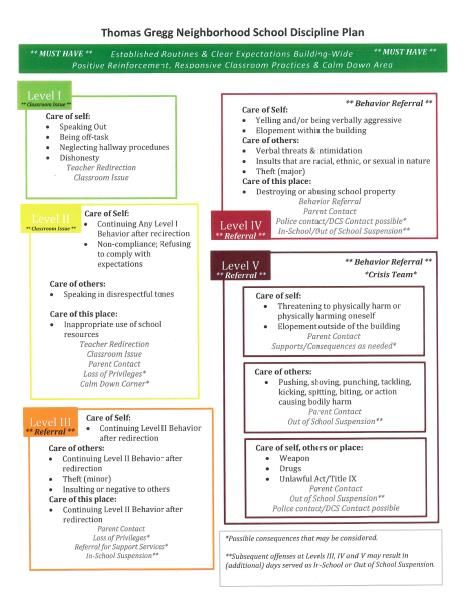
27School Discipline Plan
• School officials may find it necessary to discipline students when their behavior interferes with school
purposes or educational functions of the school.
• In accordance with the provisions of I.C. 20-33-8, administrators and staff members will follow the
school discipline plan as outlined below
28You can also read


