Summer Lab Summer 2018 - Adventure Kids Day Camp Summer Lab on Stage Summer School Fun in the Sun Sports Camps - University of Chicago ...
←
→
Page content transcription
If your browser does not render page correctly, please read the page content below
Summer Lab
Adventure Kids Day Camp • Summer Lab on Stage • Summer School • Fun in the Sun • Sports Camps

Summer 2018
Summer Lab
Fun and a love of learning never go on vacation

                                                                          “
Creating, adventuring, playing,       also fortunate to have remarkable
computing, collaborating, running,    resources that we make the most        Exceptional
dancing, performing, reading,         of for our summer campers—Earl
cooking, calculating, cooperating.    Shapiro Hall, for grades N–2, and       quality of
                                      the Historic Campus, for grades
Summer Lab has it all.
                                      3–12. And we are also able to          instruction.
Our people, our location, our         draw on the unmatched resources
programs, and our values make         of the University of Chicago.       Highly engaged
Lab the place to be during
summer.
                                      Our summer campers make new
                                                                                      “
                                                                            child. Excited
                                      friends, share adventures, have a
Summer Lab’s expansive offerings      great time, and make the most of         to learn.
build on almost 70 years of           summer. Join us!
experience creating outstanding
summer activities at the University
of Chicago Laboratory Schools.
Summer is our time to extend the
Schools’ mission in new ways,
inviting not just Lab students but
young people from around the
neighborhood and around the
world to join us. With outstanding
counselors and teachers, Lab is

02   summerlab.org
From the Director

                                           to play, great puzzles to solve. The       operating our summer programs and
                                           campers are excited to get to know         ensuring a safe place for students and
                                           one another. The staff bring energy        campers to explore and grow.
                                           and joy to their work.
                                                                                      I welcome returning families to see
                                           We take our mission as seriously in        all we offer this coming summer
                                           the summer as we do in the academic        and invite new families to consider
                                           year, and so Summer Lab programs           spending part of the summer with
                                           are about igniting and nurturing           us. We are here to answer your
                                           an enduring spirit of scholarship,         questions as you consider your
                                           curiosity, creativity, and confidence.     options for the summer, and I hope
                                                                                      you will be inspired to be part of our
                                           At Lab, we value: learning                 community.
                                           experientially, exhibiting kindness,
                                           and honoring diversity.                    Regards,
Welcome to Summer Lab. I arrived
as the new director of the Laboratory      We care about the whole child and
Schools last year just as Summer Lab       it helps us knit together a group of       Charlie Abelmann
catapulted into full operation. It was     young people who come to spend             Director
electric and that is how Summer Lab        their days with us from all across         University of Chicago Laboratory Schools
is every year—an incredible variety        Chicago and many from around the
of activities and interests, great games   world. We have decades of experience

Table of Contents

                                                                             Complimentary Bus Service
                  04     Summer School
                                                                             Early Bird Discount–Save $150
                                                                             for fully paid registration received
                  22     Summer Lab on Stage
                                                                             before March 15, 2018

                  23     Summer Lab Theater Ensemble
                                                                             Students may come for three weeks or six, may
                                                                             choose “full day” programs or a morning and
                  24     Adventure Kids Day Camp                             afternoon combination. They may stick with one
                                                                             activity, e.g., Adventure Kids Day Camp, for all
                                                                             summer long, or do three weeks of Summer School
                                                                             plus three weeks of Adventure Kids. Or six weeks
                  26     Fun in the Sun                                      of Summer Lab on Stage, plus an afternoon class.
                                                                             Sports Camps finish out the day between 3 and
                                                                             5:30 pm. All are welcome to experience summer
                                                                             at the Laboratory Schools. A love of learning never
                  27     Sports Camps                                        goes on vacation!

              Register Online at http://                summerlab.org
                                                                                                            summerlab.org    03
Summer School
Summer School at Lab is guided by the              Summer School classes meet Mornings,
mission of the University of Chicago Laboratory    Afternoons, and Full Day. Some run for six
Schools, and enrollment is open to all students.   weeks, others for three weeks only. Please
The continuing challenge to which our              check meeting times and dates in each listing
distinguished faculty members rise each and        that follows, and feel free to contact the
every summer is to keep their material fresh,      Summer School office with questions about
relevant, and truly engaging for their students.   structuring your student’s days.
True to the principles espoused over a century
ago by Professor John Dewey, learning at
Summer Lab is play, and play at Summer Lab
is learning. Join us!

04   summerlab.org
Nursery & Kindergarten
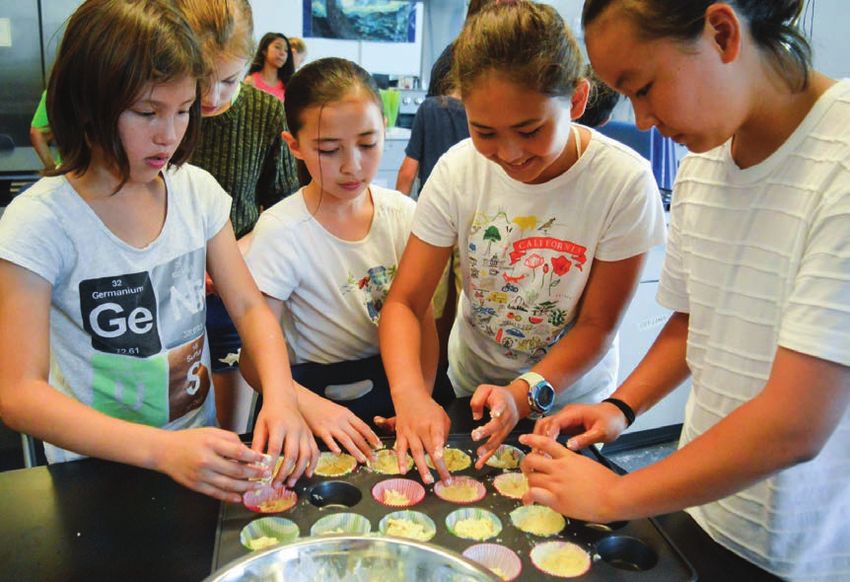
Nursery School Full Day                      in the computer lab; play in the pool            enjoy stories that have math concepts
or Morning                                   and have swimming instruction; and “eat          embedded in them. We will play with
Open to students age 3 to 5 years            through the alphabet.” Also, we will take        numbers and other math concepts,
(age 3 by September 1)                       class field trips to interesting places. Our     including shape, size comparison, and
                                             goal is to provide an environment, indoors       directional words. At the end of the final
Come and join us in Earl Shapiro Hall,       and out, in which children can explore,          camp session, the class will take a field
our early childhood learning center, for     learn and, most importantly, play.               trip to see the Summer Lab on Stage
a fun–filled summer program of indoor                                                         production, bringing a story to life on a
and outdoor play and learning. Activities    Full Session: June 18–July 27                    formal stage.
will include cooking, fantasy and dramatic   Session I: June 18–July 6
play, arts and crafts, stories, drama, and   Session II: July 9–July 27                       Full Session: June 18–July 27
music. Depending on the interests of the     Full Day: 8:30 a.m.–3 p.m.                       Session I: June 18–July 6
group, a special focus for the summer        Full Day Instructors: Felicia Carr and           Session II: July 9–July 27
may be animal study, cooking, science        Mary Jones                                       Full Day: 8:30 a.m.–3 p.m.
explorations, or a combination of these.                                                      Instructor: Jane Maciak
Daily water play, cooling opportunities
in the sprinkler and wading pool will be     Story Time
available. Field trips to the neighborhood   Open to students age 4 to 5 years
will be taken on mild days to campus         (age 4 by September 1)
locations, Jackson Park and nearby           Join us for a summer filled with stories!
playgrounds.                                 We experience stories in so many ways!
                                             Stories will be read from books and
Full Session: June 18–July 27                retold using a felt board, small props, and
Session I: June 18–July 6                    puppets. Stories will be explored further
Session II: July 9–July 27                   through art and sensory activities. They
Full Day: 8:30 a.m.–3 p.m.                   have the power to ignite the children’s
Full Day Instructors: Ann Marie              curiosity and imagination, fueling and
Baumann, Nisha Ruparel–Sen, and              enriching the children’s play. Each child
David Williamson                             will be encouraged to tell their own stories
                                             that will be recorded in a book, providing
Morning: 8:30 a.m.–1 p.m.                    yet another way to experience stories! The
Morning Instructors: Ann Marie               children will act out their stories for one
Baumann, Jennifer Morris,                    another during a group meeting time.
and Tomoko Hata                              In addition to experiencing stories in the
                                             classroom, once a week the children will
Kindergarten Full Day                        enjoy story time in the library. During
Open to students entering Kindergarten       this time, the children will listen to stories
(age 5 by September 1)                       that have been selected by the librarian.
                                             While in the library, they will also have
Children will work, play, and cook; listen   an opportunity to independently explore
to story time in the school library; work    books. Following lunch everyday, we will

                                                                                                                     summerlab.org     05
Primary School

First Grade Fun With the Three Rs           This class is sure to be a fun and         Foundations for Learning to Read
(Reading, WRiting and ARithmetic)           engaging introduction to primary           Open to students entering Grade 1
Open to students entering Grade 1           school!
                                                                                       This class, taught by two reading and
Join us for a summer of excitement as       Full Session: June 18–July 27              learning specialists, is designed for
we gear up for first grade!                 Full Day: 8:30 a.m.–3 p.m.                 the student who would benefit from
                                            Instructor: Nefatiti Rochester             the Orton Gillingham approach to
This class will offer reading and writing                                              learning to read which is structured,
workshop as well as an introduction to                                                 multisensory, and intensive. One
                                            INK                                        primary cause of reading problems is
number sense and the math basics. Class
                                            Open to students entering Grade 1          difficulty processing sounds within
activities to develop and strengthen
their reading, writing, and math skills     This class is for students who enjoy       words, which is caused by problems
will include whole group, small group       reading and writing challenges and         with phonemic awareness. Phonemic
and one–on–one instruction, and             are looking to make progress with          awareness difficulty causes readers to
learning through interactive games.         these skills while having big summer       omit, add or substitute sounds in words.
The students will have the addition of      fun with like–minded classmates. We        This class is designed for students who
a special weekly event. The classroom       will journey through different genres,     have difficulty with letter recognition
teacher will provide access to portable     imitate techniques of some of our          skills, memorizing sight words and/
computers and a well supplied library       favorite writers, and begin to discover    or beginning blending skills, which are
to best integrate the curriculum for rich   and reveal our own writing voice.          foundational skills for learning to read
learning experiences.                       Activities such as Writers’ Workshop,      and write. Field trip experiences and
                                            Literature Circles, Readers’ Theatre,      swimming are included with the class to
Students will be assessed at the start      conflict and resolution games, character   break up the day and make it a fun and
of Summer Lab to guide the teacher          portrayals, and more will nourish and      rewarding experience.
on how best to meet the needs of            foster these young readers and writers.
your child. Their strengths and basic                                                  Full Session: June 18–July 27
skills will help inform differentiation     Full Session: June 18–July 27              Full Day: 8:30 a.m.–3 p.m.
of instruction. A post diagnostic           Session I: June 18–July 6                  Instructors: Alyssa Levitin–Lead Teacher
assessment will be administered at the      Session II: July 9–July 27                 and Foley Burckardt–Program Supervisor
end of the class to identify the progress   Morning: 8:30 a.m.–1 p.m.                  and Instructor
your child makes. All assessments will      Instructor: Marlease Bushnell
be shared with parents.

06   summerlab.org
Clay Creations                                and explore the natural environment          Cooking Up Cultures
Open to students entering Grades 1–2          surrounding us near the Lab School           Open to students entering Grades 1–2
                                              campus and throughout Hyde Park.
Remember the excitement of bringing           Every student artist will receive his/her    Come savor a “full course” of experiential
home a ceramic turtle you made in             own sketchbook and we will sample            learning as we “travel” our way around
school? Or was it a pinch pot that still      several different mediums, including         the globe learning about cultures—
sits atop your mother’s dresser? Creating     photographic sun–prints, earthworks,         Asia to Africa, Europe to the ancient
with clay has a certain magic that has        nature collage and sculpture using           Americas and more! Every day we will
engaged the human mind for tens of            found objects. At the end of the session,    work together to slice, dice, blend and
thousands of years, and this summer           students will put on their own art show      bake as we explore some of the culinary
your child has an opportunity let             so that parents and fellow students can      traditions of various cultures both past
loose his or her imagination using all        have a chance to view their nature–          and present. But that is not all! We will
kinds of “tricks” used for building clay      inspired creations!                          immerse ourselves in the literature, arts,
treasures. Rolling, pressing, pinching and                                                 music, games and traditions of these
scoring, each afternoon is a fine motor       Repeats are not encouraged.                  far away places incorporating reading,
workout for small fingers as they are                                                      writing, and math as they naturally arise
guided through the process of making          Session I: June 18–July 6                    as part of our travel adventures. Weekly
something new! There are endless              Session II: July 9–July 27                   field trips will allow us to experience
choices: a set of ice cream bowls or tea      Morning: 8:30 a.m.–1 p.m.                    these cultures beyond what is possible
cups, wind chimes, pretend food, a castle     Instructor: Elizabeth Parr                   in the classroom. Guest speakers will
or log cabin bird house, a tile with their                                                 share their first–hand knowledge of a
name on it, or beads for stringing into                                                    culture and country helping to deepen
a necklace. And glistening glaze covers       Exploring Scientific Activities              our understanding. Travel journals will
it all!                                       Open to students entering Grades 1–2         help students document their thoughts
                                              This full–day hands–on program is            and experiences. As students tantalize
Full Session: June 18–July 27                 designed to encourage students to gather     their taste buds and explore various
Session I: June 18–July 6                     and organize information about the           cultures, they will engage in thoughtful
Session II: July 9–July 27                    world around them. Activities will help      discussions to discern the similarities
Afternoon: 1–3 p.m.                           students learn how science describes the     and differences between the people with
Instructor: Betsy Jennett                     world we live in, how to study the world     whom we share earth. So, pack your
                                              the way scientists do, and, above all, how   apron and enjoy a trip around the world
Dig it! Exploring Archaeology                 to make science fun! Our experiments         in our own backyard. Each summer we
and Ancient Civilizations                     will be grouped into five sections:          engage in different cultural experiences,
Open to students entering Grades 1–2          chemistry (substances), physics (matter      so join us even if your child has been on
                                              to energy), biology (living things), earth   the journey before.
Have you ever wondered what it would          science (geography, meteorology), and
be like to discover an ancient Egyptian       astronomy (study of stars and planets).      Full Session: June 18–July 27
tomb or how the ancient Romans lived?         Each section will include several topics     Session I: June 18–July 6
As we explore civilizations and cultures of   and experiments.                             Session II: July 9–July 27
the ancient past, we’ll excavate artifacts,                                                Morning: 8:30 a.m.–1 p.m.
make a mini roman temple, talk to a real      Full Session: June 18–July 27                Materials Fee: $30 per session
archaeologist and more. Class will include    Full Day: 8:30 a.m.–3 p.m.                   Instructor: Karen DeMaio
at least one field trip to the Oriental       Instructor: Marina Mardrus
Institute on the University of Chicago
campus to view some archaeological
discoveries up close.                         Computational Thinking Workshop
Full Session: June 18–July 27
Afternoon: 1–3 p.m.
Instructor: Elizabeth Parr
                                                                                           Primary School Teachers who
Art and Nature                                                                             are parents or grandparents
Open to students entering Grades 1–2                                                       of first or second graders:
Calling all artists! Enjoy the beautiful                                                   Join a week–long workshop on
Chicago summer and let your creativity                                                     computational thinking along with
flow as we make art inspired by and
created from nature. We’ll look at                                                         your child or grandchild.
contemporary eco artists like Andy                                                         Intrigued? Please contact
Goldsworthy and Aurora Robson
                                                                                           summerlab@ucls.uchicago.edu

                                                                                                                summerlab.org     07
Primary School

Summer Math                                     each other’s lives and cultures in the           Full Session: June 18–July 27
Open to students entering Grades 1–2            process.                                         Full Day: 8:30 a.m.–3 p.m.
                                                                                                 Instructors: Atiya Hamilton–Lead
Have fun with math this summer!                 Full Session: June 18–July 27                    Teacher and Foley Burckardt–Program
Students will enjoy participating in games,     Session I: June 18–July 6                        Supervisor and Instructor
projects, books, technology, puzzles, and       Session II: July 9–July 27
hands–on activities that will reinforce or      Morning: 8:30 a.m.–1 p.m.
challenge math skills. Lessons will include                                                      INK
                                                Instructor: Natalia Quinones                     Open to students entering Grade 2
whole group and small group instruction.
Topics covered will relate to grade level                                                        This class is for students who can read and
studies and include basic operations,           Makerspace
                                                                                                 write independently at grade level. Each
problem solving, fractions, telling time,       Open to students entering Grade 2
                                                                                                 child will self–select a book to read that
money, and logic. We invite your child          This class is designed for students who          is of interest to them. As they read, they
to join us in experiencing the wonders of       love hands–on building and constructing.         will examine plot, character development,
mathematics!                                    Students will have the opportunity to            problem, solution, and outcome.
                                                work in the Makerspace in Earl Shapiro           Writing will be integrated with reading
Full Session: June 18–July 27                   Hall. Throughout the course, students will       and will reinforce the six basic traits of
Session I: June 18–July 6                       be presented with a problem or challenge–        writing: ideas, word choice, organization,
Session II: July 9–July 27                      based prompt that will be necessary for          sentence fluency, voice, and conventions.
Afternoon: 1–3 p.m.                             them to solve. They will explore, design,        Children will keep a journal and confer
Instructors: Skyla Wright 1st Grade and         tinker, and invent using various tools and       with teachers as they read and write. If
Emily Kennedy 2nd Grade                         materials in order to arrive at a solution.      your child enjoys reading and writing
                                                The materials range from reusable and            for pleasure and thrives in a fast–paced
Ease into Chinese Language                      recyclable items, electronics such as LEDs,      environment, then this is the class
and Culture                                     motors, and wire. This class will foster         for them.
Open to students entering Grades 1–2            collaboration skills, persistence, and
                                                innovation—characteristics the students          Full Session: June 18–July 27
Allow your children to immerse                  will carry with them for the rest of             Session I: June 18–July 6
themselves in the exciting and multi–           their lives.                                     Session II: July 9–July 27
dimensional experience of Chinese                                                                Morning: 8:30 a.m.–1 p.m.
language and culture this summer! In this       Please choose Session I or Session II. Repeats   Instructor: Eileen Wagner
hands–on activity–based class, first– and       are not available.
second–grade students will participate
in age–appropriate activities which will        Session I: June 18–July 6
allow them to explore the rich traditions       Session II: July 9–July 27
of Chinese arts and crafts. Students will       Morning: 8:30 a.m.–1 p.m.
act, sing, create and tell stories, make food   Instructor: Emily Kennedy
and toys, and learn Chinese vocabulary
while having fun and making new friends.
This program is designed for non–heritage       Literacy Lab
students and requires no previous               Open to students entering Grade 2
exposure to the language.                       This class, taught by a reading and
                                                learning specialist along with classroom
Session II: July 9–July 27                      teachers, is tailored to meet the reading
Morning: 8:30 a.m.–1 p.m.                       needs of each individual child. All reading
Instructor: Treena Larson                       instruction will be delivered in small
                                                groups based on the child’s needs. The
Global Storybook Engineers Jr.                  four pillars key to reading development
Open to students entering Grades 1–2            will be covered including building
                                                automatic word recognition, decoding,
Harness the power of fairytale and myth         fluency and reading comprehension. In
to learn the fundamentals of engineering!       addition, reading books specific to the
Students listen to folk tales, stories and      child’s level will occur on a daily basis.
myths from different cultures and explore       The class curriculum will be facilitated
how they can engineer solutions to rescue       by a specialist in Orton Gillingham,
storybook heroes by building spaghetti          the Wilson program and Step up to
towers, boats, Bristlebots and more. They       Writing. Progress is continually monitored
share and compare their design challenges       throughout the program to set individual
with their global partner class through a       goals for students.
series of video exchanges and learn about

08   summerlab.org
Lower School

Math Literacy Workshop                         Intensive Reading and Spelling                Cooking up Math
Open to students entering Grade 3              Open to students entering Grade 3             Open to students entering Grade 3
Curiosity is a powerful motivation for         This class, taught by a reading and           This is a fun class of exploring delicious
children to read, write, and explore real      learning specialist along with classroom      culinary creations from my blend of
world math problems. Students will             teachers is for students who need             American and Mediterranean influences.
engage in fun investigations, projects,        more time to solidify reading accuracy,       Connections to food origins, cooking
or challenges to explore and solve             fluency, and writing skills. One goal is to   techniques, math strategies to solve
mathematical problems introduced to            improve the fluency of reading to make        recipe dilemmas, and literacy practices of
them. How long does a cucumber plant           it smoother, more accurate and faster. In     documenting recipes will all be integrated
grow and how much space do we need             addition, reading books specific to the       into this experiential cooking class. This
for it in our garden? How can we share         child’s level will occur on a daily basis.    class is intended to complement the math
cookies fairly? How can we increase            Students learn to go beyond reading           literacy workshop in a fun, hands–on, and
a recipe? How do we figure out how             of the words and learn to actively read       delicious setting!
many tiles we need for our new gym             text by summarizing, predicting, posing
floor? Students will be reviewing and          questions, and interacting with peers         Session I: June 18–July 6
learning skills and concepts through           to discuss books. Being able to initiate      Afternoon: 1–3 p.m.
fun, hands–on activities. Students will        writing tasks, formulate ideas, and put       Materials Fee: $30
also strengthen their reading and writing      them in paragraph form is a focus of this     Instructor: Noha El–Sharkawy–Aref
skills through the process as they practice    class. Students will also learn to research
verbally sharing their thoughts and ideas      a topic, summarize information, and           Nature Detectives
and writing them in math journals.             take notes to “publish” their own book.       Open to students entering Grades 3–4
Observations will be written, ideas            The class curriculum will be facilitated
drawn, and relevant stories and children’s     by a specialist in Orton Gillingham, the      Use your powers of observation and
literature will be read to discuss and write   Wilson program and Step Up to Writing.        experimentation to solve some of nature’s
about mathematical ideas.                      Progress is continually monitored             mysteries! We’ll investigate insects,
                                               throughout the program to set individual      plants, and animals in a quest to discover
Full Session: June 18–July 27                  goals for students.                           how nature works. How do leaves know
Session I: June 18–July 6                                                                    when it is time to fall off the tree? How
Session II: July 9–July 27                     Full Session: June 18–July 27                 can a salmon travel hundreds of miles
Morning: 8:30 a.m.–1 p.m.                      Morning: 8:30 a.m.–1 p.m.                     back to where it was born to lay its eggs?
Instructor: Noha El–Sharkawy–Aref              Instructors: Carin Peacock–Lead               Why do some birds fly south for the
                                               Teacher and Foley Burckardt–Program           winter, but others stay in your backyard?
                                               Supervisor and Instructor                     These are only some of nature’s mysteries
                                                                                             we’ll explore.

                                                                                                                   summerlab.org    09
Lower School

We’ll sharpen our scientific skills and      INK                                          Daily mini–lessons will include explicit
also use reading, writing, math, and art     Open to students entering Grades 3–4         instruction in word solving and
as we learn about the natural world.                                                      comprehension strategies as well as genre
Magnifying glasses, and microscopes,         This class is for students who enjoy         studies. During Writers Workshop,
collecting jars, thermometers—we’ll use      reading and writing challenges and are       children will practice finding their own
these tools and others. This class will      looking to make progress with these          writing “voice,” while internalizing the
spend a lot of time outdoors, observing      skills while having big summer fun           process of writing, drafting, revising
nature up close, both nearby on our          with like–minded classmates. We will         for meaning, editing, and publishing.
playgrounds and on fieldtrips to parks,      journey through different genres, imitate    Their working drafts will be collected in
nature preserves, and museums.               techniques of some of our favorite writers   a Writer’s Notebook. We will also use
                                             and begin to discover and reveal our         readers’ theater to instill an element of
Grab your magnifying glass and join us!      own voice. Activities such as Writers’       drama into our reading.
Which of nature’s mysteries would you        Workshop, Literature Circles, Readers’
like to solve?                               Theatre, conflict and resolution games,      Weekly field trips will influence our
                                             character portrayals, and more will          selections for reading and our writing
Session II: June 9–July 27                   nourish and foster these young readers       projects. Assessments will be given
Full Day: 8:30 a.m.–3 p.m.                   and writers.                                 to determine the child’s instructional
Instructor: Gwennan Ickes                                                                 reading level, fluency rate, and stage of
                                             Full Session: June 18–July 27                developmental spelling.
                                             Session I: June 18–July 6
Poetry in Motion                             Session II: July 9–July 27
Open to students entering Grades 3–4                                                      The primary goal is to help students
                                             Afternoon: 1–3 p.m.                          strengthen their reading and writing
Express your feelings, wonders, interests,   Instructor: Valerie Grbavac                  strategies by finding books of interest
and concerns, and be inspired by your                                                     at their reading level and finding their
life, nature, and surroundings as you        Goggles On!                                  writing “voice.” Days spent in Readers
discover your voice through poetic           Open to students entering Grades 3–4         and Writers Workshop help children
expression. Daily mini–lessons on                                                         develop the habit of reading and writing.
writing techniques, word choice, types of    Have you ever built a rocket? Or made
poetry, and famous poets’ work will help     liquids change color? What needs to
                                             be done to conduct an experiment?            Full Session: June 18–July 27
us develop our inner voice and inspire                                                    Full Day: 8:30 a.m.–3 p.m.
us to connect with ourselves and others.     How do we prepare, run, and
                                             readjust an experiment? This course          Instructor: Matt Zakosek
The class will publish their work online
as well as create a class book of poems.     is designed to introduce research
                                             and experiment methods in physics,           Dig into Ceramic Clay
                                             chemistry, and biology. Students             Open to students entering Grades 3–5
Session II: July 9–July 27
Afternoon: 1–3 p.m.                          will have the opportunity to explore         There is a certain magic in working with
Instructor: Rachel Talen                     guided experiments and showcase their        clay that has engaged the human mind
                                             knowledge by creating their own.             for tens of thousands of years. This is an
Game On! Digital Game Design                                                              opportunity to take your child’s creative
                                             Session I: June 18–July 6                    spirit in new and exciting directions
Open to students entering Grades 3–4         Morning: 8:30 a.m.–1 p.m.                    through the medium of ceramic clay.
Game On! will provide an exciting and        Instructor: Micyelia Sanders                 We will dig into fresh slabs and build
facilitative atmosphere in which students                                                 something decorative or functional,
explore and apply concepts of digital        Readers and Writers                          architectural or figural. We will
game design, computer programming,           Workshop III–IV                              experiment with unexpected ways to use
and graphic design. By the end of the        Open to students entering Grades 3–4         glaze beyond just adding color to pieces,
summer, they will be confident using                                                      and incorporate melting marbles and
Scratch to create a FUN game that            A day filled with reading books you
                                                                                          beach glass. Students can track their ideas
expresses their unique viewpoints,           enjoy, laughing about whimsical poetry
                                                                                          in sketchbooks as they develop, and we
interests, and programming skills. The       and riddles, listening to stories of a
                                                                                          will add photographs to document their
course will culminate with a student         favorite author, conversing about stories,
                                                                                          process. We’ll explore in the fresh air
showcase, where parents, teachers, and       and sharing your written work with
                                                                                          for inspiration from nature and campus
peers will gather around the Summer Lab      friends is a day spent in Readers and
                                                                                          architecture, sketching or making clay
Arcade to try their luck at games which      Writers Workshop III–IV.
                                                                                          impressions, and take a field trip to
reflect the spark of each young creator.                                                  The Oriental Institute or to the pottery
                                             During Readers and Writers Workshop,
                                                                                          studio of a local artist. On the last week
Session II: July 9–July 27                   children will have an opportunity to
                                                                                          together, everyone will have a chance to
Afternoon: 1–3 p.m.                          independently read books that pique
                                                                                          present a group exhibit of their favorite
Instructor: Micyelia Sanders                 their interest and collect their thoughts
                                                                                          work.
                                             in a Readers Response Notebook.

10   summerlab.org
Full Session: June 18–July 27 Lego® Robotics Harrisville Lap Loom. Campers will
Session I: June 18–July 6 Open to students entering Grades 3–5 learn to warp their loom and weave
Session II: July 9–July 27 using basket ware, rya knotting, soumak,
Morning: 8:30 a.m.–1 p.m. Students will explore the amazing fringe, and finishing techniques.
Instructor: Betsy Jennett world of robotics with the help of Lego Weavings will incorporate a variety
Mindstorms EV3. Each week students of brightly colored and textured yarn,
will have the opportunity to apply branches, twigs, and found objects
Creative Storyboarding their knowledge with mini–challenges
Open to students entering Grades 3–5 to create one–of–a–kind art pieces.
and competitions such as the Maze Campers will explore other hand–made
Does your child love movies? Challenge and Robot Sumo Challenge. weaving tools, rope making, and peace
Photography? Graphic novels? This class will encourage students to doll creation. Students will take home
Storytelling? Art? This class will think like scientists and engineers as their Harrisville Lap Loom at the end of
incorporate storytelling, artistic practice, they brainstorm, design, and program the three–week session.
and performance into one exciting robots using Lego with technology. This
creative endeavor. We will begin by hands–on class will tickle the children’s Session I: June 18–July 6
laying out our ideas and the stories we curiosity and creativity, sharpen their Afternoon: 1–3 p.m
want to tell. We will use traditional analytical thinking skills, foster team Materials Fee: $75
filmic storyboarding techniques building, and provide lots of fun. This Instructor: Sister–Arts Studio, Inc.
including drawing, organizational, and camp is great for one or two sessions.
writing skills. Students may enroll in both sessions
and will progress to a higher level Culinary Skills with Chef Theo
working on new ideas and projects. Open to students entering Grades 3–5
We will explore what it means to
organize our thoughts around a story in Experience the good old–fashioned fun
a visual way and communicate ideas. We Material is updated year–to–year, so of rolling up your sleeves and mixing,
will work individually and collaborate students are welcome to return! scraping and kneading that go into
on projects and research, helping one selecting, measuring and prepping
another through open, friendly, and Full Session: June 18–July 27 ingredients for your family’s favorite
inclusive presentations. Session I: June 18–July 6 mealtime dishes! In this age of pre-
Session II: July 9–July 27 measured everything, it has become
The resulting work will range from Morning: 8:30 a.m.–1 p.m. too easy to lose these basic kitchen
a series of artworks, photography, Afternoon: 1–3 p.m. prep skills. This class will acquaint
performance or short videos. Instructor: Marie–Ange Stalla students with the fun of the kitchen,
as they experience the entire process of
Full Session: June 18–July 27 The Wonders of Weaving creating meals from scratch based on
Session I: June 18–July 6 Open to students entering Grades 3–5 the bounty of the season using locally
Session II: July 9–July 27 sources products. We will learn the
Morning: 8:30 a.m.–1 p.m. Campers will create a large wall hanging basics of handling common kitchen tools
Instructor: Iris Bernblum or decorative pillow using a 14” x 18” including vegetable peelers, measuring
summerlab.org 11Lower School
spoons and cups, rolling pins and more. Full Session: June 18–July 27 the necessary tools and tricks for not only
Students should consider bringing an Session I: June 18–July 6 telling great stories, but for doing so in the
apron, however all cooking materials and Session II: July 9–July 27 comics medium—the language of comics.
ingredients will be provided. Eggs, dairy Morning: 8:30 a.m.–1 p.m. Students will learn how to conceive,
and flour ingredients will be used unless Instructor: Candice Latimer outline, write—and rewrite—a complete
otherwise indicated by student’s parent 5–page comic book script, just the way the
or guardian. Adventures in Outer Space pros do it! Students will also learn about
Open to students entering Grades 4–5 the history of comics through lectures
Session II: July 9–July 27 and reading, discuss how a good script
Afternoon: 1–3 p.m. Do you love outer space? Are you translates into visual medium, and have a
Materials Fee: $30 fascinated by far away galaxies? Would chance to hear how their work is received
Instructor: Theo Gilbert you like to build model rockets and lunar through feedback from their classmates.
landers? If you answered yes to any of
these questions, then this is the class for Please choose morning or afternoon,
Chess
you! In this class you will have a chance but not both.
Open to students entering Grades 3–5
to build multiple model rockets, test a
This camp is great for both beginners heat shield, save an astronaut during a Session II: July 9–July 27
and experienced players. Each class will lunar landing mission, and learn about Morning: 8:30 a.m.–1 p.m.
consist of a fun interactive teaching far off galaxies. We will develop a colony Afternoon: 1–3 p.m.
period and guided practice time. that can survive on a far off planet and Instructor: Joseph Kerney
Campers will learn opening, endgame, create models of outer space. This is a
and positional tactics and strategies. great class for students excited about
They will also be tested for chess belts space travel, engineering, and science!
under Chess Scholars’ patented system,
earning new belts as they improve during Please choose Session I or Session II. Repeats
the camp. Both new and returning are not available.
participants are welcome and will get to
the next level under the guidance of an Session I: June 18–July 6
experienced Chess Scholars Coach. There Session II: July 9–July 27
will also be a chess competition with Afternoon: 1–3 p.m.
prizes. Each camper will take home a Instructor: Sushma Lohitsa
chess set and an award.
Comic Book Script Writing
Full Session: June 18–July 27 Open to students entering Grades 4–5
Session I: June 18–July 6
Session II: July 9–July 27 Comic Book Script Writing is an
Afternoon: 1–3 p.m. introduction to writing narrative scripts,
Instructor: Chess Scholars developing a plot and theme for a comic,
and how to format your scripts for
aspiring writers. Students will learn all
Photography
Open to students entering Grades 3–5
As digital imaging becomes more and
more widespread it becomes easy to
forget the rich history of photography,
and how fun the old–fashioned,
tactile processes are. This class will
acquaint students with the magic of
the darkroom, as they learn the entire
process of creating images. Students will
learn how to create a properly exposed
photograph and how the same principles
apply no matter what type of camera
is used. We will develop film and print
from the resulting negatives on black
and white paper. A 35mm SLR camera is
available for each student to use during
class time.
12 summerlab.orgLower & Middle School
Adventures in Math special area classes. Spelling will be safety are just three of the challenges
Open to students entering Grades 4–5 approached through analysis of roots, your engineers will face in this class. If
prefixes, suffixes as well as exposure your student is interested in tinkering,
“Adventures in Math” is an exciting to the 6 syllable types and rules for building, solving problems and using
and interactive class that will syllable division. Reading fluency will their creative genius, then this is the
comprehensively cover age–appropriate be developed through reader’s theater, a class for them. During this three week
math topics. Students will reinforce and strategy that combines reading practice class we combine our love of fantasy and
enrich knowledge and skills from basic and performing to enhance students’ mythical creatures with the rigorous and
operations with multi–digit numbers reading skills and confidence. In addition creative engineering process. Students
to fractions to decimals to the order tongue twisters, limericks, poetry and will have a chance to develop blueprints,
of operations, data representation and other fun activities will be incorporated. build and test prototypes as well as
interpretation, generating and analyzing Students will also learn to go beyond learn how to make improvements on
patterns as well as problem solving. reading of the words and practice reading their models. They will have a chance
Topics in Geometry will include lines, comprehension strategies both through to use critical thinking and math skills
angles, shape classifications, area and discussion and written responses. all while deeply engaged in solving a
volume. Hands–on activities with Finally, students will be introduced to fun problem. We also learn about the
a partner, independent computer literacy software designed to support science behind each of these challenges.
challenges along with team competitions students in reading and writing. The class It is a wonderful class that fully
will reinforce daily lessons in an curriculum will be taught by specialists embodies the STEAM approach to
enjoyable and engaging way. with a background in multi–sensory learning!
instruction. Progress is continually
Full Session: June 18–July 27 monitored throughout the program to Please choose Session I or Session II. Repeats
Session I: June 18–July 6 set individual goals for students. are not available.
Session II: July 9–July 27
Morning: 8:30 a.m.–1 p.m. Full Session: June 18–July 27 Session I: June 18–July 6
Instructor: Julia Kornienko Morning: 8:30 a.m.–1 p.m. Session II: July 9–July 27
Instructors: Keren Faling and Morning: 8:30 a.m.–1 p.m.
Intensive Reading and Spelling Teresa Serangeli Instructor: Sushma Lohitsa
Open to students entering Grades 4–5
This class, taught by learning specialists, Fantasy Engineering Adventures Real World Math
is for students who need more time to Open to students entering Grades 4–5 Open to students entering Grades 4–5
solidify reading accuracy, fluency, and Saving baby dragons from a castle Students will expand on their basic
spelling skills. Students are placed in engulfed in flames, helping gummy math skills using the real world
groups based on their individual learning bears escape from a crashing plane math curriculum. This project–based
goals as determined by assessment. and getting Shrek’s farm animals to curriculum is spiraled in such a way
Literacy skills will be intermixed with
summerlab.org 13Lower & Middle School
that students are constantly working on and Studio, The Chicago Architectural progressively more complex web sites.
new skills and concepts. The projects Foundation, The Smart Museum and the Students will learn to build functional
are highly interactive, cross–curricular, Art Institute of Chicago. web pages, style them appropriately and
creative math applications for students attractively, along with critical thinking
in grades 4–5. Most importantly, the Full Session: June 18–July 27 to make their web sites accessible, usable,
curriculum is rich in critical thinking, Session I: June 18–July 6 and fun. Appropriate and safe internet
problem–solving, and complexity. Session II: July 9–July 27 behavior is emphasized throughout.
Some topics you can expect this Morning: 8:30 a.m.–1 p.m. Students will gain or develop their
year are: multiplying and dividing Instructors: Erin McCarthy and Lisa functional knowledge of basic HTML
multi–digit numbers, adding and Sukenic (Session I Only) and CSS. Enrollment in previous Web
subtracting fractions with like and unlike Design course is not required.
denominators, decimal place value, and Innovation through Reading
basic geometry concepts. and Writing Full Session: June 18–July 27
Open to students entering Grades 5–6 Session I: June 18–July 6
Full Session: June 18–July 27 Session II: July 9–July 27
Session I: June 18–July 6 This course is designed to teach students Afternoon: 1–3 p.m.
Session II: July 9–July 27 critical thinking skills through reading Instructor: Ian Huisken
Afternoon: 1–3 p.m. expository and fictional texts. The
Instructor: Carl Farrington curriculum emphasizes higher order Got Guts? The Inside Story
thinking by allowing students to analyze Open to students entering Grades 5–8
City Chicks problems and solutions from multiple
perspectives. Students will learn to show What do an earthworm, rat and bird all
Open to students entering Grades 4–6
their thinking by working in literature have in common? What can we learn
Cluck, cluck, roost! City chicks is a class circles with specific tasks and projects. about ourselves by taking a peek inside
that teaches the skills and knowledge In this innovative writing program, different organisms? Why does a squid
of raising city chickens. Students will students will learn grammar and look tough and clear while a frog has a
determine suitable sites on the Lab mechanics through a simulation called yellow fat body? How are these animals
campus for a chicken habitat, prepare the “Grammar Zones.” This fun simulation, like us? How are they different from us?
site, research breeds suitable to school teaches the four parts of speech in the What does the inside of an eyeball look
yards, then budget for materials, supplies most creative way. Emphasis will be on like? Let’s find out! Scalpels up!
and chickens. They will then work as a the fundamentals of writing and their
team to assemble a safe and secure coop expansion with figurative language, Students have lots of questions about
for chickens. Students will leave this imagery, personification, and symbolism. their bodies and the bodies of other
course with the knowledge of how to care Students will write descriptive narratives, living things. What better way to explore
for animals and the origin and lifecycle of expository, and persuasive essays based the answers to these questions than to
the food they eat. on a series of real–life situations. DIY.org take a look at organs, blood vessels,
will be used for these writers workshops, ligaments, and tendants first hand?
Session II: June 9–July 27 asking students to respond to writing
Full Day: 8:30 a.m.–3 p.m. challenges and prompts to spur their In this course on dissection, students will
Instructor: Ginger Phillips inspiration and imagination. gain an appreciation of the complexity
of organisms in a hands–on learning
Frank Lloyd Wright Summer Full Session: June 18–July 27 environment. They will leave Got Guts?
Lab Institute Session I: June 18–July 6 with an understanding of basic dissection
Open to students entering Grades 4–6 Session II: July 9–July 27 practices, how tissues and organs are
Morning: 8:30 a.m.–1 p.m. interrelated, and why the internal
Come join us in this unprecedented Instructor: Carl Farrington structures of animals and humans may
collaboration with the Frank Lloyd look similar or different.
Wright Trust and the University of
Beginning and Intermediate
Chicago Lab Schools as we explore Session II: July 9–July 27
Art, Architecture, and Architectural Web Design
Morning: 8:30 a.m.–1 p.m.
Preservation. We will use Chicago and Open to students entering Grades 5–8
Instructor: Micyelia Sanders
the Robie House as a basis for our study Web Design is the intersection of
of Wright’s contributions to the world of creative art and modern technology. In Chicago as Cosmos: Considering
architecture. Students will create art glass this class, we explore the importance of the Windy City from an Ecological
windows, architectural plans, and learn aesthetic and accessible design choices
about the influence of Japanese Art and Perspective
and learn the technical skills needed to
Culture on Wright’s work. Open to students entering Grades 5–8
carry out those choices. The class time is
distributed between web design lessons Get to know Chicago beyond the
Field trips may include: The Japanese and guided creative projects where cement. What did Chicago look like two
Gardens, Frank Lloyd Wright’s Home students use their new skills to make hundred years ago? How about 15,000
14 summerlab.orgyears ago? What plants, fungi, and The course is presented by our partners future, and produce a financial report
animals can currently be found living in at Bit Space, Chicago’s premiere maker for prospective customers. Students
the Windy City? This course will explore lab for kids and teens. Throughout the will also watch the 2002 documentary
the natural history of Chicago and its class, students will progress through “Commanding Heights,” the film
current state as an ecological region formal activities that will guide them based on the 1998 book written about
through discussions, brief readings, local through the design process. Within a economic philosophies by economist
field trips, and hands on observations framework of provided constraints, our Daniel Yergin and financier Joseph
and activities. Each student will learn young designers will research problems Stanislaw. Students will also learn about
how to keep a “field journal” and how to facing their community, brainstorm the economic crisis of 2007 and why the
ask and investigate questions that interest ideas for solutions, design and build market and economy crashed.
them about their environment. prototypes and models, test their
solutions, and iterate towards a final Session I: June 18–July 6
Session II: July 9–July 27 project. Participants will document Morning: 8:30 a.m.–1 p.m.
Morning: 8:30 a.m.–1 p.m. their progress along the way, and the Instructor: Andrew Shilhanek
Instructor: Lindsey Sweis three–week course will culminate in a
gallery presentation in which they can Goggles On!
Beyond the Egg Drop show off their work. Students will learn Open to students entering Grades 5–8
Open to students entering Grades 5–8 how to effectively use a variety of tools,
machines, and technology to help them Have you ever built a rocket? Or
Have you ever done an egg drop along the way, including hand tools and made liquids change color? What
challenge? Have you ever tried to build power tools, computer–controlled tools needs to be done to conduct an
the tallest tower possible out of paper? (laser cutters and 3D printers), 2D and experiment? How do we prepare,
Have you ever designed something to 3D design software, video game and run and readjust an experiment? This
solve a problem? If the answer to any of virtual reality programs, and new media. course is designed to introduce research
these questions is yes, then this is the Emphasis will be placed on teamwork and experiment methods in physics,
course for you. Each day students will and cooperation, finding novel solutions chemistry and biology. Students
be challenged to use everyday materials to real world issues, and exploring the will have the opportunity to explore
to solve different problems. Each depth of creativity through design. Part guided experiments and showcase their
challenge will have particular engineering design school, part maker lab, this class knowledge by creating their own.
constraints and there will be time, provides kids a fun and compelling way
space, and materials to design, build to learn new skills. Session I: June 18–July 6
a prototype, test it, and then rebuild Afternoon: 1–3 p.m.
a final project to test. Throughout the Full Session: June 18–July 27 Instructor: Micyelia Sanders
course there will be an emphasis on Session I: June 18–July 6
the underlying scientific principles Session II: July 9–July 27 CSI: U of C Lab
at work and how these ideas can be Full Day: 8:30 a.m.–3 p.m. Open to students entering Grades 5–8
used to modify and improve different Instructor: Bit Space
designs. Some challenges will be done This hands–on course will allow students
in groups, and some challenges will be to experience the science behind crime
Stock Market scene investigations. From Locard’s
done individually. At the end of the
Open to students entering Grades 5–8 exchange principle to DNA testing,
class students will be given the chance
to create their own design challenges for In this workshop–style course, you will fingerprints, and fiber analysis, students
their classmates. Some designs will work, learn the basic principles of stock market will get to perform crime lab and crime
many designs won’t, but everyone will operations. This workshop is designed to scene techniques. Students will learn
build, test, and learn from the outcome. provide a solid foundation for individuals some basic biology, chemistry, and
who know little about stocks, bonds, physics as a foundation to understanding
Session II: July 9–July 27 mutual funds, IRAs, 401Ks, and other these techniques. The class will discuss
Afternoon: 1–3 p.m. investment tools for the future. Students how real–life crime scene investigators
Instructor: Michael Wong will have the opportunity to compete use these techniques and others to help
in a Stock Market competition through solve crimes. Mock crime scenes will
NationalSMS.com. They will learn how test your skills as you reconstruct what
Design Lab
to research companies in order to make happened during a particular crime based
Open to students entering Grades 5–8
informed trades. The class will encourage on the evidence you find and analyze.
Is your child the next Steve Jobs or Elon students to build and maintain electronic No prior knowledge is necessary, just
Musk? The goal of this class is to inspire portfolios and track market conditions curiosity and a love of science.
the next generation of entrepreneurs, with real–time quotes online. It will also
designers, and inventors who will show students how to budget money in Session I: June 18–July 6
change the world in a positive way. The a simulated checkbook with a modes Afternoon: 1–3 p.m.
Design Lab allows kids to use design and salary. By the end of the class, students Instructors: Tony Del Campo and
creativity to invent real things and to will understand market conditions, Michael Wong
use real tools to bring their ideas to life. know what it means to invest for the
summerlab.org 15Lower & Middle School
Hoopin’ It Up! At the end of each session, each designing and creating nature inspired
Open to students entering Grades 5–8 filmmaker will take home a DVD of art projects.
the film he or she created.
Participants will enjoy the excitement Students will embark on a journey
of drafting professional players and Full Session: June 18–July 27 through Hyde Park, discovering the
managing their own basketball teams Session I: June 18–July 6 surprising natural richness of the area.
that will be used to compete against each Session II: July 9–July 27 The interconnectedness of flora and
other in tournaments using a head–to– Morning: 8:30 a.m.–1 p.m. fauna will be studied as a backdrop for
head statistical–based board game. At the Instructor: Gita Kapila our environmental exploration. Students
end of camp each camper will receive a spend a part of the day outdoors
copy the board game to use with family observing, gathering data, and collecting
and friends. Electronics
Open to students entering Grades 5–8 a variety of plants and animals. Personal
observations, written and sketched, are
Campers also will have an opportunity Learn about electronic components and enriched by further study when we head
to display their real life hoop skills by the principles of electronics as you build back to our classroom/studio. After a full
playing in daily full court games in the many interesting and entertaining circuits day of activity, an afternoon film festival,
gym. The statistics theme will continue like an automatic nightlight, flashing our “popcorn feature”, introduces the
during the real life games, as campers railroad lights, a police siren, a lie detector class to a wonderful cinematic tradition
will keep track of their team’s points, and many others. of films from the 1950’s and 60’s
rebounds, and assists when resting on the depicting gigantic creatures overrunning
sidelines during substitution rotations. You will learn basic construction various urban centers.
In Hoopin’ It Up! campers will develop techniques including direct wiring,
skills in data collection, basic statistics, breadboarding, and soldering A variety of creative writing and art
cooperation, and executive functioning components to circuit boards. Use projects will provide the foundation
in the context of basketball. Throughout your new knowledge as you design and for students to use their knowledge
the camp session, an emphasis will construct an independent project of your and imagination to produce enormous
be placed on sportsmanship, healthy choice. Past participants have constructed artworks by the program’s conclusion.
competition, and having fun. model houses with lights and ceiling Activities are designed to move between
fans, electric quiz games and even a individual and team projects, pursuing a
Full Session: June 18–July 27 burglar alarm for their bedrooms. If you rare and exciting union of writing, science
Session I: June 18–July 6 like electric gizmos, then this is the class and art making.
Session II: July 9–July 27 for you.
Morning: 8:30 a.m.–1 p.m. Session II: July 9–July 27
Materials Fee: $35 per session Please choose Session I or Session II. Repeats Time of Day: 10:30 a.m.–3 p.m.
Instructor: Matt Maciak are not available. Instructor: Philip Matsikas
Roll Camera and Action! Session I: June 18–July 6
Pastry Delights
Open to students entering Grades 5–8 Session II: July 9–July 27
Open to students entering Grades 6–8
Morning: 8:30 a.m.–1 p.m.
We all know that a great movie starts Materials Fee: $100 Make your summer camp experience
with a great story. But, what makes a Instructors: Mark Wagner extra delicious with this hands–on
story great? On screen? In this class, and Michael Wong (Session II only) pastry camp. Learn how to make
we will explore the fundamentals of sweet creations from scratch. You will
filmmaking, including screenwriting, learn the fundamentals of pastry and
directing, shooting and editing. Gertrude Stein meets Godzilla:
The Sequel! (While Picasso and the techniques used in creating basic
preparations such as pastry dough,
During the first session, we will focus Darwin chase Dragonflies)
creme anglaise, pastry cream, mousse,
on documentaries. We will learn how to Open to students entering Grades 5–8
and buttercream. Make fruit tartlets,
do ‘subject interviews’ and film ‘B–roll.’ cake, crème brûlée, cupcakes... and
Designed and taught by veteran
We will come to understand how a much more. Whisk away and be
Laboratory School teacher, Mr. Philip
documentary is ‘found’ by the filmmaker prepared to eat.
Matsikos, this exciting three–week class
through editing.
brings a contemporary approach to the
progressive educational tradition of John Full Session: June 18–July 27
During the second session, we will focus Session I: June 18–July 6
Dewey’s Laboratory Schools.
on fiction filmmaking. We will write Session II: July 9–July 27
screenplays. Then, as directors, we will Afternoon: 1–3 p.m.
Moving between and ultimately fusing
shoot our screenplays. Finally, we will Materials Fee: $40 per session
ecology and environmental science
discuss how to put fiction films together Instructor: Cecilia Collar
with writing and visual art, students in
with editing.
this class create individual drawing and
writing journals, while simultaneously
16 summerlab.orgYou can also read


