Surfing science: Dependent on weather, defined by the ocean
←
→
Page content transcription
If your browser does not render page correctly, please read the page content below
Surfing science: Dependent on weather,
defined by the ocean
24 July 2021, by Sally Ho

                                                           At the Olympics, organizers are preparing for at
                                                           least three days of competition over an eight day
                                                           period, which begins July 25. Surf competitions are
                                                           determined the day of, and based on the weather
                                                           forecast, wave height, wind direction, tidal
                                                           movement, and temperature, among other scientific
                                                           data points.

                                                           "Every person who goes into the ocean, whether
                                                           you're a surfer or not, you're an amateur
                                                           meteorologist and oceanographer," said Kurt Korte,
                                                           lead forecaster at Surfline and the official Olympic
                                                           surfing forecaster.

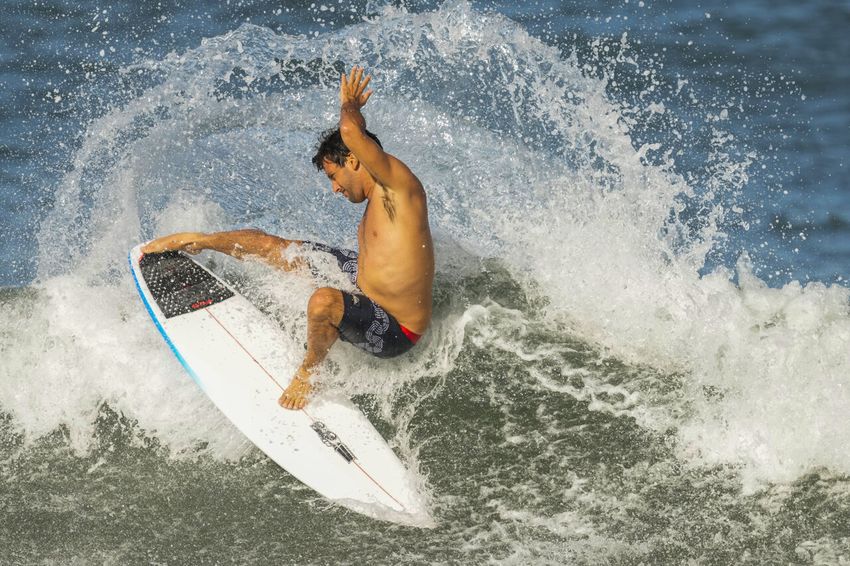
France's Michel Bourez goes airborne as he rides a
wave during a training session at the 2020 Summer
Olympics, Friday, July 23, 2021, at Tsurigasaki beach in
Ichinomiya, Japan. Credit: AP Photo/Francisco Seco

Olympic surfing's debut is making clear that these
wave riders are unsung masters of science—in
climatology, meteorology and oceanography to be
exact.

Serious wave chasers are by default atmospheric
science junkies because there are few, if any,
sports that are both dependent on an
                                                France's Johanne Defay rides a wave during a training
uncontrollable variable—the weather—and defined session at the 2020 Summer Olympics, Friday, July 23,
by a literal uneven playing field—the ocean.    2021, at Tsurigasaki beach in Ichinomiya, Japan. Credit:
                                                           AP Photo/Francisco Seco
Surfers are known to study both in obsessive
detail.

"Any time the wind blows: 'What direction is the           But the numbers can only inform so much. The
wind?,'" said Owen Wright, 31, who is competing            meteorological data is just part of the equation in
for the Australia team. "We don't just look at the         assessing what the mighty ocean will deliver, which
weather and go 'Oh, it's nice and sunny' when we           can change from 30-minute heat to 30-minute heat
know (the wind is) probably offshore. It's never just      in competition.
like 'Oh, it's raining.' It's always got to do with what
the surf is like."                                         Waves are created by the way the swells interact
                                                           with the bottom contours of the ocean, called the

                                                                                                        1/3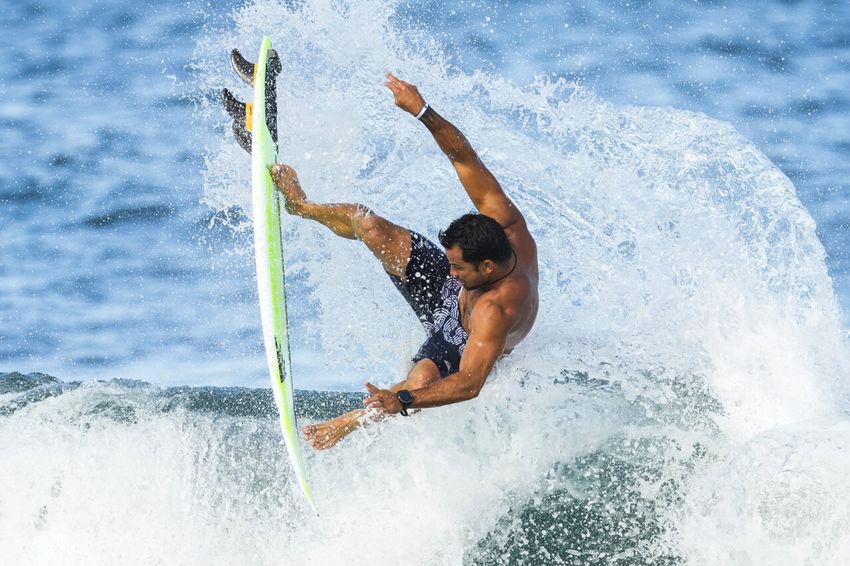
break. Beach breaks—like the Olympic site at          waves during the early days of the competition
Tsurigasaki beach—happen because of sandbars, period thanks to a brewing typhoon.
which can shift over time or due to storms.
                                                      Korte said he'll be at the beach before sunrise at 4
Competitive surfing in a nutshell is about deciding a.m. each day to see and feel the conditions. He'll
which wave to take and what move or moves make advise officials from the ISA, the Olympic governing
the best use of what the ocean delivers. Surfers      body, and event managers. The call on whether to
have to remain prepared and continuously observe go ahead with the competition will be made on site
the waves for their best guess of what wave they      each day by about 7 a.m.
will get to ride.
                                                      Surfers may be some of the only people who get
"How often are the waves coming in? How many          excited to hear about a big storm, though they hope
waves in a set? Which wave of the set offers the      the typhoons, hurricanes and tropical weather
most quality wave?," said Richard Schmidt, a          systems stay hundreds of miles offshore. They
retired pro surfer who now runs a surf school in      calculate where the storm hits and how fast it's
Santa Cruz, California. "The first wave of the set is moving, then reverse engineer to project how many
going to be a little choppy but the second and third miles it is away from a certain beach to determine
wave is a little more awesome because the tops get which days those ripples should make it onto shore.
groomed out by that first wave of the set. So you
watch the waves for a while and you kind of figure
out where the quality waves first pick up."

                                                           France's Michel Bourez rides a wave during a training
                                                           session at the 2020 Summer Olympics, Friday, July 23,
                                                           2021, at Tsurigasaki beach in Ichinomiya, Japan. Credit:
France's Jeremy Flores rides a wave during a training      AP Photo/Francisco Seco
session at the 2020 Summer Olympics, Friday, July 23,
2021, at Tsurigasaki beach in Ichinomiya, Japan. Credit:
AP Photo/Francisco Seco

Surfline, the U.S.-based surf forecasting service,
was integral in the International Surfing
Association's decision to have the sport's Olympic
debut at Tsurigasaki beach, 90 miles east of Tokyo.
Surfline has been studying the local conditions
since 2015 and is currently forecasting sizable

                                                                                                            2/3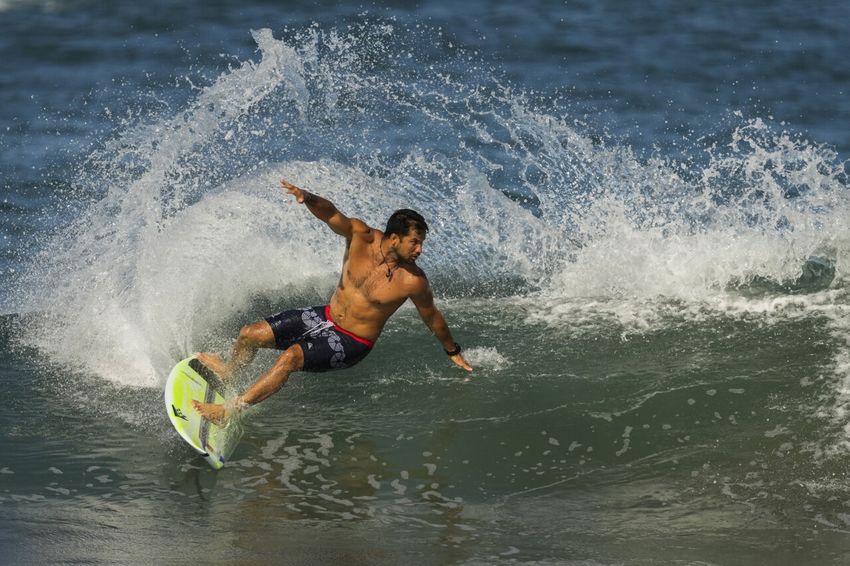
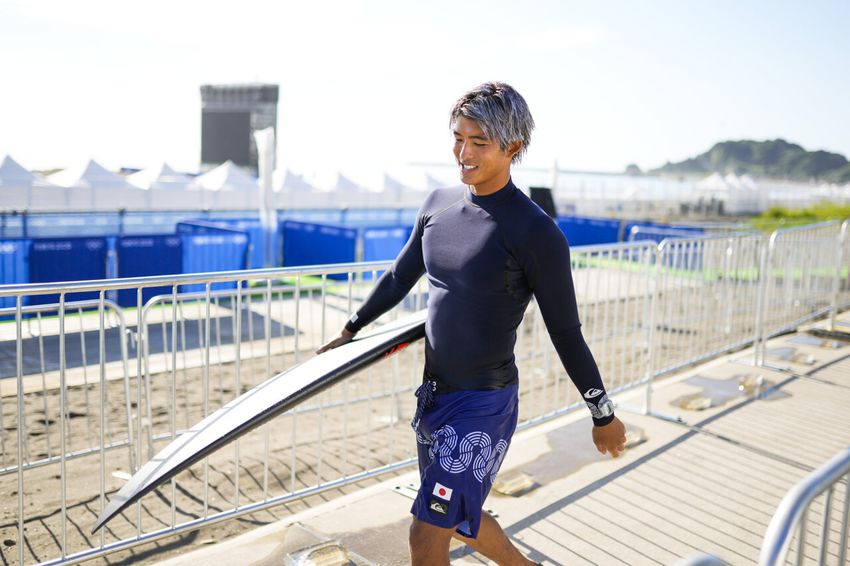
Japan's Kanoa Igarashi leaves after a training session at
                                   the 2020 Summer Olympics, Friday, July 23, 2021, at
                                   Tsurigasaki beach in Ichinomiya, Japan. Credit: AP
                                   Photo/Francisco Seco

                                   The way the weather is currently moving is a major
                                   win for the Olympics, given that Tsurigasaki is not
                                   generally known for powerful waves. The beach is
                                   popular for surfing in Japan but is hardly a world
                                   class location like Hawaii or Tahiti. Korte said
                                   Tsurigasaki typically offers surfing conditions like
                                   those seen on the coast of North Carolina.

                                   Many surfers have verbalized their fears that their
                                   grand global debut will be blunted by mediocre
                                   waves, though Korte rejects the notion that the
                                   world's best athletes could possibly disappoint in
                                   such a beautiful, visually stunning sport.

                                   "They take a wave that an average surfer may not
                                   even surf and make it look incredible," Korte said. "I
                                   think it's a wonderful opportunity to see surfing in
                                   whatever conditions come."

                                   © 2021 The Associated Press. All rights reserved.
                                   This material may not be published, broadcast,
                                   rewritten or redistributed without permission.
                                   APA citation: Surfing science: Dependent on weather, defined by the ocean (2021, July 24) retrieved 17
                                   September 2021 from https://phys.org/news/2021-07-surfing-science-weather-ocean.html

                                   This document is subject to copyright. Apart from any fair dealing for the purpose of private study or research, no
                                   part may be reproduced without the written permission. The content is provided for information purposes only.

                                                                                                                                                3/3

Powered by TCPDF (www.tcpdf.org)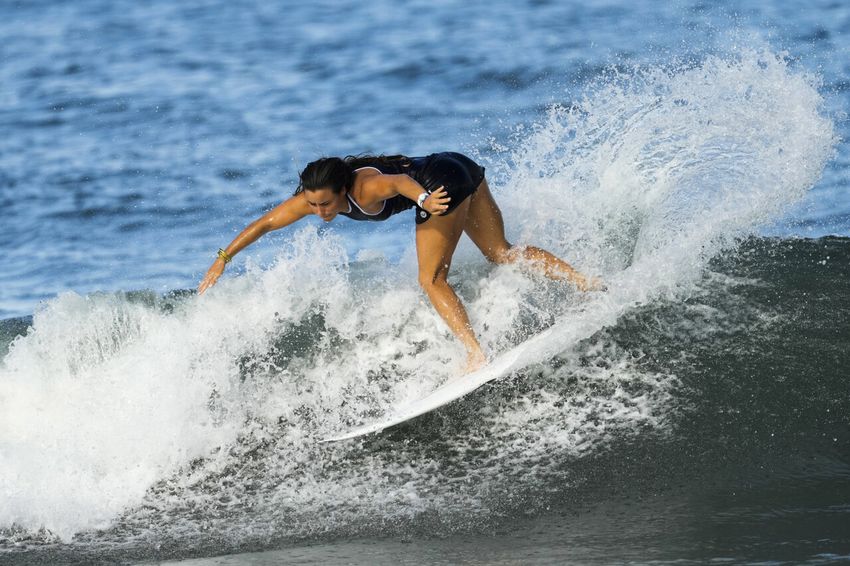

You can also read


