Sustainable clothing
A practical guide
to enhancing
clothing durability
and performance
←
→
Page content transcription
If your browser does not render page correctly, please read the page content below
Sustainable clothing A practical guide to enhancing clothing durability and performance
Introduction:
 Sustainable Clothing Guide

 Working together –                                     In this guide
 taking practical action                                This guide has been researched and developed with
                                                        industry to provide a useful resource for the clothing         Extending the life of clothes by
 With the whole clothing industry working               industry. It will share best practice on how to design,
 together, we can all have a significant impact on                                                                     an extra nine months of active
                                                        produce and sell sustainable clothing that lasts
 the sustainability of clothing across its lifecycle.   longer and that can be easily re-used and recycled.
                                                                                                                       use would reduce carbon,
 This will reduce the environmental footprint of                                                                       water, and waste footprints
 clothing and transform the clothing industry,          The content of the manual will develop over a period           by around 20–30% each.
 saving around £3 billion per year from the cost        of time. The first section focusses on producing
 of resources used in making and cleaning clothes.      clothing that lasts longer by looking at the simple
                                                        steps that can be taken to improve durability.                 Source: Valuing your clothes report
 The most significant opportunity for savings is
 to increase the active life of clothes.

02   WRAP | Sustainable clothing | Introduction: Sustainable Clothing Guide                                       Back to ‘Section one – durability’
Section one – durability
 Producing better quality clothes                        As well as reducing the environmental footprint,   In this section you will find ideas, inspirational case
                                                         durability helps to drive quality which:           studies and practical tools to help you produce
 that last longer brings real benefit                                                                       more durable clothing and make a real difference
                                                         • safeguards against garment failure;
 to manufacturers and retailers,                                                                            to the environmental impact of clothing.
 and to customers.                                       • strengthens brand reputation; and
                                                                                                            Find out more at www.wrap.org.uk/textiles
                                                         • cements customer satisfaction and loyalty.

     Using this guide
     Use the buttons on the bottom                                                                 Getting started:
     right of each page, to navigate
     the guide with ease. The arrows                       What does                               making clothing
     take you to the next and previous                     durability mean?                        more durable
     page. The ‘Back to Section one –
     durability’ link brings you back to
     this page.

                                                           Actions to enhance                      Key questions
                                                           clothing durability                     and appendix

03     WRAP | Sustainable clothing | Section one – durability                                                       Back to ‘Section one – durability’
What does
 durability mean?

04   WRAP | Sustainable clothing | What does durability mean?   Back to ‘Section one – durability’
What does
 durability mean?
 For some brands, ‘durability’ and ‘quality’ are
 interchangeable; in this guide we refer to two
 types of durability.

                                                                                     For a consumer, the durability of a
     Physical durability                   Emotional durability                      product is measured by how long
                                                                                     the product provides a useful service
     Garment design and construction       Garment design that takes                 to them. Expectations for individual       For a consumer, the durability
     to create products that can resist    into account relevance and                items vary; ties, jackets, blazers,        of a product is measured by
                                                                                     coats and outdoor wear are expected
     damage and wear. For a knitwear       desirability to the consumer                                                         how long the product provides
     garment, for example, physical        – does it still fit, or is it no longer   to last for over five years, while
                                                                                     underwear and tights have an               a useful service to them.
     durability might be determined        to their taste?
     by the degree of pilling which                                                  active life of less than three years.
     occurs over time; for socks, the
     gauge may be colour fading.                                                     Based on research, women are more
                                                                                     likely to say that clothes are no longer
                                                                                     in active use because they don’t fit or
                                                                                     are not to their taste; wear and tear is
                                                                                     more of an issue for younger people;
                                                                                     and older people are more likely to
                                                                                     store items or not get around to
                                                                                     disposing of them.

05     WRAP | Sustainable clothing | What does durability mean?                                                           Back to ‘Section one – durability’
Active life of clothing by acquisition, occasion, and key subgroup

                                   0 years                                    Active life of clothing                                        5+ years

 Clothing                          New
 acquisition                       Second hand

 Clothing                          Casual outside home
 occasion                          Casual in home

                                   Formal for work

                                   Day or evening out

                                   Sports/outdoors

                                   Formal for an occasion

 Demographic                       Women
                         Gender

 profile                           Men

                                   18–34yrs

                                   35–54yrs
                         Age

                                   55yrs+
Is clothing durability
 bad for business?
 At a time when many clothing
 business models are based on
 frequent, low-cost purchases,
 manufacturing for durability
 may seem counter-productive.

 However, this view misses the
 business opportunity that comes
 with taking the lead. Clothing designed
 to withstand wear and tear and to
 appeal to the customer for longer
 also helps to promote brand loyalty,
 confidence, and customer satisfaction.

 In a saturated marketplace, quality
 and durability will help retain
 customers while attracting new
 buyers from your competitors.

 In a saturated marketplace,
 quality and durability will
 help retain customers while
 attracting new buyers from
 your competitors.

07   WRAP | Sustainable clothing | What does durability mean?   Back to ‘Section one – durability’
Getting started:
 making clothing
 more durable

08   WRAP | Sustainable clothing | Getting started: making clothing more durable   Back to ‘Section one – durability’
Getting started:
 making clothing more durable
 How do I get started?
 Implementing techniques which           An introductory workshop for some
 make clothing more durable starts       of the following colleagues can be a
 at the design stage and requires        useful way to get started.
 buy-in from stakeholders throughout
 your supply chain.

 Stakeholders within the                 Stakeholders within the                   Key questions to consider:
 manufacturing sector                    retail sector
                                                                                                                                     George
                                                                                   • What does clothing durability                   Case study
 Operational directors/managers          Store managers                              mean to your organisation
                                                                                     (e.g. long lasting, quality,              George arranged a successful
 Quality managers                        Quality managers                            customer satisfaction)?                   workshop with a range of
                                                                                                                               representatives including buyers,
 Procurement managers                    Procurement managers                      • Does your organisation currently          the design team, and sourcing
                                                                                     address clothing durability?              and quality departments. The
 Supply chain directors/managers         Supply chain directors/managers             If so, how?                               aim was to highlight the benefits
 Category managers                       Category managers                         • How might you measure physical            of durability (which at George
                                                                                     and emotional durability?                 is referred to as ‘quality’) and to
 Shift and process managers              Finance managers                                                                      build connections between key
                                                                                   • Who else should you engage                stakeholders who could influence
 H&S managers                            Buyers                                      to get discussions started?               development, while at the same
                                                                                   • Who needs to make the change?             time promoting existing initiatives
 Finance managers
                                                                                                                               and exploring new opportunities.

                                                                                                                                    Find out more

09   WRAP | Sustainable clothing | Getting started: making clothing more durable                                        Back to ‘Section one – durability’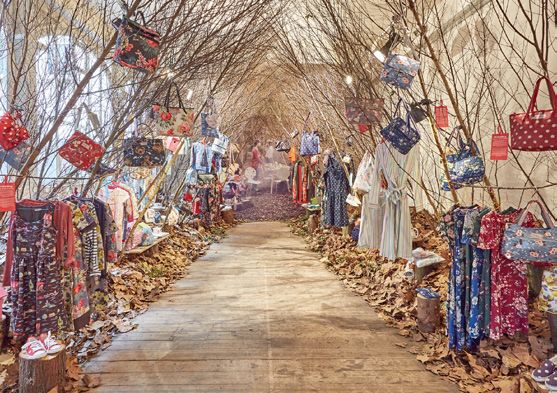
Design and technology
 considerations
                                                                                          A good way to improve
 Designers and technologists have a key role to play to improve clothing                  durability – and potentially
 sustainability. They should work together to ensure they select the most                 reduce costs and returns –
 suitable materials (yarns, fabrics and components) from reputable suppliers              is to introduce specifications
 who understand the brand’s performance requirements. Researching and                     for all production tasks
 identifying the most suitable processes is also key to ensure the final                  and materials.
 product performs well.

 Design
                                                  Cath Kidston
 The design stage is pivotal to the               Case study
 eventual durability of a garment, with
 choices about style and cut, fit, fibre     Cath Kidston created a template
 and yarn, construction and trimmings        for fabric and yarn specifications
 all having an impact on the final           to share with suppliers. The aim
 product. Physical durability is often       was to show a clear link between
 governed by the weakest link in the         raw material specification and the
 chain – perhaps not the chosen fabric       resulting product, which would
 or fibre, but a poorly specified aspect     lead to improvement and, finally,
 of construction or manufacturing.           greater durability. Cath Kidston
                                             plans to record the changes in
 Key points                                  order to map and learn from the
                                             experiences, enabling it to replicate
     E
      arly choices about style and cut,     the work across its product range.
     fit, fibre and yarn, construction and
     trimmings all have a big impact on          Find out more
     the final product.

     Introduce specifications for all
     production tasks and materials.

10    WRAP | Sustainable clothing | Getting started: making clothing more durable    Back to ‘Section one – durability’
Style and cut Fit
Uniqlo
The clothing industry boasts a wealth Example Customers do not come in standard
of technical know-how and production sizes and all have the same preferences
expertise around classic or simply- When Uniqlo collaborated with in terms of comfort and fit.
styled items. This experience can aid designer brand Jil Sander to
production quality and reduce costs. create the +J collection, the aim One way to embrace these differences
was to produce timeless pieces is to offer built-in size adjustment.
Tailored and semi-tailored garments of outerwear, shirts and jumpers. This might involve the use of strategic
last longer because they frame the Uniqlo uses advanced materials, fastenings, for example, to increase
form well aesthetically, while oversized reflecting a desire to produce or decrease the size or length of side
knits and kimono shapes that can be innovative products which can seams or hems.
worn with a belt are versatile and be worn for a long time to come.
‘comfortable’ and, therefore, Key points
potentially wearable for longer.
C
omfort and fit are important.
From a fashion perspective, ‘classic’
styles (e.g. the little black dress, A
djustable fastenings allow for
tailored shirts, pencil skirts, chino- in-built adjustment.
style trousers, v-neck jumpers) will
tend to be longer lasting, especially
if core colours such as black, white,
navy, grey or red are used.
Key points
Tailored and semi-tailored
garments last longer.
Think ‘classic’ styles.
The clothing industry
boasts a wealth of existing
know-how that can be
used to aid production
quality and reduce costs.
11 WRAP | Sustainable clothing | Getting started: making clothing more durable Back to ‘Section one – durability’Raw materials One way that design teams can
influence the durability of a garment
Since fabric quality depends on is to identify key standards the fabric
many variables, such as fibre type, must meet – and then task buyers to
yarn blends, yarn structure, fabric source fabrics that have been tested
construction, dyeing and finishing, to meet these standards.
fabrics with the same description
(e.g. ‘100% cotton’) often vary greatly Specifying standards that align with
in performance and durability. the way the product will be used can
act as a safety net, ensuring that
Wool is typically perceived as ‘hard- component failures do not undermine
wearing’, yet the way it is processed, the benefits of a well-specified fabric.
used and cared for has a significant
impact on its durability. In some cases, For example, specifying collarbones
‘better quality’ does not mean hard- and collar tip construction that
wearing but instead refers to excellent minimise abrasion, or the use of
drape, lustre or softness to the touch. woven rather than non-woven
interlinings and the use of button
whipping, can all ensure that shirt
durability is maximised.
Key points
P
rocesses, usage and care impacts
significantly on durability.
Identify key standards of the fabric.
One way to influence the
durability of a garment is
to specify key standards
that the fabric must meet.
12 WRAP | Sustainable clothing | Getting started: making clothing more durable Back to ‘Section one – durability’Colouration and By working closely with dyestuff Technical support for dyestuff
manufacturers and suppliers it is selection, testing and performance George at Asda
dye selection possible to select dyes that best can be requested from a number Example
meet the performance requirements of dyestuff manufacturers.
Colour is one of the most important George garment designers decide
of the garment.
influences when customers are on the colour for each item based
Key points
choosing new clothes; it also plays on research around key seasonal
Using standard test methods to
a significant role in deciding when a C
determine the characteristics of the olour plays a significant role colour trends, fashion ranges,
garment has reached the end of its life. in deciding when a garment has catwalk collections or, in the
selected dye prior to bulk production
is quick and cheap to complete. For reached the end of its life. case of schoolwear, the colour
Dye selection, methods of application requirements of schools. To
example, fading due to the action of
and processing conditions (e.g. pH, D
ye selection and methods all have improve the quality and durability
washing powders can be tested via
temperature and use of levelling a huge impact on colour fastness. of school knitwear, George uses
oxidative bleaching tests.
agents) all have a huge impact on a special dyeing and finishing
colour fastness. Minimising surface disruption is process that maintains the colour
These tests, as part of an established
quality management system, can be one way to reduce the apparent of the garment even after repeated
The choice of a cheap or unsuitable fading of garments and extend washing and wearing. This means
employed on bulk production to ensure
dye, or cutting corners in dye the life of products. it will look newer for longer.
the consistency of dyeing quality.
application, have a significant effect
on the durability of a garment, so
Colour fading (particularly of cotton
correctly specifying dye use and
fabrics) is also caused by an optical
application should be a key part
effect due to surface disruption.
of product specification.
Abrasion of fabrics tends to bring loose
fibres to the surface; these fibres then
alter the way in which light is reflected
off the surface, giving the impression
of fading even though no loss of colour
has occurred.
Minimising surface disruption is one
By working closely with way to reduce the apparent fading
dyestuff manufacturers of garments and extend the life
and suppliers it is possible to of products.
select dyes that best meet the
performance requirements
of the garment.
13 WRAP | Sustainable clothing | Getting started: making clothing more durable Back to ‘Section one – durability’Fabric finishing Many finishing treatments can affect
performance and durability, or help Novozymes
Finishing processes are used to extend the active use of a garment. Example
improve the look, performance, Understanding likely impacts and
or ‘hand’ (feel) of the finished textile giving clear instructions on where and Enzymes are increasingly used
or clothing. how the final product will be used, in the textile industry and have
therefore, needs to be an integral part proved to be very successful in
Mechanical and chemical treatments of an overall product specification. reducing pilling for many fabric
produce a range of effects including: types, including knitted jerseys
For many brands and retailers, greater and woven cotton. Independent
• fabric stiffening or softening;
use of cotton and cotton blends in analysis has shown bio-polishing
• scouring and bleaching; knitwear and knitted fabrics has led can significantly reduce the
to a rise in the number of garments occurrence of pilling and there
• hydrophobic treatments to produce
prematurely returned or disposed is evidence that, as a result,
waterproofing or stain resistance;
of due to pilling. the lifetime of a product could
• pre-shrinking or ‘sanforising’; and be increased by up to 20%.
anti-pilling treatments such as Pilling is caused by abrasion that Novozymes is one of a number
bio-polishing; and disrupts the fabric surface, causing of companies that has developed
unsightly bobbles of entangled fibres. bio-polishing technology based
• treatments applied to non-garment
Treating fabrics with an additional on enzyme finishes.
textiles such as flame retardancy
process called bio-polishing can
and anti-microbial treatments.
reduce the abrasion that causes pilling, Find out more
to extend the life of the product.
Key points Understanding likely impacts
M
echanical and chemical and giving clear instructions
treatments produce a range of on where and how the final
finishing effects. product will be used needs
H
ow the product will be used to be an integral part of an
impacts on the type of finishing overall product specification.
that needed.
Bio-polishing can reduce the
abrasion that causes pilling, to
extend the life of the product.
14 WRAP | Sustainable clothing | Getting started: making clothing more durable Back to ‘Section one – durability’Manufacturing Co-ordinating design and manufacture
to align specifications will also improve Flint and Tinder
Designers have numerous stitch the durability of the product. For Example
Co-ordinating design types, sewing threads, machine example, choosing the correct stitch
and manufacture to align models and settings to choose from, density for seams will minimise fabric Inspired by a factory visit that
as well as an array of methods for slippage and puckering, while making opened their eyes to the link
specifications will improve garment construction. Each technique between product durability and
sure that the correct operating
the durability of the product. will be best suited to a particular fabric procedures are in place for the manufacturing issues (such as
or garment type and can be exploited application of linings helps to combining unsuitable fabrics, or
to achieve greater durability. avoid delamination. stitching which leads to faster wear
and tear), the founders of Flint
Trimmings or lesser components also Key points and Tinder made it their mission
play their part – quality and the way to offer a hooded sweatshirt that
that components are attached need to V
arious sewing techniques can could last a lifetime. The 10-year
be given special consideration to give be used on particular fabrics to hoodie, 100% American-made, is
the finished garment the longest enhance durability. manufactured from high quality
possible life. domestic materials, utilising
C
onsider how trimmings are reinforced stitching for extreme
attached. durability, and heavy weight Lycra
ribs to retain shape. The garment
o-ordinating design and
C
is guaranteed to last a decade
manufacture to align specifications and comes with a free of charge
will also improve the durability of mending service.
the product.
15 WRAP | Sustainable clothing | Getting started: making clothing more durable Back to ‘Section one – durability’Product testing Not all tests are appropriate for all
garments, and durability quality
Key points
A number of industry standard tests levels will be dependent on matching A
number of industry standard
now exist for fabrics and garments. product type with its expected use tests now exist for fabrics and The use of clearly
These cover physical testing, colour (to determine, for instance, how garments.
defined testing protocols
fastness, chemical testing and many cycles in an abrasion test are
flammability1 and can form part of required). There is no absolute single There
is no absolute single for components and
a product specification. Physical tests standard for all products. standard for all products. manufacturing elements
include: seam rupture; tear strength; can be built into product
Each
product specification should
burst strength; pilling; abrasion; Many standards relate to the process
elasticity; and seam slippage. and equipment, while the assessment
include clearly defined testing specifications to ensure the
protocols. consistency of quality leading
criteria can be subjective, as well
Colour fastness is assessed on a as depending on how and where to stable product durability.
scale of 1 (poor) to 5 (excellent), and the product will be used.
a good measure might be ‘4–5 after
20 washes’. For example, a ball gown would be
expected to be commercially cleaned George at Asda
Tests include: occasionally, whereas a swimsuit Example
needs to be colourfast in a variety of
• subjecting garments to domestic
water conditions with multiple uses. George products are inspected This is much faster and cheaper
laundering,
for quality at specialist inspection than shipping potentially faulty
• commercial laundering and dry- Standards may be British (BSI), centres. Assessment is performed by goods to the UK and then back to the
cleaning; rubbing (wet and dry); European (CEN) or international specialist quality inspectors working manufacturing country for alteration.
(ISO), and even retailer-specific. to George quality standards. Checks Based on inspection results, suppliers
• chlorinated and sea water;
Marks & Spencer, for example, include making sure that there are are rated according to their quality
• hydrophobicity (drop test); and led the development of clothing no faults in the fabric, that seams are performance, which helps them
technology standards. sewn correctly, there are no loose improve standards in the future.
• phenolic yellowing; and testing
threads, and that the garments are
for print durability.
The use of clearly defined testing pressed properly. Packaging and
protocols for components and presentation are also checked.
manufacturing elements can be built
into product specifications to ensure As a result, only goods that meet
the consistency of quality leading to George at Asda’s quality standards
stable product durability, not just are shipped. If a quality problem is
within individual manufacturing discovered, the supplier is given the
1. The latter two relate to safety and legal opportunity to rework the product
requirements and are not referred to below
batches but across many
unless they impact upon the durability of consignments. in the manufacturing country.
the garment.
16 WRAP | Sustainable clothing | Getting started: making clothing more durable Back to ‘Section one – durability’Wearer trials
Cath Kidston
A good way to find out how suitable Case study
a fabric may be for its intended use is
through pre-production wearer trials. Cath Kidston carried out wearer
trials on core products, including
This method can be used to assess a cardigan, jumper and baby
a range of issues that directly affect grow. The objective was to
the durability of the garment, such understand the impacts of wear
as: how well it withstands washing; on the garments in order to better
susceptibility to staining; durability understand product lifecycles.
of fabric; and understanding of Over the two-week trial, each
care instructions. garment was worn for 200 hours.
The results were used to better
By conducting such trials understand where pilling occurred
over a reasonable time period, and under what circumstances
manufacturers can identify any the baby grow experienced colour
issues and take appropriate steps, fade. At the same time, wearer
such as changing fabric quality, trials were also undertaken on
to resolve them. equivalent items produced by
competitors to compare quality
Key points and durability.
P
re-production wearer trials can Find out more
be used to assess fabric suitability.
Issues can be identified from trials
and appropriate steps taken.
17 WRAP | Sustainable clothing | Getting started: making clothing more durable Back to ‘Section one – durability’Actions to enhance clothing durability 18 WRAP | Sustainable clothing | Actions to enhance clothing durability Back to ‘Section one – durability’
Actions to enhance
 clothing durability
 The WRAP report Design for Longevity2 identified the
 top five actions for eight key product categories, which
 have been summarised here:

     Children’s clothing                      Occasion wear                            Knitwear                                    Tailoring
     1. Designing-in a growth allowance.      1. Using classic styles, innovatively,   1. Using quality yarn and fibres to         1. Using high quality outer fabric and
                                                 to help transcend fashion fads.          improve the strength and colour             ensuring lining and interlining are
     2. Selecting fabrics and components                                                  fastness of knitted garments.               compatible.
        that are proven to offer durability   2. Ensuring high quality fabrics are
        and colour fastness.                     used when designing garments.         2. Ensuring care and laundry advice         2. Applying classic styles, cut and
                                                                                          is clear and simple.                        colours, and building-in features
     3. Applying fabric finishes to reduce    3. Designing garments that are                                                          to allow easy adjustment to size
        the likelihood of staining.              multi-functional, to give the         3. Taking steps to preserve the quality        and shape.
                                                 customer the option to wear              of knitted fabric (including colour
     4. Designing garments for multi-            different parts of the outfit            fastness) and garment manufacture        3. Including clear guidance and advice
        functionality (such as reversible        with other clothes.                      throughout production.                      on the care label.
        coats).
                                              4. Facilitating alteration through       4. Providing guidance to design for         4. Where possible, utilising detachable
     5. Reinforcing weak areas or areas          adjustable waistbands, generous          re-use and encouraging consumers            elements, such as collars or linings,
        liable to extra stress, such as          seams or additional buttons.             to down-cycle old garments.                 which can be replaced when worn.
        elbows and knees.
                                              5. Selecting materials and components    5. Focusing on classic design and           5. Providing a specialist aftercare
                                                 that can withstand the chemicals         loose shapes.                               service, as well as mending and
                                                 used in the dry-cleaning process.                                                    repair advice.

 2. Design for Longevity report, WRAP

19       WRAP | Sustainable clothing | Actions to enhance clothing durability                                                Back to ‘Section one – durability’
Denim Sportswear
1. Using ozone bleaching, laser 1. Using durable material, with
engraving and resin finishes to reinforced seams on areas where
create the desired effects with rubbing or chafing occurs.
a lower environmental impact.
2. Providing care instructions that
2. Enhancing fabric strength and encourage airing of clothes or
surface quality by applying washing promptly after use.
sustainable dyeing, bleaching
and surface treatments. 3. Encouraging longer attachment to
items through the use of wearable
3. Applying traditional, robust technology or personalisation.
manufacturing methods and
mass customisation strategies 4. Adding soil-resistant or
to products. antibacterial finishes to reduce
problems from body perspiration
4. Educating consumers about the and odour.
unique characteristics of denim
and how to care for it and repair, 5. Selecting warp-knitted fabrics with
re-use or repurpose it. open fabric structures (e.g. nets
and mesh) to help the transport
5. Creating emotional attachment of moisture.
through ethical sourcing and
production, or no-waste and
craft design approaches.
20 WRAP | Sustainable clothing | Actions to enhance clothing durability Back to ‘Section one – durability’Casualwear Underwear The report also suggests the
following actions to increase
durability:
Garment types in this category Garment types in this category include
include t-shirts, sweatshirts, leggings, mens and ladies pants, sock, tights • providing basic repair kits including
trousers, shorts, skirts, blouses and other hosiery. threads or yarn, buttons and
and shirts. instructions;
1. Using more durable fabrics, trims • providing factsheets to customers
1. Selecting high-quality fabric and and construction methods. in-store, online or in accompanying
testing rigorously for performance, packaging;
including colour fastness and pilling. 2. Removing seams, where possible, • enhancing product care and
and recognising that comfort is labelling information;
2. Providing clear and simple care crucial for prolonged daily wear.
and laundry instructions. • using elastomeric yarns in knitted
3. Scheduling in time for multiple structures to enhance the recovery
3. Designing-in adjustable features fittings during the design process of stretch fabrics, particularly at
to accommodate fluctuations in to ensure that underwear fits well cuff and hem ribs;
body shape. and supports where necessary. • using acrylic yarns to produce
long lasting garments that are
4. Where appropriate, designing 4. Providing expert advice on fit on inexpensive, hard wearing and
garments with detachable parts product packaging and at point particularly suitable for lower-cost
which can be replaced when they of sale. garments and knitwear likely to
become soiled or worn. experience heavy use, such as
5. Designing underwear to be easy childrenswear;
5. Providing styling guidance for the to launder.
• exploring fibre dyeing, which can
consumer to encourage longer use
sometimes be used in preference
and potential re-use.
to yarn dyeing for assurance of
colourfastness when using some
types of fibre (i.e. wool or cotton);
and,
• applying pre-shrinking treatments
to fabric as a finishing process.
21 WRAP | Sustainable clothing | Actions to enhance clothing durability Back to ‘Section one – durability’Love Your Clothes • understanding that fibre content
will play a role in clothing durability.
John Lewis
customer For example, natural fibres may last
Partnership (JLP)
longer and launder more easily in
engagement some garment applications than
Case study
programmes synthetic alternatives; The Selling Partner Learning Guide • explaining how the use of the
• reading care instructions, and provides JLP Selling Partners with right detergent and lower washing
ensuring that they are followed information to be communicated temperatures can affect the life
– garments should be dry cleaned to customers on the shop floor. The expectancy of clothes and reduce
when necessary, cold washed and/ Learning Guide has been updated the environmental impacts of
or dried flat if appropriate; and to include messaging from WRAP’s washing, wearing and disposal; and
Customer education and messaging
Love Your Clothes campaign, which
Given a little direction, customers • looking for stains, rips, and other • giving customers the opportunity
is used to assist the Selling Partners
would be able to gauge the quality obvious damage caused in store to extend the life of clothes
to share three key messages which
and potential durability of garments or in transit before sale. (particularly linking to in-store
support clothing durability:
before they buy. haberdashery departments to
www.loveyourclothes.org.uk • making the connection between demonstrate how simple changes
Instructions include: clothing that is more durable to garments can increase the
and higher quality, and the lifetime of clothes).
• evaluating seams, including environmental impact of those
advice on looking for loose threads garments in comparison to
Giving customers clear advice Find out more
and broken stitches. Consumers disposable fashion;
could be made aware that a will help them to choose
higher density of stitches per inch more durable products.
is generally better, that stitching
should be relatively tight, and that
serged seams or double straight
seams are usually stronger and may
last longer than an equivalent with
single straight seams;
• examining garment linings and
reinforcement. For example, looking
at facing around zips, buttons, or
other high-use areas;
22 WRAP | Sustainable clothing | Actions to enhance clothing durability Back to ‘Section one – durability’Wash and Advice could include: Research3 suggests that consumers
are often receptive to warnings about
• wash coordinating products
wear guidance together (for example suits, twin- the potential impact of not following
Research suggests that sets or lingerie), and remove care instructions, such as the risk of
The way that people wash their clothes
consumers are often accessories before washing; shrinkage if garments are washed at
at home has the potential to change
too high a temperature, or the risk of
the characteristics of fibres and fabrics receptive to warnings about • dry clean garments when discolouration resulting from unsorted
and, as a result, to reduce durability. the potential impact of not necessary; washing loads.
following care instructions. • consider steam clean options;
Despite marketing campaigns,
Extended wash tests help to identify
evidence suggests that many people • wash when necessary rather than the point at which garments fail.
still do not colour sort washing and after each wear; In recent research, a range of core
often launder delicate fabrics at the
• airing garments as a means of products was washed and dried
wrong temperature.
freshening; according to the care label.
Improving care information on labels, • avoid rubbing stains and marks to The tests proved very useful for
packaging and point of purchase or avoid causing damage to the fabric; showing the point at which garments
online information portals is a low
• avoid the use of solvents for spot failed against specified performance
cost way to increase durability.
cleaning as they can cause criteria – socks and t-shirts underwent
discolouration; 50 wash cycles, shirts and jeans 40,
and cashmere knitwear 20. Certain
• store appropriately, for example on problems were not evident until later
hangers; using any garment loops washes and, in the case of shirts,
or other features provided; folding, 40 washes was insufficient to reveal
and removing from sunlight when significant deterioration.
not in use;
• use moth balls when storing;
• use a specialist laundry bag for
delicate items; and
• iron garments at the right
temperature and reverse those
with motifs to avoid damage.
3. Valuing our clothes report, WRAP
23 WRAP | Sustainable clothing | Actions to enhance clothing durability Back to ‘Section one – durability’The table below is a guide to the wear and wash frequencies that may
help designers and manufacturers set up their own testing regime. Stella McCartney
Case study
Knitwear Shirt Jeans Socks T-shirt Stella McCartney Ltd has developed
relationships with key tailors and
A Current lifetime estimate (years)i 3.7 3.6 3.1 1.8 3.3 dry cleaners in the locality of a
store to help customers care for
B Target lifetime (years)ii 5 5 4 2.5 4.5 their clothes appropriately. To
understand the environmental
C Average wear days per yeariii 30 16 75 50 25 impacts of dry cleaning before
developing partnerships
D Implied wear days per monthiv 2.5 1.3 6.2 4.2 2.1 and undertaking customer
communications campaigns, the
E Total days of wear for the target lifetimev 150 80 300 125 112.5
company commissioned research
F Hours of wear for the target lifetimevi 1,800 960 3,600 1,500 1,350 to establish which solvents chains
of dry cleaners use and how these
G Estimated days of wear per washvii 5 2 10 2 2 are managed.
H Hours of wear per washviii 60 24 120 24 24 Find out more
I Average number of washes for
the target lifetimeix 30 40 30 62 56
i WRAP data from the Longevity Protocol, page 9 vi Calculation: Row E x 12 (assumed average 12 hours wear per day)
ii Based on lifetime increase of one third vii Working assumption (validated by industry interviews)
iii Working assumption (audited by industry interviews) viii Calculation: Row G x 12
iv Calculation: Row C/12 ix Calculation: Row F / Row H
v Calculation: Row B x Row C
24 WRAP | Sustainable clothing | Actions to enhance clothing durability Back to ‘Section one – durability’Repair and
Patagonia
alteration support Example
Retailers can encourage
Although most people are able to Patagonia believes in offering
sew a button on, research suggests self-repair by incorporating
its customers the chance to have
that fewer now have the skills to repair kits into clothing sales, their items repaired to extend
make more complicated repairs such or build relationships with product life. Since 2012, its repair
as altering a hem or darning holes.
national firms to offer repair department has mended 65,000
Instead, people may store or discard items. Taking the idea of repair
items in disrepair or in need of services to customers.
one step further, Patagonia is
alteration. also empowering the consumer
to repair clothing themselves, by
However, at a national level, TV shows launching a new repair programme
such as The Great British Sewing Bee in collaboration with iFixit.
have helped promote clothing repair Customers can download free,
and alteration as a hobby activity and easy-to-follow online repair guides
lifestyle choice. for Patagonia clothing and are also
offered an Expedition Sewing Kit
This trend could be supported through for on the spot emergency repairs.
the provision of basic repair kits –
including threads or yarn, buttons and
instructions – in garment packaging
and/or on product labels. It can also
be supported by factsheets offered
in-store, online or in packaging.
Where self-repair or alteration may
not be appropriate, some brands and
retailers are entering into national
agreements with chains of tailors.
25 WRAP | Sustainable clothing | Actions to enhance clothing durability Back to ‘Section one – durability’Re-use support
Muka Kids
A number of brands and retailers Example
have formed partnerships with
charities to support and encourage Muka Kids’ model is built on the
consumer re-use by: principle of creating highly durable
unisex clothes that can be taken
• providing in-store take back options;
back in order to be re-used by
• promoting the delivery of second other customers. It calls this
hand clothing to charity shops; process ‘regooding’. In addition
to a garment being re-used by
• incentivising re-use through the
others, the customer returning it
use of money off vouchers for
can receive a discount on a larger
new products; and
size. Furthermore, any proceeds
• supporting workplace-based will go towards supporting women
used clothing amnesties; and in India achieve financial and work
working with community-based independence.
organisations for re-use of specific
clothing items such as sportswear.
Research4 shows that raising
awareness of a number of re-use
options increases collections of textiles
across the board, rather than moving
clothes from one re-use outlet (such
as a charity shop) to another (such
as a textile bring-bank). Therefore,
promoting one or more options for
re-use can boost the active life of
a wide range of clothing.
Explore options to
encourage re-use by working
with charities or promoting
re-use through a voucher
or store-based scheme.
4. Valuing our clothes report, WRAP
26 WRAP | Sustainable clothing | Actions to enhance clothing durability Back to ‘Section one – durability’Key questions and appendix 27 WRAP | Sustainable clothing | Key questions and appendix Back to ‘Section one – durability’
Key questions to consider
 in your organisation:

      How do choices about the design and cut                   What can be learned about garments from
      of a garment impact on its durability?                    wearer trials?

      Can fit adjustments be incorporated into                  What can be learned about garments from
      garment design?                                           product tests?

      How are non-fabric components contributing                What wash and wear information is available
      to product failures that reduce durability, and           to customers and is it widely understood?
      how can these be addressed?
                                                                What information and supporting material
      How are choices about fibres, colour, dye                 is available to support customers with repair
      selections, fabric finishes and construction              and re-use of clothing items?
      impacting on product failures which reduce
      durability and how can they be addressed?                 What additional information could be provided
                                                                to consumers to educate them on ways to
                                                                extend product durability?

28   WRAP | Sustainable clothing | Key questions and appendix                                     Back to ‘Section one – durability’
Appendix
Further information to help drive How to use the Clothing Sustainable Clothing Action Plan Valuing Our Clothes
change Longevity Protocol
WRAP leads the Sustainable Clothing WRAP’s ground breaking report
This appendix signposts to guides and A guide on how to integrate the Action Plan (SCAP). SCAP’s ambition provides the first big picture look
other support materials to help Clothing Longevity Protocol into is to improve the sustainability of at the financial and environmental
clothing designers and manufacturers your business. clothing across its lifecycle. By bringing impacts of clothing. Valuing Our
improve the durability of garments together business, government and Clothes is a summary of the key
within their range. Find out more the charities and social enterprises, findings of a major technical report,
we have developed industry-wide plus evidence from a survey of
targets to reduce resource use and consumer behaviour.
Clothing Longevity Protocol
Design for Longevity secure recognition for good practice.
Offers good practice guidelines Find out more
Guidance on increasing the active life
designed to encourage the SCAP 2020 Commitment
of clothing.
manufacture of longer lasting
garments, to screen out items which Find out more Find out more
fail prematurely, to protect brand
value and to reduce the environmental
impact of the clothing sector. Clothing Longevity: Measuring Clothing Knowledge Hub
Active Use
Find out more The Sustainable Clothing Action Plan
Improving understanding of how long Knowledge Hub showcases new
people keep and regularly wear their initiatives, processes and technologies
clothes. which can reduce the environmental
impact of clothing. The Hub has an
Find out more area on durability and longevity,
covering: physical durability,
emotional durability, versatility
and co-creation.
Find out more
29 WRAP | Sustainable clothing | Key questions and appendix Back to ‘Section one – durability’WRAP’s vision is a world in which
resources are used sustainably.
Our mission is to accelerate the move to a
sustainable resource-efficient economy through
re-inventing how we design, produce and sell
products; re-thinking how we use and consume
products; and re-defining what is possible through
re-use and recycling.
WRAP
Second Floor Disclaimer:
Blenheim Court While we have tried to make sure this guide You must not use material to endorse or suggest
is accurate, we cannot accept responsibility we have endorsed a commercial product or
19 George Street or be held legally responsible for any loss or service. For more details please see our terms and
Banbury damage arising out of or in connection with conditions on our website at www.wrap.org.uk
Oxon OX16 5BH this information being inaccurate, incomplete
or misleading. This material is copyrighted. The examples used in this guide are based on
You can copy it free of charge as long as the publicly available information (accessed Feb–Mar
www.wrap.org.uk material is accurate and not used in a misleading 2015). Case studies were generated as a result of
@WRAP_UK context. You must identify the source of the specific trials carried out by WRAP and the named
material and acknowledge our copyright. organisations during January to July 2015.
30 WRAP | Sustainable clothing Back to ‘Section one – durability’You can also read


