Sustainable Use of the Littoral by Traditional People of Barbados and Bahamas - MDPI
←
→
Page content transcription
If your browser does not render page correctly, please read the page content below
sustainability

Article
Sustainable Use of the Littoral by Traditional People
of Barbados and Bahamas
Brent Stoffle 1 , Richard Stoffle 2, * and Kathleen Van Vlack 3
 1    NOAA Fisheries, Miami, FL 33149, USA; brent.stoffle@noaa.gov
 2    School of Anthropology, University of Arizona, Tucson, AZ 85721, USA
 3    Living Heritage Research Council, Cortez, CO 81321, USA; kvanvlack82@gmail.com
 *    Correspondence: rstoffle@email.arizona.edu; Tel.: +1-520-907-2330

 Received: 7 April 2020; Accepted: 5 June 2020; Published: 11 June 2020

 Abstract: This paper is about the traditional people of Barbados and The Bahamas, in the Caribbean
 and their sustainable adaptations to the littoral, which included both marine and terrestrial
 components. Traditional people are defined as having lived in a sustainable way in an environment
 for five generations, the littoral is described here as an ecological zone at the sea’s edge, which
 is composed of hundreds of medicine and food plants and animals, and resilient adaptations are
 understood with the environmental multiplicity model. The analysis is based on more than a thousand
 site intercept interviews conducted by the authors and their research teams. These data argue that
 culturally based patterns of sustainable food use and environmental preservation can be understood
 from generations of successful adaptations of traditional people.

 Keywords:     traditional people;                 coastal littoral;   Barbados;      Bahamas;      environmental
 co-adaption; Caribbean

1. Introduction
     This essay contributes to discussions occurring worldwide that have crystalized in the United
Nations Agenda for 2030, which calls for protecting the planet by promoting sustainability in food
production and consumption by informing both policy and practice. This lofty goal is being acted on
in many places, at many scales, and with various intervention strategies. While some have argued for
new patterns of sustainable adaptation to be uniquely developed with specific reference to a place,
a people, and an environment, the present analysis argues that a better starting point is to draw upon
the sustainable environmental adaptations of traditional people. Instead of creating sustainability
patterns out of whole cloth, the time-tested cultural adaptations of traditional people should be drawn
upon first.
     This analysis assumes that it is essential to understand the diachronic foundations for the
development of sustainable lifeways and food consumption before considering how to share these
insights with other people. Two case studies serve this purpose. They involve the traditional coastal
people of Barbados, West Indies (Figure 1), and The Bahamas, Caribbean (Figure 2) who have lived
in their environment for hundreds of years during which time they have come to understand and
adapt to their littoral, which includes both terrestrial and marine resources occurring at the sea’s edge
(Figure 3). Traditional people are defined for this essay as having lived in a sustainable way in their
environment for five generations. The littoral is described as composed of hundreds of medicine and
food plants and animals. Resilient adaptions are understood within the environmental multiplicity
model. The analysis, therefore, is focused on traditional coastal people who have resided in their
communities for more than 150 years. These are people who have learned about their environment to
a level that can be termed traditional ecological knowledge (TEK) and so they can be called traditional.

Sustainability 2020, 12, 4764; doi:10.3390/su12114764                              www.mdpi.com/journal/sustainability
Sustainability 2020, 12, 4764                                                                                        2 of 26
  Sustainability 2020, 12, x FOR PEER REVIEW                                                                         2 of 25
 Sustainability 2020, 12, x FOR PEER REVIEW                                                                          2 of 25
Thedevelopment      but are notwith
     people are associated         considered
                                       littoralspristine.
                                                  that haveThe  environmental
                                                            never                  multiplicity
                                                                    been fully disrupted      by model     is argued
                                                                                                  development       butas  a
                                                                                                                         are
notuseful  intellectual
  development
     considered          frame
                   but are
                   pristine. not
                              Thefor  understanding
                                  considered            adaptations
                                                pristine.
                                    environmental                     whereisthe
                                                          The environmental
                                                       multiplicity model          people,
                                                                                         as atheir
                                                                                   multiplicity
                                                                               argued              ways
                                                                                                 model
                                                                                              useful      of argued
                                                                                                          is  life, and
                                                                                                      intellectual     asthe
                                                                                                                     frame a
   environmental
  useful             resources
          intellectual  frame   forthey utilized
                                     understanding have  mutually
                                                        adaptations changed
                                                                     where   thein  sustainable
                                                                                   people,  their ways.
for understanding adaptations where the people, their ways of life, and the environmental resourcesways  We
                                                                                                         of     also
                                                                                                             life, andargue
                                                                                                                        the
   thatutilized
they    the environmental
  environmental  haveresources
                        mutuallymultiplicity
                                  they  utilizedmodel,
                                     changed     inhave  which has
                                                         mutually
                                                     sustainable      bothWe
                                                                    changed
                                                                  ways.    social/economic
                                                                               in  sustainable
                                                                                 also argue that andthenatural
                                                                                                 ways.   We also  resource
                                                                                                                     argue
                                                                                                         environmental
   components,     can be
  that the environmental
multiplicity               used   to extrapolate
               model, whichmultiplicity             elsewhere
                                                model, whichand
                                 has both social/economic      and  up-scale
                                                                 has natural   study   findings.
                                                                      both social/economic       and natural
                                                                              resource components,        can beresource
                                                                                                                    used to
  components,
extrapolate       can be used
               elsewhere    and to   extrapolate
                                  up-scale   studyelsewhere
                                                     findings. and up-scale study findings.

                                                    Figure 1. Barbados.
                                                   Figure 1. Barbados.
                                                    Figure 1. Barbados.

                                                 Figure2.2.The
                                                Figure      TheBahamas.
                                                                Bahamas.
                                                 Figure 2. The Bahamas.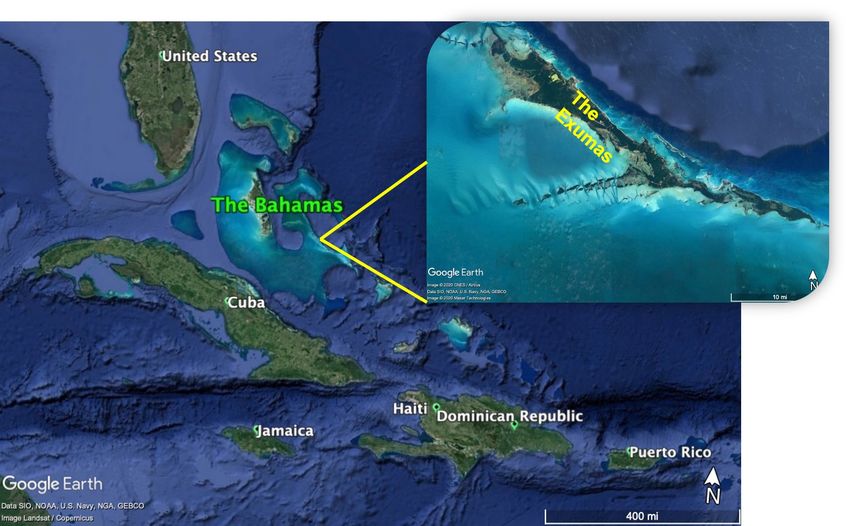
Sustainability 2020, 12, 4764                                                                        3 of 26
Sustainability 2020, 12, x FOR PEER REVIEW                                                           3 of 25

                                       Figure 3. Environmental multiplicity.
                                       Figure 3. Environmental multiplicity.
      Research that is potentially used to develop policy and influence public decisions must be
      Research that is potentially used to develop policy and influence public decisions must be
understood in terms of clear limits if they are to be extrapolated to other societies and environmental
understood in terms of clear limits if they are to be extrapolation to other societies and environmental
situations as well as up-scaled to different societies and places. Sustainable food use and production
situations as well as up-scaling to different societies and places. Sustainable food use and production
policies can be set at the community and national levels. The authors believe that the findings are
policies can be set at the community and national levels. The authors believe that the findings are
useful for understanding other coastal people who share similar histories, locations, adaptations, and
useful for understanding other coastal people who share similar histories, locations, adaptations, and
live elsewhere in the Caribbean. This conclusion is based on having conducted similar studies in the
live elsewhere in the Caribbean. This conclusion is based on having conducted similar studies in the
Dominican Republic [1,2], Antigua [3], St. Thomas [4], and St. Croix [5].
Dominican Republic [1,2], Antigua [3], St. Thomas [4], and St. Croix [5].
      The analysis argues that documenting and protecting the complex adaptions of coastal people is
      The analysis argues that documenting and protecting the complex adaptions of coastal people
essential in order to protect them from disruption. Furthermore, we argue that some findings can be
is essential in order to protect them from disruption. Furthermore, we argue that some findings can
cautiously up-scaled to dissimilar social and environmental situations by using basic sustainability
be cautiously up-scaled to dissimilar social and environmental situations by using basic sustainability
principles identified in the studies. In this analysis we select urban farming as an example of where
principles identified in the studies. In this analysis we select urban farming as an example of where
new communities can be established based on a shared commitment to stable food production.
new communities can be established based on a shared commitment to stable food production.
      The primary power (agency) of the slave and post enslaved peoples was that their littoral use
      The primary power (agency) of the slave and post enslaved peoples was that their littoral use
areas and nearby gardens were unwanted by more powerful people and corporations. Initially they
areas and nearby gardens were unwanted by more powerful people and corporations. Initially they
then had only themselves as a threat to the littoral and so self-management with conservation norms
then had only themselves as a threat to the littoral and so self-management with conservation norms
developed and persisted for hundreds of years. In more recent times threats from interior non-coastal
developed and persisted for hundreds of years. In more recent times threats from interior non-coastal
peoples and corporations have posed a threat to the littoral. We suggest that their nations declare them
peoples and corporations have posed a threat to the littoral. We suggest that their nations declare
heritage communities in recognition of their sustainability practices and in so doing afford them higher
them heritage communities in recognition of their sustainability practices and in so doing afford them
levels of protection. All-inclusive hotels who excavate the mangroves to make boat docks and golf
higher levels of protection. All-inclusive hotels who excavate the mangroves to make boat docks and
courses are the main threat to The Bahamas and elsewhere in the Caribbean.
golf courses are the main threat to The Bahamas and elsewhere in the Caribbean.
      Urban gardeners in the US and Cuba have a similar agency problem even after they become
      Urban gardeners in the US and Cuba have a similar agency problem even after they become a
a community of farmers. They must establish shared conservation norms to coordinate production and
community of farmers. They must establish shared conservation norms to coordinate production and
to prevent their products from being taken by other community members; which is less of a problem
to prevent their products from being taken by other community members; which is less of a problem
because they share in the bounty of the gardens. The threats by outsiders who must somehow be
because they share in the bounty of the gardens. The treats by outsiders who must somehow be
policed by the broader community. Successful urban gardeners will be threatened by the potential
policed by the broader community. Successful urban gardeners will be threatened by the potential
sales of their farms to larger scale non-locally controlled commercial business.
sales of their farms to larger scale non-locally controlled commercial business.
2. Conceptual Background
2. Conceptual Background
     Two concepts frame this analysis: environmental multiplicity and the littoral. Both are described
     Two concepts
as critical         frameofthis
            components          analysis:
                             societies    environmental
                                       produced   by andmultiplicity  and the
                                                          for slave-based     littoral.
                                                                            and         Both are industrial
                                                                                 post-colonial   described
as critical components
agricultural  plantationsof
                          in societies produced
                             the Caribbean.   The by and for
                                                  colonial    slave-based
                                                           societies        and post-colonial
                                                                     of the Caribbean            industrial
                                                                                         were designed   to
agricultural  plantations in the Caribbean.   The colonial societies of the Caribbean    were designed
provide their European owners (which in this analysis is England) with profits through the production    to
provide their European owners (which in this analysis is England) with profits through the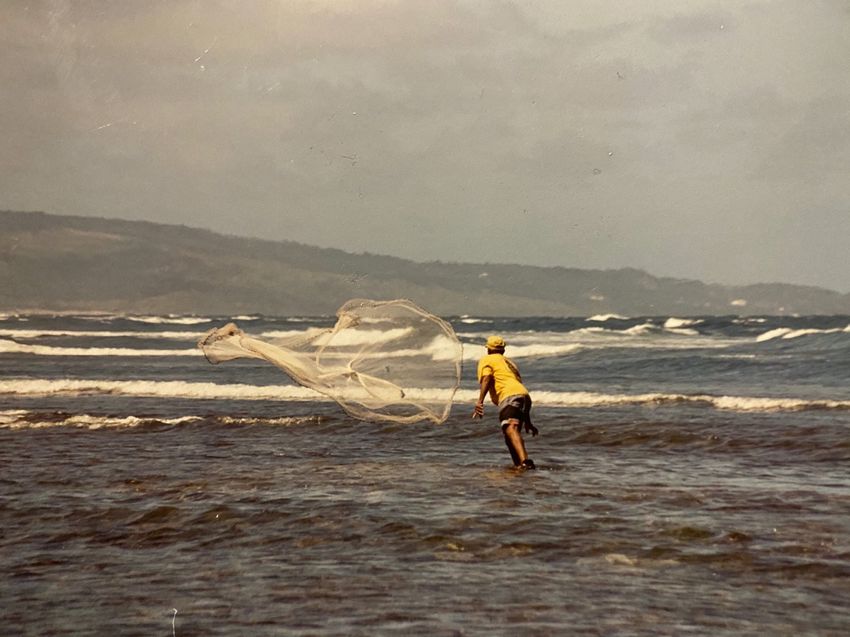
Sustainability 2020, 12, 4764                                                                      4 of 26

of tropical cash crops. Most of these plants were imported from the East Indies and established on
new lands in what would be called the West Indies. The people who farmed, processed, and shipped
these cash crops did so as unfree laborers [6] and continued as underpaid laborers after the end of
English colonial slavery in 1833 well into modern times [7]. The cash crop exporting societies that made
Europe wealthy did not share this abundance with the workers who often had to engage in subsistence
activities just to survive. Thus, the sustainable cultural adaptations to this suppressive economic
situation and to the littoral resources that were not disrupted or destroyed by industrial production are
key for understanding these coastal Caribbean peoples and their small island ecology today.

2.1. Environmental Multiplicity
     This analysis builds on the environmental learning model suggested argued by Berkes and
Turner [8], which maintains that learning and adaptation is based on an accumulation of ecological
knowledge and how to protect people from the influence of social and natural perturbations. Learning
and adaptation can become the foundation for self-organizing and developing conservation-orientated
practices [8]. Common property, and in this case common destiny as a community, can be key
ingredients in the elaboration of resource management practices at the local level.
     People begin to learn about nature as soon as they arrive in a new environment that has unique (to
them) fauna and flora and ecosystem functions [9]. Such knowledge is often termed local knowledge,
and it may be useful in terms of proper environmental behavior within a generation [10]. To move
from simple observations to deeper ecological understandings of food webs and trophic levels takes
many generations. This case supports the co-adaptation model of learning, which argues that within
five generations or about 150 years in a new environment a community can acquire extensive and
complex ecological understandings and become what is termed traditional begin to build a resilient
way of life [9]. As local knowledge is tested, becomes shared and integrated into the culture it can lead
to adaptive behaviors including conservation and resilience [11].
     Connell’s research [12] documented that natural disturbances occurring at an intermediate scale
can cause positive changes biodiversity and biocomplexity. Traditional people use their knowledge of
ecosystems and make intermediate changes that have positive benefits by clearing spaces in forests [13],
moving seeds to new habitats [14], digging tubers [15], changing behavior of herding animals [16],
pruning wild nut trees [17], and designing agricultural fields to stimulate animals and plant populations
as well as provide sustainable farming [18]. Especially important for this analysis is Turner’s study of
seaweed collection among the native peoples of Northwestern America where harvesting of intertidal
zones improved littoral habitats for both plants and animals [19]. Gifting and trading the foods
cemented social relationships, developed economic sufficiency, and built the reliance of families and
communities [19].
     When a people learn about the fauna and flora of their ecosystem, they can adjust their adaptive
strategies to protect themselves from natural and social perturbations. When they do this and live in
a sustainable way, they can be said to have developed a resilient way of life [20,21].
     In The Bahamas and Barbados the African-ancestry people have made a resilient way of life
by building a series of social and ecological redundancies, which we have termed environmental
multiplicity (Figure 3).
     This concept builds on Lambros Comitas’s [22] theory of occupational multiplicity, which is
widely recognized as a foundation of social adaptation and resilience in the Caribbean. He documented
that Jamaicans acquire skills, invest in resources, and hold many jobs at one time. Even though it
makes more economic sense to invest all of their work time in the highest paying job, they spread
their efforts across a range of jobs because these come and go due with economic booms and busts.
Environmental redundancies occur when people have multiple places to fish and gather the same
fauna or flora. They also have agricultural fields that are left fallow for five or more years, restoring
nutrients in the soil and serving as a buffer to environmental damage. These redundant and rotation use
patterns restores the soil and reduces fishing and gathering pressures. These use patterns only cause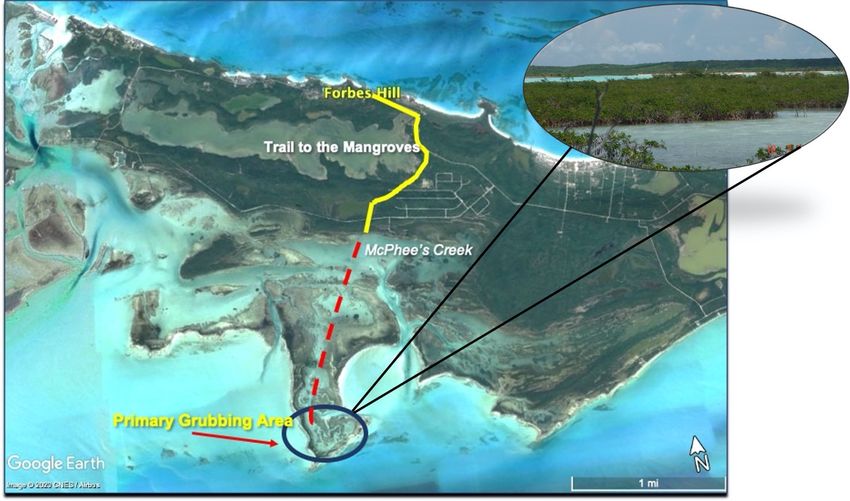
Sustainability 2020, 12, 4764                                                                             5 of 26

intermediate environmental disruptions. In this analysis we combined natural and social redundancies
into the environmental multiplicity model so that it describes these adaptations as both parallel and
functionally interrelated.

2.2. Littoral
       Edges are special places for human ecology [13,23] because critical natural and human life cycle
events occur there. In the Caribbean the edge of the sea is especially important for fish nurseries,
mangrove wetland nutrient exchanges, and people [24]. This is a place where freshwater touches
saltwater, birds’ nest, and amphibians thrive. Here too people begin and end their lives.
       Unlike other important areas in the terrestrial and marine environment, the human dimensions of
the Caribbean littoral tend to be underrepresented or misunderstood in ecological studies and in the
social impact assessment research. Research data from former slave communities in Barbados and The
Bahamas illustrate that over hundreds of years the people learned about their littoral environment and
adaptation to it through sustainable uses. This explains why the littoral has become culturally central
to the people of these communities and why they established a sense of customary ownership and
responsibility for protecting it and treating it as “family land” [25,26].
       The term littoral is used in many different ways. Some scholars restrict it to the wet portion of the
coast between high and low tides [27], whereas others view it as a general term of reference for socially
and biologically integrated portions of the seacoasts. These ideas are combined to operationally define
littoral to mean that a portion of the sea immediately adjacent to the land but no deeper than the waist
of an adult at low tide. It includes places on land that are socially and biologically connected with
the sea.
       The littoral extends onto the land through food webs that critically depend on both salt and
freshwater habitats. Thus, it extends up estuaries into mangrove wetlands, and as far as amphibious
animals like crabs travel inland. Minimally the littoral involves the following kinds of places: shallow
coral reefs, sea grass beds, exposed beach rock, foreshore, backshore, sand dunes, sea cliffs, mud flats,
estuaries, mangrove swamps, brackish ponds (anachialine), freshwater deltas, springs, and streams.
       These case studies involve a number of kinds of littorals, which are presented at various points in
the essay. Figure 4 is a leeward side shallow marine sand bank littoral with slow tides. Figure 5 is a tall
resistant cay with steep banks and shallow sea and fast tides. Elsewhere is a photo of a windward
rain-driven littoral pressured by persistent northeast trade winds with fast tides. Also later in the
article is a mostly enclosed mangrove littoral with a mud bottom and slow tides. Each of these littorals
represents a different econiche. The biodiversity and biocomplexity of these types of littorals have
been documented through our marine and land mapping studies [11,28,29].
       It is essential to understand the biocomplexity and biodiversity of the littoral because only this
explains how these coastal peoples survived periods of industrial agriculture and why they are so
strongly attached to these areas today [24]. Tables A1–A3 (Appendix A) highlights some of the
culturally important species by their cultural uses and names. These use species were selected from
among hundreds of species identified in research interviews and published reports, in order to illustrate
the many sources of traditional food, medicine, and construction.
       Socially and culturally the littoral extends into the contemporary activities, history, and culture of
traditional communities. So, the littoral also exists where it participates in the lives of coastal people.
The littoral is more than a physical place; it is a part of the social fabric of coastal people. It is a place of
teaching and learning. It is a place where knowledge is passed from generation to generation and where
it is commonplace for an elder to pass cultural knowledge regarding appropriate fishing techniques
and strategies to younger people. It is where lessons are taught regarding different species and ways
to monitor environmental changes, be they monthly, annual, or an aspect of climate change. Here
the younger generations are taught lessons regarding types of plants that can be collected and used
for both food and medicinal purposes. This type of knowledge sharing has gone on for generations
and according to oral history began with the forced arrival of their ancestors. Some knowledge was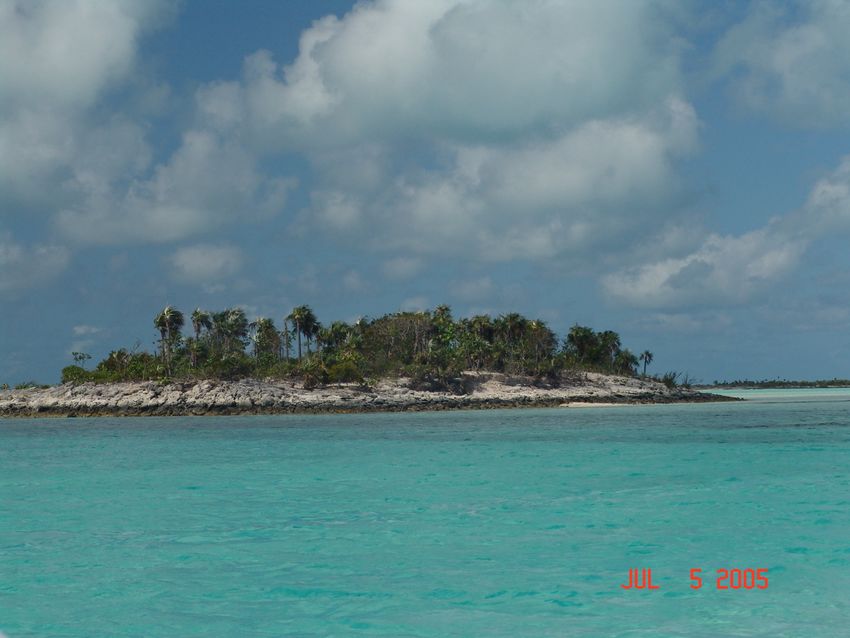
coral reefs, sea grass beds, exposed beach rock, foreshore, backshore, sand dunes, sea cliffs, mud flats,
estuaries, mangrove swamps, brackish ponds (anachialine), freshwater deltas, springs, and streams.
      These case studies involve a number of kinds of littorals, which are presented at various points
in the essay. Figure 4 is a leeward side shallow marine sand bank littoral with slow tides. Figure 5 is
a tall resistant cay with steep banks and shallow sea and fast tides. Elsewhere is a photo of a
Sustainability 2020, 12, 4764
windward rain-driven littoral pressured by persistent northeast trade winds with fast tides. Also6later    of 26

in the article is a mostly enclosed mangrove littoral with a mud bottom and slow tides. Each of these
littorals
brought represents
            from Africaa different
                            and othereconiche. Thelearned
                                      types were    biodiversity and biocomplexity
                                                          over time. Environmentaloflearning
                                                                                       these types of littorals
                                                                                               occurred   from
have   been    documented     through   our marine
their need to sustain family and group health.      and land mapping   studies [11,28,29].

Sustainability 2020, 12, x FOR PEER REVIEW                                                                6 of 25

                                      Figure 4. A leeward sand bank littoral.
                                      Figure 4. A leeward sand bank littoral.

                            Figure 5. Littoral on small key with sea grass beds at edge.
                            Figure 5. Littoral on small key with sea grass beds at edge.
      Today these activities in the littoral provide subsistence and small-scale commercial (informal
      It is essential to understand the biocomplexity and biodiversity of the littoral because only this
economy) opportunities for young men and women who engage the littoral, gather, and collect to
explains how these coastal peoples survived periods of industrial agriculture and why they are so
offset unemployment and as a means of contributing to the household income and welfare. Young
strongly attached to these areas today [24]. Tables A1–A3 (Appendix A) highlights some of the
adults between 16 and 25 tend to experience high levels of unemployment. Their ability to go to the
culturally important species by their cultural uses and names. These use species were selected from
littoral allows them to harvest fish and other marine products for sale or trade. It is not uncommon to
among hundreds of species identified in research interviews and published reports, in order to
see young adults on their way to the beach stopping by various homes to see if individuals want a
illustrate the many sources of traditional food, medicine, and construction.
certain species. Upon return that species is sold or given to the individual. This allows for either cash
      Socially and culturally the littoral extends into the contemporary activities, history, and culture
payment or the ability to call on a future favor. Dinner stews often include marine species and plants
of traditional communities. So, the littoral also exists where it participates in the lives of coastal
gathered on the way home.
people. The littoral is more than a physical place; it is a part of the social fabric of coastal people. It is
a place of teaching and learning. It is a place where knowledge is passed from generation to
generation and where it is commonplace for an elder to pass cultural knowledge regarding
appropriate fishing techniques and strategies to younger people. It is where lessons are taught
regarding different species and ways to monitor environmental changes, be they monthly, annual, or
an aspect of climate change. Here the younger generations are taught lessons regarding types of
plants that can be collected and used for both food and medicinal purposes. This type of knowledge
sharing has gone on for generations and according to oral history began with the forced arrival of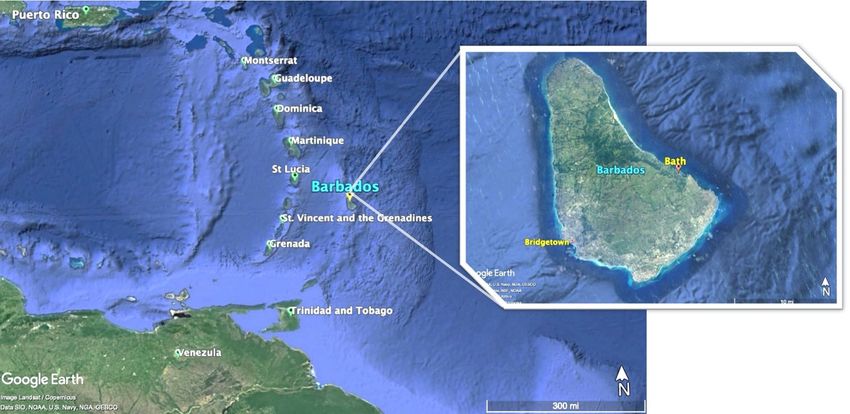
Sustainability 2020, 12, 4764                                                                     7 of 26

3. Methods
      This paper presents an analysis of traditional communities situated along the coasts of the
Exumas islands in the central Bahamas and the island of Barbados. Data from the two studies were
collected with different funding sources and each study had it own specific purpose. The studies
are comparable because each included the systematic gathering of data regarding use of littoral by
community members. In both studies the members of the communities had been dependent for
food, medicine, and construction for more than 150 years on the animals and plants from the littoral.
Residing in place for this period and sustainably using the littoral argues that the people should be
defined as traditional, which is an analytically important stage of adaptation. In fact, the communities
in the Exumas, Bahamas were established 235 years ago (post-1785) and the Bath plantation was
established more than 227 years ago (post-1793) [30].
      Social science researchers use mixed methods [31,32] and triangulation [33]. Mixed methods
involve collecting qualitative and quantitative data, and where there is convergence, confidence in the
findings grows considerably [34]. Participant observation was an important component of each case
study. The Exuma study used seven instruments (a) sea attachment, (b) quality of life, (c) grubbing,
(d) tourism, (e) ethnobotany, (f) land mapping, and (g) sea mapping. The Barbados study used two
instruments one focused on occupational multiplicity and other on household finance and micro-credit.
Both studies used oral histories, which were both structured and open, ended and were comprehensive
given the dozens of hours each required. Most data collection instruments were diachronic in order to
contextualize contemporary life ways in short (30 years) to long (200 years) adaptation time frames.
All formal interviews were systematic in that they were administered using a structured data collection
instrument, thus permitting direct comparisons from instrument to instrument and person to person.
      Informal interviews are an important tool for collecting data when formal interviews are not
possible because of either time or interest of the interviewee [32]. They are often the best way of
listening to people about subjects not currently contained within the formal interview instruments.
Informal interviews permit topics to emerge that may become critical to the study, perhaps eventually
requiring their own formal instrument. In-depth understanding of some topics like ethnobotany
required dozens of hours of informal interviews. All informal interviews were recorded in bound field
notebooks and logged into a data base.
      It is important to recognize, however, that confidence in these findings derives from an overall
triangulation of comparable findings from any of the instruments and oral histories. The triangulation
of data thus involves comparing responses generated with divergent instruments. When two or more
instruments provide the same answer to a research question then the confidence in the accuracy of the
answer is increased. Confidence in the accuracy of responses also increases to the extent that most
interviewees provide the same answers.

3.1. Barbados
      The Barbados interviews were conducted during a 3-year study of rotating savings and credit
associations known in the Caribbean as meeting turn, sou sou, asu, box hand, and partner [35].
During five field sessions a single researcher [36] conducted 500 formal and informal interviews in
Barbados; of these 120 were with the people of the Bath plantation area on the northeastern coast. Data
were collected on microeconomic systems, which are a creole (or informal) economic system [7] and
community lifeways. Responses regarding direct production from the sea provided data on patterns of
littoral use.
      The research is built on the findings from earlier studies, especially questions generated by
previous interviews. The research methodology included: literature review; participant observation;
formal interviews with instruments; and informal interviews using a memorized interview schedule.
      The Barbadian analysis assumes that broader patterns of Caribbean life, especially ones occurring
over the life cycles of individuals and traditional patterns established over many generations can be
understood through systematic interviews as well as through a few typical stories (oral history) from a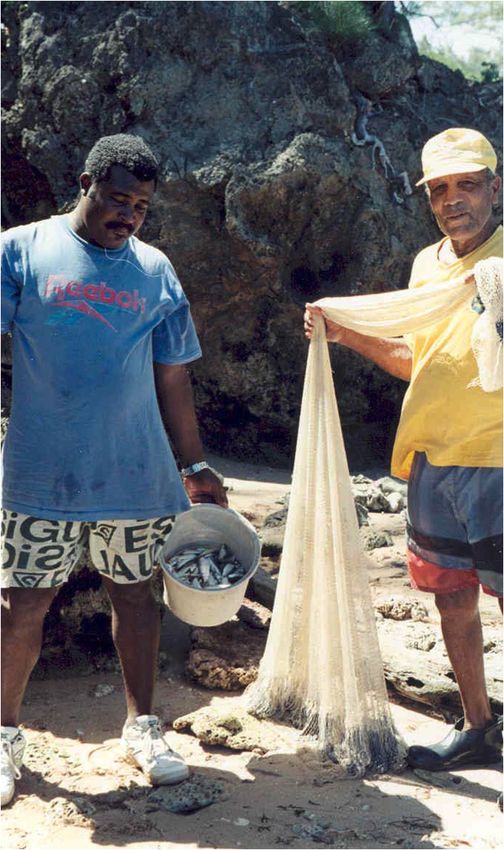
Sustainability 2020, 12, 4764                                                                        8 of 26

single settlement. The 500 plus interviews established the cultural centrality of the littoral in the lives
of people in coastal Barbados. The Barbados analysis situates these findings through the diachronic
story of the Bath settlement and one fisherman.

3.2. The Bahamas
      The Bahamas research focused on how proposed marine protected areas (MPAs) could impact
six local communities in the Exumas. Community perceptions of potential MPA impacts were assessed
as predictors of local responses to the MPAs. Beginning with an open-ended ethnographic approach,
the study sought to elicit variables rather than test them.
      The Bahamas case involved 572 interviews conducted with 193 people from six coastal communities
in the Exumas islands and cays. Various data collection instruments were used, often with the same
people. There were 352 formal and 221 informal interviews. An overall sample size of 34% of the
census recorded population was achieved for each community.
      The research is (a) inductive, (b) iterative, (c) mixed methodologically, (d) collaborative, and
(e) consultative. Eight field sessions occurring over a six-year period permitted an iterative cycle of
collecting data, analyzing findings, and returning with both new and revised data collection instruments.
      The sea attachment, land mapping, and sea mapping instruments were central to this analysis.
It is important to recognize that confidence in these findings derive from an overall triangulation
of comparable findings from any of the seven instruments and oral histories. A fourteen-page sea
attachment instrument was developed to explore the widest range of marine uses and cultural meanings.
It has 208 questions distributed across seven knowledge and use domains such as: material arts, sea
biology, underwater landscapes, land biology, expressive arts, identity symbols, and settlement stories.
Land mapping and sea mapping interviews were used to define resource use patterns across space
and through time from slavery until the time of research.
      The oral history accounts, some of which involved hundreds of hours of interview time, describe
environmental learning and the subsequent behaviors of ancestors during slavery and just beyond.
These are up to 235-year-old heritage memories (post-1785). It is important to remember that many of
the people today and their ancestors have continuously lived in or near their initial slave village, have
taken and kept the last name of the original planters, and for most of this time have relied upon the
same marine and terrestrial ecosystems that their ancestors faced. Continuity of people and place is
illustrated by the fact that many people remember when the first commercial pharmaceuticals became
available in the Exumas in the 1950s. So, bush teas and medicines were relied upon throughout
this period and are used extensively today. Memory timelines, given these criteria, are well within
the accepted standards of accuracy [37]. Elsewhere, Stoffle and Zedeño [38] document accurate oral
history accounts going back thousands of years. From an ethnological perspective the slave-period
interpretations also are robust because many people interviewed in the Exumas similarly describe the
environmental learning and adaptations of their ancestors.

4. Cases
     These cases have the common theme of the diachronic development of sustainable life ways in
former enslaved communities who have maintained a core traditional population. Both cases are
primarily about of African-ancestry people, but each involves traditional European-ancestry neighbors
who for hundreds of years have worked alongside them on the plantations. Neither Barbados nor
the Bahamas colonial society provided a social/economic safety net for its rural poor; thus, individual
security was established by the people themselves as members of small-scale communities located
near the edge of the sea.
     Both cases are focused on a marine littoral activity, but it is important to understand that complex
sustainable use patterns exist for terrestrial fauna and flora. Oral history studies of plant specialists,
for example, have documented 264 species of traditional use plants for the Exumas [39] and almost as
many for Barbados [40–42].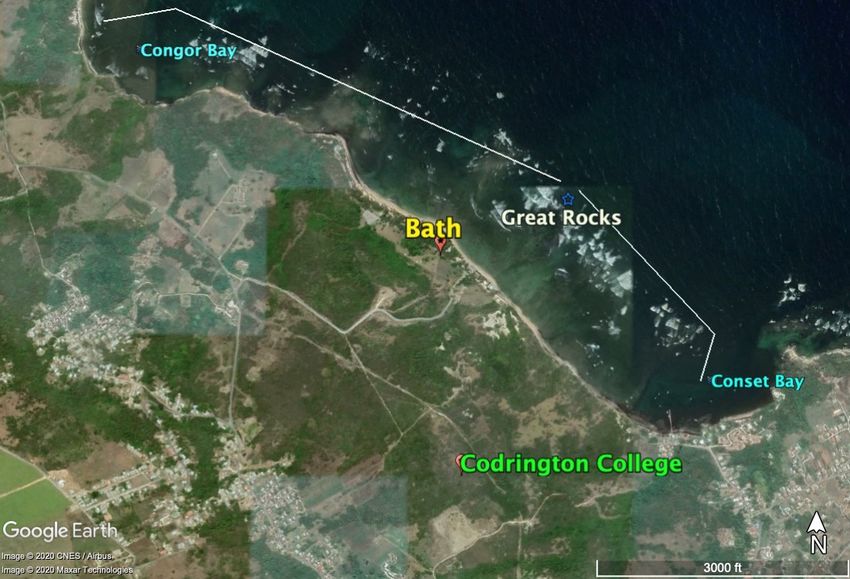
Sustainability 2020, 12, 4764 9 of 26
4.1. Case One: Barbados
The east coast of Barbados can be characterized by its rugged coastline where prevailing easterly
Sustainability
wind and wave
Sustainability 2020, 12,
12, x
x FOR
2020,action PEER
carved
FOR REVIEW
PEER out a variety of locations in which flora and fauna thrive. One impressive
REVIEW 99 of
of 25
25
area is the former Bath plantation where in the nearby shallow sea is a predominant feature known
feature known as
as the Great Rocks. The Great
Great Rocks serves
serves as aa defining marker between deeper ocean
asfeature known
the Great Rocks. theThe
Great Rocks.
Great The serves
Rocks Rocks
as a definingas marker
defining marker deeper
between betweenocean
deeperandoceanland
and
and land
land interaction
interaction (Figures
(Figures 11 and
and 6).
6). The
The area
area outside
outside of
of the
the Great
Great Rocks
Rocks tapers
tapers off
off to
to mixed
mixed patches
patches
interaction (Figures 1 and 6). The area outside of the Great Rocks tapers off to mixed patches of shallow
of shallow
shallow and
of deep-water deep-water
andcoral
deep-water coral
coral reefs
reefsancreate
create an
an environment
environment where
where fish and
and underwater plant life
and reefs that create environment where fish andfish underwater
underwater plant
plant life life
flourish.
flourish. The Great Rocks littoral supports land and marine based plants
flourish. The Great Rocks littoral supports land and marine based plants and animals. and animals.
The Great Rocks littoral supports land and marine based plants and animals.
Figure
Figure6. The Bath area
area and littoral
littoral zone.
Figure 6.
6. The
The Bath
Bath area and
and littoral zone.
zone.
AnAn
extensive littoral zone extending from the Great Rocks north north toMartins
Martins Bayand and south to
An extensive
extensive littoral
littoral zone
zone extending
extending from
from thethe Great
Great Rocks
Rocks north to to Martins BayBay and south
south to
to
Consett
Consett Bay (Figure 7) has been and continues to to beaasocially,
socially, culturally,and and economically important
Consett Bay
Bay (Figure
(Figure 7) 7) has
has been
been and
and continues
continues to be be a socially, culturally,
culturally, and economically
economically important
important
part of
part the lives of two distinct ethnic groups of people; Irish indentured servants brought over in the
part of
of the
the lives
lives of
of two
two distinct
distinct ethnic
ethnic groups
groups ofof people;
people; Irish
Irish indentured
indentured servants
servants brought
brought over
over inin the
the
latter 1600s
latter and subsequently African enslaved people in the late 1600s. Both of these groups continue
latter 1600s
1600s andand subsequently
subsequently African
African enslaved
enslaved people
people inin the
the late
late 1600s.
1600s. Both
Both of
of these
these groups
groups continue
continue
toto
inhabited the area and have done
done soever
ever sincethe the first plantations were establishedthisin this part
to inhabited
inhabited the the area
area and
and have
have done soso ever since
since the first
first plantations
plantations werewere established
established inin this part
part of
of
ofBarbados.
Barbados.The Thelittoral
littoralprovided
providedfoodfoodand
andmedicine
medicineininaddition
additiontotocreating
creatingsocial
socialand
andeconomic
economic
Barbados. The littoral provided food and medicine in addition to creating social and economic
security
security
security and
andstability.
and stability.The
stability. Thecollection
The collectionof
collection of plants
of plants and
plants and animals
animals
animals in in this
in thisarea
this areawas
area wasan
was animportant
an importantstrategy
important strategy
strategy forfor
for
offsetting
offsetting thethecruel
cruel andand harsh
harsh conditions
conditions of
of slavery
slavery and
and allowed
allowed the
the people
people
offsetting the cruel and harsh conditions of slavery and allowed the people to sustain themselves,toto sustain
sustain themselves,
themselves,
when
when
when provisions
provisionsfrom
provisions fromthe
from theplantation
the plantationwere
plantation weregrossly
were grossly inadequate.
grossly inadequate.
inadequate.
Figure
Figure7. The Bath littoral with sea swells madeby
by northeastwinds.
winds.
Figure 7.
7. The
The Bath
Bath littoral
littoral with
with sea
sea swells
swells made
made by northeast
northeast winds.
The
The north
north east
east coastal
coastal littoral
littoral was
was used
used from
from the
the earliest
earliest times
times of
of English
English settlement
settlement (1627)
(1627) but
but
it
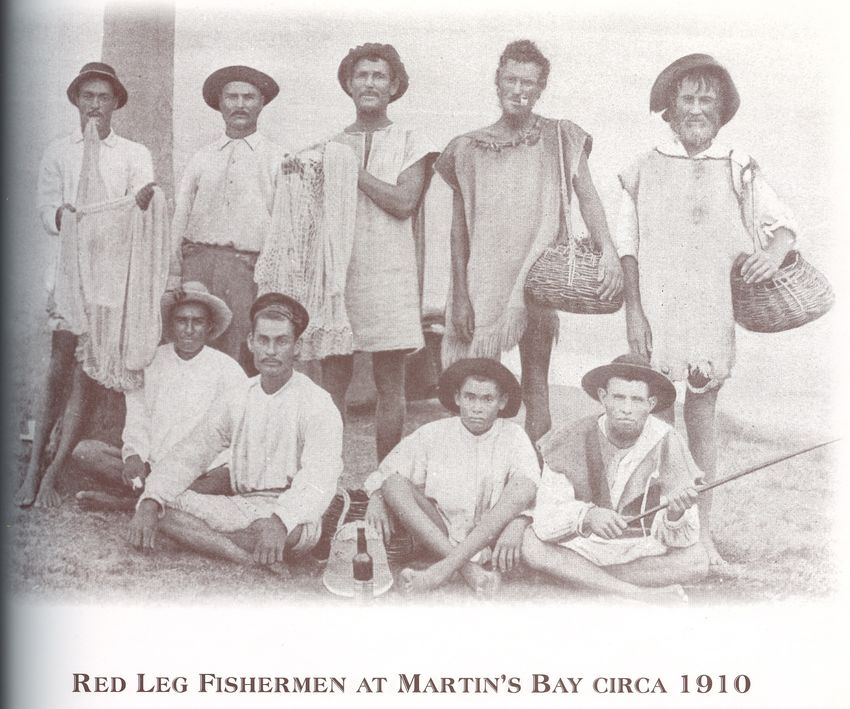
it seems that fishing was primarily the responsibility of 40 Arawak families many recently from Dutch
seems that fishing was primarily the responsibility of 40 Arawak families many recently from Dutch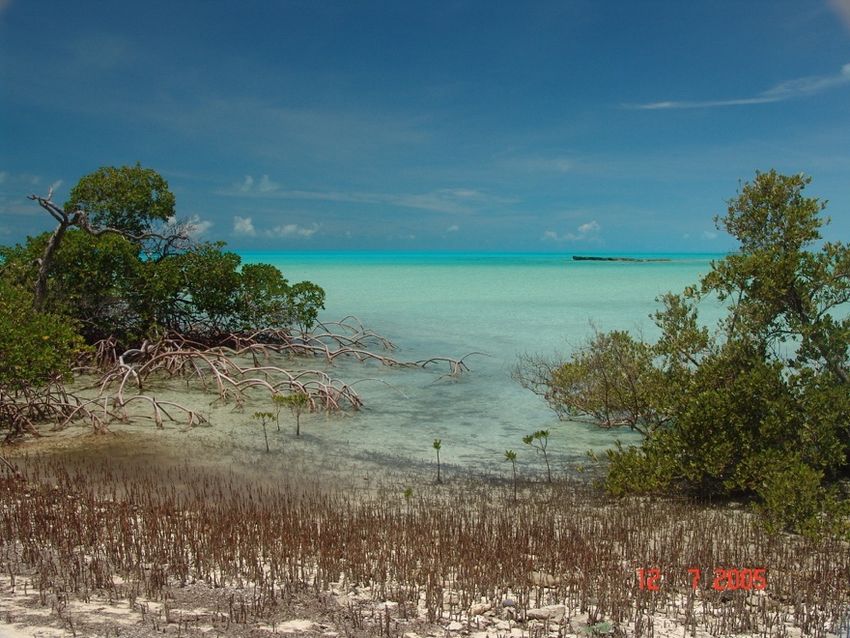
Sustainability 2020, 12, 4764                                                                        10 of 26

     The north east coastal littoral was used from the earliest times of English settlement (1627) but
it seems that fishing was primarily the responsibility of 40 Arawak families many recently from
Dutch Guiana. Richard Ligon [43], who lived in Barbados from 1647 to 1650 provided a map of the
Indian area located just inland near Bath on the north east coast. He observed:

      “that Indian women were primarily, if not solely, employed in household tasks. On the other
      hand, the men...were use for footmen, and killing of fish, which they are good at. With their
      own bows and arrows they will go out, and in a day’s time kill as much fish as will serve
      a family of a dozen persons two or three days, if you can keep the fish so long”. [41,43]

      This observation is an intriguing insight into the pristine condition of the littoral. It is not clear
how long Indian men were employed in the fishing industry with their six-foot bows and long arrows,
but it is unlikely that African-ancestry people were permitted to make and use of such weapons.
      Ligon [43] recorded on an inland plantation that African-ancestry males were allowed two mackerel
a week and each woman one. African ancestry people were not observed fishing except under the
direction of a coastal plantation owner who had a seine net. This may have occurred because they
were restricted to industrial plantation labor and thus their visits to the littoral were at odd hours and
on Sunday and conducted with little equipment. Some later evidence of this comes from the analysis
of the nearby Codrington Plantation (pre-1710 to 1782) where about 300 people were enslaved [44].
The Codrington plantation records of 1776 list the occupations of 51 skilled men, and 21 women
and 9 boys who were not on the field gangs, but the occupation of a fisher is not listed [44]. This
is especially interesting because Codrington plantation became a major English Religious College
occupied by students and ministers of the Anglican Church all of whom consumed fish on a regular
basis. Perhaps the lack of the fisher job was unique to Codrington because 12 years later in 1788
the island’s governor, reported that the number of fishermen may be about 500 out of an enslave
population of about 62,000 [41].
      Crab fishing during slavery may be a better analog for patterns of littoral use than fishing. They
are caught at night by fishers using torches that both provided light for movement and to attract the
crabs [41]. Similar patterns occurred in the shallow water for collecting lobsters. Torches combined
with nets were used to catch flying fish along the shore. McKinnen in 1802 recorded that in Barbados
the local people are very successful at taking flying fish. At night they spread their nets before a light
and disturb the water at a small distance. The fish rise and eagerly fly toward the light and are
intercepted by the nets [45]. This pattern of using torches and nets to catch flying fish was observed
again by another visitor in 1818 [46]. Use of torches to collect in the littoral is in keeping with the need
for enslaved people to be out of sight when they are away from the plantation.
      There are many key features and resources of the littoral utilized by the enslaved people and
their descendants in the area today. The collecting of marine resources was an important strategy
for providing much needed protein in a diet that was inadequate at best when based on provisions
provided by the plantation owner or overseer. These littoral collection strategies are much the same as
they were in the past using hands to grab or hook, small/light fishing poles or lines, and self-made nets
(cast nets) as seen in Figure 8.
      The Bath case is centered on the life of one outstanding, but in many respects, a typical fisher. His
is the story of the people of Bath and many other coastal communities in Barbados. Fred Watson is
a 94-year-old fisherman (in 2020) who was born in a little house across from the beach in Bath. He
has lived his whole life in and around this area, fishing as a means of providing food and money
for his family. As a youth Fred was trained to fish and collect marine and terrestrial resources such
as seacat (Octopus brareus), conch (Strombus gigas), spiny lobster (Panulirus argus), Red Sea crabs
(Careilius corallinus), whelks (Buccinum undatum), and curbs (Polyplacophora ssp.) from the sea, and
seaweeds, sea grapes (Coccoloba uvifera) and white swampee crabs (Cardisoma guanhumi) from the
land. These lessons were a common part of the informal environmental education of young boys
as older relatives and community members often felt obligated to pass on what they knew to the
Sustainability 2020, 12, 4764 11 of 26
younger generation. As he grew older, he attended school and upon completion of his formal education
was made a primary school teacher. During that time Fred continued to live and support his family,
especially his 15 family members. The problem was that even with Fred’s salary there still was not
Sustainability
enough food 2020,
to12, x FOR
feed PEER REVIEW
everyone. 11 of 25
Figure 8. Irish fishermen with littoral fishing equipment in Barbados near Bath [47].
Figure 8. Irish fishermen with littoral fishing equipment in Barbados near Bath [47].
Fred stated, at the age of 13:
The Bath case is centered on the life of one outstanding, but in many respects, a typical fisher.
His is“Ithehadstory of the
to give uppeople
being of Bath andeven
a teacher many other coastal
though I enjoyed communities
it. Even thoughin Barbados.
I had aFred
steadyWatson
is a 94-year-old
paycheck I couldn’t always make enough money to make sure that everyone was fed. I would He
fisherman (in 2020) who was born in a little house across from the beach in Bath.
has lived his whole
still fish at thatlife
timeinbut
andbecause
around ofthismyarea, fishing as atomeans
commitment of providing
the school I wasn’t food
able toand
domoney
it as for
his family. As a youth Fred was trained to fish and collect marine and terrestrial
often as I needed to. So, I gave up being a teacher and went to the sea full time. I would fish resources such as
seacat all day and all night, sometimes inside Great Rocks and sometimes outside. Even thoughcrabs
(Octopus brareus), conch (Strombus gigas), spiny lobster (Panulirus argus), Red Sea
(Careilius
I made corallinus),
a lot less whelks
money, I(Buccinum
was able to undatum),
make sure and curbs
that (Polyplacophora
everyone ssp) from
ate. My brothers andthe sea, and
sisters
seaweeds, sea grapes (Coccoloba uvifera) and
never went hungry because the sea always provides.” white swampee crabs (Cardisoma guanhumi) from the
land. These lessons were a common part of the informal environmental education of young boys as
olderFred comesand
relatives fromcommunity
a fishing family and his
members fisheries
often knowledge
felt obligated to and
passsuccess
on what in training
they knew fishermen
to the
from the area
younger comes from
generation. As hehis grew
over 85older,
plus years of fishing
he attended plus the
school andgenerations of knowledge
upon completion of hisacquired
formal
from those was
education that made
came before
a primaryhim.school
His knowledge of the sea
teacher. During thathas garnered
time a great deal
Fred continued to of local
live andassupport
well as
national
his family,respect and attention.
especially his 15 familyIn 2016, the Prime
members. Minster was
The problem awarded Fred with
that even the Honor
Fred’sof Oldest
salary Active
there still
Fisherman
was not enoughin Barbados
food to building on his previous award from 2002 for his lifelong service in fishing
feed everyone.
and recognizing
Fred stated,him as age
at the the Best
of 13:Fisherman in Barbados [48]. This service includes not only providing
food for the people of Barbados but also includes his role in assisting researchers and policy makers in
“I had to give up being a teacher even though I enjoyed it. Even though I had a steady
creating laws that benefit the creation of sustainable fishing practices. The young boys and young men
paycheck I couldn’t always make enough money to make sure that everyone was fed. I
still turn to him for advice and even at 94 he spends his days mending nets and holding “classes” for
would still fish at that time but because of my commitment to the school I wasn’t able to do
those that need assistance.
it as often as I needed to. So, I gave up being a teacher and went to the sea full time. I would
The littoral is full of marine and terrestrial resources that can be sustainably used for consumption
fish all day and all night, sometimes inside Great Rocks and sometimes outside. Even
and sale. Many plants are needed for making medicinal tonics. “Bush teas” are made from various
though I made a lot less money, I was able to make sure that everyone ate. My brothers and
combinations of plants and used for a variety of ailments, from sickness related to colds and flu
sisters never went hungry because the sea always provides.”
to detoxifying internal organs. People bathe in the saltwater to cleanse the body from wounds as
well Fred comes from
as consume a fishing
saltwater family and
to cleanse his fisheries
congestion fromknowledge
head and and lungsuccess
ailments.in training fishermen
These folk cures
from the area
are passed comes
down fromgeneration
from his over 85toplus years of fishing
generation and are plus the selected
often generations overofthe
knowledge acquired
use of “western”
from
chemicalthose that came before him. His knowledge of the sea has garnered a great deal of local as well
medicines.
as national respect and attention. In 2016, the Prime Minster awarded Fred the Honor of Oldest Active
Fisherman in Barbados building on his previous award from 2002 for his lifelong service in fishing
and recognizing him as the Best Fisherman in Barbados [48]. This service includes not only providing
food for the people of Barbados but also includes his role in assisting researchers and policy makers
in creating laws that benefit the creation of sustainable fishing practices. The young boys and young
men still turn to him for advice and even at 94 he spends his days mending nets and holding “classes”The littoral is full of marine and terrestrial resources that can be sustainably used for consumption
and sale. Many plants are needed for making medicinal tonics. “Bush teas” are made from various
combinations of plants and used for a variety of ailments, from sickness related to colds and flu to
detoxifying2020,
Sustainability internal
12, 4764organs. People bathe in the saltwater to cleanse the body from wounds as well 12 of as
26
consume saltwater to cleanse congestion from head and lung ailments. These folk cures are passed down
from generation to generation and are often selected over the use of “western” chemical medicines.
Fred is
Fred is aaperson
personwho who acquired
acquired generations
generationsof knowledge
of knowledge about the littoral
about zone from
the littoral zone elder
fromfamily
elder
family and friends and he continues to be an important conduit of this information. He isfulfill
and friends and he continues to be an important conduit of this information. He is quick to quickhisto
role ashis
fulfill teacher
role asforteacher
those who wishwho
for those to carry
wishontothe responsibility
carry to share and
on the responsibility build and
to share uponbuild
the lessons
upon the of
the past. While he is no longer able to fish in the same ways as he did in the past,
lessons of the past. While he is no longer able to fish in the same ways as he did in the past, he still is he still is a regular
afixture
regularat Bath where
fixture young
at Bath men come
where youngtomen improve
comeupon their fishing
to improve uponknowledge
their fishingandknowledge
practices. He and is
revered asHe
practices. theis“best
reveredfisherman
as the in all of
“best Barbados”
fisherman in and has
all of made sure
Barbados” andthat
hasthemade
youthsure
are that
educated as to
the youth
the best practices for sustainable use.
are educated as to the best practices for sustainable use.
In 1999
In 1999 hehe demonstrated
demonstrated how how to to use
use aa cast
cast net
net in
in the
the littoral
littoral can
can provide
provide enough
enough for for aa single
single
person
person to provide adequate amounts of food to multiple feed families. In this instance he went out
to provide adequate amounts of food to multiple feed families. In this instance he went out
across the
across theshallows
shallowstargeting
targeting small
small fishfish
known
knownas fray (a small
as fray fish) and
(a small fish)sardines. With two
and sardines. With nettwo
throws
net
and over
throws 30 over
and min he30 was
min able
he wasto fill
able a bucket
to fill a of theseof
bucket small
thesefish providing
small enough enough
fish providing food forfood
two for
daystwoof
meals for both his family and that of his helper (Figure
days of meals for both his family and that of his helper (Figure 9). 9).
Figure 9. Fred
Fred Watson
Watson on the right with a younger fisherman.
When asked why he did not continue to throw and catch more fish his response demonstrated
a conservation strategy. Fred stated, “Why
“Why would
would I continue
continue to to throw
throw the net when I have all that I
need for now (Figure 10). Sure, I could catch much more but why would I hurt the fish. I do not need
more than
than IIhave
haveand
andbybytaking
takingmore
morethan I need
than all all
I need I do is hurt
I do them
is hurt (the(the
them fish).fish).
NowNow
I know that they
I know that
will be there for me for the future.”.
they will be there for me for the future.”.
This strategy of creating a balance between conserving the fish while supplying food for the
family ensures that resources will be there for future use. This knowledge stems from generations of
day-to-day involvement with the resources and is a lesson that when passed to future generations of
fishermen will ensure that the practice is sustainable for both humans and the fish. This is a practice
that many coastal people throughout the world have employed because of their recognition of humans’
potential impact on the health of the environment.Sustainability 2020, 12, 4764 13 of 26
Sustainability 2020, 12, x FOR PEER REVIEW 13 of 25
Figure 10. Fred Watson casting the net.
Figure 10. Fred Watson casting the net.
4.2. Case Two: The Bahamas
This strategy of creating a balance between conserving the fish while supplying food for the
The Bahamas case analysis is about how African ancestry people living on the isolated Exumas
family ensures that resources will be there for future use. This knowledge stems from generations of
islands and cays (Figure 10) located in the central Bahamas have learned about and adapted to their
day-to-day involvement with the resources and is a lesson that when passed to future generations of
environment. The case contains a range of dates for the beginning of environmental learning after
fishermen will ensure that the practice is sustainable for both humans and the fish. This is a practice
individual plantations failed post 1785 and the eventual collapse of most slave plantations in the
that many coastal people throughout the world have employed because of their recognition of
late 1790s. Two types of TEK, a form of hand fishing and extensive knowledge of ethnobotany,
humans’ potential impact on the health of the environment.
illustrate the complexity of these in-situ knowledge domains. The case documents how TEK has gone
beyond
4.2. Caseunderstanding
Two: The Bahamas species to awareness of trophic levels interactions, ecosystem functions, and
eventually to ways to conserve this delicate coastal environment. Their in-situ TEK, co-adaptation, and
The Bahamas
conservation have case analysis
produced is about
a lifeway howon
based African ancestry people
environmental livingthat
multiplicity on the isolated
is has Exumas
been resilient
islands
for overand
aboutcays235(Figure
years. 10) located in the central Bahamas have learned about and adapted to their
environment. The case contains a range of dates for the beginning of environmental learning after
4.2.1. History
individual of Bahamian
plantations failedCasepost 1785 and the eventual collapse of most slave plantations in the late
1790s. Two types of TEK, a form of hand fishing and extensive knowledge of ethnobotany, illustrate
The arrival of the Spanish in the Bahamas in 1492 initiated a period of rapid depopulation and the
the complexity of these in-situ knowledge domains. The case documents how TEK has gone beyond
eventual extinction of the original inhabitants of the Bahamas, the Lucayan people. Most evidence
understanding species to awareness of trophic levels interactions, ecosystem functions, and
suggests that Bahamian islands and cays subsequently lay unused by humans. The ecology as it
eventually to ways to conserve this delicate coastal environment. Their in-situ TEK, co-adaptation,
had existed under thousands of years of Lucayan farming changed when they became extinct and
and conservation have produced a lifeway based on environmental multiplicity that is has been
the Spanish failed to occupy the Bahamas. With no managers, nature went wild so to speak. A new
resilient for over about 235 years.
Bahamian state of nature emerged over the next 156 years, until being interrupted in 1648 when English
Puritans settled Eleuthera Island in Northern Bahamas.
4.2.1. History of Bahamian Case
The Exumas, being more isolated and removed from the centers of the Bahamian colonial economy,
The arrival
remained of the for
unoccupied Spanish in thewhen
293 years, Bahamas in 1492
in 1784 initiated
the two largeaExuma
periodislands
of rapidwere
depopulation
surveyed and
the eventual extinction of the original inhabitants of the Bahamas, the Lucayan
conditionally given as plantations to Loyalist (refugees from the 1776 to 1783 American Revolution). people. Most evidence
suggests
A plat mapthatmade
Bahamian in 1792islands and caysthe
documents subsequently
presence oflay115 unused
land by humans.
grants each The ecologyisas
of which a itsmall
had
existed under
plantation [49].thousands
Only a few ofplatted
years of Lucayan
areas lackedfarming changed
an indicated when
owner, they
most ofbecame extinct
who resided andtheir
with the
Spanish failed to occupy the Bahamas. With no managers, nature went
enslaved workers. The Loyalists were required, as a condition of receiving Crown lands, to clear the wild so to speak. A new
Bahamian
land and make stateitofinto
nature emerged
productive cashover
cropthe next Failure
farms. 156 years, until beingthis
to accomplish interrupted
within teninyears
1648would
when
English
result inPuritans
forfeituresettled
of theEleuthera
land backIsland to the in Northern Bahamas.
Crown.
The
Living Exumas,
in a new being more that
ecosystem isolated
had and
been removed
fallow forfromaboutthe 293centers
years andof the Bahamian
required by thecolonial
Crown
economy, remaineda commercial
to rapidly produce unoccupied plantation,
for 293 years, when in stripped
the Loyalists 1784 thethistwolonglarge Exuma
fallow islands They
ecosystem. were
surveyed and conditionally given as plantations to Loyalist (refugees from
sold off all commercial timber, moved to define boundaries with coral rock walls, and planted cash the 1776 to 1783 American
Revolution).
crops such asAcottonplat mapon allmade in 1792
suitable documents
land. the presence
Tropical rains of 115 land
and hurricanes soongrants eachthe
revealed of which
dangerisofa
small
opening plantation
all lands[49]. Only a few
to farming. Keeganplatted
andareas lacked
Mitchel [50]anestimate
indicated owner,
that most of
the topsoil ofwho
mostresided with
plantations
their enslaved workers. The Loyalists were required, as a condition of receiving
washed away within three years, exposing the hard-calcariferous bed rock. The chenille bug destroyed Crown lands, to clear
the
much land andcotton
of the make grown
it into inproductive
the Bahamas cashincrop farms.
the late Failure
1790s [51]. to
So,accomplish
most Exumian this slave
within ten years
plantations
would result
quickly failed,inalthough
forfeitureaof few theremained
land backfor to another
the Crown. 100 years as salt producers. With crop failures,
Living inleft
the Loyalists a new ecosystem
the Exumas, butthat had
their been fallow
African ancestry forslave
aboutpopulations
293 years and required
remained in abylimbo
the Crown
status
to rapidly produce a commercial plantation, the Loyalists stripped this long fallow ecosystem. TheyYou can also read


