SYSTEMIC DESIGN 2020-01-16 - Intro to Systemic Design
←
→
Page content transcription
If your browser does not render page correctly, please read the page content below
2020-01-16

                           Introduction and Basics of
                    SYSTEMIC DESIGN
                                 December 10, 2019

                                                      Pieter de Vos, PhD
                                                      devos@ualberta.ca
                                                     www.pieterdevos.ca

1

    IDEO Design Thinking

2

                                                                                   1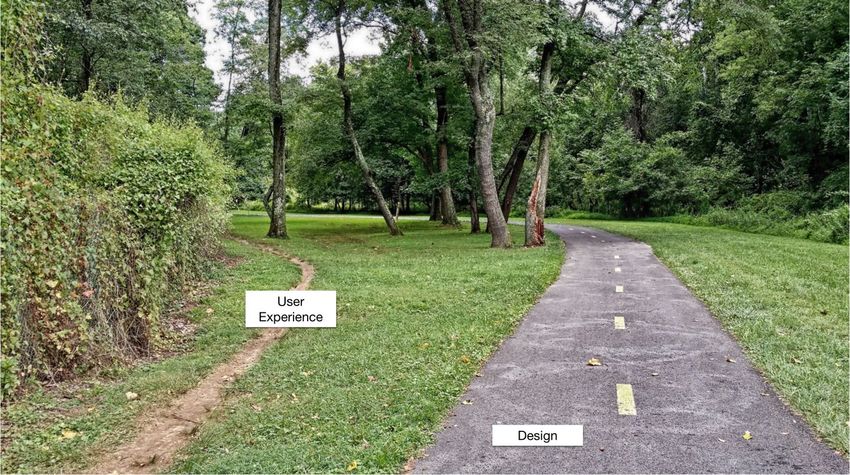
2020-01-16

3

    IDEO Design Thinking

                           Diverge   Converge

                           Create     Make
                           Choices   Choices

                                               Convergence
                                               represents an
                                               emerging
                                               understanding of
                                               the challenge.

4

                                                                          2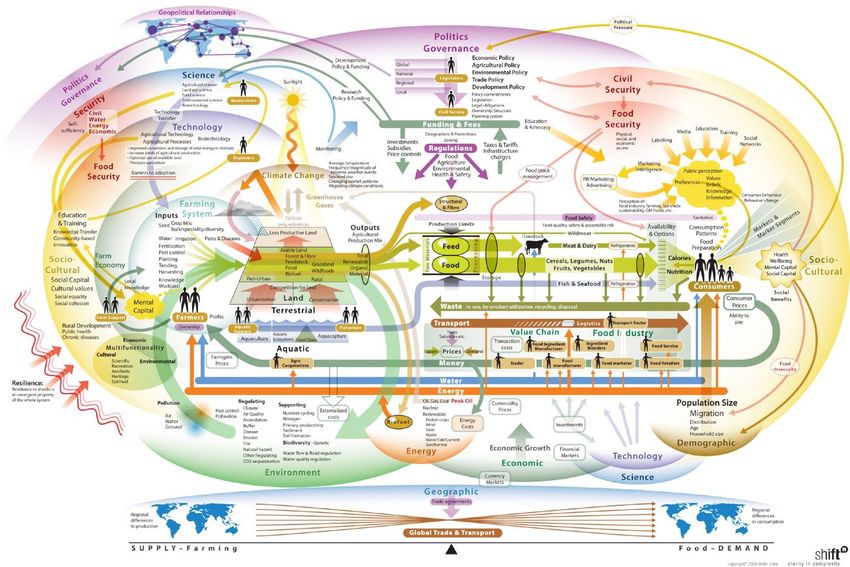
2020-01-16

    Systems Thinking + Design Thinking =

                Systems                     Design
                Thinking                    Thinking

                       Systemic Design                      [CoLab 2016]

5

    From Strat Planning… To Systemic Design

    Traditional Strategic Planning   Systemic Design
    One answer                       Multiple Related Answers
    Finding Problems/Solutions       Finding Meaning, Root Causes,
                                     and Insights
    Analysis                         Analysis + Synthesis

    Simplifying for Understanding    Embracing Complexity for Shared
                                     Understanding

                                                             [CoLab 2016]

6

                                                                                    3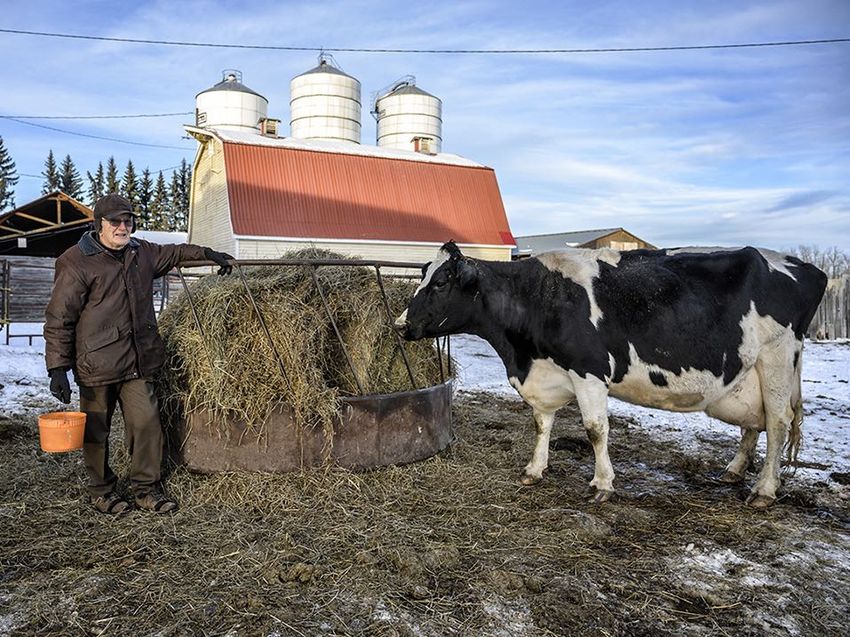
2020-01-16

    (Very) Low
                                                                                                         CHAOTIC

       Certainty of outcomes & understanding of the systems in play
                                                                                                 No cause-effect relationships
                                                                                                         perceivable
                                                                                                     act-sense-respond
                                                                                                       [novel practice]
                                                                                                                                    “Ready, fire, aim”

                                                                                                        COMPLEX
                                                                                          The relationship between cause-effect can
                                                                                                only be perceived in retrospect
                                                                                                    probe-sense-respond
                                                                                                      [emergent practice]

                                                                                                     COMPLICATED
                                                                                            The relationship between cause-effect
                                                                                             requires analysis and application of
                                                                                                       expert knowledge
                                                                                                   sense-analyze-respond
                                                                                                        [good practice]
                                                                              “Ready, aim, fire”

                                                                                                          SIMPLE
                                                                                               The relationship between cause-
                                                                                                    effect is obvious to all
                                                                                                 sense-categorize-respond
                                                                                                         [best practice]
      High

                                                                      David J. Snowden and Mary E. Boone, A Leader’s Framework for Decision Making,
                                                                      Harvard Business Review, November 2007

7

                                                                            Adapted from Sanders, E. B.-N., & Stappers, P. J. (2012). Convivial
                                                                            design toolbox: Generative research for the front end of design.
                                                                            Amsterdam: BIS.

8

                                                                                                                                                                 4
2020-01-16

     Systemic Design Mindset
     § Creative confidence
     § Make it
     § Learn from failure
     § Empathy
     § Embrace ambiguity
     § Optimism
     § Iterate, iterate, iterate

9

                  Reflecting on
                 User Experience
                              Building empathy

10

                                                         5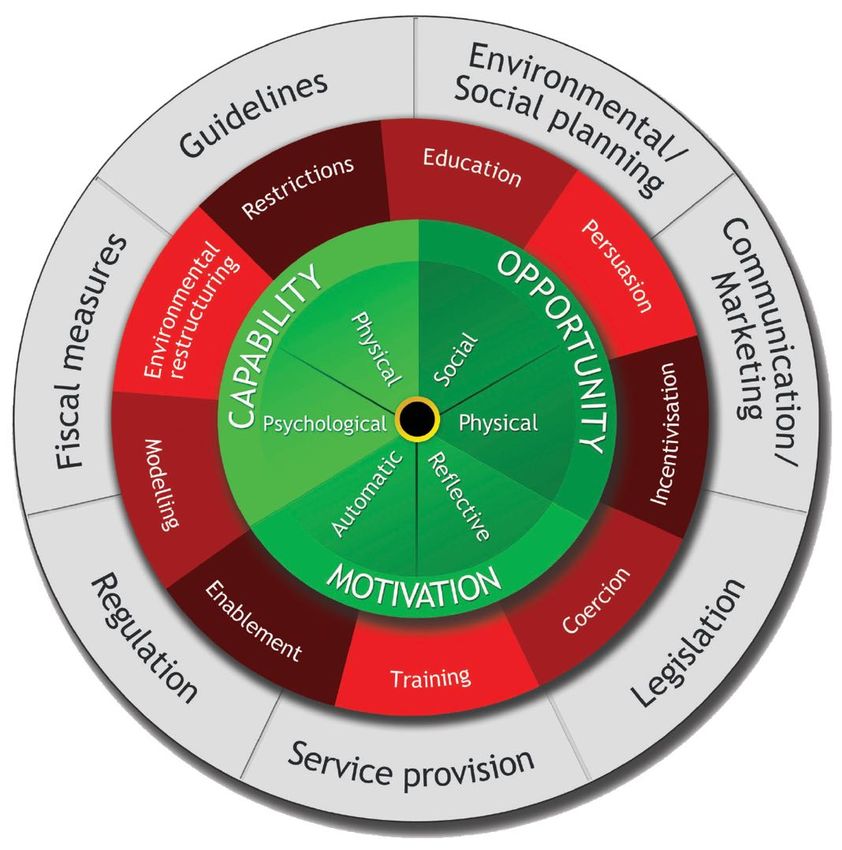
2020-01-16

11

     Charting user experience

12

                                        6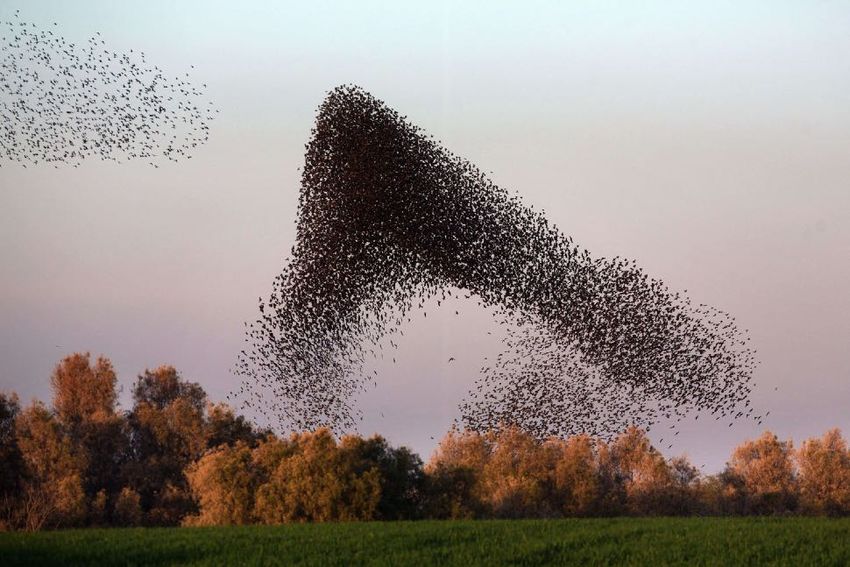
2020-01-16

                What people say
                What people do
                What people say they do

                are entirely different
                things.

13

           What people:                  Methods                    Knowledge
 Surface

               Say                      Interviews                   Explicit
              Think                      Surveys

               Do
                                        Observation                Observative
               Use

                                        Generative                    Tacit
              Know                      Approaches
               Feel
              Dream
  Deep                                                               Latent

              Adapted from Sanders, E. B.-N., & Stappers, P. J. (2012).
              Convivial design toolbox: Generative research for the front
              end of design. Amsterdam: BIS.

14

                                                                                         7
2020-01-16

     Adapted from Sanders, E. B.-N., & Stappers, P. J. (2012).
     Convivial design toolbox: Generative research for the front
     end of design. Amsterdam: BIS.

15

16

                                                                           8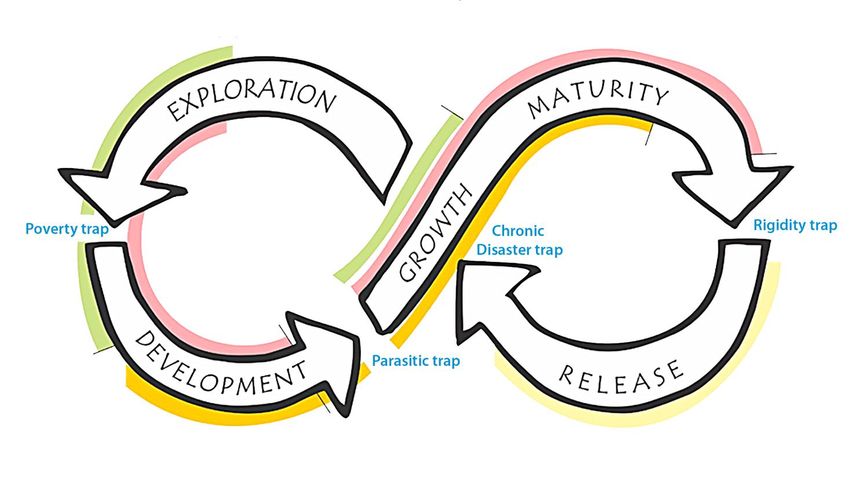
2020-01-16

17

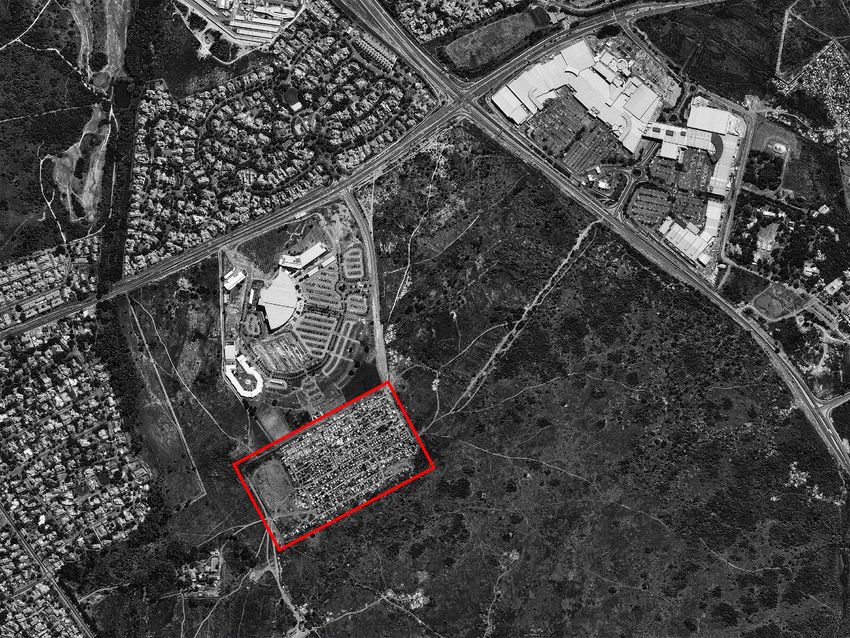
     Photo: Pieter de Vos, Homelands – Life on the Edge of the
     South African Dream, Daylight Books, 2019:

18

                                                                         9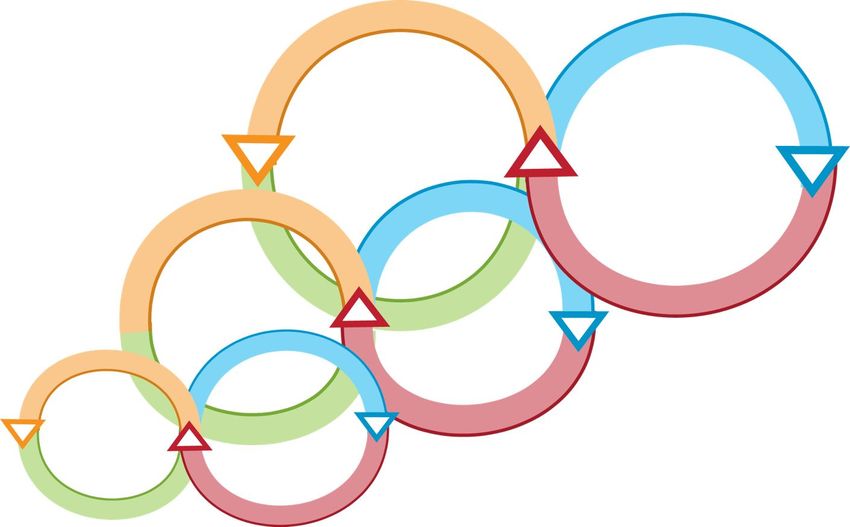
2020-01-16

     MILLIE
                                                         MILLIE’s STORY: Millie came to Canada at age 19 after marrying
                                                         her high school sweetheart. He worked as a furniture maker in
                                                         Germany and was hoping to open his own business in Canada.
                                                         When they moved to Calgary, her husband found work in a local
                                                         warehouse and she worked as a grocery cashier. She had 2 boys who
                                                         grew up and moved to Ontario for work. They have had very little
                                                         contact as they have their own families. She misses them and their
                                                         grandchildren.

                                                         When her husband became sick 10 years ago, her doctor set up
                                                         home care services. She found them frustrating as she often would
                                                         have to wait for them, they spoke very little English and there were so
                                                         many of them that it became very overwhelming for her. Her
                                                         husband was eventually sent to long term care. She was not happy
                                                         with the care provided as he developed bedsores and repeated
                                                         pneumonias. It was hard to see her husband lose his vibrancy within 2
                                                         years.
               Age: 85      Gender: F                    Millie’s doctor retired 9 years ago and she used a walk in clinic near
            Community: FOREST LAWN,                      her home. There was always a new doctor and she had to repeated
                    SE CALGARY                           her story to the point that she just told them what they want to hear.
      Occupation: RETIRED GROCERY CASHIER
                                                         She recently transferred to FCC, as one her friends goes there. When
     Income: $17K/YEAR, CANADIAN PENSION                 she arrived she was amazed at all the services and that she had a
      PLAN/OLD AGE SECURITY/GUARANTEED                   consistent doctor. She enjoyed her new doctor but often found that
                  INCOME SUPPORT                         she was referred to other providers. At every visit they pushed to
                 Education: GRADE 8                      move from her home. She no longer wanted to attend and would
                                                         cancel or no show. This would be an issue as she would run of her
        Ethnicity/Background: CAUCASIAN,                 prescriptions since they no longer renew by fax. She worries about
            FIRST GENERATION GERMAN                      falling during winter while visiting the doctor.

      Health Needs: Colles fracture from recent          She wonders if anyone is really listening to what she wants. She
       fall, Congestive Heart Failure, Chronic           certainly doesn’t want the help they offered her husband. The only
                                                         thing that she wants is to live in the home that she shared with her
          Kidney Disease, Type 2 Diabetes,               husband. They are so many beautiful things in the home. He made
                Hypertension, Falls risk                 every piece furniture. She could not bear to part these memories.

                                                  Millie’s Health Goals

     Short Term: Get cast removed and be able to resume independence
     Long Term: Maintain independent living
                                                         Supports:
                                                         • Motivated to change because she wants to avoid moving to a
      Motivation                                           nursing home

                                                         Frustrations/Pain Points:
                                                         • Having a cast own has made it very difficult to do her personal
         Health                                             care, cook, clean and carry groceries
     Knowledge                                           • Everyone is asking her to move to a lodge and she doesn’t want
                                                            to give up her plants and independence
        System                                           • Feels socially isolated since her family lives in Ontario and she
     Know-How                                               has limited contact with them and her husband has passed
                                                            away
        Supports                                         • Worried about falling when she is alone – most of her friends
           (social,                                         have died
        community)                                       • Frequent medical appointments where she doesn’t feel listened
                                                            to
     Constraints
         (logistical,                                    Healthcare Journey So Far:
          personal)
                                                         • Frequent appointments (Primary Care Provider, Nurse, Dietitian,
                                                           Physiotherapist, General Internal Medicine)

     “I doesn’t want anyone to find out that    “I wondered if my                  “People assume that because I’m 85 I
     I’m is struggling to get through the day   doctors’ office thinks that        need help. I love living on my home and
     because I know that I will get a lecture   I have nothing to do all           being around my beautiful things. I will do
     that I am a falls risk and need to move    day but to be at the               anything to stay independent as long as I
     into a nursing home.”                      clinic.”                           can.”

19

                                                                                                                        Behaviour
                                                                                                                          Change
                                                                                                                           Wheel
                                                                                                                                     Sources of Behaviour

                                                                                                                                    Intervention Functions

                                                                                                                                      Policy Categories

                                                                                                                                   Michie et al.
                                                                                                                                   Implementation
                                                                                                                                   Science 2011, 6:42

20

                                                                                                                                                                    10
2020-01-16
Systems Thinking
Properties of Systems
21
What is a System?
“A system is an interconnected set of elements
that is coherently organized in a way that
achieves something. … a system must consist of
three kinds of things: elements,
interconnections, and a function or purpose”.
Meadows, D. H., & Wright, D. (2008). Thinking in systems: a
primer. White River Junction, VT: Chelsea Green Publishing
22
112020-01-16
Properties of Systems
A complex system has a purpose and constituent parts, these
parts are interrelated, and the relationships between the parts
create the behaviour of the system
Systems also have the following properties:
§ Self-Organisation
§ Emergence
§ Hierarchy
§ Resilience
23
1. Self-Organisation
§ Self-organisation is the capacity to create new structures or
patterns of order out of disorder (entropy) – such as can be
seen in the flocking formations of birds or schooling patterns
of fish.
§ https://vimeo.com/98351279
24
122020-01-16
25
Birds of a feather flock together
There is no single bird managing the flock — no central command
and control. There is instead continual reorganising based on
feedback from the environment and a few simple rules.
The simple rules guiding flocking behaviour in birds are:
1. Collision Avoidance: Avoid collisions with nearby flock mates;
2. Velocity Matching: Match speed with nearby flock mates; and
3. Flock Centering: Attempt to stay close to nearby flock mates.
Reynolds, C. W. (1987). Flocks, Herds, and Schools: A Distributed Behavioral Model.
Published in Computer Graphics, 21(4), July, pp. 25-34.
26
132020-01-16
2. Emergence
§ Emergence is the presence of a new
behaviour, pattern or structure that
results from the interactions
between the elements of the
system.
§ In other words, the whole cannot
be explained through the study of
the parts.
27
28
142020-01-16
“…dividing the cow in half does not give you
two smaller cows. You may end up with a lot
of hamburger, but the essential nature of
“cow” — a living system capable, among
other things, of turning grass into milk —
then would be lost. This is what we mean
when we say a system functions as a “whole”.
Its behavior depends on its entire structure
and not just on adding up the behavior of its
different pieces.” — Kauffman, 1980, p2
29
3. Hierarchy
§ Hierarchy tells us that a
system evolves from the
bottom up – from simple
to complex.
§ As the system grows,
subsystems emerge.
30
152020-01-16
4. Resilience
§ Resilience is the ability of a system to recover
and adapt following a disruption.
§ In the context of social change, “we need
innovative solutions that take into account the
complexity of the problems and then foster
solutions that permit our systems to learn, adapt,
and occasionally transform without collapsing.”
31
Leverage Points
§ Leverage points “are places within a complex
system … where a small shift in one thing can
produce big changes in everything”.
For example, wolves... [4 min]
§ https://youtu.be/ysa5OBhXz-Q
Meadows, D. (1999). Leverage Points: Places to Intervene in a
System. The Sustainability Institute, Hartland VT.
32
162020-01-16
Mapping
Systems
Patterns, Frames, Relationships
33
New Ideas * Creative Productivity: *Stability
* Messy * Uncertain* Adaptive Cycle *Specialisation
* Standardisation
Multiple Perspectives
* Probes & Little
Experiments
& Innovation * Low Risk Tolerance
* Return on investment
Effectiveness:
Entrepreneurial * Vision: * New Energy
Adaptive structure & Urgency * Chaotic *
*Prototypes & Pilot Loss, Anger, Conflict
Projects * Risk-taking [adapted from Mark Cabaj, here2there.ca] * Little structure
34
172020-01-16
Adaptive Cycle & Innovation
Landscape
Enabling
Environment
Regime
Community
Change
Niche across
Organization nested
systems
35
LANDSCAPE
LANDSCAPE
CULTURE • VALUES • IDENTITY
CULTURE • VALUES • IDENTITY
(( and
and other
other external
external variables
variables
(e.g.
(e.g. industry
industry structure,
structure, price
price Changes
Changes in
in
of oil) Changes
of oil) Changes inin landscape
landscape put
put pressure
pressure on
on systems
existing systems can
can
existing systems
systems which
which in
in turn
turn opens
opens up
up contribute
space for niche innovations contribute to
to
space for niche innovations shifts
shifts in
in landscape
landscape
Technology
Technology
Institutional
Institutional
REGIME Policy
Policy
SYSTEMS
SYSTEMS Industry
Industry
Regimes
Regimes constantly
constantly evolve,
evolve, The
The clusters
clusters of
of innovations
innovations put
put pressure
pressure on
on ––
sometimes
sometimes shifting
shifting suddenly
suddenly and
and meet
meet resistance
resistance from
from –– current
current systems
systems
with
with social
social innovators
innovators taking
taking advantage
advantage of
of
‘windows of opportunity’ to reshape the
system
External influences shape Momentum emerges if/when
perspectives and ideas of innovations are mutually reinforcing
niche innovators and aligned
NICHE
Individuals or groups of innovators develop, test and (if appropriate)
INNOVATIONS scale niche innovations that move a system in a desired direction
‘Multi-level framework on sustainability transitions’ by F. Geels
36
182020-01-16
Every intervention is embedded in
a larger system of interactions
37
Mapping Tools
Approaches, methods
38
192020-01-16
39
“The map is not the
territory.”
40
202020-01-16
Rich picture
41
Reverse
Thinking
42
212020-01-16
Applying reverse thinking
Design a system where…
§ individuals reliably experience
social isolation and loneliness
§ What would you build into this
system?
[Each team – Flip-charts – 30 min]
43
Iceberg Analysis -
Systems Mapping
Events
What has
happened?
React
What are the
observable
behaviours and
occurrences?
PATTERNS OF BEHAVIOUR
Patterns of
Behaviour
What has happened Anticipate
over time? What are
the trends?
Structures
What processes,
policies, and Design
regulations are
contributing to these
patterns?
Mental Models
What ways of
knowing,
perspectives, and
Transform
values are sustaining
this system?
How are our values creating the system?
44
222020-01-16
Identifying Drivers & Root Causes
§ What structural factors might be contributing to these
patterns?
§ What beliefs or mental models might be holding this
system in place?
45
Some ways forward…
1. Embrace the complexity
2. Suspend the need to solve
3. The easy way out often leads back in
4. Look for the non-obvious leverage points
5. Small, well-placed interventions can have big impacts
6. Understand the level you are intervening at
7. Work within your sphere of influence
8. Account for delays
9. Avoid unintended consequences, but anticipate them
10. ‘Failure’ is discovery in disguise
46
232020-01-16
“We are largely devoted to
doing the wrong thing wrong.”
Dr. Russell Ackoff
47
Prototyping
pro-to-type
1. A preliminary model of something
from which other forms are
developed
2. A representation of a design idea
used to generate learnings
48
242020-01-16
49
4 Evaluative Lenses
Impact
(Effectiveness)
Desirability Viability
(Human) (Business)
Feasibility
(Technical)
50
252020-01-16
Thank you &
Safe Travels!
51
26You can also read


