THE EXPLOITATION OF WOMEN AND GIRLS IN INDIA'S - HOME-BASED GARMENT SECTOR By Siddharth Kara
←
→
Page content transcription
If your browser does not render page correctly, please read the page content below
TAINTED GARMENTS
    THE EXPLOITATION OF WOMEN
        AND GIRLS IN INDIA’S
   HOME-BASED GARMENT SECTOR

          By Siddharth Kara

 Blum Center for Developing Economies
    University of California, Berkeley
              January 2019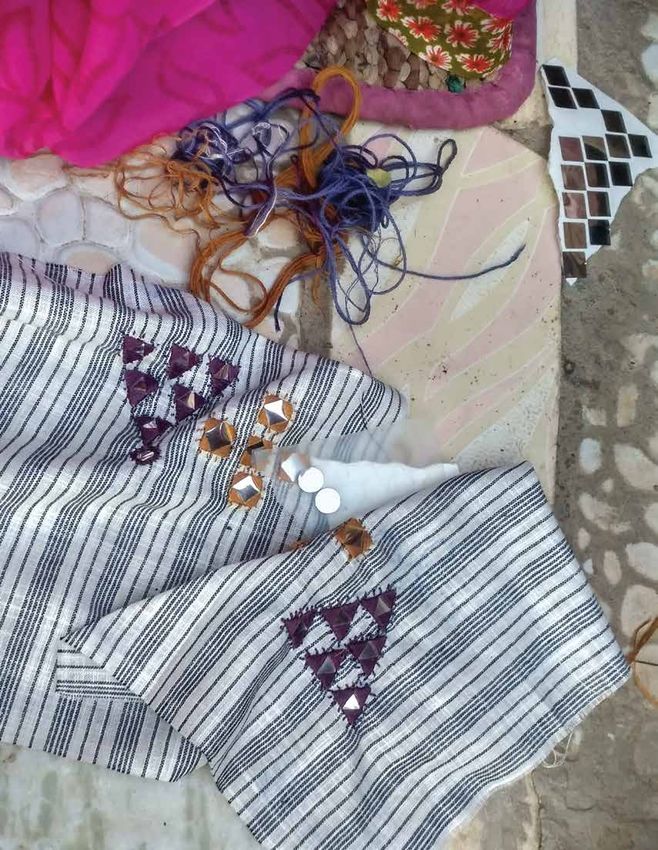
ACKNOWLEDGMENTS

             T
                   his report is the culmination of the diligent efforts of numerous
                   individuals. Nine field researchers in India braved challenging conditions
                   in order to gather the data that is presented. Several colleagues at
                   the Blum Center provided invaluable assistance during this project.
              Maryanne McCormick stewarded this project from the beginning and ensured
              every stage was handled brilliantly. Gladys Khoury provided crucial support
              in managing the grant and project finances. My research assistant, Chloe
              Gregori, offered vital assistance at numerous stages with this report. The
              research itself was made possible through the generous support of the C&A
              Foundation.

              Above all, I am deeply grateful to all the individuals who patiently and
              courageously shared the details of their work lives with the researchers. These
              individuals spoke in the hopes that their otherwise silent voices would be
              heard and might motivate others to take action to ameliorate the exploitative
              working conditions many of them endure. I hope the information presented in
              this report will stimulate a sustained commitment by stakeholders to address
              the unjust and exploitative conditions uncovered.

              — Siddharth Kara

                                                                                                1
All photos and text © Siddharth Kara 2019,
    except images on page 17 and the back cover.

2
TABLE OF CONTENTS

                                                     Page
  1.   Executive Summary                               5
  2.   Overview of Research                           11
		     a. Research Objectives                         11
		     b. Research Methodology                        11
		     c. Institutional Review Board                  11
		     d. Sources of Data                             11
		     e. Data Management                             11
		     f. The Researchers                             12
		     g. Site Selection                              12
		     h. Inclusion and Exclusion Criteria            13
		     i. Difficulties Encountered                    13
  3.   Overview of The Garment Sector in India        15
		     a. History and Market Size                     15
		     b. Manufacture Process                         17
		     c. Hazards Faced by Workers                    17
  4.   Previous Studies of India’s Garment Sector     19
  5.   Discussion of Relevant Law                     23
		     a. Forced Labor under Indian Law               23
		     b. Forced Labor under ILO Convention No. 29    23
		     c. Bonded Labor                                24
		     d. Child Labor                                 24
  6.   Discussion of Results by City                  27
		     a. New Delhi                                   28
		     b. Jaipur		                                    30
		     c. Shahjahanpur                                32
		     d. Meerut		                                    34
		     e. Bareilly		                                  36
		     f. Sikandrabad                                 38
		     g. Farrukhabad                                 40
		     h. Hapur		                                     42
		     i. Tiruppur		                                  46
		     j. Pollachi		                                  48
  7.   The Garment Supply Chain                       50
  8.   Recommendations                                53

   Sources Cited		                                    55
   Endnotes			                                        56

                                                            3
4
EXECUTIVE SUMMARY

This report offers the most-wide reaching and comprehensive inves-
tigation yet into the conditions of work for women and girls in India’s
                                                                                “I do not
home-based garment sector. Women and girls tend to constitute a dispro-         earn enough
portionate portion of home-based work, and the exploitative conditions
that come with them, which in turn perpetuates the subordinated and
                                                                                in this work.
oppressed status of women and girls. Due to the lack of transparency            I am living
and the informal nature of home-based work, wages are almost always
suppressed, conditions can be harsh and hazardous, and the worker has
                                                                                in hell.”
virtually no avenue to seek redress of abusive or unfair conditions. Pow-       – A 25-year-old garment
er imbalances relating to gender further perpetuate the exploitation of         worker near Meerut
female home-based workers, as their liaisons (i.e., labor subcontractors)
tend to be male and can often be verbally abusive or intimidating in order
to secure compliance. Conditions are worsened by the fact that there is lit-
tle to no regulation or enforcement from the state regarding conditions for
home-based workers in India. The primary aim of this report is to provide
insights into the lives of India’s home-based garment workers in the hopes
that governments, industry, and non-profits will be better able to coordi-
nate on solutions to address the exploitative conditions documented.

Approximately 85% of the home-based garment workers documented for
this report exclusively worked in supply chains for the export of apparel
products to major brands in the United States and European Union, and
the remaining 15% worked in a mix of export and domestic production.
The home-based work performed by these individuals typically involves
the “finishing touches” on a garment, such as embroidery, tasseling,
fringing, beadwork, and buttons. The Summary Findings of the research
are included in Table 1 below. At first instance, it must be noted that there
are several stark differences between the conditions faced by home-based
gar-ment workers in northern India versus southern India. Indeed, one
could argue that there are in some ways two different home-based garment
sectors in India — northern and southern.

                                                                                                          5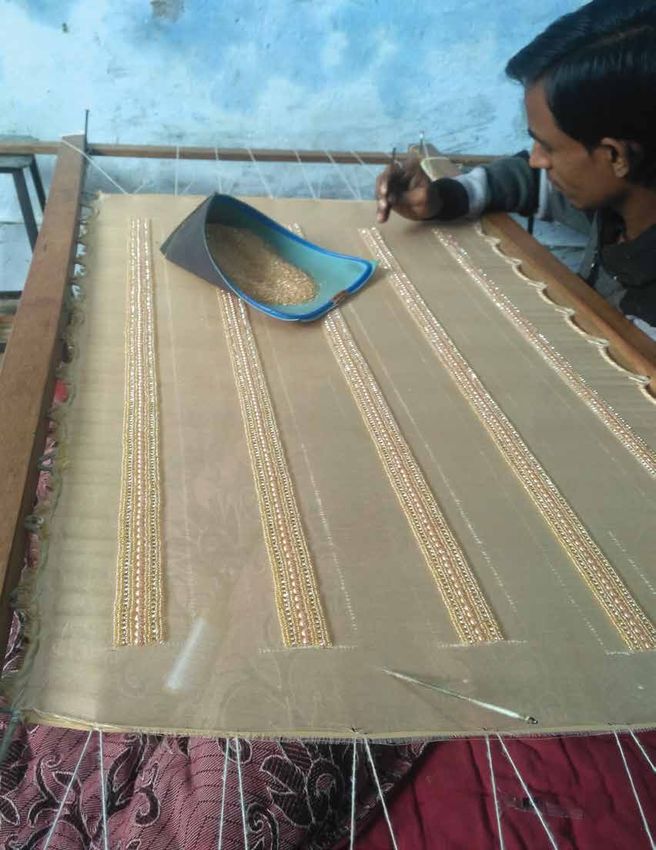
TABLE 1: SUMMARY FINDINGS

                                                                  NORTHERN   SOUTHERN
                                                      ALL CASES     INDIA      INDIA
               Total cases documented                   1,452        1,122      330
               Forced labor under Indian law            99.2%      98.9%      100.0%
               Forced labor under International law      6.9%       9.0%       0.0%
               Bonded labor                              4.5%        5.9%      0.0%
               Child labor                              17.3%       19.1%      11.2%
               Child laborers who attend school         42.2%       33.6%      91.9%
               Average 8-hour wage                       $1.19       $1.12     $1.44
                Male                                    $2.37       $2.37
                Female                                   $1.12      $1.05      $1.44
               Wages delayed                            35.5%       41.3%      15.8%
               Average daily hours worked                 6.7         6.8        6.2
               Female                                   95.5%       94.1%     100.0%
               Like the work                            61.4%       50.4%      98.5%
               Began work from a form of duress         62.5%       76.3%      15.5%
               Began as a minor                         42.8%       51.2%      14.5%
               Have another source of income            10.3%        8.9%      15.2%
               Average years worked                       6.4         6.6        5.6
               Average family size                        5.4         5.8        4.0
               Average income per HH member              $1.27      $1.04      $2.48
               Muslim or Scheduled Caste                99.3%       99.7%      97.9%
               Would rather leave but cannot            60.4%       73.4%       16.1%
               Penalized if work unfinished on time     26.2%       29.9%      13.9%
               Free to do other work                    60.8%       52.6%      88.8%
               Chronic physical ailment or injury       23.2%       29.2%       2.7%
               Literate                                 43.2%       27.4%      97.0%
               Keep records of their work               33.4%       18.4%      84.2%
               Feel earn enough for a decent life        9.9%        8.6%      14.2%
               Have a bank account                      51.2%       46.7%      66.7%
               Able to save income                       9.2%        7.9%      13.3%
               Receive medical care                      0.1%        0.2%        0%
               Belong to a trade union                    0%          0%         0%
               Have a written agreement for work          0%          0%         0%

6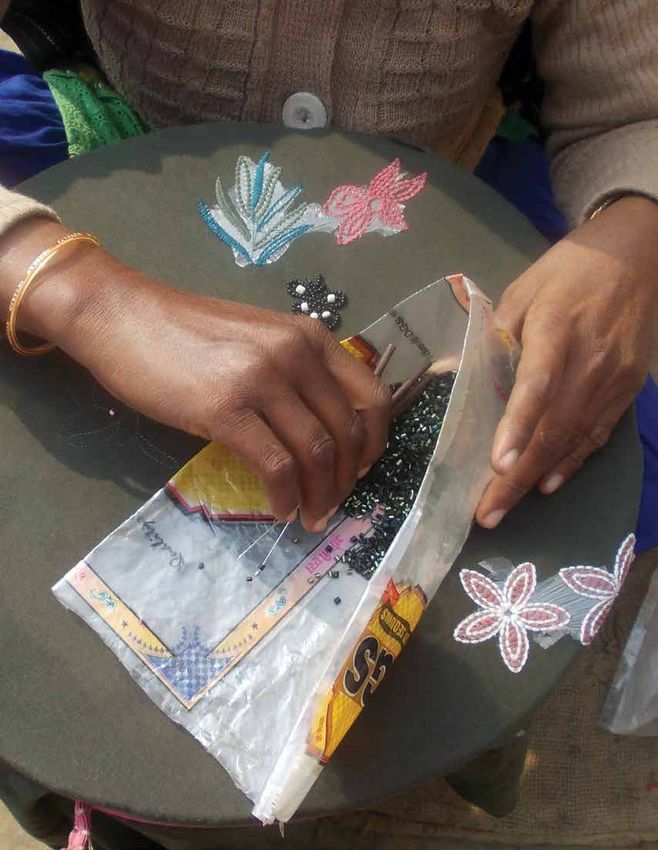
A total of 1,452 cases were documented by the researchers:       • 5.9% of workers in the north toil in conditions that con-
1,122 cases within 50 kilometers of eight cities in the north,   stitute bonded labor under India’s Bonded Labour (Aboli-
and 330 cases within 30 kilometers of two cities in the          tion) Act, 1976. No workers in the south were found to be
south. Most individuals work six to seven days per week,         working in conditions of bonded labor.
usually around six to eight hours per day. The youngest
individual documented was ten years old, and the oldest          • 19.1% of workers documented in the north were children
was 73 years.                                                    between the ages of 10 and 17, as compared to 11.2% of
                                                                 workers documented in the south. Crucially, of these child
The three most important findings of this research are:          laborers, only 33.6% in the north attended any amount
1. 99.3% of the workers are either Muslims or belong to          of schooling each week, as compared to 91.9% of the child
a heavily subordinated community, called a “Scheduled            laborers in the south. Indeed, many of the child laborers
Caste.”1                                                         in the north had commenced school earlier in their lives,
                                                                 but they were compelled to drop out when the family
2. 99.2% of workers toil in conditions of forced labor under     could no longer afford the fees. Interestingly, a leading
Indian law, which means they do not receive the state-           reason given by adult female workers in the south for why
stipulated minimum wage. In fact, most workers received          they commenced home-based garment work was to earn
between 50% and 90% less than the state-stipulated mini-         money to pay school fees for their children. It is important
mum wages. Only a handful of males working near the city         to stress that these findings on child labor represent a
of Jaipur received proper wages for their work.                  bare minimum estimate, as there were numerous cases in
                                                                 which researchers were not provided consent by a parent
3. 95.5% of workers are female.                                  to interview a child whom they witnessed working along-
                                                                 side a mother. There were also dozens of children under
These three facts demonstrate that home-based                    the age of 10 years clearly seen by the researchers to be
garment work in India is predominantly penny-                    working alongside their mothers; however, the lower age
wage labor conducted by minority and outcaste                    limit approved by the Institutional Review Board for this
women and girls.                                                 project for interviews was 10 years.

Three additional findings are of note are:                       • More than half (51.2%) of workers documented in the
1) almost none of the workers (0.1%) receive any sort of         north began working in home-based garment work as
medical care when they suffer an injury at work;                 children, whereas only 14.5% did so in the south. These
2) none of the workers (0.0%) belong to a trade union; and       findings shed additional light on the high prevalence of
3) none of the workers (0.0%) have a written agreement for       child labor in the home-based garment sector in India.
their work. The lack of unionization and written contracts
promotes the informal, shadowy nature of home-based              • The average female worker in the north earns an eight-
garment work and allows many of the exploitative condi-          hour equivalent wage2 of $1.05 ($0.13 per hour)3, versus
tions the researchers documented to persist, particularly        $1.44 ($0.18 per hour) in the south (37% greater). Of the
the severe underpayment of wages.                                males documented, all were in the north, and their average
                                                                 eight-hour equivalent wage was $2.37 ($0.30 per hour), or
In addition to the aforementioned findings, the following        126% greater than their female counterparts in the north
results are of interest:                                         and 65% greater than female workers in the south. Most
• 9.0% of workers in the north (1 out of 11) toil in condi-      of the work being done (embroidery, tasseling, buttons,
tions that constitute forced labor under ILO Convention          etc.) is classified as semi-skilled work, except for thread-
no. 29. No workers in the south were found to be working         cut-ting, which is classified as unskilled work. Minimum
in conditions of forced labor under international law.           wages per state for an eight-hour work day range from
                                                                 $3.08 ($0.39 per hour for unskilled work in Rajasthan) to

                                                                                                                                7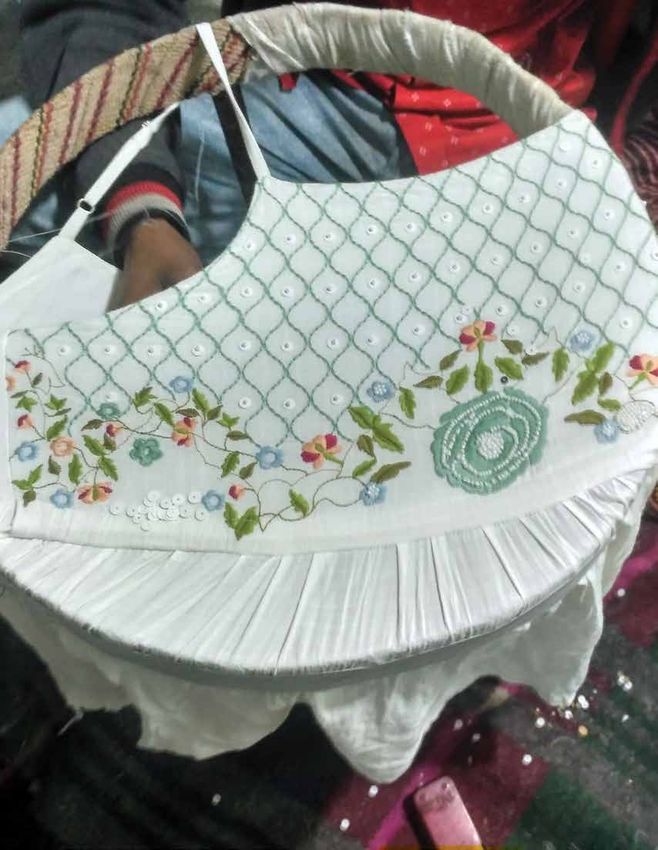
$8.44 ($1.05 per hour for semi-skilled work in New Delhi).     time most workers are unable to earn income. The lack of
    However, every one of the workers documented was paid          income generation for months at a time places additional
    on a piece-rate basis (remuneration per piece completed),      financial strain on a family unit, including the inability to
    and the arithmetic of these payments results in the chron-     pay for school fees for children.
    ic and severe underpayment of minimum wages. Further
    detail on wages for the workers in each city documented        • Family size plays an important role in the overall well-be-
    are included in the detailed discussion of results below.      ing of a family unit, and when a family faces particularly
                                                                   acute financial hardship, children are often required to
    • 41.3% of workers in the north suffer a delay in wage         work rather than attend school. The average family size
    payments of typically a few weeks to a few months. By          in the north that was documented for this project is 5.8
    comparison, 15.8% of workers in the south suffer wage          members, as compared 4.0 members in the south. The dif-
    delays, all of which were a few weeks or less.                 ference in family size is the primary reason for the signifi-
                                                                   cant variance between average daily income per household
    • Only half (50.4%) of workers in the north indicated that     member in the north ($1.04) versus the south ($2.48). This
    they enjoyed the work they did, whereas almost all (98.5%)     substantial per capita income difference has numerous
    of workers in the south reported enjoying their work. One      implications for the overall wellbeing of a family unit,
    of the paradoxes on the findings relating to enjoyment of      including the ability of children to attend school full-time,
    work is that many of the women, most Muslim workers            as opposed to work.
    and some Scheduled Castes, are not allowed to leave their
    homes, hence they report enjoying home-based garment           • 29.9% of workers in the north report facing a penalty if
    work simply because it gives them something to do and          they do not complete their work in the timeframe directed
    allows them to earn income while residing inside their         by the contractor, versus 13.9% of workers in the south.
    homes.                                                         The most common penalty levied against the workers is
                                                                   the refusal to pay her for the piece, which in the case of
    • Three out of four workers (76.3%) in the north began         items that take two or three days to complete means the
    home-based garment work due to some form of duress,            worker goes unpaid for several days of work. Some work-
    whereas only 15.5% of workers in the south did so. Forms       ers also face penalties (wage deductions) for errors in the
    of duress the workers reported include family pressure,        work performed. While very few of these cases were catego-
    lack of any alternative way to earn income, or severe finan-   rized as forced labor under ILO Convention no. 29 due to
    cial hardship. For many of the workers, lacking an alterna-    the absence of other clear indicators of forced labor (verbal
    tive is related to the prohibition on leaving their homes.     or physical abuse, restrictions on alternate employment,
    To that end, almost three-fourths (73.4%) of workers in        etc.), the penalty of not being paid for a few days of work
    the north report that they would rather leave home-based       in a week when wages are already so severely depressed
    garment work but are unable to do so, whereas only 16.1%       has grave consequences on the workers and their families,
    of workers in the south wish to leave home-based work          in particular added pressure for children to contribute to
    but feel unable to do so. One of the primary reasons home-     sources of income.
    based workers cite for not being able to leave the work is
    the threat by subcontractors that they would never receive     • A little more than half (52.6%) of workers in the north
    any other work again.                                          report being free to pursue other work, as compared to
                                                                   88.8% of workers in the south. This particular metric can
    • Few workers – 8.9% in the north and 15.2% in the south       be difficult to scrutinize, as workers often articulate the
    – report having alternate sources of income to home-based      theoretical freedom to pursue other work, while simulta-
    garment. This fact is especially important since home-         neously indicating that they are prohibited from leaving
    based garment work is seasonal work (not performed             their homes, or that there are no alternatives work options
    during the monsoons), which means that during this             for them.

8
Almost all of the individuals documented in this
project were working on garments bound for
export to major brands in the United States and
the European Union.
• 29.2% of workers in the north report working with • Finally, very few workers in north (8.6%) or south
chronic ailments or injuries, whereas only 2.7% of workers (14.2%) feel they earn enough to lead a decent life. This is
in the south do so. Home-based garment work involves not a surprising result given the anemic wage payments
spending extended hours hunched over, in dusty or low- in the sector. What is of note is that even workers in the
light conditions, performing repetitive manual tasks. As south who earn 30% or 50% more than their counterparts
such, common injuries include back pain, eye strain or in the north feel that they still do not earn enough to lead
diminishing eye sight, body aches, and similar ailments. a decent life. The wages are simply not sufficient. This
Working environments in the south that the researchers fact leads to the obvious result that few workers are able
visited tended to be cleaner and less cramped than in the to save money (7.9% in the north; 13.3% in the south).
north, and workers in the south also tended to be a few Savings are crucial for withstanding income shocks, family
years younger and worked about 45 fewer minutes per day catastrophe, and being able to afford school fees.
on average than did workers in the north. It is not clear
whether these differences can account for the stark vari- It bears repeating, that almost all of the individuals
ance between levels of chronic injury or ailment endured documented in this project were working on garments
by the workers in the north versus the south, so further bound for export to major brands in the United States and
investigation of this area is needed. the European Union. Most of these brands are household
names. These companies and their shareholders enjoy
• Literacy rates mark one of the sharpest differences ro-bust profits, while consumers enjoy inexpensive
between north (27.4%) and south (97.0%). Literacy rates clothing in large part due to the penny-wage, harsh, and
in general in southern India are considerably greater exploitative conditions endured by the women and girls
than in the north, hence these results are not surprising. in India’s home-based garment sector. The findings in this
That said, literacy plays a vital role in whether or not report are solely intended to catalyze new initiatives to
individuals are able to keep records of their work (18.4% improve the lives of these women and girls. The results
in the north versus 84.2% in the south). Keeping records will hopefully also demonstrate that rigorous, firsthand
allows an individual to track wage payments, which helps data gathering of forced labor and child labor in a
empower workers to ensure they are not being underpaid. commodity’s supply chain can and should be conducted
Literacy is also crucial for individuals to read and under- across dozens of commodities around the world. Doing
stand the terms of a written agreement for work, should so promises to provide the knowledge required to tackle
they ever exist in India’s home-based garment sector. While human bondage, clean global supply chains, and alleviate
it is impossible to know for sure, it is probable that the much of the suffering endured by hundreds of millions
higher levels of literacy in the south are to some extent of workers who toil as the exploitable and expendable
responsible for the higher wages the workers receive (still underclass of the global economy.
well below minimum wage), as well as higher rates of hav-
ing a bank account (46.7% in the north versus 66.7% in the
south). Needless to say, literacy is vital for empowerment,
development, and financial competence.
910
“I never receive my payment on time.
I have to cry to get payment from the
contractor.” – A 23-year old garment worker near Bareilly
II. OVERVIEW OF RESEARCH                                         protect all confidential information and personal
                                                                 identifying information throughout the research process.
A. RESEARCH OBJECTIVES
This research project was undertaken through the Blum            C. SOURCES OF DATA
Center for Developing Economies at the University of             To obtain information on labor exploitation in the home-
California, Berkeley. The Principal Investigator (PI) was        based segment of India’s garment sector, both primary
Siddharth Kara.                                                  sources and secondary data were used. Qualitative and
                                                                 quantitative data were collected through individual
The primary aim of this project was to survey the working        interviews with laborers inside their homes. Semi-
conditions in India’s home-based garment sector. The             structured interview questionnaires were used for
second aim was to establish prevalence rates of various          discussion with key informants to gather information on
forms of labor exploitation, such as forced labor, bonded        the nature of their work in the garment sector. Secondary
labor, and child labor.                                          information was obtained from a review of existing
                                                                 literature as well as relevant law and conventions relating
India’s garment and textile embellishment sectors are            to child labor, forced labor, and bonded labor. A list of
anecdotally known to be plagued by various forms of labor        these resources can be found in the Sources Cited.
abuses; however, there has yet to be a statistically robust,
broad-based research initiative that documents the               D. DATA MANAGEMENT
nature, scale, and modalities of labor exploitation              Interviews were conducted with the utmost attention
in the homeworker segment of India’s garment sector.             to security and confidentiality. Researchers conducted
This research is crucial in order to address the abuses          the initial data collection by recording survey responses
effectively. Although brands are increasingly sensitive to       with pen on paper. There was no use of video recording or
labor abuses in their supply chains, there remains a lack        audio recording. Surveys were then typed and uploaded
of knowledge as to how and to what extent their supply           to a secure UC Berkeley server, after consulting with the
chains could be tainted. Baseline research is required to fill   Berkeley security team about best practices for physical
this knowledge gap and to inform ameliorative actions by         and electronic safeguards. All electronic data are stored on
industry and governments.                                        encrypted disks and original handwritten surveys
                                                                 are kept in a locked cabinet in the Blum Center at UC
B. INSTITUTIONAL REVIEW BOARD (IRB)                              Berkeley. The PI alone reviewed all checklists individually
Because the research involved interaction with human             and entered key information into a spreadsheet for further
subjects, Institutional Review Board (IRB) approval              analysis.
was secured in advance of any field research being
conducted. Extensive documentation of the research               E. THE RESEARCHERS
objectives, methodology, procedures, and questionnaires          A total of nine local researchers were hired to conduct field
was submitted to the IRB at the University of California,        research in India. Six of the researchers were female, and
Berkeley. In order to ensure safety for all potential            three were male. All of the researchers were Hindus and
interviewees, rigorous procedures were followed to               were fluent Hindi speakers, had experience conducting

                                                                                                                                 11
labor exploitation research in rural settings, and were Pradesh. The purpose of the pilot stage was to learn
familiar with the nature of India’s garment sector. whether there were any deficiencies in the data gathering
For their protection, the identities of the field researchers process.
are kept confidential. The researchers were trained and
briefed on all conditions of the IRB for human subject The remaining three research phases involved all the
research prior to research being conducted. Some of the researchers. There were break periods between each phase
procedures that the researchers were required to follow during which the PI analyzed the results and refined site
include: selection.
• Obtaining and documenting consent to speak with
the interviewee prior to conducting any discussions; G. SITE SELECTION
• In the case of minors, obtaining and documenting In conjunction with local experts, the PI mapped the
consent from adults who were responsible for the regions throughout India with a high rate of home-
minor, as well as obtaining and documenting assent based garment work for export production, which the
from the minor, prior to conducting any discussions; researchers focused on for this study. The study was
• Interviewee names were never documented; each conducted in urban, peri-urban, and rural areas in
subject was identified numerically by the order in northern India within 50 kilometers of the following
which they were interviewed at a specific site on a cities: New Delhi, Jaipur, Shahjahanpur, Meerut, Bareilly,
specific day; Sikandrabad, Farrukhabad, and Hapur. In southern India,
• No photographs, audio recordings, or video recordings the study was in urban, peri-urban, and rural areas within
were taken of any of the interviewees; 30 kilometers of Tiruppur and Pollachi.
• No payments were allowed for interviews, but a small
amount of food or beverage during the conversation was Due to the hidden nature of labor exploitation in India’s
permitted. home-based garment sector, it is necessary to use non-
probabilistic sampling techniques to gain access to
Researchers were asked to memorize the questionnaire as study participants through trusted networks, and to
best they could and conduct interviews casually, rather recruit a sufficient sample size to draw generalizable and
than following a formal list of questions. Researchers were actionable results. The study utilized a purposive network
allowed to take notes during their conversations with the and snowball sampling to identify survey participants.
subjects, which they later used to fill out the checklists Key interviews were identified and recruited through the
for each subject they documented. If consent was not following mechanisms:
provided, the individual was not interviewed. If at any 1. Informal discussions with community members living
point during the conversation the subject asked not to in areas where home-based garment work for export was
continue, the conversation was terminated immediately. known to take place;
Only fully documented cases have been included in the 2. Snowball sampling, which occurred if a key informant
results presented in this report. recommended interviewing other individuals as part of
the study. If a key informant shared possible subjects
F. PHASES OF THE RESEARCH to include in the research, the researchers would then
The research was carried out in four phases. Phase one was include the prospective individual on a list of individuals
a pilot stage, followed by three phases of full research. The to approach for a potential interview;
aggregate pilot and research period spanned October 3,
2017 to April 18, 2018. To ensure that researchers correctly identified informants
doing work for the export market, they were provided
During the pilot stage, a team of two researchers was intensive training sessions in classroom and field-based
tasked with testing the questionnaire and interview work. During the classroom sessions, researchers were
process in target homeworker areas in the state of Uttar shown videos and pictures of export garments and
12the type of processes that are usually outsourced for below), informed consent/assent was documented. In no
export work. The field-based work involved going into circumstances were minor children interviewed alone.
production areas and classifying garments between In all cases, researchers emphasized that there was no
domestic and export-bound work. This training lasted compensation or direct benefits to the participants and
approximately one month. no penalty for non-participation or withdrawal. Upon
completion of the interview, participants were invited
The researchers approached a random sample of to refer the researchers to other potential participants.
households in the mapped area known for export work, The researchers again emphasized that such referral was
then went through their checklist to ensure that the voluntary, confidential, and a referral or non-referral
work being done by a prospective informant was indeed would not result in any form of compensation, benefit, or
for the export market, as opposed to the domestic market penalty.
in India. To do so, several cues were confirmed by the
researchers before proceeding. First, garments for export H. INCLUSION AND EXCLUSION CRITERIA
to the West (t-shirts, dresses, bridesmaid dresses, scarves, Inclusion criteria include the following:
skirts, shirts) tend to be considerably different than those 1) working full-time or part time in the home-based
for domestic production (sarees, salwar suits, Indian garment sector in India;
bridal wear). Second, export work tends to be done in 2) no cognitive impairments;
larger quantities, hence clusters of workers in which a 3) fluent in Hindi.
large number of the same garments were being produced
was another strong cue that the work was for export. Exclusion criteria include any of the following:
Third, the workmanship for export garments is visually 1) an age of less than ten years;
superior to that of domestic garments, especially in design 2) non-fluency in Hindi;
and finishing quality. Finally, the raw materials being 3) cognitive impairment that would prevent the worker’s
used for garments for export are of better quality than participation in the study; or
for domestic production. In cases where an individual 4) inability to give consent or assent; or
was involved in home-based garment work but was not 5) not presently working part-time or full-time in the
working on a garment at the time the researchers arrived, home-based garment sector (by self-report).
they were asked to show other pieces they had worked
on recently, to ensure they were for export. Many workers I. DIFFICULTIES ENCOUNTERED
were also cognizant of the fact that their work was for The researchers encountered a handful of challenges
export. Finally, conversations with sub-contractors, when during the course of the research project, though none of
possible, helped the researchers further confirm the work them would be considered severe.
being done was for export.
Venturing into rural areas in India was at times
Approximately 85% of the informants for this project exhausting, involving travel down bumpy dirt roads,
were definitively determined to be working for the export followed by hiking on foot. In certain areas, home-based
market only, and the remaining 15% worked on a mix of garment work is more secretive than in others, so gaining
export and domestic production. access to potential informants took a great deal of time
and still often resulted in a lack of access to workers or
Once export work was confirmed, the researchers first consent to interview them. Researchers were also often
read an IRB-approved script that described the nature not given consent or assent to speak with child laborers.
and purpose of the research, the policies for protecting None of the researchers endured verbal or physical
confidentiality, and other key information prior to asking assault by contractors or other individuals who might be
for consent. If prospective participants were interested in concerned about the nature of the research.
participating and did not exhibit exclusion criteria (see
1314
“My parents could not afford fees for
school, so I do this work instead.”
– A 13-year old garment worker near Sikandrabad

III. OVERVIEW OF THE GARMENT                                   British textile manufacturers for almost two centuries.5
SECTOR IN INDIA
                                                               The ready-made-garment sector in India developed really
A. HISTORY AND MARKET SIZE                                     only after independence from the British in 1947. Post-
The Indian textile and garment industry dates back to          independence, the Indian garment sector transitioned
ancient times with the cultivation of cotton in the Indus      from the trade in raw fibers to finished apparel, buoyed
Valley beginning approximately 3000 BCE. Royalty and           by the demand for low-cost garments from the West.
other political elite controlled the textile industry in the   Worries once again about protecting their domestic
early days, which was divided into two sectors — textiles      production bases, Western powers established the Multi
for the common people and those made for royalty               Fiber Arrangement (MFA) in 1974, which placed strict
and trade with the upper classes. Textile production           quotas on textile and apparel imports from low-income
continued to flourish during Muslim rule in India from         countries into Western markets. When the MFA expired in
approximately 1200 to 1760, after which the East India         2005, textile powerhouses, such as India and China, made
Trading Company gained greater economic dominance              significant inroads into U.S. and EU markets.6
across the subcontinent, followed by the British Raj in
1858. Prior to colonization by the British, the combination    The Indian textile and garment industry today is
of skilled artisans and an abundance of raw materials          the second largest manufacturer and exporter in the
across the Indian subcontinent stimulated an extensive         world after China. India’s textile and garment industry
trading network spanning Africa, the Middle East,              contributes 2% of Indian GDP, 10% of total manufacturing
Southeast Asia, to eventually into the West. Various           processes, and 14% of all industrial production.7
regions became known for different products — Daca for
fine muslins, Kasimbazar for silk goods, and several cities    According to the Ministry of Textiles, the share of textile
across western and central India for detailed embroidery.4     and garments of India’s total exports was 12.4% in 2017, and
                                                               India has a share of 5% of the global trade in textiles and
The East India Trading Company first established               apparel. Nearly half (48%) of these exports are ready-made
settlements for textile production during the first half       garments. The apparel and garment sector employs nearly
the 18th century, at which point it began to centralize        40 million people directly, and 60 million indirectly (e.g.,
organization of the sector and standardize manufacturing       home-based workers). The size of India’s textile market
processes. In so doing, the company transitioned from          in 2016 was approximately $137 billion and is expected to
importing finished textiles from India towards importing       grow to $226 billion by 2023.8
raw materials, primarily cotton. Although large scale
textile mills, power looms, and weaving mills emerged          The primary destinations of India’s textile and garment
in parts of India during the late 19th century onward,         exports are the United States and the European Union,
Britain halted robust industrialization and technological      which receive almost half (47%) of the country’s total
advances in the Indian garment sector in order to protect      textile and apparel exports.9 In 2016, the United States
domestic commercial interests. In that way, India served       stood as India’s top export destination for textiles and
primarily as a source of cheap labor and raw materials for     garments, followed by United Arab Emirates and the

                                                                                                                              15
United Kingdom.10 Table 2 illustrates that the textile and Table 3 illustrates the top import countries for textile and
apparel industry in India has grown impressively across garments in the European Union. Growth across these
the past five years. Indeed, U.S. garment imports from top buyers has been steady for the last five years, with
India increased by approximately 24% during this period the United Kingdom being the top importer of Indian
(second only to Vietnam), with a declared import value of garments in the EU at $2.2 billion.
nearly $8 billion in 2016.11
In 2014, Prime Minister Narendra Modi launched the
Although China remains a dominant force in the textile “Make in India” campaign, covering 25 sectors, including
and apparel sector, Table 2 illustrates that U.S. imports the textile and garment industry, to amplify India’s partici-
from China actually decreased by 7.5% in 2015-2016, while pation as a leading manufacturing hub. Several U.S. and
India’s import value remained constant and Vietnam’s EU companies have invested in India since the campaign
grew by 1.9%. Other data confirm the trend in shifting commenced, including textile machinery manufacturers
apparel imports from China to India and Southeast Asia, Rieter and Trutzschler and apparel retailers like Zara and
as U.S. retail companies eschew increasing production Mango (Spain), Promod (France), Benetton (Italy), and
costs in China.12 Esprit, Levi’s, and Forever 21 (United States).13 B.
Table 2 - Texiles & Apparel U.S. Imports
$ millions
Country 2012 2013 2014 2015 2016 % of Total 2012-2016 2015-2016
(2016) Growth Rate Growth Rate
China 45,061 46,467 47,220 48,892 45,221 37.6% 0% -7.5%
Vietnam 7,519 8,604 9,822 11,152 11,372 9.5% 51% 2.0%
India 6,420 6,902 7,383 7,951 7,952 6.6% 24% 0.0%
Mexico 5,784 5,830 5,976 5,902 5,806 4.8% 0% -1.6%
Bangladesh 4,675 5,157 5,052 5,658 5,548 4.6% 19% -1.9%
All Others 44,402 45,043 46,235 46,991 44,412 37.0% 0% -5.5%
TOTAL 113,661 118,003 121,668 126,546 120,331 100% 6% -4.9%
Source: Data from Official Statistics of the U.S. Department of Commerce
Table 3 - Top EU Countries with Textile and Garment Imports from India
$ millions
Country 2012 2013 2014 2015 2016 2012-2016 2015-2016
Growth Rate Growth Rate
United Kingdom 2,076 2,390 2,485 2,406 2,232 8% -7.2%
Germany 1,561 1,913 1,901 1,697 1,708 9% 0.6%
France 825 1,036 1,125 1,022 1,023 24% 0.1%
Spain 729 872 900 922 998 37% 8.2%
Italy 771 919 903 777 793 3% 2.1%
Source: Data compiled from World Integrated Solutions Database.
16Embellishment Hand Embroidery Knotting/Tasseling Lace Work
Sequin Work Zari Bead Work Thread Work
Buttons Fringing Bead Linking Crochet
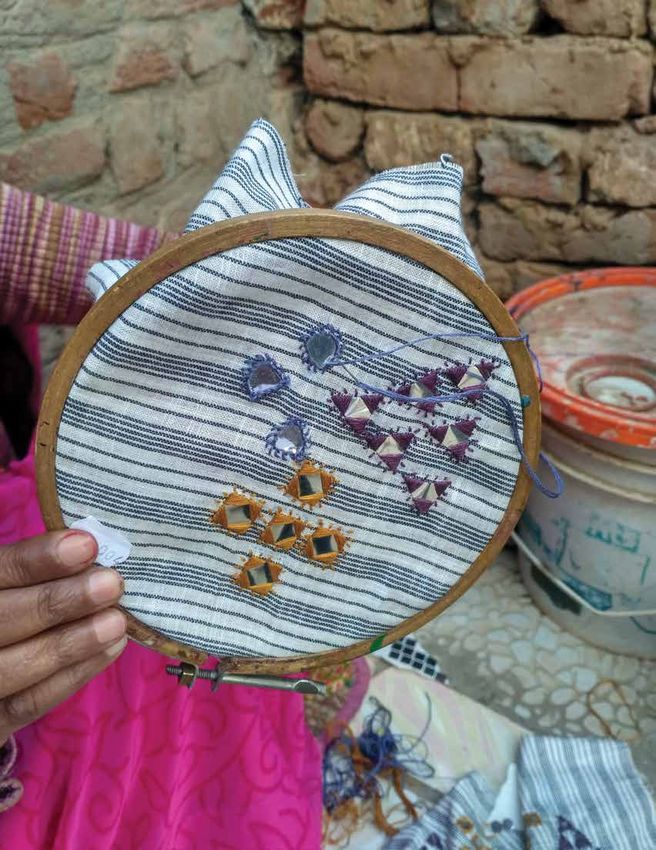
B. Nature of Home-Based Garment Work often performed in cramped, dark, dusty environments
The equipment required to perform home-based garment with limited ventilation. Home-based garment workers
work includes a wooden frame on which fabrics are placed, suffer many health ailments, including:
along with scissors, needles, and pliers. In addition, • Ocular degeneration or near complete loss of vision
design-specific materials include beads, threads, and laces. • Chronic back pain
The types of home-based garment work performed by the • Muscle pain and atrophy
workers documented for this project are pictured above. • Headaches
In addition, simple thread-cutting is a common form of • Pulmonary issues
home-based work. • Cuts and infections
C. Hazards Faced by Home-Based Garment The health and development impact on child laborers is
Workers naturally more pronounced.
Home-based garment work is monotonous, tedious, and
1718
“We are slaves to the Contractors. They
give us less wages, but we have no
alternative.” – A 30-year-old garment worker near New Delhi
IV. PREVIOUS STUDIES OF INDIA’S                                 and the reluctance of interviewees to discuss child
GARMENT SECTOR                                                  labor. The report notes that a primary reason why child
                                                                labor persists in the garment supply chain is due to the
A survey of the existing scholarly literature on India’s        financial pressure for children to supplement household
garment industry reveals the following key findings:            income. The report also notes that child laborers in the
Overall, there are more males (60%) than females (40%)          garment sector live and work in hazardous conditions,
in India’s garment sector, however, home-based garment          with poor lighting and ventilation. Children complain
work in India is disproportionately female. Further, the        of back pain, poor or failing eye sight, and having to
proportion of female workers has been steadily increasing       work long hours. Astoundingly, 36% of the children
across the last ten years.14 By contrast, the share of female   documented by the researchers indicated that they were
workers in the garment, textile, and footwear industries        paid nothing for their work.17
across Southeast Asia range from nearly three-fifths in
Indonesia to about four-fifths in Cambodia.15                   A 2015 study conducted by the India Committee of the
                                                                Netherlands and the Stop Child Labor Coalition examined
In a 2015 report, the ILO examined the causes for labor         the situation of child labor at hybrid cottonseed farms
shortages and labor turnover in the garment sector.             in six Indian states. Researchers collected and analyzed
Quantitative surveys of garment factory workers in sites        primary data collected via field visits to 396 sample
in northern India and in Bangalore in the south included        cottonseed farms in 72 villages. The report indicates that
questions regarding indicators of forced labor; however,        roughly 200,000 children, mostly girls under 14 years old,
the researchers did not attempt to quantify the prevalence      were working to produce cottonseed that is the basis of
of forced labor in the factory settings they documented.        textile products and garments. The study also noted that
They did, however, uncover numerous indicators of forced        most children working on farms became full-time workers
labor, including verbal abuse by factory managers, unpaid       because they were compelled to drop out of school.
overtime, and being compelled to work when unwell.              Minimum wages were regularly underpaid, and the
The report concluded that the data demonstrate that             children were exposed to poisonous pesticides and were
conditions at garment factories often involved a culture        often trafficked.18
of gross mistreatment of workers that point to probable
forced labor.16                                                 A number of reports have been conducted by the India
                                                                Committee of the Netherlands in conjunction with the
In 2015, Save the Children conducted a research study           Centre for Research on Multinational Corporations
to estimate the number of children working in the               (SOMO), highlighting the labor abuses experienced by
garment sector in five districts in New Delhi and to            young female migrants in India’s garment industry. A
better understand living and working conditions of child        2012 study documents the living and working conditions
laborers. The researchers concluded that 8,044 children in      in spinning units of five Indian textile and garment
these five districts were working as home-based garment         enterprises traced to supply chains of U.S. and European
workers; however, they noted the number could be                apparel companies. Researchers found cases of forced and
much higher given difficulties in accessing households          bonded labor, as recruiters convinced parents in rural

                                                                                                                             19
Researchers found that belong to a lower caste community. The recruiters also
target girls and women from poor, landless and indebted
child labor exists almost families. In particular, the report revealed that many
workers were employed under the “Sumangali Scheme,” in
entirely in the embroidery which workers are recruited with promises of being paid
and embellishment stages decent wages after completing three to five years of factory
work. However, the scheme essentially devolves into
of apparel making as part of debt bondage as the workers remain unpaid for longer
periods of time, as wages are often deducted for living
home-based work. expenses and other reasons. In addition, researchers found
that workers were severely restricted in their freedom of
villages to send their daughters to spinning mills with movement.22
promises of a decent salary, accommodations, meals, and
opportunities for schooling. However, when the girls Bhaskaran and Upendranadh’s research is one of the few
arrived at the mill they were forced to live in cramped reports that exclusively studies the role of children in
hostels located on the factory grounds, were prohibited home-based work in India’s garment sector, but only in
from leaving the factory grounds, and were not allowed and around New Delhi. In this context, the researchers
to contact their families. In addition, working conditions found that child labor exists almost entirely in the
were found to be mentally and physically abusive — the embroidery and embellishment stages of apparel making
girls worked 60 or more hours each week, with mandatory as part of home-based work. The study does not provide
but unpaid overtime and night shifts. The report also a prevalence estimate of child labor, however it does
showed that workers rarely signed written contracts. examine many of the broader contextual questions
Among all workers interviewed for the research, 60% were regarding the persistence of child labor in home-based
under 18 years old when employed at the spinning mill.19 garment work, and it provides recommendations on how
to address these issues.23
Two other studies by the India Committee of the
Netherlands focused on the trend of young female migrant A 2002 UNICEF-sponsored working paper examined the
workers in Bangalore’s garment industry. These migrants prevalence of home-based child labor in various sectors
cited poverty and a lack of job opportunities as the including garments, in five low-income and middle-
primary forces pushing them to migrate for work. Many income Asian countries (India, Pakistan, Indonesia,
young female workers noted that their parents had no Philippines, and Thailand). In India, the garment study
regular job or reliable source of income, hence they needed was conducted in the Lucknow district of Uttar Pradesh
to assist the family with earning income. Since migrant with a sample of 603 households. Findings include that
workers from northern India do not speak or understand 21% of children age five to ten years were involved in home-
Kannada, the local language in Bangalore, they are unable based garment work, and 71% of children age 11 to 14 were
to communicate needs for assistance with outsiders, nor involved. More than half of all children who were working
can they communicate concerns or needs with fellow were either not in school or in school part-time. Hours
factory workers, managers, and security guards at their worked each day range from four to seven, depending on
factories. Geographic and linguistic isolation create the age and gender of the child. Approximately 18% of children
conditions for unchecked exploitation.20,21 suffer health ailments directly attributable to the home-
based work they perform.24
A 2011 report conducted by the India Committee of the
Netherlands and SOMO found that recruiters for migrant Finally, WIEGO’s (Women in Informal Employment
garment worker primarily target unmarried girls and Globalizing and Organizing) Informal Economy
women between the ages of 14 and 25, who are dalits or Monitoring Study was conducted in ten cities in Latin
20America, Asia, and Africa and examined how workers are demand and prices. The study also found that home-
responding to evolving economic and social forces. Of based workers are especially impacted by the lack of basic
the total sample of home-based workers across the three infrastructure services (i.e., electricity) as their home is
study cities, 71% were sub-contracted and 29% were self- their work space. Home-based workers are also prone to
employed. Researchers found that both self-employed and unpredictable value chains, including irregular supply of
sub-contracted home-based workers are heavily affected raw materials, delayed payments, and irregular purchase
by macroeconomic trends, such as fluctuations in product orders.25
2122
“I do not enjoy this work. I do it because I
have no alternative. There is no other work
to do in this village” – A 28-year old garment worker near Farrukhabad
V. DISCUSSION OF RELEVANT                                              and for which the said person has not offered himself
LAW                                                                    voluntarily.”

The following section details the relevant law and                     The elements required to establish forced labor under the
conventions that establish each form of severe labor                   Convention are that the labor must be both:
exploitation documented during this research project.                  1) Involuntary, and
                                                                       2) Coerced.
A. Forced Labor Under Indian Law
The Constitution of India, Article 23 includes a                       The Convention does not define these conditions, but
prohibition against traffic in human beings and forced                 subsequent scholarship has maintained that absences
labor. While the Constitution of India does not define                 of freedom of movement and freedom of employment are
forced labor, the Supreme Court of India has provided                  central to the concept of forced labor. Naturally, there are
specific guidance on the definition of forced labor for the            degrees of involuntariness and coercion, so an array of
country:                                                               questions must be asked in order to establish whether the
                                                                       conditions pass a threshold to establish forced labor.
In the case of People’s Union for Democratic Rights vs. Union
of India and Others, 1982, the Supreme Court of India                  The researchers asked 11 questions in order to establish
determined that forced labor should be defined as                      the conditions for involuntariness under ILO Convention
any labor for which the worker receives less than the                  no. 29. The questions focused on establishing unlawful
government-stipulated minimum wage. The Court                          restrictions on movement and employment. Additional
reasoned that:                                                         questions were asked to establish an excessive work
                                                                       schedule, unpaid overtime, lack of safety equipment and
Ordinarily no one would willingly supply labor or service to another   meals, lack of medical care in case of injury, and other
for less than the minimum wage…[unless] he is acting under the         conditions that reveal involuntariness of labor.
force of some compulsion which drives him to work though he is paid
less than what he is entitled under law to receive.26                  The researchers asked six questions in order to establish
                                                                       the conditions for coercion under the Convention. These
The researchers asked three questions that focused on                  questions focused on threats, punishments, confiscation
verifying a chronic underpayment of minimum wages                      of documents, excessive surveillance, and other factors
as well as chronic delays in wage payments in order to                 that demonstrated coercion of labor.
establish forced labor under Indian law.
                                                                       Only if both conditions of involuntariness and coercion
B. Forced Labor Under ILO Convention                                   were simultaneously established was a subject deemed to
no. 29                                                                 be a victim of forced labor under ILO Convention no. 29.
ILO Forced Labor Convention no. 29, of which India is a
signatory, defines forced labor as, “Work or service which is          C. Bonded Labor
exacted from any person under the menace of any penalty                Bonded labor under Indian law is defined in the Bonded

                                                                                                                                      23
The Constitution of India, Article 23 includes a
prohibition against traffic in human beings and forced
labor. In the case of People’s Union for Democratic
Rights vs. Union of India and Others, 1982, the Supreme
Court of India determined that forced labor should be
defined as any labor for which the worker receives less
than the government-stipulated minimum wage.
Labour System (Abolition) Act, 1976: D. Child Labor
The Constitution of India, Article 24 includes a
Bonded labor is defined as a system of forced or partly forced prohibition against the employment of children in
labor under which a debtor accepts an advance of cash or in-kind factories and other hazardous settings.
in exchange for a pledge of his or any family member’s or other India has ratified most of the major international
dependent’s labor or service to, or for the benefit of, the creditor. conventions regarding child labor listed in Table 4.
The agreement can be oral or in writing or some mix therein; of
a fixed duration of time, or not; and with or without wages paid. Ratification of International Child Labor
An individual born into such an agreement made by an ascendant Laws – India28
is included, and any forfeiture of the freedom of movement,
employment, or the right to sell any product of the labor during the Table 4 – Ratification of International Child
agreement at market value constitutes bonded labor. 27 Labor Laws – India
Convention Ratification
Under this definition, bonded labor is established if an
individual takes an advance in exchange for his or any ILO C. 138 Minimum Age a
dependent’s pledged labor or service and is confined to a ILO C. 182 Worst Forms of Child Labor a
specific geographic area, or cannot work for someone else,
UN Convention on the Rights of the Child a
or is not allowed to sell his labor or goods at market value.
The researchers asked six questions in order to establish UN CRC Optional Protocal on Armed
Conflict a
the conditions for bonded labor under the Bonded
Labour System (Abolition) Act, 1976. Questions focused UN CRC Optional Protocal on the
on whether an advance had been taken in exchange for
Sale of Children, Child Prostitution, and a
Child Pornography
pledged labor, and whether any wage deductions were
made pursuant to repayment of the debt. These
Palermo Protocol on Trafficking in Persons a
“deductions” could also be made for the provision of food
or supplies, errors committed during the work, or for More recently, the Government of India ratified both ILO
tenancy. Deductions could also take the form of coercion Convention no. 182 (Worst Forms of Child Labor) and no.
of other family member to work to repay the debt, as well 138 (Minimum Age) in March 2017. Under international
as excessive interest rates that are used to perpetuate a law, the ILO Convention Concerning Minimum Age for
worker’s state of indebtedness. Admission to Employment or Work no. 138 stipulates
24that hazardous work should not commence until 18 Labour (Prohibition and Regulatory) Act (with
years, including in developing nations. The minimum a new title, “The Child and Adolescent Labour
age for non-hazardous work is set at 15 years, 14 years in (Prohibition and Regulation) Act, 1986”) allows
developing nations. The ILO Worst Forms of Child Labour children to help his or her family or family enterprise,
Convention no. 182 stipulates that a child is any person as long as the work conditions are not hazardous,
less than 18 years. Worst forms of child labor include and the work does not interfere with schooling.
slavery, trafficking, or any work that “is likely to harm the A “family enterprise” is defined as “…any work,
health, safety or morals of children.” profession, manufacture or business which is performed by the
members of the family with the engagement of other persons”
The Child Labor (Prohibition and Regulation) Act, 1986 (Article 3b). The Act has been criticized for in essence
defines a child as being 14 years of age. Section 3 of the Act legalizing many forms of child labor, potentially
includes the prohibition against child labor in certain
including home-based garment work.
hazardous occupations (listed in Part B of the Act, number
The researchers established child labor in home-
51 includes “Zari” and similar processes). Section 7 of the
based garment work by documenting any child who
Act includes, inter alia, the prohibition of child labor of
self-reported or was reported by an adult to be fewer
any kind for greater than six hours per day.
than 18 years of age and working at least four hours
per day at least five days a week.
However, under a 2016 amendment, the 1986 Child
2526
“We cannot leave this work even though
we are treated so badly. If we leave this
work, the company will never give us
work again.” – A 36-year-old garment worker near Jaipur

A. CASES DOCUMENTED –                                                              Jaipur, Shahjahanpur, Meerut, Bareilly, Sikandrabad,
NORTHERN INDIA                                                                     Farrukhabad, and Hapur. Map 1 provides a pictorial
                                                                                   representation of the spread of cases documented across
A total of 1,122 cases were documented in northern India                           northern India. Percentages on forced labor under Indian
within 50 kilometers of the following cities: New Delhi,                           law are not included as they are all either 100% or close to
                                                                                   it in every city documented.
MAP 1: Cases Documented in Northern India

                                                                                                            29.0%
                                      19.9%                                                      19.4%
                                                         11.5%                    12.3%

        1.8%           2.9%
                                                                     0%                                                     0%

               NEW DEHLI                                         MEERUT                                   HAPUR

                                                                                                                    21.1%

                                                                                                                                    10.1%      11.0%

                                                                                  •Meerut
                                                                 DEHLI
                                                            New Dehli•                                                       BAREILLY
                                                                                  •Hapur       •Bareilly
                                                 20.6%                             •Sikandrabad
                                                                                                •Shahjahanpur
                6.9%
                                 2.4%
                                                                                                    •Farrukhabad
                              JAIPUR                             •Jaipur

                                                                                                     UTTAR PRADESH

                RAJASTHAN

                                                         31.9%

                                                                                                                                            20.0%
                                              14.9%                                                             13.3%            13.3%
                              10.6%                                       10.7%
                                                                                          7.6%    7.6%

                                 SIKANDRABAD                                SHAHJAHANPUR                            FARRUKHABAD

   Forced Labor under International Law                                    Bonded Labor                  Child Labor

                                                                                                                                                       27
1. NEW DELHI
Total cases documented 342
Forced labor under Indian law 100.0%
Forced labor under International law 1.8%
Bonded labor 2.9%
Child labor 19.9%
Child laborers who attend school 47.1%
Average 8-hour wage $1.15
Male $1.71
Female $1.13
Wages delayed 24.3%
Average daily hours worked 6.3
Female 97.1%
Like the work 53.5%
Began work from a form of duress 74.9%
Began as a minor 40.9%
Have another source of income 13.7%
Average years worked 6.3
Average family size 5.7
Average income per HH member $1.04
Muslim or Scheduled Caste 99.4%
Would rather leave but cannot 79.8%
Penalized if work unfinished on time 14.9%
Free to do other work 76.0%
Chronic physical ailment or injury 30.4%
Literate 28.9%
Keep records of their work 17.3%
Feel earn enough for a decent life 4.4%
Have a bank account 49.1%
Able to save income 7.6%
Receive medical care 0%
Belong to a trade union 0%
Have a written agreement for work 0%
28All workers were found to be receiving less than the
government stipulated minimum wages; males earned an
average eight-hour equivalent wage of $1.71 per workday
($0.21 per hour) and females earned an average eight-hour
equivalent wage of $1.13 per workday ($0.14 per hour).
New Delhi is the capital of India with a population of 22 Delays in wage payments (24.3%) were significant but
million people. Researchers documented 342 home-based lower than most other cities in northern India. Almost all
garment workers in and around greater New Delhi. The workers (97.1%) were female. A little more than half of the
workers were found in a mix of urban areas working in workers (53.5%) indicated that they liked doing home-
small, concrete homes; in and around urban slums; or in based garment work. Three out of four workers (74.9%)
village-like environs beyond the city limits. All workers indicated that they began home-based garment work due
were found to be receiving less than the government to some form of duress, and four in ten workers (40.9%)
stipulated minimum wages; males earned an average began doing home-based garment work as children. New
eight-hour equivalent wage of $1.71 per workday ($0.21 per Delhi, along with Jaipur, is the only city in northern India
hour) and females earned an average eight-hour equivalent in which a small proportion of workers (13.7%) indicated
wage of $1.13 per workday ($0.14 per hour). Various that they had an alternate source of income to home-based
minimum wages apply to these cases depending on garment work. Average income per household member
whether the worker lives in New Delhi, or in the outskirts was $1.04, close to the average of other cities in the north.
of the city in the state of Haryana, and also whether the
work is categorized as unskilled (thread-cutting) or semi- Almost eight out of ten workers (79.8%) indicated they
skilled. The relevant daily minimum wages are: would rather leave home-based garment work but were
unable to do so. That said, New Delhi also had the highest
New Delhi proportion of workers (76.0%) in northern India who
Unskilled - $7.66 ($0.96 per hour) indicated they were free to pursue other work. Digging
Semi-skilled - $8.44 ($1.06 per hour) deeper, this paradox can be explained by workers
articulating the theoretical freedom to pursue other work,
Haryana even though there was no other work or alternatives for
Unskilled - $4.74 ($0.59 per hour) them to pursue. A relatively small proportion of workers
Semi-skilled - $5.23 ($0.65 per hour) (14.9%) indicated they suffered a penalty if they did not
complete their work on time. Three in ten workers (30.4%)
The workers in New Delhi are woefully underpaid, to toiled while enduring a chronic health ailment or injury.
the tune of 60% to 80% below the appropriate minimum Only 28.9% of the workers documented in and around
wages. New Delhi were literate, and even fewer (17.3%) kept
records of their work. Almost none of the workers (4.4%)
Forced labor under international law (1.8%) and bonded felt they earned enough to lead a decent life. Finally,
labor (2.9%) were not found to be extensive problems; around half of the workers (49.1%) had a bank account,
however, child labor (19.9%) was documented in roughly though only 7.6% were able to save any income. Most of the
one out of five cases. Not quite half (47.1%) of these child bank accounts had a zero balance.
laborers attend any amount of schooling each week.
29You can also read


