THE 3RD AUSTRALASIAN CONFERENCE ON COMPUTATIONAL MECHANICS - CENTRE FOR ADVANCED DESIGN IN ENGINEERING TRAINING - Deakin University
←
→
Page content transcription
If your browser does not render page correctly, please read the page content below

THE 3RD AUSTRALASIAN CONFERENCE ON
          COMPUTATIONAL MECHANICS

               12-14 FEBRUARY 2018

      DEAKIN UNIVERSITY WAURN PONDS CAMPUS

                      IN THE

CENTRE FOR ADVANCED DESIGN IN ENGINEERING TRAINING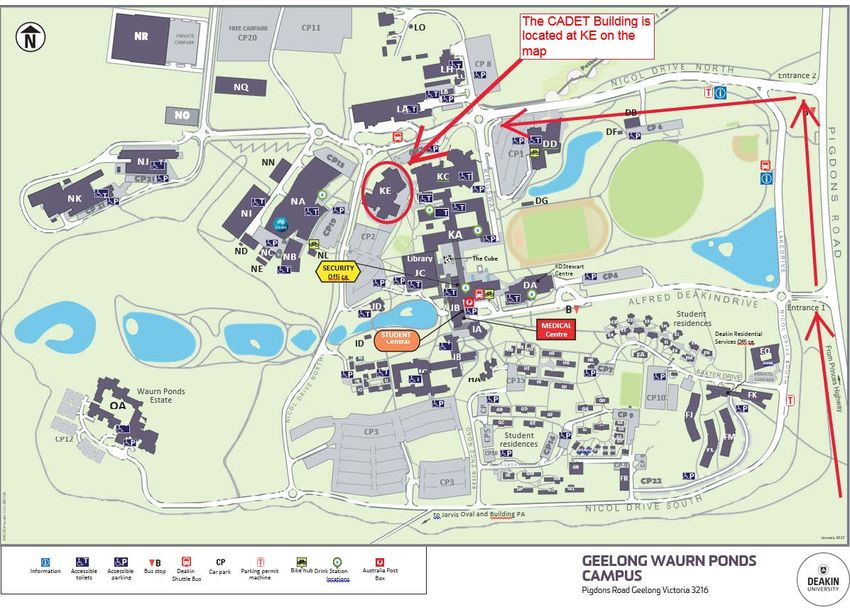
SPONSORS

With many thanks to the School of Engineering at Deakin University for their sponsorship of
The 3rd Australasian Conference on Computational Mechanics 2018

© Copyright Deakin University

Layout and typeset: Deakin Event Management Services (Sophie Twamley)
CONTENTS
SPONSORS                                              1
WELCOME FROM THE 2018 CONFERENCE CO-CHAIRS            3
BIOGRAPHY – CONFERENCE CO-CHAIRS                      4
ACCM-3 CONFERENCE SCIENTIFIC COMMITTEE                5
ACKNOWLEDGEMENT OF COUNTRY                            7
AUSTRALIAN ASSOCIATION FOR COMPUTATIONAL MECHANICS    7
CONFERENCE VENUE                                      8
TRAVEL INFORMATION                                    9
ACCOMMODATION INFORMATION                            10
ARRIVING AT THE VENUE                                11
PARKING INFORMATION                                  11
CONFERENCE VENUE FLOORPLAN                           12
CONFERENCE STRUCTURE                                 13
SOCIAL ACTIVITIES AND EVENTS                         14
GENERAL INFORMATION                                  14
ACCM-3 CONFERENCE PROGRAM OUTLINE                    16
SPEAKERS                                             17
  Mike Xie                                           17
  Jeong Whan Yoon                                    18
WELCOME FROM THE ACCM-3 CONFERENCE CO-CHAIRS

Dear Friends and Colleagues,
On behalf of the organising committee and as the co-chairs, we would like to welcome you to
the 3rd Australian Conference on Computational Mechanics (ACCM-3) held in Geelong,
Australia from 12-14 February, 2018.
The Australian Association for Computational Mechanics (AACM) facilitates the organisation
of this premier biennial conference. The conference aims to provide an international forum
for researchers, industry practitioners, engineers and postgraduate scholars to promote,
exchange and disseminate recent findings on contemporary and wide-ranging topics in
Computational Mechanics.
Computational Mechanics is a fundamental subject of engineering science. It underpins all of
the primary engineering disciplines, including Mechanical, Civil, Chemical, and Materials
Engineering. Computational Mechanics addresses a broad range of areas, from conventional
structural and mechanical designs, failure analysis, dynamic and vibration analysis, and fluid
mechanics to cutting-edge computational mechanics, nano-micro mechanics, multiscale
mechanics, coupled multiphysics problems and novel materials. This is truly reflected in the
variety of fields featured in the conference topics. One key aim of ACCM is to retain and
engage high quality graduate students in Computational Mechanics research. ACCM aims to
nurture the talent of young researchers through its best paper awards.
The ACCM series started in 2013 with the ACCM-1 and ACCM-2 held in Sydney and Brisbane,
respectively. The ACCM conference has become a flagship activity of AACM and will be
regularly organised. ACCM will accommodate presentations on a wide range of topics to
facilitate inter-disciplinary exchange of ideas in science, engineering and allied disciplines, and
helps to foster collaborations.
The ACCM conference is unique in that it showcases the current trends and research
developments in Computational Mechanics in the Australasian region and its relationship to
national and regional priorities. The papers to be presented at ACCM-3 will address many
grand challenges in modern engineering. The full papers to be presented at ACCM-3 will be
peer-reviewed by expert reviewers including members of the National Scientific and Local
Organising Committees for ACCM-3. The topics of these papers will range from nano- to
macro-mechanics of materials, dynamics, sustainable manufacturing, biomechanics and
computational mechanics.
We are thankful for the contributions of all ACCM-3 participants and presenters at this event.
In particular, we gratefully acknowledge the contributions from the Local Organising
Committee, National Scientific Committee, and the expert reviewers.
Finally, we thank you for your contribution to the ACCM-3 conference, and we hope you have
a wonderful and richly rewarding conference experience in Geelong, Australia. We look
forward to your participation and continued engagement at future ACCM conferences.

Raj Das and Bernard Rolfe
(ACCM-3 Conference Co-Chairs)

                                                3
BIOGRAPHY – CONFERENCE CO-CHAIRS
DR. RAJ DAS, RMIT UNIVERSITY
                     Dr Raj Das is an Associate Professor in Aerospace and Aviation discipline
                     and a principal investigator of the Aerospace Materials and Structures
                     group of the Sir Lawrence Wackett Aerospace Research Centre of RMIT
                     University. His current areas of interest include numerical modelling
                     using finite element and meshless methods, advanced architected and
                     metamaterials, impact behaviour and failure of composite materials,
                     dynamic fracture and fatigue, and structural optimisation. Before joining
RMIT, Dr Das has work experience in the University of Auckland (New Zealand), CSIRO
(Australia), and University of Manchester (UK). Dr Das has published over 150 peer-reviewed
journal and conference papers. He has received various awards and fellowships, such as ‘Jim
& Hazel D. Lord Emerging Faculty Fellowship’, ‘Early Career Research Excellence Award’, and
‘AUEA Emerging Researcher Award’ from the University of Auckland, ‘CONICYT Fellowship’
from the Government of Chile, ‘UQAC Visiting Fellowship’ from the University of Quebec, and
‘Merit Award’ from the International Association of Engineers, Hong Kong. Dr Das is an
elected member of several international committees and professional societies, and serves
on editorial boards and reviewing panels of many journals

DR. BERNARD ROLFE, DEAKIN UNIVERSITY
                      Dr Bernard Rolfe is currently an Associate Professor (Mechanical) and
                      Associate Head of School (Research) at the School of Engineering –
                      Deakin University. He completed a combined Economics and
                      Engineering degree with honours in 1995 from the Australian National
                      University (ANU). After working in industry for 3 years, he returned to
                      the ANU and completed a PhD in advanced manufacturing in 2002.
Bernard joined Deakin as a Lecturer in Mechanical Engineering in 2005. He is still at Deakin,
and part of the School of Engineering executive team. He was the General Secretary for the
9th International Conference and Workshop on Numerical Simulation of 3D Sheet Forming
Processes (Numisheet 2014) held in Melbourne. He is on the Academic Advisory Board of
FISITA (Federation of International Societies of Automotive Engineers). He has been part of
over fifteen successful nationally competitive large research projects (over $18 million in
funding), and he has published over 150 refereed articles. His current research focus is the
forming of light weight structures, including the development of better material models for
metal forming.

                                              4
ACCM-3 CONFERENCE SCIENTIFIC COMMITTEE

NAME                       UNIVERSITY
Bernard Rolfe – Co Chair   Deakin University
Raj Das – Co Chair         RMIT University
Abdul Hamid Shiekh         The University of Adelaide
Ali Daliri                 RMIT University
Ali Entezari               The University of Sydney
Andrew Chan                University of Tasmania
Baolin Wang                Western Sydney University
Chengwang Lei              The University of Sydney
Chi-King Lee               The Australian Defence Force Academy
Chiu Wing                  Monash University
Chongmin Song              The University of New South Wales
Chun Wang                  The University of New South Wales
Ean Ooi                    Federation University
Fang-Bao Tian              The University of New South Wales
Giang Nguyen               The University of Adelaide
Grand Roman Joldes         The University of New South Wales
Grant Steven               Strand7
Guan Heng Yeoh             The University of New South Wales
Guaxing Lu                 Swinburne University
Ha Bui                     Monash University
Hong Hao                   Curtin University
Itai Einav                 The University of Sydney
Jie Yang                   RMIT University
Jonathan Tran              The University of Melbourne
Justin Fernandez           University of Auckland
Klaus Thoeni               University of New Castle
Liangchi Zhnag             University of New South Wales
Lihai Zhang                University of Melbourne
Ling Tong                  The University of Sydney
Luming Shen                The University of Sydney
Majidrezw Naxem            RMIT University
Nam Mai-Duy                University of Southern Queensland
Nhu Nguyen                 Monash University
Peter Pivonka              Queensland University of Technology
Peter Vee Sin Lee          The University of Melbourne
Qinghua Qin                Australian National University

                                      5
Richard Yang          Western Sydney University
Saeed Miramini        The University of Melbourne
Shiwei Zhou           RMIT University
Somayeh Behradtar     University of Queensland
Tracie Barber         The University of New South Wales
Tracy Dong Ruan       Swinburne University
Tuan Doc Ngo          The University of Sydney
Wei Gao               The University of New South Wales
Weihua Li             University Of Wollongong
Wenxian Lin           James Cook University
Wenyi Yang            Monash University
Xin Ren               RMIT University
Yang Yu               University of Technology Sydney
Yi Qian               Macquarie University
Yi-Min (Mike) Xie     RMIT University
Yixia (Sarah) Zhang   The Australian Defence Force Academy
Yixiang Gan           The University of Sydney
Yuantong Gu           Queensland University of Technology
Zhen (Jeff) Luo       University of Technology Sydney
Zhengyi Jiang         University of Wollongong
Zhi-Yong Li           Queensland University of Technology

                                6
ACKNOWLEDGEMENT OF COUNTRY
We would like to acknowledge the Wadawurrung people, the traditional owners of the land
on which we are gathered today. We pay our respects to the local people for allowing us to
have our gathering on their land and to their Elders; past, present and future.
AUSTRALIAN ASSOCIATION FOR COMPUTATIONAL MECHANICS
The Australian Association for Computational Mechanics (AACM) facilitates the organisation
of this premier biennial conference. The conference aims to provide an international forum
for researchers, industry practitioners, engineers and postgraduate scholars to promote,
exchange and disseminate recent findings on contemporary and wide-ranging topics in
Computational Mechanics.
The ACCM conference is unique in that it showcases the current trends and research
developments in Computational Mechanics in the Australasian region and its relationship to
national and regional priorities. The papers to be presented at ACCM-3 will address many
grand challenges in modern engineering. The full papers to be presented at ACCM-3 will be
peer-reviewed by expert reviewers including members of the National Scientific and Local
Organising Committees for ACCM-3. The topics of these papers will range from nano to
macro-mechanics of materials, dynamics, sustainable manufacturing, biomechanics and
computational mechanics.
Deakin University is proud to host The Third Australian Conference on Computational
Mechanics. The Conference will be at our Waurn Ponds Campus, at the state-of-the-art
Centre for Advanced Design in Engineering Training (CADET) building.
7CONFERENCE VENUE
The ACCM-3 Conference will be held at Deakin University’s Waurn Ponds Campus, Geelong.
Geelong is home to more than 200,000 people and offers a diverse range of cuisine, wine
and activities.
Deakin University’s Geelong Waurn Ponds Campus is located on the western edge of Geelong
and is home to the Geelong Technology Precinct, an area which provides research and
development capabilities and opportunities for university-industry partnerships and new
enterprises in the Geelong region.
Within the Geelong Technology Precinct sits the Centre for Advanced Design in Engineering
Training (CADET), a multimillion dollar facility comprised of state of the art equipment, cutting
edge technologies, specialist aids, laboratories and learning environments to enable the
creativity, imagination and research required to solve modern engineering problems.
This facility enables students, researchers and industry to experience and master the tools
and techniques that will propel Australian manufacturing beyond the 21st century.
CADET provides some of the best future-focused engineering and design facilities including:
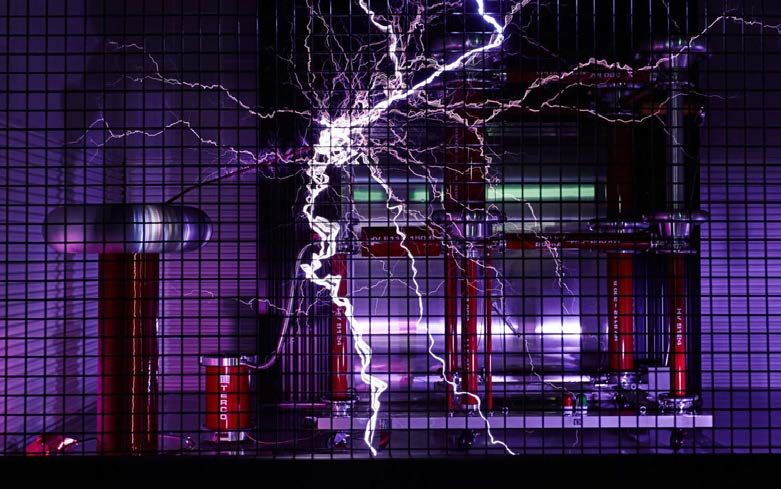
• High Voltage Laboratory
• Virtual Reality Laboratory
• 3D Printing Laboratory
• Materials Science Corrosion and Polymer Laboratory
• Mechatronics and electronics laboratory
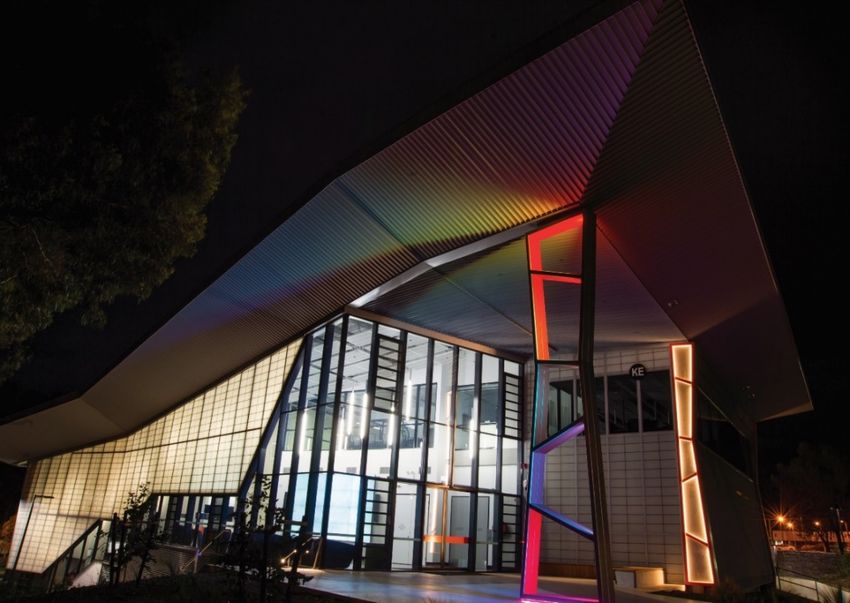
The Centre for Advanced Design in Engineering Training (CADET) Building – High Voltage Lab.
8TRAVEL INFORMATION
The ACCM-3 Conference venue is located approximately just one hour south of Melbourne at
Deakin’s Waurn Ponds CADET building.
AIR
Domestic travelers can fly direct with Jet Star to Avalon Airport and then drive or take a shuttle
bus to the Waurn Ponds Campus (see below for details).
All visitors can choose to fly to Melbourne’s Tullamarine Airport and drive, take a shuttle bus
or train to the Waurn Ponds Campus (see below for details).
AIRPORT SHUTTLE
From Avalon Airport you can use the Sky Bus service to travel. All information can be found
on their website but the shuttle will pick you up from Avalon Airport and can drop you either
at the Geelong Railway Station, which is Geelong’s main station, or at the South Geelong
station. From both stations you can catch a connecting taxi to your accommodation.
From Tullamarine Airport you can use the Gull Airport Service to travel direct to Geelong.
Contact, booking, price and timetable information can be found on their website. The pick-up
and drop off point for this service is the Geelong Railway Station. From the station you can
catch a taxi to your accommodation or the conference at Waurn Ponds directly.
DRIVING
Avalon Airport is approximately 20 minute drive from Geelong’s central business district.
The Waurn Ponds Campus is located approximately one and a half hour’s drive from
Melbourne (Tullamarine) Airport.
Rental car companies are available to both airports.
TRAIN
From Melbourne’s Southern Cross Station you can take a V/Line train service to Waurn Ponds
Railway Station. See the V/Line website for the Geelong timetable, details about fares, tickets
and bookings. The Waurn Ponds campus is a 10 minute taxi ride from the station.
TAXIS
The Geelong Taxi Network website has information on estimating taxi fares and booking
online. The contact number for Geelong taxis is 131 008.
9ACCOMMODATION INFORMATION
The below are an array of recommended hotels are for your reference only. There is many
diverse accommodations in Geelong that you can select from booking websites such as;
http://au.hotels.com/ , http://expedia.com.au , http://hotelscombined.com.au .
WAURN PONDS ESTATE
The Waurn Ponds Estate is a spectacular conference centre, which offers business facilities
alongside quality hotel rooms. The Waurn Ponds Estate is the most convenient
accommodation for the ACCM-3 Conference as it is on-site the Waurn Ponds Deakin Campus.
Waurn Ponds Estate (from $145 per night)
Deakin Geelong, Nicol Drive South, Waurn Ponds VIC 3216
Please phone 03 5227 3000 for more information
QUEST GEELONG
Quest Geelong offers quality 4 star serviced apartment accommodation. It is ideal for those
with extended stays or those who enjoy having self-contained accommodation.
Quest Geelong ($199 per night)
16-18 The Esplanade Sth, Geelong VIC 3220
Please phone 03 5228 2000 for more information
BAYSIDE GEELONG
The Bayside Geelong, located on The Esplanade’s Waterfront, is perfect for all your Geelong
accommodation needs with options for the business and leisure travelers. Bayside Geelong
provides a diverse range of room types from comfortable budget rooms to multiple bedroom
apartments.
Bayside Geelong ($165 per night)
13-15 The Esplanade, Geelong, Vic 3220
Please phone 03 5244 7700
10ARRIVING AT THE VENUE
The conference is held in The Centre for Advanced Design in Engineering Training (CADET)
building ‘KE’ at Deakin Waurn Ponds campus. Please refer to the conference website for
general travel information. On arrival at Deakin Waurn Ponds Campus, please enter
at Entrance 2 and refer to the campus map to make your way to the CADET Building (KE).
Please follow the map provided for a visual representation.
PARKING INFORMATION
Geelong Waurn Ponds has a free car park just for visitors (CP20 – refer to campus map).
Alternatively, paid parking is available on campus. Please use the CellOPark app. Parking costs
$1.60 for one hour or $6.40 for the entire day. The system requires your registration number
and car model. If your location services are active the app will recognize that you are at Deakin
Waurn Ponds, but if it doesn’t please select zone number 1040100.
We recommend paying conference delegates use CP2.
11CONFERENCE VENUE FLOORPLAN
12CONFERENCE STRUCTURE
GUIDELINES FOR CONCURRENT SESSIONS
Program sessions have been carefully programmed by topic and we encourage you to commit
to the full session rather than changing rooms within session timeslots.
To ensure the smooth running of the very full conference program, it is important that all
presenters keep to time. Your presentation should be 15 minutes long to allow for a 5
minute Q and A session at the end.
TOURS
Tours will take place on the afternoon of Tuesday 13 February visiting CADET, The Innovations
Building and Carbon Nexus. Please sign up at the registration desk to secure your place.
POST CONFERENCE WORKSHOP
The workshop will cover developing a plasticity model and a fracture model for ABAQUS using
UMAT. The structure of an ABAQUS user subroutine will be introduced in the work shop. It
will review the elastic and elasto-plastic stiffness, the stress integration with Euler forward
and backward methods. A UMAT will be developed and tested on a one shell element with
Hill 1948 yield criterion, with the possibility for more advanced models if time permits.
The second part of this workshop will introduce basic ductile fracture criteria, experimental
design for the calibration of fracture coefficients, matlab codes for the calibration of fracture
coefficients and drawing of fracture envelopes in various stress and strain space, leading to
the development of a UMAT for fracture prediction in ABAQUS. A simple application will be
given based on the von Mises yield function for the predication of ductile fracture with
element deletion.
Workshop attendees should meet at Building NA (opposite CADET) in the café at 8.45am on
Wednesday 7 February.
13SOCIAL ACTIVITIES AND EVENTS
CONFERENCE DINNER
Date: Monday, 12 February 2018
Time: Drinks commence at 6.30pm and delegates will sit down for dinner at 7pm
Venue: Waurn Ponds Estate, Nicol Drive South Waurn Ponds VIC 3216
Fee: Included in all full registrations
This event is a great opportunity to connect with your fellow delegates over drinks and dinner
after the completion of your first day of the conference.
**To assist with catering numbers, please inform Event staff of your plans to attend this
function as soon as possible.
GENERAL INFORMATION
REGISTRATION DESK
All delegates must be registered in order to attend the 2018 ACCM Conference. The
Registration Desk will be located in the foyer of the CADET building and will open at 8am daily.
ALTERATIONS TO THE PROGRAM
The Conference Committee reserves the right to make alterations to the program as
circumstances dictate and will not accept responsibility for any errors, omissions or changes
made to the program. All alterations to the program will be advised by the Events staff.
MOBILE PHONES
As a courtesy to other participants, please ensure that all mobile phones are turned off or on
silent mode during all presentations.
WIRELESS INTERNET ACCESS
Wireless internet access will be available for all delegates. To access Deakin University’s guest
WiFi network please select Guest WiFi Deakin. In your browser please create an account, and
then use those details to log in. Deakin University also has “eduroam” wireless internet
available.
BAGS, LUGGAGE AND COATS
Delegates who wish to bring bags, luggage or coats with them on any of the conference days
are asked to take their items to the Registration Desk for storage.
14CATERING
Conference catering is included for all attendees including a conference dinner on the evening
of Monday, 12 February.
All catering will take place in foyer of the CADET building, opposite to where the delegates
will register.
SMOKING RESTRICTIONS
Deakin University is a smoke-free environment. This policy has been implemented to create
a healthy and safe environment for all Deakin students, staff and associates. If you wish to
participate in smoking you must leave campus by heading across to Pigdons Road. Security
enforce this regulation so please obey this request.
EMERGENCY EVACUATION PROCEDURES
In the event of an emergency, delegates will be advised of the status of the emergency via
loudspeaker. Please only evacuate when advised to do so. Deakin University staff will be on
hand to advise you of any action that needs to be taken. When asked to evacuate, please
calmly make your way to the nearest assembly area and await further instructions. Deakin
University’s Waterfront Campus emergency assembly points are shown on the following
page.
Please see the following map below for emergency evacuation point for the CADET building.
152018 ACCM-3 CONFERENCE PROGRAM OUTLINE
The featured schedule was accurate as of the final print date 9/02/2018. Please be aware that
this program outline is therefore subject to unforeseen last minute changes.
MONDAY 12 FEBRUARY 2018 – DAY 1
8.00 am Registrations open CADET level one foyer
9.00 am Conference open and welcome KE1.207
9.20 am Keynote 1 – Professor Mike Xie KE1.207
10.15 am Morning tea break CADET level one foyer
10.40 am Concurrent sessions See full program
12.40 pm Lunch CADET level one foyer
1.20pm Concurrent sessions See full program
3.20pm Afternoon tea break CADET level one foyer
3.40pm Concurrent sessions See full program
5.40pm Day 1 conference close
6.30pm Conference dinner commences Waurn Ponds Estate
TUESDAY 13 FEBRUARY 2018 – DAY 2
8.00 am Registrations open CADET level one foyer
9.00am Conference Open and Welcome KE1.207
9.15am Keynote 2- Professor Jeong Yoon KE1.207
10.15am Morning tea break CADET level one foyer
10.40am Concurrent sessions See full program
12.20pm Lunch CADET level one foyer
1.20pm Concurrent Sessions See full program
3.20pm Announcement of awards and KE1.207
conference close
3.30pm Tour of CADET, Carbon Nexus and Innovations Building
WEDNESDAY 14 FEBRUARY 2018 – DAY 3 WORKSHOP
8.45 am Meet at Building NA café See campus map
9.00 am Developing UMATs for plastic behavior NA1.210
11.00 am Morning Tea N1 Cafe
11.20 am Developing UMATs for failure behaviour NA1.210
1.20pm Light lunch N1 Cafe
1.40pm Workshop Close
16SPEAKERS
MIKE XIE
RMIT Distinguished Professor and Director of Centre for Innovative Structures and
Materials
After 10 years as the Head of Civil Engineering discipline at RMIT University, Prof. Xie is now
serving as the Director of RMIT Center for Innovative Structures and Materials.
He was elected Fellow of the Australian Academy of Technological Sciences and Engineering
(ASTE) in 2011 for his outstanding contributions to the theory and application of structural
optimization techniques. His primary research interest is the design and manufacture of novel
and efficient structures and materials. Prof. Xie has collaborated with many companies,
including Boeing, Arup, and Smith & Nephew.
He is one of the most highly cited researchers in the civil engineering discipline in Australia,
with over 10,000 citations (Google Scholar). He was awarded the title of “RMIT Distinguished
Professor” in 2016.In addition to his academic engineering practice known as XIE Archi-
Structure Design (Shanghai) Co., Ltd.
He was the winner of the 2017 Clunies Ross Innovation Award, a prestigious national prize
administered by the ATSE to recognize research innovation and practical impact. He is also
the winner of the 2017 AGM Michell Medal, awarded by Engineers Australia in recognition of
his outstanding contribution to the field of mechanical engineering.
17JEONG WHAN YOON
Professor of Applied Mechanics at Deakin University
Jeong Whan Yoon is currently Professor of Applied Mechanics at Deakin University, and also
Professor of Mechanical Engineering at KAIST, Korea.
He is leading the International Consortium for Innovative Manufacturing (ICIM) with General
Motors toward high reliability design and manufacturing for lightweight materials and
structures. The consortium includes six Tier-1 members, and one Tier-2 and three Tier-3
industry members. He led Boeing-chaired manufacturing research (AusAMRC) at Swinburne
University from 2010 to 2013.
He has published over 200 technical papers for international journals and conferences with
over 4000 citations (H-index: 33, Scopus). He received “2008 International Journal of Plasticity
Award” for outstanding contributions in the field of plasticity. He has been serving as an
“Editorial-Board” member for International Journal of Plasticity since 2008. As guest editors,
he edited seven special issues at Int. J. Plasticity and two special issues at Int. J. Solids &
Structures.
He also has diverse industry experiences including LG Electronics (Korea) for product
development, MSC Software Corporation (USA) for MSC. Nastran & Marc source code
development and Alcoa Technical Centre (USA). He served as the Chairman of NUMISHEET
2014 held in Melbourne, Australia. He received his PhD at KAIST in 1997.
18WARRNAMBOOL CAMPUS
Princes Highway, Warrnambool
Victoria
GEELONG WAURN PONDS CAMPUS
Pigdons Road, Waurn Ponds
Victoria
GEELONG WATERFRONT CAMPUS
1 Gheringhap Street, Geelong
Victoria
MELBOURNE BURWOOD CAMPUS
221 Burwood Highway, Burwood
Victoria
deakin.edu.au
Published by Deakin University, February 2018
CRICOS Provider Code: 00113B
19You can also read


