The Emissions Gap Report 2013 - A UNEP Synthesis Report
←
→
Page content transcription
If your browser does not render page correctly, please read the page content below
The Emissions Gap Report 2013
A UNEP Synthesis Report
Published by the United Nations Environment Programme (UNEP), November 2013

Copyright © UNEP 2013

ISBN: 978-92-807-3353-2
DEW/1742/NA

This publication may be reproduced in whole or in part and in any form for educational or non-profit services without special
permission from the copyright holder, provided acknowledgement of the source is made. UNEP would appreciate receiving
a copy of any publication that uses this publication as a source.

No use of this publication may be made for resale or any other commercial purpose whatsoever without prior permission in
writing from the United Nations Environment Programme. Applications for such permission, with a statement of the purpose
and extent of the reproduction, should be addressed to the Director, DCPI, UNEP, P. O. Box 30552, Nairobi 00100, Kenya.

Disclaimers
Mention of a commercial company or product in this document does not imply endorsement by UNEP or the authors. The
use of information from this document for publicity or advertising is not permitted. Trademark names and symbols are used
in an editorial fashion with no intention on infringement of trademark or copyright laws.

We regret any errors or omissions that may have been unwittingly made.

© Images and illustrations as specified.

Citation
This document may be cited as:
UNEP 2013. The Emissions Gap Report 2013. United Nations Environment Programme (UNEP), Nairobi

A digital copy of this report along with supporting appendices are available at http://www.unep.org/emissionsgapreport2013/

This project is part of the International Climate Initiative. The          Supported by:
Federal Ministry for the Environment, Nature Conservation
and Nuclear Safely supports this initiative on the basis of a
decision adopted by the German Bundestag.

                                                                           Based on a decision of the Parliament of the
                                                                           Federal Republic of Germany

                                                        UNEP promotes
                                              environmentally sound practices
                                            globally and in its own activities. This
                                         report is printed on paper from sustainable
                                        forests including recycled fibre. The paper is
                                        chlorine free, and the inks vegetable-based.
                                            Our distribution policy aims to reduce
                                                    UNEP’s carbon footprint
U NE P
United Nations Environment Programme
The Emissions Gap Report 2013
A UNEP Synthesis Report
November 2013Acknowledgements
Scientific Steering Committee Kember (The Climate Institute, Australia), Kevin Kennedy
Joseph Alcamo, Chair (UNEP, Kenya); Bert Metz (European (World Resources Institute, USA), Alexey Kokorin (World
Climate Foundation, Netherlands); Mónica Araya (Nivela, Wildlife Foundation, Russian Federation), Takeshi Kuramochi
Costa Rica); Tomasz Chruszczow (Ministry of Environment, (Institute for Global Environmental Studies, Japan), Apurba
Poland); Simon Maxwell (Overseas Development Institute, Mitra (World Resources Institute, USA), Smita Nakhooda
United Kingdom); Klaus Müschen (Federal Environment (Overseas Development Institute, United Kingdom),
Agency, Germany); Katia Simeonova (UNFCCC Secretariat, Gabriela Niño (Mexican Centre for Environmental Law,
Germany); Youba Sokona (South Centre, Switzerland); Merlyn Mexico), Michael Obeiter (World Resources Institute, USA),
Van Voore (UNEP, France); Ji Zou (National Center for Climate Jos Olivier (PBL Netherlands Environmental Assessment
Change Strategy and International Cooperation, China). Agency, Netherlands), Leticia Pineda (Mexican Centre for
Environmental Law, Mexico), Viviane Romeiro (University of
Chapter 2 São Paulo, Brazil), Kath Rowley (Climate Change Authority,
Lead authors: Michel den Elzen (PBL Netherlands Australia), Ranping Song (World Resources Institute,
Environmental Assessment Agency, Netherlands), Taryn China), Carlos Tornel (Mexican Centre for Environmental
Fransen (World Resources Institute, USA), Hans-Holger Law, Mexico).
Rogner (International Institute for Applied Systems
Analysis, Austria). Chapter 3
Contributing authors: Giacomo Grassi (European Lead authors: Gunnar Luderer (Potsdam Institute for Climate
Commission’s Joint Research Centre, Italy), Johannes Impact Research, Germany), Joeri Rogelj (ETH Zurich,
Gütschow (Potsdam Institute for Climate Impact Research, Switzerland), Roberto Schaeffer (Federal University of Rio de
Germany), Niklas Höhne (Ecofys, Germany), Kelly Levin (World Janeiro, Brazil).
Resources Institute, USA), Mark Roelfsema (PBL Netherlands Contributing authors: Rob Dellink (OECD, France), Tatsuya
Environmental Assessment Agency, Netherlands), Hanaoka (National Institute for Environmental Studies,
Elizabeth Sawin (Climate Interactive, USA), Christopher Japan), Kejun Jiang (Energy Research Institute, China), Jason
Taylor (Department of Energy and Climate Change, United Lowe (MetOffice, United Kingdom), Michiel Schaeffer (Climate
Kingdom), Zhao Xiusheng (Tshingua University, China). Analytics, USA), Keywan Riahi (International Institute for
Reviewers: Joshua Busby (University of Texas at Austin, USA), Applied Systems Analysis, Austria), Fu Sha (National Center
Joanna House (Bristol University, United Kingdom), Ariane for Climate Change Strategy and International Cooperation,
Labat (European Commission, Belgium), Gunnar Luderer China), Detlef P. van Vuuren (PBL Netherlands Environmental
(Potsdam Institute for Climate Impact Research, Germany), Assessment Agency, Netherlands).
Bert Metz (European Climate Foundation, Netherlands), Reviewers: Michel den Elzen (PBL Netherlands Environmental
Klaus Müschen (Federal Environment Agency, Germany), Assessment Agency, Netherlands), Bert Metz (European
Daniel Puig (UNEP Risø Centre, Denmark), Roberto Schaeffer Climate Foundation, Netherlands), Klaus Müschen (Federal
(Federal University of Rio de Janeiro, Brazil), Katia Simeonova Environment Agency, Germany), Daniel Puig (UNEP Risø
(UNFCCC Secretariat, Germany). Centre, Denmark), Massimo Tavoni (Fondazione Eni Enrico
Other input: Jusen Asuka (Institute for Global Environmental Mattei, Italy), Christopher Taylor (Department of Energy and
Studies, Japan), Priya Barua (World Resources Institute, USA), Climate Change, United Kingdom).
Jenna Blumenthal (World Resources Institute, USA), Casey Other input: Peter Kolp (International Institute for Applied
Cronin (Climate Works Foundation, USA), Hannah Förster Systems Analysis, Austria).
(Öko Institut, Germany), Andries Hof (PBL Netherlands
Environmental Assessment Agency, Netherlands), Olivia
iv The Emissions Gap Report 2013 – AcknowledgementsChapter 4 Paralta Carqueija (UNEP Risø Centre, Denmark), Daniel
Lead authors: Henry Neufeldt (World Agroforestry Centre - Perczyk (Instituto Torcuato Di Tella, Argentina), Lynn Price
ICRAF, Kenya). (Lawrence Berkeley National Laboratory, USA), Wilson
Contributing authors: Tapan K. Adhya (KIIT University, Rickerson (Meister Consultants Group, USA), Joyashree Roy
India), Jeanne Y. Coulibaly (AfricaRice, Benin), Gabrielle (Jadavpur University, India), Misato Sato (London School of
Kissinger (Lexeme Consulting, Canada), Genxing Pan (Nanjing Economics, United Kingdom), Janet Sawin (Sunna Research,
Agricultural University, China). USA), Andrew Scott (Overseas Development Institute, United
Kingdom), Jacob Krog Søbygaard (Ministry of Climate, Energy
Reviewers: Anette Engelund Friis (Danish Agriculture and Food
and Buildings, Denmark), Geng Yong (National Academy of
Council, Denmark), Bert Metz (European Climate Foundation,
Sciences, China), Changhua Wu (The Climate Group, China).
Netherlands), William Moomaw (Tufts University, USA), Klaus
Müschen (Federal Environment Agency, Germany), Christine
Editorial Team:
Negra (EcoAgriculture Partners, USA), Anne Olhoff (UNEP Risø
Joseph Alcamo (UNEP, Kenya), Daniel Puig (UNEP Risø Centre,
Centre, Denmark), Katia Simeonova (UNFCCC Secretariat,
Denmark), Anne Olhoff (UNEP Risø Centre, Denmark),
Germany), Youba Sokona (South Centre, Switzerland).
Volodymyr Demkine (UNEP, Kenya), Bert Metz (European
Climate Foundation, Netherlands).
Chapter 5
Lead authors: Niklas Höhne (Ecofys, Germany), Jennifer Project Coordination:
Morgan (World Resources Institute, USA). Daniel Puig (UNEP Risø Centre, Denmark), Anne Olhoff (UNEP
Contributing authors: Yemi Katerere (Independent Risø Centre, Denmark), Tasia Spangsberg Christensen (UNEP
Consultant, Zimbabwe), Lutz Weischer (World Resources Risø Centre, Denmark), Volodymyr Demkine (UNEP, Kenya),
Institute, Germany), Durwood Zaelke (Institute for John Christensen (UNEP Risø Centre, Denmark), Mette
Governance and Sustainable Development, USA). Annelie Rasmussen (UNEP Risø Centre, Denmark), Seraphine
Reviewers: Michel den Elzen (PBL Netherlands Environmental Haeussling (UNEP, France).
Assessment Agency, Netherlands), Johannes Gütschow
(Potsdam Institute for Climate Impact Research, Germany), Secretariat and Media Support:
Ariane Labat (European Commission, Belgium), Kelly Levin Harsha Dave (UNEP, Kenya), Pia Riis Kofoed-Hansen (UNEP
(World Resources Institute, USA), Bert Metz (European Risø Centre, Denmark), Sunday A. Leonard (UNEP, Kenya),
Climate Foundation, Netherlands), Daniel Puig (UNEP Risø Mette Annelie Rasmussen (UNEP Risø Centre, Denmark),
Centre, Denmark), Christopher Taylor (Department of Energy Shereen Zorba (UNEP, Kenya), Neeyati Patel (UNEP, Kenya),
and Climate Change, United Kingdom). Kelvin Memia (UNEP, Kenya).
Chapter 6 Gap Model Calculations
Lead authors: Niklas Höhne (Ecofys, Germany), Anne Olhoff Jørgen Fenhann (UNEP Risø Centre, Denmark), Jacob Ipsen
(UNEP Risø Centre, Denmark). Hansen (UNEP Risø Centre, Denmark).
Contributing authors: Kornelis Blok (Ecofys, Netherlands),
Taryn Fransen (World Resources Institute, USA). Climate Model Calculations
Reviewers: Joshua Busby (University of Texas at Austin, USA), Joeri Rogelj (ETH Zurich, Switzerland).
Annie Dufey (Fundación Chile, Chile), Asger Garnak (Ministry
of Climate, Energy and Buildings, Denmark), Bert Metz
Editor
(European Climate Foundation, Netherlands), Klaus Müschen
Bart Ullstein
(Federal Environment Agency, Germany), Daniel Puig (UNEP
Risø Centre, Denmark), Katia Simeonova (UNFCCC Secretariat,
Design and Layout
Germany), Youba Sokona (South Centre, Switzerland), Kiran
Audrey Ringler (UNEP)
Sura (PricewaterhouseCoopers, United Kingdom), Eliot
Whittington (University of Cambridge, United Kingdom).
Layout and Printing
Other Input: Annie Dufey (Fundación Chile, Chile), Yemi UNON, Publishing Services Section, ISO 14001:2004 – certified
Katerere (Independent Consultant, Zimbabwe).
Thanks also to:
Keith Alverson (UNEP, Kenya), Stuart Crane (UNEP, Kenya),
David Crossley (Regulatory Assistance Project, Australia),
Davide D’Ambrosio (International Energy Agency, France),
Shyamasree Dasgupta (Jadavpur University, India), Justine
Garrett (International Energy Agency, France), Antonia
Gawel (Independent Consultant, Bhutan), Michael Grubb
(University of Cambridge, United Kingdom), James Arthur
Haselip (UNEP Risø Centre, Denmark), Michael Mendelsohn
(National Renewable Energy Laboratory, USA), Pedro Filipe
The Emissions Gap Report 2013 – Acknowledgements vContents
Glossary......................................................................................................................................................................... vii
Acronyms........................................................................................................................................................................ ix
Foreword.......................................................................................................................................................................... x
Executive Summary......................................................................................................................................................... xi
Chapter 1: Introduction.................................................................................................................................................... 1
Chapter 2: Emissions trends as a result of pledges and their implementation................................................................... 3
2.1 Introduction.............................................................................................................................................................. 3
2.2 Current global emissions.......................................................................................................................................... 3
2.3 Projected global emissions under business-as-usual scenarios................................................................................4
2.4 Projected global emissions under pledge assumptions ...........................................................................................5
2.5 National progress: do policies match pledges?........................................................................................................9
2.6 Summary................................................................................................................................................................ 12
Chapter 3: The emissions gap and its implications.......................................................................................................... 13
3.1 Introduction............................................................................................................................................................ 13
3.2 Which scenarios are analyzed?...............................................................................................................................13
3.3 Emissions in line with least-cost 2° C pathways......................................................................................................14
3.4 Emissions in line with least-cost 1.5° C pathways...................................................................................................17
3.5 Later-action scenarios in the literature...................................................................................................................17
3.6 The emissions gap: trade-offs and implications of today’s policy choices..............................................................19
Chapter 4: Bridging the gap I: Policies for reducing emissions from agriculture............................................................... 23
4.1 Introduction............................................................................................................................................................ 23
4.2 Conversion of tillage to no-tillage practices............................................................................................................24
4.3 Improved nutrient and water management in rice systems...................................................................................26
4.4 Agroforestry............................................................................................................................................................ 27
4.5 Lessons learned...................................................................................................................................................... 28
Chapter 5: Bridging the gap II: International cooperative initiatives
5.1 Introduction............................................................................................................................................................ 29
5.2 Current international cooperative initiatives..........................................................................................................29
5.3 Promising areas for international cooperative initiatives to close the gap.............................................................30
5.4 How to make international cooperative initiatives effective in closing the gap?...................................................31
5.5 Links with the United Nations Framework Convention on Climate Change...........................................................32
5.6 Conclusions............................................................................................................................................................. 32
Chapter 6: Bridging the gap III: Overview of options....................................................................................................... 33
6.1 Introduction............................................................................................................................................................ 33
6.2 Emission reduction potentials in 2020 and 2030: can the gap be bridged?...........................................................33
6.3 Options to narrow and potentially bridge the emissions gap in 2020....................................................................34
6.4 Conclusions............................................................................................................................................................. 36
References..................................................................................................................................................................... 37
vi The Emissions Gap Report 2013 – ContentsGlossary
The entries in this glossary are adapted from definitions carbon warms the Earth by absorbing heat in the atmosphere
provided by authoritative sources, such as the and by reducing albedo, the ability to reflect sunlight, when
Intergovernmental Panel on Climate Change. deposited on snow and ice.
Additionality A criterion sometimes applied to projects Bottom-up model In the context of this report, a model that
aimed at reducing greenhouse gas emissions. It stipulates represents a system by looking at its detailed underlying
that the emission reductions accomplished by the project parts. For example, a bottom-up model of emissions would
would not have happened anyway had the project not compute the various sources of emissions, sector-by-sector,
taken place. and then add these components together to get a total
emissions estimate.
Aerosols Airborne solid or liquid particles, with a typical size
of between 0.01 and 10 micrometer (a millionth of a meter) Business-as-usual In the context of this report, a scenario
that reside in the atmosphere for at least several hours. They used for projections of future emissions that assumes that
may influence the climate directly through scattering and no new action will be taken to mitigate emissions.
absorbing radiation, and indirectly by modifying the optical
properties and lifetime of clouds. Carbon credits Tradable permits which aim to reduce
greenhouse gas emissions by giving them a monetary value.
Agroforestry Farming management practice characterized
by the deliberate inclusion of woody perennials on Carbon dioxide equivalent (CO2e) A simplified way to place
farms, which usually leads to significant economic and/or emissions of various radiative forcing agents on a common
ecological benefits between woody and non-woody system footing by accounting for their effect on climate. It describes,
components. In most documented cases of successful for a given mixture and amount of greenhouse gases, the
agroforestry, tree-based systems are more productive, more amount of carbon dioxide that would have the same global
sustainable and more attuned to people’s cultural or material warming ability, when measured over a specified time
needs than treeless alternatives. Agroforestry also provides period. For the purpose of this report, greenhouse gas
significant mitigation benefits by sequestering carbon from emissions (unless otherwise specified) are the sum of the
the atmosphere in the tree biomass. basket of greenhouse gases listed in Annex A of the Kyoto
Protocol, expressed as carbon dioxide equivalents assuming
Annex I countries The industrialised countries (and those a 100-year global warming potential.
in transition to a market economy) that took on obligations
to reduce their greenhouse gas emissions under the United Carbon leakage The increase in greenhouse gas emissions
Nations Framework Convention on Climate Change. occurring outside countries taking domestic mitigation
action.
Biomass plus carbon capture and storage (BioCCS) Use
of energy produced from biomass where the combustion Conditional pledge Pledges made by some countries that
gases are then captured and stored underground or used, are contingent on the ability of national legislatures to enact
for example, in industrial processes. Gases generated the necessary laws, ambitious action from other countries,
through, for example, a fermentation process (as opposed realization of finance and technical support, or other factors.
to combustion) can also be captured.
Double counting In the context of this report, double coun-
Black carbon The substance formed through the incomplete ting refers to a situation in which the same emission reductions
combustion of fossil fuels, biofuels, and biomass, which is are counted towards meeting two countries’ pledges.
emitted in both anthropogenic and naturally occurring soot.
It consists of pure carbon in several linked forms. Black
The Emissions Gap Report 2013 – Glossary viiEmission pathway The trajectory of annual global No-tillage agriculture Farming practice characterized by
greenhouse gas emissions over time. the elimination of soil ploughing by seeding a crop directly
under the mulch layer from the previous crop. It relies on
Greenhouse gases covered by the Kyoto Protocol These permanent soil cover by organic amendments, and the
include the six main greenhouse gases, as listed in diversification of crop species grown in sequences and/or
Annex A of the Kyoto Protocol: carbon dioxide (CO2); methane association. This approach avoids emissions caused by soil
(CH4); nitrous oxide (N2O); hydrofluorocarbons (HFCs); disturbances related to ploughing, and from burning fossil
perfluorocarbons (PFCs); and sulphur hexafluoride (SF6). fuels to run farm machinery for ploughing.
Integrated assessment models Models that seek to combine Pledge For the purpose of this report, pledges include
knowledge from multiple disciplines in the form of equations Annex I targets and non-Annex I actions, as included in
and/or algorithms in order to explore complex environmental Appendix I and Appendix II of the Copenhagen Accord, and
problems. As such, they describe the full chain of climate subsequently revised and updated in some instances.
change, including relevant links and feedbacks between
socio-economic and biophysical processes. Radiative forcing Change in the net, downward minus
upward, irradiance, expressed in watts per square meter
International cooperative initiatives Initiatives outside (W/m2), at the tropopause due to a change in an external
of the United Nations Framework Convention on Climate driver of climate change, such as, for example, a change
Change aimed at reducing emissions of greenhouse gases in the concentration of carbon dioxide or the output of
by promoting actions that are less greenhouse gas intensive, the Sun. For the purposes of this report, radiative forcing
compared to prevailing alternatives. is further defined as the change relative to the year 1750
and, unless otherwise noted, refers to a global and annual
Kyoto Protocol The international environmental treaty
average value.
intended to reduce greenhouse gas emissions. It builds
upon the United Nations Framework Convention on Scenario A description of how the future may unfold based
Climate Change. on if-then propositions. Scenarios typically include an initial
socio-economic situation and a description of the key driving
Later-action scenarios Climate change mitigation scenarios
forces and future changes in emissions, temperature or
in which emission levels in the near term, typically up to
other climate change-related variables.
2020 or 2030, are higher than those in the corresponding
least-cost scenarios. Strict rules Pledge cases in which the impact of land use,
land-use change and forestry (LULUCF) credits and surplus
Least-cost scenarios Climate change mitigation scenarios
emissions units are set to zero.
assuming that emission reductions start immediately after
the model base year, typically 2010, and are distributed Top-down model A model that applies macroeconomic
optimally over time, such that aggregate costs of reaching theory, econometric and optimisation techniques to
the climate target are minimized. aggregate economic variables. Using historical data on
consumption, prices, incomes, and factor costs, top-down
Lenient rules Pledge cases with maximum Annex I land use,
models assess final demand for goods and services, and
land-use change and forestry (LULUCF) credits and surplus
supply from main sectors, such as energy, transportation,
emissions units, and maximum impact of double counting.
agriculture and industry.
Likely chance A likelihood greater than 66 percent. Used
Transient climate response Measure of the temperature rise
in this report to convey the probabilities of meeting
that occurs at the time of a doubling of CO2 concentration in
temperature limits.
the atmosphere.
Medium chance A likelihood of 50–66 percent. Used in this
Transient climate response to cumulative carbon emissions
report to convey the probabilities of meeting temperature
Measure of temperature rise per unit of cumulative
limits.
carbon emissions.
Montreal Protocol The Montreal Protocol on Substances
Unconditional pledges Pledges made by countries without
that Deplete the Ozone Layer is an international treaty that
conditions attached.
was designed to reduce the production and consumption
of ozone-depleting substances in order to reduce their 20th–80th percentile range Results that fall within the
abundance in the atmosphere, and thereby protect the 20–80 percent range of the frequency distribution of results
Earth’s ozone layer. in this assessment.
Non-Annex I countries A group of developing countries
that have signed and ratified the United Nations Framework
Convention on Climate Change. They do not have binding
emission reduction targets.
viii The Emissions Gap Report 2013 – GlossaryAcronyms
AAU Assigned Amount Unit GHG greenhouse gas
ADP Ad Hoc Working Group on the Durban Platform Gt gigatonne
AR4 Fourth Assessment Report of the GWP Global Warming Potential
Intergovernmental Panel on Climate Change HCFC hydrochlorofluorocarbon
AR5 Fifth Assessment Report of the HFC hydrofluorocarbon
Intergovernmental Panel on Climate Change IAM Integrated Assessment Model
AWD Alternate Wetting and Drying ICAO International Civil Aviation Organization
BaU Business-as-Usual ICI International Cooperative Initiative
BC black carbon IEA International Energy Agency
BioCCS Bio-energy combined with Carbon Capture and IMO International Maritime Organization
Storage IPCC Intergovernmental Panel on Climate Change
BP British Petroleum LULUCF Land Use, Land-Use Change and Forestry
BRT Bus Rapid Transit NAMA Nationally Appropriate Mitigation Action
CCAC Climate and Clean Air Coalition to Reduce Short- NGO Non-Governmental Organization
lived Climate Pollutants OC organic carbon
CCS Carbon Capture and Storage ODS ozone depleting substances
CDIAC Carbon Dioxide Information Analysis Center PAM policies and measures
CDM Clean Development Mechanism PPP Purchasing Power Parity
CEM Clean Energy Ministerial PV photovoltaic
CER Certified Emission Reduction RD&D research, development and demonstration
CFC chlorofluorocarbon REDD+ Reduced Emissions from Deforestation and
CO2e Carbon Dioxide Equivalent Forest Degradation
COP Conference of the Parties to the United Nations RPS Renewable Portfolio Standards
Framework Convention on Climate Change
CP1 First Commitment Period of the Kyoto Protocol SO2 sulphur dioxide
CP2 Second Commitment Period of the Kyoto SOC soil organic carbon
Protocol TCR transient climate response
EDGAR Emissions Database for Global Atmospheric TCRE transient climate response to cumulative carbon
Research emissions
EIA Energy Information Administration UDP urea deep placement
ERU Emission Reduction Unit UNEP United Nations Environment Programme
EU-ETS EU Emissions Trading System UNFCCC United Nations Framework Convention on
GDP Gross Domestic Product Climate Change
GEA Global Energy Assessment
The Emissions Gap Report 2013 – Acronyms ixForeword
The latest assessment by Working Group I of the As in the previous assessment, this year’s report provides
Intergovernmental Panel on Climate Change, released updated analyses of a number of tried and tested sector-
earlier this year, concluded that climate change remains specific policy options to achieve this goal. Specifically,
one of the greatest challenges facing society. Warming we show that actions taken in the agricultural sector can
of the climate system is unequivocal, human-influenced, lower emissions and boost the overall sustainability of
and many unprecedented changes have been observed food production. Replicating these successful policies, and
throughout the climate system since 1950. These changes scaling them up, would provide one option for countries
threaten life on Earth as we know it. Continued emissions of to go beyond their current pledges and help close the
greenhouse gases will cause further warming and changes ‘emissions gap’.
in all components of the climate system. Limiting climate The challenge we face is neither a technical nor policy
change will require substantial and sustained reductions one – it is political: the current pace of action is simply
of greenhouse gas emissions. But how much reduction insufficient. The technologies to reduce emission levels to
is needed? a level consistent with the 2° C target are available and we
Further to the Copenhagen Accord of 2009 and the Cancún know which policies we can use to deploy them. However,
agreements in 2010, international efforts under the United the political will to do so remains weak. This lack of political
Nations Framework Convention on Climate Change are will has a price: we will have to undertake steeper and
focused on keeping the average rise in global temperature more costly actions to potentially bridge the emissions gap
to below 2° C, compared to pre-industrial levels. Current by 2020.
commitments and pledges by developed and developing This report is a call for political action. I hope that,
nations can take the world part of the way towards achieving by providing high quality evidence and analysis, it will
this 2° C target, but this assessment shows that the there is achieve its goal of supporting international climate
still a significant gap between political ambition and practical change negotiations.
reality. In short, additional emission reductions are needed.
With this fourth assessment of the gap between ambitions
and needs, the United Nations Environment Programme
seeks to inform governments and the wider public on how
far the response to climate change has progressed over the
past year, and thus whether the world is on track to meet
the 2° C target. In addition to reviewing national pledges
and actions, this year’s assessment, for the first time, also
reviews international cooperative initiatives which, while
potentially overlapping, serve to complement national
pledges and actions.
From a technical standpoint, meeting the 2° C target
remains possible: it will take a combination of full
implementation of current national pledges and actions, a
scaling up of the most effective international cooperative
initiatives, and additional mitigation efforts at the country
level. All these efforts will require strengthened policies Achim Steiner
aimed at curbing greenhouse gas emissions. Crucially, they UN Under-Secretary-General,
also require the promotion of development pathways that UNEP Executive Director
can concomitantly reduce emissions.
x The Emissions Gap Report 2013 – Chapter
ForewordNameExecutive summary
The emissions gap in 2020 is the difference between – the further from the least-cost level in 2020, the higher
emission levels in 2020 consistent with meeting climate these costs and the greater the risks will be. If the gap is not
targets, and levels expected in that year if country pledges closed or significantly narrowed by 2020, the door to many
and commitments are met. As it becomes less and less options to limit temperature increase to 1.5° C at the end of
likely that the emissions gap will be closed by 2020, the this century will be closed, further increasing the need to
world will have to rely on more difficult, costlier and rely on accelerated energy-efficiency increases and biomass
riskier means after 2020 of keeping the global average with carbon capture and storage for reaching the target.
temperature increase below 2° C. If the emissions gap is
not closed, or significantly narrowed, by 2020, the door to 1. What are current global emissions?
many options limiting the temperature increase to 1.5° C at Current global greenhouse gas emission levels are
the end of this century will be closed. considerably higher than the levels in 2020 that are in
Article 2 of the United Nations Framework Convention line with meeting the 1.5° C or 2° C targets, and are still
on Climate Change (‘Climate Convention’) declares that increasing. In 2010, in absolute levels, developing countries
its “ultimate objective” is to “[stabilize] greenhouse gas accounted for about 60 percent of global greenhouse gas
concentrations in the atmosphere at a level that would emissions.
prevent dangerous anthropogenic interference with the The most recent estimates of global greenhouse gas
climate system”. The parties to the Climate Convention have emissions are for 2010 and amount to 50.1 gigatonnes of
translated this objective into an important, concrete target carbon dioxide equivalent (GtCO2e) per year (range: 45.6–
for limiting the increase in global average temperature to 54.6 GtCO2e per year). This is already 14 percent higher than
2° C, compared to its pre-industrial levels. With the aim the median estimate of the emission level in 2020 with a
of meeting this target, many of the parties have made likely chance of achieving the least cost pathway towards
emission reduction pledges, while others have committed to meeting the 2° C target (44 GtCO2e per year)3. With regards
reductions under the recent extension of the Kyoto Protocol. to emissions in 2010, the modelling groups report a median
Since 2010, the United Nations Environment Programme value of 48.8 GtCO2e, which is within the uncertainty range
has facilitated an annual independent analysis of those cited above. For consistency with emission scenarios, the
pledges and commitments, to assess whether they are figure of 48.8 GtCO2e per year is used in the calculation of
consistent with a least-cost approach to keep global average the pledge case scenarios.
warming below 2° C 1. This report confirms and strengthens Relative contributions to global emissions from developing
the conclusions of the three previous analyses that current and developed countries changed little from 1990 to 1999.
pledges and commitments fall short of that goal. It further However, the balance changed significantly between 2000
says that, as emissions of greenhouse gases continue to and 2010 – the developed country share decreased from
rise rather than decline, it becomes less and less likely that 51.8 percent to 40.9 percent, whereas developing country
emissions will be low enough by 2020 to be on a least-cost emissions increased from 48.2 percent to 59.1 percent.
pathway towards meeting the 2° C target2. Today developing and developed countries are responsible
As a result, after 2020, the world will have to rely on more for roughly equal shares of cumulative greenhouse gas
difficult, costlier and riskier means of meeting the target emissions for the period 1850-2010.
____________________
1
For this report, a least-cost approach means that emissions are reduced by the
cheapest means available.
2
For this report, a least-cost pathway or a least-cost emissions pathway or least-
cost emission scenarios mean the same thing – the temporal pathway of global
emissions that meets a climate target and that also takes advantage of the lowest- ____________________
cost options available for reducing emissions. 3
See footnote 2.
The Emissions Gap Report 2013 – Executive summary xiQuantified commitments for the second
commitment period under the Kyoto Protocol
and pledges under the Cancún Agreements
Pledges formulated in terms of economy-wide emission
reductions under the Cancún Agreements
Submitted mitigation
actions under the
Cancún Agreements
Countries with
no pledges
Note:
Following the 2012 conference of the parties to the Climate Convention in Doha, a group of countries has adopted reduction commitments for the
second commitment period under the Kyoto Protocol
Source: United Nations Framework Convention on Climate Change
2. What emission levels are anticipated have not been analyzed here. Not enough information is
for 2020? available concerning Brazil, Indonesia and South Africa. It
Global greenhouse gas emissions in 2020 are estimated is worth noting that being on track to implement pledges
at 59 GtCO2e per year under a business-as-usual scenario. does not equate to being on track to meet the 1.5° C or 2° C
If implemented fully, pledges and commitments would temperature targets.
reduce this by 3–7 GtCO2e per year. It is only possible
to confirm that a few parties are on track to meet their 3. What is the latest estimate of the
pledges and commitments by 2020. emissions gap in 2020?
Global greenhouse gas emissions in 2020 are estimated at Even if pledges are fully implemented, the emissions gap
59 GtCO2e per year (range: 56–60 GtCO2e per year) under in 2020 will be 8–12 GtCO2e per year, assuming least-cost
a business-as-usual scenario – that is, a scenario that only emission pathways. Limited available information indicates
considers existing mitigation efforts. This is about 1 GtCO2e that the emissions gap in 2020 to meet a 1.5° C target in
higher than the estimate in the 2012 emissions gap report. 2020 is a further 2–5 GtCO2e per year wider.
There have been no significant changes in the pledges and Least-cost emission pathways consistent with a likely
commitments made by parties to the Climate Convention chance of keeping global mean temperature increases below
since the 2012 assessment. However, both rules of 2° C compared to pre-industrial levels have a median level
accounting for land-use change and forestry, and rules for of 44 GtCO2e in 2020 (range: 38–47 GtCO2e)4. Assuming
the use of surplus allowances from the Kyoto Protocol’s first full implementation of the pledges, the emissions gap thus
commitment period have been tightened. amounts to between 8–12 GtCO2e per year in 2020 (Table 1).
Implementing the pledges would reduce emissions by Governments have agreed to more stringent international
3–7 GtCO2e, compared to business-as-usual emission levels. accounting rules for land-use change and surplus allowances
A review of available evidence from 13 of the parties to the for the parties to the Kyoto Protocol. However, it is highly
Climate Convention that have made pledges or commitments uncertain whether the conditions currently attached to the
indicates that five – Australia, China, the European Union, high end of country pledges will be met. Therefore, it is more
India and the Russian Federation – appear to be on track to probable than not that the gap in 2020 will be at the high
meet their pledges. Four parties – Canada, Japan, Mexico end of the 8–12 GtCO2e range.
and the U.S. – may require further action and/or purchased Limiting increases in global average temperature further to
offsets to meet their pledges, according to government and 1.5° C compared to pre-industrial levels requires emissions in
independent estimates of projected national emissions 2020 to be even lower, if a least-cost path towards achieving
in 2020. A fifth party – the Republic of Korea – may also this objective is followed. Based on a limited number of new
require further action but this could not be verified based studies, least-cost emission pathways consistent with the
on government estimates. However, new actions now 1.5° C target have emission levels in 2020 of 37–44 GtCO2e
being taken by all five of these parties many enable them per year, declining rapidly thereafter.
____________________
to meet their pledges, although the impact of these actions 4
See footnote 2.
xii The Emissions Gap Report 2013 – Executive summary4. What emission levels in 2025, 2030 and scenarios have several implications compared to least-
2050 are consistent with the 2° C target? cost scenarios, including: (i) much higher rates of global
Least-cost emission pathways consistent with a likely emission reductions in the medium term; (ii) greater lock-in
chance of meeting a 2° C target have global emissions of carbon-intensive infrastructure; (iii) greater dependence
in 2050 that are 41 and 55 percent, respectively, below on certain technologies in the medium-term; (iv) greater
emission levels in 1990 and 2010. costs of mitigation in the medium- and long-term, and
Given the decision at the 17th Conference of the Parties to greater risks of economic disruption; and (v) greater risks
the Climate Convention in 2011 to complete negotiations on of failing to meet the 2° C target. For these reasons later-
a new binding agreement by 2015 for the period after 2020, action scenarios may not be feasible in practice and, as a
it has become increasingly important to estimate global result, temperature targets could be missed.
emission levels in 2025 and thereafter that are likely to The estimates of the emissions gap in this and previous
meet the 2° C target. In the scenarios assessed in this report, reports are based on least-cost scenarios, which characterize
global emission levels in 2025 and 2030 consistent with the trends in global emissions up to 2100 under the assumption
2° C target amount to approximately 40 GtCO2e (range: that climate targets will be met by the cheapest combination
35–45 GtCO2e) and 35 GtCO2e (range: 32–42 GtCO2e), of policies, measures and technologies. But several new
respectively. In these scenarios, global emissions in 2050 studies using a different type of scenario are now available
amount to 22 GtCO2e (range: 18–25 GtCO2e). These levels – later-action scenarios, which assume that a least-cost
are all based on the assumption that the 2020 least-cost trajectory is not followed immediately, but rather forwards
level of 44 GtCO2e per year will be achieved. from a specific future date. Like least-cost scenarios, later-
action scenarios chart pathways that are consistent with
5. What are the implications of least-cost the 2° C target. Contrary to least-cost scenarios, later-action
emission pathways that meet the 1.5° C scenarios assume higher global emissions in the near term,
and 2° C targets in 2020? which are compensated by deeper reductions later, typically,
The longer that decisive mitigation efforts are postponed, after 2020 or 2030.
the higher the dependence on negative emissions in the For least-cost scenarios, emission reduction rates for
second half of the 21st century to keep the global average 2030–2050 consistent with a 2° C target are 2–4.5 percent
temperature increase below 2° C. The technologies required per year. Historically, such reductions have been achieved in
for achieving negative emissions may have significant a small number of individual countries, but not globally. For
negative environmental impacts. later-action scenarios, the corresponding emission reduction
Scenarios consistent with the 1.5° C and 2° C targets rates would have to be substantially higher, for example,
share several characteristics: higher-than-current emission 6–8.5 percent if emission reductions remain modest until
reduction rates throughout the century; improvements 2030. These emission reduction rates are without historic
in energy efficiency and the introduction of zero- and precedent over extended periods of time. Furthermore,
low-carbon technologies at faster rates than have been and because of the delay between policy implementation
experienced historically over extended periods; greenhouse and actual emission reductions, achieving such high rates
gas emissions peaking around 2020; net negative carbon of change would require mitigation policies to be adopted
dioxide emissions from the energy and industrial sectors several years before the reductions begin.
in the second half of the century5 and an accelerated shift Apart from assuming higher global emissions in the
toward electrification6. near term, later-action scenarios also have fewer options
The technologies required for achieving negative emissions for reducing emissions when concerted action finally
in the energy and industrial sectors have not yet been begins after 2020 or 2030. This is because of carbon lock-
deployed on a large scale and their use may have significant in – the continued construction of high-emission fossil-fuel
impacts, notably on biodiversity and water supply. Because infrastructure unconstrained by climate policies. Because
of this, some scenarios explore the emission reductions technological infrastructure can have life-times of up to
required to meet temperature targets without relying on several decades, later-action scenarios effectively lock-in in
negative emissions. These scenarios require maximum these high-emission alternatives for a long period of time.
emissions in 2020 of 40 GtCO2e (range: 36–44 GtCO2e), as By definition, later-action scenarios are more expensive
compared to a median of 44 GtCO2e for the complete set of than least-cost scenarios. The actual cost penalty of later
least-cost scenarios. action depends on the future availability of technologies
when comprehensive mitigation actions finally begin, as
6. What are the implications of later action well as on the magnitude of emission reductions up to
scenarios that still meet the 1.5° C and that point. Finally, although later-action scenarios might
2° C targets? reach the same temperature targets as their least-cost
Based on a much larger number of studies than in counterparts, later-action scenarios pose greater risks of
2012, this update concludes that so-called later-action climate impacts for four reasons. First, delaying action allows
more greenhouse gases to build-up in the atmosphere in the
____________________ near term, thereby increasing the risk that later emission
5
For most scenarios.
6
Net negative carbon dioxide emissions from the energy and industrial sectors
reductions will be unable to compensate for this build up.
refers to the potential to actively remove more carbon dioxide from the Second, the risk of overshooting climate targets for both
atmosphere than is emitted within a given period of time. Negative emissions can
be achieved through, among other means, bioenergy in combination with carbon
atmospheric concentrations of greenhouse gases and global
capture and storage. temperature increase is higher with later-action scenarios.
The Emissions Gap Report 2013 – Executive summary xiiiThe emissions gap
60
Business as usual
59 GtCO₂e (range 56 – 60)
1
se
Ca
55
2
se
Ca
3
se
Ca
Annual Global Total Greenhouse Gas Emissions (GtCO₂e)
e4
Cas
50
Remaining
gap to stay
Case 1 12 GtCO₂e
Case 2 11 GtCO₂e
Case 3 10 GtCO₂e
Case 4 8 GtCO₂e
within 2° C
limit
60
2° C range
• Peak before 2020
45
• Rapid decline afterwards
50
40
30 Median estimate of level
consistent with 2° C:
20 44 GtCO₂e (range 41 – 47)
10 2° C range
Shaded area shows likely range (≥66%)
0 to limit global temperature increase
1.5° C range to below 2˚ C during the 21st century
-10
2000 2020 2040 2060 2080 2100
40
2010 2020
Time (years)
xiv The Emissions Gap Report 2013 – Executive summaryHow to bridge the gap: results from sectoral policy analysis*
60
Power sector
(2.2 – 3.9 GtCO₂e)
Industry
55 (1.5 – 4.6 GtCO₂e)
Transport**
Annual Global Total Greenhouse Gas Emissions (GtCO₂e)
(1.7 – 2.5 GtCO₂e)
17 GtCO₂e (14 – 20)
Buildings
(1.4 – 2.9 GtCO₂e)
50 Waste
(about 0.8 GtCO₂e)
Forestry
(1.3 – 4.2 GtCO₂e)
Agriculture
2° C range (1.1 – 4.3 GtCO₂e)
45
Median estimate of level
consistent with 2° C:
44 GtCO₂e (range 41 – 47)
Shaded area shows likely range (≥66%)
to limit global temperature increase
to below 2˚ C during 21st century
40
2010 2020
Time (years)
*based on results from Bridging the Emissions Gap Report 2011
**including shipping and aviation
The Emissions Gap Report 2013 – Executive summary xvThird, the near-term rate of temperature increase is higher, 9. How can international cooperative
which implies greater near-term climate impacts. Lastly, initiatives contribute to narrowing
when action is delayed, options to achieve stringent levels of the gap?
climate protection are increasingly lost. There is an increasing number of international cooperative
initiatives, through which groups of countries and/or other
7. Can the gap be bridged by 2020? entities cooperate to promote technologies and policies
The technical potential for reducing emissions to levels in that have climate benefits, even though climate change
2020 is still estimated at about 17 ± 3 GtCO2e. This is enough mitigation may not be the primary goal of the initiative.
to close the gap between business-as-usual emission These efforts have the potential to help bridge the gap by
levels and levels that meet the 2° C target, but time is several GtCO2e in 2020.
running out. International cooperative initiatives take the form of either
Sector-level studies of emission reductions reveal that, global dialogues (to exchange information and understand
at marginal costs below US $50–100 per tonne of carbon national priorities), formal multi-lateral processes
dioxide equivalent, emissions in 2020 could be reduced (addressing issues that are relevant to the reduction of
by 17 ± 3 GtCO2e, compared to business-as-usual levels in GHG emissions), or implementation initiatives (often
that same year. While this potential would, in principle, be structured around technical dialogue fora or sector-specific
enough to reach the least-cost target of 44 GtCO2e in 2020, implementation projects). Some make a direct contribution
there is little time left. to climate change mitigation, by effectively helping countries
There are many opportunities to narrow the emissions reduce emissions, while others contribute to this goal
gap in 2020 as noted in following paragraphs, ranging from indirectly, for example through consensus building efforts or
applying more stringent accounting practices for emission the sharing of good practices among members.
reduction pledges, to increasing the scope of pledges. To The most important areas for international cooperative
bridge the emissions gap by 2020, all options should be initiatives appear to be:
brought into play. - Energy efficiency (up to 2 GtCO2e by 2020): covered by
a substantial number of initiatives.
8. What are the options to bridge the - Fossil fuel subsidy reform (0.4–2 GtCO2e by 2020): the
emissions gap? number of initiatives and clear commitments in this
The application of strict accounting rules for national area is limited.
mitigation action could narrow the gap by 1–2 GtCO2e. In - Methane and other short-lived climate pollutants
addition, moving from unconditional to conditional pledges (0.6–1.1 GtCO2e by 2020); this area is covered by one
could narrow the gap by 2–3 GtCO2e, and increasing the overarching and several specific initiatives. (Reductions
scope of current pledges could further narrow the gap by here may occur as a side effect of other climate
1.8 GtCO2e. These three steps can bring us halfway to mitigation.)
bridging the gap. The remaining gap can be bridged - Renewable energy (1–3 GtCO2e by 2020): several
through further national and international action, including initiatives have been started in this area.
international cooperative initiatives. Much of this action Based on limited evidence, the following provisions
will help fulfil national interests outside of climate policy. could arguably enhance the effectiveness of International
Minimizing the use of lenient land-use credits and of Cooperative Initiatives: (i) a clearly defined vision and
surplus emission reductions, and avoiding double counting mandate with clearly articulated goals; (ii) the right mix of
of offsets could narrow the gap by about 1–2 GtCO2e. participants appropriate for that mandate, going beyond
Implementing the more ambitious conditional pledges traditional climate negotiators; (iii) stronger participation
(rather than the unconditional pledges) could narrow the from developing country actors; (iv) sufficient funding and
gap by 2–3 GtCO2e. A range of actions aimed at increasing an institutional structure that supports implementation and
the scope of current pledges could narrow the gap by an follow-up, but maintains flexibility; and (v) and incentives for
additional 1.8 GtCO2e. (These include covering all emissions participants.
in national pledges, having all countries pledge emission
reductions, and reducing emissions from international 10. How can national agricultural policies
transport). Adding together the more stringent accounting promote development while substantially
practices, the more ambitious pledges, and the increased reducing emissions?
scope of current pledges, reduces the gap around 6 GtCO2e Agriculture now contributes about 11 percent to global
or by about a half. greenhouse gas emissions. The estimated emission
The remaining gap can be bridged through further national reduction potential for the sector ranges from 1.1 GtCO2e
and international action, including international cooperative to 4.3 GtCO2e in 2020. Emission reductions achieved by
initiatives (see next point). Also important is the fact that these initiatives may partly overlap with national pledges,
many actions to reduce emissions can help meet other but in some cases may also be additional to these.
national and local development objectives such as reducing Not many countries have specified action in the
air pollution or traffic congestion, or saving household agriculture sector as part of implementing their pledges. Yet,
energy costs. estimates of emission reduction potentials for the sector
are high, ranging from 1.1 GtCO2e to 4.3 GtCO2e – a wide
range, reflecting uncertainties in the estimate. In this year’s
update we describe policies that have proved to be effective
xvi The Emissions Gap Report 2013 – Executive summaryTable 1 Emissions reductions with respect to business-as-usual and emissions gap in 2020, by pledge case
Case Pledge type Rule type Median emission levels Reductions with respect to Emissions gap in 2020
and range (GtCO2e per year) business-as-usual in 2020 (GtCO2e per year)
(GtCO2e per year)
Case 1 Unconditional Lenient 56 (54–56) 3 12
Case 2 Unconditional Strict 55 (53–55) 4 11
Case 3 Conditional Lenient 54 (52–54) 5 10
Case 4 Conditional Strict 52 (50–52) 7 8
Note: In this report, an unconditional pledge is one made without conditions attached. A conditional pledge might depend on the ability of a
national legislature to enact necessary laws, or may depend on action from other countries, or on the provision of finance or technical support.
Strict rules means that allowances from land use, land-use change and forestry accounting and surplus emission credits will not be counted as
part of a country’s meeting their emissions reduction pledges. Under lenient rules, these elements can be counted.
in reducing emissions and increasing carbon uptake in the - Improved nutrient and water management in rice
agricultural sector. production: this includes innovative cropping practices
In addition to contributing to climate change mitigation, such as alternate wetting and drying and urea deep
these measures enhance the sector’s environmental placement that reduce methane and nitrous oxide
sustainability and, depending on the measure and situation, emissions.
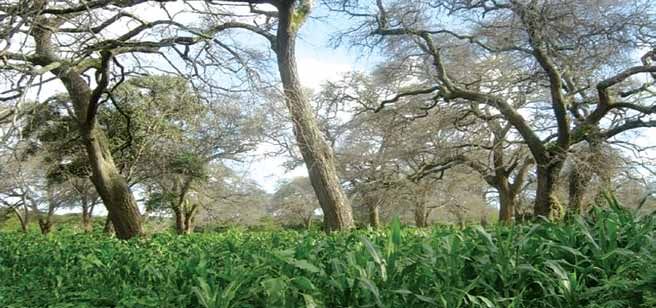
may provide other benefits such as higher yields, lower - Agroforestry: this consists of different management
fertilizer costs or extra profits from wood supply. Three practices that all deliberately include woody perennials
examples are: on farms and the landscape, and which increase
- Usage of no-tillage practices: no-tillage refers to the the uptake and storage of carbon dioxide from the
elimination of ploughing by direct seeding under the atmosphere in biomass and soils.
mulch layer of the previous season’s crop. This reduces
greenhouse gas emissions from soil disturbance and
from fossil-fuel use of farm machinery.
The Emissions Gap Report 2013 – Executive summary xviiYou can also read


