THE ENIGMA OF THE DOUBLE: SOURCES AND SYMBOLS IN ALBERTO SAVINIO'S POETICS
←
→
Page content transcription
If your browser does not render page correctly, please read the page content below
ITALIAN MODERN ART | ISSUE 2: The Enigma of                                            ISSN 2640-8511
the Double: Sources and Symbols in Alberto Savinio’s Poetics

       THE ENIGMA OF THE DOUBLE: SOURCES AND
       SYMBOLS IN ALBERTO SAVINIO'S POETICS
       0   italianmodernart.org/journal/articles/the-enigma-of-the-double-sources-and-symbols-in-
           alberto-savinios-poetics

       Nicol Maria Mocchi Alberto Savinio, Issue 2, July 2019
       https://www.italianmodernart.org/journal/issues/alberto-savinio/

       Abstract
       This paper analyzes one of the most ambiguous and enigmatic themes within the
       poetics of Alberto Savinio: that of the double, which continually resurfaces in the
       author’s work, taking on different meanings – from the concept of
       hermaphroditism to that of half-death, and from those of the mask to the
       shadow. Through a brief historical-theoretical excursus, the presentation will
       retrace chronologically the evolution of this fascinating topic in the vast musical,
       pictorial, literary and theatrical production of the minor of the “Dioscuri.”

       This essay discusses a favorite theme of Alberto Savinio: the double. Taking on
       different meanings and aspects, this theme continually resurfaces in his work,
       from the general concept of the metaphysical Weltanschauung’s dual reality, to
       the particular ideas of double personalities contained in the concepts of the
       shadow, half-death, the mask, and hermaphroditism – the leitmotifs of Savinio’s
       “creative power station,” as he defined it.1

                                                                                                    ITALIAN MODERN ART
       The etymology of the word double originates in the Latin duplus, defined as one
       made up of two parts, not necessarily identical but different, and the theme of
       the double refers to the ontological dualism – the existence of two antithetical
       principles, often struggling with each other – that can be conceived in any field,
       whether philosophical, religious, political, or scientific. This understanding of a
       double vision of the world is ancient in origin and extends throughout the history
       of modern thought. It takes its meaning from the light/dark dualism of ancient
       Zoroastrian religion and of pre-Socratic philosophy, followed, centuries later, by
       René Descartes’s contraposition of res cogitans and res extensa, the metaphysical
       duplicity of phenomenon and noumenon in Immanuel Kant, variously taken up by
       Arthur Schopenhauer and Friedrich Nietzsche, and declined in the binomial ego
       and superego in Sigmund Freud and structure and superstructure in Karl Marx.
       These are just some examples of how the double Weltanschauung had a rich

July 2019 | Alberto Savinio                                                                         1/27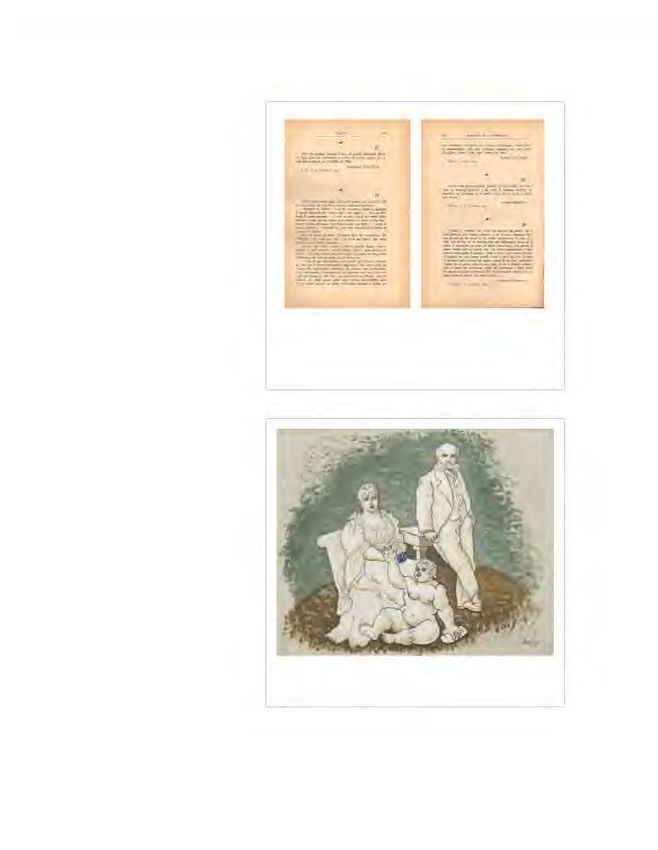
ITALIAN MODERN ART | ISSUE 2: The Enigma of                                       ISSN 2640-8511
the Double: Sources and Symbols in Alberto Savinio’s Poetics

       tradition before breaking, like a wave, in the metaphysical poetics that the de
       Chirico brothers developed between 1909 and 1911, aimed at discovering and
       expressing the hidden spirit of things, the symbolic or double dimension of
       reality.

       In “‘Anadioménon.’ Principi di valutazione dell’arte contemporanea”
       (‘Anadyoménon.’ Assessment principles of contemporary art), which is the
       cornerstone of Savinio’s aesthetics, published in May 1919 in the Roman journal
       Valori plastici, he conceived of the metaphysical as “everything real that continues
       to be beyond the roughly self-evident aspects of reality itself.” The aim of art was
       to reproduce “the spectrality [that] is the true, spiritual, and substantial essence
       of every aspect,” namely the internal appearance of things, “cleansed of every
       overlapping of heterogeneous elements.”2 In Savinio’s early tale La casa ispirata
       (The inspired house, 1925; initially published in installments in 1920), the
       essential quality of the artist-poet is mentioned as the “double sight” or “double
       look,”3 concepts borrowed from the “second sight” of Schopenhauer to indicate a
       borderline state between dream and hallucination, clairvoyance and magic,
       where the true essence of reality can be grasped. Around the same time, Giorgio
       de Chirico, alluding to the revelations from which the first metaphysical
       masterpieces were born, stated that everything has two aspects: “a current one,
       that we see almost always and what people generally see, and another spectral
       or metaphysical one, which only rare individuals can see in moments of
       clairvoyance and metaphysical abstraction.”4

       The theme of the double, in the metaphysics of the two brothers, is not simply
       present as a metamorphic dualism of reality; rather, it penetrates the inner
       dimension of modern man as a doubling of the ego. This “psychological” double –

                                                                                              ITALIAN MODERN ART
       in flesh-and-blood form (think about the Roman playwright Plautus’s comedy of
       misunderstandings) and also as shadow, soul, reflection, or portrait detached
       from the self – came back as a trend in the nineteenth and twentieth centuries,
       most especially in the fantastical narratives of Ernst Theodor Amadeus
       Hoffmann, Adelbert von Chamisso, and Alfred de Musset, as well as Fyodor M.
       Dostoevsky, Guy de Maupassant, Franz Kafka, Edgar Allan Poe, Robert Louis
       Stevenson, and Oscar Wilde. All of these authors recount the phenomenon of the
       Doppelgänger, literally “a double walker” or “double goer,” who personifies the
       dark and unknown side that dwells within the self.

       The de Chirico brothers, too, obviously underwent its charm, as the majority of
       their metaphysical works document, but they confer a much broader and
       complex range of interpretations than just Symbolism and Decadentism – by

July 2019 | Alberto Savinio                                                                   2/27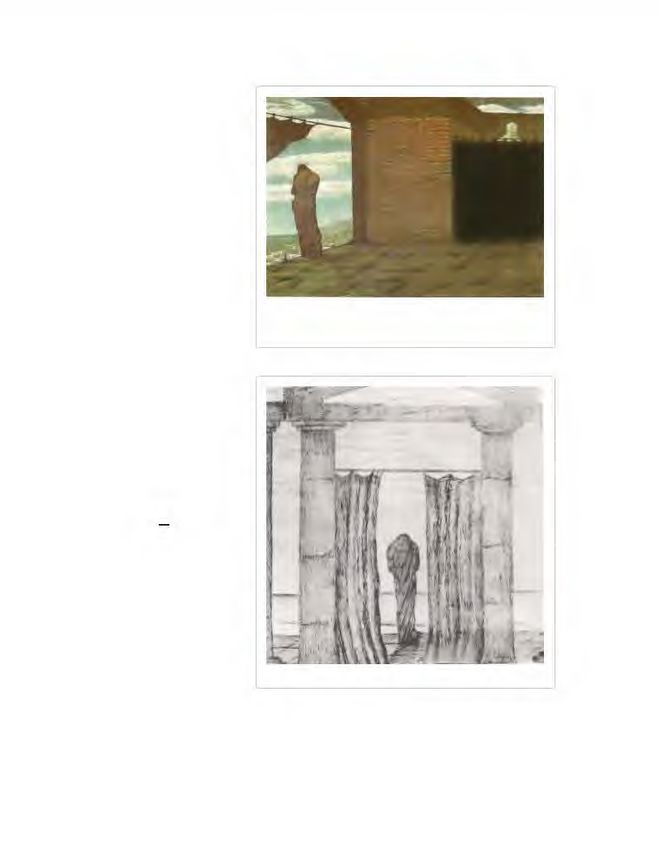
ITALIAN MODERN ART | ISSUE 2: The Enigma of                                      ISSN 2640-8511
the Double: Sources and Symbols in Alberto Savinio’s Poetics

       giving a value not necessarily negative, but rather full of constructive and
       emancipating possibilities. The double, for both, was not an invisible, oppressive
       enemy to be resolutely fought against. It was not even a desperate escape from
       bourgeois boredom, or a manifestation of schizophrenic dissociation tout court.
       Quite the opposite: it assumed, with the usual metaphysical lightness and irony,
       the connotations of an enigmatic, outrageous, and magical force, on the one
       hand a form of liberation, and on the other a deep level of knowledge.

       The de Chirico brothers considered the soul, in a strictly secular sense, the
       double of the man, his Kâ. Giorgio, in a 1919 article in Ars Nova, wrote of “the
       possibility of the existence of immaterial forms, of imagining one of our doubles,
       one of our Khâ, to speak as an Indian, made up of fluids and incorporeal
                   5
       substances.” Savinio remembered that in Lucian’s dialogues the shadows, from
       the afterlife, accuse the man of mistakes made during his lifetime: “the shadow
       as a double (Kâ), the shadow as a soul that can also be sold to the devil (Peter
       Schlemihl), the shadow that must not be placed next to the body that one wants
       to preserve in a condition of immortality (Giotto’s figures who have no shadow).”6
       This shadow inspired fear, being the “darkness” of ourselves.

       Often, the theme of the double was reexperienced by Giorgio and Alberto in an
       autobiographical and mythical key, that is, as the duality of two brothers who
       identified with the Dioscuri, Castor and Pollux, who departed with the Argonauts
       from the small port of Volos in Thessaly (where Giorgio was born, in fact) in
       search of the Golden Fleece (figure 1).

       They identified also with the mythical figure of the hermaphrodite, repeatedly
       represented and evoked in their respective works. Savinio gave the title
       Hermaphrodito to his first book, published in 1918.7 For him, the hermaphrodite

                                                                                             ITALIAN MODERN ART
       coincided with an innocent, childlike state, an emblem of a newfound harmony
       between opposites, prior to the decision by Jupiter – envious of the double men –
       to “cut them in the middle like pears,” resulting in “two of each.”8 This seems
       almost a metaphor of the “twin spirit” shared by the two brothers in their earliest
       years. Savinio remembered this period as when “nothing divided us yet and we
                                     9
       had only one thought in two,” before their paths separated. Especially in their
       Italian period, the brothers painted quite probably similar subjects – for example,
       Giorgio’s L’enigma dell’oracolo (The enigma of the oracle, 1909), and Alberto’s
       Oracolo (Oracle, c. 1909; figures 2–3), the only juvenile drawing so far known of
       him – and they collaborated on a first music concert by Savinio, planned for the
       Teatro della Pergola in Florence, but held instead in Munich in January 1911.

July 2019 | Alberto Savinio                                                                  3/27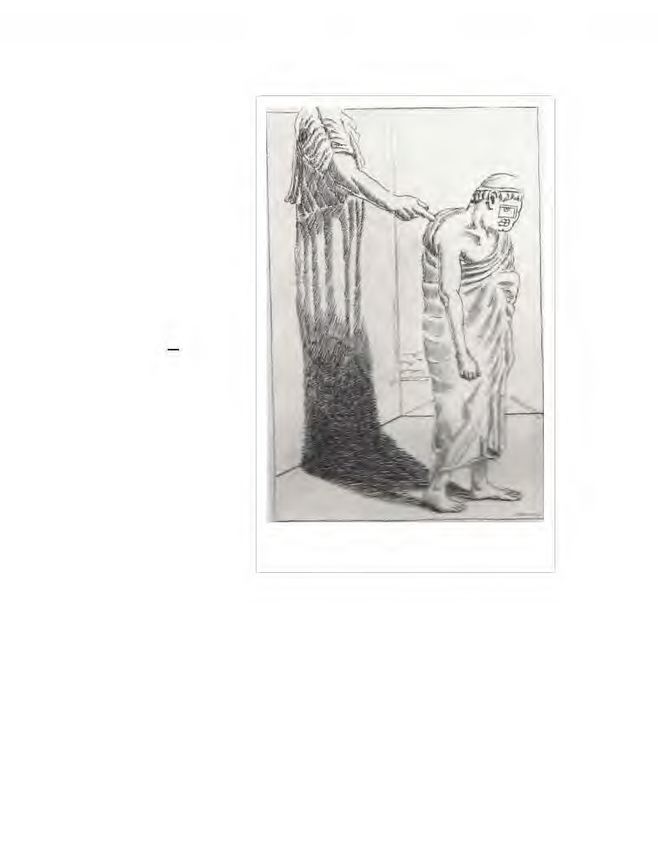
ITALIAN MODERN ART | ISSUE 2: The Enigma of                                                        ISSN 2640-8511
the Double: Sources and Symbols in Alberto Savinio’s Poetics

       Some parts of the
       section “Le Rivelazioni.
       La musica più profonda
       sinora scritta” (The
       revelations: The most
       profound music ever
       written) were
       composed by Giorgio,
       others by Alberto
       (figure 4).

       Despite the almost
       symbiotic complicity of
       sensations and
       deductions that
       characterize the de
       Chiricos’ early works,
       there are considerable
       poetic diversities
       precisely in relation to
       the theme of the                 Figure 1. Giorgio de Chirico, “Autoritratto con il fratello” [Self-
                                       portrait with his brother], 1923–24. Tempera on canvas, 34 1/4 x
       double, considering the                     26 3/4 in. (87 x 68 cm). Private Collection.
       different means of
       expression adopted by
       the two brothers. For Giorgio, who was mainly a painter and a poet with a more
       romantic view, the double expressed mostly an intimate, narcissistic self-

                                                                                                              ITALIAN MODERN ART
       contemplation, always lived in an ironic key, or it revealed his animistic opposite,
       as shown by the many double self-portraits of the twenties, for example
       Autoritratto con ombra (Self-portrait with shadow, 1920; figure 5), in which the
       outline of the white shadow is undeniably that of the painter; whereas for the
       encyclopedic Alberto – a musician, writer, essayist, critic, painter, set designer,
       and illustrator incessantly in search of the most congenial expressive form to suit
       his purposes – the double could take several aspects not immediately graspable.

       At times it was a ghost or life force capable of passing from one state to another
       while preserving the memories and feelings of earthly life; at others it was a
       conscience, at once angelic and diabolical, expressive of the darkest, scariest
       sides within us. In this regard, there is a disquieting illustration by Savinio of
       Lucian’s dialogues, Le ombre sono gli accusatori (The shadows are the accusers,

July 2019 | Alberto Savinio                                                                                   4/27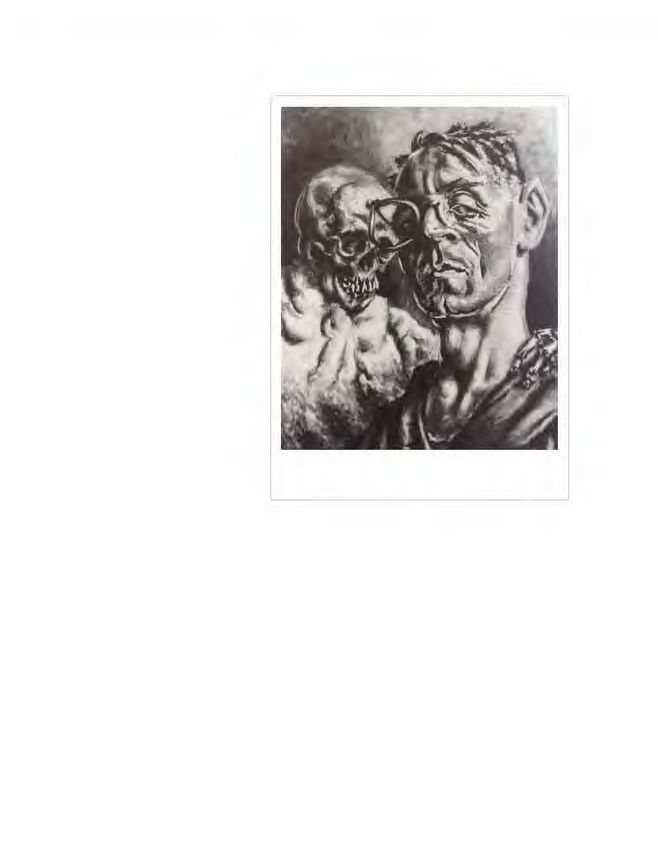
ITALIAN MODERN ART | ISSUE 2: The Enigma of                                                         ISSN 2640-8511
the Double: Sources and Symbols in Alberto Savinio’s Poetics

       1944), clearly taken
       from the artist Max
       Klinger, who was an
       important inspiration
       to the brothers. In
       Klinger’s etching
       Schande (Shame, 1887),
       for example, only the
       woman marked by
       shame casts the
       blackness of herself
       onto the wall (figures
       6–7).
                                     Figure 2. Giorgio de Chirico, “L’enigma dell’oracolo” [The enigma of the
                                   oracle], 1909. Oil on canvas, 16 1/2 x 24 in. (42 x 61 cm). Private Collection.

       In Savinio’s stories,
       music, and paintings,
       there are characters
       that closely resemble
       the protagonist – in
       physiognomy, in
       bearing, and even in
       name. Each appears
       “almost stolen from a
       mirror,” according to
       Hoffmann’s
       definition.10 They are

                                                                                                                     ITALIAN MODERN ART
       so many alter egos in
       Savinio’s works that
       apparently he lived
       through the possibility
       of an other existence,
       or through the
       appropriation of
       another identity. Such          Figure 3. Alberto Savinio, “Oracolo” [Oracle], c. 1909. Lost work.
       “superior beings” are
       reminiscent of the
       Nietzschean superman, “beyond good and evil” and transcending all “human, too
       human” limits. It is important to underline that Savinio, like his brother, was very
       superstitious. “If a breath touched our face or our hand,” he wrote, in recollection

July 2019 | Alberto Savinio                                                                                          5/27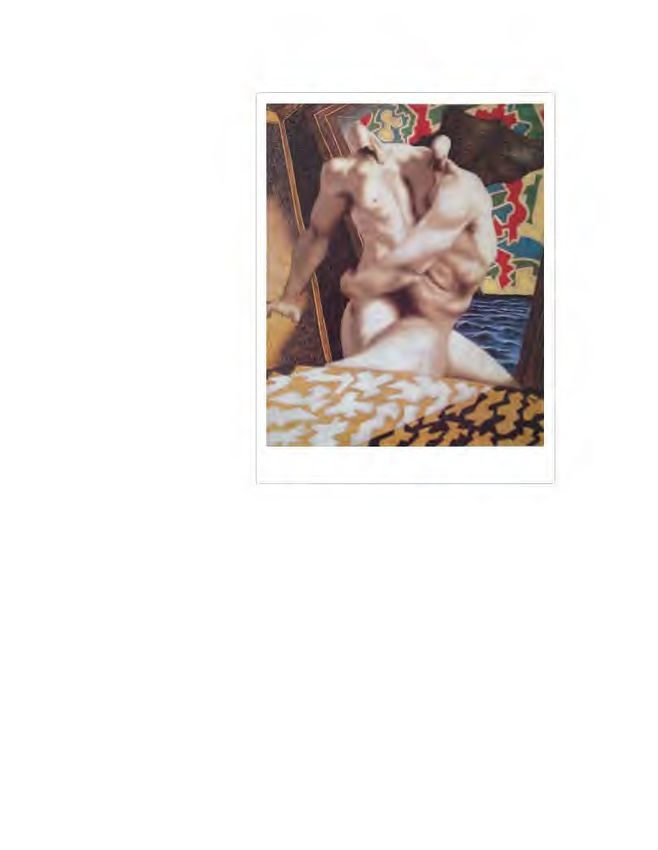
ITALIAN MODERN ART | ISSUE 2: The Enigma of                                                    ISSN 2640-8511
the Double: Sources and Symbols in Alberto Savinio’s Poetics

       of the period he
       defined as “spectral”
       (fantasmico), “we used
       to say: A ghost has
       passed by.”11 Despite
       the plurality,
       sometimes utterly
       ineffable, of meanings
       that Savinio gave to the
       double, there is an
       identifiable constant:
       the thought of death
       runs through almost
       his entire body of work,
                                         Figure 4. Program of “Unico grande concerto orchestrale di
       populated, as it is, by         Alberto de Chirico” [Only great orchestral concert by Alberto de
       “returners,” ghosts, the                   Chirico]. Florence (January 9, 1911). Detail.
       reincarnated, and
       assorted paranormal
                      12
       phenomena. Both brothers shared this thought following the death of their
       father in 1905. An aphorism about death is offered in an early essay by Alberto
       de Chirico (as he was then called), published in the modernist journal Cœnobium
                 13
       (figure 8), dated October 5, 1909, and written in Milan (Savinio had come there from
       Munich in hopes of publishing his musical work Carmela).

       Written in sophisticated and emphatic language, it paradoxically defines death as a
       “passing from nonbeing to being: to die, that is, from Death to Life!”14 and vice-versa.

                                                                                                          ITALIAN MODERN ART
       This circular and double conception of existence is ancient, linked to the primal fear
       of death and to the chance of survival in the afterlife – as in the Greek Eidolon, the
       Egyptian Kâ, the Roman Genius, the Christian Guardian Angel, the
                           15
       Hebrew Rephaim. It derives on the one hand from the theory of the “eternal
       return,” but also from that of death as an act of “will of power,” as developed by
       Nietzsche, or from Giacomo Leopardi’s nihilism, as clearly expressed in his
       metaphorical “Cantico del gallo silvestre” (Song of the great wild rooster, 1827),
       where the sleep of humans is equated with life.16 The de Chirico brothers were
       intensely studying Nietzsche and Leopardi in the Italian period, as their initial
       “metaphysical” works demonstrate – beyond the de Chiricos’ paintings, there
       were the “revelations” of the first musical concert, works that reflect a broad
       background of knowledge. The brothers’ readings on the history of myth; the

July 2019 | Alberto Savinio                                                                               6/27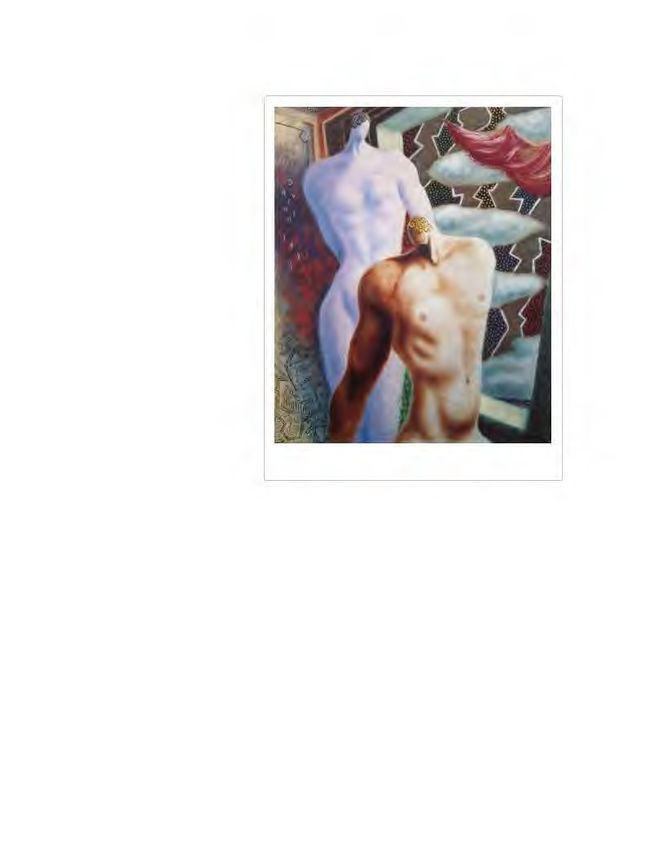
ITALIAN MODERN ART | ISSUE 2: The Enigma of                                                         ISSN 2640-8511
the Double: Sources and Symbols in Alberto Savinio’s Poetics
    birth of language, and
    of religion; and more
    generally, the origins of
    Western thought are
    documented in the
    registers of the
    National Libraries in
    Milan and Florence,
    where they were living
    from the summer of
    1909 to the spring of
    1911 (Savinio had
    moved to Paris a few
    months before).17

    In particular, the books
    of Ernest Renan18 and
                          19
    Gaston Maspero on
    ancient Indo-European,
    Eastern, and Semitic
    civilizations disclosed
    to Savinio new,                    Figure 5. Giorgio de Chirico, “Autoritratto con ombra” [Self-portrait
                                         with shadow], 1920. Tempera on canvas, 23 5/8 x 19 7/8 in. (60 x
    fascinating
                                                            50.5 cm). Private Collection.
    perspectives on the
     theme of the double,
     as evidenced by his handwritten notes preserved at the Gabinetto Vieusseux archives in
     Florence. The double was described by these authors as a vital force with marked

                                                                                                               ITALIAN MODERN ART
     personal traits, and as a kind of animated shadow that grew up with a man without ever
     abandoning him, able to preserve the memories, the feelings, and the basic needs of
     earthly life. A man had to care for his double as if it were his own physical reality. “One
     had to feed him, dress him, distract him,” wrote Maspero, considering it as a sort of
     “magnetic fluid.”20In an article from the forties dedicated to the “Potenza del
     verbo” (Power of words, Savinio provided an almost similar interpretation of Maspero’s
     theories on the magic value of the double: “For the Egyptians, the name was an integral
     part of the K of the individual and constituted in a certain way the psychic synthesis of
     him, reabsorbed all his magnetic force.” More significantly, he continues: “To keep this
     very precious part of himself safe from dangers, to forbid that enemies could use it to
     attack the K and destroy it, the Egyptian hid his name under a nickname.”21 Closely
     connected to the mysterious power of the double, which Savinio had

July 2019 | Alberto Savinio                                                                                    7/27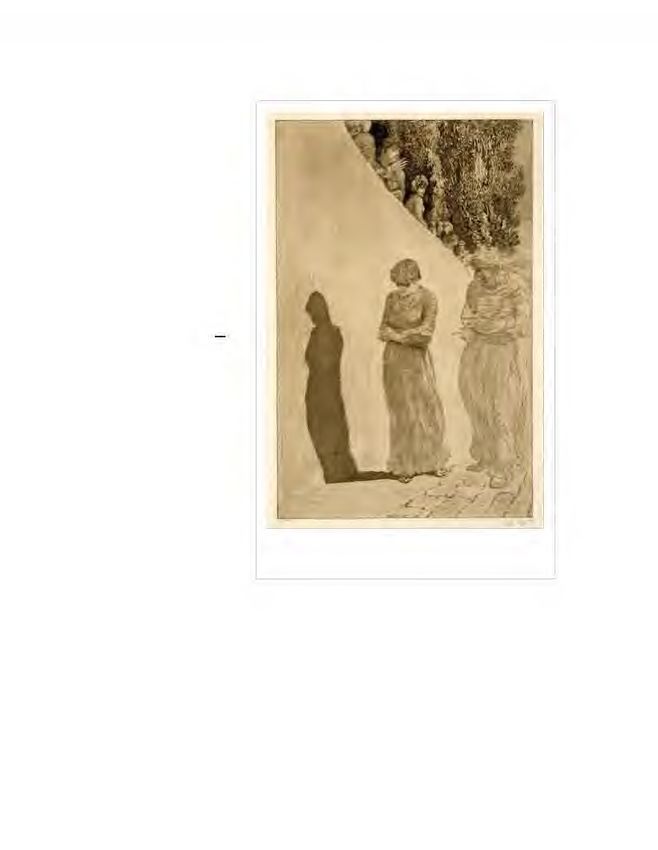
ITALIAN MODERN ART | ISSUE 2: The Enigma of                                                     ISSN 2640-8511
the Double: Sources and Symbols in Alberto Savinio’s Poetics

       learned from ancient
       religions and Egyptian
       folktales, is in fact the
       concept of the
       pseudonym, which
       assumes an essential
       role in his poetics.
       Savinio attributed to
       names, and therefore
       also to nicknames, a
       fateful, almost
       divinatory symbolic
       value, able to influence
       the destiny of people
       and determine their
       “greatness.”22

       Throughout his literary
       works, Savinio loved to
       hide behind
       innumerable alter
       egos, such as Aniceto,
       Nivasio Dolcemare,
       Mister Dido, Mister
       Münster, Innocenzo
       Paleari, Animo,                  Figure 6. Alberto Savinio, “Le ombre sono gli accusatori” [The
       Carmelo, etcetera. And           shadows are the accusers], 1944. Ink and pencil on paper, 13

                                                                                                          ITALIAN MODERN ART
       his actual name must                             13/16 x 95/8 (35.1 x 24.5 cm).

        not be forgotten!
        Alberto de Chirico
        decided to appropriate the nom de plume Savinio in order not to passively endure
        his destiny, to instead put it under the best auspices, as well as to distinguish
        himself from his brother Giorgio. He was most likely encouraged by his friend
        Guillaume Apollinaire, who, for his part, had been born Wilhelm Apollinaris de
        Kostrowitzky. Savinio first applied his pseudonym upon the publication, in
        Apollinaire’s magazine Les soirées de Paris, of “Le drame et la musique” (The drama
        and the music, 1914), theoretical prelude for “Les chants de la mi-mort” (Songs of
        the half-dead, 1914), a series of “dramatic episodes” set in the Risorgimento (he
        also wrote music and designed sets and costumes for the piece).

July 2019 | Alberto Savinio                                                                              8/27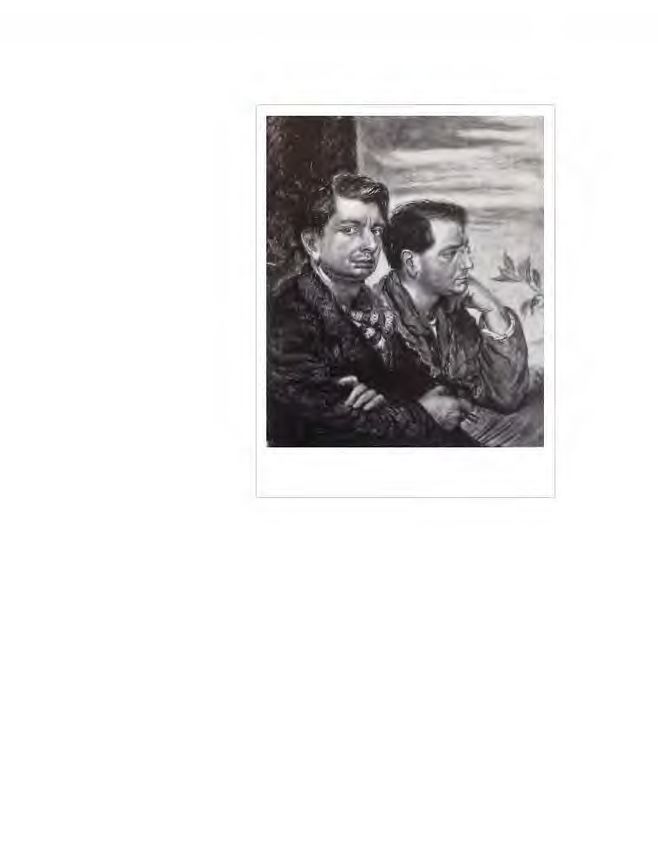
ITALIAN MODERN ART | ISSUE 2: The Enigma of                                                       ISSN 2640-8511
the Double: Sources and Symbols in Alberto Savinio’s Poetics

       Based on studying
       Savinio’s readings from
       his Italian period, it can
       be hypothesized that
       Savinio’s pseudonym
       derived not so much
       from the French
       publisher and writer
       Albert Savine, who was
       a rather irrelevant
       figure on the cultural
       level, but from the
       visionary swordsman-
       poet Savinien Hercule
       Cyrano de Bergerac,23
       a baroque writer and
       “amateur” (dilettante)
       in its positive sense,
       and the protagonist of
       an Edmond Rostand
       theatrical piece that
       Savinio borrowed from
       the library in December
       1909. On Cyrano’s
       grave is written:
       “Philosopher, scientist,
       poet, swordsman,              Figure 7. Max Klinger, “Schande” [Shame], from the series “A Love,” 1887–
                                        1903. Etching and aquatint, 21 13/16 x 15 15/16 in.(55.4 × 40.5 cm).

                                                                                                                 ITALIAN MODERN ART
       musician, aerial
       traveler, maker of
       sharp retorts, and lover
       (not to his advantage!) […] who was everything, and who was nothing.” The
       reference in his name to Herculean mythology makes a fairly obvious connection
       to the “muscular idealists”; among such figures it was Hercules, according to
       Savinio, who began to purge the earth of monsters before passing the task to
       artists and writers. In one of his Parisian paintings, Senza titolo – Couple et enfant
       (Untitled – couple and infant, 1927; figure 9), Savinio metaphorically portrayed
       himself as a young Hercules who has just strangled snakes (for the iconography,
       he used a repertoire of classical images by Salomon Reinach) alongside the
       frozen and disoriented figures of his mother, Gemma, and father, Evaristo.

July 2019 | Alberto Savinio                                                                                      9/27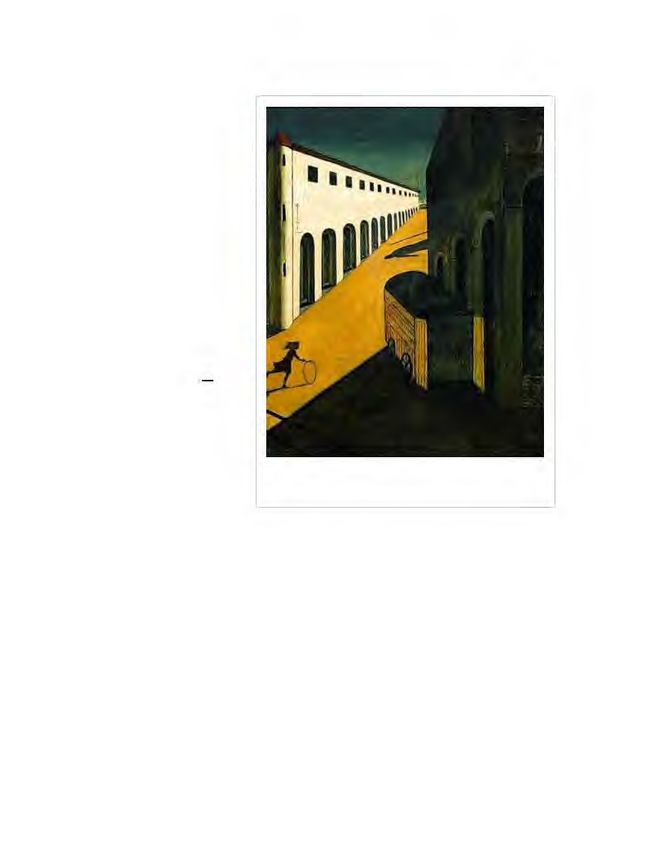
ITALIAN MODERN ART | ISSUE 2: The Enigma of                                                      ISSN 2640-8511
the Double: Sources and Symbols in Alberto Savinio’s Poetics

       Even the concept of
       half-death is nothing
       but a manifestation of
       the duplicity of the
       human condition and
       of the relativity of
       existence, for Savinio
       understood half-death                                                                         •
       as the state of
       clairvoyance that some
       individuals experience
       in that limbo of
       perception that lies
       between wakefulness               Figure 8. Alberto de Chirico [Savinio], “no. 18,” in “Almanacco del
                                       ‘Cœnobium’ pel 1910, illustrato con 12 disegni originali giapponesi a
       and sleep, when the            colori” [Almanac of the “Cœnobium” for 1910, illustrated by 12 original
       hidden language of            Japanese colored drawings]. Lugano: Casa Editrice del Cœnobium, 1910.
       things can be captured
       and their spectral
       interiority unveiled.
       Thus understood, half-
       death relates once
       again to the
       Nietzschean idea of
       time as an “eternal
       return” and an “eternal
       present”; it indicates a
       time suspended

                                                                                                                 ITALIAN MODERN ART
       between a past – all
       that no longer exists –
       and a future – all that
       has yet to be. Thus
       death may be
       metaphorically
       conceived as a door                  Figure 9. Alberto Savinio, “Senza titolo – Couple et enfant”
                                          [Untitled – couple and infant], 1927. Oil on canvas, 17 5/16 x 21
       that can be opened in
                                                       1/4 in. (44 x 54 cm). Private Collection.
       both directions, making
       possible a “return” in
       the form of a
       “revenant,” or ghost, one of the central figures of the metaphysical art.

July 2019 | Alberto Savinio                                                                                     10/27
ITALIAN MODERN ART | ISSUE 2: The Enigma of ISSN 2640-8511
the Double: Sources and Symbols in Alberto Savinio’s Poetics
The “revenant,” which will reappear transfigured in many works by Savinio, has
one of its first formulations in the manuscript of the ballet entitled Deux amours
dans la nuit (Two lovers in the night), created in Paris in 1913 in collaboration with
the Greek composer Michael Calvocoressi. The main narrative’s characters are:
an old man, or rather his “double,” who, acting as if half asleep, kills two lovers;
the portrait of a young woman who “comes alive and pops out from the
shadows;” and a half-dead bunch that will “climb on the bed” or chase the old
man “like robots.”24
But it is in the concept of the shadow, also mentioned in this “surrealistic”
theatrical piece, that the theme of duality finds perhaps its most original
expression, opening onto new meanings. This begins with Savinio’s superstitious
and animistic conception, typical of the nineteen-tens and twenties, and similar
to that of his brother Giorgio, expressed in the various conceptual and emotional
contrasts: light/shadow, life/death, good/evil, body/soul, living person/sculpture,
being/not being. It developed into increasingly complex interpretations in the
thirties and forties, which enhanced that ambiguity, that cosmic tension of
thought, that was for Savinio “sweet and comfortable;” these interpretations
were also prompted by new discoveries in science, as Savinio stated
programmatically in 1947: “I try to see the world through the teachings of the
new physics that no longer admit mobile-immobile (or body-soul) duality, but
only the same continuous movement of energy.”25 During the Second World War,
in perhaps the most prolific period of his copious literary and journalistic
production, the theme of the shadow unfolded metaphorically, for instance in
the story “Il compagno di viaggio” (The traveling companion, 1942), in the
Pirandellian revelation of a disquieting cohabitation with his own shadow,26 or in
the narcissistic projection of himself in the story of Caterino, published in 1938,
ITALIAN MODERN ART
of whom Savinio wrote that “for a form of metaphysical narcissism […] Caterino
gradually isolated himself, detached himself from other men, from things, and
finally, raised himself to the supreme state of isolation, he then killed Caterino.”27
And again, the theme of the shadow resulted in the exaltation of “that obscure,
that evil, that assertive creature that lived inside him,” as elaborated in Savinio’s
Maupassant e “l’altro” (Maupassant and “the other,” 1942), that dark “tenant” that,
after having “dictated” all his stories to Maupassant, made him lose his senses.28
But in Savinio’s kaleidoscopic vision, the same figure can turn out to be wise,
protective, and divine. “And if the shadow was the best of us, the wisest, the most
29
‘enlightened’?” wonders Savinio. In the story “Anima” (Soul, 1942), Nivulo – yet
another alter ego of the author – keeps in his body the soul of his older brother,
so wise that “he did not have to learn anything from anyone.”30
July 2019 | Alberto Savinio 11/27ITALIAN MODERN ART | ISSUE 2: The Enigma of ISSN 2640-8511
the Double: Sources and Symbols in Alberto Savinio’s Poetics
The topos of the shadow, to which Savinio devotes two voices of his Nuova
enciclopedia (New encyclopedia, 1977), also emerged in his pictorial production,
but with results often opposed to his brother. In the first metaphysical
masterpieces of de Chirico, for example, L’énigme d’un après-midi d’automne (The
enigma of an autumn afternoon, 1909; figure 10), the shadow plays the chief task
of evoking Nietzschean themes of time, suspended between the shadow of the
past and the light of the future; it then evolved into increasingly looming,
threatening plastic presences projected by unknown sources and hidden bodies,
as in Mystère et mélancolie d’une rue (Mystery and melancholy of a street, 1914;
figure 11).31
In Savinio’s paintings it
is comparatively
difficult to find
shadows as plastic and
tightly geometrical, or
shadows used for
expressive and
psychological
purposes.
Paradoxically, all that is
represented, even if
there is an intense light
source – as in the
painting Les rois mages Figure 10. Giorgio de Chirico, “L’énigme d’un après-midi
d’automne” [The enigma of an autumn afternoon], 1909. Oil on
(The wise man, 1929;
canvas, 17 3/4 x 23 5/8 in. (45 x 60 cm). Private Collection.
figure 12), which
ITALIAN MODERN ART
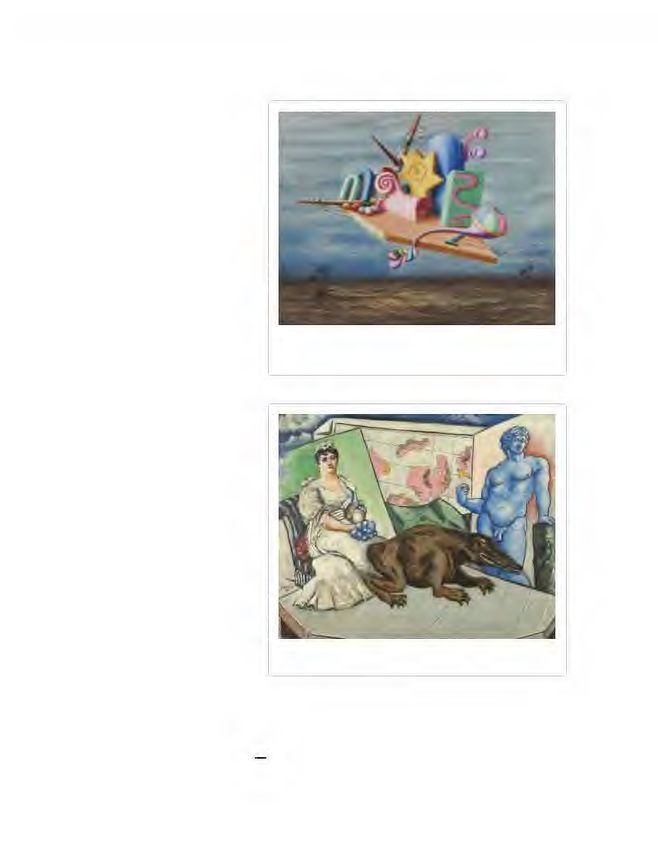
features a platform full
of colorful objects,
including the Star of David, flying over the desert – does not cast or carry
shadows to enhance the illusionistic perspective or for symbolic purposes.
“But is there a difference, basically, from one shadow to another?” asked Savinio,
seriously, in a post-World War II piece of writing.32 The objects, but also the
figures, in his paintings appear rather “stripped” of their shadows – for example
in the Baconian Atlante (Atlas, 1927; figure 13) or in Senza titolo – Couple et enfant
– with the effect of photographic overexposure or collage defeating, as intended
by Savinio, “the cloud of chiaroscuro,” thus “to clean them of the rhetoric,
theatricality, vulgarity of the carried shadow.”
July 2019 | Alberto Savinio 12/27ITALIAN MODERN ART | ISSUE 2: The Enigma of ISSN 2640-8511
the Double: Sources and Symbols in Alberto Savinio’s Poetics
So did his friend the
painter “R.” – no better
identified – and so did
Giotto, who, in order
that the “immortality
conditions” of things
and figures might be
preserved, did not
paint the shadows of
bodies.
The superstitious
Savinio limited himself
to discretely suggesting
the double through the
presence of various
poetic surrogates, such
as the “wind/soul”33
that shakes curtains or
makes the most
unexpected of objects
vibrate, or more
incisively, in the Figure 11. Giorgio de Chirico, “Mystère et mélancolie d’une rue”
[Mystery and melancholy of a street], 1914. Oil on canvas, 34 1/4 x
impersonation of
28 1/8 in. (87 x 71.5 cm). Private Collection.
numerous alter egos.
In his paintings of the
late twenties, Savinio experimented with the doubling of naked bodies (Les
ITALIAN MODERN ART
Dioscures [The Dioscuri, 1929], Le Retour [The return, 1929]; figures 14–15), and
also their melting together (Oreste e Pilade [Orestes and Pylades, 193], Les
ennemies de l’Olympe [The enemies of Olympus, 1929]; figure 16).
In his later images, and especially in the portraits of the late thirties and forties,
in proximity to the Second World War, the double conveys an increasingly
declared intellectual discomfort. It oscillates between, on the one hand, the
incommunicability of different personality traits and the loss of an individual’s
identity and vanity, and, on the other, the impermanence of the whole, as can be
seen in contemporaneous writings by Savinio. Particularly relevant here is the
penetrating Autoritratto in forma di gufo (Self-portrait as an owl, 1936; figure 17),
July 2019 | Alberto Savinio 13/27ITALIAN MODERN ART | ISSUE 2: The Enigma of ISSN 2640-8511
the Double: Sources and Symbols in Alberto Savinio’s Poetics
which picture reveals
Savinio’s obscure role as
the nocturnal bird par
excellence in an
eighteenth-century
habit.
In other late canvases,
duplicity embodies
precise evocations of
death, as in L’anatomico
(The anatomical, 1951;
figure 18), a portrait of
Elvio Cecchi, the artist’s
Figure 12. Alberto Savinio, “Les rois mages” [The wise men], 1929.
doctor, which elaborates Oil on canvas, 35 1/2 x 46 in. (90 x 117 cm). MART – Museo di Arte
on Böcklinian Moderna e Contemporanea di Trento e Rovereto.
suggestions from his
famous self-portrait with
death; or duplicity looks
like a good-natured and
luminous ghost, as in
Doppio ritratto di Sante
Astaldi (Double-portrait
of Sante Astaldi, 1950;
figure 19), especially
when compared to the
mysterious “double”
ITALIAN MODERN ART
portrait of his friend the
professor Roger
Lacombe, from twenty
years before (figure 20).
But, as the great Figure 13. Alberto Savinio, “Atlante” [Atlas], 1927. Oil on canvas, 28 x
Savinian scholar Pia 35 13/16 in. (71 x 91 cm). Private Collection.
Vivarelli has written
precisely about the aforementioned Sante Astaldi portrait, “the integrity of this
shadow prevails over the ambiguity of the doubling of the self, not altered by
the usual interventions of metamorphosis, and the calmness of this protective
demon.”34
July 2019 | Alberto Savinio 14/27ITALIAN MODERN ART | ISSUE 2: The Enigma of ISSN 2640-8511
the Double: Sources and Symbols in Alberto Savinio’s Poetics
Bibliography
Baldacci, Paolo.
“All’ombra dell’ultimo
sole, l’ombra dal tardo
romanticismo a De
Chirico.” Art e dossier
264 (March 21: 46–
51.
Baldacci, Paolo. De
Chirico, 1888–1919. La
metafisica. Milan:
Leonardo Arte, 1997.
Biserni, Marcella. “La
maschera e l’ironia
dell’Altro nelle
metamorfosi di
Savinio.” In La maschera
e l’altro, edited by Maria
Grazia Profeti, 421–38. Figure 14. Alberto Savinio, “Les Dioscures” [The Dioscuri], 1929. Oil
Florence: Alinea, 25. on canvas, 25 1/2 x 21 5/6 in. (64.7 x 54.1 cm). Private Collection.
Conference
proceedings.
De Chirico [Savinio], Alberto. “no. 18.” In Almanacco del ‘Cœnobium’ pel 1910,
ITALIAN MODERN ART
illustrato con 12 disegni originali giapponesi a colori, 139–40. Lugano: Casa Editrice
del Cœnobium, 1910.
De Chirico, Giorgio. “Arte metafisica e scienze occulte, seguito da un epòdo.” Ars
Nova 3, no. 3 (January 1919). Reprinted in De Chirico, Il meccanismo del pensiero:
critica, polemica, autobiografia, 1911–1943, edited by Maurizio Fagiolo dell’Arco,
62–65. Turin: Einaudi, 1985.
De Chirico, Giorgio. “Sull’arte metafisica.” Valori plastici 1, nos. 4–5 (April–May
1919). Reprinted in De Chirico, Il meccanismo del pensiero: critica, polemica,
autobiografia, 1911–1943, edited by Maurizio Fagiolo dell’Arco, 83–88. Turin:
Einaudi, 1985.
July 2019 | Alberto Savinio 15/27ITALIAN MODERN ART | ISSUE 2: The Enigma of ISSN 2640-8511
the Double: Sources and Symbols in Alberto Savinio’s Poetics
Delcourt, Marie.
Hermaphroditea.
Recherches sur l’être
double promoteur de la
fertilité dans le monde
classique. Brussels:
Latomus, 1966.
Giacomazzi,
Giuseppina. “Il doppio
in Alberto Savinio.” In
Identità e diversità nella
lingua e nella letteratura
italiana, III: Poesia e
narrativa del Novecento,
Atti del XVIII congresso
dell’AISLLI, edited by
Michel Bastiaensen,
233–44. Florence:
Cesati, 2007.
Conference
proceedings. Figure 15. Alberto Savinio, “Le Retour” [The return], 1929. Oil on
canvas, 25 9/16 x 21 1/4 in. (65 x 54 cm). Private Collection.
Hoffmann, E. T. A.
Fantasiestücke in Callot’s
Manier. Bamberg: Kunz Verlag, 1819.
Italia, Paola. Il pellegrino appassionato. Savinio scrittore 1915–1925. Palermo:
ITALIAN MODERN ART
Sellerio editore, 2004.
Italia, Paola. “‘Leggevamo e studiavamo molto.’ Alberto e Giorgio de Chirico alla
Braidense (1907–1910).” In Origine e sviluppi dell’arte metafisica. Milano e Firenze
1909–1911 e 1919–1922, edited by Paolo Baldacci, 11–23. Milan: Scalpendi, 2010.
Conference Proceedings.
Laghezza, Beatrice. “Metafisica e Allegoria nei doppi di Alberto Savinio.” Studi
novecenteschi 38, no. 81 (January—June 2011): 29–69.
Landini, Carlo Alessandro. Lo sguardo assente. Arte e autismo: il caso Savinio. Milan:
Angeli, 2009.
July 2019 | Alberto Savinio 16/27ITALIAN MODERN ART | ISSUE 2: The Enigma of ISSN 2640-8511
the Double: Sources and Symbols in Alberto Savinio’s Poetics
Maspero, Gaston
Camille Charles.
Histoire ancienne des
peuples de l’Orient,
Ouvrage contenant trois
cartes et quelques
spécimens des écritures
hiéroglyphiques et
cunéiformes, 4ème
édition entièrement
refondue. Paris:
Librairie Hachette et
Cie, 1886.
Maspero, Gaston
Camille Charles. Les
Contes populaires de
l’Égypte ancienne, 3ème
édition entièrement
remaniée et augmentée.
Paris: Guilmoto Éditeur,
1905.
Figure 16. Alberto Savinio, “Les ennemies de l’Olympe” [The
Mocchi, Nicol M. enemies of Olympus], 1929. Oil on canvas, 25 9/16 x 21 1/4 in. (65 x
“Alberto Savinio. 54 cm). Private Collection.
Enigmatica origine di
uno pseudonimo: una
nuova ipotesi.” Studi OnLine 1, no. 1 (January–June 2014): 9–16.
Mocchi, Nicol M. “Alberto de Chirico e la rivista ‘Cœnobium’ (1909–1910): il primo ITALIAN MODERN ART
testo edito di Savinio.” Studi OnLine 1, no. 2 (July–December 2014): 1–12.
Mocchi, Nicol M. La cultura dei fratelli de Chirico agli albori dell’arte metafisica,
Milano e Firenze 1909–1911, con uno scritto di Paolo Baldacci. Milan: Archivio
dell’Arte Metafisica / Scalpendi, 2017.
Morin, Edgar. L’homme et la mort dans l’histoire. Paris: Corrêa, 1951.
Porzio, Michele. “Deux Amours dans la nuit: Savinio et la naissance du théâtre
métaphysique.” Revue d’esthétique. Esthétiques en chantier 24 (1993): 93–100.
July 2019 | Alberto Savinio 17/27ITALIAN MODERN ART | ISSUE 2: The Enigma of ISSN 2640-8511
the Double: Sources and Symbols in Alberto Savinio’s Poetics
Rank, Otto. Der
Doppelgänger. Eine
psychoanalytische
Studie. Vienna:
Internationaler
Psychoanalytischer
Verlag, 1914.
Renan, Ernest. Histoire
du peuple d’Israël. 5
vols. Paris: Calmann-
Lévy, 1887–93.
Roos, Gerd. Giorgio de
Chirico e Alberto Savinio:
ricordi e documenti,
Monaco, Milano, Firenze
1906–1911. Bologna:
Bora, 1999.
Savinio, Alberto. Alcesti
di Samuele. Milan:
Bompiani, 1949.
Reprinted in Savinio,
Alcesti di Samuele e atti
Figure 17. Alberto Savinio, “Autoritratto in forma di gufo” [Self-
unici, edited by
Portrait as an owl], 1936. Tempera and charcoal on paper applied
Alessandro Tinterri, on plywood, 27 1/2 x 19 11/16 in. (70 x 50 cm). GAM – Galleria Civica
Milan: Adelphi, 1991. d’Arte Moderna e Contemporanea, Turin.
Savinio, Alberto.
ITALIAN MODERN ART
“‘Anadioménon.’ Principi di valutazione dell’arte contemporanea.” Valori plastici 1,
nos. 4–5 (May 1919). Reprinted in Savinio, La nascita di Venere: scritti sull’arte; con
nove disegni dell’autore, edited by Giuseppe Montesano and Vincenzo Trione, 45–
63. Milan: Adelphi, 2007.
Savinio, Alberto. “Anima.” La Stampa (September 1942). Reprinted in Savinio.
Tutta la vita, edited by Paola Italia, 101–11. Milan: Adelphi, 2011.
Savinio, Alberto. Ascolto il tuo cuore, città. Milan: Bompiani, 1944.
July 2019 | Alberto Savinio 18/27ITALIAN MODERN ART | ISSUE 2: The Enigma of ISSN 2640-8511
the Double: Sources and Symbols in Alberto Savinio’s Poetics
Savinio, Alberto.
“Attila.” From the novel
La famiglia Mastinu
(1948). Reprinted in
Savinio, Casa “la vita” e
altri racconti, edited by
Alessandro Tinterri and
Paola Italia, 758–69.
Milan: Adelphi, 1999.
Savinio, Alberto. Casa
“la vita.” Milan:
Bompiani, 1943.
Savinio, Alberto.
Hermaphrodito.
Florence: Libreria della
Voce, 1918.
Savinio, Alberto. “Il
compagno di viaggio.”
La Stampa (August
1942). Reprinted in Figure 18. Alberto Savinio, “L’anatomico” [The anatomical], 1951. Tempera
on masonite, 19 11/16 x 15 3/4 in. (50 x 40 cm). Private Collection.
Savinio, Tutta la vita,
edited by Paola Italia,
131–46. Milan: Adelphi,
2011.
ITALIAN MODERN ART
Savinio, Alberto. “Il segreto della mia pittura.” Corriere lombardo (April 1947).
Savinio, Alberto. “Il signor Münster.” In Savinio, Casa “la vita,” 247–93. Milan:
Bompiani, 1943.
Savinio, Alberto. La casa ispirata. Lanciano: Carabba, [1920] 1925.
Savinio, Alberto. “La mia pittura.” In Alberto Savinio, con due tavole a colori e
quaranta tavole in nero, n.p. Milan: Editoriale Periodici Italiani, 1949.
Savinio, Alberto. “L’uomo è un ricco che ha paura d’amministrarsi.” Corriere della
Sera (March 1950). Reprinted in Savinio, Scritti dispersi 1943–1952, con un saggio di
Alessandro Tinterri, edited by Paola Italia, 1302–06. Milan: Adelphi, 2004.
July 2019 | Alberto Savinio 19/27ITALIAN MODERN ART | ISSUE 2: The Enigma of ISSN 2640-8511
the Double: Sources and Symbols in Alberto Savinio’s Poetics
Savinio, Alberto.
Maupassant e “l’altro.”
Milan: Adelphi, [1944]
1975.
Savinio, Alberto. “Morte
dell’ingegnere (marmo
pieno).” Italia Letteraria
3, no. 20 (May 1931).
Reprinted in Savinio,
Achille innamorato,
193–209. Milan:
Adelphi, 1993.
Savinio, Alberto.
“Nostra anima.”
Corriere d’informazione
(May 1946). Reprinted
in Savinio, Scritti
dispersi 1943–1952, con
un saggio di Alessandro
Tinterri, edited by Paola
Figure 19. Alberto Savinio, “Doppio ritratto di Sante Astaldi”
Italia, 277–80. Milan: [Double-portrait of Sante Astaldi], 1950. Tempera on canvas, 28 3/8
Adelphi, 2004. x 23 5/8 in. (72 x 60 cm). GAM – Galleria Civica d’Arte Moderna e
Contemporanea, Udine.
Savinio, Alberto. Nuova
enciclopedia. Milan:
Adelphi, 1977.
Savinio, Alberto. “Potenza del verbo.” La Stampa (1940). Reprinted in Savinio,
ITALIAN MODERN ART
Torre di guardia, con un saggio di Salvatore Battaglia, edited by Leonardo Sciascia,
152–55. Palermo: Sellerio editore, 1993.
Savinio, Alberto. “Rotto il segreto del pittore realista.” Corriere d’informazione (May
1949). Reprinted in Savinio, Scritti dispersi 1943–1952, con un saggio di Alessandro
Tinterri, edited by Paola Italia, 1079–82. Milan: Adelphi, 2004.
Savinio, Alberto. “[Self-presentation].” Bollettino della Galleria del Milione 66 (April
—May, 1940), n.p.
July 2019 | Alberto Savinio 20/27ITALIAN MODERN ART | ISSUE 2: The Enigma of ISSN 2640-8511
the Double: Sources and Symbols in Alberto Savinio’s Poetics
Savinio, Alberto.
Tragedia dell’infanzia.
Rome: Edizioni della
Cometa, 1937.
Republished as
Tragedia dell’infanzia,
edited by Paola Italia.
Milan: Adelphi, 2001.
Savinio, Alberto. Vita
dei fantasmi, edited by
Vanni Scheiwiller.
Milan: All’insegna del
pesce d’oro, 1962.
Stoichită, Victor I. Brève
Histoire de l’ombre.
Geneve: Droz, 2000.
Vivarelli, Pia, ed. Alberto
Savinio: dipinti 1927–
1952. Milan: Electa,
1991. Exhibition Figure 20. Alberto Savinio, “Portrait de Roger Lacombe,” 1930. Tempera on
canvas, 28 13/16 x 23 5/8 in. (73.2 x 60 cm). Private Collection.
catalogue.
Weidlich, Martin.
“‘Drammaticità di Leopardi’ (1938): A Stage on Savinio’s Route to a More
“Romantic” Italy.” In this issue here.
ITALIAN MODERN ART
1. Alberto Savinio, “La mia pittura,” in Alberto Savinio, con due tavole a colori e
quaranta tavole in nero (Milan: Editoriale Periodici Italiani, 1949), n.p. Besides the
extensive bibliography on this topic by Pia Vivarelli, see also Beatrice Laghezza,
“Metafisica e Allegoria nei doppi di Alberto Savinio,” Studi novecenteschi 38, no. 81
(January–June 2011): 29–69; Marcella Biserni, “La maschera e l’ironia dell’Altro nelle
metamorfosi di Savinio,” in La maschera e l’altro, ed. Maria Grazia Profeti (Florence:
Alinea, 2005), 421–38; Giuseppina Giacomazzi, “Il doppio in Alberto Savinio,” in
Identità e diversità nella lingua e nella letteratura italiana, III: Poesia e narrativa del
Novecento, ed. Michel Bastiaensen (Florence: Cesati, 2007), 233–44.
July 2019 | Alberto Savinio 21/27ITALIAN MODERN ART | ISSUE 2: The Enigma of ISSN 2640-8511
the Double: Sources and Symbols in Alberto Savinio’s Poetics
2. “Tutto ciò che della realtà continua l’essere, oltre gli aspetti grossolanamente
patenti della realtà medesima”; “la spettralità è l’essenza vera, spirituale e
sostanziale di ogni aspetto […] mondat[o] di ogni sovrapposizione di elementi
eterogenei.” Alberto Savinio, La nascita di Venere: scritti sull’arte; con nove disegni
dell’autore, ed. Giuseppe Montesano and Vincenzo Trione (Milan: Adelphi, 2007), 48,
61–62. Originally published as “‘Anadioménon.’ Principi di valutazione dell’arte
contemporanea,” Valori plastici 1, nos. 4–5 (May 1919). All translations the author’s
unless otherwise indicated.
3. Alberto Savinio, La casa ispirata (Lanciano: Carabba, [1920] 1925). See also Paola
Italia, Il pellegrino appassionato. Savinio scrittore 1915–1925 (Palermo: Sellerio
editore, 2004), 260–70.
4. “Uno corrente, quello che vediamo quasi sempre e che vedono gli uomini in
generale, l’altro, lo spettrale o metafisico, che non possono vedere che rari individui
in momenti di chiaroveggenza e di astrazione metafisica.” Giorgio de Chirico, Il
meccanismo del pensiero: critica, polemica, autobiografia, 1911–1943, ed. Maurizio
Fagiolo dell’Arco (Turin: Einaudi, 1985), 86. Originally published as “Sull’arte
metafisica,” Valori plastici 1, nos. 4–5 (April–May 1919).
5. “Considerare la possibilità di esistenza di forme immateriali, di figurarci un nostro
doppio, un nostro Khâ, per parlare da indiano, formato da fluidi e da sostanze
incorporee.” De Chirico, Il meccanismo del pensiero, 63. Originally published as “Arte
metafisica e scienze occulte, seguito da un epòdo,” Ars Nova 3, no. 3 (January 1919).
6. “L’ombra come doppio (kâ), l’ombra come anima che si può anche vendere al
diavolo (Peter Schlemihl), l’ombra che non bisogna porre accanto al corpo che si
vuole conservare in condizione d’immortalità (figure di Giotto che non hanno
ombra).” Alberto Savinio, “Ombra,” in Nuova enciclopedia
(Milan: Adelphi, 1977), 280–81. See also Savinio, “Ombra,” in ibid., 279:
ITALIAN MODERN ART
“Guardate i personaggi della Cappella Scrovegni: sono altrettanti Peter Schlemihl:
altrettanti uomini che hanno perduta la propria ombra. […] L’ombra è l’anima
dell’uomo, il suo kâ.”
7. Savinio, Hermaphrodito (Florence: Libreria della Voce, 1918). On hermaphroditic
duplicity, see Marie Delcourt, Hermaphroditea. Recherches sur l’être double promoteur
de la fertilité dans le monde classique (Brussels: Latomus, 1966).
8. “Giove […] spaventato dalla forza e grandezza degli uomini suoi figli, li tagliò nel
mezzo come pere e di ciascuno fece due.” Alberto Savinio, Tragedia dell’infanzia, ed.
Paola Italia (Milan: Adelphi, [1937] 2001), 127–28.
July 2019 | Alberto Savinio 22/27ITALIAN MODERN ART | ISSUE 2: The Enigma of ISSN 2640-8511
the Double: Sources and Symbols in Alberto Savinio’s Poetics
9. “Nulla ci divideva ancora e in due avevamo un solo pensiero.” Alberto Savinio, Casa
“la vita” (Milan: Bompiani, 1943), viii. See also Gerd Roos, Giorgio de Chirico e Alberto
Savinio: ricordi e documenti, Monaco, Milano, Firenze 1906–1911 (Bologna: Bora,
1999); Paolo Baldacci, De Chirico, 1888–1919. La metafisica (Milan: Leonardo Arte,
1997).
10. “Wie aus dem Spiegel gestohlen.” Ernst Theodor Amadeus Hoffmann, Fantasiestücke
in Callot’s Manier (Bamberg: Kunz Verlag, 1819), 248; cf. Otto Rank, Der
Doppelgänger. Eine psychoanalytische Studie (Vienna: Internationaler
Psychoanalytischer Verlag, 1914).
11. “Se un soffio ci sfiorava la faccia o la mano, noi dicevamo: ‘Un fantasma ci è passato
vicino.’” Alberto Savinio, Scritti dispersi 1943–1952, ed. Paola Italia (Milan: Adelphi,
2004), 277–80. Originally published as “Nostra anima,” Corriere d’informazione (May
1946).
12. See, for example, Savinio’s La casa ispirata, or Vita dei fantasmi, ed. Vanni Scheiwiller
(Milan: All’insegna del pesce d’oro, 1962).
13. Alberto de Chirico [Savinio], “no. 18,” in Almanacco del ‘Cœnobium’ pel 1910, illustrato
con 12 disegni originali giapponesi a colori (Lugano: Casa Editrice del Cœnobium,
1910), 139–40. See also Nicol M. Mocchi, “Alberto de Chirico e la rivista Cœnobium
(1909–1910): il primo testo edito di Savinio,” Studi OnLine 1, no. 2 (July–December
14. 2014): 1–12. I thank Gerd Roos for his precious advice in directing me to this article.
15. “Trapassare dal non essere all’essere: morire, cioè, dalla Morte alla Vita!” De Chirico
[Savinio], “no. 18.” See also “Il signor Münster,” in Savinio, Casa “la vita,” 247–93:
“questa situazione di morto-vivo” allowed the protagonist, yet another alter ego of
Savinio, “di scomporre gli aspetti delle cose e di scoprire gli elementi che li
ITALIAN MODERN ART
costituiscono;” and Alberto Savinio, Alcesti di Samuele (Milan: Bompiani, 1949),
republished as Alcesti di Samuele e atti unici, ed. Alessandro Tinterri (Milan: Adelphi,
1991), 113: “Vivi e morti si sono sempre confusi. Vivi che non sanno di esser morti e
morti che non sanno di esser vivi. La differenza solo noi la vediamo. Che non siamo
né vivi né morti. Immobili tra vivi e morti.”
16. See Edgar Morin, L’homme et la mort dans l’histoire (Paris: Corrêa, 1951), chap. 2,
especially 124 (“La croyance en la survie du mort dans sa réalité de vivant […] est
une brèche originaire fondamentale, à travers laquelle l’individu exprime sa
tendance à vouloir se sauver dans son intégralité par delà la décomposition”) and
128 (“le support anthropologique du double […] est le mouvement élémentaire de
l’esprit humain qui d’abord ne pose et ne connaît son intimité qu’extérieurement à
lui. Effectivement on ne se
July 2019 | Alberto Savinio 23/27ITALIAN MODERN ART | ISSUE 2: The Enigma of ISSN 2640-8511
the Double: Sources and Symbols in Alberto Savinio’s Poetics
sent, ne s’entend, et ne se voit d’abord que comme ‘autre,’ c’est-à-dire projeté
et aliéné”).
16. See Martin Weidlich, “‘Drammaticità di Leopardi’ (1938): A Stage on Alberto
Savinio’s Route to a More “Romantic” Italy,” in this issue. here
---
17. My book La cultura dei fratelli de Chirico agli albori dell’arte metafisica, Milano e
Firenze 1909–1911, con uno scritto di Paolo Baldacci (Milan: Archivio dell’Arte
Metafisica / Scalpendi, 2017) partially develops from Paola Italia’s essay
“‘Leggevamo e studiavamo molto.’ Alberto e Giorgio de Chirico alla Braidense
(1907–1910),” in Origine e sviluppi dell’arte metafisica. Milano e Firenze 1909–1911 e
1919–1922, ed. Paolo Baldacci (Milan: Scalpendi, 2010), 11–23.
18. Ernest Renan, Histoire du peuple d’Israël, 5 vols. (Paris: Calmann-Lévy, 1887–93). See
especially vol. 1, from which Savinio copied into his notes the following passage:
“Comme tous les peuples primitifs, les Hébreux croyaient à une sorte de
dédoublement de la personne, à une ombre, figure pâle et vide, qui, après la mort,
descendait sous terre, et, là, dans des espèces de salles sombres, menait une vie
triste et morne. Ce sont les Mânes des Latins, les Necyes des Grecs. Les Hébreux les
appelaient Refaïm, mot qui paraît avoir le sens de fantômes, et se rapproche de
l’emploi de heroes, signifiant à la fois les héros et les morts” (128–29). See also
Mocchi, La cultura dei fratelli de Chirico, 93–96.
19. Gaston Maspero, Histoire ancienne des peuples de l’Orient, Ouvrage contenant trois
cartes et quelques spécimens des écritures hiéroglyphiques et cunéiformes, 4ème édition
entièrement refondue (Paris: Librairie Hachette et Cie, 1886), and Les Contes
populaires de l’Égypte ancienne, 3ème édition entièrement remaniée et augmentée
(Paris: Guilmoto Éditeur, 1905). See Mocchi, La cultura dei fratelli de Chirico, 96–102.
20. “Il fallait le nourrir, l’habiller, le distraire.” Maspero, Les Contes populaires,
ITALIAN MODERN ART
105. From this collection of ancient Egyptian novels Savinio drew several ideas for
the musical works he composed later in Paris. From Le conte de Rhampsenite
(époque saïte) (180–85), he drew the unfinished opera libretto Le trésor de Rampsenit
(The Treasure of Rampsenit, 1912) in collaboration with the composer Michael
Calvocoressi. From Les Aventures de Sinouhît (56–83), he took a scholarly gloss
included in Casa “la vita,” 268.
21. “Per gli Egizii, il nome era parte integrante del Kâ dell’individuo, costituiva in certo
modo la sintesi psichica di lui, riassorbiva tutta la sua forza magnetica […]. Per
tenere questa preziosissima parte di sé al riparo dai pericoli, per vietare che nemici
potessero servirsene per attentare al Kâ e distruggerlo, l’egizio nascondeva il
proprio nome sotto un soprannome.” Alberto Savinio,
July 2019 | Alberto Savinio 24/27ITALIAN MODERN ART | ISSUE 2: The Enigma of ISSN 2640-8511
the Double: Sources and Symbols in Alberto Savinio’s Poetics
Torre di guardia; con un saggio di Salvatore Battaglia, ed. Leonardo Sciascia
(Palermo: Sellerio editore, 1993), 152–55. Originally published as “Potenza del
verbo,” La Stampa (1940).
22. See Savinio, “Attila,” in his novel La famiglia Mastinu (1948); reprinted in Savinio, Casa
“la vita” e altri racconti, ed. Alessandro Tinterri and Paola Italia (Milan: Adelphi 1999),
764: “Ogni nome ha un suo significato, una sua ragione, un suo ‘spirito.’ Il nome
influisce sul nostro carattere, determina il nostro destino, informa la nostra vita. […]
Gli Egizi, molto più attenti di noi alla parte misteriosa di noi stessi, tenevano il nome
per una parte dell’anima. Distinguevano tra il ka, che è il ‘doppio’ e l’equivalente della
fravasi persiana e della fylgia scandinava, e il khu, che è l’anima in forma di uccello.”
23. Nicol M. Mocchi, “Alberto Savinio. Enigmatica origine di uno pseudonimo: una nuova
ipotesi,” Studi OnLine 1, no. 1 (January—June 2014): 9–16.
24. “Acte premier, tableau premier: […] La femme du portrait s’anime et surgit dans
l’ombre; elle danse autour de la chambre; elle fait tomber le cadre; au bruit, le vieux
se réveille (c’est-à-dire son double) et saute du lit. […] Quatrième tableau: […] Le vieux
plonge dans le lit pour se sauver, mais les morts grimpent sur le lit, et alors le vrai
dormeur se réveille et va ouvrir la fenêtre, et il y reste appuyé. Les morts ont disparu
[…].” See Michele Porzio, “Deux Amours dans la nuit: Savinio et la naissance du
théâtre métaphysique,” Revue d’esthétique. Esthétiques en chantier 24 (1993): 93–100.
25. “Io cerco di vedere il mondo attraverso gli insegnamenti della nuova fisica che non
ammette più dualità mobile-immobile (o corpo-anima), ma solo uno stesso
movimento continuo di energia.” Alberto Savinio, “Il segreto della mia pittura,”
Corriere lombardo (April 1947).
26. Savinio, “Il compagno di viaggio,” La Stampa (August 1942); reprinted in Savinio, Tutta
ITALIAN MODERN ART
la vita, ed. Paola Italia (Milan: Adelphi, 2011), 131–46. See also Carlo Alessandro
Landini, Lo sguardo assente. Arte e autismo: il caso Savinio (Milan: Angeli, 2009), 27–33.
Savinio was married to Maria Morino, an actress from the theatrical company led by
Luigi Pirandello.
27. “Per una forma di narcisismo metafisico, […] isolò a poco a poco se stesso, lo staccò
dagli altri uomini, dalle cose, e infine, per alzarlo al grado supremo dell’isolamento,
uccise Caterino.” Alberto Savinio, [“Self-presentation”], Bollettino della Galleria del
Milione 66 (April—May 1940), n.p. See also Savinio, “Morte dell’ingegnere (marmo
pieno),” Italia Letteraria 3, no. 20 (May 1931); reprinted in Savinio, Achille innamorato
(Milan: Adelphi, 1993), 193–209, and Ascolto il tuo cuore, città (Milan: Bompiani 1944),
338:
July 2019 | Alberto Savinio 25/27ITALIAN MODERN ART | ISSUE 2: The Enigma of ISSN 2640-8511
the Double: Sources andlaSymbols
“fu soprattutto insuo
scoperta del Alberto Savinio’s
sdoppiamento Poetics
che colpì Caterino come una
seconda morte.”
28. “Quella oscura, quella malefica, quella prepotente creatura che abitava dentro di
lui.” Alberto Savinio, Maupassant e “l’altro” (Milan: Adelphi, [1944] 1975), 63.
29. “E se fosse l’ombra il meglio di noi, il più saggio, il più ‘illuminato’?” Alberto Savinio,
“L’uomo è un ricco che ha paura d’amministrarsi,” Corriere della Sera (March 1950)”;
reprinted in Savinio, Scritti dispersi, 1302–06.
30. “Non aveva da imparare nulla da nessuno.” Alberto Savinio, “Anima,” La Stampa
(September 1942); reprinted in Savinio, Tutta la vita, 101–11.
31. See Paolo Baldacci, “All’ombra dell’ultimo sole, l’ombra dal tardo romanticismo a De
Chirico,” Art e Dossier 264 (March 2010), 46–51; Victor I. Stoichiƫă, Brève Histoire de
l’ombre (Geneve: Droz, 2000), 152–58.
32. “Ma c’è differenza, in fondo, tra ombra e ombra? […] sbaragliare la nube del
chiaroscuro […] mondando [le ombre] della retorica, della teatralità, della volgarità
dell’ombra portata.” Savinio, Scritti dispersi, 1079–82. Originally published as Alberto
Savinio, “Rotto il segreto del pittore realista,” Corriere d’informazione (May 1949).
33. See “Anima,” in Savinio, Nuova enciclopedia, 38–39.
34. “Sull’ambiguità propria dello sdoppiamento di sé prevalgono l’integrità di questa
ombra, non alterata dai consueti interventi di metamorfosi, e la pacatezza di
questo demone protettivo.” Pia Vivarelli, “Doppio ritratto di Sante Astaldi,” in Alberto
Savinio: dipinti 1927–1952, ed. Pia Vivarelli (Milan: Electa, 1991), 144.
ITALIAN MODERN ART
July 2019 | Alberto Savinio 26/27You can also read


