The global lithium-ion battery race and Europe's role in it - Presentation at ITIF, Washington DC, 7 Nov 2018 Tobias S Schmidt, Energy Politics ...
←
→
Page content transcription
If your browser does not render page correctly, please read the page content below

The global lithium-ion battery race and Europe’s role in it
Presentation at ITIF, Washington DC, 7 Nov 2018
Tobias S Schmidt, Energy Politics Group, ETH Zurich
D GESS

Agenda

         ▪ Why is it a race to lithium-ion?

         ▪ What is Europe’s position in this race?

                        EPG | Energy Politics Group            |   2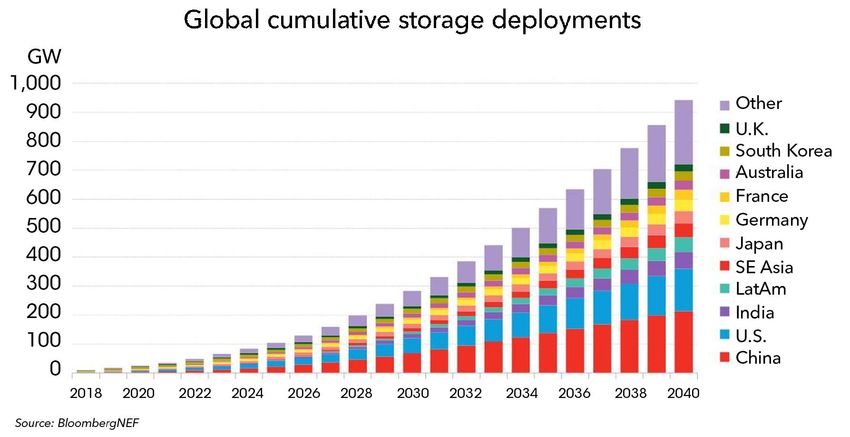
D GESS

Why lithium-ion (as opposed to other storage techs)?

                                                                                 Source: Kalhammer et al. 2007

    + high round-trip efficiency                          + government support (US, Japan, Korea, China)
    + low-temperature
    + relatively safe
                                   EPG | Energy Politics Group                                              |    3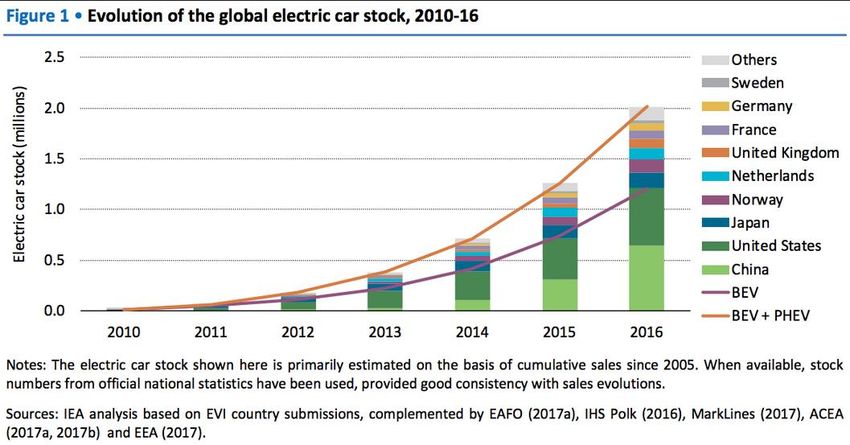
D GESS

Historic demand for and innovation in lithium-ion batteries

                  Historic

                                                        Hist     Source: Battke, Schmidt, Stollenwerk, Hoffmann. Research Policy (2016)
                                                                 http://dx.doi.org/10.1016/j.respol.2015.06.014
                                                        oric

                                   EPG | Energy Politics Group                                                                            |   4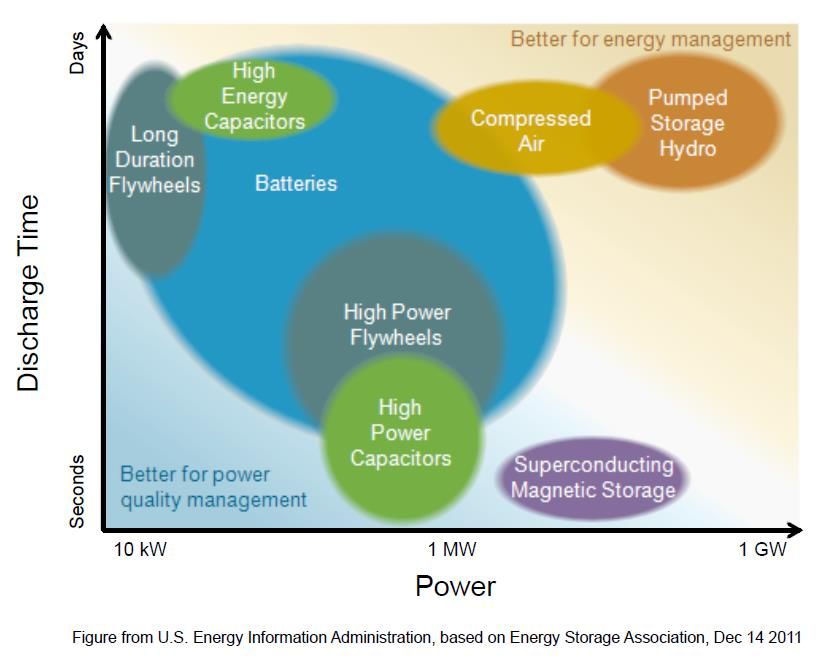
D GESS

Lithium-ion batteries have experienced massive cost reductions and will see more
in the future

                                                               Source: O. Schmidt et al. (2017), Nature Energy http://dx.doi.org/10.1038/nenergy.2017.110

                                 EPG | Energy Politics Group                                                                                            |   5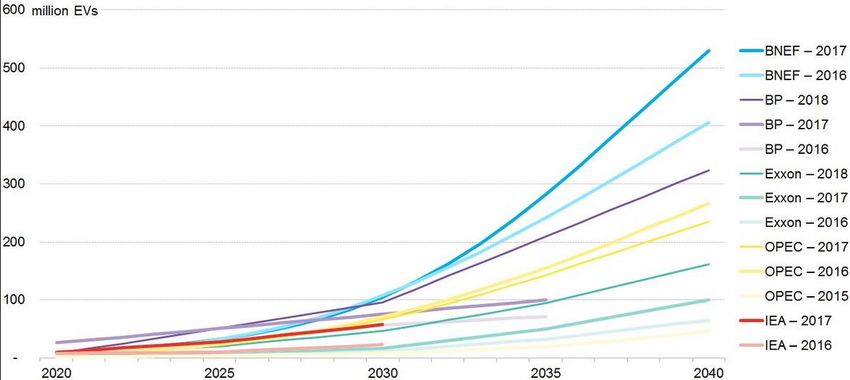
D GESS

Future demand for Lithium-ion batteries will come from three main markets

                                 EPG | Energy Politics Group                         |   6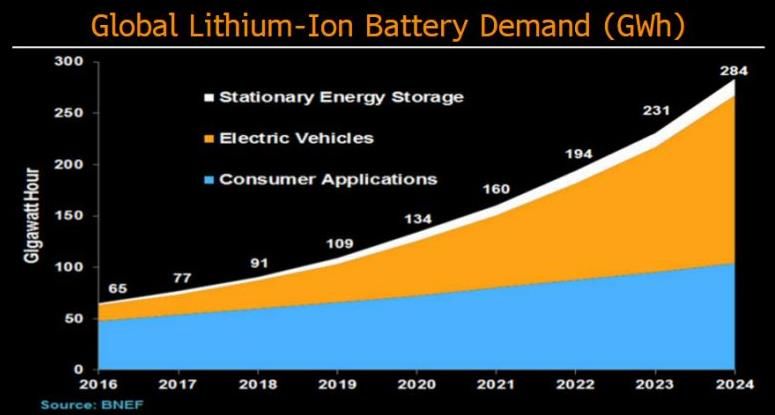
D GESS

Rough cost composition of an EV and its battery pack (as of 2017)

                                                                                                  100%

       Pack: 40%                                                              60%

         Cell: 30%
                                                                   10%
                                                 12%
             8%                8%
                      2%

           Cathode   Anode    other            Cell      Packaging        Integration,               EV
                             materials     Manufacturing                 rest of vehicle

                                                                                  Source: EPG/ETH Zurich, based on 2017 market numbers

                                         EPG | Energy Politics Group                                                                              |   7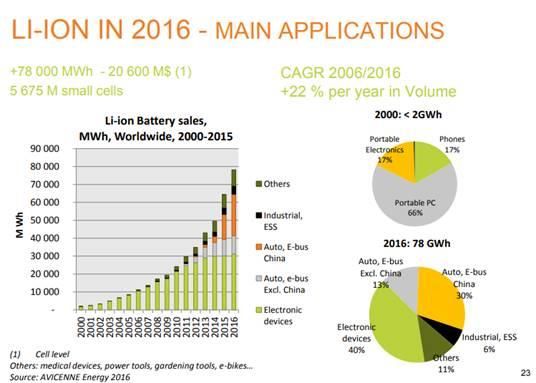
D GESS

The market for BEVs (past and outlook)

                                                               Electric vehicle sales (millions)

                                                                                Source: BNEF

                                 EPG | Energy Politics Group                                                |   8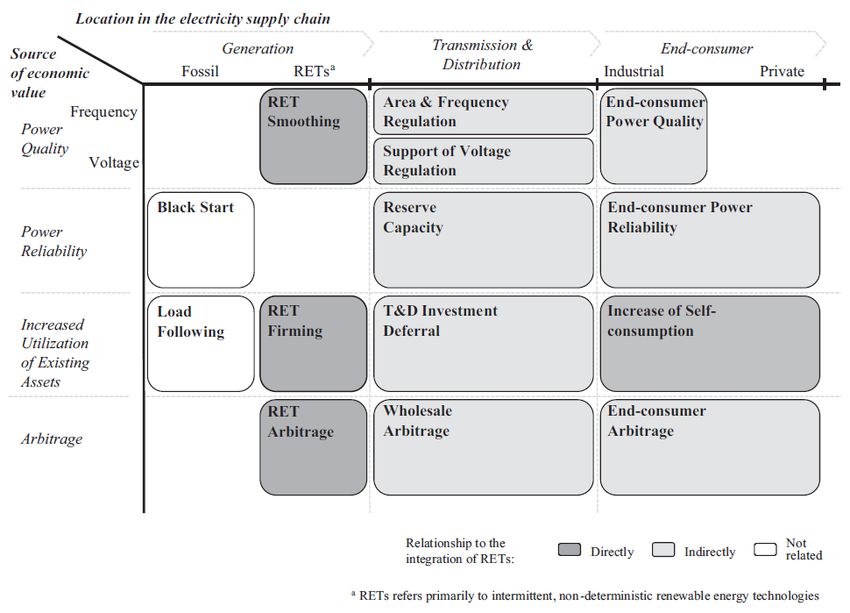
D GESS

Also stationary storage market is expected to grow massively, where it can create
value in many applications
                                                                                          Stationary storage applications along electricity supply chain and by type of value creation

      BNEF: stationary storage (without PHS) is
      a USD 1.2 trillion market till 2040

                                                                                                  Source: Battke & Schmidt, Applied Energy (2015)
      Source: BNEF 2018, https://about.bnef.com/blog/energy-storage-1-2-trillion-                 http://dx.doi.org/10.1016/j.apenergy.2015.06.010
      investment-opportunit§y-2040/?sf94588529=1

                                                                         EPG | Energy Politics Group                                                                              |   9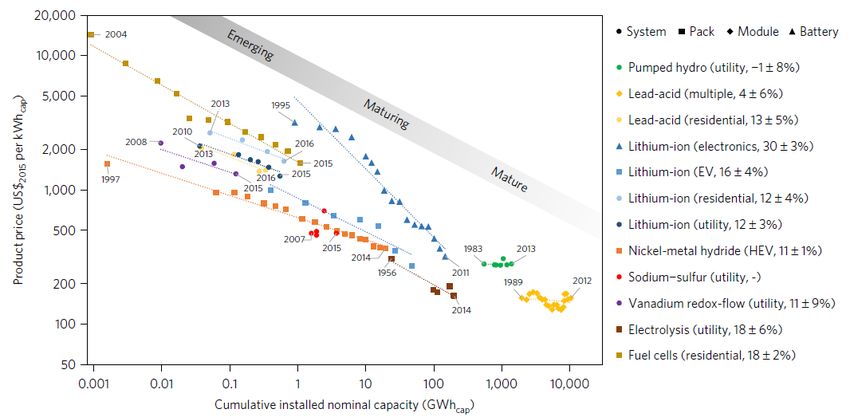
D GESS

Lithium-ion batteries “eat into” stationary storage market
                                                                                                           Preliminary results – do not cite or distribute
          Technology market shares
                  [Newly-built electricity storage projects]
                                  Low EV demand (5% CAGR)                                             High EV demand (32% CAGR)
                                          100%                                                100%
                         8h duration –
                          1 cycle/day

                                          50%                                                   50%
         Utility-scale

                                           0%                                                      0%
                                            2018         2022        2026           2030            2018          2022            2026        2030

                                          100%                                                100%
                         1.75 cycle/day
                         4h duration –

                                          50%                                                   50%

                                           0%                                                      0%
                                            2018         2022       2026            2030            2018          2022            2026        2030

                                                   Li-ion (NMC)   Li-ion (NCA)      Li-ion (LFP)       VRLA        Flow Battery      PHS
                                                                                                                                           Source: EPG/ETH Zurich

                                                                        EPG | Energy Politics Group                                                                 |   10
D GESS
Agenda
▪ Why is it a race to lithium-ion?
▪ What is Europe’s position in this race?
EPG | Energy Politics Group | 11D GESS
Europe’s current position: pieces of the puzzle do not (yet) match
• Market share in cell manufacturing thus far attempts have failed (TerraE) or are faring; buy in from car industry only picking up now (it seems)
Source: Beuse, Schmidt, Wood, Science (2018) EPG | Energy Politics Group | 12D GESS
Three questions need to be asked (and answered)
1) Is a battery cell a commodity- 2) Is it possible to leapfrog? 3) How to catch up?
like component, to simply
source on the market?
Our opinion: Our opinion: Our opinion:
• Core component (strong • Hard if not impossible, as next • Generally it is possible to catch
influence on vehicle design) generation requires a lot of tacit up (see Korea/China from Japan)
• Strategic component (better cell knowledge in design and • Waiting only widens gap
makes a better EV) production • Airbus is not a good role model
• Complex component, requiring • Gaining tacit knowledge requires • We recommend a “technology-
tacit knowledge to design experience with design, smart” policy
• Market power might not be as production and use of the
clear as with other car technology
component suppliers • Complex industry value chains
involved, with strong need for
interaction
Source: Beuse, Schmidt, Wood, Science (2018)
EPG | Energy Politics Group | 13D GESS
Our research aims to understand technology differences.
Policy should be “technology-smart” in order to be cost effective
What are elements of a “technology-smart” ...complex to design technologies:
catching
100%
up strategy?
80%
Wind 1) Interactions with downstream
60%
Wind 40%
Product
High activities
Process
1. Make production in Europe and partnerships
20%
0%
2) TransferWind turbines
of human capital Lithium- ion batteries
1991 1992 1995 1997 1998 1999 2000 2001 2002 2003 2004 2005 2006 2007 2008
with European firms attractive 3) Stable home market (to get
100% constant user feedback and new
80%
60%
PV Product Design users)
Solar PV
2. Create
40%
a large and predictable home
Combination
market complexity
20% Process
...complex to manufacture
(EV targets; more stringent caps of fleet
0%
technologies:
emission standards)
100% 1) Interactions with upstream
80%
60%
Li-ion Product Micro hydro plants activities Solar PV
Lithium-ion Combination Low
3. Only 40%
if enough learning and catching-up Process
has 2) Transfer of capital goods and
20%
(tacit) integration knowledge
taken place, create incentive for a “European
0%
3) Increasing (global) demand
cell”
Low High
Manufacturing
complexity
Relevant factors for catching up in…
Sources: Beuse, Schmidt, Wood, Science (2018); Schmidt & Huenteler, Global Env. Change
EPG | Energy Politics Group (2016); Malhotra, Schmidt, Huenteler; AAAS conference (2017) | 14D GESS
Thanks for your attention!
web: www.epg.ethz.ch
twitter: ETH_EPG
EPG | Energy Politics Group | 15You can also read


