The Influence of Using Minimalist Furniture on the Efficiency of the Living Space - Residential Apartments in Sulaimani City as Case Study
←
→
Page content transcription
If your browser does not render page correctly, please read the page content below
Diyala Journal of Engineering Sciences Vol. 13, No. 02, June 2020, pages 78-86 ISSN 1999-8716
DOI: 10.24237/djes.2020.132010 eISSN 2616-6909
The Influence of Using Minimalist Furniture on the
Efficiency of the Living Space - Residential Apartments
in Sulaimani City as Case Study
Hazha Mahmood Tahir, Amjad Muhammad Ali Qaradaghi
Architecture Department- College of Engineering - University of Sulaimani
*corresponding: email :hazhamahmood@yahoo.com
Abstract: reflects individual preferences, activities, and needs. Most
interior spaces require furniture, which provides the
Raising the figure of population and restricted land for transition between the people and the architecture of the
development in Sulaimani leads to the growing of vertical space. Over the millennia, civilizations have witnessed
housings and small apartments. Small apartments are a many epochs and styles in both architecture and furniture.
consequence of the continuous growing population and Today, as in the past, designers will use a particular style
urban housing development. The marketing prices and the to reflect a client’s desired personal or corporate image.
growing urbanization oblige folks into less amount of Space planners, architects, and interior designers,
space. Human necessities are still alike or perhaps it is therefore, need to have a basic understanding of the main
much more than what it used to be. There is a lot of attributes and characteristics of these styles in order to
fundamental need to be preserved and achieved to create better serve their clientele2.
human wellbeing. The problem of small spaces can be
resolved by some ways; however, it is still required for 2- Literature review:
furniture to develop to be more innovative to accommodate
small living spaces. Since furniture is a necessity and not To specify the research problem statement and the
luxury, everybody is in need of it. Therefore, living in a research gap, the following previous studies have been
small space necessitates minimalist and space-saving presented:
furniture solutions to sustain human wellbeing. This paper
attempts to explore the Influence of Using Minimalist 2-1- The study of (Tan Boon Chai), 2016: New Concept
Furniture on the Efficiency of the Living Space; by means of Furniture Design by using Space Saving Approach:
of the variable resulting from preceding studies based on
literature had been creating a checklist to measurement This study finds that many people have to live in small
minimalist furniture influencing the living space spaces, especially in big cities. In the current market, there
efficiency. This paper concludes that most of the principles is available a lot of space-saving furniture suitable to be
of the minimalist approach have been overlooked at, which used to help people for saving living space. Sofa bed also
had an impact on the space efficiency in the living room. one of the space-saving furniture. Many people dealing
with limited areas to force them to more creative to make
Keyword: Living space in a residential apartment, a small apartment become a comfortable living space. The
Minimalist furniture. apartment was divided into the bedroom, bathroom,
kitchen and living room. These will make us feel lack out
Paper History: (Received:23-2-2020 ;Accepted:10-5-2020 of space for our house. We have to try eliminating some
) unnecessary furniture and finding the right one would
make our house or apartment look more spacious3.
1- Introduction:
2-2- The study of (Kristoffer Thogersen), 2016: Small
No furniture = no interior, furniture will play a crucial spaces need smart solutions:
– probably the most crucial – part in the refinement of the
new installation and the physical interaction between This study points to a significant connection between
interior elements and those who use them. The architect furniture, small apartments and human wellbeing, as well
Norman Foster has said: “Furniture is like architecture in as the physical surrounding in an apartment having a large
microcosm.” As such, it must bear closer scrutiny than the impact on its residents. With these two factors in mind
exterior of any building because those who use it come, when designing furniture for an apartment, the result could
unavoidably, into direct visual and physical contact with it end up affecting human wellbeing in a positive way.
and are made more aware of its practical efficiency and of
the aesthetic language it speaks 1. Firstly: having a piece of furniture with more than one
function is essential to save as much valuable space as
Furniture is an integral element in the design of possible. Secondly, the arrangement of the furniture could
interior space because it affects human functions and be used to affect the flow and feel of an apartment4.
desires, such as sitting, working, sleeping, and relaxing.
Furniture also provides the personalization of space as it
78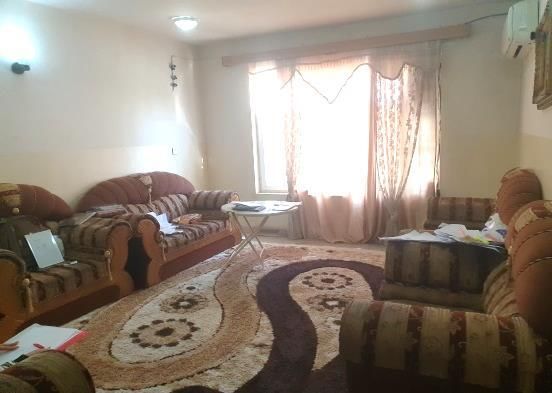
Diyala Journal of Engineering Sciences Vol. 13, No. 02, June 2020, pages 78-86 ISSN 1999-8716
DOI: 10.24237/djes.2020.132010 eISSN 2616-6909
2-3- The study of (Oday Q. Abdulpader, Omar A. 6- Definition of Key terms in the research:
Sabah, and Hussein S. Abdullah), 2014: Impact of
Flexibility Principle on the Efficiency of Interior 6-1- Living Areas:
Design:
Living room, gathering room, great room, and
The study finds that flexibility in architectural design family room—all of these terms describe a space where
can solve the area Problems and multi-use plan. It could people gather to interact and take part in various forms of
provide many possibilities to change the shape and size of entertainment, from reading to computer work/games and
internal space in addition to the economic and social television viewing. For many current homeowners, a
impacts on the housing system. The increase of moving formal living room “where no one ever goes “is no longer
from the rural and suburban to the main city offset router desired. Instead, a great room or gathering room where all
by new and creative designs and experiences that seek to family members can gather and take part in a range of
solve the problems associated with immigration. Because activities is preferable. However, some homeowners do
of these necessary needs, designers have started new and still desire a room for more formal events, and there may
creative ideas to design skyscrapers and multi-story be a desire for a room used for the adults in the family, with
buildings to cover the housing and economic needs. These younger family members using a separate room—often
solutions vary mechanism from one area to another called a family room or den. Similarly, formal dining
mismatch of vertical buildings and use them depends on rooms are not favored by some current homeowners; these
the reduced space. This research studies the possibilities of people often prefer a more casual eating area that is open
flexible designs and the impact on the efficiency of interior or partially open to the kitchen, forming cooking, eating,
design in addition to the using of integrated serves to get a and entertainment area. Another function of a living room
creative and sustainable design to make our city more is as a space to mingle and spend time with family. As a
livable. The principles interior design of the housing unit main gathering space in the house, the living room allows
has a significant effect on increasing or decreasing family members to get together and join in a range of
economic and housing buildings. In this study the principle activities desirable 6. Family members have the
of flexibility design is studied in two lines: opportunity to spend quality time together with a variety of
activities such as watching television, talking about their
1- Flexibility plan (space, wall, floor, and ceiling). day and playing video games. Different activities require
different furniture spatial arrangements to suit their needs.
2- Flexibility details (furniture) 5. As a space for informal time with loved ones, a different
level of intimacy is provided in a living room 7. Even the
From analyzing the previous studies and theses, it could be smallest of living areas benefit by having the spaces
noted that some of the factors which leads to appearing separated into sections for different activities. Within the
minimalism in interior spaces mentioned, but there was not living space, three activity areas might be a primary
a specific study which deals with the minimalist furniture seating/conversation area, a secondary seating group, and
and the effect on the efficiency of living room space, an entertainment center. The functions of these areas can
therefore, this study tries to fill the scientific gap through also overlap rather than being distinctly separated. The
achieving a wide range of knowledge and databases on the primary seating area is usually the major conversation
efficiency of the Living Space Thus, the study reaches to space, with the furniture grouping or a focal point (such as
the problem of the research, as: a fireplace or television) being the dominant element 2.
3- Research Problem: 6-2- Minimalist Furniture:
Lack of interest in applying the principles of minimalism Furniture is an integral element in the design of
approach in designing and using furniture in the living an interior space because it affects human functions and
room. desires, such as sitting, working, sleeping, and relaxing.
Furniture also provides the personalization of a space as it
4- Research objective:
reflects individual preferences, activities, and needs. Most
To evaluate the importance of minimalist furniture and its interior spaces require furniture, which provides the
role on the efficiency of interior space in small transition between the people and the architecture of the
apartments. space 2. Furniture is the generic noun for the movable
articles which are implemented in making rooms,
5-Research Hypothesis: alternatively, building appropriate for living or working in,
that’s how to say, tables, chairs, or desks. The primary
Lack of applying minimalism principles in designing and reason for making use of furniture in housing is meeting
using furniture elements in the interior design of small the need for indispensable activities flexibly. Examples of
apartment projects in Sulaimani City. these necessities can be consuming, sleeping, storage,
mental and physical efforts as well as sitting and relaxing.
The main aim is to address human needs, based on
climbing the value of the product because of the usability
79
Diyala Journal of Engineering Sciences Vol. 13, No. 02, June 2020, pages 78-86 ISSN 1999-8716
DOI: 10.24237/djes.2020.132010 eISSN 2616-6909
of function; measurement has to correspond to the size of 6-2-3- Modular Furniture:
the objects which the furniture of the human and storage-
display function. Simplification and Minimalist attitude Modular furniture is extremely precious in
consist of design furniture in plain geometric forms like the particular in less spacious spaces, these interior elements
other elements. The demand for Simplification of allow users to define and perform more than one activity
everything in both simplicity and minimalist attitude on in a single space. Multi-functionality reinforced with
interior arrangement draws the attention to the refining and modular elements. Modularity consisted of multi peace
goes back to the basic objects. They are recommended which has conventional size sizes and serves a variety of
accessories that focus on the functionality with simple and functions based on the demand of the users; these interior
straight lines without ornamentation 8. elements can also be converted into various interior
elements with no trouble. Modularity allows users to
There are four main types of minimalist furniture: define functions, this case can be defined as; same kind
elements which are related to each other side by side and
6-2-1 Fixed Furniture: serve functions by being mixed and serve unity to the same
element. 11.
In Minimalist dwellings, storage has to be
responded by firm furniture like wardrobes cabinets, 6-2-4- Pliable Furniture:
shelves, and niches. These wardrobes, designed as
concealed and stabled in the walls such as niches. In old- The pliability of furniture can be described as
fashioned Japanese dwelling, stabled furniture is designed “usage of furniture in different functions, easily collectible
as an architectural element. Stabled furniture supplies most and storable”. An element that we can recognize as pliable
of the storage necessity in minimal spaces; since it is not furniture need to imitate the idea that providing solution
mandatory to bring additional storage elements into space. and meeting needs in a space that activities turn to become
Accordingly, space is not taken up with negligible intricate. That is to say, pliable furniture needs to assist
elements. Built-in furniture will let users to define and multi-functionality to accomplish more than one activity in
provide vacant spaces as well as the activities of the user. a single space and supply the elasticity of space10.
These vacant spaces which left to the user in building, for Merging more than one function in furniture generates
the deficiency of any element that restricts it, flexible to multi-functionality. For instance, tables can enlarge
changes in life it also supplies elastic spaces. Fixed consistent with the basic needs of human like sitting,
furniture on the whole need to be compatible in located studying and consuming; moreover, feet of tables can be
areas that are designed. It is crucial to be advantageous employed in place of a box for storage. The basic principle
quite long with regards to flexibility 9. is the re-usage of death spaces in the structure of furniture.
Simplicity that comes out with multi-functionality is an
6-2-2 - Moveable Furniture: exhibition of minimalist attitude in the dwelling. In the
design process of interior elements, designers may need to
Movability might be the most vital characteristic ponder about all the volume of furniture rather than the
of the equipment which is simple and minimal housing. functional portion. Flexibility notion in furniture, offers
Simple and Minimal places take the advantage of mobility, less usage of off interior elements in space 8.
particularly in spaces which have miscellaneous functions
which overlap, moveable furniture makes likely the 6-3- Characteristics of Minimalist Furniture:
realization of functions at different times. Mobility, allows
you to push, pull, or relocate the furniture from the area so 6-3-1- Omit needless furniture:
as to be available for other functions. At the end of the
implemented function movable furniture supplies Since minimalism is a way to escape the excess
perpetual possibilities in a certain space. Contemporary’s around us through the reassessment of priorities. The term
and modern minimalist attitude provides users to replace minimalist often colloquially refers to anything that is
heavy and nonessential interior elements as a design spare or stripped to its essential quality. It favors a
principle. Moveable furniture as a part or as a whole need moderate approach to achievement of a set of goals and
to be light to be carried. Furthermore, these features need offers no more than what is required or essential, a style in
to be used to flexible and multifunctional feature. In which the simplest and fewest elements are used to create
minimalist spaces to supply multi-functionality in space, the maximum effect. Minimalism is a tool that allowed us
particularly the middle part of the space needs allow space to simplify our lives by stripping away the excess stuff so
and furniture that is not used need to be relocated we could focus on what’s truly important. “Minimalism in
effortlessly. Accordingly, in minimalist attitude, they interior space brings new quality: in the first place it cleans
referred to apply plain and less heavy so that it will be easy space from unnecessary elements and acts very softly and
to carry and transportable furniture. For instance, living neutral to context of its implementation without visually
space can be converted into a sleeping area. Employing violating the environment 12.
space as multi-functional supplied modular interior
elements as well 10.
80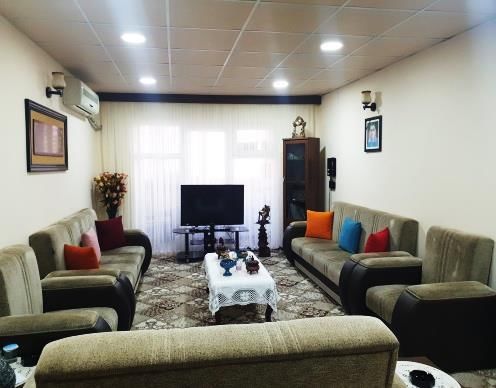
Diyala Journal of Engineering Sciences Vol. 13, No. 02, June 2020, pages 78-86 ISSN 1999-8716
DOI: 10.24237/djes.2020.132010 eISSN 2616-6909
6-3-2- Furniture Arrangement: considered. Then, it will both serve for the purpose of
sustainability and widely used.16. After the Industrial
The way furniture is arranged in a room will affect Revolution, consuming the natural sources insensibly more
how the space is used and perceived. Furniture can simply than it was needed and the negation that technological
be placed as sculptural objects in space. More often, growth created gave the environment a harmful ground.
however, furniture is organized into functional groupings. These problems got the attentions of the designers and they
These groupings, in turn, can be arranged to organize and looked for other ways. The increasing problems of today
structure space. Most furniture consists of individual or have made the furniture designers search for new seeking.
unit pieces that allow for flexibility in their arrangement. In environmental problems, there have been two different
The pieces are typically movable and may consist of attitudes:
various specialized elements as well as a mix of forms and
styles. Built-in arrangements of furniture, on the other • The first approach is using the natural materials.
hand, help retain more open space. There is generally more
continuity of form among the furniture elements with • The second one can be seen as using the recyclable
fewer gaps between them 13. materials.
6-3-3-Functional Requirements: 6-3-7- Furniture Color:
Function can be defined as realization of task or Color is very powerful design elements that can change
purpose. Everything in a minimalist space is functional; perception or use of a space. When we are limited with
everything has to serve a purpose not stand for space, material and beget that make designer to create
ornamentation or decoration. Anything that inessential, confinements projects, the only elements that can help, is
gratuitous and purposeless can’t take place in a minimalist color 17. A designer can think about color in two ways:
space. Removing inessential and purposeless as design or as decoration. Color as design modifies or
ornamentation revealing what is functional. This also leads defines form. It can express history, shape or deepen space,
to the essence of space and achieved to simplicity 8. add density, define edge, turn corners. Color as a design
element cannot be formulaic, it does not use color in
6-3-4- Furniture Organization and Circulation: specific terms (red, blue, or yellow) bur rather in terms of
what different tonal contrast can do to change a space.
Circulation and flow through living spaces is Color used as decoration employs specific color to create
dependent upon the relationship of doors and the related style. For example, it might deal with a specific fabric that
circulation patterns that flow from doors and doorways to could be enhanced by a particular wall color.
adjacent rooms, spaces, and furnishings. Simply, the
locations of doors/passageways influence the flow through Color as decoration uses aspects of history or recreate a
a living space and the related arrangement of furnishings feeling. It finds the metaphors in color and provides
and space efficiency 14. impact” 18.
6-3-5- Easily storable and Space saving: 7- The Methodology:
The designs of space saving furniture pieces not only Defining Minimalism or something minimal such as a
make them transformable and space saving but are also building, painting, furniture or an object by your own and
aesthetically pleasing and resemble works of art. evaluating these objects in terms of Minimalism to decide
Transformable space saving furniture is a revolution in how much minimal is that object is hard, in this subject,
furniture design. Since transformable space saving there are not any precise and clear criterion furthermore,
furniture is new, it possesses much room for innovation in and these criteria can
both its design and on the future market 15. Saving
furniture provides small properties with greater space and changed according to different point of views. For this
multiple functions, furthermore, transformable space reason, at first sight, it seems easy to find Minimalism
saving furniture can be made more effective and make approach by checklist form method. However, at this point
efficient use of the smallest spaces. in the selection process of buildings it becomes very
important. Chosen examples have to make appropriate
6-3-6- Sustainability in Furniture’s Design: terms of evaluating values.
Furniture is the major element in interior design. They To test the research hypothesis, the research depends
have a wide range of materials and color. In the context of on the Inductive methodology through methods which
sustainability, materials used in the Furniture produced prepares a checklist that includes some questions based on
from waste sometimes face with the problem of aesthetics. the indications and used terms in the theoretical part of the
These type of furniture are sometimes considered as research, shown in table (1)
unaesthetic. This is the major problem in selecting this
furniture. The aesthetic quality of the furniture should be
81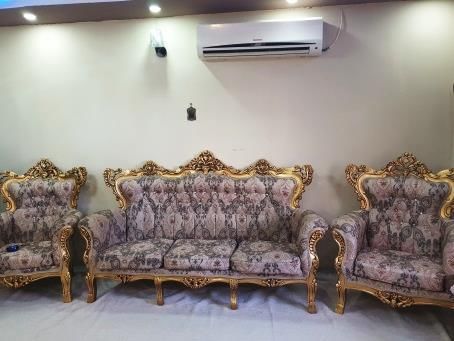
Diyala Journal of Engineering Sciences Vol. 13, No. 02, June 2020, pages 78-86                                               ISSN 1999-8716
DOI: 10.24237/djes.2020.132010                                                                                               eISSN 2616-6909

The checklist form includes the following axes: -                                8- The Research Limitation:

                        • The axis about sofa types.                                 The research attempts to study some important scope
                        • The axis about furniture arrangement.                  of works in interior space which is (Minimalist furniture).
                        • The axis about minimalist furniture types.             The research seeks to find the causes that rarity and lack of
                        • The axis about furniture function.                     clarity over the rate of using minimalist furniture in the
                        • The axis about furniture finishing.                    living area of the small apartment projects, which the floor
                        • The axis about furniture size.                         area less than 100 m2 and built during the time period of
                        • The axis of furniture color.                           (2003-2016).
                        • The axis about flexibility in furniture design.
                        • The axis about sustainability in furniture.            9- The case study:
                        • The axis of durability and maintenance of the
                        furniture.                                                   When its minimal simplicity is in the interior space, the
                        • The axis about storability.                            first small residential buildings come to mind. For this
                        • The axis of furniture material.                        reason, in the evaluation and analysis part of this research,
                                                                                 examples of small apartment buildings, which included
                                                                                 apartments less than 100 square meters, were chosen. In
                                                                                 this research, 96 apartments were selected from the
                                                                                 smallest different residential complexes and examined for
                                                                                 their minimalist furniture in the living room.

                                               Table (1) Checklist: for sample No.1 (Source: Researcher)

  Sample No:1

  Main Variables                                            Secondary Variables
        1    Sofa type                                      Unit                               L- shape
             Arrangement of
        2
             Furniture                                      U-shape              L-shape       Parallel        Circular
        3    Furniture Finishes                             Wood                 Metal         leather         Fabrics
        4    Function                                       Multifunction                      Single Function
                                                                                               Movable               None of
                                 Type of Furniture          Modular              Fixed                           Pliabilty
                            5                                                                                        them
                            6    Furniture color            Using single color        Using two color   More than two color
                            7    Furniture Decoration       Simple( less accessories)         Complex( more accessories)
                                 Flexibility in furniture
                            8
                                 design                     Arrangability                Transformation          Movability
                                 Sustainability in                                       Function
                            9                               Furniture Reducibility                               None of them
                                 furniture                                               Reusability
  Furniture Specifics

                                 Durability and
                            10
                                 Maintenance                High                      Medium                     Low
                                                            Safety
                                                            Easy cleaning
                            11   Material Specification     Comfort
                                                            Durability and Maintenance
                                                            Sustainability
                                                            Scaled with surrounding space area
  Specif
  Room

                            12   Furniture size
  Livin

                                                            Not scaled with surrounding area
  ics

                            13   Storability                High                      Medium                     Low
  g

                                                                            82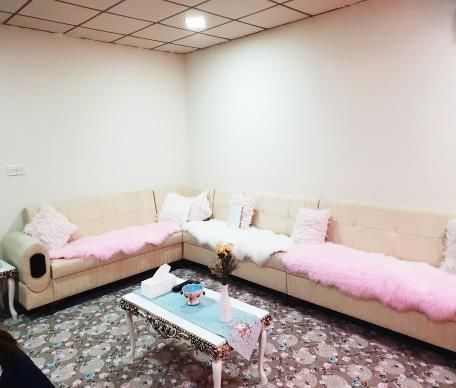
Diyala Journal of Engineering Sciences Vol. 13, No. 02, June 2020, pages 78-86                              ISSN 1999-8716
DOI: 10.24237/djes.2020.132010                                                                             eISSN 2616-6909

               Adequacy between
          14   furniture and Living         Dimension                     Size
                                                                                                 Shape
               room
               Circulation between the      Furniture arrangement allowing free movement and circulation
          15
               furniture in living room     Furniture arrangement restricting the movement

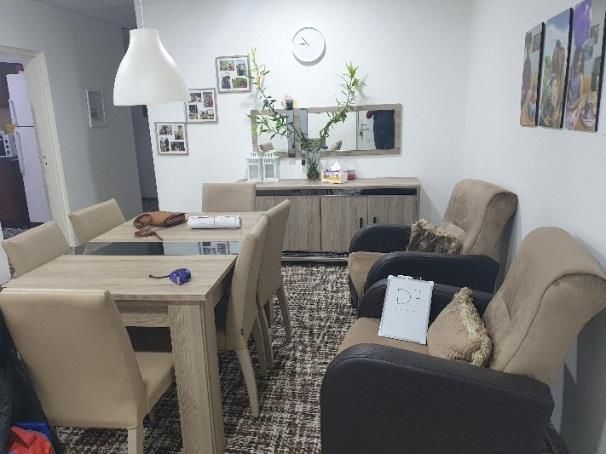
10-Data analysis:                                                 35.4% used L- shape sofa as shown in figure (1-A, B, C),
                                                                  which indicates that most of the residents prefer unit type
• The outcome analysis of the Furniture type shows that           more than L-shape.
64.6% of the selected samples used the unit sofa, and

  Figure (1-A): shows L-shape type.          Figure (1-B): shows Unit type.            Figure (1-C): shows the ratio of
            (Researcher)                              (Researcher)                        sofa types. (Researcher)

• As for the arrangement of furniture, the results
demonstrate that the range for %40 of the selected samples
is U-shape type, %38 is L-shape, %21 is parallel type and
%1 is circular type, shown in figure (2-A, B, C, D).

       Figure (2-A): shows U-shape arrangement                      Figure (2-B): shows Parallel arrangement
                      (Researcher)                                                 (Researcher)

                                                             83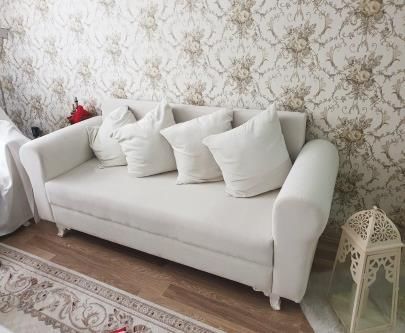
Diyala Journal of Engineering Sciences Vol. 13, No. 02, June 2020, pages 78-86                              ISSN 1999-8716
DOI: 10.24237/djes.2020.132010                                                                             eISSN 2616-6909

                                                            Figure (2-D): Chart Showing the Ratio about furniture
       Figure (2-C): shows L-shape arrangement                            arrangement (Researcher)
                      (Researcher)

• Regarding the finishing material of furniture, most of         • A small portion of the furniture is minimalist, which is
the furniture is fabric type then leather and metal type.        %40 of them is fixed type, %30 is pliability, %20 is
• The results show that, most of the furniture has single        modular and %10 is movable type.
function only %10 of the selected samples has                    • Using one Color is one of the most important
multifunction.                                                   characteristic of the minimalist approach; the finding of the
                                                                 research represents that only %9 of the selected samples is
                                                                 one color. shown in figure (3-A, B, C).

 Figure (3-A): shows Using single color   Figure (3-B): shows Using two colors       Figure (3-C): shows Using more than
       in furniture (Researcher)               in furniture (Researcher)             two colors in furniture (Researcher)

• Regarding the rate of simplicity and complex of                accessories (complex) and %48 is simple which contains
furniture, the research shows that %52 is contained more         less accessories and decoration. shown in figure (4-A, B,
                                                                 C)

    Figure (4-A): shows the complex        Figure (4-B): shows the simple        Figure (4-C): Chart Showing the Ratio of
  (more accessories) sofa (Researcher)         (less accessories) sofa              Furniture Decoration (Researcher)
                                                    (Researcher)

                                                            84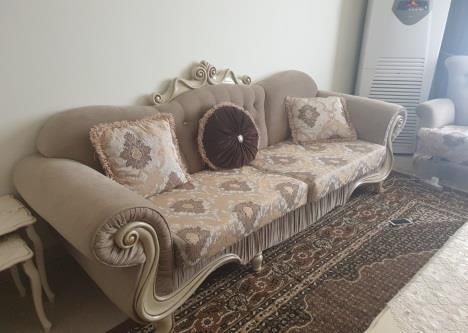
Diyala Journal of Engineering Sciences Vol. 13, No. 02, June 2020, pages 78-86                                    ISSN 1999-8716
DOI: 10.24237/djes.2020.132010                                                                                   eISSN 2616-6909

•   Regarding the characteristics that create flexibility in         •      The research shows that the safety and comfort
    the selected furniture, 82 % is by movability, 13% is                   property have priority to the easy
    by Arrangability and 5 % is by transformation.                   •      cleaning and durability in selecting furniture by the
•   Regarding the achievement of sustainability principle                   residents.
    of furniture in the selected samples, 32.4 % is
    sustainable through achievement of (function                     •      Regarding the scale of the furniture compared with the
    reusability and furniture reducibility) principles and                  surroundings, the results shows that %53 is scaled
    %67.6 is not sustainable.                                               with the surrounding space area and %47 is not scaled
•   The results demonstrate that the rate of durability and                 with it. shown in Figure (5)
    maintenance of the furniture is very low which is
    reached to 70.8% of the selected samples.

                        Figure (5) Chart Showing the Ratio of Furniture size (Prepared: Researcher)

•   Regarding the factor of storability of the space on the                 the circulation which is a dangerous rate for losing the
    base of the remained area, the rate of the storability is               efficiency of the interior spaces. Shown in
    very low in the selected samples.                                •      Figure (6-A, B)
•   Regarding the effect of the furniture on the circulation         •      The Shape of the furniture has the great role to create
    inside the living space, the result shows that 43.7% of                 adequacy in the living room more than the other
    the selected samples, the furniture make obstacle to                    factors like size and dimension.

            Figure (6-A): shows the furniture arrangement                Figure (6-B): shows the furniture arrangement
                restricting the movement(Researcher)                         restricting the movement(Researcher)

                                                                85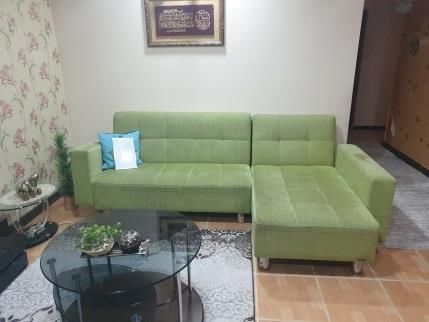
Diyala Journal of Engineering Sciences Vol. 13, No. 02, June 2020, pages 78-86 ISSN 1999-8716
DOI: 10.24237/djes.2020.132010 eISSN 2616-6909
Conclusions: 6. Maureen Mitton, Courtney Nystuen
“RESIDENTIAL INTERIOR DESIGN”, 2007.
1. The findings of the research show that the types of
11.Yagi, K. “A Japanese Touch for Your Home”,
sofas placed inside a high number of apartments are
unit type. This indicates that one of the important Tokyo & New York, Kodansha International, 1992.
principles of the minimalism approach has not been 12. Bruci. Allsopp, “A modern Theory of
considered. Architecture”, Routeladge and Kegan Paul, 1977.
2. Regarding the consideration of the “arrangement of 13. Francis D.K. Ching & Corky Binggeli “INTERIOR
furniture”, this factor, as one of the principles of DESIGN ILLUSTRATED”, Third Edition ,2012.
minimalism, has been relatively applied as most 14. Mark Karlen& Rob Fleming “Space Planning
furniture is U-shaped which has met the interaction Basics”, 4th Edition,2016.
requirements. 17. John Pile, “Colors in interior design, New York”,
3. Most of the furniture is not multifunctional, leading 1997.
to a lack of application of the minimalist approach. 18. Ladau R., Smith BK & Place J. “Color in Design
4. Most of the furniture is fixed- furniture and they are and Architecture”, New York, Van Nostrand Reindhold,
not movable. 1989.
5. The scale of the furniture is proportional compared Thesis:
to the scale of the surrounding space. This has come 3. Tan Boon Chai, “NEW CONCEPT OF
closer to the implementation of the minimalism. FURNITURE DESIGN BY USING SPACE SAVING
6. More than two colors have been used in most of the APPROACH”, 2016.
sampled furniture of the apartments, which made us 4. Kristoffer Thogersen, “Small spaces need smart
farther from the principle of minimalism. solutions”,2016.
7. Most of the furniture is of complex type as many
5. Oday Q. Abdulpader, Omar A. Sabah, and Hussein
accessories have been used in their design.
8. The arrangement factor has been less considered S. Abdullah, “Impact of Flexibility Principle on the
compared to the movability. Efficiency of Interior Design”,2014.
9. The sustainability principles in terms of the furniture 8. Nergiz, F., “Study of Design Properties and Visual
reducibility and functional reusability have not been Qualities of Minimalist Space with the Basic Elements
applied. of Architecture on the Typology of House”, İstanbul,
10. Regarding the storability, most of the furniture is not
I.T.U ,2005.
storable.
11. Safety and comfortability have been paid more 9. Irmak, C.H. “Simplicity and Minimalist Attitude in
attention than easy cleaning, durability, and Architecture”, İstanbul, I.T.U ,2002.
maintenance. 16. Nur Ayalp, “Environmental Sustainability in
12. A number of furniture created obstacles to the Interior Design Elements” ,2017.
circulation in the living room space.
13. The above findings show that most of the principles
Paper in a journal:
of the minimalism approach have not been
considered, which affected the space efficiency in 7. Rechavi, T. B. “A room for living: Private and public
the living rooms. aspects in the experience of the living room”. Journal of
Environmental Psychology, 2009.
References: 10. Ökem, S. “Furniture in Minimal Houses”, Journal
of Architects, 2001.
Book: 15. Shiyao Wang, “An Analysis of Transformable
1. Sam Booth and Drew Plunkett “Furniture for Interior space saves Furniture”, 2013.
Design”,2014.
2. Rosemary Kilmer, & W. Otie Kilmer. “Designing
interiors”- 2nd ed,2014.
86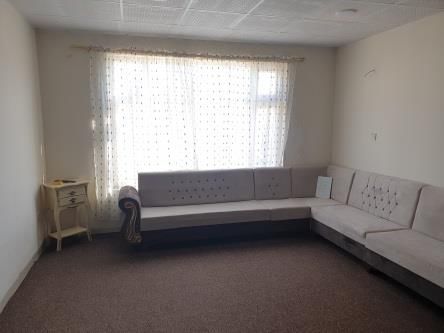
You can also read


