The IPCC and the Sixth Assessment cycle
←
→
Page content transcription
If your browser does not render page correctly, please read the page content below
The IPCC and
               the Sixth Assessment cycle
The Intergovernmental Panel on Climate Change (IPCC) is the            At its 41st Session in Nairobi, Kenya, in February 2015, the
UN body for assessing the science related to climate change. It        Panel decided to continue to prepare Assessment Reports every
was set up in 1988 by the World Meteorological Organization and        5-7 years and took a number of decisions regarding the preparation
United Nations Environment Programme to provide policymakers           of the Sixth Assessment Report. At its 42nd Session in Dubrovnik,
with regular assessments of the scientific basis of climate change,    Croatia, in October 2015 the Panel elected a Bureau for the
its impacts and future risks, and options for adaptation and           Sixth Assessment Report cycle.
mitigation.
                                                                       At its 43rd Session in Nairobi, Kenya, in April 2016, it decided
The IPCC does not conduct its own research. It identifies where        the topics for Special Reports in the AR6 assessment cycle, and
there is agreement in the scientific community, where there are        considered modalities for addressing and enhancing the treatment
differences of opinion and where further research is needed. It is a   of regional issues in the scoping of AR6. Besides deciding to
partnership between scientists and policymakers and it is this that    prepare AR6, at its 43rd Session the Panel accepted the invitation
makes its work a credible source of information for policymakers.      of the UNFCCC to produce a Special Report on the impacts of
IPCC assessments are produced according to procedures that             global warming of 1.5ºC. In addition, it decided to produce two
ensure integrity, in line with the IPCC’s overarching principles of    other Special Reports, one on the oceans and cryosphere in a
objectivity, openness and transparency. IPCC reports are policy-       changing climate, and one on climate change and land.
relevant, but not policy-prescriptive.
                                                                       The Panel also decided to prepare a Methodology Report to refine
Since 1988 the IPCC has produced five comprehensive Assessment         the 2006 IPCC Guidelines for National Greenhouse Gas Inventories
Reports and several Special Reports on specific topics. IPCC has       in order to update and provide a sound scientific basis for future
also produced Methodology Reports, which provide practical             international climate action especially under the Paris Agreement.
guidelines on the preparation of greenhouse gas inventories for
                                                                       The three Special Reports and Methodology Report have already
the inventory reporting requirements of Parties to the United
                                                                       been produced.
Nations Framework Convention on Climate Change (UNFCCC).
                                                                       • Special Report: Global Warming of 1.5ºC (SR15)
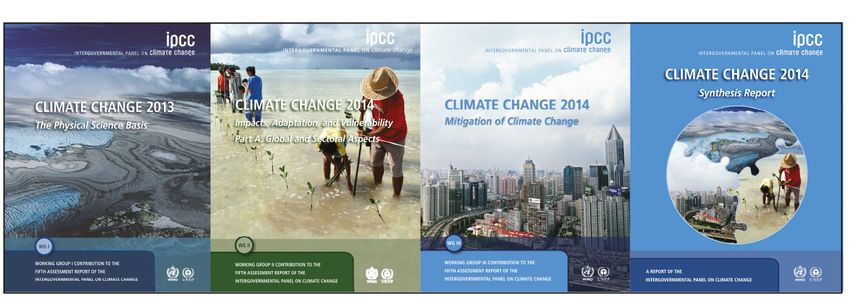
The Fifth Assessment Report (AR5) was finalized between 2013
                                                                       • Special Report: Climate Change and Land (SRCCL)
and 2014. Its key findings are:
                                                                       • Special Report: The Ocean and Cryosphere in a Changing
                                                                         Climate (SROCC)
                                                                       • Methodology Report: 2019 Refinement to the 2006 IPCC
                                                                         Guidelines for National Greenhouse Gas Inventories

• Human influence on the climate system is clear
• The more we disrupt our climate, the more we risk severe,
  pervasive and irreversible impacts
• We have the means to limit climate change and build a more
  prosperous, sustainable future
Like other Assessment Reports, the Sixth Assessment Report (AR6)
consists of three Working Group contributions and a Synthesis
Report, which integrates the Working Group assessments and the
Special Reports produced during the cycle.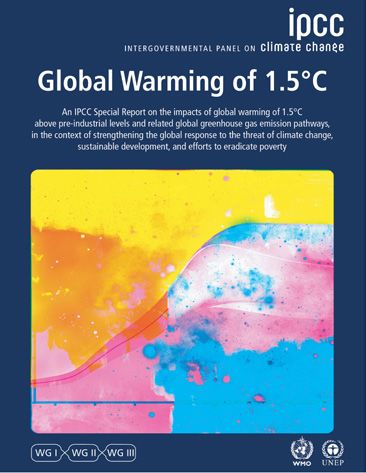
The contributions from the three Working Groups are due for release in 2021*:
• April 2021 - Working Group I – The Physical Science Basis       The Synthesis Report is due to be finalized in the first half of 2022
• September 2021 - Working Group III – Mitigation of Climate in time for the 2023 Global Stocktake by the UNFCCC, when
    Change                                                        countries will review progress towards the Paris Agreement goal
• October 2021 - Working Group II – Impacts, Adaptation and of keeping global warming to well below 2°C while pursuing
    Vulnerability                                                 efforts to limit it to 1.5°C.

                   The Sixth Assessment cycle

                                                                  Global warming of 1.5°C
                                              October 2018
                             Special                              An IPCC special report on the impacts of global warming of
                            Reports                               1.5°C above pre-industrial levels and related global green-
                                                                  house gas emission pathways, in the context of strengthening
                                                                  the global response to the threat of climate change,
                                                                  sustainable development, and efforts to eradicate poverty
                                                                  Climate Change and Land:
                                               August 2019
                                                                  An IPCC special report on climate change, desertification,
                                                                  land degradation, sustainable land management, food
                                                                  security, and greenhouse gas fluxes in terrestrial ecosystems
                                                                  Special Report on the Ocean and Cryosphere in a Changing
                                             September 2019
                                                                  Climate

                                                                  2019 Refinement to the 2006 IPCC Guidelines for
                                                 May 2019
                    Methodology                                   National Greenhouse Gas Inventories
                         Report

                             Sixth                                 Working  Group I Group
                                                                         Working     contribution
                                                                                             I contribution
                                                April 2021
                                                                   The physical science basis
                                                                         The physical    science basis
                       Assessment
                          Report *                                 Working  Group IIIGroup
                                                                         Working      contribution
                                                                                             III contribution
                                             September 2021
                                                                   Mitigation
                                                                         Mitigation ofchange
                                                                              of climate  climate change
                                                                   Working  Group IIGroup
                                                                         Working     contribution
                                                                                            II contribution
                                               October 2021
                                                                   Impacts, adaptation
                                                                         Impacts,      and vulnerability
                                                                                    adaptation    and vulnerability

                                                                   Synthesis Report Report
                                                                         Synthesis
                                                 May 2022

                                                                  A conference on cities and special attention to cities in
                                                   Cities         the Sixth Assessment Report with the intention of a
                              Others                              Special Report on climate change and cities in the
                                                                  Seventh Assessment Cycle
                                                                  Several Expert Meetings and workshops are held to
                                             Expert Meetings
                                                                  support the preparation of the Sixth Assessment Report.
                                                                  Reports of these meetings are published as supporting
                                                                  materials
                                                  Outreach
                                                 Outreach         Communication and outreach of the IPCC process and
                                                                  its findings

* The release dates for the Working Group reports are as agreed by the 46th Session of the IPCC (with a subsequent adjustment for
  Working Group III), and for the Synthesis Report by the 52nd Session. These dates are likely to shift as a result of the impact of the
  COVID-19 pandemic on the IPCC work programme.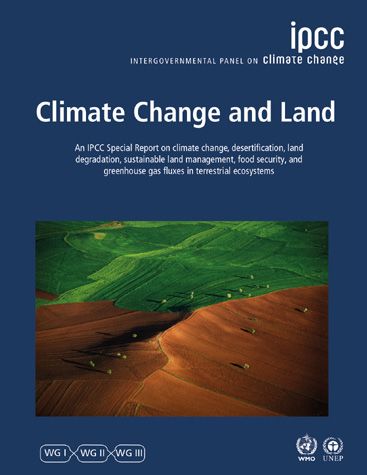
FAR      SAR       TAR            AR4              AR5      SR15 MR        AR6

          IPCC – jointly       UNFCCC    Kyoto Adaptation      2 °C limit Paris Agreement        SROCC        UNFCCC
          established by                 Protocol                                                             Global
                                                                                                 SRCCL
          WMO and UNEP                                                                                        Stocktake

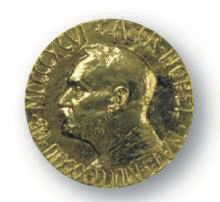
                                                               Nobel Peace Prize

                1988                     1995                    2007                        2018 2019           2023

     1970s-1980s                1990              2001                        2013-2014                 2021-2022

                                                                                     These dates are subject to change.

FAR: First Assessment Report                                MR: Methodology Report. 2019 Refinement to the 2006
                                                            IPCC Guidelines for National Greenhouse Gas Inventories
SAR: Second Assessment Report
TAR: Third Assessment Report                                SR15: Global Warming of 1.5°C, an IPCC special report on the
                                                            impacts of global warming of 1.5°C above pre-industrial levels
AR4: Fourth Assessment Report                               and related global greenhouse gas emission pathways, in the
AR5: Fifth Assessment Report                                context of strengthening the global response to the threat
                                                            of climate change, sustainable development, and efforts to
AR6: Sixth Assessment Report                                eradicate poverty
UNEP: United Nations Environment Programme
                                                            SRCCL: Climate Change and Land: An IPCC special report on
UNFCCC: United Nations Framework Convention on Climate      climate change, desertification, land degradation, sustainable
Change                                                      land management, food security, and greenhouse gas fluxes in
WMO: World Meteorological Organization                      terrestrial ecosystems

                                                            SROCC: Special Report on the Ocean and Cryosphere in a
                                                            Changing ClimateFor more information please contact: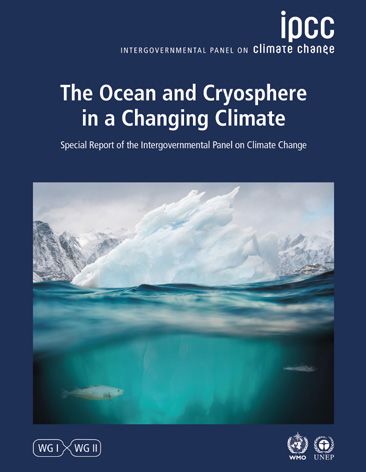
How the IPCC prepares its reports
Scoping Approval of Outline Nomination of authors
The outline is drafted and developed The Panel then Governments and observer
by experts nominated by governments approves the outline organizations nominate
and observer organizations experts as authors
Government and Expert Expert Review -
Review - 2nd Order Draft 1st Order Draft Selection of authors
The 2nd draft of the report and 1st draft Authors prepare a Bureaux select authors
of the Summary for Policymakers (SPM) 1st draft which is
is reviewed by governments and experts reviewed by experts
Final draft report Government review Approval & acceptance
and SPM of final draft SPM of report
Authors prepare final drafts Governments review the Working Group/Panel
of the report and SPM which final draft SPM in preparation approves SPMs and
are sent to governments for its approval accepts reports
Response of the North Pacific Tropical Cyclone Climatology to Global Warming:
Application of Dynamical Downscaling to CMIP5 Models
L EI Z HANG
Cooperative Institute for Research in Environmental Sciences, University of Colorado Boulder, Boulder, Colorado
Peer reviewed and internationally
available scientific technical and
K RISTOPHER B. K ARNAUSKAS
Cooperative Institute for Research in Environmental Sciences, and Department of Atmospheric and Oceanic
Publication
Sciences, University of Colorado Boulder, Boulder, Colorado
J EFFREY P. D ONNELLY
Department of Geology and Geophysics, Woods Hole Oceanographic Institution, Woods Hole, Massachusetts
K ERRY E MANUEL
socio-economic literature, manuscripts
Program in Atmospheres, Oceans, and Climate, Department of Earth, Atmospheric, and Planetary Sciences,
Massachusetts Institute of Technology, Cambridge, Massachusetts
of report
(Manuscript received 6 July 2016, in final form 21 September 2016)
ABSTRACT
A downscaling approach is applied to future projection simulations from four CMIP5 global climate models
to investigate the response of the tropical cyclone (TC) climatology over the North Pacific basin to global
warming. Under the influence of the anthropogenic rise in greenhouse gases, TC-track density, power dis-
sipation, and TC genesis exhibit robust increasing trends over the North Pacific, especially over the central
subtropical Pacific region. The increase in North Pacific TCs is primarily manifested as increases in the intense
made available for IPCC review and
and relatively weak TCs. Examination of storm duration also reveals that TCs over the North Pacific have
longer lifetimes under global warming.
Through a genesis potential index, the mechanistic contributions of various physical climate factors to the
simulated change in TC genesis are explored. More frequent TC genesis under global warming is mostly
attributable to the smaller vertical wind shear and greater potential intensity (primarily due to higher sea
surface temperature). In contrast, the effect of the saturation deficit of the free troposphere tends to suppress
TC genesis, and the change in large-scale vorticity plays a negligible role.
1. Introduction Given the possible catastrophic impact of TCs on man-
selected non-peer reviewed literature
kind, the response of TC activity over the North Pacific
The North Pacific is an important region of relatively
basin to anthropogenic global warming is naturally of
frequent tropical cyclones (TCs) ( ; 40 TCs per year).
great societal interest and has been intensively analyzed
The extreme rainfall and strong winds associated with
in numerous studies ( Zhao and Held 2012 ; Emanuel
TCs may influence shipping in the open ocean and cause
2013; Murakami et al. 2013 ; Knutson et al. 2015 ; Kossin
notable damage to coastal areas if TCs make landfall.
et al. 2016).
There are several approaches to investigating the re-
lationship between climate change and TCs. One rela-
Denotes content that is immediately available upon publica- tively straightforward approach is to analyze the future
tion as open access. projections of TC statistics as explicitly resolved within
produced by other relevant institutions
the global model simulations. The current generation of
Corresponding author e-mail : Lei Zhang, lezh8230@colorado. climate models has indeed been suggested to be capable
edu of simulating TCs ( Zhao and Held 2010 ; Murakami et al.
DOI: 10.1175/JCLI-D-16-0496.1
2017 American Meteorological Society. For information regarding reuse of this content and general copyright information, consult the AMS Copyright
Policy ( http://www.ametsoc.org/PUBSCopyrightPolicy ).
© images: www.ipcc.ch/site/assets/uploads/2020/04/AC6copyright.pdf including industry
IPCC Secretariat
c/o World Meteorological Organization
7bis, Avenue de la Paix
C.P. 2300
CH-1211 Geneva 2
Switzerland
Phone: +41 22 730 8208/54/84
Fax: +41 22 730 8025/13
Email: ipcc-sec@wmo.int
www.ipcc.ch April 2020




You can also read


