The Latin American Genocide and Mass Atrocity Prevention
←
→
Page content transcription
If your browser does not render page correctly, please read the page content below
The Latin American
    Network for
Genocide and Mass
Atrocity Prevention
           V year edition (2012 - 2017)

          An Effective
          Coalition for
          Prevention

                   in partnership with

Developed by the Technical Secretariat of the Network
 The Auschwitz Institute for Peace and Reconciliation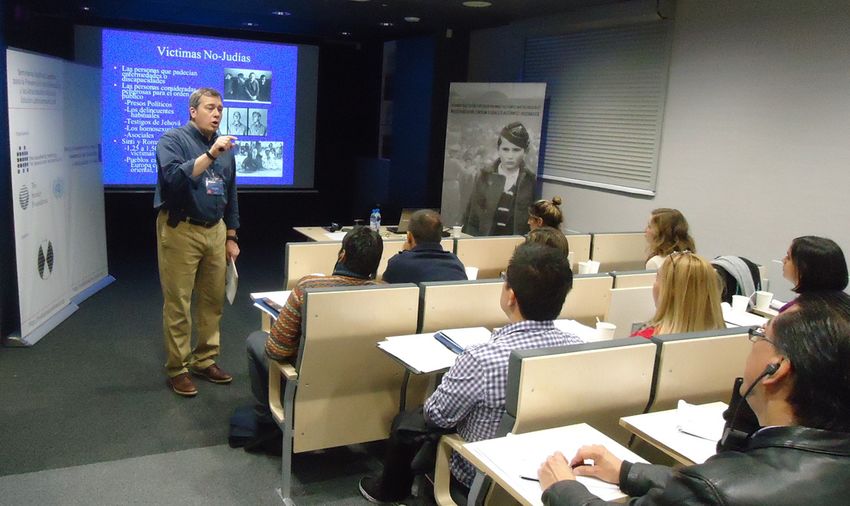
Technical Secretariat of The Latin American Network for Genocide and Mass Atrocity Prevention

                               Table of Contents

About This Report                                                                                                       3

About The Network                                                                                                       4

Composition of the Network                                                                                              5

Objectives and Axes of Work                                                                                             6

Raphael Lemkin Seminars for Latin America                                                                               7

Focal Points Meetings                                                                                                 10

Mentions and Activities                                                                                               15

The Technical Secretariat of the Network                                                                              19

Development and Diffusion of Annual Reports of the TS                                                                 19

Tools and Strategic Links                                                                                             21

Technical Assistance for Joint Projects Held Within
the Famework of the Network                                                                                           22

Development of National Initiatives with a
Focus on the Prevention of Atrocities                                                                                 23

Impact of Raphael Lemkin Seminar for Latin America                                                                    27

Closing Words                                                                                                         28

                                                  2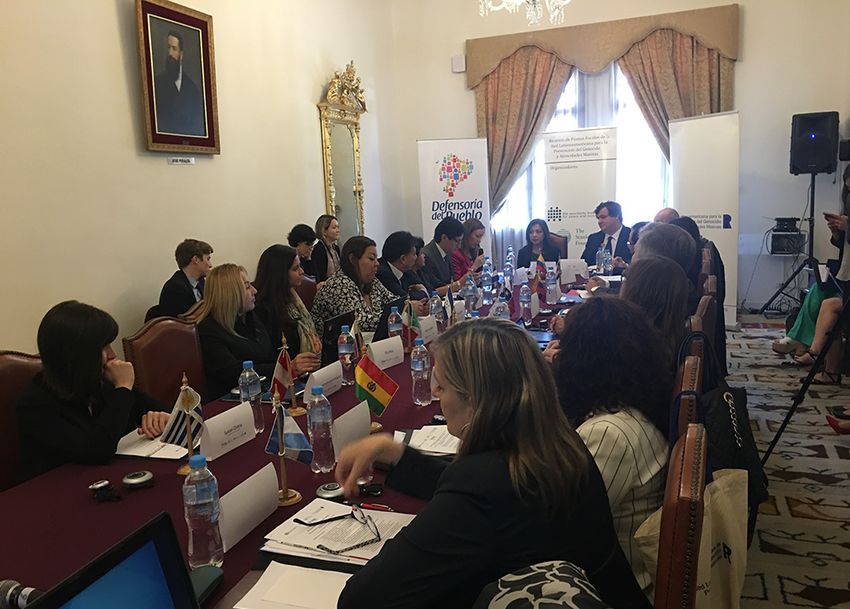
Technical Secretariat of The Latin American Network for Genocide and Mass Atrocity Prevention

About This Report
“The network is                It is well known that Latin America has wide-ranging experience in
a vibrant, solid,              addressing the national-level challenges linked to human rights and
                               that it is also a pioneer in the search for strategic solutions at a regional
committed and
                               level. This is reflected in the alliances woven within international forums
leading actor in the           related to the preparation, negotiation, approval of international human
global architecture of         rights instruments, as well as the creation and institutionalization of
genocide and mass              regional and sub-regional fora with a rights-based approach.
atrocity prevention.”          This report reflects the commitments and actions taken by Latin
              Adama Dieng,     American states since 2012 that give meaning to an incipient but
     United Nations Special    flourishing prevention agenda delineated by the Latin American
Adviser on the Prevention of   Network for Genocide and Mass Atrocity Prevention.
     Genocide, March 2014      We appreciate the valuable contribution made by the Focal Points
                               of the Latin American Network for the construction of this report, as
                               well as the Stanley Foundation and the Office of the Special Advisers
                               for the Prevention of Genocide and the Responsibility to Protect
                               of the United Nations, with whom the Auschwitz Institute has been
                               progressively building an effective coalition for prevention over the
                               previous five years.

                                                       The Auschwitz Institute for Peace and Reconciliation
                                                        Technical Secretariat of the Latin American Network
                                                                 for Genoicde and Mass Arocity Prevention

                                                      3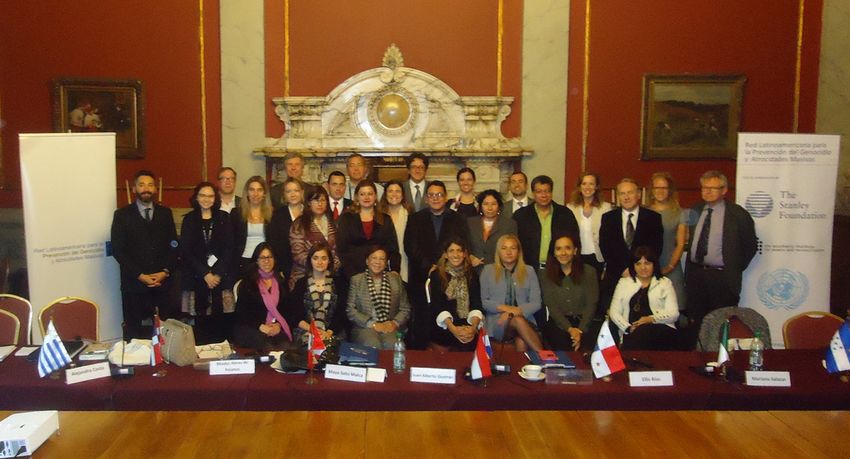
Technical Secretariat of The Latin American Network for Genocide and Mass Atrocity Prevention

About The Network
What is the Latin America Network for Genocide and Mass Atrocity Prevention?
The decision to address regional challenges jointly through proactive and creative solutions that
incorporate an atrocity prevention approach motivated eighteen Latin American countries to form the
Latin American Network for Genocide and Mass Atrocity Prevention (the Network).
The Network is an informal forum for regional cooperation established in 2012 which consists of eighteen
member-states. Network members have prioritized the prevention of atrocities in the development of
their public and foreign policies. It is, to this point, the first initiative in the world whose objectives include
both increasing cooperation between states and developing a genocide prevention curriculum for public
officials with specific responsibilities in the area of human rights.

A Bit of History
The Human Rights Secretariats of Argentina and Brazil, as well as the Ministry of Foreign Affairs of
Argentina, led the initiative for the creation of the Network, for which they requested the support of
AIPR and the United Nations Office of the Special Advisers on the Prevention of Genocide and on the
Responsibility to Protect (OSAPG), and subsequently The Stanley Foundation. Under this leadership, the
bases were established to form a regional forum with a particular concrete interest in the development of
training tools for public officials in Latin America.
The curriculum was presented at the first meeting of the Network (referred to as the Launch Meeting,
held in Argentina in March of 2012), which also provided an appropriate institutional framework through
which to agree upon the objectives, goals and structure of the forum and to establish priority thematic
areas for the application of a prevention-centric approach.

Structure, Principles and Objectives of the Network
The structure of the Network is based on the identification of national Focal Points, who are individuals
in charge of representing their government within the Network. Similarly, and as a result of increased
participation, multiple members countries of the Network are working toward the creation of National
Mechanisms for the Prevention of Genocide. National Mechanisms are inter-ministerial structures that
involve the participation of officials from institutions across different branches of government. In addition
to providing representation for their state within the Network, National Mechanisms are responsible for
developing a unified and cross-cutting national policy on the prevention of genocide.
Over the course of the preceding five years, the members countries of the Network have achieved the
necessary consensus to identify the priority areas of focus, as well as the principles and objectives that
inspire the work of the forum.

                                                            4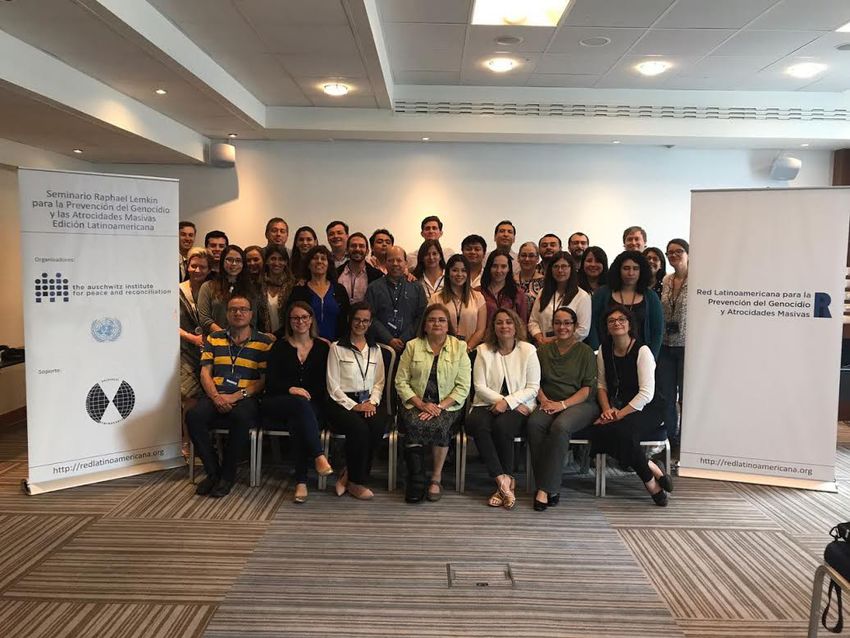
Technical Secretariat of The Latin American Network for Genocide and Mass Atrocity Prevention

Composition of the Network

Argentina                            Office of Human Rights, Ministry of Foreign Affairs and Worship

Plurinational State of Bolivia       Office of Human Rights, Ministry of Defense

                                     Joint representation: Secretariat of Human Rights and Federal
Brazil                               Prosecutor for Citizens’ Rights
                                     Office of Human Rights and International Human Rights Law,
Colombia                             Ministry of Foreign Affairs
                                     Office of Multilateral Affairs, Ministry of Foreign Affairs and
Costa Rica                           Worship

Chile                                Office of Human Rights, Ministry of Foreign Affairs

Ecuador                              Office of the Ombudsman

El Salvador                          Office of the Ombudsman

Guatemala                            Violence and Crime Prevention Unit, Ministry of Governance

                                     Office for the Culture of Peace, Secretariat of Justice and
Honduras                             Human Rights
                                     Office for International Public Law, Secretariat of Foreign
Mexico                               Affairs

Nicaragua                            Office of the Ombudsman*
                                     *Nicaragua participates solely in training activites of the Latin American Network.

Panama                               Office of the Ombudsman

Paraguay                             Office of Human Rights, Ministry of Foreign Affairs

Peru                                 Office of Human Rights, Ministry of Foreign Affairs*
                                     *Peru participates as an observer.

Dominican Republic                   Office of Human Rights, Ministry of Foreign Affairs

                                     Office of Human Rights and International Humanitarian Law,
Uruguay                              Ministry of Foreign Affairs
                                     Ministry of Popular Power for Interior Relations, Justice, and
Venezuela                            Peaces

                                                    5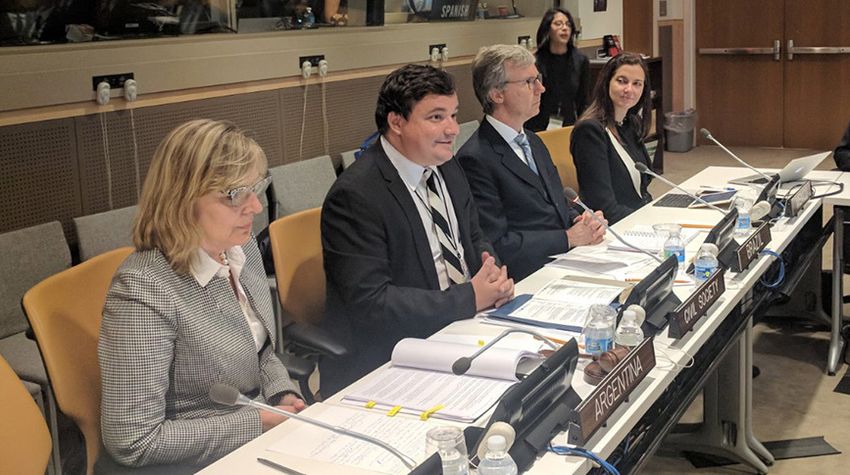
Technical Secretariat of The Latin American Network for Genocide and Mass Atrocity Prevention

Objectives and Axes of Work1
“The Latin American                         Axes of Work
Network does not                                    • Memory, Truth, and Justice
only constitute an
                                                    • Protection of people in vulnerable situations
example of partnership
among States. It is                                 • Promotion of anti-discrimination plans
also an example of                          The principles of cooperation and collaboration among institutions,
how different actors                        good faith, and continuity of the work, have guided the development
can work together                           of the Network since its creation in 2012. Due to the progressive
                                            consolidation of this regional approach, these principles continue to be
to achieve common
                                            reflected in the document approved at the VIII Focal Points Meeting
objectives. The                             (New York, October 2017) entitled, “Operating Standards of the Latin
Network constitutes                         American Network.”
a model that actors
in other regions of                         Objectives of the Network
the world are already                            Objective 1 To provide training to its members,
looking to, as an                                including the development and implementation of a
example of good                                  common curriculum in genocide and mass atrocity
practice. This is as                             prevention to be applied to training programs for the
                                                 institutions of each participating member country.
much an opportunity
as it is a responsibility.                           Objective 2 To generate spaces for mutual
Let us together work                                 collaboration and regional cooperation on genocide
                                                     and mass atrocity prevention.
to make the Network
a vibrant, operational                      In line with Objective 1, major achievements have been made through
and effective                               the implementation of the Raphael Lemkin Seminar for Latin America.
                                            More than 100 public officials have participated in this training, drawn
platform for atrocity
                                            from each of the 18 member countries of the Network, with a high
prevention.”                                level of institutional representation across all relevant governmental
                  Adama Dieng,              departments. Participants have also consistently provided excellent
         United Nations Special             evaluations in terms of the educational quality of the seminars and
    Adviser on the Prevention of            the involvement of officials in the national prevention activities that are
       Genocide, October 2017               organized as a result of participation in the Lemkin Seminars.

1
 These priority axes were initially agreed upon during the launch meeting (Buenos Aires, March 2012), though the incorporation of new
axes can be seen throughout this report.
                                                                    6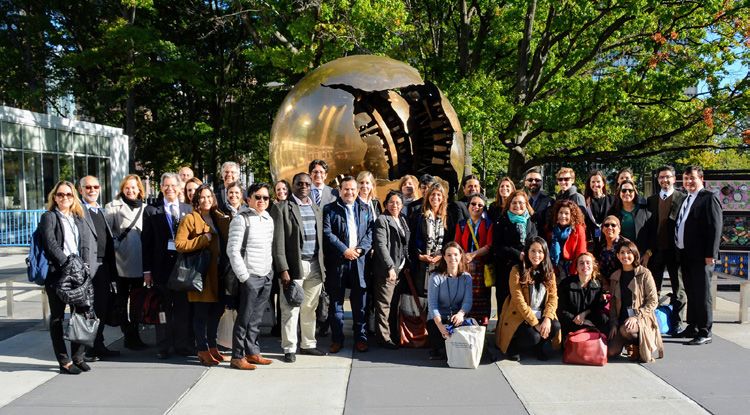
Technical Secretariat of The Latin American Network for Genocide and Mass Atrocity Prevention

Raphael Lemkin Seminars for Latin America
What are the Raphael Lemkin Seminars for Latin America?
Inspired by the Raphael Lemkin Seminar for the Prevention of Genocide developed and organized by
the Auschwitz Institute for a global community of public officials since 2008, participants from the Latin
American region (Argentina, Brazil, Chile, and Panama) encouraged the implementation of a new series
of seminars with a similar approach for the Network. The proposal was accepted by the members of the
Network, and AIPR and its partners developed a study program on the prevention of genocide and mass
atrocities which retained a global approach to the subject but includes a specific focus on Latin America.
This comes in the form of attention to historical events and an assessment of current opportunities to
take primary prevention action, among others.
The launch meeting, held in Buenos Aires in 2012, served as a platform for the decision to launch a
three-year pilot phase of this curriculum, which was carried out through the implementation of bi-annual
seminars between 2013 and 2016 at Auschwitz in Poland. This test phase also included the organization
of complementary seminars held in Latin America that facilitated a thorough understanding of past and
current phenomena that merit a critical and attentive review with a focus on prevention. The pilot program
was reviewed and tested by participants from each member country.
The training process began with the first seminar held in June 2013 in Oświęcim, Poland, which was then
replicated in 2015 and 2016. During the pilot phase, the seminar cycles were split into two parts. The
first was carried out over five working days in Poland, which included guided study visits to the former
concentration and extermination camps of Auschwitz I and Birkenau. Participants engaged with historical
questions and learned about tools for the early detection of risk factors that can lead to mass atrocities.
The second part followed up on the experience in Poland with trainings held in Argentina (2014), Chile
(2015), and Uruguay (2016). The location of the Lemkin Seminar at Auschwitz-Birkenau as well as
at sites of memory in Latin America, allow participants to immerse themselves both emotionally and
intellectually in the topic of genocide. Through the “power of place,” participants are provided with an
opportunity to make a personal investment and commitment to the field of atrocity prevention. AIPR has
learned from previous experiences that only when an emotional connection is made does the motivation
to act remain with participants after they have returned home.
Based on the results of the evaluation of each seminar, the members of the Network decided to approve,
and continue to develop, the program and thus promote the construction of a common vocabulary and
tools in the area of atrocity prevention for public officials with responsibilities in the field of human rights.

2013 - Launch of the Pilot Phase of the Raphael Lemkin Seminar for Latin America
OŚWIĘCIM, POLAND – 16 member countries of the Latin American
Network for Genocide and Mass Atrocity Prevention participated in the
Network’s first training seminar in Poland in June of 2013. Of the 18
member countries of the Network, in attendance were representatives
from Brazil, Bolivia, Chile, Colombia, Costa Rica, the Dominican
Republic, Ecuador, El Salvador, Guatemala, Honduras, Mexico,
Nicaragua, Paraguay, Peru, Uruguay and Venezuela. Adama Dieng, the
UN Special Advisor on the Prevention of Genocide, was also present at
the training seminar.

                                                           7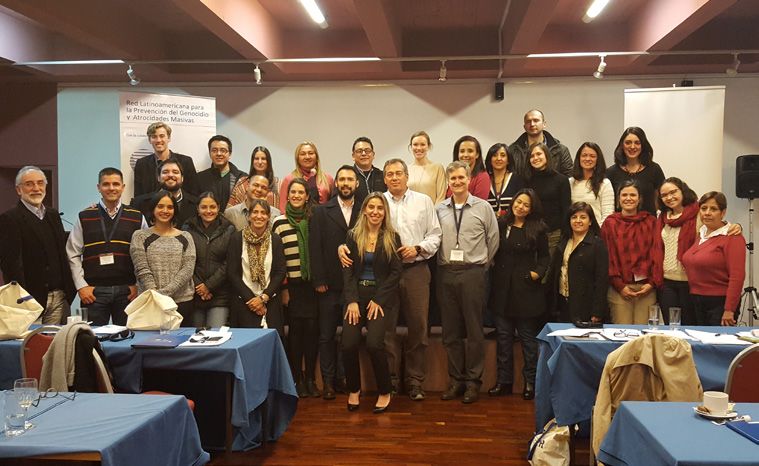
Technical Secretariat of The Latin American Network for Genocide and Mass Atrocity Prevention

Raphael Lemkin Seminars for Latin America
Conclusion of the First Edition (Poland-Argentina) of the Raphael Lemkin Seminar for
Latin America
                                BUENOS AIRES, ARGENTINA – The Auschwitz Institute for Peace and
                                Reconciliation, in partnership with The Stanley Foundation, OSAPG, and
                                Argentina’s Ministry of Foreign Affairs, co-organized the second phase of
                                the first Lemkin Seminar cycle for Latin America, which took place from
                                June 17-20, 2014. The seminar provided general tools and concepts
                                about the prevention approach and guided visits to emblematic memory
                                sites in the city (ESMA Site of Memory and the Park of Memory).
2014 - Launch of the Second Edition of the Raphael Lemkin Seminar for Latin America
OŚWIĘCIM, POLAND – The second edition of the Raphael Lemkin
seminar for Latin America was carried out from October 12-19,
2014. The seminar maintained its usual format while including a new
goal: “To strengthen the Latin American Network for Genocide and
Mass Atrocity Prevention by creating a communication network of
genocide-sensitive policymakers, shapers of political will, who will
become agents of genocide and atrocity crimes prevention with a
heightened degree of awareness and sensitivity to the role of non-
governmental actors in supporting their work in zones of conflict.”
Conclusion of the Second Edition (Poland-Chile) of the Raphael Lemkin Seminar for Latin
America
                                   SANTIAGO, CHILE – From May 25-28, 2015, the second part of
                                   the second cycle of the Lemkin Seminar on Genocide Prevention
                                   for Latin America. The first two editions of the training initiative
                                   functioned complementarily within the context of the Latin American
                                   Network. With the support of AIPR, The Stanley Foundation,
                                   OSAPG, and the Ministry of Foreign Affairs of Chile, this seminar also
                                   leveraged the power of place through a study visit to Villa Grimaldi,
                                   a former clandestine detention center located in Santiago which has
been transformed into a site of memory.
2016 - Launch of the Third Edition of the Raphael Lemkin Seminar for Latin America
OŚWIĘCIM, POLAND – AIPR, together with OSAPG and The
Stanley Foundation, along with the support of the International
Holocaust Remembrance Alliance (IHRA), began the third cycle of
the Raphael Lemkin Seminar for the Latin American Network for
Genocide and Mass Atrocity Prevention. The weeklong training
took place February 14-21, 2016, in Poland. Preserving the usual
format, the seminar welcomed the participation of 21 government
officials from the member countries of the Latin American Network.
As with previous iterations, participants benefitted from the power of
place intrinsic to the Nazi extermination camps in addressing important concepts and key tools for the
prevention of genocide and other mass atrocities.

                                                        8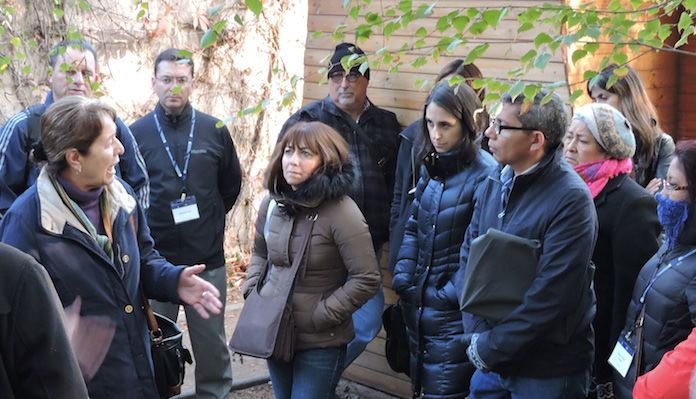
Technical Secretariat of The Latin American Network for Genocide and Mass Atrocity Prevention

Raphael Lemkin Seminars for Latin America
Conclusion of the Third Edition (Poland-Uruguay) of the Raphael Lemkin Seminar for
Latin America
                                     MONTEVIDEO, URUGUAY – From July 26-29 of 2016, the Lemkin
                                     Seminar welcomed 21 officials from Ministries of Foreign Affairs,
                                     Human Rights, Education, Defense, as well as national human rights
                                     institutions of the member countries of the Network. As part of the
                                     seminar, there were guided study visits to the Memory Museum
                                     (MUME) and to the Memorial in Recollection of the Detained and
                                     Disappeared. Aspects of the history and context of mass atrocities
                                     in Latin America were covered, including a presentation on civic-
                                     military relations in the region and the examination of a case study
on the military dictatorship in Uruguay. As always, the seminar served to reflect on the role of policies
for memory, truth and justice in the prevention of genocide and mass atrocities. Likewise, participants
benefitted from the opportunity to analyze the situation of indigenous populations in Latin America
through two case studies related to Brazil and Bolivia. Finally, the program covered topics such as the
protection, teaching, and strengthening of Human Rights in Latin America. This iteration of the Lemkin
Seminar was supported by AIPR, The Stanley Foundation, OSAPG, and the Ministry of Foreign Affairs of
Uruguay.

 The conclusion of the Pilot Phase of the Raphael Lemkin Seminar for Latin America, and the
 unanimous decision to maintain it as a training tool for the Network, confirmed the motivation
 and interest of regional officials to sustain and deepen spaces for collective work in terms of
 human rights and prevention of atrocities.

2017- Launch of the New Cycle of Raphael Lemkin Seminars for Latin America
OŚWIĘCIM, POLAND – Between 4-10 June 2017, AIPR held the
2017 edition of the Raphael Lemkin Seminar for Latin America in
Poland, which was supported by OSAPG, IHRA and the Auschwitz-
Birkenau State Museum. As in previous versions, the week was
divided into thematic axes dedicated to leveraging the power of
place of the Auschwitz concentration and extermination camps,
an introduction to the concepts of genocide, atrocity crimes and
prevention, as well as modules with a focus on learning from atrocities
of the past. The seminar also reviewed issues of relevance and
relevance in Latin America such as gender violence, transitional
justice, and transnational crimes.

                                                         9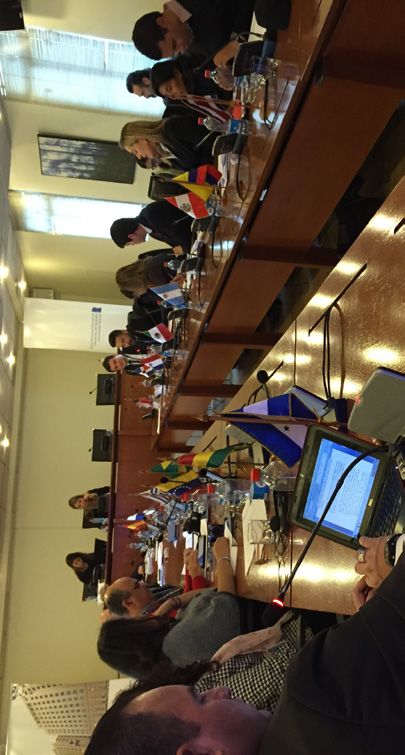
Technical Secretariat of The Latin American Network for Genocide and Mass Atrocity Prevention

Focal Points Meetings
Following the spirit of Objective 1 and by request of the members of the Network, the Auschwitz Institute
has developed a virtual training tool that aims to continue strengthening local capacities in prevention,
building a common vocabulary among public officials of the region, and providing an additional space
for joint reflection through a digital platform. This initiative allows not only an increase in the number of
officials with access to these concepts but also encourages collective interaction in terms of constructing
public policies with a focus on prevention. The proposal was presented by AIPR1 at the VIII Focal Points
Meeting of the Network. At this time, the foundations were also laid for the start of the registration
process for the Introductory Course on Fundamentals of the Prevention of Mass Atrocities, which began
in February of 2018. This is a new proposal for a permanent education offering inspired by, and aligned
with, the work of the Network. For example, the second virtual course for Latin America, launched in
March of 2018, has a focus on rights of indigenous peoples and prevention.
In compliance with Objective 2, which highlights the importance of creating opportunities for mutual
collaboration and regional cooperation, the Latin American Network maintains its own space for regular
interaction, referred to as Focal Points Meetings. These work as established institutional spaces for
decision-making and for an exchange of experiences and best practices in prevention by each member
country. During the initial period of consolidation, it was necessary to hold meetings twice annually. With
the assistance of the Network’s External Partners (AIPR, The Stanley Foundation, and OSAPG) and the
sponsorship of a member country, the following meetings were held:

                                                                        Buenos Aires, Argentina (Ministry of Foreign
                                                                        Affairs and Secretariat of Human Rights of the
    Launch Meeting                          March, 2012                 Nation), with the support from the Secretariat of
                                                                        Human Rights of Brazil
                                                                        Buenos Aires, Argentina (Ministry of Foreign
    First Focal Points Meeting              November, 2013              Affairs)
                                                                        Buenos Aires, Argentina (Ministry of Foreign
    Second Focal Points Meeting June, 2014                              Affairs)
                                                                        Panama City, Panama (Office of the
    Third Focal Points Meeting              December, 2014              Ombudsman)

    Fourth Focal Points Meeting             May, 2015                   Santiago, Chile (Ministry of Foreign Affairs)

                                                                        Brasilia, Brazil (Office of the Ombudsman and
    Fifth Focal Points Meeting              December, 2015              Ministry of Human Rights)

    Sixth Focal Points Meeting              July, 2016                  Montevideo, Uruguay (Ministry of Foreign Affairs)

    Seventh Focal Points
                                            December, 2016              Quito, Ecuador (Office of the Ombudsman)
    Meeting
    Eighth Focal Points Meeting                                         New York, United States of America (OSAPG and
                                            October, 2017
    – V Anniversary Edition                                             AIPR)

2
    The presentation was made by Dr. Kerry Wigham, Online Education Officer with AIPR’s Academic Programs Department.
                                                                   10
Technical Secretariat of The Latin American Network for Genocide and Mass Atrocity Prevention
Focal Points Meetings
ARGENTINA – First and Second Focal Points Meetings of the
Latin American Network in Buenos Aires
The External Partners of the
Network and the Ministry of Foreign
Affairs of Argentina co-organized
the First and Second Focal Points
Meetings of the Network, which
took place in November of 2013
and in June of 2014. The meetings
encouraged the start of a dialogue
among participating countries for
the design of joint action plans and strategies for the institutionalization
of the incipient regional network.
The Second Meeting was opened by the United Nations Special
Advisor Adama Dieng, who took the opportunity to lend encouragement
to the regional forum and to make himself available to the Focal Points
for future efforts to strengthen national and regional agendas for the
prevention of atrocities.
PANAMA – Third Focal Points Meeting of the Latin American
What is the Declaration Network in Panama City
of the Latin American On December 4, 2014, the Third
Network for Genocide Focal Points Meeting of the Latin
and Mass Atrocity American Network for Genocide
Prevention? and Mass Atrocity Prevention was
The Declaration was held. At the meeting, co-organized
adopted within the by the External Partners of the
framework of the Fourth Network and the Office of the Ombudsman of Panama, Focal Points
Focal Points Meeting and shared updates on the national-level initiatives that they helped to
represented a step forward develop in 2014 and discussed proposals for joint actions to be taken
in the consolidation and in 2015.
formalization of the goals
For the first time at a Focal Points meeting, a series of thematic
and work axes agreed upon
segments were dedicated to the discussion and exchange of
by the Focal Points during
experiences related to public policies that focus on prevention. These
the launch of the Network in
interactive modules focused on the situation of indigenous populations
March of 2012.
in the region, best practices in the development of trainings for
peacekeeping and security forces, and national experiences related to
implementation processes for establishing National Mechanisms.
11Technical Secretariat of The Latin American Network for Genocide and Mass Atrocity Prevention
Focal Points Meetings
The adoption of the CHILE – Fourth Focal Points Meeting of the Latin American
Declaration was recognized Network in Santiago
by the UN Special Adviser The Ministry of Foreign Affairs of
for Genocide Prevention, Chile, the Technical Secretariat of
Adama Dieng. In a letter the Network/AIPR, The Stanley
addressed to the Member Foundation, and OSAPG co-
Countries of the Network, he organized the Fourth Latin
says: American Network Focal Point
“After more than three Meeting, held on May 29, 2015
years of experience, the in Santiago, Chile. The meeting
Network has become allowed Network Focal Points to engage in discussions on the
into a world model of effectiveness of their ongoing practices and initiatives planned for
good practices. Not only the second half of 2015. In terms of thematic projects, the Focal
Points followed up on the research project, “Human Rights related to
it is an example of State
Indigenous Populations and Atrocity Crimes” and AIPR announced
cooperation. It also the fundamental parameters of a project entitled “Education for Mass
represents an example Atrocity Prevention in Latin America.” During the meeting in Chile,
of how different actors Focal Points stated their commitment to continue contributing to the
can work jointly, aiming strengthening and institutionalization process, which was reflected
to achieve a common in the adoption of the Declaration of the Latin American Network for
goal. The Network is Genocide and Mass Atrocity Prevention. The Declaration reaffirms the
also a reference model established consensus regarding the history, objectives and spirit of the
for a variety of actors Network’s endeavors since 2012.
in other regions of the BRAZIL – Fifth Focal Points Meeting of the Latin American
worl. The Network’s Network in Brasilia
progress constitutes an On December 3, 2015, the Fifth
oportunity as well as Meeting of Focal Points of the Latin
a responsibility. Let’s American Network for Genocide
continue the joint work and Mass Atrocity Prevention
to make the Network began, taking place in the city of
Brasilia. In its role as Technical
a vibrant, operative
Secretariat of the Network, AIPR
and efective platform co-organized the event with the Office of the Federal Attorney for
in atrocity crimes Citizen’s Rights and the Secretariat of Human Rights, OSAPG, and
prevention.” the Stanley Foundation. The meeting continued on December 4
and functioned as a platform for publicizing the national initiatives
developed during the year of 2015 and those planned for 2016.
Additionally, participants discussed and established a procedure for
projects being developed under the framework of the Latin American
Network and agreed upon future joint actions for the progressive
consolidation of the body.
Within the context of this meeting, the Focal Points issued a joint
communiqué for the International Day of Commemoration and Dignity
of the Victims of the Crime of Genocide and of the Prevention of this
Crime established by the UN General Assembly (Resolution 69/323).
The text of this statement follows:
12Technical Secretariat of The Latin American Network for Genocide and Mass Atrocity Prevention
Focal Points Meetings
69/323. International Day of Commemoration and Dignity of the Victims of the Crime of Genocide
and of the Prevention of this Crime (Resolution approved by the General Assembly on September
11, 2015).
Latin American Network or Genocide and Mass Atrocity Prevention
Echoing the spirit of the Resolution of the General Assembly of the United Nations which
established December 9 as the International Day of Commemoration and Dignity of the
Victims of the Crime of Genocide and of the Prevention of this Crime, the Latin American
Network for Genocide and Mass Atrocity Prevention, meeting in Brasilia during its V
regular meeting, joins in commemorating the victims and reiterates its conviction that
the preservation of historical memory and work towards the prevention of this crime are
effective means to honor and commemorate the memory of all those affected.
Brasília, Brazil, December 4, 2015.-
URUGUAY – Sixth Focal Points Meeting of the Latin American Network in Montevideo
Alongside the Ministry of Foreign Affairs of Uruguay, the External
Partners of the Network co-organized the VI Focal Points Meeting
of the Latin American Network for Genocide and Mass Atrocity
Prevention on July 25, 2016, in Montevideo, Uruguay. The meeting
worked toward five concrete objectives related to the development
and expansion of the Latin American Network’s activities. The
occasion also served as an opportunity to promote collaborative
efforts between member states, present initiatives that had been
planned and/or implemented since the previous meeting, and facilitate the continuation of major projects.
ECUADOR – Seventh Focal Points Meeting of the Latin American Network in Quito
The External Partners of the Network, jointly with the Office of the
Ombudsman of Ecuador, co-organized the VII Focal Points Meeting
of the Latin American Network for Genocide and Mass Atrocity
Prevention in Quito, Ecuador. As with previous editions, the VII Focal
Points Meeting served as an opportunity to promote collaborative
efforts between member states, introduce new topics, and facilitate
the continuation of major projects towards the consolidation of the
Latin American Network. Similarly, this meeting allowed for follow-
up on initiatives carried out by the member countries at the national
level and represented an opportune moment to take significant steps
towards the progressive consolidation of this regional space.
As in the past, the Network’s Focal Points moved to issue an official joint message with respect to the
International Day of Commemoration and Dignity of the Victims of the Crime of Genocide and of the
Prevention of this Crime:
Sharing the spirit of the United Nations General Assembly Resolution which established
December 9 as the International Day of Commemoration and Dignity of the Victims of
the Crime of Genocide and of the Prevention of this Crime, the Latin American Network
for Genocide and Mass Atrocity Prevention, assembled on the occasion of its VII periodic
meeting in the city of Quito, reiterates its conviction that continuing work in prevention
mobilizes continued reflection on past atrocities, honors victims and their family members,
and strengthens commitments to reinforce and provide increasingly concrete actions in the
human rights and atrocity prevention agendas.
Quito, Ecuador. November 29, 2016.-
13Technical Secretariat of The Latin American Network for Genocide and Mass Atrocity Prevention
Focal Points Meetings
United States – Eighth Focal Points Meeting of the Latin American Network in New York –
V Anniversary Edition
AIPR, in its capacity as Technical Secretariat, co-organized the VIII
Focal Points Meeting of the Latin American Network for Genocide
and Mass Atrocity Prevention in collaboration with the other External
Partners. The meeting, which took place on October 16 and 17,
2017 in New York City, maintained its standard dynamic of work and
dialogue while also incorporating a spirit of assessment relative to
the Network’s advances and the objective of providing visibility for
the Network’s progress and accomplishments in such a relevant
international forum as the United Nations.
Convened on the occasion of the Network’s fifth anniversary, the VIII Focal Points Meeting served as
an opportunity to promote the collaborative efforts undertaken between member states and to present
national initiatives originating from the previous Focal Points Meeting (Quito, November 2016) that are
being planned and implemented. The VIII meeting also worked to reinforce the momentum of long term
projects being carried out within the context of the Network.
At the margins of the Focal Points Meeting, two events were organized to further discuss prominent
issues on the Network’s agenda and to raise visibility of its ongoing efforts to prevent genocide and mass
atrocities. On the afternoon of October 16, a panel discussion entitled “Current challenges in matters
of mass atrocity prevention in Latin America” was held. The panel was composed of Ms. Victoria Tauli-
Corpuz, the UN Special Rapporteur for the Rights of Indigenous Peoples, Mr. James Turpin, Chief of
Prevention and Sustaining Peace of the United Nations Office of the High Commissioner on Human
Rights, Dr. Galis of AIPR, and was moderated by Ms. Jai-Ayla Quest, Program Officer at the Stanley
Foundation.
On the evening of October 17, AIPR, OSAPG, and the Argentinian
Ministry of Foreign Affairs and Worship organized a side event that
was held at United Nations Headquarters to commemorate the
fifth anniversary of the Latin American Network. A panel discussion
opened the event, featuring remarks from three Focal Points of
the Latin American Network: Maria Gabriela Quinteros, Director
for Human Rights at the Argentinian Ministry of Foreign Affairs and
Worship, Marlon Weichert, Deputy Federal Ombudsman in Brazil’s
Office of the Ombudsperson, and Mariana Salazar, Director of International Humanitarian Law in
Mexico’s Ministry of Foreign Affairs. They were joined by Dr. Galis of AIPR, Mrs. Quest from the Stanley
Foundation, and Ivan Šimonović, the United Nations Special Adviser on the Responsibility to Protect.
Following remarks from the panelists, Focal Points and those involved in supporting the Network’s
consolidation and initiatives made interventions reflecting on the successes of the body’s successes over
the past five years and their hopes for the future.
14Technical Secretariat of The Latin American Network for Genocide and Mass Atrocity Prevention
Mentions and Activities
Commemorating the 2017 International Day of Commemoration and Dignity of the Victims of the Crime
of Genocide and of the Prevention of this Crime (Resolution approved by the General Assembly on
September 11, 2015), Network Focal Points included the following message:
On the occasion of the International Day of Commemoration and Dignity of the Victims of
the Crime of Genocide and of the Prevention of this Crime, the Latin American Network for
Genocide and Mass Atrocity Prevention encourages the international community to reflect
on the atrocities of the past, as well as as to honor their victims and families.
Additionally, we invite the international community to join efforts so that, under the banner
of “Never Again,” more and more voices and resources can be made available for the
design of a global agenda that consolidates visions and efforts in the area of human rights
and atrocity crimes prevention.
Latin American Network for Genocide and Mass Atrocity Prevention
December 9, 2017.-
Objective 2 also reflects the collective will of the Focal Points towards the consolidation and efforts
to raise awareness of the Network at the local and international levels as a best practice of regional
cooperation for atrocity prevention. Because of this, with the support of the Technical Secretariat/AIPR,
the Network participated in various initatives through which they were able to raise awareness about the
scope of the body’s efforts and use it as a reference for joint work.
Side Event During the 25th period of UN Human Rights Council Sessions
On March 4, 2017 a side event was organized by the Permanent Mission of Ecuador to the UN with
the support of the governments of Chile and Argentina. The activity allowed to raise awareness about
the history and achievements of the Latin American Network among civil society organizations and
representatives of the international community. The event had the participation of representatives from
Mexico, Cuba, Uruguay, Peru, Paraguay, Belgica, Australia, Canadá y Montenegro, among others, in
addition to delegates from non governmental organizations. The activity served as plattform to inform
about the advances in matters of the creation of national mechanisms for prevention and early warning
and to provide exposure to the Latin American Network as a regional institutional tool and forum of
cooperatiion and for the exchange of experiences and good practices.
Conference on Genocide Prevention
A special mention to the Latin American Network for Genocide and Mass Atrocity Prevention was
included in the Chair’s concluding remarks at the International Conference on Genocide Prevention, held
from March 31 to April 1 of 2014. The Chair’s final report summarized the proceedings of the recent
two-day conference, where representatives of 125 countries, the majority of which at the ministerial
level, plus dozens of relevant regional and international organizations, academics, legal experts, and
representatives of civil society, gathered to set the agenda for the international community on prevention.
Mention of the Latin American Network in the Report of the UN High Commissioner for
Human Rights
Within the framework of the document (A/HRC/27/4, June 30, 2014), a summary of the debates from
the high level round table dedicated to the 65th anniversary of the Convention on the Prevention and
Punishment of the Crime of Genocide – reflected one of the interventions made by the United Nations
Special Adviser on the Prevention of Genocide in which hementioned the Latin American Network as an
initiative to strengthen preventive capacities.
The Special Adviser also mentioned various regional initiatives for the strengthening of prevention
capacities, such as the creation of the Regional Committee for the Prevention and Punishment of
15Technical Secretariat of The Latin American Network for Genocide and Mass Atrocity Prevention
Mentions and Activities
the Crime of Genocide, War Crimes, Crimes Against Humanity and All Forms of Discrimination of the
International Conference of the Great Lakes Region and the Latin American Network for Genocide
and Mass Atrocity Prevention. He also made reference to the interinstitutional agreements, to the
appointment of coordinators on the Responsibility to Protect and Genocide Prevention, and to the
meeting of Global Action Against Mass Atrocity Crimes, held in Costa Rica on March, 2014 as well as
highlighted the 56 States with designated coordinators to this end. Additionally, the Special Advisor
mentioned the national prevention initiatives being carried out by members of several regional networks.
Mention of the Latin American Network in the Report of the UN Secretary General:
Compliance of our Collective Responsibility: international assistance and the
responsibility to protect (Pillar II)
In parragraph 25, the aforementioned document, (A/68/947– S/2014/449), published on July 11, 2014,
discusses the scope and relevance of the Latin America Network as a forum for collaboration and mutual
assistance
Signature of a Memorandum of Understanding between the Iberoamerican Federation
of the Ombudsman (FIO) and the Auschwitz Institute for Peace and Reconciliation, in
the context of committments and technical assistance rendered to the Latin American
Network
Within the context of the General Assembly of the Iberoamerican Federation
of the Ombudsman, held on October 4 of 2014, following the approval of
the inititative led by Ombudspeople present at the Assembly, AIPR and
the FIO signed a Memorandum of Understanding which focused on the
development of cooperative tools between the two organizations in matters
such as tranining activities and research in issues related to genocide and
mass atrocity prevention. Similarly, the Assembly provided an opportunity
to introduce the Latin American Network to a variety of Ombudspersons,
representing indispensable actors in the consolidation of human rights
agendas and actions in Latin America.
As result of this institutional link with the Iberoamerican Federation of the
Ombudsman, AIPR’s technical assistance, and the participation of the
Offices of the Ombudsman of Colombia, Ecuador, and Guatemala, came the publication of The Role
of the Ombudsman in Transitional Justice Processes. The Role of the Ombudsman is a document that
compiles different practices related to transitional justice processes that have been carried out by Offices
of the Ombudsman belonging to the FIO. Besides the participation of national human rights institutions,
this collective effort includes work done by the Technical Secretariat of the FIO, ProFIO/GIZ, the
Technical Secretariat of the Network/ AIPR and independent scholars.
The publication was presented in March of 2017 at an event entitled “Women Weaving Territories of
Peace,” organized by the Ombudsman Office of Colombia, alongside UN Women, Javeriana University,
the Embassy of Sweden in Colombia, and the FIO.
16Technical Secretariat of The Latin American Network for Genocide and Mass Atrocity Prevention
Mentions and Activities
Participation of the Technical Secretariat (TS) in the Fifth Annual Meeting of Focal Points
of the Global Network on the Responsibility to Protect (R2P)
The Technical Secretariat of the Latin American Network participated in the fifth Focal Points Meeting of
the Global Network on R2P, held in Madrid from June 24-26 of 2015, aiming to share best practices in
matters of the formation of the Network and follow-up on actions implemented within its framework. The
meeting was organized by the governments of Spain and Chile and was supported by the Global Centre
for the Responsibility to Protect and The Stanley Foundation.
Participation of the TS in the Second Meeting of Focal Points of the UNESCO Network for
Holocaust and Genocide Education
AIPR, in its role as Technical Secretariat of the Latin American Network, alongside the Latin American
Network Focal Point from Chile, participated as an observer in the Second Focal Points Meeting of the
UNESCO Network for Holocaust and Genocide Education on July 29-30 of 2015, aiming to find points of
convergence and encourage active institutional contact between both networks.
Participation of the TS in the High Level Dialogue on Guarantees of Non Recurrence:
Challenges and Lessons on prevention of Human Rights Mass Violations
AIPR, in its role as Technical Secretariat of the Network, participated in the High Level Dialogue on
Guarantees of Non Recurrence: Challenges and lessons on the prevention of mass violations of
human rights, organized by the United Nations Special Rapporteur for the Promotion of Truth, Justice,
Reparation and Guarantees of Non Recurrence and the Ministry of Foreign Affairs of Sweden in
Stockholm on October 14-15 of 2015. The meeting fostered an interactive dialogue among relevant
actors from governments and civil society representatives around the challenges of the implementation
of policies preventing the mass violations of human as part of a comprehensive operational policy of non
recurrence.
In this context, the efforts of Latin America were presented in relation to the development of a joint
atrocity prevention policy through the creation and consolidation of the Latin American Network. The
presentation demonstrated the advantages of a coordinated effort between state institutions, civil society
organizations and the permanent collaboration of OSAPG as a best practice to inspire the work of
relevant actors at the international level in the incorporation of a prevention approach into public policies
for human rights.
Institutional link with the Mercosur Institute for Public Policy on Human Rights (IPPDH)
Within the framework of the consensus achieved during Focal Points Meetings of the Latin American
Network and as a result of interest manifested by the Focal Points to explore avenues for cooperation
and joint work with human rights organisms and institutions from the region, the TS/AIPR established an
strategic link with the Mercosur IPPDH. From the signing of a Letter of Intention between the IPPDH and
AIPR (in its role as Technical Secretariat), progressive advancement was made on a cooperative agenda
for education and research projects on human rights with a focus on regional mass atrocity prevention.
This document provided the legal framework for the development and implementation of a technological
platform for communication, dissemination, and organization of online courses as a virtual tool to support
training initiatives of the Network. This effort was placed under the consideration of the Permanent
Commission on Memory, Truth and Justice during the Meeting of Mercosur’s High Authorities on Human
Rights by the representatives of Brazil and Argentina during Brazil’s pro tempore presidency of the body.
The initiative subsequently gained approval during Paraguay’s pro tempore presidency. .
17Technical Secretariat of The Latin American Network for Genocide and Mass Atrocity Prevention
Mentions and Activities
As a result of this, the Latin American Network-IPPDH-PDR Meeting Space was launched
was launched in April of 2016.
Produced through coordination between the IPPDH’s International
School for Public Policy in Human Rights and the Technical
Secretariat of the Network, this new tool for communication and
interaction was introduced to alumni of the Raphael Lemkin
Seminar for the Latin American Network. The Latin American
Network IPPDH-AIPR Meeting Space is a virtual tool designed
to function as a mechanism that supports training initiatives, the
construction of public policy in human rights, and the prevention of
atrocities in Latin America.
The Meeting Space was primarily launched to foster the communication and circulation of information
and resources in terms of human rights and genocide prevention between public officials in the region. A
posteriori, in October of 2017, the platform was used to implement the first virtual course on human rights
and genocide prevention for public officials in Latin America.
18Technical Secretariat of The Latin American Network for Genocide and Mass Atrocity Prevention
The Technical Secretariat of the Network
Since its inception, the Latin American Network has entrusted the Auschwitz Institute for Peace and
Reconciliation with the task of accompanying the efforts of this forum in the role of Technical Secretariat.
Within the structure of AIPR, this task is being carried out by the Latin American Program, which acts as
a facilitator of technical and academic tools and supports collaboration with relevant actors in the field of
human rights and atrocity prevention. This role is exercised in the strengthening of, and following-up on,
efforts for thematic inititatives developed within the framework of the Network (aimed at the consolidation
of a prevention approach in the policy agendas relevant to the rights of indigenous populations, LGBTI
collectives, migrations, the role of the security sector in prevention, and actions promoting memory,
truth and justice, among others). Aside from this, the TS coordinates and mobilizes resources for the
development of academic initiatives, both traditional and virtual, that are made available to countries of
the region, in addition to strenghtening relations in diverse institutional environments including academia,
human rights NGOs, international bodies (UN, OAS, etc.), aiming to augment the capacity and impact of
actions being carried out by the Latin American countries.
The efforts of the TS/AIPR also involve communication and direct work with the UN Joint Office of
the Special Advisers on Genocide Prevention and on the Responsibility to Protect and The Stanley
Foundation, partners who provide essential technical assistance and bolster the Network’s momentum.
AIPR’s mandate as TS was renewed during the Seventh Focal Points Meeting of the Network (Quito,
November, 2016). This decision was later included in the Minimum Rules of Operation of the Network,
which were approved unanimously during the Eighth Meeting (New York, October, 2017). Under this
mandate, AIPR/TS accompanies the Network in its actions, but also develops events, tools, and strategic
links for institutional strengthening and raising awareness of the regional forum.
Development and Diffusion of Annual Reports of the TS
Presentation of Annual Reports of the Network to Permanent Missions to the United
Nations in New York City
Among the tasks allocated to the TS by the Focal Points is the construction of an institutional archive of
Network actions and initiatives. In compliance with this mandate, the TS has prepared annual reports
on the Network’s activities since 2014. To this point, reports for the years of 2014, 2015 and 2016 have
been published. This report, which celebrates the fifth anniversary of the body, reflects the actions and
activities undertaken during 2017 as well as adds extra symbolic value as an “X-ray” of the Network –
covering its inception, growth and consolidation.
In addition to being tasked with drafting the Annual Report and fulfiling its role as guarantor of the
institutional memory of this fora, the Auschwitz Institute/TS encourages actions for the dissemination of
content. As a result, AIPR/TS has organized events for the launch of the Annual Reports in New York
City since 2015. These launch events have brought together officials from Permanent Missions to the
United Nations, United Nations delegates, and civil society representatives in New York who work in the
international arena.
19Technical Secretariat of The Latin American Network for Genocide and Mass Atrocity Prevention
Development and Diffusion of Annual Reports of the TS
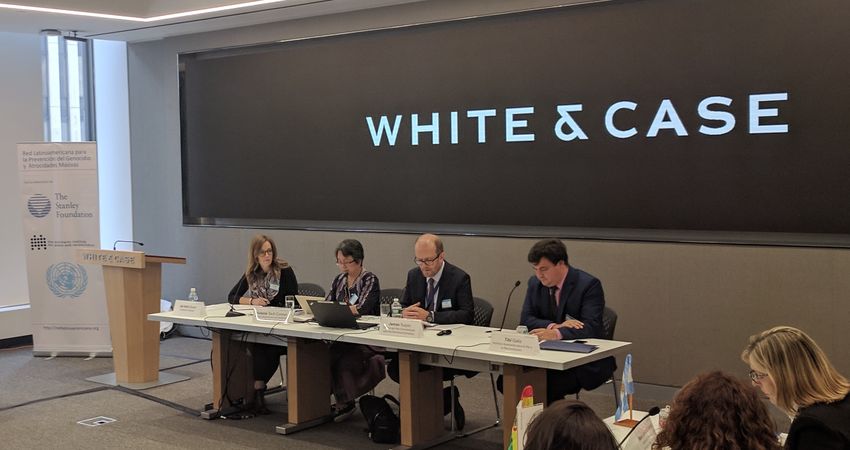
Launch of the 2014 edition of the Annual Report
On May 4 of 2015, the Auschwitz Institute for Peace and Reconciliation
launched the 2014 Annual Report of the Technical Secretariat of the
Latin American Network for Genocide and Mass Atrocity Prevention at
the offices of White & Case LLP in New York City. The report outlines
the activities undertaken by the TS, the Stanley Foundation and the
Office of the Special Adviser for the Prevention of Genocide in 2014 —
including all seminars, Focal Points Meetings, and national initiatives
devoted to prevention.
Launch of the 2015 edition of the Annual Report
On the evening of March 8 of 2016, AIPR held a launch event for the
2015 Annual Report of the Technical Secretariat of the Latin American
Network at the offices of White & Case LLP. The launch was attended
by representatives from many participating countries of the Latin
American Network, as well as by other members of civil society and
the international community. The External Partners shared remarks
highlighting the joint efforts made by all the Network’s supporters and
stakeholders.
Launch of the 2016 edition of the Annual Report
On April 25 of 2017, in its role as Technical Secretariat of the Latin
American Network, AIPR held a launch event for the 2016 Annual
Report of the Technical Secretariat at the Consulate General of
Colombia in New York City. Representatives from the External Partners
and White & Case, as well as the Focal Point from Ecuador to the
Latin American Network, outlined the progress and challenges of the
Network in their remarks.
The event welcomed representatives of several member countries
of the Latin American Network, including Colombia, Brazil, Costa
Rica, Ecuador, and Uruguay, alongside other actors involved in the
prevention of mass atrocities from UN Permanent Missions, civil
society, and the private sector. For its part, the 2016 report outlines
the actions that took place at the national, regional and international
levels towards the prevention of genocide under the banner of the Latin
American Network throughout the year.
20Technical Secretariat of The Latin American Network for Genocide and Mass Atrocity Prevention
Tools and Strategic Links
Tools
• Annual reports – drafting, design, presentation and dissemination
• Website of the Latin American Network for Genocide and Mass Atrocity Prevention
(www.redlatinoamericana.org)
• AIPR/IPPDH Virtual Meeting Space for the Latin American Netowrk (closed space for
the circulation of information between Focal Points)
• Online courses, including “Introduction to the Prevention of Genocide and Mass
Atrocities” and thematic courses
• Global assessment of the Latin American Network’s imapct on public policies at the
national level
Strategic Links
• United Nations Office of the Special Advisers on Genocide Prevention and on the
Responsibility to Protect (OSAPG)
• The Stanley Foundation
• United Nations Special Rapporteur on the Rights of Indigenous Peoples to the High
Commissioner for Human Rights
• United Nations Special Rapporteur on the promotion of truth, justice, reparation and
guarantees of non recurrences
• Iberoamerican Ombudsman Federation (FIO)
• MERCOSUR Institute for Public Policy in Human Rights (IPPDH)
• Universidad Externado de Colombia
• Binghamton University
• Interamerican Commision on Human Rughts
• UNESCO Latin American Network for Education on the Holocaust and other
Genocides
21Technical Secretariat of The Latin American Network for Genocide and Mass Atrocity Prevention
Technical Assistance for Joint Projects Held Within the
Framework of the Network
As a result of interactions fostered by Focal Points Meetings, the members of the Network have outlined
certain thematic areas as priorities, as well as the approach used. The discussions were inspired by the
need to provide tools, indicators, and concrete products that can be used by the members of the Network
towards the design and implementation of public policy at the national level, as well as towards raising
awareness and better involving officials within the structures of government.
In terms of thematic joint projects, the first centers on the research project entitled “Rights Relative to
Indigenous Populations and Atrocity Crimes” led by OSAPG. Throughout the subsequent meetings, the
FPs decided to formulate a questionnaire to be circulate within each member country, inspired in the axis
and the recommendations from the attached investigation, in order to compile relevant information. The
output from this labor will be available by the end of the first trimester of 2018 and will serve as the basis
for the design of a methodological and substantial proposal for the Network to make available to member
countries as a concrete tool for the incorporation of a prevention approach within national public policy on
indigenous populations.
Support of the Network’s towards AIPR’s project “Education for Atrocity Prevention in
Latin America”
Since 2015, AIPR has been working in the design of a methodological proposal for the implementation
of educational public policy on atrocity prevention in Brazil and El Salvador. It is an innovative proposal
through which AIPR’s Educational Policies Program, with the support and accompaniment from the
Focal Points of Brazil and El Salvador, has encouraged the development of national networks committed
to the search for an educational tool to be applied in curricula at the local level. The progress made in
AIPR’s work has been communicated to Network member countries. Additionally, and in response to
the advanced execution status of the project, the FPs have established a thematic committee within the
Latin American Network to support and suggest lines of action and awareness-raising for the tool to other
countries in the region and the world.
AIPR3 works to provide an innovative opportunity to approach education on human rights and prevention,
with the seal of the Network, to countries interested in this tool.
Finally, regarding joint initiatives, through the observation of current phenomena in terms of human rights
and prevention, Network members have identified several thematic areas that require a specialized
approach and a degree of regional involvement in the provision of relevant concrete tools.
These axes can be summarized as:
• Discrimination against migrants
• Migration and human mobility in Latin America
• Security, with a particular focus on non-conventional violence in relation to the
homicide rate in Latin America
Network members are currently in the phase of preparing work proposals on these themes, which will
surely be represented as part of the 2018 edition of this annual report.
3
Through its Educational Policy Program, led by Dr. Clara Ramírez Barat.
22Technical Secretariat of The Latin American Network for Genocide and Mass Atrocity Prevention
Development of National Initiatives with a Focus on the
Prevention of Atrocities
As Technical Secretariat of the Network, AIPR works with the other External Partners to support the
body and provide technical assistance for the development of national initiatives with a focus on atrocity
prevention. These initiatives cover a broad spectrum of activities, ranging from seminars for public
officials to the development of legislation for the creation and institutionalization of National Mechanisms
for the Prevention of Genocide.
Below, the range of these actions and their scope are represented.
2012
Argentina (March): Launch of the Latin American Network for the Prevention of Genocide and Mass
Atrocities in Buenos Aires.
2013
Panama (March): Agreement between the Council of Central American Human Rights Defenders for the
establishment of an Early Warning System in conjunction with the Latin American Network and the Office
of the Special Adviser for the Prevention of Genocide of the United Nations.
Paraguay (April): The Paraguayan government announced a project for the establishment of a National
Mechanism for the Prevention of Genocide to formulate policies and coordinate the government’s
response to risks of genocide. Organized by the Ombudsman’s Office and the Ministry of Foreign
Affairs of Paraguay, the launch meeting was a two-day event in Asunción, featuring presentations by
the Auschwitz Institute, OSAPG, experts from the Paraguayan government, and representatives of civil
society, including the national chapter of Amnesty International.
Chile (August): A training seminar was organized by the Chilean Carabineros on the function of police
and the use of force in relation to human rights issues. The event was supported by the Technical
Secretariat of the Network and the Ministry of Foreign Affairs of Chile.
Colombia (October): The II Augusto Ramírez Ocampo Course on International Humanitarian Law was
held. A module specifically dedicated to the prevention of mass atrocities was incorporated for the first
time. The event was organized by the Ministry of Foreign Affairs of Colombia, a Focal Point institution of
the Latin American Network.
2014
Costa Rica (March): A training seminar was held on tools for the prevention of genocide and atrocity
crimes for Costa Rican officials with responsibilities in the areas of human rights and international
humanitarian law. The event was organized by the Ministry of Foreign Affairs of Costa Rica a Focal
Point institution and AIPR/Technical Secretariat of the Network and was supported by collaboration with
OSAPG.
Mexico (April): Nearly one hundred government officials, academics, and civil society representatives
attended a seminar organized by the Secretariat of Foreign Affairs of Mexico, a Focal Point institution,
and AIPR/Technical Secretariat of the Network. The seminar included a study visit to the Museum of
Memory and Tolerance in Mexico City.
Chile (April): The “Conference on the Prevention of Genocide and Other Mass Atrocities,” a one-day
event organized by the Carabineros of Chile, was held in Santiago. The event functioned as part of
the institutional relationship developed between AIPR, the Ministry of Foreign Affairs of Chile, and the
Carabineros, within the framework of the Latin American Network.
Paraguay (August): The Paraguayan chapter of the Latin American Network for the Prevention of
Genocide and Mass Atrocities organized an event with the purpose of strengthening its National
23You can also read


