The (not-so) hidden crisis - The effects of the Covid -19 crisis on workers in the Cultural and Creative Sectors
←
→
Page content transcription
If your browser does not render page correctly, please read the page content below

The
                     (not-so)
                     hidden
                     crisis
                     The effects of the Covid -19 crisis
Co-funded by
                     on workers in the
the European Union   Cultural and Creative Sectors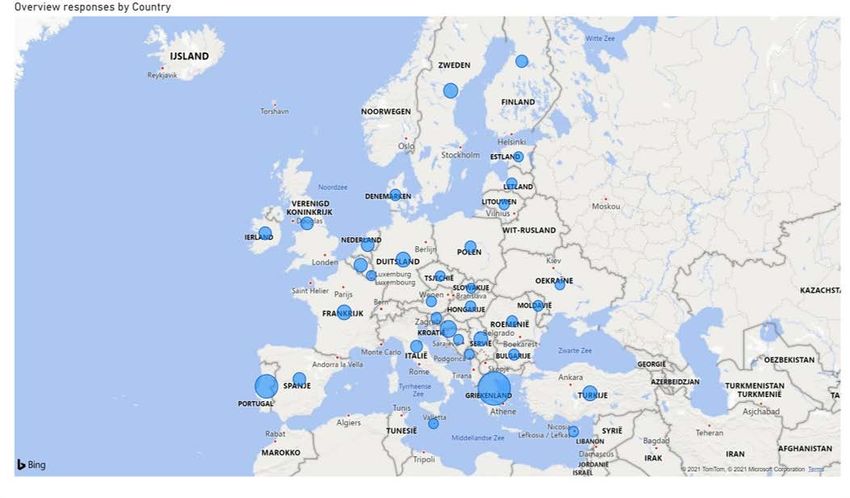
Co-funded by *The quotes throughout this publication,
http://makersxchange.eu/ the European Union show some of the opinions and sugges-
tions shared.
This research is part of the MAX project (Makers’
Mobility Pilot project), co-funded by the European
Union and coordinated by the European Creative
Hubs Network (ECHN) in partnership with Fab Lab
Barcelona, UPTEC and Makery.
The survey was designed by the Poligon Creative
Centre, a member of ECHN, in co-production with
the Centre for Creativity (CzK) and the analysis of
the data and final report was prepared by IDEA
Consult.
1.Introduction /7
Text
2.Responses / 11
3.Respondents
Joost Heinsius, Values of Culture & Creativity
Data analysis and management
Martina Fraioli, IDEA Consult European Creative Hubs Network
(ECHN)
Project management http://www.creativehubs.net
Isabelle de Voldere, IDEA Consult
Curated and Produced by / 19
European Creative Hubs Network
4.Opinions
Associação de Transferência de
Tecnologia da Asprela (UPTEC)
https://uptec.up.pt/
/ 29
Fab Lab Barcelona
(FAB)
5.Conclusions
Cover illustration https://fablabbcn.org/
Sinking Boat, November ‘17 by
@user.yabe
The reuse of this document is
useryabe@gmail.com
authorised under the Creative
Commons Attribution 4.0
International (CC BY 4.0) licence The contents of this publication
(https://creativecommons.org/ are the sole responsibility of the
licenses/by/4.0/). This means that European Creative Hubs Network / 39
reuse is allowed, provided that and its partners and can in no way Digital Art International (ART2M)
appropriate credit is given and any be taken to reflect the views of the (MAKERY)
changes are indicated. European Union. https://www.makery.info/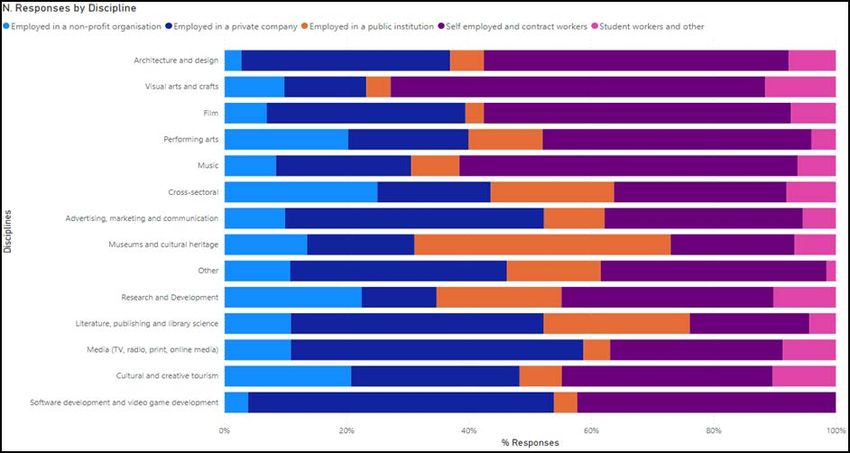
List of ambassadors
                                                          Belgium           Bruxelles          LaVallee                                        www.smartbe.be
                                                                            Tournai            Wap’s hub                                       www.wapshub.be
                                                          Bosnia & Herze-   Sarajevo           Tershouse                                       www.tershouse.ba
                                                          govina
                                                          Bulgaria          Sofia              Missia 23                                       www.missia23.com
This survey is an attempt to better understand the        Croatia           Zagreb             AZIL                                            www.rationalinternational.net
new conditions for cultural and creative workers in                         Zagreb             BIZkoshnica
Europe brought about by COVID-19. The survey                                Zagreb             Croatian Independent Professional Association   www.hdnp.hr
was live from June to mid-November 2020 and it                              Split              Culture Hub Croatia                             www.culturehubcroatia.hr
was open to professionals of the 27 EU Member             Cyprus            Nicosia            Hub Nicosia                                     www.hubnicosia.org
States, Bosnia and Herzegovina, Moldova,                  Denmark           Copenhagen         Republikken                                     www.republikken.net
Montenegro, Serbia, Turkey, UK and Ukraine,               Finland           Helsinki           Kaapeli                                         www.kaapelitehdas.fi
so it can be inclusive to all the members of the          France            Toulouse           MA Sphère
European Creative Hubs Network.                                             Paris              Volumes                                         www.volumesparis.org
                                                          Germany           Berlin             Τuesday coworking                               www.tuesdaycoworking.com
The European Creative Hubs Network is a peer-led                            Dortmund           Union Gewerbehof                                www.unionviertel.de
network with a mission to enhance the creative,           Greece            Athens             Bios                                            www.romantso.gr
economic and social impact of hubs around                                   Athens             Stonesoup                                       www.stonesoup.io
Europe and neighboring countries. As focal                                  Thessaloniki       FIX In art
points for creative professionals and businesses,                           Mytilini           Changemakers Lab                                www.changemakerslab.com
hubs offer the most effective way to support the          Ireland           Bangor             BOOM! Studios                                   www.boomstudios.org.uk
growth and development of cultural and creative                             Dundalk            Creative Spark                                  www.creativespark.ie
industries. The ECHN is a network of 275 creative         Italy             Milan              BASE Milano                                     www.base.milano.it
hubs representing a number of about 30.000                                  Potenza - Matera   Comincenter                                     www.comincenter.com
workers and businesses in the CCS.                                          Marotta (PU)       Warehouse                                       www.warehouse.marche.it
                                                          Luxembourg        Differdange        1535 Creative Hub                               www.1535.lu
In order to maximise the reach of this survey to          Malta             Valletta           Blitz                                           www.blitzvalletta.com
the CCIs workers, ECHN assembled a team of                Moldova           Chisinau           ZIPhouse                                        www.ziphouse.md
ambassadors to support the dissemination of the                             Chisinau           Artcor                                          www.artcor.md
survey at a local level. Hence, the result of the         Lithuania         Anyksciai          Anyksciai art incubator - art studio            www.menuinkubatorius.lt
survey is a collective effort of the following list of    Portugal          Porto              CRU cowork                                      www.cru-cowork.com
organisations that supported the dissemination to                           Porto              UPTEC                                           www.uptec.up.pt
help collect evidence and advocate for the sector.                          Viana do Castelo   Dinamo10                                        www.dinamo10.net
                                                                            Lisboa             Fab Lab Lisboa                                  www.fablablisboa.pt
                                                          Romania           Timisoara          Faber                                           www.faber.community
                                                                            Timisoara          FOR
                                                                            Brasov             Alchemy Hub
                                                          Serbia            Belgrade           Nova Iskra                                      www.novaiskra.com
                                                          Slovenia          Ljubljana          Poligon                                         www.poligon.si
                                                          Spain             Granada            AndaCowork                                      www.andacowork.com
                                                                            Barcelona          Mob                                             www.mob-barcelona.com
                                                                            Barcelona          betahaus Barcelona                              www.betahaus.es
                                                                            Girona             CoEspai Girona                                  www.coespai.com
                                                                            Pontevedra         Espacio Arroelo                                 www.espacioarroelo.es
                                                                            Malaga             The Living Room                                 www.tlr-coworking.com
                                                                            Cordoba            Colaborativa.eu                                 www.fablab.saul.ie
                                                          Sweden            Malmo              STPLN                                           www.stpln.org
                                                          The Netherlands   The Hague          De Besturing                                    www.debesturing.nl
                                                                            Maastricht         The Artist and the Others
                                                                                               Dutch Creative Residency Network                www.dcrnetwork.nl
                                                          Turkey            Istanbul           Atolye                                          www.atolye.io
                                                                            Istanbul           Originn                                         www.originn.com.tr
                                                          UK                Glasgow            Many studios CIC                                www.manystudios.co.uk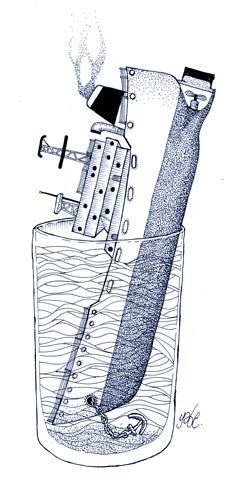
1.
“
There should be more money in the
European budget for culture and
there should be a recommendation
from the European parliament
for governments to increase the
budget of their respective ministries
of culture to keep the cultural
”
sector up and running and creating
wealth.
Introduction Why the need
for this research?
The CCS (Cultural and Creative Sector) is one of the hardest hit sectors
in the EU. Workers in the sector are missing enormous amounts of
turnover and income. Some are working from home, some are not
working at all, many are trying to adjust to the new realities not knowing
what will happen in the near future.
The longer this health crisis lasts, the harder the
consequences for the sector.
Although there are many estimates of loss of
turnover, we also know that the workers in the
sector, and especially the non - standard workers
(independents and temporarily employed) are
probably the most sensitive to these crisis in terms
of loss of work and income. We already knew their
situation was precarious, now it is even more so.
I7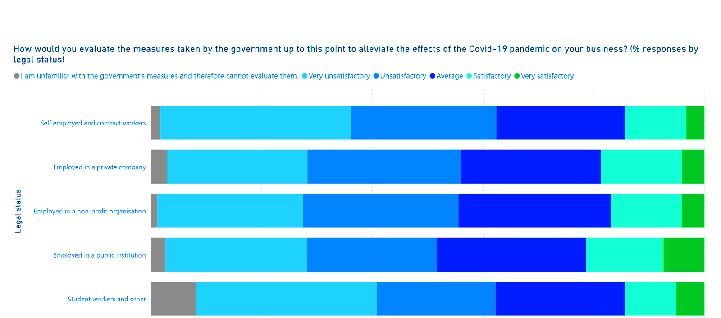
There is hardly any quantitative research done in

                                                           “
Europe to evaluate how the Covid -19 crisis                                                           The answers and indicators we collected are divided in two main groups:
affects CCS workers.                                           We have applied for all the
                                                               available aids but have got none.           the business performance                              the assessment by CCS
There are some discipline - specific surveys and
                                                               As a cross-sectoral creative center
country - specific surveys, but there is none that
                                                               with a cooperative as a business            of workers in the CCS,                                workers of (government)
covers all of Europe.
                                                               model, I assume we are too hard             where we look at the self                             measures and the
We cannot state that we have succeeded in the                  to estimate. I suggest not to put           - reported differences                                resilience of the sector
goal to have statistic sound results, but we did               businesses in silos but to dig
succeeded in getting responses from all over                   deeper with the kind of companies,
                                                                                                           between 2019 and 2020,                                (chapter 4)
Europe and even beyond.
                                                               who have already a quite long               related to age, gender,
This report is therefore the first to give indicators of       history and also a full potential to        years in business and
how the workers in the CCS within all disciplines              produce the societal good in a new          work status

                                                                                          ”
and from all over Europe experienced the Covid-19              way. Creative centers are full of
crisis and the effects on their work.                          future innovations!                         (chapter 3)

The main questions we wanted to ask through this survey are:

How resilient are CCS - workers across Europe?

How do these workers experience the consequences of Covid-19 cri-
sis and how do they adapt to the situation?

What is their assessment of the success of governments measures for
the sector?

                                                                                                                                                                                            I9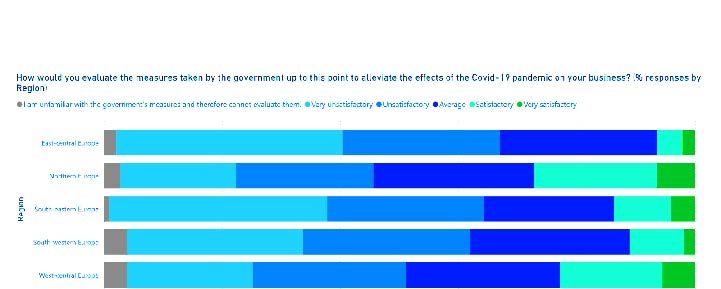
“
                                                                         I think the EU should not only

    2.
                                                                         support organizations and
                                                                         businesses in the coming years,
                                                                         but especially think of which
                                                                         approaches they want to support.
                                                                         I.e. this is the time to invest in
                                                                         innovation, cross-sectoral projects
                                                                         and think of mainstreaming arts
                                                                         and culture in other sectors - for
                                                                         the wellbeing of society and the

                                                                                                       ”
                                                                         overcoming of social
                                                                         challenges.

Responses   What is
            the content of
            this research?
            The number of responses we were able to use is     had different follow - up questions, the number of
            1830. 1345 people filled in the complete survey.   responses is not the same for every question in the
            For chapter 3 which contains the assessment of     survey. For a Europe - wide survey the number of
            CCS - workers on various issues we had 1558        responses is not enough to provide statistically fully
            responses available. Since some respondents        qualified statements.

            However, the number of responses is enough to assert trends among
            the population surveyed. Most of those trends are corroborated by
            other reports. The value of this report lies especially in the number of
            respondents from south - eastern Europe, a region which has not been
            featured a lot within surveys. Most reports and surveys originate from
            the western part of Europe.

                                                                                                                  I 11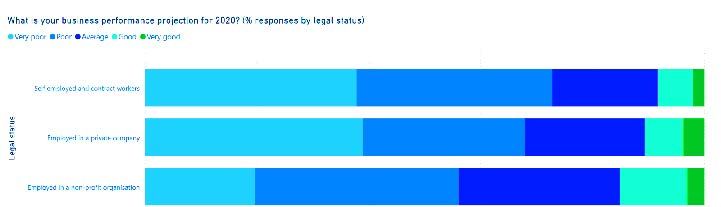
42+19+17166z
Numbers and percentage of responses
by region
110 ( 6.12 % )
If we compare this
response to the 762 ( 42.43 % )
incidence of CCS in 288 ( 16.04 % )
different regions of the
EU-27, as shown in the
next graph, we see that
south-eastern Europe is
quite overrepresented:
42% in this survey
compared to 6% for the
whole of Europe. On the 300 ( 16.7 % )
other hand it gives us a
unique opportunity to get
insights from a part of
Europe that usually does
not get the attention it 336 ( 18.71% )
deserves.
6+19+372513z
Geographical spread of persons employed in the
CCS in the EU-27 plus UK*
6%
19 %
13 %
25 %
To use the geographical dimension in a meaningful 37 %
way in the further analysis of the survey, we
clustered the countries into 5 regions, based on a
geographical criterion: East-central Europe: Austria, Slovenia, Czechia,
northern Europe
Hungary, Poland, Slovakia, Ukraine, Moldova.
Northern Europe: South-western Europe: Portugal, Spain, Italy, west central Europe
Denmark, Estonia, Finland, Lithuania, Latvia, Malta. east-central Europe
Sweden, Ireland, UK. South-eastern Europe: Bulgaria, Croatia, Serbia,
south -western Europe
West-central Europe: Belgium, France, Turkey, Bosnia and Herzegovina, Cyprus, Greece, *Graph based on Eurostat data set exctracted in
May 2020, referring to 2019.
Luxembourg, Germany, Netherlands. Montenegro, Romania. south-eastern
I 13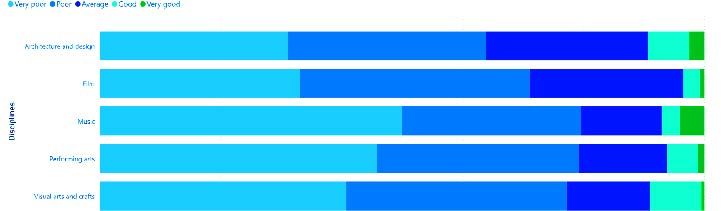
Proportion of self-employed workers and other                                                                         Numbers of responses
forms of employment*                                                                                                  by discipline

                                                          3628+232019+12117+654+ 32+
            69+31+z
     Self-employed
                                                                                   Architecture and design I 363
     Other forms of employment

                                                                                       Visual arts and crafts I 276
                                                  69 %

   31 %                                                                                                 Film I 231

                                                                                            Performing arts I 198

                                                                                                      Music I 190

                                                                                             Cross-sectoral I 124

Graph based on the responses to the survey.
                                                                Advertising, marketing and communication I 111

                                                                             Museums and cultural heritage I 74

            68+32+z
                                                                                                        Other I 65

                                                                                Research and Development I 49
                                                  68 %

   32 %
                                                                    Literature, publishing and library science I 46

                                                                        Media (TV, radio, print, online media) I 46

                                                                                Cultural and creative tourism I 29

                                                         Software development and video game development I 26

*Graph based on Eurostat data set exctracted in                                                                       0%                                             400 %
May 2020, referring to 2019.

We also compared the percentage of self-
employed and other forms of employment within                                                                         Looking at the number of the responses by
the survey with the percentages reported by                                                                           discipline, we can tell that there are plenty of
Eurostat on the CCS.                                                                                                  respondents from all relevant sub sectors giving to
Here the percentages match almost completely:                                                                         the research a good relevant sample for the whole
31% is self-employed.                                                                                                 CCS.

                                                                                                                                                                       I 15
“
Many foundations and non-profit
organizations support the art
and cultural scene in these times
more than they can themselves.
Numbers of responses These institutions, which depend
by discipline on donations, also need support
to continue their work for society.
New concepts are needed to make
”
Architecture and design
society more inclusive at a global
level.
Visual arts and crafts
Film
Performing arts
Music
Cross-sectoral
Advertising, marketing and communication
Museums and cultural heritage
Other
Concluding remarks
Although the survey may not be representative for the whole of Europe, it certainly
Research and Development
provides valuable insights on a part of the CCS we often not see reflected in
reports and surveys.
Literature, publishing and library science
Because all disciplines are present and the
Media (TV, radio, print, online media) percentage of independents is comparable with
Europe in general, the results show how one of the
Cultural and creative tourism
most precarious groups of the CCS, the independent
Software development and video game development and contract workers, are hit by the Covid-19 crisis, in
0% 100 %
comparison with other groups of workers.
Employed in a non-profit organisation
The largest one is visual arts & crafts with 61%
Employed in a private company self-employed and contract workers, the second
Employed in a public institution
one is music with 55%, followed by film at 50% and
design & architecture at almost 50%.
Self employed and contract workers
The performing arts have 44% working as self- In the next chapter we present the group of respondents in more detail and will
Student workers and other employed or contract workers. show the effects of the health crisis on their business.
I 173.
“
Collaboration between public and
private sector is key, with strong
civil society representation, which
consists of creative, cultural and
business tech sectors, co-designing
”
impactful policies and collabotions
across Europe.
Respondents Who responded
to this research?
The Respondents’ profile
When we look at the respondents according to their legal status, we
find that the biggest group are self-employed and contract workers, the
second largest group is working within a private company and about
20% is working in a non-profit organisation or public institution.
The largest group of self-employed and contract The second largest group (almost 25%) is over 50
workers are found in South-western Europe and years of age. The youngest group, below 30 years,
the smallest in East-Central Europe, where the is 22% and the ones between 40 and 50 years
percentage of people working in a public institution old comprise 14%. The group over 50 years old is
is more than twice as high as in other regions. largest in Northern Europe, South-eastern Europe
Almost two-third of the respondents is female and has the largest group of CCS-workers between
one-third is male. The largest age group within the 30 and 40 years old. It means that more than 60%
group of respondents is the age group between 30 of the population in this survey is younger than 40
and 40 years old: almost 40%. years old.
I 1939+25+1422z
Numbers and percentage of responses Numbers and percentage of responses
by age of the respondent by age range and legal status
100 %
408 ( 22.3 % ) 715 ( 39.07 % )
It is interesting to
see how long the
respondents have been
active within the CCS.
More than half of the
respondents (53%) have
been in business for less
than 10 years and 4 out 260 ( 14.21 % )
of 5 are active less than
20 years.
50 %
447 ( 24.43 % )
29+25+301132z
Numbers and percentage of responses
by years active in the CCS
27 ( 1.48 % )
64 ( 3.5 % )
193 ( 10.55 % )
531 ( 29.03% )
0%
Less than 30 years old
30 - 40 years ols
40 - 50 years old
More than 50 years old
558 ( 30.51 % )
Less than 5 years
5-10 years 456 ( 24.93 % ) Employed in a non-profit organisation
10-20 years Employed in a private company
20-30 years Employed in a public institution
30-40 years Self employed and contract workers
More than 40 years Student workers and other
I 21“
Implementing regulations about the
timeframe and pay, according to
the scale and demands of a project,
which no one can deviate from, so
to reduce antagonism that leads
to overtime and less payment.
Collective employment contracts
and increase of the minimum wage.
New regulations about working
from home referring to the working
hours and compentations for the
”
use of personal equipment.
“
I think it is very important to find
ways of funding, new ways of
working within the new normality -
maybe for more research-projects
and maker projects until this is over
The Respondents’
(probably a couple of years) so that
we don’t loose all the knowledge
in the field when people are forced
business performance
to find other jobs. In dance, for
instance, you need constant
maintenance of your instrument,
the body. Many dancers can not
see that they can keep up their Of all the respondents, 74% rated their business performance as
training without salaries so they
start studying other professions. average to very good in 2019. In 2020 that percentage was even less
This will be a great loss for the than 30%. Or the other way around: in 2019 less than 16% found their
artform, so we need to find ways business performance to be poor or very poor, in 2020 it was almost
to make it possible for professional
dancers to stay and have the
71%!
possibility to work and train even if
”
the opportunities to perform, and
get paid, are not many. This means that two-third of the respondents If we look at the same comparison between 2019
estimate a transition from average to very good- and 2020, but now by legal status (self-employed
performance to a poor/very poor performance. and contract workers, employed in a private
And that more than 70% expect a poor to very poor company, employed in a non-profit organisation)
performance of their business in 2020. we see a more detailed picture.
I 23“
Create communication channels/
How was your business performance in 2019? (% responses)
forums/meetups that facilitate and
Very poor Poor Average Good Very good
encourage co-operation between
local creatives, both intra- and
cross-sectorial. This may help
local sectors to form stronger self-
”
resilience and create new synergies
across sectors.
How was your business performance in 2020? (% responses)
This shows that self-employed and contract
0% 5080
%% 100 %
workers as a group estimate to have the lowest
rate of average to very good business performance
in 2020, but that workers in private companies
experienced the biggest negative change from
How was your business performance in 2019? (% responses by legal status)
2019 to 2020.
Very poor Poor Average Good Very good
Although workers in non-profits seem to be
Self employed and relatively better off, the negative change in
contract workers
performance is still 42%, which is still
Employed in a enormous!
private company
Employed in a
non-profit organisation What is your business performance projection for 2020? (% responses by discipline)
Very poor Poor Average Good Very good
0% 50 % 100 %
Architecture and
design
What is your business performance projection for 2020? (% responses by legal status)
Very poor Poor Average Good Very good
Film
Self employed and
contract workers Music
Employed in a
private company Performing arts
Employed in a
non-profit organisation Visual arts and crafts
0% 50 % 100 % 0% 50 % 100 %
When looking at 2019, 71% of self-employed Although their business performance looks better
and contract workers state that their business than for self-employed or contract workers, the
performance is average to very good, in 2020 difference in performance between 2019 and 2020 When we look at the business performance
that percentage sank to 27%, a decline of 44%. is even more: 49%. Workers in non-profits looked expectations for 2020 by discipline, the numbers Visual arts (77%) and film (71%) follow closely. Only
Workers in a private company looked at their at the business performance of their organisations are worrisome. Within music and performing arts within design and architecture the projections are
performance as 81% being average to very good in as average to very good for 86%, in 2020 that was more than 79% expect poor or very poor business a little less grim with almost 64% expecting poor or
2019, in 2020 that percentage lowered to 32%. 44%, the highest of the three groups. results. very poor business results in 2020.
I 25“
A lot of “innovation money” was
distributed to the for-profit sector.
Meanwhile the non-profit sector
How do you estimate the change in your business earnings in 2020 compared to those in 2019?
is as innovative and agile and re-
(% responses by legal status)
My earnings will remain the same, no significant change My earnings will decrease significantly My earnings will decrease slightly My earnings will increase slightly My earnings will increase significantly
inventing itself as ever, with not a
dime to spare. Funding to realize
Self employed and contract workers
covid-safe cultural productions
would be very important, as
Employed in a private company technically anything done at this
age has lower ticket sales capacity
”
Employed in a non-profit organisation than what would be needed to
0% 50 % 100 %
cover the costs.
How do you estimate the change in your business earnings in 2020 compared to those in 2019?
(% responses by discipline)
My earnings will remain the same, no significant change My earnings will decrease significantly My earnings will decrease slightly My earnings will increase slightly My earnings will increase significantly
Architecture and design
Film
Music
Concluding remarks
Performing arts The numbers leave hardly any other conclusion possible than that Covid-19 and
the following economic crisis have hit the workers in the CCS very hard.
Visual arts and crafts
0% 50 % 100 %
More than 70% of the respondents expect a poor or
What is the estimated change in your business earnings in 2020 compared to those in 2019?
(%responses by legal status among those who responded ‘My earnings will decrease significantly or
very poor business performance in 2020, compared
slightly’ to the previous question) to 16% in 2019.
Less than 10% 10-25% 25-50% 50-100% 100%
And although there are differences according to legal status, the negative chang-
Visual arts and crafts
es range from 42% to 49%.
Architecture and design
Film
Music
When looking at differences between disciplines: with-
Performing arts in music and performing arts more than 79% expect
0% 50 % 100 %
poor or very poor business results, followed by visual
The same pattern comes from the answer to the arts (77%), film (71%) and design & architecture (64%).
question to estimate the change in business earnings The other performing arts follow with a staggering
from 2019 to 2020. amount of 88% expecting a decrease in business The expectations of business earnings display a similar pattern: 83% of work-
earnings. Within the film sector 85% of the ers from a private company expect a decrease in earnings, followed by 81% of
The workers from a private company expect the respondents expects the same, visual arts 81% self-employed and contract workers and 68% of those employed in a non-profit.
same by 83%. 81% of self-employed and contract and within design & architecture 76% expects a Within the music discipline 91% expect a decrease in business earnings, followed
workers expect a decrease of earnings in 2020, decrease. by the other performing arts (88%), the film sector (85%), visual arts (81%) and
while 68% of those employed in a non-profit expect design & architecture (76%).
the same.When we look at differences between Since the input for the survey ran from June until
disciplines, within music 91% expect a decrease in November 2020 it is probable that these negative
business earnings! expectations may have realised.
I 274.
“
Financial incentives to cover
investments forced by adaptation
to post-Covid reality. Financial
incentives to modernize and
digitalise cultural and creative
services. Financial incentives to
international cooperation projects
”
and open calls to cross CCI’s with
other industries.
Opinions What is
the respondents
opinion?
Assessment by
CCS-workers
It is clear the respondents are of the opinion that government
measures did not work well in responding to their precarious situation.
In the survey the respodents were asked their
opinion on a number of subjects.The first was profit organisation, 53% of those employed in a
their opinion on the government measures in private company and 49% of the workers in public
their countries. 60% of the self employed and institutes. It is clear the respondents are of the
contract workers have a negative opinion on opinion that government measures did not work
government measures, 54% of workers in a non- well in responding to their precarious situation.
I 29Evaluation of
government measures
How would you evaluate the measures taken by the government up to this point to alleviate the effects of How would you evaluate the measures taken by the government up to this point to alleviate the effects of
the Covid-19 pandemic on your business? (% responses by legal status) the Covid-19 pandemic on your business? (% responses by region)
I am unfamiliar with the government’s measures and therefore cannot evaluate them Very unsatisfactory Unsatisfactory Average Satisfactory Very satisfactory I am unfamiliar with the government’s measures and therefore cannot evaluate them Very unsatisfactory Unsatisfactory Average Satisfactory Very satisfactory
Self employed and East-central Europe
contract workers
Employed in a Northern Europe
private company
Employed in a South-eastern
non-profit organisation Europe
Employed in a South-western
public institution Europe
Student workers and
West-central Europe
other
0% 50 % 100 % 0% 50 % 100 %
When looking at the same question with a regional
perspective, the difference of opinion between regions. The level of dissatisfaction of the former When asked to share opinions on the measures
regions is evident. CCS workers in Eastern and is higher than the latter’s: 65% in East-central taken so far and suggestions about further The statements clearly show that there are many
Southern Europe tend to be much less satisfied Europe, 63% in South-eastern Europe, 58% in measures that national governments or the EU Member States that do not protect their workers in
with the recovery measures taken by governments, South-western Europe compared to 43% in should take to alleviate the consequences of the the CCS very well or do not have the budgets other
in comparison with the Northern and Western Northern Europe and 47% in West-central Europe. crisis, CCS-workers answered in various ways. Member States made available in this respect.
I 31“
Governments need to see the
cultural business also as part of
economy to save. It is completely
hypocritical to allow flying again
in airplains, where 200 people are
in a small space for hours (even
with masks) and to forbid theaters,
where people also come together,
from opening. It gives a strong and
very negative signal against the
cultural business. There need to
be more and an open conversation
with the sector. It feels now that
it is a forgotten sector, the least
important. It would help to have
”
more and open conversations
directely with the sector.
How would you evaluate the measures taken by the government up to this point to alleviate the effects of
the Covid-19 pandemic on your business? (% responses by survey time period)
I am unfamiliar with the government’s measures and therefore cannot evaluate them Very unsatisfactory Unsatisfactory Average Satisfactory Very satisfactory
October-November
July-September
June
0% 50 % 100 %
The analysis of respondents’ opinion by responses the evaluation of government’s measures is quite average 60% in all time periods). There is also a slight
time period reveals that there are no major consistent and homogeneous across time periods. percentage difference between those who were
differences in the assessment of government Both those who responded to the survey in the very satisfied or satisfied in the June-September
measures. Although the timing and the scope summer period and those who did so in the fall period (about 20%) and those who responded in the
of the measures adopted to tackle the Covid-19 period are mainly very dissatisfied or dissatisfied October-November period (only 10% consider the
pandemic have been different across Europe, with the governments’ measures adopted (on measures very satisfactory or satisfactory).
I 33Chart Title
Chartfutures
Title ( % responses )
Future perspectives
Positive
New opportunities
New to develop
opportunities
New opportunities innovative
to develop
to develop services
innovative
innovative and
services and
services
products will open
products up.
will open
willup.
We asked the respondents their opinion on a number of future chanc- and products open up
es for the sector and on a number of threats.
The state will
The alleviate
Thestate
state the
willwill effects
alleviate
alleviate of the
the
the effects crisis
effects
of the ofonthe
crisis our
on crisis
our on our
businessbusiness
operations
business with effective
operations
operations withactions
with effective actionsand
effective measures.
actions
and and measures.
measures
The responses to the chances There are also other aspects of
for the future reveal a very the future the respondents are
mixed portrait. not so optimistic about.
The co-operation
TheThe between
co - co-operation
operation the workers
between
between thewithin
the workers withinthe
workers creative
thewithin
creativethe creative
and culturals
andsector
and cultural will
culturals become
sector
sectors willstronger
will becomebecome than before.
stronger
stronger than than before.
before
≈75%Looking if legal status of the respondents
made a difference in the opinions.
Positive futures Negative futures
(by legal status) (by legal status)
New opportunities to develop innovative services The state will alleviate the effects of the crisis on our I will become unemployed This crisis will result in additional brain drain to
and products will open up business operatons with effective actions and measures more prosperous countries
Self employed and contract workers Self employed and contract workers
Employed in a private company Employed in a private company
Employed in a non-profit organisation Employed in a non-profit organisation
Employed in a public institution Employed in a public institution
Student workers and other Student workers and other
The co-operation between the workers within the The cultural and creative sectors will come out of this There will be less opportunities There will be less opportunities for new projects
C.C.S will become stronger than before crisis stronger than before for international cooperation
Self employed and contract workers
Self employed and contract workers
Employed in a private company
Employed in a private company
Employed in a non-profit organisation
Employed in a non-profit organisation
Employed in a public institution
Employed in a public institution
Student workers and other
Student workers and other
0% 50 % 100 % 0% 50 % 100 %
Customer demand will force us to lower prices Investments in new equipment, training or education,
and other non-essential costs will be postponed
Self employed and contract workers
Employed in a private company
Strongly disagree Disagree Slightly disagree Slightly agree Agree Strongly agree
Employed in a non-profit organisation
Employed in a public institution
Student workers and other
Workers of public institutions are slightly more Self-employed, contract workers and student 0% 50 % 100 % 0% 50 % 100 %
positive about the possibilities of new products and workers are the largest groups to fear
services than the others. And the self employed and unemployment in the near future. That might not
contract workers are the most negative about the come as a surprise, because their working status is
idea that the sector will be stronger after the crisis. very insecure.
And they are also the group with the most negative On other topics the opinions did not differ much
opinion on the government measures for the sector. between groups with a different legal status. Strongly disagree Disagree Slightly disagree Slightly agree Agree Strongly agree
I 375.
“
I actually believe that some change
is necessary but that is a difficult
topic. Perhaps making sure that
even the most vulnerable have
some support will go a long
way. Creativity and the creative
industries will never go away. Sadly
they are one of the lower priority
areas, for the work is not critical
”
and many groups will take their own
steps to produce activities.
Conclusions What were
the research
questions?
The main questions we wanted to answer are:
How resilient are CCS workers across Europe?
How do these workers experience the consequences of
Covid-19 crisis and how do they adapt to the situation?
What is their assessment on the success
of governments measures for the sector?
To answer these questions for CCS - workers number of responses is enough to assert trends
across Europe we do not have enough response among the population surveyed and especially for
from all European countries. The number of the South-eastern and South-western Europe. Most
responses we were able to use is 1830. 1345 of those trends are corroborated by other reports
people filled in the complete survey. However, the which we involve in the discussion of the results.
I 39“
There needs to be a minimum of
1% in the budget for culture, we
need to establish minimum rates/
Business performance
hour of at least 10€, we need to
have WORK CONTRACTS and
have them be mandatory (even if
you work for only a day), we need The main conclusion on how workers experience the consequences of
a new kind of fiscal law for culture
the Covid-19 crisis is the enormous drop in business performance from
professionals that understands our
line of work and its\’ intermittence. 2019 to 2020.
We need to have our intellectual Of all the respondents:
A recent study by EY, for example, shows that,
property rights strengthened, with a loss of 31% of its turnover, the cultural and
2020 2019
especially in the digital realm. We creative economy is one of the most affected in
need a Universal Basic Income for Europe, slightly less than air transport but more
than the tourism and automotive industries (-27%
everyone because to have famine vs
and -25% respectively) and that even those
”
in Europe in the XXI century is subsectors that seemed to be protected by home
unacceptable. consumption faced a sharp drop in income.1
This is generally due to the central role of physical
experiences and sales in their business models.When we detail these numbers according to legal status we see the When we look at the business performance expectations for 2020 by
following results: discipline, the numbers are worrisome:
In 2019, 71% of self-employed and contract workers
state that their business perfomance is average to
very good, in 2020 that percentage sank to 27%,
>79%
more than 79% within music and performing arts
expect poor or very poor business results
a decline of 44%.
In 2019, 81% of workers in a private company looked
at their performance as being average to very good,
77%
of the respondents from the visual arts expect
in 2020 that percentage lowered to 32%. Although poor or very poor business results
their business performance looks better than for self-
71%
employed or contract workers, the difference in
performance between 2019 and 2020 is even
more: 49%.
from the film sector expect poor or very poor
business results
In 2019, 86% of workers in non-profits looked at
the business performance of their organisations
as average to very good, in 2020 that was 44%,
the highest of the three groups, but also
64%
within design and architecture expect poor or
experienced a drop of 42%. very poor business results in 2020
I 43The same pattern comes from When we look at differences The above mentioned EY study states that The information from these surveys combined
performing arts and music are the most impacted show the situation of self-employed and contract
the answer to the question to between disciplines on changes disciplines (-96% and -76% respectively between workers in the CCS is a Europe - wide precarious
estimate the change in business in business earnings from 2019 and 2020). situation, but this survey shows that in some
regions of Europe the consequences of the
earnings from 2019 to 2020 2019 - 2020: A recent study commissioned by the CULT Covid-19 pandemic are even worse. This
related to legal status: Committee of the European Parliament also constitutes a crisis within a crisis.
corroborates these data and highlights that, both
in general and above all within these two specific
disciplines, the most affected work category are
83%
of the workers from a private
91%
within music expect a
the self-employed, very often not supported by any
social security system and by any or poor financial
support to survive the crisis.3
A recent study from Germany shows similar results
company expect a negative decrease in business earnings
for the performing arts discipline (-69%), music
change (-59%) and visual arts (-51%). The result is that
88%
some sectors after years of growth fall back in
81%
of self-employed and contract of performing arts expect a
decrease in business earnings
turnover to the level of 2003.4
In the United Kingdom the Artists Information
Company published the results of a survey among
visual artists mid 2020 where 60% expected a
workers expect a decrease of
decrease of income of more than 50%, 65% had a
earnings in 2020
negative opinion on the governments measures.5
68%
of those employed in a non-
85%
of respondents in the film sector
A survey among jazz musicians in Europe and the
USA reveals that 61% estimate that their 2020
income will be at least 50% lower, 30% think it will
be even 75% less. 55% has no live performances
3
IDEA Consult, Goethe-Institut, Amann S. and Heinsius J.,
Research for CULT Committee – Cultural and creative sectors in
post-Covid-19 Europe: crisis effects and policy recommendations,
profit expect the same expect the same scheduled for 2021.6 European Parliament, February 2021.
4
Kompetenzzentrum Kultur- und Kreativwirtschaft, Betroffenheit
A survey among Slovenian cultural and creative der Kultur- und Kreativwirtschaft von der Corona Pandemie,
81%
February 2021
workers from late autumn 2020 showed that 20% https://kreativ-bund.de/wp-content/uploads/2021/02/Themendos-
is out of work, 40% has some work but not enough sier_Betroffenheit_KKW2021.pdf
and another 40% have no guaranteed work until 5
Covid-19 Impact Survey, a-n The Artist Information Com-
the end of the year.7 pany https://static.a-n.co.uk/wp-content/uploads/2020/04/
in visual arts expects a Covid-19-impact-survey-2020.pdf?utm_source=Audience+-
Master+List&utm_campaign=f374ac44c4-EMAIL_CAM-
decrease in business earnings For the Netherlands the Central Bureau of Statistics PAIGN_2020_04_23_03_09&utm_medium=email&utm_term=0_1
9cf5877d5-f374ac44c4-288439389
calculated for the Ministry of Culture that 75% of
76%
self-employed in the performing arts had 80% loss 6
Jazzfuel International Jazz Musician Survey, retrieved on February
24, 2021, https://jazzfuel.com/covid-jazz-survey/
of turnover in the first quarter of 2020 compared to
the first quarter of 2019 and in film and television 7
Slovenian Cultural and Creative Workers in times of Covid-19, part
II, http://www.poligon.si/en/research-slovenian-cultural-and-cre-
production two-thirds of the self employed ative-worker-in-times-of-covid-19-part-ii-autumn-2020/
within design & architecture experienced a loss of 71% in turnover.8 8
Uitwerking maatregelen tweede specifieke pakket voor de
expect a decrease in business culturele en creatieve sector, 16 november 2020, https://
earnings www.tweedekamer.nl/kamerstukken/brieven_regering/de-
tail?id=2020Z21683&did=2020D46206
I 45Government measures What about the future of CCS?
The respondents
and resilience have mixed
feelings with
negative feelings
predominating:
The second part of the research question is about the assessment of
government measures.
60% ≈75% 20%How to change that situation
This crisis within a crisis
should not stay hidden
any longer.
If we look at the answer from this study on the resilience of CCS-work- We present a few recommendations, mostly drawn from the report
ers, this answer can be split in two: Research for CULT Committee – Cultural and creative sectors in post-
Covid-19 Europe: crisis effects and policy recommendations8, which
are applicable:
2.
employed and contract bargaining power.
1.
workers that does Special attention should
looking at resilience as looking at resilience in not lead to precarious be paid to democratic
Fair pay employment and principles of bottom-up
the ability to recover from the sense of being a The
as a principle should income and ensures an approaches, for example
bargaining situation
set-backs, we see that future proof sector, the of CCS - workers is
become self-evident for equal and level playing by creative hubs.
5.
(working) contracts within field in comparison to
CCS-workers still see some conclusion is that the dire weak. To remedy
the CCS. It is therefore other workers. Develop
that weak position
possibilities for themselves state of CCS-workers is the representation
necessary to connect a good practice
Plead for
the Fair Pay principles collection on fair and
and try to adapt to the not future-proof at all. of independent and
and Fair Pay movements sustainable practices. a fair framework for
contract workers in
4.
social rights and access
new situation The future perspective the CCS has to be
of different Member
to social security for
States and develop
of their business is quite strenghthened when it
sound EU-wide rules for CCS-workers in all
comes to negotiating Establish cases of non-standard
negative and government fair pay, working
payments that establish
collective bargaining work, alleviating the
a level playing field for
measures have not been conditions, labour
all workers in the CCS rights to independent precarity of the situation
relations, social rights and other contract of independents within
able to remedy their and taxation rules.
relating to remuneration
workers in the CCS, the CCS. Take into
by governments, funds,
situation or providing them Unions and networks
art commissions and based on their account the shifting
of independents and fundamental right to and hybrid status of
with a positive perspective. other CCS-workers
cultural institutions.
associate. Collective workers (for example
The Creative Europe
should get a position bargaining should combining employee
programme could be a
at the table in all be understood as a and independent status).
funding source for the
Member States and
financing of emerging EU- basic pillar to generate Investigate models
on the European level. decent income for the of a public business
wide fair pay networks.
3.
To reach that position CCS. A networked interruption insurance.
If anything, the Covid-19 crisis has made clear that loss of turnover and income. the right of association approach of collective 8
IDEA Consult, Goethe-Institut, Amann
the CCS are not future - proof in terms of economic When looking at the reports and surveys it seems for all workers in the management societies S. and Heinsius J., Research for CULT
solidity and sustainable business models. It is also that the losses of the workers are bigger than CCS, regardless of their Propose and CCS unions is
Committee – Cultural and creative
sectors in post-Covid-19 Europe: crisis
clear that within the CCS, the self employed and that of the sector as a whole. This should have working status has to a framework for fair crucial to reach critical effects and policy recommendations,
contract workers pay the highest price in terms of consequences for future policy development. be acknowledged. practice for self- mass, which implies
European Parliament, February 2021,
page 106 and further
I 49“
I think the EC should create a
special funding scheme to support
arts and culture professionals and
institutions. At national level, only
rich central European coutries
have the possibility to develop
special support to their cultural
and creative sector. Peripheral and
neighbouring countries are already
experiencing the lack of response
from their national governments.
There is also a strong need to
develop more open and articulated
policies and sharing of resources
between countries - namely,
pan-European social security
directives/ recommendations
and work models/ regulations.
And this not just for the cultural
sector! Precariousness is the front
door to poverty (and pandemics).
International collaboration is
fundamental to overcome the
current situation. Europe has the
conditions to reinvent itself and
”
set an historical example, as it has
done before.You can also read


