The role of Biobased Polymers at the Coca-Cola Company - Cees van Dongen Director Sustainable Packaging Coca-Cola Europe Group
←
→
Page content transcription
If your browser does not render page correctly, please read the page content below

The role of Biobased Polymers
  at the Coca-Cola Company

 Cees van Dongen
 Director Sustainable Packaging

 Coca-Cola Europe Group
Growth coming from a                       Most important
different mix of                           inputs are
markets                                    becoming
and categories.           background       increasingly scarce
                                           (water, energy...)

Increasingly quick and
diverse
                         the big picture
communication.

                                           More pressure and demands.

Retailers                                  Product/pack
consolidating                              configurations
and increasing                             leading to greater
power.                                     complexity.
background
the world of soft drinks
Global Non-Alcoholic Ready to
Drink Beverages
(NARTD’s)

$650,000,000,000
               grounded          predicted     dynamic industry
           in a fundamental     continuation    with continual
              human need         of growth          change
we envision a world in which
The Coca-Cola Company                                     our packaging
background                                                is no longer seen as waste,
                                                          but as a valuable resource

                                 >$120 billion
                                 global
      vision 2020                turnover                                  valuable
                                                      waste                resource

“our mission is to refresh the
world… inspire moments of                                           Business
optimism… create value and                                          Operations
make a difference”                                                  and Corporate
                                                 major
                                                 global             Reputation and
                                                 player             Sustainability
The Coca-Cola Company
background
Sustainable packaging is becoming a consumer expectation.

One of a growing number of issues driven by the ethics, economics and environmentalism.

Economic imperatives, as well as more stringent regulation, mean brands need to consider sustainable
packaging.
                                                                          From research we know consumers
                                                                          are driven by quality and
                                         increasing levels                environmental responsibility.
  high           consumers
awareness                                 of interest
                                                                                            environmental
                                                                 quality                    responsibility
             relatively low levels of
            factual knowledge below
                    “headline”                                               Consumers expect trusted brands
                                                                             and companies to:

                                                                             • Address environmental issues

                                                                             • Take initiative and leadership
                                                                             in making branded packaging
                                                                             environmentally acceptable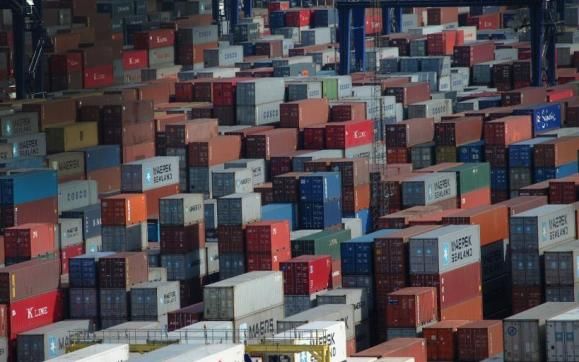
The Coca-Cola Company
packaging innovation                               TCCC has addressed this with over 40
                                                   years of involvement with sustainable
                                                   packaging and lifecycle analysis.

                                                                                       At TCCC we have been focusing on
  We strive to be the most
                                                                                       innovation to enhance sustainability.
  environmentally efficient user of high-
  quality packaging in the beverage
                                                                                       We have been involved
  industry.
                                                                                       in developing technology
                                                                                       to use recycled PET into new bottles.
  We recently launched I LOHAS™,
                                                                                       We have been instrumental in building
  a Japanese water brand, in a new
                                                                                       several factories that use this
  “ecoru shiboru” (translated as
                                                                                       technology.
  “environmental squeeze”) bottle - the
  lightest-weight bottle of its size in
  Japan.                                    Food grade Post-Consumer PET Recycling Plant,
                                            Frauenfeld, Switzerland
  MATERIAL REDUCTION:
         Bottle 40 %
         Label 65 %
         Cap up to 14 %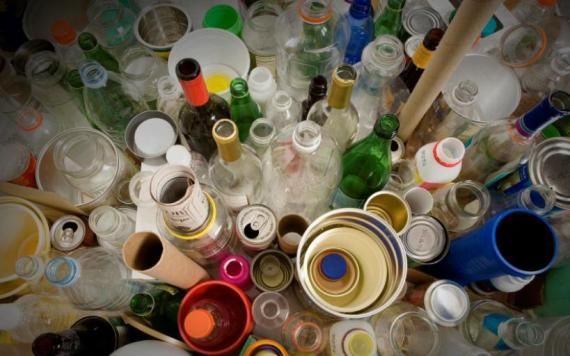
The Coca-Cola Company
packaging innovation
At TCCC we have been focusing on
innovation to enhance sustainability.

We continue to look into the 3R’s –
Reduce, Reuse, Recycle.
However, we are also aware that
there is a limit to how much we can
reduce material
content in packaging.
                                        We have therefore added
                                        Renew as the fourth R.
                                        PET made from 100% renewable
                                        resource and 100% recycleable
                                        has become the ultimate goal for
                                        long term sustainability.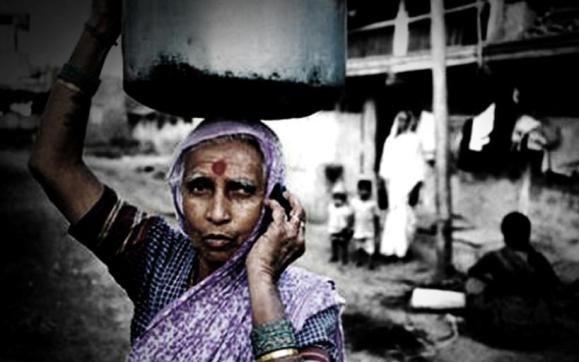
focus on packaging
product lifecycle breakdown   Packaging and cooling are the largest
                              single contributors to the product
500ml PET bottle              carbon footprint.

                              Packaging
                              48.6%

                              Retailer/vending refrigeration
              500ml PET       27.6%
               bottle
              220g CO2        Ingredients
                              3.5%

                              Manufacturing
                              12.3%

                              Distribution
                              7.2%

                              Consumer use & disposal
                              0.8%

   metrics
focus on packaging
PET lightweighting   we have reduced
                     material content
contour design       across all packaging
                     formats…

 30g
                                                   reduce
 28g

 26g

 24g

             1995       2000                2005   2007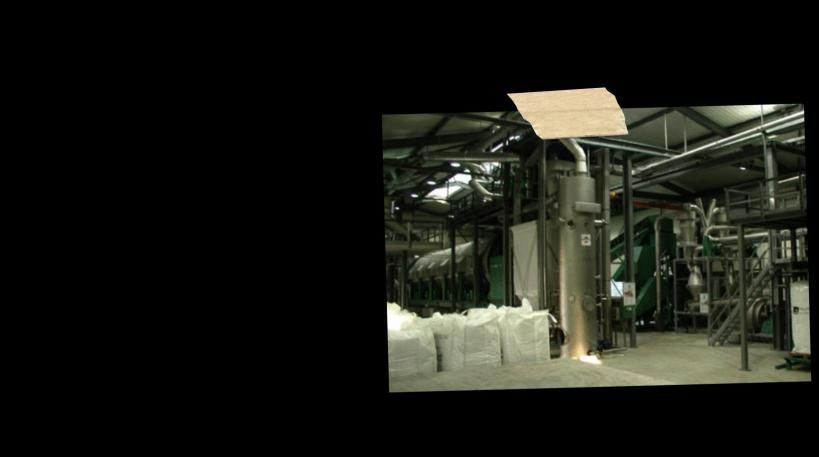
focus on packaging
We have developed technologies and
supply chains for Recycling and material
Reuse– back into bottles and other
applications                               Our largest PET markets in
                                           Europe
Some Facts:

Coca-Cola single largest                                      Great
buyer of virgin PET resin for                                 Britain
food-grade bottles:
                                                                                      Poland
Coca-Cola single largest buyer                                           Germany
of recycled PET resin for bottles: 17
countries in Europe
                                                               France:                    Romania

                                                                              Italy
                                                          Spain

recycle & reuse
biopolymers - setting the scene
Using the “Plastic Cross” we can segment
the world of Polymers.
However, Biodegradable polymers can be
bio based or not but have some degree
of inherent biodegradability.
Biodegradable - such as PLA - was
considered a way forward....
However, PLA is not suitable for
sparkling beverage packaging. poor barrier properties
(CO2, H20 and O2 out)
compostable, but only
under industrial
glass composting conditions
transition
temperature contamination of PET
- causing recycling stream - we
plasticity & want to re-use, not create
creep more wasteplantbottle TM
introduction
As part of our on going innovation to
enhance sustainability, we have
developed the:
renewplantbottle TM
petrochemical- plantbottle
TM
overview based PET PET
PlantBottle PET is chemically and
physically the same as petrochemical-
30%
based PET. plant-based
material
The only difference is that 30% of the
feedstock to make the PET resin is
sourced from a plant-based material with
a lower global warming and energy same bottle
footprint. 100% = 70% filling process
petrochemical- petrochemical-
based based same
material material recyclability
same PET resin
conversion
processplantbottle TM
technical path to 30% PlantPET
70%
paraxylene terephthalic
(PX) acid (TA)
petrochemical injection & blow
PET PET
based molding
resin bottle
(oil, natural gas)
monoethylene
ethylene glycol (MEG)
70%/30%
30%
plant-based monoethylene
plant-based fermentation ethylene glycol (MEG)
& distillation carbohydrate
carbohydrate
• molasses
BIO-Monoethylene Glycol (bMEG)
• sugar cane juice
• plant waste (research)plantbottle TM
research path to 100% plant-based
70%
terephthalic
intermediate
acid (TA)
plant-based PET injection & blow PET
waste resin molding bottle
monoethylene
intermediate
glycol (MEG)
30%plantbottle TM
toward long-term sustainability*
30% 100%
plant-based plant-based
waste waste
material material
100% 70%
petrochemical- petrochemical-
based based bio-based does not
material material
mean bio-degradeable*sustaining sustainability
the future
thank you
The journey continues…You can also read


