The role of Radio and Television during COVID-19 pandemic - BROADCASTING SERVICES FOR COVID-19 RESPONSE WEB DIALOGUE - ITU
←
→
Page content transcription
If your browser does not render page correctly, please read the page content below

The role of Radio and
   Television during COVID-19
   pandemic
BROADCASTING SERVICES FOR COVID-19
RESPONSE WEB DIALOGUE

JINANE KARAM (TRA, LEBANON)
VICE-RAPPORTEUR FOR ITU-D SG1 Q2/1
A Brief Summary 2 Broadcasting: An essential service during COVID-19 What impact is COVID-19 having on TV viewing? How are broadcasters responding to the situation? Learning through television in the time of COVID-19 The Role of FM Radio in times of crisis Lessons Learned during the COVID-19 Pandemic

Broadcasting: An essential service during COVID-19 3
COVID-19 proves that media’s value is growing
TV and FM: The primary source of critical
information to the public in the event of
disasters and emergencies
What impact is COVID-19 having on TV viewing? 4

TV Viewing during lockdown by Generation                  5

Source: Global Web Index
Data collected between March 25-30th in the U.S. and UK
Image: Visual Capitalist

In-Home and Media Consumption Changes by Country
                                                                  All   AU   BR   CN   FR   DE   IT   JP   PH   SG   ZA   SP   UK   USA
                                                                  %     %    %    %    %    %    %    %    %    %    %    %    %    %
  Creating / uploading videos (e.g. on YouTube, etc.)             14    6    21   17   7    5    10   5    17   9    12   15   6    6
  Listening to more podcasts                                      12    11   15   13   6    6    8    4    17   9    13   10   11   10
  Listening to more radio                                         18    15   18   16   23   24   29   9    32   20   36   32   17   16
  Listening to more streaming services (e.g. Apple Music, etc.)   35    16   30   49   14   13   25   11   43   17   22   27   14   18
  Reading more books / listening to more audiobooks               35    16   27   44   24   19   36   18   27   18   26   42   19   25
  Reading more magazines                                          14    5    12   17   14   10   18   7    12   9    11   14   9    12
  Reading more newspaper                                          16    14   22   14   14   17   23   16   23   29   24   22   15   12
  Spending longer on messaging services                           45    19   48   59   24   22   60   8    55   35   45   61   24   17
  Spending longer on social media                                 44    28   50   50   27   21   52   23   71   39   44   49   21   32
  Spending longer talking on the telephone to others              25    13   13   29   34   21   45   6    14   10   20   44   23   22
  Spending more time cooking                                      41    18   20   55   26   19   47   13   39   23   26   35   21   31
  Spending more time on apps                                      38    17   33   52   17   13   36   7    47   27   34   36   19   18
  Spending more time on computer / video games                    36    24   41   39   39   21   41   32   40   25   32   48   20   29
  Spending more time on hobbies / pastimes                        43    24   33   52   31   24   47   40   49   25   26   24   24   32
  Spending more time on socializing as a family / household       53    19   36   70   33   29   47   22   60   29   35   51   19   34
  Watching more news coverage                                     67    42   69   77   50   60   67   56   79   57   61   63   50   43
  Watching more shows / films on streaming services               51    30   43   63   31   21   53   21   61   35   39   58   32   42
  Watching more TV on broadcasting channels                       45    32   43   46   53   35   55   51   70   32   46   43   32   42
  None on these                                                   5     21   5    1    10   16   2    13   0    8    8    2    16   13

 Source: Statista, Survey time period: March 16 to 20, 2020
THE RISE OF LINEAR TV AMID COVID-19 OUTBREAK IN 7
LEBANON (IPSOS)
Linear TV has gained its momentum back in the quarantine period,
with more viewers in Lebanon
The average time of viewing TV has increased by 21% across local TV
and satellite TV
+21%
350
300
250 +21%
+21%
200
ATV in Pre-Quarantine (mins)
150
ATV in Quarantine (mins)
100
50
0
Total TV Local TV Satellite
TV
Pre-Quarantine Period: 8 to 14 of March
Quarantine Period: 15 -21 of March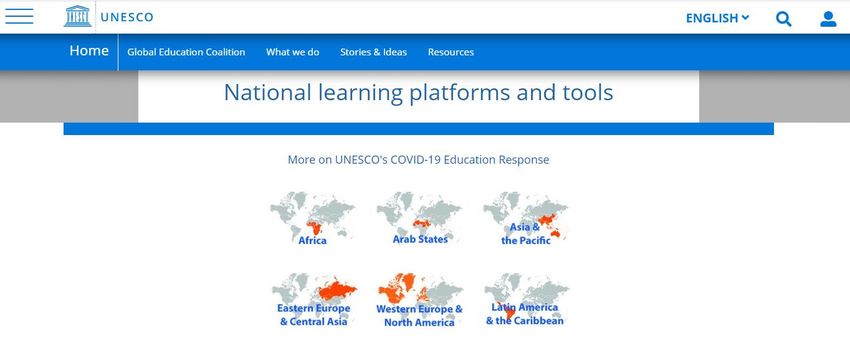
How are broadcasters responding to the situation?                                           8

Keeping us up to
date with what’s
happening
                   Daily updates and
                                              Live-streamed reporting       Breaking news coverage
                    special reports

                                Daily interviews with        regular announcements
                                elected officials and         to educate citizens to
                                public-health experts              stay healthy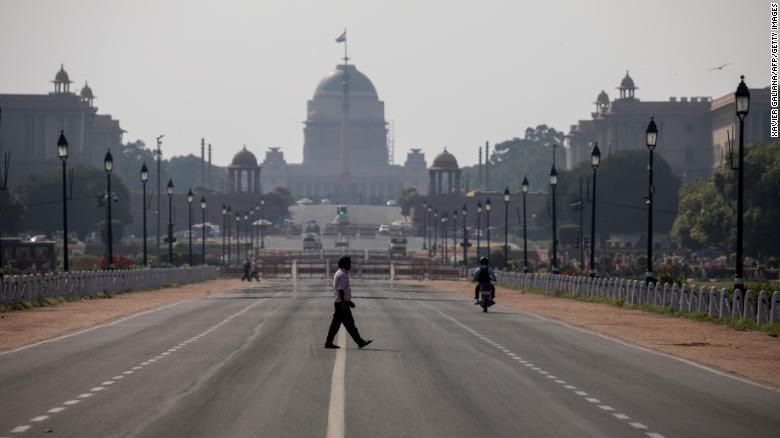
How are broadcasters responding to the situation?
                                                                                    9

 Keeping us
 entertained and
 distracted
                                                                      Celebrations of the
                   Launching new shows   Concerts to raise funds    health care professionals
                                                                        on the front lines

                                         New more family-friendly
                                               content
How are broadcasters responding to the situation?                           10

Rapidly
adjusting their
calendars and
adapting          Shows recorded without
                                             Changes to their
                                                                     Educational
                                           operations to abide by
operations and      its studio audience                             programming
                                             social distancing
programming

                                             New programs to
                                               support faith
                                               communities
Educational TV in the time of COVID-19 11
COVID-19 impact on education
Source: UNESCOEducational TV in the time of COVID-19 12
Various appropriate tools for online and distance
learning used in many countries
• Smartphones, tablets, computers
• A fast internet connectivity COVID-19 impact on education
Given the digital divide, access to technologies for
remote learning varies widely both between and
within countries Quick solutions needed
100% 86 83 74
80% 67
52 52 51
60%
40 38 36 33
40%
26 26 23 15 14
20%
2 1
0%
Students aged 5-17 years with internet access at home
Source: UNICEF MICS 6 (2017-2019)Educational TV in the time of COVID-19 13
Percentage of countries using remote
learning delivery channels
COVID-19 impact on education
Quick solutions needed
The importance of TV to increase
access to remote learningEducational TV in the time of COVID-19 14 https://en.unesco.org/covid19/educationresponse/nationalresponses https://www.unicef.org/coronavirus/keeping-worlds-children-learning-through-covid-19 Malawi, Rwanda, Syria, Timor-Leste, CÔte d’Ivoire, Vietnam, North Macedonia, …
Education programs on DTH platform in Punjab, India (1/2)

               Since the lockdown was imposed, The central government started online lessons
               through social media and other online platforms (Diksha, Swayam,…)

                   Large number of parents in rural areas do not have smartphones and those with
                   smartphones are facing net connectivity issues.

               The State of Punjab decided to telecast lessons through free to air television channels
               by adding ETV content to Doordarshan in response to the crisis.
Education programs on DTH platform in Punjab, India (2/2)
Each lecture: a mix of videos, images, quizzes, games, exercise and feedback.
The free-to-air channel available on DD Direct DTH and all the leading DTH service providers.
With this facility, over 1M students of Classes III to V and over 600000 students of Classes IX and X studying in
government or aided schools get education.
• About two-thirds • A large amount • 37% of
Easier to share
of all Indian of high-quality households
households and content without a TV
a little less than already exists report that their
More accessible
one-third of the children watch
poorest TV at a
households own Easier to produce neighbour’s
a TV (According house
to the latest
NFHS and IHDS
surveys)Why Radio during COVID-19? 17
Radio broadcasts are a useful means to share public information especially to the most
remote populations. In rural Africa, people depend on it as their primary source of
information.
Radio is Radio is
accessible immediate
Radio is Radio is
inexpensive widespread
Radio: An essential service during
COVID-19
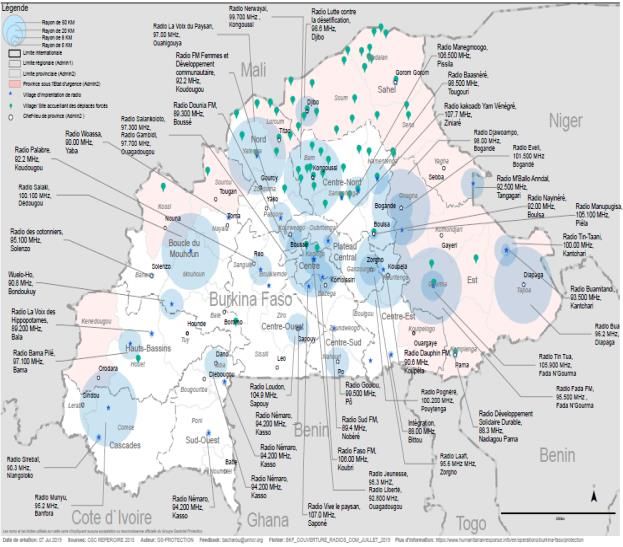
And it really WORKS!!How Radio in Burkina Faso is responding to COVID-19 ?
Coverage of the main Community Radios
Burkina Faso : one of the champions of sub-Saharan Africa
when it comes to listening to radio
More than 154 active radio stations, 51 of which are Since the announcement of
community stations, 40 commercial the CORONAVIRUS in our
country, RADIOS are now
Important medium to reach populations – often with low selling like hotcakes
levels of literacy – living in remote areas, far from towns because there is a need for
information. The people of
and cities the villages have only the
RADIO to inform themselves.
Adapting their programming and station policies
Dedicating five minutes at the beginning of each program to
COVID-19 Head of programs at
radio Loudon Sapouy,
Short bulletins talk about preventing transmission, Burkina Faso
symptoms, and other basic information about COVID-19
Broadcasting “COVID info” for 30 minutes every Saturday in
French, then during the week in Mooré, Dioula, and Buamu
During “COVID info,” listeners can call a WhatsApp number
to ask their questions to an expert on-airLessons Learned During the COVID-19 Pandemic 19
Vital role of FM and TV broadcasting: source of information to
increase our chances of survival
Broadcasters Struggling to Survive the COVID-19 Crisis: Actions
needed to support them
Educational TV Experience
No Success without COLLABORATION
Distance Education has to be a “MUST HAVE”
Accelerating CONNECTIVITY is a priority20 Thank You for your attention ! Jinane Karam Jinane.karam@tra.gov.lb
References 21
ITU-R Report BT 2299-2 (2017) “Broadcasting for public warning, disaster mitigation and relief”
https://blogs.unicef.org/evidence-for-action/remote-learning-global-pandemic-insights-
mics6/
https://blogs.unicef.org/evidence-for-action/remote-learning-global-pandemic-insights-
mics6/
https://en.unesco.org/courier/2020-1/burkina-faso-addicted-radio
https://www.statista.com/statistics/1106498/home-media-consumption-coronavirus-
worldwide-by-country/
https://www.thinkbox.tv/news-and-opinion/opinion/covid-19-and-tv/
https://www.ipsos.com/en-lb/rise-linear-tv-amid-covid-19-outbreak-lebanon
https://www.globalwebindex.com/coronavirus
https://www.weforum.org/agenda/2020/04/covid19-media-consumption-generation-
pandemic-entertainment/
https://farmradio.org/covid-19-response/
https://qz.com/india/1856636/tv-better-than-smartphone-laptop-for-indias-lockdown-ed-
tech/
https://timesofindia.indiatimes.com/city/chandigarh/doordarshan-in-loop-punjab-students-to-
take-lessons-on-tv/articleshow/75241380.cmsYou can also read


