The Trojan Horse of Multilateralism - Why Authoritarian Regimes Favour International Cooperation While Simultaneously Undermining It ...
←
→
Page content transcription
If your browser does not render page correctly, please read the page content below
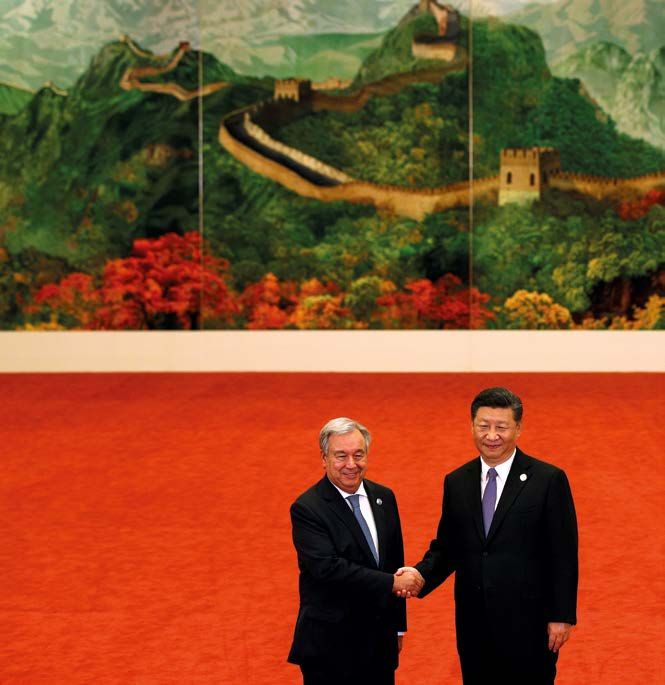
Source: © Lucas Jackson, Reuters.

                                                        Multilateralism

                                    The Trojan Horse
                                    of Multilateralism
                                     Why Authoritarian Regimes Favour International
                                    Cooperation While Simultaneously Undermining It

                                                Olaf Wientzek / Sebastian Enskat

                                                                                      89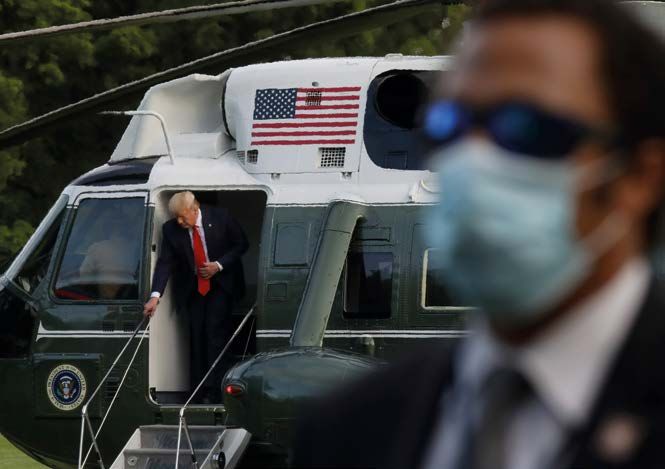
Everyone today is talking about multilateralism, and
politicians of almost every stripe are averring the
importance of multilateral organisations. Nevertheless,
the liberal world order, of which multilateral cooperation
is an important foundation, is in what may be its most
severe crisis. This article will address this crisis and
illustrate what must be done to revive the commitment
to multilateralism.
“Let us work to foster a secure environment of Prologue: The C OVID-19 Crisis
peace and stability. We need to take it as our aim as a Catalyst for Existing Trends
to safeguard peace and development for all; we
need to uphold fairness and justice and promote Many view the C OVID-19 pandemic as a mas-
win-win results; we need to base our efforts on sive challenge for the global West. They believe
international law and widely recognized norms that the global health crisis has the potential to
of international relations; we need to champion shift the international balance of power perma-
and put into practice multilateralism.” nently and could even be a turning point leading
to a greater acceptance of autocratic models of
Until a few years ago, such a quote would, with- government.2
out much hesitation, have been attributed to a
US president, a position which, for decades, has It is true that the crisis response in many coun-
also been viewed as that of the leader of the free tries of the global West was often not exem-
world. But times have changed: Donald Trump, plary. Many countries appeared unprepared;
the current holder of that office, is known for forecasts and instructions required repeated
breaking with many traditions and cancelling correction. Uncoordinated travel and export
cooperation in a number of multilateral fora, restrictions initially led to the assumption that
while Chinese President Xi Jinping, from whom European and Western solidarity left much to
the quote actually originates, styles himself a be desired. In contrast, several countries with
“champion of multilateralism”.1 How could it authoritarian governments first seemed to come
come to this? through the crisis better, not least because many
practices necessary for combatting a pandemic
This article will examine several trends that (lockdowns, checks, data monitoring, etc.) were
have contributed to the severe crisis in which much more in the “comfort zone” of autocratic
the liberal world order currently finds itself. It systems.
will clarify why the values that have under-
pinned this world order for decades are now, However, the theory that autocratic countries
more than ever before, in danger; and this are superior increasingly lost traction: From the
albeit – or rather precisely because – authori- testing density alone, it was too obvious that case
tarian regimes are expressing support for mul- numbers were not comparable, and autocratic
tilateralism. Finally, it will propose approaches countries in particular (China, Iran, and Russia)
for reversing the trend and shed light on what deliberately lacked transparency in the num-
needs to be done, especially in Europe, to bers of victims they communicated to the World
restore the principles and values that lie behind Health Organization (WHO). Finally, there were
the ambiguous and variously interpreted term indications that success in combatting the
“multilateralism”. pandemic tended to turn on other factors (e. g.
90 International Reports 3|2020
experience with controlling earlier epidemics); the impression that the US has come to be more
moreover, among the group of countries that of a brake than a motor for multilateral cooper-
have since come to be internationally viewed as ation. A similar situation can be observed in the
role models (South Korea, Taiwan, Japan, and, World Trade Organization (WTO). In addition
to a certain degree, Germany, Greece, Iceland, to blocking appointments to the organisation’s
and several Central European countries) more Appellate Body, the US has also not been par-
and more democracies are to be found. ticularly cooperative in the aftermath of the
departure of the WTO’s director general. This
Nevertheless, the C OVID-19 crisis also raises blocking role is not new for the Trump adminis-
the question of the future of the West and of the tration and merely continues a trend that could
liberal world order. This is not because the pan- already be observed with regard to the WTO’s
demic is thought to have changed the fundamen- conflict-resolution process, and efforts to com-
tal balance of power between autocracies and bat climate change.
democracies, but rather because the crisis throws
a particularly harsh light on some pre-existing
trends, and, in several cases, reinforces them. The EU has been unable to
completely fill the vacuum
Trend 1: Western Leadership’s
left by weak leadership on
Weakness and Disunity
the part of the US.
If more evidence were necessary that the US is
no longer willing or able to assume leadership
in meeting global challenges, the COVID-19 Regrettably, as in other international crises, the
crisis provided it. It would have been incon- EU has so far been unable to completely fill the
ceivable a few years ago, but today is not even vacuum left by weak leadership on the part of
surprising: The US is not at the forefront of the US. During the COVID-19 crisis, the EU was
coordination efforts to combat the crisis. While initially primarily concerned with itself, and
the US has certainly provided funding, its with its internal disputes. This disunity in the
administration has repeatedly thwarted efforts West is a further trend that the C
OVID-19 pan-
at global cooperation in the relevant interna- demic is only reinforcing.
tional organisations. The peak was reached so
far when the US announced its withdrawal from This is also true of the fundamental attitude
the WHO in the middle of the pandemic – an towards multilateral organisations. While it
organisation for which it is the largest donor, as has become a pattern for the US to use the par-
it is for many others. Geopolitical rivalry seems tially justifiable criticism of the inadequacies of
to have permanently displaced the conserva- multilateral organisations as a pretext to block
tion of global goods as the guiding motive for them (the W TO, the United Nations Climate
US actions – even though it would of course Change conference) or to withdraw from them
be naive to assume that the country’s actions completely (WHO, UN Human Rights Council),
in multilateral organisations to date has been the reverse reflex can be observed in most
exclusively altruistic. other countries of the global West. Despite all
the inadequacies, they elevate commitment
Its blocking of the UN Security Council (an to multilateral problem-solving to the level of
action to which China admittedly also contrib- a mantra. In the interests of peace and stage-
utes) has prevented the former from playing craft, any criticism of worrisome developments
any significant role in combatting the pandemic. tends to be formulated behind closed doors
The termination of all cooperation with the so that the authority of the organisation is not
WHO, and most recently the refusal to recog- called into question. This attitude greatly irri-
nise a vaccine as a global public good, reinforces tates Washington, as could recently be observed
Multilateralism – Is the International Order Hanging by a Thread? 91
during the debate over the necessity of reform- and infrastructure (ISO, ICAO, IRU). At the
ing the W
TO. The Alliance for Multilateralism same time, Beijing has massively increased its
created by Germany and France in 2019 plans involvement in UN peacekeeping missions over
laudable initiatives,3 but has so far avoided the the last few years.
real challenges of international politics or the
urgently needed reform of multilateral orga In the area of human rights, China and espe-
nisations. For instance, the Alliance has so far cially Russia are making targeted attempts to
submitted no proposal for reforming the W TO, undermine the universal applicability of indi-
whose work, particularly in the area of conflict vidual freedoms and human rights, curtailing
resolution, is increasingly paralysed by the minority rights, and blocking work in relevant
tensions between the US and China. Nor has committees.5
the Alliance as a whole yet taken a position on
reforming the UN Security Council, or the WHO.
Authoritarian regimes have
Trend 2: Multilateral Organisations begun to establish parallel
as Arenas for System Competition
structures in the form of new
The degree to which US and Chinese actions
multilateral organisations.
have come to differ in multilateral contexts can
be seen in the most recent World Health Assem-
bly (WHA) in Geneva, on the COVID-19 crisis. Formation of autocratic camps is becoming
While the US was primarily occupied denounc- increasingly common. On issues such as the
ing Beijing’s crisis-management and the WHO, Syrian civil war, the catastrophe in Venezuela,
and Trump ignored an invitation to speak, Chi- and the Uyghurs’ plight in Xinjiang, the “auto-
nese President Xi used the opportunity to pres- cratic international” is increasingly closing
ent Beijing as a responsible player that could its ranks in order to influence decisions in
help shape global institutions, promising billions its favour, for instance at the United Nations
in aid with a special focus on Africa, and assur- Human Rights Council (UNHRC) in Geneva.6
ing everyone that a vaccine would, of course, Such alliances, however, appear so far to be
be treated as a global common good. This also more tactical than strategic in nature. In other
confirms the trend: Authoritarian regimes have words, while there is an autocratic solidarity
long since learnt to instrumentalise multilateral aimed at blocking unwanted initiatives, con-
organisations for their own purposes. These structive alliances of autocracies working pro-
organisations have become arenas in which sys- actively to assert certain positions are rarer.
tem competition between liberal democracies,
on the one side, and authoritarian regimes, on In addition to exerting influence in existing mul-
the other, is increasingly being fought out. tilateral organisations, authoritarian regimes
have also begun to establish parallel structures in
A significant increase in Chinese influence has the form of new multilateral organisations that
been observed in various international organ- they dominate. Examples include China’s Silk
isations in recent years. This is not true in all Road initiative, the Asian Infrastructure Invest-
areas, and of course Beijing is light years behind ment Bank (AIIB), and the Shanghai Cooper-
the US, the EU, and other countries of the ation Organisation (SCO) – a regional security
global West in several organisations in terms organisation founded jointly by China and Rus-
of financial and political involvement.4 How- sia. The hope that China might experience “nor-
ever China is systematically trying to increase mative socialisation”, or come to appreciate the
its influence, particularly in international for- principles of the Western model, as a result of
mats which relate to economic policy (WTO, integration into international organisations has
WIPO, U NECE), digital policy (such as the I TU), not come to fruition.7
92 International Reports 3|2020Inconceivable a few years ago, not even surprising today: The US is not at the forefront of coordination efforts
to combat the coronavirus crisis. Source: © Leah Millis, Reuters.
Approaches for a Trend Reversal willing to fulfil its traditional role as leading
power in the West. But the EU and other coun-
Liberal, democratic standards and regulatory tries of the global West have so far been unable
principles that have shaped most multilateral to fully close the resultant gap. It is noteworthy,
organisations in recent decades are coming however, that in view of the impasse between
under increasing pressure from the trends out- the US and China, several countries and actors
lined above. These same trends could, moreo- have recently attempted to reach joint solution
ver, be exacerbated by the C
OVID-19 crisis. So, via constructive proposals in multilateral fora.
what is to be done? How can principles and val- For instance, the EU played a decisive role in the
ues that form the foundation of the liberal world unprecedented global initiative, coordinated
order return to prominence, and what role can by the W HO, for accelerating the fight against
Europe play in bringing that about? the pandemic (“ACT Accelerator”),8 not least
by organising a successful international donor
Approach 1: Close the Leadership Gap in the West conference. Close allies of the global West par-
ticipated, but the conference was not limited to
Even before the COVID-19 crisis, it was clear them. Another example is the constructive role
that the US under Donald Trump was no longer EU countries played in forming a consensus
Multilateralism – Is the International Order Hanging by a Thread? 93in the run-up to the WHO’s ground-breaking contributions because of the economic effects of
resolution which, among other things, pro- the pandemic. Some of these organisations are
vides for free and equal access to vaccines and already struggling with regard to both finances
medicines. Overall, EU and German political and personnel – all the more so because of the
and financial support is considered essential crisis – and therefore will find it difficult to fulfil
in Geneva for the W HO in the fight against the their tasks. China and other autocratic countries,
pandemic. such as those in the Gulf region, have indicated
that they hope to fill this gap, at least in part. A
shift in financing for global initiatives could
The EU must invest in the lead to a fundamental shift in influence in these
necessary resources to be organisations.
permanently represented as
Moreover, despite the importance of soft power,
a force shaping global affairs. it will be crucial to enhance the hard power
component, especially in the new context of
system competition. In a world in which – in
Meanwhile, countries such as Canada, Swit- addition to multilateral initiatives and UN res-
zerland, South Korea, and New Zealand have olutions – determining who has the potential
recently introduced initiatives, supported by a to enforce ideas with military might still mat-
number of other countries, in the W
TO to protect ters, hard power remains an essential element
food supply chains and medical equipment from of global influence. It is, thus, urgently neces-
export restrictions. Overall, constructive propos- sary for Europe to invest more in its joint secu-
als for combatting the crisis and for maintaining rity and defence policy in order to prevent the
a rules-based multilateral system continue to transatlantic security imbalance from deepen-
originate from countries of the global West. ing further.
These efforts to close the gap left by the increas- This is equally true for the area of research and
ing withdrawal of the US from responsibility for development. The fact that the World Intellec-
the global challenges of our time must be inten- tual Property Organization (WIPO) in Geneva
sified. While the West will be strongest if the EU announced in April that, for the first time, China
and the US pull together, this will not always had overtaken the US in the number of patents
be the case, even under a more EU-friendly US filed is a clear warning signal. It is therefore
administration. It is all the more important, that important for Europe to do its part to preserve
Europe also articulates the interests of the West the innovation lead that the global West has so
and delivers concrete results beyond mere dec- far maintained.
larations of intent and resolutions.
This is all easier said than done, especially given
To establish itself permanently as a global player, the looming consequences of the C OVID-19
the EU must invest in the necessary diplomatic, pandemic. Within Europe, it will predominantly
financial, political, and military resources to depend upon credible leadership on the part
be permanently represented as a force shaping of Germany and France in order to prevent the
global affairs. Initially, this means increasing crisis from causing the precarious situations of
financial contributions to multilateral organi- some European countries to worsen. The EU’s
sations. Many organisations may well see their provision of billions of euros for this purpose is
need for finances rise greatly in the near future. important because it will be critical in prevent-
One reason for this is that the fight against the ing permanent loss of faith in moderate polit-
multifaceted consequences of the pandemic will ical forces and increased popularity of populist
require greater global governance, and another representatives and the false hopes of dirigisme
is that many countries will reduce their financial and statism. Failure to do so would not only
94 International Reports 3|2020weaken the global attraction of the Western little interest in global legal and technical stand-
model of order and society, but also make inter- ards being set by China, or by a China-led alli-
national cooperation within the pro-Western ance in the future.
camp more difficult.
Forming alliances that acquire “critical mass” is
Approach 2: Forge Alliances especially important when acting in multilat-
eral organisations. This is true both for liberal
Neither the US nor Europe will be able to protect Western democracies and for China and its
the liberal world order and its values and prin- allies. Only countries who succeed in forging
ciples unaided. Success depends, rather, on the tactical alliances with central players or groups
formation of sufficiently broad alliances. But the ultimately have any chance of asserting them-
first step is to enhance the cohesion and influ- selves successfully. In the past, China has been
ence of existing alliances, especially the EU and skilful in using this fact to its advantage.10 The
NATO. Fortunately, despite all the differences of so-called African group states has long demon-
opinion, the West is based on a strong commu- strated that if it shows a united front in multi-
nity of values and interests that goes far beyond lateral organisations, it can be a decisive power
the trivialities of the latest political develop- block. Many have taken note of this, including
ments. In addition to the many common values top personnel in central organisations.
and principles, nations of the global West also
have a common interest in a stable international
security architecture, and a level playing field There is much to indicate
for global economic competition. that classic multilateral
solutions will increasingly
The alleged dilemma between supposedly hard
security and economic interests, on the one
be the exception in future.
hand, and values and principles, on the other is,
incidentally, very deceptive. Countless examples
(including the recent discussion on the partici- Overall, there is much to indicate that classic
pation of the Chinese company Huawei in the multilateral solutions that are reached by con-
expansion of the German wireless network) show sensus will increasingly be the exception in
that values and interests can almost never be future. This does not mean that multilateral
separated from practical foreign policy, and that organisations will become obsolete. They will
the realisation of certain values can, of course, in remain important and even indispensable fora
themselves be a foreign policy interest.9 for international dialogue, even if they are likely
to become platforms of plurilateral solutions
This is another reason why – as the US increas- in the future, i. e. frameworks in which alli-
ingly withdraws from responsibility for a liberal ances of the willing are created to tackle spe-
world order and the EU cannot fill the gap with cific challenges. This will require an even more
its member states alone – the search for like- active role for the countries of the global West
minded nations must include states such as in reforming international organisations. The
Australia, Canada, Japan, Korea, and Ukraine. announcement of a German-French initiative
Existing cooperations can be expanded. Beyond for reforming the WHO and its launch in August
“classical allies”, the search must be pressed to 2020, is a promising example.
North Africa, Sub-Saharan Africa, Latin Amer-
ica, the Middle East, and to key players in South- Despite all efforts, however, it will hardly be
east Asia. All over the world, there are potential possible to significantly limit China’s influence,
allies who share the values of a liberal world and that of other autocratic countries in mul-
order, or at least share a few essential interests tilateral formats. Even if liberal democracies
on specific issues. Many of these players have were to succeed in pulling together over an
Multilateralism – Is the International Order Hanging by a Thread? 95extended period of time, they are not a majority in the UNHRC as of this year12). There are good it the community of nations.11 This also leads, reasons to decry this situation, but there is lit- for instance, to the fact that in the UNHRC the tle to be done about it in the foreseeable future. tone is set not only by democracies and hybrid This is also true of the fact that multilateral regimes, but by autocracies that are themselves organisations continue to elect heads who hail accused of human rights violations. China, in from autocratic countries. particular, continues to introduce resolutions that would weaken the definitions of human Despite all the rivalry and justified suspicion, it rights (even though it no longer has its own seat will be important, in several policy fields for which 96 International Reports 3|2020
A responsible partner? A significant increase in Chinese
influence has been observed in various international orga
nisations in recent years. Source: © Andy Wong, Reuters.
As long as the US government maintains a fun-
damentally sceptical stance towards multilat-
eral organisations, this will continue to lead to
a situation in which the other countries of the
global West, including the EU, find themselves
in a boat with China, but without the US, in the
search for pragmatic solutions. An example of
this is Chinese participation with the EU in the
interim appeal arrangement for WTO disputes
agreed to by 19 WTO members at the end of
April 2020.
The EU should develop a
common understanding on
how a future global order
might be organised.
There are, however, limits to China’s influence
in international organisations, this was shown
in March 2020 at the occasion of the election
of the W
IPO leadership in Geneva. In that elec-
tion, the US, the EU, and other Western coun-
tries were able to push through their favoured
candidate from Singapore against the perfectly
qualified Chinese candidate. However, one rea-
son this worked was that the US was very active
in the run-up to the meeting, and the West pre-
sented a unified front.
This is another example of how important it is
there is no alternative to global solutions, not for the West to close ranks, all the while forging
only to form alliances to oppose China and other alliances that go beyond those ranks. Further-
authoritarian regimes, but also to form alliances more, it would also be a good idea for at least
with them. Reforming the W TO without China is the EU (preferably with other close allies such
as unthinkable as doing so without the US. The as Switzerland, Iceland, Norway, Ukraine, Aus-
same is true of environmental policy or global tralia, New Zealand, and Canada) to develop a
health. A policy aimed at completely decoupling common understanding on how a future global
from China would involve heavy costs and is order might be organised, and what role inter-
therefore not realistic. national organisations and multilateral formats
Multilateralism – Is the International Order Hanging by a Thread? 97would play in it. Indeed, many points of crit- multilateral organisations and thus to under-
icism concerning the functioning of interna- mine the values and principles upon which
tional organisations (such as the W TO) are these organisations were founded from the
shared, albeit to varying degrees, by the coun- inside. Power politics and financial instruments
tries of the global West. definitely play a role in international organisa-
tions, but normative argumentation is at least
Approach 3: Exposing the Trojan Horse as important. If definitions of such concepts as
human rights and sovereignty begin to shift, the
An investigation of why multilateralism is cur- basic rules of the game will, too. It is possible
rently in such a deep crisis, although its praises that defenders of Western values should have
are sung from all sides, leads to the aforemen- resisted problematic shifts in discourse earlier
tioned reasons, but also to a suspicion that and more vigorously, for instance regarding such
Vladimir Putin and Xi Jinping might mean organisations as the UNHRC, and in interna-
something different when they speak of “mul- tional humanitarian law.
tilateralism” than Angela Merkel and Emma-
nuel Macron do. In fact, Hanns Werner Maull, In order to reassert the principles and values of
a political scientist, recently pointed out how the liberal world order – human dignity, individ-
incredibly varied ideas can be concealed behind ualism, freedom, democracy, rule of law, social
an inflationary use of the term multilateralism. market economy; in short, the foundations of an
While, for some, multilateralism is merely about open society – the countries of the global West will
three or more players cooperating in some form therefore have to expose this Trojan horse as such
or other, at least in the West the concept has in future, and clearly identify where the regulatory
long been linked to all principles and values that concepts of liberal democracies differ from those
have underpinned the liberal world order for the of authoritarian regimes, instead of continuing to
last seven decades.13 dilute them with the catch-all concept of multilat-
eralism and anyone-can-play initiatives.
Unfortunately, countries of the global West
have contributed to the acceptance of such dif- Concluding Remarks
ferences in recent years. While the liberal val-
ues and principles of the world order after 1945 The liberal world order is not yet lost. However,
were still upheld just a few years ago, today – the pressure on the West’s model of order and
whether by diplomatic representatives, experts, interpretation of sovereignty has increased sig-
or even within the official discourse of UN insti- nificantly. In this context, authoritarian regimes
tutions – there is talk of a rules-based order and pay public lip service to multilateralism primar-
multilateralism as though peace and liberty ily to expand their own influence in multilateral
throughout the world require merely the cooper- organisations, systematically undermining the
ation of more than two players or the existence values and principles upon which these organi-
of rules of any type. The question of what rules sations were founded.
and values (!) should underpin our international
order has slipped too much into the background. If these values and principles are to return to
The question of whether multilateralism in itself prominence, taking a clear stand on difficult
actually adds value, or whether the question issues will be unavoidable. This can be seen in
should be more of one’s choice of cooperation two current examples that we will address in
partners should also be posed more frequently. closing: the inacceptable exclusion of Taiwan
from the W HA and China’s treatment of Hong
By abandoning these concerns, the countries of Kong. It was – and remains – the US, together
the global West have made it easy for authoritarian with partners such as New Zealand, Australia,
regimes such as China to use multilateralism Canada, and Japan, that expressed criticism in
as a Trojan horse to expand their influence in such cases, while Germany and the EU once
98 International Reports 3|2020again exercised restraint. This unfortunately 1 Ministry of Foreign Affairs of the People’s Republic
confirms the tired and certainly exaggerated of China 2019: Xi Jinping Attends the 11th BRICS
Summit and Delivers an Important Speech, 15 Nov
reputation of Europe as an unreliable softy.
2019, in: https://bit.ly/3av2QHf [17 Aug 2020].
2 Dempsey, Judy 2020: The Coronavirus Is a Test
Germany will have to abandon its often important for the West, Carnegie Europe, 17 Mar 2020, in:
role as an international mediator and bridge- https://bit.ly/314dwcU [17 Aug 2020].
3 An overview of the objectives and the six initiatives
builder more frequently in order to take a firm
of the Alliance for Multilateralism can be found at:
stand for those values and principles upon Federal Foreign Office, Alliance for Multilateralism,
which the classic multilateralism of the post- in: https://bit.ly/2YanAip [17 Aug 2020].
war order is based. The idea that Germany will 4 This applies, among others, to the UNHCR in Geneva:
In 2019, the US gave more than 1.7 billion US dollars,
assume an international leadership role without
the EU and its member states more than 1.3 billion
having to hurt anyone’s feelings is naive in any US dollars, and China 1.9 million US dollars.
case. 5 Benner, Thorsten 2017: Die autoritäre Herausforde
rung und die Selbstbehauptung liberaler Demokratien,
in: Ischinger, Wolfgang / Messner, Dirk (eds.):
Despite all the difficulties with Washington and
Deutschlands neue Verantwortung: Die Zukunft der
the often beguiling, pragmatic-sounding siren deutschen und europäischen Außen-, Entwicklungs-
song from Beijing, Germany should not suc- und Sicherheitspolitik, pp. 42 – 45, accessible in:
cumb to the temptation of pursuing a policy of Global Public Policy Institute (GPPi), 17 Feb 2017,
in: https://bit.ly/3gaXOkw [17 Aug 2020].
equidistance between the US and China. Instru-
6 Wientzek, Olaf / Ultes, Sarah 2020: Voting behavior
ments such as the “Alliance for Multilateralism” in the UN Human Rights Council in 2019. Map of
should also be more than just “flexible net- the Month 01/2020, Konrad-Adenauer-Stiftung,
works”. It could, after all, also be used to define 27 Jan 2020, in: https://bit.ly/3l2qFeq [17 Aug 2020].
7 Benner 2017, n. 5.
a clear position based on Western values, espe-
8 Ren, Grace 2020: W HO & European Commission
cially on difficult, high-profile issues. Announce Plan To Raise 7.5 Billion Euros To Ensure
Equitable Access To C OVID-19 Diagnostics, Drugs
Decoupling from China, and from other auto- & Vaccines, Health Policy Watch, 24 Apr 2020, in:
https://bit.ly/2Fxgy0R [17 Aug 2020].
cratic countries, is not an option, for a number of
9 Enskat, Sebastian / Fischer-Bollin, Peter 2020:
reasons. But taking a stand for the values of the Die Stärkung einer werte- und regelbasierten
global West should not be sacrificed too often Weltordnung, Neue Weltordnung, neue Partner?
for the benefit of economic interests. After all, it Ein Partner-Atlas für die deutsche Außenpolitik,
Konrad-Adenauer-Stiftung, pp. 12 – 17.
is not least the normative attraction and credi-
10 Wientzek, Olaf 2019: Geneva Barometer:
bility of the West that will continue to determine Developments in the Geneva-based international
its fortunes going forward. organizations between May and July 2019, K AS
Country Reports, 15 Aug 2019, in: https://bit.ly/
3kR5EmB [17 Aug 2020].
– translated from German –
11 Freedom House 2020: Global Freedom Status Map,
in: https://bit.ly/2DZIav8 [17 Aug 2020].
12 A current example is the resolution on “mutually
Dr. Olaf Wientzek is Director of the Konrad-Adenauer- beneficial cooperation in the field of human rights”
Stiftung’s Multilateral Dialogue Geneva. introduced by China at the Human Rights Council
in June 2020. It aims at voluntary discussion of
Sebastian Enskat is Head of the Konrad-Adenauer- human rights best practices in the UN system
Stiftung’s Democracy, Rule of Law and Political Parties instead of demanding accountability for human
Department. rights violations.
13 Maull, Hanns W. 2020: Multilateralism: Variants,
Potential, Constraints and Conditions for Success,
SWP Comment 9, Stiftung Wissenschaft und Politik
(SWP), Mar 2020, in: https://swp-berlin.org/en/
publication/multilateralism [4 Sep 2020].
Multilateralism – Is the International Order Hanging by a Thread? 99You can also read


