THERAPY Stem Cell - Stem cell therapy is helping horses with tendon and ligament injuries.
←
→
Page content transcription
If your browser does not render page correctly, please read the page content below
THE AMERICAN QUARTER
                                                   HORSE RACING JOURNAL

  Stem Cell
 THERAPY

                 Stem cell therapy is helping horses with tendon and ligament injuries.
                                         By Andrea Caudill

                             From The American Quarter Horse Racing Journal library

www.americashorsedaily.com                             1                              www.americashorsedaily.com
The still-developing technology of
                                                                                         stem cell therapy, which uses unspec-
                                                                                         ified cells from the horse’s body, has
                                                                                         the potential to help racehorses heal
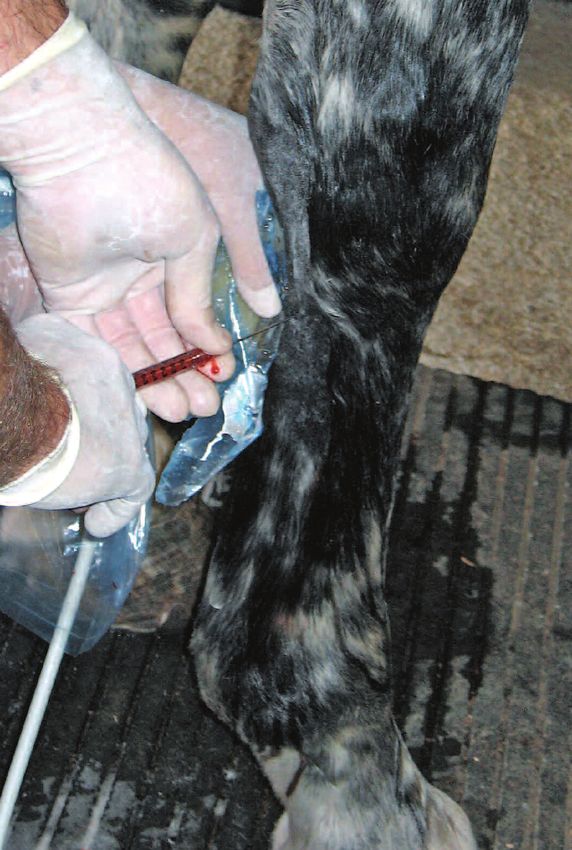
                                       Ultrasound is used to precisely guide             sounder than ever before.
                                       the injection of adipose-derived stem                A tendon is a bundle of elastic fibers,
                                       cells into the suspensory ligament.               mostly made of collagen, that attaches
                                                                                         muscle to bone and helps move the
                                                                                         skeleton. Ligaments are similar but
                                                                                         attach bone to bone and provide stabil-
                                                                                         ity. When a horse bows a tendon, it
                                                                                         tears the fibers at a certain point of the
                                                                                         tendon (the location results in a name,
                                                                                         such as high or low bow), weakening
                                                                                         it significantly. When the tendon
                                                                                         begins to knit back together, it is sig-
                                                                                         nificantly hampered by lack of blood
                                                                                         flow. Blood provides several healing
                                                                                         mechanisms, including adult stem
                                                                                         cells, which are able to convert them-
                                                                                         selves into specific types of cells the
                                                                                         body needs to heal itself (in this case,
                                                                                         tendon cells). If the tendon does not
                                                                                         get enough help, it eventually devel-
                                                                                         ops scar tissue, which weakens the
                                                                                         tendon because it is nonelastic and
                                                                                         haphazardly knitted together.
                                                                                            The injury takes a long time to heal
                                                                                         – a typical racetrack cure was pinfiring
                                                                                         or blistering, followed by six months to
                                                                                         a year of turnout. If a horse was brought
                                                                                         back to the track and the tendon had
                                                                                         mostly healed with scar tissue, the
                                                                                         weakened tendon could give way and
                                                                                         the injury recur.
                                                                                         What is it?
                                                                                         STEM CELLS ARE IMMATURE CELLS THAT
                                                                                           do not yet have a specific job in the
                                                                                           body but can form into a particular
                                                                                           type of cell. The two main type of
                                                                                           stem cells are embryonic and adult
                                                                                           stem cells. Embryonic stem cells are
                                                                                           able to become any type of cell in the
                                                                                           body. Adult stem cells are more lim-
DR. LINDA A. DAHLGREN                                                                      ited in what they can become. The first
                                                                    of two types of adult stem cells, known as hematopoietic
                                                                    stem cells, turns into various types of blood components such

 A
                                                                    as red blood cells. The second type is mesenchymal stem
                                                                    cells, which can turn into connective tissue (bone, muscle,
                                                                    tendon, etc.) to heal and regenerate healthy tissue and is
                                                                    being used in stem cell therapy.
                                                                       Embryonic stem cells were the first to be used in research.
                                                                    Harvesting from embryos, which are destroyed in the
                                                                    process, caused much media attention and controversy.
                                                                    Because of this, active research has driven the development
                                                                    of less controversial sources of stem cells. Two of the most
                                                                    common sources of adult stem cells are bone marrow and
A BOWED TENDON IS USUALLY A DEATH BLOW TO A HORSE’S RACE            adipose tissue (fat).
career. The injury, tricky to treat, makes it nearly impos-            Bone marrow is composed of a modified form of blood,
sible to bring a horse back to the track, and the likelihood        stem cells, growth factors and other miscellaneous components.
of the horse returning to its previous level of ability is          Originally thought to be a fountainhead for stem cells, it
even slimmer.                                                       turned out to contain less than expected. The marrow has
www.americashorsedaily.com                                      2                                      www.americashorsedaily.com
VET-STEM INC.
                                                                                                         do not know which marrow ingredients help the tendons.
                                                                                                         Bone marrow contains a good amount of growth factors,
                                                                                                         which are thought to help heal tendons. The most-studied
                                                                                                         type of growth factor is insulin-like growth factor-I (IGF-I).
                                                                                                         Once injected, it has an anti-inflammatory and growth-
                                                                                                         encouraging effect.
                                                                                                            “Bone marrow is composed of a small number of stem cells
                                                                                                         plus a fluid component that is basically a modification of
                                                                                                         blood,” said Linda A. Dahlgren, D.V.M., Ph.D, assistant pro-
                                                                                                         fessor at Virginia Tech University and an expert in stem cell
                                                                                                         research and tendon and ligament healing. “Proponents of bone
                                                                                                         marrow therapy speculate that there are proteins contained in
                                                                                                         the fluid portion of the aspirate that might be beneficial to
                                                                                                         tendon or ligament healing. What is contained in this ‘soup’
                                                                                                         is likely a mixture of beneficial growth factors that are likely
                                                                                                         candidates to promote tendon healing.”
                                                                                                            The problem, she says, is that there is only a small, possibly
                                                                                                         insignificant, number of stem cells that get injected. In addi-
                                                                                                         tion, there is the possibility of injecting unwanted tissue, such
                                                                                                         as tiny bone fragments. Another problem is the large volume
                                                                                                         of the injection (approximately 30 milliliters, or about six tea-
                                                                                                         spoons). Other treatments available inject significantly less
                                                                                                         fluid (1 ml). The concern is the additional damage that might
                                                                                                         occur within the tendon as a result of increased pressure.
                                                                                                            “There is not a very large volume of potential space with-
 A study done at Cornell University shows the efficacy of stem cell therapy. Tendons                     in the injured portion of the tendon,” she said. “There is no
 were collected at 42 days. The top two tendons were treated with stem cells. The bot-                   way for the tendon to expand as the bone marrow aspirate
 tom two were controls treated with saline and show significant swelling and damage.                     is injected.”
                                                                                                            The second method

                                                                                                                                   ANDREA CAUDILL
stem cells but is mostly made up of a modification of blood.                                             using bone marrow                     Pinfiring is an old-fashioned
Research showed that fat has a greater concentration of stem                                             requires processing of                treatment for curing bowed ten-
cells than bone marrow – one of 50 cells in fat, versus one                                              the bone marrow to                    dons. It was thought to increase
in 100,000 in bone marrow. Stem cells are also found nearly                                              get the stem cells.                   blood flow to help heal the injury.
everywhere in the body, but fat was chosen as the most                                                   This method is not
accessible source.                                                                                       available in the United
  Robert Harman, a veterinarian who founded and runs                                                     States, but is per-
Vet-Stem Inc., a company that does stem cell therapy in                                                  formed by VetCell
horses, explained that stem cells do more than repair tissue.                                            Bioscience Ltd. in the
  “It’s a very big misconception both in the medical com-                                                United Kingdom,
munity and the lay community that a stem cell just makes                                                 Europe, Japan and
tissue,” Harman said. “These cells also make a number of                                                 Australia. The process
very positive growth factors and they block some of the                                                  involves removing
negative factors that cause degradation. Stem cells do                                                   bone marrow and sep-
something in managing the whole healing process which                                                    arating the fluid (ser-
goes beyond just making new tissue. They recruit new cells                                               um) from the cells.
into the area, they produce these growth factors and they                                                The fluid is frozen and
manage the healing process in a very different manner than                                               scientists culture the
we thought five or 10 years ago.”                                                                        cells in the laboratory
                                                                                                         to increase their num-
From the Bone                                                                                            bers, which averages
BONE MARROW IS TYPICALLY HARVESTED FROM A HORSE ’ S                                                      two to four weeks.
sternum, about where a girth would be placed. The proce-                                                 Once there are enough
dure is done with the horse standing and locally anesthetized.                                           cells, they are added
The marrow is aspirated with a special needle and can either                                             back to the fluid and
be injected directly into the tendon or processed to isolate                                             injected into the
the stem cells.                                                                                          tendon.
  The first method is directly injecting the marrow into                                                    Controlled scien-
the tendon or ligament. It is available in the United States                                             tific studies to prove
and is fairly easily done by a veterinarian experienced in                                               the effectiveness of
the collection and injection technique. It costs about                                                   either of the bone
$1,000, or about half of other methods.                                                                  marrow methods are
  It was initially performed with the belief that stem cells                                             lacking, but a num-
were numerous in the bone marrow. However, researchers                                                   ber of case studies
www.americashorsedaily.com                                                                    3                                                     www.americashorsedaily.com
VET-STEM INC.
                                                                                                                                    “When you have an
                                                                                                                                 animal that’s really in
                                                                                                                                 fit condition, they don’t
                                                                                                                                 have very much body fat,”
                                                                                                                                 Harman said. “But stem
                                                                                                                                 cells don’t go away when
                                                                                                                                 you get thin. The amount
                                                                                                                                 of fat we can get off the
                                                                                                                                 tail head of a horse right
                                                                                                                                 off the track is still ade-
  The process of acquiring adipose-derived stem cells: The harvesting site is prepared (left), then about two tablespoons of fat
  are removed (center). Finally the stem cells are prepared (right) and reinjected into the horse.
                                                                                                                                 quate because it’s highly
                                                                                                                                 concentrated.”
support the use of these treatments and suggest that they have                             An obese animal, Harman says, might have 50,000
the potential to improve the healing process.                                           cells in one gram of fat. A really fit racehorse might have
                                                                                        5 million in the same gram.
Useful Fat                                                                                  The company consults with veterinarians, which allows
VET-STEM INC. BEGAN DECADES AGO WHEN HARMAN WAS WORKING                                 both sides to know the size and amount of doses a horse’s injury
in the product-testing business. One client, a human will require. Once the appropiate amount of fat is collected,
orthopedics firm, had purchased stem cell technology that the tissue is shipped to the laboratory, purified and concen-
used fat as a source of the cells. In 2002, after negotiation trated, placed in syringes for injection, then shipped back to
and testing, Vet-Stem became the exclusive licensee of the the veterinarian. The processing time in the lab is a matter of
technology for veterinary purposes. The therapy is in hours, so horses are treated in a matter of days.
human clinical trials, but is not yet approved for use in                                  Once the veterinarian receives the doses, the horse can be
humans in the United States. It is already available to injected. Depending on the size of the injury, the stem cells
humans in Europe and Asia.                                                              can be spread with one to four injections, using ultrasound
   The treatment is done by the horse’s attending veterinarian. for guidance. Because the cells are derived from the horse,
The company sends the vet a package with detailed instructions there is no risk of allergic reaction to the cells.
on the procedure. The veterinarian collects fat from the animal                            “It is their own tissue,” Harman said. “It is just moved around
while it is under local anesthesia. The usual collection area is and concentrated where we want. It’s about as natural as you
the tailhead, where there is a large fat pad. The veterinarian can get for the horse, so they usually have the opposite of a reac-
cuts the skin open about two inches and collects approximate- tion in an inflamed area. Generally, those tendons, ligaments
ly two tablespoons of fat. Some veterinarians, however, had and joints are already kind of inflamed, so it helps reduce the
problems collecting enough fat from ultra-lean racehorses.                              inflammation because the cells are actually anti-inflammatory.”

OTHER OPTIONS
   A treatment for tendons that does not involve stem cells is a
   substance known as urinary bladder matrix (UBM). Derived
                                                                                    Linda Dahlgren, D.V.M., an expert on tendon and ligament
                                                                                 healing, expressed her concern for the potential for a damaging
   from the wall of a pig’s bladder, it contains a mix of proteins,              immune response due to the porcine (pig) origin of the product.
   including collagen. It does not contain cells, which are a major                 “The concept of using this scaffold to help regenerate tendon
   source of stimulation to the immune response. The absence of                  is a good one,” she said. “The rationale is sound. I would just
   cells should decrease or eliminate the body’s autoimmune                      rather it be horse protein rather than pig protein. To produce
   (allergic) reaction to the substance.                                         an identical product of equine origin would be a challenge
      Originally sold as a human treatment, UBM is sold in sheets.               on several levels. The nature of the tissue response following
   For the treatment of tendons and ligaments, the sheets are                     A-Cell injection has not been documented.”
   ground to a fine powder and suspended in sterile saline. The                     Another human process that might prove useful in healing
   mixture is then injected into the affected tendon or ligament.                equine tendon and ligament injuries is platelet-rich plasma.
   The proteins form a three-dimensional scaffold onto which                     Blood is collected in an anti-coagulant and is spun down. The red
   cells that create tendon and ligament tissue can adhere.                      blood cells are removed, and the remaining plasma can be
      Marketed by A-Cell Vet, Inc., it is commonly known to the                  injected into the injured tendon or ligament. There are a num-
   veterinary industry as A-Cell Vet Powder. This product is not                 ber of growth factors and other material in the plasma that could
   currently on the market in the United States due to patent                    be beneficial. This, too, can be injected into the tendon. There
   infringement claims by Cook Biotech, manufacturer of an                       are not yet any published studies proving its benefits.
   identical UBM sheet for wound repair. A clinical case series                     A drug called BAPN-f (beta-amino propionitrile fumarate, pro-
   performed by Dr. Rick Mitchell of Fairfield Equine Associates                 nounced “Bapten”), was introduced to the veterinary market in
   at Newtown, Connecticut, reported on 101 tendon and ligament                  the mid-1990s as a method to improve tendon healing. Made
   injuries treated with UBM. Released in 2004, the study found                  from the seeds of the wild sweet pea, it was FDA-approved after
   greater than 80 percent of these horses that were at least six                a clinical trial showed initial success based on ultrasound
   months post-treatment were sound and in work. These num-                      results and race results. It was available to veterinarians for a
   bers, however, are a preliminary report and do not represent                  limited time, however, the product failed to be cost-effective for
   a controlled clinical trial.                                                  the manufacturer and has been removed from the market.

 www.americashorsedaily.com                                                  4                                                          www.americashorsedaily.com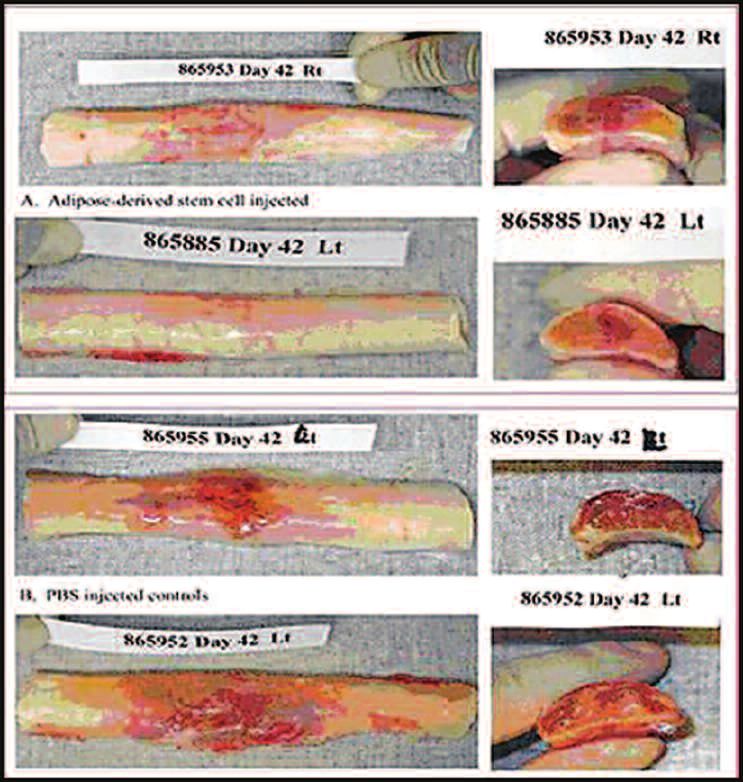
veterinarian, using monthly ultrasounds to monitor the
     Stem Cells: Quick Facts                                                progress of healing and determine an exercise regimen and
     • Mesenchymal stem cells are primitive cells with the ability          how fast the horse can come back.
       to be any type of specialty connective tissue cell – bone,              “Tendons take a long time to mature into the tensile
       tendon, muscle, etc.                                                 strength that’s needed,” Harman said. Every horse is an
     • Stem cell therapy can help many injuries but is most com-            individual. The tendon itself will be the best indicator of
       monly used to help heal tendon, ligament, bone and joint             how fast it is healing.
       injuries.                                                               “If you just take your horse and turn it out in the pasture,
     • The therapy involves gathering stem cells from a source              it’s going to take a long time and it isn’t going to heal as
       (bone marrow or fat), processing it to concentrate the stem          well,” he continued. “I can’t predict for any particular horse,
       cells and injecting it into an injury.                               but with a regimented program, in general, you are going
     • The procedure requires a veterinarian and is done with the           to be in that six- to 12-month range. I can’t stress enough
       horse standing under local anesthesia.                               how important a controlled rehab program is.”
     • The costs of the procedures vary between approximately                  While there aren’t yet published scientific studies support-
       $1,000 and $3,000.                                                   ing the effectiveness of bone marrow-derived stem cell ther-
     • The treatment is most effective when done within a month of          apy, there is one such study for adipose-derived stem cells.
       the injury before scar tissue becomes established, lessening         A double-blind study done at Cornell University demonstrat-
       the ability to heal correctly.                                       ed that the stem cell-treated group of horses showed improved
     • Healing time is not necessarily faster with stem cell therapy.       tendon healing compared to control horses. The findings were
       Tendons take a long time to heal to full strength. If not            based primarily on key characteristics of the tendons when
       given that time, reinjury can occur. However, if adequate            looked at under a microscope (better healing, less inflam-
       time is taken, the tendon will be better healed, and the             mation). Vet-Stem recently reviewed the outcome of clin-
       horse will be less likely to reinjure.                               ical cases using an informal poll of its racehorse and per-
                                                                            formance horse clients. The company found that racehors-
    Each treatment regimen is estimated to cost $2,000-$3,000,              es treated for superficial digital flexor tendon and suspen-
  depending on individual veterinarians and associated procedures.          sory ligament injuries returned to one or more races at a
    Vet-Stem specializes in tendon and ligament treatments                  rate of 69 percent. The average time of recovery was 11
  because those are the injuries most difficult to repair. Stem cell        months. The study also found nonracehorse clients showed
  therapy is also helpful in fracture repair and intra-articular            78 percent of horses returning to their prior level of per-
  joint therapy, arthritis and OCD (osteochondrosis dissecans).             formance, with another 11 percent returning to a lesser
    “These cells are particularly good at homing in on                      level of competition.
  inflammation,” Harman said. “When you put them into                          There are several other new treatment options looming on
  the joint, they will find the areas of both cartilage and                 the horizon (see sidebar “Other Options”) but they are either
  bone injury. We’re still new to treating horses with joint                not available in the United States or are lacking clinical
  disease, but we’ve had some fairly dramatic cases. You get                research. No matter what method is chosen for helping the
  a dramatic reduction in pain, better mobility and repair                  horse to heal, the main ingredient will always be the old
  of both cartilage and bone injury in the joint.”                          standbys: time and a controlled exercise program.
  Treatment and Recovery                                                       Looking Ahead
  VET-STEM CLAIMS IMPROVEMENT CAN BE SEEN IN DEGENERATIVE                      In the near future, horse owners could get a jump on such
  joint disease within days to a few weeks, the procedure heals                injuries by having a horse’s stem cells on file – preserved
  fractures twice as fast, and tendon and ligament injuries show               long before the horse needs them. The cells would be
  improvement within 45 days. Harman pointed out that the                      frozen and banked in liquid nitrogen, like semen or embryos
  window of opportunity to treat an injury is usually relative-                are currently stored.
  ly small, and horses must be treated quickly for best results.                  Once research catches up, veterinarians and owners
     Vet-Stem recommends all treatments for tendon and liga-                   might have a better chance to stay ahead of an injury with
  ment injuries happen within a month of the injury. Delayed                   preventive injections of stem cells. Similar to injections of
  treatment can have beneficial effects; however, at that stage                steroids or glucosamine, the stem cells might be able to
  of healing, the body has already started to mend itself and                  help strengthen the body, thus preventing injury.
  treatment might not be as effective.
     Once the horse has been treated, it must be put on stall rest             “Giving the horse adequate time for the tendon to heal
  and a regular exercise program to help strengthen the tendon              is essential,” Dahlgren said. “None of these treatments
  and ligaments. Anti-inflammatory drugs, such as phenylbu-                 that are available, were available or might be available are
  tazone, can be given to help pain, but steroids will hinder the           going to shorten the amount of time it takes for a tendon
  healing process. The healing time varies, and Harman empha-               to heal. I still tell people recovery time is about a year.
  sized that handlers must respect the need for time to heal.               Some horses can come back in race training as early as nine
     “(Stem) cells are not only stimulated by the injury, they              months. To bring them back sooner puts them at a pretty
  are mechanically stimulated,” Harman said. “So if you                     high risk of reinjury. So what we’re hoping to do with any
  stretch the cells or tissue, it signals them to become tendon.            of these new treatments is that, rather than speeding the
     “Walking every day is not just because your mother said                process, if we can just improve the healing process, we’re
  it’s a good idea to exercise,” he continued. “It really does              further ahead. If we can make the end product better, it
  signal the cells to line up, and it reduces scarring.”                    will be better able to hold up to the training process like
     He also emphasized the need to work closely with your                  a normal tendon.”
www.americashorsedaily.com                                              5                                     www.americashorsedaily.com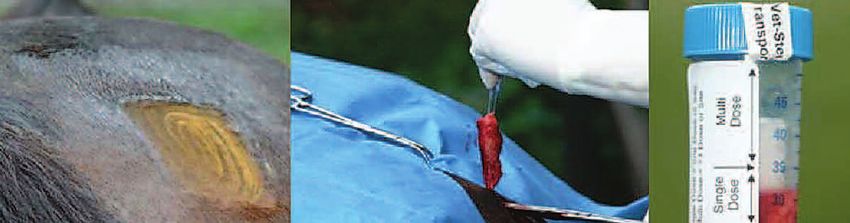
www.americashorsedaily.com 6 www.americashorsedaily.com
You can also read


