This Live Event will start soon - Thank you for joining "TDI Webinar #8 - Future Transport Zones"
←
→
Page content transcription
If your browser does not render page correctly, please read the page content below
Thank you for joining “TDI Webinar #8 – Future Transport Zones”
                This Live Event will start soon…

    With
 thanks to
our speakers:
Welcome to TDI Webinar #8 – Future Transport Zones

         Wednesday 21st July 2021, 11:00 – 12:00, Microsoft Teams Live

    With
 thanks to
our speakers:
TDI Webinar #8 – Future Transport Zones
                                         Introduction
  Giulia Scarani, Micromobility and Future Transport Zones Policy Lead, Department for Transport

    With
 thanks to
our speakers:
Introduction to Future Transport
Zones

Giulia Scarani, Micromobility and Future Transport Zones Policy Lead, Department for Transport
Future Transport Zones
What are Future Transport Zones (FTZs)? What will FTZs look like?
FTZs will create a functional market-place for mobility in the area (see diagram
Testing at scale is an important way to
below). Individual measures selected by winning areas include:
understand risks and benefits. That is why we
have developed FTZs to support local leaders Mobility as a Service trials Drone trials for medical
and industry to trial new approaches. Digital infrastructure deliveries
Data harvesting and analysis Mobility hubs at key transport
£92m investment in globally significant interchanges
demonstrators of new digitally enabled mobility
services, modes and business models.
An opportunity for a range of data and digital
mobility innovations to be trialled at significant
scale, with a focus on improving mobility
through use of data, new modes and services.
Where are the FTZs?
West Midlands Combined Authority announced
as pathfinder, securing £22m in 2019.
Derby and Nottingham, Portsmouth and
Southampton (Solent) and West of England
Combined Authority announced as winners in
March 2020, sharing £70m.
Data plays and important role in the successful
delivery of FTZs
 • Good data collection and availability will be the underlying enabler for a lot of the initiatives
   that are being rolled out in each of the FTZs, such as MaaS and Transport Hubs.
   o Nottingham City Council together with Vivacity Lab have been trialling a smart vehicle
       monitoring system aimed at reducing congestion and encouraging alternative modes of
       transport.

 • Other FTZs are developing ad hoc 'Data Hubs' to integrate existing information together
   with new data collected, with the aim to deliver better and more integrated transport within
   their area.

 • DfT is undertaking a national evaluation of FTZs, which will span over the course of four
   years. Learnings from the evaluation will rely on good quality data collection, sharing and
   analysis. DfT is working together with FTZs and national evaluator NatCen to ensure that we
   can maximise learnings from the data.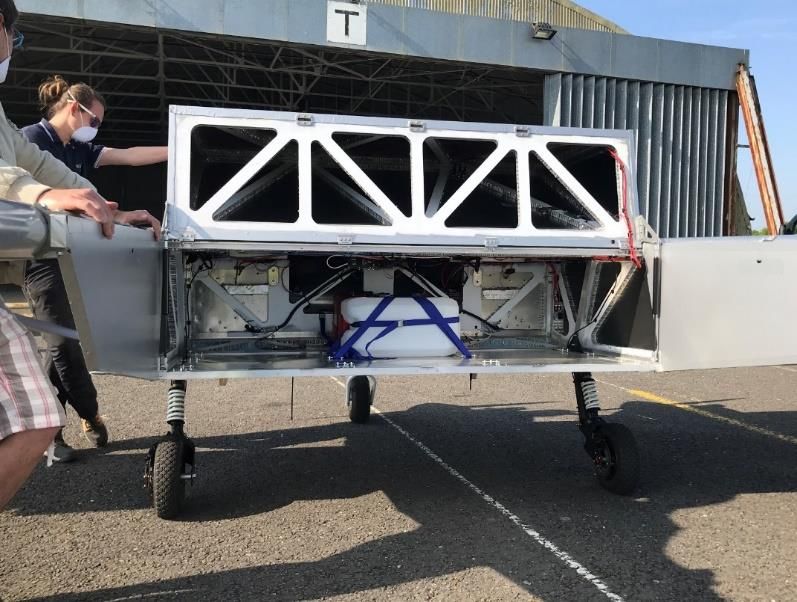
TDI Webinar #8 – Future Transport Zones
                   Experimental Drone Flights for the NHS
                Conrad Haigh, Transport Manager, Solent Transport

    With
 thanks to
our speakers:
Solent Future Transport Zone
Experimental Drone flights for NHS
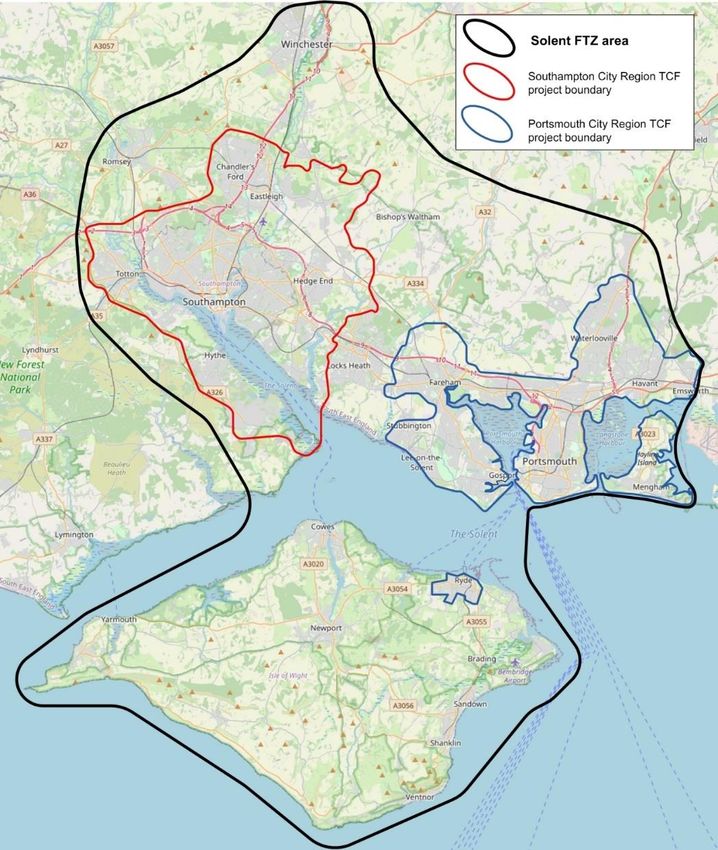
Context for   Our Geography
Solent FTZ       Solent = 20% of TFSE
                 population

                 1.5M people = more than
                 Copenhagen, Oslo,
                 Dublin, Edinburgh,
                 Cardiff, Bristol.

                Travel patterns of people
                and goods do not respect
                political or organisational
                boundaries.

                Isle of Wight asked to
                extend their E-scooter
                Trial and be part of MaaS
                so FTZ now covers the
                whole island.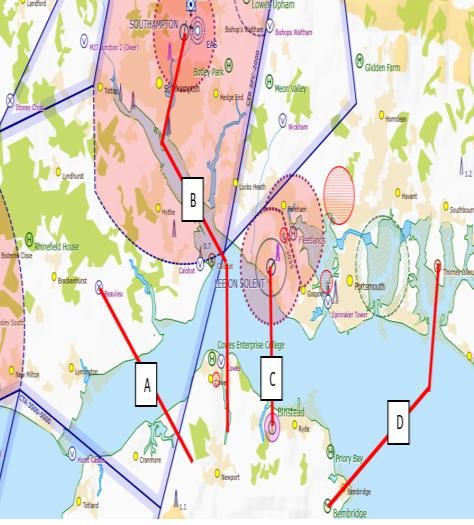
Overview of the Solent FTZ Programme
                                                                                     Theme 2: Sustainable Urban
                             Theme 1: Personal Mobility
                                                                                             Logistics

                                      Solent
                                      Solent
                                       Go
                                       Go

                    Mobility
                    Mobility                           Bike/
                                                        Bike/
                    Credits
                    Credits                            e-bike
                                                       e-bike
                                                                                            Drone
                                                                                            Drone
                     trial**
                      trial                            share
                                                       share
                                                                                           Logistics
                                                                                           Logistics
                                   Mobility as a
                                                                       Mobility
                                                                       Mobility
                                    Service                            Hubs
                                                                       Hubs & &
                                                                                                            Macro
                                                                                                            Macro
                                     (MaaS)                                                              Consolidation
                                                                                                         Consolidation
                                                                   Interchanges
                                                                    Interchanges
                       Lift
                       Lift
                     sharing
                     sharing                                                                Micro
                                                                                            Micro
                                                     DDRT
                                                     DDRT
                   incentive
                    incentive                                                            Consolidation
                                                                                         Consolidation
                                                     trials**
                                                      trials
                    project**
                     project
                                        E-
                                         E-
                                     Scooter
                                     Scooter
                                      trials
                                       trials
** = Progress paused, currently
under review due to Covid-19
                                                   Marketing & Communications strategy
Drones Project- Why?
Drones Project- Why?
Drones Project – Why?
Drones Project
i)     Development of Air Traffic Management systems for manned/unmanned aircraft
ii)    Case studies with the NHS into medical logistics using drones
iii)   Asked if we could do anything to assist St. Marys hospital in their Covid-19
       response

What Was Required:
-  Safety case approved by the CAA for Ultra
-  Technical Danger Area (TDA) agreed for the Lee-on-Solent to Binstead route
-  Approval to carry benign cargoes (non-dangerous)
-  Liaison with Binstead and Solent airfields to allow flights
-  Ultra team logistics at LOS and Binstead for flight testing
-  Believer flights at as tests before Ultra flights
-  Land logistics needs and liaison with the NHS

UK Aviation Firsts:
• First “point to point” BVLOS flight of a fixed wing UAV in the UK between airfields
• First delivery of “real” NHS payload in the UK
• First BVLOS flight close to high population density urban areas and infrastructure
• First BVLOS flight at an airport with concurrent operation of manned aircraft
• First BVLOS flight of next generation “masterless” avionics (uk patent in progress)
Craft from first trail Windracer’s Ultra
HEI
15Key Lessons Learnt from Covid Response
What the NHS Need Most From Drones
- Small consignment dangerous goods movements
- Patient diagnostic samples and aseptic medicines
- Small drones – point-to-point (hospital to hospital
helipads; pharmacy to hospital)
- Emergency blood movements
Key Lessons Learnt from Covid Response
1) Most drones currently unsuitable for specimen movement
2) Dangerous Goods approval key for movement of NHS loads
3) Most effective type of drone for NHS medical logistics
4) The need for full automation via air traffic control
Next Steps
- DG application for Ultra
- Aseptic medicine data from St Marys to understand
movement frequencies and simulate drone logisticsFuture Transport Zone Drone Trial
The drone trial attracted media coverage including Wave FM. A press day was held at Solent
Airport for the TV stations to attend and interview Solent Transport and UoS representatives:
• National TV and media aggregates
• BBC, ITV, Associated Press and Reuters
• Offline and online press
• BBC
• Design Products and Applications
• Unmanned Airspace website
• uSAS News
• Portsmouth News
• Fleet News
• Aviation Week
• Transportation Professional
• Transport Xtra
• The Times
• Smart Transport Magazine
• Island EchoDrone Trials (August/September 2021) Outline • Project led by the University of Southampton - moving medical samples and supplies between hospitals in Southampton, Portsmouth and Isle of Wight by uncrewed drones - potential to slash transit times and enhance healthcare services for Solent residents in isolated areas • Trials of a vertical take-off and landing (VTOL) drone between Portsmouth Queen Alexandra Hospital and St Mary's Hospital on the Isle of Wight, scheduled to run from late Aug\ early Sep for 3 months • Will enable confirmation that project work packages address all necessary logistics issues for both VTOL and fixed wing drones Details • Partnering with Apian, a medical drone startup, who have CAA permission to fly using a TDA (Temporary Danger Area) • A Mugin V44 drone will be used for the trials (see picture) • Minimum 30 flights during the trial period • Payload: TBC, but possibly using redundant chemotherapy treatment to assist in quantifying the vibration impacts (a project task) • Contract currently being finalised between University of Southampton and Apian Additional activity • Development of an augmented reality simulator (headset) to recreate the sensation of the drone landing and taking off in the observer's field of view (borrowed tech)
Thank You
TDI Webinar #8 – Future Transport Zones
           West Midlands Future Transport Zone and the Mobility Showcase
            Mark Collins, Innovation Integration Lead, Transport for West Midlands

    With
 thanks to
our speakers:
Introduction
West Midlands
Future Transport Zone
University of Warwick
Sustainable Travel ShowcaseIntroduction
The Future Transport Zone is a
Transport for West Midlands
run, Department for Transport
funded (£22 million),
programme looking at what the
future of transport could be for
the West Midlands.Future Transport Zone
Philosophy
PROBLEM to fix: The way we collectively choose to travel and move goods is not sustainable.
WHY we exist: We empower and enable people to make sustainable travel decisions
HOW we work: Focus on how we connect people cleanly and safely
WHAT we do: FTZ seeks to understand the population and travel behavior more deeply; then uses new
technology/systems/services combined with an improved data capability to empower and enable people to
make sustainable travel choices.
STRATEGY principles: Our strategy is intentionally iterative. Based on population insight new
technology/systems/services/data approaches are trialed in a controlled manner. Impacts are assessed against
Environmental, Economic and Social variables. Subsequent activities are based on the resultant balance of
these factors.Future Transport Zone
“We empower and enable people to make sustainable travel decisions"
FTZ Legacy
UNDERSTANDING behaviour
around transport
TARGETTED transport
inventions become possible
DATA architecture capable of
managing a network of
increased diversity and
complexity
The FTZ seeks to understand the local population, developing new transport
services to further modal shift and transport decarbonisation. Promoting a clean
and green recovery this activity is underpinned by an developing data capability
and deployment of the mobility as a service (MaaS) model.FTZ Showcase – University of Warwick
Data gathering, Insight, Monitoring and Evaluation
Communications and Marketing
Existing Additional Incentives
services services
One service
interface
Infrastructure Experience Disincentives
improvements amplification
FTZ funded programme until March 2023Experience Amplification
Light my way to pick Know who I’m
up travelling with
Travel buddy service Preference my pickup
I want to I feel SAFE
Individual screen I am in
SOCIALISE Cost up front
control and access
WITH OTHERS COMMAND
Control onboard
Cinema (IMAX ambiance (smell,
experience) lights etc)
I want to be EXPERIENCE I value my Partitioned / zonal
Power provision
ENTERTAINED AMPLIFIERS WELLBEING travel
Lighting adjustment I want to learn
Adjustable seating
I want to be I require a
I want to Time management
PRODUCTIVE SERVICE service
reach my
WiFi DESTINATION
Errand share
Working tables Learn a new skill
ETA display Food / drink on (language)
arrivalThe Challenge is Significant…
Study based on priority needs when
High frequency
responses considering commuting (Binley
Industry Estate, Coventry). This is
mode agnostic but 71% of
population drive to work.
Medium frequency responses
Hygiene – must do well
Low frequency responses
Opportunity for differentiation from car travel
Positive reinforcement opportunitiesOne Service Interface - MaaS Ecosystem
A philosophy of integration and customer focus…
With the customer at is heart, end to end customer experience is the key saleable commodity driving modal
selection. It also offers a bridge to connect elements of lifestyle together, not limited to transport.Communications and Marketing
Delivery Programme

                                                                                                                   Customer insight
                                                                                                                   around who and why
                                                                                                                modal decisions are taken
                                                                                                                      will result from
                                                                        Journey type                             interviews, travel diaries,
                                                                                                                surveys and segmentation
                                                                                                                           model.

                                                                                                                Service dashboards will
                                                                                                                 exist to monitor all local
                                                                                                                    travel movement.
Local Public      Private and shared         Local car use            Shared vehicle use   Demand responsive
 Transport          micromobility                                                              services

   Monitoring all local service traffic gives full visibility of new travel practises and allows for granular
understanding of certain influences, e.g. local events / monetary incetives etc. This can be supplemented
                                     by survey work qualitative analysis
What we’re learning
Focus on service growth. Building
service awareness and use without
strenuous targets for revenue.
Recognising that travel behaviours are
in a transient period. Choice availability
and awareness now can help define new
sustainable behaviours later.
September is a key target. With a new
cohort of students we seek to make initial
judgements about modal mix and viability
Sept 21 – Mar 22.What we’re learning
As part of our analysis we are
conscious to understand WHY certain
stimuli deliver the modal trends we are
observing. To do this we need to link
JOURNEY TYPE with WHO is travelling
and also what their respective
AVAILABILITY is for any particular
service (start and end of journey).
To do this we will build upon our data
dashboard, supplemented by our
qualitative research and bolstered by
our geographic understanding of
service coverage.Introduction
Thank You
Mark Collins (mark.collins@tfwm.org.uk)TDI Webinar #8 – Future Transport Zones
Opportunities to Exploit Cooperative Traffic Management Services
Shyful Choudhury, Principal Engineer, Connected Places Catapult
With
thanks to
our speakers:Opportunities to Exploit Cooperative Traffic Management Services Shyful Choudhury Principal Engineer
Catapults – a force for innovation and growth

                                                                                       9
                                                                              Innovation Centres
                                                                                 across the UK

                                                                              A network of world
                                                                              leading centres
                                                                              designed to transform
                                                                              and accelerate the
                                                                              UKs capability for
                                                                              innovation and future
                                                                              economic growth.

                  Commercial In Confidence © Connected Places Catapult 2021
‘MfSS’ enables strategy delivery by
Background developing use cases for connected vehicles
37
and provide national guidance for their
implementation
Connected Vehicle Data Research project
developed strategy for near term Enabling Delivery of the Six CVDR Action Plans
opportunities for connected vehicle data
Talking Traffic Partnership UK
CVDR Migration and legacy
Manual for
Establish and exploiting national Facilities
Smart Streets
LAMP Readiness of people and organisations
National connected vehicle data service design guidance
Business case and procurement
LAMP guidance will bring LAs up to date with new technology
driven traffic management services
CVDR - Connected Vehicle Data Research project Connected Places Catapult
LAMP – Local Authority Mobility Platform projectConnected Places Catapult 38
Why is it important now?
• Policy context – Build Back Better and Levelling Up to encourage innovation and build
Local Authority capability
• Future Transport Zones – Opportunity to adapt best practice, learning and provide
national consistency
• Alignment with DfT Strategy – Providing cooperative roadside services, moving away
from isolated pilots to at scale deployment
• DfT Data Strategy – Ensure data is open and interoperable and allow for simpler and
more successful LA procurement and more certainty for suppliers
• Digitisation and Digitalisation – Data, tools and systems need to be updated,
approaches and processes transformed Recommendation 2A:
• Commercial – Support the development of an engaged marketplace
“Create a framework and
• Societal benefits – More options for the end user to make informed decisions over
standards for Local Authorities to
travel choice
support current and future
services”Connected Places Catapult
The Manual for Smart Streets
Guide the effective and impactful rollout of a next generation traffic
Goal management at scale utilising co-operative connectivity and intelligence
Objectives
1. Identify and close gaps in current body of knowledge to support
rollout of cooperative traffic management services at scale
2. Review and incorporate latest connected vehicle to
infrastructure developments to realise opportunities
3. Engage with LAs and industry to gain their inputs, establish
readiness, and facilitate preparedness to deliver
39Traditional traffic management systems 40
Traditional Traffic Management
Vehicles
Vehicle data must be
End Users may be any road collected actively by
and/or service user e.g.: Infrastructure. Costly and
• Vehicle Driver limited fidelity
• Public Transport User End Users ITS Infrastructure
• Vulnerable Road User
Traditional traffic
Traffic Operations
Users must interpret
management systems are
information from roadside dependent upon
displays infrastructure investment and
road user interaction
Connected Places CatapultNext generation traffic management systems 41
Co-operative communication
between infrastructure and
Next-Gen Traffic Management vehicles improving vehicle
data/lowering costs, new
In vehicle signage / Vehicles opportunities for
notifications / prioritisation and
warnings optimisation
End Users ITS Infrastructure Improved data for traffic
planning
User information alerts
to their device Traffic Operations Next generation traffic
‘Heavy’ roadside
infrastructure can be
management systems provide a
removed lower cost and seamless
interaction with road users
Users may seamlessly subscribe to real-time
information e.g. via API to mobile application
New opportunities for seamless end user
payments/booking and real-time traffic
operations planning Connected Places Catapult42 Connected Places Catapult
MfSS: The toolkit that Local Authorities need
A ‘toolkit’ enabling LAs and their suppliers
deliver
LAMP laid the groundwork                                         Guidance
MfSS will build on this groundwork, drawing on   Regulations /               Standards /
CVDR, to:                                          Policies                    Practice
1. Bridges the gaps that LA’s/Industry need to                                                     Incorporate connected
   enable rollout delivery at scale                                                                    V2I developments
                                                                 LAMP
                                                                                                                      2.
2. Leverage the opportunities provided by
   developments in connectivity                             MfSS reference
                                                                                                   Bridge gaps in Body of
                                                                                                              Knowledge
3. Engages with LAs and Industry to prepare                                                                          1
   them for rollout
In a way that supports the strategies & goals                                                     Engage with industry to
                                                      LAs                     Industry             feedback and prepare
                                                                                                                      3.

                                                                                     Connected Places Catapult
Connected Places Catapult 44
The service lifecycle
What are the benefits?
How are they
quantified? Are there suppliers? Is it
Define high
off the shelf or bespoke? What are the risks? Bleeding
level needs edge or leading edge?
Market testing Links to existing systems? Or replace and rebuild?
Funding? Programme? Design? Functional
Strategy and
Requirements? Data need?
plan
Are there standards? Regulations?
Specification Common Specifications
Procurement Innovation needs? Barriers
Route Frameworks? Cloud first?
Rules and regulations?
RFI and Tender
Integration and testing?
Tender
Evaluation
Data transfer?
Award On going
LAMP: service
Mobility Solutions Implement and provision
Toolkit Operate
Decommission45
Conclusions
The Manual for Smart Streets
Driven by trends of connected users and vehicles there is a need to
guide the rollout of a next generation traffic management which utilises co-
operative connectivity and intelligence
• Guidance to facilitate the uptake and rollout of the next generation digitalised
and co-operative traffic management
• Framework that maximises efficient delivery of high value impacts
• Deliver initiative to steer market towards satisfying society needs and
achieving policy goals
• Guide the adoption of common best practices that support competitive
efficient services and support end user needs
• Publish guidance that may be exported internationally, further supporting UK
industry
Connected Places CatapultThank You Shyful Choudhury Principal Engineer
TDI Webinar #8 – Future Transport Zones
                                       Q&A Session
                                  Chaired by: Giulia Scarani,
        Micromobility and Future Transport Zones Policy Lead, Department for Transport

    With
 thanks to
our speakers:
Thank you for attending
TDI Webinar #8 – Future Transport Zones
We look forward to seeing you again soon!
With
thanks to
our speakers:You can also read


