Townsville Port Expansion Channel Upgrade Project Environmental Procedure for Pile Driving - May 2022
←
→
Page content transcription
If your browser does not render page correctly, please read the page content below
Townsville Port Expansion
       Channel Upgrade Project

Environmental Procedure for Pile
                        Driving

                          May 2022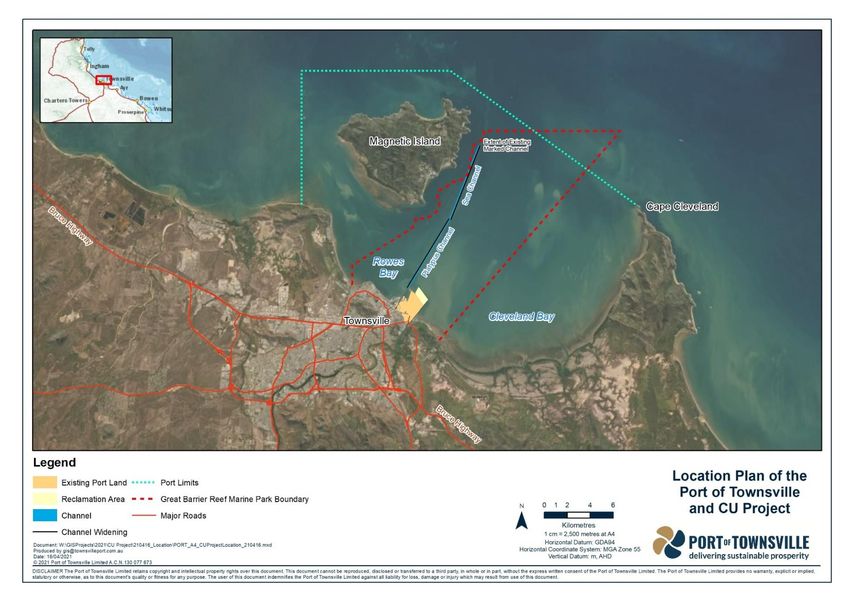
Channel Upgrade Project – EPBC Approval No. 2011/5979
 Environmental Procedure for Pile Driving

Document Control Sheet

Revision history

  Revision No.           Date                 Changed by                  Nature of amendment
           0              14/02/2020          T Smith                     Submitted Version
                                                                          Updated with detailed approach and
           1              29/06/2021          T Smith                     scientifically determined exclusion and
                                                                          observation zones for the TUF
                                                                          Updated exclusion zones for impact sheet
           2              10/11/2021          T Smith                     piling based on revised modelling following
                                                                          updated pile drivability assessment.
                                                                          Updated with detailed approach and
           3              17/05/2022          T Smith                     scientifically determined exclusion and
                                                                          observation zones for the channel beacons

Document approval

Approval of the Environmental Procedure for Pile Driving (R2), via condition 38 notification to DAWE
occurred on 15 November 2021.

The Environmental Procedure for Pile Driving (R2) was published on the CU Project’s website on 19
November 2021.

This document has been prepared to meet the Commonwealth Government’s EPBC Approval No.
2011/5979 Conditions and the Queensland’s Coordinator General’s Conditions for the Port of Townsville
Limited's Port Expansion Project.

  © Port of Townsville Limited
                                            Document Type         Plan                   Document No.   POT 2157
    A.C.N. 130 077 673
                                                                                         Revision       3
  Only electronic copy on server is controlled. To ensure paper copy is current, check   Date           17/05/2022
  revision number against entry in Qudos - Master Document List
                                                                                         Page           Page 2 of 34
Channel Upgrade Project – EPBC Approval No. 2011/5979
Environmental Procedure for Pile Driving

GLOSSARY

AEIS                       Townsville Port Expansion Project: Additional Information to the Environmental
                           Impact Statement - Final (June 2017).
CU Project                 Channel Upgrade Project
CEMP                       Construction Environmental Management Plan
Department /               The Australian Government Department of Agriculture, Water and the
DAWE                       Environment, or any other agency administering the Environment Protection and
                           Biodiversity Conservation Act 1999 (Cth) from time to time
EIS                        Port Expansion Project (PEP) Environmental Impact Statement (March 2013)
EPBC Act                   Environment Protection and Biodiversity Conservation Act 1999
Exclusion Zone             A radius, from the centre of the pile to be driven, around pile driving operations
                           to minimise the risks of physiological impacts to marine fauna, based on current
                           scientific evidence. The zone must be visually observed at all times during piling
                           driving operations, and where pile driving operations must cease if marine fauna
                           are observed within the relevant radius.
High frequency             The functional cetacean hearing group that represents those odontocetes
cetaceans                  (toothed whales, snub-fin dolphin, Australian humpback dolphin, Indo-pacific
                           bottlenose dolphin) specialised for hearing high frequencies.
Listed Dolphin             Australian snubfin dolphin (Orcaella heinsohni) and Australian humpback dolphin
Species                    (Sousa sahulensis). Note: definition amended to replace Indo-Pacific humpback
                           dolphin (Sousa chinensis) with Sousa sahulensis based on revised speciation and
                           listing                -                  https://www.environment.gov.au/cgi-
                           bin/sprat/public/publicspecies.pl?taxon_id=87942
Listed Turtle              Green Turtle (Chelonia mydas), Hawksbill Turtle (Eretmochelys imbricate);
Species                    Flatback Turtle (Natator depressus); Loggerhead Turtle (Caretta caretta); Olive
                           Ridley Turtle (Lepidochelys olivecea); and Leatherback Turtle (Dermochelys
                           coriacea)
Low frequency              The functional cetacean hearing group that represents mysticetes (baleen whales
cetaceans                  e.g., humpback whales) specialised for hearing low frequencies.

Marine Fauna               Listed turtle species, Dugong (Dugong dugon), listed dolphin species, and all
                           other Cetaceans – referred to in this document as marine megafauna
MEMP                       Marine Environmental Management Plan
Minister                   The Minister administering the Environment Protection and Biodiversity
                           Conservation Act 1999 (Cth) and includes a delegate of the Minister
MNES                       Matter of National Environmental Significance: In the context of this approval:
                           Great Barrier Reef World Heritage Area, Great Barrier Reef National Heritage
                           place, listed turtle species, listed dolphin species and all other Cetaceans, Dugong
                           (Dugong dugon), Commonwealth marine area and the Great Barrier Reef Marine
                           Park
Observation Zone           The zone whereby the movement of marine fauna should be monitored to
                           determine whether they are approaching or entering the exclusion zone. For

 © Port of Townsville Limited
                                           Document Type         Plan                   Document No.   POT 2157
   A.C.N. 130 077 673
                                                                                        Revision       3
 Only electronic copy on server is controlled. To ensure paper copy is current, check   Date           17/05/2022
 revision number against entry in Qudos - Master Document List
                                                                                        Page           Page 4 of 34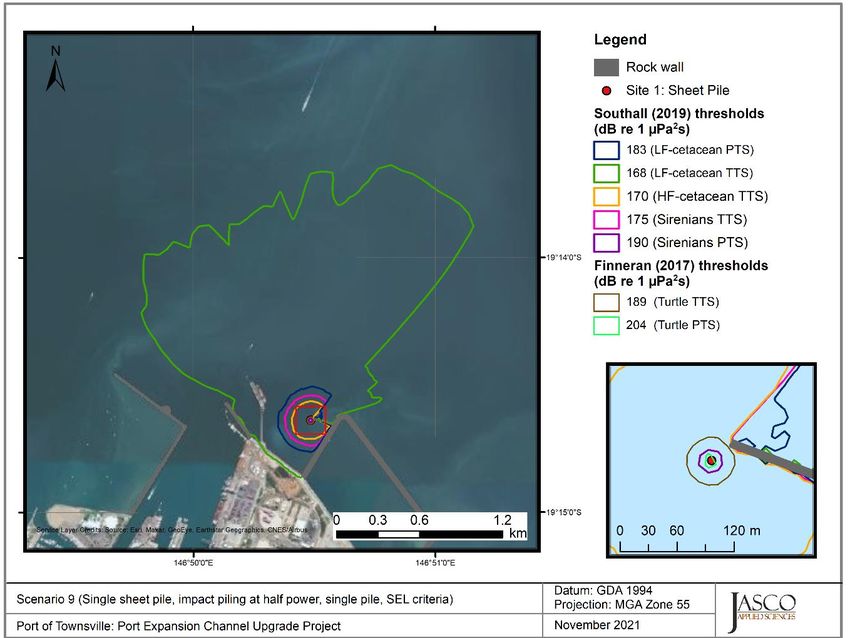
Channel Upgrade Project – EPBC Approval No. 2011/5979
Environmental Procedure for Pile Driving

                           whales, dolphins or dugongs, this includes a 2 kilometre horizontal radius from
                           the piling equipment, and for listed turtle species, this includes a 300 metre
                           horizontal radius from the piling equipment. An alternate distance for the
                           observation zone may be considered, if it provides equivalent or better
                           protection to marine fauna, in accordance with Condition 23.
PEP                        Port Expansion Project
Port                       Port of Townsville Limited
Re-strike testing          Testing of an installed pile to confirm that the pile has been installed to the
activities                 appropriate engineering standards
Site                       The new reclamation area (Lot 794 on SP308904) and the northern extent of the
                           East Port Area at the Port of Townsville (Lot 791 on EP2348)
Suitably qualified         A person who has professional qualifications, training, skills and/or experience
independent                related to the nominated subject matter and can give authoritative assessment,
expert(s)                  advice and analysis on performance relative to the subject matter using the
                           relevant current protocols, standards, methods and/or literature
Suitably qualified         As defined in EPBC Act Approval 2011-5979, a dedicated and suitably trained
marine                     person, with demonstrated experience in marine fauna observation,
observer(s)                identification and monitoring of marine fauna, distance estimation and reporting.
                           The marine observer must only be tasked with undertaking visual observations
                           for marine fauna whilst they are engaged to do so, and must not have any other
                           duties while engaging in visual observations.

 © Port of Townsville Limited
                                           Document Type         Plan                   Document No.   POT 2157
   A.C.N. 130 077 673
                                                                                        Revision       3
 Only electronic copy on server is controlled. To ensure paper copy is current, check   Date           17/05/2022
 revision number against entry in Qudos - Master Document List
                                                                                        Page           Page 5 of 34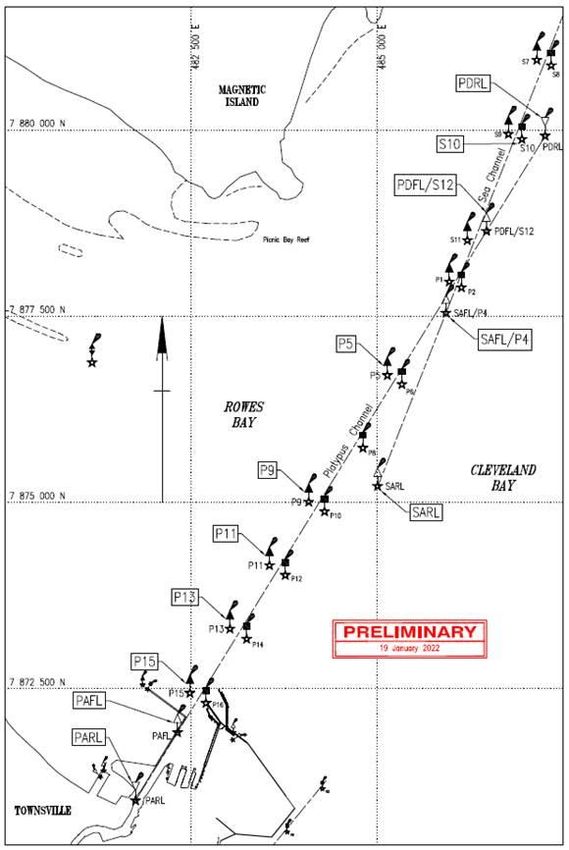
Channel Upgrade Project – EPBC Approval No. 2011/5979
    Environmental Procedure for Pile Driving

TABLE OF CONTENTS

1        Introduction ................................................................................................................7
2        Scope and Objectives ..................................................................................................9
3        Marine Megafauna Observation and Exclusion Zones ................................................ 11
4        Procedure and Actions .............................................................................................. 15
         4.1       Prior to Undertaking Piling ...................................................................................................15
         4.2       Piling Operations ..................................................................................................................16
         4.3       Corrective Actions ................................................................................................................18
         4.4       Training and Communication ...............................................................................................19
5        Reporting and Responsibility ..................................................................................... 20
6        Continuous Improvement .......................................................................................... 21
7        Related Documents ................................................................................................... 22
Appendix A ........................................................................................................................ 23
Appendix B ........................................................................................................................ 26

FIGURES
Figure 1: Locality Plan of the Port of Townsville & CU Project ................................................................. 8
Figure 2: Locality Plan of the navigational beacons to be installed (those with labels in boxes). .......... 12
Figure 3: Indicative sound level isopleths for sheet piling ...................................................................... 33

TABLES
Table 1: Beacon relocation piling spread, including type and size of pile, intended penetration depth and
location /reference number per pile size . .............................................................................................. 11
Table 2: Piling Exclusion Zones for each hearing group. .......................................................................... 13
Table 3: Piling Observation Zones for each hearing group. ..................................................................... 14
Table 4: TUF piling spread, including type of pile, intended penetration and proposed number to be
installed per day....................................................................................................................................... 27
Table 5: Vibratory piling Exclusion Zones for each hearing group. ......................................................... 28
Table 6: Vibratory piling Observation Zones for each hearing group. .................................................... 28
Table 7: Impact piling Exclusion Zones for cylindrical piles for each hearing group. .............................. 29
Table 8: Impact piling Exclusion Zones for each hearing group for sheet piles (per number of strikes and
number of piles). ...................................................................................................................................... 30
Table 9: Impact piling Observation Zones for cylinder piles for each hearing group. ............................. 31
Table 10: Impact piling Observation Zones for each hearing group for sheet piles (per number of strikes
and number of piles). ............................................................................................................................... 32

     © Port of Townsville Limited
                                                    Document Type            Plan                     Document No.           POT 2157
       A.C.N. 130 077 673
                                                                                                      Revision               3
     Only electronic copy on server is controlled. To ensure paper copy is current, check             Date                   17/05/2022
     revision number against entry in Qudos - Master Document List
                                                                                                      Page                   Page 6 of 34
Channel Upgrade Project – EPBC Approval No. 2011/5979
Environmental Procedure for Pile Driving
1 INTRODUCTION
Port of Townsville Limited (Port) is a Government Owned Corporation established under the
Government Owned Corporations Act 1993, which manages the Port of Townsville. The Port is located
on Cleveland Bay, approximately three kilometres east of the city centre in Townsville, North
Queensland (Figure 1). It is a multi-purpose port that handles predominantly bulk and general cargo
with a land and sea jurisdiction in excess of 450 km2. The Port is situated in the Great Barrier Reef World
Heritage Area, outside of the Great Barrier Reef Marine Park. Surrounding the Port of Townsville is
Cleveland Bay and the community of Townsville. Townsville is a long-established township with a history
of urbanisation and industrial activities in the Ross River and Ross Creek drainage system.
The Townsville Port Expansion Channel Upgrade Project (CU Project) is Stage 1 of the Port’s long-term
Port Expansion Project (PEP). The PEP (Figure 1) aims to create a series of strategic assets which will
address current capacity constraints and accommodate future growth in trade over a planning horizon
to 2040. It includes development of port infrastructure and work to “top of wharf” facilities, namely,
capital dredging; reclamation; breakwaters and revetments; berths; access roads; rail loop; and trunk
services and utilities. It does not include the development of “above wharf” infrastructure such as
terminal pavements; ship-loaders and unloaders; product conveyors; storage buildings for products; rail
loaders and unloaders; stacking and reclaiming equipment; storage tanks; and pipelines, which will be
subject to separate statutory assessment and approval requirements prior to the start of their
operations.
The CU Project involves:
• the supply and haulage of marine-grade armour rock;
• the construction of a reclamation area;
• construction of the Diagonal Breakwater (realignment of the Western Breakwater);
• the construction of a temporary offloading facility;
• capital dredging and placement of capital dredge material in the reclamation area; and
• movement and installation of navigation aids:
The construction, reclamation and dredging will occur inside the existing port limits, the designated
water areas in which navigation falls under the control of the Regional Harbour Master (RHM). The
reclamation area forms part of Lot 794 on SP308904 adjacent to the northern extent of the East Port
area (Lot 791 on EP2348, which is Strategic Port Land), while the temporary offloading facility and
activities will occur adjacent to Lot 794.
The capital dredge campaign will last approximately 2 to 3 years and dredge approximately 3.9 million
cubic metres using a mechanical dredge. All the capital dredge material will be placed within the new
revetment bunds as part of land reclamation activities. Dewatering and ground improvement of
emplaced sediments will also be undertaken.
Piling activities are limited during the CU Project given the focus is on development of a reclamation
area and channel widening dredging only. Piling activities will be for the construction of a temporary
unloading facility and associated mooring infrastructure for the discharge of dredge material from
barges to the reclamation area and the repositioning of channel navigation beacons in the areas of the
channels to be widened.
© Port of Townsville Limited
Document Type Plan Document No. POT 2157
A.C.N. 130 077 673
Revision 3
Only electronic copy on server is controlled. To ensure paper copy is current, check Date 17/05/2022
revision number against entry in Qudos - Master Document List
Page Page 7 of 34Channel Upgrade Project – EPBC Approval No. 2011/5979
Environmental Procedure for Pile Driving
Figure 1: Locality Plan of the Port of Townsville & CU Project
© Port of Townsville Limited
Document Type Plan Document No. POT 2157
A.C.N. 130 077 673
Revision 3
Only electronic copy on server is controlled. To ensure paper copy is current, check Date 17/05/2022
revision number against entry in Qudos - Master Document List
Page Page 8 of 34Channel Upgrade Project – EPBC Approval No. 2011/5979
Environmental Procedure for Pile Driving
2 SCOPE AND OBJECTIVES
This procedure has been developed for pile driving operations that may be undertaken as part of the
Channel Upgrade Project to ensure that pile driving operations:
• Are undertaken adopting a managed approach that includes adequate preparation and
controlled start up procedures;
• minimises and mitigates adverse impacts on marine megafauna, particularly inshore
dolphins, dugongs, and marine turtles;
• meets the conditions of the Commonwealth and State approvals; and
• complies with any other relevant legislation (i.e. Environmental Protection (Noise) Policy
2019), standards/guidelines (i.e. South Australian Department of Planning, Transport and
Infrastructure: Underwater Piling Noise Guidelines First published: November 2012) and
industry practice.
This Environmental Procedure for Pile Driving is Appendix I of the CU Project Marine Environmental
Management Plan (MEMP POT 2135). This Procedure is stand alone, however should also be read in
conjunction with the MEMP to ensure all management and mitigation measures are captured in
undertaking the proposed works.
The PEP was the subject of an Environmental Impact Statement (EIS) and a further Additional
Information to the Environmental Impact Statement (AEIS), submitted in support of Commonwealth and
State project approval applications.
Commonwealth approval (EBPC 2011/5979) under the Environment Protection and Biodiversity
Conservation Act 1999 for the PEP was granted on 5 February 2018. The Queensland Coordinator-
General’s Evaluation Report on the Environmental Impact Statement for the Townsville Port Expansion
Project was issued in September 2017.
Appendix A lists the conditions from the EPBC Act approval relevant to this Environmental Procedure for
Pile Driving, there were no piling specific conditions in the Queensland Coordinator-General’s Evaluation
Report.
PILE DRIVING ACTIVITIES
Pile driving activities for the CU Project are limited to the development of the temporary unloading
facility, mooring infrastructure for the discharge of dredge material from barges to the reclamation area
and for the re-alignment of the channel navigational beacons.
Temporary unloading facility (TUF)
The temporary unloading facility (TUF) consists of an offloading platform constructed perpendicular to
the CU reclamation area and an access channel and swing basin to allow for all-tide safe access by tugs
and barges. The TUF will consist of a sheet piled wall backed by a rock breakwater on the ocean side
(constructed in a similar manner to the 2.2km reclamation rock wall). Cylindrical anchor, mooring and
breasting piles will also be installed for tieback and mooring purposes as part of this structure. These
facilities are temporary and will be decommissioned once dredging and placement activities are
completed.
The offloading facility is being constructed from the land side using articulated vehicles and excavators
for the breakwater, with marine-based plant installing piles. Piling installation includes sheet piles and
cylinder piles (for tieback and mooring arrangements), with all piling works to be undertaken as per this
© Port of Townsville Limited
Document Type Plan Document No. POT 2157
A.C.N. 130 077 673
Revision 3
Only electronic copy on server is controlled. To ensure paper copy is current, check Date 17/05/2022
revision number against entry in Qudos - Master Document List
Page Page 9 of 34Channel Upgrade Project – EPBC Approval No. 2011/5979
Environmental Procedure for Pile Driving
procedure. Pile driveability assessments are undertaken prior to piling works, these assessments
consider the surface conditions and establish the pile driving approach, methodology and expected
timing, number of hits and power required.
Underwater noise modelling of the TUF piling work has been completed and all pile driving associated
with the TUF has been completed. For ease of use of this Procedure, the exclusion and observation
zones associated with the TUF piling have been removed from the main body of the procedure. These
are retained as an Appendix (Appendix B) for reference and completeness, with the only modification
to that section of text is the heading and table numbers.
Channel navigation beacons
The channel navigation beacons are in place for the access channels to the Port of Townsville. As a
consequence of the capital dredging to widen both channels, the lateral beacons and lead lights that
support ship movement through the channels will be re-positioned to support safe navigation.
Approximately half of the channel lateral beacons will need to be removed and reinstalled outside of
the toe of the widened channel. Some rationalisation of the number of beacons requiring re-positioning
will occur as part of this process. Lead lights at the land end and sea end of the channels will also need
to be re-positioned to identify the centreline of the new channels.
The beacons are owned by Maritime Safety Queensland (MSQ), with the Port working in collaboration
with MSQ, as the contract Principal, to facilitate this work. Navigational beacon piles are between
600mm (lateral beacons) and 1200mm (lead lights) in diameter and will be installed with up to 12m
embedment (one pile). The standard approach is to drive piles into the seabed and attach the beacons
on top of the driven piles at the appropriate location. As the re-positioning works will require piling, the
following procedure will be implemented for this piling work.
Underwater noise modelling for piling associated with relocation of the navigation beacons has been
undertaken and is detailed in section 3.
© Port of Townsville Limited
Document Type Plan Document No. POT 2157
A.C.N. 130 077 673
Revision 3
Only electronic copy on server is controlled. To ensure paper copy is current, check Date 17/05/2022
revision number against entry in Qudos - Master Document List
Page Page 10 of 34Channel Upgrade Project – EPBC Approval No. 2011/5979
Environmental Procedure for Pile Driving
3 MARINE MEGAFAUNA OBSERVATION AND EXCLUSION
ZONES
As per condition 15 of EPBC 2011/5979, Port has utilised the services of an underwater acoustic consulting
company (Jasco) to review and/or establish relevant Exclusion Zones to minimise the risk of physiological
impacts to marine megafauna from pile driving.
The following Exclusion and Observation Zones are for the piling works to install the relocated navigation
beacons, involving the Installation of cylinder piles (610, 914 and 1200mm diameter), by vibratory piling and
impact piling.
Table 1 provides details of each pile to be driven, with these piles to be driven to between 8m and 12m
penetration depth at various locations within the inner harbour, along the western side of the Platypus
Channel and the eastern side of the Sea Channel. These locations are shown in Figure 2. The Exclusion Zones
established are based on these pile specifications.
Table 1: Beacon relocation piling spread, including type and size of pile, intended penetration depth and location
/reference number per pile size .
Final penetration depth
Pile shape Pile Diameter (mm) Location of pile type
(m)
610 8 – 10 P5, P9, P15
914 10 P11, P13
Cylindrical
S10, SAFL/P4, SARL,
1200 8 – 12
PDFL/S12, PDRL, PAFL
Two of the 1200mm beacons (SARL, PDRL) will be driven to 12m penetration, with all other piles driven to
shallower penetration depths.
© Port of Townsville Limited
Document Type Plan Document No. POT 2157
A.C.N. 130 077 673
Revision 3
Only electronic copy on server is controlled. To ensure paper copy is current, check Date 17/05/2022
revision number against entry in Qudos - Master Document List
Page Page 11 of 34Channel Upgrade Project – EPBC Approval No. 2011/5979
Environmental Procedure for Pile Driving
Figure 2: Locality Plan of the navigational beacons to be installed (those with labels in boxes).
The following Exclusion Zones were developed using a modelling study of underwater sound levels associated
with the specific pile driving activities planned to occur as part of the navigational beacon relocation. This study
assessed distances from two separate pile driving activities, to where underwater sound levels reached
thresholds corresponding to various levels of impact to marine megafauna in the area. The modelling is
undertaken at two different representative locations and depth profiles, to provide an accurate estimate of the
underwater noise propagation at the different depths.
© Port of Townsville Limited
Document Type Plan Document No. POT 2157
A.C.N. 130 077 673
Revision 3
Only electronic copy on server is controlled. To ensure paper copy is current, check Date 17/05/2022
revision number against entry in Qudos - Master Document List
Page Page 12 of 34Channel Upgrade Project – EPBC Approval No. 2011/5979
Environmental Procedure for Pile Driving
While three pile sizes are planned to be installed, only the two larger diameter piles were modelled, with the
Exclusion and Observation Zones for the 914mm pile to be applied for the 610mm pile driving activities
(considered to be a precautionary approach).
Several different thresholds for evaluating effects on marine megafauna were assessed, including physical injury,
auditory injury (permanent threshold shift (PTS) and temporary threshold shift (TTS) – a permanent or
temporary reduction, respectively, in hearing sensitivity), and behavioural disturbance. In general, TTS was the
threshold utilised to establish the nominated exclusion zones. As different megafauna species have different
susceptibility to underwater noise impact, these are grouped based on their hearing sensitivity.
The established Exclusion Zones for each pile size for each species group are as per the following sections. It is
to be noted that consistent with non-piling construction activities, a minimum Exclusion Zone of 100m (for
whales) and 50 m (for dolphins, dugongs and turtles) have been applied to the project pile driving activity.
Where the calculated Exclusion Zone is smaller than this minimum distance, the minimum distance will apply
and the calculated distance is noted for reference in the tables.
Further to determining exclusion zones, Jasco has also provided input on revised Observation Zones associated
with each Exclusion Zone. These Observation Zones are not entirely determined using ranges derived from
acoustic assessments. Rather, their extent incorporates consideration of factors such as fauna visibility, source
mobility, water depth, and fauna surfacing intervals. The Observation Zones have been scaled in association
with the predicted Exclusion Zones, with a minimum relationship of a factor of the Observation Zone doubling
the established Exclusion Zone. Under condition 23 of EPBC 2011-5979, the Observation Zones for high
frequency cetaceans and dugongs are alternative distances to that prescribed by the stated conditions. This
Observation Zone distance is considered to be the extent of being able to reliably observe an individual and so
is more suitable for ensuring protection.
The established Observation Zones are presented with the Exclusion Zones in the following section.
PILE DRIVING EXCLUSION AND OBSERVATION ZONES:
The determined Exclusion and Observation Zones for impact piling operation are as follows:
Table 2: Piling Exclusion Zones for each hearing group.
Where the calculated Exclusion Zone was less than the project minimum Exclusion Zones, the calculated distance
is noted in parenthesis.
Hearing Group Exclusion Zone Distance (m)
Cylinder Pile Cylinder Pile Cylinder Pile Cylinder Pile
(610mm (914mm diameter) (1200mm (1200mm
diameter)# diameter) diameter)
10m penetration 12m penetration
Low frequency
534 534 847 919
cetaceans
High frequency
cetaceans 50 50 95 112
Sirenians (Dugong)
55 55 110 120
Sea turtles 50 (48) 50 (48) 110 124
© Port of Townsville Limited
Document Type Plan Document No. POT 2157
A.C.N. 130 077 673
Revision 3
Only electronic copy on server is controlled. To ensure paper copy is current, check Date 17/05/2022
revision number against entry in Qudos - Master Document List
Page Page 13 of 34Channel Upgrade Project – EPBC Approval No. 2011/5979
Environmental Procedure for Pile Driving
# Exclusion Zones for 610mm piles based on the modelled Exclusion Zones for 914mm pile.
Table 3: Piling Observation Zones for each hearing group.
Minimum Observation Zones apply.
Hearing Group Observation Zone Distance (m)
Cylinder Pile Cylinder Pile Cylinder Pile Cylinder Pile
(610mm (914mm diameter) (1200mm (1200mm
diameter)# diameter) diameter)
10m penetration 12m penetration
Low frequency
2,000 2,000 2,000 2,000
cetaceans
High frequency
cetaceans 500 500 500 500
Sirenians (Dugong)
500 500 500 500
Sea turtles
300 300 300 300
# Observation Zones for 610mm piles based on the Observation Zones for 914mm pile.
© Port of Townsville Limited
Document Type Plan Document No. POT 2157
A.C.N. 130 077 673
Revision 3
Only electronic copy on server is controlled. To ensure paper copy is current, check Date 17/05/2022
revision number against entry in Qudos - Master Document List
Page Page 14 of 34Channel Upgrade Project – EPBC Approval No. 2011/5979
Environmental Procedure for Pile Driving
4 PROCEDURE AND ACTIONS
The following section outlines the procedure and actions to be implemented in preparing for and undertaking
piling activities. A number of these elements have been achieved for the Temporary unloading facility
(especially section 4.1) however all actions need to be undertaken for the Channel Beacon works.
4.1 Prior to Undertaking Piling
Prior to commencing pile driving activities, the Port must establish the effective exclusion zone to minimise
risk to marine megafauna from the pile driving operations. The Port has engaged the services of a suitably
qualified person to determine the exclusion zone based on relevant noise modelling and scientific evidence
regarding the impact of noise on key marine megafauna species and the noise and vibration impacts associated
with piling. This work was also peer reviewed to demonstrate the exclusion zones are appropriate.
Actions
Details Responsibility Status
Establish an exclusion zone to minimise the risk of Environmental TUF – Completed
physiological impacts to marine megafauna from pile Advisor CU
driving operations.
Channel beacons –
Completed
The exclusion zone must be based on noise modelling and
relevant scientific evidence and peer reviewed by a suitably
See section 3.
qualified independent expert.
Update this Environmental Procedure for Pile Driving and Environmental TUF – Completed
the associated Marine Environment Management Plan with Advisor CU (Revision 2 of this
the specific exclusion zone document)
Channel beacons – this
update, Revision 3
Submit the updated MEMP and Environmental Procedure Environmental TUF – completed (rev 2
for Pile Driving to the Minister for Approval (or submitted Advisor CU issued as condition 38
under condition 38 as applicable). amendment)
Channel beacons –
completed. This report (to
be submitted as Condition
38 amendment)
Engagement of Suitably qualified marine observers in the Contractors TUF – completed
sighting, recording and reporting of marine megafauna
within or around the piling observation and exclusion zones.
Channel beacons –
completed (incorporated
as part of the Contract)
© Port of Townsville Limited
Document Type Plan Document No. POT 2157
A.C.N. 130 077 673
Revision 3
Only electronic copy on server is controlled. To ensure paper copy is current, check Date 17/05/2022
revision number against entry in Qudos - Master Document List
Page Page 15 of 34Channel Upgrade Project – EPBC Approval No. 2011/5979
Environmental Procedure for Pile Driving
4.2 Piling Operations
The following requirements are to be implemented when undertaking Piling Operations for the CU Project:
Details Responsibility
Determine the Pile installation program for each day and determine the Contractors
relevant Exclusion Zone/s and Observation Zone/s. These zones are to be
communicated to all parties, especially the Suitably qualified marine
observers and recorded on the observation sheet
Ensure that pre-start visual observations for marine megafauna are Contractors
undertaken across the Observation Zone/s. The Observation Zones are as
detailed in Section 3, being the horizontal radius from the piling
equipment.
The visual observations must be undertaken by a suitably qualified marine
observer for at least 30 minutes immediately preceding the
commencement of pile driving operations.
Only commence pile driving operations if marine megafauna have not Contractors
been sighted within the Exclusion Zones as detailed in Section 3 at the
completion of the 30 minute pre-start visual observations.
Initiate soft-start procedures at the commencement of pile driving Contractors
operations, with a gradual increase in piling impact energy of no more
than 50% of full impact energy for 10 minutes.
The soft-start procedure must be implemented after breaks in piling of
30 minutes or more.
Apply piling noise mitigation measures, where practicable, to attenuate Contractors if required
underwater noise if determined to pose a significant risk. (note modelling does not
indicate this is warranted)
Undertake underwater noise monitoring of initial piling activities to Environmental Advisor CU
validate the noise modelling and exclusion zones established for this (Port)
Project.
Ensure that visual observations are undertaken by a suitably qualified Contractors
and dedicated marine observer during pile driving operations and
recorded for submission to the Contract Principal and Port CU Team.
Environmental Advisor CU
Verification of the visual observations undertaken and recorded by the
suitably qualified marine observers and application of the applicable
Exclusion and Observation Zones.
© Port of Townsville Limited
Document Type Plan Document No. POT 2157
A.C.N. 130 077 673
Revision 3
Only electronic copy on server is controlled. To ensure paper copy is current, check Date 17/05/2022
revision number against entry in Qudos - Master Document List
Page Page 16 of 34Channel Upgrade Project – EPBC Approval No. 2011/5979
Environmental Procedure for Pile Driving
Details Responsibility
Implement stand-by procedures if marine megafauna are sighted within Contractors
the Observation Zone during the soft-start or normal operation
procedures.
The stand-by procedures are to include placing the operator of the piling
equipment on stand-by to shutdown the piling equipment and
maintaining appropriate records of all actions taken
Cease pile driving operations if marine megafauna are observed in, or Contractors
about to enter the Exclusion Zones, as detailed in section 3.
Pile driving operations must not commence again until all marine
megafauna are observed to move outside the Exclusion Zone and 30
minutes have passed since the last sighting of the marine megafauna
within the Exclusion Zone.
Do not commence pile driving operations between the hours of sunset Contractors
and sunrise.
Pile driving operations commenced before sunset or before a period of
low visibility may continue between the hours of sunset and sunrise,
unless pile driving operations have been suspended for more than 15
minutes.
With the exception of soft-start procedures and noise modelling, apply Contractors
the same procedure for piling activities for all re-strike testing activities.
A maximum of 15 full force blows of the pile hammer may be applied to
each test pile on a maximum of two re-strike test events per test pile.
Ensure records of Suitably qualified marine observers engaged for visual Contractors
observations are kept along with all recording of marine megafauna
observations.
Environmental Advisor CU
Ensure a log of all triggering of stand-by procedures and/or cessation of
(verification of records)
piling due to marine megafauna within the observation and/or exclusion
zone is maintained, include date and times of ceasing and re-commencing
piling.
© Port of Townsville Limited
Document Type Plan Document No. POT 2157
A.C.N. 130 077 673
Revision 3
Only electronic copy on server is controlled. To ensure paper copy is current, check Date 17/05/2022
revision number against entry in Qudos - Master Document List
Page Page 17 of 34Channel Upgrade Project – EPBC Approval No. 2011/5979
Environmental Procedure for Pile Driving
4.3 Corrective Actions
If impacts on marine megafauna are identified, either via piling operation impacts or relevant marine
megafauna monitoring (e.g. underwater noise monitoring of initial piling activities), corrective actions to
address piling impacts will be implemented. The following actions will be taken where an impact on marine
megafauna from piling activities is identified or suspected:
Details Responsibility
Investigate all incidents in relation to potential impacts from piling on Contractors
marine megafauna promptly and undertake appropriate actions, as Environment Manager CU
required. / Environmental Advisor
This may include underwater noise monitoring and modelling where CU
appropriate.
Review the findings of the underwater noise monitoring of initial piling Environment Manager CU
activities and undertake any modification to the exclusion zones or / Environmental Advisor
mitigation controls where monitoring shows variance from the predicted CU
noise levels.
Where impacts are identified or suspected, in consultation with the Port Contractors
CU Team, implement additional control measures, including reviewing
and modifying plant, equipment and construction practices or modifying
Principal’s Site
the relevant exclusion zone, before continuing with the piling operations.
Representative
In consultation with the Contract Principal and the Port CU Team, Contractors
Implement corrective actions to meet required outcomes of regulators. Principal’s Site
Representative
Update relevant Management Plans (CEMP and MEMP) and procedures Environmental Advisor CU
with revised management controls, as necessary.
© Port of Townsville Limited
Document Type Plan Document No. POT 2157
A.C.N. 130 077 673
Revision 3
Only electronic copy on server is controlled. To ensure paper copy is current, check Date 17/05/2022
revision number against entry in Qudos - Master Document List
Page Page 18 of 34Channel Upgrade Project – EPBC Approval No. 2011/5979
Environmental Procedure for Pile Driving
4.4 Training and Communication
Training and communication are fundamental components of this Procedure given the unique nature of
monitoring for marine megafauna around piling activities. The following will apply to CU Project piling
activities:
Details Responsibility
Training
Ensure appropriate induction of suitably qualified marine observers to Contractors
the area and works is implemented to support marine megafauna
observation, identification and monitoring, distance estimation and
reporting.
Manager Environment
Verification of the induction of suitably qualified marine observers and
CU
their experience relevant to the task.
Ensure all site personnel or contractors carrying out piling activities are Contractors
familiar with the requirements of this procedure (e.g. during pre-start
site inductions) and marine megafauna requirements.
Verification of the familiarisation of crews with this procedure.
Manager Environment
CU
Ensure managers and supervisors or contractors with responsibility for Contractors
the items in this Environmental Procedure for Pile Driving fully Principal’s Site
understand the responsibilities and requirements associated with Representative
marine fauna.
Communication
Communicate the high priority areas to all site personnel. Contractors
Principal’s Site
Representative
Communicate to all parties the Pile installation program for each day Contractors
and the relevant Exclusion Zone/s and Observation Zone/s to apply to
that day’s piling activities.
Suitably qualified marine
The Suitably qualified marine observers and recorded on the observation
observers
sheet
Notify the Principal’s Site Representative and/or Manager Environment Contractors
CU/ Environmental Advisor CU of any cessation of piling due to marine
fauna.
In the event of marine megafauna entering the observation zone, notify Suitably qualified marine
the Piling Crew/Master (for implementation of Stand by Procedures) observers
© Port of Townsville Limited
Document Type Plan Document No. POT 2157
A.C.N. 130 077 673
Revision 3
Only electronic copy on server is controlled. To ensure paper copy is current, check Date 17/05/2022
revision number against entry in Qudos - Master Document List
Page Page 19 of 34Channel Upgrade Project – EPBC Approval No. 2011/5979
Environmental Procedure for Pile Driving
Details Responsibility
In the event of marine megafauna entering the exclusion zone and the Contractors
cessation of piling, notify the Principal’s Site Representative and/or
Manager Environment CU/ Environmental Advisor CUs
Records will be kept of all observations of marine megafauna in Contractors
association with the pile driving activities.
Environmental Advisor
CU (for verification)
5 REPORTING AND RESPONSIBILITY
The Port will take responsibility for coordinating the implementation of this procedure, with the assistance of
suitably qualified contractors/consultants.
Reporting associated with this Environmental Procedure for Pile Driving, including the noise monitoring
associated with initial piling activities, will be via the MEMP reporting. This will primarily be via the annual
reporting and review of the MEMP and for compliance reporting again the EPBC Act Approval conditions.
Any impacts identified via the marine megafauna or inshore dolphin monitoring plans as a result of piling
activities will be reported via the specific monitoring plans and inform reviews of the MEMP and this
procedure.
In the event of a breach of an approval condition, relevant regulators will be notified within statutory
timeframes as per conditional requirements and of the control measures being implemented to address the
incident.
Where management controls are to be amended during the CU Project in response to recommendations, the
relevant Management Plans (CEMP and MEMP) will be updated to incorporate updated management
arrangements into the on ground practices. The updating of the plans will occur immediately, or as part of the
regular review of the plan depending on the significance of the management action modification. A record of
changes made will be kept.
In the event that the procedure needs to be revised during implementation, then the Port will consult with the
regulators on the need for amendments and submit a revised procedure for approval. Changes of a minor
administrative nature will not require approval, in accordance with the Department’s policy on management
plans.
© Port of Townsville Limited
Document Type Plan Document No. POT 2157
A.C.N. 130 077 673
Revision 3
Only electronic copy on server is controlled. To ensure paper copy is current, check Date 17/05/2022
revision number against entry in Qudos - Master Document List
Page Page 20 of 34Channel Upgrade Project – EPBC Approval No. 2011/5979
Environmental Procedure for Pile Driving
6 CONTINUOUS IMPROVEMENT
This Environmental Procedure for Pile Driving will be subject to regular review.
This Procedure is a “living document” which will undergo formal review at the start of each piling campaign.
During delivery, review and amendment will occur as necessary to ensure it remains fit for purpose and
achieves the required program objectives inclusive of identification and implementation of any new or
changing environmental risks and mitigation actions. Recommendations on improvements or amendments are
to be reported as part of the annual reporting process. This will align with the regular review of the
performance of the MEMP as required under the approval conditions.
This procedure will be subject to annual review as part of the MEMP annual reporting process. This will align
with the regular review of the performance of the MEMP as required under the EPBC Act approval
conditions.
Changes to the Procedure may be developed and implemented in consultation with relevant regulators and
other stakeholders over time. All changes are to ensure mitigation of key risks to marine megafauna and be
approved by Project Management before implementation.
Information from this Procedure will be used to assist with improving control measures in the MEMP and
CEMP.
Continuous improvement will also be achieved via the MEMP, to which this Procedure is a part of (Appendix I
of MEMP). Consideration and review of improvements to the MEMP will be reflected within this
Environmental Procedure.
© Port of Townsville Limited
Document Type Plan Document No. POT 2157
A.C.N. 130 077 673
Revision 3
Only electronic copy on server is controlled. To ensure paper copy is current, check Date 17/05/2022
revision number against entry in Qudos - Master Document List
Page Page 21 of 34Channel Upgrade Project – EPBC Approval No. 2011/5979
Environmental Procedure for Pile Driving
7 RELATED DOCUMENTS
Document Title Document Purpose
Number Type
2011/5979 EPBC Approval issued Approval Sets conditions from Commonwealth
5 February 2018 Department of Environment & Energy.
POT2135 CU Marine Plan Outlines the environmental
Environmental management requirements for Matter
Management Plan of National Environmental Significance
(MNES) from activities in the marine
environment.
POT2154 CU Inshore Dolphin Plan Details the monitoring program to be
Monitoring Plan implemented to monitor the inshore
dolphin populations in and adjacent to
the CU Project area, including to
identify any project related impacts.
POT2155 CU Marine Plan Details the monitoring program to be
Megafauna implemented to monitor marine
Monitoring Plan megafauna populations in and adjacent
to the CU Project area, including to
identify any project related impacts.
POT2099 CU Construction Plan Outlines the overview of the
Environmental construction and reclamation activities
Management Plan and associated environmental
management requirements and
contingency plans for severe weather
events.
© Port of Townsville Limited
Document Type Plan Document No. POT 2157
A.C.N. 130 077 673
Revision 3
Only electronic copy on server is controlled. To ensure paper copy is current, check Date 17/05/2022
revision number against entry in Qudos - Master Document List
Page Page 22 of 34Channel Upgrade Project – EPBC Approval No. 2011/5979
Environmental Procedure for Pile Driving
APPENDIX A
EPBC APPROVAL CONDITIONS REFERENCE TABLE
© Port of Townsville Limited
Document Type Plan Document No. POT 2157
A.C.N. 130 077 673
Revision 3
Only electronic copy on server is controlled. To ensure paper copy is current, check Date 17/05/2022
revision number against entry in Qudos - Master Document List
Page Page 23 of 34Channel Upgrade Project – EPBC Approval No. 2011/5979
Environmental Procedure for Pile Driving
Cond. Plan Demonstration of how the plan addresses the condition
Ref Condition Requirement
No. Reference requirement
1 15 The person taking the action must establish an exclusion zone to minimise the risk of 4.1 Section 4.1 details the actions to be taken prior to piling,
physiological impacts to marine fauna from pile driving operations. The exclusion including the establishment of the required exclusion zone to be
zone must be based on noise modelling and relevant scientific evidence. applied during piling. This also includes the requirement to use a
The exclusion zone must be peer reviewed by a suitably qualified independent expert suitably qualified independent expert.
and included in the MEMP required by Condition 12 and submitted for the Minister's
approval. The person taking the action must not commence pile driving operations
unless the Minister has approved the MEMP.
2 16 The person taking the action must ensure that pre-start visual observations for 4.2 Section 4.2 details the pre-start visual observations to be taken,
marine fauna are undertaken across the entire observation zone. The visual including the period of time to undertake the observation.
observations must be undertaken by a suitably qualified marine observer for at least
30 minutes immediately preceding the commencement of pile driving operations,
and during pile driving operations. Records must be kept of marine observers
engaged for visual observations.
3 17 The person taking the action can only commence pile driving operations if marine 4.2 Section 4.2 details the requirement to not commence piling until
fauna have not been sighted within the exclusion zone at the completion of the 30 the pre start visual observation has been completed.
minute pre-start visual observations in Condition 16.
4 18 The person taking the action must initiate soft-start procedures at the 4.2 Section 4.2 details the requirement to implement soft start
commencement of pile driving operations, with a gradual increase in piling impact procedures.
energy of no more than 50% of full impact energy for 10 minutes. The soft-start
procedure must be implemented after breaks in piling of 30 minutes or more.
5 19 The person taking the action must implement stand-by procedures if marine fauna 4.2 Section 4.2 details that stand by procedures are to be
are sighted within the observation zone during the soft-start or normal operation implemented where marine fauna are sighted within the
procedures. The operator of the piling equipment must be placed on stand-by to observation zone.
shutdown the piling equipment.
6 20 The person taking the action must cease pile driving operations if marine fauna are 4.2 Section 4.2 details that piling must cease where marine fauna are
observed in, or about to enter the exclusion zone. Pile driving operations must not sighted in, or about to enter, the exclusion zone.
commence again until all marine fauna are observed to move outside the exclusion
It also details that piling cannot re-commence until all fauna have
zone and 30 minutes have passed since the last sighting of the marine fauna within
moved out of the exclusion zone and not sighted for 30 mins.
the exclusion zone.
© Port of Townsville Limited
Document Type Plan Document No. POT 2157
A.C.N. 130 077 673
Revision 3
Only electronic copy on server is controlled. To ensure paper copy is current, check Date 17/05/2022
revision number against entry in Qudos - Master Document List
Page Page 24 of 34Channel Upgrade Project – EPBC Approval No. 2011/5979
Environmental Procedure for Pile Driving
Cond. Plan Demonstration of how the plan addresses the condition
Ref Condition Requirement
No. Reference requirement
7 21 The person taking the action must not commence pile driving operations between 4.2 Section 4.2 details the hours of operation for piling, being
the hours of sunset and sunrise. Pile driving operations commenced before sunset or daylight hours only.
before a period of low visibility may continue between the hours of sunset and
sunrise, unless pile driving operations have been suspended for more than 15
minutes.
8 22 The person taking the action must also apply Conditions 16, 17, 19, 20 and 21 to re- 4.2 Section 4.2 details the requirement of applying the specified
strike testing activities. A maximum of 15 full force blows of the pile hammer may be conditions for re-strike testing activities.
applied to each test pile on a maximum of two re-strike test events per test pile.
9 23 The person taking the action may undertake an alternate procedure to Conditions 15 4 Section 4 details the current Environmental Procedure for piling.
- 22, if the alternate procedure provides equivalent or better protection to marine Any changes to the intended procedure will lead to a revision of
fauna from pile driving operations. The alternate procedure must be outlined in the Section4, as per the processes detailed in Section 0.
MEMP, peer reviewed by a suitably qualified independent expert, and submitted for
the Minister's approval. The person taking the action must not commence pile
driving operations unless the Minister has approved the MEMP, outlining the
alternate procedures in accordance with this Condition.
© Port of Townsville Limited
Document Type Plan Document No. POT 2157
A.C.N. 130 077 673
Revision 3
Only electronic copy on server is controlled. To ensure paper copy is current, check Date 17/05/2022
revision number against entry in Qudos - Master Document List
Page Page 25 of 34Channel Upgrade Project – EPBC Approval No. 2011/5979
Environmental Procedure for Pile Driving
APPENDIX B
TUF MEGAFAUNA EXCLUSION AND OBSERVATION ZONES
© Port of Townsville Limited
Document Type Plan Document No. POT 2157
A.C.N. 130 077 673
Revision 3
Only electronic copy on server is controlled. To ensure paper copy is current, check Date 17/05/2022
revision number against entry in Qudos - Master Document List
Page Page 26 of 34Channel Upgrade Project – EPBC Approval No. 2011/5979
Environmental Procedure for Pile Driving
MARINE MEGAFAUNA OBSERVATION AND EXCLUSION ZONES
As per condition 15 of EPBC 2011/5979, Port has utilised the services of an underwater acoustic consulting
company (Jasco) to review and/or establish relevant Exclusion Zones to minimise the risk of physiological
impacts to marine megafauna from pile driving. The following Exclusion Zones are for the piling works to
construct the Temporary Unloading Facility, involving the following:
• Installation of sheet piles, by vibratory piling and impact piling; and
• Installation of cylinder piles (700 and 950mm diameter), by vibratory piling and impact piling.
Simultaneous piling of sheet or cylinder piles by tandem piling rigs, by vibratory piling and impact piling was
included in earlier versions of this Procedure, but have been excluded from this revision as this aspect of sheet
piling was not assessed as part of the revised modelling work.
Table 4 provides details of each pile to be driven for the TUF, including intended penetration depth and number
of piles to be driven per day. The Exclusion Zones established are based on these pile specifications.
Table 4: TUF piling spread, including type of pile, intended penetration and proposed number to be installed
per day.
Dimension Final
Maximum # of piles
Pile shape Description Length Diameter or penetration
per day*
(m) width (m) depth (m)
AZ 36-700N
Unloading facility
Sheet 18 11.2mm wall 9.4 10 – 14#
walls
thickness
Anchor 12 0.70 5.5 8
Cylindrical
Breasting 16 - 18 0.95 7-9 4
* Maximum number of piles the contractor has advised will be piled in a single day.
#
For impact piling, this has been revised to 14 sheets per day as a potential maximum daily rate.
The following Exclusion Zones were developed using a modelling study of underwater sound levels associated
with the specific pile driving activities planned to occur as part of the TUF construction. This study assessed
distances from pile driving activities, including the cumulative exposure from driving multiple piles per day,
from a single barge to where underwater sound levels reached thresholds corresponding to various levels of
impact to marine megafauna in the area.
Given the Exclusion Zones are based on the cumulative exposure from a defined number of multiple piles
driven per day (Table 4), the number of piles to be driven on any day will establish the relative Exclusion Zone
for that day. For the revised impact hammering of sheet piles, the exclusion zones have been calculated based
on the number of piles and number of strikes per day to allow for day to day flexibility of the impact piling
operation as the number of strikes to drive each pile has been found to vary (due to substrate resistance
variation). The daily piling program establishes the Exclusion Zone for any given day, once this is established,
the number of strikes/number of piles driven for that day cannot exceed that set piling program.
Several different thresholds for evaluating effects on marine megafauna were assessed, including physical
injury, auditory injury (permanent threshold shift (PTS) and temporary threshold shift (TTS) – a permanent or
© Port of Townsville Limited
Document Type Plan Document No. POT 2157
A.C.N. 130 077 673
Revision 3
Only electronic copy on server is controlled. To ensure paper copy is current, check Date 17/05/2022
revision number against entry in Qudos - Master Document List
Page Page 27 of 34Channel Upgrade Project – EPBC Approval No. 2011/5979
Environmental Procedure for Pile Driving
temporary reduction, respectively, in hearing sensitivity), and behavioural disturbance. In general, TTS was
the threshold utilised to establish the nominated exclusion zones. As different megafauna species have
different susceptibility to underwater noise impact, these are grouped based on their hearing sensitivity.
For most of the Exclusion Zones established, the applied Exclusion Zone is based on a cumulative underwater
noise level from the installation of the total number of piles expected to be completed in a day, not any single
pile. For the impact piling of sheet piles, the Exclusion Zones have been established for a varying number of
piles/strikes per day for all species types. This approach provides operational flexibility depending on the piling
program intended for the day. As noted previously, these Exclusion Zones are also provided based on number
of strikes (as well as number of piles) per day for flexibility.
The established Exclusion Zones for each pile type, by hammer type and for each species group are as per the
following sections. It is to be noted that consistent with non-piling construction activities, a minimum Exclusion
Zone of 100m (for whales) and 50 m (for dolphins, dugongs and turtles) have been applied to the project pile
driving activity. Where the calculated Exclusion Zone is smaller than this minimum distance, the minimum
distance will apply and the calculated distance is noted for reference in the tables.
Further to determining exclusion zones, Jasco has also provided input on revised Observation Zones associated
with each Exclusion Zone. These Observation Zones are not entirely determined using ranges derived from
acoustic assessments. Rather, their extent incorporates consideration of factors such as fauna visibility, source
mobility, water depth, and fauna surfacing intervals. The Observation Zones have been scaled in association
with the predicted Exclusion Zones, with a minimum relationship of a factor of the Observation Zone doubling
the established Exclusion Zone. The established Observation Zones are presented with the Exclusion Zones in
the following section.
SINGLE PILE DRIVING OPERATION:
Vibratory Piling – single piling operation:
The determined Exclusion and Observation Zones for vibratory piling, single piling operation are as follows:
Table 5: Vibratory piling Exclusion Zones for each hearing group.
Where the calculated Exclusion Zone was less than the Exclusion Zone for non-piling works, the calculated
distance is noted in parenthesis.
Hearing Group Exclusion Zone Distance (m)
Sheet Pile Anchor Pile Mooring/breasting Pile
(AZ36-700N) (0.70m diameter) (0.95m diameter)
Low frequency 100 100
410
cetaceans (10) (20)
High frequency
cetaceans 110 50 50
Sirenians (Dugong) 50 50
50
(-) (-)
Sea turtles 50 50 50
(You can also read


