TRASHED
HOW THE UK IS STILL DUMPING
PLASTIC WASTE ON THE REST
OF THE WORLD
←
→
Page content transcription
If your browser does not render page correctly, please read the page content below
TRASHED HOW THE UK IS STILL DUMPING PLASTIC WASTE ON THE REST OF THE WORLD
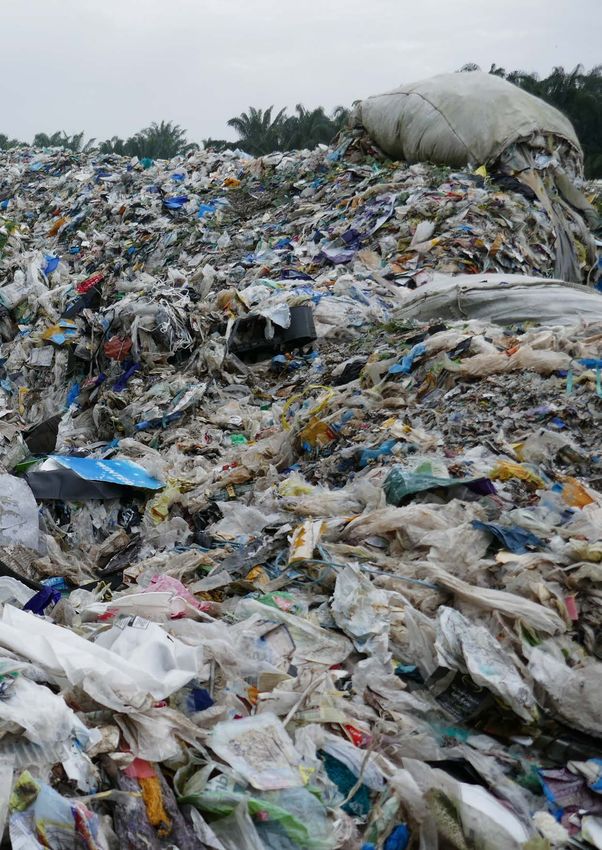
Plastic waste dumps in Malaysia.
© Greenpeace
INTRODUCTION
The UK is a major contributor to the world’s plastic          recycling. Some new recycling infrastructure may
crisis, generating more plastic waste per person than         also be needed so the UK can deal with its own
any other country except the USA.1 Our recycling              plastic waste.
system is already overwhelmed by plastic waste. Now
our waste is overwhelming other countries’ recycling          Most importantly, the UK needs to drastically cut the
systems too, causing serious harm to their citizens           amount of plastic produced in the first place. Reducing
and environment, particularly in Malaysia. Our latest         single-use plastic by 50% would not only allow the UK
investigation in Turkey provides further evidence.            to end waste exports, but would also mean less plastic
                                                              going into incineration and landfill. The government
The UK government needs to take urgent action to              must mandate a 50% reduction in single-use plastic
tackle this plastic crisis. It can start by banning exports   by 2025 – and supermarkets and major brands must
to other countries, including to members of the OECD,         deliver it.
to end the dumping of plastic waste that passes for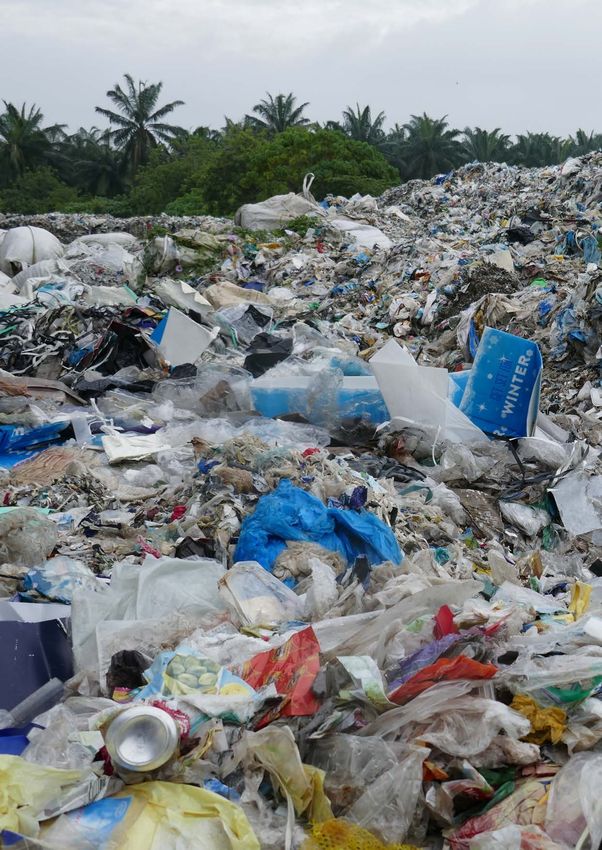
© Steve Morgan / Greenpeace

                              PART 1: THE UK’S
                              PLASTIC PROBLEM

                              ‘According to a recent study, the US and UK produce more
                              plastic waste per person than any other major country.’2
                              Science Advances (2020)

                          4
     4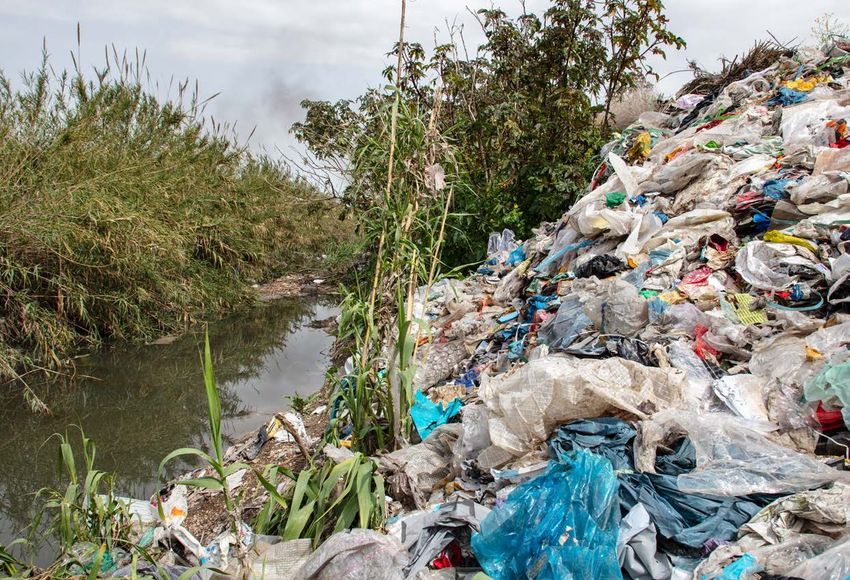
IN 2018, THE UK GENERATED AN ESTIMATED
                                                                       OUGH
                               5.2 MILLION TONNES OF PLASTIC WASTE – EN
                                                                       ES OVER
                               PLASTIC TO FILL WEMBLEY STADIUM SIX TIM

                                                                       The UK is a major contributor to the global plastic crisis. UK
                                                                       companies, especially in the grocery retail sector, are highly
                                                                       dependent on plastic packaging designed to be used once and
                                                                       thrown away. The UK generates more plastic waste per person
                                                                       than almost any other country in the world, second only to the
                                                                       USA.8 In 2018, the UK generated an estimated 5.2 million tonnes
                                                                       of plastic waste9 – enough plastic to fill Wembley Stadium six
                                                                       times over.10

A familiar sight - vegetables wrapped in plastic packaging
at a UK supermarket.                                                   THERE IS RISING PUBLIC PRESSURE
                                                                       TO CUT PLASTIC PACKAGING
                                                                       Public concern about the plastic pollution crisis has risen
WE ARE DROWNING IN THROWAWAY                                           sharply in recent years. ‘Too much plastic’ consistently ranks
PLASTIC                                                                as one of the most pressing environmental issues in opinion
                                                                       polls.11 A recent poll found that 85% of people in the UK want
Companies are still producing far more plastic than our world          the government to make retailers cut the amount of plastic
can cope with. Globally, almost 370 million tonnes of plastic are      packaging.12
created every year.3 By 2015, approximately 6.3 billion tonnes
of virgin plastic had been produced, of which only 9% had been         Supermarkets and major consumer goods brands, which are the
recycled; the rest was burned in incinerators or dumped, either in     largest sources of plastic packaging,13 have responded with high-
landfill or in the environment.4 Plastic waste leaches hazardous       profile initiatives designed to show that they take plastic pollution
chemicals into the soil or is blown into rivers and oceans. Each       seriously. These range from individual actions, such as using
year, at least 8 million tonnes of plastic end up in our oceans, and   recycled plastic (or even reclaimed ocean plastic) in products,14
plastic makes up 80% of all marine debris.5 Plastic is lethal to       to collective actions such as the UK Plastics Pact, which ‘brings
marine life, killing an estimated one million seabirds and 100,000     together businesses from across the entire plastics value chain
marine mammals and turtles every year.6 Plastic bags and flexible      with UK governments and NGOs to tackle the scourge of plastic
packaging are the deadliest plastic items in the sea.7                 waste’.15                                                               5
                                                                                                                                                   5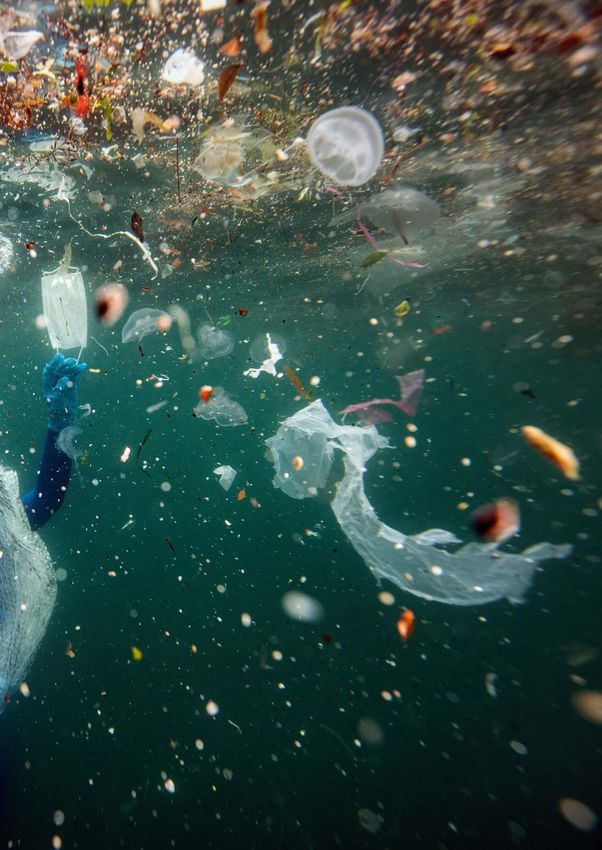
TACKLING THE PROBLEM…                                                  The UK’s governments have also made gestures towards
    OR CLUTCHING AT STRAWS?                                                stemming the plastic tide. In October 2019, the Scottish
                                                                           government banned plastic cotton bud sticks. A year later, a
    While these initiatives have been successful at generating             ban on plastic cotton bud sticks, stirrers and straws came into
    positive media coverage, they have done little to address the root     force in England. Further initiatives on plastic cutlery or fast food
    cause of the plastic crisis: the overproduction of plastic. In fact,   packaging are planned in Northern Ireland, Scotland and Wales.17
    analysis by Greenpeace and the Environmental Investigation             However, these have only a minor impact. Meanwhile, more
    Agency (EIA) found that the top 10 UK supermarkets actually            significant reforms have been repeatedly delayed. For example,
    increased their plastic footprints by 1.2% between 2017 and            plans for a deposit return scheme for England, Northern Ireland
    2019, from 886,000 tonnes to nearly 897,000 tonnes.16                  and Wales – first promised in 2017 – have now been pushed
                                                                           back to 2024 ‘at the earliest’.18

    Plastic waste dumps in Malaysia.

                                                                                                                                                   © Greenpeace

6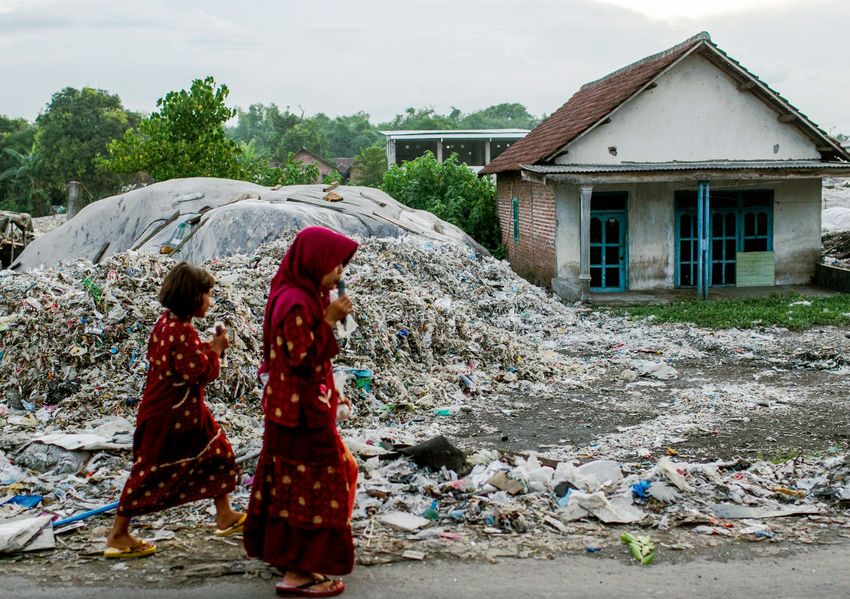
‘The UK is recycling more than ever, achieving a 46% plastic packaging
recycling rate in 2017.’19
Rebecca Pow, UK Environment Minister, response to a Parliamentary Question,
12 November 2020

‘[The UK’s recycling system] appears to have evolved into a comfortable way
for government to meet targets without facing up to the underlying recycling
issues. The government has no evidence that the system has encouraged
companies to minimise packaging or make it easy to recycle. And it relies on
exporting materials to other parts of the world without adequate checks to
ensure this material is actually recycled, and without consideration of whether
other countries will continue to accept it in the long term.’20
National Audit Office, July 2018

LESS THAN 10% OF HOUSEHOLD
PLASTIC PACKAGING GETS
RECYCLED IN THE UK
The sheer volume of plastic waste generated each year vastly
exceeds the UK’s capacity to recycle it. The British Plastics
Federation (BPF) estimates that 46% of the UK’s plastic waste
is incinerated, 19% is exported and 17% goes to landfill.21 Yet the
government and companies continue to emphasise recycling as
the way to deal with plastic waste.22

The situation is particularly serious when it comes to household
plastic packaging. Local authorities collect an estimated 2.3
to 2.4 million tonnes of plastic packaging every year, largely
from households.23 Yet analysis by RECOUP, an industry body
established to promote recycling, indicates that the UK recycles
just 230,000 tonnes of household plastic packaging waste each
year.24 This suggests that less than 10% of household plastic
packaging is actually recycled in the UK.25

                                                                                  7
                                                                                      7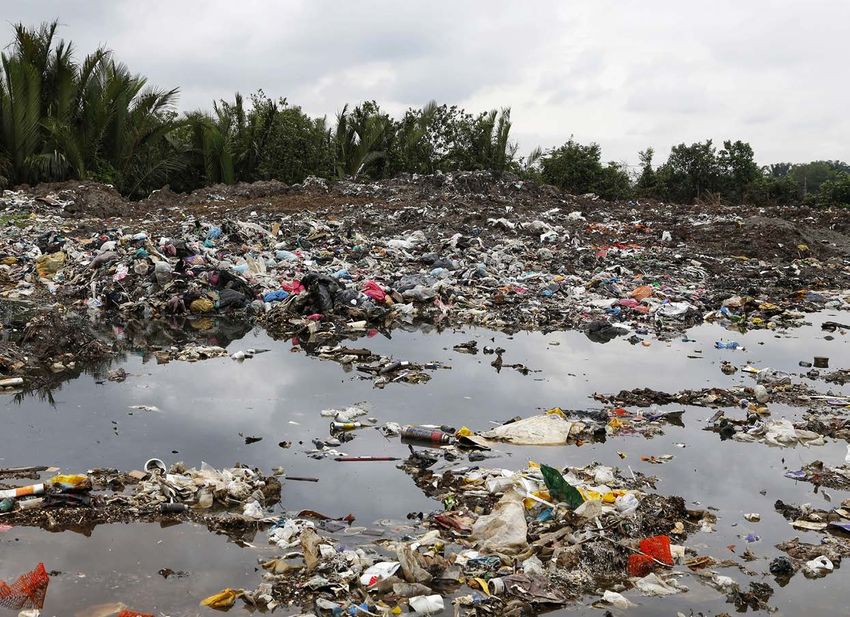
‘The increase in [the UK’s] overall
© Caner Özkan / Greenpeace

                                                                                                  packaging recycling rates has mostly
                                                                                                  been due to a growth in exports: since
                                                                                                  2002 the total amount of packaging
                                                                                                  waste exported abroad has increased
                                                                                                  sixfold while the total amount recycled in
                                                                                                  the UK has remained steady.’26
                                                                                                  National Audit Office, July 2018

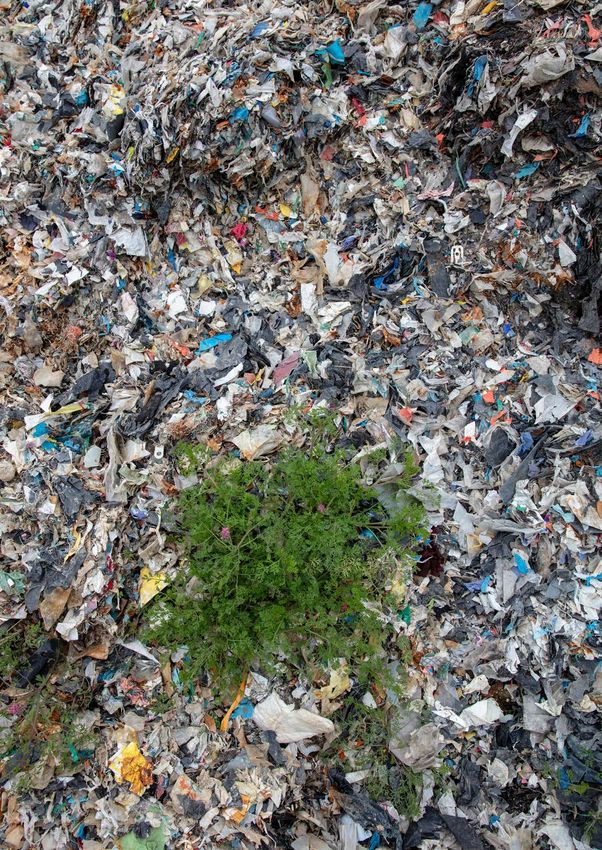
                             Mixed plastic waste that has been dumped in Adana, Turkey.

                             THE UK IS DUMPING ITS
                             WASTE ON OTHER COUNTRIES
                             Well over half of the plastic waste that the UK government
                             counts as ‘recycled’ is actually sent overseas for other countries
                             to deal with. The Environment Agency’s National Packaging
                             Waste Database shows that in 2020, 688,000 tonnes of plastic
                             packaging waste were exported – a daily average of 1.8 million
                             kilos – while only 486,000 tonnes were recycled in the UK.27

                             Analysis of official government trade data shows that the top
                             three export countries for the UK’s plastic waste in 2020 were
                             Turkey (209,642 tonnes – 39%), Malaysia (65,000 tonnes –
                             12%) and Poland (38,000 tonnes – 7%).28 Almost half of the
                             UK’s plastic waste exports are either mixed plastic, styrene or
                             polyvinyl chloride (PVC) – materials that are not easily or widely
                             recycled.

                                         VIRO NM EN T AG ENCY’S NATIONA L PACKAGING WASTE
                                   THE EN
                                                                  688,000 TONNES OF
                                   DATABASE SHOWS THAT IN 2020,       PO RTED FROM THE UK
                                           PACK AG IN G WASTE WE RE EX
     8
                                   PLASTIC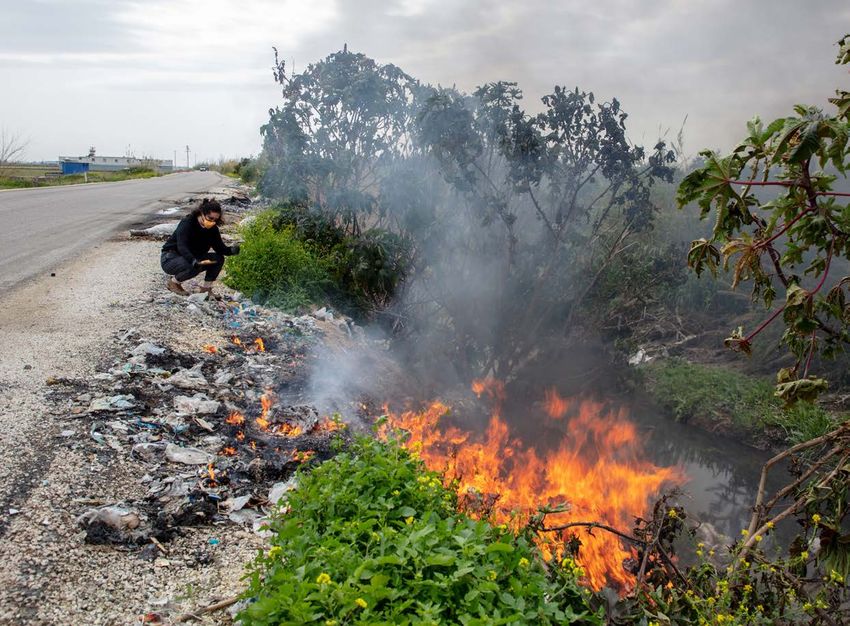
© Caner Özkan / Greenpeace

                             Campaigners find UK packaging in piles of dumped and burned plastic in Adana, Turkey.

                             GOING UP IN SMOKE? WHAT REALLY                                              £   Poland: According to INTERPOL, 2,600 tonnes of UK waste
                             HAPPENS TO UK PLASTIC WASTE                                                     were illegally sent to an illegal dump in Poland.33 In 2018, a fire
                                                                                                             broke out at the dump before the waste could be repatriated.
                             EXPORTS                                                                         According to the Environment Agency, ‘This was one of some
                             It is illegal to export plastic waste from the UK unless it is                  80 waste fires in Poland in 2018 most of which are suspected
                             destined to be recycled or incinerated in an energy-from-waste                  to have been deliberate in an effort to destroy evidence.’34 Most
                             plant,29 and the government optimistically counts all exported                  of the illegal waste reportedly comprised non-segregated
                             plastic waste as recycled. However, investigations by the media                 plastics from UK households and supermarkets.
                             and environmental organisations reveal major problems in the
                             countries to which the UK exports most of its plastic waste:

                             £   Turkey: In June 2020, the BBC discovered British plastic
                                 waste dumped by the roadside and burned near the
                                 city of Adana in southeast Turkey.30 In March 2021,
                                 Greenpeace investigations uncovered further significant
                                 evidence of British plastic waste being dumped and
                                 burned at illegal rubbish tips all across Adana Province.
                                                                                                                                                                                   © Nandakumar S. Haridas / Greenpeace

                             £   Malaysia: Throughout 2018, Greenpeace investigations
                                 discovered British waste dumped and burned in illegal
                                 rubbish dumps across Malaysia.31 This included local
                                 authority recycling bags from London and Essex, as well
                                 as packaging for Fairy dishwasher tablets, Flora butter
                                 and Heinz baked beans. In January 2020, the Malaysian
                                 government announced that it had sent 42 containers of
                                 illegally imported plastic waste back to the UK.32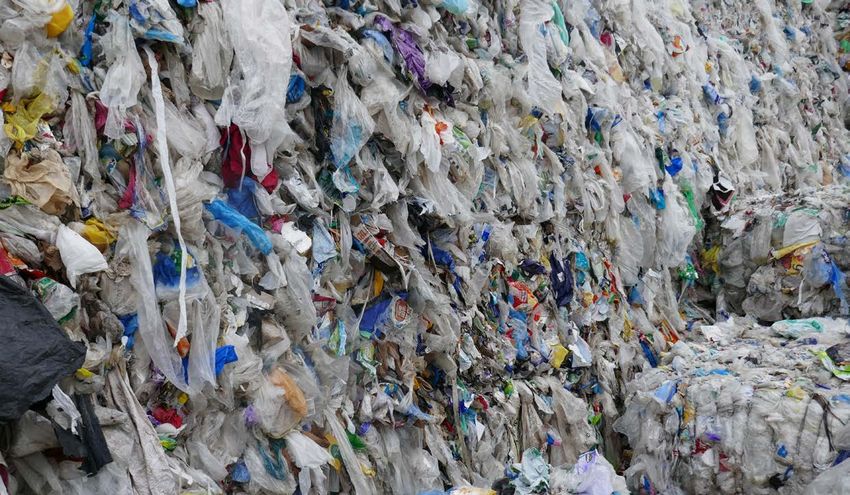
© Nandakumar S. Haridas / Greenpeace

                                       Greenpeace Malaysia discovers UK plastic waste at dump site.

                                       BUSINESS AS USUAL IS                                                  ‘If people want to see us as the rubbish
                                       NO LONGER AN OPTION                                                   dump of the world, you dream on.’35
                                       It is unclear how long the UK will be able to rely on exporting its   Yeo Bee Yin, Malaysian Environment
                                       plastic waste. Many governments have begun restricting the type       Minister, January 2020
                                       and volume of plastic waste they are prepared to take in. China’s
                                       decision to ban most plastic waste imports in 2017 was by far the
                                       most significant,36 but other countries, including India, Malaysia,
                                       Sri Lanka, Thailand, Turkey and Vietnam, have also moved to
                                       protect themselves from imported plastic waste. Reforms to the
                                       Basel Convention on the Control of Transboundary Movements
                                       of Hazardous Wastes and Their Disposal37 have further restricted
                                       the plastic waste trade – at least in theory.

                                       So far, these waste import bans have had no obvious effect
                                       on the UK’s waste industry. Although the UK’s waste exports
                                       fell slightly in 2018 (the first year of the Chinese government’s
                                       plastic waste import ban), 2019 saw the largest volume of waste
                                       exports ever recorded.38 Analysis of customs data shows that
                                       UK companies have responded to the growing number of waste
                                       import bans by sending more and more of our plastic waste to
                                       Turkey. This is overwhelming the country’s recycling system
                                       and fuelling waste crime – with serious consequences for local
                                       people and the environment.

10
© Ecoton / Fully Handoko
Plastic crisis in Bangun Village, Indonesia.
PLASTIC WASTE ISN’T JUST
CAUSING PROBLEMS FOR OCEANS
© Caner Özkan / Greenpeace
AND WILDLIFE, BUT PEOPLE TOO
Dumping and burning plastic waste poses a serious threat
to people’s health. People living near dump sites in Malaysia
and other countries say that plastic pollution and burning
plastic are causing them respiratory issues such as
coughing and difficulty breathing, headaches and itchy, irritated Plastic waste found burning in Adana, Turkey.
eyes, and are concerned that exposure to these toxic fumes may
also be causing problems with menstruation or higher rates of
cancer.39 and practices, meaning companies can find the path of least
resistance to build them.40
Until the introduction of China’s ‘National Sword’ policy, UK
plastic waste was primarily exported to countries in the Global As such, the UK’s current approach to plastic waste exports is
South. Since the ban, the consequences of these imports on part of a legacy of environmental racism carried out through
human health and the environment are still disproportionately dumping toxic or hazardous pollutants.41 As long as the UK
felt by communities of colour. These communities have avoids properly managing and reducing its own waste, it will be
fewer political, economic and legal means to mount effective upholding this structural inequality.
opposition to potentially environmentally hazardous sites
11Tesco cheddar plastic packaging found near burning waste in Adana region, Turkey.
© Caner Özkan / Greenpeace
PART 2: TURKEY, THE
TOP DESTINATION FOR
UK PLASTIC WASTE
In just five years, Turkey has gone from being a minor player in of Turkey’s open attitude to plastic waste. EU member states
the global waste trade to effectively becoming the new China. exported 20 times more plastic waste to Turkey in 2020 than
Exports of plastic waste from the UK to Turkey increased by a they did in 2016, with the volume increasing from 22,000
factor of 18 between 2016 and 2020, from just 12,000 tonnes in tonnes to 447,000 tonnes.44
2016 to 210,000 tonnes in 2020,42 when Turkey received almost
40% of the UK’s plastic waste exports. Nearly half of this was The UK and members of the EU have rules that are meant to
mixed plastic, which is extremely difficult to recycle. prevent the export of plastic waste unless it is destined to be
recycled. Yet Turkey’s official recovery rate for municipal waste –
Although the UK is by far the largest exporter of plastic waste just 12% in 2018 – is the lowest of any Organisation for Economic
to Turkey,43 it has not been the only country to take advantage Co-operation and Development (OECD) member country.45 A
122015 study published in Science magazine ranked Turkey the
14th worst country in the world for mismanagement of plastic
waste.46 WWF has calculated that 0.8 million tonnes of plastic
waste are ‘open dumped’ (ie, dumped at illegal, unregulated sites)
each year in Turkey.47 Almost 20% of the plastic waste entering
the Mediterranean Sea each year – an estimated 110,000 tonnes
– comes from Turkey, with only Egypt contributing more.48
© Caner Özkan / Greenpeace
Plastic pollution is already affecting sea life in the region: in 2019,
Greenpeace Mediterranean tested fish in Turkish waters and
found that almost half contained microplastics.49
The UK’s reckless decision to send more and more of its plastic
waste to a country that lacks the infrastructure to cope with
it has triggered a crisis with lasting environmental and social
consequences. The Turkish Street Waste Collectors Association, A Tesco yoghurt pot from the UK found in piles of dumped
SATDER, reportedly claimed that imported waste has wiped out plastic in Adana, Turkey.
the market for the domestic waste collected by its members,50
and that refuse companies were being paid to take imported
containers of contaminated waste.51 In August 2020, INTERPOL
noted that the influx of European plastic waste to Turkey had
contributed to an explosion of waste crime, with imported plastic
waste dumped illegally and then burned.52
© Caner Özkan / Greenpeace
CALC ULAT ED TH AT 0.8 MILLION TONNES OF
WWF HAS MPED’ (IE, DUMPED AT
TIC W ASTE ARE ‘OPE N DU
PLAS EACH YEAR IN TURKEY
UN REGU LATE D SITES)
ILLEGAL,
Pieces of UK packaging pulled from burning piles of plastic in Adana, Turkey.
225,000 209,642
200,000
175,000
153,915
150,000
125,000
Tonnes
100,000
80,247
75,000
40,934
50,000
11,626
25,000
0
2016 2017 2018 2019 2020
Figure 1: The exponential growth of plastic waste exports from the UK to Turkey (UK Trade Info)53
1336°57'30"N 35°15'46"E
© Caner Özkan / Greenpeace
Dumped plastic spills down a riverbank in Adana, Turkey.
BRITISH PLASTIC IS POLLUTING cases, the plastic was on fire or had been burned. Plastic from
THE MEDITERRANEAN the UK was evident at all of these sites. It included packaging
and plastic bags from high street retailers such as Tesco, Asda,
Many of the Turkish importers that handle plastic waste from the Co-op, Aldi, Sainsbury’s, Lidl and Marks & Spencer, as well as
the UK are located in Adana in Cilicia region, which runs along Lucozade and Fanta bottles and a car number plate.
the Mediterranean coast to the border with Syria. Adana is less
than 100 km from Mersin, Turkey’s largest port and a convenient The waste, much of it shredded, was often found in large off-
stopping point for container vessels travelling to East Asia via the white bags – these same bags were visible outside recycling
Suez Canal. factories throughout Adana. Many had been ripped open,
seemingly deliberately, allowing the plastic to escape. In some
The region has been particularly blighted by plastic. A recent cases, layers of plastic waste had been covered in soil before
study for WWF found that the Cilician coastline suffers more more plastic waste was dumped on top, creating artificial hills
plastic pollution than any other stretch of the Mediterranean.54 several feet high. Other plastic waste was spilling into waterways
The River Seyhan, which runs through the centre of Adana, and and floating downstream. On the Mediterranean coast,
the River Ceyhan, which runs to its southeast, are collectively investigators found more British plastic strewn across the beach,
responsible for 9% of the plastic pollution entering the including the wrapping from a pack of Andrex toilet paper.
Mediterranean each year – second only to the Nile.55
At least some of the plastic waste had been dumped recently.
A Greenpeace UK investigation in March 2021 uncovered new At one site, packaging for a coronavirus antigen test was found
evidence on what is happening to British plastic waste sent amongst bags of British plastic, indicating that the waste was less
to Turkey. At ten sites dotted around the outskirts of Adana, than a year old. At another site, British waste was found alongside
investigators documented piles of plastic waste dumped illegally a Polish cereal packet with a use-by date of August 2021.
in fields, near rivers, on train tracks and by the roadside. In many
14Evidence of UK plastic found dumped in Adana, Turkey.
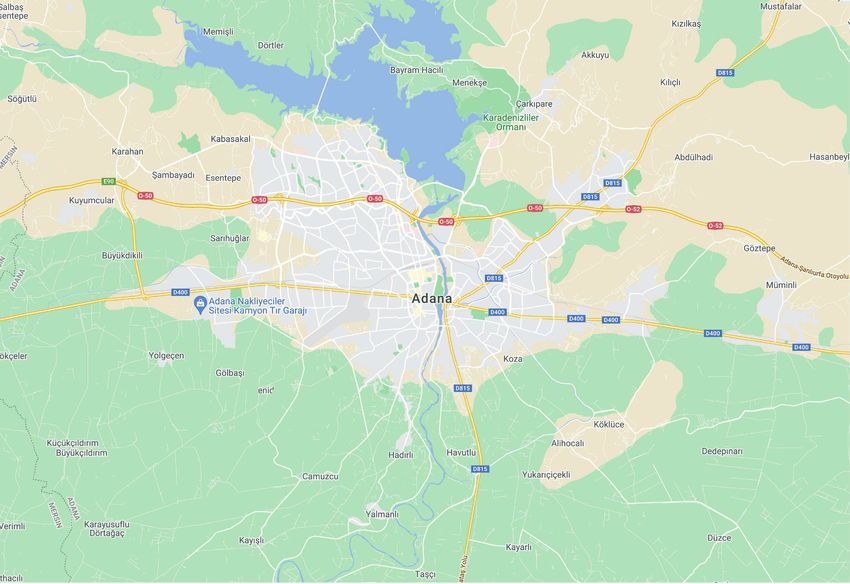
37°01'58"N 35°09'41"E 37°03'04"N 35°11'15"E
Tesco single-use plastic bag Co-op lemonade label
and Asda cream soda wrapper
37°01'58"N 35°09'41"E
M&S bacon wrapper
37°01'58"N 35°09'41"E 37°03'04"N 35°11'15"E
Quavers crisp packet ASDA cashew nuts packet
37°01'58"N 35°09'41"E 37°03'04"N 35°11'15"E 37°03'04"N 35°11'15"E
Lidl plastic bag Pepsi Max cola bottle Tesco hot cross buns bag
All photos © Caner Özkan / Greenpeace
37°03'04"N 35°11'15"E 36°40'54"N 35°04'01"E 36°57'30"N 35°15'46"E
KP Original salted peanuts packet Andrex toilet roll bag Tesco whole fat milk label
15KARAHAN
37°03'04"N 35°11'15"E
Karahan
KARAHAN
°11'13"E
37°03'55"N 35 KARAHAN
37°02'55"N 35°12'41"E
Kuyumcular O-50
KUYUMCULAR
37°01'58"N 35°09'41"E
D400
A
YENIDAM Yenidam
36°57'34"N 35°15'49"E
YENIDAM
°15'46"E
36°57'30"N 35Greenpeace UK investigation uncovers new evidence of
Ankara
UK plastic waste dumped in Adana Province, Turkey.
TURKEY
Adana
Mersin
D815
O-50
DEDEPINARI
36°58'20"N 35°26'46"E
D815
A d a n a
D400
Dedepinari
D815
All photos © Caner Özkan / GreenpeaceTHE TURKISH GOVERNMENT’S
PLASTIC CRACKDOWN
In recent months, following the lead of China and other countries,
the Turkish government has moved to restrict the amount of
plastic waste it takes in. In September 2020, the Turkish Ministry
of Environment and Urban Planning announced that recycling
facilities could only use half of their capacity to process imported
plastic, down from a previous limit of 80%.56 Then, in late 2020,
the Turkish government announced that a ban on importing many
types of plastic waste would come into effect from 1 January
2021. This included a ban on mixed plastics, as well as any
plastics that had undergone ‘mechanical treatment’.57
The ban has met with opposition from companies in Turkey, with
one Turkish recycler telling journalists that the industry was now
‘desperate for plastic scrap’.58 Within the UK, exporters reportedly
stoked fears of poor-quality waste being stockpiled.59 However,
so far the ban appears to have had minimal impact: in January
2021, the UK actually sent more plastic waste to Turkey than it did
the previous January, up from 12,400 tonnes to 14,500 tonnes.60
In February 2021, the UK’s plastic waste exports to Turkey were
more than double the previous February’s, up from 14,000 tonnes
to 30,300 tonnes.61 The volume of mixed plastic waste did fall
very slightly, with the UK exporting 14,000 tonnes to Turkey in
the first two months of the 2020 and 13,400 tonnes in the same
period in 2021.62 However, at this stage it is unclear if there has
been a genuine reduction in mixed plastic exported to Turkey or if
companies are circumventing the ban by mislabelling their waste.
Either way, this is yet another reminder that the UK’s strategy of
exporting its plastic waste depends on other countries remaining
willing to carry the environmental and societal costs of plastic
pollution.
Turkish world record–holding free diver observing
the plastic waste in Ortakoy coastline, Turkey.
18© Sebnem Coskun/Anadolu Agency/Getty Images
© David Mirzoeff / Greenpeace

                                PART 3: TACKLING THE
                                UK’S PLASTIC CRISIS

                                ‘We will continue to lead the world in tackling plastics pollution,
                                both in the UK and internationally.’63
                                Boris Johnson, UK Prime Minister

20
THE GOVERNMENT IS FAILING TO
ADDRESS PLASTIC POLLUTION
In its 2019 manifesto, the UK government committed to introduce
a ban on plastic waste exports to non-OECD countries,64 such
as Indonesia and Malaysia. This is in addition to its existing
commitments to introduce a deposit return scheme (DRS)65 in
England, Wales and Northern Ireland;66 to change how domestic
recycling is funded, through an Extended Producer Responsibility
(EPR) scheme;67 and to introduce a tax on plastic packaging that
contains less than 30% recycled content.68
The ban on exports to non-OECD countries is to be enacted
through new powers contained within the ‘landmark’ Environment
Bill introduced in 2019,69 and the government has committed to
consult on introducing the ban by the end of 2022.70 However,
protracted consultations over other plastic waste initiatives,
including recent delays to the flagship DRS,71 suggest that the
status quo will continue for at least the lifetime of the current
Parliament.
A PARTIAL EXPORT BAN JUST MOVES
THE PROBLEM ELSEWHERE
Instead of reducing the amount of British plastic waste that gets
exported, a ban that only applies to non-OECD members will
simply drive more of our plastic waste to OECD members. In
2020, only 20% of the UK’s plastic waste was exported to non-
OECD countries, while 80% went to countries like Turkey that are
members of the OECD.72 As such, the government’s proposals
will do little to curb the UK’s contribution to the global plastic
pollution crisis.
In January 2021, the first month of the new Basel Convention
regulations, the UK’s overall waste exports fell by 30% compared
to the previous year – but this was predominantly due to a
decline in exports to non-OECD countries.73 As discussed in
Part 2, exports to Turkey actually increased, despite new
Greenpeace activists deliver a giant plastic bottle regulations from the Turkish government supposedly prohibiting
to Michael Gove in London. almost all plastic waste imports.74
Our recycling system is already overwhelmed by plastic waste.75
Without urgent government action to end exports of plastic
waste and cut the amount of plastic being produced in the UK,
our plastic will continue to overwhelm other countries’ recycling
systems as well, causing ever more serious harm to their citizens
and environment.
21HOW MUCH NEW INFRASTRUCTURE Given the above, it is possible to estimate the additional capacity
IS NEEDED TO END THE UK’S PLASTIC needed to recycle all the UK’s plastic packaging waste within the
UK. If none of the planned infrastructure were built but the full
WASTE EXPORTS? capacity of the existing infrastructure were used, then 482,000
Ending waste exports would require some investment in new tonnes of new capacity would be needed. If all 260,000 tonnes of
recycling infrastructure in the UK. However, there is significant expected additional capacity were built and the existing capacity
underutilised capacity at present, and more coming on stream were fully used, a further 222,000 tonnes of capacity would be
over the next few years. Reforming the UK’s recycling system – at needed to prevent plastic waste that is currently being exported
the same time as cutting single-use plastic – would minimise the from going to landfill or incineration.
amount of new infrastructure needed.
Maximising the utilisation of the UK’s recycling infrastructure
The UK’s domestic recycling process involves numerous steps is critical to reducing the amount of new infrastructure needed
and facilities. First, locally collected waste and recycling is to accomodate the UK’s exported plastic waste. While there
taken to transfer stations, where it is stockpiled before being will always be some underutilisation of recycling infrastructure
transported to ‘materials recovery facilities’ (MRFs). These take caused by contamination and irregular input streams, the
in mixed recyclables and sort them into different material types government has long promised to introduce measures to
(eg, different types of plastic) for reprocessing. The separated maximise the efficiency of the UK’s recycling system. The
recyclable materials are then sent to recycling facilities which upcoming reforms to the Extended Producer Responsibility
convert them into raw materials for future manufacturing.76 scheme provide an opportunity to levy charges that discourage
companies from producing non-recyclable packaging and
At present, there is limited data on the total capacity of recycling incentivise them to switch to reusable, refillable or packaging-
infrastructure in the UK. According to RECOUP, the UK has 16 free options. A comprehensive, ‘all in’ deposit return scheme
plastic recycling facilities that handle packaging waste. These would create a new, higher-quality stream of plastic inputs and
have a total estimated processing capacity of 440,000 tonnes prevent plastic bottles from going to landfill or incineration. The
but an output of just 230,000 tonnes – ie, a utilisation rate of government should also deliver on its promise to make local
just 52%.77 RECOUP estimates that a further 260,000 tonnes of authority collections more consistent.
plastic packaging reprocessing capacity will be available in the
future, with some of this expected to have become operational Even with these interventions, recycling alone is never going to
by the end of 2020.78 This puts the UK’s forecast domestic plastic be sufficient to tackle the volume of plastic that companies are
packaging recycling capacity at 700,000 tonnes. producing. Unlike other materials, plastic degrades in quality
each time it is recycled. It is therefore more accurate to speak of
The construction of new recycling infrastructure takes anywhere ‘downcycling’ plastic. Post-consumer packaging is particularly
from 12–24 months,79 depending on the scale of the plant as unsuited to recycling. Much of it is contaminated by food; many
well as factors such as land purchase, planning consensus post-consumer plastics, such as film, are extremely difficult to
and attaining operational licences, etc.80 A ban on plastic waste recycle in practice; and there are insufficient commercial markets
exports would likely require legislation, so it is reasonable to for the products it can be downcycled into. Thus it is most
assume that all planned facilities would be operational by the time important for the UK to also cut the amount of plastic produced
any ban came into force. in the first place – especially unrecyclable or hard-to-recycle
plastics.
Plastic packaging Additional capacity needed
recycling capacity if waste exports are banned
Existing capacity 440 kt 482 kt
Existing capacity plus all
700 kt 222 kt
planned capacity
Figure 2: Estimate of additional recycling capacity needed if waste exports are
22RECYCLING ISN’T THE ONLY SOLUTION There is no data on how much single-use plastic is generated in
– THE UK NEEDS TO CUT SINGLE-USE the UK each year. However, because single-use plastic is used
primarily for packaging,81 which comprises more than two-thirds
PLASTIC of all UK plastic waste,82 cutting the use of single-use plastic
Ultimately, our plastic waste exports and overwhelmed domestic would result in a significant drop in plastic waste.
recycling system are symptoms of the fact that British companies
are producing far too much plastic. While it is imperative that we We estimate that reducing single-use plastic by 50% would
eliminate waste exports because of the health and environmental allow the UK to end waste exports. It would also significantly
harm they cause, simply building enough infrastructure to handle reduce the amount of plastic going into incineration and
our own waste isn’t the answer. The only way to solve the plastic landfill, as the following table illustrates.83
crisis is to permanently reduce the amount of plastic packaging in
the market.
Additional capacity needed
Plastics collected for recycling,
Single-use plastic (based on existing recycling capacity +
reuse and recovery
assuming all planned capacity built)
Business-as-usual
scenario, assuming
plastic use remains
at current levels
1,141 KT 222 KT
50% reduction
741 KT 0 KT
Figure 3: Our estimate shows that reducing single-use plastic by 50% would allow the UK to ban waste exports
without needing significant further recycling capacity beyond what is already planned
23275,000
250,000
225,000
200,000
175,000
150,000
125,000
100,000
75,000
50,000
25,000
0
Figure 4: The amount of plastic packaging UK supermarkets produced in 2019 (in tonnes)
COMPANIES NEED TO TAKE
RESPONSIBILITY FOR THEIR
PLASTIC POLLUTION
Halving single-use plastic over the next four years is entirely
achievable, because a small number of companies are behind the
vast majority of the UK’s plastic packaging. The 68 companies
that have signed the Plastics Pact – a voluntary commitment
to ‘take the first steps towards ensuring that our supermarket
shelves are free of problematic and unnecessary plastics’ –
© Isabelle Rose Povey / Greenpeace
produce two-thirds of the UK’s consumer plastic packaging.84 The
top 10 supermarkets between them generate around 900,000
tonnes of plastic packaging each year.85 Meaningful action by
the corporate sector is key to reducing the UK’s plastic waste
to a level where the UK can recycle all the plastic it produces.
Sainsbury’s86 and Aldi87 have already committed to a 50%
reduction in single-use plastic by 2025, and others should follow
suit.
Waitrose refill station, Oxford, UK.
A permanent reduction in plastic packaging requires a shift
away from the current linear ‘take, make, dispose’ model and its
environmental consequences, to a circular economy that keeps least one reuse trial underway, as do several FMCG companies.
materials in a cycle for as long as possible. For retailers and However, most companies have not set targets for reuse, either
fast-moving consumer goods (FMCG) companies, this means for consumer or transit packaging. Analysis by Greenpeace and
replacing single-use packaging with reusable containers, and Unpackaged Innovation Ltd recommends that if retailers are to
providing a combination of in-store dispensers, home delivery reduce their plastic packaging by 50% by 2025, at least 25% of
systems and infrastructure to collect, wash and refill containers. consumer packaging will need to be reusable.89
Despite the initial investment needed, there are clear cost savings
and supply chain benefits to be gained by switching to reusable Government action is needed to encourage manufacturers,
packaging. The Ellen MacArthur Foundation (EMF) estimates that brands and retailers to find solutions to the plastic crisis. This
globally, replacing just 20% of single-use plastic packaging with includes setting legally binding plastic packaging reduction
reusable alternatives offers an opportunity worth at least US$10 targets and reforming Extended Producer Responsibility
billion.88 requirements to make the whole supply chain responsible for
the full environmental impact of the plastic it produces. These
The reuse economy is gathering pace, albeit from a very low measures would drive retailers and producers to eliminate
starting point. Each of the UK’s major supermarkets now has at unrecyclable or hard-to-recycle plastics, invest in reuse solutions
and – most importantly – reduce the amount of plastic
24 packaging they produce.© Constantinos Stathias / Greenpeace
PART 4: TIME The Rainbow Warrior on the Greek leg of the plastic-
FOR ACTION
free Mediterranean tour.
The UK government must: of fees to incentivise eco-design, reuse and reduction and
penalise single-use packaging.
1. Enact the Environment Bill, and use the powers within it to ban 4. Implement an all-in deposit return scheme (DRS) for drinks
plastic waste exports. This should start with an immediate containers whose scope of materials and deposit level is
ban on all exports to non-OECD member countries and mixed consistent across the UK – including plastic, aluminium and
plastic waste to OECD member countries. A complete ban on glass at a minimum, and containers of all sizes – as well as
all plastic waste exports should be in place by no later than creating the system conditions for the introduction of reusable
2025. and refillable systems for beverage packaging.
2. Use the Environment Bill to set legally binding targets to 5. Deliver the promised improvements to consistency of
reduce single-use plastic by 50% by 2025 and to introduce household and business recycling collections under the
mandatory corporate reporting on plastic reduction, in order to 2018 Waste and Resources Strategy.
create a level playing field for industry to transition to refill and 6. Immediately increase Environment Agency funding and
reuse. personnel to ensure better monitoring and enforcement of the
3. Design new Extended Producer Responsibility (EPR) waste export industry.
requirements to increase reuse and reduction of packaging 7. Introduce a moratorium on the construction of new
as well as recyclability. This should be achieved through a incineration capacity in the UK. 25
combination of reuse and reduction targets and modulationEndnotes
1 Carrington D (2020) ‘US and UK citizens are world’s biggest sources of plastic 20 National Audit Office (2018) ‘The packaging recycling obligations’ www.nao.
waste – study’ 30 October 2020 The Guardian www.theguardian.com/envi- org.uk/report/the-packaging-recycling-obligations/ p11
ronment/2020/oct/30/us-and-uk-citizens-are-worlds-biggest-sources-of-plas- 21 British Plastics Federation (2021) ‘Recycling roadmap’ https://bpf.co.uk/
tic-waste-study roadmap pp49,52. For these calculations, the BPF estimates the total volume
2 https://advances.sciencemag.org/lens/advances/6/44/eabd0288#figures of plastic waste generated each year in the UK at 4.6 million tonnes, of which
3 PlasticsEurope (2020) ‘Plastics – the facts 2020’ www.plasticseurope.org/ 2.9 million tonnes are plastic packaging.
en/resources/publications/4312-plastics-facts-2020 p16 22 British Plastics Federation (2021) ‘Recycling roadmap’ https://bpf.co.uk/road-
4 Geyer R, Jambeck JR & Law KL (2017) ‘Production, use, and fate of all map p52
plastics ever made’ Science Advances 3(7): e1700782 https://advances. 23 Eunomia Research & Consulting (2018) ‘Plastic packaging: Shedding light on
sciencemag.org/content/3/7/e1700782 the UK data’ www.eunomia.co.uk/reports-tools/plastic-packaging-shedding-
5 IUCN (2018) ‘Issues brief: Marine plastics’ www.iucn.org/resources/is- light-on-the-uk-data/ p8
sues-briefs/marine-plastics 24 RECOUP (2020) ‘UK plastics reprocessing capacity needs to double by 2022’
6 United Nations Ocean Conference (2017) ‘Factsheet: Marine pollution’ 21 August 2020 www.recoup.org/news/8052/uk-plastics-reprocessing-ca-
https://sustainabledevelopment.un.org/content/documents/Ocean_Fact- pacity-needs-to-double-by-2022. Recent estimates from Valpak suggest the
sheet_Pollution.pdf amount of plastic actually recycled could be as low as 166,000 tonnes, see
‘PackFlow Covid-19 Phase I: Plastic’, October 2020
7 Roman L et al (2020) ‘Plastic pollution is killing marine megafauna, but how
do we prioritize policies to reduce mortality?’ Conservation Letters 3 Decem- 25 This is unsurprising, given that domestic recycling collection regimes vary
ber 2020 https://doi.org/10.1111/conl.12781 wildly from council to council and that so much domestic plastic packaging
consists of hard-to-recycle plastics, such as film, and is contaminated by
8 Law KL et al (2020) ‘The United States’ contribution of plastic waste to land food and non-recyclable material.
and ocean’ Science Advances 6(44): eabd0288 https://advances.science-
mag.org/content/6/44/eabd0288 26 National Audit Office (2018) ‘The packaging recycling obligations’ www.nao.
org.uk/report/the-packaging-recycling-obligations/ p7
9 Including 3.5 million tonnes of plastic packaging. Source: Elliott T & Elliott L
(2018) ‘Plastics consumption and waste management’ final report for WWF, 27 Environment Agency (2021) ‘2020 Q1, Q2, Q3 & Q4 packaging recycling &
prepared by Eunomia Research & Consulting www.wwf.org.uk/sites/default/ recovery data: Monthly packaging waste exported and accepted for repro-
files/2018-03/WWF_Plastics_Consumption_Report_Final.pdf p2. Although cessing’ https://npwd.environment-agency.gov.uk/FileDownload.ashx?FileId
far greater than official estimates (reportedly around 2.2 million tonnes in =0a5c8f28-c4b3-436f-9354-25b266871ddc
2015 based on a study conducted for Defra by the UK’s largest compliance 28 www.uktradeinfo.com/
scheme, Valpak; see Eunomia Research & Consulting (2018) ‘Plastic packag- 29 Lythgo M (2018) ‘Waste exports – beyond the headlines’ 29 October 2018 En-
ing: Shedding light on the UK data’ www.eunomia.co.uk/reports-tools/plas- vironment Agency blog https://environmentagency.blog.gov.uk/2018/10/29/
tic-packaging-shedding-light-on-the-uk-data/ piii), this is similar to figures waste-exports-beyond-the-headlines/
produced by the British Plastics Federation (BPF). The BPF estimates the
total volume of plastic waste generated in the UK in 2019 at between 3.8 and 30 Crawford A (2020) ‘Why is UK recycling being dumped by Turkish roadsides?’
5.4 million tonnes, with plastic packaging accounting for between 2.4 and 26 June 2020 BBC News www.bbc.co.uk/news/av/uk-53181948
3.4 million tonnes of this; see British Plastics Federation (2021) ‘Recycling 31 Ross A (2018) ‘UK household plastics found in illegal dumps in Malaysia’
roadmap’ https://bpf.co.uk/roadmap p49. 21 October 2018 Greenpeace Unearthed https://unearthed.greenpeace.
10 One cubic metre of plastic waste weighs 0.22 tonnes (source: Collinson org/2018/10/21/uk-household-plastics-found-in-illegal-dumps-in-malaysia/
M & Eatherley D (2011) ‘Halving waste to landfill: Annual reporting 32 BBC News (2020) ‘Malaysia returns 42 containers of “illegal” plastic waste to
guidance for waste management contractors’ report prepared by Oakdene UK’ 20 January 2020 www.bbc.co.uk/news/uk-51176312
Hollins Ltd for Mark Collinson, WRAP https://static1.squarespace. 33 INTERPOL (2020) ‘Strategic Analysis Report: Emerging criminal trends
com/static/5a60c3cc9f07f58443081f58/t/5ab3db3f575d1f9b7 in the global plastic waste market since January 2018’ www.interpol.int/
8d95187/1521736512576/2011_wrap_halving_waste_to_landfill_annual_ en/content/download/15587/file/INTERPOL%20Report%20_criminal%20
reporting_guidance_for_waste_management_contractors.pdf p11). 5.2 trends-plastic%20waste.pdf p31
million tonnes of plastic waste is therefore approximately 23.6 million cubic
metres. Wembley Stadium has a volume of 4 million cubic metres, so the 34 Ibid. p31
UK’s plastic waste would fill it 5.9 times over. 35 Sky News (2020) ‘Malaysia sends plastic waste back to UK insisting it is
11 See eg Agyepong-Parsons J (2020) ‘Plastic pollution tops list of public’s not world’s “rubbish dump”’ 20 January 2020 https://news.sky.com/story/
environmental concerns, survey finds’ 1 October 2020 ENDS Report www. malaysia-sends-plastic-waste-back-to-uk-insisting-it-is-not-worlds-rubbish-
endsreport.com/article/1696048/plastic-pollution-tops-list-publics-en- dump-11913156
vironmental-concerns-survey-finds, Dilkes-Hoffman L et al (2019) ‘Public 36 Toloken S (2017) ‘China tightens crackdown on imported waste plastics’ 28
attitudes towards plastics’ Resources, Conservation and Recycling 147: February 2017 Plastics News www.plasticsnews.com/article/20170228/
227–235 https://doi.org/10.1016/j.resconrec.2019.05.005 and European NEWS/170229892/china-tightens-crackdown-on-imported-waste-plastics
Commission (2020) ‘Protecting the environment – Eurobarometer survey’ 3
37 See www.basel.int/TheConvention/Overview/TextoftheConvention/ta-
March 2020 https://ec.europa.eu/commission/presscorner/detail/en/QAN-
bid/1275/Default.aspx.
DA_20_330.
38 www.uktradeinfo.com/
12 According to an as yet unpublished poll conducted for Greenpeace UK by
YouGov. 39 Verma R et al (2016) ‘Toxic pollutants from plastic waste – a review’ Proce-
dia Environmental Sciences 35: 701–708 www.sciencedirect.com/science/
13 See EIA & Greenpeace (2021) ‘Checking out on plastics III’ https://eia-inter-
article/pii/S187802961630158X
national.org/wp-content/uploads/Checking-Out-on-Plastics-III.pdf.
40 Beech P (2020) ‘What is environmental racism?’ 31 July 2020 World Econom-
14 For instance, Coca-Cola now uses recycled content in all plastic bottles
ic Forum www.weforum.org/agenda/2020/07/what-is-environmental-rac-
across its core brands sold in the UK (see Coca-Cola Great Britain (2020)
ism-pollution-covid-systemic/
‘Coca-Cola Great Britain reaches major sustainability milestone as 50%
of plastic used in core portfolio is now from recycled sources’ 21 Sep- 41 See eg Bullard RD et al (2007) ‘Toxic wastes and race at twenty: 1987–2007’
tember 2020 www.coca-cola.co.uk/our-business/media-centre/coca-co- www.nrdc.org/sites/default/files/toxic-wastes-and-race-at-twenty-1987-2007.
la-great-britain-reaches-major-sustainability-milestone-a), and in 2017 pdf.
Procter & Gamble began using ocean plastics in the bottles of one variant of 42 www.uktradeinfo.com/
its Fairy washing up liquid (see Procter & Gamble (2017) ‘Procter & Gamble
43 Basel Action Network (2020) ‘Plastic waste sent from EU to Turkey increased
launches new Fairy Ocean Plastic bottle made from 100% recycled plastic
by almost 200 times’ 27 June 2020 www.ban.org/news/2020/6/29/plastic-
and ocean plastic’ 5 October 2017 https://pgnewsroom.co.uk/news-releas-
waste-sent-from-eu-to-turkey-increased-by-almost-200-times
es/news-details/2017/Procter--Gamble-launches-new-Fairy-Ocean-Plastic-
bottle-made-from-100-recycled-plastic-and-ocean-plastic/default.aspx). 44 Eurostat ‘Waste – overview’ https://ec.europa.eu/eurostat/web/waste.
Although the UK was a member of the EU until December 2019, these figures
15 See WRAP website ‘The UK Plastics Pact’ https://wrap.org.uk/taking-action/
do not include plastic waste from the UK.
plastic-packaging/the-uk-plastics-pact.
45 OECD.Stat ‘Municipal waste, generation and treatment’ https://stats.oecd.
16 EIA & Greenpeace (2021) ‘Checking out on plastics III’ https://eia-internation-
org/Index.aspx?DataSetCode=MUNW#
al.org/wp-content/uploads/Checking-Out-on-Plastics-III.pdf p13
46 Jambeck JR et al (2015) ‘Plastic waste inputs from land into the ocean’
17 See eg Smith L (2021) ‘Plastic waste’ House of Commons Library Briefing
Science 347(6223): 768–771 https://science.sciencemag.org/con-
Paper no. 08515 24 March 2021 https://researchbriefings.files.parliament.
tent/347/6223/768.full
uk/documents/CBP-8515/CBP-8515.pdf pp30-34 and DAERA website
‘Reducing unnecessary single-use plastic in NICS government estate’ 47 WWF (2019) ‘Stop the flood of plastic: How Mediterranean countries can
www.daera-ni.gov.uk/articles/reducing-unnecessary-single-use-plas- save their sea’ www.wwf.fr/sites/default/files/doc-2019-06/20190607_Rap-
tics-nics-government-estate. port_Stoppons_le_torrent_de_plastique_WWF-min.pdf p20
18 Defra website ‘Introducing a deposit return scheme in England, Wales and 48 Ibid. p8
Northern Ireland’ https://consult.defra.gov.uk/environment/consulta- 49 44.3 percent of fish tested contained microplastic in their gastrointestinal
tion-on-introducing-a-drs/ tracts, and specifically ‘64.8 percent of the gray mullet species, 63 percent of
19 UK Parliament website ‘Written questions, answers and statements: UIN red mullets, 34.3 percent of the striped seabream, 32.8 percent of the striped
26 113020, tabled on 9 November 2020’ https://questions-statements.parlia- red mullets and 26.7 percent of the Mediterranean horse mackerel’. Source:
ment.uk/written-questions/detail/2020-11-09/113020 Hürriyet Daily News (2019) ‘44 percent of fish in Turkish waters containmicroplastics: Report’ 25 October 2019 www.hurriyetdailynews.com/44- ‘UK household plastic packaging sorting and reprocessing infrastructure
percent-of-fish-in-turkish-waters-contain-microplastics-report-147934 2020’ available at www.recoup.org/news/8052/uk-plastics-reprocess-
citing Greenpeace Akdeniz (2019) ‘Plastikten kurtul oltaya gelme’ www. ing-capacity-needs-to-double-by-2022 pp6-7.
greenpeace.org/static/planet4-turkey-stateless/2019/10/33abcb16-mikro- 78 Ibid. p8
plastik_rapor_final_rev.pdf p4.
79 3keel, correspondence with Greenpeace UK, 2018.
50 Süzer E (2019) ‘Kağıt toplayıcılar işsiz kalacak!’ 13 August 2019 Sözcü www.
sozcu.com.tr/2019/ekonomi/kagit-toplayicilar-issiz-kalacak-5279803/ 80 A separate study by the non-profit WRAP produces a similar timeline, with
250 kt of new capacity announced since the start of 2019 and expected to
51 Uğurtaş S (2020) ‘Why Turkey became Europe’s garbage dump’ 18 Septem- come online by the end of 2021. See WRAP (2019) ‘Plastics market situation
ber 2020 Politico www.politico.eu/article/why-turkey-became-europes-gar- report 2019’ www.wrap.org.uk/sites/files/wrap/WRAP_Plastics_market_sit-
bage-dump/ uation_report.pdf p11.
52 INTERPOL (2020) ‘INTERPOL report alerts to sharp rise in plastic waste 81 UN Environment Programme (2018) ‘Single-use plastics: A roadmap for
crime’ 27 August 2020 www.interpol.int/en/News-and-Events/News/2020/ sustainability (rev. 2)’ https://wedocs.unep.org/handle/20.500.11822/25496
INTERPOL-report-alerts-to-sharp-rise-in-plastic-waste-crime pp2,4
53 www.uktradeinfo.com/ 82 Elliott T & Elliott L (2018) ‘Plastics consumption and waste management’
54 WWF (2019) ‘Stop the flood of plastic: How Mediterranean countries can final report for WWF, prepared by Eunomia Research & Consulting www.wwf.
save their sea’ www.wwf.fr/sites/default/files/doc-2019-06/20190607_Rap- org.uk/sites/default/files/2018-03/WWF_Plastics_Consumption_Report_Fi-
port_Stoppons_le_torrent_de_plastique_WWF-min.pdf p10 nal.pdf p2
55 Ibid. p11 83 The projected shortfall in recycling capacity in the event of an exports ban
56 Smalley M (2020) ‘Turkey to reduce paper, plastics scrap imports 10’ can be estimated as follows. Start with the annual plastic waste collected
September 2020 Recycling Today www.recyclingtoday.com/article/turkey- in the UK for recycling – ie, the sum of the volume of plastic waste sent for
limits-paper-plastic-scrap-imports-50-percent/ recycling or incineration in the UK and the volume exported. In 2019, this was
1,141 kt.
57 Sanderson P (2021) ‘Martin Robb’s Plastic Market Report: January 2021’
27 January 2021 REB Market Intelligence www.rebnews.com/martin- Assume there is a linear relationship between the amount of plastic waste
robbs-plastic-market-report-january-2021/ and Environment Agency (2021) produced and the amount of plastic waste collected for recovery (ie, if 10%
‘International waste shipments: Updated controls for the export of waste less plastic waste is produced, then 10% less plastic waste will be collected).
plastics to Turkey’ https://1ur6751k3lsj3droh41tcsra-wpengine.netdna-ssl. Single-use plastic (SUP) is mostly packaging, and packaging makes up
com/wp-content/uploads/2021/03/Environment-Agency-Turkey-waste- around 70% of plastic waste, and for the purposes of this calculation we
import-restrictions-February-26-2021.pdf have assumed that there is a 1:1 relationship between single-use plastic and
plastic packaging. Thus, we can work through the figures in the second line
58 McGlone C (2021) ‘How Turkey could spark a recycling crisis in the UK’ of the table as follows:
25 March 2021 ENDS Report www.endsreport.com/article/1711002/tur-
key-spark-recycling-crisis-uk – A 10% reduction in SUP is estimated to produce a 7% reduction in plastic
waste, or 80 kt. This means the forecast volume of plastic waste collected
59 McGlone C (2021) ‘Exclusive: Turkey ban “could lead to plastic waste would be 1,061 kt.
stockpiling in the UK”’ 10 March 2021 ENDS Report www.endsreport.com/
article/1709038/exclusive-turkey-ban-could-lead-plastic-waste-stockpiling- – 219 kt either is sent to incineration or is non-packaging plastic waste
uk that is recycled separately (see Figure 1), and this figure is assumed to
remain constant. Subtracting this from the forecast volume of plastic waste
60 www.uktradeinfo.com/ collected (1,061 kt) leaves 842 kt of plastic packaging waste to be recycled.
61 www.uktradeinfo.com/ There are then two scenarios, and again they can be illustrated by working
62 www.uktradeinfo.com/ through the numbers in the second row of the table. In the case of the UK’s
63 Conservative and Unionist Party (2019) ‘Get Brexit done, unleash Britain’s current processing capacity of 440 kt, the forecast shortfall would be 402 kt.
potential: The Conservative and Unionist Party Manifesto 2019’ https:// If all the planned infrastructure gets built, the forecast shortfall would be just
assets-global.website-files.com/5da42e2cae7ebd3f8bde353c/5d- 142 kt.
da924905da587992a064ba_Conservative%202019%20Manifesto.pdf p43 84 WRAP website ‘The UK Plastics Pact: Member progress report’ https://wrap.
64 Ibid. p43 org.uk/resources/report/uk-plastics-pact-member-progress-report
65 UK Government (2019) ‘Introducing a deposit return scheme (DRS) in 85 EIA & Greenpeace (2021) ‘Checking out on plastics III’ https://eia-
England, Wales and Northern Ireland: Executive summary and next steps’ international.org/wp-content/uploads/Checking-Out-on-Plastics-III.pdf p13
www.gov.uk/government/consultations/introducing-a-deposit-return- 86 Sainsbury’s (2019) ‘Sainsbury’s commits to reduce plastic packaging by
scheme-drs-for-drinks-containers-bottles-and-cans/outcome/introducing- 50% by 2025’ 12 September 2019 www.about.sainsburys.co.uk/making-
a-deposit-return-scheme-drs-in-england-wales-and-northern-ireland-execu- a-difference/netzero/plastic#:~:text=Reducing%20plastic%20across%20
tive-summary-and-next-steps all%20our,plastic%20by%2050%25%20by%202025
66 The Scottish government has introduced its own DRS, which comes into 87 Aldi (2020) ‘Aldi to remove over 2 billion pieces of plastic’ 9 July 2020
force from 2022; see Scottish Government website ‘Deposit return scheme’ www.aldipresscentre.co.uk/business-news/aldi-to-remove-over-2-billion-
www.gov.scot/policies/managing-waste/deposit-return-scheme/. pieces-of-plastic/#:~:text=Aldi%20today%20announced%20an%20
67 BPF website ‘Extended Producer Responsibility’ www.bpf.co.uk/press/ ambitious,bn%20single%20items%20of%20plastic
extended-producer-responsibility.aspx, Defra (2021) ‘Extended Producer 88 EMF website ‘Learning path: Plastics and the circular economy’ www.
Responsibility for packaging consultation document’ https://consult.defra. ellenmacarthurfoundation.org/explore/plastics-and-the-circular-economy
gov.uk/extended-producer-responsibility/extended-producer-responsibil- 89 Greenpeace UK (2020) ‘Unpacked: How supermarkets can cut plastic
ity-for-packaging/supporting_documents/23.03.21%20EPR%20Consulta- packaging in half by 2025’ www.greenpeace.org.uk/wp-content/
tion.pdf uploads/2020/08/Greenpeace_Unpacked_Report.pdf p7
68 UK Government website ‘Policy paper: Plastic packaging tax’ www.gov.
uk/government/publications/introduction-of-plastic-packaging-tax/plas-
tic-packaging-tax
69 Defra (2019) ‘Landmark Environment Bill moves forwards’ 29 October 2019
www.gov.uk/government/news/landmark-environment-bill-moves-forwards
70 Smith L (2021) ‘Plastic waste’ House of Commons Library Briefing Paper no.
08515 24 March 2021 https://researchbriefings.files.parliament.uk/docu-
ments/CBP-8515/CBP-8515.pdf p74
71 Defra (2021) ‘Introducing a deposit return scheme in England, Wales and
Northern Ireland’ https://consult.defra.gov.uk/environment/consulta-
tion-on-introducing-a-drs/
Cover: © Caner Özkan / Greenpeace
72 www.uktradeinfo.com/
Back cover: UK plastic packaging found
73 www.uktradeinfo.com/
amongst piles of dumped plastic,
74 www.uktradeinfo.com/
Adana, Turkey. © Caner Özkan / Greenpeace
75 British Plastics Federation website ‘Plastic recycling’ www.bpf.co.uk/sus-
tainability/plastics_recycling.aspx, RECOUP (2020) ‘UK plastics reprocess-
ing capacity needs to double by 2022’ 21 August 2020 www.recoup.org/
news/8052/uk-plastics-reprocessing-capacity-needs-to-double-by-2022
76 See Zero Waste Scotland website ‘Waste and recycling facility types’ www.
zerowastescotland.org.uk/content/waste-and-recycling-facility-types.
77 According to RECOUP, ‘the significant difference between these two figures
[is] due to: 1) the quality of input material (feedstock); and 2) natural material
yield losses through the washing and flaking processes’; see RECOUP (2020)
27You can also read


