Uganda 2016 Demographic and Health Survey Key Findings - The DHS ...
←
→
Page content transcription
If your browser does not render page correctly, please read the page content below

Uganda 2016 Demographic and Health Survey Key Findings

The 2016 Uganda Demographic and Health Survey (2016 UDHS) was implemented by the Uganda Bureau of
Statistics (UBOS). The funding for the 2016 UDHS was provided by the Government of Uganda, the United
States Agency for International Development (USAID), the United Nations Children’s Fund (UNICEF), and
the United Nations Population Fund (UNFPA). ICF provided technical assistance through The DHS Program,
a USAID-funded project providing support and technical assistance for population and health surveys in
countries worldwide.

Additional information about the 2016 UDHS may be obtained from the Directorate of Population and
Social Statistics, Uganda Bureau of Statistics, Statistics House, Plot 9, Colville Street, P.O. Box 7186, Kampala,
Uganda; Telephone +256-414-706-000; E-mail: ubos@ubos.org; Internet: www.ubos.org.

Additional information about The DHS Program may be obtained from ICF, 530 Gaither Road, Suite 500,
Rockville, MD 20850, USA; Telephone: +1-301-407-6500; Fax: 301-407-6501; E-mail: info@DHSprogram.com;
Internet: www.DHSprogram.com.

Recommended citation:

Uganda Bureau of Statistics (UBOS) and ICF. 2017. 2016 Uganda Demographic and Health Survey Key Findings.
Kampala, Uganda, and Rockville, Maryland, USA. UBOS and ICF.

  Cover photographs: “Uganda Kobs (Kobus thomasi)” © 2008 Bernard DuPont, user under Creative Commons license
                        (CC by - SA 2.0); and © 2014 Alexaya Learner/GlobeMed at UCLA, Courtesy of Photoshare.
About the 2016 UDHS
The 2016 Uganda Demographic and Health Survey (UDHS) is designed to provide data for monitoring the
population and health situation in Uganda. The 2016 UDHS is the fourth Demographic and Health Survey
conducted in Uganda since 2000. The objective of the survey is to provide up-to-date estimates of fertility
levels, marriage, sexual activity, fertility preferences, family planning methods, breastfeeding practices,
nutrition, anaemia in children and adults, vitamin A deficiency in children, childhood and maternal mortality,
maternal and child health, HIV/AIDS and other sexually transmitted infections (STIs), malaria prevention
and prevalence, disability, women’s empowerment, and domestic violence. Results from the survey can be
used by programme managers and policymakers to evaluate and improve existing programmes.

Who participated in the survey?
A nationally representative sample of 18,506 women age 15-49 and 5,336 men age 15-54 in 19,588 households
were interviewed. This represents a response rate of 97% of women and 94% of men. The 2016 UDHS
provides reliable estimates at the national level, for urban and rural areas, for each of the 15 regions, and for
three special areas—the Lake Victoria Islands, mountain districts, and greater Kampala.

2016 Uganda Demographic and Health Survey                                                                 Page 1
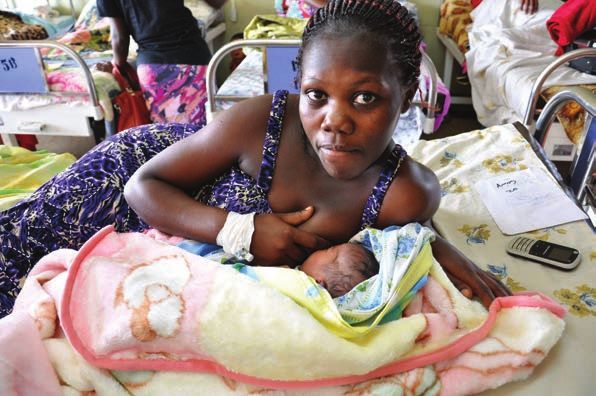
Characteristics of Households and Respondents
Household Composition
The average household size in Uganda is 4.5
members. Thirty-one percent of households are
headed by women. Half of the Ugandan population
is under age 15.

Water, Sanitation, and Electricity
Nearly 8 in 10 households have access to an
improved source of drinking water. More than
90% of households in urban areas have access to an
improved source of drinking water, compared to
74% of rural households. Only 19% of households in
Uganda use improved sanitation. Urban households
are more likely than rural households to use           © 2014 Alexaya Learner/GlobeMed at UCLA, Courtesy of Photoshare

improved sanitation (27% versus 16%). Eight in ten
households use unimproved sanitation—20% use a
shared facility, 55% use an unimproved facility, and   Ownership of Goods
7% have no facility. About 6 in 10 households have a   Three-quarters of Ugandan households have a
place for handwashing, either fixed or mobile. Three   mobile phone, 59% have a radio, and 17% have a
in ten Ugandan households have electricity. Nearly 6   television. Urban households are more likely than
in 10 urban households have electricity, compared to   rural households to own a mobile telephone, radio,
18% of rural households.                               or television. In contrast, rural households are more
                                                       likely to own agricultural land or farm animals than
                                                       urban households.
 Water, Sanitation, and Electricity by Residence
               Percent of households with:             Education
                  Total Urban Rural
                                                       One in ten women and 4% of men age 15-49 have no
          91                                           education. More than half of women (57%) and men
     78        74                                      (55%) have attended primary school, while one-
                                             59        quarter of women and 29% of men have attended
                                                       some secondary education. Only 8% of women and
                                        29             12% of men have more than secondary education.
                           27
                      19        16                18   More than 2 in 3 women (68%) and 4 in 5 men (79%)
                                                       are literate.
      Improved         Improved         Electricity
      source of        sanitation                                             Education
   drinking water
                                                           Percent distribution of women and men age 15-49
                                                                by highest level of education attended

                                                                 8                  12         More than
                                                                 25                            secondary
                                                                                    29
                                                                                               Secondary
                                                                 57                            Primary
                                                                                    55

                                                                10                  4          No education
                                                              Women                Men

Page 2                                                             2016 Uganda Demographic and Health Survey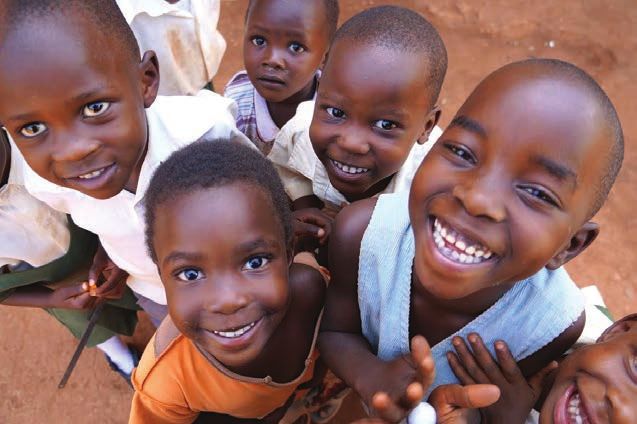
Fertility and Its Determinants
Total Fertility Rate
Currently, women in Uganda have an average of 5.4
children. Since 2000-01, fertility has decreased from
6.9 children per woman to the current level. This
demonstrates a decline of 1.5 children.

Fertility varies by residence and region. Women in
rural areas have an average of 5.9 children, compared
to 4.0 children among women in urban areas. Fertility
is lowest in Kampala region (3.5 children per woman)
and highest in Karamoja region (7.9 children per
                                                                             Lakicha Suzan and her husband Okwir Alex James, with their baby at her home in
woman).                                                                                                          Puranga, Pader District, northern Uganda.
                                                                                                                     © UNICEF/UN025735/Bongyereirwe

Fertility also varies with education and economic
status. Women with no education have 2.8 more
children than women with more than secondary                                            Trends in Total Fertility Rate
education (6.4 versus 3.6). Fertility decreases as the                                  Births per woman for the three-year
                                                                                              period before the survey
wealth of the respondent’s household* increases.
Women living in the poorest households have an
average of 7.1 children, compared to 3.8 children
among women living in the wealthiest households.                                  6.9                6.7               6.2
                                                                                                                                          5.4

            Total Fertility Rate by Region
            Births per woman for the three-year                               2000-01             2006               2011              2016
                  period before the survey                                    UDHS*               UDHS               UDHS              UDHS
                                                                        *In the 2000-01 UDHS, the districts of Amuru, Nwoya, Bundibugyo, Ntoroko, Gulu,
                                                                        Omoro, Kasese, Kitgum, Lamwo, Agago, and Pader were excluded from the sample.
                 West Nile      Acholi                                  These areas contained about 5% of the national population of Uganda. Thus, the
                                                                        trends need to be viewed in that light throughout this document.
                   6.0           5.5
                                             Karamoja
                                 Lango          7.9
   Uganda          Bunyoro     5.1         Teso
     5.4             6.0                    6.0                             Total Fertility Rate by Household Wealth
                         North                           Bugisu
                                                                                       Births per woman for the three-year
                        Central                           5.6                                period before the survey
       Tooro              5.4
        5.4                                             Bukedi
                                                         6.1
                                                                                 7.1
        Ankole      South Central                                                              6.3
                                                       Busoga                                                5.6
         4.9             4.7                                                                                              4.9
                                                         6.1
                                                                                                                                         3.8
        Kigezi                           Kampala
         4.6                               3.5

                                                                              Lowest Second Middle Fourth Highest
                                                                            Poorest                                                Wealthiest

* Wealth of families is calculated through household assets collected from DHS surveys—i.e., type of flooring; source of water;
availability of electricity; possession of durable consumer goods. These are combined into a single wealth index. They are then divided
into five groups of equal size, or quintiles, based on their relative standing on the household wealth index.

2016 Uganda Demographic and Health Survey                                                                                                       Page 3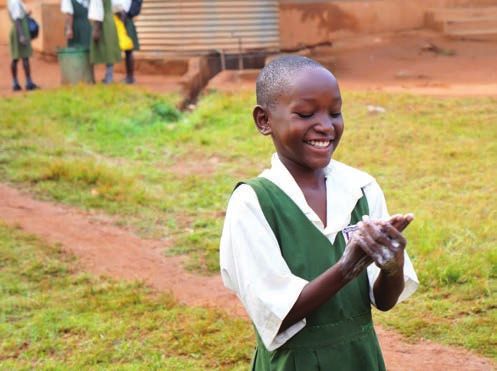
Age at First Sex, Marriage, and Birth                    Polygyny
Ugandan women begin sexual activity before               One-quarter of Ugandan women age 15-49 are
Ugandan men. The median age at first sexual              in a polygynous union with at least one co-wife.
intercourse for women age 25-49 is 16.9 years,           Polygyny is most common in Karamoja region,
compared to 18.5 years among men age 25-49.              where nearly 6 in 10 women are in a polygynous
Women with more than secondary education initiate        union. Thirteen percent of men age 15-49 have more
sex nearly four years later than women with no           than one wife.
education (19.8 years versus 16.0 years). One in five
women begins sexual activity before age 15, while        Teenage Childbearing
64% have sex before age 18.                              In Uganda, 1 in 4 adolescent women age 15-19 are
                                                         already mothers or pregnant with their first child.
Women get married nearly two years after sexual          Teenage childbearing is higher in rural areas (27%)
initiation at age 18.7. Ugandan men marry much later     than in urban areas (19%). Regionally, teenage
than women at a median age of 23.3 years. Women          pregnancy ranges from 16% in Kigezi region to
with no education marry more than six years earlier      31% in Teso region. Adolescent women in the
than women with more than secondary education            poorest households are more than twice as likely as
(17.5 years versus 23.8 years). Forty-three percent of   those in the wealthiest households to have begun
Ugandan women are married by age 18, compared to         childbearing (34% versus 15%). Teenage childbearing
10% of men.                                              decreases with increased education; 35% of young
                                                         women with no education have begun childbearing,
Within 0.5 years of marriage, women have their first
                                                         compared to 11% young women with more than
birth. The median age at first birth for women is 19.2
                                                         secondary education.
years. More than one-third (35%) of women give
birth by age 18.
                                                               Teenage Childbearing by Education
                                                                    Percent of women age 15-19 who
  Median Age at First Sex, Marriage, and Birth                          have begun childbearing
           Among women and men age 25-49
                  Women Men

                             23.3                              35
                                                                            29
              18.5    18.7           19.2
       16.9
                                                                                       17
                                                                                                     11

                                                               No        Primary   Secondary More than
                                            na              education                        secondary
         Median       Median          Median
          age at     age at first      age at
         first sex    marriage       first birth

Page 4                                                              2016 Uganda Demographic and Health Survey
Family Planning
Current Use of Family Planning                                           Family Planning
Nearly 4 in 10 (39%) married women age 15-49 use      Percent of married women age 15-49 using family planning
any method of family planning—35% use a modern
                                                                      Any method                 39
method and 4% use a traditional method. Injectables
are the most popular modern method (19%),                   Any modern method                    35
followed by implants (6%) and female sterilisation
                                                                       Injectables         19
(3%).
                                                                         Implants      6
Among sexually active, unmarried women age 15-49,
47% use a modern method of family planning and 4%             Female sterilisation 3
use a traditional method. The most popular methods
                                                          Any traditional method 4
among sexually active, unmarried women are
injectables (21%), male condoms (14%), and implants
(6%).
                                                               Modern Method Use by Region
Use of modern methods of family planning among
                                                             Percent of married women age 15-49 using
married women varies by residence and region.                   a modern method of family planning
Modern method use is higher in urban areas (41%)
than in rural areas (33%). Modern method use ranges
from a low of 7% in Karamoja region to a high of                     West Nile   Acholi
43% in Kigezi and Bugisu regions. Women with                          19%         30%
more than secondary education are nearly twice as                                                 Karamoja
                                                                                 Lango               7%
likely to use modern methods than women with no
                                                        Uganda         Bunyoro    41%
education (43% versus 23%). Modern family planning                                               Teso
                                                         35%             30%
use increases with wealth; 22% of women from the                                                 30%
                                                                            North                            Bugisu
poorest households use a modern method of family                            Central                           43%
planning, compared to 42% of women from the                 Tooro            42%
wealthiest households.                                       37%                                         Bukedi
                                                                                                          35%
The use of any method of family planning by married
                                                            Ankole     South Central
women has increased from 23% in 2000-01 to 39% in                                                        Busoga
                                                             36%           40%
2016. Modern method use has doubled from 18% to                                                           29%
35% during the same time period.                            Kigezi                          Kampala
                                                             43%                              39%

                                                                Trends in Family Planning Use
                                                      Percent of married women age 15-49 using family planning

                                                                                                         39
                                                              Any method                    30           35
                                                             23         24
                                                                                            26
                                                             18         18
                                                              Any modern method

                                                          2000-01        2006              2011         2016
                                                           UDHS          UDHS              UDHS         UDHS

2016 Uganda Demographic and Health Survey                                                                    Page 5
Demand for Family Planning                                Exposure to Family Planning Messages
Four in ten married women want to delay                   The most common media source for family planning
childbearing (delay first birth or space another birth)   messages is the radio. Two-thirds of both women and
for at least two years. Additionally, 27% of married      men heard a family planning message on the radio in
women do not want any more children. Women who            the few months before the survey. Both women and
want to delay or stop childbearing are said to have       men were much less likely to have seen or heard a
a demand for family planning. The total demand for        family planning message on television, newspaper or
family planning among married women in Uganda             magazine, or mobile phone. Overall, 31% of women
is 67%.                                                   and 26% of men were not exposed to family planning
                                                          messages via any media source.
The total demand for family planning includes both
met and unmet need. Met need is the contraceptive         Informed Choice
prevalence rate. In Uganda, 39% of married women          Family planning clients should be informed about
use any family planning method.                           the side effects of the method used, what to do if
                                                          they experience side effects, and told about other
Unmet Need for Family Planning
                                                          available family planning methods. Two-thirds of
Unmet need for family planning is defined as the          current users of modern contraceptive methods were
proportion of married women who want to delay or          informed of possible side effects or problems of their
stop childbearing but are not using family planning.      method, 57% were informed about what to do if they
In Uganda, 28% of married women have an unmet             experience side effects, and 74% were informed of
need for family planning: 18% want to delay               other available family planning methods. Overall,
childbearing, while 10% want to stop childbearing.        53% of women were informed of all three.
Unmet need has declined since 2000-01.

Demand for Family Planning Satisfied by
Modern Methods
Demand satisfied by modern methods measures
the extent to which women who want to delay or
stop childbearing are actually using modern family
planning methods. More than half (52%) of the
demand for family planning in Uganda is satisfied
by modern methods. Both total demand for family
planning and demand satisfied by modern methods
have increased since 2000-01.

       Trends in Demand for Family Planning
              Percent of married women age 15-49           © 2016 Laura Wando/WellShare Uganda Courtesy of Photoshare

          Total demand
                     62             64             67
         58
                                                   52
                       38           41
         35
                                                   28
       32           29             34
  Demand satisfied by                    Unmet need
  modern methods
     2000-01       2006           2011        2016
      UDHS         UDHS           UDHS        UDHS

Page 6                                                              2016 Uganda Demographic and Health Survey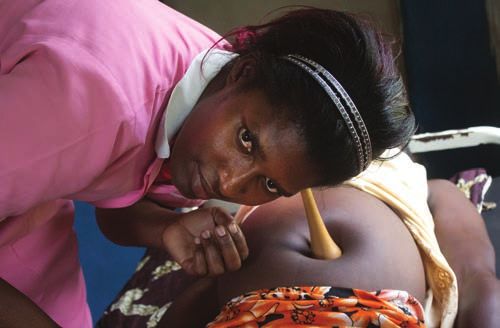
Childhood Mortality
Rates and Trends
Infant and under-5 mortality rates for the five-year
period before the survey are 43 and 64 deaths per
1,000 live births, respectively. The neonatal mortality
rate is 27 deaths per 1,000 live births. At these
mortality levels, 1 in every 16 Ugandan children does
not survive to their fifth birthday.

Childhood mortality rates have declined since 2000-
01. Infant mortality has decreased by half from 88
deaths per 1,000 live births in 2000-01 to 43 in 2016.
During the same time period, under-5 mortality has               Mothers with their newly born babies at Kitgum hospital in northern Uganda.
                                                                                                        © UNICEF/UN025526/Bongyereirwe
markedly declined from 151 to 64 deaths per 1,000
live births. Neonatal mortality has remained stagnant
since 2006.
                                                          Birth Intervals
                                                          Spacing children at least 36 months apart reduces
                                                          the risk of infant death. The median birth interval
          Trends in Childhood Mortality
                                                          in Uganda is 31.9 months. Infants born less than
          Deaths per 1,000 live births for the
           five-year period before the survey             two years after a previous birth have high under-5
     Under-5 mortality                                    mortality rates. Under-5 mortality is dramatically
      151                                                 higher among children born less than two years
                   128                                    after a previous birth (104 deaths per 1,000 live
     Infant mortality                                     births) than among children born three years after
       88                         90
                    71                                    a previous birth (54 deaths per 1,000 live births).
                                                  64
                                  54                      Overall, 24% of children are born less than two years
     Neonatal mortality                           43
                                                          after their siblings.
      33          27              27              27
    2000-01       2006          2011             2016
     UDHS         UDHS          UDHS             UDHS
                                                           Under-5 Mortality by Previous Birth Interval
                                                                      Deaths per 1,000 live births for the
                                                                      ten-year period before the survey
Under-5 Mortality by Background                                 104
Characteristics
The under-5 mortality rate differs by region, mother’s
                                                                                    63
education, and wealth for the ten-year period before                                                   54                 56
the survey. Regionally, under-5 mortality ranges
from 54 deaths per 1,000 live births in Teso region to
102 deaths per 1,000 live births in Karamoja region.
Children whose mothers have no education are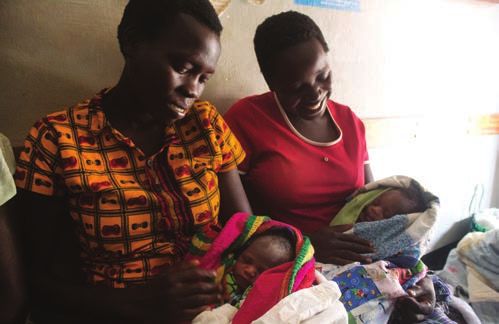
Maternal Health Care
Antenatal Care
Nearly all women (97%) age 15-49 receive antenatal
care (ANC) from a skilled provider (doctor, nurse/
midwife, or medical assistant/clinical officer). The
timing and quality of ANC are also important. Three
in ten women have their first ANC visit in the first
trimester, as recommended. Three in five women
make four or more ANC visits.

Eighty-eight percent of women take iron tablets or
syrup during pregnancy. More than 80% of women’s
most recent births are protected against neonatal                 Rebecca Kiiza, enrolled midwife at Muchwini Health Centre III examines a pregnant
tetanus. Among women who received ANC for their                                      woman during her routine antenatal care visit to a health facility.
                                                                                                              © UNICEF/UN025585/Bongyereirwe
most recent birth, 93% had a blood sample taken,
72% had their blood pressure measured, and 39%
had a urine sample taken.                                                   Trends in Maternal Health Care
                                                                Percent of women age 15-49 who had a live birth in the
Delivery and Postnatal Care                                      five years before the survey for the most recent birth
Nearly 3 in 4 births (73%) are delivered in a health                                93             95           97
                                                                      90
facility, primarily in public sector facilities. Still, 1 in
                                                                       ANC by skilled provider                  73
4 births are delivered at home. Women with more
                                                                         4+ ANC visits                           57
than secondary education and those in the wealthiest                                 47                                               60
                                                                        42
households are most likely to deliver at a health                                                                48
                                                                        37           42
facility. Health facility deliveries have doubled since
                                                                          Health facility delivery*
2000-01 when only 37% of births were delivered in a
health facility.                                                   2000-01                2006                 2011                2016
                                                                    UDHS                  UDHS                 UDHS                UDHS
Overall, 74% of births are assisted by a skilled                   * % of live births in the five years before the survey
provider, the majority by nurses/midwives. Women
in urban areas (90%), those with more than secondary
education (98%), and those living in the wealthiest            Maternal Mortality
households (94%) are most likely to receive delivery           The 2016 UDHS asked women about deaths of their
assistance from a skilled provider. Skilled assistance         sisters to determine maternal mortality. Maternal
during delivery has increased from 37% in 2000-01 to           mortality includes deaths of women during
74% in 2016.                                                   pregnancy, delivery, and 42 days after delivery
Postnatal care helps prevent complications after               excluding deaths that were due to accidents or
childbirth. More than half (54%) of women age 15-49            violence. The maternal mortality ratio (MMR) for
receive a postnatal check within two days of delivery,         Uganda is 336 deaths per 100,000 live births for the
while 43% did not have a postnatal check within                seven-year period before the survey. The confidence
41 days of delivery. Fifty-six percent of newborns             interval for the 2016 MMR ranges from 272 to 401
receive a postnatal check within two days of birth.            deaths per 100,000 live births.

Page 8                                                                       2016 Uganda Demographic and Health Survey
Child Health
Vaccination Coverage
More than half (55%) of children age 12-23 months
have received all eight basic vaccinations—one dose
each of BCG and measles vaccine and three doses
each of DPT-HepB-Hib and polio vaccine. Basic
vaccination coverage is lowest in Busoga region
(45%) and highest in Karamoja region (73%). Basic
vaccination coverage has increased since 2000-
01 when 37% of children had received all basic
vaccinations but has only slightly improved since
2011 from 52% to the current level of 55% in 2016.
Portrait of children in Fort Portal, Uganda.
© UNICEF/UNI136747/Ramson
Vaccination Coverage
Percent of children age 12-23 months vaccinated
at any time before the survey
Childhood Illnesses
96 95
90
95 In the two weeks before the survey, 9% of children
86
79 80 under five were ill with cough and rapid breathing,
66 symptoms of acute respiratory infection (ARI).
55
Among these children, treatment or advice was
sought for 80%.
1 One in five children under five had diarrhoea in the
BCG 1 2 3 1 2 3 Measles All None two weeks before the survey. Diarrhoea was most
DPT-HepB-Hib Polio
basic common among children age 6-11 months (39%).
Seventy-one percent of children under five with
diarrhoea had treatment or advice sought.
Basic Vaccination Coverage by Region
Percent of children age 12-23 months who Children with diarrhoea should drink more fluids,
have received all basic vaccinations
particularly through oral rehydration therapy (ORT)
which includes oral rehydration solution (ORS),
West Nile Acholi recommended home fluids, and increased fluids.
63% 65% Additionally, children under five with diarrhoea
Karamoja should receive zinc. While 55% of children under
Lango 73% five with diarrhoea received ORT, 19% received no
Uganda Bunyoro 50% treatment. Three in ten children under five with
Teso
55% 67% diarrhoea received ORS and zinc.
68%
North Bugisu
Central 48%
Tooro 47%
51% Bukedi
52%
Ankole South Central
Busoga
62% 50%
45%
Kigezi Kampala
72% 51%
2016 Uganda Demographic and Health Survey Page 9Feeding Practices and Supplementation
Breastfeeding and the Introduction of Vitamin A and Iron Supplementation
Complementary Foods Micronutrients are essential vitamins and minerals
Breastfeeding is very common in Uganda with 98% required for good health. Vitamin A, which prevents
of children ever breastfed. Two-thirds of children blindness and infection, is particularly important for
were breastfed within the first hour of life. More children. In the 24 hours before the survey, 67% of
than one-quarter (27%) of children who were ever children age 6-23 months ate foods rich in vitamin
breastfed received a prelacteal feed, though this is A. Sixty-two percent of children age 6-59 months
not recommended. received a vitamin A supplement in the six months
prior to the survey.
WHO recommends that children receive nothing
but breastmilk (exclusive breastfeeding) for the first Iron is essential for cognitive development in
six months of life. Two-thirds of children under six children and low iron intake can contribute to
months are exclusively breastfed. Children age 0-35 anaemia. Two in five children ate iron-rich foods the
months breastfeed for a median of 19.8 months and day before the survey, while only 7% received an iron
are exclusively breastfed for 4.0 months. supplement in the week before the survey.
Complementary foods should be introduced when Pregnant women should take iron tablets for at
a child is six months old to reduce the risk of least 90 days during pregnancy to prevent anaemia
malnutrition. In Uganda, 79% of children age 6-8 and other complications. Only 23% of women took
months are breastfed and receive complementary iron tablets for at least 90 days during their last
foods. pregnancy.
Use of Iodised Salt
Iodine is an important micronutrient for physical and
mental development. Fortification of salt with iodine
is the most common method of preventing iodine
deficiency. In Uganda, 8% of households had no salt.
Among households in which salt was tested, 99%
have iodised salt.
© 2013 Carol Bales for Capacity Plus/IntraHealth, Courtesy of Photoshare
Page 10 2016 Uganda Demographic and Health SurveyNutritional Status
Women and Men’s Nutritional Status
The 2016 UDHS also took weight and height
measurements of women and men age 15–49.
Overall, 9% of women are thin (body mass index
or BMI < 18.5). Comparatively, 24% of women are
overweight or obese (BMI ≥ 25.0). Women in the
wealthiest households are more than five times as
likely to be overweight or obese than women from
the poorest households (42% versus 8%). Since 2006,
overweight or obesity has increased from 17% to 24%
in 2016.
A girl on her way to recovery at Mwanamugimu Nutrition Unit of Mulago Among men, 14% are thin (BMI < 18.5) and only 9%
Hospital in Kampala, Uganda.
© UNICEF/UNI194182/Ose
are overweight or obese (BMI ≥ 25.0). Men with more
than secondary education (19%) and those from the
Children’s Nutritional Status wealthiest households (21%) are more likely to be
The 2016 UDHS measures children’s nutritional overweight or obese.
status by comparing height and weight
Anaemia
measurements against an international reference
standard. Nearly 3 in 10 (29%) of children under five The 2016 UDHS tested children age 6-59 months,
in Uganda are stunted, or too short for their age. women age 15-49, and men age 15-49 for anaemia.
Stunting is an indication of chronic undernutrition. Overall, 53% of children age 6-59 months are
Stunting is highest in Tooro region (41%) and lowest anaemic. Anaemia is more common in children
in Teso region (14%). Children from rural households from the poorest households (66%) and those whose
(30%) and whose mothers have no education (35%) mothers have no education (62%). Anaemia in
are more likely to be stunted. children has slightly increased since 2011 when 49%
of children were anaemic.
Only 4% of children are wasted (too thin for height),
a sign of acute malnutrition. In addition, 11% of Nearly one-third (32%) of women age 15-49 in
children are underweight, or too thin for their age. Uganda are anaemic. Comparatively, 16% of men
The nutritional status of Ugandan children has are anaemic. Since 2011, anaemia among women has
improved since 2000-01. Nearly half of children increased from 23% to 32% in 2016.
under five were stunted in 2000-01, compared to 29%
in 2016.
Trends in Childhood’s Nutritional Status Anaemia in Children, Women, and Men
Percent of children under five, based Percent of children age 6-59 months, women
on 2006 WHO Child Growth Standards age 15-49, and men age 15-49 with anaemia
Stunted
45 53
38 33
Underweight 29 32
18 16 14 11 16
Wasted 5 6 5 4
2000-01 2006 2011 2016 Children Women Men
UDHS UDHS UDHS UDHS
2016 Uganda Demographic and Health Survey Page 11Malaria
Mosquito Nets Management of Malaria in Children
Among all households in Uganda, 78% own at least In the two weeks before the survey, one-third of
one insecticide-treated net (ITN). Half of households children under five had fever, the primary symptom
have at least one ITN for every two people in the of malaria. Treatment was sought for eight in ten
household. ITN ownership has increased from 16% children with recent fever, while only half had blood
in 2006 but has declined since 2014-15 when 90% of taken from a finger or heel stick for testing.
households owned at least one ITN. Nearly two-
thirds of the household population have access to an Artemisinin combination therapy (ACT) is the
ITN, while 55% slept under an ITN the night before recommended drug for treating malaria in children
the survey. in Uganda. Among children under five with fever
in the two weeks before the survey who received
Children and pregnant women are most vulnerable an antimalarial, 88% received the recommended
to malaria. More than 60% of children under five treatment.
and pregnant women slept under an ITN the night
before the survey. Use of ITNs among children and Malaria Prevalence
pregnant women has increased since 2006 but has All children age 6-59 months in selected households
declined since 2014-15. were eligible for malaria testing. Of the 4,900 eligible
children, 96% provided blood for testing by rapid
diagnostic test (RDT).
Trends in ITN Use
In Uganda, 3 in 10 children tested positive for malaria
Percent of children under five and pregnant women age
15-49 who slept under an ITN the night before the survey by RDT. Malaria prevalence is higher among rural
children (35%) than urban children (12%). Malaria
75 prevalence ranges from 1% in Kampala region to 69%
Pregnant women
74
64 in Karamoja region. Malaria prevalence is highest
44 47 62 among children whose mothers have no education
43 (42%) and those from the poorest households (52%).
33 Children
10
2006 2009 2011 2014-15 2016
UDHS UMIS UDHS UMIS UDHS Malaria Prevalence by Region
Percent of children age 6-59 months who tested
positive for malaria by rapid diagnostic test (RDT)
Intermittent Preventive Treatment of
Pregnant Women (IPTp) West Nile Acholi
Malaria during pregnancy contributes to low birth 25% 63%
weight, infant mortality, and other complications. Karamoja
To prevent malaria, pregnant women should receive Lango 69%
Uganda 62%
3+ doses of SP/Fansidar or IPTp. More then three- Bunyoro Teso
30% 32%
quarters of pregnant women took 1+ doses of IPTp, 52%
North Bugisu
46% took 2+ doses of IPTp, while only 17% took
Central 20%
3+ doses. Women receiving 3+ doses of IPTp has 21%
Tooro
declined from 28% in 2014-15 to 17% in 2016. 18% Bukedi
27%
Ankole South Central
Busoga
11% 16%
53%
Kigezi Kampala
3% 1%
Page 12 2016 Uganda Demographic and Health SurveyHIV Knowledge, Attitudes, and Behaviour
Knowledge of HIV Prevention Methods
More than 80% of both women and men know that
the risk of getting HIV can be reduced by using
condoms and limiting sex to one monogamous,
uninfected partner. Knowledge of HIV prevention
methods is highest among women and men from the
wealthiest households.
Knowledge of Prevention of Mother-to-Child
Transmission (PMTCT)
More than 60% of women and 46% of men know that Residents attend the EMTCT campaign launch at sports ground in Soroti District.
HIV can be transmitted during pregnancy, delivery, © UNICEF/UNI195593/Wandera.
and by breastfeeding. Eighty-four percent of women
and 72% of men know that HIV transmission can be
Multiple Sexual Partners
reduced by the mother taking special medication. Having multiple sexual partners increases the risk
of contracting HIV and other sexually transmitted
infections (STIs). Only 2% of women and 21% of
Knowledge of HIV Prevention Methods men had two or more sexual partners in the past 12
Percent of women and men age 15-49 who know that months. Among both women and men who had two
the risk of HIV transmission can be reduced by: or more partners in the past year, 1 in 5 reported
Women using a condom at last sexual intercourse. Men
Men in Uganda have 4.0 more sexual partners in their
87 lifetime than women (6.3 versus 2.3).
Using condoms
88 HIV Testing
Nearly all women (97%) and men (96%) know where
Limiting sex to one 94 to get an HIV test. Four in five women and 70% of
uninfected partner 92 men have ever been tested for HIV and received
their results. Yet, 15% of women and 27% of men
84 have never been tested for HIV. Within the past 12
Both
83 months, 55% of women and 47% of men have been
tested and received their results. Recent HIV testing
Knowledge of PMTCT has increased since 2006 when only 12% of women
Percent of women and men age 15-49 who know that: and 10% of men were tested for HIV in the 12 months
Women before the survey and received their results.
Men
HIV can be transmitted 61 Trends in Recent HIV Testing
during pregnancy, delivery, Percent of women and men age 15-49 who were tested for
and by breastfeeding 46
HIV in the last 12 months and received their results
2006 UDHS 2011 UDHS 2016 UDHS
Transmission can be 84
reduced by mother taking
special drugs 72
55
42 47
31
12 10
Women Men
2016 Uganda Demographic and Health Survey Page 13Disability Women’s Empowerment
Disability Employment
The 2016 UDHS included questions about More than 4 in 5 married women (84%) were
six domains of disability—seeing, hearing, employed at any time in the past 12 months
communicating, remembering or concentrating, compared to 99% of married men. Nearly half of
walking or climbing steps, and washing all over or working women and 58% of men are paid in cash.
dressing—among the household population age five Still, 1 in 5 working women and men are not likely
and above. Overall, three-quarters of the household to be paid for their work. More than half of married
population have no difficulty in any domain; while women who are employed and earned cash made
20% have some difficulty and 7% have a lot of independent decisions on how to spend their
difficulty or cannot function in at least one domain. earnings. Overall, 74% of working women reported
Among adults age 15 and older, 9% of women and earning less than their husband.
7% of men have a lot of difficulty or cannot function
in at least one domain. Problems in Accessing Health Care
Nearly 3 in 5 women report at least one problem
Disability among Adults accessing health care for themselves. Forty-five
Percent distribution of household population percent of women are concerned about getting
age 15 and above by highest degree of difficulty
money for treatment, while 37% are concerned about
in functioning in at least 1 domain
the distance to the health facility. One in five women
do not want to go alone to the health facility, while
5% are worried about getting permission to go for
No difficulty
65 69 treatment.
Some difficulty Participation in Household Decisions
26 The 2016 UDHS asked married women about their
23 A lot of difficulty
9 participation in three types of household decisions:
7 or cannot function
Women Men her own health care, making major household
purchases, and visits to family or relatives. Married
Deaths and Injuries women in Uganda are most likely to have sole or
2016 UDHS respondents reported if any household joint decision making power about their own health
member died or was seriously injured in a road care (74%) and visiting family or relatives (72%) and
traffic accident in the past 12 months. Motorcycle least likely to make decisions about major household
accidents accounted for the greatest proportion (67%) purchases (64%). Overall, 51% of married women
of road traffic accidents leading to death or serious participate in all three decisions. Since 2000-01,
injury, followed by bicycle accidents (15%). The most married women’s participation in decision making
common injuries include cuts (62%), chronic pain has steadily improved.
(24%), and broken bones (17%).
Trends in Women’s Participation
in Decision Making
Percent of married women age 15-49 who make decisions
by themselves or jointly with their husbands
All 3 decisions 51
39 38
29
25 23 21
No decisions 13
2000-01 2006 2011 2016
UDHS UDHS UDHS UDHS
Page 14 2016 Uganda Demographic and Health SurveyDomestic Violence
Attitudes toward Wife Beating Spousal Violence
Half of women and 41% of men agree that a husband Fifty-six percent of ever-married women and 44%
is justified in beating his wife for at least one of the of ever-married men have experienced spousal
following reasons: if she burns the food, argues violence, whether physical, sexual, or emotional.
with him, goes out without telling him, neglects Within the past year, 39% of both ever-married
the children, or refuses to have sex with him. Both women and men report having experienced recent
women and men are most likely to agree that wife spousal violence. Spousal violence is highest among
beating is justified if the wife neglects the children ever-married women from Ankole (73%) and
(39% and 28%, respectively). Bukedi (72%) regions, who are divorced/separated/
widowed (68%), and from the poorest households
Experience of Physical Violence (66%). Among ever-married men, spousal violence
Half of both women and men have ever experienced is more common among in Kigezi region (71%) and
physical violence since age 15. In the past year, 22% those who are divorced/separated/widowed (61%).
of women and 20% of men have experienced physical
violence. The most common perpetrator of physical
violence against ever-married women is a current
Spousal Violence
husband/partner (56%). Among never married Percent of ever-married women and men age 15-49 who
have experienced the following types of spousal violence
women, the most common perpetrator of physical
Women Men
violence is a teacher (50%). The most common
perpetrator of physical violence against ever-married
men is the current wife/partner (23%). Teachers are
the most common perpetrator of violence against
56
never married men (42%). 41 36
47 44
40
Experience of Sexual Violence 23 25
20
9
Twenty-two percent of women and 8% of men
have ever experienced sexual violence. Within the Emotional Physical Sexual Physical Physical,
past year, 13% of women have experienced sexual or sexual sexual, or
emotional
violence, compared to 4% of men. Divorced/
separated/widowed women (36%) and men (18%)
are most at risk. Among ever-married women Help Seeking Behaviour
and men, the most common perpetrator of sexual One-third of women and 30% of men who have
violence is a current spouse/partner (63% and 67%, experienced physical or sexual violence sought
respectively). help to stop the violence. Among women, the most
common sources of help are their own family (57%)
Violence during Pregnancy
or their husband/partner’s family (31%). The most
Violence during pregnancy may threaten not only common sources of help among men are their own
a woman’s well-being but also her unborn child. family (40%) or the police (23%).
One in ten women age 15-49 who have ever been
pregnant experienced violence during a pregnancy.
Violence during pregnancy is highest among from
Bukedi region (18%) and those in the poorest
households (17%).
2016 Uganda Demographic and Health Survey Page 15Indicators
Residence
Fertility Uganda Urban Rural
Total fertility rate (number of births per woman) 5.4 4.0 5.9
Median age at first birth for women age 25-49 (years) 19.2 20.2 18.9
Women age 15-19 who are mothers or currently pregnant (%) 25 19 27
Family Planning (among married women age 15-49)
Current use of any method of family planning (%) 39 46 37
Current use of a modern method of family planning (%) 35 41 33
Unmet need for family planning1 (%) 28 23 30
Demand satisfied by modern methods (%) 52 59 49
Maternal Health (among women age 15-49)
ANC visit with a skilled provider2 (%) 97 98 97
Births delivered in a health facility (%) 73 88 70
Births assisted by a skilled provider (%) 2
74 90 70
Child Health (among children age 12-23 months)
Children who have received all basic vaccinations3 (%) 55 55 56
Nutrition
Children under five who are stunted (%) 29 24 30
Women age 15-49 who are overweight or obese (%) 24 34 20
Men age 15-49 who are overweight or obese (%) 9 16 6
Prevalence of any anaemia among children age 6-59 months (%) 53 48 54
Prevalence of any anaemia among women age 15-49 (%) 32 27 33
Prevalence of any anaemia among men age 15-49 (%) 16 9 19
Childhood Mortality (deaths per 1,000 live births)4
Neonatal mortality 27 28 26
Infant mortality 43 39 44
Under-5 mortality 64 52 68
Malaria
Children under five who slept under an ITN the night before the survey (%) 62 67 61
Children age 6-59 months who tested positive for malaria by RDT (%) 30 12 35
HIV/AIDS
Women age 15-49 who have been tested for HIV in past year & received results (%) 55 59 53
Men age 15-49 who have been tested for HIV in past year & received results (%) 47 54 44
Domestic Violence (among women age 15-49)
Ever-married women who have ever experienced spousal physical, sexual, or
emotional violence (%) 56 47 59
Ever-married men who have ever experienced spousal physical, sexual, or emotional
violence (%) 44 43 44
1
Currently married women who do not want any more children or want to wait at least two years before their next birth but are not currently using a method of family
planning. 2Skilled provider includes doctor, nurse/midwife, and medical assistant/clinical officer. 3Basic vaccinations include BCG, measles, three doses each of DPT-HepB-Hib
and polio vaccine (excluding polio vaccine given at birth). 4Figures are for the ten-year period before the survey except for the national and urban-rural rates, in italics, which
represent the five-year period before the survey.Region South North West Central Central Kampala Busoga Bukedi Bugisu Teso Karamoja Lango Acholi Nile Bunyoro Tooro Kigezi Ankole 4.7 5.4 3.5 6.1 6.1 5.6 6.0 7.9 5.1 5.5 6.0 6.0 5.4 4.6 4.9 19.9 19.0 20.9 18.3 18.5 18.9 18.8 21.3 18.2 18.6 19.2 19.2 19.0 20.7 19.8 20 30 17 21 30 28 31 24 28 24 22 29 30 16 19 47 47 45 32 40 45 34 7 43 31 22 31 43 47 43 40 42 39 29 35 43 30 7 41 30 19 30 37 43 36 21 24 24 37 30 27 36 20 27 39 43 29 26 20 23 60 59 57 42 49 60 43 24 59 43 29 49 54 65 55 96 99 98 98 97 97 99 97 97 97 99 92 98 >99 97 81 75 94 77 66 56 74 71 66 84 78 57 74 70 71 82 77 96 75 67 58 75 73 68 81 78 58 76 71 71 50 47 51 45 52 48 68 73 50 65 63 67 51 72 62 27 28 18 29 23 36 14 35 22 31 34 35 41 31 29 37 31 44 17 18 18 16 6 10 11 9 26 26 30 27 14 12 20 8 4 8 6 2 3 3 5 8 7 10 7 52 55 51 63 48 48 59 68 61 71 56 55 45 32 31 28 32 25 41 18 35 32 32 39 47 40 32 29 17 28 10 14 5 17 10 14 12 24 27 32 22 21 18 15 16 31 30 32 28 24 20 19 30 29 32 28 35 27 25 21 43 50 48 53 43 38 39 72 45 48 53 63 50 45 41 59 74 64 84 72 68 54 102 68 69 86 89 81 67 72 67 63 69 58 49 60 72 47 66 68 77 60 53 60 58 16 21 1 53 27 20 52 69 62 63 25 32 18 3 11 57 52 57 54 50 48 64 53 49 61 53 44 64 51 55 49 40 56 35 34 41 59 24 47 64 53 46 54 39 47 46 47 38 49 72 54 61 62 59 60 64 50 58 59 73 41 43 40 42 24 45 58 41 46 49 39 34 55 71 42
You can also read


