ULI Sustainability Outlook - ULI Knowledge Finder
←
→
Page content transcription
If your browser does not render page correctly, please read the page content below

20
                             21
ULI Sustainability Outlook
Report Team

Project Staff                                            Member Contributors

Trish Riggs                                              Julie Hiromoto                          Judi Schweitzer
Keadle-Riggs Communications LLC                          Principal and Director of Integration   Founder
                                                         HKS                                     Schweitzer + Associates Inc.
Marta Schantz
Senior Vice President                                    Jocelyn Hittle                          Rives Taylor
ULI Greenprint Center for Building                       Assistant Vice Chancellor               Principal
Performance                                              Colorado State University System        Gensler

James A. Mulligan                                        Ken Hubbard                             Owen D. Thomas
Senior Editor                                            Senior Managing Director                Chief Executive Officer
                                                         Hines-U.S.                              Boston Properties
David James Rose
Manuscript Editor                                        Caroline Johns                          Peter Tomai
                                                         Director of Development                 Chief Investment Officer
                                                         Pembroke                                Specific Performance Inc.
Brandon Weil
Art Director
                                                         Rob Rydel
                                                         Principal
                                                         OZ Architecture

© 2021 by the Urban Land Institute

2001 L Street, NW | Suite 200 | Washington, DC 20036-4948

Printed in the United States of America. All rights reserved. No part of this
publication may be reproduced in any form or by any means, electronic or
mechanical, including photocopying and recording, or by any information
storage and retrieval system, without written permission of the publisher.
About the Urban Land Institute                                             About the ULI Greenprint Center
      The Urban Land Institute is a global, member-driven                        for Building Performance
      organization comprising more than 45,000 real estate and                   The ULI Greenprint Center for Building Performance is
      urban development professionals dedicated to advancing                     a worldwide alliance of leading real estate owners,
      the Institute’s mission of providing leadership in the responsible         investors, and strategic partners committed to improving
      use of land and in creating and sustaining thriving                        the environmental performance of the global real estate
      communities worldwide.                                                     industry. Through measurement, benchmarking, knowledge
                                                                                 sharing, and implementation of best practices, Greenprint
      ULI’s interdisciplinary membership represents all aspects of
                                                                                 and its members strive to reduce greenhouse gas emissions
      the industry, including developers, property owners, investors,
                                                                                 50 percent by 2030 and achieve net-zero carbon operations
      architects, urban planners, public officials, real estate brokers,
                                                                                 by 2050.
      appraisers, attorneys, engineers, financiers, and academics.
      Established in 1936, the Institute has a presence in the
      Americas, Europe, and Asia Pacific regions, with members
      in 81 countries.                                                           About the ULI Sustainable
      The extraordinary impact that ULI makes on land use
                                                                                 Development Council
      decision-making is based on its members sharing expertise                  The Sustainable Development Council (SDC) aims to
      on a variety of factors affecting the built environment,                   accelerate the adoption and implementation of sustainability,
      including urbanization, demographic and population changes,                resilience, and health across the real estate industry.
      new economic drivers, technology advancements, and                         The council provides a forum for the exchange of emerging
      environmental concerns.                                                    best practices including planning, financing, entitlements,
                                                                                 design, construction, and operational aspects of projects
      Peer-to-peer learning is achieved through the knowledge
                                                                                 that advance triple-bottom-line benefits while fostering
      shared by members at thousands of convenings each year that
                                                                                 more sustainable built environments.
      reinforce ULI’s position as a global authority on land use
      and real estate. In 2020, more than 2,600 events were held in
      cities around the world.

      Drawing on the work of its members, the Institute recognizes
      and shares best practices in urban design and development
      for the benefit of communities around the globe.

      More information is available at uli.org. Follow ULI on Twitter,
      Facebook, LinkedIn, and Instagram.

iii                                                            ULI Sustainability Outlook 2021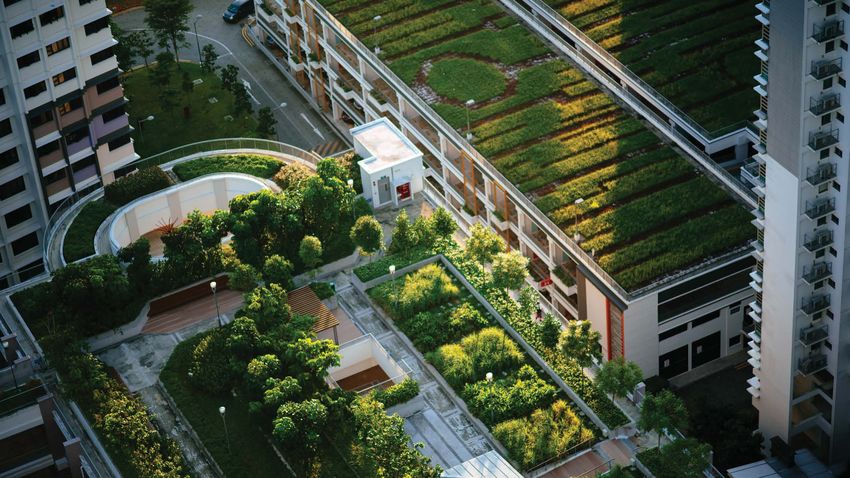
Contents

2                             4                           15
Introduction from             Real Estate’s Increasing    Emissions Reductions
ULI Global Chair              Role in Advancing           through Embodied
Owen D. Thomas                Sustainability Throughout   Carbon of Building
                              the Market                  Construction Materials
3
ULI Sustainability Outlook:   6                           17
Top 10 Issues for 2021        Increased Appetite for      Increasingly
                              ESG Investing               Grid-Interactive Buildings

                              8                           19
                              Heightened Emphasis         Resilience and Climate
                              on Health and               Risk as a Priority for
                              Social Equity               Investments

                              11                          21
                              Baseline Expectation        Water as a Resource
                              for Energy Efficiency       to Be Conserved
                              in Real Estate              and Leveraged

                              13                          23
                              Tenants Driving             Waste Reduction Over
                              Sustainability Innovation   a Building’s Life Cycle

                                                          25
                                                          Conclusion
Introduction from ULI Global
    Chair Owen D. Thomas

    I am pleased to present the ULI Greenprint Sustainability                  Caring about ESG makes Boston Properties a more purposeful
    Outlook 2021, the Institute’s first-ever outlook on issues that are        real estate company. It makes ULI a more purposeful real
    specific to environmental, social, and governance (ESG)—a                  estate organization. It is the right thing to do, and it is also
    broad and critically important topic that affects every aspect             the smart thing to do, now and in the future. While the health
    of our businesses, our industry, and our communities.                      crisis and social unrest dominated much of our attention in
                                                                               2020, sustainability has remained at the forefront. In fact, as
    Many thanks are owed to members of the Sustainable                         this sustainability outlook shows, the events of the past year
    Development Council and to ULI Trustee and Greenprint                      have led to health and wellness as well as social equity
    supporter Ken Hubbard for sharing insights to inform this                  securing themsevles as key components of sustainability.
    outlook. I was also pleased to contribute some observations,               While this poses new challenges for how we in the industry
    since sustainability is a high priority for me both professionally         will measure portfolio risk, value, and performance, it also
    and personally. Another high priority—also part of this                    reinforces just how intertwined our work is with so many
    overview—is resilience to climate change. In my view, these                aspects of people’s lives. And that is why I am proud to be part
    are related but separate topics.                                           of ULI—an organization committed to positioning real estate
    Sustainability involves taking action to reduce portfolio                  as integral to making our communities more sustainable.
    energy consumption and carbon emissions; and resilience
    involves adapting portfolios to the climate change that
    is already affecting our weather, our communities, and our
    planet. It is important for all of us, as ULI members, to
    devote equal attention to these topics, because they each
    have major implications for how we continue to improve
    the built environment.

    What this document suggests is that real estate interest in
    ESG is stronger than ever. Based on our experience at Boston
    Properties, we have identified four main stakeholders that
    prioritize sustainability and drive our emphasis on the topic.
    First are our tenants, who make sustainability part of
    the value proposition they offer employees. Second are the
    financial markets—we are seeing an increasing number
    of both equity and fixed-income investors focused on ESG.
    The third constituency consists of communities that
    are increasingly focused on climate change, and which
    benefit from our leadership on the issue. Fourth are
    our employees—they are increasingly younger and are
    increasingly going to feel the impacts of climate change,                  Owen D. Thomas
    so it is an important topic to them.                                       Global Chairman
                                                                               Urban Land Institute

2                                                            ULI Sustainability Outlook 2021
ULI Sustainability Outlook: Top 10 Issues for 2021
    ULI is eager to keep our members abreast of the topics and issues mounting in sustainable real estate.
    In late 2020, ULI’s Greenprint Center for Building Performance interviewed members of the Sustainable
    Development Council (SDC) to inform an “outlook” for 2021: What sustainability topics and issues
    are on the rise, why do they matter, and what should the industry do about it? On the basis of the
    knowledge shared by these experts, Greenprint identified 10 issues that will likely affect our decision-
    making in the months ahead and beyond.

3                                               ULI Sustainability Outlook 2021
1
                      Real Estate’s Increasing Role
                      in Advancing Sustainability
                      Throughout the Market

    As long as all of us are doing something, we are moving in the
    right direction. If you can commit to one additional thing and do
    it, then you, your project team, and your project are better than
    today’s performance. Cumulatively, if we are all doing a little bit
    more, that will move the needle for industrywide adoption of
    sustainability, which would be exponential.”
    						—JULIE HIROMOTO
    						                               Principal and Director of Integration, HKS
    						                               Dallas, Texas

4
1              Real Estate’s Increasing Role in Advancing
                    Sustainability Throughout the Market

    The buildings sector currently contributes nearly 40 percent              for ways to integrate sustainability into their overall
    of carbon emissions globally and nearly 70 percent of                     development strategy.
    emissions in urban areas. This raises the an opportunity for
                                                                              The real estate industry’s leadership in prioritizing sustainable
    the industry to advance sustainability at the portfolio level
                                                                              development and operational practices can help inform
    and also through partnerships with local policymakers. Real es-
                                                                              sustainable policies at all levels of government—especially
    tate will be spending more time focusing on the intersection
                                                                              at the local level—optimally leading to more universal
    of buildings and climate, given the industry’s potential impact
                                                                              standards embraced throughout the industry. Public policies that
    and role that can be played in being part of the solution.
                                                                              incentivize innovation can spur the widespread adoption of
    Members of ULI’s Greenprint Center for Building Performance,              best practices and the development of breakthrough technologies
    whose portfolios collectively represent over 10,200 properties,           that are transformative.
    $1.8 trillion in assets under management, and more than
                                                                              Governments are passing climate legislation and initiatives
    2.3 billion square feet in 32 countries worldwide, are leading
                                                                              that address existing and new buildings to help achieve their
    by example. Since Greenprint was established in 2009, its
                                                                              goals; these efforts are accelerating across federal, state,
    members have improved energy efficiency and reduced
                                                                              and local programs. More and more, real estate firms are
    greenhouse gas intensity by over 34 percent, and they are on
                                                                              leveraging their sustainability leadership to partner with local
    track to meet Greenprint’s current goal of achieving a 50 percent
                                                                              policymakers on climate policy. A recent Greenprint publication,
    carbon reduction goal by 2030, and have set an even more
                                                                              Decarbonizing the Built Environment: 10 Principles for
    ambitious goal to achieve carbon-neutral operations by 2050.
                                                                              Climate Mitigation Policies, provides guidance for cities inter-
    Building on the leading sustainability work that Greenprint               ested in engaging local real estate leaders during the shaping
    member organizations have been implementing over the                      of climate mitigation policies, and for real estate organiza-
    past decade, the center published the ULI Blueprint for Green             tions to increase their understanding of the potential impact
    Real Estate for owners and investors looking to develop or                of the policies and how to advance them through their work.
    accelerate a sustainability program, and developers looking

5                                                           ULI Sustainability Outlook 2021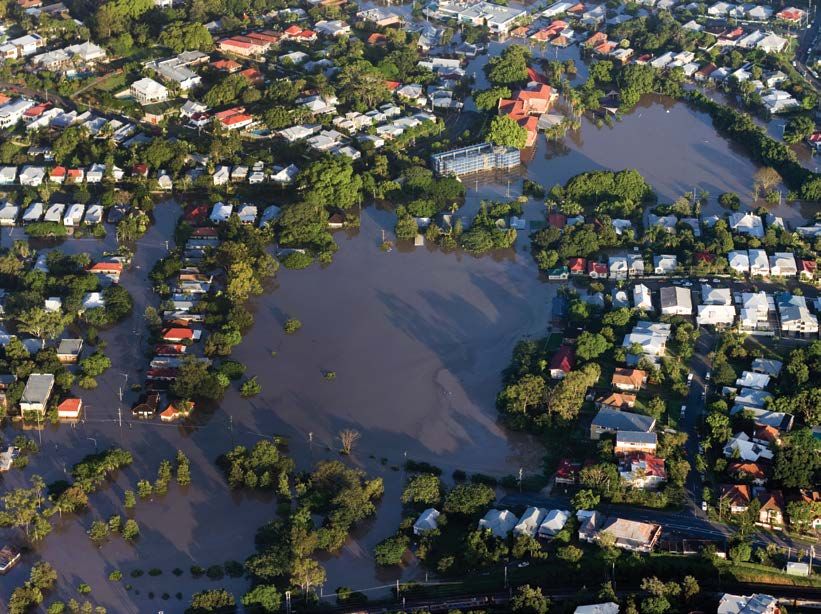
2                Increased Appetite for
                      ESG Investing

    Going forward, we are going to continue to see a lot more ESG
    investing. I think we will start to see indexes set up composed of
    companies with high ESG ratings. Investment dollars are moving
    away from fossil fuels and into green energy and, as a result, into
    companies that are on the forefront of sustainability.”
    				—OWEN D. THOMAS
    				                     ULI Global Chairman and Chief Executive Officer, Boston Properties
    				                     New York, New York

6
2              Increased Appetite for
                    ESG Investing

    The appetite for environmental, social, and governance (ESG)            “Green bonds” in particular have risen in popularity
    investing continues to soar, with record inflows amid the               dramatically over the past 10 years, from what ULI considered
    COVID-19 pandemic. Real estate firms are now issuing more               an “emerging trend” a few years ago to a mainstream
    opportunities for those investors to place their capital.               investment opportunity in 2020. Green bonds are standard
                                                                            bonds with specified proceeds going to fund projects that
    A recent survey conducted by BlackRock, one of the                      have positive environmental and/or climate benefits. Real
    world’s largest asset managers, suggests significant global             estate firms gain value from issuing a green bond in
    growth in ESG investments in the years ahead. Its Global                myriad ways:
    Client Sustainable Investing Survey found that respondents
    plan to double their allocations to ESG assets under                         • Highlights their green assets/business;
    management (AUM) by 2025. The survey covered 425
                                                                                 • Provides a positive marketing story;
    investors in 27 countries, representing nearly $25 trillion in
    AUM. Respondents included representatives from corporate                     • Diversifies their investor base since they can now
    and public pension plans, asset managers, endowments,                          attract ESG specialist investors who are looking for
    foundations, and global wealth managers.                                       more impact;
    The survey showed that COVID-19 has not slowed investor                      • Joins up internal teams to do an investor roadshow:
    demand for sustainable investing; in fact, 20 percent of the                   environmental team with investor relations and other
    respondents said that the pandemic would result in accelerated                 business lines; and
    sustainable investment allocations. It found growth in
    sustainable assets to be most pronounced in Europe, while                    • Opens the potential for buyers to pay a premium for
    also increasing in the Americas and Asia Pacific regions.                      the “green” label on the bond.

7                                                         ULI Sustainability Outlook 2021
3 Heightened Emphasis on
Health and Social Equity
We are seeing much more discussion around social equity. A lot
of stakeholders are struggling to come up with metrics that are
mutually agreed upon with other industry stakeholders. Social equity
encompasses so much—such as education, workforce training,
health, and wellness—and measuring those things [as a determinant
of real estate value] is a challenge for the industry.”
—JUDI SCHWEITZER
Founder, Schweitzer + Associates Inc.
Lake Forest, California
Professor, University of California
Irvine, California
83 Heightened Emphasis on
Health and Social Equity
The real estate industry is ripe for accelerated investment in Both health and social equity are related to the issue of
health and social equity. The COVID-19 pandemic and recent environmental justice, which is defined by the U.S. Environmental
protests for racial justice in the United States and elsewhere Protection Agency (EPA) as the fair treatment and meaningful
have elevated the need for development that emphasizes involvement of all people regardless of race, color, national
health and social equity. In particular, the pandemic has origin, or income, with respect to the development,
highlighted inequities in access to healthy living and working implementation, and enforcement of environmental laws,
environments, as evidenced by its particularly severe impact regulations, and policies. This goal, says the EPA, will be
on lower-income people of color. In addition, the protests achieved “when everyone enjoys the same degree of protection
further spotlighted inequities in society, pointing to a need from environmental and health hazards, and equal access
for far stronger focus on development that fosters diverse, to the decision-making process to have a healthy environment
equitable, and inclusive communities. in which to live, learn, and work.” Real estate practitioners
can drive meaningful advances in equity by learning about,
ULI’s companion publications, Health and Social Equity and partnering with, community-based environmental justice
in Real Estate: State of the Market and Health and Social organizations committed to change.
Equity in Real Estate: Examples from the Field, explore
the current adoption levels of health and social equity at
the property level, and showcase examples of the real estate
industry’s response to rising demand for projects that
prioritize health and social equity as “must-haves.”
9 ULI Sustainability Outlook 2021Land use, zoning, and the location of public amenities are
critical to better distribute equity. The Case for Open Space, a
ULI report, highlights the benefits for developers to incorporate
parks and open spaces in their developments, and showcases
how mechanisms related to partnerships, funding, zoning,
and local engagement have allowed developers to support
project success while delivering significant community benefits.
Real estate developers continue to show leadership on this
front through outlets like the ULI Urban Open Space Awards,
which recognize transformative open spaces that have been
instrumental in promoting healthy, sustainable, and equitable
outcomes in communities.
The need for third-party-verified safe and healthy indoor
environments has taken on increased urgency due to the
pandemic. For instance, the American Society of Heating,
Refrigerating and Air-Conditioning Engineers is promoting
the use of 100 percent outside air ventilation systems in
commercial buildings. In addition, the Centers for Disease
Control and Prevention is offering guidance on office
environments’ ventilation, outdoor air, water systems, and
cleaning protocols to mitigate the spread of disease.
Health and well-being certifications are increasingly being
sought by mixed-use and commercial building owners,
managers, and tenants seeking to assure building users that
their spaces are safe to enter and occupy. The advent of
WELL in 2014, Fitwel in 2015, and RESET in 2019 spurred a
new generation of health-focused buildings and real estate
practitioners, and some early-adopter real estate companies
scale these certifications across their portfolios.
This elevated focus on health in 2020 resulted in the creation
of independent healthy building certification modules developed
specifically in response to COVID-19. These include a new
WELL Health-Safety Rating from the International WELL Building
Institute; a new Fitwel Viral Safety Module from the Center for
Active Design; and Safety First pilot credits from the Leadership
in Energy and Environmental Design (LEED) certification
program provided by the U.S. Green Building Council (USGBC).
The adoption of these modules and the full healthy building
certifications will continue to rise over the coming years.
10 ULI Sustainability Outlook 20214
Baseline Expectation
for Energy Efficiency
in Real Estate
Energy efficiency is baked in as a price of entry for any project. . . .
In the current environment, people are looking at whether there
is an opportunity to materially improve the energy efficiency of
space and reduce occupancy costs while they are shrinking and
reconfiguring space in response to remote work becoming
more permanent.”
—PETER TOMAI
Chief Investment Officer, Specific Performance Inc.
Park City, Utah
114 Baseline Expectation for
Energy Efficiency in Real Estate
Even as building occupants now view healthy indoor On the commercial side, real estate will continue to deliver
environments as a “must-have,” energy efficiency remains a a core-and-shell property to a certain level of energy-efficient
high priority and a feature that has become so prevalent that base building specs, with the opportunity for a tenant
it is considered a “given” by tenants, owners, managers, and improvement to allow for any level of sustainability customization
developers. New technologies that make buildings healthier and green building certification. Premier developers are
and more energy efficient will negate the need to compromise designing buildings to allow for premier tech tenants’ interests
one goal to achieve the other—both are viewed throughout as opposed to bottom-tier code levels for any tenant.
the industry as key elements of sustainability.
To maintain energy efficiency throughout a building’s operations,
There is now a baseline expectation for energy efficiency and owners and operators are relying on more sophisticated
high-performance operations in buildings. It is baked in as a building automation systems to measure the performance of
price of entry for any project today. The business case for the mechanical systems, track the energy use of lighting and
energy efficiency is evident: decreases in operating expenses plug loads, and optimize building schedules. Smart building
drive increases in net operating income and overall asset technologies that rely on sensors and real-time data are
value. Not only do energy efficiency technologies and operations allowing for automated fault detection and diagnostics in ways
reduce utility costs, they also reduce maintenance and that were not possible just a few years ago.
operations costs and free up facility engineers’ time for proactive
tune-ups and improvements.
12 ULI Sustainability Outlook 20215
Tenants Driving
Sustainability
Innovation
Tenants are increasingly expecting a certain level of commitment
to the environment from landlords of class A buildings across our
global markets. Our buildings are frequently seen as extensions
of their brand, as a company’s physical space reflects the values
of their organization. Additionally, some tenants are increasingly
interested in opportunities to help reduce energy and carbon
emissions of the buildings they occupy.”
—CAROLINE JOHNS
Director of Development, Pembroke
Boston, Massachusetts
135 Tenants Driving
Sustainability Innovation
Premier technology tenants such as Microsoft and Google • ULI’s Tenant Energy Optimization Program, a 10-step
have set ambitious climate goals that directly affect their real process that integrates energy efficiency into tenant
estate choices. For instance, Microsoft has pledged to be space design and construction and delivers financial
carbon negative by 2030; and by 2050, the company is aiming returns through energy conservation. Tenant improvement
to remove from the environment all the carbon that it has projects using the step-by-step design and construction
emitted either directly or by electrical consumption since it process typically demonstrate energy savings of 30 to
was founded in 1975. Google, which in 2017 became the 50 percent;
first major company to match its energy use with 100 percent
renewable energy on an annual basis, has committed to • ENERGY STAR Tenant Space, a recognition program for
operating completely on carbon-free energy 24/7 by 2030. sustainability efforts in leased office spaces, created to
These ambitious goals are spurring strong demand by increase awareness and reduce consumption of energy
these organizations for workspaces that reflect state-of-the-art in tenant spaces; and
sustainability technologies and practices, and will likely raise • The U.S. Department of Energy’s Green Lease Leaders,
the bar for overall tenant contributions to building performance. a program that recognizes and supports sustainable
Commercial tenants consume an average of 40 to 60 landlord/tenant relationships through green leases with
percent of the total energy used in buildings. Tenant clauses that encourage sustainability, such as energy
equipment, operations, and behavioral patterns have a data sharing and cost-recovery of energy upgrades.
significant impact on the building performance, energy use,
and carbon footprint of the buildings they occupy. As a
result, several programs have been designed to help tenants
conserve energy and reduce energy costs, emphasizing the
importance of collaboration among tenants, building owners,
and service providers. These include the following:
14 ULI Sustainability Outlook 2021Emissions Reductions
6
through Embodied Carbon
of Building Construction
Materials
Mass timber is definitely of interest. Nonprofits and public/private
partnerships [in addition to the private sector] are interested in
exploring this. It’s just a matter of time before it becomes more
widely used for a lower-carbon footprint, particularly in projects
with a limited number of unit types in a structure.”
—ROB RYDEL
Principal, OZ Architecture
Denver, Colorado
156 Emissions Reductions through Embodied
Carbon of Building Construction Materials
The built environment’s carbon footprint is from both building Mass timber is emerging as an environmentally conscious
operations and building materials—and lowering building building material alternative. Research from the WoodWorks
emissions requires an emphasis on both. According to recent Wood Products Council shows that wood buildings can help
research from the Santa Fe, New Mexico–based climate-oriented mitigate climate change in three ways: 1) wood products require
nonprofit organization called Architecture 2030, the embodied less embodied energy to manufacture than other building
carbon emissions of building products and construction materials; 2) wood buildings sequester, or store, carbon for
represent 11 percent of annual global carbon emissions. the lifetime of a building and longer if the wood is recycled
when the building is demolished; and 3) as new trees are planted,
Unlike operational carbon emissions, which can be reduced
the regenerating forest continues the cycle of carbon absorption.
over time with building energy efficiency renovations and
the use of renewable energy, embodied carbon emissions Since 2013, nearly 1,000 mass-timber projects—including
cannot be lowered after a building is constructed. Unless multifamily and commercial buildings—have been constructed
the industry starts addressing the need to reduce embodied or are in design in all 50 states in the United States; and
carbon in building materials, Architecture 2030 estimates that globally, there are dozens of mass-timber buildings eight stories
by 2050—factoring in all new construction expected over the tall or higher, including the Carbon 12 project in Portland,
next 30 years—emissions from embodied carbon will equal Oregon. In addition, in 2019, the International Code Council
those from operational carbon emissions. Embodied Carbon approved proposals to permit construction of mass-timber
in Building Materials for Real Estate, a ULI report, provides buildings up to 18 stories as part of the 2021 International
more details on the business case for these reductions and Code Council, opening up opportunities for more tall timber
how real estate firms can get started. Real estate firms can buildings to be part of cityscapes worldwide.
join organizations like the Carbon Leadership Forum that are
inspiring innovation and spurring change through collective
action on reducing embodied carbon in buildings.
16 ULI Sustainability Outlook 20217
Increasingly
Grid-Interactive
Buildings
I see a greater focus on cleaning the grid and grid harmonization,
with an emphasis on efficiency and reducing peak demand. And,
smart controls and battery technologies are getting safer, so you
can have virtual power plants not only within a community, but
community to community. That could be a real game-changer.”
—JUDI SCHWEITZER
Founder, Schweitzer + Associates Inc.
Lake Forest, California
Professor, University of California
Irvine, California
177 Increasingly Grid-Interactive
Buildings
Buildings are becoming increasingly grid-interactive as a the second and third quarters of the year. This increase
way to lower building emissions through optimized building is expected to continue, as utilities and homeowners are
operations, with an emphasis on alternative power, including finding solar power to be more cost-efficient than paying for
on-site distributed energy resources, off-site renewable energy, energy from fossil fuels, the report notes.
and utility-provided green power. It is becoming increasingly
According to the National Conference of State Legislatures
common for grid-interactive buildings to have a direct
(NCSL), an increasing number of states are revising their
connection between utility providers and building operators
renewable portfolio standards (RPS), which is helping drive
to decrease energy use during high-energy-demand days
the nation’s $64 billion market for wind, solar, and other
and alleviate stress on regional grids.
renewable energy sources. These standards, which require
The U.S. Department of Energy’s Grid-interactive Efficient that a specified percentage of the electricity that utilities
Buildings (GEB) Initiative supports building owners and sell comes from renewable resources, have been created by
operators as they track and optimize the timing and amount states to diversify their energy resources, promote domestic
of building energy consumption in coordination with the energy production, encourage economic development, and
utility grid. In addition to improving the energy efficiency of reduce greenhouse gas emissions.
the overall building, this concept includes the use of smart
With cities like San Francisco passing all-electric building
technology to give building occupants more control in managing
codes, real estate is paying even greater attention to building
building comfort and performance while saving money
electrification for new developments. Building electrification
on energy bills; and it encourages greater use of renewable
means eliminating the use of fossil fuels for functions such
power sources.
as heating and cooking, and replacing gas appliances with
While distributed energy resources on site are important for alternatives powered by clean electricity. The growing emphasis
building emissions reductions, green utility power also is a has led to the establishment of organizations such as the
key consideration. For instance, use of solar power by utilities California-based Building Decarbonization Coalition (BDC),
and homeowners is rising significantly. A recent report from which unites building industry stakeholders with energy
the Solar Energy Industries Association stated that solar power providers, environmental organizations, and local governments
capacity added in 2020 was 43 percent higher than that added to help electrify residential and commercial buildings with
in 2019. Large solar farms operated by utilities led the clean energy.
growth, but residential installations also jumped between
18 ULI Sustainability Outlook 20218
Resilience and
Climate Risk as a Priority
for Investments
With the recent discussion in many venues including the ULI Urban Resil-
ience program, so many of our developer clients are understanding not only
the impact of climate and wellness on their bottom line, but they’re also en-
couraging their communities to think so, too. Whether driven by risk man-
agement, insurance, or investor attractiveness, the demand for a duality of
design agility for climatic resilience and human well-being are terrific.”
—RIVES TAYLOR
Principal, Gensler
Houston, Texas
198 Resilience and Climate Risk as
a Priority for Investments
Resilience is one of the most important things that we have to figure
out how to deal with. We all know the ultimate step, and that is
mass migration [to areas less vulnerable to climate change].
We all know the interim steps, and we have to figure out which
ones work, and which ones don’t.”
—KEN HUBBARD
Senior Managing Director, Hines-U.S.
Miami Beach, Florida
Improving resilience to the impacts of climate change is a In addition to voluntary measures by companies to improve
complex and evolving challenge for real estate investors. climate risk, an increasing number of countries are requiring
Risks such as rising seas, flooding, severe storms, and heat companies to report on climate risk using structures such
stress are increasingly highlighting the vulnerability of not as the Task Force on Climate-Related Financial Disclosures
only individual assets and locations within cities, but also (TCFD). It was established by the Financial Stability Board
entire metropolitan areas. Research conducted in 2019 and in 2015 to develop recommendations for more effective
2020 by ULI and Heitman LLC finds that leading real estate climate-related disclosures that could promote more informed
firms are increasingly prioritizing this issue with provocative investment, credit, and insurance underwriting decisions
approaches to gauge climate risk and develop resilience and, in turn, enable stakeholders to better understand the
strategies—a process that involves adaptation, as opposed to concentrations of carbon-related assets in the financial sector
sustainability practices that involve mitigation. and the financial system’s exposures to climate-related risks.
Whether or not their assets have already been directly affected The TCFD has found a steady increase in the disclosure of
by the impacts of climate change, investors see climate climate-related financial information, with energy companies
considerations as a necessary layer of fiduciary responsibility and materials and buildings companies leading on disclosure.
to their stakeholders, and are realizing that building for By 2020, more than 1,000 public and private organizations,
resilience, on a property, portfolio, and citywide basis, is of including national governments as well as businesses, had
paramount importance to staying competitive. Information pledged their support for the TCFD’s work.
about city-scale risk—including fiscal policy constraints; critical
infrastructure investment, repair, and replacement; and the
level of commitment to improving resilience—is a key factor
for consideration.
20 ULI Sustainability Outlook 20219
Water as a Resource
to Be Conserved
and Leveraged
Policies related to water vary widely geographically. There are lots
of opportunities for discussions about how to address the policy
hurdles that are associated with alternative water management.
There is real power in the real estate sector being able to effect
change in policies.”
—JOCELYN HITTLE
Assistant Vice Chancellor, Spur Campus and Special Projects
Colorado State University System
Denver, Colorado
219 Water as a Resource to
Be Conserved and Leveraged
In recent years, the dialogue about improving building In addition, water is increasingly being leveraged through the
performance to protect the environment has been dominated by use of graywater and blackwater systems that capture and
reducing energy use and carbon emissions, but conserving repurpose used water rather than sending it to sewers, as well
fresh water—a finite resource—is also a critical component as green infrastructure systems that capture stormwater
of building performance. Water prices are increasing at a rate through pipes-and-pumps alternatives such as rain gardens,
higher than inflation and are rising faster than other utilities bioswales, and green roofs. Through these innovations,
because of infrastructure costs and water scarcity or drought. buildings are now able to set and achieve net-zero water goals.
Throughout the public and private sectors, there is growing
Harvesting the Value of Water, a ULI publication, looks at
awareness of the correlation between saving water and safe
how water management mechanisms using green infrastruc-
water; as a result, conserving water is an issue that merits
ture can create value for real estate projects by improving
attention and investment.
operational efficiency as well as serving as an attractive
To mitigate these rising costs and improve the efficiency of amenity. It notes that a rising number of local governments
their buildings, building owners and managers are developing are creating coordinated citywide green infrastructure net-
water management plans that address the three primary areas works that include both public and private properties. As a
for savings: 1) reducing water loss from leaks; 2) reducing result, real estate developers are increasingly responding
overall water use through occupant education and improving to new regulations by incorporating the requirements into
the water efficiency of fixtures and cooling towers, HVAC their business models.
equipment, landscaping, and irrigation systems; and 3) reusing
on-site water.
22 ULI Sustainability Outlook 202110
Waste Reduction
Over a Building’s
Life Cycle
There is an opportunity cost for turning away from the ‘icky’ topic
of waste. The fashion industry collapsed a design and business
challenge with brand responsibility to prioritize waste reduction.
We could learn from that.”
—JULIE HIROMOTO
Principal and Director of Integration, HKS
Dallas, Texas
2310 Waste Reduction Over a
Building’s Life Cycle
Real estate firms are taking efforts in waste reduction more The TRUE program for zero-waste certification, administered
seriously than ever. For real estate owners, significant waste by the Green Building Certification Institute, was developed to
can be generated by construction, day-to-day operations, help building owners, operators, managers, and users define,
new tenants, and restaurants. pursue, and achieve their zero-waste goals, cutting their
carbon footprint and supporting public health. Currently, more
According to the EPA, 600 million tons of construction and than 160 projects totaling more than 300 million total gross
demolition debris including steel, wood, concrete, drywall, square feet of space in 29 states and 13 countries are registered
asphalt, and brick were generated nationwide in 2018—more or certified with TRUE.
than twice the amount of municipal solid waste (trash)
generated by consumers and businesses. Of that debris, A recent report from Arup and the Ellen MacArthur Foundation
24 percent, or 144 million tons, was sent to landfills, affirms the rising interest in minimizing waste and reusing
including 71 million tons of concrete. Developers are beginning building materials. It found that if real estate businesses adopt
to see value in the reuse of materials for their projects, models based on circular economy principles, the sector can
whether as part of a ground-up development or redevelopment achieve significant financial returns while reducing its carbon
with adaptive use. footprint. The study tested the financial performance of five
circular economy real estate business models—for flexible
The rising interest in waste reduction has resulted in the creation spaces, adaptable assets, relocatable buildings, residual
of building tools and certifications that are specific to waste. value, and performance management—based on data from
A waste audit helps building owners and managers identify developments in five European cities. By delivering more
inefficiencies and opportunities for both waste reduction and flexible, adaptable, and deconstructable buildings, and by
recycling. The EPA’s ENERGY STAR Portfolio Manager database procuring services instead of products, investors’ assets
encourages benchmarking waste at the property level to can become more productive, more agile, and less damag-
enable better management and reduction over time, although ing to the environment while providing new revenue streams
data collection on bin size and weight can sometimes be patchy. and greater value.
24 ULI Sustainability Outlook 2021Conclusion
The strong commitment by ULI members to pursue best It is an exciting time for the real estate industry. Owners,
practices in sustainable development spans decades. While the investors, occupants, cities, and communities all find value in
Institute’s mission has changed over time, it has continued to sustainable development. This presents new opportunities for
emphasize building in harmony with the natural environment. ULI to lead positive change and position the built environment
What began as a quest to develop communities in a way that as part of the solution to myriad challenges related to climate
conserves land and other resources has evolved into a sweep- change, energy conservation, health, racial injustice, and
ing, multifaceted movement that has grown exponentially as economic inequities. The Institute is uniquely positioned
ULI’s membership has expanded around the globe. to do this by drawing upon the lessons learned from its global
network of real estate innovators.
As this outlook suggests, we are entering a new era of
sustainability. The market today values environmental, social, The current moment requires us to be steadfast in the pursuit
and governance (ESG) in real estate more than ever before. of a future that is more inclusive, healthy, green, and resilient.
What constitutes ESG is ever expanding, with health and social ULI’s Greenprint Center for Building Performance is poised to
equity now considered as fundamental as energy efficiency rise to the challenge and support our members as they lead
and lower carbon emissions. And we are learning from this the industry on increasing building value while creating truly
holistic approach to ESG that many of the practices that make sustainable communities that can withstand the tests of time
projects and communities healthier and more equitable will and change.
ultimately make them more sustainable and more resilient.
25 ULI Sustainability Outlook 2021Urban Land Institute 2001 L Street, NW Suite 200 Washington, DC 20036-4948 uli.org
You can also read


