Unearthing OUr POtential 2018-2023 strategic plan - November 27, 2017
←
→
Page content transcription
If your browser does not render page correctly, please read the page content below
Unearthing Our Potential
2018—2023 strategic plan
N o v e m b e r 2 7, 2 0 17
Unearthing our Potential
           Executive Summary
                                                                                 Lewis Ginter Botanical Garden is stepping boldly into its       The themes outlined in this Strategic Plan and the Master
                                                                                 future, and frequently it seems that the future is already      Site Plan—timelessness, community, and awakening—are
                                                                                 here. In 2017, the Garden’s 2016 record visitation was          concepts that help to guide the Garden as it continues to
                                                                                 followed by the 2nd strongest year in the Garden’s history,     grow and develop. These three themes are not mutually
                                                                                 as the Wild Art, A Journey off Canvas exhibition featured       exclusive or ordered by importance; rather, they engage and
                                                                                 local artists working in natural materials and Butterflies      inform one another, and together act as the foundation for
                                                                                 Live! continued to engage our community and visitors            the future of the Garden.
                                                                                 to the region. The Garden’s Master Site plan was tested
                                                                                 through a rigorous planning study in 2017, the four pri-        Timelessness—A Garden of All Ages
                                                                                 ority projects identified in the plan were sequenced and        Community—A Garden for Cultivating Community
                                                                                 efforts begun to begin fundraising and embark on con-
                                                                                 struction designs.                                              Awakening—A Garden of Awakening: Mind, Body, Spirit

                                                                                 This 2018–2023 Strategic Plan outlines goals for the next       Our Strategic Plan is a living document that is reviewed
                                                                                 chapter of the Garden’s history. It includes two strategical-   and updated annually through the Planning Committee
                                                                                 ly important elements: the continued transition of the          with approval from the Executive Committee and Board of
                                                                                 Cosby property, identified as the Lewis Ginter Nature           Directors.
                                                                                 Reserve, into the fold; and continuation of the Garden
                                                                                 Expansion Master Site Plan work, as fundraising for             And so we continue “Unearthing Our Potential”—
                                                                                 capital projects and programming support progresses in          the next chapter in the Garden’s evolution.
                                                                                 tandem with advanced design work and the completion of
                                                                                 construction documents.

                                                “Welcome, we have
                                                prepared all of this for you.”
                                                 LGBG Staff Directors

Photos: Melissa and Mark Anderson Photography

                                                                                                                            lewis ginter botanical garden          2018–2023 strategic plan               i
Unearthing our Potential
Table of Contents
           Executive Summary....................................................................................                               i

           Background and Introduction......................................................                                                   1

           Vision and Mission.........................................................................................                        2

           Core ValueS..........................................................................................................              3

           Aspirations..........................................................................................................              4

           Goals...........................................................................................................................   5

           Operational Objectives
             Horticulture............................................................................................................          8
           	Education.................................................................................................................         9
             People........................................................................................................................   10
             Plans, Operations, and Assets..........................................................................                          11
             Community Engagement...................................................................................                          12
             Lewis Ginter Nature Reserve...........................................................................                           13
           	Environmental Stewardship............................................................................                             14

           Appendix
             Themes Throughout the Garden..................................................................... 16
           	By The Numbers.................................................................................................... 17
             Garden Recognition and Awards.................................................................... 18
             2016 Completed Operational Objectives....................................................... 19
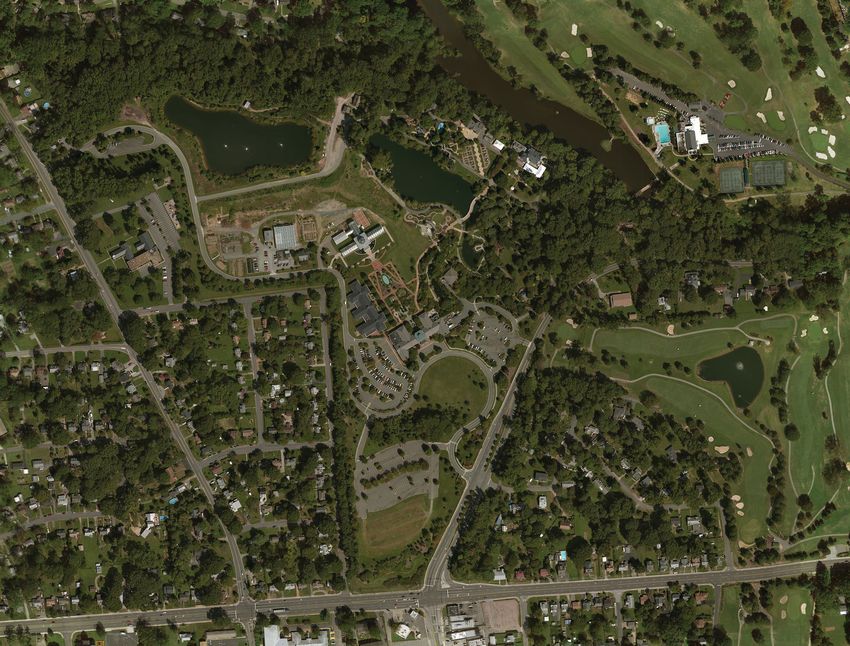
             Lewis Ginter Botanical Garden Aerial View............................................... 20
             Lewis Ginter Nature Reserve Aerial View................................................... 21
           	Master Site Plan.................................................................................................... 22

                                                                                                                                                   lewis ginter botanical garden   2018–2023 strategic plan   iii
Unearthing our Potential
Background and Introduction
         Lewis Ginter Botanical Garden’s history begins with the generosity and vision      staff, and numerous patrons and allies, the honors spur continued commitment
         of our first benefactor, Grace Arents, the niece of the 19th-century business-     and effort.
         man and philanthropist Lewis Ginter. In 1913, Grace purchased the abandoned
         Lakeside Wheel Clubhouse and its 10 acres in Henrico County from the Lewis         Major initiatives in the last five years include:
         Ginter Land and Improvement Company. Before long, she expanded her farm,           • Renovation of Grace Arents Garden, Robertson Pavilion, Carriage House
         now named “Bloemendaal” (Valley of Flowers, after an ancestral Dutch town),          breezeway, Evelyn Luck Garden.
         to 73 acres and a number of support buildings. In 1926 Grace died, and through     • Installation of Bragdon Daffodil Garden, Cherry Tree Walk, Lake Sydnor
         her will bequeathed Bloemendaal Farm and an endowment of $100,000 to the             docks, Dot’s Garden, Morton Native Plant Garden, expansion of the
         City of Richmond for a “public park and botanical garden” to be named for her        Community Kitchen Garden including the Stapleton-Tignor Apiary.
         late uncle. Grace gave life rights to her companion, Mary Garland Smith, and
         when Mary Garland died in 1968, Bloemendaal became the responsibility of the       • Adoption and implementation of the first complete graphic platform in the
         City of Richmond’s Department of Parks and Recreation. The City investigated         Garden’s history.
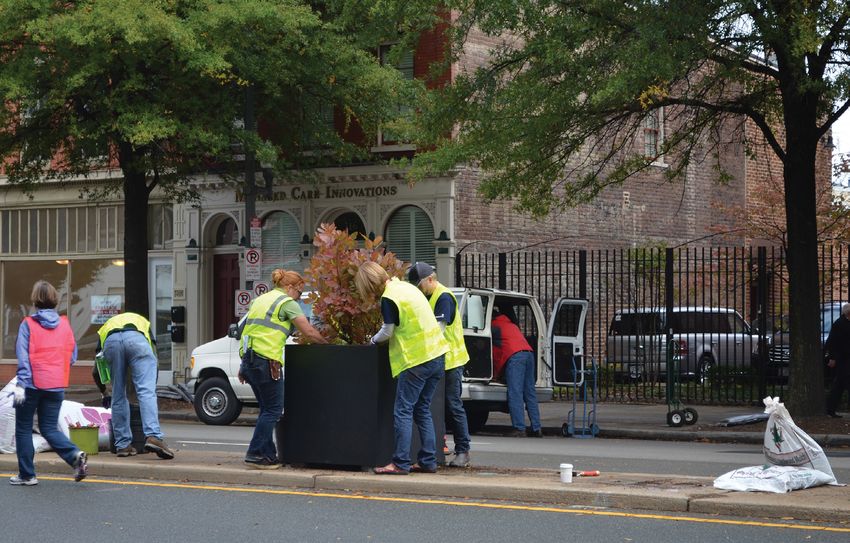
         several plans for a botanical garden, but none came to fruition.                   • Community engagement through community projects, Beautiful RVA
                                                                                              collaborative, popular exhibitions, Free Fourth of July, Free Community
         In the early 1980s, members of the Richmond Horticultural Association                Day, new position of Community Engagement Coordinator, and the training
         gathered a dedicated group of botanists, horticulturists, and concerned citizens     of the first two cohorts of Ginter Urban Gardeners.
         in order to uphold the terms of Grace Arents’ bequest. In 1984, when the
                                                                                            • Selection of the first Frank L. Robinson Endowed Chair in Horticulture, and
         Garden was organized and chartered, the property was largely untended and
                                                                                              creation of a new Exhibitions Manager position.
         the few buildings on site were suffering from age and neglect. It took three
         years to open to the public and the handful of staff had their pay                 • Completed Master Site Plan for the Garden’s campus identifying four
         recorded in cursive in a bound ledger.                                               priority projects: Center for Horticultural Excellence, Learning Village, Vale
                                                                                              House, and Conservatory Expansion. The Plan also identified the
         After 32 years of rapid growth, the Garden now encompasses 82 acres, four            Garden’s plant collections of focus: outdoors—azaleas, conifers, dogwoods,
         lakes, 5,500 unique genera of plants within 15 distinct outdoor gardens, 11          magnolias, pitcher plants, and Virginia native plants, and indoors—palms,
         major buildings including a conservatory and greenhouse, plus an 80-acre branch      orchids, and bromeliads.
         site, the Lewis Ginter Nature Reserve. Annually we teach and engage over 18,000    • Authorization received from Board of Directors to continue construction
         students in 850 education programs. Each year this cadre of identified learners      documentation and begin comprehensive fundraising effort.
         is just a fraction of the more than 350,000 annual visitors who learn year-round
         what a garden can mean for the body and spirit as well as the mind. In recent
         years the Garden has been honored with inclusion in a number of top ten lists
         for botanical gardens in North America. For the 650 volunteers, 72 full-time

                                                                                            lewis ginter botanical garden          2018–2023 strategic plan               1
Unearthing our Potential
          Vision and Mission

                        Our Vision builds upon our accomplishments and             Our Mission affirms the Garden as a primary
                        expanded presence and responsibility as we have            resource for learning about the botanical world—its
                        transformed from a local attraction to a national place    beauty, heritage, and significance to the web of life.
                        of excellence.

                        Lewis Ginter Botanical Garden, including the               Lewis Ginter Botanical Garden connects people
                        new Lewis Ginter Nature Reserve, reveals the               through plants to improve communities.
                        unity and integration of human and plant life,
                        celebrates the fundamental significance of
Photo: Don Williamson
                        the natural world, and enriches communities
                        through horticultural and educational excellence
                        and innovative outreach initiatives.

                                                                                  lewis ginter botanical garden   2018–2023 strategic plan   2
Unearthing our Potential
Core Values
The five Core Values of Inspiration, Innovation, Responsibility, Integrity, and Hospitality define the ethos of the Garden and Reserve.

        Inspiration                        Innovation                     Responsibility                          Integrity                                   Hospitality
 Provide an accessible, memora-     Inspire guests with evolving      Educate the community on the      Do professional work that is                   Invite, welcome, and celebrate
 ble, and transformational botan-   garden design, new and creative   interdependence of human and      straightforward, honest, up-                   individuals from diverse
 ical garden experience through a   displays, stimulating programs,   plant life and the importance     right, fair, and legal at all times.           communities as visitors, mem-
 beautiful environment that         and singular events. Expand       of environmental stewardship.     Steadfastly honor community                    bers, partners, volunteers,
 engages guests, connects them      the influence of the Garden and   Allocate resources of time,       partners who help the Garden                   and staff.
 to the plant world, and encour-    Reserve through community         material, and money when          engage with the region and vol-
 ages them to learn, share, and     partnerships and imaginative      proposed programs or projects     unteers and staff who carry the
 model our horticultural practic-   projects.                         are considered effective,         Garden and its mission in their
 es.                                                                  efficient, and sustainable.       hands.

                                                                                                      lewis ginter botanical garden            2018–2023 strategic plan             3
Unearthing our Potential
 Aspirations
                              At Lewis Ginter Botanical Garden, we seek to:
                              • Operate an engaging botanical garden and nature            • Interpret the natural world through innovative and au-
                                reserve that effectively serve multiple, far-reaching        thentic experiences that foster a sense of joy and won-
                                communities by demonstrating the interrelationship of        der with children and adults alike, cultivating a lifelong
                                plants and people. (Our Charge)                              love of nature. (Education)
                              • Attract, cultivate, teach, enrich, entertain, celebrate,   • Engage with all local communities to foster an
                                and inspire a growing and diverse audience of                improved regional quality of life through public
                                Garden guests, members, volunteers, friends,                 horticulture, urban greening, and community-based
                                patrons and board and staff members. Expand the              beautification. Be a source of reliable information,
                                Garden community to reflect broader and larger com-          a facilitator of dialogue, a collaborative partner, and
                                munities. (Our Constituency)                                 an active promoter and participant in the pursuit of
                              • Steward and expand inspirationally designed,                 horticultural excellence and beauty. (Engagement)
                                immaculately maintained, and horticulturally               • Pursue operational excellence in all we do,
                                significant plant collections in order to display,           embracing prudent management of resources and re-
                                research, and teach:                                         lationships, high standards of service, and strong work
                                 − Global plant diversity                                    ethic. Encourage respect, hospitality, capability, cre-
                                                                                             ativity, inclusion, and integrity. (Operations)
                                 − Specific attributes and benefits of native
                                   plants of the mid-Atlantic and other focused            • Advocate for human health, well-being, and security
                                   plant collections                                         through the careful stewardship of our world’s
                                                                                             limited resources. (Environment)
                                 −	Ecologic resilience amidst environmental
                                   challenge
“I always feel better after      − Horticultural best practices
 I’ve been to the Garden.”       − The importance of beautiful and resilient
 Anonymous Visitor
                                   gardens, and
                                 − The transformative physical, emotional, and
                                   spiritual benefits of human interdependence
                                   with plants. (Horticulture)

                                                                          lewis ginter botanical garden      2018–2023 strategic plan                  4
Unearthing our Potential
Goals
Our goals direct the Garden’s botanical,
horticultural, design, and educational initiatives.
These goals will evolve and be assessed in light of
accomplishments, insights gained through
experience, exploration, and new opportunities.
horticulture EDUCATION PEOPLE
Expand the Garden’s Expand the Garden’s commit- Develop and support the
horticulture collections, ment to formal and informal people who work at the
displays, documentation, and education. Garden.
research.
OPERATIONS COMMUNITY LEWIS GINTER Environmental
Develop and implement “best Strengthen and enhance the NATURE RESERVE Stewardship
practice” business plans and Garden’s community engage- Continue transitioning the Promote conservation and
operations; steward and ment through leadership, Lewis Ginter Nature Reserve environmental resiliency
strengthen Garden assets. partnerships, projects, into the fold of the Garden. through horticultural and op-
communications, and events. erational practices and plans.
Photo: Don Williamson
lewis ginter botanical garden 2018–2023 strategic plan 5Unearthing our Potential Operational Objectives
Operational Objectives
Horticulture
Expand the Garden’s horticulture collections, displays, documentation, and research
                                            •     Upgrade Conservatory and Greenhouse climate           •     Develop a plan to regularly and accurately map,
                                                  control system from Argus Classic to Argus Titan.           document, inventory, and label planting beds and ac-
                                                  (May 2018)                                                  cessioned plant collections. Update the IrisBG plant
                                            • Oversee full implementation of the plant database soft-         records database accordingly. (December 2018)
                                              ware IrisBG, to include active promotion of               •     Proceed with Glen Stream Restoration Project.
                                              Web-based Garden Explorer. (June 2018)                          (December 2018)
                                            • Update the Living Collections Policy. (June 2018)         •     Review and systematize current research efforts. De-
                                            • Take steps to achieve certification for the Garden/ Re-         velop strategies for expanding research in coordination
                                              serve azalea and rhododendron collection as a                   and partnership with local schools and national gar-
                                              Nationally Accredited Plant Collection™ through the             dens. (March 2020)
                                              American Public Gardens Association. (June 2018)          •     Evaluate existing gardens and plant collections.
                                            • Expand and diversify the Garden’s core plant collec-            Renovate those that are incomplete, outdated, or have
                                              tions including: outdoors- azaleas, magnolias,                  lost their focus. (Ongoing)
                                              dogwoods, pitcher plants, conifers, and Virginia native   P Renovate Luck Memorial Garden. (Completed April
                                              plants, and indoors- palms, orchids, and bromeliads.        2017)
                                              (September 2018)                                          P Implement the Frank L. Robinson Endowed Chair
                                            • Refine schematic design plans for Master Site Plan pri-     in Horticulture. (Completed April 2017)
                                              ority projects (Learning Village, Vale House,
                                              Conservatory Expansion, and Center for Horticultural
                                              Excellence). Complete construction plans for
                                              Learning Village and Vale House (and other projects
                                              as funded) including garden and structure designs.
                                              Create integrated plans for all projects with regard to
                                              environmental sensitivity, plant collections,
                                              educational programming, impact summaries for
                                              visitation, revenue, staffing support, equipment
                                              inventory, etc. (December 2018)

                                                                                         lewis ginter botanical garden      2018–2023 strategic plan                  8
Operational Objectives
Education
Expand the Garden’s commitment to formal and informal education
• Increase and continue to sustain the number of children served by and structure designs. Create integrated plans for all projects with
expanded professional development offerings that encourage teachers to use regard to environmental sensitivity, plant collections, educational
their schoolyard and other outdoor spaces to increase student authentic programming, impact summaries for visitation, revenue, staffing
learning experiences while enhancing environmental education and core support, equipment inventory, etc. (December 2018)
curriculum. (June 2016–Ongoing) • Refine methods for identifying, onboarding, training, and supporting
• Develop new and strengthen current partnerships to add dimension to adjunct faculty and volunteer docents. (December 2018)
current programs and increase opportunity for measurable short- and • Pursue new approaches to informal Garden-wide education and guest en-
long-term outcomes in all program areas including out-of-school time, gagement in collaboration with educational partners, to include
parent-child fee based programs and workshops, and green industry profes- innovative cross-departmental collaborations, volunteer options for citizen
sional development collaborations. (September 2016–Ongoing) science projects, tests of a mobile education station, and the development
• Work with ActiveNet-Insights to expand reporting capabilities for group and implementation of hands-on, experiential teaching opportunities for
activities in Facility Events and Children’s Education. (April 2017- guests of all ages. (September 2019)
Ongoing) • Investigate and pursue best examples of climate change education and com-
• Research and develop post-graduate certificate program in therapeutic hor- munication strategies. (December 2019)
ticulture with VCU School of Social Work. (September 2017- Ongoing) • Explore options for adding hardware to enable user self checkout for Library
• Continue to build a pipeline to improve, train, and mentor future materials. (December 2019)
gardeners as avid amateurs or employable professionals in the horticulture • Research and develop alternative “virtual tour” products that can be
industry. Provide experiential learning and practical experience through delivered to local audiences with limited mobility but with interest in
current programs (Work Based Learning, Horticulture Research Intern- Garden experiences. (March 2020)
ship, etc.) as well as future initiatives. (September 2018)
P Update the Library’s circulation software to provide better functionality
• Explore options for adding the library’s holdings records to WorldCat and a modern, Web-friendly interface. (Completed December 2016)
national catalog. (October 2018)
P Modernize the Garden’s registration/reservation software to improve
• Develop classification system for archival materials using GeniePlus; con- productivity, customer engagement and payment security, while providing
sider an intern for archives management. (October 2018) customers with upgraded and more contemporary functionality through the
• Refine schematic design plans for Master Site Plan priority projects (Learn- online interface. (Completed April 2016)
ing Village, Vale House, Conservatory Expansion, and Center for Horticul-
tural Excellence). Complete construction plans for Learning
Village and Vale House (and other projects as funded) including garden
lewis ginter botanical garden 2018–2023 strategic plan 9Operational Objectives
People
Develop and support the people who work at the Garden
• Assure budgets include regular Cost of Living staff members and volunteers from diverse back-
Allowances (COLA) increases for Category 1 and 2 grounds representative of all the communities in our
full- and part-time staff. Periodically review employee region. (Ongoing)
benefits and maintain funding for current benefits. • Expand regular individual professional development,
(December 2017–Ongoing) training, and mentoring opportunities for staff mem-
• Formalize and document the Garden’s internship pro- bers. Formalize and document quarterly and annual
gram. (March 2017) Pursue opportunities to programs. (Ongoing)
provide training, compensation, housing, travel, etc. • Enhance and expand team-building training and
(September 2018) social events. (Ongoing)
• Review and enhance as necessary volunteer P Implement the Frank L. Robinson Endowed Chair
organization, training, assessment, and recognition. in Horticulture. (Completed April 2017)
(December 2018)
• Develop and document departmental succession plans,
short term and long term, which guide training and
professional development efforts and include restruc-
turing needs to prepare the organization for growth
and leadership transitions. (March 2019–Ongoing)
• Establish and fund staff compensation models bench-
marked to the median of comparable positions and
organizations. (December 2019)
• Research and pursue both internal and external
opportunities for staff member exchanges to further
development and growth. (March 2020)
• Develop and implement strategies and processes
to recruit, hire, and retain qualified and energetic
lewis ginter botanical garden 2018–2023 strategic plan 10Operational Objectives
Plans, Operations, and Assets
Develop optimal business plans, operations and assets - property, facilities, funds, programs, and revenues
• Ensure the near-term and long-term financial viability of the Garden (Learning Village, Vale House, Conservatory Expansion, and Center for
through continuous and transparent communications among Garden man- Horticultural Excellence). Complete construction plans for Learning Vil-
agement, Finance and Investment Committee, and Board of Directors. lage and Vale House (and other projects as funded) including garden and
Specific objectives include: periodic review and revision of Investment structure designs. Create integrated plans for all projects with regard to
Policy Statement and spending policy; maintenance of adequate cash environmental sensitivity, plant collections, educational programming, im-
reserves and liquidity of financial instruments; observance of conserva- pact summaries for visitation, revenue, staffing support, equipment
tive budgeting practice; establishment and observance of project campaign inventory, etc. (December 2018)
guidelines; increased emphasis on fundraising. (March 2016–Ongoing) • Map, inventory, and document Garden structures, FFE (furniture, fixtures,
• Expand planned giving and annual fundraising initiatives to further and equipment), and infrastructure to facilitate repair, preventative main-
support current operations and future aspirations. (December 2016– tenance, and renovation. (March 2020)
Ongoing) • Research and pursue technology that ensures all departments are
• Complete work on the Garden’s brand identity update and integration with supported with updated, efficient, and effective systems to allow for
LGBG, LGNR, and Beautiful RVA. (January 2017- Ongoing) best work. (June 2020)
• Fundraise for the approved Master Site Plan projects in addition to annual • Evaluate current IT infrastructure and procedures including systems
financial goals. (March 2017–Ongoing) security, storage capacity, back-up protocols, and disaster recovery.
• Evaluate and elevate Membership recognition program and Membership Determine future maintenance needs to existing infrastructure to
benefits to retain and increase the number of Member households. support growth of staff, visitors, and developed acreage. (March 2021)
(January 2018) • Assess current and future requirements for guest and student amenities.
• Retain campaign consultants for approved comprehensive fundraising Incorporate results into planning process. (December 2022)
effort. (March 2018) • Develop a plan of action and needed resources to achieve a campus-wide
• Establish strategic endowment growth objectives. (March 2018) interpretive master plan. (March 2023)
• Approve final Investment Policy Statement and spending policy. Confirm P Retain consulting firm to conduct a campaign planning study.
managers of endowed funds. (March 2018) (Completed March 2017)
• Review facility rental and concession model for support of the Garden’s
Mission. Establish and document criteria for pro bono space policies.
(March 2018)
• Refine schematic design plans for Master Site Plan priority projects
Bottom Photo: Don Williamson
lewis ginter botanical garden 2018–2023 strategic plan 11Operational Objectives
Community Engagement
Strengthen and enhance the Garden’s community engagement through leadership, partnerships, projects,
communications , and events
• Continue to serve a leadership and communication role Hermitage/Boulevard corridor, with emphasis on
in the Beautiful RVA collaborative network and develop projects to connect the Garden physically and visually
its brand position and Web presence. (January 2016– through signage, crosswalks, and public transporta-
Ongoing) tion. Strengthen and expand outreach programs in the
• Expand, document, fund, staff, and continuously assess Lakeside neighborhood to emphasize our commitment
seasonal special events and major exhibitions encour- to our neighbors. (March 2019)
aging expanded Garden audience (e.g., 2018 Origami in • Engage community and corporate leaders in a variety
the Garden). Incorporate a process for suspending or of leadership opportunities to include service on the
retiring less effective programs. (June 2018) Board of Associates and Board of Directors. (Ongoing)
• Identify and execute two off-campus sites for • Strengthen relations with elected and appointed
LGBG-led Community Work Days to increase LGBG’s government leaders in the region and for the
local impact and community visibility. Commonwealth of Virginia. (Ongoing)
(September 2018) P Review, revise, and communicate the Ten Guiding
• Reduce barriers of affordability by increasing Criteria for Partnership Formation. (Completed May
opportunities for reduced cost admissions to all 2017)
Garden events. (September 2018) P Train and deploy the first cohort of Ginter Urban
• Develop a long-range plan for expansion of Garden’s Gardeners to serve as volunteer project managers for
community engagement ventures, staffing, sustain- community-based projects. (Completed January
able funding model, infrastructure and opportunities 2017)
to leverage foundation, corporate, and venture capital
involvement. (December 2018)
• Explore new ways of using campus programs, facilities,
and attractions to diversify audience and build new
relationships. (March 2019)
• Continue to build connections along the Lakeside/
lewis ginter botanical garden 2018–2023 strategic plan 12Operational Objectives
Lewis Ginter Nature Reserve
Continue transitioning the Lewis Ginter Nature Reserve into the fold of the Garden
• Continue working with the Cosby family to further • Develop risk management scenarios and plans
transition the property. (January 2016–Ongoing) regarding the Reserve. (June 2018)
• Develop specific goals and objectives to: • Document the Cosby’s design intentions for the
− Continue communications with Reserve neighbors gardens and landscape, collection development
and Hanover County officials. (September 2016- objectives, and horticultural maintenance procedures.
Ongoing) (December 2018)
− Develop and test a stewardship budget and • Collect and catalogue the stories of the Cosby’s home
protocol for the Reserve. (March 2018) and history. (December 2020)
− Provide for professional training for Reserve • Implement the Reserve’s budget and operation plan
staff and volunteers. (June 2018) for the stewardship period. (March 2022)
− Actively recruit, train, and retain a volunteer base. P Repair and seal asphalt driveways. (Completed June
(Ongoing) 2017)
− Expand and enhance the Reserve’s horticulture P Complete schematic engineering drawings of the
collections, documentation, and research. Reserve’s well water/domestic water/irrigation
(September 2019) systems. (Completed October 2017)
− Research initial opportunities for formal and
informal education. (September 2020)
• Develop a plan for use of the property in the best
interests of the Cosby family and the Garden.
(December 2018)
• Take steps to achieve certification for the Garden/
Reserve azalea and rhododendron collection as a
Nationally Accredited Plant Collection™ through
the American Public Gardens Association.
(June 2018)
lewis ginter botanical garden 2018–2023 strategic plan 13Operational Objectives
Environmental Stewardship
Promote conservation and environmental resiliency through horticultural and operational practices and plans
• Expand and enhance programs to improve and test
water quality in and around the Garden and Reserve,
remove invasive plants, and mitigate pests through the
most environmentally sensitive Integrated Pest Man-
agement (IPM) techniques. (June 2016–Ongoing)
• Proceed with Glen Stream Restoration Project.
(December 2018)
• Evaluate current practices and develop a campus wide
recycling program. (December 2020)
• Develop a sustainability plan that uses as its frame-
work the American Public Gardens Association Sus-
tainability Index. (December 2021)
• Comply and certify as appropriate all major new
buildings with the LEED Green Building Certification
System. (Ongoing)
• Ensure the thoughtful use of natural resources, achiev-
ing beauty through environmentally sensitive methods.
(Ongoing)
• Minimze the Garden’s carbon footprint through
conservation and the use of green technologies.
(Ongoing)
lewis ginter botanical garden 2018–2023 strategic plan 14Unearthing our Potential Appendix
Appendix
Themes Throughout the Garden
                                                              TIMELESSNESS                                             COMMUNITY                                                AWAKENING

                                                      A GARDEN OF ALL AGES                                 A GARDEN FOR CULTIVATING                                A GARDEN OF AWAKENING:
                                                                                                                  COMMUNITY                                           MIND, BODY, SPIRIT

                                                •   Engage visitors of all ages, ability levels,       •   Forge meaningful relationships with community       •   Embrace ecological and natural systems and
      Theme Overview                                and backgrounds by providing a familiar and            organizations and serve as a resource                   showcase them in the Garden
                                                    comfortable environment
                                                                                                       •   Continually strive for greater inclusivity and      •   Embrace the romantic elements and experiences
The themes outlined in this plan—               •   Explore its unique local and regional contextual       diversity in guests, members, volunteers, staff,        of the Garden
timelessness, community, and awakening—             landscape identity                                     partnerships, programs, and engagement
are concepts that help to guide the Garden                                                                                                                     •   Encourage healthy living and nature-inspired
as it continues to grow and develop. These      •   Tell the stories of Richmond’s interwoven plant    •   Move beyond the Garden’s real and perceived             lifestyles through educational experiences in the
three themes are not mutually exclusive or          and human history                                      boundaries by removing barriers, both physical          Garden
ordered by importance; rather, they engage                                                                 and social, that will allow the Garden to be open
                                                •   Innovate to create timeless designs and                to everyone                                         •   Embrace the spiritual renewal that can come
and inform one another, and together act as         experiences that incorporate sustainable                                                                       from nature and beauty and create moments of
the foundation for the future of Lewis Ginter       technology and practices                           •   Facilitate community conversations that seek to         pause and reflection
Botanical Garden.                                                                                          act as a bridge between different communities
                                                •   Explore the history of the community, the              and connect people to the mission of the Garden     •   Redefine beauty to expand on the idea of formal
Elements of all three themes will appear in         Garden, and the people associated with it—                                                                     and manicured gardens to create authentic and
varying amounts and in varying locations            Grace Arents and her focus on healing and          •   Foster authentic learning experiences that              restorative experiences
                                                    philanthropy through the innovators of today           connect people through plants
throughout the Garden, at times together            and tomorrow                                                                                               •   Create opportunities for sensorial exploration
and at other times separately. These themes                                                            •   Instill a sense of pride and ownership among all        and allow visitors to experience the Garden from
build upon the ethos, characteristics, and      •   Open the horticultural operations to Garden            of Richmond’s communities                               unique perspectives
mission of the Garden. Together with specific       guests to showcase process and ingenuity
goals and objectives of the latest strategic
plan, they become the standards by which
design and decision-making are evaluated.
Photo: Don Williamson

                                                                                                                                  lewis ginter botanical garden        2018–2023 strategic plan                        16
Appendix
By the Numbers
HORTICULTURE EDUCATION GUESTS MEMBERS COMMUNICATIONS
8,267 1,260 401,306 22,852 726,079
Total accessions Adult guided tour and group Total annual visitation Adult members Total website sessions
program participants (general admission, students,
5,841 rental clients, shoppers, diners,
13,202 480,536
Total taxa/unique types of
plants
2,862 etc.)
Member households Total unique website users
Adult education program
participants 81,088 25,668
915 Dominion EnergyGardenFest
Total genera 12,622 of Lights visitation (17-18) PERSONNEL eNewsletter subscribers
201
Students participating in
education programs 8,042 83 13,028,156
Highest daily visitation Advertising impressions
Total families
275 (CarMax Free Fourth of July) Full-time equivalents
2,482,277
1,885 Students in service learning
and vocational programs 4,807 650 Social network followers
Total species Highest Dominion Energy Volunteers
3,956 316 GardenFest of Lights visitation
(December 22, 2017) 43,707
Teachers participating in
Volunteer hours worked
Total cultivars workshops
1,109
9,556 Daily average visitation 22.4
Current total groups of Equivalent full-time staff
plantings with volunteers
19,699
Total groups of plantings since
1985
Calendar Year 2017
lewis ginter botanical garden 2018–2023 strategic plan 17Appendix
Garden Recognition and Awards
Voted number four among Voted number two among Best Botanical Gardens in
Nation’s Best Botanical America’s Best Public the U.S. (Travel Channel, 2013)
Gardens (USA Today; 10 Best Gardens (USA Today; 10 Best
Botanical Gardens, 2016) Public Gardens, 2014) Photo: Don Williamson
Top 10 North American Selected number one amongst Top 5 Museum in the United
Gardens Worth Travelling the 10 Reasons to be Grateful States (Institute of Museum and
For (Canadian Garden Tourism We Live in Henrico (Henrico Library Services and White
Council/BBCTravel, 2013) Monthly, 2013) House, 2011)
lewis ginter botanical garden 2018–2023 strategic plan 18Appendix
2016 Completed Operational Objectives
Horticulture
P Expand Community Kitchen Garden (CKG) and integrate with the newly constructed apiary. Continue to use CKG and Children’s Garden as learning tools for issues of food security and safe and
sustainable food production methods. (Completed June 2016)
P Complete plantings and installations for Morton Native Plant Garden. (Completed December 2016)
People
P Transition staff retirement plan from the Principal to the Newport Group. (Completed June 2016)
Plans, Operations, and Assets
P Plan and facilitate Intangible Qualities (IQ) process with key constituents (Board/Donors/Staff) and conduct stakeholder meetings to discern themes that will inform the Master Site Plan design and
programming. (Completed February 2016)
P Develop Master Site Plan project prioritization with appropriate input and documentation. (Completed April 2016)
P Develop case statements for four Master Site Plan priority projects including schematic designs, opinions of probable cost, operations/ facilities, etc. (Completed June 2016)
P Complete and obtain Board of Directors’ approval on developing case statements for four priority projects, authorizing the undertaking of a campaign planning study and the creation of a Steering
Committee. Begin work accordingly. (Completed June 2016)
P Complete a conceptual Master Site Plan that integrates existing gardens and the Reserve as well as programs and facilities with initiatives to expand plant collections, build capacity and provide
educational opportunities for all guests. (Completed September 2016)
Community Engagement
P Implement Nature Connects LEGO Exhibit. (Completed June 2016)
P Complete the Community Greening ToolKit as an online set of resources for urban greening projects. (Completed September 2016)
lewis ginter botanical garden 2018–2023 strategic plan 19Lewis Ginter
Unearthing our Potential
t h o
r a
n c h
Botanical Garden
In 30 years Lewis Ginter Botanical Garden has
Executive Summary
r
p e b
grown from an idea to a nationally recognized
garden. The far-reaching vision of Grace Arents,
the support of other passionate benefactors, and
the work of countless board leaders, volunteers,
and employees have transformed the landscape
lakeside
with new gardens, watercourses, facilities,
lake
IRRIGATION and infrastructure. The evolving property has
LAKE welcomed, educated, and inspired hundreds of
thousands, earning the Garden recognition and
Sydnor awards. In her lifetime Grace Arents worked
lake tirelessly to strengthen her community by
w
providing extensive educational opportunities
o
for its members. She created and worked
o
Bloemendaal Farm as an example and inspiration
d
to all.
m
a
We strive to emulate Grace’s innovative spirit
n
u e
n by connecting plants and people to improve
e
r
v our community. Our 2016—2020 Strategic
o
a
Plan Unearthing Our Potential renews our
a
commitment to horticulture collections,
d
e
i d
documentation, research, and formal and informal
education. The plan also integrates community
e s
engagement opportunities that foster an improved
regional quality of life.
k
l a
Going forward we will work to preserve our legacy
even as we expand our gardens and facilities and
shift our culture to meet the dynamic needs of
the Richmond region. We intend to be an ever-
stronger resource to our neighbors by delivering
authentic experiences that are relevant to people
of all ages and abilities. We will strive to improve
the daily lives of individuals from all corners or
our community, both on and off campus.
With the example and inspiration of our
predecessors, we believe there are no bounds
to our future possibilities. The ways and means
are at hand, and we are confident of
the advances still before us.
d r o a d
h i l l i a r
0 75’ 150’ 300’
lewis ginter botanical garden 2018–2023 strategic plan 20Unearthing our Potential Lewis Ginter
Nature Reserve
Executive Summary
In 2009, Garden leadership began conversations
with three visionary and generous siblings: Ms. Ida
Madeline Cosby (d. 2016), Monsignor Roscoe Roy
Cosby, and Ms. Patricia Elizabeth Cosby. On land
in southwestern Hanover County first purchased
to be the family home in the early 1980s, the Cosby
Farm was transformed under the careful hands of
these three remarkable individuals into a stunning
80-acre landscape containing 1,800 varieties of
azaleas, 50 varieties of deciduous azaleas, and 300
varieties of rhododendrons as well as numerous
introduced trees and protected and preserved
native specimen trees.
In 2012 the Cosby’s, with the Garden’s support and
encouragement, secured a conservation easement
for the benefit of future generations on the newly
named Lewis Ginter Nature Reserve. That same
year the family included the Garden in their estate
planning. In 2014, the Board of Directors of Lewis
Ginter Botanical Garden, Inc., adopted resolutions
to accept the future gift of the land, recognizing
the benefits of a branch site to the fulfillment
of the Garden’s horticultural and educational
mission. Immediately thereafter Garden staff
members began working at the Reserve under
the guidance of the family. In 2015, the family
recorded a deed granting the land to the Garden,
with the Garden taking possession upon the
passing of the last surviving sibling.
In the fall of 2016, Monsignor Roy and Elizabeth
k
e
Residence Cosby continue to live and work at the Reserve,
e
even as Garden staff members help them in their
c r
.
lifetime work to expand and document their
0
62
gardens and plant collections. The Garden has
initiated steps to have their azaleas, in conjunction
.
p
rt
with those at the botanical garden, recognized as
h o
e
a nationally accredited plant collection with the
at
American Public Gardens Association.
s
ST
to
e
il
M
4
3/
~
0 75’ 150’ 300’
lewis ginter botanical garden 2018–2023 strategic plan 21Unearthing our Potential
SITE PLAN KEY
master site plan A Garden Gateway
Executive Summary
B Entry Circle
C Water Garden
D Parking Areas
E Festival Parking
LAKESIDE LAKE
F Roundhouse Pavilion
G Morton Native Plant Garden
nch
V H
ra Robins Visitors Center
UE
b
Z
N I Robins Tea House
pe
E
W V
r
o A
th T J
U Kelly Education Center
E
ID
Y
K Central Garden
S
KE
S L
LA
Conservatory
Sydnor lake
M Anderson Wildflower Meadow
N Cochrane Rose Garden
X
M O
N Community Kitchen Garden
P Center for Horticultural Excellence
IRRIGATION
LAKE I Q Bus Drop Off
L
R Meadow Pavilion
D
R K
S Woodland Center
P
T Children’s Garden
Q O H
J U Grace Arents Garden
B
V Bloemendaal House
G C
W Vale House
X Flagler Garden
D Y
W
OO
Woodland Garden
DM
AN Z Lakeside House
RO
AD
GRAPHIC Key
Existing Buildings
E
Proposed Buildings
Proposed Structures
A
F D
A
O
R Existing Conservatory/Greenhouse
RD
0 75’ 150’ 300’ IA
L
L Proposed Conservatory/Greenhouse
HI
lewis ginter botanical garden 2018–2023 strategic plan 22You can also read


