Sustainability Charter and Climate Action Plan 2019-2022 - Dublin City University
←
→
Page content transcription
If your browser does not render page correctly, please read the page content below
Sustainability Charter and
                                    Climate Action Plan
                                            2019-2022

DCU Climate Action Plan 2019_V2.6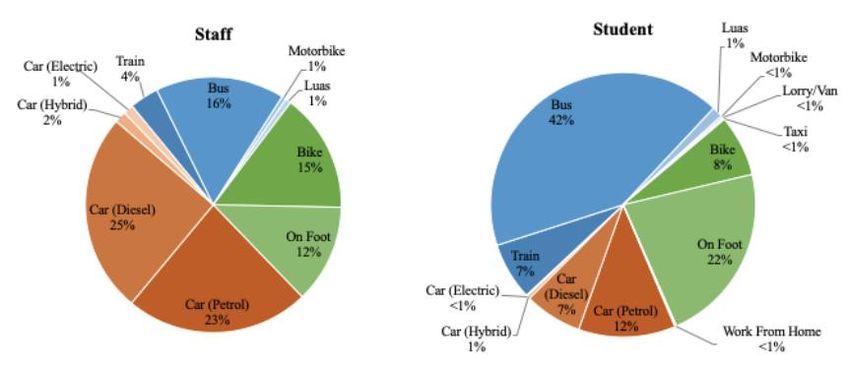
Contents

Executive Summary

1.       Introduction ..................................................................................................................................................................... 4
2.       Strategic Plan 2017-2022 ........................................................................................................................................... 4
3.       Sustainability Charter .................................................................................................................................................. 5
4.       Baselines ............................................................................................................................................................................ 6
     Teaching and Learning ..................................................................................................................................................... 6
     Research, Development and Innovation ................................................................................................................... 6
     Operations ............................................................................................................................................................................. 7
     Engagement ........................................................................................................................................................................ 11
5.       Targets & Actions ......................................................................................................................................................... 13
     Teaching and Learning ................................................................................................................................................... 13
     Research, Development and Innovation ................................................................................................................. 14
     Operations ........................................................................................................................................................................... 14
     Engagement ........................................................................................................................................................................ 21

DCU Climate Action Plan 2019_V2.6
Executive Summary

In our strategic plan 2017-2022 DCU committed to putting Sustainability at the core of the
university.

The newly established cross institutional Sustainability Council has developed a new sustainability
charter for DCU and a Sustainability Plan (2019-2022) to enable and demonstrate our commitment
to transforming ourselves, our institution and the community surrounding us to meet these
sustainability challenges.

This is the first Climate Action Plan for Dublin City University. It identifies the sheer scale of the
challenge across all University activities and the initial actions we will undertake to address these
challenges and deliver on the objectives of the Government’s Climate Action Plan.

We are committed to ensuring that all our graduates understand the challenges of environmental
sustainability and have the sustainability competencies that will equip them with them to be Global
Citizens, inspired and empowered to take the actions necessary for a sustainable future. We are
equally committed to undertaking sustainability focused research and to demonstrating sustainable
solutions within our Living Lab campuses.

DCU is also committed to demonstrating leadership in our operational sustainability and is
committed to understanding the impacts of all our activities and establishing science based targets
and action plans to reduce and mitigate these impacts. It has become apparent thought the work of
the Sustainability Council that meeting our science based targets (4.2% annual reduction to 2030
based on a 1.5deg scenario) will be extremely challenging given the current practices and resources
available. To meet these challenges systemic changes, both within the University, at policy level
with Government and within Irish society, will be required. This current iterative plan does not
address these systemic changes but the actions that can and will be implemented to begin our
journey.

   i.   Teaching and Learning
  ii.   Research, Development and Innovatoin
iii.    Operations
 iv.    Water
  v.    Waste
 vi.    Biodiversity
vii.    Transport

In year one of this plan, will require substantial investment by the University in a range of projects
to…………

DCU Climate Action Plan 2019_V2.6
1. Introduction
Dublin City University, originally established in 1989, is located to the north of Dublin City and is
the most significant and comprehensive provider of university education on the rapidly growing
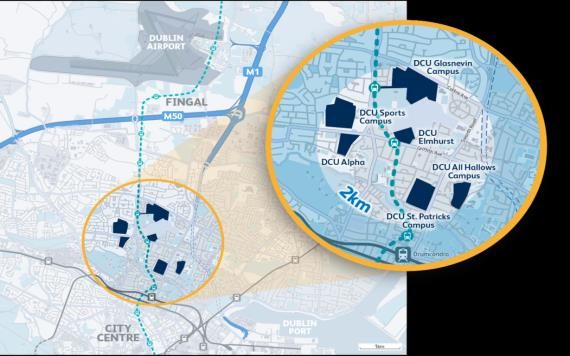
and economically important Eastern corridor. There are five campuses - three academic, one
innovation and one sports all within a 2.5 km radius with over 75 buildings (~300,000m2) on 128
acres (Figure 1).

Figure 1: DCU Campuses 2019 (Note DCU Elmhurst is a green field site)

In 2018/2019 DCU has a total of 17,396 students (10,120 Female and 7,276 Male). Appendix 1
gives a breakdown of the student numbers across disciplines at DCU and the type of award
registered for. There are also 1,561 staff across all campuses.

2017 saw the launch of the new DCU Strategic Plan: TALENT, DISCOVERY, AND
TRANSFORMATION (2017 – 2022)1. In presenting this plan the DCU President Prof. Brian
MacCraith said

                     “Our purpose must surely be to address the major challenges facing the
                     world today and to develop the talent and knowledge that society
                     needs.”

      2. Strategic Plan 2017-2022
Under the Strategic Plan 2017-2022, DCU seeks To place Sustainability at the core of the
University. This reflects not only our commitment to play our part as a responsible organisation
but also our realisation of the messages we can convey as an exemplar organisation to both our
students and society around us. The DCU cross-institutional Sustainability Council plays a key role
in the identification and implementation of a system wide series of actions to support our
transformation to a University with Sustainably at the core.

1
    http://www.dcu.ie/sites/default/files/marketing/digitalmedia/presidents-office/strategic-plan/index.html

DCU Climate Action Plan 2019_V2.6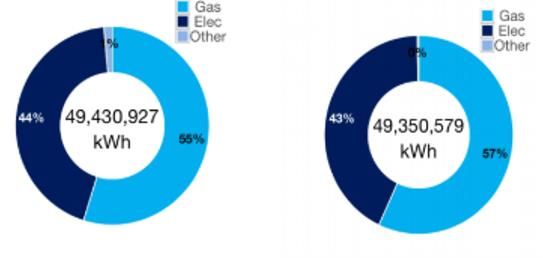
3. Sustainability Charter2

DCU is a young, dynamic and ambitious university with a distinctive mission to transform lives and
societies through education, research and innovation. Since admitting its first students in 1980,
DCU has grown in both student numbers and size and is now a multi campus university located just
north of Dublin city centre.

This charter includes the following principles and commitments:

       ― We will embed sustainability at the core of our university, in its teaching and learning,
         research, development and innovation, its operations and promoting it thought its national
         and international engagements,
       ― We will communicate and promote the United Nations Sustainable Development Goals
         and will encourage all staff and students to engage in the delivery of these goals,
       ― We will actively advocate for climate action through all our circles of power and
         influence, encouraging and supporting our staff and students in their actions,
       ― We will demonstrate our commitment through our own actions,
       ― We will measure our environmental impact and publish an annual carbon footprint,
       ― We will establish and work to achieve them science based targets to meet the 1.5 degree
         scenario requirements as per the Paris Climate Change agreement,
       ― We will identify and implement, in so far as possible, all measures to reduce our carbon
         footprint,
       ― We will share knowledge and best practice with national and international partners and
         communities and work together to reduce all our impacts,
       ― We will encourage and promote progressive actions undertaken elsewhere and where
         possible emulate these,
       ― We will identify the carbon footprint of goods and services consumed by our university
         and work with our suppliers to reduce these,
       ― We will include sustainability on our risk register and examine all our policies, practices
         and major decisions on a systematic basis to ensure that they do not lock us into future
         high carbon pathways but identify a pathway to a zero carbon organisation.
       ― We will support our staff and students in the identification of their personal carbon
         footprints and identify and support measure to reduce our impacts.
       ― We will actively communicate both internally and externally about climate change and
         our actions to mitigate our impact and adaptation measures needed for a sustainable future
         for all.

2
    Replacement for current DCU Sustainability Policy

DCU Climate Action Plan 2019_V2.6
4. Baselines
This section will set baselines across Teaching and Learning, Research, Development and
Innovation, Operations, and Engagement.
Teaching and Learning
It is important when assessing the level to which sustainability is addressed in our curriculum to
clearly articulate the distinction between education for environmental sustainability and education
for sustainable development. Many of our education programmes address environmental
sustainability where topics such as climate change, planetary boundaries, carbon footprints etc are
covered. Education for Sustainability is somewhat different in that it seeks to integrate curricula
and pedagogic approaches that enable higher education students to critically consider the
interconnectedness of, and the interdependencies and challenges within sustainability across
social/cultural, economic, political, and environmental contexts.
There is currently no assessment of ESD across the DCU programmes, an indicative assessment of
programmes addressing sustainability undertaken for UI green metrics reporting indicted that in
2016 36% of programmes at DCU (UG and PG) addressed some aspect of sustainability, in 2017 it
was reported at 41% of programmes.
Research, Development and Innovation
To create a baseline for Research, Development and Innovation, information from the TORA3 system
was assessed. A summary of the DCU priority research areas including Sustainable Economies and
Societies is shown below. However, it is important to note that it is highly likely that projects
classified under other priority research areas include elements of sustainability.
Figure 3: Research Funds
3
TORA is the DCU research application and award management system
DCU Climate Action Plan 2019_V2.6Operations
Operations focuses on Energy, Water, Waste, Transport, Biodiversity and Carbon footprint of the
DCU campuses. The table below identifies the total consumption for 2017 and 2018 and identified
the change from 2017 to 2018. It can be seen that absolute energy consumption reduced by 0.2%
while consumption of water reduced by 14% and the production of waste reduced by 12%. It
should be noted that our carbon footprint was revised from 2017 (24,659 tCO2e) to 2018 (64,212
tCO2e) as a result of improved measurement and not an actual increase in emissions.
Table 2: DCU Operations 2017 & 2018 (NOTE: NEW categories indicate additional categories include in the 2018
footprint analysis)
2017
2018 (tCo2e) % change
(tCO2e)
Natural Gas 5,685 5,739 1%
Scope 1 DCU Owned Vehicles 16 NEW
Fugitive Emissions 2,266 NEW
Scope 2 Purchased Electricity 8,180 7,174 -12%
Staff & Student Commuting 9,346 12,291 32%
Business Travel 1,113 2,284 105%
Academic Travel 2,300 NEW
Scope 3
Waste 58 52 -9%
Water 277 237 -15%
Purchased Goods & Services 31,851 NEW
Totals 24,659 64,212 160%
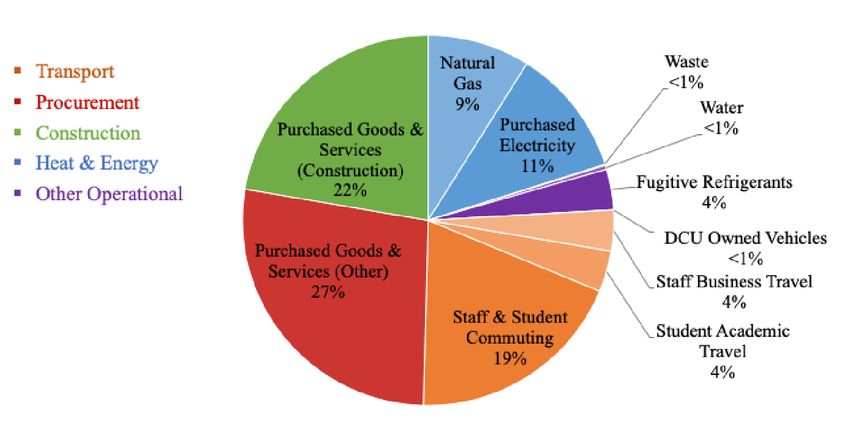
Figure 10. Further breakdown of DCUs carbon footprint
Energy
DCU continues to work toward its agreed target of 33% energy reduction on 2010 figures by 2020,
and has undertaken several infrastructural projects include LED retrofit, insulation upgrades,
DCU Climate Action Plan 2019_V2.6building fabric and glazing upgrades with several more in the pipeline. In 2017 DCU exceeded the
2020 Energy Efficiency improvement target of 33% set in 2009, reaching 35.3% and in 2018 has
further improved the energy efficiency on campus to 43% above 2009 levels. This should of course
not be confused with absolute energy reductions and ultimately CO2e emissions. DCU strives to
reduce overall consumption and in 2018 the total consumption across all the DCU campuses fell by
80,348 kWh (fig below). This was despite the increased need for heating that was caused at the
start of the year from abnormally cold weather.
2017 2018
Figure 4. Energy consumed in 2017 vs. 2018
This reduction in energy is largely due to the strong energy management by the DCU Estates Office.
DCU achieved ISO 15001:2011 certified in 2017 and makes efforts annually to manage and reduce
their energy consumption.
Water
With a specific focus on addressing water as a theme in 2016, DCU commissioned LowFlow to
undertake a full audit of water consumption on the St. Patricks and All Hallows Campuses. In
addition, leak detection surveys were undertaken on Glasnevin campus following the previous
year’s audit. DCU has saved a considerable amount of water through identifying and repairing leaks
on all campuses and water consumption in 2018 reduced by 14% from 262,000 m3 to 225,000 m3
(Figure 5). This reduction of 37,000m3 of water equates to approx. 15 Olympic swimming pools
(mega liters)!
Figure 5. Water consumption 2017 vs 2018 across each DCU campus
DCU Climate Action Plan 2019_V2.6Waste
DCU continues to closely monitor its waste and is working towards reducing total waste. The table
below identified the progress made between 2017 and 2018. The campus had an overall 8%
reduction of waste.
Table 2: DCU Glasnevin Waste for 2017 and 2018 in metric tonnes.
Figure 7. Percentage breakdown of 2018 DCU waste all campuses
Biodiversity
As part of the Sustainability Council actions in 2018/2019 DCU commissioned a full Biodiversity
plan for the campus including how such a plan should link to the national pollinator plan. This plan
has not yet been approved by the DCU Sustainability Council but a copy will be forwarded just as
soon as it is.
In summary this plan provides a range of action DCU can take to protect biodiversity and
embedding this protection into decision making across all sectors of the University including:
building and grounds management, public realm spaces and in the construction of new buildings.
The overall aim of DCU’s Biodiversity Action Plan is to enhance and protect biodiversity, and to
ensure that every member of the DCU community understands its importance in our lives.
This Biodiversity Action Plan has been developed to:
I. Highlight DCU’s unique biodiversity value
DCU Climate Action Plan 2019_V2.6II. Propose recommendations to maintain the University’s biodiversity
III. Enhance pollinator diversity and increase the carbon absorption by vegetation
IV. Identify opportunities for the University to enhance and protect its biodiversity
V. Communicate the importance of biodiversity to the DCU community
VI. Support the Dublin City Council Climate Change Action Plan 2019-2024, the All Ireland
Pollinator Plan 2015-2020, the EU Biodiversity Strategy and the United Nations Sustainable
Development Goals.
Transport
Dublin City University is now a multi campus university and the second largest commuting hub in
the north Dublin region after the airport. In early 2018 DCU undertook a survey of all staff and
students across all incorporating institutions to assess current transport choices vs a similar survey
undertaken in 2017. This project was undertaken in conjunction with the National Transport
Authority. The survey received over 2,000 responses from staff and students in 2018 with an overall
response rate of 12%.
Figure 8. Percentage breakdown of each mode of transport for staff versus students
Table 5. Summary of Staff and Student sustainable and non-sustainable transport choices by percentage in 2017 v
2018
Students Staff
2017 2018 2017 2018
Sustainable Commute 76% 78% 47% 47%
Non-Sustainable 23% 19% 52% 51%
Other 1% 3% 1% 2%
DCU Climate Action Plan 2019_V2.6Engagement
Civic engagement is best defined as a mutually beneficial relationship between the university and
the community, understood in its broadest sense to encompass local, national and global
individuals and associations committed to social, economic, political and cultural development. It
encompasses a range of activities through which staff and students engage with the needs of
communities and also seek a development of their own social understanding though active and
global citizenship. In brief, civic engagement means working to 'make a difference' in the civic life of
our communities through the development of appropriate knowledge, skills and values.
"Engagement with the wider community must become more firmly embedded in the mission of higher
education institutions. Higher education institutions need to become more firmly embedded in the
social and economic contexts of the communities they live in and serve" (National Strategy for Higher
Education to 2030) Goal 9 of the Strategic Plan describes the 4x4 Engagement Strategy which
utilizes the Quadruple Helix (Enterprise, Government, Citizens, Academia) model of engagement
with four of our primary communities (Local, Regional, National, Global).
Therefore, the university’s role in promoting sustainability is not confined to the teaching, research
and operational activities situated within the physical footprint of DCU. DCU is an important
regional asset and a key stakeholder of the city. “Cities are where the battle for sustainable
development will be won or lost if we all fail.” (U.N Deputy Secretary-General Jan Eliasson, 2015).
The university has a multi-faceted role to play in tackling climate change and localising the
Sustainable Development Goals.
Civic engagement at DCU has developed a strong national and international profile, widely
recognised as a model of best practice. The table below lists some of the existing engagement
activities;
Organisation Activity
Cloughjordan Eco Village Memo of Understanding, Working together on shared
learning journey.
DCU Sustainable Living Society Strongly linked to green committee and activities to
promote sustainability to student body
DCU Students Union Work together with Sustainability and Green Committee
to communicate message and organize and support
events
Global Consortium for Sustainability The Global Consortium for Sustainability Outcomes is a
Outcome (GCSO) non-profit international consortium of universities that
collaborate to implement and scale solutions to
sustainability challenges. GCSO membership spans seven
countries on three continents, enabling universities to
work together in partnership with each other and with
governments, businesses, schools and NGOs.
Sustainable Energy Authority of DCU have several links to SEAI including grant aid under
Ireland (SEAI) the Better Energy Communities Awards, as members of
the Better Energy Communities Network, and also
working with SEAI to increase awareness of energy
reduction and efficiency by DCU Staff through energy
awareness workshops
Union of Students of Ireland (USI) DCU is one of the four universities participating in the
EU funded SAVES (Students Achieving Valuable Energy
Savings) Programme in conjunction with DCU
Residences.
DCU Climate Action Plan 2019_V2.6Other third level institutions DCU participated in several forums and event where it
works together with other HEI’s to develop and delivery
the sustainability message! Eg coffee cups campaign.
An Taisce Green Communities DCU and particularly DCU community gardens work
with the An Taisce Green Communities team to provide
access and support for project in the community.
Mens Shed Association & Ballymun DCU is working together with the Mens Shed association
Mens Shed Association and Ballymun Shed to establish a Shed on the DCU
Community Garden.
Dublin City Council DCU Sustainability/Green Committee have several
engagements with DCC including the removal of hot
water from public sanitary facilities, refurbishment of
sheds on the DCU Glasnevin Community Garden and the
Adopt a Street programme
Drumcondra Tidy Towns DCU Sustainability/Green Committee are working with
Association the Drumcondra TT Ass to help increase biodiversity on
the Drumcondra facing perimeter of St. Patricks Campus
including new flower baskets, propagation of native ivy,
support maintenance of DTT planters etc
Phibsboro Tidy Towns Association DCU Sustainability/Green Committee are working with
the Phibsboro TT Ass on waste and water issues
The DCU Vegan Society To support positive choices in the DCU restaurants
DCU Cycling Club To promote cycling facilities on campus and
intercampus
IBikeDCU Society To promote biking, basic skills incl rules of road etc.
Smarter Travel Campus Group Working to achieve a 90% of campus users using a
sustainable form of transport.
DCU Office of Student Life Several linkages including sustainable bottle/cups,
community employment and engagement
Rediscovery Centre Several linkages including weekly bike clinics, fashion
workshop and education and awareness raising
programmes.
North Dublin Chamber of Commerce Working on sustainable project implementation
(NorDubCo) including hot water and policy recommendations
RCE Dublin RCE Dublin is coordinated by Dublin City University
United National Regional Centre for (DCU) and its partnership includes educational
Expertise in Education for organisations (DCU, Educate Together), Public bodies
Sustainable Development (An Taisce, Dublin City Council), industry-academia
networks (Sustainable Nation) and non-governmental
organisations (FightingWords, Exchange House Ireland
and ECO-UNESCO).
National Transport Authority Smarter Travel Campuses programme and several
support awards to improve transport related initiatives
at DCU
Eastern and Midlands Regional Memorandum of Understanding; DCU as a HEI has
Authority forged valuable links within the region with industry,
local government, other public bodies and community.
DCU can therefore contribute to the development and
implementation of the Regional Economic and Spatial
Strategy for the Eastern and Midlands region a number
of ways.
DCU Climate Action Plan 2019_V2.65. Targets & Actions
This section sets out the overarching targets and some of the short and medium term actions
(2019-2022) for each of the following Teaching and Learning, Research, Development and
Innovation, Operations and Engagement.
The Table in Appendix A outlines the current status of the actions, estimated costs and delivery
dates.
Teaching and Learning
DCU recognises that there is a distinction between environmental sustainability education and
education for sustainability (EfS)– we are committed to addressing both. We aim to
- Analysis 100% of DCU undergraduate programmes identifying existing contributions to
education for sustainabiliy by 2020;
- The development of a Sustainability 101 module and providing 100% of all staff and
students have access to module by 2021;
- the development and rolling out of workshop on infusion of education for sustainability to
academic staff by 2022;
- ensuring that 100% of DCU undergraduates graduate with a high competency in
sustainability (to be assessed by Sulitest or similar) by 2030
Our initial actions to accomplish these target are:
Environmental sustainability: Development of an online remote participation enables
sustainability 101 module will be developed as a series of stackable micro modules. This series of
micro modules will be available to all staff and students and will include:
Principles of Sustainability- Social, Cultural, Economic and Environment
Sustainable Development Goals (SDGs) and Global Challenges
Climate Change, Planetary Boundaries, Carbon Footprints and Budgets
Global Justice, Human rights, equality
Education for Sustainability (EfS): As opposed to environmental education ESD is more focused
on the development of sustainability competencies that seek to equip learners with the knowledge,
skills and values that will inspire and empower them to take action to be Global citizens
understanding their global and generational interdependencies. These competencies include
Systems thinking, Anticipatory or futures thinking, Normative competency, Strategic competency,
Collaboration competency, Critical thinking competency, Self-awareness competency, Integrated
problem-solving competency many of which are included already in the DCU Graduate Skills
competencies.
In directly addressing the infusion of education for sustainability, DCU is committed to a review of
all programme descriptors for undergraduate programmes via course builder, identifying existing
and potential spaces for sustainability. Working together with the micro modules on environment
sustainability, which will provide the environmental context and understanding, a series of hands
on workshops will be undertaken with lectures to support the tailored infusion of sustainability
into their programmes.
DCU Climate Action Plan 2019_V2.6Research, Development and Innovation
DCU is committed to promoting and supporting sustainability research across the University. To
achieve this DCU will:
- clearly articulate the scale of the sustainability challenge and the changes necessary and
DCU commitment to demonstrate leadership in the delivery of sustainable solutions;
- promote and utilise the DCU campuses as living labs for demonstration of sustainability
solutions, sharing the solutions and lessons learnt openly to support other to implement
such solutions; [Could we include a financial commitment/ internal funding mechanisms?]
- identify Sustainability as a priority area of research at DCU and provide the necessary
supports to increase the number of researchers working in this area and the level of
research income;
- Foster and support researchers to address sustainability issues through DCU engagement in
national and international sustainability focused networks such as Global Consortium for
Sustainability Outcomes
Operations
This section will deal with the operational emissions of the DCU Campuses and the proposed
actions to be taken to meet the targets set. In identifying the operational challenges of climate
change, DCU will undertake a full Risk assessment for all areas of this Climate Action Plan, assign
owners, and identify resources. The completed risk assessment should be a living document
regularly updated and reports to the DCU Risk Committee.
OA1: Inclusion of Sustainability/Climate Action on DCU Risk Register
In addition to current challenges, as identified in table below, there are significant near future
challenges of meeting new space requirements to accommodate increasing student numbers and
research activity while reducing overall emissions. While efficiencies can have some impact they
will not be enough for example the Irish Public Sector over the past decade has reported 25-30%
improvement in energy efficiency (43% at DCU) which has resulted in over 750,000 tCO2e of
avoided emission but with no absolute reduction in actual consumption levels. The construction
ofnew buildings such as the Future Tech or the Campus Residences development even at BREAM
Excellence standard and exceeding the national requirement of Near Zero Energy Buildings (NZEB)
will not be carbon neutral and therefore lead to an increase in GHG emissions.
Include note on DCU Estates Energy Partner tender to be issued in Qtr4 2019…..
DCU Climate Action Plan 2019_V2.6The table below identifies operational science based targets based on DCUs GHG emissions in
2018.Over all these targets indicate a 4.2% annual reduction year on year for DCU to be aligned
with the 1.5deg scenario for 2030.4
Table 1: Operational Targets
Science
Total GHG Based Target
Emissions 2018 % of total Reduction
(tCo2e) per annum
(tCO2e)
Natural Gas 5,739 9% 241
Scope DCU Owned Vehicles 16 0% 1
1
Fugitive Emissions 2,266 4% 95
Scope Purchased Electricity 7,174 11% 301
2
Staff & Student Commuting 12,291 19% 516
Business Travel 2,284 4% 96
Scope Academic Travel 2,300 4% 97
3 Waste 52 0% 2
Water 237 0% 10
Purchased Goods & Services 31,851 50% 1,338
64,212 100% 2,697
Scope 1 : Natural Gas, DCU owned Vehicles, Fugitive Refrigerants
Natural gas is 9% of the DCU total carbon budget and the primary source of space heating. The
challenge to decarbonise heat is immense both in scale of works needs and cost.
DCU is piloting the use of Ground-source heat pump technology on the All Hallows Campus to
provide 300KW of renewable energy for XXXm2 of space.
In the National Climate Action Plan it is proposed that all public sector building would be retrofitted
to a building energy rating (BER) of B2, DCU currently have two B2 or above buildings – The U
Student Centre and the NRF. A ‘back-of-envelope’ calculations for a retrofit programme at DCU
would give:
10 buildings at ~ 5000 sq. metre per building = 50,000 sq.metres
4
https://www.ipcc.ch/sr15/chapter/spm/
DCU Climate Action Plan 2019_V2.650,000 sq.metres @ €2,000 per sq. metre to retrofit to B2 = €100,000,000
To quantify this challenge more accurately, DCU is undertaking a full feasibility study of
retrofitting the McNulty Building to B2 standard. There are some additional points to consider
here – this is only to B2 standard, and while significantly better that current majority D-F ratings,
building will continue to be carbon emitting rather than neutral or net positive. All retrofit and new
buildings at DCU will undertake a full assessment of proposed energy source to ensure that DCU
does not align with a high emission future. Under the national Climate Action plan it is proposed
that the electricity grid will move to 70% renewable over by 2030 5.. In addition Gas Networks
Ireland have in Oct/Nov 2019 launched a ‘Vision 2050’6 strategy aiming to evolve to become net
zero carbon by 2050. In all assessments the full lifecycle impacts of proposed new or retrofit
technologies should be utilised to ensure appropriate decision making – for example the direct
emission reductions that would result for the installation of solar panels may not off-set the full
embodied impacts of solar panel production, installation, maintenance etc.7 Also the above
calculation does not include any decanting costs of buildings while they are being deep retrofitted.
We anticipate, although not confirmed, that there will be grant aid/funding available to help meet
this challenge. We have estimated that this grant aid would need to be within the 50-80% bracket
to enable DCU to proceed with such projects.
- Retrofit: DCU to develop a high level retrofit plan for all buildings on campus and over the
next three year, with grant support, will seek to reduce our campus carbon emissions by 3%
over the three years.
- Fugitive Refrigerants: Fugitive emissions from refrigerators, air conditioning units and
cold rooms account for 4% of DCU's total CO2FP due to the impact of the specific gases used
in these devices. The average GWP for DCU refrigerants is 2161. This is as a result of older
systems not being adequately funded for forward maintenance renewal programmes.
Consequently, DCU is reliant on high GWP refrigerants such as R22, R410a and R404a to
provide cooling. Aligning to EU refrigerant phase-down and EPA guidance, planning suitable
replacement equipment and procuring same with energy and GWP as an explicitly
evaluated criteria is now and will remain as Estates office function independent of the FM
provider. Going forward, DCU will procure new refrigeration equipment with the
stipulation of low and ultra-low GWP refrigerants as standard, as the Estates Office has
recently begun to do. A GWP ofScope 2 : Purchased Electricity
Purchased electricity at DCU accounts for 11% of our total carbon footprint. As with Scope 1 above,
it is very expensive to reduce the carbon emission of purchased electricity and there is no single
project that can accomplish this task by itself.
With grant support, DCU aim to reduce our carbon emission from purchased electricity by just over
5% over the three year to 2022 through the continued deployment of energy efficiency measures
including:
- LED lighting: several buildings have been identified for retrofitting for LED lighting in
2019/2020 (Sports and Library). This model will continue to be rolled out across all
buildings. Insert more details including KWhr savings etc [Net cost €600k]
- Local generation: Following on the success of ground source heat pump on the All Hallows
DCU will continue to investigate the local generation of energy including solar and all heat
pumps technologies.
- Solar Panels: Insert details on PV Roof Top project cost and electricity savings
It is imperative that the targets set under the National Climate Action Plan for decarbonising the
national grid e.g. 70% renewable by 2030 are met.
Staff & Student Commuting
Staff and student community account for 19% or 12,291 tCO2e of the total DCU Carbon Footprint.
With a reduction target of 4.2% or 516tCO2e per annum we will need to for example remove 337
cars (approx. 9% of current cars) completely from the road OR move 749 car users (approx. 20% of
current car users) to bus. There are a number of initiatives supporting smarter travel that have
running at DCU for several years now which include:
- Promotion of active community to DCU
o Showers and changing facilities on all campuses
o Free cycle clinics
o Free introduction to cycling in Dublin with Cycle Ireland trained instructors
o Bike to Work scheme
o High quality locks available on DCU campus
- Car Pooling: Working with a Sharo, DCU will pilot the development and implementation of
a car sharing app across all campuses. 100 car sharing spaces will be designated across all
DCU car parks. It is estimated that this could reduce cars to campus by appox 5-10%. [Qtr4
2019]
- Upgrade of cycle parking facilities –Sheffield stands as standard across all campuses,
secure cycle parking cage installed in DCU Glasnevin Multi-storey Car Park [Qtr4 2019]
- Ecar Charging points: Fast charge point to be installed on the DCU Glasneivn and DCU St.
Patricks Campuses where ecars can charge to 80% within 20-30 mins.[Qtr1 2020]
DCU Climate Action Plan 2019_V2.6- Car Parking permits: Introduction of car parking permits (permission to park not
guaranteed space) for all campus. Initial charge €20 per semester for permit with all
revenue generated reinvested in sustainable transport measures on campuses.
Staff Business Travel & Student Academic Travel
In 2018 DCU’s aviation related emission were 1,893 tCO2e, accounting for 4% of total emission8.
This initiative would systematically review university-related air travel (whether directly paid by
the university or external sources) categorising across faculties and profession units. An agreed
framework to be developed to establish short- and medium-term benchmarks for aviation
emissions reduction, commensurate with the constraints of climate science and global justice. In
tandem with this additional resources would be invested in remote participate technology to
support academic/staff participation in international meetings. A one-year monitored pilot
programme will be rolled out with an agreed school (Law and Gov have volunteered!). Following a
review of the impacts of the pilot and any adjustments to required emission reductions that
programme will be rolled out across DCU.
https://blogs.lse.ac.uk/impactofsocialsciences/2019/06/21/do-the-best-academics-fly-more/
Similar to DCU business travel, student academic travel accounts for 4% of the total DCU Carbon
footprint. Student academic travel arises from student traveling as part of their education
programmes at DCU for placements, semesters abroad etc. Addressing these emissions is difficult
given the significant positive impact of such engagement for the individual students. Some
possibilities could be
- Flying less – promotion of lower carbon intensive transport models, identification of
alternative exchange locations to address transport requirements
- Remote participation facilities – how can technology be employed to provide similar
outcome to actual travel.
Waste
In the 2018 carbon footprint for DCU, waste accounts for 0.08% (52tCO2e). Although was is only a
small fraction of our total carbon footprint it is a very visible reflection of our approach to
sustainable consumption and a very engaging focus for staff and students alike9. Below are some of
the actions will continue/commence in 2019/2020:
8
It is possible that this is an underrepresentation of aviation emissions as not all flights etc are booked through
the DCU Travel partner (currently Club Travel) for where this data is sourced.
9
In annual green committee surveys over 50% of respondents indicate a preference to engage on a waste
related project.
DCU Climate Action Plan 2019_V2.6- Single use plastics (catering): Removing 700,000 non-recyclable coffee cup for the DCU
waste stream aims to reduce total waste by 1.5%. Focus for 2019/2020 will be the
provision of a reusable option (cups/plates/bowls, cutlery) at all cafes, the acceptance of a
personal cup/lunch box and the introduction of a levy for single use compostable cups,
bowls, cutlery.
- Waste Segregation: A phased introduction of segregation bins across DCU along with a
series of education programmes of recycling.
- Paper reduction programmes: This is a multi-strand project including ISS printers’
initiative, promotion and encouragement of paperless assessment with TEU, paperless
person pilot – one yr no printing
- Sustainable Kitchens: Investigating the energy/water/waste nexus in kitchens. Initially
focusing on framework and methodology this project would seek to address consumption
habits and potentially investigate the Food/Planet/Health10 nexus.
- DCU Green Labs: Single use plastics (laboratory), commencing in 2019/2020 this DCU
Green Labs project will investigate the potential for reducing single use plastics in
laboratories.
- Zero waste to landfill: Just over 6% of DCU waste goes to landfill. A waste audit will be
undertaken to identify key component of this and implement initiative to eliminate all
waste to landfill from DCU by 2022.
Water
In 2018, the consumption and disposal of water at DCU accounts for 237tCO2e or 0.37% of our total
carbon footprint. Similar to waste, water does not have a large impact on our total carbon footprint
but has significant visibility and public engagement. Measure being actioned at DCU include
Proposed Actions
- Leak testing on campuses: DCU intends to focus on leakage and waste control within each
building across all campuses for 2019. The university aims to reduce consumption even
further on all campuses with a target set to reduce 25,000 m3 of annual water consumed
within the next 2/3 years (2020-2022).
- Cistern Displacement Device (CDD): procurement and installation of CDDs across all DCU
facilities. Estimates savings of 9,000M3 of water or 3% of total water use.11
- Standardise low flow taps: Estates agreed retrofit procedure across all campuses with
particular focus on Sports and Residences.
10
https://eatforum.org/eat-lancet-commission/
11
With an average toilet using between 7 to 13 litres of water and each CDD can save approx. 2.5 litres per
flush giving estimated savings of just under 9,000M3 of water or ~3% of total water use on campus.
DCU Climate Action Plan 2019_V2.6Purchased Goods & Services
As the largest element of the 2018 DCU carbon footprint, procured goods and services account for
50% of our total carbon footprint or 31,851 tCO2e. Of these emission 45% is direct related to
construction related procurement and 55% to other university procurement such as business
services, catering, printing etc. With support from the DCU Procurement office, these carbon
emissions have been estimated using a financial model and while this give us an overview of the
total emission the level of detail is limited. It is therefore proposed, in order to support better
decision making regarding procurement choices, that DCU will undertake the following:
- Procurement Policy: Sustainability is currently taken into consideration under the DCU
Procurement Policy12. DCU will seek to enhance and enforce this policy.
- DCU Tender actions: Introduction of a voluntary clause, in the first instance, in all tender
actions/large orders to include:
o Greater than 500,000: All tenders require the inclusion a validated carbon footprint of
the product or service across Scope 1, 2 and 3 emissions – with immediate effect.
o Less than €500,000: All tender requests that suppliers provide a validated carbon
footprint of the product or service across Scope 1, 2 and 3 emissions – this is advisory
until 2022 when it becomes mandatory
o Work with OGP to seek to make such a clause mandatory.
- Packaging: Include requirement where feasible that suppliers should remove packaging
following delivery ensuring that such packaging is appropriately disposed of.
- Procurement bans:
o Prohibit the procurement of all single use plastics (catering) from all departments.
o Prohibit the procurement of all balloons (including helium and biodegradable) for
decorative purposes.
Biodiversity
The overall aim of DCU’s Biodiversity Action Plan (Appendix) is to enhance and protect
biodiversity, and to ensure that every member of the DCU community understands its importance
in our lives.
The Convention on Biological Diversity state that biodiversity is the critical foundation of the
Earth’s life support system on which the welfare of current and future generations depends.
Humans depend on biodiversity and the ecosystem services that stem form it for many basic needs.
Biodiversity is important for sustainable development and relates to all 17 Sustainable
Development Goals but there are two proposed goals that explicitly refer to it; goals 14 (Life below
Water) and 15 (Life on Land).
DCU is committed to protecting biodiversity and embedding this protection into decision making
across all sectors of the University including: building and grounds management, public realm
12
https://www.dcu.ie/sites/default/files/finance/90%20-%20procurement_policy_fin_v1.pdf
DCU Climate Action Plan 2019_V2.6spaces and in the construction of new buildings. The use values associated with biodiversity are
immense and can be categorised as economic, socio-cultural and health values, with each category
having a number of benefits associated with it.
- Habitats for pollinators: To provide habitats where pollinators and can survive and thrive,
DCU will reduce the frequency of mowing and collect clippings, introduce artificial solitary
bee nests and bird boxes and introduce and maintain a wildflower meadow.
- Invasive alien species: DCU aims to identify and monitor all medium and high impact
invasive plant species and remove where feasible. This measure will align with the DCC
Climate Actions plan.
- Landscape management: to maintain and enhance biodiversity DCU will Prioritising
native plants in new planting schemes (at least 75% of plants to be pollinator friendly),
reduce hedge cutting and cut between November and January and keep fertilisers,
pesticides and herbicides well away from trees, hedges and verges, identify at least 10
locations that are mown under a pollinator friendly regime (5 cut and lifts per year after
15th April), and identify at least 4 areas that can be converted to perennial planted boarder.
- Dublin City Council’s Climate Action Plan: DCU will work with DCC and other local
stakeholders such as Drumcondra Tidy Towns, local residence associations etc and will
assess the feasibility of further green walls, potential for wetland. Seek to create and
promote a DCU Tree Trail.
- Biodiversity Team: DCU will seek to build a biodiversity team with representatives from
the student body, expert academic and professional staff. This team would continue to log
existing and new ‘Actions for Pollinators’ on the mapping system (pollinators.ie) and
promote these across all campuses, provide or facilitate training on biodiversity and how to
take action to protect it.
Engagement
DCU is an important regional asset and a key stakeholder of Dublin City. “Cities are where the battle
for sustainable development will be won or lost if we all fail.” (U.N Deputy Secretary-General Jan
Eliasson, 2015). Our role in addressing sustainability and tackling climate change is multi-faceted
where engagement with our internal and external communities and localising and understanding
and acceptance of the Sustainable Development Goals and the actions that are required to achieve
these goals. To enable this DCU will:
- 4 x 4 Engagement Strategy: supporting whole of community engagement - incorporate
DCU’s climate and sustainability related research and activities into the 4x4 Engagement
Strategy
- DCU Sustainable Energy Community: Disseminate the learnings and expand the reach of
the DCU Sustainable Energy Community to the local community in north Dublin (in
partnership with local libraries?)
- Partnerships: Continue to research, test and transfer sustainability solutions across contexts
through partnerships with city and council councils, the Dublin metropolitan Climate Action
Regional Office and the Eastern and Midlands Regional Authority.
DCU Climate Action Plan 2019_V2.6- Civic Engagement: Implement the principles and objectives of the sustainability charter
through the civic engagement activities of DCU; Student Volunteer: DCU in the Community,
NorDubCo; North South Social Innovation Network.
- DCU Community Gardens: Develop the DCU Community Garden at Glasnevin as a living lab
for the demonstration of new and innovation solutions to local and global issues; social,
cultural, economic and environmental, hosting social enterprises such as GrowDome and
Garden Gnomes. Develop a further community garden on the DCU All Hallows campus.
- SDGs: Explore the possibility of working with the Artist in Residence , Visual Arts Officer,
and local community to communicate the principles and objectives of the SDG’s in a public
space.
DCU Climate Action Plan 2019_V2.6SBT to
Budget
Percent 2018 total Reduce per 2019/2020 Estimates
request
of total (tCo2e) annum reduction
2019/2020 €
(tCO2e)
% tCO2e
Scope 1 Natural Gas 9% 5,739 241 250,000 1% 3
DCU Owned Vehicles 0.02% 16 1 - 0% 0
Fugitive Emissions 4% 2,266 95 50,000 20% 19
Scope 2 Purchased Electricity 11% 7,174 301 768,865 3% 9
Scope 3 Staff & Student Commuting 19% 12,291 516 282,000 10% 52
Business Travel 4% 2,284 96 0
Student Academic Travel 4% 2,300 97 0
Staff & Student Travel 7% 4,585 193 30,000 20% 39
Waste 0.08% 52 2 115,000 25% 1
Water 0.37% 237 10 50,000 20% 2
Purchased Goods &
Services 50% 31,851 1,338 20% 268
64,212 2,889 1,545,865 14% 391
NOTE : It is very difficult in this initial phase to estimate the actual emission
reduction. This process will improve over the coming years.
DCU Climate Action Plan 2019_V2.6You can also read


