Universal Access to Water, Sanitation and Hygiene - 2021 priorities An investment opportunity for the private and public sectors - UNICEF
←
→
Page content transcription
If your browser does not render page correctly, please read the page content below
AN INVESTMENT OPPORTUNITY FOR
                                                                                           THE PRIVATE AND PUBLIC SECTORS   1
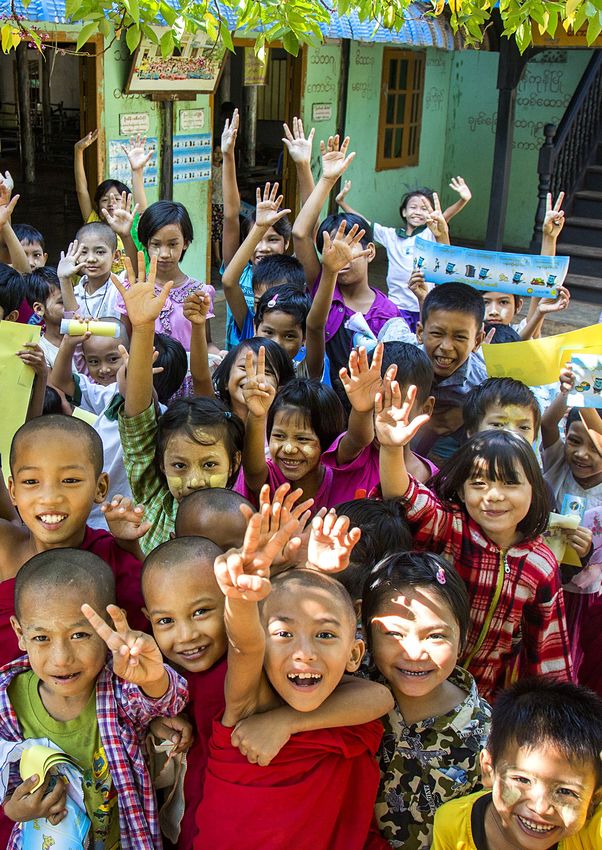
© UNICEF/UN035544/UNICEF/UNI193997/GILBERTSON V

                                                  Universal Access to Water, Sanitation
                                                  and Hygiene
                                                  2021 priorities

                                                  An investment opportunity for the private
                                                  and public sectors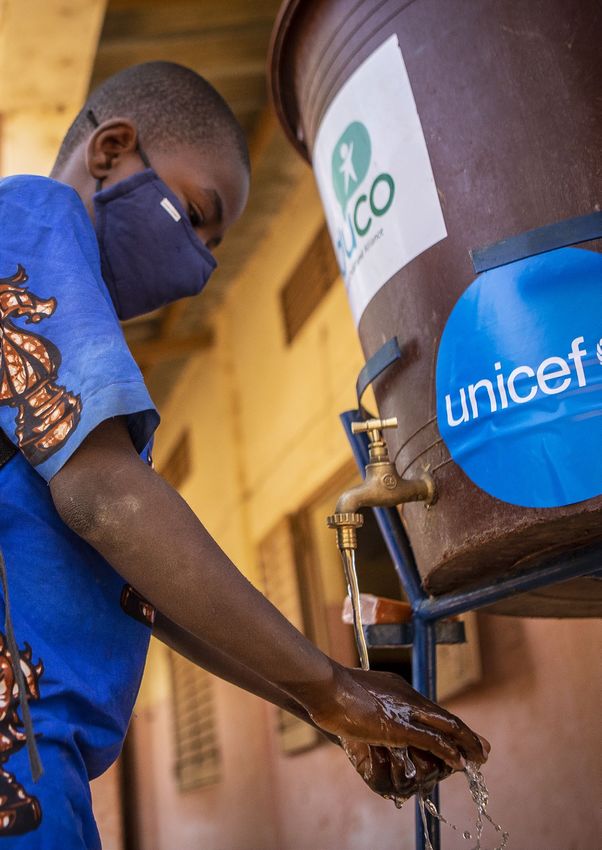
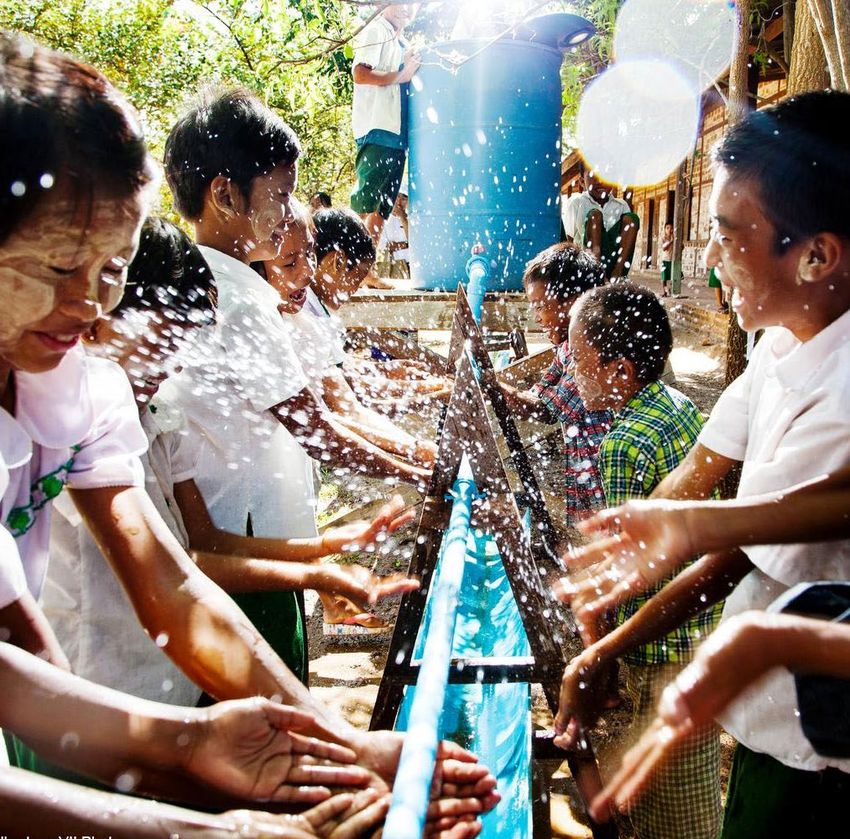
© UNICEF/UN0393352/HTET
AN INVESTMENT OPPORTUNITY FOR
                                                                                     THE PRIVATE AND PUBLIC SECTORS     3

              $4.30                                                   $260
              is generated in economic returns                        billion global loss every
              for every dollar invested in water                      year due to inadequate
              and sanitation                                          WASH services

The opportunity                                                The challenge
Water, sanitation and hygiene (WASH) remain critical           Inadequate WASH services, facilities, and systems are
components of the UNICEF Strategic Plan and help to push       estimated to contribute to a staggering $260 billion global
global progress on Sustainable Development Goal (SDG) 6,       loss every year, largely due to lost time and productivity.
which calls for clean water and sanitation for all. Progress   This cost is borne by businesses and governments, but the
on WASH also contributes to achieving other SDGs,              impact is felt by the poorest communities. An estimated
especially in the areas of poverty reduction, health, gender   10 per cent of the total global disease burden could be
equality, climate, nutrition and education.                    prevented by improvements to WASH.

    Safe water is a key to good health                             HIGHLIGHTING THE NEED
    and the foundation for building
                                                                     • Worldwide, 2.2 billion people still lack
    sustainable communities and                                        access to safe drinking water.
    societies.
                                                                     • More than half of the global population
                                                                       does not have access to safe sanitation.
Safe water is a key to good health and the foundation for            • Three billion people do not have access
building sustainable communities and societies. Investing              to handwashing facilities with soap.
in water, sanitation and hygiene not only improves human
development indicators – life expectancy, education and              • Still, 673 million people practice
purchasing power parity – but also can transform the                   open defecation.
growth of communities and countries.                               The consequences of unsafe water, sanitation
                                                                   and hygiene (WASH) on children can be deadly.
Effective WASH facilities and services also lead to a              Over 700 children under age 5 die every day of
healthy and productive workforce. An investment in WASH            diarrhoeal diseases due to lack of appropriate
services in the workplace can lower absenteeism and staff          WASH services. In areas of conflict, children
turnover, thereby creating opportunities for growth and            are nearly 20 times more likely to die from
profitability. This includes the potential for cost savings,       diarrhoeal disease than from the conflict itself.
which can benefit both producers and consumers by
increasing economic efficiency.

  • Investing in WASH improves human development               Notably, water and sanitation systems are increasingly
    indicators and can transform the growth of                 threatened by the destructive impact of climate change,
    communities and countries.                                 which is contributing to disparities in access. Vulnerable
                                                               groups – isolated communities, poor households, people
  • WASH is highly cost effective: for every dollar            with disabilities, and particularly women and girls – bear
    invested in water and sanitation, $4.30 is generated       the brunt of inadequate WASH services. And while gains
    in economic returns through increased productivity.        have been made, there are several challenges that must be
                                                               addressed collectively:
  • Investing in WASH leads to a healthy and productive
    workforce with lower absenteeism and staff turnover,       Increasing humanitarian needs: Over the past 10 years,
    creating opportunities for growth and profitability.       the number of people who need humanitarian assistance
                                                               has more than doubled, stretching limited resources.
4      UNIVERSAL ACCESS TO WATER,
                                  SANITATION AND HYGIENE

                                                       2.2                                                   673
                                                       billion people still lack                             million people
                                                       access to safe drinking                               practice open
                                                       water worldwide                                       defecation

                           Inadequate sanitation and hygiene practices: An estimated
                           673 million people still practice open defecation,
                                                                                                       Lack of WASH facilities in schools:
                           with significant costs to the health and nutrition status of
                           countries and to national economies.                                        A growing body of evidence
                                                                                                       reveals that inadequate sanitation,
                           Lack of WASH facilities in schools: A growing body                          water, and washing facilities in
                           of evidence reveals that inadequate sanitation, water,
                                                                                                       schools limit the attendance and
                           and washing facilities in schools limit the attendance and
                           performance of girls, notably when their menstrual hygiene
                                                                                                       performance of girls, notably when
                           needs are not met.                                                          their menstrual hygiene needs are
                                                                                                       not met.
                           Environmental degradation and crises: The conditions
                           created by conflict, climate change, and natural disasters
                           interrupt and degrade WASH services, affecting the health,
                           nutritional status, safety, and dignity of children and women.

                                                      Mali
                                                      Hamsatou, 13, a displaced girl from Mopti, washes her hands at the Socoura displacement camp. She fled
                                                      her village in Bankass when it was attacked by armed men in 2019. “I was terrified,” she says. “I thought I
© UNICEF/UNI332258/KEÏTA

                                                      was going to get killed.” Today, she’s healing at a UNICEF-supported Child-Friendly Space.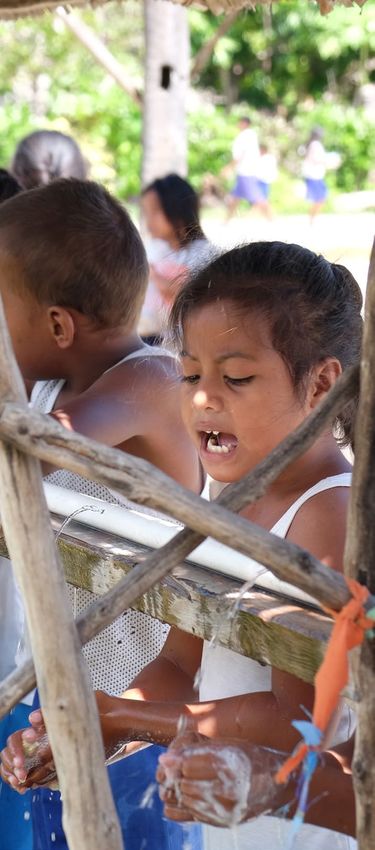
AN INVESTMENT OPPORTUNITY FOR
                                                                                             THE PRIVATE AND PUBLIC SECTORS          5

Sustainable response
1 Respond to the COVID-19 pandemic – Hand                          2 Make the ‘shift’ to climate-resilient wash services
    Hygiene for All                                                    – Water Security for All.

UNICEF will continue efforts to stop COVID-19 transmission        UNICEF has committed to making all its WASH
through Hand Hygiene for All, accelerate access to                programmes climate-resilient by the end of 2021.
WASH in health-care facilities, support safe reopening of         In March 2021, UNICEF launched Reimagine WASH: Water
schools, and ensure continuity and affordability of WASH          Security for All, building on the Water Game Plan to lead
services. Looking ahead – this is not the first, nor will be      global and locals solutions for safe and affordable drinking
that last, pandemic – UNICEF will work closely with WHO           water, climate resilient WASH services and communities,
to strengthen WASH and infection prevention and control           preventing water scarcity crises through early action,
interventions as critical elements of pandemic prevention,        and increasing water cooperation for peace and stability.
preparedness and response. UNICEF has developed new               A new investment case for Water Security For All has
investment opportunities for Hand Hygiene for All.                been developed.

                                                               Bolivia
                                                               On 15 July, (left-right) Maribel, 8, and Shirley, 6, smile as they wash their hands
                                                               with water in recycled bottles at a rudimentary hand-washing station at La
                                                               Montaña School in Chuquisaca Department’s Totorenda Guaraní community.
                                                               Similar hand-washing stations are in use in all schools in areas where water has
                                                               become scarce.

                                                                                                                                                     © UNICEF/UNI189328/GILBERTSON VII PHOTO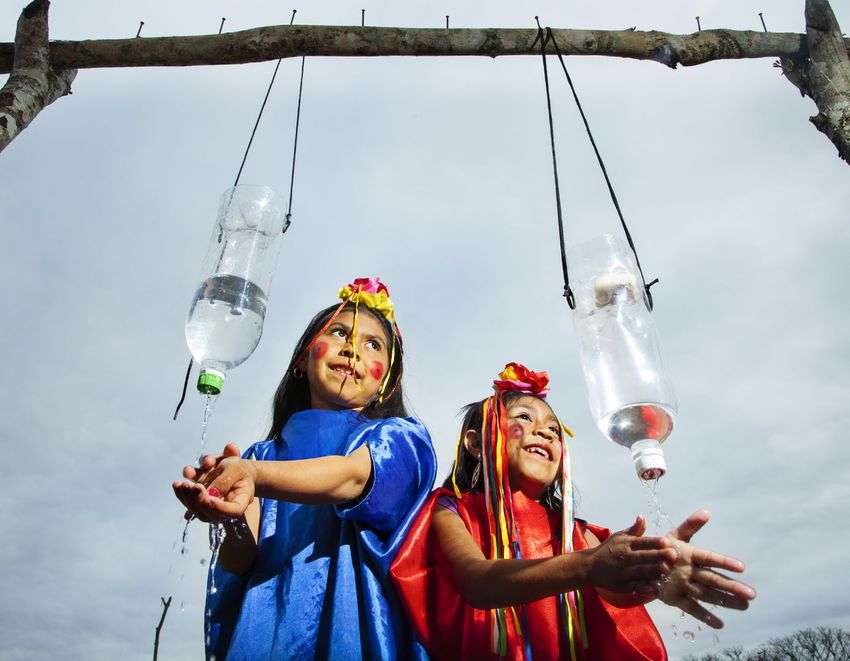
6      UNIVERSAL ACCESS TO WATER,
                SANITATION AND HYGIENE

                                     4                                                               250
                                     key change agendas                                              million fewer people
                                     promoted by UNICEF                                              practicing open defecation
                                     since 2019                                                      is our global target for 2021

          3 Implement the Water Under Fire                                                        4 Move from ending open defecation to safely
             change agenda.                                                                           managed sanitation services for all.

         Since 2019, UNICEF has promoted four key change                                          UNICEF’s Game Plan to End Open Defecation is ending
         agendas: volume 1 – link the humanitarian response with                                  in 2021. UNICEF will continue to strive for the global target
         sustainable development and peacebuilding; volume 2 –                                    of 250 million fewer people practicing open defecation,
         build a WASH sector to predictably provide quality WASH                                  but will also develop a new ‘Sanitation Game Plan 2.0’
         responses; volume 3 – stop attacks on water and sanitation                               to guide UNICEF’s emerging work on safely managed
         infrastructure and personnel; and volume 4 – ‘Water Under                                sanitation services and UNICEF’s Global Framework for
         Fire in Action, voices from the field’, a film to be launched                            Urban WASH.
         at the Stockholm World Water Week in August 2021. With
         the endorsement of the Inter-Agency Standing Committee,                                  WUNICEF will also focus on WASH data collection
         UNICEF, the Global WASH Cluster and REACH together                                       innovations to overcome the impacts of lockdowns and
         are establishing an evidence-based WASH Severity                                         restrictions due to the COVID-19 pandemic on the methods
         Classification for all countries facing humanitarian crises.                             that are integral for national and global monitoring and
                                                                                                  reporting on SDG 6.1 and 6.2 indicators through the
         UNICEF focuses on delivering predictable and high-quality                                WHO/UNICEF Joint Monitoring Programme (JMP)
         humanitarian WASH responses. The organization                                            and GLAAS.
         demonstrates leadership in the humanitarian development
         nexus while promoting WASH as a positive driver of social                                In line with its mandate to uphold the rights of the child,
         cohesion and contributor to peace building in fragile and                                UNICEF will increase efforts to ensure WASH services are
         conflict-affected contexts. Youth can play a pivotal role in                             disability inclusive, contribute to gender equality and
         strengthening social cohesion, thus including them in such                               are affordable, helping to eliminate extreme poverty.
         initiatives is critical.                                                                 UNICEF aims to engage millions of young people around
                                                                                                  the world as champions of WASH, the environment and
                                                                                                  combatting climate change.

                                                                                                  As the Strategic Plan 2018–2021 is in its final year,
                                                                                                  UNICEF will continue to strive for sustainable WASH results
                                                                                                  while charting a course for UNICEF’s WASH programme
                                                                                                  2022–2025. More details are found at www.unicef.org/WASH.
                                                                    © UNICEF/UN0388749/PANJWANI

India
Bali, ensures correct handwash for son Bhuma, 7,
during COVID-19 pandemic.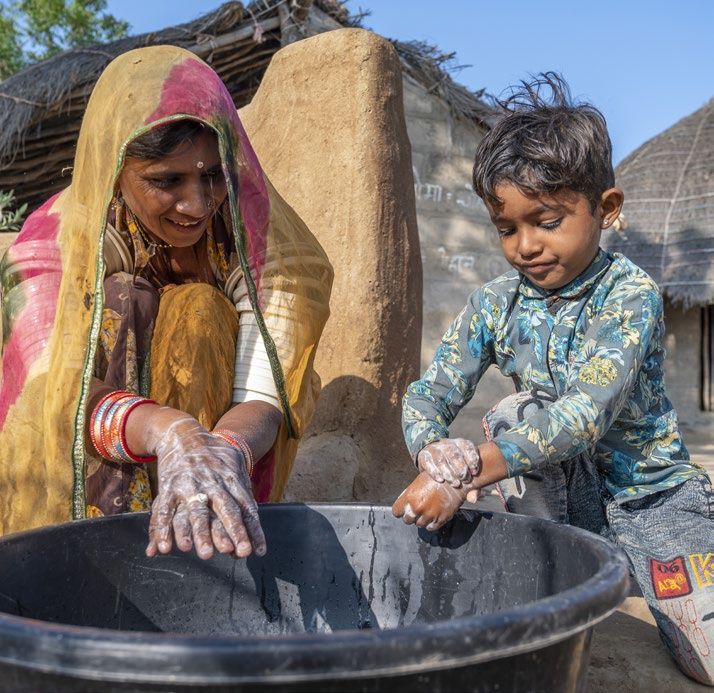
AN INVESTMENT OPPORTUNITY FOR
                                                                                                                    THE PRIVATE AND PUBLIC SECTORS       7

How the private and public sectors
can invest
                                                                                              Kiribati
Along with inviting our partners to contribute with                                           Years 6-8 enjoying their handwash routine during recess.
innovations, technical assistance, capacity building and
research, philanthropists, corporations, foundations,
governments, bilaterals and multilaterals can invest through
UNICEF in several sustainable ways:

Invest in pooled, flexible funds for water
and sanitation

Flexible funds target contributions to UNICEF enable
UNICEF to direct investments where they are needed most
within the field of water and sanitation. This funding gives
experts the flexibility to focus on interventions that will
have the best results, and therefore enable a strong return
on investment. This is particularly important during the
COVID-19 pandemic and as we build a next and better
tomorrow – it provides flexibility to adapt in a volatile
and changing environment.

Invest in specific results

UNICEF recognizes that some partners need to designate
their resources to a particular result or country or would
like to complement financial investment with advocacy
and technical expertise. UNICEF has a long history of
developing strategic partnerships to meet partners’ priorities
and their philanthropic, corporate or institutional goals.
Partnerships could support any of the 2021 priorities,
and include focus areas on supply chain, data and evidence
generation, and advocacy.
                                                                 © UNICEF/UNI220408/PACIFIC
8 UNIVERSAL ACCESS TO WATER,
SANITATION AND HYGIENE
Why partner with UNICEF?
UNICEF’s core accountability is to act wherever children
lack a basic level of service. But the work does not stop
UNICEF knows that the power
there. All people need unfettered, long-term access to
water that is safe to drink, household sanitation facilities to maintain safe, reliable, and
that dispose of waste safely, and sustainable hygiene sustainable practices must rest
practices. UNICEF works with governments and the in the hands of communities
private sector to ensure that policies, standards and
themselves. And while behaviour
systems are in place, but the most critical work happens
locally. UNICEF knows that the power to maintain safe,
change is the essential starting
reliable, and sustainable practices must rest in the hands point, improvements must also be
of communities themselves. And while behaviour change sustained by robust local markets
is the essential starting point, improvements must also be with adequate supply chains so
sustained by robust local markets with adequate supply
chains so goods and services are available.
goods and services are available.
UNICEF achieves the greatest impact for children.
UNICEF’s priority is to ensure that WASH solutions remain
operational in the long term. UNICEF works with its partners
on sustainability plans that provide the much needed urgent
support, but are also imbedded in the community system.
UNICEF works at scale: Building on its knowledge, technical
expertise and lessons learned from existing programmes,
UNICEF is uniquely placed to identify and design solutions
at scale to provide water and sanitation services to schools,
health-care facilities, and communities, in full alignment with
national government commitments to the SDGs.
UNICEF leads and pioneers. By working with field partners
and programmatic experts, UNICEF can identify, develop and
scale together with private-sector partners fit-for-purpose
and value-for-money solutions for water and sanitation that
respond to the unmet needs of communities around the globe.
UNICEF meets needs across the entire childhood and
adolescence through global experts specializing in WASH and
who work across sectors to ensure water and sanitation go
hand in hand with children’s health, nutrition, and education.
UNICEF is there before, during, and after emergencies:
working with communities before disaster strikes and
staying through recovery. UNICEF’s response to COVID-19
demonstrated how hand hygiene is critical in the face of
© UNICEF/UN0227337/RICH
a pandemic.AN INVESTMENT OPPORTUNITY FOR
THE PRIVATE AND PUBLIC SECTORS 9
Mali
Emmanuel, 10, in the 6th grade at the Sébougou school, here after
washing hands before entering class. “Our teacher says us every
time that handwashing is the best tool to avoid disease”. UNICEF
supported 51,747 school-age children to access education through
Temporary Learning Spaces (TLS) set up in Internally Displaced
Peoples’ (IDP) sites and schools, through Community Learning
Centres (CLC), reintegration into host schools, broadcasting of
education programmes via community radios, distribution of solar
radios and the establishment of listening groups.
© UNICEF/UN0430938/KEÏTAKelly Ann Naylor Associate Director WASH Section Programme Division kanaylor@unicef.org Davide Simone Nardi Partnerships and Advocacy Manager WASH Section Programme Division dnardi@unicef.org Alanna MacTavish Khalil Chief Programme Coordination Unit Private Fundraising and Partnerships Division alkhalil@unicef.org programmecoordination@unicef.org www.unicef.org © United Nations Children’s Fund (UNICEF) 28 April 2021
You can also read


