VITAMIN D beyond the bone - New Findings and New Test
←
→
Page content transcription
If your browser does not render page correctly, please read the page content below

VITAMIN D
        beyond the bone

              New Findings and New Test

Diazyme’s 25-OH Vitamin D Assay for Clinical Chemistry Analyzers

      DIAZYME

            INNOVATIONS IN CLINICAL DIAGNOSTICS
About Diazyme

         Diazyme Laboratories is a Division of General Atomics
         located in Poway, California. Diazyme uses its proprietary
         enzyme and immunoassay technologies to develop diagnostic
         reagents which can be used on most automated chemistry
         analyzers in user-friendly formats. Diazyme is a cGMP
         and ISO 13485 certified medical device manufacturer.
         Diazyme’s products include test kits for diagnosis of
         cardiovascular disease, liver disease, cancer markers, renal
         disease, diabetes and electrolytes.

                    M I S S I O N S TAT E M E N T

                    Our mission is to improve the quality
                    of healthcare by providing innovative
                    products in clinical diagnostics.

1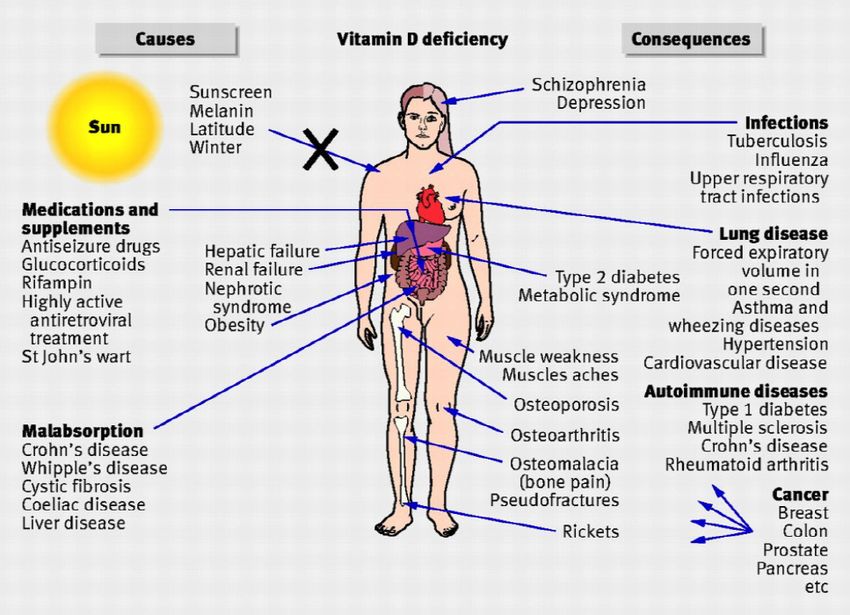
Contents

     1. What is Vitamin D?  .  .  .  .  .  .  .  .  .  .  .  .  .  .  .  .  .  .  .  .  .  .  .  .  .  .  .  .  .  .  .  .  .  .  .  .  .  .  .  .  .  .  .  .  .  .  .  .  . 3
     1.1 Vitamin D Molecules and Metabolism

     2. Vitamin D Deficiency  .  .  .  .  .  .  .  .  .  .  .  .  .  .  .  .  .  .  .  .  .  .  .  .  .  .  .  .  .  .  .  .  .  .  .  .  .  .  .  .  .  .  .  .  .  .  . 4
     2.1 Vitamin D Reference Range of Optimal Concentration
     2.2 Prevalence of Vitamin D Deficiency

     3. Vitamin D: Beyond the Bone . . . . . . . . . . . . . . . . . . . . . . . . . . . . . . . . . . . . . 5
     3.1 Vitamin D and Vitamin D Receptor (VDR)
     3.2 List of Vitamin D Deficiency and Risk of Chronic Diseases
                 (1) Vitamin D Deficiency and Cancer
                 (2) Vitamin D Deficiency and Heart Diseases
                 (3) Vitamin D Deficiency and Diabetes
                 (4) Vitamin D Deficiency and Autoimmune Disease
                 (5) Vitamin D Deficiency and Renal Disease
                 (6) Vitamin D Deficiency and Infectious Disease

     4. Analytical Methods for Vitamin D Determination  .  .  .  .  .  .  .  .  .  .  .  .  . 9
     4.1 Diazyme FemtoQuantTM Total 25-OH Vitamin D Assay
                 (1) Assay Principle
                 (2) Kit Configuration
                 (3) Assay Procedure
                 (4) Assay Performance Summary

     5. References  .  .  .  .  .  .  .  .  .  .  .  .  .  .  .  .  .  .  .  .  .  .  .  .  .  .  .  .  .  .  .  .  .  .  .  .  .  .  .  .  .  .  .  .  .  .  .  .  .  .  .  .  .  .  .  .  . 13

                                                                                                                                                                                                   2
1. What is Vitamin D?

    1.1 Vitamin D Molecules and Metabolism

    V    itamin D is a steroid-like, fat soluble pro-
         hormone. Vitamin D has two main forms:
    D2 (ergocalciferol) and D3 (cholecalciferol).
    Vitamin D3 is synthesized in the skin by exposure
    to sunlight (ultraviolet radiation) and obtained
    from the diet primarily from fish, liver oils, and
    egg yolks. Vitamin D2 is obtained mainly from
    nutritional supplements. Vitamin D3 or D2 is
    metabolized in the liver to 25-hydroxy Vitamin
    D (25-(OH)D), which is then converted in the
    kidneys to 1,25-(OH)2D. Of the major circulating
    forms, 25-OH Vitamin D reflects the levels of
    Vitamin D in the body.

                                                                        Figure 1

                                                     I  n the blood, Vitamin D exists as a protein
                                                        bound form, specifically with a Vitamin D
                                                     binding protein. Clinically, Vitamin D levels
                                                     in the blood get reported as the total 25-OH
                                                     Vitamin D, which is the sum of 25-(OH) D3
                                                     and 25-(OH) D2 (Figure 2).

                        Figure 2

3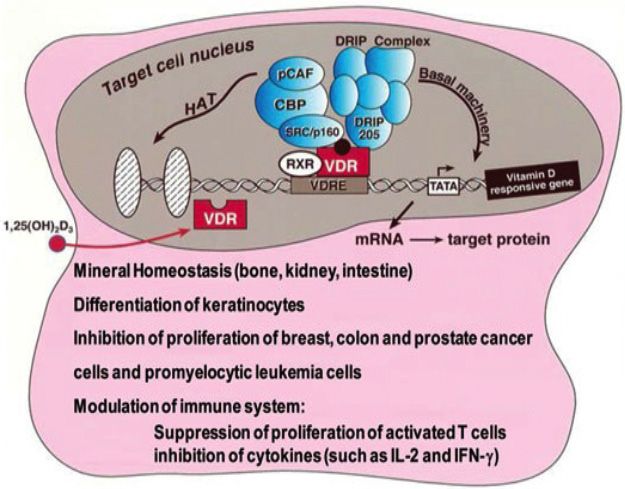
2. Vitamin D Deficiency

2.1 Vitamin D Reference Range and Optimal Concentration

A    ccording to published literature , 25-(OH)D levels less than 10 ng/mL is considered evidence
     of severe Vitamin D deficiency, which could be associated with osteomalacia or rickets.
25-(OH)D serum level of 30 to 32 ng/mL is considered sufficient, whereas levels between 10 and
29 ng/mL are considered insufficient. At the present time, 25-(OH)D levels in the range of 30
to 60 ng/mL are considered optimal.
Higher concentration levels of 100           Deficiency                 < 10 ng/mL                  (0 - 25 µmol/L)
ng/mL is often seen in individuals           Insufficiency             10 - 30 ng/mL               (25 - 75 µmol/L)
who receive intense sun exposure,            Sufficiency              30 - 100 ng/mL              (75 - 250 µmol/L)
such as individuals with outdoor
                                             Toxicity                   > 100 ng/mL                 (> 250 µmol/L)
occupations. According to the studies
published in the New England                Table 1     The above reference range was published in
                                                        the Journal of Oncology Practice in 2010.     3
Journal of Medicine (M. Holick,
2007)1 and in the American Journal                                        Reference Range
of Clinical Nutrition (J. Hathcock,          150
2007) , serum level of 25-(OH)
       2

D below 20ng/mL is considered
deficiency, and over 150 ng/mL is            Deficiency                   Preferred Range                 Intoxication
toxic (Tables 1 and 2).                                                    30-60 ng/mL
                                                  Table 2     The above reference range was published in the New England Journal of
                                                              Medicine, 2007, and in American Journal of Clinical Nutrition, 2007.2

2.2 Prevalence of Vitamin D Deficiency

T   he incidence of Vitamin D deficiency (i.e, 25-(OH)D < 20 ng/mL) in US adults is
    approximately 25% for men and approximately 35% for women according to the data
published in the American Journal of Clinical Nutrition in 2008.4
    “It has been estimated that 1 billion people worldwide do not reach the
                minimum optimal concentration of 30 ng/mL.”1

                                                                                                                                      4
3. Vitamin D: Beyond the bone

    V    itamin D is well known for its classic role in the maintenance of bone mineral density. In
         conjunction with parathyroid hormone (PTH), Vitamin D plays a critical role in calcium
    homeostasis. However, in recent years, Vitamin D has been receiving increased attention due to
    the resurgence of Vitamin D deficiency and rickets in developed countries. The identificatio
    of extra-skeletal effects of Vitamin D also suggests unexpected benefits of Vitamin D in health
    and disease, extending beyond bone health. The possibility of extra-skeletal effects of Vitamin
    D was first noted with the discovery
                                                    1   Cancer                            6 Diabetes
    of the Vitamin D receptor (VDR)5-9 in
    tissues and cells that are not involved in 2 Heart diseases                           7 Obesity
    maintaining bone mineral homeostasis; 3 Autoimmune diseases                           8 Muscle weakness
    including skin, placenta, pancreas, breast,
    prostate, colon cancer cells, and activated 4 Lung function and pulmonary disease 9 Aging
    T cells. Numerous scientific and medical 5 Renal disease                             10 Pregnancy
    researchers have provided strong evidence
    supporting the correlations between                                          Table 3
    Vitamin D insufficienc and increased risks of developing non-skeletal pathologies including
    cancer, heart diseases, stroke, diabetes, hypertension, autoimmune diseases, infectious diseases,
    and aging.10 In 2013, Professor Sylvia Christakos, an expert in Vitamin D research at New
    Jersey Medical School, published a review article titled “Vitamin D Beyond Bone” in ANNALS
    OF THE NEW YORK ACADEMY OF SCIENCES10, where she summarized that Vitamin D
    deficiency and the inc eased risks of chronic diseases beyond bone health, as seen inTable 3.

                                   3.1 Vitamin D & Vitamin D Receptor (VDR)

                                   I  t is now recognized that Vitamin D exists in almost every
                                      tissue in the body, and that its effects are not limited to
                                   regulation of calcium and bone homeostasis. The discovery of
                                   the Vitamin D Receptor (VDR), by which Vitamin D exerts
                                   its action10, and recent epidemiological studies, has focused
                                   attention on a possible link between Vitamin D and a multitude
                                   of conditions including; cancer, heart disease, hypertension,
                                   diabetes, autoimmune diseases, infectious diseases and aging.
                                   Figure 3 depicts some of the major locations of VDR’s in tissues
                                   and organs of the human body.
              Figure 3

5
I  t is reported that approximately
   3% of the human genome is either
regulated directly or indirectly by
the Vitamin D system.11-14 This may
explain why Vitamin D appears to play
a role in many diseases, depicted in
figures 4 and 5.10

                                                   Figure 4

                                        Figure 5

                                                              6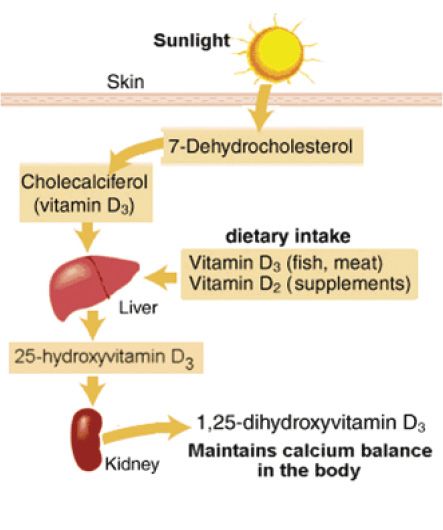
3.2 Representative Studies on Vitamin D Deficiency
    and Risk of Chronic Diseases
    (1) Vitamin D Deficiency and Cancer

    V    itamin D deficiency is a critical factor in the pathology of at least
         17 varieties of cancer.15-20 A pooled analysis of two studies with 880
    cases of breast cancer and 880 controls demonstrated that individuals
    with serum 25-(OH)D levels of approximately 52 ng/mL had 50%
    lower risk of breast cancer than those with levels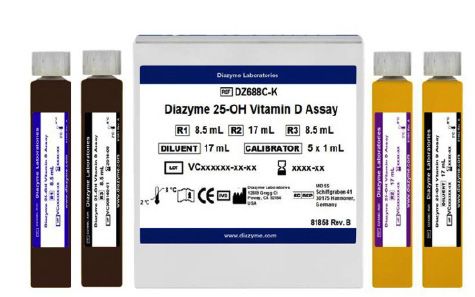
(4) Vitamin D Deficiency and Autoimmune Disease

T    he risk of multiple sclerosis in a white population of 148 patients and 296 controls was
     demonstrated to be 51% lower for individuals with 25(OH) Vitamin D levels >40 ng/mL
compared to levels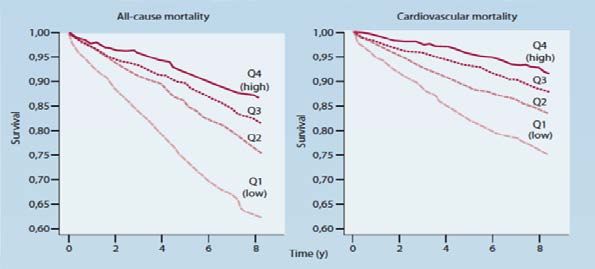
4. Analytical Methods for Vitamin D Determination

    H    istorically, Vitamin D was measured by competitive binding methods, high-performance
         liquid chromatography (HPLC), and radioimmunoasay (RIA) methods.36,37
    A commonly used RIA kit, developed by DiaSorin S.p.A was the method used by many reference
    laboratories and was considered the gold standard in the past decades until recently LC-MS/
    MS method was developed. LC-MS/MS method has been used to establish reference ranges and
    NIST standard materials for Vitamin D, and has now been considered as the gold standard for
    Vitamin D assay’s. However, these methods (HPLC, RIA, and LC-MS/MS) tend to be labor
    intensive and technically difficult They are often not fully automated, and of low throughputs.
    LC-MS/MS method is not commonly available in clinical laboratories.
    In the past few years, several FDA–approved, fully automated immunoassay methods for 25-hydroxy
    Vitamin D assay became available, including quantitative chemiluminescent immunoassay (CLIA)
    methods by DiaSorin, IDS, Siemens, Abbott and electrochemiluminescence (ECL) method
    by Roche. These immunoassay methods are solid phase (magnetic beads) based heterogeneous
    immunoassays involving multiple phase separation steps (washing steps), and requiring special
                                        instruments or manufacturer specific instruments to perform.
                                        Qualities of these immunoassays vary among manufacturers
                                        in terms of assay sensitivity and specificit . Some of these
                                        immunoassays do not equally measure 25-hydroxy Vitamin
                                        D2 and D3, and some have poor precision and correlation in
                                        the low end, some have poor traceability to NIST standard
                                        material.38
                                      Recently, Diazyme Laboratories developed an innovative
                                      25-hydroxy vitamin D assay that is a homogenous enzyme-
                                      immunoassay for use on general clinical chemistry analyzers,
                                      the instruments that are most commonly available in clinical
                                      laboratories. This is the first fully automated Vitamin D assay
                                      for clinical chemistry analyzers. The assay utilizes Diazyme’s
                                      FemtoQuantTM technology that ensures the high sensitivity
                                      and specificity of assay without phase separation steps. The
                                      assay is FDA-approved, CE marked, and the results correlate
                                      well with LC-MS/MS and DiaSorin Liaison methods. This
                                      new Vitamin D assay allows many clinical laboratories to run
                                      the total Vitamin D test in house, at a cost effective price,
                                      without the need for special instrumentation.
9
4.1 Diazyme Enzyme-Immunoassay FemtoQuantTM
Total 25-Hydroxy Vitamin D Assay*
(1) Assay Principle
D iazyme’s Enzyme-Immunoassay FemtoQuantTM 25-Hydroxy Vitamin D assay is based on the
principle of a-complementation of the enzyme b-galactosidase and the competition between
an enzyme donor-25-(OH)D conjugate, the 25-(OH)D in a serum sample, and an anti-Vitamin
D antibody. Samples with higher 25-(OH)D concentrations produce higher b-galactosidase
activities. A nitro-phenyl-b-galactoside analogue (NPGA) is used as the enzyme substrate and the
accumulation of the reaction product has a maximum absorbance at 415 nm. The 25-(OH)D
concentration of a patient sample is proportional to the measured b-galactosidase activity.
(2) Kit Configuration
D iazyme’s Vitamin D assay kit contains 1 sample diluent and 3 liquid stable reagents
and calibrator set. The intended use is for the quantitative determination of 25-(OH)
D levels in serum or plasma, on automated chemistry analyzers, and for the assessment of
Vitamin D sufficiency.
Instrument REF Kit Size
Diluent: 1 x 17 mL
Chemistry R1: 1 x 8.5 mL
Analyzers DZ688C-K R2: 1 x 17 mL
R3: 1 x 8.5 mL
Cal: 5 x 1 mL
Figure 9
(3) Assay Procedure
T he assay procedure for the Roche Modular P
chemistry analyzer is shown below: Specimen
calibrator, control and samples are first diluted on-
R1: 75 µL
Diluted
Sample: 20 µL
R2: 150 µL R3: 75 µL
415 nm
board: 20 µL of serum which is then diluted with 155 0 min 5 min 12 min 19 min
A1 A2
µL of diluent. Once diluted an additional 20 µL of
the diluted specimen is then used for analysis. Figure 10
* The Diazyme 25-OH Vitamin D Assay is intended for use in clinical laboratories for the quantitative
determination of total 25-OH Vitamin D in human serum and plasma on automated chemistry analyzer.
Measurement of 25-hydroxy Vitamin D (25-OH Vitamin D) is for the assessment of Vitamin D sufficiency.
10(4) Assay Performance Summary
D iazyme’s Vitamin D assay demonstrated high assay precision with total CV% ranging from
2.9% - 14% depending on the concentration of Vitamin D in the samples. The assay
sensitivity gives an LOD value of 3.5 ng/mL and an LOQ value of 7.6 ng/mL. The assay is not
affected by endogenous interfering substances
including; bilirubin (40mg/dL), hemoglobin
(100mg/dL), ascorbic acid (10 mM), and
triglycerides (750 mg/dL). The assay measures
25-(OH) D3 and 25-(OH) D2 equally,
providing accurate results for total Vitamin D
concentrations.
The assay demonstrated excellent correlations
with results determined by LC-MS/MS and
DiaSorin (Figure 11) CLIA methods with R2
values of >0.95 and 0.96. The assay is traceable
to NIST standard material (SRM 972) and
has a wide linear range of 7.6 - 147.8 ng/mL
(Figure 12).
The assay is fully automated, and can be Figure 11
run on clinical chemistry analyzers that are
capable of taking 3 reagents and allowing for
a total reaction time of 15 min or greater. Th
throughput of the assay on a Roche Modular P
is > 100 tests/hour.
All reagents are liquid stable, and the on-
board stability of the reagent is greater than
four weeks. The performance characteristics of
Diazyme Enzyme-Immunoassay FemtoQuantTM
Vitamin D assay is summarized in the table on
the following page.
Figure 12
11Diazyme
FemtoQuantTM Vitamin D Assay
Method Enzyme-Immunoassay
Instrument General Chemistry Analyzers
Precision 2.9 - 14.0%
%CV: 41 ng/mL: 4.1%; 93 ng/mL: 3.7%
Accuracy R2 = 0.984 against DiaSorin
LoB: 2.0ng/mL; LoD: 3.5ng/mL;
Sensitivity
LoQ: 7.6 ng/mL
Measuring Range 7.6 - 147.8 ng/mL
15 - 19 min
Time to First Result
Analyzer Dependent
Roche Modular P: >100 tests/hr.
Throughput Ace Alera: >50 tests/hr.
Pentra 400: >56 tests/hr.
Fully Automated Yes
D2 and D3 Equal Accuracy Yes
Directly Traceable
Yes
NIST SRM 972
510(k) Cleared
Regulatory Approvals
EU:
12References
1. M. Holick., Vitamin D Deficienc ., NEJM, 357:3; 266-81, 2007
2. J. Hathcock et al., Risk Assessment for Vitamin D., Am J Clin Nutr, 85:6; 2007
3. Qamar J, Khan MD, and Fabian, C., How I Treat Vitamin D Deficienc ., Journal of Oncology Practice, 6:2; 97-101, 2010
4. Yetley EA., Assessing the Vitamin D Status of the US population., Am J Clin Nutr, 88:558S-564S; 2008
5. Haussler MR., & McCain TA., Basic and Clinical Concepts Related to Vitamin D Metabolism and Action.,
New Engl Jour Med, 297: 974-978, 1041-1050, 1977
6. Pike JW., Intracellular Receptors Mediate the Biologic Action of 1,25-Dihydroxyvitamin D3., Nutr, 43, 161-168, 1985
7. Haussler MR., Vitamin D Receptors: Nature and Function., Annu Rev Nutr, 6: 527-562, 1986
8. Baker A et al., Cloning and expression of full-length cDNA encoding human vitamin D receptor., Proc Nat Acad Sci USA, 85: 3294-3298, 1988
9. Costa EM, Hirst MA, and Feldman D., Regulation of 1,25-dihydroxyvitamin D3 receptors by vitamin D analogs in cultured mammalian cells.,
Endocrinology, 117: 2203–2210, 1985
10. Sylvia Christakos et al., Vitamin D: beyond bone., Ann N.Y. Acad Sci, 0077-8923
11. Wang Y, Becklund BR, DeLuca HF., Identification of a highly specific and ersatile vitamin D receptor antibody., Arch Biochem Biophys, 494: 166–177, 2010
12. Bouillon R, Carmeliet G, Verlinden L, et al., Vitamin D and human health: lessons from vitamin D receptor null mice., Endocr Rev, 29: 726–776, 2008
13. Carlberg C and Seuter S., A genomic perspective on vitamin D signaling. Anticancer Res, 29: 3485–3493, 2009
14. Sun J., Vitamin D and mucosal immune function., Curr Opin Gastroenterol, 26:6; 591–595, 2010
15. Adorini L and Penna G., Control of autoimmune diseases by the vitamin D endocrine system., Nat Clin Pract Rheumatol, 4:8; 404-12, 2008
16. Campbell FC, Xu H, El-Tanani M, Crowe P, and Bingham V., The yin and yang of vitamin D eceptor (VDR) signaling in neoplastic progression: operational
networks and tissue-specific g owth control., Biochem Pharmacol, 79:1; 1-9, 2010
17. Cannell JJ, Hollis BW, Zasloff M, and eaney RP., Diagnosis and treatment of vitamin D deficienc ., Expert Opin Pharmacother, 9:1; 107-18, 2008
18. Gocek E, Studzinski GP., Vitamin D and diffe tntiation in cancer., Crit Rev Clin Lab Sci, 46:4; 190-209, 2009
19. Grau MV, Baron JA, Sandler RS, Haile RW, Beach ML, Church TR, Heber DJ., Vitamin D, calcium supplementation, and colorectal adenomas: results of a
randomized trial., Natl Cancer Inst, 95:23; 1765-71, 2003
20. Wu S and Sun J., Vitamin D, Vitamin D Receptor, and Macroautophagy in Inflammation and nfection., Discov Med, 11:59; 325–335, 2011
21. Holick MF., Vitamin D and health: evolution, biologic functions, and recommended dietary intakes for vitamin D., Humana Press, 3–33, 2010
22. Garland CF et al., Vitamin D and Prevention of Breast Cancer: pooled analysis., J. Steroid Biochem. Mol. Biol, M 103:3-5; 708-11, 2007
23. Lappe JM et al., Vitamin D and calcium supplementation reduces cancer risk: results of a randomized trial., Am J Clin Nutr, 85: 1586-91, 2007
24. Dobnig H et al., Independent association of low serum 25-hydroxyvitamin D and 1,25-dihydroxyvitamin D levels with all-cause and cardiovascular mortality.
Arch Intern Med, 168:12; 1340-1349, 2008
25. Hypponen E et al., Intake of Vitamin D and risk of type 1 diabetes: a birth-cohort study., Lancet, 358:9292; 1500-3, 2001
26. Forouhi NG et al., Baseline serum 25-hydroxyvitamin D is predictive of future glycemic status and insulin resistance: the Medical Research Council Ely
Prospective Study 1990-2000., Diabetes, 57:10; 2619-25, 2008
27. Munger KL et al., Serum 25-hydroxyvitamin D levels and risk of multiple sclerosis., J Am Med Assoc, 296:23; 2832-2838, 2006
28. Kragt J et al., Higher levels of 25-hydroxyvitamin D are associated with a lower incidence of multiple sclerosis only in women., Mult Scler, 15:1; 9-15, 2009
29. Alberto Ascherio et al., Vitamin D as an early predictor of multiple sclerosis activity and progression. JAMA Neurol., 71:3; 306-14, 2014
30. Bhan I, Burnett-Bowie S, Ye J, Tonelli M, and Thadhan R., Clinical easures Identify Vitamin D Deficiency in Dialysis.
Clin J Am Soc Nephrol, 5: 460–467, 2010
31. Gal-Moscovici A and Sprague S., Role of Vitamin D Deficiency in Ch onic Kidney Disease., Journal Of Bone And Mineral Research, 22:2; 2007
32. Chaudhary K, Sangha H and Khanna R., Peritoneal Dialysis First: Rationale., The merican Society of Nephrology, 6: 447-456, 2011
33. Rook GA., The ole of vitamin D in tuberculosis. Am Rev Respir Dis., 138: 768–70, 1988
34. Davies PD, Brown RC and Woodhead JS, Serum Concentrations of Vitamin D metabolites in untreated tuberculosis, Tho ax, 40: 187–90, 1985
35. Nnoaham KE, Clarke A., Low serum vitamin D levels and tuberculosis: a systematic review and meta-analysis., Int J Epidemiol, 37: 113–9, 2008
36. Herrmann W, Obeid R, Herrmann M and Williams P., Measurement of vitamin D. In: HerrmannW, ObeidR, eds. Vitamins in the prevention of human
disease. 1st ed. Berlin/New York: Walter de Gruyter GmbH & Co KG; 395–9, 2011
37. Hart GR, Furniss JL, Laurie D, Durham SK., Measurement of vitamin D status: background, clinical use, and methodologies., Clin Lab, 52: 335–4, 2006
38. Herrmann, M., The measu ement of 25-hydroxy vitamin D – an analytical challenge., Clinical Chemistry and Laboratory Medicine. 50:11; 1873–1875
13NOTES
14Diazyme Laboratories
A Life Science Division of General Atomics
Diazyme Laboratories
Diazyme Europe GmbH 12889 Gregg Court Shanghai Diazyme Co., Ltd.
Zum Windkanal 21 Poway, CA 92064 Room 201, 1011 Halei Road
01109 Dresden, Zhangjiang Hi-tech Park
Deutschland Tel: 858-455-4768 Shanghai, 201203
Tel: +49 (0) 351 886 3300 858-455-4754 People’s Republic of China
Fax: +49 (0) 351 886 3366 Fax: 858-455-3701 Tel: 086-21-51320668
Fax: 086-21-51320663
www.diazyme.com www.diazyme.com
sales@diazyme.com www.lanyuanbio.com
sales@diazyme.com service@lanyuanbio.com
D-077 (7/14) MK083 Rev. CYou can also read


