WA Aviation Strategy 2020 - Department of Transport
←
→
Page content transcription
If your browser does not render page correctly, please read the page content below

D R A F T

WA Aviation Strategy 2020
D R A F T

 Minister’s Foreword

                                                      Access to affordable airfares is central to the
                                                      liveability of our regional towns. Regional air
                                                      services help reduce isolation, are essential
                                                      to health services, and play a key role in
                                                      supporting economic development and job
                                                      creation in the regions.
 The Hon. Rita Saffioti MLA Minsiter for Transport

 Western Australia’s isolation and sheer distances      Aviation has, and will continue to play a key
 make aviation an integral part of our State’s          role in our State’s prosperity. Efficient and
 economic and social wellbeing.                         affordable air services are crucial not only to
                                                        the community but also to the tourism and
 This draft WA Aviation Strategy 2020 (the
                                                        resources sectors that rely on air services to
 Strategy) is a blueprint for advancing aviation in
                                                        get in and out of Perth.
 Western Australia and sets out a practical policy
 approach for the aviation industry in WA into the      Aviation in WA operates in a complex
 future. The McGowan Government came into               environment involving airlines, airports, industry,
 office with a commitment to address community          community and all levels of government. At
 concerns about high regional airfares, and this        a State Government level, our policies and
 Strategy delivers on that commitment.                  regulatory environment need to foster airfares
                                                        that are affordable to those who rely on
 Access to affordable airfares is central to the
                                                        them, and we need to ensure that our airport
 liveability of our regional towns. Regional air
                                                        infrastructure is fit for purpose and continues to
 services help reduce isolation, are essential
                                                        support future growth in the aviation industry.
 to health services, and play a key role in
 supporting economic development and job                While our preference is for airlines to work with
 creation in the regions.                               airport operators and other stakeholders to
                                                        take voluntary steps to improve the affordability
 The McGowan Government recognised ongoing
                                                        of regional airfares, the State has the option of
 concern among the community about the
                                                        taking a more interventionist approach if positive
 high cost of airfares and delivered on a key
                                                        changes do not occur.
 commitment by initiating the Parliamentary
 Inquiry into Regional Airfares in 2017.                From 1 July 2019, the State Government placed
                                                        new conditions on airlines that were operating on
 With a record number of 122 submissions, the
                                                        unregulated air routes, requiring them to provide
 Parliamentary Inquiry elicited a strong and clear
                                                        data relating to airfares and service levels to the
 response from the WA community who wanted
                                                        State Government and to engage with regional
 action taken on airfares.
                                                        communities they service on a regular basis.
 There is no single solution to reducing airfares       Comprehensive airline data sets and increased
 on regional routes. This Strategy aims to balance      engagement between airlines, airports and the
 the needs of the community, while taking into          community enables the State Government to
 account the commercial realities of industry.          make informed and data driven policy decisions.
 WA is supported by a substantial network of            Increased and collaborative engagement
 air routes; it is connected to more than 100           between airlines, communities, airport operators
 destinations around Australia and overseas, and        and government agencies has resulted in new
 serviced by 18 international and 12 domestic           and innovative airfares and air routes being
 carriers operating out of Perth Airport.               introduced to WA.

 2 | WA Aviation Strategy 2020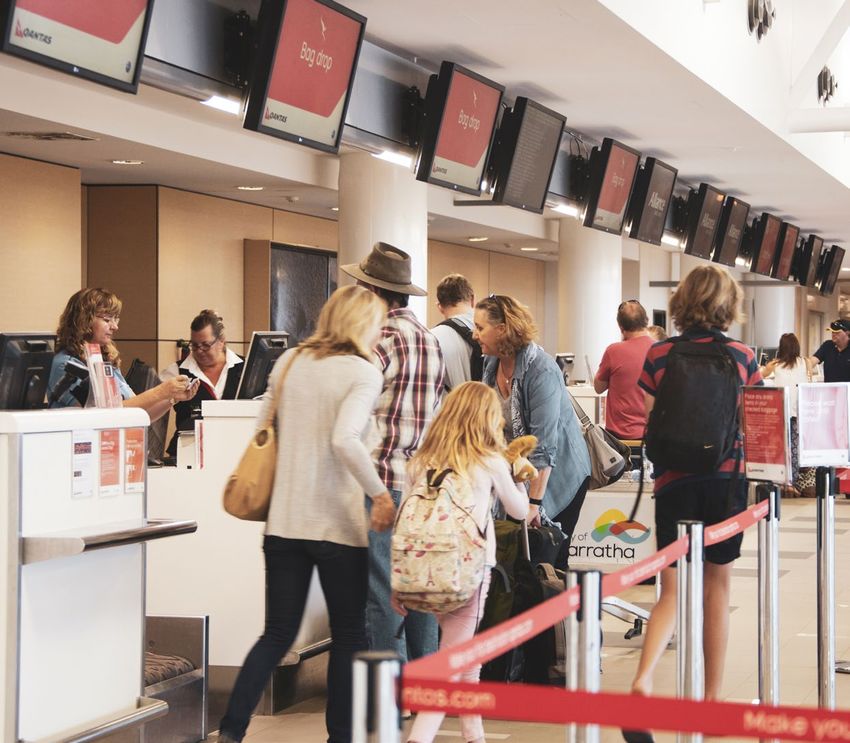
D R A F T

To date this has resulted in reduced fares                    The Strategy sets out four key goals of the State
for 15 regional towns, including Carnarvon,                   Government for aviation in WA which are:
Monkey Mia, Geraldton, the Northern Goldfields
(Mount Magnet, Meekatharra, Wiluna, Leonora                    A.     Affordable Airfares
and Laverton), Broome, Exmouth, Kalgoorlie,
Karratha, Port Hedland, Newman and Kununurra.
Additionally, new inter-regional air services in the           B.     Connected Communities
Pilbara (linking Karratha, Newman, Port Hedland
and Broome) are being provided by a private                    C.     Fit for Purpose Infrastructure
airline with local government support as well as
in the Kimberley (linking Kununurra, Kalumburu,
Halls Creek and Balgo). While we are starting to               D.     Informed and Future Ready
see a number of positive changes help to reduce
airfares and increase air routes, we know there is            Each of the four goals have clear outcomes,
more to be done.                                              approaches and actions that will be undertaken.
This Strategy takes into account the 13                       The WA Government will continue to partner
recommendations from the Parliamentary                        with communities, airlines, airports, and key
Inquiry, and reflects the feedback collected from             industry sectors to implement the Strategy. To
over 240 stakeholders and community members                   this end, I encourage industry and individuals to
at the nine workshops and community drop-                     review the draft WA Aviation Strategy 2020 and
in sessions that were held across WA. Close                   provide feedback.
consultation has also occurred between State
Government agencies, airports, airlines, local
governments, peak bodies and the tourism and
resources sector to develop the Strategy.

                                                          Close consultation has occurred between
                                                          State Government agencies, airports,
                                                          airlines, local governments, peak bodies
                                                          and the tourism and resources sector to
                                                          develop the Strategy.

Plane taking off from Perth Airport. Photo: David Eyre.

                                                                                      WA Aviation Strategy 2020 | 3
D R A F T

          The draft WA Aviation Strategy 2020 has been developed through data
          analysis and a collaborative approach which included extensive engagement
          and consultation with airlines, airport operators, government agencies, tourism
          and resources industry associations, peak bodies, community groups, and
          other stakeholders throughout 2018 and 2019. Public comment on the draft
          WA Aviation Strategy 2020 will be reviewed and considered for the final
          version of the WA Aviation Strategy 2020.

  Aviair provides air services to a number of region/remote locations in WA.

 4 | WA Aviation Strategy 2020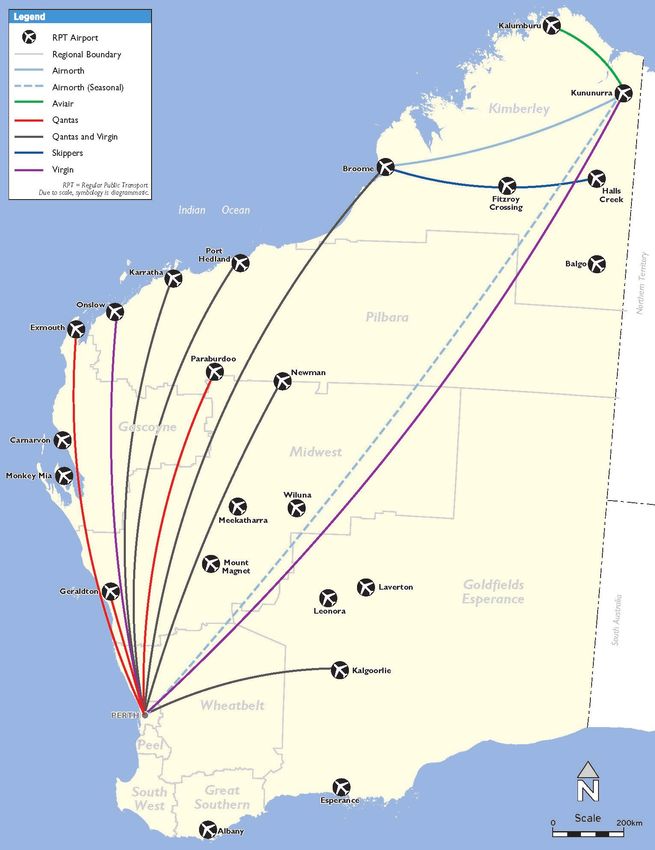
D R A F T

Contents

Minister’s Foreword.......................................................................... 2
1.     The Strategy at a Glance......................................................... 6
2.     Vision........................................................................................ 8
3.     Why do we need a Strategy?................................................... 10
4.     Regulation and Policy for Air Services.................................... 12
4.1.   Types of Air Services.................................................................. 12
4.2.   Regulatory Options for Regular Public Transport Air Services .... 12
4.3.   Charter Policy............................................................................. 12
4.4.   Policy Framework for Regular Public Transport Routes............... 13
5.     Affordable Airfares................................................................... 16
5.1.   At a Glance................................................................................ 17
5.2.   Affordable Airfares – Context ..................................................... 18
5.3.   Progress to Date......................................................................... 18
5.4.   Priorities..................................................................................... 24
5.5.   Future Actions............................................................................ 25
6.     Connected Communities......................................................... 26
6.1.   At a Glance................................................................................ 27
6.2.   Connected Communities – Context............................................ 28
6.3.   Progress to Date......................................................................... 30
6.4.   Priorities..................................................................................... 32
7.     Fit for Purpose Infrastructure.................................................. 34
7.1.   At a Glance................................................................................ 35
7.2.   Fit for Purpose Infrastructure – Context....................................... 36
7.3.   Progress to Date......................................................................... 37
7.4.   Priorities..................................................................................... 38
8.     Informed and Future Ready..................................................... 42
8.1.   At a Glance................................................................................ 43
8.2.   Informed and Future Ready – Context........................................ 44
8.3.   Progress to Date......................................................................... 44
8.4.   Priorities..................................................................................... 46
8.5.   Future Actions............................................................................ 48
9.     Way Forward............................................................................ 49
9.1.   Public Comment Period and Process......................................... 49
9.2.   Implementation........................................................................... 49
9.3.   Review....................................................................................... 49
10. Supporting Documents............................................................ 50
11. Glossary.................................................................................... 51

                                                                    WA Aviation Strategy 2020 | 5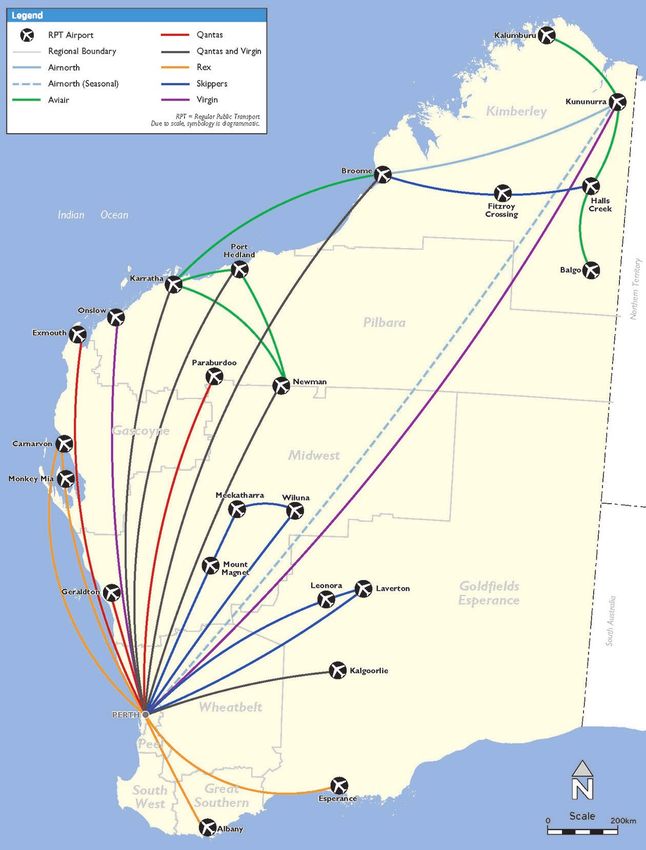
D R A F T

 1.      The Strategy at a Glance

 The draft WA Aviation Strategy 2020 (the              -- reduce the cost of airfares;
 Strategy) is a blueprint for advancing aviation       -- minimise increases in airport fees and
 in Western Australia to support and promote              charges;
 the State’s economic and social development.
 The Strategy also builds and responds to the          -- identify, promote and adopt innovative
 recommendations of the Parliamentary Inquiry             approaches to air services that can both
 into Regional Airfares.                                  help sustain affordable airfares on existing
                                                          routes and develop new routes to bring
 It supports whole-of-Government priorities               about greater connectivity;
 relating to a strong economy, regional
 prosperity, and aboriginal wellbeing.                 -- educate the community about the costs
                                                          of air travel and opportunities to access
 The Strategy has four main goals with respect            reduced price airfares through sales,
 to Regular Public Transport (RPT) air services           community fares, and government subsidy
 and associated airport infrastructure as outlined        programs; and
 below:
                                                       -- support the creation of jobs, economic
   A.     Affordable Airfares                             growth and the diversification of the WA
                                                          economy.
   B.     Connected Communities                      »» Collaboration between State and
                                                        Commonwealth Government agencies
   C.     Fit for Purpose Infrastructure                to ensure a consistent approach to the
                                                        assessment of airport infrastructure grant
   D.     Informed and Future Ready                     applications, information sharing and an
                                                        agreed approach to major aviation initiatives
 For each goal, the Strategy sets out the State         which impact WA.
 Government’s desired Outcomes, the overall
                                                     »» Review and enhancement of existing
 Approach to deliver those outcomes, and the
                                                        regulations, licensing and tender processes,
 specific Actions that will be undertaken to
                                                        programs and initiatives, such as the Regional
 achieve these goals.
                                                        Airports Development Scheme, to ensure the
 Table 1 provides an overview of the Strategy’s         most appropriate allocation of limited funds.
 goals, outcomes and approach at a glance.
                                                     »» Education of small to medium sized RPT
 In addition to the core actions identified in the      airport operators (on best practice airport
 Strategy, other ongoing actions have been              asset management), and airlines (on
 identified to support the Strategy’s goals and         community needs and opportunities).
 outcomes, including:
                                                     »» Monitoring of new technologies, Government
 »» Ongoing engagement between State                    inquiries, trends and legislative changes to
    Government agencies, airlines, airports,            identify impacts on the Western Australian
    resources companies, the tourism industry           aviation industry.
    and key community groups to identify
    opportunities to:

 6 | WA Aviation Strategy 2020
D R A F T
»» Table 1: WA Aviation Strategy 2020 – At a Glance
Goals
A. Affordable B. Connected C. Fit for Purpose D. Informed and
Airfares Communities Infrastructure Future Ready
Airlines, airport Airlines, airport Airport operators Relevant data is
operators, industry, operators, industry engage with airlines, collected, analysed
community groups and community local and state and presented in a
and government groups, and governments, the way that enables
agencies to work government agencies resources and tourism government, airlines,
together to identify will work together to industries, and other airport operators,
collaborative and identify collaborative stakeholders to industry and the
innovative approaches and innovative forecast demand, plan community to
to delivering lower approaches to for the future, and understand trends,
airfares delivering better deliver infrastructure in forecast accurately,
Approach
access to existing a timely, cost-effective and make timely,
Where voluntary routes and new air way informed decisions
actions by airlines routes where viable
are not sufficient, the The State Government The State Government
State Government Where voluntary engages with and the aviation
may intervene through measures are not stakeholders to plan industry work together
increased regulation sufficient, the State future airports to identify training
Government may needs and resources
intervene through for the future, in
increased regulation consultation with
the Commonwealth
Government
Regional communities More regional Infrastructure at Regulation, plans and
have access to communities have metropolitan and decisions are data-
affordable airfares, access to air services regional airports is driven
with affordability planned and delivered
Outcomes
measured through Air routes support in time to meet The appropriate
community surveys WA’s diverse demand skills and training are
economy, including available to support
Flights are a viable the resources and Long-term plans are the aviation industry
option for tourists and tourism sectors in place for future
visitors to regional WA airports servicing
Perth and regional WA
»» Charter Air Services - While this Strategy primarily focuses on RPT air services for the community,
it also takes into account charter air services in WA (refer to Section 4.3: Charter Policy).
WA Aviation Strategy 2020 | 7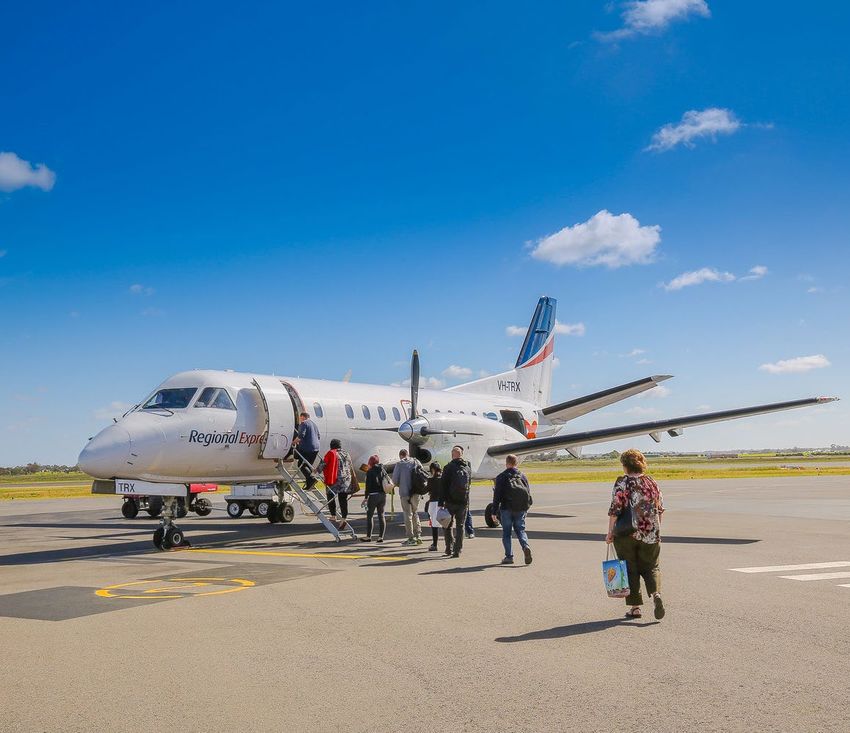
D R A F T

 2. Vision
 Vision for Aviation in Western Australia:
 Western Australia has a comprehensive
 network of affordable air services and
 fit for purpose airport infrastructure
 that supports and promotes the State’s
 economic and social development.

  Plane flying overhead.

 8 | WA Aviation Strategy 2020
D R A F T

To achieve the vision and outcomes for Western
Australians, the State Government will engage
with communities, airlines, airports, and key
industry sectors to implement the Strategy.
In Our Priorities: Sharing Prosperity, the
WA Government has identified whole-of-
Government priorities to deliver better outcomes
for all Western Australians.1 Achieving the
State Government’s vision for aviation in WA
contributes to achieving three of its key priorities:
»» A strong economy: by facilitating tourism and
   servicing the resources sector, aviation plays
   a critical role in supporting and strengthening      Royal Flying Doctor Service provides critical medical services to
   WA’s economy.                                        regional WA. Credit: RFDS Western Operations.
»» Regional prosperity: by continuously
   improving the accessibility and affordability of
   air services to regional communities, improves
   liveability and fosters regional economic and
   social development.
»» Aboriginal wellbeing: by supporting
   access to remote aboriginal communities
   through improved airport infrastructure
   and air service delivery.

                                                        Passenger arrivals at Kalgoorlie Airport. Photo: David Eyre.

To achieve the vision and outcomes
for Western Australians, the State
Government will engage with
communities, airlines, airports, and
key industry sectors to implement
the Strategy.

1 Our Priorities: Sharing Prosperity, Government of
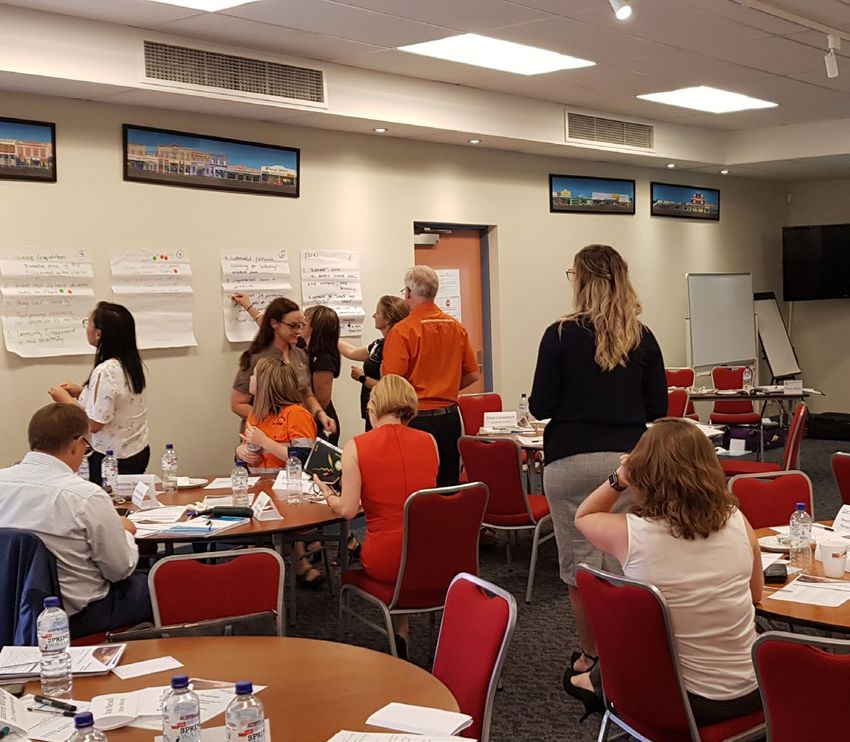
                                                        Public consultation workshops were held in nine
  Western Australia, February 2019                      regional communities, including Geraldton.

                                                                                         WA Aviation Strategy 2020 | 9
D R A F T

 3. Why do we need a Strategy?

 Western Australia covers nearly one-third of Australia, the vast land mass of WA
 means aviation plays a critical role within the State. As the world’s most isolated
 capital city, Perth is heavily dependent on aviation linkages for its current and future
 prosperity. WA is home to around 2.6 million people, of which approximately 2.1
 million live in Perth, and 0.5 million live throughout the rest of the State.2

 Perth Airport is the primary WA gateway for                 »» As most of the recommendations from the
 interstate and international travellers, as well               State Aviation Strategy 2015 have been
 as fly-in, fly-out (FIFO) workforces to regional               addressed, an up-to-date strategy is required
 areas. In 2018-19, nearly 14 million passenger                 to reflect the State Government's current
 movements, including around four million                       priorities and present-day market conditions.
 international passengers were handled through
 Perth Airport.3                                             Challenges
 Aviation in WA operates in a complex                        »» Air services are critical to the economic and
 environment involving airlines, airports, industry,            social development of communities and
 communities, and all levels of government. There               are affected by many factors. Services are
 are a number of key drivers for this Strategy and              susceptible to volatility in the resources sector,
 challenges facing the aviation sector including:               changes in aviation fuel prices, higher costs of
                                                                regional operations and passenger demand
 Drivers                                                        fluctuations. Changing trends in aircraft fleet
 »» The WA Parliament’s Economics and Industry                  and technology also impact on the growth of
    Standing Committee report, Perceptions and                  air services.
    Realities of Regional Airfare Prices in Western          »» Many intrastate air services rely on resource
    Australia, released in November 2017, provided              companies to be viable. Resource companies
    13 recommendations to address community                     transport their FIFO workforce to the nearest
    concerns about the high cost of airfares in                 Regular Public Transport (RPT) airport or
    regional WA.4                                               use chartered aircraft to transport their
 »» Western Australia’s Economic Development                    workforce directly to remote mine sites. Most
    Framework, Diversify WA, sets out a vision                  charter flights are not accessible to the local
    for a strong and diversified economy.5 This                 community and, if not managed effectively,
    Strategy supports that vision by providing                  can impact on the viability of nearby RPT
    access to WA’s regions for a range of priority              services and local economies.
    sectors and is essential to helping WA grow its
    popularity as a tourist destination.

 2 Catalogue Number 3218.0 – Regional Population Growth, Australia, 2017-18, Australian Bureau of Statistics,
   27 March 2019, retrieved 7 October 2019
 3 Airport Statistics, Perth Airport website, Perth Airport Pty Ltd, retrieved 7 October 2019
 4 http://www.parliament.wa.gov.au/Parliament/commit.nsf/(InqByName)/
   Inquiry+into+regional+airfares+in+Western+Australia
 5 https://www.dpc.wa.gov.au/ProjectsandSpecialEvents/Diversify-WA/Pages/default.aspx

 10 | WA Aviation Strategy 2020
D R A F T
»» Airport infrastructure needs to handle aviation network is dependent on Perth Airport
passenger demand efficiently on all parts of having a good understanding of projected
the aviation network. Given the volatility in demand and being able to plan and deliver
demand for air services associated with the infrastructure in a timely manner, and striving
resource sector, aircraft may be upsized or to be fit for purpose at all times.
downsized to meet demand, and regional »» Making sound and timely aviation policy and
airports need to be able to effectively plan and planning decisions requires robust data and
deliver infrastructure that accommodates such accurate forecasting.
volatility where possible.
»» The aviation sector and related industries need
»» As Perth Airport is the hub for most of access to workforces with the appropriate
Western Australia’s intrastate, interstate and skills and training to meet demand now and
international air services, any shortfall in into the future.
infrastructure capacity can impact the entire
network. Ultimately the efficiency of the State’s
RADS signage at Prenti Downs Airstrip. FIFO workers disembarking the plane.
Patient transfer onto Royal Flying Doctor Service. Photo credit: RFDS Western Operations.
WA Aviation Strategy 2020 | 11D R A F T
4. Regulation and Policy for Air Services
4.1. Types of Air Services Unregulated routes
In Western Australia there are two types of air »» Open to competition
services: »» No aircraft licence conditions
Regulatory options
»» RPT air services which are accessible to the Lightly regulated routes
general public; and
»» Open to competition
»» Charter air services which support the »» Aircraft licence conditions
resources sector.
From a geographical perspective, RPT air Fully regulated routes
services can be: »» Tendered by Government
»» Intra-regional and inter-regional air services »» Monopoly or subsidised routes
that connect regional centres within WA; »» Conditions imposed under deeds
of agreement
»» Intrastate air services connect Perth and
regional centres, as well as many private
airstrips within the boundaries of WA; In fulfilling the role as a regulator of RPT air
services and acting in the public interest, the
»» Interstate air services - RPT air services and State Government can choose the level of
air routes between Western Australia and/or regulation that best suits market conditions.
other Australian States or Territories (e.g.
connecting Perth, Kununurra, Broome, Port
Hedland, Busselton and Kalgoorlie to other 4.3. Charter Policy
states in Australia, as well as Cocos-Keeling
Islands and Christmas Island); and The WA Government can regulate charter
air services, balancing the needs of regional
»» International air services - RPT air services communities and the resources industry. The
between Western Australia and overseas Charter Policy, which is developed and managed
destinations outside of the boundaries of by the Department of Transport, seeks to
Australia (e.g. linking Perth, Broome and Port balance both the needs of regional communities
Hedland to destinations overseas). and the needs of the resources industry. The
Charter Policy is currently under review and its
4.2. Regulatory Options for Regular proposed objectives are:
Public Transport Air Services »» ensure charters do not detract from the
viability of RPT services on marginal RPT air
Under the Transport Coordination Act 1966 (the routes in regional Western Australia;
Act) and the Transport Coordination Regulations »» reduce the impact of charters on existing RPT
1985, the Minister for Transport has the authority air services in terms of airfare affordability and
to issue aircraft licences for up to five years to service frequency; and
airlines operating within the State or connecting
regional towns with destinations in other states »» adopt a transparent approach to charters on a
for commercial purposes. The purpose of the route-by-route basis.
Act is to ensure Western Australians are provided The Charter Policy will be reviewed ensuring the
with reliable, efficient and economic transport policy objectives consider any impact of charters
services, and to provide greater certainty for air on the affordability and frequency of existing RPT
services to regional communities. air services.
Airlines will be engaged during the review of the
Charter Policy in 2020. The revised policy will be
submitted to Government for approval.
12 | WA Aviation Strategy 2020D R A F T
4.4. Policy Framework for Regular Public Transport Routes
The policy framework for potential government intervention and regulatory changes are outlined in
Table 2. Future regulatory decisions will be based on the State Government’s assessment of feedback
received through engagement with community and business stakeholders, results from community
perception surveys, data received from airlines and through analysis of data publicly available on airline
websites. The State Government may choose not to regulate routes where airline performance meets
community needs. Figure 1 provides an overview of all RPT routes in WA.
Table 2: Policy Framework for Government Intervention on Regular Public Transport Routes
No. Route Market Characteristics Type of State Regulatory Tool and Rationale
Type Government for State Government
Intervention Intervention
1 Duopoly »» Two airlines operate RPT Lightly Aircraft licence conditions for:
air services regulated »» community engagement
»» No State regulatory »» data provision
barriers to new carriers
Application of this tool provides
»» Examples include: for both quantitative and
Broome, Karratha qualitative assessment of route
performance, which in turn
assists with better informed
decision making.
2 Monopoly »» One airline operates RPT Lightly Aircraft licence conditions for:
(underpinned air services regulated »» community engagement
by the »» No State regulatory »» data provision
resources barriers to new carriers
sector) Application of this tool provides
»» Services underwritten for both quantitative and
by one or more major qualitative assessment of route
resource companies performance which in turn
»» Examples: Paraburdoo, assists with better informed
Onslow routes decision making.
3 Monopoly »» One airline operates RPT Lightly Aircraft licence conditions for:
(other) air services regulated »» community engagement
»» No State regulatory »» data provision
barriers to new carriers
Application of this tool provides
»» Services dependent for both quantitative and
on a range of types of qualitative assessment of route
demand performance which in turn
»» Example includes: assists with better informed
Geraldton decision making.
WA Aviation Strategy 2020 | 13D R A F T
No. Route Market Characteristics Type of State Regulatory Tool and Rationale
Type Government for State Government
Intervention Intervention
4 Monopoly »» Government tenders RPT Fully Deed of agreement governing:
(marginal but air route regulated »» aircraft
commercially »» Airline competition at »» route
sustainable) point of tender only
»» service levels
»» Government awards
exclusive monopoly rights »» pricing / airfares including
of operation and enters maximum capped airfare
into a deed of agreement »» data provision
with a single operator
»» community engagement
»» Examples include:
Albany, Carnarvon This tool ensures the community
has access to an adequate level
of RPT air services.
5 Monopoly »» Government tenders RPT Fully Deed of agreement governing:
(subsidised) air route regulated »» aircraft
»» Airline competition at »» route
point of tender only
»» service levels
»» Government awards
exclusive monopoly rights »» pricing / airfares including
of operation and enters maximum capped airfare
into a deed of agreement »» data provision
with a single operator
»» community engagement
»» Subsidy provided to
operator »» operating subsidy
»» Example: Kununurra- This tool ensures the community
Halls Creek-Balgo route has access to an adequate level
of RPT air services.
14 | WA Aviation Strategy 2020D R A F T
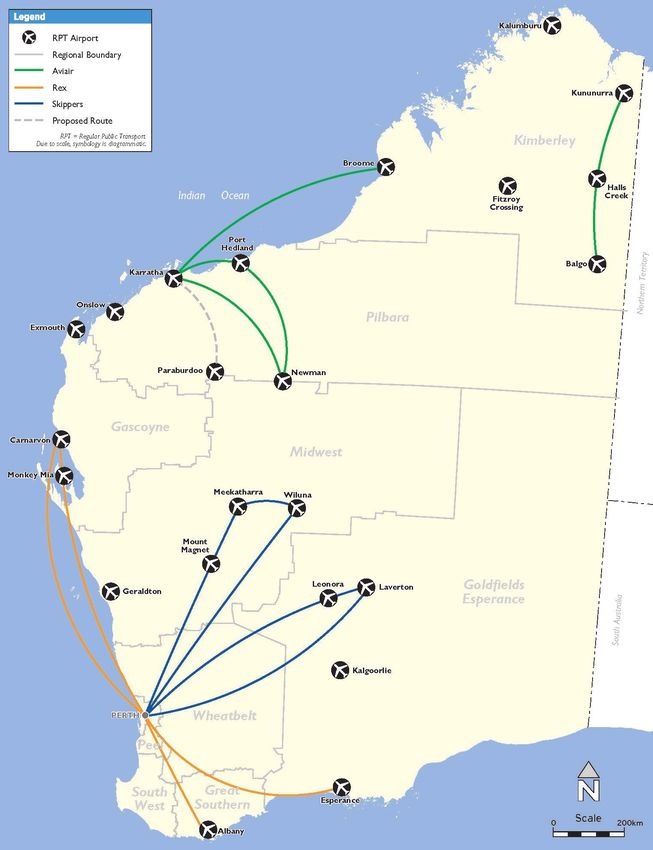
Figure 1: Western Australia’s Regional Regular Public Transport Air Routes
WA Aviation Strategy 2020 | 15D R A F T 5. Affordable Airfares The actions outlined in this section aim to achieve the State Government’s affordable airfares goal of reducing the high cost of airfares for Regular Public Transport (RPT) air services in regional WA. Karratha Airport check-in. 16 | WA Aviation Strategy 2020
D R A F T

5.1. At a Glance

Goal A           Affordable Airfares

Outcomes         »» Regional communities have access to affordable airfares, with affordability
                    measured through community surveys and other information, as may be
                    appropriate
                 »» Flights are a viable option for tourists and visitors to regional WA
Approach         »» Airlines, airport operators, industry, community groups and government agencies
                    to work together to identify collaborative and innovative approaches to delivering
                    lower airfares
                 »» Where voluntary actions by airlines are not sufficient, the State Government may
                    intervene through increased regulation
Actions          A1. Fares have reduced to many regional destinations
                 A2. The State Government regulates marginal, monopoly air routes, including
                     setting maximum airfare prices on fully regulated routes
Progress         A3. From 1 July 2019, airlines operating RPT services on previously unregulated
to date              routes in WA became subject to licence conditions which require them to
                     provide data to the State Government and to regularly engage with the regional
                     communities they service
                 A4. The State Government provides travel subsidies for vulnerable groups
                 A5. The State Government to identify and investigate the potential for trials that
                     support lower airfares in regional WA
Priorities       A6. Airlines to engage regularly in the regions with airport operators, community
                     groups and other stakeholders, to explain cost drivers, route dynamics and
                     service requirements, listen to feedback, and consider new and innovative
                     solutions (per licence conditions – refer Action A3)
                 A7. Airlines to work with regional airport operators and other stakeholders to
                     identify opportunities to cap airfares
                 A8. The State Government to regularly measure community sentiment towards the
                     cost of regional airfares via community surveys
                 A9. The State Government to review regulatory settings in light of voluntary
                     responses from airlines to the Parliamentary Inquiry – if satisfactory measures
Future actions       have not been introduced voluntarily, it will take a more interventionist
                     approach to air routes that are presently lightly regulated

                                                                                WA Aviation Strategy 2020 | 17
D R A F T
5.2. Affordable Airfares – Context 5.3. Progress to Date
In regional WA the affordability of airfares directly There are a number of actions in place to
impacts on the liveability of the regions and, improve the affordability of regional airfares, or
by extension, regional economic and social that have been introduced in parallel with the
prosperity. Access to affordable airfares helps development of this Strategy.
to reduce social isolation, ensures access to
essential health services, and supports regional
businesses by reducing travel costs; encouraging A1. Fares have reduced to many
tourism and customers to regional centres. regional destinations
The costs associated with operating safe, reliable
air services are reflected in the price of airfares.
The 2017 Parliamentary Inquiry into Regional
Airfares consist of many components:
Airfares made 13 recommendations aimed at
»» the base airfare (including aircraft, staff, fuel); reducing airfares and improving regional air
»» ancillary airline charges (which include items services across the State.
such as advanced seat selection, baggage On the regulated air routes, the process of
fees, meals); responding to community concerns about high
»» airport charges (including passenger service airfares commenced in 2016. Regional Express
charges, landing fees and security screening (Rex) introduced $129 one-way Community
charges); and Airfares for Albany and Esperance, providing
discounted airfares for local residents, which has
»» Government taxes and charges (including GST led to record levels of demand on both routes.
on domestic airfares and the $60 departure
tax on international flights). Since the Parliamentary Inquiry and the more
recent community workshops held in 2019,
On occasion there may be other charges, such other airlines have followed suit, introducing
as fuel surcharges when fuel prices are high, discounted community fares and other airfare
and peak pricing at airports to manage aircraft benefits for regional residents and visitors.
time slots during periods of high demand. Flight
distance, frequency and demand for services In 2019, the Department of Transport held nine
also affect airfare prices. workshops in regional communities serviced
by previously unregulated air routes, including
Broome, Geraldton, Kalgoorlie, Karratha,
Kununurra, Newman, Onslow, Paraburdoo and
Port Hedland. The community engagement
process through the community workshops was
particularly important in identifying future options
to improve fare affordability. The workshops were
designed to identify the key challenges faced on
each route, and to generate ideas for making
airfares more affordable to regional communities.
The workshops were attended by airlines, local
government and private airport operators, small
businesses, the resources and tourism sectors,
relevant State Government agencies, and
community groups.
18 | WA Aviation Strategy 2020D R A F T
Tourism WA has been partnering with airlines to promote tourism growth in key regional centres
through the introduction of lower airfare trials. The trials allow tourists and local residents to access
lower weekend airfares to/from Broome and Exmouth. Drawing a greater number of tourists to the
regions, is intended to stimulate local economies and encourage investment in the regions. The lower
airfare trials will be assessed and, if successful, may be extended.
These new initiatives have improved the affordability of airfares on 15 routes in WA, including:
Introduced Airfare Initiative*
2017 November Qantas Resident Fare Program, providing up to 20 per cent discount for
Broome, Kalgoorlie, Karratha, Newman, Paraburdoo and Port Hedland
residents
2018 July Rex Community Airfares to Monkey Mia ($157) and Carnarvon ($199)
August Trial Qantas/Tourism WA Broome Affordable Airfares ($179 off peak/$199
peak) funded to August 2020
September Skippers Community and Standby Airfares for Northern Goldfields residents
($227 to $253)
November Qantas extends their Resident Fare Program to 20-30 per cent discount on
up to 12 return trips per year
2019 June Trial Qantas/Tourism WA Exmouth Affordable Airfares ($169) funded to 30
September 2019
June Qantas removes $99 change fees for flights purchased through the Resident
Fare Program
July Virgin introduces discounted fares to Kalgoorlie, Karratha, Port Hedland,
Newman, Broome and Kununurra
August Qantas reduces fares to Geraldton
August Qantas introduces a maximum fare (or ‘cap’) of approximately $400 ($800
return) under the Resident Fare Program for residents of Kalgoorlie and
Karratha
September Qantas introduces a maximum fare (or ‘cap’) of approximately $400 ($800
return) under the Resident Fare Program for residents of Newman
November Qantas introduces a maximum fare (or ‘cap’) of approximately $400
($800 return) under the Resident Fare Program for residents of Broome,
Paraburdoo and Port Hedland
December Trial Qantas/Tourism WA Exmouth Affordable Airfares ($169) funded to
October 2020
*Airfare price is one-way inclusive of fees, charges and GST.
WA Aviation Strategy 2020 | 19D R A F T
Monkey Mia, the Northern Goldfields, and some
A2. The State Government regulates Kimberley routes) are put out to tender by the
marginal, monopoly air routes, State Government for a fixed term, typically five-
including setting maximum airfare year contracts to ensure these communities have
prices on fully regulated routes adequate access to air services.
The terms and conditions of operations on these
routes (including maximum and discounted
The State Government continues to regulate airfare prices) are negotiated between the airline
marginal air routes where demand for RPT air and the State Government, and documented in
services is so low that it is only possible for an deeds of agreement.
airline to operate in a protected monopoly market
The Parliamentary Inquiry determined community
(refer Figure 2).
sentiment regarding the price of airfares on fully
WA’s lowest passenger volume air routes regulated routes to be more positive than that on
(including Albany, Carnarvon, Esperance, unregulated routes.
The Parliamentary Inquiry determined
community sentiment regarding the
price of airfares on fully regulated
routes to be more positive than that
on unregulated routes.
Rex provides air services on four regulated air routes in WA.
20 | WA Aviation Strategy 2020D R A F T
Figure 2: Western Australia’s Fully Regulated Regular Public Transport Air Routes
WA Aviation Strategy 2020 | 21D R A F T
See Action D2 in Section 8: Informed and
A3. From 1 July 2019, airlines operating Future Ready for more information on airline
RPT services on previously data requirements.
unregulated routes in WA became These new conditions, reflecting light regulation,
subject to licence conditions are aimed at improving airlines’ understanding
which require them to provide data of and responsiveness to the needs of WA’s
to the State Government and to regional communities, and enables the State
regularly engage with the regional Government to make evidence-based decisions
communities they service regarding the State’s aviation policy and
regulation. Figure 3 provides a map of WA’s
lightly regulated air routes.
The Parliamentary Inquiry recommendations
focused on airfares on unregulated air routes
where community concern was highest. In A4. The State Government provides
response to recommendations 5 and 7 of the travel subsidies for vulnerable
Inquiry new licensing conditions were introduced groups
from 1 July 2019 requiring airlines operating on
previously unregulated routes to:
»» provide data to the State Government relating The State Government provides reduced cost air
to service levels and airfare prices on a travel on a targeted basis through the Pensioner
quarterly basis; and Annual Free Trip Scheme and the Student
Subsidised Travel Scheme.
»» engage with the regional communities they
service on a regular basis.
Shark Bay received RADS funding to upgrade the airport to allow larger planes to land.
22 | WA Aviation Strategy 2020D R A F T
Figure 3: Western Australia’s Lightly Regulated Regular Public Transport Air Routes
WA Aviation Strategy 2020 | 23D R A F T
5.4. Priorities
While a range of initiatives have already
While a range of initiatives have already been
introduced, more needs to be done to improve been introduced, more needs to be done
the affordability of airfares in regional WA. This to improve the affordability of airfares
requires action by State, Commonwealth and in regional WA. This requires action
local governments, airlines, airport operators and by State, Commonwealth and local
the resources and tourism sectors. The State
Government’s priorities for action are outlined
governments, airlines, airport operators
below. and the resources and tourism sectors.
Airlines are expected to participate in
A5. The State Government to identify consultation meetings during the year, which will
and investigate the potential for be chaired by the Department of Transport (as
trials that support lower airfares in advised by the State Government, according to
regional WA the needs of each individual route).
The public consultation workshops held in 2019
led to an improved understanding of community
The focus of the trials will be on opportunities
concerns among the airlines, and contributed
that will lower airfares, and create a commercial
to new airfare initiatives being introduced (refer
environment that will sustain lower airfares on
to Action A3). The expectation is that ongoing
an ongoing basis without continued government
consultation between airlines and the regional
subsidisation.
communities they service will continue to
Experience from fully regulated air routes such as enhance communication and understanding,
Albany, Esperance, Monkey Mia and Carnarvon leading to ongoing improvements in affordable
has shown that the meaningful lowering of airfares.
airfares can increase demand in a commercially
sustainable manner.
A7. Airlines to work with regional airport
operators and other stakeholders to
A6. Airlines to engage regularly in the identify opportunities to cap airfares
regions with airport operators,
community groups and other
stakeholders, to explain cost Between August 2019 and November 2019,
drivers, route dynamics and service Qantas introduced capped resident airfares
requirements, listen to feedback, to Broome, Kalgoorlie, Karratha, Paraburdoo,
and consider new and innovative Port Hedland and Newman (refer to Action A1).
solutions (as per licence conditions – Capping airfares provides certainty to local
refer to Action 3) residents on the cost of travel.
The State Government encourages airlines
to work with local airport operators and other
In accordance with the new licence conditions
stakeholders around WA to identify opportunities
introduced from 1 July 2019, airlines operating
to cap airfares at an affordable maximum price
on previously unregulated routes in regional WA
for local residents.
are now required to engage with the regional
communities they service on a regular basis
(refer to Action A3).
24 | WA Aviation Strategy 2020D R A F T
5.5. Future Actions
A8. The State Government to regularly
measure community sentiment
towards the cost of regional airfares A9. The State Government to review
via community surveys regulatory settings in light of
voluntary responses from airlines
to the Parliamentary Inquiry – if
The 2017 Parliamentary Inquiry identified satisfactory measures have not
significant differences between community been introduced voluntarily, it
sentiment on previously unregulated and will take a more interventionist
fully regulated routes. The most significant approach to air routes that are
community concerns were on the unregulated presently lightly regulated
routes. To address affordability concerns on
these routes, the WA Government is taking
a series of steps to monitor the response of As part of the response to the recommendations
airlines, airport operators and others in response of the Parliamentary Inquiry, the State
to the Inquiry, including requiring more data to Government has intervened on certain regional
be provided regarding airfare prices (refer to air routes in WA. The Department of Transport
Action D2 in Section 8: Informed and Future has placed licence conditions on airlines for data
Ready). This has resulted in the unregulated air reporting and community engagement effective
routes now being lightly regulated by the State from 1 July 2019 (refer to Action A3).
Government.
The State Government’s preference is for airlines,
The State will monitor changes in community airport operators and other stakeholders to take
sentiment towards the cost of regional airfares voluntary steps to improve the affordability of
via regular (biennial) community surveys. regional airfares. However, if voluntary actions
Along with the other data collected, the survey are not sufficient or timely, the State Government
information will be used to inform whether the could take a more interventionist approach
State Government needs to adjust its regulatory to regulation, which may include additional
approach on some or all regional air routes (refer conditions being placed on aircraft licences or
to Action A9). fully regulating additional routes.
Regulatory decisions will be based on the State
Government’s assessment of feedback received
through consultation with community and
business stakeholders, results from community
The State Government encourages perception surveys (refer to Action A8), data
airlines to work with local airport received from airlines and through extracting and
operators and other stakeholders around analysing airline website data (refer to Section 8:
WA to identify opportunities to cap Informed and Future Ready). The State will give
particular consideration to increasing the level
airfares at an affordable maximum price of regulation or tendering regional routes that
for local residents. are serviced by a sole operator (i.e. monopoly
routes) or where airline competition occurs only
seasonally.
WA Aviation Strategy 2020 | 25D R A F T
6. Connected Communities
WA is a vast state that relies on air services to connect the
communities within our borders, to connect WA with the rest of
Australia and the world, and to bring visitors to WA. The actions aimed
at achieving the State Government’s Connected Communities goal are
focussed on delivering accessible air services, which includes capacity,
routing and scheduling, and identifying new air routes.
Tjuntjuntjara community receiving RADS grant funding for airstrip upgrades.
26 ||WA
WAAviation
AviationStrategy
Strategy2020
2020D R A F T
6.1. At a Glance
Goal B Connected Communities
Outcomes »» More regional communities have access to air services
»» Air routes support WA’s diverse economy, including the resources
and tourism sectors
Approach »» Airlines, airport operators, industry and community groups, and government
agencies will work together to identify collaborative and innovative approaches
to delivering better access to existing routes and new air routes where viable
»» Where voluntary measures are not sufficient, the State Government will intervene
through increased regulation
Actions B1. Airlines, airport operators and government agencies have been working
together to introduce new and innovative air routes servicing regional WA
B2. The State Government fully regulates marginal, monopoly air routes to secure
Progress cost-effective services for low-demand regional centres
to date
B3. The State Government provides subsidies on selected air routes to support
social and health outcomes in remote communities (Balgo-Halls Creek-
Kununurra)
B4. Air routes dependent on primary demand from a single sector (resources,
health) are underwritten by the main beneficiary
B5. Airlines, airport operators and government agencies to collaborate on
attracting and growing the number of international, interstate and intrastate
Priorities passengers to Perth and regional WA through expanded capacity on existing
routes, strong trade relationships, tactical marketing and establishing new air
routes
B6. The Department of Transport to review its tender design for fully regulated
routes, to ensure that air services are most effectively delivered to regional
communities
WA Aviation Strategy 2020 | 27D R A F T
6.2. Connected Communities – Opportunities for direct services to India and
Europe are being considered. Port Hedland has
Context an international direct flight with Indonesia, and
Having a range of air services with underlying there have been trial flights between Broome
strong demand, and connecting both into and and Singapore. These opportunities will improve
within WA, is essential to support the State’s direct travel to and from Perth, cutting down
economy and to ensure people living in regional flight times and improving connectivity to and
areas have access to sustainable, safe and from international destinations.
reliable air services. There is a growing willingness and desire in the
In Western Australia, the dominant demand for regions to actively seek out new opportunities
air services on most regional RPT air routes to improve access to state, interstate and
is from business passengers (including the international destinations. Regional communities
resources industry). WA is unique in that air are actively looking at ways to make regional air
operations have largely grown as a result of travel more affordable for residents and tourists.
FIFO workforce from the resources industry Regional aviation infrastructure and services
particularly in the Pilbara and northern Goldfields development requires a collaborative and
regions. Without the demand generated by the innovative approach across all stakeholders.
resources sector, some small regional towns in Direct connections between regional centres,
WA would not have an RPT air service. as seen in the Pilbara, northern Goldfields and
Western Australian travellers are connected to Kimberley, allow regional residents to travel within
more than 100 destinations around Australia WA without having to connect through Perth.
and overseas, and are served by 18 international Expansion of new routes to interstate and
and 12 domestic carriers operating to Perth international destinations may require significant
Airport (refer to Figure 4 illustrating regional upgrades to aerodromes to ensure they meet
Western Australian interstate and international standards, which must be taken into account.
connections).
Fully regulated and subsidised air services
WA’s tourism sector is highly dependent on ensure that communities with low levels of
air services, with more than 93 per cent of all passenger demand support a minimum level
international and domestic visitors to Western essential air services.
Australia arriving by air.6 The direct non-stop
Setting minimum standards for aviation
service from Perth to London has reported a
infrastructure at regional communities allows
very high average load factor of 94 per cent
services to be provided by general aviation
in the first year of operation, bringing more
operations such as aeromedical and emergency
tourists to WA.7 There has been increases in the
service operations.
number of direct flights to China, Hong Kong,
New Zealand and Malaysia. Direct services to
Japan were introduced in September 2019.
6 Tourism WA Strategy and Research, YE 2018
7 Media Release: One Year Later: Perth-London exceeds expectations…and speed records, Qantas Airways Ltd,
26 March 2019
28 | WA Aviation Strategy 2020D R A F T
Figure 4: Connecting WA - International and Interstate Air Routes
WA is unique in that air operations
have largely grown as a result of FIFO
workforce from the resources industry
particularly in the Pilbara and northern
Goldfields regions.
WA Aviation Strategy 2020 | 29D R A F T
6.3. Progress to Date
A number of actions are already underway to improve the accessibility of air services for regional
communities and to support the resources sector and tourism, particularly in regional WA.
B1. Airlines, airport operators and government agencies have been working together to
introduce new and innovative air routes servicing regional WA
A key challenge for regional communities is accessing other regional centres by air. To move around the
regions using RPT air services, travellers typically must first fly to Perth and then connect with a flight to
another regional centre. This creates inefficiencies, particularly for travel between regional centres in the
Pilbara and Kimberley, which requires new approaches to be developed.
Below outlines initiatives that are helping improve connectivity between regional centres.
Introduced Initiative
May 2019 The WA Government announced a trial for a new seasonal service between
Kununurra and Melbourne, to be operated by Alliance Airlines. This was achieved
through the collaborative efforts of the Shire of Wyndham-East Kimberley, East
Kimberley Marketing Group, Tourism WA and Alliance Airlines. The new flights are
due to commence in May 2020, with financial contributions from the local tourism
and business community and the WA Government. With up to three return flights a
week operating between May and August 2020, the flights aim to stimulate tourism
from the east coast and create new opportunities for Kimberley communities.
August 2019 New inter-regional and intra-regional RPT air services were established connecting
the towns of Karratha, Newman, Port Hedland, and Broome in the Pilbara and
Kimberley regions. The City of Karratha and the Shire of East Pilbara worked
collaboratively to establish the route, with assistance from the Department of
Transport to complete an open and competitive tender process. The State
Government regulates these air routes by giving exclusive monopoly rights to a
single airline and by monitoring the performance of the RPT air services.
October 2019 The WA Government announced a new route between Busselton-Margaret
River Airport and Melbourne, operated by Jetstar. The new service will consist
of three return flights a week due to commence in March 2020. This is intended
to stimulate tourism demand to the broader Margaret River region. The Jetstar
service represents the first ever low-cost carrier service to operate into regional
Western Australia.
30 | WA Aviation Strategy 2020D R A F T
B2. The State Government fully B4. Air routes dependent on primary
regulates marginal, monopoly air demand from a single sector
routes to secure cost-effective (resources, health) are underwritten
services for low-demand regional by the main beneficiary
centres
Air services on some routes are heavily dependent
The State Government continues to regulate on travellers from a single sector to remain viable.
marginal air routes where demand for RPT air This is most commonly routes dependent on
services is so low that it is only possible for an FIFO workers from the resources sector, but
airline to operate in a protected monopoly market also includes other sectors. The Broome-Fitzroy
(see Action A2 in Section 5: Affordable Airfares). Crossing-Halls Creek route, for example, is
Without significant regulation on these marginal underwritten by the Department of Health.
routes, it is likely that communities in Albany, Where a single sector underwrites an air route,
Carnarvon, Esperance, Monkey Mia, and the there are opportunities for local residents to
Northern Goldfields would not have reliable benefit from access to flights at prices that would
connections to Perth. The regulation of these be unsustainable if the service was provided on
routes also enables smaller airlines, such as public demand alone.
Rex and Skippers, to offer more affordable Examples include:
community and standby fares that would not be
possible without a protected monopoly. »» Chevron Australia, in conjunction with Virgin
Australia, offers a discounted airfare available
to all travellers on the Onslow-Perth route.
B3. The State Government provides The Onslow RPT air services are underwritten
subsidies on selected air routes to by Chevron, and the discounted airfare was
support social and health outcomes established following a tender process and
in remote communities (Balgo-Halls collaboration with Virgin Australia.
Creek-Kununurra) »» Similarly, support from the gold mining
company Ramelius Resources, in
conjunction with Skippers Aviation,
In 2018, the Department of Transport provided enables improved community access for
a $500,000 per year subsidy for an initial two Mount Magnet travellers. Despite marginal
years to establish the Balgo-Halls Creek- passenger demand, the Mount Magnet
Kununurra air route in the Kimberley, which community has access to two direct
provides essential connections to health and flights per week to Perth in addition to the
other services for these remote communities. indirect services (linking with Wiluna and
The subsidy enabled the route to be established Meekatharra) provided under a deed of
and tested, to determine levels of community agreement with the State Government.
demand on this route.
These examples underscore the important role
that the resources sector can play in connecting
communities and generating affordable airfares
in regional WA.
WA Aviation Strategy 2020 | 31You can also read


