WELCOME TO AUCKLAND INFORMATION TO HELP YOU SETTLE IN AUCKLAND FOR INTERNATIONAL STUDENTS - St.Mary's College
←
→
Page content transcription
If your browser does not render page correctly, please read the page content below
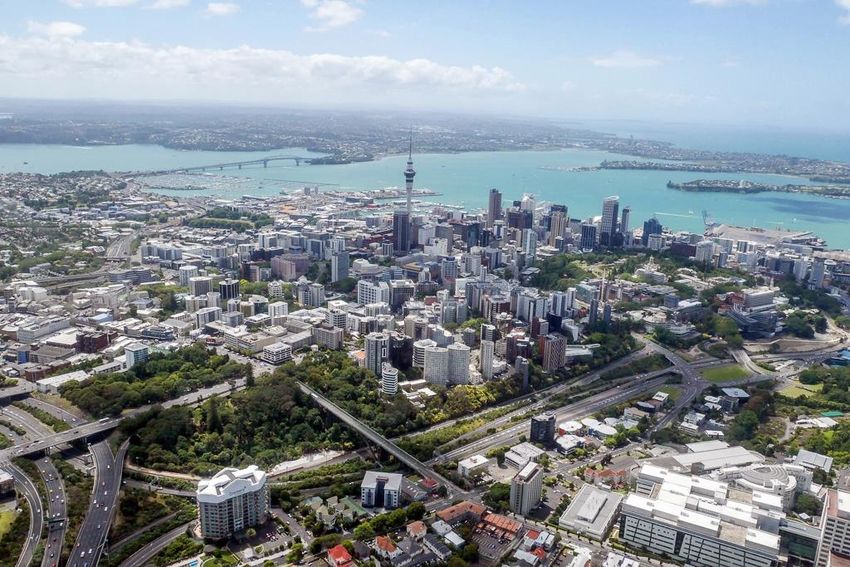
INFORMATION TO HELP YOU SETTLE IN
                AUCKLAND

        FOR INTERNATIONAL STUDENTS

WELCOME TO AUCKLAND

                         International Student & Parent Handbook Page 1
INTERNATIONAL OFFICE STAFF – LOCATED IN CM BLOCK
IN AN EMERGENCY DIAL 111
FOR ANY OTHER MATTERS CALL MISS SAM 021 261 2779 or MRS KING 021 1578776

St Mary’s College provides a caring environment with a dedicated team of International staff offering 24
hour support.

Mrs Sue King is the Director of International Students and manages all student welfare including
communications with the students’ families or agents. Please make sure you have Mrs King’s number in
your phone for an emergency:

                        Mrs Sue King – International Student Director
                        Tel: +64 9 376 6568 ext 817
                        Mob: +64 21 157 8776
                        sking@stmaryak.school.nz

Ms Sam Van Deventer is the Homestay Coordinator who arranges homestay accommodation with approved
families. She can help with any homestay issues and ensures each student is happy at home.

                        Ms Sam – Homestay Coordinator & International Support
                        +64 9 3766568 ext 817
                        Mob: +64 21 261 2779
                        sbignall@stmaryak.school.nz

Ms Beverley Steward is the International Dean and Head Teacher of ESOL (English as a Second Language)
who ensures that the students are supported in their English language and are achieving the academic
standards. Ms Steward monitors attendance, advises on subject choices and can recommend extra tutoring
during school lunchtimes or after school if required.

                      Ms Steward – International Dean
                      +64 9 3766568 ext 722
                      Mob: +64 21 025 05758
                      bsteward@stmaryak.school.nz

 Advice when you first arrive in NZ
 Contact your family at home to say that you have arrived safely.
 •   Convert your mobile phone for use in New Zealand (SIM card)
 •   Open your BANK ACCOUNT

                                                                                  International Student Handbook (Nov 2016 (Page 2)
Culture Shock
When you leave your own culture and go to another, you may experience a wide range of feelings and
reactions. It is common for international students to experience feelings of excitement and enthusiasm on
arriving in New Zealand. After you have settled into your studies, you may experience feelings of loneliness,
sadness, home- sickness, isolation and possibly frustration and anger or you may doubt your decision to
come to New Zealand.

Experiencing some or all of these feelings is known as culture shock. Don’t worry, this is normal and you
are not alone. Every student is affected by it in one way or another. Some of the differences between life
in your home country and life in New Zealand may be:

•   Language
•   Food
•   Social life
•   Religious beliefs
•   Education system
•   Family life

Other differences that you may experience include:
• How other students relate to their teachers
• How people spend their leisure time
• How people resolve conflicts and disputes
• How people make decisions
• How people express feelings and emotions and the meanings of hand, face and body movements

Due to these feelings, you may be asking yourself questions such as:
• “Am I speaking properly”?
• “Do people understand me”?
• “Will I be successful in my studies”?
• “Will I find friends here”?
• “Should I discuss my personal problems with anyone”?

Your body and your mind may react in unusual ways to the stress and confusion of living in a new culture.
Some of the reactions you experience may be:
• Feeling isolated or alone
• Feeling confused
• Missing your family and friends back at home
• Sleeping too much or tiring easily
• Suffering body pains, especially in the head, neck, back and stomach
• Wanting to return home
• Feeling angry towards local people
• Depending on other people from your home country
• Feeling nervous
• Finding it difficult to express yourself in English

                                                                                   International Student Handbook (Nov 2016 (Page 3)
International Student Handbook (Nov 2016 (Page 4)
IMPORTANT INFORMATION:

Public/School Bus Transport

To school – refer to the school’s website:
http://www.stmaryak.school.nz/index.php?option=com_content&view=article&id=125&Itemid=508

Transport Around Auckland – see separate page attached.

 Living Arrangements for International Students (3 OPTIONS)
1.       Homestay – see Homestay Information Pack.

2.       Designated Caregiver
         Living with a DCG (Designated Caregiver). A DCG is a person who has been designated by the family
         to take care of you. This person must be a relative or a close family friend. Your parents will have
         signed a declaration stating that this person is either of these and is very well known to them. A
         member of the International Staff will visit the home prior to your arrival /moving in to confirm that
         this is a suitable and safe environment for you to live in. You must never move into a DCG without
         permission from the International Department. An annual Designated Caregiver Fee is payable
         when you move into a DCG and for each subsequent change.

3.       Parent
         Living with one or both of your parents who will have a Guardianship (Visitor) Visa. This means you
         have been granted permission to stay in New Zealand and look after you, while you are studying.
         If for some reason your parent has to return to your own country, you must advise the
         International Department before you leave. This is very important, so that alternative
         accommodation can be arranged or approved for you.

You are not permitted to live alone or in a flatting situation with any other students’, regardless of their
age. Any move must be approved by the International Department prior to the move.

 It is the responsibility of you and your New Zealand guardian/caregiver to inform the International
 Department of any changes in your accommodation before you move. When you live in a homestay,
 you are living in a family home and you should expect the same restrictions as you would in your own
 home. If you make a real effort to become part of the family, your time there should be enjoyable.

Alcohol & Smoking

 In New Zealand people younger than 18 years of age are not permitted to drink alcohol. Students are
 forbidden to have in your possession any tobacco products, alcohol, drugs, unauthorised medications,
 offensive and dangerous weapons, matches and lighters. In this case you will be dealt with seriously and
 may be required to leave the school.

 If you are under 18 you can't:
 •      Drink in a public place, go into pubs and bars
 •      Buy alcohol or get an adult to buy you alcohol
 •      Carry a fake ID or use someone else's

  There are heavy penalties for people who drive having drunk alcohol. The sale of cigarettes or other
 tobacco products to people under 18 is prohibited. SMC students are not permitted to smoke.

                                                                                     International Student Handbook (Nov 2016 (Page 5)
Mobile Phone
It is expensive to call overseas from New Zealand, so the best thing to do is to buy an International Phone
Card (SIM) or use Skype/WeChat or similar tools. You can ask your homestay or agent to do this when
you first arrive. Make sure you have your timetable downloaded on your phone and Mrs King’s phone
number 021 157 8776.
Importing Goods into New Zealand
Only items for your personal use should be delivered to your homestay address (or any other address) in
New Zealand. You are not permitted to receive goods for other people or sell items that have been
delivered to your address whilst studying at St Mary’s College.
Extra money
Your homestay fee includes accommodation and food. It does not cover special toiletries, stationery, bus
fares or extra snacks at school.
Social Activities & Manners
New Zealanders, especially males, often shake hands when meeting each other for the first time. When
you want to meet with someone professional, for example a doctor you need to make an appointment first
to meet them. On most occasions you cannot simply turn up without organising a meeting first. This applies
not only to meetings with professionals but also with friends. New Zealanders rarely visit each other
without calling in advance and letting the person know that you intend to visit and what time you will
arrive.
Your friends will be welcome in the house but, out of courtesy, you should seek permission from your host
family before you invite friends home, particularly if you want them to eat with you and the family.
You should remember that one of the main reasons that you are studying in New Zealand is for you to learn
to speak English. If you are living with an English speaking family, it is polite to speak English when you are
in the family areas of the house. Please remember this if you have friends visiting.
If you are going out in the evening, you must ask permission from your host family before you go out. Let
them know where you are going, who you are going with and what time you expect to be home. If, for any
reason, you are going to be late, you must let the family know so that you do not worry about you
You should always give them your mobile number and ensure that you keep it switched on when you
are away the home and that your mobile phone battery is fully charged before you leave the house.
You are not permitted to stay out overnight regardless of your age, without permission from your
homestay parents.
International Student Handbook (Nov 2016 (Page 6)Curfew
The New Zealand law says that young students are to be under supervision at all times, unless we receive
written permission from your parents.
The following are times students must be home are an indication only and you can discuss these further
with your host family. Your host family and you will be able to agree a mutually convenient time to be
home and this must be adhered to at all times. If you are going to be late, it is very important that you
ensure your host family are aware. If you fail to do this, then it could cause unnecessary concern and worry
for your family.
AGE SUN – THURS FRIDAY SATURDAY
Under 15 years 6.00pm Under Supervision Under Supervision
15-16 7.30pm 10.00pm 11.00pm
16-17 7.30pm 12.00am 12.00am
Travel and Activities during School Holidays and Weekends
You are not permitted to travel around or out of New Zealand unsupervised at any time during your
period of study with St Marys College, unless you are flying directly home to your own country. The
International Department can advise you of suitable approved tours that are available. (Additional costs
will be incurred for these trips.) Before undertaking any of these trips, a Leave form should be completed
which includes written permission from both your parents and homestay/designated caregiver. For
further information see the International Office.
Some Ideas for Your Safety
Auckland is a safe city, but like all big cities, common sense and some care are needed.
Please take care of your belongings at all times, particularly cameras, MP3 players, laptops and mobile
phones. Also take care of your money, and don’t carry too much cash with you. Most of your money
should be kept safely in the bank.
Safety Reminders
• Do not walk alone at night, especially in dark places or parks.
• Let your home-stay know where you are going and when you will be coming back home- make
sure it is not late.
• Carry a cell phone or local telephone card, a map, your address and telephone number.
• Carry a telephone number for a taxi company in case you need transport home. Taxis are more
expensive than other public transport but can be good for occasions where several people are
sharing the fare or when public transport is not available, such as late at night.
• Always carry your bag and wallet with you.
• Make sure you keep your passport and any other important documents in a safe place.
• If there is an emergency, 111 is the direct number for the fire brigade, police or ambulance.
Pedestrian Safety
As a pedestrian, it's important that you follow the road rules and guidelines shown below. You will help
ensure your safety when you're walking near roads or crossing the road.
If you need to cross the road when you get off a bus, wait until the bus has moved away before checking
for moving vehicles.
If you have to cross the road between parked vehicles, move out as far as the headlight of a parked car
nearest the traffic, then check for moving vehicles and wait for a gap before crossing the road.
International Student Handbook (Nov 2016 (Page 7)Pedestrian crossing - you are within 20 metres of a pedestrian crossing or traffic signals, you must use the
crossing, footbridge, underpass or pedestrian traffic signals to cross the road. Don't dawdle on a pedestrian
crossing. Don't step out suddenly onto a pedestrian crossing if any vehicles are so close to the crossing that
you cannot stop.
Courtesy crossings- Courtesy crossings are not official pedestrian crossings. You provide a place where
drivers can stop safely to allow pedestrians to cross. However, drivers are not obliged to stop at courtesy
crossings, so use them with care.
St Mary’s International students are not permitted to drive or own a car
at any time during your studies
Part time work
Students who are studying at year 12 and year 13 MAY be given permission from the International
Department to work part-time. This is a change that has to be actioned in your visa.
Information about New Zealand:
The ethnic make-up of New Zealand’s population is very diverse; it is mainly comprised of a mix of Maori,
European (Pakeha), Asian, Middle Eastern and Pasifika people (people from the Pacific region).
New Zealanders are generally friendly. You like to joke and smile but are slow to make friends with others.
It is important to meet and get to know New Zealanders. Try to get out and meet lots of people, once you
have formed one friendship it will be easier to make others. It doesn’t matter if you make mistakes with
your English. Making mistakes and learning from them will improve your communication.
Thank you
Thank you is a phrase often used in New Zealand – even for small favours it is polite to say thank you.
Religion
St Mary’s College is a Catholic school:
CATHOLIC (CHRISTIAN) BELIEFS
• RELIGIONS around the world include CHRISTIANITY, Buddhism, Muslim
Two main parts of the CHRISTIAN CHURCH are Catholics and Protestants
• We believe in God – Jesus is the Son of God
• Jesus was born as a baby 2015 years ago
• We celebrate Jesus’ BIRTHDAY on Christmas Day
• The BIBLE is a book about the time before Jesus was born, the 33 years he was alive and sometime
afterwards
• We believe Jesus died on the Cross and he came alive again
• We believe Jesus is with God in Heaven
• We believe Jesus is part of God
• Mary was Jesus’ Mother and very special
International Student Handbook (Nov 2016 (Page 8)Discrimination
New Zealanders should not discriminate - it is against our law. This means that men and women are treated
equally and women must be shown the same respect as men. It does not matter what country a person
comes from or your religion or if you have a disability- you should be treated as an equal and you should
treat them as an equal too. If you think you have experienced discrimination contact the International
Department or another senior staff member. Your complaint will be taken seriously.
Tipping
Tipping is not expected. People occasionally tip the waiter/waitress in an expensive restaurant. Tips are not
given in cafeterias or fast food restaurants.
Toilets
Public toilets in New Zealand are generally free to use and are usually segregated for male and females. You
are non-squatting, European-style toilets. Water basins are available for washing hands and usually have
two taps: one for hot water and one for cold.
Punctuality
If you are meeting someone or attending classes, it is important to be on time. When meeting friends or
family, however, it can be acceptable to be about 10–15 minutes late. If you are going to be late, it is
courteous to call and let the person know when you expect to arrive.
Dealing with the opposite sex
New Zealand is a very open society. On the whole, men and women integrate freely and there is little
segregation between the sexes. It is normal for males and females to be friends and to socialise together.
You will probably have both male and female teachers and support staff. Men and women are treated in
the same way and take on similar roles in society. In New Zealand, women are often in positions of authority
such as business leaders, and politicians, and the role of the wife/mother in a New Zealand family may be
slightly different from what you are used to.
Clothing
On most occasions New Zealanders dress informally but relatively conservatively. It is not uncommon
however, to see men wearing shorts and no shirts, and women wearing sleeveless tops and short skirts or
shorts during the summer.
Manners
When shopping, going to the bank or visiting any other place where others are doing similar things to you,
a queuing (or lining up) system is used. This means that whoever comes first will be served first (“First come,
first served”). It is considered bad manners to go ahead of someone else, who was already there when you
arrived.
New Zealanders find spitting and littering offensive. Some New Zealanders can get upset if you see people
behave in these ways.
International Student Attendance Policy
You are required to attend 100% of your programme.
If you are sick and cannot come to school, your caregiver must phone the Attendance Officer 09 376 7568
and you must bring a note from your caregiver to explain your absence the following day. This note must
not be written by you, or your guardian or Agent.
If you have unexplained absences or poor attendance we are required to inform Immigration NZ who are
likely to revoke your visa and you may be sent home.
International Student Handbook (Nov 2016 (Page 9)Immigration
Full details of immigration requirements, advice on rights to employment in New Zealand while studying,
and reporting requirements are available from Immigration New Zealand, and can be viewed on your
website at www.immigration.govt.nz.
Eligibility for Health Services
Most international students are not entitled to publicly funded health services while in New Zealand.
Accident Insurance
The Accident Compensation Corporation provides accident insurance for all New Zealand citizens,
residents, and temporary visitors to New Zealand, but you may still be liable for all other medical and
related costs. Further information can be viewed on the ACC website at www.acc.co.nz.
Compulsory Insurance
It is compulsory for you to have current medical and travel insurance for the duration of your programme
of study in New Zealand. This is a condition of your study visa and the insurance must cover you from the
date when you leave your country to the expiry date of your visa plus one week. If your insurance was not
arranged through St Mary’s College then it is your responsibility to ensure that the school is provided with
copy of your valid insurance policy. If you do not have valid insurance then you will not be allowed to attend
your classes.
Phone Directory:
Emergencies:
Dial 111
Fire, Police, Ambulance
0800 22 22 00
Civil Defence For information and advice before, during and after an emergency
such as earthquakes, tsunami, fire, floods and volcanic eruptions
Health
CityMed Doctors
Doctor (GP) near the school Address: 8 Albert St, Auckland, 1010
Phone:09-377 5525
Search the Health Point website to
find a GP close to where they live: http://www.healthpoint.co.nz/
Healthline number: 0800 611 116.
White Cross Accident & Medical Address: 202 Ponsonby Rd, Ponsonby, Auckland 1011
Emergency Hours: 7:30AM–8PM
Doctor Phone: 09-376 5555
Family Planning Association www.familyplanning.org.nz
International Student Handbook (Nov 2016 (Page 10)Counselling Services:
(09) 522 2999 or www.lifeline.co.nz/
A free, confidential and non-judgemental telephone
Lifeline New Zealand counselling service. Operating 24 hours a day, 365 days .
0800 376633 or text support on 234 or email
Youthline talk@youthline.co.nz or
http://www.urge.co.nz/home.html
Youthline offer a range of services for young people and
your families across New Zealand and is available 24 hours
a day.
09 522 2088 or outside Auckland call 0800 888 880.
Provides a confidential and free telephone counselling and
Chinese Lifeline support service for Cantonese and Mandarin speakers.
Operating hours are Mon-Sun 10am-2pm; Mon-Fri 7pm-
10pm.
Government Departments
Settling in NZ www.newzealandnow.govt.nz/living-in-nz
Immigration New Zealand www.immigration.govt.nz
Information to assist you settling into New Zealand
http://www.immigration.govt.nz/migrant/stream/study/imaccepted
tellmemore/informationforyourfirstfewdays/
Information for your first few days in New Zealand
http://www.immigration.govt.nz/migrant/stream/study/imaccepted
tellmemore/settlingin/
https://www.immigration.govt.nz/new-zealand-visas/options/study
Visa’s Studying in New Zealand
Ministry of Education www.minedu.govt.nz/goto/international
A Guide to living and studying in NZ
http://www.minedu.govt.nz/~/media/MinEdu/Files/EducationSe
ctors/InternationalEducation/ForInternationalStudentsAndParen
ts/LivingGuideEnglishVersionPDF.pdf
Resources for Chinese students
http://www.minedu.govt.nz/NZEducation/EducationPolicies/Interna
tionalEducation/ForInternationalStudentsAndParents/LivingAndStud
yingNZ/YourCultureAndCommunity/ChinaResources.aspx
Resources for Korean Students
http://www.minedu.govt.nz/NZEducation/EducationPolicies/Intern
ationalEducation/ForInternationalStudentsAndParents/LivingAndSt
udyingNZ/YourCultureAndCommunity/KoreaResources.aspx
NZQA
http://www.nzqa.govt.nz/studying-in-new-zealand/
The Code of Practice http://www.nzqa.govt.nz/
International Student Handbook (Nov 2016 (Page 11)International Student Handbook (Nov 2016 (Page 12)
You can also read


