WELCOME TO THE UNITED BROTHERHOOD OF CARPENTERS - IMPROVE YOUR SKILLS ADVANCE YOUR CAREER
←
→
Page content transcription
If your browser does not render page correctly, please read the page content below
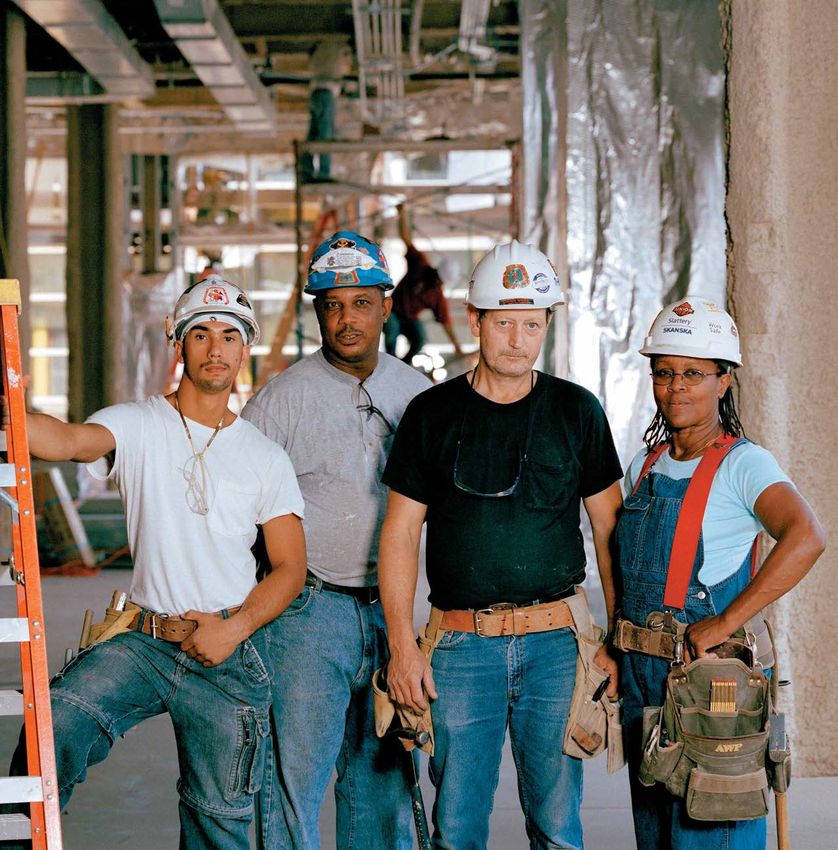
WELCOME TO THE
UNITED BROTHERHOOD OF CARPENTERS
       A Guide to Your Union and How You Can
               IMPROVE YOUR SKILLS
             ADVANCE YOUR CAREER
            BE PART OF A PROUD UNION
                MAKE A DIFFERENCE

                                          WWW.CARPENTERS.ORG   1
A MESSAGE FROM GENERAL PRESIDENT DOUGLAS J. MCCARRON

                             WELCOME TO THE UBC FAMILY

                             On behalf of our elected     BIENVENIDOS A LA FAMILIA DE LA UBC
                             leaders, staff, and all of
                             your fellow members,         A nombre de nuestros líderes electos, de nuestro
                             welcome to the               personal, y de todos nuestros miembros, les damos
                             United Brotherhood of        la bienvenida a la Hermandad de Carpinteros y Alis-
                             Carpenters and Joiners       tadores Unidos de America (UBC).
                             of America (UBC).
                                                          Nuestra unión tiene una larga historia de unirse para
Our union has a long history of standing up for skilled   apoyar a los hombres y las mujeres con habilidades
men and women who work in the crafts we represent         que trabajan en los oficios que representamos en
across the United States and Canada. Things have          todos los Estados Unidos y Canadá. Las cosas han
certainly changed since our union was founded in 1881,    cambiado mucho desde que nuestra unión fue fun-
but we have always stood for the same principles:         dada en 1881, sin embargo, siempre hemos conser-
    • The right of workers to organize and join a        vado los mismos principios:
       union that can negotiate with employers for a           •E
                                                                 l derecho de los trabajadores a organizarse
       decent contract                                          y formar parte de una unión que puede nego-
    • A fair day’s work for a fair day’s pay                    ciar buenos contratos con los empleadores

    • Retirement and health benefits                           • Un día de trabajo justo por una paga justa

    • Safety on the job                                        • Beneficios de salud y de jubilación

    • Top-level training and skills                            • Seguridad en el trabajo

    • Dedication to helping one another and our               • Habilidades y capacitación de primer nivel
       communities                                               edicación para ayudarnos los unos a los
                                                               •D
The UBC is proud to offer the best training available,          otros, y a nuestras comunidades
in all our UBC crafts. But what you bring to the table    La UBC está orgullosa de ofrecer la mejor capaci-
is just as important. I am convinced that you will        tación posible, en todos nuestros oficios en la UBC,
have a successful career if you work hard on the job,     pero lo que usted aporta tiene la misma importan-
apply yourself during training, and bring a positive      cia. Estoy convencido de que usted tendrá éxito en
attitude to work every day.                               su carrera si trabaja arduamente, participa acti-
I hope this Welcome Packet helps you to                   vamente durante la capacitación, y mantiene una
understand what the UBC is about, and how you             actitud positiva en el trabajo todos los días.
can become more involved.                                 Espero que este Paquete de Bienvenida le ayude a
I’m proud to welcome you to our union family.             entender de lo que se trata la UBC, y a saber cómo
                                                          usted puede involucrarse más.

                                                          Estoy orgulloso de darle la bienvenida a nuestra
                                                          familia de la unión.

                                                                      Para más contenido en español
                                                                      visite la página
                                                                      https://www.carpenters.org/welcome-spanish

2   WWW.CARPENTERS.ORG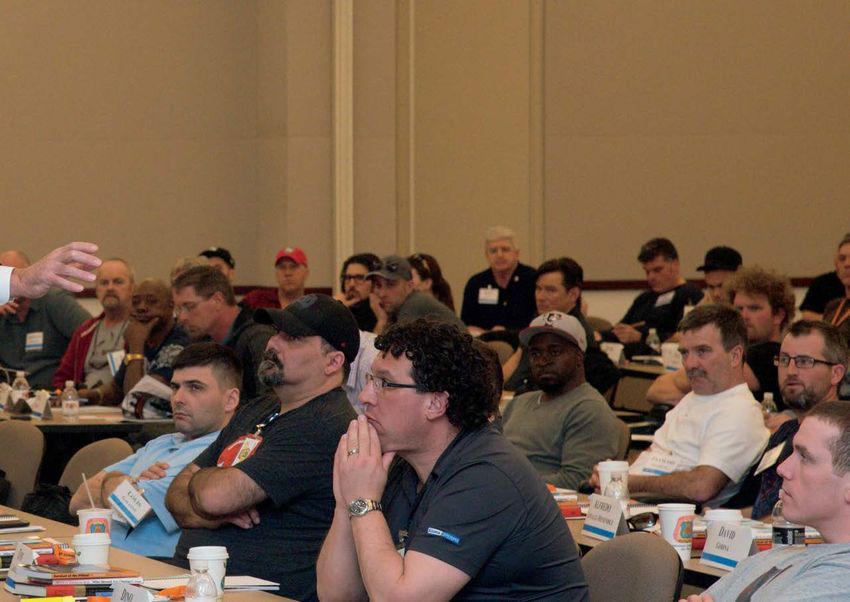
HOW OUR UNION WORKS
 THE UBC DEMOCRACY

                                                      The Executive
                                                    Secretary-Treasurer               The Officers
                                                      of the Council                 of the Council

                     Delegates to the
                    Council, who elect:

 Local                                           The                  The           The Second        The General
 Union                                         General              General           General          Secretary-
Members                                       President          Vice-President    Vice-President      Treasurer
 elect                                     Douglas McCarron      Frank Spencer      David Tharp       Thomas Flynn
                      Delegates to the
                     General Convention,                         The Five District Vice-Presidents
                         who elect:

                                               Eastern       Midwestern     Southern       Western         Canadian
                                                District       District      District       District        District
                                           Bill Waterkotte   Mark McGriff Dennis Donahou RandyThornhill   Jason Rowe
          Local Union Officers

                                           THE STRUCTURE OF THE UBC
                                           The UBC prides itself on being a representational
                                           democracy. Members elect their leaders, and each
                                           member has a say in how the UBC operates.

                                           As a UBC member, you are responsible for voicing
                                           an opinion and attending meetings so that you can
                                           make informed choices about your UBC leadership.

                                           |
                                            Leaders at all levels of the union approach
                                            decision-making using one simple rule:
                                            Does it help the UBC grow or hold it back?
                                           If it helps the union grow and creates
                                           opportunities for members, the leadership
                                           works to make it happen.

                                                                                      WWW.CARPENTERS.ORG          3
ONE VISION: TO MAKE LIFE BETTER
Led by Peter J. McGuire, working carpenters
founded the United Brotherhood of
Carpenters and Joiners of America (UBC) in
1881. They organized for the same reasons
many join today. They wanted safety, decent
working conditions, a wage they could live on
and a better life for their families.

The UBC did not come out of nowhere. It
took decades of organizing for carpenters to
create a union that could last through good
times and bad. By 1903 the union had grown
from about 4,800 members to more than
167,000 members across North America.
McGuire’s legacy lives on in Labor Day, a
holiday he proposed.

Union carpenters were an important part
of the labor movement that brought about
major change for workers. Early on they
fought for a 10-hour day; later the struggle
was for the eight-hour day. Their slogan was,
‘8 for work. 8 for rest. 8 for what you will.’

Efforts like these early struggles show why
a strong labor movement is important to the
well-being of North America’s middle class.

A lot has changed over the UBC’s 140-year
history. But helping carpenters and their
families build a good life is still our number-
one mission.

THANKS TO THE LABOR MOVEMENT

Eight-Hour Workday
Weekends Without Work
Child Labor Laws
Breaks at Work
Overtime Pay
Social Security
Medicare
Davis-Bacon Act (Federal Prevailing Wage)
State Prevailing Wage laws
Equal Pay Act
Civil Rights Act
Occupational Safety and Health Act
Family and Medical Leave Act

                                                  UBC Founder Peter J. McGuire
4   WWW.CARPENTERS.ORG
OUR STORY IS STILL BEING WRITTEN
                                    Today the UBC is all about organizing and growth,
                                    service to our members, professionalism and
                                    leadership in the construction industry. Our goal
                                    is 70 percent market share—which means we are
                                    working to see that at least 70 percent of the work
                                    being done is being done union.

                                    The new building for our Washington D.C.,
                                    headquarters opened in 2001 at 101 Constitution
                                    Ave. NW, just across from the U.S. Capitol. We
                                    coordinate much of our public and governmental
                                    affairs from this prestigious address.

                                    Also in 2001, we began a new era of training and
                                    education at the International Training Center (ITC),
                                    at 212 Carpenters Union Way in Las Vegas. This is the
                                    hub of our state-of-the-art skills training programs.

                                    The ITC also houses our leadership development
                                    programs, where thousands of UBC members dig
                                    deep to learn more about themselves and get ready
                                    to lead on their jobsites and in their union halls.

                                    In D.C. and Las Vegas, 21st-century buildings are
                                    physical symbols of our union’s strength. That
                                    strength shows up at UBC jobsites, local union
                                    halls, regional councils and area training centers
                                    throughout North America.

                                    But what gives these places life and intensity are the
                                    hard work and spirit of each and every UBC member.

                                    That means you.

                                    You are the heart and soul of this union. You learn
                                    your trade and earn your pay on the job and at
                                    the training center. You give up hours of your time
                                    and contribute your talents at union meetings and
                                    events. You volunteer and improve your community.
                                    You are politically active to make sure that elected
                                    officials are looking out for your best interests.

                                               YOU MAKE YOUR UNION
                                               STRONGER EVERY DAY.

                                                    Learn about the UBC
                                           https://www.carpenters.org/about-ubc

                                               Read stories from UBC history!
                                        https://www.carpenters.org/140-anniversary
UBC Headquarters in Washington DC
                                                               WWW.CARPENTERS.ORG         5
TWENTY-FIRST CENTURY
UNION
                             THE UBC                UBC CRAFTS
                             EMBLEM                 The UBC represents one trade with many
                             We hope you            crafts. Our members touch every aspect
                             wear it proudly on     of a construction project, from foundation
                             your hardhat or        to finish.
                             jacket. But what
                                                    General Carpenters build concrete
                             does the UBC
                                                    foundations, exteriors, roofs,
                             emblem mean?
                                                    infrastructure, scaffolding, fine trim and
Today’s emblem was adopted in 1884 by               finish work.
the delegates at the UBC’s Fourth General
Convention. (It was originally designed in 1864.)   Floor Coverers install all types of floor
                                                    coverings from wood to resilient, carpet
While some of the tools depicted in the             to ceramic, industrial to sport surfaces.
emblem are no longer common on job sites,
all of the design elements and the values they      Interior Systems Carpenters specialize in
represent remain vital to the Brotherhood:          assembling acoustical ceilings, computer-
                                                    access flooring, metal framing, wall
Motto: Inscribed in Latin, “Labor Omnia             partitions, and office furniture.
Vincit.” It means “Labor Conquers All Things.”
                                                    Lathers build structural frameworks for
Rule: Signifies the UBC’s commitment to live        plaster and other materials, creating such
by the Golden Rule: “Do unto others as you          wonders as theme park attractions and
would have them do unto you.”                       ornamental ceilings.
Compass: Represents the union’s                     Millworkers and Cabinetmakers craft and
commitment to the social, moral, and                install trim and molding, cabinetry, ceiling
intellectual well-being of its members.             treatments, doors, windows, exposed
Jack plane: A tool emblematic of the trade.         columns and beams, displays, mantels,
                                                    staircases, and more.
Colors: Pale blue represents our ideas as pure,
clean, and lofty as the skies. The dark red         Millwrights install, maintain, diagnose,
symbolizes the blood that flows through the         and repair equipment such as
veins of those whose labor is honorable.            compressors, pumps, conveyors, gas and
                                                    steam turbines, monorails, and extruders.
Shield or base of the emblem: Indicates that        They work at power plants and in many
those legally wearing the emblem are morally        industries.
bound to safeguard and protect the interests
of the organization and its members.                Pile Drivers drive steel, concrete, or wood
                                                    piling into the earth during excavations
Similar elements and symbols appear on              and for skyscrapers, highways, and
our union label, which is affixed to quality        bridges, docks and wharfs. Some pile
products made by UBC members.                       drivers are also commercial divers.

                                                    Residential and Framing Carpenters
                                                    install flooring, windows, doors, interior
                                                    trim, cabinetry, roofing, siding, insulation,
                                                    drywall, and more.

6   WWW.CARPENTERS.ORG
HOW MEMBERS                                              SISTERS IN THE              CARPENTERS ON
ENGAGE IN                                                BROTHERHOOD                 SOCIAL MEDIA
POLITICAL ACTION                                         Every day, thousands        Be the first to learn
Elections have                                           of women play a critical    what is happening with
consequences, and          FIGHTING                      role in making the UBC      your union by jumping
politics affects you –     AGAINST TAX                   strong, on the job and      on our social media
every day! Who gets        FRAUD                         in their union. Sisters     channels, signing up
elected decides how                                      in the Brotherhood          for text alerts, visiting
                           The UBC is a leader in
money is spent, what                                     (SIB) supports female       Carpenters.org and
                           the fight against the
projects are approved                                    members by helping          downloading the UBC
                           tax fraud epidemic that
and funded, how                                          them obtain craft           Mobile App.
                           threatens our industry
safety regulations are                                   training and leadership
                           and our families.                                         The App gives instant
enforced, and whether                                    skills; by advocating
the government             A minimum of one in           on women’s issues;          access to your Training
enforces the rules         five contractors commit       and by mentoring new        Verification Card (a
to stop cheating           federal tax fraud in          members and potential       list of your training,
contractors from           order to win low-ball         members.                    certifications and
stealing your work.        bids and steal jobs from                                  qualifications and much
                                                         The International SIB       more), our ‘For Our
                           tax-paying businesses
That is why the union                                    Committee publishes         Members’ Resource
                           and their employees. It
needs your activism                                      a newsletter, SIB Tips,     Hub; an interactive
                           happens all the time in
and involvement. We                                      to help SIB committees      scanner; and other cool
                           construction.
urge you to register,                                    in regional councils        features.
vote and volunteer.        Corrupt contractors pay       be more effective.
                                                                                     To get the App:
Our members walk           workers off the books—        Resource materials
                                                                                     • Open the “App Store”
precincts, staff phone     or sometimes classify         are available to help
                                                                                        or “Google Play Store”
banks and text-banks,      them as independent           committees set goals
                                                                                     • Search for “UBC
and attend rallies to      contractors when they         and develop strategies
                                                                                        Mobile”
help the candidates        clearly shouldn’t. That       for career advancement
                                                                                     • Select “Install”/ “Get”
who stand with us on       allows them to evade          and leadership.
                                                                                        to download
Carpenter issues.          taxes, so they can
                                                         GET INVOLVED                For UBC news via text:
                           illegally lower their labor
We show up at planning                                                               • In the U.S., text UBC
                           costs to underbid law-           UBCSisters
boards and town                                                                         to 855-439-1990
                           abiding competitors.
councils to support                                         UBCSIB                   • In Canada, text UBC
infrastructure and         Legislators and                                              to 877-705-2267
construction projects      government agency                ubcsisters
that will bring us work—   leaders increasingly                                      FOLLOW US
                                                            UBC Sisters
and to protest against     understand the issue
                                                                                         CarpentersUnited
efforts that would harm    and, with help from
workers.                   the UBC, are cracking                                         UBCJA_Official
                           down on criminals and
We are a nonpartisan                                                                     ubcja
                           cheating contractors.
union—we support
candidates who support     JOIN THE FIGHT                                                United Brotherhood
                                                          www.carpenters.org/
our issues. Our actions                                                                  of Carpenters
                              stoptaxfraud                  sisters-in-the-
make a difference, year                                     brotherhood/
                              stoptaxfraud
after year.
                              stoptaxfraud
                              Text FRAUD to
                              855-439-1990

                           www.stoptaxfraud.net

                                                                                    WWW.CARPENTERS.ORG          7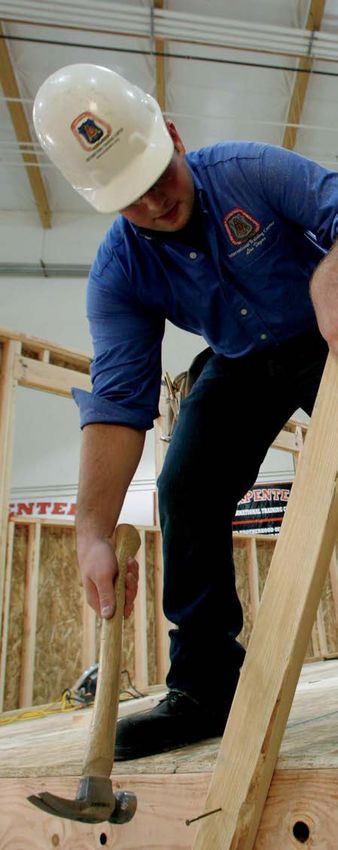
AT THE TOP OF
THE INDUSTRY
ICRA                                  ICRA training teaches UBC
                                      members how to contain
Infection Control Risk Assessment,
                                      pathogens, control airflow,
Best Practices in Healthcare
                                      protect patients, and work
In a healthcare facility, patient     without disrupting adjacent
care is everything. Unfortunately,    operations. Carpenters learn how
thousands fall victim every year to   to classify work areas to minimize
infections caused by dust stirred     risks, understand and adhere to
up during renovation projects.        ICRA protocols, and communicate
                                      with the facility’s ICRA team.
Completing construction without
releasing harmful contaminants        The UBC’s ICRA program
or disrupting daily operations        is recognized throughout
while also meeting project            the healthcare field and has
schedules are primary concerns        provided members with training,
for healthcare officials. UBC         certification and abundant work
contractors recognized this need      opportunities. For more
as “mission critical.” In response,   information about the program,
the Carpenters International          visit www.UBC-ICRA.org or
Training Fund (CITF) engaged          contact your local training
leading infection control experts     center at www.carpenters.org/
to guide development of an            training-center.
exclusive training program.

INSTALL                               INSTALL, the International           These professionally accredited
                                      Standards and Training Alliance.     educators keep up to date with
The UBC’s Training Alliance For                                            the latest trends, technology,
Floor Covering Professionals          There is no comparison—
                                                                           and techniques through
                                      INSTALL exceeds all other
To get in on a prosperous                                                  INSTALL’s extensive “train-the-
                                      training in the floor covering
construction career at the                                                 trainer” program.
                                      industry. Every major mill and
ground level, look no further than    manufacturer in the industry         INSTALL apprenticeship and
the UBC’s floor covering program,     endorses INSTALL, and many           career-long training open the door
                                      require our certifications           to a prosperous career. INSTALL
                                      to install their products. INSTALL   trained and certified professionals
                                      training standards are reviewed      are the preferred installers in the
                                      regularly by the U.S. Department     industry. The INSTALL Warranty
                                      of Labor and by the labor            has guaranteed over $1 billion in
                                      departments of Canadian              floor covering installations since
                                      provincial governments.              2015, without one failure.

                                      Through INSTALL, the UBC’s           Ask about INSTALL at your
                                      floor covering training program is   regional training center, www.
                                      delivered across North America       carpenters.org/training-center.
                                      by more than 100 exemplary,
                                      veteran flooring instructors.

8   WWW.CARPENTERS.ORG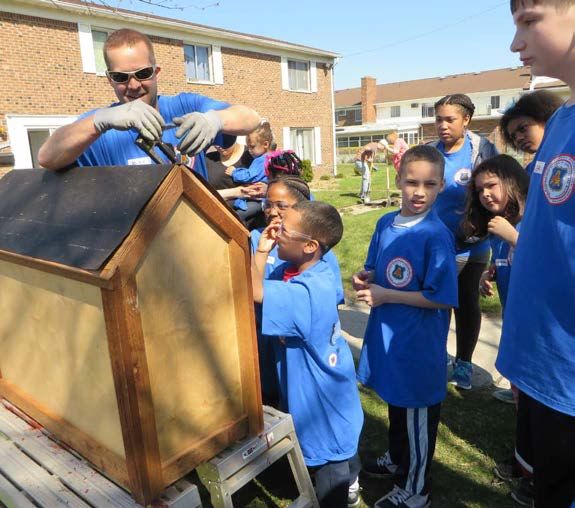
BUILDING SKILLS, GIVING BACK TO OUR COMMUNITIES

UBC JOB CORPS                         In addition to carpentry skills,
                                      UBC Job Corps offers career
Career Building for
                                      planning, on-the-job training, job
Youth in Need
                                      placement, and other services.
The UBC is always looking to          Tens of thousands of young
recruit the best and brightest to     people have completed Job
be union carpenters. The UBC          Corps training and developed the
National Job Corps Training Fund      capacity to move into satisfying
helps us do that. As a bonus, Job     construction careers.
Corps provides a path to a great
                                      UBC Job Corps operates 73
career for young men and women
                                      programs in 41 states and
who are struggling to find success.
                                      employs more than 100 UBC
UBC Job Corps is a carpentry          member-instructors. Applicants
pre-apprenticeship program            must be age 16–24. Program
in the U.S. The program serves        completion takes nine months
economically disadvantaged            to two years; the average stay is
youth and has employed UBC            about 11 months.
members as instructors for more
                                      Learn more at www.carpenters.
than 50 years. Job Corps itself
                                      org/job-corps.
began in 1964 during the Johnson
administration’s War on Poverty.

                                                     CARPENTERS IN THE COMMUNITY
                                                     Our Members as Helpers and Heroes
                                                     When you join the UBC, you join a family. Your brothers
                                                     and sisters in the union stand together in good times
                                                     and bad and help one another in times of need.

                                                     But we also step outside our own concerns to
                                                     contribute to our communities in meaningful ways,
                                                     often using skills learned on the job and in our training
                                                     centers.

                                                     Throughout our organization, members regularly give
                                                     their time and talent and participate in Habitat for
                                                     Humanity, build wheelchair ramps, fix park structures,
                                                     renovate homes for severely injured military veterans,
                                                     support families affected by natural disasters, save lives,
                                                     and so much more. The skills and pride of our members
                                                     allow us to make an impact, both on and off the jobsite.

                                                     Ask your union rep or steward how you can get
                                                     involved!

                                                                                    WWW.CARPENTERS.ORG           9
THE GOLD STANDARD –
UBC SKILLS TRAINING
Our instructors transfer skills and   A SAMPLING OF UBC
knowledge to union members            TRAINING PROGRAMS
at more than 200 regional
                                      Mobile Elevated Work Platform—
training centers throughout
                                      learn safe and proper operation
North America. Our cutting-edge
                                      of scissor lifts, boom lifts and
curriculum is developed at the
                                      other equipment that hoists
Carpenters International Training
                                      personnel and equipment.
Center (ITC) in Las Vegas.
                                      Building Envelope—learn to install
The four-year UBC
                                      all the components that enclose
apprenticeship teaches the
                                      the interior space of a building
core skills carpenters need to
                                      to protect the indoor climate and
excel. Apprentices learn through
                                      environment.
a combination of on-the-job
training at UBC jobsites and          Powered Industrial—learn safe
coursework performed at the           and proper operation of heavy
regional training centers.            duty industrial lift trucks.
By the time you finish your           Riggers and Signalers—earn a
apprenticeship and become a           certification in the all-important
journey-level carpenter, you have     skill of rigging, hoisting, moving
mastered the skills to perform        and placing of heavy objects.
at a high level on the job. In
addition to intensive basic skills,   Scaffolding—become an expert
the apprenticeship includes           in the safest methods of
introductions to UBC craft areas.     constructing and assembling all
                                      types of construction scaffold
We also offer lifelong career         systems.
training through our journey-
level upgrade courses. By             Solar—learn the standards and
upgrading your skills and earning     operation of technologies for
certifications that are demanded      residential, commercial and large
in many sectors of the industry,      solar installations in this fast-
you open doors for advancement        growing industry.
in new and growing fields.
Upgrades and advancement are            SUPERINTENDENT
the keys to staying employed            CAREER TRAINING
in construction over the life of
                                        Superintendent Career
your career.
                                        Training (SCT) is an 18-month
                                        classroom and on-the-job
           Watch a video                program. Graduates of SCT
           on our training              are equipped to oversee and
                                        manage productive work sites
           http://bit.ly/2HKb7fD
                                        that keep projects on time
                                        and within budget.

10   WWW.CARPENTERS.ORG
SKILL, SAFETY, PRODUCTIVITY, ATTITUDE
The mission of the Carpenters International Training Fund (CITF) is to provide
state-of-the art training for UBC members.
IT’S ALL IN THE TVC
Keeping Track of Your Training History
Training Verification Cards (TVC) help UBC
members track their current training and stay
eligible for future training. This individual, wallet-
sized plastic card includes a QR code which, when
scanned, displays your training record, certifications
members
and qualifications. The TVC also displays your
name, UBC ID number, local union, classification
(journeyman, apprentice), craft, union membership
status and dues paid-through date.
You can also access the information on your TVC
card by logging in to the UBC Mobile App. That
way you have the information anywhere you have
your mobile device. (See Page 7)
TVC’s are linked to the CITF’s TRAIN software,
which tracks members through training and records
certifications and qualifications. UBC training centers
can add photos in TRAIN, view the card, reprint the
card and issue a temporary PDF card.
ONLINE LEARNING AVAILABLE!
Some UBC skills training programs are
available completely online through our
Learning Management System (LMS).
Ask for more information at your
local training center.
WWW.CARPENTERS.ORG 11LEADERSHIP FOR TODAY
AND TOMORROW
The UBC places a top priority on developing the
total professional. We are dedicated to helping our
members become technical experts—and to develop
as great communicators and effective leaders.
When you increase your leadership skills, you can
contribute at a high level on any jobsite, as well
as in your union hall. As more members become
transformational leaders, we all help to improve the
union and the industry.
The UBC’s Department of Education and Training
(DET) leadership programs include:
3rd Year Apprentice: Helping Build Our Industries
Apprentices play an important role in the union and
the industry. Learn how professionalism, productivity,
skill and attitude contribute to your success.
UBC Journeymen: Building Leadership for a
Strong Future
Journeymen and journeywomen develop leadership,
mentoring, coaching, and communication skills—and
learn to lead by example.
212 Journeymen: Next Level UBC Leaders
For those who pursue high-level communication
skills and leadership characteristics, and have been
active in the development of their brothers and sisters
in the field.
Collaborative Leadership: Building Jobsite Leaders
Participants at the Foreman level and above learn
how to take a team approach to problem solving
and allow solutions to develop from the best ideas
of the crew.
Foreman Training: Building a Solid Foundation
Learn the importance of productivity and develop
plans to improve jobsite performance.
GOOD UNION LEADERSHIP MEANS
Watch a video
on journeyman leaders BELIEF – in the merits and purpose of unionism,
http://bit.ly/2Sob2Tb and in the Brotherhood.
RESPONSIBILITY – Willingness to meet the daily
obligations of being a member.
Learn more about
ONLINE DET LEADERSHIP PROGRAMS! PARTICIPATION – Willingness to give personal
time and energy in service to the union.
https://ubc-det.carpenters.org/.
LOYALTY – Pride in being a part of the union;
commitment to the Brotherhood and to each other.
12 WWW.CARPENTERS.ORGTHE MISSION OF THE DET
To develop the total professional: Carpenters who are not only technical experts in their craft,
but who also demonstrate effective communication and leadership qualities.
WWW.CARPENTERS.ORG 13UNION MEMBER RIGHTS AND OFFICER RESPONSIBILITIES UNDER THE LMRDA
The Labor-Management Reporting and Disclosure Act (LMRDA) guarantees certain rights to union members
and imposes certain responsibilities on union officers. The Office of Labor-Management Standards (OLMS)
enforces many LMRDA provisions while other provisions, such as the bill of rights, may only be enforced by
union members through private suit in federal court.
UNION MEMBER RIGHTS UNION OFFICER RESPONSIBILITIES
Bill of Rights - Union members have Financial Safeguards - Union officers have a duty to
• equal rights to participate in union activities manage the funds and property of the union solely for
• freedom of speech and assembly the benefit of the union and its members in accordance
• voice in setting rates of dues, fees, and with the union’s constitution and bylaws. Union officers
or employees who embezzle or steal union funds or other
assessments
assets commit a federal crime punishable by a fine or
• protection of the right to sue imprisonment.
• safeguards against improper discipline
Bonding - Union officers or employees who handle union
Copies of Collective Bargaining Agreements funds or property must be bonded to provide protection
- Union members and nonunion employees against losses if their union has property and annual
have the right to receive or inspect copies of financial receipts that exceed $5,000.
collective bargaining agreements.
Labor Organization Reports - Union officers must
Reports - Unions are required to file an initial • file an initial information report (Form LM-1) and annual
information report (Form LM-1), copies of financial reports (Forms LM-2/3/4) with OLMS
constitutions and bylaws, and an annual • retain the records necessary to verify the reports for at
least five years
financial report (Forms LM-2/3/4) with OLMS.
Unions must make the reports available to Officer Reports - Union officers and employees must
members and permit members to examine file reports concerning any loans and benefits received
supporting records for just cause. The reports from, or certain financial interests in, employers whose
are public information and copies are available employees their unions represent and businesses that deal
from OLMS. with their unions.
Officer Elections - Union members have the Officer Elections - Unions must
• hold elections of officers of local unions by secret ballot
right to
at least every three years
• nominate candidates for office • conduct regular elections in accordance with their
• run for office constitution and bylaws and preserve all records for one
• cast a secret ballot year
• protest the conduct of an election • mail a notice of election to every member at least 15 days
prior to the election
Officer Removal - Local union members have • comply with a candidate’s request to distribute
the right to an adequate procedure for the campaign material
removal of an elected officer guilty of serious • not use union funds or resources to promote any
misconduct. candidate (nor may employer funds or resources be
used)
Trusteeships - Unions may only be placed in • permit candidates to have election observers
trusteeship by a parent body for the reasons • allow candidates to inspect the union’s membership list
specified in the LMRDA. once within 30 days prior to the election
Prohibition Against Certain Discipline - A Restrictions on Holding Office - A person convicted of
union or any of its officials may not fine, certain crimes may not serve as a union officer, employee,
expel, or otherwise discipline a member for or other representative of a union for up to 13 years.
exercising any LMRDA right. Loans - A union may not have outstanding loans to any
Prohibition Against Violence - No one may use one officer or employee that in total exceed $2,000 at any
time.
or threaten to use force or violence to interfere
with a union member in the exercise of LMRDA Fines - A union may not pay the fine of any officer or
rights. employee convicted of any willful violation of the LMRDA.
The above is only a summary of the LMRDA. Full text of the act, which comprises Sections 401–531 of Title 29 of the U.S.
Code, may be found in many public libraries, or by writing the U.S. Department of Labor, Office of Labor-Management
Standards, 200 Constitution Ave., NW, Room N-5616, Washington, D.C. 20210, or at www.dol.gov.
14 WWW.CARPENTERS.ORGDERECHOS DE LOS MIEMBROS DE LA UNIÓN Y RESPONSABILIDADES DE
LOS OFICIALES BAJO LA LEY DE NOTIFICACIÓN Y DIVULGACIÓN OBRERO-PATRONAL
La Ley de Notificación y Divulgación Obrero-Patronal (LMRDA, por sus siglas en inglés) garantiza ciertos derechos a los
miembros de las uniones e impone ciertas responsabilidades sobre los oficiales sindicales. La Oficina de Normas Obrero-
Patronales (OMLS) es responsable por el cumplimiento de ciertas disposiciones de la Ley de Notificación y Divulgación
Obrero-Patronal, y en cambio otras disposiciones, como la carta de derechos, pueden solo hacerse valer por los miembros
de la unión a través de demandas privadas en los juzgados federales.
DERECHOS DE LOS MIEMBROS DE LA UNIÓN RESPONSABILIDADES DE LOS OFICIALES DE LA UNIÓN
La Carta de Derechos: Los miembros de la unión tienen Protecciones Financieras: Los oficiales de la unión tienen la obligación
• derechos equitativos de participación en las de manejar los fondos y la propiedad de la unión únicamente
actividades sindicales para el beneficio de la unión y de sus miembros de acuerdo con la
• la libertad de expresión y asamblea • decir en la constitución de la unión y con sus reglamentos internos. Los oficiales
determinación de cuotas y valoraciones de la unión o los empleados de la unión que malversen o roben fondos
• protección del derecho a demandar sindicales u otros bienes están cometiendo un crimen federal que
• amparo en contra de disciplina impropia puede ser penado por una multa y/o prisión.
Acuerdos de Negociación Colectiva: Los miembros de Fianza: Los oficiales de la unión o los empleados que manejan fondos
la unión y los empleados que no son parte de la unión o propiedad de la unión deben tener una fianza para proporcionar
tienen el derecho a recibir o inspeccionar copias de los protección contra pérdidas si su unión tiene propiedad o recibos
acuerdos de negociación colectiva. financieros anuales en exceso de $5,000 dólares.
Reportes de las Organizaciones Laborales: Los oficiales de la unión deben
Reportes: Se requiere que las uniones presenten un • presentar un reporte inicial de información (Formulario LM-1) y
reporte inicial de información (Formulario LM-1), copias reportes financieros anuales (Formularios LM-2/3/4) ante la Oficina
de las constituciones y los reglamentos internos, en de Normas Obrero-Patronales
adición a un reporte financiero anual (Formulario LM- • mantener los registros necesarios para verificar los reportes por lo
2/3/4) con la Oficina de Normas Obrero-Patronales. Las menos por cinco años.
uniones deben hacer que los reportes estén disponibles
para los miembros y permitir que ellos examinen los Reportes de los Oficiales: Los oficiales y los empleados de la unión
documentos y registros de apoyo para causa justa. deben presentar reportes que se relacionen con cualesquiera
Los reportes son información pública y copias de los préstamos y beneficios que se reciban de, o que tengan cierto interés
mismos están disponibles en la Oficina de Normas financiero en, los empleadores cuyos empleados son representados
Obrero-Patronales. por sus uniones y las empresas que tratan con sus uniones.
Elecciones de los Oficiales: Los miembros de la unión Las Elecciones de los Oficiales: Las uniones deben
tienen el derecho a: • llevar a cabo elecciones de los oficiales de las uniones locales por
• nominar candidatos para los cargos medio de boletas electorales secretas por lo menos cada tres años
• postularse para un cargo • llevar a cabo elecciones regulares de acuerdo a su constitución y sus
• votar en un voto secreto reglamentos internos y guardar todos los registros por un año
• protestar sobre la conducta en una elección • enviar por correo una notificación de elección a cada miembro por lo
menos quince días antes de la elección
Retiro de Cargo de Oficiales: Los miembros locales • cumplir con la petición de un candidato para distribuir material de
de la unión tienen el derecho a tener un procedimiento campaña
adecuado para retirar del cargo a un oficial elegido que • no utilizar fondos o recursos de la unión para promover a ningún
sea culpable de conducta impropia seria. candidato (ni tampoco se pueden utilizar fondos o recursos de los
empleadores)
Fideicomiso: Las uniones únicamente pueden ser • permitir a los candidatos tener observadores en las elecciones
puestas en un fideicomiso a través de una organización • permitir que los candidatos inspeccionen la lista de membresía de la
de origen por las razones que se especifican en la Ley de unión dentro de un periodo de treinta días antes de la elección.
Notificación y Divulgación Obrero-Patronal.
Restricciones sobre la Toma de Cargos: Una persona que ha sido
Prohibición En Contra de Disciplina Cierta: Ni una declarada culpable de ciertos crímenes no podrá fungir como un
unión, ni ninguno de sus oficiales, puede multar, expulsar oficial de la unión, un empleado, ni otro tipo de representante sindical
o de otra forma disciplinar a un miembro por hacer valer por hasta trece años.
cualesquiera de los derechos establecidos en la Ley de Préstamos: Una unión no puede tener préstamos en saldo pendiente
Notificación y Divulgación Obrero- Patronal. hacia ningún oficial o empleado en particular que en total exceda
$2,000 dólares en ningún momento en particular.
Prohibición En Contra de la Violencia: Nadie puede
utilizar o amenazar con utilizar fuerza o violencia para Multas: Una unión no puede pagar la multa de ningún oficial o
interferir con un miembro de la unión cuando este empleado que haya sido encontrado culpable de una violación a
hace valer sus derechos bajo la Ley de Notificación y consciencia y voluntaria de la Ley de Notificación y Divulgación
Divulgación Obrero-Patronal. Obrero-Patronal.
Lo anterior es simplemente un sumario de la Ley de Notificación y Divulgación Obrero-Patronal. El texto completo de la ley, que incluye
las Secciones 401-531 del Título 29 del Código Estadounidense, puede encontrarse en muchas bibliotecas públicas, o puede obtenerse al
escribirle al Departamento del Trabajo de los Estados Unidos, Oficina de Normas Obrero-Patronales, 200 Constitution Ave., NW, Room
N-5616, Washington, D.C. 20210, o en el Internet en la página www.dol.gov.
WWW.CARPENTERS.ORG 15Procedures for Objecting Nonmembers to File With the Union Objections to
The Expenditure of Dues for Purposes Not Germane to Collective Bargaining
U nion membership is
an asset of great value
to working people. Union
join the union or resign from it the courts agree are directly
only to the extent of requiring related to collective bar-
and stewards who represent
them; (6) the right to attend,
“financial core” membership, gaining. In addition, the UBC speak, and vote at union
membership alone provides that is, the payment of union expends some funds for other meetings, where union policies
workers with a measure of initiation fees and periodic activities, including organizing, that directly affect their jobs
control over their wages, dues. Workers cannot lawfully legislative activity, publica- are determined; and (7) the
hours, benefits, and working be required to actually join a tions, etc. All of these activities right to a transfer card, so that
conditions. union as a condition of em- help to strengthen our union they are not required to pay
Under Section 8(a)(3) of ployment. But, again, they can and thereby create a more a new initiation fee if they go
the National Labor Relations be required to pay the union favorable position for labor in to work in a different collec-
Act, 29 U.S.C. 158(a)(3), an amount equal to the dues the collective bargaining pro- tive bargaining unit, which
employers and unions have and fees uniformly required of cess. In that sense, every one frequently happens when a
the right (except in so-called union members. of these activities advances worker changes jobs.
right-to-work states) to enter These rulings clearly con- our union’s fundamental mis-
In short, these nonmember
into agreements requiring tradict the plain language of sion—workers joining together
workers lose very important
that workers, as a condition of the statute, which specifically to better their lives. However,
rights, benefits, and privileges,
employment, join and maintain states that an employer can backward-looking court deci-
including the right to mean-
their membership in the union. lawfully make an agreement sions have taken an extremely
ingful involvement in setting
This law and policy is with a union “to require as narrow view of the role of the
the terms and conditions of
consistent with the democratic a condition of employment trade union movement, ruling
their employment—a voice
principle of majority rule, membership” in the union. that certain such activities are
and a vote in union gover-
and it ensures that everyone Nevertheless, unless and until not “germane” to the labor
nance—thereby allowing
who benefits from union these legal interpretations are organization’s function as the
others to unilaterally make
representation shares in the changed, the UBC will follow legally recognized represen-
decisions affecting them, their
cost of providing that benefit. the prevailing law and enforce tative of workers in collective
families, and their livelihoods.
Consistent with this principle union security provisions in a bargaining.
It is illegal for an employer
and the law, many collective manner consistent with the “Financial core” member-
bargaining agreements to compensate a nonmember
statute and applicable court ship carries with it very high
between employers and UBC worker in any way for the
decisions. costs—the loss of all of the
Local Unions and Councils loss of these valuable union
Recently, backward-looking benefits, rights, and privileges
(“affiliates”) of the United rights and benefits. As for the
court decisions have further that workers would otherwise
Brotherhood of Carpenters union, it is required by law to
narrowed workers’ union be entitled to as union mem-
and Joiners of America security rights, holding that bers. These include (1) the represent nonmembers in the
(“UBC”) require as a condition “financial core” nonmembers right to receive union funeral same way that it represents
of employment that workers can file with the union an benefits; (2) the right to vote members. While the union
enjoying the benefits of these objection to paying for union on whether a strike will be will meet this requirement of
agreements join the union activities that are not “ger- called against their employer; law, it will not do anything
and remain members in good mane” to collective bargaining (3) the right to vote on the for nonmembers that is not
standing. in order to obtain a rebate rate of dues they are required absolutely required by law.
Over the years, however, of that portion of their dues, to pay; (4) the right to vote Objecting nonmembers who
the National Labor Relations which is determined to have on the ratification of collective choose to file with the union
Board and the courts have, been expended for nonger- bargaining agreements that objections to the expendi-
to some degree, undermined mane purposes. determine their wages, hours, ture of dues for purposes
union security by holding that Like most unions, the UBC and working conditions; not germane to collective
these clauses can be enforced spends a great amount of its (5) the right to vote in the bargaining must comply with
against workers who refuse to funds on activities that even election of the union officers the following procedures:
16 WWW.CARPENTERS.ORGSECTION 1: Workers who are covered by a union security agreement, who meet their union security obligation by paying
all dues and fees but who choose or who have chosen not to become members of the union, or who have resigned from
the union (hereafter “nonmembers”), may file objections to expenditures of dues for activities not germane to collective
bargaining. Such workers filing objections in accordance with procedures set forth herein shall be entitled to receive an
appropriate reduction of their dues or fees. SECTION 2: Nonmembers who wish to file an objection shall do so annually
by notifying in writing the general secretary-treasurer of the UBC at 101 Constitution Avenue, N.W., Washington, DC 20001,
of their objections. For those who have previously filed, the annual notice of objection must be received at the above
address between April 1 and April 30 of the current year. The objection must include the objector’s social security number,
a statement of the nature of the objection, and the objector’s current home address, and it must identify the objector’s
UBC affiliate. Provided, however, that the UBC will honor nonmember employees’ express, written statement to the UBC
that they object on a continuing basis to supporting union activities not related to collective bargaining and contract
administration. The nonmember objector is obligated to inform the general secretary-treasurer of any change in address.
Upon receipt of a proper objection as described above, the UBC shall send the objector a letter of acknowledgment and
notify the objector’s UBC affiliate that an objection has been filed. Those individuals who, for the first time, regardless of
when it occurs during the year, choose to resign their union membership, or who refuse to join the union and who wish
to file an objection, must send their objection to the general secretary-treasurer no later than 30 days from the date
of their resignation or refusal, as otherwise specified above. SECTION 3: Nonmember objectors shall be charged for all
activities germane to collective bargaining, including all union expenditures for activities or projects normally or reasonably
undertaken by the union to advance the employment-related interests of those it represents in collective bargaining. Such
nonmember objectors shall not be charged for those expenditures that are not germane to collective bargaining. The term
“germane” shall be given the most expansive scope allowed by law. SECTION 4: The general secretary-treasurer shall review
the UBC’s audited records and determine the amounts of expenditures incurred in the prior fiscal year that are chargeable
and nonchargeable to the objector, that is, those that are germane to collective bargaining and those that are nongermane.
The general secretary-treasurer shall allocate union expenses into major categories and shall designate those expenses as
either germane or nongermane. The objector’s UBC affiliate shall be responsible for reviewing its audited financial records
to determine germane and nongermane expenses in general accordance with the principles and procedures specified
herein. These UBC affiliates are independent of the UBC and are solely responsible for complying with the procedure
specified in this Notice as respects their own expenditures and implementing reductions communicated to them by the
UBC and other affiliates. In this regard the UBC bears no responsibility or liability for the actions or inactions of its affiliates.
SECTION 5: The UBC’s and the affiliate’s review described in Section 4 shall be completed no later than July 31 of the year
following the year in which the expenditures were made. As soon thereafter as practicable, a description of chargeable
and nonchargeable expenditures shall be mailed to each nonmember who has filed a timely and proper objection under
this procedure. The appropriate UBC affiliate shall mail the nonmember objector and the general secretary-treasurer its
description of chargeable and nonchargeable expenditures. SECTION 6: The amount to be paid by the nonmember objector
shall be calculated based upon the percentage of chargeable and nonchargeable expenditures indicated in the review. For
the review completed in 2019, the UBC’s chargeable expenses were 68.03% of its total expenditures. Thus, the per capita
tax for the objecting nonmember paid by the affiliate to the UBC shall be reduced by that amount. For 2019, the chargeable
expenditures of the objector’s affiliate shall be determined by the affiliate and made available to the objector. Thus, the
objecting nonmember’s dues shall be reduced accordingly. The most current available audit report shall be used by both
the UBC and the UBC affiliate to determine the amount to be paid by the nonmember objector. When more current audit
reports and reviews become available, the amount to be paid by the objector shall be adjusted accordingly. Any subsequent
adjustment in favor of the objector will be sent to the objector as soon as is practicable. SECTION 7: Nonmembers filing a
proper and timely notice of objection pursuant to Section 2 shall receive a dues reduction in the amount calculated under
Section 6 above beginning within sixty (60) days of the receipt of their objection. They shall also receive a dues rebate in
the percentage amount of their dues reduction back to the date of their objection. SECTION 8: Nonmembers filing a proper
and timely notice of objection pursuant to Section 2 herein may challenge the calculation of chargeable and nonchargeable
expenditures by filing a challenge with the general secretary-treasurer of the UBC, at the address indicated above. Such
challenge must be in writing and must be sent to the UBC within thirty (30) days from the date of mailing of the description
of chargeable and nonchargeable expenditures as set forth in Section 5. Failure to comply with this procedure will render
any purported challenge invalid. SECTION 9: The arbitration procedure which follows is not mandatory. Nonmembers may
pursue their rights under all other available legal procedures. Upon receipt of a proper and timely challenge, the general
secretary-treasurer shall refer same to the American Arbitration Association (AAA) for determination under the AAA’s
Rules for Impartial Determination of Union Fees. Challenges may be consolidated by the general secretary-treasurer for
determination by the AAA as appropriate. The general secretary-treasurer shall have the authority to informally resolve
challenges in the best interests of the UBC. The arbitrator shall have jurisdiction over all procedural matters affecting the
arbitration. A court reporter shall make a transcript of all proceedings before the arbitrator at the expense of the UBC. The
transcript shall be the official record of the proceeding and may be purchased by the challenger or otherwise made available
for inspection as required by the arbitrator. Fees and costs charged or associated with a party’s representative shall be borne
by that party. SECTION 10: At the arbitration the union shall have the burden of establishing that the reduced dues amount
being charged to objecting nonmembers is lawful. In determining the correct amount of the dues reduction, the arbitrator
shall give full consideration to the legal requirements limiting the amount the objector may be charged and shall set forth
the legal and arithmetical basis of such determination in the written decision. The order and decision of the arbitrator shall
be final and binding on all parties. SECTION 11: The UBC shall establish an escrow account containing the portion of dues
paid by nonmembers filing challenges pursuant to Section 8 herein which reasonably may be in dispute in arbitration. Upon
receipt of the arbitration award, the escrow fund shall be distributed in accordance with the arbitrator’s decision.
WWW.CARPENTERS.ORG 17Procedimientos para Objetores que No son Miembros para Presentar a la Unión sus Objeciones sobre los
Gastos de Cuotas para Propósitos que no son Pertinentes a la Negociación de Convenios Colectivos
L a membresía de la unión
representa un gran valor
para las personas que trabajan.
que se rehúsen a afiliarse
a la unión o renuncien a
ella sólo hasta el punto de
los convenios colectivos.
Además, la UBC gasta
otros fondos para otras
a asistir, hablar o votar en las
reuniones de la unión, donde
se determinan las políticas
La membresía de la unión extender la “cuota financiera” actividades, incluyendo la de la unión que afectan
por sí sola proporciona a los requerida de la membresía, organización, la actividad directamente sus trabajos, y
trabajadores una medida de es decir, el pago de cuotas legislativa, las publicaciones, (7) el derecho a una tarjeta
control sobre sus salarios, sus de iniciación de la unión y etc. Todas estas actividades de transferencia, para que
horas, sus beneficios y sus los cargos periódicos. Por ayudan a fortalecer a si ellos se van a trabajar
condiciones de trabajo. ley, no se puede requerir que nuestra unión y así crean a unaunidad diferente de
Bajo la Sección 8 (a) (3) de la los trabajadores se afilien a una posición más favorable convenio colectivo no tengan
Ley Nacional de Relaciones la unión como una condición para el trabajo en el proceso que pagar una nueva cuota
Laborales, 29 U.S.C. 158(a)(3), de trabajo. Sin embargo, se de negociación de los de iniciación, lo cual sucede
los empleadores y la unión les puede pedir que paguen acuerdos colectivos. En ese frecuentementecuando
tienen derecho (excepto en a la unión una cantidad igual sentido, cada una de estas el trabajador cambia de
los estados que se hacen al monto de los pagos y las actividades refuerza la misión empleo.
llamar estados con derecho cuotas que se requieren de fundamental de nuestra En resumen, estos
a trabajar “right-to-work”) todos los miembros de la unión – los trabajadores trabajadores que no
a entrar en acuerdos que unión. unidos para mejorar sus pertenecen a la unión pierden
requieren que los traba- Estos reglamentos vidas. Sin embargo, las importantes derechos,
jadores, como condición de claramente contradicen el decisiones retrógradas de las beneficios y privilegios,
empleo, se afilian a la unión simple lenguaje del estatuto, cortes han tomado una visión incluyendo el derecho a
y mantengan su membresía el cual especifica a los extremadamente estrecha involucrarse de manera
con la misma. estados que un empleador del papel del movimiento significativa en establecer
Esta ley y esta política puede legalmente hacer un de intercambio de la unión,
los términos y condiciones
son consistentes con los acuerdo con una unión “para estableciendo que algunas
de sus empleos – una vozy
principios de la democracia requerir como una condición de estas actividades no
un voto en las decisiones de
donde rige la mayoría, de empleo la membresía” son “pertinentes” a la
la unión – permitiendo así
y se asegura que todos en la unión. Sin embargo, labor de organización
a otros realizar decisiones
los que se benefician a menos que, y hasta que, como el representante
unilaterales que les afectan a
con la representación de estas interpretaciones legales legalmente reconocido de los
ellos, sus familias y sus vidas.
la unión compartan los cambien, la UBC seguirá la trabajadores en el proceso
Es ilegal que un empleador
costos que proporcionan ley prevaleciente y exigirá de negociación del convenio
compense a un trabajador
esos beneficios. De forma las medidas de seguridad colectivo.
que no pertenece a la unión
consistente con este de la unión de una manera La membresía considerando
de cualquier manera por la
principio y la ley, muchos de consistente con el estatuto y sólo un “núcleo financiero”
pérdida de estos valiosos
los acuerdos de convenios las decisiones aplicables de lleva consigo costos
derechos y beneficios de
colectivos entre empleadores la corte. muy altos – la pérdida
y las Uniones Locales y de todos los beneficios, la unión. En cuanto a la
Recientemente, decisiones
Concilios (“filiales”) de la retrógradas tomadas por la derechos y privilegios de unión, ésta require por ley
Hermandad de Carpinteros corte han acotado aún más los trabajadores que de representar a personas
Unidos y Enlistadores de los derechos de seguridad otra manera no tendrían que no pertenecen a ella,
América (UBC, por sus de los trabajadores de la derechos como miembros al mismo tiempo que
siglas en inglés) requieren unión, estableciendo que de la unión. Estos derechos representa a sus miembros.
como condición de empleo las personas que no son incluyen: (1) el derecho a Mientras que la unión cumple
que los trabajadores que miembros de la unión pueden recibir beneficios fúnebres con estos requerimientos de
disfrutan los beneficios de registrar con la unión una por parte de la unión, (2) la ley, no hará nada que no
estos acuerdos se afilien objeción por pagarle a ésta el derecho a votar sobre si sea absolutamente requerido
a la unión y permanezcan por las actividades que se realizará una huelga en por ley por las personas que
como miembros en buenos no son “pertinentes” a los contra de su empleador, (3) no pertenecen a ella.
términos. convenios colectivos con el el derecho a votar sobre Las personas que no
A través de los años, sin fin de obtener un descuento las tarifas que se requieren pertenecen a la unión
embargo, la Junta Nacional de esa porción de sus cuotas pagar, (4) el derecho a votar que están en desacuerdo
de Relaciones Laborales que se han gastado en en la ratificación de acuerdos y deciden registrar sus
(National Labor Relations propósitos “no pertinentes”. de convenios colectivos que objeciones con la unión sobre
Board) y las cortes han, hasta Como la mayoría de las determinarán sus salarios, sus los gastos de las cuotas por
cierto grado, debilitado la uniones, la UBC gasta una horarios y sus condiciones de propósitos no pertinentes a
seguridad de la unión al gran parte de sus fondos trabajo, (5) el derecho a votar un convenio colectivo deben
sostener que estas cláusulas en actividades que incluso en la elección delos oficiales cumplir con el siguiente
pueden ser impuestas las cortes están de acuerdo de la unión y aquellos que los procedimiento:
contra los trabajadores con su directa relación con representan, (6) el derecho
18 WWW.CARPENTERS.ORGSECCIÓN 1: Los trabajadores que están cubiertos por un acuerdo de seguridad de la unión, quienes cumplen con las obligaciones
de seguridad de la unión pagando sus cargos y cuotas, pero que deciden o que han decidido no convertirse en miembros de la
unión, o que han renunciado a la unión (por lo tanto no son miembros de ella), pueden registrar objeciones sobre los gastos por
cuotas designadas para actividades no pertinentes al convenio colectivo. Estos trabajadores registrarán sus objeciones de
acuerdo con los procedimientos establecidos aquí y tendrán el derecho de recibir una reducción apropiada por sus cargos y
cuotas. SECCIÓN 2: Los que no son miembros de la unión y desean registrar una objeción lo harán anualmente notificando por
escrito sus objeciones al Secretario General-Tesorero de la UBC a la dirección 101 Constitution Avenue, N.W., Washington, D.C.
20001. Para aquellos que han registrado una objeción previamente, una notificación anual de sus objeciones debe ser recibida
en la dirección mencionada entre el 1 de abril y el 30 de abril del año en curso. Ésta debe incluir el número del seguro social del
objetor, una declaración de la naturaleza de su objeción, la dirección del hogar del objetor, y debe identificar al objetor como
afiliado a la UBC. El objetor que no es miembro está en la obligación de informar al Secretario General-Tesorero de cualquier
cambio de dirección. Una vez recibida la objeción apropiada, como se describió previamente, la UBC enviará al objetor una carta
de reconocimiento y notificará a la filial del objetor que una objeción ha sido registrada. Aquellos individuos quienes, sin importar,
a pesar de cuándo haya ocurrido durante el año, decidan renunciar a la membresía de la unión, o quienes se rehúsen a unirse a la
unión y deseen registrar una objeción, deben enviar su objeción al Secretario General-Tesorero no más de 30 días después de su
fecha de renuncia o de la fecha en la que se rehusaron a unirse, como se especificó previamente. SECCIÓN 3: Los objetores que
no son miembros deberán pagar por todas las actividades pertinentes al convenio colectivo, incluyendo los gastos por las
actividades de la unión o proyectos que normalmente, o de manera razonable, lleva a cabo la unión para avanzar los intereses
relacionados con el empleo de aquellos que representan en el convenio colectivo. No se cobrará a aquellos objetores que no son
miembros por los gastos que no son pertinentes al convenio colectivo. El término “pertinente” se considerará según el marco más
amplio de acuerdo con la ley. SECCIÓN 4: El Secretario General-Tesorero revisará los documentos auditados de la UBC para
determinar la cantidad de gastos incurridos en el año fiscal previo que se le cobrarán o no cobrarán al objetor, lo que quiere decir,
todos aquellos que son pertinentes al convenio colectivo y aquellos que no lo son. El Secretario General-Tesorero debe designar
los gastos de la unión en categorías principales y designar esos gastos como pertinentes o no pertinentes. La filial o sucursal de
la UBC del objetor será responsable de revisar los documentos financieros de la auditoría para determinar los gastos pertinentes
y no pertinentes de acuerdo con los principios yprocedimientos especificados aquí. Estas filiales de la UBC son independientes
de la UBC y son responsables de cumplir con los procedimientos especificados en este Aviso con lo que respecta a sus propios
gastos y el comunicar las reducciones implementadas para ellos por parte de la UBC y otras filiales. En este aspecto, la UBC no
tieneninguna responsabilidad u obligación por las acciones o no acciones de sus filiales. SECCIÓN 5: La revisión descrita en la
Sección 4 por la UBC y sus filiales debecompletarse antes del 31 de julio del año siguiente en el que se realizaron los gastos. Tan
pronto como sea práctico, una descripción de los gastos que se le cobrarán, y los que no, será enviada a cada persona no
miembro que haya registrado con el tiempo apropiado su objeción bajo este procedimiento. La filial apropiada de la UBC enviará
por correo al objetor no-miembro y al Secretario General-Tesorero la descripción de gastos que se cobrarán y los que no se le
cobrarán. SECCIÓN 6: La cantidad a ser pagada por la persona objetora no-miembro será calculada sobre la base del porcentaje
de gastos que se cobrarán y que no se cobrarán como se indica en la revisión. Para la revision terminada en 2019, los gastos de
la UBC que se cobraron fueron el 68.03% de sus gastos totales. Por lo tanto, el impuesto per cápita para los objetores que no son
miembros que fue pagado por la filial a la UBC se deberá reducir por esa cantidad. Para el 2019 los gastos que pueden cargarse
a la afiliada del objetor serán determinados por la afiliada y se harán disponibles al objetor. El reporte de la auditoría más actual
y disponible será utilizado tanto por la UBC como por la filial de la UBC para determinar la cantidad a pagar por el objetor no-
miembro. Cuando los reportes de auditoría y las revisiones más recientes estén disponibles, la cantidad a pagar por el objetor
será ajustada de esta manera. Cualquier ajustesubsecuente a favor del objetor se le enviará tan pronto como sea práctico.
SECCIÓN 7: Las personas no miembros que registren dentro del periodo establecido y de laforma adecuada su objeción según
lo estipulado en la Sección 2 recibirán una reducción en sus pagos por la cantidad calculada bajo la Sección 6 antes
mencionadacomenzando sesenta (60) días después de haber recibido la objeción. También recibirán un descuento en sus cuotas
en el porcentaje de la cantidad de la reducción de sus cuotas hasta el día en el que realizaron su objeción. SECCIÓN 8: Las
personas no-miembros que registren dentro del periodo establecido y de la manera adecuada suobjeción según lo estipulado en
la Sección 2 pueden objetar los cálculos de los gastos cobrables y los no cobrables al registrar sus objeciones con el Secretario
General-Tesorero de la UBC, a la dirección indicada anteriormente. Esta objeción debe ser por escrito y debe ser enviada a la UBC
dentro de treinta (30) días de la fecha de envió de la descripción de los gastos que se cobrarán y los que no se cobrarán como
se especifica en la Sección 5. El no cumplir con este procedimiento hará que su objeción sea inválida. SECCIÓN 9: El proceso de
arbitraje descrito a continuación no es obligatorio. Los que no son miembros pueden hacer valer sus derechos por medio de
todos losprocedimientos legales disponibles. Una vez recibida la objeción dentro del periodo apropiado y de la forma adecuada,
el Secretario General-Tesorero se referirá a laAsociación Americana de Arbitraje (AAA, por sus siglas en inglés) para determinación
bajo las Reglas y Determinaciones Imparciales de las Cuotas de la Unión de la AAA. Los retos pueden ser consolidados por el
Secretario General-Tesorero para su determinación por la AAA como sea apropiado. El Secretario General-Tesorero tendrá
laautoridad de resolver la objeción de manera informal en el mejor interés para la UBC. El árbitro tendrá la jurisdicción sobre
todos los asuntos de procedimiento que afecten el arbitraje. Un reportero de la corte hará la transcripción de todos los
procedimientos frente al árbitro a expensas de la UBC. La transcripción será el registro oficial delprocedimiento y puede ser
adquirida por el objetor o puede estar también disponible para su inspección como lo requiera el árbitro. Los cargos y costos
cobrados oasociados con un representante serán cubiertos por esa parte. SECCIÓN 10: En el arbitraje, la unión tendrá el peso de
establecer que la cantidad de las cuotas reducidascobradas a los objetores que no son miembros son legales. En determinar la
cantidad correcta de la reducción de las cuotas, el árbitro dará su completa consideración a los requerimientos legales limitando
la cantidad que al objetor se le puede cobrar y determinará las bases aritméticas y legales de tal determinación de la decisión
escrita. La orden y la decisión del árbitro será final y obligatoria para todas las partes. SECCIÓN 11: La UBC establecerá una
cantidad determinada de depósito que contenga la porciónde cuotas pagadas por los que no son miembros que registran
objeciones como en la Sección 8 las cuales pueden estar en disputa de arbitraje. Una vez recibida la solución del arbitraje, el
fondo del depósito será distribuido de acuerdo con la decisión del árbitro.
WWW.CARPENTERS.ORG 19You can also read


