Whales and Dolphins in Arabian Sea: Arabian Sea Survey (2007-2008) - Dr. Hamed Mohammed Al Gheilani
←
→
Page content transcription
If your browser does not render page correctly, please read the page content below
Whales and Dolphins in Arabian Sea:
      Arabian Sea Survey (2007-2008)

        Dr. Hamed Mohammed Al Gheilani*
              *asadalaqidah@gmail.com
           *Marine Science and Fisheries Center
               Ministry of Fisheries Wealth
               P. O. Box: 427-100 Al Khwair
                      Muscat, Oman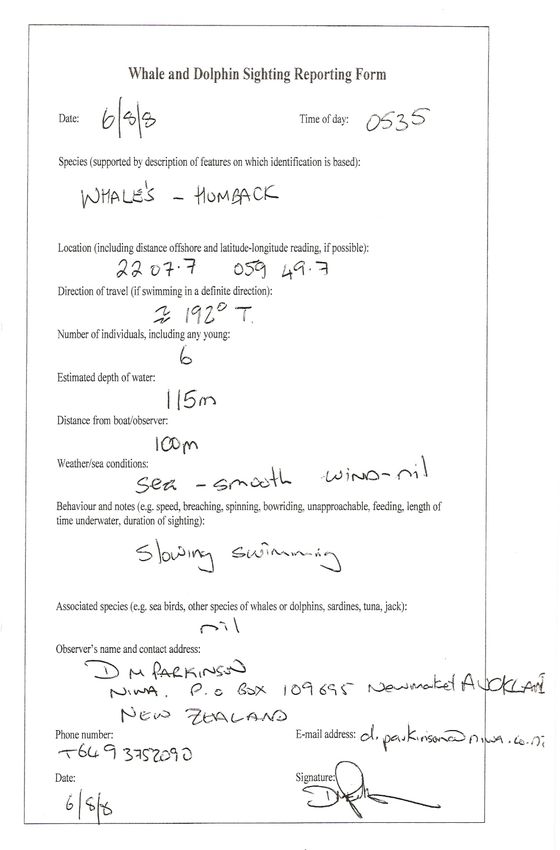
Main Topics:
•Introduction about Cetaceans:
(Cetacean world wide; cetacean in Arabian Sea,….etc)

•Material and Methods:
(Collecting of data of Arabian Sea Survey)

•Results:
(Humpback whales, Sperm whales and killer whales; Common Dolphins and Spinner
Dolphins)

•Discussion: (comparing this survey by previous study or survey)
•Conclusion and Recommendation
Main Objectives of This presentation:

• Give an Overview about the Cetacean in Oman
   • Presenting the Arabian Sea Survey Data
Acknowledgments:
*Mr. Hilal AlShaqsi and Saoud AlBousaidi highly acknowledgment for
assistant of preparing whales and dolphins sighting maps.
• The project was funded by Ministry of Fisheries Wealth
• Information in the introduction and discussion were obtained mainly
from Baldwin, 2002, Baldwin et al., unpublished and Minton et al.,
unpublished., whales Oman Group site.
• Images were from Whales and Dolphins Omani group, Ministry of
Environment and Climate affairs (Bader Alblushi); and Google site
Introduction:
                          Marine Mammals

                                                       Carnivora
Cetacea                     Sirenia
(86 species)                (4 species)           (Super family Pinnipeds)
                                                        (35 species)
                              Dugong
                                                    Seals, Sea lion, walrus

Whales         Dolphins                Porpoise
Introduction:
            Classifying cetaceans*

Kingdom                        Animalia
Phylum                         Chordata
Subphylum                  Vertebrata
Class                      Mammalia
Order                          Cetacea
Suborder           Mysticeti          Odonticeti
Family

Genus

Species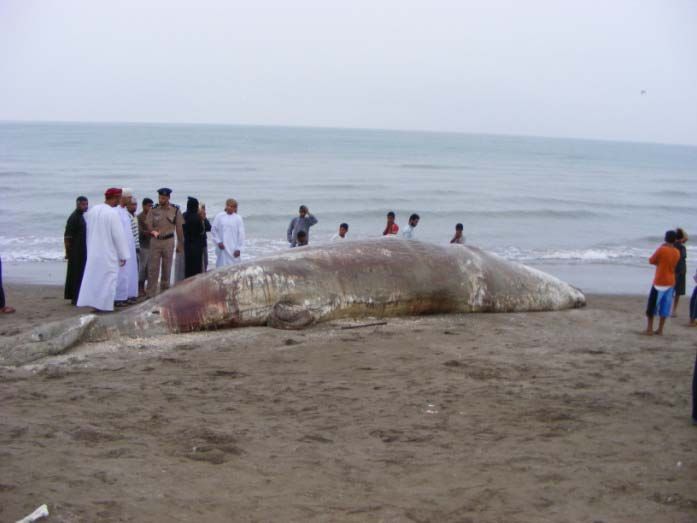
Introduction:

                             Classifying cetaceans*
                                    Cetacea

             Mysticeti                                Odonticeti

having baleen plate for filtering food       the suborder is characterized by
from water, rather than having teeth          having teeth, rather than baleen
           •Two Blowhole                             •Single Blowhole
        • all large cetacean             • include all large and small cetacean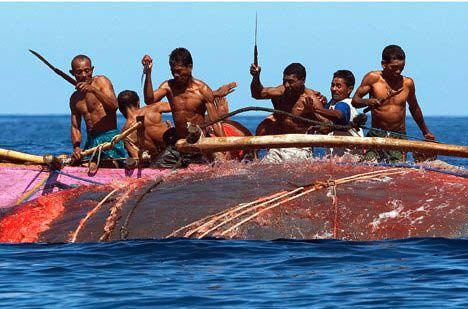
Introduction:

•There are a total of 86 different species of cetaceans in the
world (14 families, 40 genera) only 12-14 from Mysticetes
suborder)*

•The 21 Cetaceans found in Arabian Sea
• Arabian Sea waters therefore boast over a quarter of all
cetaceans*
Introduction:            Classifying cetaceans*

Suborder Mysticeti: Baleen whales
Common Name           Family Balaenopteridae
Blue whale       Balaenoptera musculus
Fin whale        Balaenoptera physalus
Bryde’s whale    Balaenoptera edeni
Minke whale      Balaenoptera acutorostrata
Humpback         Megaptera novaeangliae
whale
Introduction:
                           Classifying cetaceans*

              Suborder Odontoceti: Toothed whales and dolphins
    Common Name                    Family Physeteridae
Sperm whale                Physeter macrocephalus
Dwarf whale                Kogia simus

               Common Name               Family Ziphiidae
        Cuvier’s beaked whale       Ziphius cavirostris
Introduction:
Classifying cetaceans*
Suborder Odontoceti: Toothed whales and dolphins
Common Name Family Delphinidae
Melon-headed whale Peponocephala electra
Pygmy killer whale Feresa attenuata
False killer whale Pseudorca crassidens
Killer whale Orcinus orca
Rough-toothed dolphin Steno bredanensis
Indo-Pacific humpback Sousa chinensis
dolphin
Common dolphin Delphinus delphis cf
tropicalis
Bottlenose dolphin Tursiops truncatus
Risso’s dolphin Grampus griseus
Spotted dolphin Stenella attenuata
Striped dolphin Stenella coeruleoalba
Spinner dolphin Stenella longirostrisIntroduction:
Classifying cetaceans*
Suborder Odontoceti: Toothed whales and dolphins
The finless porpoise (Neophocaena phocaenoides) occurs in
the Arabian Gulf and may stay into waters around the Musandam peninsula.
The sei whale (Balaenoptera borealis) and the pilot whale (Globicephala
sp.) are additionally reported off Oman, but their occurrence in Arabian
waters remains unconfirmed. Fraser’s dolphin (Lagenodelphis hosei) is
known from the skeletal remains of one individual found recently near
Quriyat.
* Oman Whales and Dolphins Group
(http://www.whalecoastoman.com/)Introduction:
Killer whales
Classifying cetaceans*
Humpback
whales
blue whalesIntroduction:
cetaceans communication
• Have strong eyes
• smell and taste are limited
• hearing limited
• have long-distance transmission of sound
(To produce sound most mammals are equipped with
vocal cords in the larynx that can vibrate as air passes
Across them. Baleen whales are capable of producing
very loud and very low frequency sounds, which may
Persist over hundreds of kilometers)Introduction:
lifespan, breeding, maturation and migration cetaceans
•The lifespan of cetacean is determined by many factors, but longevity is party reflected by
size.
The smallest Odonticeti have a lifespan of as little as 15 years increasing to 50years for
Larger species and up to 70 years for sperm whales. Large baleen whale
may live 100 years or more.
•All odontocetes have a breeding and calving season, which varies both within
and between species. The internal between calving is also variable and is usually
Several years. The gestation period of larger species is partly responsible for this as
It can be as long as 17 or 18 months, such as in the case of the killer whale
and sperm whale. For smaller species may be reduced to 10months.
•Mature five to six years for small odontocetes,
• up to 20 years for males of larger species.
•The distance covered on migration each year amount to thousands of kilometers.
Some humpback whales have been known to feed and breed in areas separated
by a one way distance of 8,000kilometers or more; the longest known migration of
Any mammalsIntroduction:
Whaling
Streaming through the bab-al-Mandam strait into the
Gulf of Aden, the first of two Soviet fleet began its hunt
in November 1963 using 25 catcher vessels supported by
the factory ship the slova and subsequently one of the
largest factory ships ever commissioned, the Sovetskaya
Ukraina. The final tally from the Arabian Sea was 3,339
whales, including 1,294 blue whales, 954 sperm
whales, 849 bryde whales and 242 humpback whales.
As result, the operations were kept quiet and it was
not until 1996 that the truth was revealed. At the same
time it became clear that Soviet whales had falsified
catch statistics of their other whaling operations. Over
130,000 more whales had been caught around the world
than had been officially disclosed, most of which were
below the legal size, were lactating females or had been
caught in restricted area and seasons (Baldwin, 2003;
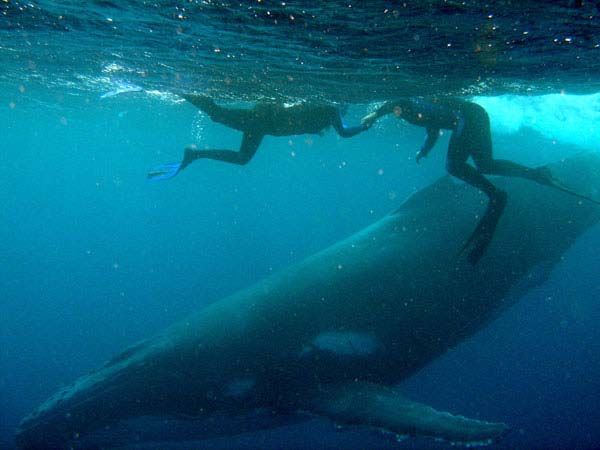
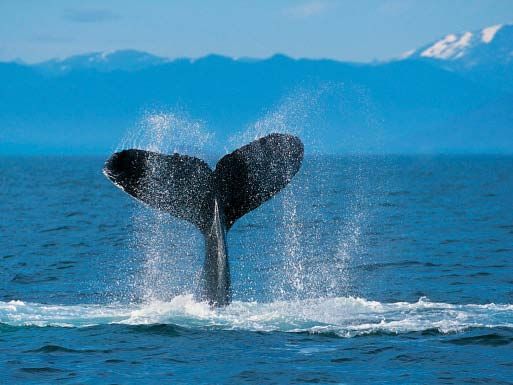
Mikhalev, 2000).Introduction: Humpback whales (Megaptera novaeagliae) Length: 9.5-15m Distribution: Coastal waters of Arabian Sea, Oman Sea; Rarely recorded in Red Sea And Arabian Gulf Diet: Mostly small, schooling fishes and krill Breeding: in Arabian Sea Conservation status: Insufficiency known • Most humpback whales in Arabia have been seen in water depth of less than 50 m either singly or in pair. • Mating season is relatively short, beginning in early January and continuing until late May and hence calving can be Expected to peak in early February. • Results provide additional evidence that the population of humpback whales In this part of Arabian Sea is relatively small, possibly numbering only few hundred individuals.
Introduction:
                  Sperm whales (Physeter macrocephalus )
Length: 8.5-15.5m
Distribution: Deep water of Arabian Sea,
Gulf of Aden, Oman Sea and Arabian Gulf
Diet: Deep water squids and Large fishes
Breeding: in Arabian Sea
Conservation status: Insufficiency known
•The Sperm whales is the species most
likely to be encountered in deep,
 offshore waters of the region.
•The sperm whale is by far largest of toothed cetaceans,
comparable in size to some of the baleen whales.
• Males sperm whales in the region may reach length of nearly 16meters
and considerably by larger than females which average less than 10meters
in length and reach a maximum of 11.5meters.
Introduction:
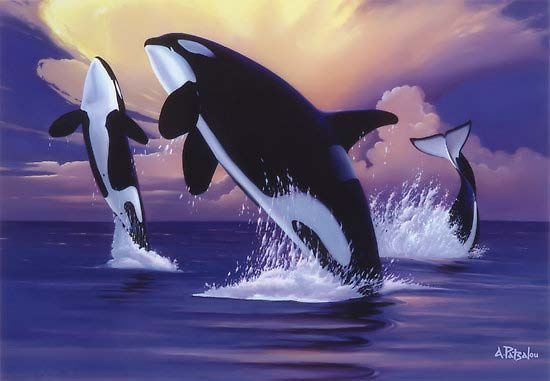
Killer whale (Orcinus orca)
Length: up to 10m
Distribution: Mostly offshore waters
of the region
Diet: Fishes, squid, other cetaceans,
birds and turtles
Breeding status: breeding in the region
Conservation status: Insufficiently
knownIntroduction:
Long-beaked common dolphin (Delphinus delphis cf tropicalis)
Length: up to 2.7m
Distribution: coastal water throughout the region
Diet: small fishes and cephalopods
Breeding status: breeds in the region
Conservation status: Insufficiency known;
locally abundant
•Could be subspecies of the long-beaked common
dolphin,namely D. C. tropicalis
* occur in continental shelf waters group of 1,800
individuals; more commonly in group of 30-500.
* Leaping nearly four meters above the water surface.Introduction:
Spinner dolphin (Stenella longirostris)
Length: up to 2.6m
Distribution: Mostly offshore waters of the region,
with exception of the Arabian Gulf
Diet: fish and cephalopods
Breeding status: unknown
Conservation status: Insufficiency known
•The habit of leaping up to three meters in the air and
spinning
like a barrel, before slapping back down into the water,
sets them a part from all other species
and give this dolphin its common name.
•Large schools of spinner dolphins, containing up to 1800
individuals have been observed in the region. Schools of
up to 300 individuals
are more common.Materials and Methods:
* The primary goal of the survey reported in this document is to provide estimates of the
fishable biomass of principal demersal, small pelagic and mesopelagic fish species off
the Arabian Sea coast of Oman for ongoing stock assessment of Omani fisheries, to guide
development and investment decisions.
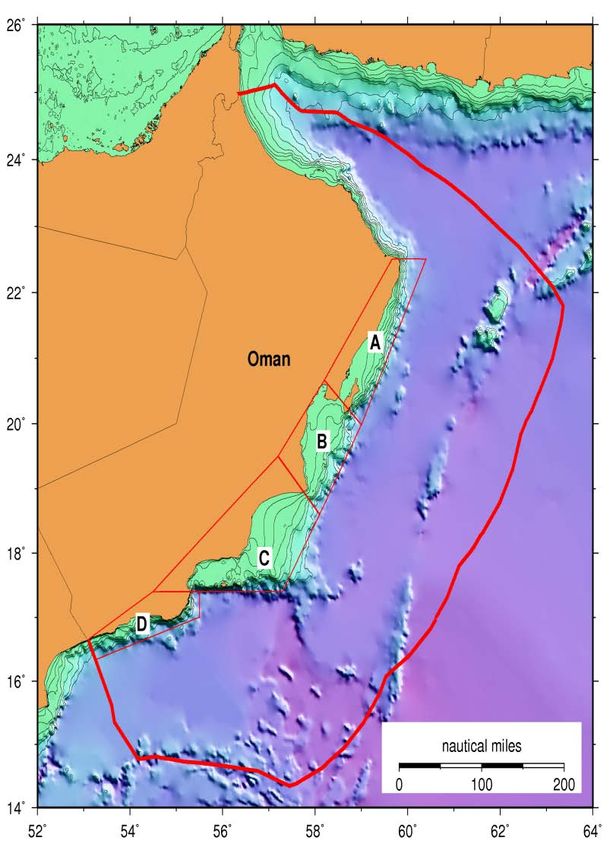
*The area surveyed included the territorial waters and EEZ of the Sultanate of Oman
between Ra’s Al Hadd and the Oman-Yemen border between depths of 20 m and 250 m.
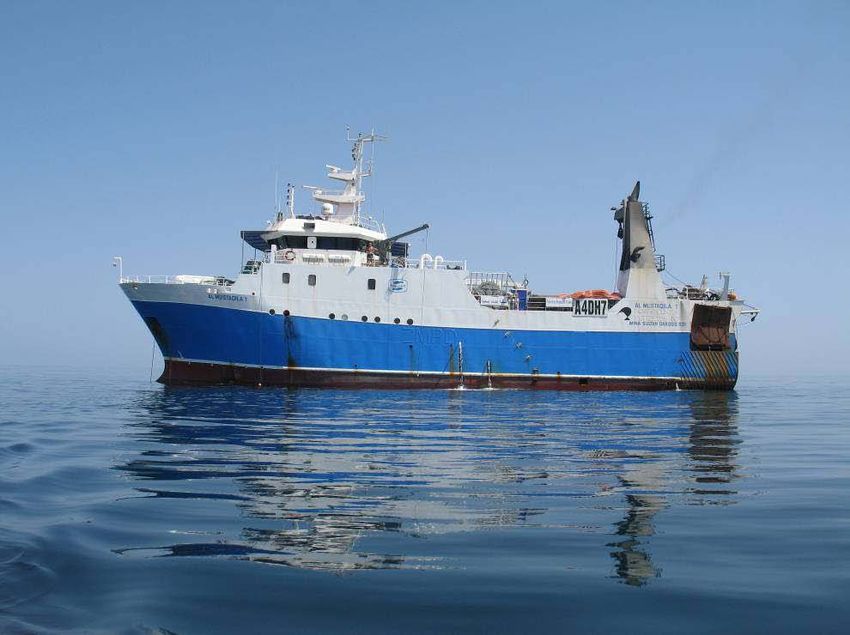
In addition, survey activities for mesopelagic resources and exploratory sampling on the
continental slope extended to deeper waters up to 100 nm offshore Five seasonal
surveys with an average duration of 47 days were completed in the project period using
the RV Al Mustaqila 1. The surveys were timed to ensure coverage of the main seasons,
with an overlap of one season, between August 2007 and September 2008.
During the 5 surveys we completed a total of 238 days at sea.
RV Al MustaqilaMaterials and Methods: Survey 1 Late SW monsoon to inter- monsoon period 12 August 2007 – 27 September 2007 Ras Al Hadd Survey 2 NE monsoon period 1 November 2007 – 17 December 2007 Survey 3 Spring inter- Masirah Island monsoon period 27 January 2008 – 13 March 2008 Ras Al Dakom Survey 4 Pre SW monsoon period 20 April 2008 – 5 June 2008 Ras Soqarah Survey 5 Late SW monsoon to inter-monsoon Salalah period 3 August 2008 – 18 September 2008
Materials and Methods:

During the survey, certain
sheet were
filled with data related to
Whales
and       dolphins               species
abundant, including:
- Location (Latitude and longitude);
- date and time;
- species;
- Number of individuals;
- Direction;
- Weather condition
- Behaviour;
- Depth;
- Distance from boat;
- Associated organisms,           such   as
other marine mammals, birds…etc
Results: Whales:
                                                             Humpback whales:
               English      Date       Time of   Location    Direction    Number of     Estimated    Distance      weather        Behaviors and notes
 Species        Name                    Day      Latitude-   of travel    individuals    depth of   from boat
                                                 longitude                              water (m)      (m)

Megaptera      Humpback    6/8/2008     05:35     22 07.7     192° T          6           115         100        Sea smooth,        Slow swimming
novaeangliae     whale                           059 47.7                                                          no wind
                          7/10/2008     12:29    19 01 33    045+225        2 large        90         500           calm                traveling
                                                 57 59 76
                          23/9/2007     15:00    19 57 04      180°           2           20-30       400           calm          In amongst of surface
                                                 58 09 44                                                                               baitfish
                          14/03/2008    13:37    19 18 45        -            1            32         300           calm                 dived
                                                 57 50 15
                           6/2/2008     16:59    20 20 43        -            1           21.6        600         moderate        Splashing with fin on
                                                 58 14 10                                                                         surfaces ; tail and fin
                                                                                                                                          slaps
                          13/11/2007    17:30    18 44 07        -            1                       4 km          calm               Breaching
                                                 57 47 07
                          17/11/2007    08:00    20 00 16    stationary       1            20          8             Fine         Entangled in fishing
                                                 58 04 46                                                                               set net
                          28/11/2007    11:20    18 52 05    North east       2           180         200       Wind 15kts N      Swimming steadily
                                                 57 56 03                                                        0.5m swell,
                                                                                                                 0.5m wave
                          25/4/2008     09:40    21 21 75      350°           1           230          10           flat                breaching
                                                 59 34 34
                          25/4/2008     12:40    21 20 42        -            1           300          50       Flat, no swell,        Breaching
                                                 59 33 40                                                                         Slapping flippers on
                                                                                                                                  surface, slapping tail
                                                                                                                                       on surface
Results: Whales:
Humpback whales:
•Ten times of Humpback whales recorded
during the survey.
• All were recorded between Ras Al Hadd
and Ras Madrakah; 80% btween Masirah
to Ras Madrakah).
• Season of sighting: (August to
November; 60%) (February to April; 40%)
No whales were recorded between May
to July
* Number of individuals in each sighting
1-6 individuals; 90%.
80% were recorded in depth 20-200
meters.
* One entangled whales were foundResults: Whales:
Sperm whales:
English Date Time Location Direction Number of Estimate Distance weather Behaviors and
Name Latitude-
Species of Day longitude
of travel individuals d depth from boat notes
of water (m)
(m)
Physeter 19/ 9/ 2007 21 38 26
macrocephalus Sperm 13:45 - 4 63 200-800 moderate Moving,; birds
whale 59 34 83 above 2 whales
8/7/2008 09:45 21 39 56 north 2 172 100 calm dive
54 39 50
15/5/2008 16:40 20 41 73 - 1000 50-300 14 knots Swimming
80-100
59 21 40 SW beside boat,
sticking head
out of water
looking at boatResults: Whales:
Sperm whales:
• All recorded were found between Ras
Al Hadd and Masirah.
•Three times of Sperm whales
recorded during the survey.
• Season of sighting: (May, July and
September)
* Number of individuals in each
sighting 1 and 2 and once 80-100
individuals were recorded
* Whales were recorded in 63, 172 and
1000meters were recorded in
* One entangled whales were foundResults: Whales:
Killer whales:
English Date Time Location Direction Number of Estimate Distance weather Behaviors and
Name Latitude-
Species of Day longitude
of travel individuals depth of from boat notes
water (m)
(m)
- 16 08 81
Orcinus Killer 14:30 53 43 40 4 2435 200 calm On surface,
orca whale (1 large , 1 swimming
small, 2
medium)Results: Whales:
Killer whales:
• Four killer whales were found near
Salalah in 2435 m depthResults: Whales:
unknown whales:
Date Time of Location Direction Number of Estimated Distance weather Behaviors and
Species Day Latitude- of travel individuals depth of from boat notes
longitude
water (m) (m)
Unidentifie 7/10/2007 18 84 04 090° 1 105 1 km calm At surface
d whale 57 55 39
8/6/2008 08:15 21 36 12 - 1 54 200 6 knots SW wind At surface,
59 34 81 breaching beside
Dhow
30/5/2008 07: 59 16 51 92 - 3 800 300 7 knots SW Sports visible
54 18 24
28/5/2008 07:30 17 58 - More than 111 200 1 meter SW swell, Whale sports 2 in
2 6 knot wind distance
26/05/2008 09:43 17 30 99 - 2 63 1.8km Sea calm, 14knot Two sports only
55 25 66 seen in distance
15/5/2008 18:25 20 57 80 - 2 272 600 calm Sporting in
59 27 64 distance
15/5/2008 10:47 20 19 63 - 2 64 100-200 Flat, 13knot SW Cruising at
50 51 98 surface
8/9/2008 13:30 16 57 91 340 1 1500 1.8km calm
55 14 01Results: Whales:
unknown whales:
• All recorded were found between Ras
Al Hadd to Salalah.
•Eight times of Unknown whales were
recorded during the survey.
• Season of sighting: (May to June;
70%)
* Number of individuals in each
sighting 1 and 3 individuals were
recorded
•Whales were recorded in depth 50-
200meters, but could found at depth
reached to 1500meters.Results: Dolphins:
Long-beaked Common Dolphins:
Species Date Time of Day Location Direction of Number of Estimated Distance weather Behaviors and notes
English Latitude- travel individuals depth of from boat
name longitude water (m) (m)
Delphinus Long- 8/10/2007 06:05 19 05 45 To vessel 30 94 30 Calm, 6knots Came to vessel briefly
capensis beaked 58 02 06
common 13/3/08 12:05 16 25 55 North East 100 2000 300 Flat, calm Traveling and jumping
dolphin 53 49 41
11/3/2008 14:30 16 42 07 South East 100-150 250 - Calm, 8 knots Traveling, come to ship and
53 55 88 jumping
3/3/2008 15:38 19 17 49 - Several 941 20 Calm, 4.9knots Over wide area, feeding, show little
58 15 20 thousand interest in ship
(associated with few small birds)
22/9/2007 07:10 20 46 17 various ≈15 154 400 Calm, 5.5knots Appear to be feeding, some came to
59 21 81 boat rode bow wave for a short time
3/11/2007 14:45 18 31 32 100°T ≈ 100 168 5-200 Calm, sunny, Speed, breaching spinning, tail
57 58 67 0.5m swell bashing
27/11/2007 16:30 19 07 40 30°T ≈ 150 113 Around the Wind 7 knots, Breaching, spinning, tail slapping
58 06 09 boat 0.5 swell
28/11/2007 08:10 19 01 52 North East 250 100 Around the Wind 18knots, Breaching, playing in waves
57 58 46 boat 0.5m swell ,
0.5m wave
29/5/2008 14:20 16 53 26 - ≈ 100 1500 20- 200 10 knots South Jumping
54 43 10 West, 1m swell
28/5/2008 10:00 17 10 27 - 200 100 All around 1m SW swell, 5 swimming fast
55 17 11 the boat knots, SW
wind
16/5/2008 10:22 22 28 07 220° 50 750 100-200 5knots, 78°, sea Traveling at pace, out from beach
59 43 39 calm
14/5/2008 15:50 18 21 29 - 50 380 - Calm, slight Swimming, breaching
57 39 41 swell
29/5/2008 11:15 16 56 46 248° ≈100 603.9 100 8knots Jumping traveling
51 51 17
11/5/2008 6:44 17 58 10 Around the 200 196 - 10knots SW, Swimming quickly
58 18 89 boat 0.2m SW swell
1/5/2008 13:15 19 48 00 210° 50 330 100 Calm, sunny Bow riding, breaching, swimming
58 34 00
20/08/2008 7:11 18 02 04 From NE to 500 200.39 20 and more Moderate sea Passing at speed
57 20 47 SW
15/11/2007 16:00 19 43 39 250° 200-300 96 50-800 Calm, no wind Traveling in speed
58 21 75
5/11/2007 08:35 18 10 33 280° 30 or more 50 100 flat breaching
57 02 30Results: Dolphins:
Long-beaked Common Dolphins:
•18 sighting of Common Dolphins
were recorded.
• Season of sighting: 3 in March; 7 in
May; 5 in November.
• 60% were found between Masirah
and Demaniat Island.
• 70% (14) less than 200 individuals.
Thousands were once recorded.Results: Dolphins:
Spinner Dolphins:
Species Date Time of Location Direction Number of Estimate Distance weather Behaviors and
English Day Latitude- of travel individuals depth of from notes
name longitude water boat
(m) (m)
Stenella Spinner 2/11/2007 08:15 21 13 98 110° More than 60 300 Calm, 1 m swell Swimming, leaping,
longirostris dolphin 59 22 11 50 spinning, breaching
7/9/2009 11:00 17 20 25 All 20 adults 2800 50-100 Feeding
56 29 52 directionsResults: Dolphins:
Spinner Dolphins:
•Two sighting were recorded. One near al
ashkarah and one close to Demaniat Island.
• One recorded in Sept. and one in Nov.
• Number of individuals 50 and 20
individuals.
• depth of on sighting was 60m and the
second was 2800m.Results: Dolphins:
Unknown Dolphins:
Species Date Time of Location Direction of Number of Estimate Distance weather Behaviors and
English Day Latitude- travel individuals d depth from boat notes
name longitude of water (m)
(m)
Unknown 6/2/2008 13:18 20 03 71 60° 150 81 100 Rough Moving quickly,
Dolphin 59 38 23 jumping
species 9/2/2008 17:50 19 35 01 1 20 - NE 13kns , swell 1m
58 03 00 NE
17/2/2008 15:40 18 15 05 270° 50 180 400 calm
57 25 74
21/2/2008 09:10 18 07 71 30° 50-100 276 500 calm In transit, leading
57 26 78 dolphin jumping
28/2/2008 13:00 22 10 83 4-5 2500 200 calm traveling
60 13 90
25/4/2008 09:37 21 21 85 290° 30 175 50 Swimming moderate
59 34 30 speed
9/5/2008 08:39 18 42 31 30 61 10 flat Jumping out of the
57 24 80 water, moving
quickly
14/9/2008 21:00 - - 2-3 131 - calm Appeared to be
communicating with
each other
11/10/2008 06:00 22 01 26 270° 80 74 200 calm Feeding orcas
59 47 78Results: Dolphins:
Unknown Dolphins:
• 9 sighting of Unknown Dolphins were
recorded.
• 5 were recoded in February. One in April,
one in May, one in Sept., and one in
October.
• Sighting were between Ras Al hadd to
Ras Soqarah.
• all recorded were from 1-100 individuals.
• 80% were recorded at depth less than
200m.Discussion:
Humpback whales
Present Survey Previous survey
Population Could only small Few hundreds individuals (Baldwin
population 2002)
Season of August to November; Greatest number in November,
sighting Few in February to April March and May (Reeses et al. 1991; Salm
et al. 1997; 1998; Mikhalev, 1997; Baldwin, 2002)
Depth of Between 20-300m Less than 50m (Baldwin 2002)
sighting
Number of One or two One or two (Baldwin 2002)
individuals
each sightingDiscussion:
Sperm whales
Present Survey Previous survey
Population Few, but could find in high 21 sighting in Omani waters (Balance et
population al., 1996)
Season of May, July and September March to July (Baldwin et al., unpublished )
sighting All months except February and August.
Depth of 63, 172 and 1000m More than 100; mostly in depth (500-
sighting 1750m) Baldwin et al., unpublished;
Minton et al., unpublished).
Number of 2, 4, 80-100 Common single or two to 6 (could find
individuals 20-50) ( Baldwin 1995; Gallagher, 1991;
each sighting salm 1993).Discussion:
Killer whales
Present Previous survey
Survey
Population Few Few records but could be wide
distribution
Season of sighting - - Summer months
Depth of sighting 2435 -
Number of individuals 4 8 , 7 ( Baldwin 1997; Leatherwood et al
each sighting 1991).Discussion:
Long-beaked common dolphins
Present Survey Previous survey
Population Most common cetacean Second common species in
Omani water (Minton et al., )
Season of Common in May and March (Minton et al., …)
sighting November
Depth of Common in depth 50-500m Common in depth 200-1000
sighting
Number of Common from 15-200 30-500
individuals could reached to several Could be 1800 (Baldwin et al.,
each sighting thousands 2002)Discussion:
Spinner Dolphins
Present Survey Previous survey
Population Few individuals 21,000 in group of 1-800 in Oman
Sea
(Baldwin et al., …..;Minton et al …..)
Season of sighting September and November February and October (Minton et al.,
….)
Depth of sighting 60 and 2800 Deep water (Minton et al., ….)
Number of 20 to 700 (Minton et al., ….)
individuals each 20-50
sightingConclusion
whales:
• Three species of whales were recorded during the
survey: Humpback whales (10 records), Sperm
whales (3 records) and killer whales (1 record);
unknown species were recorded 8 times.
• Most whales were found between Ras Al Hadd to
Ras Madrakah (85%).
• 1-6 individuals were common; once 80-100
(Sperm whales) were recorded.
• most of whales were recorded between April to
May and between September to November 80%.
(Jan, March and Dec. no whales were recorded).
• Most recorded in depth between 20-200meters;
70%)
• One humpback whale were recorded entangled in
fishermen netConclusion: Dolphins:
• Two species of dolphins were recorded in the
survey: common recorded species were Long-
beaked common dolphins (18 recorded), two
recorded of Spinner dolphins (2 records);
unknown dolphins (9 recorded).
• Season of sighting: February and May (17).
: Sept. and Nov. (11).
• 70% less than 100 individuals were recorded.
• 70% were less than 200m depth.
• 70% were recorded between Ras Al Hadd and
Ras Soqarah.Conclusion: Whales and Dolphins:
All Whales and Dolphins:
• 80% (36 from 51) were sighting
between Ras Al Hadd to Ras
soqarah.
• 90% (45 from 50) were sighting in
two season:
-Feb. to May (50%; 26 records).
- Sept. to Nov. (45%; 19 records).Conclusions: •Population estimates of cetaceans in the region are lacking and the status of most species remains poorly known. • increased human activity, fisheries activities, pollution, shipping traffic and general habitat degradation and loss as a result of coastal and offshore development in the region have been identified as threats to cetaceans, costal species are most in risk. • Hydrocarbon pollution, poisoning caused by toxins originating from phytoplankton (Red tide); possible cause of mortality in some cases.
Recommendations:

• More extensive surveys of Oman coastal and offshore waters
are required to obtain more representative seasonal coverage and
to include regions that not accessible during previous surveys.

• Collaboration between different organizations nationally and
regionally need to study and protect these cetacean.

• Extensive baseline data, management strategies may need to be
able to protect possibly isolated and unique populations from
increasing threats.
Thanks for attend and sharing
 information and experiences
You can also read


