What Can Complex Dietary Supplements Do for Hair Loss and How Can It Be Validly Measured-A Review - MDPI
←
→
Page content transcription
If your browser does not render page correctly, please read the page content below
applied
           sciences
Review
What Can Complex Dietary Supplements Do for Hair
Loss and How Can It Be Validly Measured—A Review
Nicole Braun * and Ulrike Heinrich
 DermaTronnier GmbH & Co. KG, Institute for Experimental Dermatology at Witten/Herdecke University,
 Alfred-Herrhausen-Str. 44, 58455 Witten, Germany; ulrike.heinrich@uni-wh.de
 * Correspondence: nicole.braun@uni-wh.de

 Received: 9 June 2020; Accepted: 17 July 2020; Published: 21 July 2020

 Abstract: Hair plays a major role in perception within a society. It provides information about
 gender, age, health, and social status. It is therefore not surprising that those affected are exposed
 to great suffering due to the widespread occurrence of hair loss. As a result, the demand for new
 products to remedy this problem is not diminishing. Hair grows in cycles, and a hair follicle goes
 through several phases called the hair cycle. The active growth phase (anagen phase) lasts 2–6 years.
 In this state a hair follicle shows a growth of about 1 cm per month. In order to improve the existing
 hair status, hair should be kept in the active anagen phase as long as possible, or the transition to
 anagen should be stimulated. A number of reviews already describe the influence of individual
 active ingredients on hair growth. However, the following review describes existing studies of
 complex dietary supplements with their experimental weaknesses and strengths and their influence
 on hair loss. Also, for the determination of hair loss, it is important to use a valid method with high
 acceptance by the test persons. In this context, the TrichoScale® is a validated and non-invasive
 tool for quantifying hair loss/hair growth. Thus, it is an ideal measuring instrument to objectively
 quantify the effectiveness of a hair loss treatment.

 Keywords: TrichoScale® ; hair loss; dietary supplements

       Hair gives us information about age, sex, and social position. Hair serves as decoration and at the
same time it is a status symbol for wealth and beauty. If hair falls out, it puts a strain on the psyche of
many affected people. Here, hair loss is a major psychological problem not only for women, but also for
men [1]. In 2017, the market value of the worldwide market for hair loss treatment was $3 billion USD.
It is therefore not surprising that the worldwide market for hair loss treatment products is expected to
grow by approximately 4% by 2024. The fastest growing market is currently South America, and the
largest market for hair loss treatment products is Asia [2].

1. Hair Growth Cycle
     To understand the problems of hair loss, it is important to understand the hair cycle. From the
beginning of the growth of a hair until it falls out, every hair goes through three phases. These are the
anagen (growth phase), catagen (intermediate phase), and telogen phase (resting phase) [3]. These three
phases will now be described in more detail.
     The anagen phase starts with the growth of the hair. The duration of this growth phase is
genetically predetermined and lasts between three and six years (in exceptional cases, even longer) [4].
With a growth of 1 cm per month, the hair can grow up to 75 cm long. This means that the maximum
achievable length of the hair depends primarily on the duration of the growth phase. However,
the older a person gets, the shorter the anagen phase becomes [5]. In addition to age and genetic
predisposition, sex also plays a role—male hair does not tend to grow as long, but it usually grows
faster than female hair [6,7].

Appl. Sci. 2020, 10, 4996; doi:10.3390/app10144996                             www.mdpi.com/journal/applsci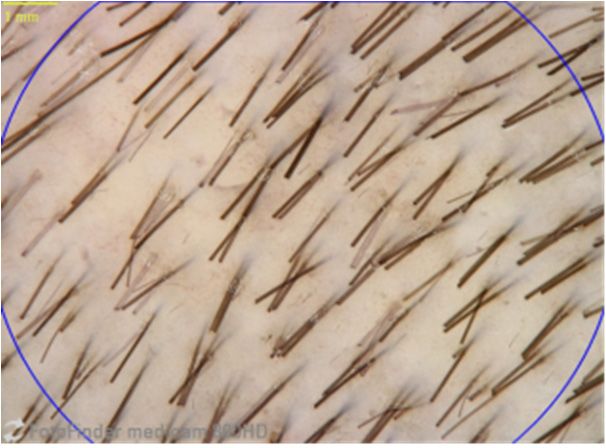
Appl. Sci. 2020, 10, 4996                                                                             2 of 12

     The individual hairs are all in different phases; otherwise, we would develop a bald head from
time to time, similar to the trees in autumn, shedding their leaves. However, if a hair is pulled out,
the next period of hair growth is initiated.
     The anagen phase is followed the so-called catagen phase. This transition from anagen to catagen
phase is regulated by the growth-maintaining insulin-like growth receptor 1 (IGF-1) [5] and the
catagen-promoting transforming growth factor-beta2 (TGF-ß2) [8]. This phase lasts for about two to
four weeks. In this phase, the keratinocytes of the hair root degenerate, and hair growth comes to
a halt. The hair root loses volume, moves slowly to the surface of the skin, and the connection to the
hair papilla is severed, causing the hair to be shed.
     In the telogen phase, which lasts 3–4 months, the hair falls out naturally due to external influences
such as washing the hair, brushing, or the pressure of a new root forming under the scalp. This is
followed by a rest phase until a new cycle begins.
     Normally, over 80% of our hair is in the anagen phase. However, under certain circumstances,
the proportion of hair in the telogen phase can rise to 30%, and our main hair visibly loses density quickly.

2. Hair Loss
       There are various forms of hair loss. Androgenetic alopecia (AGA) is the most common form. It is
highly heritable, and genetic susceptibility loci have been identified [9,10]. However, its onset is not
congenital. AGA is found in about 50% of men and 40% of women around the age of 70 [11,12]. In this
context, AGA is also known in women as female pattern hair loss and in men as male pattern hair loss.
       In men, the typical receding hairlines and baldness at the back of the head develop, while in
women, a clearing of the mid-crown is seen initially. In AGA, the anagen/telogen ratio is altered,
i.e., the telogen phase is prolonged, and the anagen phase is shortened [13]. At the same time, the size
of the hair bulb is also affected by the hair thickness [14]. Possible causes of AGA are different variants
of the androgen receptor as well as an increased sensitivity to 5alpha-dihydrotestosterone (5a-DHT).
Therefore, inhibition of 5a-DHT significantly ameliorates AGA.
       Classification systems are available to determine the stage of hair loss in men and women.
Here, the Hamilton Norwood system and the Ludwig system are the most commonly used [15].
       The Hamilton Norwood system for male genetic hair loss was first created by James Hamilton in
1951 and modified by O’Tar Norwood in 1975. Generally, the stages of hair loss are divided into two
categories—(a) scalp that is not bald (types I–III) and (b) scalp that is bald (types IV–VIII).
       A similar scheme for androgenetic alopecia in women was developed by E. Ludwig in 1977 [15].
       Female hair loss is classified into three grades as follows:

       Type I: Perceptible thinning of the hair on the crown, limited by a line situated 1–3 cm behind the
       frontal hair line.
       Type II: Pronounced rarefaction of the hair on the crown within the area seen in type I.
       Type III: Full baldness (total denudation) within the area seen in types I and II [15].

     Another type of hair loss is alopeacia areata (AA), characterized by circular hair loss. The aetiology
of AA is not fully understood, but there are indications for a T-cell-dependent auto-immune disorder.
     In contrast to AGA and AA, cicatricial alopecia comprises a group of hair loss disorders in which
the hair follicle is irreversibly destroyed. Thus, a permanent loss of hair in the affected patches occur.
Telogen effluvium is a non-scarring diffuse hair-loss resulting from the early entry of hair in the telogen
phase. It is triggered among others by physiological and metabolic stress. Senescent alopecia (SA)
is defined as an ageing of the follicle. This may be caused by reactive oxygen species and other
endogenous and exogenous stress factors.
     Hair loss is based on various biochemical mechanisms including inflammation [16–19] and
oxidative stress, androgenic metabolism [20], reduction of microcirculation [21], and alteration of
the cross-talk between the matrix cells and dermal papilla [22]. Thus, depending on the mechanism,
Appl. Sci. 2020, 10, 4996 3 of 12
cosmetic intervention with food supplements containing anti-oxidants or which aim to improve the
microcirculation like green tea [23] can help with hair loss.
3. Measurements to Determine Hair Loss
How can this hair loss be measured with objective and valid test methods?
The hair pulling test, the trichogram, and the dermatoscopy with fully automated hair analysis
software are the diagnostic possibilities to objectively confirm subjective hair loss.
The hair pulling test is the fastest and simplest type of examination. To do this, a strand of about
60 hairs is wrapped around the thumb and forefinger and gently pulled upwards. If more than 10% of
the hair is pulled out without effort and pain, this is considered an indication of a problem [24].
The disadvantage of this test is inaccuracy. Both the exact number of hairs and the force with
which they are pulled cannot be standardized.
The trichogram is an analysis of the hair roots. Using a clamp, which is covered with a silicone
tube to protect the hair, a narrow row of 50–100 hairs is extracted in the direction of growth at two
different points. The hair sample is then fixed between two glass plates, and the root area is examined
under the light microscope to assign them to the different growth phases. This way, the hairs in the
anagen phase can be distinguished from hairs in the telogen phase. Disadvantages of this method are
the somewhat painful pulling out of the hair and an incorrect removal technique resulting in the hair
breaking off. Furthermore, this method requires a lot of experience to assess the hair root.
Furthermore, there are three commercially available devices that combine dermatoscopy with
fully automated hair analysis software. These devices are the TrichoScan® (FotoFinder Systems GmbH,
Bad Birnach, Germany), the FolliscopeTM (LeedM Corportion Seoul, South Korea), and Hair Metrix®
(Canfield Scientific, Parsippany, NJ, USA) with a simple and fast image processing and image editing.
These devices consist of a handheld unit for reflected light microscopy, which captures the scalp under
magnification, and corresponding software for hair analysis. In addition, these devices can also be
used to assess the scalp for inflammation, dandruff, infection, and scarring and to detect damage to the
hair shaft and hair structure as well as hair breakage.
The Canfield’s HairMetrix® offers a fully automatic real-time analysis of the data recorded by the
VisioMed D200evo camera. Both the FolliscopeTM and the Canfield’s HairMetrix® offer the following
parameters: number and size of follicular units, follicular width to see increase/decrease in shaft
diameter, measurement of vellus/terminal hair ratio. In principle, however, a manual evaluation of the
images regarding anagen and telogen rate would also be possible here with the Folliscope as well as
Canfield’s HairMetrix® .
TrichoScan® is a fully automated method for the measurement of biological parameters of hair
growth and hair cycle. The TrichoScan® method [25–29] is a modification of the classic trichogram.
Thus, the anagen and telogen hairs are primarily determined as in the trichogram.
The TrichoScan® software (TrichoScan 3.0 Research Edition, GCP validated), however, is based
on the assumption that anagen hair grows by approximately 0.3 mm a day, while telogen hair does
not grow [30]. Furthermore, the software can calculate a number of other parameters such as hair
density (n/cm2 ), hair diameter (µm), hair growth rate (mm/day) and vellus and terminal hair density.
The measuring procedure is as follows: On the first day, the test field is identified, and the hair is clipped
evenly to a length of 1 mm in a measuring field of 18 mm by means of a mini hair trimmer. Images are
taken at a 20-fold magnification in order to evaluate the evenness of the clipped measurement area.
After three days, hair growth is monitored after hair dying for approximately 10–15 min. Three images
of the same area should be recorded and then analysed by the software [31]. A further development of
the computer-aided TrichoScan® hair analysis was the FotoFinder TrichoScale® system in 2012. In the
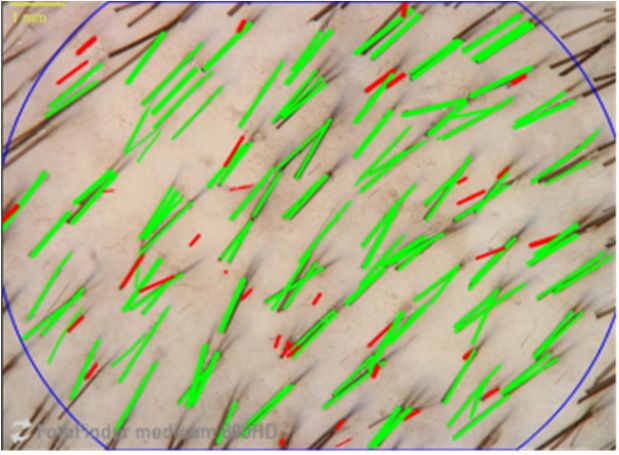
newer version, the images could primarily be corrected manually, e.g., if individual hairs lie on top of
each other and are not recognized by the software. Interestingly, the TrichoScale® method has recently
been validated as a diagnostic tool for dogs due to its easy, noninvasive and fast measurement [32].Appl. Sci. 2020, 10, x FOR PEER REVIEW 4 of 13
Appl. Sci. 2020, 10, 4996 4 of 12
Interestingly, the TrichoScale® method has recently been validated as a diagnostic tool for dogs due
to its easy, noninvasive and fast measurement [32].
The
The biggest
biggest advantage
advantage ofof these
these methods
methods is is that it can be performed non-invasively
non-invasively and
and it is
therefore completely
completely painless
painless and provides a whole range of parameters.
parameters. However, experience
experience in
implementation
implementation isisalsoalsoimportant
importanthere.
here.For
For example,
example, thethe software
software must
must be corrected
be corrected manually
manually for
for hairs
hairs that
that lie onlie
toponoftop of other
each each other (Figure
(Figure 1). 1).
(a) (b)
Figure 1.
Figure (a) Test
1. (a) Test area
area three
three days
days after
after hair
hair clipping.;
clipping.; (b)
(b) Test
Test area
area three
three days
days after hair clipping
after hair clipping and
and
analyzed by TrichoScale software. Hairs highlighted in green are defined as anagen.
analyzed by TrichoScale software. Hairs highlighted in green are defined as anagen.
4. Complex Dietary Supplements for Hair Loss Treatment
4. Complex Dietary Supplements for Hair Loss Treatment
As we have described previously, the genetic predisposition is important and determines how
As we have described previously, the genetic predisposition is important and determines how
long the anagen phase lasts. Thus, the length of the anagen phase and therefore the hair length cannot
long the anagen phase lasts. Thus, the length of the anagen phase and therefore the hair length
be changed by external influences. But the hair follicle is highly sensitive to external factors such
cannot be changed by external influences. But the hair follicle is highly sensitive to external factors
as metabolism, hormone balance or the supply of nutrients to the hair root. However, in order to
such as metabolism, hormone balance or the supply of nutrients to the hair root. However, in order
have a positive effect on the hair root, topical products can only work if they penetrate into the scalp.
to have a positive effect on the hair root, topical products can only work if they penetrate into the
Therefore, oral treatments are certainly considered more effective.
scalp. Therefore, oral treatments are certainly considered more effective.
In this context, there is a whole series of reviews that have dealt with the effects of individual
In this context, there is a whole series of reviews that have dealt with the effects of individual
active ingredients. Here, we would like to mention two current, excellent reviews. For a more detailed
active ingredients. Here, we would like to mention two current, excellent reviews. For a more
overview in the role of vitamins, iron selenium, riboflavin and zinc we would like to refer to the
detailed overview in the role of vitamins, iron selenium, riboflavin and zinc we would like to refer to
review article of Almohann et al., who reviewed 125 publications in detail [33]. Daniels et al. give
the review article of Almohann et al., who reviewed 125 publications in detail [33]. Daniels et al. give
a comprehensive review on the role of phytochemicals from caffeine to ginseng to pumpkin seed
a comprehensive review on the role of phytochemicals from caffeine to ginseng to pumpkin seed oil
oil [34]. However, the advantage of oral complex dietary supplements should be a synergistic effect.
[34]. However, the advantage of oral complex dietary supplements should be a synergistic effect. If
If there is a synergistic effect, it is important to distinguish this from an additive effect.
there is a synergistic effect, it is important to distinguish this from an additive effect.
An additive effect means that the total effect is the sum of the partial effects. If two substances have
An additive effect means that the total effect is the sum of the partial effects. If two substances
an additive effect, then the bioactivity can be added. A synergistic effect, on the other hand, is achieved
have an additive effect, then the bioactivity can be added. A synergistic effect, on the other hand, is
when the bioactivity found in each substance increases in combination. Therefore, complex foods in
achieved when the bioactivity found in each substance increases in combination. Therefore, complex
the right combination should offer an advantage, and thus, the aim of this review is to analyze existing
foods in the right combination should offer an advantage, and thus, the aim of this review is to
studies of complex dietary supplements with their experimental weaknesses and strengths and their
analyze existing studies of complex dietary supplements with their experimental weaknesses and
influence on hair loss. The search key words “complex nutritional supplementation, dietary hair loss,
strengths and their influence on hair loss. The search key words “complex nutritional
hair growth” were used in the PubMed database. Original papers published since 2000 were used in
supplementation, dietary hair loss, hair growth” were used in the PubMed database. Original
the data analysis. Surprisingly, however, the literature of human studies on complex food supplements
papers published since 2000 were used in the data analysis. Surprisingly, however, the literature of
is very sparse. In total, 10 publications were found, which will now be discussed in detail and are listed
human studies on complex food supplements is very sparse. In total, 10 publications were found,
numerically for clarity in Table 1. However, only the objective measurement methods are discussed.
which will now be discussed in detail and are listed numerically for clarity in Table 1. However, only
the objective measurement methods are discussed.Appl. Sci. 2020, 10, 4996 5 of 12
Table 1. Overview of complex dietary oral supplement studies.
Results of Objective
Study Placebo-Controlled Test Subjects Type of Hair Loss Dietary Supplements Duration Methods Reference Published
Methods
green tea extract, vitamin C,
natural beta carotene, zinc
selenium, chromium borage seed
significantly reduced
1 no 30 ♀ abnormal hair loss oil (morning capsule) grape 56 days Brushed out hair [35] 2007
hair loss
extract, shark cartilage, vitamin B2,
B5, B6, B8, copper, iron and fish oil
(evening capsule)
Trichogram significant increase in
stage I hair loss
fish oil, blackcurrant seed oil, Trichometer anagen hair in verum
2 yes 120 ♀(60 per group) according to 6 months [36] 2014
vitamin E and C, Lycopene Global photographs group compared to
Ludwig scale
Self-assessment placebo group
significant increase in
Zinc, biotin, iron, vitamins A, C, E, TrichoScale®
no (against hair density in the test
3 120 ♀(60 per group) telogen rate >20% B, folic acid, magnesium, amino 6 months Expert-assessment [37] 2018
competitor product) product and
acids of keratin and collagen Self-assessment
competitor product
significant increase in
curcumin, ashwangandha, saw Macrophotographs terminal hairs,
30 ♀(26 in verum palmetto, Global photographs significant increase in
group; 14 in placebo Self-perceived tocotrienol-rich-tocopherol Hair Mass Index vellus hairs,
4 yes 6 months [38] 2018
group)(Caucasian, thinning hair complex, piperine, capsaicin, Self-assessment significant increase in
Asian, Hispanic) hydrolized marine collagen, Quality of total hairs compared
hyaluronic acid, organic kelp Life Questionnaire to placebo
Positive trend in HMI
significantly reduced hair
Macrophotographs shedding after 3 months
96 ♀(48 per group)
Self-perceived blend of shark and mollusk Shed hair during compared to placebo
5 yes (Caucasian, 6 months [39] 2015
thinning hair powder, vitamin B7, C, iron shampooing significantly thicker
Asian, Hispanic)
was counted vellus-like hair after
6 months
TrichoScan®
Hair count, hair density,
vitamin C, zinc, AminoMar® Quality of Life
AGA, Norwood scale terminal hair density
6 yes 60 ♂(30 per group) complex horsetail stem extract, 6 months Questionnaire [40] 2016
scores of 2–3 significantly increased
flaxseed extract Expert-assessment
compared to baseline
Self-assessment
Telogen effluvium Boswellia Serrata, Curcuma long, TrichoScan® non-significant increase
7 no 27 (4 ♂and 23 ♀) 3 months [41] 2019
>3 months Vitis vinifera Self-assessment in hair thickness
Anagen hair, resistance
60 (20 per group) spermidine was administered
of hair stem to traction
(active substance; together with methionine, vitamin Trichogram
Telogen effluvium and hair loss: active
8 yes active substance + C, E, B6. calcium pantotenate, zinc, 2 months Pulltest [42] 2003
>3 months substance is superior to
other polyphenols from red grape peels, Wash test
active substance alone
ingredients; placebo) copper, folic acid, biotin
and to placebo
Trichogram Late anagen phase
normal spermidine-based supplement (see
9 yes 100 (23 ♂and 76 ♀) 3 months K-67 marker significantly increased [43] 2017
healthy subjects study 9)
c-Kit marker compared to placebo
green tea extract, omega 3 and 6 Trichometer
AGA, severity mild fatty acids, melatonin, Dermoscopy Significant increase in
10 no 10 (6 ♂and 4 ♀) 6 months [44] 2017
to severe cholecalciferol, beta-sitosterol, Global photography hair count and HMI
soy isoflavones assessmentAppl. Sci. 2020, 10, 4996 6 of 12
First, the studies with women are described.
Study 1: The study was conducted from November to February over a period of 56 days on
30 women aged 35–65 years with abnormal hair. However, the inclusion criteria “abnormal hair” was
not further described by the authors. In this study, a complex blend, on the one hand, with green tea
extract, vitamin C, natural beta carotene, zinc selenium, chromium borage seed oil (morning capsule)
and, on the other hand, with grape extract, shark cartilage, vitamin B2, B5, B6, B8, copper, iron, and fish
oil (evening capsule) INVERSION® Femme (Inversion Laboratoires, Hasselt, Belgium) reduced hair
loss significantly compared to a pretreatment phase (28 days prior to supplementation). The weak
points of this study are that it is not placebo-controlled, the period of testing of two months is extremely
short, there is a lack of precise information on the inclusion criteria for hair loss, and brushed out
hair for analysis was weighed [35]. A positive aspect is that there are extra capsules for morning and
evening, so that the green tea extract in the morning capsule, for example, does not lead to problems
falling asleep.
Study 2: In this study, 120 female volunteers with stage I hair loss according to the Ludwig Scale
between 18 and 65 years of age were included. Exclusion criteria were telogen effluvium (telogen
rate >30%) or any confirmed or suspected condition or pathology that may induce hair disorder. It is
a placebo-controlled, randomized study. Here, a nutritional supplement with omega 3 and 6 from fish
and blackcurrant seed oils with antioxidants (lycopene, vitamin C, and vitamin E) led to a statistically
significant increase of anagen hair from approximately 80% to 88% after six months of supplementation
measured by Trichogram. In contrast, in the control group there was no difference in the anagen rate
between before and after (81%) and thus a statistically significant difference in favor of verum over
placebo is given. These data were supported by global photographs, self-assessment and trichometer
for hair density. This study is well thought out and of high quality [36].
Study 3: Investigated were 120 volunteers between 18 and 60 years of age. The inclusion criteria
were a telogen effluvium of more than 6 months and a telogen rate of more than 20% (determined by
TrichoScale® ). A period from September (protocol initiation) to September of the next year (end of
study) was specified. In this study a food supplement was tested against a competing product.
The product to be tested (Eximia Fortalize Kera D® ), which consists of zinc, biotin, iron, vitamins A, C,
E, and B complex, folic acid, magnesium, and amino acids of keratin and collagen was tested against
the product Pantogar® , which consists of calcium pantothenate cystine, thiamine nitrate, medicinal
yeast, keratin, and aminobenzoic acid. Hair density was significantly increased by approximately
11% after 180 days and by approximately 8% by the competitor product, measured by TrichoScale® .
In addition, an expert assessment of parameters such as hair loss and hair volume and a self-assessment
by the volunteers was performed [37]. However, it is questionable why no more parameters of the
TrichoScale were evaluated in such a complex study.
Study 4: Included were 26 subjects in the verum group and 14 in the placebo group. The age of
the women was between 21 and 65 years with Asian, Caucasian, or Hispanic ethnic background and
self-perceived thinning hair. Exclusion criteria were hair loss disorders. Various phytocompounds were
combined in a complex called Nutrafol® Women’s Capsules. Nutrafol® contains a total of 21 ingredients,
the most important of which are curcumin, ashwangandha, saw palmetto, tocotrienol-rich-tocopherol
complex, piperine, capsaicin, hydrolized marine collagen, hyaluronic acid, and organic kelp. This study
resulted in a statistically significant increase in the number of terminal hairs, vellus hairs and total
hair count in the verum group at 90 days and 180 days compared to the placebo group. This was
determined using a phototrichogram (via macro photographs). In addition, there was a positive trend
in the Hair Mass Index (HMI) measured by HairCheck™, Divi International Co., compared to the
placebo group. In this study, a survey by means of a self-assessment questionnaire, and a quality of
life questionnaire was also conducted. The study was randomized and double-blind. There is no
information available at what time of year the study was conducted, and the number of subjects was
very small [38].Appl. Sci. 2020, 10, 4996 7 of 12
Study 5: This study was a double-blind, placebo-controlled study with 96 female subjects aged
21–55 years from Asian, Caucasian, and Hispanic ethnic background and self-perceived thinning hair
over a period of six months. AminoMar™C marine complex composed of a proprietary blend of shark
and mollusk powder with vitamin B7, vitamin C, and iron showed significantly reduced hair shedding
after three but not six months compared to placebo, and vellus-like hairs were getting thicker after
three and six months (being statistically significant after six months). A phototrichogram (via macro
photographs) was performed to determine vellus and terminal hair, and shed hair during shampooing
was collected and counted [39]. There are no differences in the total number of vellus and terminal
hairs, and it is unfortunate that no group comparison was made for the other parameters.
Study 6: This was a randomized double-blind placebo-controlled study with 60 male volunteers.
Inclusion criteria were androgenic alopecia and a Norwood Scale scores of 2–3, and the measurements
were performed by TrichoScan® . Exclusion criteria were alopecia areata, scarring alopecia, and telogen
effluvium. Analogous to the female study with AminoMar™C marine complex, a study with men
was also conducted. This is the commercially available product Viviscal® Man (Lifes2good, Inc.:
Galway, Ireland). Each tablet contains vitamin C, zinc, AminoMar® complex horsetail stem extract,
and flaxseed extract. Average hair count was shown to increase significantly from 162 to 175 hairs,
average hair density increased significantly from 160 to 172 hairs, and terminal hair density increased
significantly from 122 to 130 hairs after 180 days. The vellus hair density did not change. In addition,
a survey by means of a quality of life questionnaire and a self-assessment questionnaire as well as
an expert assessment were conducted. It was conspicuous that no group comparison was carried out
as a statistical analysis, a period in which the study was conducted is also missing [40].
Finally, we come to the studies in which both men and women have been recruited.
Study 7: Included in the study were 27 subjects—four men and 23 women aged between 19
and 76 years with telogen effluvium for at least three months. The patented product Omni-Three
contains Boswellia Serrata, Curcuma longa and Vitis vinifera. Although not statistically significant,
the vellus hair, terminal hair and hair density in general decreased. However, the hair thickness
increased non-statistically. This study also has some weaknesses. Overall, the study only ran for three
months and was not placebo controlled. For evaluation, the TrichoScan® was used, and an additional
self-assessment was performed [41].
Study 8: In the following we would like to discuss two very interesting publications that build
on each other. Included in the first study were 60 subjects, men and women, aged 18–60 years
with telogen effluvium for at least three months. In a first step, the active substance was tested
alone, in combination with other ingredients and against placebo. The active substance is spermidine.
Spermidine is a biogenic polyamine and occurs in all living organisms and is closely related to cell
growth. In addition, spermidine was administered together with the ingredients methionine, vitamin C,
vitamin E, calcium pantotenate, zinc, polyphenols from red grape peels, vitamin B6, copper, folic acid,
and biotin as a complete food supplement. The trade name is Biogenina® . The microscopy assessment
(trichogram) of the follicles showed a 17% increase in anagen phase for the spermidine-supplemented
group, a 20% increase for the Biogenina group, and an 8% increase in the placebo group. The pull test
to assess the resistance of hair stem to traction was unchanged in the placebo group and improved
by 63% in the spermidine-supplemented group and by 94% in the Biogenina group at two months.
In addition, a wash test was performed. The hair loss was unchanged in the placebo group and
decreased by 39% in the spermidine-supplemented group and by 67% in the Biogenina group at two
months. This study was a randomized, double-blind, placebo-controlled study. Particularly positive
here is that, in addition to the numerous objective test methods, blood values were also taken to rule
out specific deficiencies [42].
Study 9: Based on this first study, a second double-blind, randomized, and placebo-controlled
study was conducted on 100 subjects with 76 women and 23 men. Exclusion criteria were androgenetic
alopecia or congenital or acquired diseases affecting the hair shaft. The verum group received the
spermidine-based supplement for three months. Exclusion criteria included initial signs of androgeneticAppl. Sci. 2020, 10, 4996 8 of 12
alopecia. The number of anagen V–VI hair bulbs was examined microscopically. The anagen V–VI
are so-called late anagen hair follicles. The number of anagen phase V–VI hair bulbs increased from
25 to 37 (from a total of 100 bulbs) in the verum group and decreased from 26 to 20 (from a total of
100 bulbs) in the placebo group. Thus, there was a statistically significant difference between both
groups. In addition, the proliferation markers Ki-67 (marker of cellular proliferation) and c-Kit (marker
of apoptosis) in the hair roots were investigated. Again, there was a significant difference between
both groups in favor of the verum over the placebo group [43].
Study 10: In a pilot study men and women between 18 and 65 years with a diagnosis of mild to
severe AGA were investigated. Here, four men and six women tested the nutritional supplement
Forti5® over a period of 6 months from September to June. It contains green tea extract, omega 3 and
6 fatty acids, melatonin, cholecalciferol, beta-sitosterol, and soy isoflavones. There was a significant
increase in hair count by approx. 6% and hair mass index (HMI) by approximately 10%. The hair count
was measured by demoscopy and the HMI with a trichometer. Additionally, a global photography
assessment was performed [44].
5. Discussion
5.1. Efficacy of Conventional Therapies for Hair Loss Compared to Complex Nutritional Supplementation
In the present review, only complex dietary supplements were considered with regard to hair
growth. However, the conventional therapies available are minoxidil and finasteride, as well as the
autologous regenerative therapies based on platelet-rich plasma and stem cells such as adipose-derived
mesenchymal stem cells and human hair follicle epithelial stem cells [45]. Finasteride® is an oral
drug for the treatment of androgenetic alopecia by inhibiting the formation of dihydrotestosterone
as a 5-alpha reductase inhibitor. Van Neste et al. show that, in a study of 212 men with AGA taking
1 mg Finasteride® daily for 48 weeks, there was a significant improvement of 17 total hairs (8%) and
27 anagen hairs (26%) compared to the placebo group [46].
Minoxidil is available as a 5% solution or 5% foam for men and 2% solution for women
and is used topically. It extends the anagen period and increases hair follicles by activating
prostaglandin-endoperoxide synthase-1. For minoxidil 5% it was shown that the hair density had
improved by about 19 hairs/cm2 with topical application and by about 38 hairs/cm2 with electrodynamics
micro-needle treatment plus topical minoxidil 5% after 24 weeks compared to baseline [47].
In a systematic review by Adil et al., the superiority and effectiveness of these treatments in
men with AGA as well as minoxidil in women with AGA compared to placebo was shown by five
meta-analyses [48].
An alternative therapy to improve hair loss is autologous activated platelet-rich plasma (PRP). It is
believed that the positive effect on hair growth is mainly an anti-apoptotic effect through activation of
the Bcl-2 protein and Akt signaling. In detail, it was shown that hair density improved by 28 hairs/cm2
compared to placebo [49].
In a systematic review by Gentile and Garcovich, 12 clinical studies regarding PRP were analyzed,
with the result that 84% of the study showed a positive effect as AGA treatment. 50% of the studies
even showed statistically significant effects, while 34% of the studies showed an improvement in hair
density and thickness. Based on these data and no major side effects, this treatment is being considered
as an alternative to the above mentioned conventional therapies [50].
As a further autologous therapy, a micrograft with human hair follicle mesenchymal stem cells
showed an improvement in hair density of 23 hairs/cm2 compared to the baseline and to the placebo
group. After only six months, the patients showed hair loss again [51].
Hair re-growth was also obtained by micro-graft from scalp tissue containing “Human intra and
Extra Dermal Adipose Tissue-Derived Hair Follicle Stem Cells (HD-AFCS)”. These, in turn, consist of
approximately 6% hair follicle mesenchymal stem cells and approximately 3% hair follicle epithelia
stem cells. After three injections in an interval of 45 days, test subjects showed, after half a year andAppl. Sci. 2020, 10, 4996 9 of 12
up to one year after the last injections, an improvement in hair density of 33% and 27%, respectively.
Only three treated patients showed a relapse of hair loss in the following 16 months [52].
However, the present review shows that hair growth can also be improved by nutritional
supplementation even though the publications are very sparse with statements on anagen and telogen
rate. For example, a 20% increase in the anagen rate could be achieved by taking the product
Biogenina® [42] and the hair density was improved by 12 hairs/cm2 using Viviscal® Man [40].
5.2. Active Ingredients and Their Mechanisms of Action
In order to positively influence the various biological mechanisms of hair loss, various active
ingredients were selected in the complex dietary supplements (Table 1). Here, the results of studies 2,
6, and 8 are particularly positive, so these ingredients are looked at more closely.
Black currant seed oil contains stearidonic acid (SDA). SDA is a precursor of eicosapentaenoic
acid (EPA) that is recognized for its anti-inflammatory efficacy [53,54]. Furthermore, fish oils, mussel
extracts as well as flaxseed extract contains omega-3 and omega-6 fatty acids, which are also known
for their anti-inflammatory effects, were used.
Vitamins as well as lycopene [55] or polyphenols from red grape peel have most likely been
selected for their anti-oxidant activity. Also, in this context, the EFSA has recognized the following
claim: “Vitamin E contributes to the protection of cell constitutes.”
The lower hair follicle part is surrounded by blood vessels that supply it with important nutrients
for growth. A decrease in microcirculation can therefore reduce the supply of nutrients and oxygen to
the hair follicle. The shark extract is made of collagen, and collagen is involved in the structure integrity
of the skin and blood vessels. Here, vitamin C also plays an important role in collagen formation and
healthy blood vessels. Here, the EFSA accepts the claim that vitamin C contributes to normal collagen
formulation and the normal function of blood vessels.
It is well known that zinc can lead to hair deficiency [56,57], and Neve et al. 1996 shows the positive
effect of zinc after gastroplasty [58]. Thus, the European Food Safety Authority (EFSA) recognizes the
claim that “Zinc contributes to the maintenance of normal hair.”
Spermidine belongs to the family of polyamines and shows anti-aging properties. It reduces
inflammation, induces autophagy, and regulates cell growth, proliferation, and death. These properties
seem to make spermidine a potent agent in hair growth.
6. Conclusions
In summary, it is immediately apparent that many publications on complex oral supplementation
are very topical and many manuscripts have been published in the period from 2014 to 2019.
Overall, the quality of the studies varies greatly. A total of five studies have been conducted on
women [35–39], one study in men [40], and four studies on men and women [41–44].
The duration of the studies varies between two and six months, with 6 out of 10 studies conducted
over a period of six months. In general, it makes sense to carry out studies over a period of at least four
months, especially in the case of dietary supplements. Based on our own experience with numerous
nutritional supplement studies in both the skin and hair area, the first positive results can be expected
after three months at the earliest, whereby here often only a tendency but no significance is achieved.
It is noticeable in the studies that there is often a great deal of evaluation in the area of subjective
assessments such as global photographs, expert- and self-assessment, and, unfortunately, the objective
parameters receive less attention. In addition, the TrichoScan® or TrichoScale® procedure was used in
three studies, but without exhausting all possibilities of measurement parameters, so that the parameter
anagen rate is only evaluated in two or three publications and often only the total hair count or the vellus
and terminal hair density is given. However, it is the anagen rate in particular that provides information
about an improvement in hair loss. With regard to the results of the complex dietary supplement
studies, almost all studies have shown very positive results, so that the complex dietary supplements
should be given more importance on a scientific basis in the future. In future studies, however, it wouldAppl. Sci. 2020, 10, 4996 10 of 12
be desirable to pay more attention to purely objective measurement methods with many measurement
parameters. This would certainly be desirable as a placebo-controlled study was already presented in
2008 at the 17th European Academy of Dermatology and Venerology, where both men and women
showed a more balanced hair cycle with decreased hair loss (increased anagen rate) and increased
hair density together with an improvement of hair quality after supplementation with antioxidants,
polyunsaturated fatty acids, zinc, taurine, and plant polyphenols. Here, the objective parameters
anagen rate, telogen rate, and hair density were determined exclusively by the TrichoScan method [59].
Furthermore, it would also make sense to investigate synergistic effects of active substances further.
Author Contributions: N.B.: writing—original draft preparation, U.H.: writing—review and editing. All authors
have read and agreed to the published version of the manuscript.
Funding: This research received no external funding.
Conflicts of Interest: The authors declare no conflict of interest.
References
1. Cash, T.F.; Price, V.H.; Savin, R.C. Psychological effects of androgenetic alopecia on women: Comparisons
with balding men and with female control subjects. J. Am. Acad. Dermatol. 1993, 29, 568–575. [CrossRef]
2. Hair Loss Treatment Products Market Growth, Trends, and Forecast (2020–2025). Available online:
https://www.mordorintelligence.com/industry-reports/hair-loss-treatment-products-market (accessed on
9 June 2020).
3. Geyfman, M.; Plikus, M.V.; Treffeisen, E.; Andersen, B.; Paus, R. Resting no more: Re-defining telogen, the
maintenance stage of the hair growth cycle. Biol. Rev. Camb. Philos. Soc. 2015, 90, 1179–1196. [CrossRef]
[PubMed]
4. Paus, R.; Cotsarelis, G. The biology of hair follicles. N. Engl. J. Med. 1999, 341, 491–497. [CrossRef] [PubMed]
5. Reddy, S.K.; Garza, L.A. The thinning top: Why old people have less hair. J. Investig. Dermatol. 2014, 134,
2068–2069. [CrossRef]
6. Van Neste, D.J.; Rushton, D.H. Gender differences in scalp hair growth rates are maintained but reduced in
pattern hair loss compared to controls. Skin Res. Technol. 2016, 22, 363–369. [CrossRef]
7. Rudman, S.M.; Philpott, M.P.; Thomas, G.A.; Kealey, T. The role of IGF-I in human skin and its appendages:
Morphogen as well as mitogen. J. Investig. Dermatol. 1997, 109, 770–777. [CrossRef]
8. Soma, T.; Tsuji, Y.; Hibino, T. Involvement of transforming growth factor-beta2 in catagen induction during
the human hair cycle. J. Investig. Dermatol. 2002, 118, 993–997. [CrossRef]
9. Heilmann, S.; Kiefer, A.K.; Fricker, N.; Drichel, D.; Hillmer, A.M.; Herold, C.; Tung, J.Y.; Eriksson, N.;
Redler, S.; Betz, R.C.; et al. Androgenetic alopecia: Identification of four genetic risk loci and evidence for the
contribution of WNT signaling to its etiology. J. Investig. Dermatol. 2013, 133, 1489–1496. [CrossRef]
10. Redler, S.; Dobson, K.; Drichel, D.; Heilmann, S.; Wolf, S.; Brockschmidt, F.F.; Tazi-Ahnini, R.; Birch, P.;
Tessmann, P.; Giehl, K.A.; et al. Investigation of six novel susceptibility loci for male androgenetic alopecia in
women with female pattern hair loss. J. Dermatol. Sci. 2013, 72, 186–188. [CrossRef]
11. Norwood, O.T. Male pattern baldness: Classification and incidence. South. Med. J. 1975, 68, 1359–1365.
[CrossRef]
12. Norwood, O.T. Incidence of female androgenetic alopecia (female pattern alopecia). Dermatol. Surg. 2001, 27,
53–54. [PubMed]
13. Ellis, J.A.; Sinclair, R.; Harrap, S.B. Androgenetic alopecia Pathogenesis and potential for therapy. Expert Rev.
Mol. Med. 2002, 4, 1–11. [CrossRef] [PubMed]
14. Blume-Peytavi, U.; Vogt, A. Androgenetic alopecia. Diagnosis and therapy—a current review. Hautarzt 2013,
64, 820–829. [CrossRef] [PubMed]
15. Gupta, M.; Mysore, V. Classifications of Patterned Hair Loss: A Review. J. Cutan. Aesthetic Surg. 2016, 9,
3–12. [CrossRef] [PubMed]
16. Deloche, C.; de Lacharriere, O.; Misciali, C.; Piraccini, B.M.; Vincenzi, C.; Bastien, P.; Tardy, I.; Bernard, B.A.;
Tosti, A. Histological features of peripilar signs associated with androgenetic alopecia. Arch. Dermatol. Res.
2004, 295, 422–428. [CrossRef]Appl. Sci. 2020, 10, 4996 11 of 12
17. Mahe, Y.F.; Buan, B.; Billoni, N.; Loussouarn, G.; Michelet, J.F.; Gautier, B.; Bernard, B.A. Pro-inflammatory
cytokine cascade in human plucked hair. Skin Pharmacol. 1996, 9, 366–375. [CrossRef]
18. Mahe, Y.F. Inflammatory perifollicular fibrosis and alopecia. Int. J. Dermatol. 1998, 37, 416–417. [CrossRef]
19. Mahe, Y.F.; Michelet, J.F.; Billoni, N.; Jarrousse, F.; Buan, B.; Commo, S.; Saint-Leger, D.; Bernard, B.A.
Androgenetic alopecia and microinflammation. Int. J. Dermatol. 2000, 39, 576–584. [CrossRef]
20. Bernard, B.A. Hair biology: An update. Int. J. Cosmet. Sci. 2002, 24, 13–16. [CrossRef]
21. Goldman, B.E.; Fisher, D.M.; Ringler, S.L. Transcutaneous PO2 of the scalp in male pattern baldness: A new
piece to the puzzle. Plast. Reconstr. Surg. 1996, 97, 1109–1116. [CrossRef]
22. Bassino, E.; Gasparri, F.; Giannini, V.; Munaron, L. Paracrine crosstalk between human hair follicle dermal
papilla cells and microvascular endothelial cells. Exp. Dermatol. 2015, 24, 388–390. [CrossRef] [PubMed]
23. Heinrich, U.; Moore, C.E.; De Spirt, S.; Tronnier, H.; Stahl, W. Green tea polyphenols provide photoprotection,
increase microcirculation, and modulate skin properties of women. J. Nutr. 2011, 141, 1202–1208. [CrossRef]
[PubMed]
24. McDonald, K.A.; Shelley, A.J.; Colantonio, S.; Beecker, J. Hair pull test: Evidence-based update and revision
of guidelines. J. Am. Acad. Dermatol. 2017, 76, 472–477. [CrossRef] [PubMed]
25. Hoffmann, R. TrichoScan, a GCP-validated tool to measure hair growth. J. Eur. Acad. Dermatol. Venereol.
2008, 22, 132–134. [CrossRef] [PubMed]
26. Hoffmann, R. Trichoscan: What is new. Dermatology 2005, 211, 54–62. [CrossRef]
27. Hoffmann, R. TrichoScan: A novel tool for the analysis of hair growth in vivo. J. Investig. Dermatol. Symp. Proc.
2003, 8, 109–115. [CrossRef]
28. Hoffmann, R. TrichoScan. A new instrument for digital hair analysis. Hautarzt 2002, 53, 798–804. [CrossRef]
29. Hoffmann, R. TrichoScan: Combining epiluminescence microscopy with digital image analysis for the
measurement of hair growth in vivo. Eur. J. Dermatol. 2001, 11, 362–368.
30. Gassmueller, J.; Rowold, E.; Frase, T.; Hughes-Formella, B. Validation of TrichoScan technology as
a fully-automated tool for evaluation of hair growth parameters. Eur. J. Dermatol. 2009, 19, 224–231.
[CrossRef]
31. Foitzik, K.; Hoting, E.; Heinrich, U.; Tronnier, H.; Paus, R. Indications that topical L-carnitin-L-tartrate
promotes human hair growth in vivo. J. Dermatol. Sci. 2007, 48, 141–144. [CrossRef]
32. Schuldenfrei, M.D.; Pieper, J.B. Evaluation of hair follicle parameters using TrichoScale Pro© in healthy dogs:
A pilot study. Vet. Dermatol. 2020, 31, 181–e37. [CrossRef]
33. Almohanna, H.M.; Ahmed, A.A.; Tsatalis, J.P.; Tosti, A. The Role of Vitamins and Minerals in Hair Loss:
A Review. Dermatol. Ther. (Heidelb) 2019, 9, 51–70. [CrossRef] [PubMed]
34. Daniels, G.; Akram, S.; Westgate, G.E.; Tamburic, S. Can plant-derived phytochemicals provide symptom
relief for hair loss? A critical review. Int. J. Cosmet. Sci. 2019, 41, 332–345. [CrossRef]
35. Jacquet, A.; Coolen, V.; Vandermander, J. Effect of dietary supplementation with INVERSION Femme on
slimming, hair loss, and skin and nail parameters in women. Adv. Ther. 2007, 24, 1154–1171. [CrossRef]
[PubMed]
36. Le Floc0 h, C.; Cheniti, A.; Connetable, S.; Piccardi, N.; Vincenzi, C.; Tosti, A. Effect of a nutritional supplement
on hair loss in women. J. Cosmet. Dermatol. 2015, 14, 76–82. [CrossRef]
37. Sant’Anna, A.F.A.; Donato, L.C.; Melo, C.S.A. Comparative evaluation between two nutritional supplements
in the improvement of telogen effluvium. Clin. Cosmet. Investig. Dermatol. 2018, 11, 431–436.
38. Ablon, G.; Kogan, S. A Six-Month, Randomized, Double-Blind, Placebo-Controlled Study Evaluating the
Safety and Efficacy of a Nutraceutical Supplement for Promoting Hair Growth in Women With Self-Perceived
Thinning Hair. J. Drugs Dermatol. 2018, 17, 558–565.
39. Rizer, R.L.; Stephens, T.J.; Herndon, J.H.; Sperber, B.R.; Murphy, J.; Ablon, G.R. A Marine Protein-based Dietary
Supplement for Subclinical Hair Thinning/Loss: Results of a Multisite, Double-blind, Placebo-controlled
Clinical Trial. Int. J. Trichology 2015, 7, 156–166. [CrossRef]
40. Ablon, G. A 6-month, randomized, double-blind, placebo-controlled study evaluating the ability of a marine
complex supplement to promote hair growth in men with thinning hair. J. Cosmet. Dermatol. 2016, 15,
358–366. [CrossRef]
41. Nistico, S.; Tamburi, F.; Bennardo, L.; Dastoli, S.; Schipani, G.; Caro, G.; Fortuna, M.C.; Rossi, A. Treatment
of telogen effluvium using a dietary supplement containing Boswellia serrata, Curcuma longa, and Vitis
vinifera: Results of an observational study. Dermatol. Ther. 2019, 32, 12842. [CrossRef]Appl. Sci. 2020, 10, 4996 12 of 12
42. Rinaldi, F.; Sorbellini, E.; Bezzola, P. Biogena based food supplement: Hair growth enhancer. NUTRAfoods
2003, 2, 1–7.
43. Rinaldi, F.; Marzani, B.; Pinto, D.; Ramot, Y. A spermidine-based nutritional supplement prolongs
the anagen phase of hair follicles in humans: A randomized, placebo-controlled, double-blind study.
Dermatol. Pract Concept 2017, 7, 17–21. [CrossRef] [PubMed]
44. Nichols, A.J.; Hughes, O.B.; Canazza, A.; Zaiac, M.N. An Open-Label Evaluator Blinded Study of the
Efficacy and Safety of a New Nutritional Supplement in Androgenetic Alopecia: A Pilot Study. J. Clin.
Aesthet. Dermatol. 2017, 10, 52–56. [PubMed]
45. Gentile, P.; Garcovich, S. Advances in Regenerative Stem Cell Therapy in Androgenic Alopecia and Hair
Loss: Wnt pathway, Growth-Factor, and Mesenchymal Stem Cell Signaling Impact Analysis on Cell Growth
and Hair Follicle Development. Cells 2019, 8, 466. [CrossRef] [PubMed]
46. Van Neste, D.; Fuh, V.; Sanchez-Pedreno, P.; Lopez-Bran, E.; Wolff, H.; Whiting, D.; Roberts, J.; Kopera, D.;
Stene, J.J.; Calvieri, S.; et al. Finasteride increases anagen hair in men with androgenetic alopecia.
Br. J. Dermatol. 2000, 143, 804–810. [CrossRef]
47. Bao, L.; Zong, H.; Fang, S.; Zheng, L.; Li, Y. Randomized trial of electrodynamic microneedling combined
with 5% minoxidil topical solution for treating androgenetic alopecia in Chinese males and molecular
mechanistic study of the involvement of the Wnt/beta-catenin signaling pathway. J. Dermatol. Treat 2020, 22,
1–7. [CrossRef]
48. Adil, A.; Godwin, M. The effectiveness of treatments for androgenetic alopecia: A systematic review and
meta-analysis. J. Am. Acad. Dermatol. 2017, 77, 136–141. [CrossRef]
49. Gentile, P.; Scioli, M.G.; Bielli, A.; De Angelis, B.; De Sio, C.; De Fazio, D.; Ceccarelli, G.; Trivisonno, A.;
Orlandi, A.; Cervelli, V.; et al. Platelet-Rich Plasma and Micrografts Enriched with Autologous Human
Follicle Mesenchymal Stem Cells Improve Hair Re-Growth in Androgenetic Alopecia. Biomolecular Pathway
Analysis and Clinical Evaluation. Biomedicines 2019, 7, 27. [CrossRef]
50. Gentile, P.; Garcovich, S. Systematic Review of Platelet-Rich Plasma Use in Androgenetic Alopecia Compared
with Minoxidil® , Finasteride® , and Adult Stem Cell-Based Therapy. Int. J. Mol. Sci. 2020, 21, 2702.
[CrossRef]
51. Gentile, P.; Scioli, M.G.; Cervelli, V.; Orlandi, A.; Garcovich, S. Autologous Micrografts from Scalp Tissue:
Trichoscopic and Long-Term Clinical Evaluation in Male and Female Androgenetic Alopecia. Biomed. Res. Int.
2020. [CrossRef]
52. Gentile, P. Autologous Cellular Method Using Micrografts of Human Adipose Tissue Derived Follicle Stem
Cells in Androgenic Alopecia. Int. J. Mol. Sci. 2019, 20, 3446. [CrossRef] [PubMed]
53. Whelan, J. Dietary stearidonic acid is a long chain (n-3) polyunsaturated fatty acid with potential health
benefits. J. Nutr. 2009, 139, 5–10. [CrossRef] [PubMed]
54. Calder, P.C.; Grimble, R.F. Polyunsaturated fatty acids, inflammation and immunity. Eur. J. Clin. Nutr. 2002,
56, 14–19. [CrossRef] [PubMed]
55. Di Mascio, P.; Kaiser, S.; Sies, H. Lycopene as the most efficient biological carotenoid singlet oxygen quencher.
Arch. Biochem. Biophys. 1989, 274, 532–538. [CrossRef]
56. Arnaud, J.; Beani, J.C.; Favier, A.E.; Amblard, P. Zinc status in patients with telogen defluvium.
Acta Derm. Venereol. 1995, 75, 248–249.
57. Malanin, K.; Telegdy, E.; Qazaq, H. Hair loss and serum zinc values among Arab females in Al Ain region,
United Arab Emirates. Eur. J. Dermatol. 2007, 17, 446–447.
58. Neve, H.J.; Bhatti, W.A.; Soulsby, C.; Kincey, J.; Taylor, T.V. Reversal of Hair Loss following Vertical
Gastroplasty when Treated with Zinc Sulphate. Obes. Surg. 1996, 6, 63–65. [CrossRef]
59. Bouilly-Gauthier, D.; Jeannes, C.; Dupont, N.; Piccardi, N.; Manissier, P.; Heinrich, U.; Tronnier, H. A New
Nutri-Tional Supplementation Is Effective against Hair Loss and Improves Hair Quality. In Proceedings of the
17th European Academy of Dermatology and Venereology (EADV) Symposium, Ljubljana, Central Slovenia,
20–22 May 2021.
© 2020 by the authors. Licensee MDPI, Basel, Switzerland. This article is an open access
article distributed under the terms and conditions of the Creative Commons Attribution
(CC BY) license (http://creativecommons.org/licenses/by/4.0/).You can also read


