What is resilience? An introduction to social-ecological research - www.stockholmresilience.su.se
←
→
Page content transcription
If your browser does not render page correctly, please read the page content below
What is resilience?
  An introduction to social-ecological research

                                a partner with

www.stockholmresilience.su.se                     1
i l lu st rat i o n e r i k r o s i n
    Content:
    Introduction                                                page 3
    Ch a p t er 1
    Linking people and ecosystems                               page 4                                                  T h is pu bl ic at ion was
                                                                                                                     w r i tt e n a n d e di t e d by:
    Ch a p t er 2                                                                                                        Fredrik Moberg (Albaeco/
                                                                                                                     Stockholm Resilience Centre)
    From hunter-gatherers to planetary stewards                 page 8                                                 and Sturle Hauge Simonsen
                                                                                                                    (Stockholm Resilience Centre)
    Ch a p t er 3                                                                                                      with editorial support from
                                                                                                                  Maria Schultz, Henrik Österblom
    Social-ecological innovations for planetary opportunities   page 12                                                 and Per Olsson (Stockholm
                                                                                                                            Resilience Centre) and
    C a se S t u d i e s                                                                                                   Åsa Persson (Stockholm
    World map with twelve local / regional case studies         page 16                                                    Environment Institute).
                                                                                                                               Gr a ph ic de sign:
    Glossary                                                    page 18                                                  Matador Kommunikation
                                                                                                                         and Futerra Sustainability
                                                                                                                                 Communications
    Useful reading                                              page 19
    References                                                  page 19                                                           f r o n t pa g e i m a g e s:
                                                                                                                                           a zote im ages

2
Introduction

Resilience is the capacity of a system,    There is no doubt humans have been successful in               Chapter One of this publication describes in detail
                                           modifying the planet to meet the demands of a rapidly          the complex interdependencies between people and
be it an individual, a forest, a city or   growing population. But the gains achieved by this             ecosystems. It highlights the fact that there are virtually
an economy, to deal with change            spectacular re-engineering have come at a price. It is now     no ecosystems that are not shaped by people and no
                                           widely apparent (and acknowledged) that humanity’s use         people without the need for ecosystems and the services
and continue to develop. It is about       of the biosphere, that sphere that embraces all air, water     they provide. Too many of us seem to have disconnected
the capacity to use shocks and             and land on the planet in which all life is found, is not      ourselves from nature. A shift in thinking will create
                                           sustainable.                                                   exciting opportunities for us to continue to develop and
disturbances like a financial crisis or                                                                   thrive for generations to come.
                                           To continue to live and operate safely, humanity has to stay
climate change to spur renewal and         away from critical ‘hard-wired’ thresholds in the Earth’s      Chapter Two takes us through the tremendous acceleration
innovative thinking. Resilience thinking   environment and respect the planet’s climatic, geophysical,    of human enterprise, especially since World War II. This
                                           atmospheric and ecological processes. Resilience thinking      acceleration is pushing the Earth dangerously close to
embraces learning, diversity and above     is about generating increased knowledge of how we can          its boundaries, to the extent that abrupt environmental
all the belief that humans and nature      strengthen the capacity to deal with the stresses caused       change cannot be excluded. Furthermore, it has led
                                           by climate change and other aspects of global change. It       scientists to argue that the current geological period
are strongly coupled to the point that     is about finding ways to deal with unexpected events and       should be labeled the ‘Anthropocene’ – the Age of Man.
they should be conceived as one social-    crises and identifying sustainable ways for humans to live
                                           within the Earth’s boundaries.                                 Chapter Three highlights the fascinating paradox that
ecological system.                                                                                        the innovative capacity that has put us in the current
                                           This publication presents three major strands within           environmental predicament can also be used to push us out
                                           resilience thinking and social-ecological research. It         of it. It introduces the term social-ecological innovation,
                                           describes the profound imprint we humans have had              which essentially strives to find innovative ways to reconnect
                                           on nature and ideas on how to deal with the resulting          with the biosphere and stay within planetary boundaries.
                                           challenges. Based on the research conducted at the
                                           Stockholm Resilience Centre, the three chapters illustrate
                                           how we can use the growing insights into the many
                                           challenges we are facing by starting to work with the
                                           processes of the biosphere instead of against them.

                                                                                                                                                                           3
Reconnecting to the Biosphere
    1. Linking people
    and ecosystems
    In our globalised society, there are virtually no    the planet and the life-supporting ecosystems
    ecosystems that are not shaped by people and         that provide us with a hospitable climate, clean
    no people without the need for ecosystems and        water, food, fibres and numerous other goods
    the services they provide. The problem is that too   and services. It is high time we reconnect to
    many of us seem to have disconnected ourselves       the biosphere and start accounting for and
    from nature and forgotten that our economies         governing the capacity of natural capital to
    and societies are fundamentally integrated with      sustain development.
4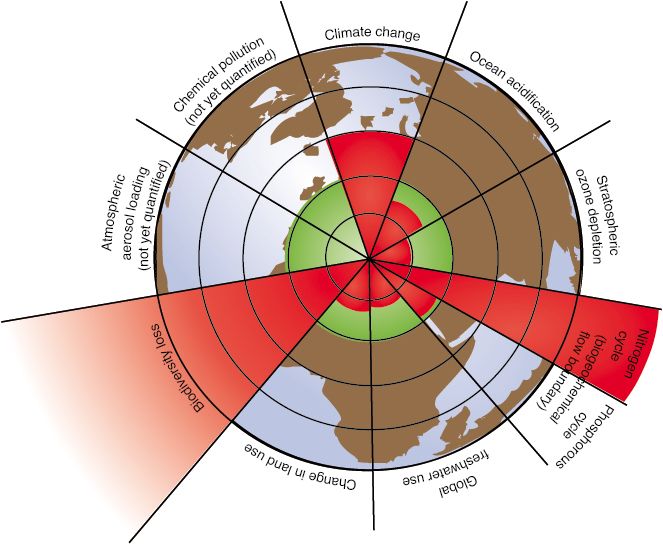
S                                                 Everything is connected
     ince early 1800 the human population                                                         the landscape to sustain these activities,

                                                                                                                                                   P h oto g ra p hy m a x t r o e l l /a zot e
      has increased massively from one billion                                                    the picture looks different: Widespread
      then to the nine billion we are committed   Amidst gloomy forecasts, the MA also            replacement of deep-rooted native trees
towards 2050. During the last 200 years, and      brought with it good news. The assessment
                                                                                                  with crop and pasture plants that need less
particularly after World War II, economic         represented a major shift towards a better
                                                                                                  water, in combination with irrigation, have
development, international collaboration,         understanding of the relationship between
                                                                                                  resulted in rising water tables. This in turn
technical and social innovation, improved         human progress, economic development
                                                                                                  has brought salt normally held deep within
health and wealth have all contributed to         and governance of the world’s ecosystems.
                                                                                                  the soil profile to the surface and is causing
boost the standard of living of most people,      Rather than separating human development
                                                                                                  severe salinization problems in the region.
although the world still hosts one billion        from environmental governance, the MA
absolute poor and three billion people living     has helped clarify that people and societies    Another example of the delicate interactions
on less than 2.5 USD a day.                       are indeed inseparable parts of what we call    between social and ecological systems is the
                                                  the biosphere – the global ecological system    global market demand for palm oil and
Within the same period of time, the Earth’s       that embraces all living beings on Earth        tropical timber, which has changed large
ecosystems have started to show serious signs     and in the atmosphere. The MA emphasises        parts of Borneo from biodiversity-rich
of fatigue. In 2005, the UN Millennium            the importance of extending the economic        tropical rainforests to a simplified oil palm
Ecosystem Assessment (MA) published the           notion of financial value to include nature’s   landscape. The situation becomes critical
first ‘global health control’ of the world’s      goods and services. The bottom line is that     when the role of El Niño is included in
ecosystems. The diagnosis was clear:              poverty alleviation and future economic
                                                                                                  the equation. This climate phenomenon
the rapidly growing human demands for             development can only be achieved with
                                                                                                  is tightly linked with the reproduction
food, freshwater, timber, fibre and fuel have     a stronger emphasis on management and
                                                                                                  of trees in the Dipterocarp family, which
changed the Earth’s ecosystems faster and         governance of ecosystems and their capacity
                                                                                                  dominate the rainforests. Up to 90 per cent
more extensively in the past 50 years than        to generate essential services.
                                                                                                  of Dipterocarp species synchronise their
ever before. The assessment showed that
                                                  A striking example is the Goulburn-Broken       flowering with the onset of dry weather
some 60 percent of the ecosystem services
                                                  catchment in the Murray-Darling Basin,          conditions, which traditionally occur
that support human well-being are being
                                                  which has become one of the principal           during El Niño on a roughly four-year basis.
degraded or used unsustainably.
                                                  income providers for the State of Victoria      The mass blooming and subsequent fruiting
This ecosystem degradation could grow             in Australia. Thanks to widespread and          involve thousands of species across millions
significantly worse during the first              seemingly well-adapted dryland cropping,        of hectares and represent a strategy that
half of this century and is a barrier to          grazing and fruit production, the region has    intermittently starves and swamps seed
reducing global poverty and achieving the         apparently thrived. However, if the analysis    predators, so that at least some seeds survive
Millennium Development Goals.                     is broadened to include the resilience of       to germination. This dynamic relationship
                                                                                                                                                                                                  5
to small-scale water innovations to combat Accounting for nature’s capital sectors such as mining, can pose significant
P h oto g ra p hy M i ra n K e g l /A zot e
poverty in drought-prone areas in the economic and social risks. Estimates show
developing world (see case study map, page A substantial challenge is to ensure that that the negative environmental impacts
16). Resilience is the long-term capacity of a the value of ecosystem services becomes of the world’s top 3,000 listed companies
system to deal with change and continue to more visible in society. Assigning a value amount to around 2.2 trillion USD annually.
develop. For an ecosystem, such as a forest, to ecosystem services is gaining increasing
this can involve dealing with storms, fires and interest among researchers and policy The nub and kernel of
pollution, while for a society it can involve an makers. Although the scientific basis
ability to deal with events such as political and financial and political mechanisms the problem is that many
unrest and natural disasters in a way that is are still under development, there are of the serious, recurring
sustainable in the long-term. several promising efforts. For instance, The
Economics of Ecosystems and Biodiversity problems in natural resource
Low resilience may lead to undesired shifts (TEEB) study calls for wider recognition of management stem from
in a system. Examples include savannah nature’s contribution to human livelihoods,
systems that turn into shrub-deserts, coral health, security and culture by decision a lack of recognition that
between Dipterocarp trees and El Niño has
reefs that shift into algae-covered rubble makers at all levels (local, regional and ecosystems and social
and lakes that become over-enriched with national policy makers, business leaders
lasted for millennia, but the growing global nutrients and shift into a state with blooms and private citizens). For instance, the report systems are dynamic and
thirst for palm oil is now breaking the
system down.
of toxic algae and fish kills. The outcome shows how the annual costs of forest losses inextricably linked.
tends to be biodiversity-poor ecosystems alone (2,5 trillion USD) dwarfed the
that are vulnerable to change and generate financial crisis in 2008. In other words, One example of better integration of
Intensive logging of the trees has reduced
fewer ecosystem services to human societies. the world lose more money from the ecosystems and their services into business
the local density and biomass of mature
Increased knowledge of how we can disappearance of forest ecosystem services activities is the Corporate Ecosystem
trees below a critical threshold that limits
strengthen a desired resilience in both society alone than through a banking crisis. The Services Review (ESR), developed by the
masting. In addition, the introduction of
and nature, or rather interconnected social- TEEB study has helped place biodiversity World Resources Institute and others.
fires in a region that had no prior fire regime
ecological systems, is becoming increasingly management on the high end of the political This is a five-step methodology for
has exacerbated drought stress and caused
important when grappling with climate agenda, showcasing the enormous economic corporate managers to proactively develop
a radical transformation in forest ecology,
change and other environmental impacts. value of forests, freshwater, soils and coral strategies for managing business risks and
which has made El Niño a destructive rather
Investing in resilience can be seen as insurance reefs, to name but a few. opportunities arising from their company’s
than a regenerative force. In the process,
against future shocks. By safeguarding dependence and impact on ecosystems. The
Borneo has turned from being a carbon Acknowledging the key insights of the
diversity and critical resources, the ESR has been translated into six languages
sink into becoming a carbon source, with TEEB study, India is in the process of
chances of ‘riding through’ shocks – such and over 300 businesses have put it to use.
fires releasing massive amounts of carbon implementing a new set of accounts, which
as extreme events – increase. This is of For instance, the international paper and
dioxide, making Indonesia one of the largest track the country’s natural capital and
critical importance considering future packaging company Mondi conducted
greenhouse gas polluters in the world. include the value of nature’s services alongside
uncertainty and limited understanding of the an ESR for three of its South Africa tree
vulnerability generated by human-induced GDP in decision-making. China is another plantations. This resulted in new strategies
Resilience thinking change. In essence, resilience theory argues country where natural capital investments to use invasive species cleared from its
One increasingly relevant scientific approach that the nub and kernel of the problem is that and payments for ecosystem services are plantations for power and heat generation,
to deal with analysis of interwoven systems many of the serious, recurring problems in now being integrated into governance on a a decision to co-finance water efficiency
of humans and nature is through the concept natural resource management stem from remarkable scale (see case study map, page improvements of upstream landowners,
of resilience. This concept is not only used as a lack of recognition that ecosystems and 16). The TEEB report also emphasises the and promotion of coppiced woodlots for
a framework for research, but also applied social systems are dynamic and inextricably message that failure of business to account for biomass fuel that provide additional revenue
in practice. Examples range from city planning linked. the value of natural capital, particularly in for villagers.
6
Another example is the Reducing                  UN Convention on Biological Diversity.           in management and is playing a highly                   for the Conservation of Antarctic Marine
Emissions from Deforestation and Forest          Ecosystem-based management is an                 active and influential role in managing the             Living Resources enabled the emergence
Degradation (REDD+) programme. In                adaptive management approach that does           wetlands. In June 2005, the wetlands were               of new ways to address the problem. A
terms of dollars per ton of carbon, it is an     not simply seek to manage human impacts          formally designated a Biosphere Reserve                 small number of key individuals living in
economically attractive option for reducing      on ecosystems. It also recognises that           under the UNESCO Man and Biosphere                      countries remote from Antarctica mobilised
CO2 emissions. REDD+ expands the scope           the capacity of an ecosystem to generate         scheme.                                                 personal networks and produced reports,
of previous REDD programmes beyond               goods and services is shaped by humans                                                                   which in turn raised political awareness,
avoided deforestation and degradation            and acknowledges the importance of their         Examples of adaptive governance have                    produced voluntary monitoring schemes
activities to include e.g. rehabilitation,       actions, including collaboration among           also appeared on an international level,                and imposed informal pressure on states
planting of trees, sustainable management        individuals, networks, organisations,            with measures taken to curb illegal and                 and corporations involved in the industry.
and an explicit aim to ensure the full and       agencies, researchers and local resource         unregulated fisheries in Antarctic waters.              Although illegal and unregulated fishing
effective participation of indigenous peoples    users. Research suggests that flexible           Effective international collaboration                   has not completely disappeared, it has
and local communities. Although by no            social networks and organisations built on       between states was initially hampered by                been considerably reduced through the
means a perfect solution, estimates show         adaptive learning are in a better position       political sensitivity, but non-state actors             complementary roles filled by state and
that financial flows for greenhouse gas          to sustain and manage ecological systems.        (NGOs and the fishing industry itself)                  non-state actors.
emission reductions from REDD+ could             Adaptive governance approaches must be           and their engagement in the Commission
reach up to 30 billion USD a year. In addition   able to coordinate relevant actors at multiple
to climate change mitigation, REDD+ can          scales, but also to achieve meaningful
also generate a number of other benefits,        collaborations and collective action before            Key messages:
including biodiversity conservation and          essential ecosystem services are depleted           1. In spite of immense technological de-               Science has a great responsibility in
a multitude of ecosystem services. Such          or critical thresholds are transcended. Key            velopment and progress, our econo-                   this respect to provide a better under-
ecosystem services are essential for the         individuals provide trust and visions, while           mies and societies still fundamentally               standing of the multiple challenges
livelihoods of many millions of people and       so-called bridging organisations lower                 depend on ecosystems to provide us                   facing humanity and to explore solu-
include erosion control, stabilisation of        the costs of collaboration and conflict                with a hospitable climate, clean water,              tions for sustainable development in
water supply and many wood and non-              resolution. They also connect groups that              food, fibres and numerous other goods                an increasingly unpredictable world.
wood forest products.                            would otherwise not be connected and                   and services.
                                                 enhance learning among stakeholders.                                                                      4. Resilience thinking is an important
The governance 			                                                                                   2. It is time to fully realise that our societies       part of the solution, as it strives at
                                                 Such adaptive governance systems are                   and economies are integral parts of the               building flexibility and adaptive
of global dynamics                               increasingly appearing at regional and global          biosphere, and to start accounting for                capacity rather than attempting to
Raising awareness about the dynamic              level. The wetland area of Kristianstad in             and governing natural capital. Poverty                achieve stable optimal production
interactions between social and ecological       southern Sweden is one such case where                 alleviation and future human develop-                 and short-term economic gains.
systems is one challenge, coming up with         ecosystem-based management structures                  ment cannot take place without such
new ways to govern them is quite another.                                                                                                                  5. It is time for a new social contract
                                                 have been successfully implemented.                    a wider recognition of nature’s contri-
Governing complex social-ecological                                                                                                                           for global sustainability rooted in a
                                                 This wetland, which provides important                 bution to human livelihoods, health,
systems requires an institutional ability                                                                                                                     shift of perception – from people and
                                                 ecosystem services such as flood control,              security and culture.
and zeal to cope with, adapt to and shape                                                                                                                     nature seen as separate parts to inter-
                                                 cultural and recreational values and flooded
sudden changes. Such a move from rigid                                                               3. The issue at stake extends beyond                    dependent social-ecological systems.
                                                 meadows for grazing and haymaking, was
sector-based resource management to more                                                                climate change to a whole spectrum                    This provides exciting opportunities
                                                 increasingly degraded until the Ecomuseum
adaptive ecosystem-based management is                                                                  of global environmental changes that                  for societal development in collabo-
                                                 Kristianstads Vattenrike (EKV) organisation
slowly gaining momentum, e.g. through                                                                   interplay with interdependent and                     ration with the biosphere; a global
                                                 was established in 1989. Although it has
the ‘ecosystem approach’, which is the                                                                  rapidly globalising human societies.                  sustainability agenda for humanity.
                                                 no authority to make or enforce legal
primary framework for action under the           rules, EKV has brought about changes
                                                                                                                                                                                                        7
The human dominated planet
2. From hunter-gatherers
to planetary stewards
Believe it or not but for most of human history we    planetary stewards instead, and strike a long-term
have existed as hunter-gatherers. Now, thanks to      balance between human well-being and
the dramatic fossil fuel-driven expansion since the   sustainable use of the Earth’s ecosystems.
1800s, our imprint on the global environment
is so large that we risk triggering a number of
abrupt or even irreversible global environmental
changes. The question is how we can become
P h oto g ra p hy Ewa W i s n i ews ka /a zot e
W
           e have had a good run, but              human imprint on the planet is now so great       before. Fossil fuel based agricultural and
           business-as-usual cannot contin-        that the Earth seems to have entered a new        manufacturing systems enhanced the
           ue. Humanity has begun to emit          geological epoch. It is leaving the Holocene,     production of foodstuffs and other goods,
more than nature can absorb and acquire            the remarkably stable period within which         and consumption began to grow along with
more than the Earth’s resources can provide.       human societies as we know them have              an increasingly healthy and expanding
In other words, we are beginning to live off       developed, and it is entering a stage where       population. Little did they know that the
the Earth’s capital, rather than the interest.     humanity itself has become a global               rapid expansion of fossil fuel usage was
The good news in all this is that we are the       geophysical force. In other words, we have        slowly raising the CO2 concentration in
first generation with the knowledge of how         gone from being primitive hunter-gatherers        the atmosphere above the limits of the
our activities influence the whole Earth           to a force that can tip the Earth’s future into   Holocene. The exit door from the Holocene
System. We are also the first generation with      the unknown. In the worst case scenario           had been opened. The increased pace of just
the power and responsibility to change our         this new state of the Earth is much warmer,       about everything after World War II marked
relationship with the planet.                      with more sea and less land, impoverished         a further threshold in humanity’s history
                                                   ecosystems, mass extinction of species            called the Great Acceleration. While the
21st century crossroads                            and a number of severe socio-economic             human population tripled, consumption
The evidence that the Earth is warming             consequences.                                     in the global economy grew many times
and that human emissions of greenhouse                                                               faster. With foreign direct investments,
gases have been responsible for most of            The Great (fossil fuel-driven)                    international tourism, cars, telephones and
this warming since the middle of the               Acceleration                                      above all the internet, the connectivity of
20th century is unequivocal. However,                                                                humanity has grown at an astounding rate
                                                   About 10,000 years ago, agriculture               since 1950. Not surprisingly, the acquisition
just as distressing as climate change is
                                                   was developed roughly simultaneously              and use of natural resources – as well as
the increasing erosion of the Earth’s
                                                   in four different parts of the world. This        the pressure on our climate and ecosystems
goods and services. There is a growing
                                                   set humanity on a trajectory that led to a        – has also risen dramatically during this
acknowledgement that humans must be seen
                                                   more sedentary lifestyle, the development         period. The UN’s Cities and Biodiversity
as part of and not apart from nature, and
                                                   of villages and cities and the creation           Outlook, which is the world’s first global
that the delineation between social and
                                                   of complex civilisations that eventually          analysis of how projected patterns of urban
ecological systems is artificial and arbitrary
                                                   spanned large regions. Around 1800 AD,            land expansion will impact biodiversity and
(see Chapter 1 for more details).
                                                   however, something dramatic happened.             crucial ecosystems, states that production
A further realisation of the strong correlations   Our ancestors at that time learned to             and consumption activities heavily
between human actions and the Earth’s              access and exploit fossil fuels as a new          concentrated in cities have contributed
life-supporting system is reflected in the         energy source and dramatic changes                to some 80 percent of all greenhouse gas
term Anthropocene. This indicates that the         came about at a pace never experienced            emissions. Furthermore, over 60 percent
                                                                                                                                                                                                       9
of the land projected to become urban by          produced exceed nature’s capacity to absorb
                                                                                  2030 has yet to be built. This presents great     them. Excess nutrients can generate a
                                                                                  challenges, but also major opportunities to       number of negative environmental effects.
                                                                                  improve global sustainability by promoting
                                                                                  low-carbon, resource-efficient urban              We know the Earth’s
a zot e

                                                                                  development that can reduce adverse effects       resilience and resource base
                                                                                  on biodiversity and improve quality of life.
                                                                                                                                    cannot be stretched infinitely
                                                                                  It is clear that the Great Acceleration has not
                                                                                  been an environmentally benign phenome-
                                                                                                                                    and we are uncomfortably
                                                                                  non. It has driven large changes to the Earth     aware that we are heading
                                                                                  System and human activities are eroding the
                                                                                                                                    in the wrong direction. The
                                                                                  Earth’s resilience. This is due to overfishing,
                                                                                  extensive deforestation, a dramatic increase      question that remains is how
                                                                                  in domesticated land, increasing nitrogen         we can better manage our
                                                                                  fluxes and a profound loss of biodiversity,
                                                                                  to name a few. However, one other aspect          relationship with nature.
                                                                                  deserves particular attention.
                                                                                                                                    The ocean’s ability to absorb carbon dioxide
                                                                                                                                    also slows the rate of climate change and
                                                                                  The forgotten sea
                                                                                                                                    consequently acts as a climate regulator.
                                                                                  Being terrestrial creatures, much of human        However, the most important regulating
                                                                                  concern about changes in the planetary            service the ocean provides for humanity is
                                                                                  environment is focused on the land, the           probably its global distribution patterns of
                                                                                  coasts or the atmosphere. In reality, the         heat and moisture via ocean circulation. For
                                                                                  ocean is in many respects more important          example, most of the rainfall over land that
                                                                                  than both land and atmosphere in the              supports agriculture and cities originates
                                                                                  functioning of the Earth as a whole. The          through evaporation from the ocean.
                                                                                  ocean, particularly the coastal seas, provides    Humans are crucially dependent upon
                                                                                  an important support by absorbing and             access to this freshwater and any changes to
                                                                                  recycling human-generated waste products.         these climate conditions will have knock-
                                                                                  Much of the nitrogen and phosphorus               on effects for human societies. Another
                                                                                  waste produced by human societies from            example is ocean acidification via increasing
                                                                                  e.g. agricultural fertilisers and animal and      amounts of atmospheric CO2 reacting with
          Planetary Boundaries: the nine red wedges represent an estimate         human excrement ultimately ends up in             the ocean water to form carbonic acid. The
          of the current position of each boundary. The inner green shading       the coastal oceans, where it is metabolised.      resulting higher acidity, mainly near the
          represents the proposed safe operating space (see p. 11 for details).   Problems occur when the compounds                 surface, has been proven to inhibit shell and
   10
skeleton growth in many marine animals leadership in bearing the cost of original framework cannot simply be taken means of this one planet. The Planetary
and is suspected to cause reproductive transformation. off the shelf and translated directly to Boundaries approach also helps shift the
disorders in some fish. operational policy. What it can do already focus from the slightly one-sided emphasis
One of the most significant attempts to at this stage, however, is to be used as a on climate change to a more complex
Ultimately, this renders ocean ecosystems provide scientific guidelines for such framework to guide the formulation of new systems perspective acknowledging that
less resilient to extreme events and human improved stewardship came in 2009 when Sustainable Development Goals, which are the desired stability of the Earth systems
pressure. This can have drastic consequences a group of 28 internationally renowned to replace the Millennium Development is dependent on a variety of factors. This
on coral reefs and other marine life, with scientists identified and quantified a set of Goals after 2015.
nine planetary boundaries within which means the need to address overfishing,
cascading impacts on the fishing and tourism
industries. Understanding the human humanity can continue to develop and An interesting added perspective has also deforestation, loss of biodiversity just as
trajectory, from hunter-gatherers to the thrive for generations to come. Respecting been the social boundaries suggested by much as dealing with increased greenhouse
drivers of the Great Acceleration and beyond, these boundaries reduces the risks to human Oxfam in their “Doughnut model”. This gases. In fact, a more holistic approach
is an essential element in the process of society of abrupt or irreversible environmental model demonstrates the importance of in dealing with climate change can create
transforming our role on Earth from changes. The nine processes with boundaries ensuring that every person has the resources synergy effects where actions to reduce
resource exploiters to resource stewards. (see illustration p. 10) include climate change, they need to meet their human rights, while greenhouse gas emissions globally can also
stratospheric ozone, ocean acidification, we collectively live within the ecological improve air quality in metropolitan areas.
Working within planetary the nitrogen and phosphorus cycles,
boundaries biodiversity loss, land use change and
freshwater use. There was insufficient
Key messages:
So, here we are. We know the problem, we knowledge to suggest quantitative boundaries 1. The human imprint on the planet’s 4. W
e are the first generation with the
know the Earth’s resilience and resource for two other processes – aerosol loading environment is now so vast that the knowledge of how our activities
base cannot be stretched infinitely and (airborne particles such as sulphur and soot) current geological period should be influence the Earth as a system,
we are uncomfortably aware that we and chemical pollution (e.g. mercury, flame labeled the ‘Anthropocene’ – the age and thus the first generation with
are heading in the wrong direction. The retardants and dioxins). The 28 scientists of man. the power and the responsibility to
question that remains is how we can better estimated that three of the boundaries – those change our relationship with the
2. Human pressure has reached a scale
manage our relationship with nature. We for climate change, the nitrogen cycle planet.
where the possibility of abrupt or
are not only the first generation with the and biodiversity loss – have already been
irreversible global change can no 5. F ormulation of new sustainable
knowledge of how our activities influence transgressed. Several others are in the
longer be excluded. development goals can be guided by
the Earth System, we are also the first danger zone. The approach was first and
the ‘planetary boundaries’ concept,
generation with the actual power and foremost designed to advance Earth System 3. The challenges of the 21st century –
which aims to create a scientifically
responsibility to change our relationship science not to offer a complete roadmap resource constraints, financial
defined safe operating space within
with the planet as a whole. Clearly, we for sustainable development. It has indeed instability, inequalities,
which humanity can continue to
have an uneven distribution of power been criticised for not being well adapted environmental degradation – are a
evolve and develop.
and responsibility, which means that to policy and many have rightly pointed clear signal that ‘business-as-usual’
developed countries that were the engines out that the governance implications of the cannot continue.
of the Anthropocene, and especially the planetary boundaries concept is a research
Great Acceleration, need to demonstrate challenge in its own right. This is why the
11Creating a good Anthropocene 3. Social-ecological innovations for planetary opportunities There are ample examples out there to demonstrate capacity to reconnect ourselves with the biosphere the tremendous capacity we humans have to find (Chapter 1) and stay within the safe boundaries of innovative solutions to improve our lives. However, the planet (Chapter 2) in order to safeguard equitable innovation is not always for the better. Aspects of human development in the long term. It is time innovation may be driving the world in the wrong to introduce innovations that are sensitive to the direction, directly opposed to a sustainable future. fundamental bonds between social and ecological The challenge we face is to use this innovative systems.
I
    t is a fascinating paradox that the same    intelligently to tip our socio-economic

                                                                                                                                                                                                P h oto g ra p hy O st r o s k y P h oto s/ f l i c k r .co m
    innovative capacity that has put us in      system out of the current paradigm and into
    the current environmental predicament       a more sustainable one?
is actually what can be used to push us out
of it. History has shown that humanity          Historically, humanity has placed great
has managed to adapt to a wide range of         faith in technological innovation to help
complex challenges. However, the current        transform societies and improve the
predicament might just be the greatest          quality of life. The most obvious example
ever. For decades, concerned scientists,        is the industrial revolution, while the most
environmental NGOs and others have been         recent example is the fast-changing way
calling for urgent changes (or transitions)     we communicate across the world. There
that are large enough to transform our          are good reasons why we place faith in
unsustainable way of living. Politics,          our capacity to innovate, because it has
the corporate world and civil society are       traditionally been associated with a better
increasingly getting the message and there      quality of life. Questioning innovation
are indeed an immense number of ideas on        therefore goes against the grain of the
how to shift to more sustainable trajectories   prevailing worldview and the governance
(green urbanism, renewable energy, agro-        structures that rule our lives, but we cannot
ecological farming and ecosystem-based          deny that the last five decades or so of high
fisheries, to name but a few). The problem is   innovation have also caused some serious
that we not only have to collectively speed     damage to the planet. Moreover, we appear
                                                                                                Along the same lines is the argument that        The private sector is in many respects one
up our efforts, but also look at ways to        to be locked on a technological path that
                                                                                                the ‘technosphere’, the innovative engine        of the main suppliers of innovative thinking
solve several problems at the same time. An     is not only accelerating tremendously
                                                                                                that has driven our modern economy,              and is consequently fundamental in carving
ambitious plan admittedly, but nonetheless      rapidly, but also carries with it unintended
                                                                                                is organised along lines that are very           out new directions for more sustainable
necessary and by all means possible.            and undesired social and environmental
                                                                                                different, if not downright contrary, to         innovations. Businesses can make a huge
                                                consequences. In other words, we have for
Halting a steam-powered train                                                                   the functioning of the world’s ecosystems.       difference, and there is a growing global
                                                long seen a decreasing degree of control over
                                                                                                Ecosystems are based on non-linear               movement of promising social entrepreneurs
of thought                                      the impact of our innovations, but a change
                                                                                                mutual independency and one part cannot          with new ideas who want to contribute to
                                                is coming.
Despite decades of calls for change, a                                                          be separated from another, while the             a sustainable society, and build companies
clear understanding of the mechanisms                                                           technosphere, whether in terms of machines       based on strategies such as “Ubiquity
                                                Mind the ingenuity gap                          or structures, is based on a linear, means-to-   first, worry about Revenue Later”. At
and patterns under which global
transformations can actually happen is still    The problems we are facing are so complex       an-end logic. Putting it bluntly, most current   the core of this movement is the idea that
lacking. The growing concern about this         that some argue that we are caught in an        economic and technological solutions are         entrepreneurship is a way of achieving
has led to an increased focus on the role       ‘ingenuity gap’, where the world’s problems     ecologically illiterate and too linear and       social change. Interest in social innovation
of innovation, but the question remains:        have become so difficult to solve that we       single problem-orientated. There is a need       and social entrepreneurship has literally
Can we innovate sufficiently rapidly and        lack the ingenuity required to solve them.      for a change of mindset.                         exploded in recent years with training
                                                                                                                                                                                                                                           13
programmes, conferences, competitions the XPRIZE has decided to concentrate on a process. They developed the scientific
and awards, and special funds for specific research area. concept of the CTI into an integrated
P h oto g ra p hy To m H e r m a n s s o n S n i c ka r s/a zot e
entrepreneurs who take social responsibility framework for marine governance. These
and put societal benefits at the core of their Law also plays its part. Law is traditionally ten entrepreneurs came from both inside
enterprises. characterised by ‘thou shalts’ rather than and outside the region and predominantly,
opening doors for new approaches. As a but not solely, from conservation NGOs
The essence of social-ecological reaction to this, the concept of reflexive with a long history of working with
law has emerged. Reflexive law is less
innovation marine conservation. Together with a
rule-bound and recognises that as long as number of underlying driving forces,
The outlook need not be too gloomy. certain basic procedures and organisational including demands for social and economic
Ongoing large-scale transformations in norms are respected, participants can development, a window of opportunity
e.g. information technology, biotechnology arrive at positive outcomes and correct their emerged to create a network better suited
and energy systems have huge potential projects along the way, basically learning by for regional cooperation.
to significantly improve our lives in a doing. In response to growing complexity,
sustainable way. However, this can only detailed rules are replaced by procedures for
happen if we start working with, instead regulated entities to follow. Reflexive law is There are enormous reservoirs
of against, nature. This is the idea behind a social innovation which seeks to promote for learning and innovation
the new concept of social-ecological multi-level governance and preserve
innovation, which has been defined diversity and experimentation at local level. that are often revealed in
as “social innovation, including new moments of crises. In fact,
technology, strategies, concepts, ideas, Bottom-up responses to crises are a central
institutions, and organizations that enhance element in all of this. There are enormous some of the best and most
the capacity of ecosystems to generate reservoirs for learning and innovation constructive innovations often
services and help steer away from multiple that are often revealed in moments of
crises. In fact, some of the best and most come from disaster-hit (or
earth-system thresholds”. However, in
order to boost our capacity to innovate constructive innovations often come from disaster-prone) communities.
in this way, there needs to be support and disaster-hit (or disaster-prone) communities.
incentives in place, particularly in the In 2007 the Coral Triangle Initiative (CTI)
private sector. The transformation needed was formed to address the many threats Studies on innovative responses to social
must include the creativity and ingenuity facing coastal and marine ecosystems in and natural disasters increasingly stress
of users, workers, consumers, citizens, the western Pacific Ocean. What is unique the need for governments and institutional
activists, farmers and small businesses alike. about this initiative is the role of so-called aid mechanisms to take a step back and
“institutional entrepreneurs” in the ‘listen and engage’ with communities rather
The XPRIZE Foundation, an American emergence of the CTI. Such entrepreneurs than ‘orchestrate and plan’ on their behalf.
non-profit organization once known for are individuals and groups of individuals Termed “inclusive innovation”, this involves
competitions for spaceflight innovation, is who succeed in creating new institutions listening to local communities for ideas,
one example, which has turned its attention (the norms and rules that shape human informing local populations of resources
to ocean health. In 2013 it announced a interactions) or transforming existing ones. and possibilities available, trusting them
2m USD competition for devices that can Studies of the network revealed that a small and allowing a diversity of innovative
monitor the changing chemistry of the network of approximately ten institutional responses to emerge, as opposed to insisting
oceans due to climate change – the first time entrepreneurs was key to initiate the on a top-down planning process. One example
14is the Honey Bee Network in India. It has distinct territories, fishing pressure has been directly for social justice, poverty alleviation of this planet, not conquerors of it. There
received international praise for the way reduced. and environmental sustainability. The are numerous examples of major socio-
it supports grassroots innovators in the rural planetary risks we are facing are so large technological advances that have improved
poor of India who are rich in knowledge and Getting stuck in the MUD that business-as-usual is not an option. human life. The flipside is that too many
talent, but poor on resources to scale up and Tapping shadow networks such as those of them have degraded the life-supporting
convert their ideas into viable products, The Emerging social innovations and
in Chile is a key challenge to governance. technological transformations involve ecosystems on which human well-being
network’s founder, Dr. Anil Gupta, describes Traditional, expert-driven, top-down
enormous opportunities with huge potential ultimately depends. What we need are
the network as taking the nameless, faceless approaches to problem solving are not nimble
to improve our lives in a sustainable way. innovations that can increase human well-
innovators of India (and beyond) and bringing enough to effectively address convergent,
But creating a good Anthropocene means being and at the same time enhance the
them into a network where they get an identity. non-linear and rapidly changing problems.
going beyond solutions that merely reduce capacity of ecosystems to produce services.
Resilience scholars have also focused on the There are also lessons to be learned from
negative impacts and rather develop a mindset That is what social-ecological innovation is
innovation studies in the domain of business,
role of informal shadow networks – groups where we acknowledge that we are part all about.
technology and organisational behaviour.
of stakeholders that work outside the fray
These have long established the importance
of regulation and implementation in places
of approaching innovation from a top-down
where more formal networks and structures
and bottom-up perspective, sometimes
Key messages:
fail. One of the most celebrated examples
referred to as ‘management up-down’ (MUD). 1. An immense number of sustainability What is needed is financial and political
comes from Chile, where a combination
This basically refers to a company’s ability initiatives are emerging (transition towns, support for safe-fail experiments in
of fisheries collapse and the move to
to efficiently connect those drawing up clean energy, agroecological farming, communities around the world, using
democracy provided the opportunity to try
company strategy with the sources of ecosystem-based fisheries management, diverse technologies, organisations and
out some newarrangements for managing
innovation, most commonly taking place at etc.). Such initiatives need to be upscaled ideas, for instance in ‘Policy Laboratories’
fisheries. The experiments were based on
the front line, on the shop floor or in small through e.g. innovation funds, seed money, or ‘Change Labs’.
informal partnerships and trust between
designated teams. This in turn produces structural adjustment funds and other in-
fishers, scientists and managers. There 4. Policy makers around the world need to
the cascade of resources required to bring centives in order to have a global impact.
was a general recognition that Chile’s adopt a new systems thinking that pays
innovation to markets and scale up the Social media and associated advances in
fish stocks were in trouble, things were much more attention to the negative
innovation itself. Key individuals in this information and communication tech-
turbulent and people were open to new side-effects of quick fixes and recognises
process are the so-called connectors, who nologies can play a role in this process.
approaches. There was also a good scientific the numerous possibilities in investing
are able to understand the overall strategic
understanding of coastal ecosystems in the 2. Ongoing large-scale transformations in in sustainable use of ecosystems and
direction the company wants to take, frame
region on which to base a new management e.g. information technology, biotech- their services.
that to those working on the ‘front line’,
plan. All this eventually led to the testing nology and energy systems have the
identify promising innovations and sell these 5. We need a new type of ‘social-ecological’
of new co-operative models for fishery back to the strategic apex of the company. potential to significantly improve our
innovation and technologies that work
management, based on the latest science lives in a sustainable way, but only if we
more directly for social justice, poverty
concerning fish stocks and the surrounding Overall, economic and technological incorporate knowledge of social-ecological
alleviation, environmental sustainability
marine ecosystem. The end result was a solutions must become more ecologically systems and planetary boundaries in risk
and democracy, while including the
revamped national system of marine tenure literate and see the numerous possibilities assessments and development strategies.
creativity and ingenuity of users, workers,
that allocates exclusive ocean territories to in investing in sustainable use of ecosystems
3. Most current economic and technological consumers, citizens, activists, farmers
local and small-scale fisheries. The system and their services. This requires us to organise
solutions are ecologically illiterate and and small businesses alike.
excludes the major industrial fishing fleets, innovation and technology development in
too linear and single problem-orientated.
which have their own exclusive fishing zone. new ways that are more networked, open-
By cutting the number of large vessels in sourced and inclusive, while working more
15Case 11 Case 1 Case 4 Case 9 Case 10 Case 3
The three chapters in this
publication discuss issues of
global concern, but with local
and regional implications
and solutions. The world map
features 12 case studies that
can illustrate many of these
issues.
Case 1: The Gu lf of Mai n e lobster
fisheries, USA
This case illustrates a failure to see the full integration
of socio-economic and ecological systems. In the
Gulf of Maine the American lobster comprises over
80 per cent of the total marine resource value, but
this economic success does not equal ecosystem
success. Rather, the long-term sequential depletion
of cod, hake, haddock, halibut and sea urchins has
resulted in a vulnerable near monoculture of lobsters.
Elsewhere, such high lobster densities have preceded
an outbreak of shell disease. A similar collapse in
Maine would be devastating for the over 7,000
lobstermen and their support industries.
Photography Oskar H en r i ksson/azote
Case 2: El Ni ño an d rai n forest
ren ewal, Born eo
Global market demand for palm oil has led to an
expansion of monoculture plantations and an
increasingly fragmented forest landscape in the
Case 7 Case 5 Case 8 Case 12 Case 6 Case 2 rainforests of Borneo. This has altered the resilience
to droughts induced by the recurring weather
phenomenon El Niño, which previously triggered
mast reproduction among trees, regenerating forest
biodiversity. In the new situation, El Niño events
16Twelve case studies on the application of
resilience thinking and social-ecological research
disrupt fruiting, interrupt wildlife reproduction a vicious circle – with altered rainfall patterns and Studies in north-eastern Honduras after the powerful farmers are directly involved in programmes with
and trigger wildfires that contribute significantly to increased wildfires – that could bring it to the point Hurricane Mitch hit the country in 1998 showed the intention to reduce the loss of soil, reduce
global carbon emissions. of no return, with massive impacts on the world’s how the disaster led to substantial changes in land desertification and protect biodiversity and
Photography Rai n for est Action N etwor k/ biodiversity and climate. management. These changes were facilitated not by ecosystems for e.g. flood control, more productive
flickr.com Photography N icolas Desagh er/Azote established aid organisations, but by initiatives that agriculture and ecotourism.
spread almost ‘virally’ from household to household. Photography U n ited Nations Photo/flickr.
Case 3: Ecosystem services offsetti ng Case 6: Acidi fication an d other threats
This resulted in a shift to a more equitable land com
i n the ‘Satoyama’ cu ltural l an dscape, faci ng I n don esian coral reefs
distribution and protected forests that helped the
Japan Case 11: The Natural Capital Project
The world’s oceans are steadily becoming more community cope with similar flooding 10 years later.
In the Japanese city of Nagoya, urban sprawl is acidic due to increasing amounts of atmospheric (NatCap)
Photography apes_ab road/flickr.com
challenging the traditional agricultural ‘Satoyama’ CO2. Ocean acidification in combination with A movement that started off on the west coast of the
landscape. Under a new system of tradable global warming, declining water quality and Case 9: Ecosystem services i n US is today an international effort to motivate greater
development rights, developers that exceed existing overexploitation of key species is predicted to drive Stockholm investments in ecosystems and human well-being
limits on high-rise buildings can offset their impacts coral reefs increasingly toward the tipping point The Stockholm region is of great international by helping decision makers visualise the impacts of
by investing in the conservation of Satoyama areas for functional collapse. This will involve cascading interest when it comes to urban ecological research. potential policies (e.g. InVEST toolkit, which will
threatened by urban exploitation. Favourable bank impacts on local livelihoods as well as the fishing and Green spaces extend from the countryside into the soon be on Google’s new Earth Engine platform).
loans are also offered for building projects scoring tourism industries, not least in Indonesia, which has city centre where the world’s first National City NatCap is also helping to build evidence and policy
high on a green certification system. the largest area of threatened reefs in the world. Park is situated. Researchers at the Stockholm innovation through a shared programme of research
Photography MOOKE/flickr.com Photography Tony Holm/Azote Resilience Centre have since the 1990s been and policy support. In addition, it is magnifying the
studying the ecosystem services that the National impact of these demonstrations by engaging key
Case 4: Melti ng of the Green l an d ice Case 7: Transformation of Chi lean
City Park provides to Stockholm, and analyzed institutions and thought leaders, disseminating tools
sheet approachi ng a threshold fisheries
how users of the park prioritize and value green and lessons and creating an informed community of
The Greenland ice sheet, which has melted at New transformational changes in governance are spaces and biodiversity. These studies are part of a leaders and practitioners.
an increasing rate during the past 30 years, is an urgently required to cope with overfishing, pollution, larger social-ecological analysis in which the social Photography Åsa Gallegos Tor ell/Azote
example of how the Earth’s subsystems risk moving climate change and other drivers of degradation in sciences, humanities and natural sciences collaborate
outside their stable Holocene state. As the planet the marine environment. One example arose when Case 12: Small-scale water i n novations
to investigate how ecosystem services are used,
warms the ice melts, leaving more water and land fisheries collapses and the move to democracy in b reak dryl an d poverty traps i n
maintained and is dependent on the surrounding
exposed to the sun. Those surfaces in turn absorb Chile after a 17-year dictatorship, quite by chance, Tanzan ia
landscape.
more of the sun’s heat, leading to a self-enforced opened the way for reforms and new laws that Photography Steven Zeff/Azote Improved water management in rainfed agriculture
process with accelerated melting of snow and ice. excluded large industrial fishing fleets and gave can build resilience to cope with water-related risks
There are fears that melting of the entire sheet could exclusive ocean territories to local ‘artisanal’ fishers. Case 10: Natural capital i nvestments and uncertainties. Conventional solutions have been
raise sea levels globally by about 7 m. Scientists and the small fishers then worked out a i n Chi na to develop large-scale irrigation systems, but recent
Photography B ent Ch r istensen/aZote shared vision and voluntary agreements on how to Ecosystem service investments in China today studies in e.g. Makanya, Tanzania, have shown that
manage these territories. are remarkable in their goals, scale, duration and small-scale innovations, such as rainwater harvesting
Case 5: Large-scale shi fts i n the
Photography Clau di us Prößer/flickr.com innovation. Following severe droughts in 1997 and conservation tillage, have enormous potential
Amazon rai n forest
and massive flooding in 1998, China implemented for increasing on-farm productivity and ecosystem
We are approaching serious thresholds, or tipping several national forestry and conservation initiatives, services output in areas where people live in poverty
points, in major ecosystems. One example is the Case 8: I n novation i n l an d
exceeding 100 billion USD over the current decade. and are vulnerable to climate change.
projected changes in the vegetation of the Amazon management i n Hon duras after
Targeted investments aim to secure natural capital Photography J er ker Lokrantz/Azote
Basin, from tropical forest to dry savannah or H urrican e Mitch
and alleviate poverty through wealth transfer from
grassland, due to climate change and deforestation. Innovation often comes as a result of crisis and coastal provinces to inland regions, where many
The concern is that the Amazon might be caught in sustainable solutions often from community level. ecosystem services originate. Over 120 million
17Glossary
Adaptive gover nance: Governance Ecosystem-based management: Mi llen n i um Ecosystem Social-ecological system: An inte-
approaches that are collaborative, flexible A management approach that recognises Assessment: Global review launched grated system of people and nature with
and learning-based and rely on networks of the full array of interactions within an by the UN and carried out between 2001 reciprocal feedback and interdependence.
people and organisations at multiple levels. ecosystem, including humans, rather and 2005 to assess the consequences of The concept emphasises the humans-in-
than considering single issues, species or ecosystem change for human well-being. nature perspective and that delineation
ecosystem services in isolation. between the social and ecological is artificial
Anth ropocen e: The Age of Man, a and arbitrary.
new name for the present geological epoch Natu ral capitaL: An extension of the
defined by our own massive impact on the Ecosystem services: The benefits traditional economic notion of capital,
planet’s climate and ecosystems. Coined in people obtain from ecosystems, e.g. coined to represent the natural assets that Social i n novation: An initiative,
2000 by Nobel Laureate Paul Crutzen. provision of clean water, regulation of economists, governments and corporations product, process or programme that
climate, pollination of crops and fulfilment tend to leave off the balance sheets. It can be profoundly changes the basic routines,
of people’s cultural needs. divided into non-renewable resources (e.g. resource and authority flows or beliefs of any
B iodiversity: Short for biological fossil fuels), renewable resources (e.g. fish) social system.
diversity – the variety of all forms of life on and services (e.g. pollination).
earth, including the variability within and Gr eat acceleration: Refers to the
between species and within and between dramatic acceleration of human enterprise SOCIAL-ECOLOGICAL INNOVATION:
ecosystems. after World War II and the resulting pressure Plan etary b ou n dar i es: A concept Social innovation, including new technology,
on the global environment. developed by a group of researchers in 2009 strategies, concepts, ideas, institutions and
to describe nine safe biophysical boundaries organizations that enhance the capacity of
B iosph er e: The sphere of all air, water and outside which the Earth System cannot be
Holocen e: The postglacial geological
ecosystems to generate services and help
land on the planet in which all life is found; pushed without disastrous consequences.
period, which began approximately 9600 BC steer away from multiple earth-system
the global ecological system integrating all
and continues to the present. thresholds.
living beings and their relationships.
R esi li ence: The capacity of a system
– be it a forest, city or economy – to deal Transformation: The creation of a
Ecosystem: All the organisms in a given I nstitutions: A central concept within with change and continue to develop;
the social science of natural resource fundamentally new system when ecological,
area, along with the physical environment withstanding shocks and disturbances (such
management whereby institutions are economic or social conditions make
with which they interact (e.g. a forest, a coral as climate change or financial crises) and
defined as the norms and rules governing the continuation of the existing system
reef or a rock-pool). using such events to catalyse renewal and
human interactions. These can be formal, untenable.
innovation.
such as rules and laws, but also informal
(unwritten), such as norms and conventions
of society.
18You can also read


