WHY ACCESSIBILITY MATTERS - Practical steps to making public transport disability inclusive - IMC Worldwide
←
→
Page content transcription
If your browser does not render page correctly, please read the page content below
WHY
ACCESSIBILITY
MATTERS
Practical steps to making public
transport disability inclusive
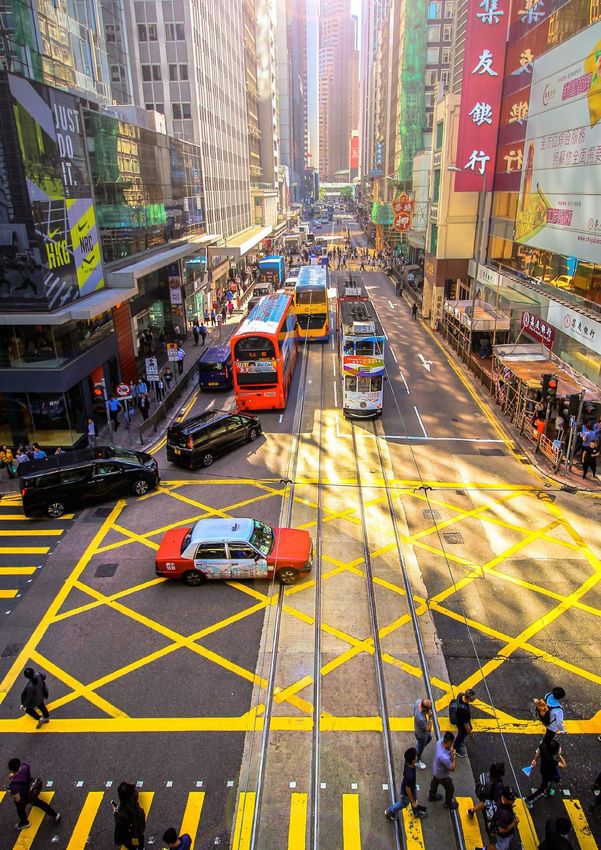
TABLE OF CONTENTS

                                                              FOREWORD					                                                   1

                                                              INTRODUCTION2

                                                              PEOPLE WITH DISABILITIES IN LOW-INCOME COUNTRIES                3

                                                              ESSENTIAL STEPS TO DISABILITY INCLUSIVE TRANSPORT               7

                                                                     Change attitudes and increase awareness
                                                                     Enact disability inclusive policies, laws and plans
                                                                     Design transport for everyone
                                                                     Educate and train for inclusive mobility
                                                                     Monitor and enforce compliance

                                                              BETTER MOBILITY STARTS FROM HOME                               19

                                                                     Appropriate wheelchairs and mobility aids
                                                                     More accessible pavements and roads

                                                              DEMAND RESPONSIVE TRANSPORT 				                               23

                                                                     Non-motorised transport

                                                              PUBLIC TRANSPORT: ROAD TRANSPORT25
This document is an output of the Applied Research
                                                                     Buses
Programme in High Volume Transport funded by the UK                  Bus rapid transit
Department for International Development. The views
expressed are not necessarily those of the DFID.
                                                              PUBLIC TRANSPORT: RAIL TRANSPORT31

ACKNOWLEDGEMENTS                                                     Mainline rail
This document was prepared by Ann Frye OBE, and                      Light rail and tramway
peer reviewed by Jeff Turner, Tom Rickert, Tracy Savill,             Underground rail and metro

Prof. Nick Tyler, David Constantine, Amanda Gibberd,
Prof. Martin Snaith, Charlotte Vuyiswa McClain-Nhlapo,
                                                              RIVER AND WATERBORNE TRANSPORT                                 37
Dr Anthony Mugeere, Jan Rickmeyer, and Prof. Edward
Simpson.
                                                              NEXT STEPS                                                     39
First published 2019
© 2019
                                                              RESOURCES AND FURTHER READING                                  41

Cover and inside cover pictures courtesy of Subhash
Chandra Vashishth, Director, Svayam, India; Municipality of   ACRONYMS                                                       44

George, South Africa
FOREWORD                                                                                                            INTRODUCTION

                                                                                                                    Safe, affordable, accessible and sustainable transport     New transport infrastructure and systems must be
Globally, persons with disabilities are often             This Policy Brief is a timely response to the growing     systems for all is a key target (11.2) of the United       designed and implemented on the principles of
referred to as the largest minority, accounting for       demand for sound policy advice and practical              Nations Sustainable Development Goals (SDGs)1 for          Universal Design as set out the UN Convention on the
a total of over 1 billion or 15 percent of the world’s    toolkits. It provides policy-makers and development       2030. This target specifically includes public transport   Rights of Persons with Disabilities2 (2006) and ratified
population. Too often, they experience challenging        professionals an effective lens to look at the barriers   to meet the needs of people with disabilities as well as   by many low-income countries. These principles are
poverty, marginalization and exclusion in society.        to mobility that persons with disabilities face, and      other vulnerable people.                                   directed to ensuring that public transport meets
                                                          more importantly, useful tools to advance and to                                                                     the needs of everyone. In line with Universal Design
The existence of cultural and physical barriers,          implement accessible sustainable development for all                                                                 principles, this document sets out practical steps to
                                                                                                                    Accessible public transport gives people with
among other factors, are major contributors to the        people of all ages and abilities in all countries.                                                                   use available resources most effectively for the benefit
                                                                                                                    disabilities access to education, employment and
obstacles persons with disabilities, their families and                                                                                                                        of all transport users.
                                                                                                                    healthcare, as well as social contacts with family and
communities face. Lack of inclusive environments          Ms. Daniela Bas                                           friends. The ability to move and travel independently
often lead to deprivation of opportunities, such as       Director for Inclusive Social Development                 is fundamental to breaking the downward spiral of          Better mobility for people with disabilities starts with
education, skill training, work or income-generating      Department of Economic and Social Affairs of the          dependence and poverty.                                    the awareness and commitment of everyone engaged
business, access to health care or leisure activities.    United Nations                                                                                                       in transport from policy maker to bus driver to make
As a result, many persons with disabilities are unable                                                                                                                         changes. Because small, low costs solutions can make
                                                                                                                    In line with the SDG target, this policy brief sets
to get out of their own homes and lead independent,                                                                                                                            a very big difference.
                                                                                                                    out practical steps to making the right choices to
productive and fulfilling lives.                                                                                    ensure public transport meets the mobility needs
                                                                                                                    of people with disabilities. The brief has been
Member States are making efforts to remove                                                                          prepared specifically for transport policy-makers and
environmental barriers in compliance with                                                                           transport professionals in low-income countries in
international and domestic legal requirements.                                                                      Africa and Asia. Because better transport starts with
Accessibility is well-established by the United Nations                                                             their awareness and commitment to making public
Convention on the Rights of Persons with Disabilities                                                               transport easier and safer for people with disabilities.
as an obligation for States Parties to ensure equality
and non-discrimination. This commitment is further                                                                  The starting point is to engage with people with
reinforced by the 2030 Agenda for Sustainable                                                                       disabilities and their representative organisations
Development, and its 17 goals (SDGs) that pledges to                                                                to understand the needs and priorities from their
leave no country and no one behind.                                                                                 perspective. The steps to easier and safer transport for
                                                                                                                    people with disabilities are based on best practices in
Therefore, accessibility should be promoted as a                                                                    countries worldwide.
collective good. States and development agencies
must better quantify and capture the socio-economic                                                                 Many obstacles to mobility can be overcome
added value that benefits not merely a particular                                                                   with simple, low cost solutions, such as removing
group of people, namely persons with disabilities, but                                                              obstructions on footpaths, designing bus stops
the population at large. In this endeavour, Member                                                                  without steps, and providing clear, easy to follow
States, the United Nations system, development                                                                      route signs. These relatively inexpensive measures
institutions and other stakeholders, including the                                                                  can sustainably improve mobility and contribute to a
private sector, need to join hands in order to increase                                                             better quality of life for people with disabilities.
and improve availability of accessibility for achieving
the SDGs for all.
These discrepancies in disability surveys result from a
                             Disability covers a wide range of                        range of factors including differences in the definition
                             impairments including:                                   of disability, reliability of data collected, and survey
                             Physical impairment (difficulty with                     methods used. Another reason for unreliable survey
                             walking, balance, stamina, etc)                          data is the stigma associated with disability in some
                                                                                      countries that often makes people reluctant to inform
                             Vision impairment (ranging from low                      officials about their impairment.
                             vision to total blindness)
                             Hearing impairment (ranging from slight                  The Washington Group on Disability Statistics5 called
                             hearing loss to profound deafness)                       for a broader classification of disability that focuses
                             Cognitive impairment (learning                           on an individual’s ability to tackle daily tasks rather
                             disability)                                              than their disability. Using this functional classification,
                                                                                      a study was conducted in 15 low-income countries⁶.
                             Mental health issues                                     The percentage of people with disabilities varied
                                                                                      greatly between countries, from 3% in Lao People’s
                                                                                      Democratic Republic to 16% in Bangladesh. These
                                                                                      variations may also be explained by factors, such as
                           World Health Organisation (WHO)3 estimates that one        cultural differences between countries and variations
                           billion people, or 15% of the world’s population, are      in underlying health conditions.
                           living with some form of disability. And 80% of these
                           people are living in low-income countries.                 In each of the countries surveyed, disability was found
                                                                                      to be more prevalent in women than in men. And in
                           Estimates suggest that around 1 in 5 (20% of the           11 of the 15 countries, disability was more prevalent in
                           population) of the poorest people in low-income            rural areas than in urban centres. Furthermore, loss
                           countries have some form of disability that affects        of mobility had a greater impact in rural areas where
                           their daily lives. This means one household in four        people have to travel longer distances for work and
                           includes a person with disability.                         for healthcare.

                           United Nations Convention on the Rights of Persons
                           with Disabilities states:                                  MULTIPLE REASONS FOR HIGH RATES
                                                                                      OF DISABILITY
                           “Persons with disabilities include those who
                           have long-term physical, mental, intellectual or           A wide range of factors contribute to the high rate of

People with disabilities   sensory impairments which, in interaction with
                           various barriers, may hinder their full and effective
                           participation in society on an equal basis with others.”
                                                                                      disability in low-income countries, in which some 54%
                                                                                      of the population are currently aged 15 to 64 years7. In
                                                                                      some countries, physical disabilities and mental health

in low-income countries    (Article 1).                                               conditions are clearly traceable to prolonged periods
                                                                                      of civil unrest and violence as well as to poor nutrition
                                                                                      and limited healthcare.
                           ESTIMATES OF PEOPLE WITH
                           DISABILITIES ARE NOT ROBUST                                A major cause of disabilities among young
                                                                                      pedestrians is road accidents that have continued to
                           Lack of robust data means that disability is often
                           not seen as a political priority and is viewed as a        increase in recent years. In many countries, such as
                           minority issue                                             Cambodia, road accidents are the main single cause of
                                                                                      disability in young people under 17 years of age8.
                           Estimates of the number of people with disabilities
                           in many low-income countries vary considerably             This significant increase in road traffic accidents is
                           and the number is greatly underestimated in some           attributable to a combination of factors including
                           countries. For example, the official government            poor road conditions, inexperienced drivers, and
                           estimate of people with disabilities in Kenya is 1% of     inadequate traffic regulations and enforcement.
                           the population while an Australian survey has put this
                           percentage at 14%4.
Hearing loss is more prevalent in low-income DISABILITY HAS HIGH IMPACT ON THE • no access to credit schemes, such as loans and
A significant proportion of disabilities are countries, especially in Sub-Saharan Africa and in MOBILITY OF THE POOREST PEOPLE other financial support.
caused by injuries including those which South and Southeast Asia11. This may be caused
result from traffic crashes, falls, burns, by higher rates of pre- and post-natal childhood
and acts of violence, such as child abuse, Disability can have a profound effect on the poorest Economic costs to the state and society
youth violence, intimate partner violence, infections, such as rubella, measles and meningitis. in society and is a contributing factor to poverty. • loss of productivity
and war and conflict9. For instance, many children with disabilities cannot
• loss of taxes
DISABILITY AFFECTS SOCIAL AND get to school, so their educational attainments are
ECONOMIC MOBILITY low. Similarly, many adults with disabilities cannot • public spending on disability programmes
While few data are available on disability caused by get to work so their incomes are severely limited. Further evidence to support enabling people with
injury, WHO suggests, for example, in Sierra Leone All types of impairment have an impact on mobility, Across all ages, many people with disabilities cannot disabilities to join the workforce and become
14.3% of disabilities are caused by unintentional injury. and may range from slight difficulty or pain in walking, get access to healthcare. The result is a spiral of economically active comes from the 2017 Guide for
climbing steps, balancing or gripping, to total inability dependency and hardship12. Businesses on the Rights of Persons with Disabilities15.
HIGHER RATES OF VISION AND to walk and dependence on a wheelchair.
HEARING LOSS
A fundamental factor in the link between disability
Mobility is also affected by mental health conditions;
Respecting and supporting the rights
While data are patchy on the prevalence of various and poverty is limited access to transport or inability of persons with disabilities is not only
types of disabilities in low-income countries, more intellectual impairments and other hidden to use transport services. People with disabilities a matter of human rights but also of
reliable information is available on vision and hearing disabilities. For instance, anxiety in crowded or noisy are also less mobile because of environmental and business success. Among other things,
impairments. environments may be a major deterrent to mobility for cultural barriers. For example, in some countries, persons with disabilities represent huge
people who are on the autism spectrum. mobility is severely impaired because wheelchair potential and power as employees,
suppliers, consumers, investors and
Some 36 million people worldwide are blind, with users, people who have difficulty in walking, or who
business partners.
the highest proportion of vision impairment in Sub- While the number of people with a permanent are blind are not able to move from home to a bus
Saharan Africa and South Asia10. disability is high, many people are temporarily stop because of poor road conditions. There are no
pavements, surfaces are not level and there is no
disabled as a result of injury.
means to navigate traffic safely. Even if they can get
PEOPLE WITH DISABILITIES SPEAK
to the bus stop, they are hampered by a high step
OUT IN ONLINE SURVEY
onto a crowded bus. People with disabilities were asked about their
mobility challenges in an on-line survey16 in 2014.
Lack of mobility has economic and social The survey was conducted by the Global Alliance
VISION IMPAIRMENT BY REGION consequences. In economic terms, a large number on Accessible Environments and Technologies
of people are lost to the workforce and so cannot (GAATES)17. Responses came from people with
60 contribute to the national economy. In social terms, disabilities in 39 countries.
poverty and ill health associated with disability
affect quality of life, not only of the individual with a Participants were asked about accessible public
50 disability but also of their entire family and the wider transport in their area and invited to identify the
community. For example, no accessible transport problems affecting their mobility. In the 257 responses
for children with disabilities to get to school has a received, by far the main issue identified was
40 significant impact on their life chances and on the inaccessible public transport, followed by the attitude
family as a whole. of drivers and other staff.
30 53.23% Respondents were asked to identify the main changes
The World Bank estimates losses of needed to enable them to move about the streets
47.26%
between 15 and 40% in gross domestic and to access public transport more easily. The most
20 44.75% product due to disability in low-income frequently identified priorities were:
38.75% countries13.
36.97%
• More accessible public transport, particularly
buses;
10 • Better attitude and staff awareness;
Economic costs14 to people with disabilities and their
• Support from the law to enforce and monitor
families include:
access improvement;
0 • loss of income because of lower pay and
• More attention to making the pedestrian
South Sub-Saharan Central/ Latin American Middle East & unemployment
Asia Africa Eastern & Caribbean North Africa environment accessible.
Europe & • loss of education
Central Asia
IMPLICATIONS FOR THE TRANSPORT
SECTOR

The needs and wishes expressed by people with
disabilities in the GAATES survey have implication for
the transport sector. These are summarised as follows:
   1.   Laws and regulations to make vehicles and
        systems accessible to people with disabilities
        are not adequate to ensure their mobility.
   2.   Mobility must be tackled at the most basic
        level by providing appropriate access for
        wheelchairs and other mobility devices,
        designing and constructing streets and
        pavements to ensure that people with
        disabilities can move about safely.
   3.   Standards must be set for the design and
        operation of accessible vehicles. These
        standards as well as overarching legal
        requirements must be monitored and enforced,
        with appropriate penalties and remedial steps
        to ensure that investment in disability inclusive
        transport is effective.
Much can be done to address inequalities in the public
                                transport system and pedestrian environment and so
                                improve the mobility of people with disabilities. And
                                what is more, many of these improvements are low-
                                cost and easy to achieve.

                                CHANGE ATTITUDES AND INCREASE
                                AWARENESS

                                 What people with disabilities want:
                                 “Comprehensive national awareness
                                 campaigns to sensitise accessibility
                                 norms and regulations” (Sri Lanka)
                                 “Disability awareness programmes to
                                 the public, particularly public transport
                                 operators” (Zimbabwe)
                                                                                            In Johannesburg, South Africa, people with disabilities and
                                                                                            transport professionals discuss how new services and facilities can
                                 “Attitudinal changes of the drivers and
                                                                                            bePhoto:
                                                                                               madePolokwane
                                                                                                     fit for purpose and inclusive.
                                                                                                                Municipality, South Africa
                                 the public in general “(Ethiopia)                          Photo: Rea Vaya System, Johannesburg, South Africa.

                                 “More community awareness about
                                 people with disabilities” (Bangladesh)
                                                                                          NOTHING ABOUT US, WITHOUT US
                                                                                          True to the slogan of the international disability
                                                                                          movement, which is well known in many countries,
                                Improving the mobility of people with disabilities        Nothing about us without us, tackling universal
                                starts by increasing awareness and by changing            accessibility means engaging with people with
                                attitudes. Changes are required at all levels from        disabilities. Assumptions should never be made about
                                senior politicians and officials, to engineers and        what people with disabilities want. They have to be
                                contractors who design and build roads, pedestrian        consulted and engaged in deciding on measures to
                                facilities and public transport, to the operators of      improve their mobility.
                                transport services, and to fellow travellers.

Essential steps to disability
                                                                                          Consultation with people with disabilities must be an
                                                                                          essential component of training for bus drivers and
                                 This quote18 from a deaf woman about her experience      road engineers. They must understand the meaning

inclusive transport
                                 of bus travel illustrates the problems of attitude and   of disability inclusive transport and the part they must
                                 discrimination that persists.
                                                                                          play in making it work. So, for instance, transport
                                 "Near the start of the bus route I climb on.             providers need to talk directly with people who are
                                 I am one of the first passengers. People                 blind and those with walking difficulties to learn at a
                                 continue to embark on the bus.                           first-hand about their mobility difficulties.

                                 They look for a seat, gaze at my hearing                 There are many examples around the world of
                                 aids, turn their glance quickly and
                                 continue walking by. Only when people                    effective community-based engagement in inclusive
                                 with disabilities will really be part of                 mobility19, from countries as far apart as the Republic
                                 the society; will be educated in every                   of China and South Africa. See, for instance, the
                                 kindergarten and any school with                         mobility access audits conducted in Shanghai, China
                                 personal assistance; live in the community               (next page).
                                 and not in different institutions; work in all
                                 places and in any position with accessible
                                 means; and will have full accessibility
                                 to the public sphere, people may feel
                                 comfortable to sit next to us on the bus."
In Shanghai, older people and people with
disabilities are engaged in auditing transport
accessibility in the city and in reporting
mobility issues to city authorities.

This World Bank funded project sets out
to establish the issues of greatest concern
to older people in the city, to prioritise
problems, and to engage the public in
delivering access improvements. Key
accessibility issues identified are dropped
kerbs and repair to damaged pavements.
Addressing these issues is now a priority for
city authorities.

This audit is repeated annually. It has helped
to increase the awareness of city authorities
and contractors of the needs of older
people and people with disabilities, to focus
attention on construction and maintenance
and to bring access improvements into
mainstream city planning.

World Bank 2010
ENACT DISABILITY INCLUSIVE This legal requirement is further strengthened by People with disabilities need to be aware of their
POLICIES, LAWS AND PLANS regulations that all public-sector contracts must meet rights in law and be empowered to speak out for
the inclusive design requirement. those rights. An important part of this process is
engaging with them when transport systems are
What people with disabilities want: ’In awarding a public contract, a contracting authority being designed, implemented and monitored, and
Policy on road awareness targetting shall, as far as practicable, ensure that the technical when services are up and running.
policy-makers/Ministry of Transport in specifications for the contract take account of the
the Government (South Sudan) need to prescribe accessibility criteria for all persons The principles of Universal Design have to be applied
who are likely to use the relevant works, products or to the built environment as well as to transport services
Policy formulation, budget allocation and
implementation wthin a given timeframe service, particularly those who have disabilities." and infrastructure so that people with disabilities can
(Kenya) - Irish Public Sector Procurement Regulations access public buildings and places of employment.
Government and other stakeholders
must implement inclusive development EDUCATE AND TRAIN FOR INCLUSIVE
initiatives that include disability as a MOBILITY
cross-cutting development issue (Kenya)
What people with disabilities want:
Photo: Polokwane Municipality, South Africa
Inspection of the Universal Design of the new “Education and advocacy on rights of
The mobility needs of people with disabilities must
low entry station in Johannesburg, South Africa
be factored into transport and city planning policies people with disabilities” (Ghana)
Photo: City of Johannesburg, South Africa
and into plans, designs and budgets right from the In South Africa, a strong culture of disability “Training of public transport drivers on
start. This is essential because retrofitting accessibility inclusive design and engagement has developed disability related issue” (Zimbabwe)
features is difficult and expensive. through consultation on transport changes
Many low-income countries have ratified the United Photo: Polokwane Municipality, South Africa “Training institutions to include disability
Nations Convention21 on the Rights of Persons with studies as common unit to enable people
A transport system that is well designed for people Disabilities22 (2006) that sets out the principles of understand disability” (Kenya)
with disabilities is well designed for all users. For Universal Design. These countries are legally bound
instance, it is easier for everyone to enter a building ‘to undertake or promote research and development Brazil: long established policy on disability
without steps; to read clear signs and hear clear of universally designed goods, services, equipment inclusive transport
announcements at railway stations and on trains; and facilities ... and to promote universal design in the Many people with disabilities around the world
and to interact with bus drivers who are courteous development of standards and guidelines.’ In 2003, the Ministry of Cities was created with the remit to routinely experience discrimination and abuse when
and well trained about the mobility needs of all establish guidelines for a national policy on public transport they use public transport. Such discrimination is often
The principles of Universal Design need to be and urban mobility. Accessibility is seen as part of a set of
passengers. rooted in ignorance, fear and suspicion, especially in
incorporated in national legislation so that standards urban mobility policies to promote social inclusion. National
communities where people with disabilities are often
for disability inclusive design can be set, monitored Secretariat for Transport and Urban Mobility developed an
DESIGN TRANSPORT FOR EVERYONE Urban Sustained Mobility Concept to stimulate and support
not seen because they cannot get out and about.
and enforced. Furthermore, Universal Design does not
The concept of Universal Design20 or Design for All is city governments to develop actions to ensure public
cost more than designs that do not take account of
well established in many countries and is increasingly transport is accessible and to promote accessibility in the Unfortunately, communities give little thought
the needs of all members of the community. See what urban environment.
being adopted in middle and low-income countries, and attention to the mobility needs of people with
has been done in the Republic of Ireland.
such as India, South Africa and Zimbabwe. The disabilities. For instance, access to the pavement
Cities are invited to develop a city accessibility plan with
Universal Design principles are directed at ensuring the support of National Secretariat for Transport and Urban is blocked by bicycles, carts or motor vehicles.
transport systems meet the needs of everyone Mobility. This plan comprises three phases. In the first phase, Insufficient time is allowed for people with disabilities
Republic of Ireland
because the systems are designed for: the Ministry of Cities and national partners ensure that local to cross a road or to get onto a bus. All of these
staff are trained to assess accessibility issues, and to analyse factors impact on their confidence and hamper their
• Easy and intuitive use, without causing confusion The Disability Act 2005 requires the design and composition
local conditions and challenges. In the second phase, cities
of an environment to be accessed, understood and used to ability to venture out.
or anxiety for users; develop their own mobility plans including changes to local
the greatest possible extent, in the most independent and
legislation to ensure that new developments are barrier-free,
• Minimum physical effort to use for everyone natural way possible and in the widest possible range of
and set out mid- and long-term action plans. In the third Access for people with disabilities has been tackled
including children, older people and people with situations. Without the need for adaptation, modification,
phase, all the elements of the plan are implemented. in Medellin, Colombia, under the Cultura Metro
assistive devices or specialised solutions, by any persons of
disabilities; programme23. This programme is designed to
any age or size or having any particular physical, sensory,
Xavier J, Boareto R. The Implementation of Brazil Sustainable Urban
• Sufficient space for all passengers including mental health or intellectual ability or disability. educate primary school children on how to use public
Mobility Policy, Ministry of Cities, Brasilia, Brazil, 2005
wheelchair users and people travelling with small transport and to respect the mobility needs of others.
children or baggage.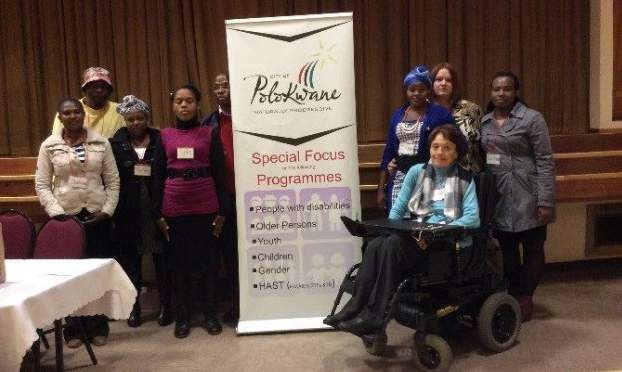
To improve the mobility of people with disabilities,        This element of the training is best delivered by                                                                           systems to ensure that public vehicles are roadworthy
everyone engaged in the design, delivery, operation         people with disabilities who can explain at first-hand     Mexico                                                           and operated in accordance with licences.
and use of transport and the pedestrian environment         what their needs are24.
                                                                                                                       Some 81.2 million inhabitants in Mexico’s urban centres
needs training. These people range from senior                                                                         rely on public transport for up to 80% of their urban transit    However, fines should be sufficiently high to deter
managers to transport employees in direct contact           In addition, training needs to cover any legal             needs. But many features of these transport systems are          repeat offence.
with the travelling public, including bus drivers and       requirements under national or international law and       non-inclusive and inaccessible for users.
station staff.                                              any best practice guidance that is available.                                                                               Another incentive to stimulate good performance
                                                                                                                       El Poder del Consumidor commissioned an assessment of
                                                                                                                                                                                        might be the use of social and other media to
                                                                                                                       the accessibility of bus rapid transit systems in eight states
Professionals from architects to road engineers need        MONITOR AND ENFORCE COMPLIANCE                             in Mexico. The report highlights non-compliance of public        publicise successes in disability inclusive transport
training to better understand the needs of people with                                                                 transport systems, particularly the bus rapid transit (BRT)      and even to publicise poor performance as a means of
disabilities so that these needs can be incorporated in                                                                corridors, with current national and international technical     stimulating action to make improvements.
the design and construction of transport infrastructure.       What people with disabilities want:                     standards on barrier-free accessible services.

                                                                                                                                                                                        See how Ghana is monitoring and enforcing
Many countries do not include training on disability
                                                               “Legislative support & control                          The 16 BRT corridors studied were assessed on five
                                                               mechanisms” (South Africa)                              accessibility criteria:                                          accessibility standards27.
issues as a condition of employment or qualification in                                                                   •     Interior features at the station
the transport sector. Yet, this simple step can make a         “Infrastructure improvement through                        •     Connectivity of stations to public space
very significant difference to a large number of people.       stringent law enforcement mechanisms                       •     Operational features in relation to service               Ghana
                                                               to penalize perpetrators at all levels.”                   •     Interior features of the buses
                                                               (Sri Lanka)                                                •     Connection to intermodal transfer facilities              Pedestrian walkways and obstacles on routes are major
Training should include the understanding of different                                                                                                                                    barriers to the mobility of people with disabilities.
types of disability and how it affects ability to travel.                                                              The assessment confirmed that none of the BRT systems in
It must include hidden disabilities, such as autism and                                                                Mexico is fully accessible.                                        In December 2016, the National Council on Persons
mental health issues, as well as the needs of those         The Laws and standards are essential to ensuring                                                                              with Disabilities published a document entitled Ghana
with mobility or sensory impairments.                       universal access to transport systems.                                                                                        Accessibility Standards in a Built Environment to ensure
                                                                                                                                                                                          easy access to public buildings and facilities for people with
                                                                                                                                                                                          disabilities.
Training in this area is fundamental to understanding       But to ensure the benefits are extended to everyone,     Although many countries have laws against
what must be done and why. There are countless              mobility standards have to be monitored and enforced     discrimination on disability including public transport,             The aim is to ensure that people in wheelchairs, those with
examples worldwide of well-intentioned accessible           in the design and implementation of transport            there is little evidence that these laws are used to                 limited walking abilities, vision loss, older people, children,
facilities and services that fail to meet the needs of      infrastructure and systems. As shown in this example     enforce compliance and to raise standards26. One                     pregnant women and temporarily disabled people have easy

people with disabilities. This is largely because these     from Mexico25.                                           exception is South Africa, where there is evidence                   access to public places including walkways and parks.

facilities were designed and constructed without                                                                     of progress towards disability inclusive transport by
awareness and understanding of the needs.                                                                            monitoring and enforcement of standards.

                                                                                                                     Compliance monitoring can be done in various ways,                 The document serves as a tool to measure and audit
                                                                                                                     such as:                                                           universal accessibility and to increase awareness of
   Training should typically include:
                                                                                                                                                                                        accessibility standards and the need for barrier-free
   •   A discussion of barriers faced by persons with disabilities, covering attitude,                                  •    People with disabilities can be invited to report          design.
       environment, and organizational barriers                                                                              on their travel experience to the responsible
   •   Information on all disabilities, including hidden disabilities                                                        authority. This type of monitoring is very
                                                                                                                             effective, simple and low cost.
   •   Suggestions for removing barriers faced by people with disabilities (including changed
       driver behaviour to improve safety for passengers with disabilities), and the skills needed
                                                                                                                        •    The relevant authority can carry out spot
       for serving passengers with disabilities (for instance, taxi drivers may need to learn how
       to fold a manual wheelchair by following the directions of a wheelchair rider who needs                               checks, for example, to ensure that equipment
       to transfer to a regular seat)                                                                                        is working and that transport staff are
                                                                                                                             behaving appropriately.
   •   Communication skills for communicating with people with disabilities, particularly those
       with a hearing impairment or with learning disabilities
                                                                                                                     The requirements for disability inclusion must be part
   •   Enabling staff to deal with unexpected occurrences – to ‘think on their feet’ if a problem                    of the transport operator’s contract and a system
       arises (e.g. what to do in case there is an accident or other emergency)                                      of penalties must be in place for consistently poor
   •   Training is not a “one time only” event                                                                       performance as well as non-compliance of transport
                                                                                                                     infrastructure and operation. The level of penalties
                                                                                                                     should be decided locally and be in line with other
What people with disabilities want28: The WHO estimates that
“To have good wheelchairs which can be
used on the pavement” (Somalia) more than 70 million
“Remove shops from footpath” (Nepal) people need a wheelchair
“Inappropriate wheelchairs cannot push and that in low income
over uneven ground to get to roads”
(Kenya) countries only 5 to 15%
have access to one.
The starting points for personal mobility are the right
equipment - a wheelchair, a long cane, crutches or a
walking stick, and barrier-free streets and pavements.
MORE ACCESSIBLE PAVEMENTS AND
These basic requirements are the first priority before
ROADS
improvements to vehicles and transport infrastructure
and services. Research in the UK29 has led to recommendations on
the maximum travel distance for wheelchair users and
others on a level surface without a rest as shown in
Transport planners and decision makers are not
table below.
directly responsible for providing basic mobility aids.
But they need to understand the importance of these Table 1: Recommended maximum distances for wheelchair users on a level
surface without rest
aids before embarking on potentially complex and
costly mobility and transport improvements.
Mobility limitations | Recommended maximum
APPROPRIATE WHEELCHAIRS AND Type of impairment distance on a level surface
MOBILITY AIDS without a rest
Wheelchair user (manual 150
Wheelchairs must be appropriate to local conditions. wheelchair)
For a person with a disability to be mobile with a
Mobility impaired person 50
wheelchair, every part of a journey from door to using a cane
door must be barrier free. This means that mobility
Mobility impaired person 100
improvements must be planned for each individual without walking aid
BETTER MOBILITY
route. Local people with disabilities should be consulted
about the challenges along the route from their housing
area to their shopping centre or bus stop.
STARTS FROM HOME
Specially designed wheelchair to meet local conditions in Uganda Specially designed wheelchair to meet local conditions in Afghanistan
Photo: David Constantine, Motivation Photo: David Constantine, MotivationCommon barriers that hamper the mobility of people Practical assistance for people with low vision should
with disabilities in towns and cities include: include colour contrast on kerb edges and tactile
• Poorly maintained streets paving surfaces. These aids to safe mobility should
be correctly installed by engineers trained in their
• Inadequate traffic management
use. Blind and partially sighted people in the area
• Insufficient physical segregation of pedestrians also need training to become familiar with these road
and cyclists, and motorised vehicles safety guides.
• Few places for people with disabilities to pause
and rest. The UK provides guidance31 on tactile paving surfaces,
As well as contributing to road safety, the following
which were developed in co-operation with people ACCESS AUDITS IN GEORGE TOWN, PENANG,
with impaired vision and are now in common use. For
road improvements contribute to the mobility of
MALAYSIA
instance, a warning surface at the top of stairs and a
people with disabilities: guidance/warning surface used in conjunction with a
• Improved road and pavement/sidewalk layout flush dropped kerb at a street crossing (see photos).
Access audits have identified deficiencies
in the pedestrian infrastructure in central
• Level access at crossing points
Facilities to improve the safety of older pedestrians George Town.
• Safe refuges (rest points) on busy roads.
and those with disabilities have been introduced in
many places. For instance, in Seoul, Republic of Korea, The accessible sections did not connect to
Attention must be given to where and how mobility
priority is given to the construction of mid-island create a network, many sections were not
improvements are implemented. For instance, in
refuges on wide roads to protect slower-moving older constructed to satisfactory standards, and
Tanzania, a level surface over a drain creates access
for wheelchair users, but without warning signals,
pedestrians32. potentially accessible sections were blocked
the crossing is potentially dangerous for people with
by objects, such as signposts and flower
impaired vision.
A good starting point for planning access pots. Motorists were parking on footways and
improvements is an audit of current facilities and motorcyclists riding on accessible footways.
engaging local people with disabilities in the process.
A key aspect of accessible design is the gradient of
wheelchair ramps. Ramp gradients should not exceed
See what has been done in Penang, Malaysia33. The project identified footways and road
1:12 (8%). For safe and independent use, aim for a crossings as first priorities to connect accessible
maximum of 1:20 (5%)30. sections to create a network of footways.
In Tanzania, a level crossing of a drain creates access for
wheelchair users, but without warning signals, the crossing is
potentially dangerous for people with impaired vision.
Photo: Access Exchange International
London, UK, a warning surface at the top of stairs Photos: Dr Christopher Mitchell
and a guidance/warning surface used in conjunction
with a flush dropped kerb at a street crossing.
Photos: John Frye PhotographyWhat people with disabilities say: Phnom Penh, Cambodia
“Lack of last mile connectivity and lack In Phnom Penh, Cambodia, a wheelchair accessible tuk
of reliable public transport connecting all (mobilituk) has been developed that is opening up door-
destinations” (India) to-door transport to many people with disabilities. After a
successful trial, 11 mobilituks are now operating in various
“Exploitation with regards to part of Cambodia.
discriminatory inflated prices in informal
taxi sector” (South Africa)
In regions where even the most basic outdoor
mobility is affected by poor pedestrian and street
infrastructure, door-to-door transport may be the only
viable mobility option for people with disabilities.
These options are simple and low cost, such as Photo: Ian Jones, Agile Development Group
rickshaws and tuk tuks. However, demand responsive
transport often requires advance notice (48 hours)
that severely limits the ability for spontaneous travel.
Karachi, Pakistan
NON-MOTORISED TRANSPORT
In Karachi, Pakistan, the Rickshaw Project is part of a
Non-motorised transport – rickshaws, trishaws and network of organisations throughout the country working
to create an inclusive society and welcoming people
pedicabs – are the cheapest, most reliable, most
with disabilities. The Rickshaw project has developed an
widely available and consumer friendly forms of autorickshaw with hand controls to accommodate a disabled
transport. They provide a valuable means of local driver, and space to carry passengers with disabilities.
mobility for those unable to walk long distances The prototype was developed with the help of crowd
because the service is door-to-door. These services funding and the design has been given to a local rickshaw
manufacturer. The Rickshaw Project has recently partnered
are also of great value to people with hidden
with Careem (the Uber of the Middle East and Pakistan).
disabilities, such as intellectual impairments or mental Soon accessible rickshaws driven by people with disabilities
health issues, who do not have the confidence to use will be part of their fleet.
public transport.
DEMAND Recent developments in renewable energy offer
additional opportunities. For instance, in Bangladesh,
RESPONSIVE
solar-powered electric rickshaws are reducing the
burden on young, fit rickshaw drivers and are opening
opportunities for people with disabilities to become
TRANSPORT
rickshaw drivers34.
In Luanda, Angola35, an auto rickshaw service is giving
employment to amputees as well as providing a
transport service for people with disabilities visiting
local rehabilitation centres. Photo: The Rickshaw Projectcan be greatly improved by raising the level of the bus
What people with disabilities want: stop to enable passengers to board the bus on the
same the level. See George Municipality, Western Cape,
“The improvement of the transport
system, proper consultations with South Africa.
disabled people in the initial planning
phase” (South Africa)
In many countries, public buses have high steps with
no aids to help wheelchair users and other people
with mobility difficulties to board. The barriers and
challenges to the mobility of people with disabilities
and relatively simple means to overcome these barriers
are presented in the table below.
A key area of transport often neglected in many
countries is transport for schoolchildren and young
people with disabilities. There is an urgent need for
liaison between transport and education authorities
to ensure that appropriate transport is available. This
topic is covered in depth in Bridging the Gap: Your Role
in Transporting Children with Disabilities to School in
Developing Countries36.
BUSES
Mobility can be greatly improved by implementing low-
cost solutions. For example, a wayside platform with a
ramp to aid bus boarding. Access to low entry buses Photo: George Municipality, South Africa
Table 2: Tackling barriers to mobility
PUBLIC TRANSPORT:
TACKLING BARRIERS TO MOBILITY
Journey Wheelchair user Walking Vision Hearing Learning Mental health
ROAD TRANSPORT
stage difficulty impairment impairment disability issue
Getting from Appropriate Smooth surfaces; Barrier free Visual Clear signs Clear signs
home to bus wheelchair barrier free pavements; directional
stop/station pavements; tactile marking signing
resting places at crossing
points
Smooth Ramp or lift; Handholds; Colour contrast Visual Clear information, Clear
surfaces raised bus stop; raised bus stop or on step edges information staff available to information,
low floor bus and hand holds help staff available
space on board to help
Barrier-free Smooth surfaces Easy access to Easy access to Visual Clear information Clear
pavements seat; seat; information on on next stop information,
time to reach seat audible next stop calm
before vehicle information on environment
departs next stop
Barrier free Barrier free Barrier free Tactile Clear Clear information Clear
pavements pavements pavements; guidance; information and signage information
resting places designated and signage
crossing pointsAn experiment in Maputo, Mozambique, using raised
bus platforms to help people with disabilities to get
on and off the bus was initially successful but was
abandoned because the bus stop was constantly
blocked by informal taxis and other vehicles37. This
provides a lesson for government and operators of
the importance of training and enforcing appropriate
traffic behaviour as part of access improvements.
Hong Kong, China
Driver behaviour and overcrowding cause
Photo: Christo Venter additional problems for people with disabilities
in all parts of the world. Operational measures,
such as management of priority boarding, can be
In Delhi, India, the Delhi Transport Corporation has helpful.
introduced new accessible bus shelters with access
ramps and tactile guidance. An example of a flexible bus service accessible
for people with disabilities is the Public Light Bus
service in Hong Kong. Two accessible low entry
minibuses have been added to the vehicle fleet on
a trial basis.
Photo: Subhash Chandra Vashishth, Director, Svayam
The vehicles, which can be booked in advance by
wheelchair users, take routes that link with major
In many low-income countries, small buses or jitneys
hospitals. If the trial is successful, further vehicles
are used which are more flexible and manoeuvrable
than large buses but are generally not accessible
on hospital routes will be added.
to wheelchair users. Whatever the vehicle size and
how ever difficult access for someone with walking
difficulty, there are low-cost measures that can help
many people. For example, a clear colour contrast on
step edges helps people with low vision to board and
alight safely. Handrails in the entrance can make it
easier to balance while climbing steps.
Photo: John Frye Photography
Photos: Mr Leslie Chan CMILT, Hong Kong
There are other features to help people with
impaired hearing or vision to travel independently
by bus. The modern Go George public bus service
in the Municipality of George in South Africa has
visual announcements to help people with hearing
loss (bottom right) and a “read speak” system for
passengers with vision impairment (bottom left).
Photos: George Municipality, South AfricaBUS RAPID TRANSIT
A popular public transport solution in many low-
and middle-income countries is the BRT, a means
of transport often supported by multilateral lending
agencies.
When designed well, the BRT provides a high-quality
service that meets the needs of people with a wide
range of disabilities. But these features must be
included in the design and construction to ensure
the system can serve all public transport users. For Delhi, India
instance, the BRT system in Lagos, Nigeria, was
built without access ramps and handrails, and the Samarthyam (Indian National Centre for
Transjakarta busway in Jakarta, Indonesia, requires Accessible Environments)40 intervened in the
passengers to use long flights of steps at stations with planning stage of the Delhi BRT to ensure level
no alternative means of access. boarding from the platform to the bus; ramped
Photo: Tshwane Municipality, South Africa access to the bus queuing area; tactile paving; and
If access provisions are not built in right at the Braille route and information signs.
beginning – if possible, as a funding condition – it is
extremely difficult and expensive to retrofit them. The BRT systems need to be viewed as part of a longer The ramp handrails and the configuration
World Bank have published guidelines on making BRT chain of accessibility starting with the surrounding of tactile paving were worked out with BRT
accessible for people with disabilities which includes streets and pavements and taking into account how
information on getting the design right from the
architects during the implementation. The ramp
people can reach the BRT safely and with confidence.
start38. has level resting places that help wheelchair users
In some cities, passengers have to board the BRT in
the middle of a busy freeway, which is dangerous for
to manage the long continuous slope.
Here are examples from Dar es Salaam, Tanzania and everyone, especially people with disabilities.
Delhi, India of BRT systems that were well designed
and operated for passengers with disabilities. Effective measures include pedestrian crossings
with traffic lights to give priority to pedestrians and
traffic calming. See the new station at the Tshwane
Dar es Salaam, Tanzania Bus Rapid Transit System, Pretoria, South Africa
with colour contrasted tactile guide strip to guide
A modern BRT system in Dar es Salaam, Tanzania, takes
passengers with low vision.
into account the needs of people with disabilities. At an
early stage, the design team engaged with Comprehensive
Community Based Rehabilitation in Tanzania (CCBRT)39, Unfortunately, the Delhi BRT system, which was
an advocacy group for people with disabilities. The design opened in 2008, has now been closed because of Photos: Samarthyam
team took on board recommendations to improve access,
other transport planning issues and the dominance
including lower ticket office windows, braille on tickets, and
colour contrasted rails to help people with low vision.
of the private car. This is a loss of a key means of
independent mobility for people with disabilities.
Photo: CCBRT Advocacy GroupRail transport takes many forms, ranging from
traditional heavy rail to light rail, tram and metro. Each
presents different access challenges but increasingly
rail systems can be designed and constructed to meet
the access needs of everyone.
MAINLINE RAIL
In making mainline rail transport accessible to people
with disabilities, careful consideration must be given
to the design and operation of stations and trains.
Railway stations in major cities are often large and
complex, and are difficult for people with low vision,
for example, to navigate with confidence.
Clear visual and audible information and tactile
guidance are essential to help people access and use
these stations. A mainline railway station in London
has floor information trails that provide additional
information to help passengers.
Photos: Ann Frye Ltd
PUBLIC TRANSPORT:
Photo: John Frye Photography In India, Samarthyam is working with the rail company
to develop accessible on-board toilets and boarding
devices to enable people with disabilities to travel
RAIL TRANSPORT
Many countries still have old, inaccessible rail services
with comfort and dignity. Disability experts were
with high floor boarding from track level. While at
engaged from the start, existing facilities were audited
least in the short term, wheelchair access may not
and a series of mock-ups of new facilities were tested
be possible, people with other disabilities are helped
by people with disabilities.
by colour-contrast step edges and handholds (as
shown in photo from Norway), and audible and visual
Indian Railways plans to launch the new accessible
passenger announcements on stations and trains.
Train 18 with features including:
A ramp or a lift is often required to enable wheelchair • GPS-based passenger information system
users to board trains but there can be a gap between • Automatic doors
the platform and doorsill. There are examples around • Spacious connecting doors for wheelchair
the world of boarding systems that are kept either on mobility
the station platform or on the train. This example from • Modular toilets with accessibility features
Norway shows a lift fitted in the train doorway. By far • Dedicated space for parking wheelchairs
the preferred solution is to design and construct level
• Braille features.
access between platform and station.
Photo: Ann Frye LtdLIGHT RAIL AND TRAMWAY Therefore, new systems need to be carefully designed
and constructed so that subsequent refits to make
Light rail and tramway systems are relatively new them accessible are not required.
and should therefore incorporate accessibility as a
non-negotiable design requirement. Because these However, old systems can be improved. As shown in
transport systems travel at relatively low speeds, the photo of the London Underground, one section of
level boarding is easy to achieve. The gap between the platform has been raised to provide level boarding
the platform and the train can be eliminated and between platform and train. Clear colour contrast Singapore
manoeuvring space for wheelchair users provided. and a tactile warning strip along the platform edge
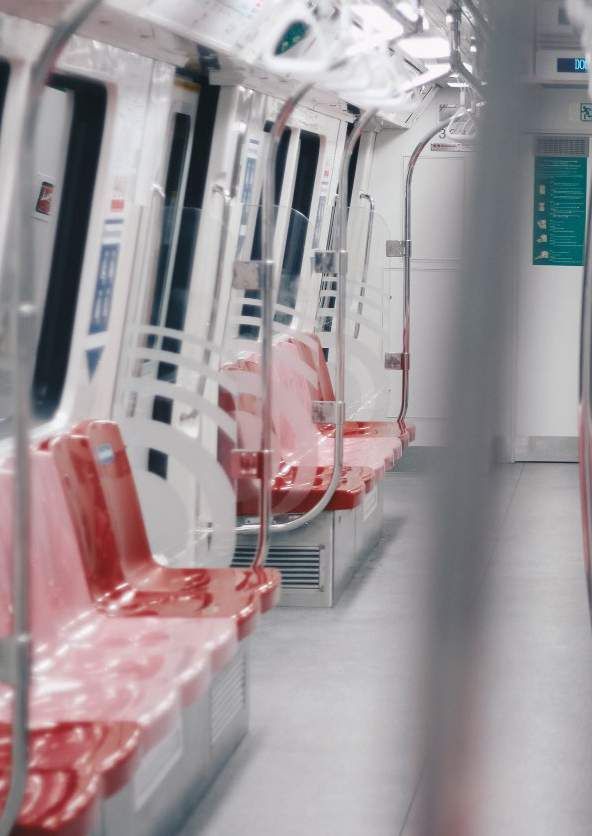
See the photos of Croydon Tramlink in the UK. are essential safety and guidance features for all All Mass Rapid Transit (MRT) stations are
passengers including passengers with disabilities. equipped with barrier-free facilities, such as
However, there are still examples of tramway systems ramps, lifts and wheelchair accessible toilets.
in the middle of a major road requiring passengers There are two wheelchair accessible carriages
to cross several lanes of road traffic to access them. on each train.
This situation is dangerous for everyone and often
impossible for people with low vision, for example. Visually impaired travellers can use the braille
plates in station lifts and follow the tactile
Old tram systems with high floors and street level ground indicators to guide them from the
boarding present a much bigger challenge to entrance to the platform. The indicators also
accessibility. But access can be made easier for serve as warnings near the platform edge.
many people with simple low-cost improvements, On board the train, station names and audio
such as colour contract on step edges and instructions for transfer are announced at
handholds at the entrance. every stop.
Photo: John Frye Photography
UNDERGROUND RAIL AND METRO Platform indicators help people with
As well as making trains and platforms accessible, hearing impairment to find arrival times and
Building accessibility features into new systems is access routes, entrances and exits must be barrier destinations of approaching trains on the Rail
relatively straightforward provided there is proper free, as well as the street environment around metro Travel Information System. On the North-South
consultation and the engagement of people with stations. When new schemes are proposed, full and East-West lines, the Singapore MRT Active
disabilities. However, retrofitting accessibility accessibility of trains and station infrastructure should Route Map Information system specifies the
provisions to old systems is more difficult and costly. be a non-negotiable funding condition. arrival station. Train doors have flashing red
lights to warn passengers of doors closing.
Croydon Tramlink, UK
Photos: Rail Accessibility Ltd.Hyderabad, India A report from Hyderabad, India41, illustrates the need for a wide-ranging approach to disability inclusion and highlights the need for a comprehensive approach to accessibility on metros. The authorities have ensured that metro trains and stations, including lifts, fare gates and ticket vending machines, cater the needs of people with disabilities. A test run with a small group of people showed they were able to buy tickets, cross the barrier gates, enter the lift, get to the station area, and board trains. However, additional measures are needed to ensure the safety of people with disabilities. The entrances to Nagole, Miyapur and Parade Ground Stations are on roads with limited vehicle access thus enabling easy navigation for wheelchairs. But the entrances to Rasoolpura, Ameer-pet and Secunderabad stations are on service roads that could be dangerous for people with disabilities. A senior officer of the Hyderabad Metro Rail said "Our duty is to provide facilities for people with disabilities to travel comfortably. There will be people to help them at the street level. But with busy roads on both sides of some stations, it seems doubtful whether passengers with disabilities will be able to enjoy metro travel."
In some countries, waterborne transport is an
                          essential and integral part of day-to-day mobility. In
                          Bangladesh42, for example, 12% of the rural population
                          rely solely on river transport to connect with the rest
                          of the country.

                          There are few international standards and guidelines
                          on access to waterborne transport but there are
                          examples of good practice.

                          In Hong Kong, China, the Transport Department
                          sets minimum access standards as a condition of
                          tender for new ferries. This is an example of good
                          practice that could be adopted in other countries
                          for all forms of public sector tendering for transport
                          vehicles and infrastructure.

                          Where there is little or no tidal or other movement,
                          relatively simple low-cost ramps can be used to provide
                          a level boarding platform. However, in places of tidal
                          movement, additional boarding assistance will be
                          needed because ramp gradients are too steep at low
                          tide. In the UK, the Wheelyboat Trust43 has designed
                          accessible boats suitable for canal and river transport.

RIVER & WATERBORNE
TRANSPORT

                     Photo: The River Thames Boat Project                            Photo: Local Solutions
You can also read


