WILLIAM TORBITT PRIMARY SCHOOL PROSPECTUS 2020- 2021
←
→
Page content transcription
If your browser does not render page correctly, please read the page content below

WILLIAM TORBITT PRIMARY SCHOOL

                                PROSPECTUS
                                       2020- 2021

Resilience Co-operation Thoughtfulness Adaptability Respect Enquiry Morality Communication

        Article 3 The best interests of the child must be a top priority in all things that affect children.
CONTENTS

 3 Welcome                     16 Religious Education and
                                  Collective Worship
 4 School Information
                               17 Sex and Relationships
 5 Vision Statement               Education

 6 Nursery                     17 Child Protection
   Organisation
   Admission                   18 Discipline and Behaviour

 7 Your Child’s Learning       20 Charging Policy

 9 Extra Help for your Child   21 School Uniform

10 Special Needs               22 Healthy Eating

10 Parents and School          23 School Meals

11 Reporting Concerns          24 Medical Care
   Complaints                     Medicine
                                  Routine Examinations
12 Home Learning Policy
                               24 Absence from School and
13 Music Lessons and              Lateness
   Extra-Curricular Clubs
                               25 Security
14 Disability Access Equal        Parking
   Opportunities
                               26 Local Authority Support
15 Equal Opportunities

                                                     2
WELCOME

                    A warm welcome to William Torbitt Primary School -
                     a school very much at the heart of the community!

We are a school where children’s rights are at the heart of our ethos and culture, to improve
well-being and to develop every child’s talents and abilities to their full potential. We have
received recognition and been awarded the ‘Bronze award’ and are working towards our silver
award as a ‘Rights Respecting School’. These awards are given to schools on behalf of Unicef
UK.

We believe that when children feel valued, safe and are well-supported and appropriately
challenged, they make good progress and achieve well. To this end, we work hard to ensure
there is very much a family feel here, even though we are a large primary school, with over 740
pupils. It is also our belief that children achieve most when the home and school are working
together, so we see parents/carers as partners in their education.

There are high expectations of staff as well as pupils, and a continual striving for excellence. Our
aim is to provide the children in our care with the necessary values, skills, knowledge and
understanding to be confident, respectful and successful young people.

The school is well resourced, with interactive whiteboards in every classroom, a purpose-built
cookery room, library, ICT suite, sensory room and multi-purpose community space. The
school itself is set in extensive grounds, with an orchard, allotment plot and wildlife area; an
invaluable outside learning environment for the children.

This prospectus is your introduction to the school. It cannot tell you everything, but will give you
general information and some insight into the work that we do. You will get a better picture if
you pay us a visit. Please phone the school for an appointment. I look forward to meeting you.

Mrs Paven Kettory – Acting Head Teacher

                                                                                                   3
SCHOOL INFORMATION
Address                        William Torbitt Primary School
                               Eastern Avenue
                               Newbury Park
                               Ilford
                               IG2 7SS
Telephone Numbers              020 8599 1209
Fax Number                     020 8599 6227
Email                          admin.williamtorbitt@redbridge.gov.uk
Website Address                http://www. williamtorbitt.org.uk
Executive Headteacher          Mrs Clare Pike
Acting Headteacher             Mrs Paven Kettory

Chairman of Governors          Mr Rajesh Zala
School Times
Nursery                        Morning session                 8.45am - 11.45 am
                               Afternoon session              12.30 pm - 3.30 pm
Reception & Years 1 - 6        9:00 am - 3.20 pm

William Torbitt Primary School is a large school in the London Borough of Redbridge
School with three classes in Reception, Year 1 and Year 2 and four classes in Year
3 – Year 6.

Children can be admitted into our Nursery from the age of 3, if spaces are available. If
you wish to add your child’s name to our Nursery waiting list, please contact the school.

Application for Reception classes must be made separately to the London Borough of
Redbridge at Lynton House. Children admitted into Reception can stay with us until the
age of 11.

                                                                                         4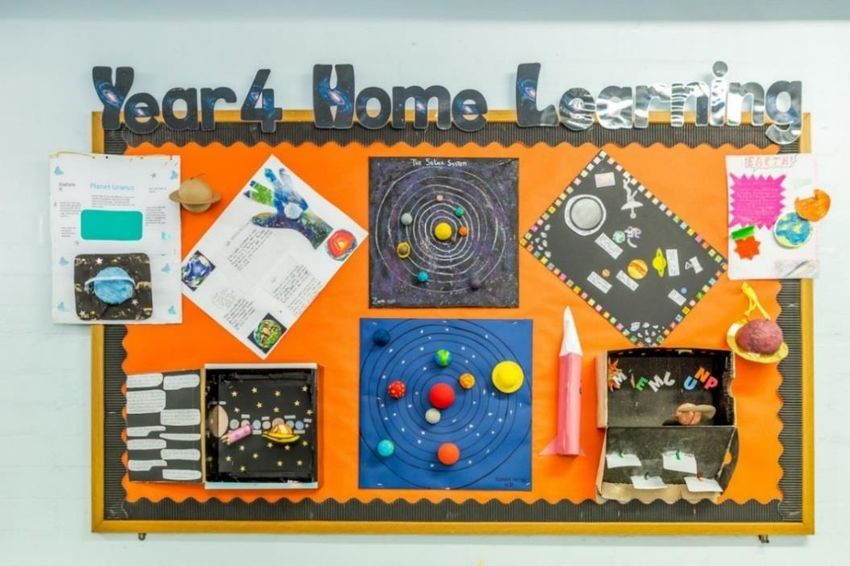
VISION STATEMENT

           We want William Torbitt Primary School to be:

                      A learning community
     a place of high expectations and excellence, where all the
        children can achieve full potential in their academic,
          creative, personal, physical, moral and spiritual
                           development.

                       A caring community
where children and adults feel they make a positive contribution and
                    are valued and respected.

                     A working partnership
          between children, parents, staff, governors and
                   the community as a whole.

                                                                  5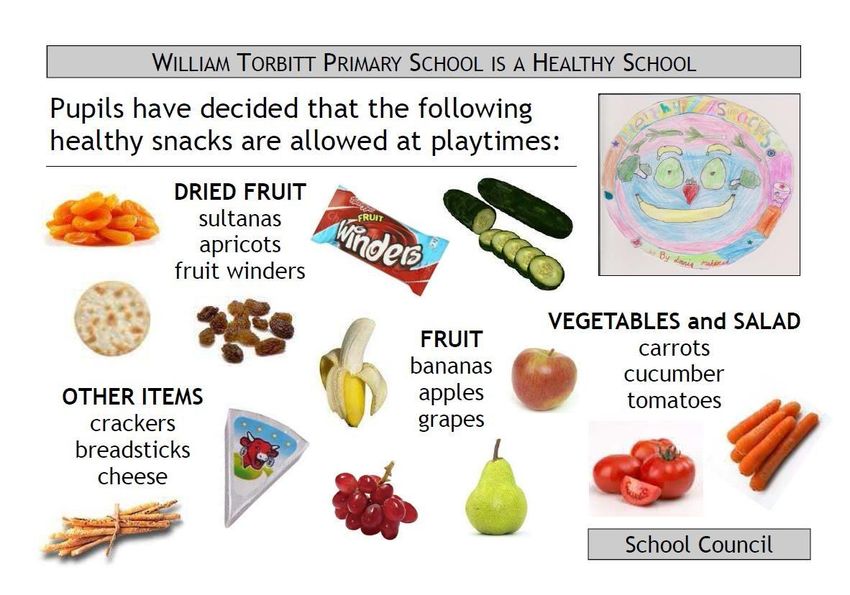
NURSERY

The Nursery has two 3 hour sessions each day. The morning session is from 8.45am
until 11.45am and the afternoon session is 12.30pm until 3.30pm.

There are 26 places in each session.

ORGANISATION

There are 25 classes throughout the school with three classes in Reception,
Year 1 and Year 2, and four classes in year Year 3 – Year 6

ADMISSION

The age at which children are admitted to the Nursery is dependent upon the number of
places available. Children who attend our Nursery are not automatically given a place in
our Reception class.

Children are admitted to Reception classes in the September of the academic year in
which they have their fifth birthday. Admissions to Reception are dealt with by the
schools’ admissions team at Lynton House, Ilford. Go to
https://www.redbridge.gov.uk/schools/primary-school-admissions/ for more
information.

All parents/carers will be invited to an introductory meeting where routines will be
explained. Children will have the opportunity to visit the school and meet the teacher.

Some children settle quickly into school, others need a little more time. When they first
start school your child may want you to stay for a little while until he/she is safely settled
in the classroom.

Children become independent quickly and are able to see themselves into the school
with their teachers when they are collected from the playground at the beginning of the
school day.

                                                                                             6
YOUR CHILD’S LEARNING
Like all local authority maintained schools, we follow the National
Curriculum and the guidance for the Early Years Foundation
Stage (Nursery and Reception), offering a broad and balanced
curriculum to all our children. This curriculum will stimulate your
child to acquire knowledge and develop individual skills.

Children’s achievements are celebrated and everyone enjoys
success and praise regularly during their time in school. We
encourage children to become independent and confident in both
their work and social development.
In this school we recognise that learning consists of:
•   Acquiring knowledge
•   Understanding and exploring ideas
•   Perfecting skills
•   Developing good attitudes.
In order for this to take place the children
must:
•   Be involved with things that interest
    them
•   Be active in their learning
•   Be encouraged to work with each other
•   Make progress and be challenged in
    each area of learning
•   Be encouraged to think and act for
    themselves and become independent.

Learning in Nursery and Reception

At William Torbitt Primary School we greatly value the important role that the Early Years
Foundation Stage (EYFS) plays in laying secure foundations for future learning and
development. However, we also believe early childhood is valid in itself, as part of life.
We believe it is important to view the EYFS as preparation for life and not simply
preparation for the next stage of education.

All children begin school with a variety of experiences and learning. It is the privilege of
the practitioners working in Early Years Foundation Stage to take on the task of building
upon that prior learning and experience. This is done through a holistic approach to
learning, ensuring that parents / carers and EYFS practitioners work effectively together
to support children's learning and development.

                                                                                          7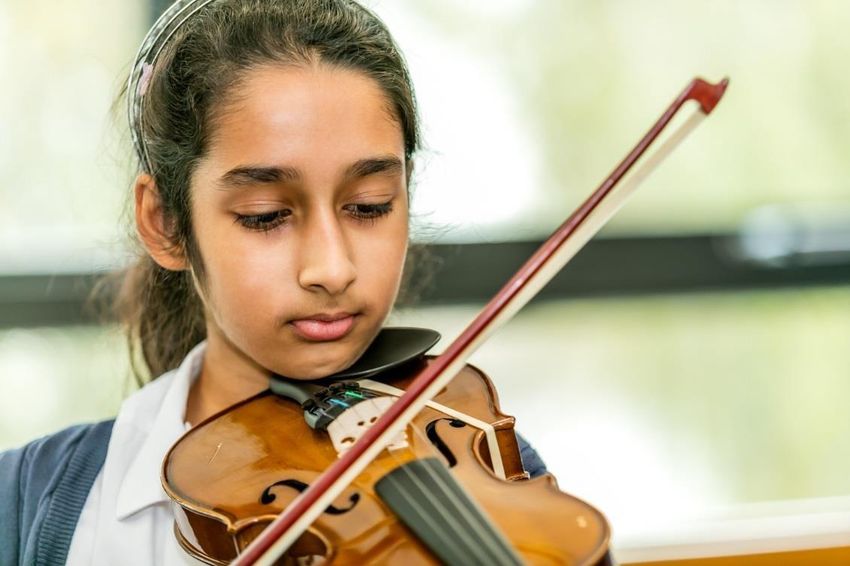
In the Early Years Foundation Stage, the seven areas of learning and development are:

▪ Personal, Social and Emotional
  development – making relationships,
  self- confidence and self-awareness and
  managing feelings and behaviour.

▪ Communication and Language –
  listening and attention, understanding and
  speaking

▪ Physical development - moving and
  handling, health and self-care

▪ Literacy (including reading and writing)

▪ Mathematics (includes number, shape, space and measures)

▪ Understanding the world – people and communities, the world and technology

▪ Expressive arts and design – exploring and using media and materials, being
  imaginative.

Learning in Years 1 to 6
The National Curriculum at Key Stage 1 (5-7yrs) and 2 (7-11yrs) is made up of:
English
Maths
Science
Computing
History
Geography
Music
Art and Design
Design Technology (DT)
Physical Education (PE)
French (Years 3-6)
Personal, Social, Health and Education (PSHE)

Further Information about the curriculum can be found on our website.

                                                                                   8
EXTRA HELP FOR YOUR CHILD
Registering your child for ‘Pupil Premium’ means that we are able to claim funding to provide
extra resources for your child.

‘Pupil Premium’ funding is an extra amount of money paid direct to the school from the government for
every child, who meets any of the following criteria:

   •   Pupils eligible for a Free School Meal
   •   Children adopted or in care
   •   Pupils who parents are in the armed forces

We believe that this money can make a big difference to your child’s education. Through this we can
provide your child with extra resources / support. We have been able to offer the following, which would
not have been possible without Pupil Premium funding:

   Remissions for extra-curricular activities and music tuition
   Remissions for our Y5 residential trip to Norfolk.
   Employment and training of staff that support pupils eligible for Pupil Premium in the classroom.
   Free breakfast club places
   Subsidised afterschool club places
   Additional teaching support (e.g. morning booster classes)
   Support with school uniform
   Free revision guides for KS2 SATs preparation

This list is not exhaustive but gives a flavour of what we are able to achieve with Pupil Premium funding.

How does it work?

1. First, check if you qualify for Free School Meals:

You should register your child for free school meals if you get any of the benefits below – even if they are in
Reception, Year 1 or Year 2:

   •   Income Support
   •   Income-based Jobseekers Allowance
   •   Income-related Employment and Support Allowance
       Support under Part 6 of the Immigration and Asylum Act 1999
       Child Tax Credit, provided you are not also entitled to Working Tax Credit and have an annual
       income (as assessed by HM Revenue & Customs) that does not exceed £16,190
   •   During the initial roll out of the benefit, Universal Credit
   •   Anyone entitled to Working Tax Credit is not entitled to Pupil Premium regardless of income

2. Registering is really quick and easy – if you think you qualify visit:
https://www.redbridge.gov.uk/schools/free-school-meals/

Registering is confidential and it will not affect any other benefits you are claiming.

Please talk to someone in the School Office if you have any questions.

                                                                                                           9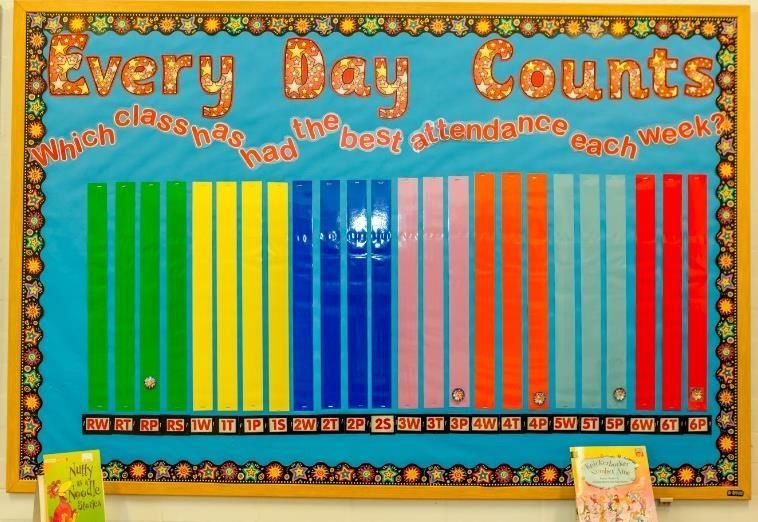
SPECIAL NEEDS

At William Torbitt Primary School we are committed to supporting, challenging and
nurturing all children to enable them to achieve at school. This is done through Quality
First teaching in the classroom, by our teaching and support staff.

In some cases, it may benefit our children to access further help and support in a specific
way. If there is a need for a child to have access to specific styles of learning and support,
to remove a barrier to learning, this will be done through help for the child, in liaison with the
parent/carer and supported by the trained Inclusion Team alongside school staff. We will
endeavour to work in partnership to make sure the child reaches their full potential by
ensuring an excellent team around the child.

The Governing Body are responsible for monitoring the SEND provision in line with
policies. They have annual reports on progress of children with SEN to ensure children
make progress. If parents have any concerns about their child’s progress they should
speak to his/her teacher.

PARENTS / CARERS AND SCHOOL
Parents/carers are a child’s first and most important educator. At William Torbitt Primary
School we value and appreciate the important role they have to play in supporting their
child and developing a positive attitude to school and learning.
Research has shown that children learn best when home and school work in partnership.
At William Torbitt we offer a wide range of opportunities for parents/carers to actively
participate in supporting their children in school.
•   The Parent-Teacher Association (PTA) - All parents are automatically members of
    the PTA, and an annual general meeting is held each year when members of the
    committee are elected. The PTA organise various events throughout the year. These
    events raise money that will enable them to provide equipment and experiences that
    might not otherwise be available to the pupils within the school.
•   Parent/Teacher consultation evenings - A chance for parents/carers to find out how
    their child is doing in school. There are consultation evenings in the autumn and spring
    terms.
•   Report to Parents – Halfway through the academic year a mid-year report is sent out
    to parents. This briefly outlines the progress made by pupils so far, as well as their
    attendance. In July a fuller annual report on each child’s attainment and progress
    during the year is sent home. This report covers many aspects of your child’s learning
    and the child is encouraged to submit their own comments also. There is a parent’s
    comments Sheet on the report where parents are encouraged to comment, and which
    should be returned to school so that we know you have received it.

                                                                                          10
• Open Evenings - In the summer term parents/carers are invited into school to have
a good look around their child’s classroom and see their work, as well as an informal
opportunity to speak to the class teacher.
• School Newsletters - We distribute a school newsletter with all the latest news and
information each month. A termly year group newsletter is also sent home/available via
the school website.
• Curriculum Information Sessions - There are opportunities to attend sessions where
areas of the school curriculum are discussed and explained in detail.
• Parent/Family Workshops - Opportunities to come and find out more about a specific
area and undertake some ‘hands on’ activities.
• Parent Forums – these are opportunities for parents/carers to meet with senior
leaders, and each other, on a more informal basis. This is a good platform for
sharing information and gathering views.
• School Events - Concerts, assemblies, sports days... We like to welcome
parents/carers to all or any of these events and the children enjoy their parents’
support on such occasions.
• Text Messaging/Email Service - The school text messaging service is operated by
Parentmail. This service is an excellent way of sending out quick reminders or
requests. In an endeavour to become paperless, we also use Parentmail to send out
letters via email.
Parent / Carer helpers in school
We welcome parents/carers’ help in school, provided that they have a DBS check carried
out. This could take the form of regular support within the classroom. Those interested in
helping should contact the school office. Other support welcomed include helping with a
school outing or at any of our special events or projects. If you would like to offer your
help, then please contact your child’s class teacher.
Reporting Concerns or Complaints
If a parent/carer has any worries, however small, it is always best to discuss them with the
class teacher.
We have in place a complaints procedure. This enables parents/carers to report anything
they feel is of concern. Concerns should be raised in the following order:
1. To the Class Teacher/Year Group Leader. Then, if there is no resolution;
2. To the Deputy Headteacher. Then, if there is no resolution;
3. To the Headteacher.
Problems can normally be solved at school level, but if you are not satisfied we have a
School Complaints Procedure which is available on our website.
11Breakfast Club / After School Club
We have a breakfast club and after school club on the school
premises that is run by Simply Out of School.
The breakfast club runs from 7:30am – 9.00am and costs £5.50 a session, whilst the after
school club runs from 3:20pm – 6:00pm and costs £10.50 a session. There are discounts
available for siblings and children who qualify for pupil premium.
For more information or to register your child contact Fataha Begum by calling
07934887986 or emailing fataha@simplyoutofschool.co.uk.
HOME LEARNING POLICY
Home learning refers to any work or activity which pupils are asked to do outside lesson
time, either on their own or with parents/ carers. It is an important aspect of a child’s
education, encouraging them to see that learning can take place outside the classroom
and promotes independent learning. It supports, prepares and consolidates school-based
learning and allows parents, carers and the school to work in partnership for the benefit
of the child.
We will set a range of activities to be completed out of school, e.g. tasks linked to literacy
or numeracy, learning of tables and topic-based projects. The school expects that reading
should be a daily activity for all children from Nursery to Year 6. The school also
encourages children to be involved in regular extra-curricular music and sporting activities,
days out to museums, galleries, outdoor activities and practical first-hand experiences out
of school.
By working together we
will be able to enhance
the children’s learning
through their activities
at home. Please
discuss any questions
you may have with the
teacher.
A full Home Learning
Policy is available to read
on request from the school
office and on the school
website.
12MUSIC AND OTHER EXTRA-CURRICULAR ACTIVITIES CLUBS
We provide a variety of clubs for the children. Some of these are free of charge, whilst
others incur a charge.
Clubs on offer
may include
football, netball,
dance, cookery
languages,
choir, arts and
crafts, etc.
We do try to
provide a range
of activities to
suit most age
groups and
interests, as
staffing allows.
We also offer small
group and 1:1
music tuition for
violin, piano and
guitar, where pupils
are entered for
graded
examinations and
participate in
concerts and
recitals throughout
the year.
13ACCESSIBILITIES FOR PEOPLE WITH DISABILITIES
Accessibility Plan
Our school is an inclusive curriculum and are committed to equal opportunities for all.
The school:
• Sets suitable learning challenges
• Responds to pupils’ diverse needs
• Overcomes potential barriers to learning and assessment for all pupils
The Accessibility Plan considers improving access for pupils who have difficulties in the
following areas:
• Mobility
• Manual dexterity
• Physical coordination
• Continence
• Ability to lift, carry or otherwise move everyday objects
• Speech, hearing, eyesight
• Memory or ability to concentrate, learn or understand
• Perception of risk of physical danger
• Social and communication difficulties including those on the autistic spectrum
The targets in the Accessibility Plan focus on:
• Increasing the extent to which those with disabilities can participate in the school
curriculum
• All staff need to be familiar with the specific needs of children with social and
communication difficulties on the school role
• Improving the physical environment of the school
• Ensuring the availability of information to those with disabilities is the same as that
which is provided to pupils who do not have disabilities
A person has a disability if he/she has a physical or mental impairment that has a
substantial, long-term effect on day-to-day activities.
Full copies of the Accessibility Plan and the Disability Policy are available on the school
website.
14EQUAL OPPORTUNITIES
William Torbitt is an inclusive school, working towards greater equality in the whole
school community. We use the curriculum and teaching to enhance the self-esteem of
pupils, and to provide a learning environment in which each individual is encouraged to
fulfil his or her potential. Equality of opportunity is available to all members of the school
community. For our school this means not simply treating everybody the same, but
understanding and tackling the different barriers which could lead to unequal outcomes
for different groups of pupils in school, whilst celebrating and valuing the achievements
and strengths of all members of the school community.
We believe that equality at our school should permeate all aspects of school life and is
the responsibility of every member of the school and wider community. All, whatever
their characteristics, should feel safe, secure, valued and of equal worth. At William
Torbitt, equality is a key principle for treating all people fairly, and creating a society in
which everyone has the opportunity to fulfil their potential - irrespective of their gender,
ethnicity, disability, religion or belief, sexual orientation, age or any other recognised
area of discrimination.
15RELIGIOUS EDUCATION AND COLLECTIVE WORSHIP
Our school is non-denominational, with children and staff from a variety of faiths. In line
with the 1988 Education Reform Act, which states that collective worship should be
‘wholly or mainly of a broadly Christian character’, assembles are based on Christian
values and principles. However, we conduct our assemblies in a manner that is sensitive
to the individual faiths and beliefs of all members of the school.
In our assemblies and RE lessons we learn about the religious beliefs of staff and pupils
and use this to enrich school life. Religious Education is provided in accordance with the
local authority agreed syllabus, and also includes fact-finding visits to local places of
worship.
Parents have the right to request that their child(ren) be withdrawn from religious
assemblies and lessons, in agreement with the Headteacher.
16SEX AND RELATIONSHIPS EDUCATION (SRE)
Sex and Relationships Education gives our pupils important opportunities to learn how to
make responsible and well informed decisions about their lives. Our programme, within the
framework of the National Curriculum, is embedded in the PSHCE (Personal, Social,
Health and Citizenship Education) and science programmes of study. It will help our young
people to learn respect for themselves and others and to move with confidence from
childhood to adolescence.
The curriculum is tailored to meet the age, emotional and physical maturity and
understanding of pupils. It closely follows programmes of study in the National Curriculum
for science. Sex and relationships education is taught directly within a PSHCE/science
topic in Year 5. It includes knowledge of how the body functions, how it grows and how we
change physically and emotionally, how a baby is born and puberty - for both boys and
girls. In all cases these issues are handled sensitively by staff, who are known by the
children.
Parents are always informed when sex and relationships education is taking place, so
that they can be prepared to answer questions within the cultural and moral setting of
their home. Parents have the right to withdraw their child from sex and relationships
education; and are required to speak to the Headteacher regarding this.
CHILD PROTECTION
We follow strict procedures to ensure that everyone who works with our children is vetted,
keeping our children as safe as possible. On-going checks and ‘whistle-blowing’ are in line
with current policy. Staff are trained in child protection issues, and are aware of the
procedures to follow. They are expected to be vigilant in order to maintain the safety of
our children.
The staff and volunteers at William Torbitt have an overriding responsibility to protect the
children at our school, and work in partnership with other agencies like the Health
Authority, Social Services and the police. Because our first concern must be the well-
being of your child, there may be occasions when we have to consult other agencies
before we contact you. The procedures we have to follow have been laid down in
accordance with current statutory guidance and Local Authority child protection
procedures.
17DISCIPLINE AND BEHAVIOUR
William Torbitt Primary School has a good reputation for well-behaved children. We
actively encourage harmony, both racial and social, and it is our aim that parents and
pupils support this. We strive to achieve this through reward cards and commendation
assemblies, which promote self-worth and generally encourage a positive school ethos.
However, if an incident of unacceptable behaviour arises, it is the school’s policy to deal
with it swiftly before the situation escalates. On the rare occasions when an incident
arises we have a policy in place to deal with the occurrence; this is outlined below. No
child has been permanently excluded from this school. Exclusions are rare in Redbridge
Primary Schools.
Behaviour within the school
The vast majority of our children play and learn happily, respecting others in the classroom
and playground. If a child is unable to do this, a member of staff is informed. If they feel it
is appropriate, they will refer the matter to a senior member of staff. If a child is frequently
unable to behave appropriately, the parents/carers are invited into the school to discuss
the matter. Where appropriate support is provided for the child.
18Serious incidents and exclusions
The following constitute serious incidents: fighting, bullying, wilful damage to people or
property, discriminatory behaviour or comments, serious disobedience to a request
from an adult and a disregard for school rules. A record is kept of such incidents, which
in serious cases at KS2 will follow the child to secondary school. More information can
be found in our school behaviour policy.
Parents/carers will be informed about any repetition of serious incidents and invited to
come in, in order to discuss how their child can be helped to behave more suitably in the
future. The child, whenever possible, should be invited to discuss decisions at the end of
the meeting.
If a single incident is of a very serious nature, the parents will be called immediately and
the child may be excluded on fixed term exclusion straight away. Formal fixed term
exclusion may be from 1-15 days in a term; this will stay on the child’s file permanently.
Incidents not involving formal exclusion will generally be removed from the child’s file
before transfer to another school. Exclusion is only used when, despite the school and
parents acting cooperatively over serious incidents, the child acts in a dangerous or
disruptive manner.
Physical restraint
At William Torbitt Primary School restraint is only used when it is considered that the child
will be a danger to him/herself, others around him/her, or to property. Key members of staff
have been trained in the Team Teach approach to physical restraint or the Safe Touch,
Holding and Restraint course.
Further details can be found in the school’s behaviour and anti-bullying policies, which
can be found on the school website.
19CHARGING POLICY
School meals
Parents/carers should decide at the
beginning of the week whether their children
are having packed lunch or school dinners.
Payment should be made in advance, online
– www.feedinghungryminds.co.uk. Advance
payment for several weeks is encouraged.
Resources
Parents/carers are not required to pay towards
resources for any activity that is part of the
National Curriculum.
Lost library books
The school has a charging policy for
books that go missing. Not many are
lost, as children are encouraged to
care for books and store them safely
at home and at school. However,
when a child has lost a book a letter
is sent home requesting that parents
pay the cost of replacing it.
Educational Visits
Educational visits provide a valuable opportunity for children to extend their
learning. Very detailed risk assessments are carried out for all trips and visits.
Information about trips is given to parents/carers well in advance. Parental
payment for all trips is voluntary. However, the school is unable to subsidise most
trips, therefore a shortfall in payment may result in its cancellation. All trips, clubs,
music tuition, etc. must be paid for online via Parentmail
www.pmx.parentmail.co.uk. Payments cannot be refunded if a child is unable to
attend a trip due to absence.
20SCHOOL UNIFORM
All children are required to wear
school uniform.
School Uniform:
• William Torbitt logo sweatshirt,
polo shirt and fleece or plain navy
blue school style jumper,
sweatshirt, cardigan, plain white
school shirt / polo shirt
• Grey skirt, pinafore dress or
trousers
• Black / navy blue jogging
bottoms
• Blue & white checked summer
dress
• White / grey / navy blue headscarf
• Black shoes or trainers
P.E. Kit:
White T-shirt
Black / navy blue
shorts / leggings /
jogging bottoms in cold
weather
Black plimsolls
PE kit should be brought
to school in a draw string
PE bag (not a carrier bag).
These can be kept on
their school peg during
term time.
All items of clothing must be clearly marked with your child’s name.
No jewellery must be worn, apart from religious jewellery, which must be removed for P.E. lessons.
If a child has pierced ears, small studs are permitted and must be removed or covered with
micropore tape during P.E.
21HEALTHY EATING
As a healthy school, William Torbitt Primary is committed to encouraging and developing
positive attitudes towards food and a healthy diet.
Snacks
All children in the Early Years Foundation Stage (Nursery and Reception classes) and
in Key Stage 1 benefit from the Free Fruit and Vegetable Scheme. Children in Nursery
and Reception also have free milk provided each day. Children in Key Stage 2 (Years 3-
6) are encouraged to bring a healthy snack to eat at playtime. The Healthy School
Committee consulted with pupils to agree which snacks can be brought to school for
break times. These are: Fresh and dried fruit, vegetables and salad.
Drinking Water
All children are encouraged to bring in a water bottle so they can have access to water
throughout the day. Water fountains are also located in the school for additional access to
drinking water.
22SCHOOL MEALS
School Meals
Hot meals are available every day. The school works closely with its caterers to
ensure a good range of healthy and tasty meals are provided.
Universal and Free School Meals
All children in Reception, Year 1 and Year 2 are eligible for universal free school meals
Children in year 3-6 may also be entitled to free school meals. Parents/carers should not
hesitate to apply if they think that they are eligible. Applications can be completed online at
https://www.redbridge.gov.uk/schools/free-school-meals/
The school office team are available to assist parents with applying for free school
meals. Please contact them for more information.
If a child has any special dietary needs parents/carers should let us know when their
child starts school.
Going Home for Lunch
Children can be collected from the school’s main reception if they go home for lunch.
Packed Lunches
Children may bring a packed lunch if they wish; lunch boxes should be clearly marked.
Pupils’ lunch boxes should offer balanced nutrition. Across a week, parents/carers are
encouraged to offer a variety of healthy foods for their children. Pupils are taught not to
share packed lunches, and parents/carers are reminded about the need to avoid sending
in packed lunches that contain nuts. Children are asked to leave any uneaten food in their
lunchboxes so that their parent/carer knows what they have eaten. Chocolate, sweets,
biscuits, crisps and cakes are actively discouraged as everyday snacks in school, or as
part of lunchboxes. Chewing gum and fizzy drinks are not permitted on the school
premises, or while the children are representing the school.
Birthdays and Special Events
Special events, such as Christmas parties in class, are a time when food contributes to a
sense of celebration and sharing. On these occasions, food other than fruit or vegetables
may be offered, but the staff will remind the children that this is an ‘occasional’ treat and
not an ‘everyday food’. On birthdays children are allowed to bring small treats for other in
their class. These are given to children at the end of the school, so that parents/carers
can give permission before the treats are eaten. All treats must be nut-free.
Please note that no nuts or products containing nuts may be brought into the
school, as we have a number of children with severe nut allergies.
23MEDICAL CARE
If a child becomes ill in school we will contact the parent/carer so that they can take them
home. If a child is injured and needs hospital treatment and a parent/carer/emergency
contact is unavailable, we will take them to the local hospital and stay with them until a
parent/carer arrives. Any treatment given in school is recorded in the School Medical
Book. Head injuries are routinely reported to parents. If your child has a special medical
condition, please let us know.
Medicine
If prescribed medication is needed during the school day (e.g. antibiotics...) a form must
be completed at the reception office, giving parental authorisation for the child to
administer their own medicine under the supervision of school staff. A spare inhaler for
asthma should be left in school. They should be named and an appropriate form filled in
by the parents/carers. (Please see the Supporting Pupils with Medical Needs Policy)
Routine Examinations
In common with most schools there are hearing and eyesight examinations carried out
from time to time by school health professionals. If they are at all concerned they will
contact the child’s parent/carer. The school dentist also visits regularly, and
parents/carers are normally informed of such visits. We occasionally have cases of head
lice; if a parent/ carer finds that their child has head lice we would be grateful if you would
make the school aware of the condition.
ABSENCE FROM SCHOOL / LATENESS
Research shows that children who
attend school regularly are likely to be
more successful. A pupil who misses
a day of school a week misses an
equivalent of two whole years in their
school life. This obviously leads to
gaps in their knowledge that become
difficult to fill.
The governors have adopted the
London Borough of Redbridge’s
Attendance Strategy. Therefore, the
Headteacher will not authorise
holidays during term time, and will only authorise absence in exceptional circumstances.
24Requests for planned absences have to be applied for in advance of the proposed leave
of absence; a form must be collected and filled in from the school reception office. Up to
three days of leave for religious observance may be granted in any one academic year.
It is parents' responsibility to notify their child's school as soon as possible on the
first day of any unplanned absence. If your child has been away from school without
any parental contact, the school will contact you in order to check on the
attendance.
Children should only be absent from school due to illness or unavoidable medical
appointments when an appointment card must be shown to reception staff in advance.
Where possible, parents/carers should ensure that appointments for the doctor/ dentist,
etc are not in school time. If a child is absent from school, a parent/carer must let the
school know by telephone as soon as possible, and by sending a note to his/her
teacher on his/her return, giving the reason why it is essential that children arrive at
school on time. Latecomers miss the introduction to the day and disrupt the other
children’s learning. Very late arrival may be marked as an unauthorised absence.
The School and the Education Welfare Officer, together with the Headteacher, regularly
monitor both attendance and lateness. Unauthorised absence could result in a fine being
imposed. Your child could also lose their place at this school.
SECURITY
Our priority at William Torbitt is to maintain a secure environment for pupils and staff.
During the school day all outer doors and gates are not accessible from outside; entry is
only by using the entry-phone to Reception or staff entry key fobs. All visitors must report
to the school reception area, sign the visitors’ book and wear a visitor’s badge.
PARKING
Parking is very limited around the school area. Where possible, families are
encouraged to walk/cycle to school, or to park a little distant away from the school
and walk.
Unfortunately, it is not possible to drop children off immediately outside the school gates
or by the barrier sections of the double yellow lines and red route, as this presents a
serious risk to the safety of our children and their families, as well as adding to the
congestion around the traffic lights. We ask parents not to flout these rules, even just for a
few minutes. We have very active pupil Junior Travel Plan Ambassadors, who work hard
to communicate the benefits for pupils and their families, of walking/cycling/scooting to
school.
25LOCAL AUTHORITY SUPPORT
Address: Children’s Services
London Borough of Redbridge
Lynton House
255/259 High Road
Ilford
Essex IGI 1NN
Telephone: 020 8478 3020
The Local Authority will give advice on a variety of subjects e.g.:
• Catchment areas of schools
• Admission procedures
• How to appeal against an unacceptable placement
• Complaints
• Arrangement for transfers between schools
• Free School Meals, clothing grants, travel passes
• Special Educational Needs
The information set out in this prospectus is correct to the best of our belief at the
time of printing. It may change during the school year. You will be informed if this is
the case. Further information can be obtained on our school website.
26You can also read


