#WilltoAct How social media giants have failed to live up to their claims on the Coronavirus 'infodemic' - Restless Development
←
→
Page content transcription
If your browser does not render page correctly, please read the page content below
#WilltoAct
How social media giants have failed to live up to
their claims on the Coronavirus ‘infodemic’

                        1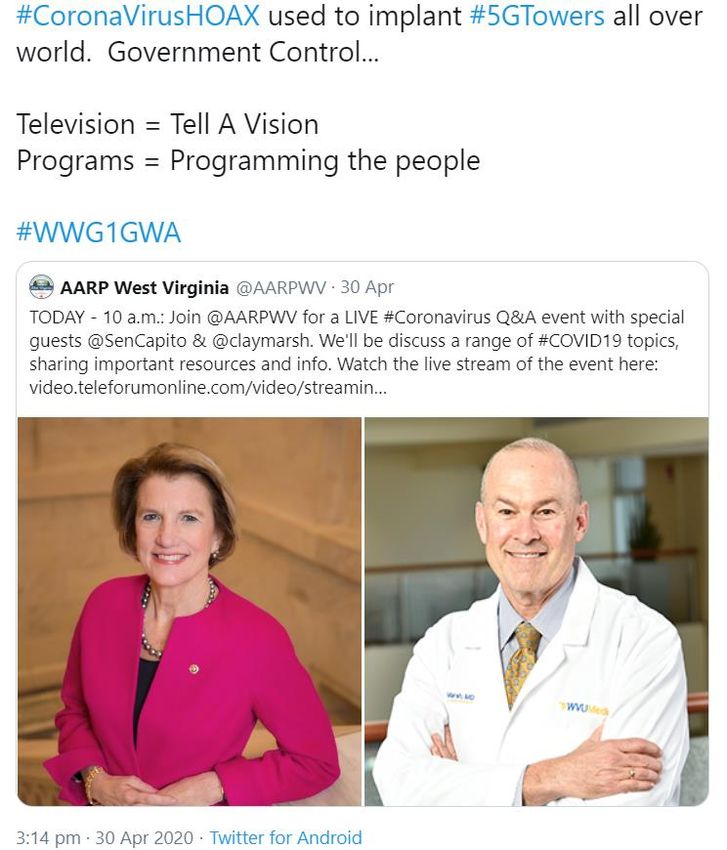
The Center for Countering Digital Hate is a not-for-profit NGO that seeks to disrupt the
architecture of online hate and misinformation.
Digital technology has changed forever the way we communicate, build relationships,
share knowledge, set social standards, and negotiate and assert our society's values.
Digital spaces have been colonised and their unique dynamics exploited by fringe
movements that instrumentalise hate and misinformation. These movements are
opportunistic, agile and confident in exerting influence and persuading people.
Over time these actors, advocating diverse causes - from anti-feminism to ethnic
nationalism to denial of scientific consensus - have formed a Digital Counter
Enlightenment. Their trolling, disinformation and skilled advocacy of their causes has
resocialised the offline world for the worse.
The Center's work combines both analysis and active disruption of these networks.
CCDH's solutions seek to increase the economic, political and social costs of all parts of
the infrastructure - the actors, systems and culture - that support, and often profit from
hate and misinformation.

Young people have the power to solve the world’s biggest challenges. Restless
Development is a global agency that works with young people so that they can lead in
solving those challenges.
Whether that means supporting communities to end child marriage or prevent HIV,
Restless Development works with young people to change their lives and the lives of
people in their communities.
Restless Development works with young people in 74 countries around the world and is
led by nine Hubs across Africa, Asia, the USA and UK. The agency has been working with
young people since 1985 and its work is led by thousands of young people every year.

Youth Against Misinformation
This initiative is being coordinated and supported by Restless Development and the
Center for Countering Digital Hate. It has two aims: to monitor and root out dangerous
COVID-19 misinformation online; and build the skill-set and agency of young people to
understand how misinformation is spread online, identify fake news and develop
strategies to tackle it. Volunteers receive comprehensive training on how to identify,
report and respond to harmful misinformation online, following five principles of CCDH's
Don't Spread the Virus campaign.

                                             2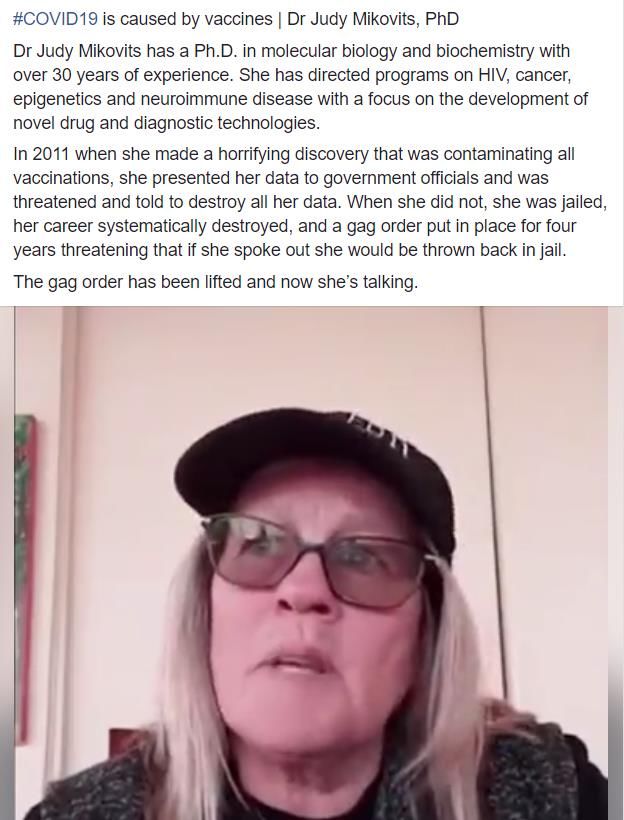
Introduction
In the Coronavirus pandemic, lies cost           vaccination, take a diagnostic test, or
lives. A pandemic of misinformation has          wear a facemask.2
followed the virus like a lethal secondary
                                                 But, despite public commitments, this
infection, undermining public confidence
                                                 report finds social media companies
in and commitment to the hygiene and
                                                 have failed to live up to their
social protocols we must follow to keep
                                                 commitments. In partnership with
ourselves safe.
                                                 Restless Development, CCDH trained
This misinformation spreads through              dozens of young volunteers in how to
digital channels, administered by                identify misinformation. These young
wealthy corporations that connect us all         people are digital natives, familiar with
in a constant flow of information. The           the features and nuances of the
ingenious nature of their profit model is        websites. We asked them to scour
that we do almost all the work. We               Facebook, Instagram and Twitter,
provide them with unprecedented                  recording problematic posts and
insight into our beliefs, emotions and           reporting them through the platforms’
preferences, and their algorithms                own interfaces.
analyse and segment us into archetypes
                                                 Our volunteers built a database of 756
to sell to other businesses for the
                                                 examples of misinformation gathered
purposes of advertising.
                                                 between April 20 and May 26, providing
Social media companies, nevertheless,            us with a sufficient sample to identify
have responsibilities to society. In a           the diversity and range of
pandemic in which we have all had to do          misinformation narratives currently
our bit, they have found it harder than          proliferating. Of the 649 posts flagged
ever to escape scrutiny. Indeed, in this         and reported by volunteers, only 9.4%
report we summarise social media                 were met with meaningful action. That
executives’ own statements                       means over 9 in 10 posts containing
acknowledging their responsibilities and         misinformation were not dealt with. This
the actions they claim to be taking.             is simply not good enough; the reporting
                                                 systems are not fit for purpose. Too
Studies show why this is so important.
                                                 much of the debate about the
Dr Daniel Allington of King’s College
                                                 enforcement of terms of service is about
London found that those who subscribe
                                                 algorithms and automated detection. But
to conspiracy theories about Coronavirus
                                                 even when social media companies are
are less likely to follow guidance to wash
                                                 handed clear cases of misinformation,
hands, socially distance and stay at
                                                 we have shown they lack the will to act.
home.1 Researchers at Oxford University
found that those who believe conspiracy          In recent weeks, Facebook found $400
theories are also less likely to accept a        million to buy Giphy, a meme library.
                                                 And yet they have put large numbers of
                                                 their human moderation teams on leave,

1
 https://www.kcl.ac.uk/news/covid-19-            2
                                                  http://www.ox.ac.uk/news/2020-05-22-
conspiracy-theorists-present-substantial-        conspiracy-beliefs-reduces-following-
health-risk-new-research-finds                   government-coronavirus-guidance-0

                                             3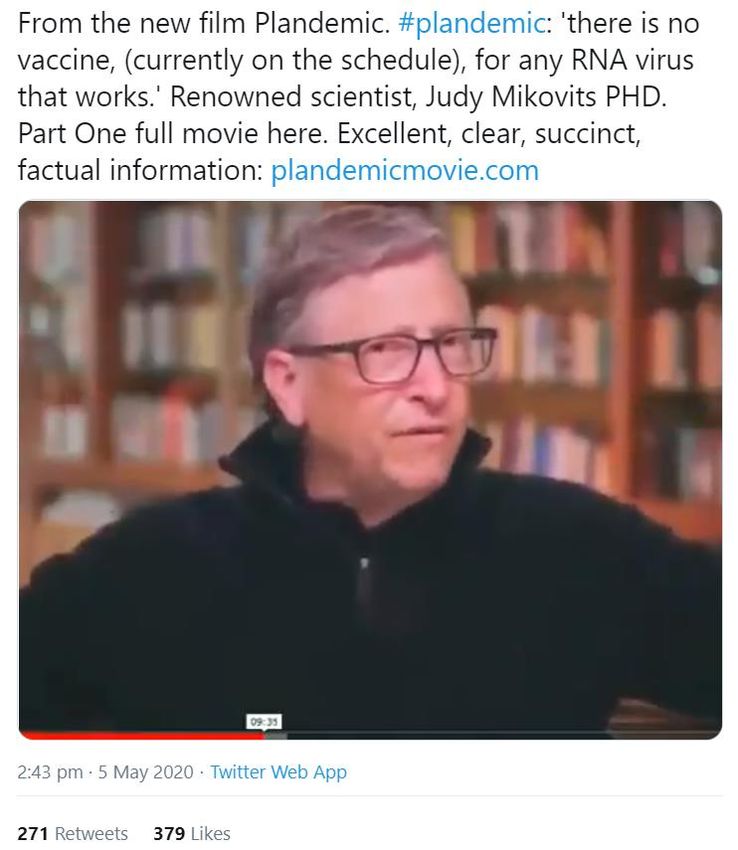
limiting their ability to manage what is         chains ensuring we could get food, and
published on Facebook.                           indeed our Youth Against
                                                 Misinformation volunteers, who stepped
If these companies continue to make
                                                 up and did more still. Social media
bold claims that they are acting and yet
                                                 companies have profited lavishly from
fail to do so, then politicians and
                                                 this crisis and yet, when the time came
regulators must step in and force these
                                                 for them to do their bit, they issued PR-
companies to pay from their lavish
                                                 driven claims yet failed to act. Whether
profits for the social harms - including
                                                 hubris, greed or indifference motivated
the lost lives - for which they are
                                                 them is something we cannot know; but
responsible, and submit to deeper and
                                                 we are judged as people on our deeds,
more rapid regulation in future.
                                                 not our words. As the stark results of this
When the history of this pandemic is             report show, their deeds have just not
written, the true heroes will be the             been good enough. And yet, there is still
billions of citizens around the world who,       time. This pandemic will be with us for
in order to protect each other and               months to come. It is time for them to
especially the most vulnerable, showed           their bit.
steadfast determination and stuck to the
                                                 Imran Ahmed
most stringent peacetime proscriptions
                                                 Chief Executive Officer
in living memory. We did our bit. And
                                                 Center for Countering Digital Hate
there are those, like our medical
professionals, the workers in our supply

                                             4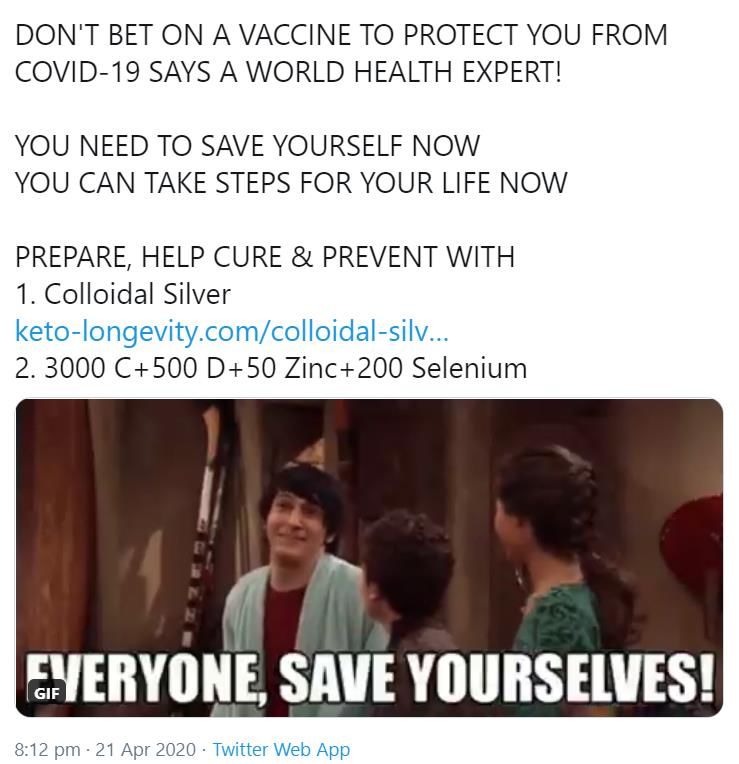
Claims by social media companies
For a comprehensive list of social media companies’ stated policies towards Coronavirus
misinformation, please visit https://www.counterhate.co.uk/tech-company-claims.

Facebook has promised to remove false content or conspiracy theories that could be
harmful. Mark Zuckerberg has been clear that this includes content promoting false cures
and 5G conspiracies.
“We will also start to remove content with false claims or conspiracy theories that have
been flagged by leading global health organizations and local health authorities that
could cause harm to people who believe them. We are doing this as an extension of our
existing policies to remove content that could cause physical harm. We’re focusing on
claims that are designed to discourage treatment or taking appropriate precautions. This
includes claims related to false cures or prevention methods — like drinking bleach cures
the coronavirus — or claims that create confusion about health resources that are
available.”
Facebook, January 30 2020, https://about.fb.com/news/2020/05/coronavirus/
“Things like saying that something is a proven cure for the virus when in fact it isn’t: we
will take that down. Another example which I know has been very prevalent in the UK
has been 5G misinformation, which has led to some physical damage of 5G
infrastructure, so we believe that that is leading to imminent risk of physical harm, we
take down that content.”
Mark Zuckerberg, BBC News, May 21 2020, https://www.bbc.co.uk/news/av/technology-
52749066/zuckerberg-facebook-to-take-down-coronavirus-misinformation

Instagram has promised to remove “harmful misinformation related to COVID-19” as well
as false claims or conspiracy theories flagged by fact checkers and leading global health
organisations.
“This is in addition to our existing policies on misinformation. If posts are rated false by
third-party fact checkers, we remove them from Explore and hashtag pages.”
Instagram, March 24 2020,
https://about.instagram.com/blog/announcements/coronavirus-keeping-people-safe-
informed-and-supported-on-instagram
“We also remove false claims or conspiracy theories that have been flagged by leading
global health organizations and local health authorities as having the potential to cause
harm to people who believe them.”
Instagram, March 24 2020,
https://about.instagram.com/blog/announcements/coronavirus-keeping-people-safe-
informed-and-supported-on-instagram

                                              5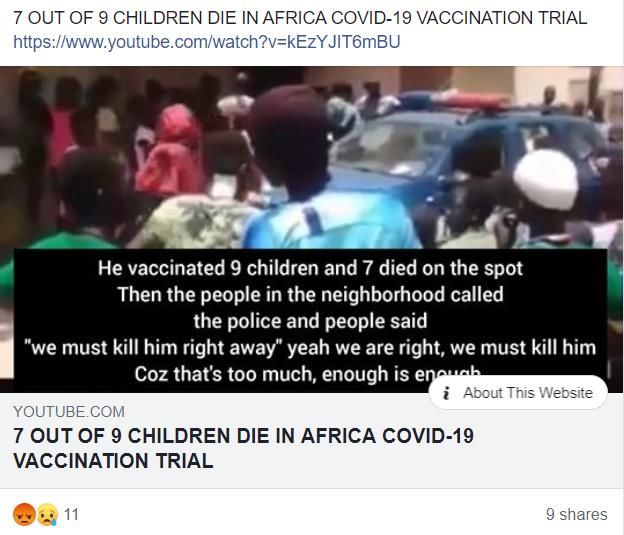
“We’re removing known harmful misinformation related to COVID-19, and when
someone taps on a hashtag related to COVID-19, we show resources from @WHO, @CDC
and local health authorities.”
Instagram Comms, Twitter, March 6 2020,
https://twitter.com/InstagramComms/status/1235984308994703360

Twitter has promised to remove tweets that deny the effectiveness of measures to
prevent the spread of COVID-19, promote false cures for the disease or deny scientific
facts about it.
An update on our content moderation work, Twitter, March 27 2020,
https://blog.twitter.com/en_us/topics/company/2020/covid-
19.html#misleadinginformation

                                            6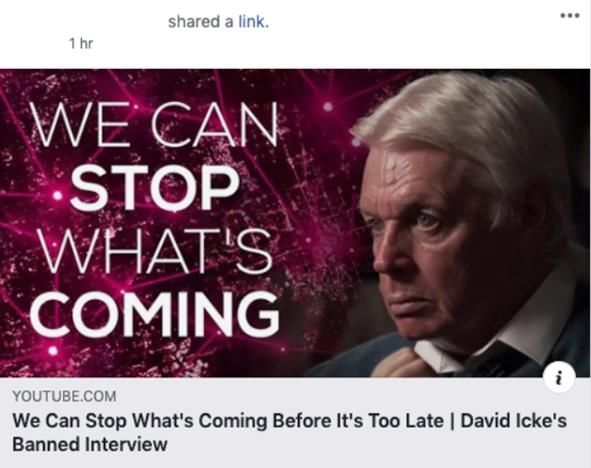
Methodology
 Why Youth Against Misinformation volunteers got involved:

 “Misinformation can spread very easily online, which makes it feel
 difficult to deal with. By volunteering as part of YAM, I'm able to
 understand it better myself and make a direct difference.”
 “I joined YAM because I was concerned about how misinformation could
 impact global health efforts to save lives. It is also nice to be able
 to make a difference from the comforts of your own home!”
 “I joined   YAM because I wanted to learn more about the scope and the
 impact of   the spread of misinformation online. Upon seeing the amount of
 false and   potentially harmful information that is being spread, I'm glad
 that I am   now aware of it and can try to help tackle it.”
 “Having seen the damage that misinformation can have on vulnerable
 people, I thought the creation of YAM was vital, and jumped at the
 chance to get involved.”

The Youth Against Misinformation team            found, they reported it to the platform,
of research volunteers worked on this            and recorded the following information
project for five weeks, from 20 April. We        in a database:
have used the posts they reported to
                                                 •   A screenshot of the post
platforms up to and including 26 May for
                                                 •   A URL link to the post
this report.
                                                 •   The date the content was posted
Volunteers were trained and managed              •   The date the content was reported
by both Restless Development and the             •   The platform on which it was posted
Center for Countering Digital Hate               •   The name of the Twitter or Instagram
(CCDH). Training covered how to spot                 account that posted the content, or
misinformation about coronavirus, the                the Facebook group in which it was
most prominent narratives and                        posted
conspiracy theories, the best available          •   The topic of the misinformation
resources for checking whether a claim is        •   Any further important observations
truthful, as well as how to navigate the             of interest.
platforms and report posts. CCDH staff
                                                 Part-way through the project, the team
explained the platforms’ claimed terms
                                                 began sharing URL links so they could
of service and rules, to ensure that posts
                                                 file multiple reports for flagged content.
that were being reported contravened
                                                 However, this does not appear to have
stated guidelines. Regular feedback
                                                 affected the proportion of posts
sessions with CCDH and Restless
                                                 removed.
Development staff, the latter of whom
have experience in safeguarding,                 The team searched in a variety of
ensured volunteers had safe spaces in            Facebook groups chosen by CCDH, all of
which to identify any concerns they held.        which have thousands of members.
                                                 Groups were selected if they fulfilled any
The team searched Instagram, Twitter,
                                                 of the following criteria: they had been
and Facebook for content which included
                                                 set up recently and were primarily
misinformation about Covid-19. For each
                                                 concerned with coronavirus; they were
post containing misinformation they

                                             7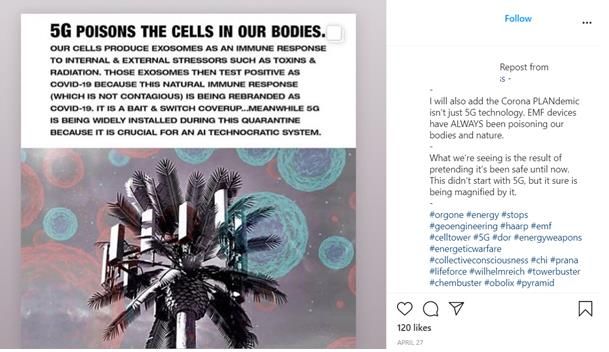
groups that CCDH was already familiar             plandemic; bioweapon; #wuhanflu;
with as heavily-populated with medical            #Coronajihad; #Germjihad; iv drip; test
misinformation; or they were groups               kit; immune system; population cull;
that CCDH suspected would be worth                vaccine.
investigating based on their subject and
                                                  This set of terms was devised based on
a preliminary evaluation of their content.
                                                  misinformation narratives that CCDH and
This purposive sampling was required
                                                  other research organisations had
due to the opaqueness of Facebook’s
                                                  identified as gaining traction during the
search function. The list included ‘Arnica’
                                                  Coronavirus crisis. It was revised to
and ‘Coronavirus UK’, groups which have
                                                  include new terms as the project
been reported in the media for
                                                  progressed and researchers identified
containing large quantities of
                                                  new narratives emerging.
misinformation about Coronavirus but
remain online.                                    CCDH audited the tweets, posts and
                                                  pages in the database, removing a small
For Twitter and Instagram, the team
                                                  proportion which didn’t meet the
used structured searches via the main
                                                  platforms’ own criteria for harmful
search functions, with the following
                                                  misinformation. We then checked which
terms: 5g; 5gtowers hoax; colloidal silver;
                                                  posts, accounts and groups had been
vitamin c; bill gates; george soros;
                                                  acted upon.

                                              8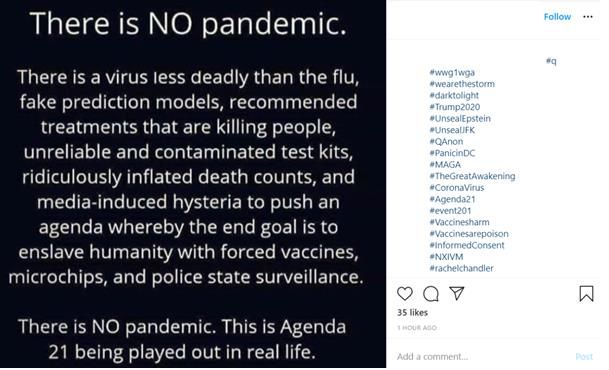
Findings
    Platform   Posts         Group/ account       Post         Flagged as     Total acted
               Reported      removed              removed      false          upon

    Facebook   334           0.0%                 10.2%        2.1%           12.3%

    Instagram 135            5.9%                 4.4%         0.0%           10.4%

    Twitter    179           2.8%                 0.6%         0.0%           3.3%

    Total      649           2.0%                 6.3%         1.1%           9.4%

756 posts were captured and reported to           •   1.1% of posts were labelled as false
the platforms in the period from April 20             and remained on the platforms with
to May 26. Of those reports, 107 were                 a disclaimer
filtered out by the CCDH for not meeting
                                                  Although each of the social media
our own assessment as to whether they
                                                  platforms investigated failed to remove
contravened the platforms’ terms of
                                                  the vast majority of the posts that were
service or publicly-claimed criteria for
                                                  reported to them, there was a significant
removing Coronavirus-related
                                                  divergence in the results from each.
misinformation. This left 649 posts
                                                  Facebook removed 10.2% of the posts
reported for containing misinformation
                                                  reported to them, while just one tweet of
to use in this analysis.
                                                  the 179 reported was removed by
For the study, we assumed posts and               Twitter. This was despite Twitter
accounts that can no longer be accessed           claiming to have adopted policies
were removed by the platform                      regarding coronavirus misinformation
responsible. It is possible, however, that        that appear to be stricter than either
they were instead removed by the                  Facebook or Instagram. Instagram only
group’s owners or administrators.                 removed 4.4% of the posts reported to
                                                  them (although we note that they have
The results are shown in the table above.
                                                  also removed 5.9% of accounts that
We found that 90.6% of posts                      published posts which our team
containing misinformation were not                reported).
acted on by social media companies
                                                  The reported misinformation that
after our volunteers flagged them as
                                                  remains available on these social media
containing misinformation.
                                                  platforms includes conspiracy theories
For the 9.4% of reported posts that were          and false claims that:
acted upon, the following actions were
                                                  •   Viruses cannot be transmitted by air
taken:
                                                  •   Covid-19 is caused by vaccines
•     6.3% of posts were removed from             •   5G mobile technology poisons cells
      the platform entirely                           and causes the illness known as
•     2.0% of posts belonged to accounts              Covid-19
      that have now been removed from             •   Coronavirus is a hoax, in order to
      the platforms                                   cover for the erection of 5G towers

                                              9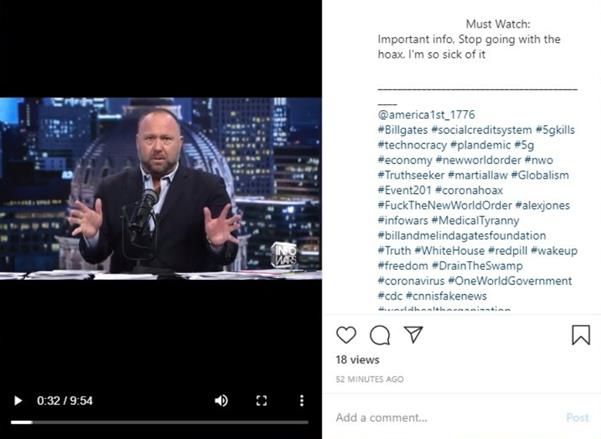
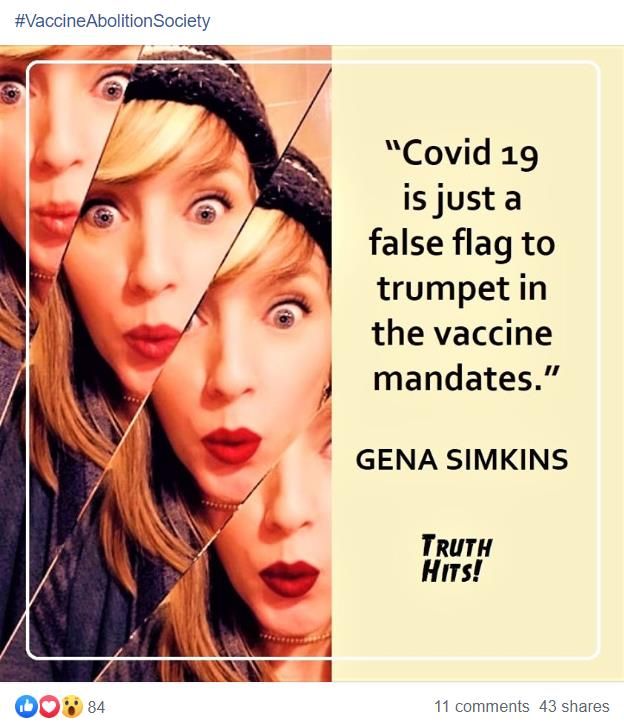
•   Covid-19 is a “false flag” in order to        High-profile misinformation videos
    force compulsory vaccinations                 which have ostensibly been banned by
•   Colloidal silver cures and prevents           the platforms are still available after
    Covid-19                                      reporting, including the “Plandemic”
•   Seven children died in a vaccination          movie, a David Icke interview, and a
    trial in Africa                               video of InfoWars’ Alex Jones suggesting
•   Taking vitamins C, D and zinc, and            the virus is a weapon. A reported video
    drinking hot water, cures Covid-19            of a 5G tower being burnt, with
•   Covid-19 can be cured by drinking             commentary and text in the post
    aspirin dissolved in hot water with           celebrating the arson, is also still online.
    honey                                         Examples of such posts are included in
•   Wearing a facemask causes cancer              the next section.
•   The pandemic is fake and will be
    used to microchip and enslave the
    public

What Youth Against Misinformation volunteers felt about these findings:
“I think it's frustrating because the links we report contain
misinformation as the main content. Freedom of speech is essential but
there is no value to misinformation which has the potential to lead to
harming public health. If manpower is an issue, this is worth investing
in because of the negative impact of misinformation.”
“When I joined I expected at least a third of the information we
reported to be removed. It's really disheartening to see only 1 in 10 of
what we report be acted upon, especially when it's to save lives and
stop hate.”
“It’s discouraging to see such few pieces of misinformation removed, but
it is particularly frustrating that there often doesn’t seem to be any
rhyme or reason as to which pieces are removed. However false something
is, there is clearly no guarantee these platforms will take the
responsibility to stop it spreading seriously.”
“It's frustrating to see that they're allowing harmful misinformation to
be spread so easily - especially when posts are being directly reported
to them.”

                                             10
Examples of material not acted upon
These are examples of posts the social media companies our volunteers reported but
against which no action was taken. Posts are provided for research purposes only. A final
check was carried out on June 1 and all were still available on the websites. We provide a
brief selection here.
1112
13
14
© 2020 Center for Countering Digital Hate Ltd

                     15
You can also read


