WORLD CLIMATE RESEARCH PROGRAMME - JSC-42nd Session of the WCRP Joint Scientific Committee - World Climate Research ...
←
→
Page content transcription
If your browser does not render page correctly, please read the page content below
WORLD CLIMATE RESEARCH
        PROGRAMME
JSC-42nd Session of the WCRP Joint Scientific Committee
 Detlef Stammer and Helen Cleugh (WCRP JSC Chair and Vice Chair)
Session 7: Way Forward and Next Steps

  1.  Enhancing WCRP’s collaboration with our co-sponsors and allied
      programmes and activities (D. Stammer/H. Cleugh)
  2. Preparation for COP 26 and UNFCCC (D. Stammer/M. Sparrow)
  3. Forthcoming events, meetings and conferences (Detlef/Helen/Mike)
  4. WCRP Secretariat report (M. Sparrow)
  5. Regional Consultations / Climate Research Forums (Helen)
  6. Update on WCRP Carbon footprint (P. Friedlingstein)
  7. New and emerging science issues (H. Cleugh, D. Stammer)
  8. Adjustments to finances and governance (D. Stammer, H. Cleugh, M.
      Sparrow)
  9. Implementation plan writing (D. Stammer, H. Cleugh)
  10. Wrap-up and close of the open session of JSC-42 (D. Stammer, H.
      Cleugh)

Chair H. Cleugh
Rapporteur: A. Caltabiano
Chat Moderator: N. Van der Wel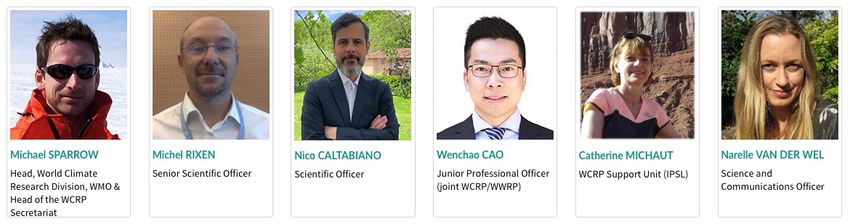
Collaboration with co-sponsors and partners

(D. Stammer/H. Cleugh)

a) Future Earth and ISC
b) WMO Research Board and WMO programs (GAW, GCOS,
   WWRP, et al)
c) US Global Change Research Program
d) Belmont Forum
e) IOC and UN Ocean Decade

Input from Session 6 (Science Partnerships)
COP 26, UNFCCC, State of the Climate

(D. Stammer/M. Sparrow)

a) UNFCCC report
b) COP26 preparation
c) WMO State of the Climate

Preparation for COP 26 and UNFCCC
• Significant and long-term engagement with UNFCCC SBSTA
  (Subsidiary Body for Scientific and Technological Advice) particularly
  with Research Dialogue

• COP (Conference of Parties) 26
   • COVID has meant planning and guidance has come very late
   • Still unclear if side events will be face-to-face or virtual
   • WCRP involved in:
      o Proposal submitted with ISC, Future Earth and others on Risk
           (My Climate Risk involved)
      o Launch event for 10NICS (New Insights in Climate Science)
      o Providing input to WMO UN proposal (theme still to be decided)
      o Discussion on WCRP-led side event with Future Earth; but
           unlikely considering 2nd July deadline.
      o Propose that for next COP WCRP registers itself as Observer
           Organisation

                                       https://ukcop26.org
Forthcoming events, meetings and conferences

(Detlef/Helen/Mike)

a)   Future of Climate Modeling
b)   Observations (with GCOS)
c)   WCRP/IPCC
d)   AGU 2021
e)   WCRP Sea level conference in 2022
f)   WCRP OSC 2023
g)   WMO/ISC/IOC OSC 2025

Within WCRP, we recognise the need to optimize and co-
design workshops between groups – first step is to do a
“stocktake” of all planned Workshops in coming 18-months

WCRP Secretariat Report

4. (M. Sparrow)
WCRP Secretariat Staffing 2021

                        (Sick Leave)   (started May 17th)   (50% until 31 Oct)   (30-50%)   (from 1 June)

                          •    Challenging period over last 18 months because of lack of staff in
                               the Secretariat. Offset in particular by help of colleagues in the
                               IPOs, Catherine from IPSL, and by dedicated Chair/Vice Chair
                          •    New (fantastic) staff starting or about to start
                          •    Additional cross-cutting staff in S&I department
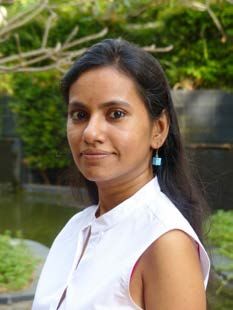
Hindumathi Palanisamy     •    Consultants supported by NOAA for WCRP OSC 2023
   Scientific Officer
   (From 14 July)         •    Looking at additional assistance from JPOs and Interns as well as
                               other countries seconding staff.
International Project and Support Offices
Almost 4 million dollars in national support
This is crucial to WCRP and gratefully acknowledged!
SPARC
DLR
Germany
CliC CORDEX Monsoons
Bjerknes SMHI IITM
Norway* Sweden India**
RIfS CLIVAR S2S
Planned FIO KMA
China Rep. Korea
ESMO GEWEX
Planned George Mason
USA
CMIP CORA CORA
ESA GERICS Bjerknes
UK Germany Norway
Until end 2021
*Possible new office in USA (TBC)
** Joint with WWRP
www.wcrp-climate.org/sponsorsIncome/Expenditure 2020/21 summary
2020 CHF 2021 CHF
(000s) (000s)
Expenditure (~42% of allocation) 328 Expenditure (to date ~ 7%) 75
(~20% of science)
Income: Income:
WMO Direct 333 WMO Direct 418
IOC Direct 23 IOC Direct 23
Voluntary – country - contributions 198* Voluntary – country - contributions 27**
NOAA funding for WCRP OSC 210
Fund from Trust Fund closure 51
Total 554 Total 729
(the below is assuming 100% exp.)
End of year assets 880 Predicted end of year assets 782
* NZ, Canada, Germany, Japan, China, ** Canada, NZ, Australia (several others
Russia, Finland, US in process) … assuming 260k eventuallyBudget 2022 (DRAFT!) Expenditure CHF Income CHF Temporary staffing 15 WCRP Office Operation 120 WMO Contribution to JCRF 2022 280 JSC travel 60 IOC Contribution to JCRF 2022 23 CLIVAR 85 Voluntary - country - contributions 260 CliC 85 (Subtotal) (563) GEWEX 85 SPARC 85 C/F from 2021 (estimate) 782 Regional Info. for Society 85 Earth System Mod. & Obs. 85 TOTAL ESTIMATED Lighthouse Activities x 5 150 AVAILABLE JCRF FUNDS for Grand Science Challenges 60 2022 1345 Fixed Term Proj., Cap. Building etc 20 Other (e.g. GCOS) 25 (Predicted C/F to 2023) 220 Implementation Activities 50 WCRP OSC Costs 115 TOTAL EXPENDITURE 1125
Climate Research Forums

5. Regional Consultations / Climate Research Forums [10-mins]
   (H. Cleugh)

Refer to Session 2 on Day 1 for recap. and progress

Next steps:
a) Roll out to South America, NZ, Southern Asia, Africa and
   Pacific Island nations
b) Continue analysing feedback
c) Plan for follow-up Actions
   •   Drafting short “activity reports”
   •   Approach, key messages and lessons learned
   •   Options for ongoing Forums (or not) and links to our other regional
       activities (RIfS and CORDEX; My Climate Risk ..)
   •   Check back in with RFPs …
WCRP Carbon Footprint 6. Update on WCRP Carbon footprint [10 mins] (P. Friedlingstein)
Emerging science issues

(D. Stammer, H. Cleugh)

Input from Sessions 5 (Science Gaps) and 6 (Impact of WCRP
Science)
Science Gaps
• Budgets and cycles of heat, water, carbon, etc.: cross-cutting
  project “co-owned” by: SPARC, CLIVAR, GEWEX and
  perhaps SLC?

• Organize work on extremes as an integrating, cross-cutting,
  element integrating extremes work and building on a
  Extremes Platform as support unit.

• Climate intervention: details to be worked out.

• Others:
   •   Human element in e.g. links with development trends but also other
       such as geoengineering.
   •   Data Assimilation: Needs to be cross-cutting: across timescales,
       coupled
Other High-level Science Questions
Aggregation Aerosols
and scaling How can we
How to improve better
What is the
climate understand
impact of What
modelling and climate
different fundamenta
process sensitivity?
forcings? l
understanding? science is
needed? How can we
Considering all scales
Disruptive communicate
How can we technology uncertainty
Parameterization make predictions better?
more useful and
relevant to How can we
society’s needs? improve climate What will
predictions? What happen in
opportunities do the high
new latitudes?
technologies
What will be the Is response provide?
impact of action What does
Geoengineering? needed? society need What can we
to know? Data-model expect in regional
fusion What will climate hotspots?
happen to
low-lying
Prediction islands?
Attribution
Heat
How will
reservoirs change Urbanization
What is the
How will climate in the future?
interaction
extremes occur in Carbon between climate
the future?
and development
trends? Land-use
Evolution Water
ChangeFinances and governance (D. Stammer, H. Cleugh, M. Sparrow) Project Support for Core Projects and LHAs: • JSC is committed to move quickly to set up IPOs for ESMO and RIfS and explore the option of establishing Project Support Units to support the approved LHAs. • Finance and budgets to be discussed and approved at JSC- only session. Input from Sessions 5 (Coordination and Communication) and 6 (Resources)
Engagement (ECRs, regions, partners)
•   We speak a lot about it, but need to act NOW! Start by implementing existing rules!
    Who are the people? : people database collected from different workshops, fora etc… and
    use it to enlarge future contributions and engagements.
    This is more easy for new activities : it is the right time! And the basis for success stories
•   The door is open … but where is the door? Communication aspects, but also
    investment from people who are in to bring in new people
    Different aspects : New people in WCRPs scientific activities, new people in panels and
    visibility for new leadership.
    Need flexibility and to foster scientific leadership for short time projects with high
    level outcomes. (true for ECRs, MCRs, and engagements at regional/local scales)
•   Barriers:
    Lack of turn over in some activities and panels; Languages and confidence in promoting
    science in non-native language;
    Step appearing too big and need first for personal engagement in small groups (local,
    regional etc)
    Career development for ECRs and unstable jobs
    Diversity in the way people are working (age, gender, regions, culture, .. ): need to be
    sensitive to it
Communication and Coordination Breakout Group: Main Themes Memberships, Engagement, and Participation • Develop a clear description of roles and responsibilities for all WCRP Committees and members (code of conduct) • Identify and address barriers to inclusive engagement Greater flexibility with our current “governance” • Review current organisational structures to determine which aspects might be hampering WCRP’s mission and purpose • Identify optimal blend of top-down guidance and direction AND “bottom-up” grass roots involvement Coordination across projects and joint activities • Consider more widespread utilization of ex-officio members and liaisons to enhance communication • Encourage workshops/activities on topics spanning groups to create more opportunities for communication/collaboration • Better use of IPOs to support horizontal communication, coordination and integration Wider and clearer dissemination of information • Better use of digital technologies (e.g., Slack Channels) to facilitate information exchange and more informal interactions • WCRP family database of people and their expertise and research interests • Network map (web-based) that describes the functional connections between parts of the WCRP Trust • Paramount to a culture of collaboration – our science demands it!
Communication

Principles

• Communication: quality not quantity
• Solutions tailored to the tasks and groups involved
• Create a foundation of tools that people already widely use and are
  familiar with
• Consider the institutional frameworks and requirements that we work
  within
• Review tools used as requirements and technology changes
• Community approach (open access)
• Accessible language (jargon, acronyms, non-English languages)

Implementing these will be part of the Implementation Plan
Implementation Plan
(D. Stammer, H. Cleugh)
 Recommended Steps and Timeline

 1)   Agree on outline (August 2021)
 2)   Pulling material together (August/September 2021)
 3)   Compilation of first draft (September/October 2021)
 4)   Revision by leadership team (November 2021)
 5)   Final editing and agreement by JSC (December 2021)
 6)   Agreement by co-sponsors (January 2022)

 This will be a dynamic and living document that will be
 regularly reviewed and refreshed.

 It should also reflect discussions this week.

 It will also serve for on-boarding purposes.
Implementation Plan
Tentative Outline
 1. WCRP Mission and Science Goals
 2. Implementation Strategy and Structure
 3. WCRP Elements and their science plans
 4. Collaboration with partners and allied programmes
 5. Communication and Coordination
 6. Finances including investment strategy
 7. WCRP Secretariat, International Project Offices and Project Support Units
 8. Engagement around the world
 9. Diversity and Inclusion – WCRP’s principles and approach
 10. Capacity Building and Education
 11. WCRP’s Sustainability Principles
 12. Updating the science and implementation plan
Wrap-up and Closing
1) What we have heard during JSC-42

2) What will be picked up at our JSC-only meeting

3) Action Items and homework assignments

4) Next steps
A key message from JSC-42

Pending further discussion with the JSC at our meeting next week
(which might provide more detailed feedback and suggestions for
actions and homework), the JSC is very satisfied with the science
plans and progress presented this week.

WCRP’s “soft transition” appears to have worked well and is now
complete.

From next week, we are the new WCRP. All of our core activities,
including the new initiatives, are strongly encouraged to proceed
with your science goals and objectives.

    We are all very eager for the new WCRP to now begin!
Thank you (3) To CORA, which ends in 2021 And to Neil Harris, who will step down as Co-Chair of the SPARC SSG
What we said at our opening Session 1
Welcome to this pivotal JSC-42 session
• It marks the beginning of the end of the soft transition to the
  new WCRP structure. Soft transition will be completed by:
   •   Finalization of our new “elements” (Core Projects and Lighthouse
       Activities) – science plans, scope, partnerships, organization.
   •   Delivery of an Implementation Plan by the end of 2021.
• The new WCRP is excellent and authoritative in climate
  science; it aims to be energetic, agile and dynamic, with
  enhanced diversity and transparent communication and
  strong community engagement, relevance and profile.
• The new WCRP will be effectively engaged with funding
  agencies around the world.
Goals of JSC-42
1. Hear back from the WCRP family on progress toward the
Implementation and new science / business plans; i.e.,
a) Receive reports, and proposals for change, from our Core Projects
(ongoing and new).
b) Receive proposals for science plans of LHAs.
2. Come to decisions that will finalize the soft implementation
of new elements and associated organizational structures.
3. Discuss aspects that will be required in the future:
coordination mechanisms, communication, new investment
strategies (finance), and improved interaction with partners.
4. Initiate a new way of business for the JSC and WCRP
family, which is to include an annual session / day
dedicated to brainstorming and strategic discussions.JSC-only: Draft Agenda
1. Review of Actions from JSC41 and JSC 41B (M. Sparrow)
2. WCRP Secretariat: Budget, staff planning etc. (M. Sparrow)
3. Discussion and final approval of new WCRP core activities (LHAs, new
Core Projects), including updates on international project offices and
plans for other support units (All)
4. Missing science and further developments (D. Stammer, H. Cleugh)
5. Strategies for future WCRP resource investments (D. Stammer, H.
Cleugh)
6. JSC future membership (D. Stammer, H. Cleugh, M. Sparrow)
7. Core activity memberships (D. Stammer, H. Cleugh, M. Sparrow)
8. Enhancing collaborations and communications (e.g. interactions with
Belmont, Future Earth etc.) (D. Stammer, H. Cleugh)
8. AOB (All)
9. Closing (D. Stammer, H. Cleugh)Thanks for all WCRP Family members for their
contributions to an excellent JSC-42
Thanks to all Secretariat and IPO members for an
excellent preparation and operation of the meeting
See you all hopefully in person at JSC-43 in 2022
Stay safe and healthy.End of Session 7
You can also read


