World record myxomycete Fuligo septica fruiting body (aethalium)
←
→
Page content transcription
If your browser does not render page correctly, please read the page content below
World record myxomycete Fuligo septica
fruiting body (aethalium)
           from the Botanical Research
           Institute of Texas,
           Fort Worth, Texas, USA

Figure 1. The Botanical
Research Institute of
Texas main entrance.                                  Harold W. Keller, Bob O’Kennon, and Greg Gunn,
                                                       Botanical Research Institute of Texas, 1700 University Drive,
                                                      Fort Worth, Texas 76107-3400
                                               Corresponding author: Harold W. Keller
                                            Email: haroldkeller@hotmail.com

                                                                    two native ecosystems (Fort Worth prairie barrens and mid
    Abstract                                                        grass prairie), and a storm water management system. These
    A world record fruiting body of Fuligo septica was              features are related to the grounds where bark mulch is used
    discovered at an urban site in Fort Worth, Texas, USA.          for various landscaping functions. More details are available
    Color photographs document the color, shape, and                at the BRIT web site (www.brit.org).
    size of the fruiting bodies on shredded bark mulch.
    Weather data collected before, during, and after
                                                                    The Habitat
    the occurrence of the fruiting bodies document                     The BRIT landscape is designed to prevent water runoff,
    the time delay between storm-and temperature-                   surface flooding, erosion, and loss of valuable water resources
    related events and development of the specimen.                 by practicing bioretention with a series of bioswales. These
    The morphology of the largest fruiting body was                 bioswales are sloped depressions in the ground that serve
    described as well as several of the other 20 fruiting           as storm water filtration systems using plants, soil, and bark
    bodies observed in this habitat. Comparisons are                mulch to absorb, retain, and filter storm water. The parking lots
    discussed between the formation and development                 at BRIT are sloped so that rainfall is captured in each of the
    of the smallest stalked sporangia on the bark of                bioswales located between each paved parking area.
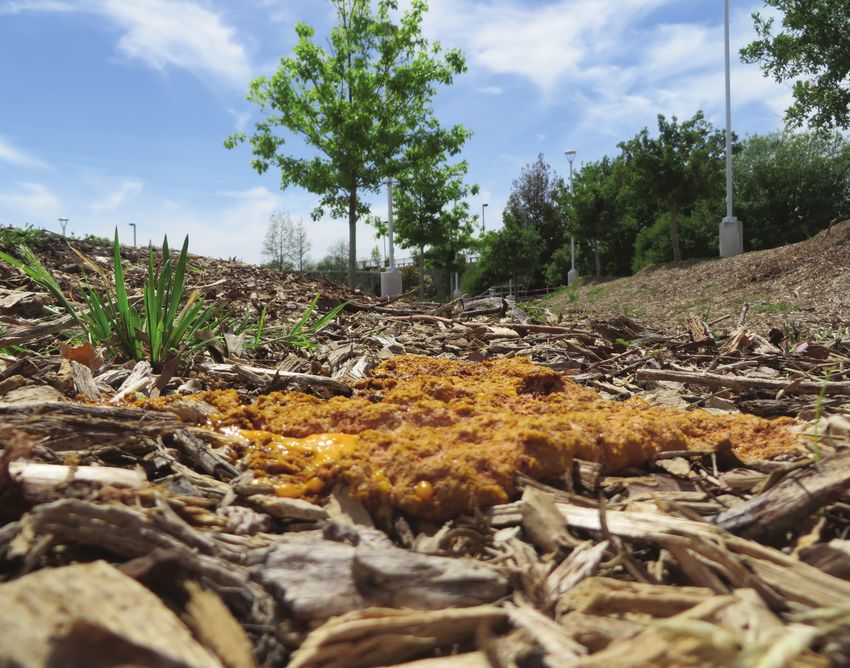
    living trees (corticolous myxomycetes) represented                 The site of the Fuligo septica fruiting bodies (Fig. 2) was
    by the genera Echinostelium and Macbrideola and                 bioswale #3. This site is covered by hardwood shredded
    the largest aethalioid fruiting body types on ground            bark mulch (oak and maple) and is deep enough (2–4 in) to
    sites represented by Fuligo septica.                            hold water from storm events for varying periods of time,
                                                                    facilitating the growth of myxomycetes, with the remaining
    Key Words—bioswale, BRIT, myxomycetes,
                                                                    water captured in a French drain that runs to a retention
    plasmodial slime molds, weather
                                                                    pond on the campus. This mulch was applied on or about 14
                                                                    Nov 2015. The site was last irrigated on 19 Feb 2016, with all
                                                                    subsequent precipitation coming from storm events. During
The Location                                                        this 3-mo time period, no Fuligo fruiting bodies were observed.
                                                                       Weather conditions (precipitation and temperature) during
  The Botanical Research Institute of Texas, often referred
                                                                    the period from March 1 to April 15 were recorded from a
to by the acronym BRIT, is located in the Cultural District
                                                                    weather station located within 100 yd of the site. The growth
of Fort Worth, Texas, USA. The BRIT building and campus
                                                                    and development of the myxomycete plasmodia and fruiting
serve the surrounding area as a model for environmental
                                                                    bodies were the result of storm events that occurred during
sustainability exemplified by site design and landscape
                                                                    this time period (see weather graphs). A combination of storm
management. BRIT staff moved into the new 70,000-square-
                                                                    events (March 17 and March 30) and elevated temperatures
foot building in February, 2011, and the dedication and
                                                                    (April 3 to April 5) triggered plasmodial and fruiting body
grand opening for the public was held 21 May 2011 (Fig.
                                                                    formation on April 4 to April 6. Note the post-storm delay of
1). At that time it was one of only eight buildings in Texas
                                                                    19 days and 6 days before the aethalioid fruiting body type
awarded the Platinum Certification in the US Green Building
                                                                    was initiated. These data have significance in documenting
Council’s LEED® (Leadership in Energy and Environmental
                                                                    the lengthy time periods required for the development and
Design) Green Building Rating System®. This includes in
                                                                    formation of larger fruiting body types in the myxomycetes.
part a living roof of native plant species, re-introduction of

6   FUNGI Volume 9:2      Summer 2016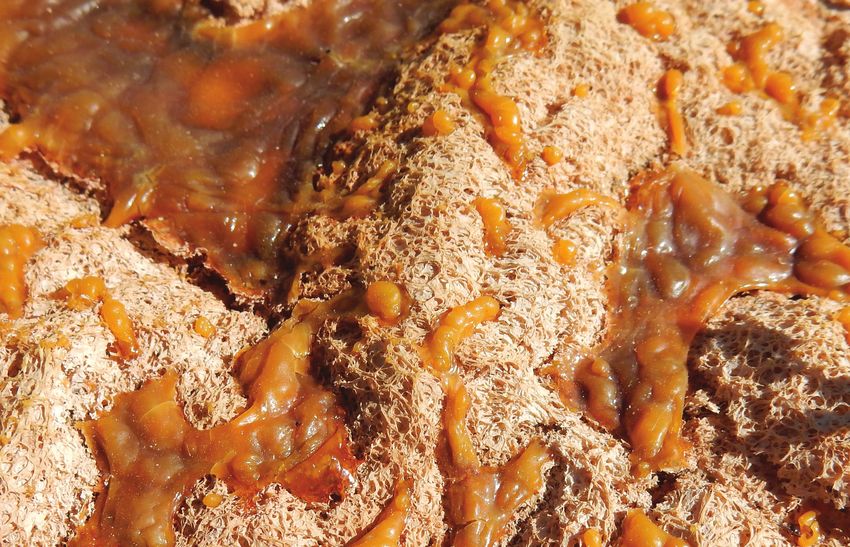
What is a myxomycete?                                                   Alexopoulos, 1969). A brief species description is modified
                                                                        and taken from Martin and Alexopoulos (1969) and Keller
   This information is available, including life cycle illustrations,   and Braun (1999): Aethalia (fruiting bodies) are pulvinate,
in previous publications (Everhart and Keller, 2008; Keller             usually large, 0.8–7.9 in long, 1–1.2 in thick, with a whitish
et al., 2008; Keller and Everhart, 2010). Myxomycetes often             to yellowish, thick cortex composed of calcium carbonate
are referred to by mushroom collectors as “slime molds” or              granules. The capillitium usually consists of white, calcareous,
“slimes” when observed as plasmodia in the field, but are also          fusiform nodes connected by hyaline threads. Spores are
known as acellular slime molds, plasmodial slime molds, or              black in mass, spherical, minutely spinulose, and 6–9 μm in
true slime molds.                                                       diameter. The plasmodium is large and conspicuous, usually
   Myxomycetes first were considered as more animal-like                yellow, sometimes white or creamy, and referred to as a
because of their motile plasmodial stage and microscopic                phaneroplasmodium. This plasmodium is the largest and
motile myxamoebae and swimming swarm cell stages; then                  often the most colorful and most frequently seen plasmodial
more plant-like because of the spore-producing fruiting body            type in the field and may cover several square feet usually on
stage; and finally more fungus-like because of the similarity           ground litter.
of the plasmodium and fruiting body stage to fungi, hence the             The aethalioid myxomycetes typically have large, round or
name myxomycetes. Based on molecular evidence, they are                 mound-shaped fruiting bodies formed from one plasmodium,
now considered not closely related to any of these groups but           and they represent the largest of the fruiting body types,
are rather a separate group in the Protista Kingdom (Keller             readily visible to the naked eye. The plasmodium and fruiting
and Everhart, 2010).                                                    bodies of Fuligo septica may be found usually on bark mulch,
General information about                                               wood chips, sawdust piles, decaying logs, piled grass clippings,
                                                                        compost piles, decomposing tree stumps, living grass in yards,
Fuligo septica                                                          and even at the base of tree trunks on bark of living trees.
  Martin and Alexopoulos (1969) cite 35 synonyms for                      A large plasmodium thought to be Fuligo septica discovered
this species and note it as “one of the commonest and                   growing in a yard in Garland, Texas, USA, made headlines
most widely distributed of myxomycetes. Its extraordinary               in a Dallas, Texas, newspaper as the “Texas Blob,” and the
variability in size, shape, and color is reflected in the               homeowner was horrified that a mutant bacterium would take
numerous names which it has received” (Martin and                       over the earth (Alexopoulos et al., 1996). The same theme was

Figure 2. Ground level photograph
showing Fuligo septica fruiting
body in foreground, sloping sides
of the bioswale, and bark mulch.

                                                                                               FUNGI Volume 9:2       Summer 2016    7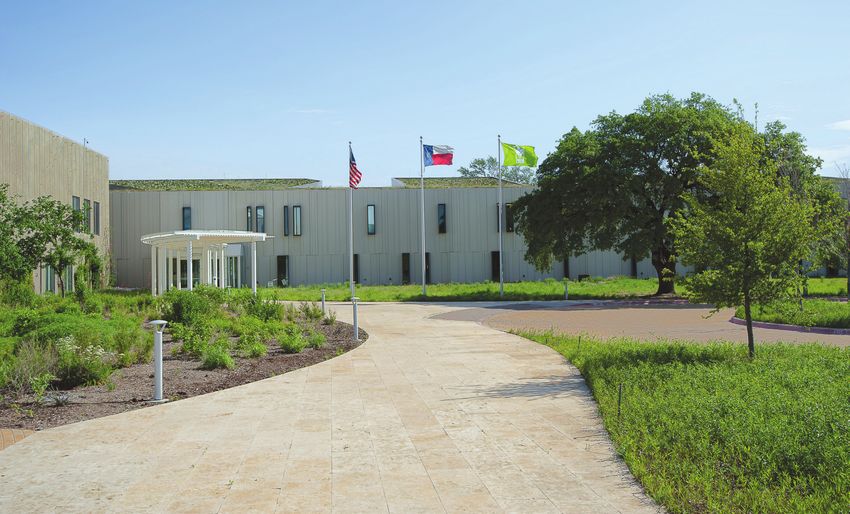
featured in the science fiction film The Blob released in 1958
                                                               starring Steve McQueen in his film debut. This jelly-like blob
                                                               comes from outer space via a meteorite that falls to earth and
                                                               then consumes people, getting bigger and bigger until it is
                                                               finally controlled by freezing and transferring it to the Arctic
                                                               (Keller and Everhart, 2010).
                                                                  The general public may know this species by its common
                                                               names, “dog vomit” and “scrambled egg slime mold,” the
                                                               former because of the lumpy, white fruiting body and the
                                                               latter because of the bright yellow plasmodial mass. In the
                                                               state of Veracruz, Mexico, the yellow plasmodium is known
                                                               by the popular name “caca de luna” by native people and is
                                                               prepared as a fried food with onions and peppers, very much
                                                               like scrambled eggs, and folded into a tortilla. However, we
                                                               hesitate to recommend this as an edible food item (Keller and
                                                               Braun, 1999).
                                                               Observations
                                                                  The previous world record fruiting bodies for Fuligo septica
                                                               were recorded from sawmill sites on the island of Gotland,
                                                               southeast of mainland Sweden, during the period 1969–1973
                                                               (Sunhede, 1974). These fruiting bodies were quite often found
                                                               on sawdust and debris of bark and wood of Pinus silvestris
                                                               waste from sawmills. The surface layer of the site was dry, but a
                                                               few centimeters deeper the material was moist. The plasmodia
                                                               were pale yellow, welling up to the surface, and had the
                                                               consistency of very soft butter. Plasmodia were also observed
                                                               migrating short distances on the surface of the sawdust pile to
                                                               higher and drier sites, finally maturing in 72 hr. Four fruiting
                                                               bodies were observed, the largest being 27.6 × 21.3 in with a
                                                               thickness of 1.2 in. This paper has been cited as the source for
                                                               the previous world record largest fruiting body (Keller and
                                                               Braun, 1999).
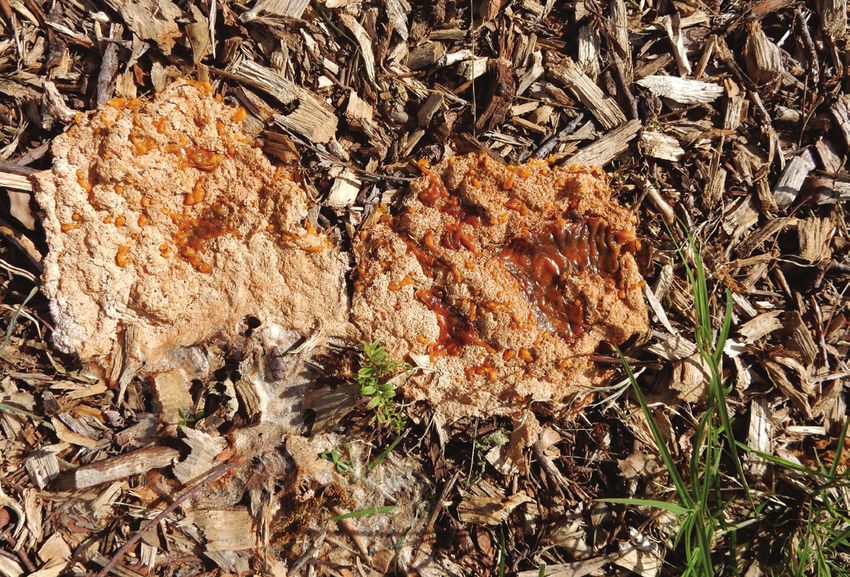
                                                                  The American fruiting bodies of Fuligo septica at BRIT were
                                                               first observed as a large plasmodium on 4 Apr 2016 and were
                                                               mature in 48–72 hr when photographed beginning April 6.
                                                               There were 20 different fruiting bodies in the same general area
                                                               within 20 yd of the largest specimen, which was photographed
                                                               with the following dimensions: 30 in (Fig. 3A) by 22 in (Fig.
                                                               3B) (see tape measure) and a thickness of 0.4 in. All of these
                                                               bright yellow plasmodia developed into fruiting bodies in
                                                               situ with no apparent migration. The largest specimen had an
                                                               overall pancake appearance with a whitish cortex composed of
                                                               calcium carbonate granules, a powdery black spore mass, and
                                                               a capillitium including white calcareous nodes. Photographs
                                                               taken on April 8 show the very thin cortex starting to
                                                               deteriorate, exposing millions of spores as part of the blackish
                                                               spore mass (Fig. 3C).
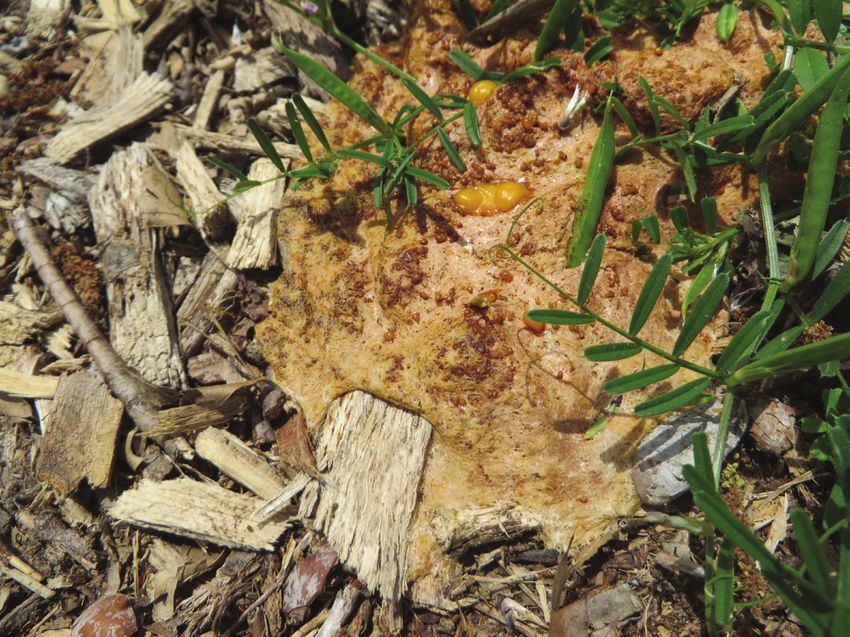
                                                                  Sometimes the yellow plasmodium surrounds portions
                                                               of the substratum (bark and living grass), and remnants
                                                               of the yellow plasmodium are present in our specimens
                                                               (Fig. 4). Sunny warmer days with daily high temperatures
                                                               of 77–89°F (see weather graphs) during the period April 4
                                                               to 7 resulted in aethalia that had prematurely dried with
Figure 3. A. World record Fuligo septica aethalium (fruiting   sclerotized plasmodia on the surface of the cortex (Fig. 5). It
body) showing length of 30 in and pancake shape. B. Same       is possible that these sclerotized plasmodial remains could
specimen showing width of 22 in. C. Same specimen two          regenerate the plasmodial stage again given the appropriate
days later (April 8) with more weathering and exposure of      environmental conditions.
black spore mass and breaking up of cortex (scale = George        The presence of a coleopterid ladybird beetle appears to be
Washington Head quarter = 1 in).                               fortuitous since it is not known to feed on Fuligo spores (Fig.

8   FUNGI Volume 9:2     Summer 2016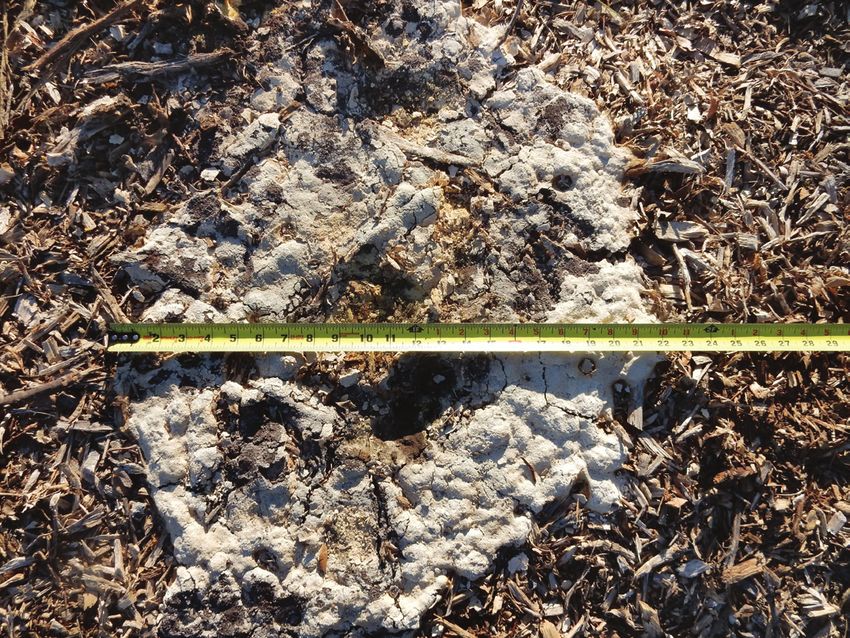
Figure 4. Aethalium with bark mulch fragment, living grass,
and portion of yellow plasmodium included in fruiting body
formation.

Figure 5. Close-up of prematurely dried aethalium surface
showing sclerotized plasmodial remnants and presence of
Coccinella septempunctata (the seven-spotted ladybird beetle).

5). No beetles were observed feeding on the plasmodia or
exposed spore mass in any of the aethalia.
   Several more aethalia in the area showed telltale signs of
premature drying. They exhibited extensive shrinkage, with a
more flattened and thinner habit instead of being heaped and
mound-shaped, with patches of sclerotized plasmodium on the
cortex (Fig. 6).
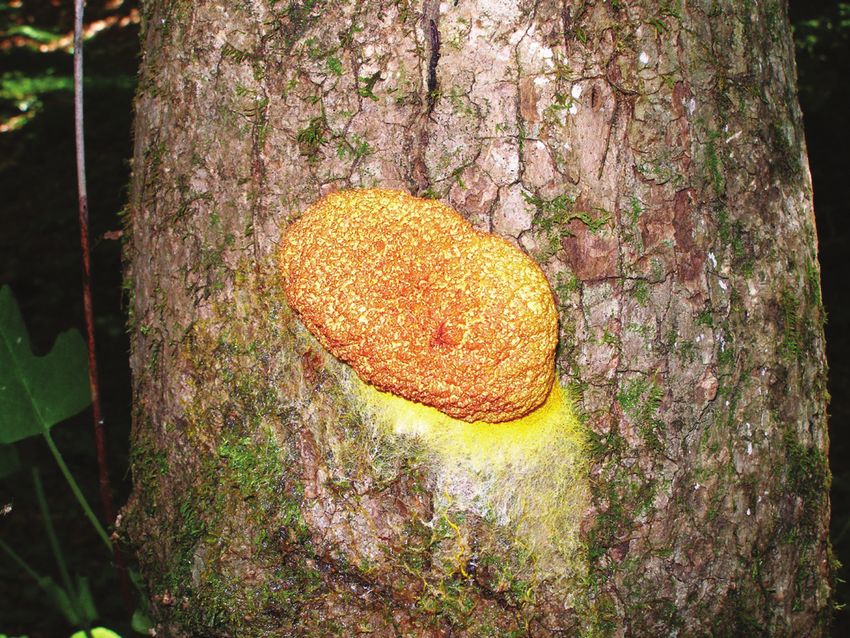
   Fuligo septica plasmodia sometime migrate over great
distances (> 3 ft) to higher and drier sites to form fruiting
bodies, as in the example seen in Figure 7 on the bark of a
living sweet gum tree (Liquidambar styraciflua) in the Great
Smoky Mountains National Park. No evidence of plasmodial
migration was found at the current site.
Discussion
  The immature plasmodia were not photographed, but in
every case the plasmodia were yellow. The first author has

                                                                 FUNGI Volume 9:2   Summer 2016   9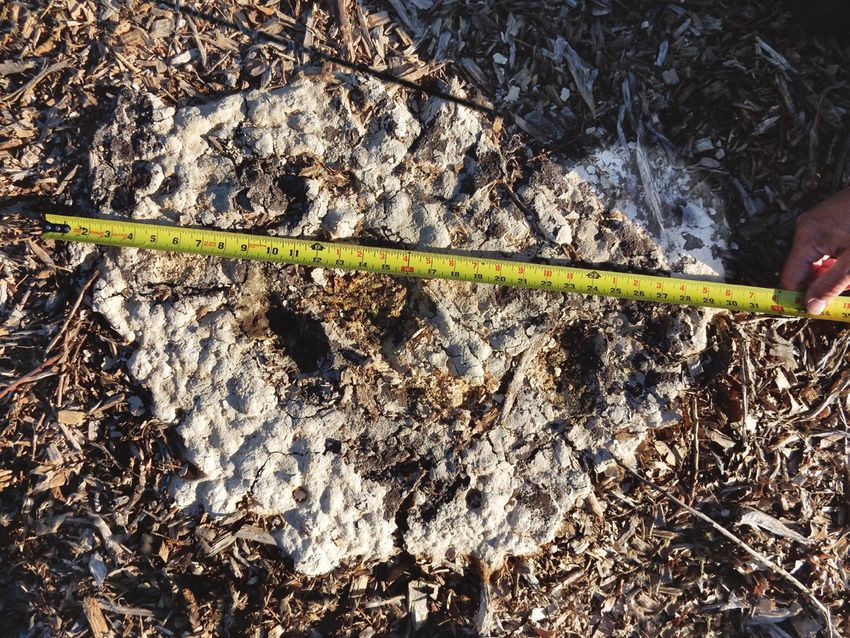
observed and collected hundreds of Fuligo septica fruiting
                                                              bodies, and in every case the plasmodia have been yellow, not
                                                              white. It is possible that past references to transparent and
                                                              white plasmodia for this species may have been confused with
                                                              Mucilago crustacea, another aethalioid myxomycete that has
                                                              the general appearance of Fuligo septica, but has a transparent
                                                              to milky-white plasmodium, a crystalline calcium carbonate
                                                              cortex, and different spore ornamentation. Fuligo septica
                                                              is a common and cosmopolitan species found worldwide;
                                                              however, it is possible that local environmental conditions
                                                              could influence plasmodia color which can be quite variable in
                                                              the myxomycetes. These fruiting bodies sometimes persist for
                                                              several weeks if left undisturbed.
                                                                 How did this myxomycete species get to this site and develop
                                                              so many fruiting bodies in such a relatively small area? Wind-
                                                              blown myxomycete spores are one possible source, but the
Figure 6. Two aethalia showing premature drying, shrinkage,   likelihood that so many point inocula could develop at the
and aberrant development due to direct rays of the sun.       same time suggests that the bark mulch may have imported

Below: Weather Graphs. Temperatures, precipitation, and fruiting body formation (shaded area) for the period 1 March–15
April 2016 at the observation site in Fort Worth, Texas, U.S.A.

10   FUNGI Volume 9:2    Summer 2016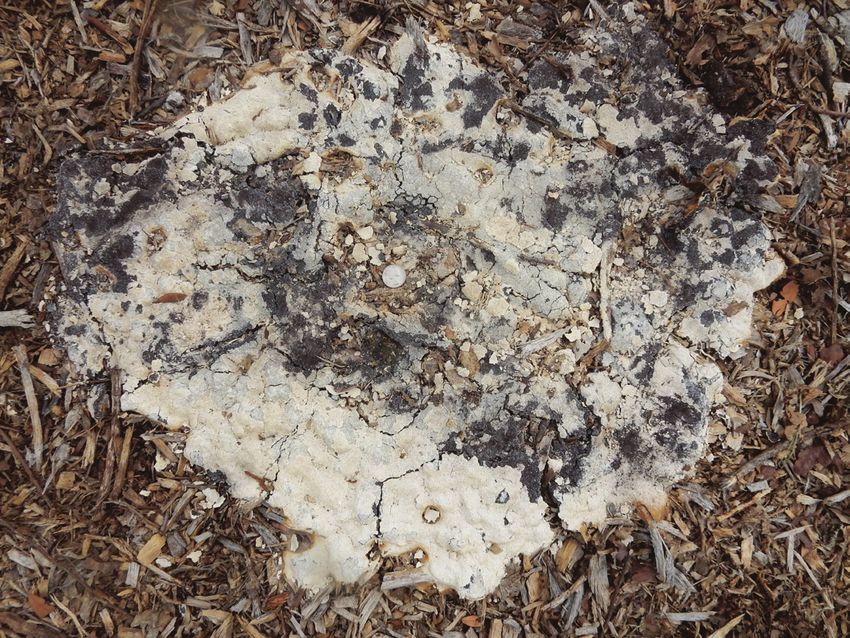
of extreme hot, dry, and cold periods much like desert
                                                                     ephemeral plants; and take advantage of brief periods of rain to
                                                                     complete their life cycle (Everhart and Keller, 2008; Keller and
                                                                     Everhart, 2010).
                                                                     Conclusions
                                                                        Fuligo septica represents one of the best examples of
                                                                     a K-selected species in the myxomycetes. Weather data
                                                                     collected near the myxomycete fruiting bodies documents the
                                                                     environmental parameters associated with the development
                                                                     and formation of the aethalioid fruiting body type. Daily
                                                                     field observations over time of this kind provide additional
                                                                     evidence of a time course that is not evident when single field
                                                                     trips are made to single sites that fail to record these data.
Figure 7. Fuligo septica aethalia that have formed 3 ft above
ground level on the bark surface of a living sweetgum tree at        Acknowledgments
a separate site in Great Smoky Mountains National Park. The
                                                                       Photographs were provided by Bob O’Kennon, Billy Stone,
plasmodium had left a clear trail from ground leaf litter as it
                                                                     and Harold W. Keller. We wish to thank Brooke Best for her
migrated up the bark surface.
                                                                     collection and preparation of the weather data and careful
                                                                     editorial expertise. Alyssa Young provided technical assistance
the spores. This same habitat, such as bark mulch around trees       with the color images. Our thanks also go to four other
with Fuligo septica aethalia, has been repeated many times in        reviewers who read and commented on the manuscript.
many places (HWK, pers. obs.).
  The aethalioid fruiting body type is the largest found in the      About the authors
myxomycetes, and examples include the order Physarales                  The first two authors are Resident Research Associates
and all species in the genera Fuligo and Mucilago; the order         at BRIT. The third author is the BRIT Facilities Manager.
Stemonitales and the genus Brefeldia; the order Liceales and all     Additional biographical details are available at www.brit.org.
species in the genera Lycogala and Reticularia. These fruiting
bodies are characterized by having the largest plasmodia             References Cited
with the largest surface-to-volume ratios; single, sessile (not      Alexopoulos, C.J., C.W. Mims, and M. Blackwell. 1996.
stalked), larger fruiting bodies measuring inches; many spores         Introductory Mycology. 4th edition. John Wiley & Sons, Inc.
in the millions; lengthy developmental times of 4–7 days or          Everhart, S.E., and H.W. Keller. 2008. Life history strategies
even weeks; and moist habitats of decaying ground litter or            of corticolous myxomycetes: The life cycle, fruiting bodies,
logs as previously described, eventually forming fruiting bodies       plasmodial types, and taxonomic orders. The International
as the habitat gradually becomes drier, persisting for longer          Journal of Fungal Diversity 29: 1–16.
periods of time. Such development is common in K-selected            Keller, H.W., and K.L. Braun. 1999. Myxomycetes of Ohio:
species that have more favorable environmental conditions              Their systematics, biology, and use in teaching. Ohio
with longer moist periods and optimal moderate temperatures,           Biological Survey Bulletin New Series 13: 1–182.
taking much longer to develop fruiting bodies (Everhart and          Keller, H.W., C.M. Kilgore, S.E. Everhart, G.J. Carmack, C.D.
Keller, 2008; Keller and Everhart, 2010).                              Crabtree, and A.R. Scarborough. 2008. Myxomycete
  In contrast, the stalked sporangium and the                          plasmodia and fruiting bodies: unusual occurrences and user
protoplasmodium found on the bark surface of living trees              friendly study techniques. Fungi 1(1): 24–37.
(corticolous myxomycetes) is the smallest fruiting body type         Keller, H.W., and S.E. Everhart. 2010. Importance of
and has the smallest plasmodium with the smallest surface-             Myxomycetes in biological research and teaching. Fungi
to-volume ratio. Species in the genera Echinostelium and               3(1): 29–43.
Macbrideola are perhaps the best examples of r-selected              Martin, G.W., and C.J. Alexopoulos. 1969. The Myxomycetes.
species with the following life cycle strategy: short-lived; rapid     University of Iowa Press, Iowa City.
sporulation in 6–24 hrs; quick spore release via an evanescent       Sunhede, S. 1974. Studies in Myxomycetes II. Notes on Fuligo
peridium; tiny (< 0.04 in diameter); can survive longer periods        septica. Svensk Botanisk Tidskrift 68: 397–400.

                                                                                           FUNGI Volume 9:2       Summer 2016     11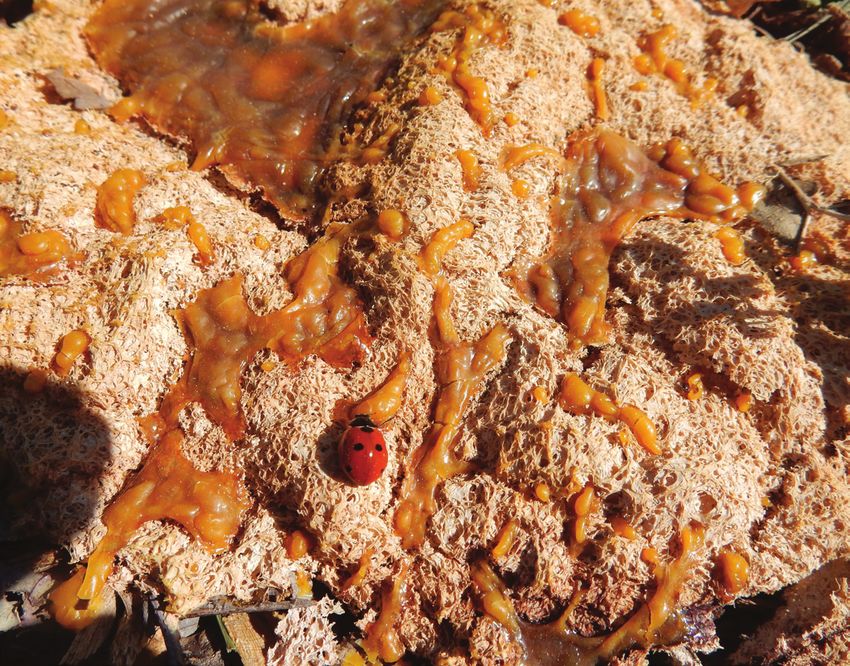
You can also read


