Xylitol - MarketResearch.com
←
→
Page content transcription
If your browser does not render page correctly, please read the page content below

Publ
   ished:May2014

ReportCode:PH008
Pages:293
Chart
    s:187
Pri
  ce:Sample

     Xyl
       itol
      Pol
        yol
          /SugarAl
                 coholSweet
                          ener

     AGl
       obalMar
             ketOver
                   view

     “
     Ther
        eportr
             eviews,anal
                       yzesandpr
                               ojec
                                  ts
     t
     hegl
        obalmark
               etforXy l
                       i
                       tolfort
                             heperi
                                  od2009-
                                        2020.
                                            ”

                                             Redef
                                                 inesBusi
                                                        nessAcumen

                                  © 2014I
                                        ndustryExperts
                                                     ,allri
                                                          ghtsr
                                                              eser
                                                                 ved
                                          industr
                                                y-expert
                                                       s .
                                                         com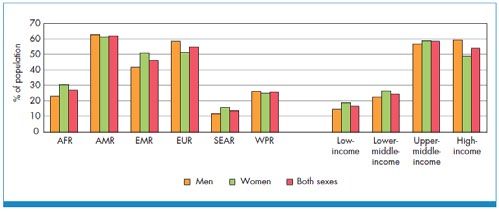
DuPont Danisco is the leading manufacturer of xylitol globally, with three plants located in Finland, USA
and China. In addition to DuPont Danisco, leading players in xylitol market include Shandong Futaste,
Roquette Freres and few Chinese players among others. The major concern in the xylitol industry is the
overcapacity installed globally at the moment. Several Chinese players aggressively added capacity over
the past few years and estimated to reach around xxx thousand tons till the end of 2013. Although the
output rate of Chinese manufacturers is around xx%, the concern remains a restrain for new entrants into
the xylitol market.

Erythritol is the only polyol which is estimated to grow with a CAGR of xx% from 2014-20, attributed
to its usage with Stevia in many products. The price at US$xx thousands per metric tons is the major

                                                                    E
concern for ehrythritol for its wide use application at the moment. After erythritol, xylitol is the only
other polyol that is estimated to grow at an above average rate of x% CAGR from 2014 to 2020. In
volume terms, sorbitol is the largest polyol in global market. Sorbitol, with a lowest cost among other
polyols, is the preffered choice for manufacturers. In chewing gum industry, which is the largest

wide veriety of applications.
                                PL
application for xylitol, sorbitol is widely used in combination with xylitol to reduce the final cost of the
product. Sorbitol global average price is only US$xxx per metric ton where as xylitol average price is
US$xxxx per metric ton in the global market. As new processes and technologies are being developed
in the near future, xylitol price is expected to come down, allowing manufacturers to use xylitol in

                              Relative Sweetness to                    Price (US$/Metric    Volume      Volume CAGR %
               M
            Polyol                                         Energy
                                   Sucrose (=1)                               Ton)         2012 (MTs)     2014-2020
            Sorbitol                   0.6                2.6 kcal/g         $880           866,300          3.1
           Maltitol                    0.9                2.1 kcal/g         $1,130         182,000          3.3
           Mannitol                    0.7                1.6 kcal/g         $4,200         151,420          4.1
            Xylitol                    1                  2.4 kcal/g         $4,120         157,880          6.0
SA

           Erythritol                0.7-0.8              0.2 kcal/g         $6,320         46,650          10.0

Main growth drivers include:

   •   Health concerns such as obesity and diabetes driving the growth of the alternative sweetener
       market
   •   Growth in sugar-free chewing gum and other sugar-free confectionery market
   •   Increasing consumer demand for low-calorie sweeteners
   •   Increasing awareness of naturally derived alternative sweeteners

                                                Xylitol – A Global Market Overview
                                               © Industry Experts, All Rights Reserved
                                                                 -2-
Xylitol Application Overview
Due to xylitol’s dental significance and low-calorie alternative, xylitol is used in variety of food and other
applications. Different applications for xylitol are listed below:
    •   Chewing Gums: Xylitol is widely used as a sugar substitute, to prevent tooth decay and dry mouth in sugar-free
        chewing gums.
    •   Confectionary: Xylitol is used as low-calorie sweetener in sugar-free confectionary applications such as jellies,
        mints and other candies.
    •   Other Foods: Xylitol is used a sugar substitute in foods for people with diabetes and sugar substitute in bakery
        products.
    •   Personal Care Products: Xylitol applications include personal care products or oral hygiene products, such as

                                                                         E
        toothpaste, fluoride tablets and mouthwashes. Xylitol usage in oral care products helps to prevent tooth decay
        and dry mouth.
    •   Other Applications: Other applications for xylitol include pharmaceuticals and nutraceuticals. As a medicine,
        xylitol is used to prevent middle ear infections (otitis media) in young children. The pharmaceutical industry uses
        xylitol as a sweetener in its products. Xylitol is sometimes included in tube feeding formulas as a source of energy.

                                     PL
        Variety of nutraceutical products such as vitamin chew jellies for kids and vitamin tablets.
Sugar-free chewing gum industry is the largest consumer of xylitol on global basis. Chewing gum accounts for
around xx% of the volume consumption of xylitol, converting into xxx thousand metric tons in 2012. In terms of
value, the consumption of xylitol in chewing gum agina accounts for the major portion of the pie with around
xx% share. Other leading applications for xylitol include confectionary (excluding chewing gum) and personal
care products with a volume share of xx% and xx% respectively in 2012.
                 Chart 1: Snapshot for Global Xylitol Market Share (2012) by End-use Application
                 M
         Application               Volume (MTs)            % Share MTs           Value (US$ M)        % Share US$

        Chewing Gum                   xxxxxxx                  xxxxx                xxxxxx                  xxxxx
        Confectionary                 xxxxxxx                  xxxxx                xxxxxx                  xxxxx
        Other Foods                   xxxxxxx                  xxxxx                xxxxxx                  xxxxx
        Personal Care                 xxxxxxx                  xxxxx                xxxxxx                  xxxxx
        Others                        xxxxxxx                  xxxxx                xxxxxx                  xxxxx
        Total                         xxxxxxx                  xxxxx                xxxxxx                  xxxxx
SA

                        Volume % Share                                                      Value % Share

                                                         Chewing Gum
                                                         Confectionary
                                                         Other Foods
                                                         Personal Care
                                                         Others

                                                   Xylitol – A Global Market Overview
                                                  © Industry Experts, All Rights Reserved
                                                                   -35-
KEY MARKET TRENDS
Prospects for Low-Calorie Sweeteners Brightened by Escalating Incidences of
Obesity and Diabetes
The number of individuals afflicted with type 2 diabetes has been increasing at a fast pace, necessitating that
priority status is provided to identify the components that either contribute to or are associated with this
disease. Excessive weight gain has been a major factor that has been associated with the incidence of type 2
diabetes, with reduction in weight being high on the recommendations list of preventing and managing
diabetes. In this context, low-calorie sweeteners offer an ideal substitute to added sugars, with the potential of
E
assisting in losing and maintaining weight through limiting intake of calories, factors that have been
corroborated through widespread research conducted for this purpose. Individuals with type 2 diabetes who
replace sugars with low-calorie sweeteners are provided with a greater adaptability as regards their health
goals and dietary preferences.
PL
Overweight and Obesity: Some Statistics of Prevalence
The World Health Organization (WHO) estimates that on an annual basis, 2.8 million people die as a consequence
of being overweight that includes obesity and roughly 35.8 million (2.3%) of global DALYs (disability-adjusted life-
years) result from overweight or obesity. These conditions are found to be the cause of adverse metabolic effects
on blood pressure, cholesterol, triglycerides and insulin resistance. An increase in body mass index (BMI), a
measure of weight relative to height, has proven to have a direct link with greater risks of coronary heart disease,
ischemic stroke and type 2 diabetes mellitus. The ideal median BMI for adult populations in achieving optimal
M
health should range between 21 to 23 kg/m2, with the ultimate aim for individuals being to maintain a BMI
between 18.5 to 24.9 kg/m2. The risk of co-morbidities increases for BMIs in the range of 25.0 to 29.9 kg/m2, with
the same increasing to moderate to severe levels for a BMI exceeding 30 kg/m2.
Figure 5: Age-Standardized Prevalence of Overweight in Adults Aged 20+ Years, by WHO Region and World
SA
Bank Income Group, Comparable Estimates, 2008
Source: WHO, 2008
Xylitol – A Global Market Overview
© Industry Experts, All Rights Reserved
-42-Polyols and High Intense Sweetener Regulations around the Globe
European Union
Sweeteners are food additives utilized to offer sweet taste in foodstuffs; or as table-top sweeteners.
Earlier to market authorization, sweeteners are regulated substances subjected to safety assessment
that is similar for all food additives. Food additive application has been regulated by the European
Commission, Parliament and Council in the European Union (EU); mainly the Commission and
Member States would set out the additives that could be used in foods and their levels. Every food
additive is covered in the ingredient lists on product labels that should indicate both the function of
E
the food additive in the finished food (sweetener) and the peculiar substance utilized either by
pertaining to the proper E-number or its name (for example, E 954 for 'Saccharin').
In 1990s, the first regulation for the high intense sweeteners was provided at European level with the
PL
debut into force of Directive 94/35/EC of the European Parliament and the Council on sweeteners in
foodstuffs, called the "Sweeteners Directive". Regulation 1333/2008, a framework regulation has
been followed by the European Parliament and the Council in the recent times for merging each and
every recent accreditation for sweeteners and food additives into one legal text. A Community list of
sweeteners that have received approval for use in foods, beverages and table-top sweeteners and
their conditions of use have been offered by Commission regulation 1129/2011's Annex II of this
regulation.
M
At present, the high intense sweeteners accredited in the EU encompass acesulfame-K (E950),
aspartame (E951), aspartame-acesulfame salt (E962), cyclamate (E952), neohesperidine DC (E959),
neotame (E961), saccharin (E954), steviol glycosides (E960), sucralose (E955) and thaumatin (E957).
Regulation (EC) 1333/2008 on food additives that came into force on 20 January 2009 has governed
SA
the application of polyols in foods. The Union list of approved food additives and their conditions of
application has been offered by Annex II of this regulation established by the regulation (EU)
1129/2011 that would be in force from June 1 2013. An amendment to the present regulations would
be made by the European Commission when a novel polyol has been reviewed by EFSA for approving
the novel polyol along with the polyols that have been currently present on the market (at present
isomalt, lactitol, maltitol, mannitol, sorbitol, xylitol, erythritol, and polyglycitol syrup).
As per the Regulation 1129/2011 at "quantum satis", excluding polyglycitol syrup, polyols might be
utilized in the food applications. "Quantum satis" means no specification of maximum level. As per
the GMP, polyols should be utilized at a level not higher than is needed to attain the committed
purpose and offered that they do not mislead the consumer.
Xylitol – A Global Market Overview
© Industry Experts, All Rights Reserved
-54-New Entrants in Xylitol Foray
There are quite a few companies who recently invested in xylitol production such as Xylitol Canada
(Canada), and several players who developed new technologies and planning to enter into this market
such as zuChem Inc (USA), DFI Corp. (USA), Novagreen Inc (Canada) and few Chinese and Indian
Companies. Below are profiles of select players entering into xylitol foray.
DFI CORPORATION (UNITED STATES)
15 Broadway North, Suite 500, Fargo, North Dakota 58102
United States
E
Tel: 425.605.8990
Fax: 425.605.8530
Email: info@dficorp.net
Website: www.dficorp.net
Business Overview
PL
North Dakota head quartered DFI Corporation is a technology company engaged in the discovery,
development and manufacture of two natural sweeteners, Erythritol and Xylitol using green
electrochemistry process. These sweeteners with specific health benefits have been produced for use
in the food and beverage industry. Researchers at Purdue University discovered a breakthrough
technology for the production of xylitol. Purdue Research Foundation (PRF) immediately recognized
the importance of this discovery and invested in its patenting and commercialization. DFI has received
M
an exclusive worldwide license for this technology and started the engineering research for process
optimization. As of 2013, the company has established an erythritol production unit in Buffalo, New
York and a commercial scale plant in North Dakota. The company also considering plans to produce
xylitol on a commercial scale using the patented technology.
SA
Xylitol – A Global Market Overview
© Industry Experts, All Rights Reserved
-89-GLOBAL ALTERNATIVE SWEETENERS MARKET
Driven by health concerns such as obesity and diabetis, consumption of alternative sweeteners is
expected to increase by x.x% CAGR from 2014 to 2020 in volume terms by reaching x.x million metric
tons by 2020 from x.x million metric tons in 2013. In terms of value, global alternative sweeteners
market is expected to reach x.x billion USD by 2020 from x.x billion USD in 2013, exhibiting a CAGR of
x.x% in the period 2013-20. The growth is mainly atrributed to new products such as stevia, netame
and other natural sweeteners among varoius high intense sweeteners and erythritol and xylitol
among polyols or sugar alcohols.
E
Chart 9: Global Alternative Sweeteners/Sugar Substitutes Market Overview (2009-2020)
by Volume (Metric Tons) and Value (USD Million)
Year Volume (MTs) Value (US$ Mil)
2009
2010
2011
2012
2013
2014
2015
2016
2017
2018
2019
2020
PL xxxxxxxxx
xxxxxxxxx
xxxxxxxxx
xxxxxxxxx
xxxxxxxxx
xxxxxxxxx
xxxxxxxxx
xxxxxxxxx
xxxxxxxxx
xxxxxxxxx
xxxxxxxxx
xxxxxxxxx
xxxxxxxx
xxxxxxxx
xxxxxxxx
xxxxxxxx
xxxxxxxx
xxxxxxxx
xxxxxxxx
xxxxxxxx
xxxxxxxx
xxxxxxxx
xxxxxxxx
xxxxxxxx
M
CAGR% 2009-13 xxxxxxxxx xxxxxxxx
CAGR% 2014-20 xxxxxxxxx xxxxxxxx
SA
Xylitol – A Global Market Overview
© Industry Experts, All Rights Reserved
-101-End-use Application Market Overview by Geographic Region
Chewing Gum
Volume Analysis
Consumption of xylitol in chewing gum segment worldwide is estimated at xxx.x thousand metric tons in 2014
and forecast to be xxx.x thousand metric tons in 2014. Expected to maintain a CAGR of x.x% between 2014 and
2020, the global xylitol consumption in chewing gum sector is further projected to reach xxx thousand metric
tons by 2020. Asia-Pacific is the largest consumer, with an estimated 2014 consumption of xx.x thousand
metric tons. Forecast to be xx.x thousand metric tons in 2015, Asia-Pacific consumption of xylitol in chewing
E
gum is further anticipated to record the fastest CAGR of x.x% between 2014 and 2020 to reach a projected x.x
million metric tons by 2020. At the other end, European consumption of xylitol in chewing gum, estimated at
xx.x thousand metric tons in 2014, is expected to witness the slowest 2014-2020 CAGR of x.x% in reaching a
projected xx.x thousand metric tons by 2020.
Year
2009
2010
2011
2012
2013
2014
xxxxxxx
xxxxxxx
xxxxxxx
xxxxxxx
xxxxxxx
xxxxxxx
PL
Chart 43: Global Xylitol End-use Application in Chewing Gum (2009-2020) by Geographic Region –
North America, Europe, Asia-Pacific and Rest of World in Metric Tons
North America Europe
xxxxxx
xxxxxx
xxxxxx
xxxxxx
xxxxxx
xxxxxx
Asia-Pacific
xxxxxx
xxxxxx
xxxxxx
xxxxxx
xxxxxx
xxxxxx
Rest of World
xxxxx
xxxxx
xxxxx
xxxxx
xxxxx
xxxxx
Total
xxxxxxx
xxxxxxx
xxxxxxx
xxxxxxx
xxxxxxx
xxxxxxx
M
2015 xxxxxxx xxxxxx xxxxxx xxxxx xxxxxxx
2016 xxxxxxx xxxxxx xxxxxx xxxxx xxxxxxx
2017 xxxxxxx xxxxxx xxxxxx xxxxx xxxxxxx
2018 xxxxxxx xxxxxx xxxxxx xxxxx xxxxxxx
2019 xxxxxxx xxxxxx xxxxxx xxxxx xxxxxxx
2020 xxxxxxx xxxxxx xxxxxx xxxxx xxxxxxx
CAGR% 2009-13 xxxxxxx xxxxxx xxxxxx xxxxx xxxxxxx
CAGR% 2014-20 xxxxxxx xxxxxx xxxxxx xxxxx xxxxxxx
SA
2009 2010 2011 2012 2013 2014 2015 2016 2017 2018 2019 2020
North America Europe Asia-Pacific Rest of World
Xylitol – A Global Market Overview
© Industry Experts, All Rights Reserved
-135-Europen Market Overview by Country
GERMANY
German volume consumption of xylitol, estimated at x.x thousand metric tons in 2014 and forecast to
be x.x thousand metric tons in 2015, is further expected to maintain a CAGR of x% between 2014 and
2020 to reach a projected x.x thousand metric tons by 2020. In regard to value demand, the market
for xylitol in the region is slated to register a CAGR of x.x% over the same period in reaching a
projected US$xx.x million by 2020 from an estimated US$xx.x million in 2014.
E
Chart 100: German Xylitol Market Overview (2009-2020) by Volume (Metric Tons) and Value (USD Million)
Year Volume (MTs) Value (US$ Mil)
2009 xxxxxx xxxxxx
2010
2011
2012
2013
2014
2015
2016
2017
2018
2019
2020
CAGR% 2009-13
CAGR% 2014-20
PL xxxxxx
xxxxxx
xxxxxx
xxxxxx
xxxxxx
xxxxxx
xxxxxx
xxxxxx
xxxxxx
xxxxxx
xxxxxx
xxxxxx
xxxxxx
xxxxxx
xxxxxx
xxxxxx
xxxxxx
xxxxxx
xxxxxx
xxxxxx
xxxxxx
xxxxxx
xxxxxx
xxxxxx
xxxxxx
xxxxxx
M
SA
Xylitol – A Global Market Overview
© Industry Experts, All Rights Reserved
-192-Market Overview by Region
China is the largest Asia-Pacific market for xylitol with US$xxx.x million in 2014 converting to xx.x
thousand metric tons. India expected to be the fastest growing market in the region with a robust
CAGR of xx.x% for the period 2014-2020 to touch x.x thousand metric tons by 2020 from an estimated
xxx metric tons in 2014. India is also projected to be the fastest growing market in terms value with a
CAGR of xx.x% in the same period to reach US$xxx million.
Volume Analysis
E
Chart 141: Asia-Pacific Xylitol Market Overview (2009-2020) by Country - China, Japan, South Korea, Australia,
India and Rest of APAC in Metric Tons
Year China Japan South Korea Australia India Rest of APAC Total
2009 xxxxxxx xxxxxx xxxxxx xxxxxx xxxxx xxxxxx xxxxxxx
2010
2011
2012
2013
2014
2015
2016
2017
2018
2019
2020
CAGR% 2009-13
xxxxxxx
xxxxxxx
xxxxxxx
xxxxxxx
xxxxxxx
xxxxxxx
xxxxxxx
xxxxxxx
xxxxxxx
xxxxxxx
xxxxxxx
xxxxxxx
PL xxxxxx
xxxxxx
xxxxxx
xxxxxx
xxxxxx
xxxxxx
xxxxxx
xxxxxx
xxxxxx
xxxxxx
xxxxxx
xxxxxx
xxxxxx
xxxxxx
xxxxxx
xxxxxx
xxxxxx
xxxxxx
xxxxxx
xxxxxx
xxxxxx
xxxxxx
xxxxxx
xxxxxx
xxxxxx
xxxxxx
xxxxxx
xxxxxx
xxxxxx
xxxxxx
xxxxxx
xxxxxx
xxxxxx
xxxxxx
xxxxxx
xxxxxx
xxxxx
xxxxx
xxxxx
xxxxx
xxxxx
xxxxx
xxxxx
xxxxx
xxxxx
xxxxx
xxxxx
xxxxx
xxxxxx
xxxxxx
xxxxxx
xxxxxx
xxxxxx
xxxxxx
xxxxxx
xxxxxx
xxxxxx
xxxxxx
xxxxxx
xxxxxx
xxxxxxx
xxxxxxx
xxxxxxx
xxxxxxx
xxxxxxx
xxxxxxx
xxxxxxx
xxxxxxx
xxxxxxx
xxxxxxx
xxxxxxx
xxxxxxx
M
CAGR% 2014-20 xxxxxxx xxxxxx xxxxxx xxxxxx xxxxx xxxxxx xxxxxxx
SA
2009 2010 2011 2012 2013 2014 2015 2016 2017 2018 2019 2020
China Japan South Korea Australia India Rest of APAC
Xylitol – A Global Market Overview
© Industry Experts, All Rights Reserved
-233-You can also read


