100% Electrification: Lower Operating Costs and Early Zero Carbon - Case study
←
→
Page content transcription
If your browser does not render page correctly, please read the page content below

Case study

100% Electrification:
Lower Operating Costs
and Early Zero Carbon
A business in Aotearoa NZ
making it happen
Foreward

                       Climate change has created the absolute
                       necessity of decarbonisation through
                       electrification of the economy in Aotearoa NZ.
                       Leaders in business are actively engaged      Working with the electricity distributor
                       in making this happen. This is an analysis    and a willing retailer to create a flexibility
                       of one of those businesses. The owners        model approach, using the farms DER
                       vision was to achieve full decarbonisation    (solar/battery/software smarts) arbitrage
                       through electrification, maximising           is utilised and the value of generation is
                       on-site renewable generation and grid         acknowledged by reward for supply of
                       supply to electrify all required tools and    electricity to the grid for consumers. The
                       technologies, replacing all fossil fuelled    potential is significant across industry.
                       services, and incorporating electrical        Mike Casey, the owner has not only
                       tools and appliances to operate the           achieved the vision, he leads the way
                       orchard farm.                                 through innovation, creating value for the
                                                                     business, his industry and Aotearoa NZ.
                       This is a real-world example of reducing
                       operating costs of a business, achieving
                       decarbonisation and gaining other
                       benefits on the journey.                                      Brendan Winitana
                                                                                     Chair SEANZ
                                                                                     15th September, 2021
                       The focus and outcomes are:
                       1. The cost savings achieved to electrify
                       the orchard farm business far exceeds
                       the finance and depreciation costs
                       as well as the operational costs. It          Case Study Author
                       demonstrates that going 100% electric         Craig Evans, CTQ Advisors
                       makes sound economic sense                    Contributor
                       2. The benefit and value of distributed       Mike Casey, Forest Lodge Orchard Farm
                       energy resources (DER) with the flexibility   Reviewers
                       market approach to electricity, to offset     Greg Hoskins, Managing Director,
                       capital costs to achieve electrification      Hoskins Energy Systems
                       and decarbonisation                           Terry Paddy, Director, Cortexo, IPAG
                       As an operating model, the principles         Cristiano Marantes CEO, Ara Ake
                       applied herein can be adopted to suit         Ashley Petterd, Energy Policy Adviser,
                       many other industries in Aotearoa New         MBIE (in relation to energy policy and
                       Zealand, especially in the primary            regulation)
                       industries.                                   Shay Brazier, Director, Revolve Energy
                                                                     Mark Toner, GM, Public Policy Regulatory
                                                                     Affairs, Vector

Pg 1 | Case study: 100% Electrification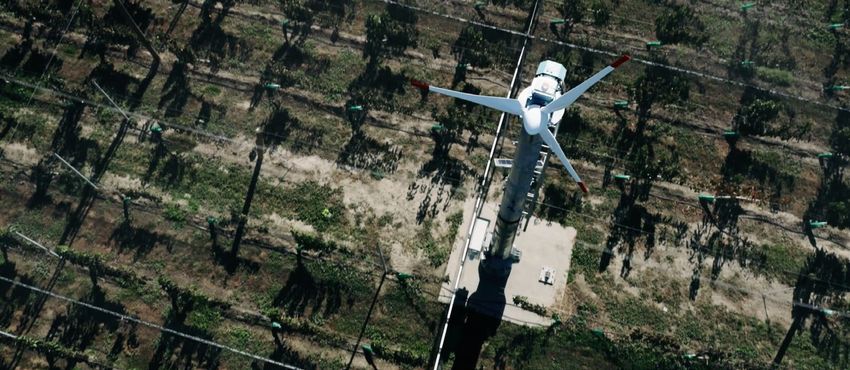
The content and intellectual property of      Imagery credit: Produced for Crux by
this case study document is the property of   Kim Bowden, shot and edited by James
SEANZ. The contents are not to be copied,     Haskard in partnership with Two Bearded
duplicated, replicated, used, republished     Men using funding from NZ On Air
and or stored in any format including
digital and hardcopy without the express
approval of SEANZ. © SEANZ

                                                                                        SEANZ 2021 | Pg 2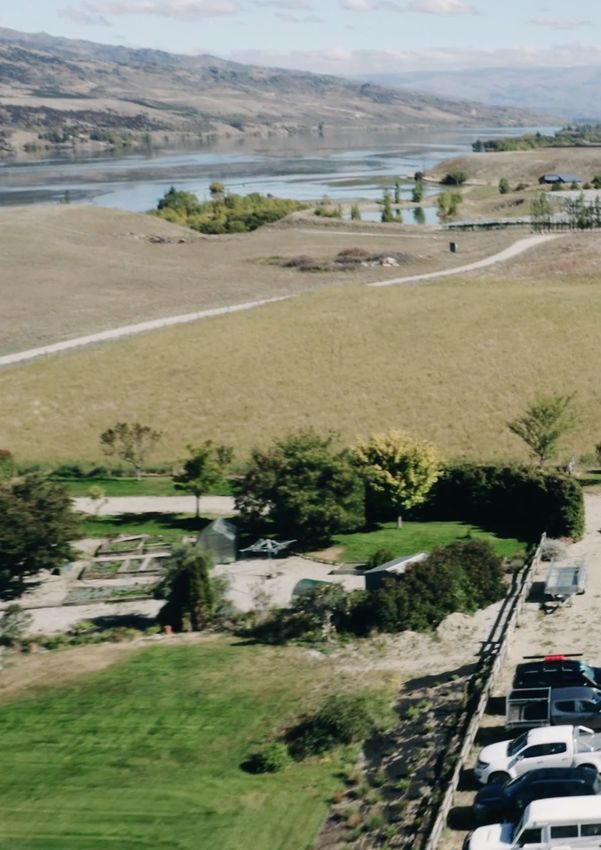
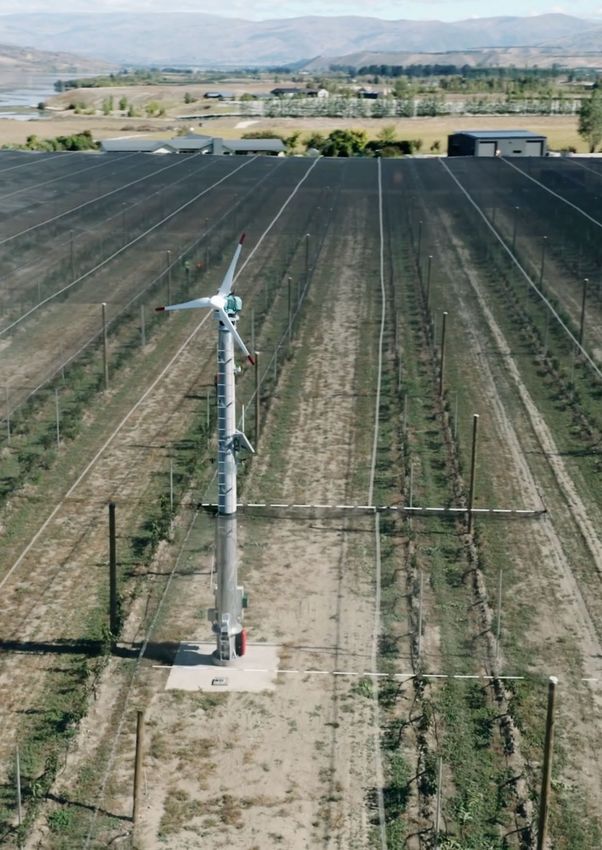
Forest Lodge Orchard

                       100% electrification means lower
                       operating costs and early zero carbon
                       Forest Lodge Orchard is a newly                 Forest Lodge also invested in solar and
                       established 6-hectare cherry orchard in         battery storage to further reduce the
                       Central Otago near Cromwell which aims          carbon intensity of the orchard and to
                       to be the first large-scale food producer       provide flexibility to manage energy
                       in the country to minimise the carbon           costs.
                       emissions from food production by using
                       renewable energy.
                                                                       Electric equipment is more
                       Forest Lodge will be 100% electric for its
                       first commercial harvest in January 2022.
                                                                       expensive to buy…at the moment
                       Electrification means Forest Lodge will         Electric equipment for orchard
                       avoid about 113 tonnes CO2-e each year.         operations – irrigation, frost fighting,
                                                                       farm equipment etc – cost $150,000 (or
                                                                       45%) more than the conventional fossil-
     Electrification means choosing                                    fuelled options.
     electric equipment, having an                                     Fewer electric options are available. The
     appropriately sized network                                       two 30kW electric frost fighting fans
                                                                       were imported from South Africa after
     connection, and using the                                         an extensive global search provided
     flexibility of solar with battery                                 a shortlist of one manufacturer.1
                                                                       The electric tractor is coming from
     storage to manage energy costs                                    California after another extensive global
                                                                       search provided a shortlist of two
                                                                       manufacturers.
                       Forest Lodge is electrifying on-farm
                       energy use wherever possible with
                       electrification of irrigation pumps,            But far more cost effective
                       frost fighting, farm equipment and
                       off-farm light vehicles. The still-to-be-
                                                                       to operate…
                       electrified list includes the electric (and
                       autonomous) tractor which is arriving in        Electric equipment has lower operating
                       Aotearoa New Zealand from California in         costs, because electricity costs less than
                       April 2022.                                     the liquid fuels to deliver the equivalent
                                                                       output.
                       Forest Lodge needed to invest in a larger
                       network connection due to an increase
                       in maximum power required.

                         The purchase of the electric frost fans was supported by a grant from the Energy Efficiency
                        1.

                        and Conservation Authority.
Pg 3 | Case study: 100% Electrification
SEANZ 2021 | Pg 4

Forest Lodge will reduce its energy costs
                       by about $56,000 a year (nearly 90%)
                       compared to an equivalent sized fossil-
                       fuelled orchard.

                       Total savings are greater because
                       electric equipment doesn’t need                     Forest Lodge will reduce
                       refuelling (a time saving) and requires
                       less maintenance, as electric motors                its energy costs by about
                       are significantly less complex than their
                       fossil-fuelled counterparts.
                                                                           $56,000 a year (nearly 90%)
                                                                           compared to an equivalent
     A larger network connection                                           sized fossil-fuelled orchard.
                       Electrifying orchard operations at Forest
                       Lodge required upgrading the network
                       connection to 3-phase and 138kVA,
                       plus internal electrical work to connect
                       power to the frost fans and pumps. The
                       connection and internal electrical work
                       cost about $140,000, but these costs
                       will vary according to the location and
                       requirements.

     Solar with battery storage
     reducing overall costs                                          Forest Lodge can use the solar and
                                                                     battery storage to reduce its network
                       The 23.1kW solar array and 60kWh              charges by minimising network use
                       battery storage cost $160,000, but            when Aurora provides a demand
                       reduces annual operating costs by a           reduction signal.
                       further $15,000 compared to a grid-only
                       electrification by providing flexibility to
                       manage energy costs.                          Network operators will
                       Forest Lodge uses the solar and battery       need to signal the value of
                       storage to put a ceiling on average
                       electricity costs due to the flexibility      flexibility before electrification
                       to purchase power from the system             accelerates
                       when wholesale prices are low (and
                       the electricity probably less carbon
                       intensive) and use self-generated             Making solar and battery storage part
                       electricity when wholesale prices are         and parcel of electrification will provide
                       high.                                         network operators with more options to
                                                                     keep down the costs of electrification.
                       Because the local distributor, Aurora,
                       charges for network use in part based         Electricity distribution and transmission
                       on network capacity used by a customer,       network operators, along with the wider

Pg 5 | Case study: 100% Electrification
electricity sector, including government
and regulators, need to make sure that
                                              An off-the-shelf service is
as people and businesses electrify, they      needed to support mass
are encouraged to consider the longer-
term benefits from investing in solar
                                              electrification
and battery storage so that flexibility
capability is available to provide a          Electrification of Forest Lodge required
resilient and reliable network service and    considerable effort from the owner Mike
defer or avoid network upgrades and           Casey to integrate bespoke solutions.
higher network charges in the future.         There was no off-the-shelf product or
                                              service available from the electricity
Additional detail on how Forest Lodge
                                              sector or equipment manufacturers to
uses the network and the current and
                                              maximise the value of electrification.
potential value to the network operator of
the flexibility outcomes from the solar and   The lack of off-the-shelf services from
battery storage is provided on page 16.       the electricity sector means equipment
                                              suppliers and installers – particularly
                                              solar and battery suppliers – don’t have
                                              the guidance or insight needed to design
                                              systems that maximise value for the
                                              customer.

                                                                                         SEANZ 2021 | Pg 6
Electrifying
    a cherry orchard
                                                                  The orchard has about 9600 cherry
     Forest Lodge Orchard was                                     trees. The first fossil-fuel free harvest
     established in June 2019 with                                in summer 2021/22 is bound for the
                                                                  domestic market. The fossil-fuel free
     clear determination to minimise                              2022/23 harvest will be exported.
     the carbon emissions from                                    Electrification of Forest Lodge has been
     food production by using 100%                                mostly about avoiding use of fossil fuels
                                                                  for on-and-off-farm transport, stationary
     renewable energy.                                            pumps and motors and residential use.2

                                                                  Forest Lodge has chosen to electrify
                                                                  everything – irrigation pumps,
                                                                  frost fighting fans, farm vehicles,
                                                                  farm equipment, light vehicles,
                                                                  and the household – all powered
                                                                  from the national electricity system
                                                                  supplemented by a 23.1kW solar array
                                                                  and 90kWh battery storage.

         2
          The orchard residence was renovated to electrify household cooking, water and space heating. This
        involved replacing the gas hot water system, gas stove and oven, a gas fire and a diesel furnace for
        underfloor heating (using about 4000 litres of diesel a year – that’s about 10t CO2-e!).

Pg 7 | Case study: 100% Electrification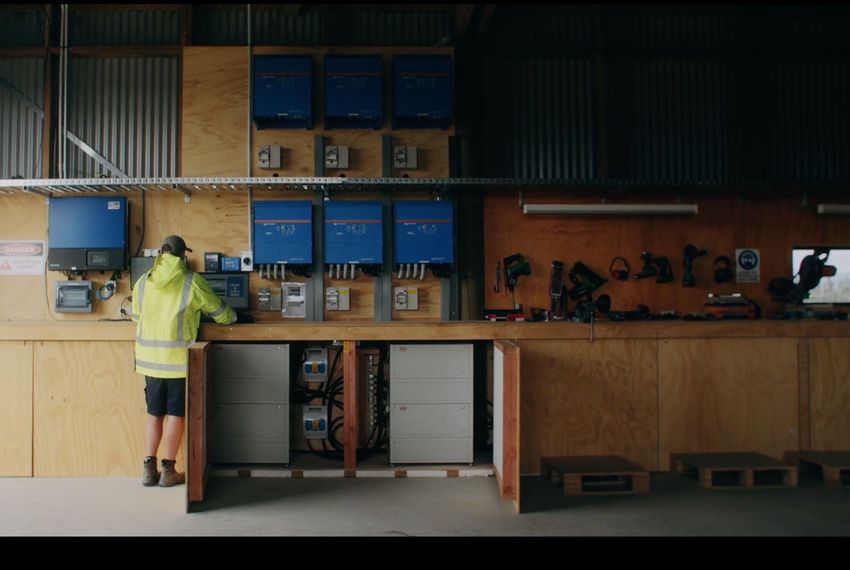
Electrification will avoid over
                       100t CO2-e a year

                        Electric     Fossil fuel          CO2-e
                         option       not used        avoided a year

                        Electric       9,000L
                                                         24,000kg
                       Irrigation      diesel

                        Electric
                                       16,000L
                          Frost                          43,000kg
                                        diesel
                        Fighting

                                        2,000L            5,000kg
                        Electric      diesel now            now
                         Farm        12,000L diesel     33,000kg from
                       Equipment      from March          April 2022
                                          2022

                        Electric
                                       5,000L
Source: Forest Lodge     Light                           13,000kg
                                       petrol
   Orchard and CTQ      Vehicles
            Advisors

                                                             SEANZ 2021 | Pg 8
Electrification will avoid over
     100t CO2-e a year
                                                                         An unexpected benefit
                       Forest Lodge will avoid over 100t CO2-e           of electric frost fighting
                       a year compared to an equivalent fossil-
                       fuelled operation by using electricity            is reduced crop loss
                       rather than diesel and petrol.
                                                                         and a more productive
                       Electrification means Forest Lodge will           operation.
                       emit no more than about 8t CO2-e a
                       year from using power from the national           The much lower operating
                       electricity system.
                                                                         costs of the electric
                       Actual emissions will likely be less
                       because Forest Lodge uses its solar and
                                                                         frost fans makes it cost-
                       battery storage to lower its electricity          effective to turn the fans
                       costs by drawing on the grid when the
                       spot price is low (when grid power likely         on earlier resulting in less
                       has lower emissions) and using the sun            fruit being damaged when
                       when the spot price is high.
                                                                         it gets frosty.
     The 18.5kW electric irrigation
     pump was the start of the
     electrification process                                       increasing the upfront cost compared to
                                                                   a diesel alternative.
                       Electrification of Forest Lodge started
                                                                   The electric pump is cheaper to run at
                       with an 18.5kW electric irrigation pump.
                                                                   about $0.90 an hour when supported by
                       At the same time the network                the solar and battery storage and about
                       connection was upgraded from single-        $2.80 an hour at typical commercial retail
                       phase to three-phase and the nearby         electricity prices, compared to about
                       transformer was upgraded to 41kVA.          $7.70 an hour for a diesel pump.
                       The upgrade took 18 months from start
                                                                   Forest Lodge is saving about $11,000 a
                       to finish, with most of the time spent
                                                                   year in operating costs by electrifying its
                       on paperwork and approvals, and cost
                                                                   irrigation.
                       $26,000 (split 50:50 with a neighbour).

                       The larger connection and transformer
                       served double duty by supporting
                                                                   Electric frost fighting is lower
                       maximum export from the 23.1kW solar        cost and may improve crop
                       array on the orchard shed roof.
                                                                   productivity
                       Electric pumps cost about the same to
                       purchase and install as diesel pumps.
                                                                   The two 30kW electric frost fans were
                       The main difference in cost is electric
                                                                   imported from South Africa after an
                       pumps may need a larger network
                                                                   extensive global search provided a
                       connection and internal electrical works,
                                                                   shortlist of one manufacturer.

Pg 9 | Case study: 100% Electrification
The installed cost of $170,000 was Operating costs for the farm equipment
nearly 20% more expensive than the will be about $25,000 less than the
conventional diesel-powered option, equivalent fossil-fuelled options. The new
though some of this was due to it being electric tractor alone will avoid about
the first ever installation in Aotearoa. 10,000 litres diesel a year.
The electric frost fans required an No differences in operating capability
additional upgrade to the transformer at or performance have been observed
the network connection from 41kVA to when compared to the conventional farm
138kVA, plus internal electrical works. equipment. Charging of the equipment
and vehicles is managed through the
The total cost of upsizing the network
same system that manages the solar and
connection was about $100,000, though
battery storage.
just over half was for moving from single-
phase to three-phase. Many agricultural
operations will already have a three-
phase connection, potentially reducing
Solar and battery storage
the cost of upsizing. combined further reduce energy
Internal electrical works cost a total of costs and provide option value
$40,000. These costs will always be site-
specific
for the local network operator
Forest Lodge is saving about $22,000 a year
by electrifying its frost fighting, due to the The 23.1kW solar array and 60kWh
electric frost fans being cheaper to operate battery storage were installed to match
than equivalent diesel fuelled fans. energy needs of the orchard over a year.
The solar array can produce about
Electric farm equipment and 90kWh of power a day during the spring
and summer and about 20kWh a day in
electric vehicles the autumn and winter.3
The orchard can operate off-grid for a
As a producing cherry orchard, Forest few hours. Going completely off-grid
Lodge needs an array of equipment and was not plausible because relying solely
vehicles. on solar and battery storage to power
Currently the orchard uses a modified golf the orchard operations would require
cart, an electric mower, assorted electric a much greater investment. And most
(farm-grade) gardening equipment and importantly, with no grid connection,
two electric light vehicles. there would be no opportunity to gain
additional value and revenue through
The electric equipment and farm vehicles services to the electricity system now
cost about 35% more to purchase than and in the future.
the equivalent fossil-fuelled options.
The solar and battery system investment
The electric tractor coming in March 2022 of $160,000, represents about 20% of the
will be about $115,000 versus $75,000 total cost of electrifying Forest Lodge.
for the conventional diesel-fuelled The solar and battery system investment
equivalent. The tractor was sourced from provides two key benefits.
Monarch Tractors in California after due
diligence on electric tractors.
The Forest Lodge solar array generated 28.43MWh in February 2021 and 7.5MWh
3
during July 2021.
SEANZ 2021 | Pg 10Forest Lodge uses the solar The solar array and battery
array and battery storage to storage provides Forest Lodge
minimise its energy costs with flexibility to ‘modify its
generation and consumption
They do this by using solar or energy
from the battery on-site when spot patterns in reaction to an
prices are high and drawing from the external signal (such as a
national electricity system when the
spot price is low. change in price) to provide
Forest Lodge has a stretch goal of a service within the energy
timing energy import and export from system’.
the grid to produce a net zero energy
bill for the year.
The Forest Lodge solar array and battery
storage is well suited to providing
flexibility services and happens to be
in a location where Aurora is actively
procuring flexibility services in the Upper
Clutha and Wanaka area to defer network
upgrades.
This flexibility service has value to the
“When the spot price is local network operator – Aurora - and to
the wider power system.
under $0.15, we know
The solar array and battery storage
that power is likely to be allow Forest Lodge to reduce its use of
renewable and abundant. the network when Aurora says doing so
would help avoid network costs.
Likewise, when the spot The benefit for responding to the
price goes above $0.40, it’s demand reduction signal from Aurora
is a reduction to the demand-based
likely that coal and gas are component of the network charges paid
being used to supplement by Forest Lodge.
supply at that time, and By managing its use of the network at
specific times, Aurora has set Forest
that there is a shortage of Lodge a chargeable demand of 0.5kVA
for the coming year compared to the
power available.” ‘standard’ of 35.5kVA for an operation
with equivalent electricity use. The
“We need to cover a $0.23 ability to reduce the chargeable demand
spread to break even on represents a reduction on the network
charges paid by Forest Lodge of nearly
arbitrage. This takes into $9000 a year.
account battery wear
and tear, power loss from
inverting, and Contact
Energy’s cut on our export.”
Pg 11 | Case study: 100% Electrificationelectricity is supplied by longer network
More value is likely to be circuits to small numbers of customers.
available in the future from the Having solar and battery storage in place
flexibility of the solar array and will help to avoid higher network charges
needed to pay for network upgrades as
battery storage more economic activity and agricultural
production electrifies.
Forest Lodge could have electrified
From this perspective, investing in
without incurring the ‘extra’ capital
solar and battery storage as part of the
investment in solar and battery storage.
electrification process will help to reduce
By minimising the energy costs and the cost of electrification by avoiding
reducing network costs, the solar with or delaying major network upgrades to
battery storage is expected to reduce provide the capacity to support increased
annual operating costs by another use of electricity in the future.
$15,000 compared with pursuing a
Electricity distribution and transmission
grid-only electrification. The incremental
network operators, along with the wider
reduction to ongoing operating costs
electricity sector, including government
relative to relying on a grid-only power
and regulators, need to make sure that
supply improves the simple payback by
as people and businesses electrify, they
one year.
are encouraged to consider the longer-
Solar and battery storage will provide term benefits from investing in solar
longer-term and as-yet realised value to and battery storage so that flexibility
network operators as mass electrification capability is available to provide a resilient
accelerates by providing flexibility and reliable network service and defer
on tap to use to defer or avoid extra or avoid network upgrades and higher
network investment needed to cope with network charges in the future.
increased pressure on the network from
The opportunity of flexibility – both
electrification (particularly on the same
available and missed – is suggested at in
feeder).
the response by Forest Lodge to the grid
Solar and battery storage could be emergency on 9 August 2021.
particularly valuable in rural areas where
SEANZ 2021 | Pg 12On 9 August 2021 the
electricity system operator
requested distributors to
reduce demand due to a
shortfall in generation. Power
was cut to about 35,000
“We believe it was our civic duty
homes.
to export, and we could have
Forest Lodge was able to exported much more if there
export about 14kWh to the had been a protocol in place to
local network during the request us to do so. We believe
emergency – sufficient to that being available to support
supply about 3-4 homes. the grid at the right time and
place should be financially
rewarded in the same way
generators are paid to generate
power. DER could become a
significant revenue stream for
businesses and encourage more
companies to install batteries
and export capability.”
Pg 13 | Case study: 100% ElectrificationEnergy, now provides a bespoke retail
Extra detail on how Forest service where customers buy power from
Lodge uses the network the grid at the spot price and sell their
power, for example when Forest Lodge
Extra detail on how Forest Lodge uses has surplus solar power or chooses to
the network and the potential value to discharge its battery.
the network operator of the flexibility
Finding Simply Energy was not
from the solar and battery storage is
straightforward, requiring lots of ringing
provided on page 16.
around to find an electricity retailer able and
willing to do what Forest Lodge wanted.
An off-the-shelf service is Simply Energy is now working on adding
needed to support mass an additional bespoke flexibility trading
service. This would allow Forest Lodge
electrification to participate in the Aurora Upper
Clutha Non-Network Alternative project
Electrification of Forest Lodge required which uses the flexibility services from
considerable effort from the owner distributed energy resources to defer
Mike Casey to package up several network upgrades.
bespoke solutions. There was no off-
The lack of off-the-shelf services from
the-shelf product or service available
the electricity sector means equipment
from the electricity sector or equipment
suppliers and installers – particularly
manufacturers to maximise the value of
solar and battery suppliers – don’t have
electrification.
the guidance or insight needed to design
Forest Lodge has needed to source systems that maximise value for the
equipment, including bespoke fabrication customer.
and importing gear, work out how to
adapt conventional farming practices,
manage energy use and production to
maximise value (ie, lower energy costs
as much as possible), and find people to
work with that could make it all happen.
Much of the equipment and technology
integration was done in-house by Forest
Lodge. The arbitrage between grid and
solar power occurs via a self-written Much of the equipment
algorithm run using a RasberryPi which
decides how much to export based on the
and technology
spot price at the Cromwell grid export point. integration was done
Interactions with the electricity sector in-house by Forest Lodge.
started with requesting a network
connection which matched the expected The arbitrage between
electricity requirements of an electrified
orchard.
grid and solar power
The next step was finding a retailer.
occurs via a self-written
Simply Energy, a subsidiary of Contact algorithm.
SEANZ 2021 | Pg 14provide each other back-up). Aurora is
Extra detail on how Forest observing emerging network congestion
Lodge uses the network in the wider Upper Clutha region, mainly
due to household space heating.
Forest Lodge is connected via circuit
The Forest Lodge and Queensbury
QB2423 to the Queensbury substation
substation active power flows for each
and Cromwell grid exit point.
half hour between February and July 2021
The Queensbury substation is summer are contrasted in the chart. The chart
peaking, along with the Lindis Crossing indicates Forest Lodge makes minimal
and Camphill (Hawea) substations, mainly use of the network during June and
due to irrigation. Aurora is observing July, and by routinely exporting power
localised summer peaking network probably helps to alleviate the winter
congestion at the Queensbury and Lindis congestion problem affecting the wider
Crossing substations (these substations Upper Clutha area.
Forest Lodge Orchard & Queensbury substation
profile 1 February 2021 to 31 July 2021
Pg 15 | Case study: 100% ElectrificationAdditional detail on the
electrification numbers
Annual Energy Costs
Conventional (fossil) Electric (grid) Electric (grid + solar/battery
$63,000 $22,000 $7,000
Source: Forest Lodge Orchard & CTQ Advisors. Note: All costs are exclusive of GST.
Conventional (fossil) energy costs calculated based on 42,000 litres of diesel and petrol a
year and a $1,000 network charge. Electric (grid) costs calculated based on 66,000kWh a
year and a $12,500 network charge. Electric (grid + solar/battery) costs calculated based
on the same power use and a $4000 network charge.
Capital costs
Conventional (fossil) Electric (grid) Electric (grid + solar/battery
$340,000 $630,000 $790,000
Source: Forest Lodge Orchard & CTQ Advisors. Note: All costs are exclusive of GST. Capital
costs of Electric (grid) and Electric (grid + solar/battery) scenarios would reduce by $55,000
if Forest Lodge had started with a 3-phase connection.
Annual operating costs and simple
payback of capital costs
Conventional (fossil) Electric (grid) Electric (grid + solar/battery
$63,000 $22,000 $7,000
15 years 14 years
Source: Forest Lodge Orchard & CTQ Advisors. Note: All costs are exclusive of GST. Simple
payback of the incremental cost of electrification is 7 years for the Electric (grid) scenario
and 8 years for the Electric (grid + solar/battery) scenario. 3 price increase variables are
excluded in the simple payback calculations as assumes retail power prices remain
at current levels (prices will likely increase over coming decade); diesel prices remain at
current levels (prices will likely increase); and network charges remain at current levels
(charges will likely increase). Payback period will be reduced once increases factored are
included.
Annual carbon emissions (tonnes CO2-e)
Conventional (fossil) Electric (grid) Electric (grid + solar/battery
113 8www.seanz.org.nz
You can also read


