2016-21 Action Plan Progress Report - Manawatū River Accord
←
→
Page content transcription
If your browser does not render page correctly, please read the page content below
Manawatū River Leaders’ Accord

2016-21 Action Plan
Progress Report
Kei te ora te wai, kei te ora te
    whenua, kei te ora te tangata.

  If the water is healthy, the
   land and the people are
          nourished.
The Manawatū River is a beacon for challenges
   facing freshwater quality in New Zealand.
  That is why, in August 2010, iwi/hapū, local
and central government, farming, and industry
   leaders, along with Massey University and
   environmental and recreational advocacy
groups from around the Manawatū Catchment
 formed the Manawatū River Leaders’ Forum.
Contents

                        Contents ...........................................................................................................1
                        Foreword ......................................................................................................... 2
                        Story of the river ............................................................................................ 3
                        Catchment map ............................................................................................ 3
                        2016-21 Action Plan ...................................................................................... 4
                        Funding .........................................................................................................5-7
                        Sustainable Land Use Initiative .................................................................. 8
                        Manawatū River Leaders’ Accord Community Grants ........................ 9
                        Monitoring water quality ........................................................................... 10
                        State and trends ............................................................................................11
                        Progress on the 2016-21 Action Plan .............................................. 13-19

Manawatū River Leaders’ Accord – 2016-21 Action Plan, Progress Report                                                                           1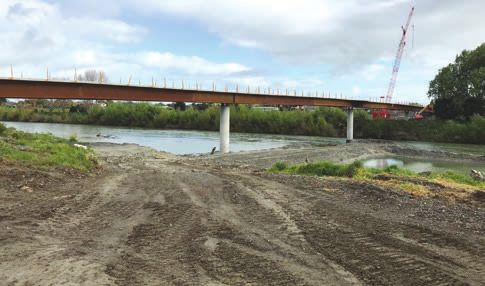
He kupu whakataki

    Foreword

    Kia ora. This Progress Report overviews                     more work to be done. A second iteration of the Action
                                                                Plan was launched in March 2016 to incorporate new
    the journey and progress since the                          actions and tasks, and a range of new forum members
    launch of the second Manawatū River                         including DairyNZ, Beef + Lamb NZ, Environment
                                                                Network Manawatū, and the Save Our River Trust.
    Leaders’ Accord Action Plan and is                          Within this Action Plan, 34 diverse signatories agreed to
    accompanied by a website release that                       104 tasks to continue progress made to date.
    contains a lot more information.                            Alongside the two Action Plans, members of the
    While this Progress Report has been produced to show        Manawatū River Leaders’ Forum have also collaborated
    what actions have been taken to improve the health          to deliver works through joint local and central
    of the Manawatū River since the launch of the second        government, and multi-agency investment for projects
    Action Plan, it is also important to acknowledge how far    through the Fresh Start for Freshwater Clean-Up Fund,
    we have come.                                               Freshwater Improvement Fund, and Te Mana o Te Wai
                                                                Fund – totalling to over $54 million. These funding
    Following the creation of the Manawatū River Leaders’       opportunities have allowed the Accord Forum to
    Forum in 2010, members signed the Manawatū River            progress some tasks sooner, as well as adapt others,
    Leaders’ Accord a year later. The Accord document set       and add new science-led interventions.
    out a focus, vision, and goals for the river, reflecting
    Accord members’ firm belief that by working together        The Manawatū River Leaders’ Accord is a source to
    we can achieve more than working alone. We are all          sea initiative, encompassing sustainable land use,
    kaitiaki (guardians) of the river, so if we step up and     biodiversity, and freshwater interventions, through to
    protect our taonga, its mauri (lifeforce) will return and   improving infrastructure, water allocation and quality.
    thrive for future mātātahi (generations).                   Improving the state of the Manawatū River is very
                                                                much a long-term project. No single action led to its
    The main goal of the Accord is to improve the
                                                                current state and no single solution will fix it. What we
    Manawatū River, such that it sustains fish species,
                                                                do know is that the Manawatū River and its catchment
    and is suitable for contact recreation, in balance with
                                                                is one of the most heavily monitored in New Zealand.
    the social, cultural and economic activities of the
                                                                We have an in-depth understanding of the challenges
    catchment community. Specific goals set out in the
                                                                the awa faces, and Forum members continually
    Accord are:
                                                                combine knowledge and effort to direct action where
                                                                it is needed most. We also acknowledge there is
    • The Manawatū River becomes a source of regional
                                                                plenty more that can be done. However, we cannot
      pride and mana.
                                                                do it alone. Through collective actions alongside our
    • Waterways in the Manawatū Catchment are safe,             communities, we will make a lasting difference.
      accessible, swimmable, and provide good recreation
      and food resources.                                       We are all part of this journey and we encourage you
                                                                to get involved. The following pages highlight a few of
    • The Manawatū Catchment and waterways are                  the actions completed, ongoing or underway since the
      returned to a healthy condition.                          launch of the second Action Plan in 2016.
    • Sustainable use of the land and water resources of        More information about the Accord and progress to
      the Manawatū Catchment continues to underpin the          date can be found on our new website
      economic prosperity of the region.                        www.manawaturiver.co.nz or get in touch at
                                                                info@manawaturiver.co.nz
    The first Manawatū River Leaders’ Accord Action Plan
    was also released in 2011, where Accord members
    committed to improving the river and catchment
    through six priorities and over 130 tasks. The 2011-2015
    Action Plan was reported on in 2012 and 2014 through        Richard Thompson
    Progress Reports.                                           Independent Chair
                                                                Manawatū River Leaders’ Forum
    The scale of the Accord project means that although         24 November, 2018
    a lot had been accomplished there was still plenty

2                                                                Manawatū River Leaders’ Accord – 2016-21 Action Plan, Progress Report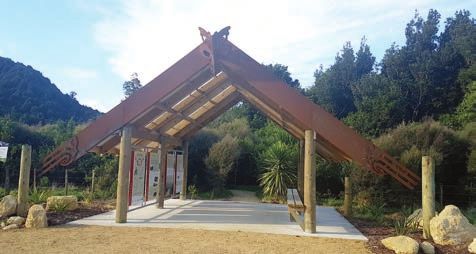
Te kōrero mō te awa

Story of the river

SOURCE TO SEA, LEGEND OF THE AWA

He kupu wawata ēnei kupu e whai                   Te au-rere-a-te-tonga (the flowing                     of Norsewood, swings south to flow
ake nei mō te āhua o ngā wairere                  current of the south).                                 near the Ormondville settlement and
o nehe.                                                                                                  continues south meandering east of
                                                  The naming of the river is attributed                  Dannevirke until it is joined by the
I rere te awa, he wai urutapu, he                 to Haunui-a-Nanaia, a man who                          Mangatainoka River south-east of
wairere. Ko te Manawatū he wai                    travelled down the west coast in                       Woodville. Here the river turns and
puiaki, i ngā wā o mua. He wai tuku               pursuit of his wife Wairaka, crossing                  heads west and is joined yet again
iho e Ranginui ki a Papatūānuku                   the numerous river mouths as                           by another tributary, the Mangahao,
ki a tātou, hei waiū, hei pātaka kai              he went. When Haunui-a-Nanaia                          before entering Te Āpiti (the
nā reira i kaha tiaki. Kia mataara                reached what is now known as the                       Manawatū Gorge) at a place known
tonu tātou kia tiaki ngātahi, kia                 Manawatū River, it was so wide, deep                   as Te Waha o te Kurī (Ferry Reserve).
whakaaro nui ki tō tātou awa e ora                and cold that it made his breath stand
tonu ai tōna mauri hei āpōpō, hei                 still. Therefore the river’s name comes                At the Ashhurst end of the Gorge,
ngā rā o ngā mokopuna, ā, haere                   from the Māori words manawa (heart)                    the Pohangina River joins the
ake nei.                                          and tū (stand still); ’Manawatū…still                  Manawatū River which continues its
                                                  breath/breath stood still’.                            journey through Palmerston North
The following poetical narrative                                                                         and onto Rangiotū near where it is
describes how our rivers                          The source of the Manawatū River                       joined by the Ōroua River. Carrying
once were.                                        is located on the eastern side of the                  on south, the Manawatū River then
                                                  Ruahine Ranges up in behind the                        cuts through the plains of Ōpiki
The river flowed in its healthy                   present day settlement of Norsewood                    and Shannon before heading west,
pristine state. Manawatū was                      in the Tamaki nui a Rua area (Tararua                  making its release at Foxton Beach
a waterway used extensively                       District). The river winds its way                     and into the Tasman Sea.
historically. A gift from the sky                 south-east of its source skirting wide
to mother earth as sustenance
and a source of food and as such
                                                  CATCHMENT MAP
was cherished and respected.
We should be ever vigilant in the
collective care and consideration
towards our river to ensure the life
force remains intact tomorrow, in
the days of our grandchildren, and
into the future.                                                                                                     POHANGINA

According to Rangitāne tradition,
the Manawatū River gorge was                                                            ŌROUA

formed by a giant tōtara tree
known as Okatia who once stood
                                                                                                                                 UPPER MANAWATŪ
on the Puketoi ranges to the east.
Okatia became incensed with a                                                                    MIDDLE MANAWATŪ

desire to reach the sea and so
headed west from its Puketoi                                               LOWER MANAWATŪ

home, encountering the great
Ruahine and Tararua mountain
                                                                                                    UPPER GORGE
range. This it overcame creating
in its wake a great mountain pass
which become known as Te Āpiti
(a cleft or gorge) and its waters

                                                                                         MANGATAINOKA

Manawatū River Leaders’ Accord – 2016-21
Manawatū
Action Plan,River Leaders’
             Progress      Accord – 2016-21 Action Plan, Progress Report
                      Report                                                                                                                       3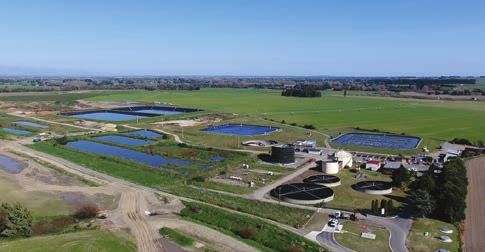
Te mahere mahi 2016 – 2021

    2016-21 Action Plan

    Since the launch of the second Manawatū River Leaders’ Accord
    Action Plan, a number of groups have worked in partnership to
    improve the health of our river. This work has direct links to the
    key actions and activities listed in the 2016-21 Action Plan:

                  Reduce the nutrient and bacteria from point
                  source discharges

                  Reduce sediment run-off from erosion prone farmland,
                  the rural road network, and areas of major earthworks

                  Prevent over-use of water

                  Reduce the impact of flood control and
                  drainage schemes

                  Reduce the run-off of sediment, nutrients and bacteria
                  from intensive land-use such as dairying and cropping

                  Protect areas of habitat for native fish, native birds
                  and trout

                  Increase awareness of the challenges faced by
                  freshwater and the actions community can take

    The 2016-21 Action Plan was put in place with the best of intent. It was was clear about who was
    the lead agency for specific tasks and their timeframes for delivery. This Progress Report is one of
    those tasks. Many of the tasks have been undertaken, some are ongoing, and some have evolved into
    other programmes, for example the Te Mana o Te Wai project – Tū Te Manawa and the Freshwater
    Improvement Fund that are both currently underway.

4                                                                 Manawatū River Leaders’ Accord – 2016-21 Action Plan, Progress Report
Te pūtea
Funding
Since its inception, over $66 million has been invested in Manawatū
River Leaders’ Accord initiatives. In addition to this funding, further
investment and support from councils, iwi and hapū, landowners,
industry, and community members have all contributed to improving
the health of our awa.
FRESH START FOR FRESHWATER community groups, and industry partners. The fund
CLEAN-UP FUND amounted to a package of over $46 million towards a
suite of eight projects delivered over four years. Projects
were chosen based on the impact they would have
In March 2012 the Manawatū River Leaders’ Forum was on reaching the goals set out in the Accord’s 2011-
successful in its bid to the Fresh Start for Freshwater 2015 Action Plan, as well as additional science-based
Clean-Up Fund, a Ministry for the Environment funding interventions that would contribute to improving the
scheme to improve water quality in New Zealand. The overall health of the river.
Accord received $5.2 million in central government
funding to help improve the health of the Manawatū Projects completed under the Clean-Up Fund
River. This involved addressing areas of poor water include upgrades to Woodville, Dannevirke, Pahiauta,
quality, accelerating enhancement efforts throughout Kimbolton, Feilding and Shannon’s wastewater
the catchment and enabling community involvement in treatment plants; over 208km of stream fencing
restoration activities. to exclude sheep and cattle from the catchment’s
waterways; native fish habitats in Tokomaru, Turitea,
The funding was pooled with significant contributions Kahuterawa, and Norsewood improved, whitebait
from Tararua, Manawatū and Horowhenua District habitats at Whirokino, Whitebait Creek, Mangatainoka,
Councils, Horizons Regional Council, DairyNZ, and and Mangahao restored; 98 environmental farm plans
landowners, as well as in-kind contributions from iwi, completed; and 19 community-led projects undertaken.
Feilding wastewater treatment plant
Manawatū River Leaders’ Accord – 2016-21 Action Plan, Progress Report 5TE MANA O TE WAI iwi and hapū with their awa. As part of the project, eight
whare are being built at culturally significant sites from
source to sea. The whare will house historical, cultural
In October 2016, Tū Te Manawa, a project to enhance and scientific narratives, and provide a place for people
iwi and hapū involvement in the Manawatū River and to engage at the river’s edge.
its catchment, received a $534,000 Te Mana o Te Wai
central government grant. With support from Horizons, the Te Mana o Te Wai
fund and landowners, Tū Te Manawa project members
In addition to Rangitāne o Tamaki Nui a Rua are also engaging in extensive planting and fencing
contributions, Horizons Regional Council, programmes to physically improve and enhance the
Palmerston North City Council, and Tararua District quality of the river.
Council provided additional funding towards the
$814,000 project. A culturally significant species protection and
enhancement programme is also being developed
Multiple iwi and hapū within the Manawatū Catchment and implemented at each of the whare sites, allowing
have collaborated to lead and deliver Tū Te Manawa. iwi, hapū, whānau and students from local schools to
The overall purpose of the project is to enhance iwi engage in community science.
involvement in the river’s restoration, and increasing its
mana through communicating stories that reconnect
Te Waha o te Kurī Whare, Ferry Reserve, Woodville
FRESHWATER IMPROVEMENT FUND Together they have contributed the remaining
$4.32 million as well as significant in-kind support.
In August 2017, The Manawatū River Leaders’ Forum The application was successful in over half of its
successfully secured $2.92 million from central components, with many Accord actions along the
government under the Freshwater Improvement Fund. Manawatū River now able to proceed in a shorter
This funding will contribute to works totalling timeframe. Projects to be completed over the five year
$7.24 million over five years. period include the upgrade of Tokomaru’s wastewater
treatment plant which will now discharge to land;
Horizons Regional Council along with 250 kilometres of stream fencing; 200,000 riparian
Palmerston North City Council, Manawatu, plants; 20 fish pass fixes; 45 community projects;
Tararua and Horowhenua District Councils, iwi, and Palmerston North City Council’s urban streams project;
landowners submitted an application for the Freshwater and matauranga Māori and cultural monitoring.
Improvement Fund on behalf of the Manawatū River
Leaders’ Accord.
6 Manawatū River Leaders’ Accord – 2016-21 Action Plan, Progress ReportTokomaru community planting day
Manawatū RiverLeaders’
Manawatū River Leaders’Accord
Accord– –2016-21
Action Action
Plan, Progress Report
Plan, Progress Report 7Toitū te whenua
Sustainable Land Use Initiative
Horizons Sustainable Land Use Initiative (SLUI) takes a mitigate the erosion areas identified within these
‘mountains to the sea’ approach to protecting valuable plans, with 5,377 hectares of works completed to
hill country soils where they are at risk of moderate date including 274km of fencing and 1.8 million trees
to severe erosion. By keeping this soil on our hills and planted. This has been funded by way of Horizons rates
out of the Manawatū River, the catchment is improved and contribution from the Ministry of Primary Industries,
through increased flood protection, better water quality, as well as significant financial contributions from
protection of hill country and native habitats. SLUI landowners.
SLUI uses a variety of tools, however the programme Through monitoring Horizons and Landcare Research
is based around the development of Whole Farm Plans have tracked the impact of the SLUI programme.
with individual farmers. These plans are voluntary and It’s modelled that even if work stopped in 2018, by 2043
once developed are followed up with a works and the work already completed will lead to an 11 per cent
incentive programme aimed at reducing erosion. reduction in annual sediment load in the Manawatū
Catchment. The programme continues to grow as
To date, 70 per cent of highly erodible land in the more and more landowners get on board, if activity
catchment is captured under the SLUI programme stays at its current rate we will see a reduction of
through Whole Farm Plans. Work is underway to 27 per cent by 2043.
Hill country, Manawatū Catchment
8 Manawatū River Leaders’ Accord – 2016-21 Action Plan, Progress ReportTe tahua hinonga ā hapori a te kawenata a te kāhui rangatira o te awa o Manawatū
Manawatū River Leaders’ Accord
Community Grants
Since the formation of the Accord a proportion of the central government support via the Fresh Start for
budget has been directed towards community projects. Freshwater Clean-up and Freshwater Improvement
The Manawatū River Leaders’ Accord community grants Funds. To date 46 projects have been supported, with
programme aims to assist non-profit organisations such grants totalling over $435,000.
as community groups, schools, catchment care groups
and iwi/hapu with projects that will help increase The Manawatu District Council are also supporting
engagement with Manawatū waterways and improve community projects via the Freshwater Improvement
water quality in the catchment. Fund and in 2018-19 nine projects received grants from
the $100,000 that was available.
Horizons Regional Council has a targeted rate for the
Manawatū River Leaders’ Accord. This rate contributes A further $400,000 will be now be available to
$410,000 per year to Accord activities, with 15-20 per community groups over the next four years. In addition
cent going towards the community grants programme. to funding, the grants provide an opportunity for groups
The budget has expanded over the years through to tap into the support and technical advice available
at Horizons.
WOP WOP WETLANDS By cleaning up and enhancing the wetland area the
habitat of native species, including the long-fin eel
(tuna) whose numbers are declining, has become an
In 2016, Kuikui Charitable Trust and local iwi Ngāti improved environment. The protected habitat is vital for
Kahungunu ki Tamaki nui-a-rua were successful tuna as they live for about 100 years in the same place,
recipients of a 2016 Manawatū River Leaders’ before migrating to the Pacific Ridge to breed and die.
Accord Community Grant worth $1500. Protection, The wetland is open for the general public who can
revitalisation, education and engagement was feed the tuna while learning about the site’s historical
the project group’s focus for Wop Wop wetland significance and the value of protecting and conserving
improvements close to the river source in Lower the wetlands for future generations.
Norsewood. The grant contributed towards the costs of
fencing a natural spring and native riparian plants.
Wop Wop Wetlands
Manawatū River Leaders’ Accord – 2016-21 Action Plan, Progress Report 9Te aroturuki i te kounga wai
Monitoring water quality
The Manawatū Catchment is one of the most heavily or blue-green algae. Bugs and insects are another
monitored and studied catchments in New Zealand. important indicator of river health and annual
To evaluate the health of the river and trends over time, monitoring is carried out at 48 sites to look at the
Horizons Regional Council monitors water quality number and type of invertebrates present. It is worth
at 70 river and stream sites across the catchment on noting that some measures that were previously
a monthly basis. Water collected from these sites is considered an issue in the catchment, such as the
tested for levels of nutrient (nitrogen and phosphorus), amount of oxygen needed to break down organic
bacteria, sediment, clarity and physico-chemical matter in discharges, are no longer measured on a
stressors – for example pH, conductivity, dissolved widespread basis. This is because previous efforts to
oxygen and temperature). restore water quality targeted these concerns and
several years of monitoring has confirmed biological
Of the 70 monitored sites, 14 are positioned directly oxygen demand is no longer an issue other than at a
downstream of major point source discharges such as few discrete point source sites in the Manawatū.
treated wastewater from towns or industrial discharges.
By monitoring water quality upstream and downstream Over the Accord period, six point source discharges
of discharge points, scientists are better able to have been removed from the river. Some have been
determine the impact of each point source discharge combined into the Palmerston North wastewater
on overall water quality and whether these discharges treatment plant (New Zealand Pharmaceuticals
are improving. It also allows them to calculate how Industrial wastewater, Ashhurst, Aokautere and
much of the nutrient in the river comes from these Longburn wastewater treatment plants), others
point sources and how much comes from other have ceased completely (DB Breweries and PPCS
sources such as run-off from farms, urban areas or Fellmongery at Shannon). Four wastewater treatment
other parts of the landscape, and whether the amount plants now have consent to undertake dual discharge
from these other sources is getting better or worse. to land and water (Feilding, Shannon, Fonterra Pahiatua
and Foxton) and Tokomaru wastewater treatment plant
To complement monthly and annual sampling, has funding through the Freshwater Improvement Fund
Horizons measures some aspects of water quality in to move towards a land discharge.
the Manawatū on a continuous basis (every 15 minutes).
This captures daily variation in measures like water While these changes have reduced the need to monitor
temperature (31 sites), pH and conductivity (6 sites) the sites where the point source discharges have been
dissolved oxygen (4 sites), sediment (8 sites) and removed, Horizons has added seven more monitoring
nitrate (1 site). sites to measure effectiveness of interventions.
Six of these sites are located in the lower reaches of
Horizons also measures the amount of algae or tributaries of the Manawatū River. These are the Oroua,
periphyton present in rivers and streams. This is Kahuterawa and Kiwitea Rivers and the Koputaroa,
measured at 32 sites on a monthly basis and includes Mangatewainui and Turitea Streams. The final addition is
monitoring of the potentially toxic algae (phormidium) a reference site at the top of the Makakahi.
Water quality samples in the lab
10 Manawatū River Leaders’ Accord – 2016-21 Action Plan, Progress ReportTe hanga me ngā ia
State and trends
It has nearly been 10 years since the signing of the to date and recommend actions to improve water quality
Manawatū River Leaders’ Accord and in that time a huge for the 2016-21 Action Plan. Members of this panel
amount of work has been carried out by the Accord were Accord partners and external agencies including
members alongside community groups and individual Horizons Regional Council, Massey University, National
landowners. Actions taken to improve water quality are Institute of Water and Atmosphere (NIWA), Cawthron
based on a foundation of science. In 2014 a Science and Institute, Fish and Game, Land Water People (LWP), and
Mātauranga Maori panel was formed to review progress Landcare Research.
CHANGE WILL TAKE TIME
While it is expected that the impact of this work, in Improvements in in-stream habitat as a result of shading
particular around changes in land use or management and reduced run-off from riparian planting will also take
practices, will make a positive change, in many cases time to show. For example, it takes time for riparian
that impact will not be seen for many years. For example, plants to grow and provide shading. Similarly, planting to
recent research shows the average time between address hill country erosion will take years to mature and
water leaving the root zone of a plant to emerge in produce benefits, and ecological responses will develop
the river channel at low flows can take between 12 as species recover from their current state to a restored
months and up to 11 years. So in essence, the benefits habitats. There are some actions that can be expected
of land management changes carried out today will to produce immediate improvements in water quality,
take up to 11 years to create a considerable, measurable such as fixing or removing point source discharges, and
improvement in the health of our awa. However, these fixes to fish passages. However, it will take time for these
lags are shorter than those within other catchments such improvements in the river to show in the monitoring
as Lake Taupō, which is approximately 60 years. results due to the inherent variability of the data.
10 YEARS OF WATER QUALITY TRENDS FOR THE MANAWATŪ CATCHMENT,
1 JULY 2007 – 30 JUNE 2017
In 2018, Horizons Regional Council commissioned Horizons’ One Plan, as well those specified in the
LWP to analyse the available water quality data in the National Objectives Framework of the National Policy
Manawatū-Whanganui Region. The report is based on Statement- Freshwater Management. The full report can
a site-by-site basis, relative to targets set in be found at www.horizons.govt.nz
MANAWATU REGIONAL
PROBABILITY PROBABILITY PROBABILITY PROBABILITY
NO. OF SITES NO. OF SITES
IMPROVING DECLINING IMPROVING DECLINING
E. coli (swimmability indicator) 32.5% (5.5%) 67.5% (5.5%) 40 52.5% (4%) 48.5% (4%) 80
Nitrate (nutrient indicator) 48.8% (6%) 51.2% (6%) 40 48.6% (4.4%) 51.4% (4.4%) 80
Dissolved Reactive Phosphorus (nutrient indicator) 62.8% (6%) 37.2% (6%) 39 37.5% (3.5%) 62.5% (3.5%) 80
Clarity (sediment indicator) 35.1% (5.9%) 64.9% (5.9%) 37 37.5% (4.5%) 62.5% (4.5%) 72
Macroinvertebrate community index (ecosystem
34.8% (8.1%) 65.2% (8.1%) 23 35.6% (5.8%) 64.4% (5.8%) 45
health indicator)
Chlorophyll a (ecosystem health indicator) 10.5% (8%) 89.5% (8%) 19 10% (6%) 90% (6%) 30
As mentioned above, it is important to note that changes in land use or management practices will produce a positive
outcome, however in many cases the impact will not be seen for many years. Over time, a combination of the many
interventions underway or planned will add up to show an improving trend on the health of the Manawatū Catchment.
Manawatū River Leaders’ Accord – 2016-21 Action Plan, Progress Report 1112 Manawatū River Leaders’ Accord – 2016-21 Action Plan, Progress Report
Te haere o te mahere mahi 2016-21

Progress on the 2016-21 Action Plan

Within the 2016-21 Manawatu River Leaders’ Accord Action Plan, 104 tasks were identified
as ways to contribute towards the continual improvement of the river’s health. While on the
following pages we have highlighted progress on some of these tasks, others are ongoing,
and others have evolved thanks to funding opportunities through Te Mana o Te Wai and the
Freshwater Improvement Fund, the full 2016-21 Action Plan can be found at
www.manawaturiver.co.nz and a more comprehensive progress list is available upon request.

1. REDUCE SEDIMENT INPUT

  Total              Completed          Ongoing            Not Started   Evolved

  4                  0                  3                  1             0

TASK #1
Horizons Regional Council continues to promote the reduction of sediment run-off from
erosion prone land through the Sustainable Land Use Initiative (SLUI). Since the start of the
Accord, there have been 166 Whole Farm Plans created which capture 70 per cent of highly
erodible land in the catchment. These plans include the planting of 1.8 million trees and
274 kilometres of fencing erected, contributing towards the 5,377 hectares of erosion works
that have been completed.

2. REDUCE IMPACT FROM WASTEWATER DISCHARGES

  Total              Completed          Ongoing            Not Started   Evolved

  14                 5                  9                  0             0

TASK #6
Palmerston North City Council hosted a successful wastewater forum on 21 April 2017,
with more than 80 attendees hearing from international and homegrown experts in
wastewater treatment.

The forum was a great opportunity for councillors, technical staff, and decision makers from
local and regional councils, community groups, iwi representatives, and members of the public
to learn about current trends and best practices in wastewater treatment.

The one-day event featured guest speakers from the USA, Australia and New Zealand, as well as
two panel discussions with questions from the floor, and provided territorial authorities lots to
consider for best wastewater options in the future.

Manawatū River Leaders’ Accord – 2016-21 Action Plan, Progress Report                               13
TASK #8
     All Palmerston North City Council wastewater discharges have been connected to one discharge point at Tōtara Road
     Treatment Plant. This includes Linton, Longburn, Ashhurst and Bunnythorpe.

     TASK #9
     The 2017 wastewater forum led into the process for the Palmerston North City wastewater upgrade that has a budget
     of $6 million set aside in Palmerston North City Council’s 2018-28 Long-term Plan. Launched in November 2018,
     Nature Calls is the Council’s four-year planning, investigating and engagement project that will result in the delivery of
     the best practicable wastewater treatment option for the City and the Manawatū River.

     TASK #12
     Horowhenua District Council’s Shannon wastewater treatment upgrade was completed in 2018 thanks to a significant
     contribution from the Fresh Start for Freshwater Clean-Up Fund. Upgrades include discharging to land at least 80 per
     cent of the time and only to the Manawatū River when flows are above the 20th FEP (flood flows). This is compared
     to a 100 per cent discharge to the Otauru Stream under the previous consent. However, the intent is to have the
     wastewater treatment plant discharge to land 100 per cent of the time.

     TASK #13
     The Environment Court recently released a decision that will allow for 100 per cent of Horowhenua District Council’s
     Foxton wastewater treatment plant is discharge to go to land. This will replace the current arrangement where 100
     per cent of the discharge enters the Foxton Loop. This project is to be completed within three years.

     TASK #14
     Horowhenua District Council has secured funding through the Freshwater Improvement Fund to help progress an
     application to discharge wastewater 100 per cent to land at Tokomaru.

     TASK #16
     Tararua District Council has completed upgrade works at
     the Dannevirke wastewater treatment plant in 2018. This
     plant was upgraded thanks to a significant contribution
     from the Fresh Start for Freshwater Clean-Up Fund.
     Upgrades included lining the treatment ponds, deepening
     Pond 1 for more storage and also reducing discharge
     flows during low flows in the Mangatera Stream, and the
     installation of drum filters and aerators to improve the
     quality of the effluent. Tephra beds have been installed
     and are to become operational in summer 2018-19 to
     reduce dissolved reactive phosphorus concentrations in
                                                                                Lined ponds, Dannevirke wastewater treatment plant
     the discharge.

     3. REDUCE THE IMPACT FROM STORMWATER DISCHARGES

       Total                Completed             Ongoing               Not Started              Evolved

       5                    1                     4                     0                        0

     TASK #20
     Palmerston North City Council completed the installation of the Norton Park stormwater treatment wetland in 2017,
     with final planting and remedial works completed in 2018.

     TASK #22
     Manawatu District Council approved $11.6 million in their 2018-28 Long-term Plan to initiate a sediment and
     stormwater management programme, with a focus on growth related stormwater infrastructure in Feilding.

14                                                                    Manawatū River Leaders’ Accord – 2016-21 Action Plan, Progress Report
4. REDUCE THE NUTRIENT RUNOFF FROM LAND Total Completed Ongoing Not Started Evolved 4 0 4 0 0 TASK #26 In 2017, industry bodies including DairyNZ, Beef + Lamb New Zealand, and Federated Farmers constructed a wetland in Hiwinui to help promote wetlands as a tool for landowners to improve nutrient and sediment management, as well as potential water storage. TASK #27 Fonterra recorded nitrogen information from 99.57 per cent of dairy farms in the Manawatū Catchment during the 2016-17 season. One on one assistance was also provided to at risk farmers on ways to reduce nitrogen leaching. 5. IMPROVE WATER ALLOCATION Total Completed Ongoing Not Started Evolved 3 0 3 0 0 TASK #28 Manawatu District Council has completed an investigation report for a new groundwater take and storage system and committed $8.2 million in their 2018-28 Long-term Plan to construct within the next five years. TASK #29 Fonterra has worked with farmers to increase their understanding around the management and recording of water use to increase efficiency. 53 per cent of dairy farms have installed a water meter. 85 per cent are to be completed by 2019. 6. REDUCE THE IMPACT OF FLOOD CONTROL AND DRAINAGE NETWORKS Total Completed Ongoing Not Started Evolved 7 0 6 1 0 TASK #31 Horizons Regional Council has a best practice approach for river works that includes consent conditions to protect water quality and habitat. Compliance with these conditions is reported on annually. Five yearly aerial surveys are conducted to ensure pools and riffles are maintained and river lengths are not shortened. The last survey was completed in 2016. Horizons also has an ongoing initiative around fish passage, with a particular focus at present on the potential impediments associated with pump stations, focussing our efforts on low cost, high value improvements. TASK #35 Massey University presented to the Horizons Regional Council Catchment Operations Committee an overview of the Habitat Quality Index (previously referred to as the Natural Character Index) concept, applications to date of the tool on Lower North Island rivers, and further development and application of the tool to rivers within the Horizons Region. Massey and Horizons have been discussing funding options to progress this work. From a Horizons’ river management perspective the application of the tool will reinforce sustainable management practices and is particularly relevant for the section of the Manawatū River corridor between Ashhurst and Palmerston North, consistent with the vision for the river corridor as articulated through Palmerston North City Council’s 10 Year Plan. Manawatū River Leaders’ Accord – 2016-21 Action Plan, Progress Report 15
7. INCREASE RIPARIAN FENCING AND PLANTING

       Total                   Completed          Ongoing           Not Started              Evolved

       13                      3                  7                 1                        2

     TASK #40
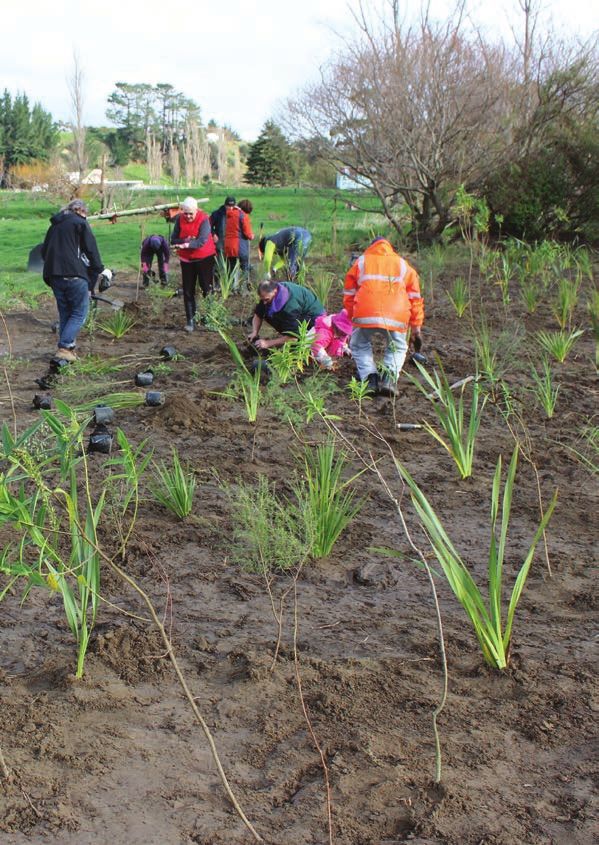
     Iwi and hapū have led ripiarian plant projects in conjunction with schools and community groups including 1500
     trees planted at the confluence of Tiraumea and Manawatu in partnership with KiwiRail. A fencing and planting
     project was completed in June 2018 at Otamaraho Highway realignment in Dannevirke with support from iwi, hapū,
     NZ Transport Agency, Horizons Regional Council, Kaitoke Kōhanga Reo, and Dannevirke South, Dannevirke High and
     Weber Schools. Numerous planting events have also been held through the Tū Te Manawa project.

     TASK #41
     Industry workshops and field days to promote fencing and planting by Beef + Lamb, DairyNZ and NZ Landcare Trust
     have included Central Districts Field Days, and the region’s Ballance Farm Environmental Awards.

     TASK #42
     Green Corridors, through Palmerston North City Council’s assistance, have planted approximately 37,400 plants in
     the Summerhill sub-catchment since 2016.

        Green Corridors planting day

     TASK #44
     Ngati Parakiore – Ruahuihui Trust have established a harakeke nursery which can be harvested from 2019, to support
     the creation of buffers for nutrient run off in vulnerable areas.

     TASK #45
     In 2017-18 the Oroua Catchment Care Group received
     a Manawatu River Leaders’ Accord Community Grant
     for four sub projects including riparian planting along
     the Otoku Stream near AFFCO and Makino Stream
     near Kitchener Park. The Care Group has been
     successful in receiving Community Grants since they
     were first made available in 2012, helping to support
     their work in Feilding. The Group have been working
     their way through a number of farms fencing off
     the Oroua and its tributaries. They also often hold
     community planting days to plant up the riparian
     margins which has benefits by slowing down run off
     to absorb nutrients and increased habitat for the birds,                         Oroua Catchment Care Group planting day
     bees, bugs and fish.

16                                                                Manawatū River Leaders’ Accord – 2016-21 Action Plan, Progress Report
8. INCREASE NATIVE FISH, NATIVE BIRD AND TROUT POPULATIONS Total Completed Ongoing Not Started Evolved 14 2 10 1 1 TASK #49 In the 2016-2018 period of the current Action Plan, Horizons Regional Council completed 86.2km of riparian fencing, planted 125,918 plants, installed eight fish passes, and supported and funded seven community-led projects to help enhance and increase native fish and bird populations. These works were funded as part of Council’s annual $410,000 targeted rate and topped up by contributions from the Te Mana o Te Wai project and landowners. Mangaone Catchment pre-fix Mangaone Catchment post-fix TASK #56 The Manawatū Estuary provides a significant area of habitat to wintering, passage, and breeding waterbirds including wrybill/ngutupare, fernbird/mātātā, less knot/huahou, banded dotterel/pohowera, and godwits/kuaka. Every year the Department of Conservation, Horizons Regional Council, Horowhenua District Council, iwi and community groups undertake predator control, pest plant control and other actions, including maintaining waterbird roosting sites by removing sedge. TASK #61 In 2018, a wetland was established and enhanced in Ōtamaraho by Te Kāuru. 9. INCREASE COMMUNICATION BETWEEN ACCORD PARTNERS Total Completed Ongoing Not Started Evolved 12 0 10 1 1 TASK #63 Led by an independent Chair, the Manawatū River Leaders’ Forum meets at least twice a year. Regular reporting is also conducted through the Land Air Water Aotearoa (LAWA) website, which shows up to date water quality state and trends, and progress reports such as this one to provide our communities with progress against actions. TASK #65 Horizons Regional Council are currently supporting iwi to get the advisory governance board established. In the meantime, the Forum meetings and hui-a-iwi are helping to advance work, including the Te Mana o Te Wai project. TASK #66 While a formal Science and Mātauranga report has not been produced in 2018, an Accord subgroup prioritised projects and developed a successful application to the Freshwater Improvement Fund in 2017. This included a cultural monitoring and Mātauranga Māori project that will produce iwi/hapū management plans and assist with some funding towards implementing them. Manawatū River Leaders’ Accord – 2016-21 Action Plan, Progress Report 17
10. INCREASE PUBLIC ACCESS, AWARENESS AND EDUCATION

       Total                   Completed          Ongoing               Not Started              Evolved

       19                      2                  10                    1                        6

     TASK #74
     In conjunction with this progress report, a new Manawatū River Leaders’ Accord website was launched. The new site
     includes a dynamic map to highlight key sites actions progressed throughout the catchment, the science behind the
     Accord, dedicated pages for the Tū Te Manawa project, educational resources, ways for our community to see what
     is being done and how to get involved, as well as links to the Manawatū River social media accounts.

     TASK #76
     Over the last two years, Horizons Regional Council has delivered more than 50 Waiora Stream Studies to schools and
     community groups.

     TASK #79
     The He Ara Kotahi Pathway in Palmerston North is well underway, with the completion of the bridge at Dittmer Drive
     and all sections of the pathway scheduled for completion in April 2019. Further work in these areas will be funded
     through the Accord’s Freshwater Improvement Fund.

        He Ara Kotahi Bridge construction

     TASK #80
     Six of the eight Te Mana o Te Wai Tū Te Manawa whare have been completed. Each includes signage to reconnect iwi
     and hapū with their awa through historical, cultural and scientific narratives, as well as providing a place for people to
     engage at the river’s edge.

     TASK #85
     Ngati Kauwhata have held regular hui-a-hapū a iwi in Feilding. They have also conducted wananga korero – special
     schools of learning for tuna, and sites of importance and significance to upper Ōroua at Apiti, Rangiwahia, and an
     Awahuri Forest – Kitchener Park Open Day in January 2018.

18                                                                    Manawatū River Leaders’ Accord – 2016-21 Action Plan, Progress Report
11. CONTINUE AND ENHANCE MONITORING OF THE CATCHMENT Total Completed Ongoing Not Started Evolved 16 0 11 1 4 TASK #89 The Manawatū Catchment is one of the most monitored catchments in the country. Monitoring is completed and reported on by Horizons Regional Council for water quality upstream and downstream of major point source discharges. These results are displayed on the LAWA website, Horizons’ website and will also be available in Horizons 2018 State of Environment Report. TASK #90 From 1 November until 30 April every year, Horizons Regional Council samples for bacteria at 27 recreational sites within the catchment. In 2016 these sites increased from three. Monitoring results are displayed on Horizons and LAWA’s websites so that members of the public can make an informed decision about when and where to swim. A wider communication plan also coincides with the monitoring period. Ahimate Reserve, Palmerston North TASK #92 Palmerston North City Council’s River Monitoring Plan for increased monitoring of periphyton cover, biomass, and aquatic macroinvertebrates upstream and downstream of the PNCC Tōtara Road wasterwater discharge was reported on in September 2018. Horizons Regional Council also continues to monitor upstream and downstream of this site on a monthly basis. TASK #98 This task has evolved through the Tū Te Manawa project which includes Cultural Health Index monitoring of each of the eight whare sites. Reporting of these can be found on the new manawaturiver.co.nz website. 12. EXPAND THE MANAWATŪ RIVER LEADERS’ ACCORD Total Completed Ongoing Not Started Evolved 3 0 3 0 0 TASK #102 Horizons Regional Council submitted to the Ministry for Primary Industries Hill Country Erosion fund in October 2018. The application sought to increase input of central government’s contribution to the SLUI programme to build on work already underway, including the recent Provincial Growth Fund allocation awarded in June for further forestry in the region. Manawatū River Leaders’ Accord – 2016-21 Action Plan, Progress Report 19
Tēnā, kuhu mai

20                    Manawatū River Leaders’ Accord – 2016-21 Action Plan, Progress Report
freephone: 0508 800 800
                                email: info@manawaturiver.nz
                Private Bag 11025, Manawatu Mail Centre, Palmerston North 4442

2018/EXT/1620
You can also read


