2019-2020 GUIDEBOOK - Yuck Boys Live
←
→
Page content transcription
If your browser does not render page correctly, please read the page content below
2019-2020 GUIDEBOOK

A Letter to the Teachers
 Dear Teachers,

         Opera Colorado is pleased to provide engaging
 educational programs and performances for students
 across Colorado. What follows is a guide that we hope
 you and your students find useful, as we explore
 Engelbert Humperdinck’s Hansel and Gretel. In the
 spirit of exploration, we have included various lessons
 that connect Hansel and Gretel with different subjects
 of learning. The lessons reference the new Colorado
 Department of Education’s Academic Standards:
 specifically, focusing on the fourth grade expectations.
 This does not mean, however, that these lessons
 should be limited to this age group. While we would be
                                                                                                   - Cherity Koepke -
 very pleased if you used these lessons in the exact
                                                                                    Director of Education & Community Engagement
 format provided, we encourage you to expand, alter,                                   ckoepke@operacolorado.org 303.778.0371
 and adapt these lessons so that they best fit your
 students’ abilities and development. After all, the
 teacher knows their student’s needs best. We would
 appreciate your feedback on our teacher evaluation
 form found at the end of this guide, and we hope that
 you enjoy all that Opera Colorado has to offer!

          thank you!
Opera Colorado makes every effort to ensure that the information provided in this
guidebook is as accurate as possible. With the exception of materials used for
educational purposes, none of the contents of this guidebook may be reprinted
without the permission of Opera Colorado’s Education & Community Programs
department. Dictionary definitions were taken from www.Merriam-Webster.com,
and unless marked otherwise, educational information was gathered from
www.Wikipedia.com . Unless otherwise noted, the materials in the Hansel and                        - Jared Guest -
Gretel guidebook were developed and compiled by Cherity Koepke and Emma             Manager of Education & Community Engagement
Martin and edited by Jared Guest.                                                      jguest@operacolorado.org 303.778.7350

                                                                          2
Table of Contents
Cast List                               4

Synopsis                                5

Meet the Composer                       6

Meet the Librettist                     7

Meet the Brothers Grimm                 8

Listening Activity                      9

Drama/Theater Arts Activity             11

Visual Arts Activity                    14

Language Arts Activity                  17

Social Studies Activity                 21

Math Activity                           25

Science Activity                        28

Connect the Dots & Coloring Pages       31

Program Evaluation                      35

                                    3
Hansel and Gretel
            Music by Engelbert Humperdinck – Libretto by Adelheid Wette
                            English libretto by Cherity Koepke
            Adapted from the fairytale, Hansel and Gretel, by the Brothers Grimm
                  Premiered in Weimar, Germany, on December 23, 1893

                   Please note that voice types for the roles below are reflective of Opera
                           Colorado’s casting, and not that of the original opera.

Gretel………………………………………..…..……………….…soprano…………….……..…………...…………Laura Soto-Bayomi

Hansel…………………………………………………………mezzo soprano………………...………………………Kira Dills-DeSurra

Witch…….………………………………………………….………….tenor……………………..……..……..……………….Thomas Cilluffo

Father………………………………….………….…….….……….baritone….…………..………………………………………..Isaiah Feken

Sandman…………………………………………….……………….bass baritone………….………..………………….Eric McConnell/
                                                   bass………………………………………………………….Joshua South

                                       Director: Cherity Koepke
                                 Production Assistant: Jared Guest

                                                       4
Synopsis
Hansel and Gretel live with their father at the edge of the         When the Witch returns with a basket of sweets, she
woods. They are supposed to be working on their chores,             orders Hansel to eat and sends Gretel to set the table for
but instead, they dance around the cottage. When Father             supper. As Hansel pretends to sleep, he overhears the
comes home, he turns to punish them for their laziness,             Witch reveal her plan to bake and eat Gretel first.
and in his ranting, accidentally knocks over a jug of milk.
Frustrated, he sends them into the woods to pick                    When the Witch wakes Hansel to see how fat he has
strawberries.                                                       grown, Hansel tricks the nearly blind witch into thinking
                                                                    that he is still too skinny to eat by presenting her with a
In the forest, Hansel and Gretel once again play, but then a        thin stick instead of his plump finger. While the Witch
fight breaks out, and Hansel eats all of the berries. Gretel        feeds Hansel, Gretel grabs the Witch’s magic wand and
laments that they will now have to pick twice as many               recites the unfreeze spell. Hearing Gretel mumbling, the
berries, and as night falls, they begin to see strange shapes       Witch asks her what she has said, but Gretel merely
and lights. Gretel cries out for her parents, and the               replies that Hansel will never get fat, which angers the
Sandman appears to put the children to sleep. They sing a           Witch. The Witch then goes to check the oven, and Hansel
prayer asking the angels to protect them and fall asleep in         warns Gretel to be careful. The Witch then calls Gretel
the forest.                                                         over to check the oven, but Gretel pretends not to
                                                                    understand her. Annoyed, the Witch sticks her own head
The next morning, a beautiful gingerbread house appears             into the oven unaware of the fact that Hansel has crept
in the forest, and the children begin to eat the home,              out of his cage. Hansel and Gretel shove the Witch into the
believing it to be the house of their dream angels. As they         oven; bang the door shut; and rush from the house. The
eat, they hear a strange voice from inside the house.               children are saved!
Nevertheless, both children convince themselves that it is
only the wind. Soon, however, they find that they are not           Father is heard in the distance sadly calling for Hansel and
alone, and the horrible witch grabs them and reveals that           Gretel. When he arrives, Hansel and Gretel rush into his
she will eat them. The witch freezes Gretel with a spell and        arms. Safe at last, the children give thanks to their good
leads Hansel into a cage. After the witch departs, Hansel           fortune and family.
tells Gretel that he has a plan.

                                                                                                   Photos courtesy of Washington National Opera

                                                                5
Engelbert Humperdinck
                                                                                             COMPOSER
Engelbert Humperdinck was born on September 1, 1854, in Siegburg, Germany. Although his parents encouraged
him to become an architect, composer Ferdinand Hiller advised him to pursue the study of music after hearing a
composition that Humperdinck had written for a class play.

At the age of 25, Humperdinck won the coveted Mendelssohn prize, which enabled him to study in Italy. While in
Italy, he met the aging Richard Wagner, who affectionately took the young composer under his wing, calling him
Humpchen or “Little Hump”, indulging in the German fondness for nicknames. Humperdinck assisted his mentor in
the preparation of the first performance of Parsifal in Bayreuth, and the two became fast friends. More prize money
enabled Humperdinck to continue to travel in Italy and also in France and Spain, where he eventually taught at the
Barcelona Conservatory.

Returning to Germany at the end of 1887, Humperdinck began composing the music for Hansel and Gretel at the
request of his sister, Adelheid Wette. The composition originally involved four folksongs, but Humperdinck received
such enthusiastic support from his family that he turned Hansel and Gretel into a full-fledged opera. Although the
work had a slow start, it grew quickly in popularity. Humperdinck came to America for the premiere at the
Metropolitan Opera, but his failing health made a return trip to Germany imperative.

Once home again, he decided to devote himself completely to composition, but nothing ever matched the intricacies
of Hansel and Gretel. It was so successful that Humperdinck was able to retire on the royalties it provided (which
was rare!) and devote himself to his family and his art. His last work, a Sonatine in G Major for four violins, was
published in 1921. In September of that year, while attending his son’s production of Weber’s Der Freischütz, he
suffered the first of what would be two heart attacks in less than 12 hours. He died early in the morning on
September 27, 1921.

                                                        6
Adelheid Wette
                                                                                                  LIBRETTIST

                                                                   Adelheid Wette (Humperdinck) was born in Siegburg,
                                                                   Germany, on September 4th, 1858. The younger sister
                                                                   of the composer Engelbert Humperdinck, she
                                                                   contributed much to the family interest in folksong and
                                                                   fairytales, including occasionally writing texts for
                                                                   Humperdinck’s musical settings. Eventually, she
                                                                   married Dr. Hermann Wette, who himself was the
                                                                   author of two folk-like librettos for Arnold
                                                                   Mendelssohn.        Adelheid’s    own     libretto     for
                                                                   Humperdinck’s Hänsel und Gretel began in 1890 as a
                                                                   series of folksongs, four of which she asked her brother
                                                                   to set. Her skill in expanding these into a fully-fledged
                                                                   opera, while keeping the text’s unpretentious
                                                                   character, was recognized as an important ingredient
                                                                   in the work’s eventual success. In 1895 she
                                                                   collaborated with Humperdinck on another Grimms’
                                                                   fairytale, Die sieben Geislein (The Seven Little Goats),
                                                                   but this work remained a series of domestic songs.
                                                                   Wette died in 1916.

                                                                                                       –Amanda Glauert (GMO)

There are many women in the opera industry who are currently shaking up
the art form, especially when it comes to writing the music and the librettos
(text) for a production. Composer Missy Mazzoli comments on the history of
women in opera below:

        “WOMEN HAVE BEEN NOT ENCOURAGED to be part of this field
        in a million subtle ways and also in some very obvious ways. When
        people ask me about being a woman writing opera, the thing that I
        always try to say is that there is no history, really. The history of
        women writing opera started, like, five years ago… That said, there
        is a responsibility there that’s been ignored to seek out these
        women. And, most important, to give women opportunities that are
        based on their potential, not on their past experience.”

Do some research! How many operatic works can you find that were
written by female composers and/or librettists?

                                                            7
The Brothers Grimm
                                                                                FOLKLORE AUTHORS
Jacob Ludwig Carl Grimm was born on January 4, 1785             In 1829, the brothers would move to the University of
in Hanau, Hesse-Kassel (now Germany). His brother,              Göttingen, after failing to receive a promotion in Kassel.
Wilhelm Carl Grimm, would follow a year later on                At Göttingen, the brothers would continue their
February 24. The brothers’ father was a lawyer, but,            individual work with the publication of Jacob’s Deutsche
when Jacob was only 11 years old, he died, leaving the          Mythologie, an exploration of pre-Christian German
family in social poverty.                                       beliefs and superstitions through folklore, and
                                                                Wilhelm’s edition of Freidank’s epigrams. However,
In 1802, the brothers followed in their father’s                when Ernest Augustus, Duke of Cumberland, would
footsteps and attended the University of Marburg with           become the king of Hanover, the Grimm brothers, along
the intention of studying law. In 1805, Jacob, with one         with five of their colleagues, would protest his repeal of
of his professors, would go to Paris to research                the constitution. As a result, both brothers lost their
medieval legal manuscripts and, over the next several           jobs and Jacob was banished from the country.
years, would work in different capacities for both the
Hessian and Napoleonic governments. Wilhelm,                    In 1840, the brothers moved to Berlin where they
meanwhile, would fall sick and be unable to take a job          would live out the rest of their years in financial security
until 1814, when he became the secretary at the                 and with the respect of their peers. Berlin would also be
Elector’s library in Kassel. Jacob joined him there in          the place where the brothers undertook their most
1816.                                                           ambitious project, the Deutsches Wörterbuch, a
                                                                dictionary of every German word used in literature for
During this time, the brothers had completely left              the previous three centuries. Regrettably, however,
behind law for literary research. They realized that the        both brothers would die before its completion. Wilhelm
basis for modern social institutions resided in the past.       would die on December 16, 1859, and Jacob would die
With this in mind, they published their collection of           four years later on September 20.
Germanic folk tales, Kinder und Hausmärchen, in 1812.
The collection was an immediate success and would
serve as the earliest decisive text on the collection and
science of folklore. The brothers would continue to
publish collections of folktales, but none of their later
compilations would replicate the success of their first
collection.

The brothers worked as individuals as well. In 1825,
Wilhelm married Dorothea Wild and four years later
published his book, Die Deutsche Heldensage, a literary
commentary on the German heroic saga. Jacob, in turn,
would study philology, specifically looking at issues of
grammar. His work would eventually create the basis
for modern scientific etymology (the study of the
history of words).

                                                            8
Listen to some of the excerpts from
       Hansel and Gretel listed on the
      next page. Can you recognize
       these pieces when you watch
       Opera Colorado’s production
               sung in English?

9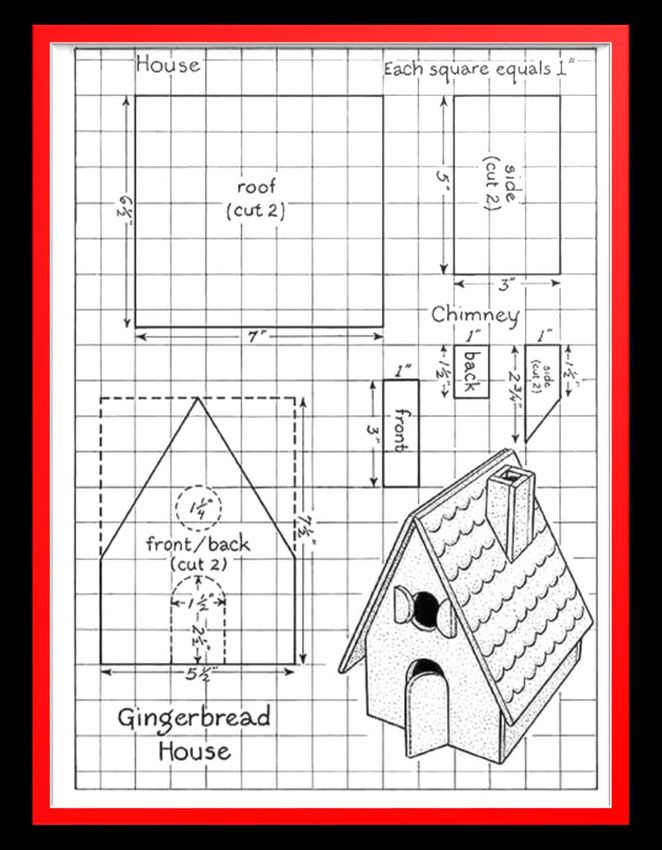
Overture                                                                      "Abends, will ich schlafen gehen”
http://www.youtube.com/watch?v=8Fm60b0X51c                                    https://www.youtube.com/watch?v=V6Fr3I4fUAo

This is the orchestra’s introduction to Humperdinck’s Hansel and              After Hansel and Gretel find themselves lost in the woods, they sing
Gretel.                                                                       this evening prayer to calm themselves down and eventually fall
                                                                              asleep.

  “Suse, liebe Suse, was raschelt im Stroh”
https://www.youtube.com/watch?v=LFFOAWFdZmU                                      “Hurr hopp hopp hopp”
                                                                              https://www.youtube.com/watch?v=k2QEdEHKYiM
Hansel and Gretel and doing their chores. Gretel sings to herself as
she works.                                                                    The Witch has found Hansel and Gretel near her house and jumps
                                                                              around while casting a spell upon them to imprison them. She then
                                                                              tells them of her life as a witch.
   “Rallalala, rallalala”
http://www.youtube.com/watch?v=-PBRhS6clxA
                                                                                "Juchhei, nun ist die Hexe tot”
This is the Father’s first aria, in which he sings about how hungry he        https://www.youtube.com/watch?v=eXinph6RWPc
is.
                                                                              Hansel and Gretel cleverly trick the Witch to escape her clutches and
   “Der kleine Sandmann bin ich”                                              sing this duet once she is defeated.
https://www.youtube.com/watch?v=4JYWL2qGcUM

The Sandman sings Hansel and Gretel to sleep and sprinkles sand in              "Rallalala, rallalala, vater, mutter! Kinder, schaut das Wunder an”
their eyes.                                                                   https://www.youtube.com/watch?v=tup8N1-7BjQ

                                                                              The finale of Humperdinck’s Hansel and Gretel, in which we see the
                                                                              children triumph and the leitmotif of “Rallalala, rallalala” return.

Need some suggestions for recordings to check out?
Here are our favorites…

                                                                         10
The story of Hansel and Gretel has become
very standardized over the years. This holds
especially true of the end, when the
children defeat the witch and return home
to a relieved father and mother. Have your
students alter the ending and perform their
ending for the class.
11DRAMA & THEATER ARTS ACTIVITY
Colorado Academic Standards Addressed:
1. Create
a. Create characters from scripts or improvisation using voice, gestures and facial expressions
b. Create and write simple dramas and scenes
c. Design a scene through an inventive process and perform the scenes
2. Perform
a. Participate collaboratively with partners and groups
b. Demonstrate safe use of voice and boy to communicate characters
c. Define stage direction and body position
3. Critically Respond
b. Examine character dynamics and relations
The students will be able to:
Creatively alter the ending to an already known story that takes in to account character
dynamics and relationships
Create believable characters through vocal choices and body language
Choose smart and inventive props and costume pieces for characters
Improvise dialogue in a short scene
Demonstrate group problem-solving skills, safety in performance, and respect for other
performers
Materials:
A large amount of space
Paper and pencil
Costume pieces and props (You can use any props you have on hand).
Opening: 5 minutes
1. One student tells the story of Hansel and Gretel.
2. Other students identify variations of the tale that they have heard.
3. Teacher points out that all or most variations have a similar ending: the children survive and the
witch is defeated.
12Procedures: 25 minutes
1. Students break into groups of 3-4.
2. Students create an alternate ending to the story.
3. Teacher approves the ending: no ending should be the same and all endings should be
reasonably plausible.
4. Students choose the props and costume pieces they need for their performance.
5. Students practice their 2-3 minute scenes.
Closure: 15 minutes
1. Students perform their scenes for each other.
2. Students discuss what themes change/remain with alternate endings.
13One of the easiest ways to update and
keep an opera fresh is to change the set
design. Set designs are a result of tradition,
expectations of the audience, and the
designer’s interpretation of the piece. Take
some time to look at different sets from
Hansel and Gretel and to design your own.
14VISUAL ARTS ACTIVITY
Colorado Academic Standards Addressed:
1. Observe and Learn to Comprehend
a. Determine artistic intent by comparing and contrasting the characteristics and expressive
features of art and design
b. Art articulates and expresses different points of view
c. People respond to works of art using inference and empathy
2. Envision and Critique to Reflect
a. The critique process influences the judgment of a piece’s artistic and aesthetic merit
b. Art and design’s processes and philosophies inform interpretations
3. Invent and Discover to Create
a. Through media, express and communicate ideas about issues of personal interest
b. Use material and processes in traditional, unique, and inventive ways
4. Relate and Connect to Transfer
a. People make personal meaning and infer artistic intent
b. History and culture interpreted in art
The students will be able to:
Create a set design that conveys their ideas about the story
Defend artistic decisions
Thoughtfully critique the designs of both professional productions and their classmates
Materials:
Synopsis of Hansel and Gretel
Sketch paper and pencils
Final draft paper, pencils, and colored pencils
Set designs from multiple productions of Hansel and Gretel
Overhead projector and screen
15Opening: 15 minutes
1. Teacher reads the synopsis for Hansel and Gretel
2. Students list the different scenes in the story (e.g. Hansel and Gretel’s house, the forest)
3. Students each sketch a scene from the story
Procedures: 10 minutes
1. Students divide into groups of 3-4
2. Students ask and answer questions about the different decisions they each made in their set
design
3. Teacher projects the images of professional sets onto the projection screen
4. In their small groups, Students critique the professional set designs
Closure: 20 minutes
1. Students return to their independent work
2. Students identify three things they would like to add or alter about their personal set
designs
3. On the back of the final draft paper students write those three things
4. Students draw their altered set design on the front of the final draft paper
16The story of Hansel and Gretel is well
known, and has been retold many times.
As a traditionally rote tale, each person
and/or community’s version is slightly
different from another’s version. Give your
students a chance to hear multiple
versions of the story and to create and
present their own addition to the fairytale’s
development.
17LANGUAGE ARTS ACTIVITY
Colorado Academic Standards Addressed:
1. Oral Expression and Listening
a. A clear communication plan is necessary to effectively deliver and receive information
3. Writing and Composition
a. Recursive writing process creates a variety of literary genres for an intended audience
c. Syntax, grammar, punctuation, capitalization, and spelling make writing clearer
The students will be able to:
Identify similarities and differences between different versions of Hansel and Gretel
Create an original version of the tale and express it in both a written and oral format
Materials:
Hansel and Gretel as told by Sheila Black
The Metropolitan Opera’s Book of Opera Stories for Children: Sing Me a Story by Jane Rosenberg
Paper and pencil
Attached Venn-diagram
Opening: 15 minutes
1. Teacher reads Hansel and Gretel as told by Sheila Black to Students.
2. Students create Venn-diagrams that compare the story book version of the tale and the operatic
version of the tale.
3. Teacher reads the “Hansel and Gretel” story from The Metropolitan Opera’s Book of Opera
Stories for Children: Sing Me a Story by Jane Rosenberg.
4. Students fill in their Venn-diagram.
Procedures: 30 minutes
1. Students break into pairs.
2. Students write own version of fairytale.
3. Students discuss how they will deliver their version of the story orally.
184. Students practice delivering the oral presentation of the story.
Closure: 20 minutes
1. Pairs join other pairs to create groups of four people.
2. Pairs present their story to the other pair in their group.
19LANGUAGE ARTS
ACTIVITY
VENN DIAGRAM
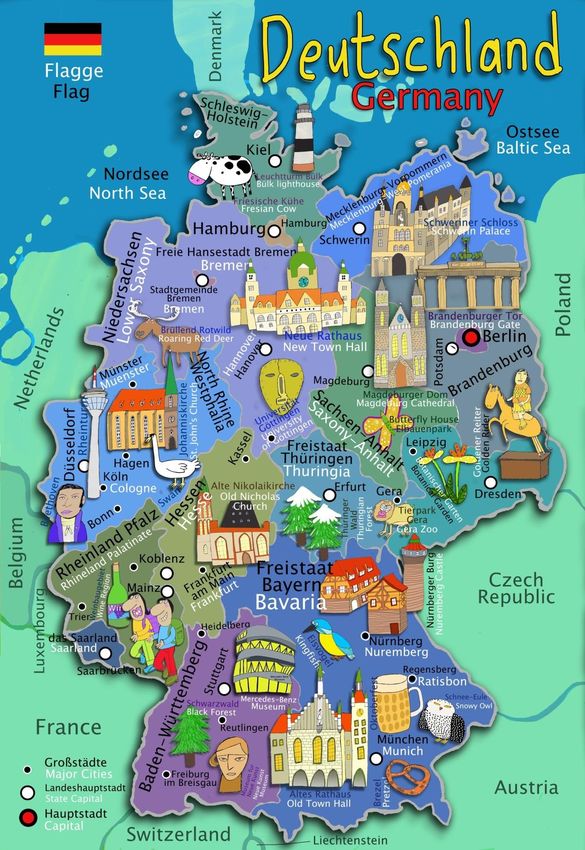
20Help your students better
understand the world of
Engelbert Humperdinck, by
discussing the geographical
area in which Humperdinck
was born.
21SOCIAL STUDIES ACTIVITY
Colorado Academic Standards Addressed:
1. History
a. Develop an understanding of how people view, construct, and interpret history.
b. Analyze key historical periods and patterns of change over time within and across nations
and cultures.
2. Geography
a. Develop spatial understanding, perspectives, and personal connections to the world.
b. Examine places and regions and the connections among them.
The students will be able to:
Better understand the geographical features of Germany.
Materials:
Overhead map of Germany
Pencil and paper
Opening: 15 minutes
1. Break the students into small groups.
2. In their small groups, have students discuss and write down what they already know about
the geographical features of Colorado and Germany.
3. As an entire class, students compare and contrast.
Activities/Procedures: 20 minutes
1. Select an appropriate geographical video of Germany
2. Have the class view the video as they take notes.
22Closure: 10 minutes
1. Discuss with the class what they found interesting about the video.
2. Discuss with the class if they found any more similarities and/or differences between
Colorado and Germany’s geographical features
Map of Germany
23Map of Colorado
24In Hansel and Gretel, the Witch is able to create her
candy house out of magic. Your students can create
their own candy houses as well. Sadly, however, they
don’t have magic, and need to use mathematical
measurements to plan out their model! Help your
students understand the use of real-world area and
perimeter functions.
25MATH ACTIVITY
Colorado Academic Standards Addressed:
1. Number Sense, Properties, and Operations
a. Are fluent with basic numeral and symbolic facts and algorithms, are able to select and use
appropriate (mental math, paper and pencil, and technology) methods based on an
understanding of their efficiency, precision, and transparency.
b. Understand the structures and properties of our number system. At their most basic level
numbers are abstract symbols to represent real-world quantities.
c. Different representations of real numbers are used in contexts such as measurement,
business, and community.
The students will be able to:
Relate the use of finding certain measurements (area, perimeter, circumference, etc. based on
grade and ability) in construction
Find out how to calculate certain shapes’ measurements
Materials:
Paper and pencil
Calculator
Colored pencils or markers
Opening: 5 Minutes
1. Have students work individually with the required materials.
2. Write the expected standards on the whiteboard. (How many sides must the gingerbread house
have, does the house include a yard, how many measurements must be taken?)
3. Inform the students they will have half an hour to complete the assignment.
Activities/Procedures: 30 Minutes
1. Remind the students that a completed house will have a least five measureable features and
must be colored.
2. Assist the students if they need help finding a certain complex measurement.
26Closure: 10 minutes
1. Let the students present their gingerbread houses to the class.
2. Have the students turn in their project and grade on effort and the accuracy of measurements.
27In Hansel and Gretel, the children become lost in the
forest while picking berries. The forest is filled with all
kinds of different flora and fauna that can be
categorized depending upon the different regions they
inhabit. Your students can imagine themselves lost in the
forest. Help them to describe and categorize the
different types of life they encounter.
28SCIENCE ACTIVITY
Colorado Academic Standards Addressed:
2. Life Science
a. All living things share similar characteristics, but they also have differences that can be
described and classified
c. There is interaction and interdependence between and among living and non-living
components of systems
The students will be able to:
Identify the components that make a habitat unique
Compare and contrast forested habitats of Colorado
and Germany
Materials:
A computer
Paper and pencil
Opening: 5 minutes
1. Explain to the students what a forest habitat is comprised of and common species found in most
forests.
2. Explain to the students that they will be cross-examining the forests of Colorado and Germany.
Activities/Procedures: 20 minutes
1. Have students research similar species of plant and wildlife in the forests of Colorado and
Germany.
2. Make sure students take notes in order to discuss after the activity is over.
29Closure: 15 minutes
1. Create a group Venn-diagram to display the similarities and differences that you and the
students found. Diagram available on page 20.
2. Have students come up one by one and contribute their findings.
30LET’S GET
artsy
Love to color? Then the next three pages are for you! Go crazy with crayons,
colored pencils, and markers to brighten up Hansel and Gretel’s world.
31What do Hansel and Gretel find in the woods?
Connect the Dots to find out!
3233
34
Program Evaluation
Opera Colorado strives to provide quality programs that meet the needs of students and teachers across the state. Please take a few minutes to
complete this evaluation and give us feedback on your experience. Opera Colorado is also interested in your students’ response to the
programs. We would be happy to receive any letters or artwork from them!

Program:
                    ____Il barbiere di Siviglia (Please circle one: dress rehearsal / matinee)
                    ____ I Pagliacci (dress rehearsal)
                    ____Tosca (dress rehearsal)
                    ____Backstage Workshops (Please circle one: Nov. 4 | Nov. 8 |May 6 | May 7 | May 8)
                    ____Touring Opera Performance (Please circle one: Hansel and Gretel / Carmen)
                    ____Storytime Sessions
                    ____In-School Workshop (Please specify: _____________________________________________)
                    ____Other (Please specify: __________________________________________________________)

Is this your first time participating in Opera Colorado’s Education programs? YES / NO
If YES, what made you participate this year?                     If NO, how many years have you been a participant?

Were you able to incorporate opera into your curriculum? YES / NO
If YES, please share how.                                               If NO, do you have suggestions?

Please estimate the percentage of your students who had never been exposed to Opera prior to this event:___________

How would you describe your students’ initial attitude toward exposure to Opera?
        1……...2……...3………4……….5……….6……….7
 negative/unwilling       neutral                    positive/excited

Did their attitude change after learning more about opera and attending the event? If so, please show on the scale:
         1……...2……...3………4……….5……….6……….7
 negative/unwilling          neutral                 positive/excited

Was the Opera Colorado Teacher Guidebook helpful in preparing your students to attend the event?
        1……...2……...3………4……….5……….6……….7
        not helpful                               very helpful

On a scale of 1 to 7, how would you rate the priority of Arts Education in your school?
         1……...2……...3………4……….5……….6……….7
         not important                                very important

Please share with us any additional comments you have. We especially love stories of how Opera impacted your students. Please use space on back
needed.
_________________________________________________________________________________________________________________________
_________________________________________________________________________________________________________________________
                                                   Thank you for your time and comments!

Name____________________________________________ School/Subject ______________________________________________

                                Teacher______ Administrator_______ Paraprofessional_______ Parent / Chaperone_______ Other_______
                                              My students are: K-2       3-5      6-8      9-12      College

                                                                        35
You can also read


