GUIDANCE ON SAFETY EXPECTATIONS AND BEST PRACTICES FOR KENTUCKY SCHOOLS - (K-12) #HEALTHYATSCHOOL
←
→
Page content transcription
If your browser does not render page correctly, please read the page content below
#HealthyAtSchool

Guidance on Safety Expectations and Best
     Practices for Kentucky Schools
                   (K-12)
       Interim Guidance as of August 31, 2020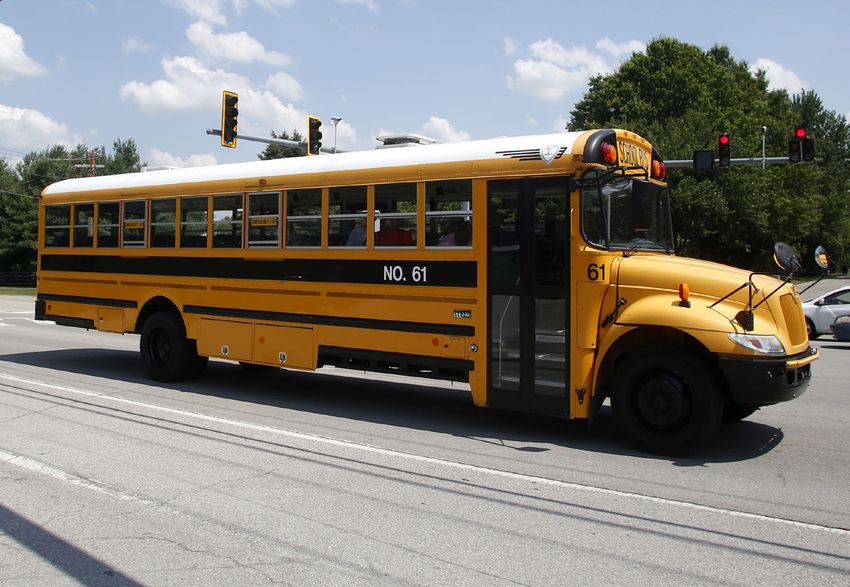
Table of Contents

Overview

  How Was This Guidance Developed?........................................................................................                                               3
  Why Are Additional Health Safety Expectations Needed Now?............................                                                                                  4
  How to Use These Safety Expectations and Best Practices Guidelines..........                                                                                           5

Safety Expectations and Best Practices

  Updates.............................................................................................................................................................   6
  Social Distancing........................................................................................................................................              7
  Cloth Face Coverings, School Health Policies, and Personal
  Protective Equipment.............................................................................................................................                      10
  Screening and School Exclusion....................................................................................................                                     14
  Sanitation and Environmental Factors.......................................................................................                                            18
  Contact Tracing...........................................................................................................................................             24
How Was This Guidance Developed?

Kentucky Governor Andy Beshear has taken swift action to keep Kentuckians safe from
COVID-19.

    • March 6: declared a state of emergency.
    • March 12: recommended that all school superintendents cease in-person
      instruction.
    • April 20: recommended superintendents keep schools closed for the remainder of
      the school year.
    • April 21: launched “Healthy at Work,” an initiative to help Kentucky’s economy
      re-open in a phased approach.

In order to establish guidelines for resuming in-person instruction this fall, the Kentucky
Department of Education, in conjunction with the Governor’s Office, announced the
creation of the Education Continuation Task Force on March 16. The task force is chaired
by Lieutenant Governor Jacqueline Coleman, who also serves as Secretary of the
Education and Workforce Development Cabinet. The group consists of representatives
from Kentucky’s educational cooperatives, educational partner organizations such as the
Kentucky Association of School Superintendents, Kentucky School Board Association,
Kentucky Parent Teacher Association, Kentucky Education Association and Kentucky High
School Athletic Association, as well as Kentucky Educational Television, the Southern
Regional Education Board and a group of four bipartisan legislators. The task force focuses
on providing timely information, research and instructional resources to Kentucky school
districts as they deal with an unprecedented school closure and how to safely re-open
amid COVID-19.

These safety expectations were written with input from the Education Continuation
Task Force as well as the Governor’s Office, Department for Public Health, Kentucky
Department of Education, the Cabinet of Education and Workforce Development and the
Cabinet for Health and Family Services. Throughout this process, stakeholders from all
areas of education have been engaged to provide input and expertise.

                                                                       Cabinet

3           Team Kentucky | Guidance on Safety Expectations and Best Practices for Kentucky Schools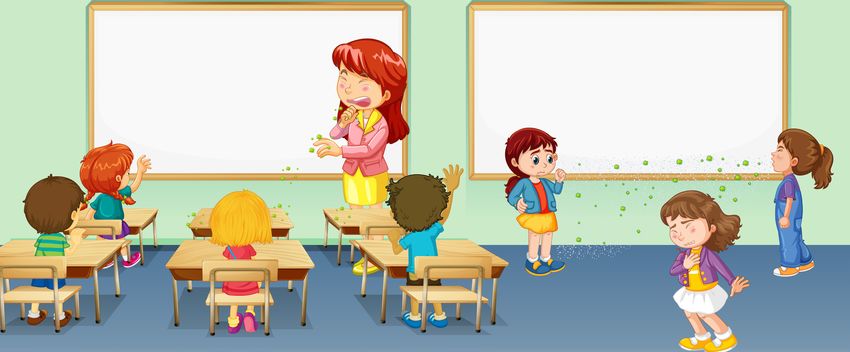
Why Are Additional Health Safety
Expectations Needed Now?
The COVID-19 pandemic is a public health emergency that has spread across Kentucky
affecting all age groups. Scientific knowledge about this novel virus continues to evolve.
The following guidelines are based upon what is known about mitigating risks of
transmission across the Commonwealth to protect all populations. Protecting students
and staff at educational facilities is necessary to reduce the spread in this environment and
limit the community spread of COVID-19.
COVID-19 is transmitted mostly through direct contact with respiratory droplets from an
infected individual. The infected individual may have no symptoms or have symptoms
of a fever (greater than 100.4), a cough, gastrointestinal symptoms (diarrhea or vomiting),
a new rash or new loss of sense of taste/smell. These symptoms are not unlike other
infectious viruses, yet it is difficult without testing to develop a plan that is able to meet
all circumstances. The goal of the Kentucky Department for Public Health is to establish
safety expectations based upon the core measures to mitigate transmission. These
include:
   •   Social Distancing
   •   Screening, School Exclusion & Contact Tracing
   •   Personal Protective Equipment, including Cloth Face Masks
   •   Sanitation, Environmental, and Industrial Factors
Flexible plans should be in place to address school attendance, closure of schools,
and transition to distance learning models. The safety of all students and staff, while
promoting the best possible learning environment, is necessary.

Team Kentucky | Guidance on Safety Expectations and Best Practices for Kentucky Schools          4
How to Use These Safety Expectations and
Best Practices Guidelines
Practices listed in this document are divided into safety expectations that must be
implemented by schools, as determined by the Kentucky Department for Public Health.
Best practices are additional strategies that schools may choose to follow in order to
optimize the safety of students and staff.
The following safety expectations are fully explained in this guide:
    •   Social Distancing
    •   Cloth Face Coverings, School Health Policies, and Personal Protective Equipment
    •   Screening and School Exclusion
    •   Sanitation and Environmental Factors
    •   Contact Tracing

Each of these sections include a detailed list of safety expectations and best practices
followed by an at-a-glance overview for younger users.

5            Team Kentucky | Guidance on Safety Expectations and Best Practices for Kentucky Schools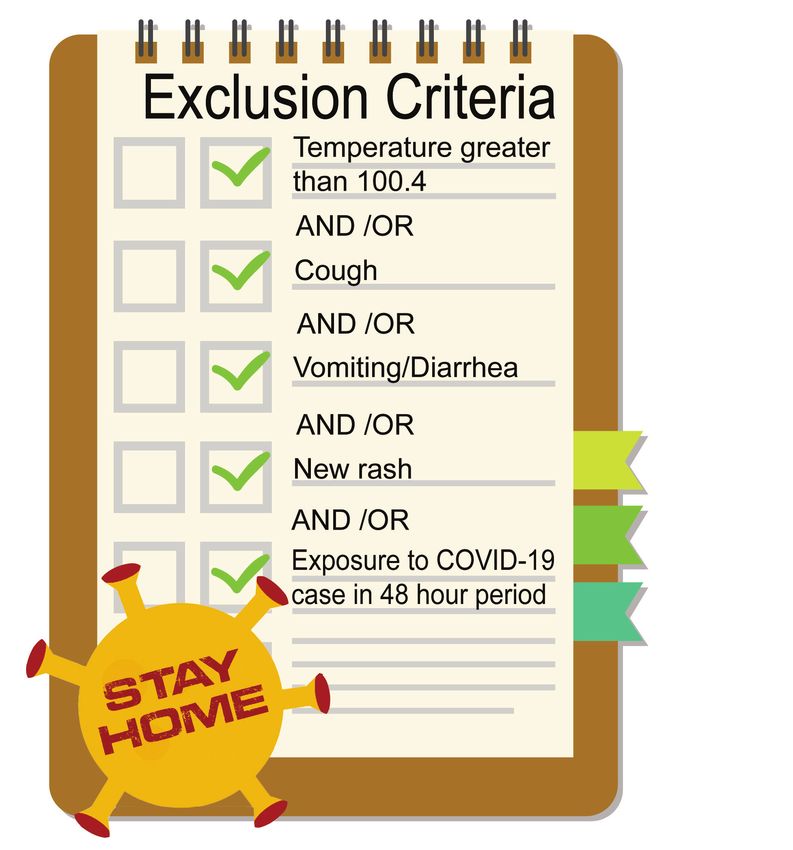
Updates
Based on the latest information from the U.S. Centers for Disease Control and Prevention,
the Kentucky Department for Public Health is making the following changes to the state’s
flagship Healthy at School guidance document dated June 2020:

7/28/2020
Best Practices (pg 8)
• Plexiglas may be used in classrooms for dividers between students if approved by local
health department environmental staff and the panels meet fire code requirements. They
must be securely fastened to prevent student injury and should be cleaned when other
contact surfaces are cleaned, such as the student’s desktop.

Exclusion Criteria (pg 15)
• “Cough” changed to: “New uncontrolled cough that causes difficulty breathing (for
students with chronic allergic/asthmatic cough, a change in their cough from baseline)”

Return to School Policy (pg 16)
Return to school guidance after positive COVID-19 test:
• At least 10 days since symptoms first appeared and
• At least 24 hours with no fever without fever-reducing medication and
• Symptoms have improved
Return to school guidance for other illness:
• Fever- and symptom-free for 24 hours without fever-reducing medication
• A negative COVID-19 test or doctor’s note should not be required for return
8/31/2020
Use of Cloth Face Coverings (Masks)
• The use of cloth face coverings (masks) should be required by all students and staff at
all times while in the building or on the bus, unless medically waivered. Students and staff
should only lower their masks while actively eating or drinking. This change is reflected on
pages 7, 8, 9, 10, and 13.

References
CDC: Screening K-12 Students for Symptoms of COVID-19: Limitations and Considerations
CDC: Schools and Childcare Programs

Team Kentucky | Guidance on Safety Expectations and Best Practices for Kentucky Schools     6
Social Distancing
Social distancing will require local school districts to develop unique plans that address
the space, workforce, and resources available at each school. These safety expectations
align with the policies published by the Centers for Disease Control & Prevention and the
World Health Organization. Plans tailored to elementary, middle and high schools should
be considered.

                 Safety Expectations
                 Must be implemented by schools as determined by the Kentucky
                 Department for Public Health.

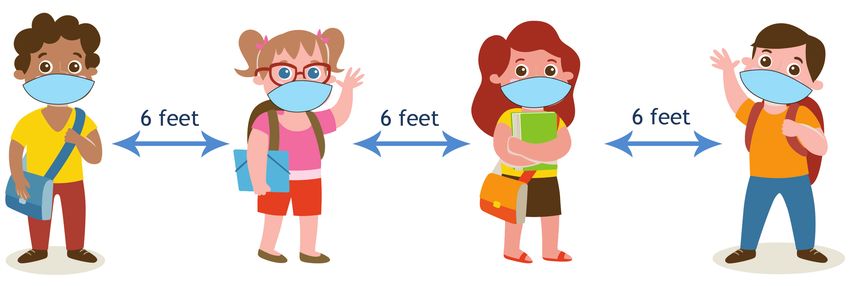
    • Stagger arrival and dismissal times.            • Model creating space between
    • Increase space between students                   students/staff and avoid unnecessary
      by rearranging seating to maximize                contact or movement within the
      space between students to be 6 feet               personal space of 6 feet.
      or greater.                                          o Place markings on floor as a
    • If the physical space in the school                    reminder of areas that are 6 feet
      does not allow for spacing students’                   apart for instruction.
      desks 6 feet apart, space desks as far               o Maintain a social distance of 6
      away as possible. All desks should be                  feet in hallways during arrival
      arranged so students’ seats face the                   and dismissal.
      same directions. The use of cloth face               o Maintain a social distance of 6
      masks is a safety expectation for all                  feet in common areas such as
      students and staff at all times, unless                bathrooms or create barriers
      medically waivered.                                    between sinks/stalls.

7            Team Kentucky | Guidance on Safety Expectations and Best Practices for Kentucky Schools
• Reduce class sizes to allow for o Wearing a mask while riding
smaller cohorts of students to the bus is a safety expectation
decrease potential need for contact unless medically waivered.
tracing. o Load from back to front of the
• Modify classes/activities that bus.
normally require multiple students to o Offload should occur from front
engage in an activity that could cause to back of the bus.
close social contact, congestion or
movement in the school hallways o Stagger seating if bus is not at
such as choir, gym class, art, full capacity.
music, etc. These do not have to be o Seat passengers from the same
canceled if distance and sanitation household together.
needs are met. o Assign seating for all
• Reduce congestion in common areas passengers (if feasible).
(school office, nurse’s office, guidance Students with medical
office, bus loading areas, etc.). concerns, allergies,
• Cancel field trips, assemblies, and asthma should be
other large group activities to avoid assigned seating at front
mixing students in large common of bus with windows up.
areas. Adhere to the Governor’s o Education/training for bus
current guidance regarding group riders on rules of loading,
gatherings. keeping hands to self unless
• Limit non-essential visitors on school need to touch seat backs for
property. balance, no congregating, etc.
• Ensure students go straight from o Students should remain
vehicles to their classrooms to avoid seated until their time to exit to
congregating. maintain social distance.
• Limit cross transfer between special o No congregating in aisles.
programs and school staff. Develop a o Bus monitors or staff should
plan for limiting substitutes, student wear personal protective
teachers, and evaluators; if possible, equipment (mask) at all times
nurses should work at one school. while on duty.
• Develop a bus transportation plan
that includes sanitation, screening,
and social distance plans including:
o Leave first seat empty behind
the driver.
Best Practices - Additional strategies that schools may choose to follow
• Place physical barriers such as Plexiglas at reception desks and similar areas for
protection.
• If social distancing is not possible in the cafeteria, have meals served to the
classroom or have students bring food from the cafeteria back to their classrooms
to eat. Be mindful of those students with food allergies.
• Minimize face-to-face interactions by designating one-way hallway traffic and
designating certain doors for entry and for exit.
Team Kentucky | Guidance on Safety Expectations and Best Practices for Kentucky Schools 8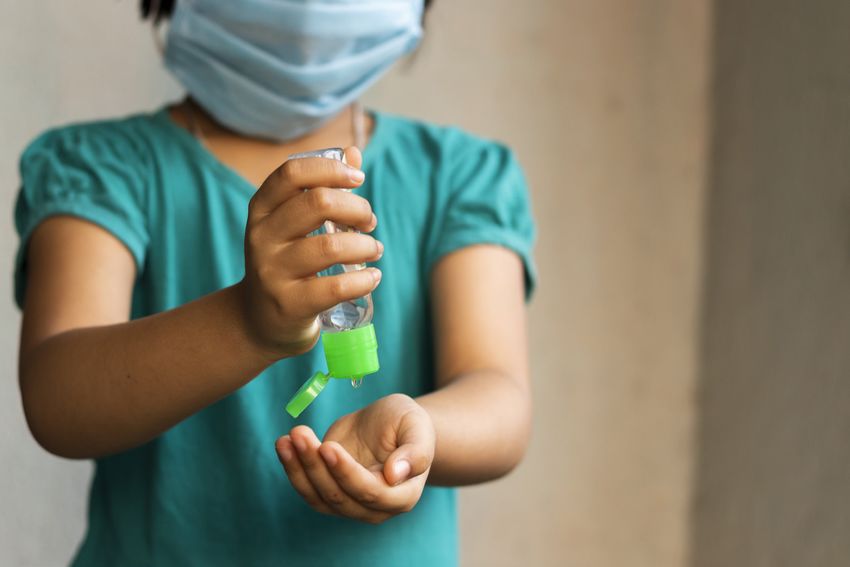
At-A-Glance | Social Distancing

                                                          On the Bus:
                                                          •   Load from back to front
                                                          •   Sit with siblings
                                                          •   Wear your mask at all times
                                                          •   Don’t sit behind the driver

At School:
•   Smaller class sizes
•   Everyone faces same direction
•   Space between desks
•   Wear your mask at all times

9            Team Kentucky | Guidance on Safety Expectations and Best Practices for Kentucky Schools
Cloth Face Coverings, Personal Protective
Equipment and School Health Policies
Personal protective equipment includes face coverings, gloves and shields.

                 Safety expectations
                 Must be implemented by schools as determined by the Kentucky
                 Department for Public Health.

Develop school plans with language                             6 feet apart. Masks should
to address respiratory etiquette and                           only be lowered when actively
protection.                                                    eating or drinking.
   • Face mask prohibit spread of the virus                  o Use CDC guidance to inform
     even when the infected person is                          students, staff and families
     without symptoms:                                         of proper wearing of a face
                                                               covering. https://www.cdc.
        o Students who are enrolled in                         gov/coronavirus/2019-ncov/
          first grade and above and staff                      downloads/cloth-face-
          should be required to wear                           covering.pdf
          a cloth face covering, unless
          medically waivered. Per CDC                        o Face masks/shields must be
          guidelines, schools may choose                       worn by bus drivers if they do
          to adopt policies requiring all                      not interfere with the health and
          individuals over two-years of                        safety of the driver.
          age to wear a mask.                                o Cloth masks for all staff and
        o Masks should not be lowered                          students on bus (exceptions for
          during the school day, even if                       special needs students).
          all students and staff are seated

Team Kentucky | Guidance on Safety Expectations and Best Practices for Kentucky Schools       10
o When students are aerosol-generating procedure.
outside and 6 feet
from others, masks
are not required. Due to limited availability of data, it
is uncertain whether aerosols
• Masks should: generated by nebulizer treatments
o Fit snugly but are potentially infectious. During
comfortably against this COVID-19 pandemic, nebulizer
the side of the face treatments at school should be
o Be secured with ties or ear reserved for students who cannot use
loops or do not have access to an inhaler
(with or without spacer or face mask).
o Include multiple layers of fabric
o Allow for breathing without
restriction Use of peak flow meters, including
in the school setting, includes
o Be able to be laundered and forceful exhalation. Based on limited
machine dried without damage available data, forceful exhalation is
or change to shape not considered an aerosol-generating
o Cover both nose and mouth procedure associated with increased
• Schools should develop a standard risk of transmitting the virus that
for masks to assure messaging or causes COVID-19. However, for some
images on masks align with school people with asthma, using a peak
dress code. flow meter can trigger cough.
• Schools should develop a plan for
purchase/donation of cloth masks Schools should obtain the appropriate
for provision to students who arrive personal protective equipment (PPE)
without a mask or do not have for staff who administer nebulizer
resources to obtain a mask. treatments and peak flow meters
to students with asthma. PPE for
use when administering nebulizer
Personal Protective Equipment Policy treatments or peak flow meters to
for delivery of health care services students with asthma consists of
requires different equipment for gloves, medical or surgical face
protection of all parties. Treatments mask and eye protection.
for students with asthma require
special precautions. The CDC has
provided the guidance below: School staff should be trained on
• When to use PPE
During this COVID-19 • What PPE is necessary
pandemic, asthma treatments • Where this PPE is stored
using inhalers with spacers (with or
without face mask, according to each • How to properly don (put on),
student’s individualized treatment use, and doff (take off) PPE
plan) are preferred over nebulizer • How to properly dispose
treatments whenever possible. of used PPE. CDC
Based on limited data, use of asthma has information on using PPE.
inhalers (with or without spacers or • Staff should also be trained on
face masks) is not considered an
11 Team Kentucky | Guidance on Safety Expectations and Best Practices for Kentucky Schoolshow to administer nebulizer • Reasonable accommodations for IEPs
treatments and peak flow or 504s that include administration
meters. of daily medications, emergency
During this COVID-19 pandemic, if a medications (meter dose inhalers,
nebulizer treatment or use of peak Epinephrine injections, Glucagon
flow meter is necessary at school injections), intranasal medications,
for a student, the number of people insulin injections, student position
present in the room should be limited changes, hygiene needs (diapering,
to the student and the staff member dressing changes, etc.) that include
administering the treatment or peak use of:
flow meter. If appropriate, based o Surgical masks
on the student’s age and level of o Face shields
maturity, the staff member could
leave the room and return when o Gloves
the nebulizer treatment is finished. • Maintaining 6 feet distance for care
After the nebulizer treatment or when reasonable.
use of peak flow meter, this room • Continue to encourage students
should undergo routine cleaning and and staff to cover their coughs and
disinfection. CDC has information on sneezes by coughing into their elbow
how to clean and disinfect and how to or covering with a tissue. Deposit the
prevent asthma attacks triggered by used tissue into a waste basket.
cleaning and disinfecting activities.
• Consideration of health services that
can be moved to virtual intervention
such as speech therapy.
• Medication storage (double locked) in
classroom OR stored securely in the
front office-determined by the school
setting:
o Administration by trained non-
licensed school personnel OR
school nursing staff
o Virtual training and oversight
of trained non-licensed school
personnel (distance evaluation
for required skills check-off)
o Review of medication records
electronically
School Health plans should include • Telephone triage for school nurse
infection control policies for: evaluation for illness/injury or
treatments.
• Gloves worn for:
o Cleaning and sanitation
o Food service
o School health procedures
(catheterization, tube feeding,
etc.)
Team Kentucky | Guidance on Safety Expectations and Best Practices for Kentucky Schools 12At-A-Glance | Cloth Face Coverings, Personal
Protective Equipment and School Health Policies
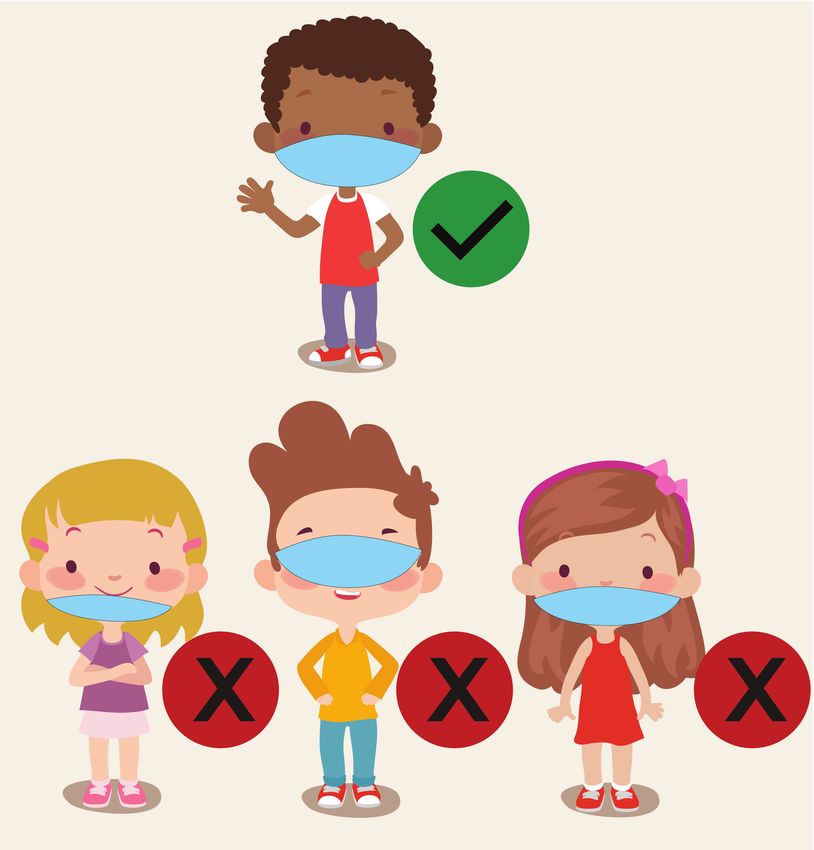
Wearing Your Mask:
• Must cover your mouth and nose
• Is not a toy
• Should be worn any time you are in the school building
• Should be worn by everyone first grade and above
13 Team Kentucky | Guidance on Safety Expectations and Best Practices for Kentucky SchoolsScreening and School Exclusion
School level plans include screening for COVID-19 symptoms prior to school entry. Some
parts of this plan should include use of community level partnerships to address safety
measures outside the control of the school staff. School entry begins at the point in which
a student enters school property. This includes transportation by school buses.
Safety expectations
Must be implemented by schools as determined by the Kentucky
Department for Public Health.
• Community education on: if a student is found on re-check to
o Should a student arrive sick to have a temperature of greater than
school 100.4, the students and driver on that
bus will be involved in contact tracing
o Social distancing at bus stop if the febrile student is determined to
o Transportation requirements have COVID-19.
o Personal protective equipment o Staff member taking
(mask wear) policies. temperatures should use a
• Temperature check (touchless touchless thermometer if
thermometer) for all students and available. No oral temperature
staff at point of school property entry. readings to prevent viral spread.
To ride the school bus, parents must o Staff member should clean
attest each morning that the student’s hands before touching
temperature is not greater than thermometer.
100.4 when boarding. The student’s o Thermometer must be cleaned
temperature will be rechecked when per the manufacturer’s
on school property. Understand that recommendations.
Team Kentucky | Guidance on Safety Expectations and Best Practices for Kentucky Schools 14• School health policies should include
instructions for parents to keep
students at home if they meet any
of the exclusion criteria for COVID-19
below until clearance documentation.
These criteria must also be in place
for staff.
Exclusion Criteria:
Students or staff should stay home OR meeting criteria for discontinuing
be sent home if any of the following home isolation. Contact the local
occur health department for more
o Temperature greater than 100.4 detailed guidance.
o Cough o Consult your school nurse if
exclusion is unclear.
o GI (vomiting/diarrhea)
o New rash • Post signage instructing anyone
o Exposure to a COVID-19 case entering the school property to
during a 48 hour period before NOT ENTER if they meet any of the
onset of symptoms until Exclusion Criteria
15 Team Kentucky | Guidance on Safety Expectations and Best Practices for Kentucky SchoolsIsolation Criteria:
We recommend schools have a o Mass screenings per KRS
designated area for isolation of sick 156.160 and 702 KAR 1:160
students with an ability to maintain adult should be delayed until
supervision until student is picked up by planning can be completed on
a parent, guardian or designee. Students how to reduce exposure during
with symptoms of infectious disease screening for all parties.
should not be cohorted. Assure student • Monitor School Attendance for
is wearing a face covering while waiting trends/patterns of absences for
for transport if there is no medical reason infectious illness:
to prevent this. o Develop a monitoring system
• Transport Criteria of the potentially for identification of absences
infectious student to include: for COVID-19/Influenza with
o How student gets home if an ability to compare to usual
parent has no transportation. rates/patterns at individual
school site levels.
o If parent is not responding
to calls for pick-up, follow o Develop a plan for school
protocols in place for such closure and move to distance
situations. learning when absence rates
or rates of infectious disease
o Students cannot be sent home rise to allow for containment
sick on the school bus. and sanitation of the school
• Return to School Policy: site. These plans should have
o Return to school when the specific guidelines for closure
local health department or the and reopening.
student’s provider provides
clearance documentation for
school record.
• Flexible attendance policy to address
distance learning when students
are in isolation/quarantine and able
to participate in distance learning
instruction.
• Immunizations and Annual Health
Screening Exams – Continued
requirement
o Kindergarten and 6th grade
exams should be high priority
for exams with
• Linkage to a medical
home.
• Inclusion of vision and
dental screenings.
Team Kentucky | Guidance on Safety Expectations and Best Practices for Kentucky Schools 16• Include health education for inclusion o Use of hand sanitizer at school
of: entry, and safe storage
o Promotion and modeling of o Healthy nutrition
hand-washing technique o Physical activity - health
o Hand-washing should occur: education should be age
• Before and after eating specific to address and
contextualize the information
• Before and after using for best understanding for
restroom different ages, or specific needs
• When hands are soiled such as language, cognitive
• Use hand sanitizer per ability, culture, etc.
discretion of supervisory
staff person
Best Practice - Additional strategies that schools may choose to follow
• Provide communication for the families (instruction sheets, newsletters, social
media) about practices at school including face covering to prevent viral spread of
disease, proper hand-washing and hand sanitizing techniques, and practicing social
distancing outside the home. https://covid19.ncdhhs.gov/materials-resources/
social-media-toolkit-covid-19
• Provide instructional sheet with exclusion criteria for families to inform them when
not to send their child to school AND so they will better understand why a child
might be sent home if they meet the exclusion criteria.
• Assure that sick leave policy is generous for staff to enforce staying home if sick.
• Encourage students to stay home if sick by discontinuing attendance-dependent
awards and ratings.
• Designate a “Healthy at School” officer, other than the school nurse, who agrees to
be a person staff can identify and communicate potential improvements and/or
concerns for school.
• Rather than parental attestation of the student being afebrile when boarding the
bus, have student’s temperature checked at point of entry to the bus.
• Training for bus drivers:
o If a parent/guardian is at bus-stop, send child home if he/she meets
exclusion criteria to assure child safety.
o If parent/guardian is not available, child will have to be transported for pick-up
at school site.
• Identify an area for isolation on bus at greatest distance from other
students.
• Assure student has mask on covering mouth and nose unless medical
waiver known for student.
17 Team Kentucky | Guidance on Safety Expectations and Best Practices for Kentucky SchoolsSanitation and Environmental Standards
Because of concern that infectious viral particles can land on surfaces with coughing,
sneezing, talking and laughing, safety expectations for schools during this public health
emergency should include:
Safety expectations
Must be implemented by schools as determined by the Kentucky
Department for Public Health.
• Post signs throughout the school • Consult with your local health
facility encouraging proper hand department’s environmental health
and respiratory hygiene practices program to determine ventilation
(covering coughs and sneezes). capacity in classrooms. When
• Daily cleaning and disinfection of all reasonable and feasible, utilize
school facilities. outdoor instructional time.
• Collaborate with local health
department for guidance on closures
and re-openings.
Team Kentucky | Guidance on Safety Expectations and Best Practices for Kentucky Schools 18For disinfection, diluted household
Hand Hygiene •
bleach solutions, alcohol solutions
with at least 70% alcohol, and most
• Make hand cleaning supplies readily common EPA-registered household
available. All restrooms should be disinfectants should be effective.
monitored often for adequate hand o Diluted household bleach
soap and towels or functioning hand solutions can be used if
drying devices. appropriate for the surface.
• Hand sanitizer containing at least 60% Follow manufacturer’s
alcohol may be used when soap and instructions for application
water are not readily available. and proper ventilation. Check
to ensure the product is not
• Follow normal preventative actions past its expiration date. Never
while at home and school, including mix household bleach with
cleaning hands and avoiding touching ammonia or any other cleanser.
eyes, nose, or mouth with unwashed Unexpired household bleach
hands. Encourage these activities at will be effective against
home. coronaviruses when properly
diluted.
How to Clean and
Disinfect Prepare a bleach solution by
mixing:
Daily cleaning and disinfection of
classrooms, gymnasiums, restrooms, locker - 5 tablespoons (1/3rd cup)
rooms, cafeteria seating and other facilities bleach per gallon of water
is critical to preventing the spread of all
illness, including COVID-19 pandemic and OR
seasonal influenza. Special attention should
be given to high touch areas, such as water
- 4 teaspoons bleach per quart of
fountains, doorknobs, light switches, desks, water
computers, phones, toilets, faucets, sinks,
handrails, etc. It is recommended that high
touch surfaces be cleaned and disinfected o Products that are EPA approved
frequently. SARS-CoV-2 disinfectant
products are expected to be
effective against COVID-19
Surfaces based on data for harder to kill
viruses. (https://www.epa.gov/
• All staff should be trained on cleaning pesticide-registration/list-n-
protocols that include cleaning first disinfectants-use-against-sars-
then disinfecting and adhering to cov-2-covid-19). Follow the
time on contact requirements in manufacturer’s instructions for
accordance with the EPA approved all cleaning and disinfectant
disinfectants list. If surfaces are dirty, products (e.g., concentration,
they should be cleaned using a application method and contact
detergent or soap and water prior to time).
disinfection.
19 Team Kentucky | Guidance on Safety Expectations and Best Practices for Kentucky Schools• For soft (porous) surfaces such as o Additional PPE might be
carpeted floors and drapes, remove required based on the
visible contamination if present and cleaning/disinfectant products
clean with appropriate cleaners used and whether there is a risk
indicated for use on these surfaces. of splash.
If the items can be laundered, • All areas where cleaning supplies and
launder items in accordance with the toxic items are stored must be kept
manufacturer’s instructions using the locked, including janitor closets.
warmest appropriate water setting
for the items and then dry items • All bottles containing toxics/liquids
completely. must be clearly labeled.
• Disinfectants and cleaning materials
kept in classrooms and areas
accessible to students are required to
Teachers and be kept out of the reach of students
Administrative Staff and locked, depending on the
chemical label and the age group of
• Encourage good hand hygiene by the students in the classroom.
providing signs in classrooms and
offices.
• Assist janitorial staff by routinely Water Fountains
disinfecting frequently touched items
in the classroom/office such as desks, • Water fountains should be cleaned
doorknobs, crafting equipment, and sanitized frequently throughout
pencil sharpeners, staplers, markers, the school day. If possible, students
white boards, and items that students should provide their own reusable
frequently share, etc. water bottles to be refilled with water
• Classroom area rugs must be throughout the day. This will reduce
removed during this time to ensure all the number of students drinking
flooring is easy to clean and disinfect. directly from the water fountains.
Custodial Staff School Buses
• Cleaning staff must wear disposable • The surfaces of buses that are high
contact, such as handrails, seats and
gloves for all tasks in the cleaning windows must be disinfected after
process, including handling trash. each bus route and as often as
o Gloves should be compatible possible.
with the disinfectant products
• All buses should provide at least 60%
being used. Gloves should be
alcohol-based hand sanitizer, located
removed carefully to avoid
at the front of the bus, for students
contamination of the wearer
to use as they board the bus. The
and the surrounding area.
use and storage of these chemicals
Be sure to clean hands after
should always be under the
removing gloves.
supervision of the bus driver and/or
bus monitor. Hand sanitizer must not
be left in the bus due to temperature
risk.
Team Kentucky | Guidance on Safety Expectations and Best Practices for Kentucky Schools 20• Opening windows and doors, weather • Avoid sharing food and utensils and
permitting, to ventilate buses after the ensure the safety of students with
bus route has been completed. food allergies.
• Allow for additional time between
routes for disinfection/sanitation
practices. Cafeteria Staff
• Ensure staff are trained on standard
Playgrounds operating procedures relevant to their
• Students must practice good assigned duties with an emphasis on
hand hygiene by washing their the procedures for hand-washing,
hands before going out to play and proper glove use, personal hygiene,
immediately upon returning inside the serving safe food to students with
school building. food allergies, and cleaning and
sanitizing food contact surfaces.
• Assign a recess schedule that
limits how many classes are on the • Clean, sanitize and disinfect
playground at one time. If multiple frequently touched surfaces such as
playgrounds are available, utilize kitchen countertops, cafeteria and
them to minimize how many students service tables, door handles, carts
are mixing. and trays, throughout the day.
• Practice proper hand hygiene. Wash
hands regularly with soap and water
Food Service for at least 20 seconds.
• Key times to wash your hands include:
• Stagger lunch times and promote
o Before and after work shifts
social distancing at tables (include
accommodation for students with o Before and after work breaks
food allergies). If students eat in o After using the restroom
the cafeteria, surfaces must be o Before eating or preparing food
cleaned and sanitized between
cohorts of diners. Seat assignment o Before putting on and after
and a manifest will be needed to taking off disposable gloves
support contact tracing if the school when preparing food
experiences a positive case of o After touching objects with
COVID-19. bare hands which have been
• Use disposable food service items handled by other staff, students,
(utensils, dishes). If disposable items or visitors, such as tables,
are not feasible or desirable, ensure trays, carts, racks, dishes, cups,
that all non-disposable food service utensils, bags, coolers, totes
items are handled with gloves, and trash
washed with dish soap and hot water, o After blowing your nose,
and rinsed and sanitized or placed in coughing or sneezing
a dishwasher. o After putting on, touching or
• If food is offered at any event outside removing cloth face coverings
of school hours, serve unitized meals
to reduce contact amongst students
and staff.
21 Team Kentucky | Guidance on Safety Expectations and Best Practices for Kentucky SchoolsGymnasiums, Physical
Education Classrooms, and
Weightlifting Rooms
• Clean and sanitize frequently used • Provide disinfectant wipe stations
equipment between classes or throughout the room for use on
sports teams. equipment after each use.
• Provide hand hygiene rules in the • Encourage students and athletes to
gymnasium locker rooms and advise practice good hand hygiene before
students not to share personal items and after using workout and/or
or sporting uniforms. sporting equipment.
Best Practice - Additional strategies that schools may choose to follow
• Provide temporary or permanent Plexiglas shields in areas with high levels of
interactions and transactions such as the front office desk and cafeteria serving area.
Team Kentucky | Guidance on Safety Expectations and Best Practices for Kentucky Schools 22At-A-Glance | Sanitation and Environmental
Standards
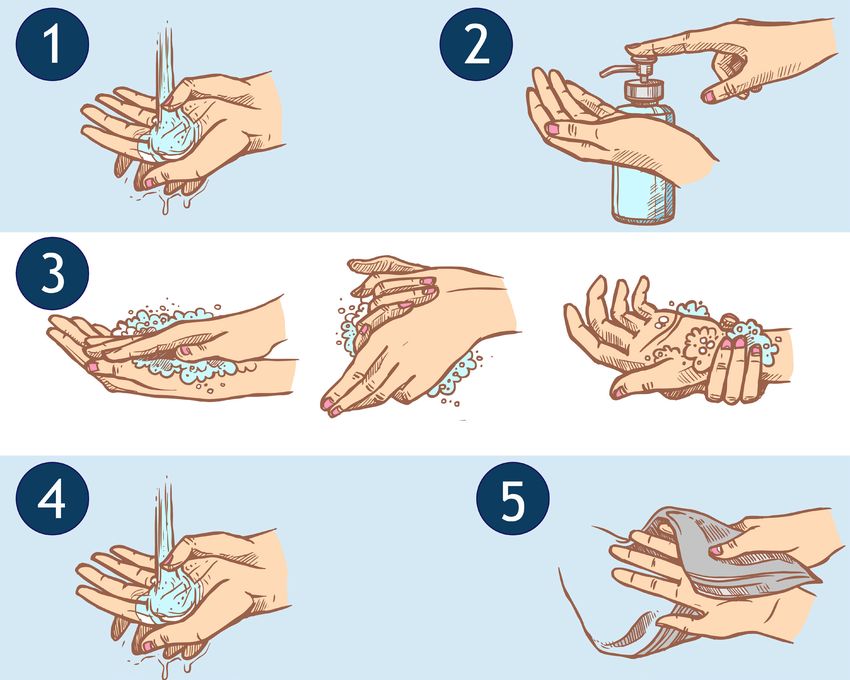
Wet Hands Apply Soap
Scrub all surfaces of hands for 20 seconds
Rinse Dry
How to wash your hands:
1. Wet hands with running water
2. Apply enough soap to cover wet hands
3. Scrub all surfaces of the hands – including backs of hands, between fingers and
under nails – for at least 20 seconds
4. Rinse thoroughly with running water
5. Dry hands with a clean, dry cloth, single-use towel or hand drier as available
23 Team Kentucky | Guidance on Safety Expectations and Best Practices for Kentucky SchoolsContact Tracing
Safety expectations
Must be implemented by schools as determined by the Kentucky
Department for Public Health.
• Notify local health department of • This technique has worked with
any positive cases of COVID-19 and measles, chicken pox, mumps, and
be prepared to cooperate with the multiple other illnesses seen in
contact tracing investigation with schools.
manifests of bus transportation,
classroom cohorts, cafeteria setting • Having a plan to prevent exposure
charts, etc., that will allow quick of COVID-19 to your students and
identification of those at high risk of staff should include preparing to
infection from the positive COVID-19 assist contact tracers with their
student/staff. Quickly initiating a investigations.
14 day quarantine of these at risk
individuals is our best defense against
further spread of the viral illness.
• Public health has used contact
tracing for decades to identify a
person with a communicable illness,
isolate that person, and quarantine
others with high-risk exposure to the
infected person to prevent disease
spread.
Team Kentucky | Guidance on Safety Expectations and Best Practices for Kentucky Schools 24COVID-19 References
• https://govstatus.egov.com/kycovid19
• Centers for Disease Control and Prevention Considerations for School: https://www.
cdc.gov/coronavirus/2019-ncov/community/schools-childcare/schools.html
• FAQs for K-12 Schools: https://www.cdc.gov/coronavirus/2019-ncov/community/
schools-childcare/schools-faq.html
• World Health Organization Key Messages and Actions for COVID-19 Prevention
and Control in Schools, March 2020: https://www.who.int/docs/default-source/
coronaviruse/key-messages-and-actions-for-covid-19-prevention-and-control-in-
schools-march-2020.pdf?sfvrsn=baf81d52_4&gclid=EAIaIQobChMI-sPMsf7O6QIVD7
bICh1b2wyUEAAYASAAEgJ9GvD_BwE
• National Association for Pupil Transportation, Going Back to School Before the Kids
3.1, A Return to School Roadmap: http://www.transfinder.com/img/papers_and_
colateral/NAPT_back_before_kids_part1-290181.pdf
• Centers for Disease Control, Recommendation Regarding the Use of Cloth Face
Coverings, Especially in Areas of Significant Community-Based Transmission https://
www.cdc.gov/coronavirus/2019-ncov/prevent-getting-sick/cloth-face-cover.html
25 Team Kentucky | Guidance on Safety Expectations and Best Practices for Kentucky SchoolsYou can also read


