2020 Budget Request & Program Impact Statement - Steuben ...
←
→
Page content transcription
If your browser does not render page correctly, please read the page content below
2020 Budget
Request & Program
Impact Statement
Cornell Cooperative Extension of Steuben County 2020
Total Budget:
$1,348,139
Steuben County Appropriation Request:
$409,000
(Level Funding from 2019)
Cornell Cooperative Extension puts knowledge to work in pursuit of economic vitality, ecological sustainability
and social well-being. We bring local experience and research-based solutions together, helping Steuben County
families and communities thrive in our rapidly changing world. Our vision is a strong community in which
residents thrive, maintaining health, self-reliance, and prosperity.
We know that funds are limited, and that decisions about which programs to invest in with public funds are
difficult. When Steuben County invests in Cornell Cooperative Extension of Steuben County each year, the public
return on investment is significant.
CCE-Steuben is going through a leadership transition and is currently searching for its next Executive Director.
The search committee would like to have the new Executive Director in place no later than October 2019. In
2018, the Steuben County legislature approved an additional request in funding of $19,000 to bring the 2019
County appropriation to $409,000 to support the association’s joining the Cornell Vegetable Team (CVP) and to
form the Southwest New York Dairy, Livestock, and Field Crops Program (SNYDLFCP) with CCEs in Allegany,
Cattaraugus, Chautauqua, and Erie counties. CCE-Steuben is requesting level funding of $409,000 in 2020 to
continue participation in and development of these regional programs.
For an investment of $409,000 in 2020, Steuben County receives a $1.3 million dollar educational program
provided by a highly skilled staff of 14. These programs include:
One-on-one and group support for farmers across all sectors of agriculture, one of the primary drivers
of economic development in Steuben County.
Premier regional agriculture programs such as: Finger Lakes Grape Program, Cornell Vegetable
Program, Southwest New York Dairy, Livestock, and Field Crops Program and Harvest NY, providing
highly responsive and specialized expertise to producers.
Cornell Vegetable Team Vegetable Specialist housed in this office.
SNYDLFCP Dairy Specialist housed in this office.
Promotion of agriculture through agritourism and youth education.
Weekly classes for DSS clients in the areas of financial literacy and nutrition, empowering the highest-
need members of our community to be less reliant on entitlement programs.
Page 1 of 8
The largest positive youth development program in the nation in 4-H.
Deep connections and access to Cornell University’s expertise and research knowledge.
New York State County Law 224
NYS County Law 224 establishes the Cooperative Extension System in NY, including a funding partnership that
splits financial support between Federal, State, and County Governments and provides legal status for separate,
unincorporated CCE Associations in each county. The State appropriation amount to each county is calculated
according to a formula directly related to the amount of the County appropriation. Therefore, the higher the county
appropriation, the more the association receives in State 224 funding.
In 2017, 2018 and 2019, CCE Executive Directors across the state spent a day in Albany advocating for an
increase in CL 224 funds—the first in over 20 years. While it was not successful, there was an enormous amount
of support from state reps for Cornell Cooperative Extension, and the statewide CCE System is still advocating
for more CL 224 funding in future state budgets.
JUSTIFICATION FOR BUDGET REQUEST
HOW DOES CCE STEUBEN TURN A $409,000 INVESTMENT FROM THE COUNTY INTO A $1.3M BUDGET?
LEVERAGING OF COUNTY FUNDING
The County appropriation serves as the basis for Cooperative Extension to exist, and all other funding is leveraged
by the appropriation. In 2020, a level Steuben County appropriation of $409,000 plus building space allocation
will enable CCE Steuben to generate and receive at least $912,139 in federal and NYS funding, grants, contracts,
and program-generated revenue. Without the County Appropriation, Cornell Cooperative Extension would not
be eligible for federal and state dollars, and would not be able to apply for outside funding.
CCE-Steuben Funding Sources
The County
Private
Appropriation is
Fees 6% essential and
8% County necessary to realize
Federal 34%
the benefit of these
19%
outside funding
sources.
State
33%
County State Federal Fees Private
Page 2 of 8
With County support, CCE leverages these specific funding sources in 2020:
$12,600 in Federal Smith-Lever funding which provides for local administrative staff.
$62,536 in NYS County Law 224 funding which provides for high-level program staff.
$277,356 in Federal funding for two nutrition education programs which partner directly with the Steuben
County Department of Social Services to provide a component of job readiness training.
$10,000 in Federal funding for CCE-Steuben to provide Extended School Day programs in five Steuben
County school districts.
$20,939 from the United Way of the Southern Tier for Financial Literacy programming.
PERSONNEL COST SAVINGS TO COUNTY
The Cornell Cooperative Extension Association employs 13.2 FTE who will earn $628,769 in 2020.
Steuben County’s share of the salaries/wages of CCE Steuben staff is $252,253 (40%)
Steuben County Extension employees’ NYS benefits of $383,970 are paid by the SUNY system through
Cornell University at no cost to the County.
DISCRETIONARY FUNDS
The Steuben County appropriation is discretionary and allows CCE-Steuben to remain flexible and
responsive to meet the changing needs of Steuben County residents.
A Steuben County appropriation of $409,000 represents 30% of total funding (revenue, not building space
allocation included in above chart) for the Cornell Cooperative Extension Association in 2020 but that
appropriation accounts for 90% of all funding available for local discretionary spending.
Discretionary and Directed
Funding
Discretionary -Steuben
County
28% 30% Discretionary -Other
Directed - Grants
3%
39% In-Kind - Fringe Benefits
(money we don't receive)
100% of Steuben County appropriations are used for staff and programs that provide direct benefit to
Steuben County residents.
Page 3 of 8
Cornell Cooperative Extension of Steuben County
                           Activities & Program Impact Report
Cornell Vegetable Program
      On January 1, 2019 CCE-Steuben became a member of the Cornell Vegetable Program (CVP); one of the
      premier regional agricultural teams in NYS. The CVP is a Cornell Cooperative Extension partnership
      between Cornell University and the CCE Associations in a large multi-county region in the western and
      central parts of the state. The team's Vegetable Specialists work together with Cornell faculty and
      Extension Educators statewide to address the issues that impact the commercial vegetable industry. The
      Cornell Vegetable Program provides educational programs and information to growers, processors and
      agri-business professionals, supplying them with the knowledge to profitably produce and market safe
      and healthful vegetable crops, contributing to the viability of farms and the economic wellbeing of New
      York State. Specifically, the program focuses on food safety, variety evaluation, market development, pest
      management, and cultural practices.

       In May 2019, the CVP hired and a new specialist, Margaret Lund. CCE-Steuben is very fortunate to have
       her housed here. Margaret will serve growers as a Vegetable Specialist, with a focus on potatoes, dry
       beans, post-harvest handling and storage. She earned her B.S. from Clemson University in Environmental
       and Natural Resources and her PhD in Entomology (April ’19) in the Vegetable Entomology Laboratory
       from Michigan State University. During her PhD studies, she conducted research on various vegetable
       crops on cooperating farms, organized extension field days, taught undergraduate lab courses and
       supervised scouting for invasive pests on sponsored grant research. She has already made several contacts
       with Steuben County producers and they are excited to begin working with her.

Southwest New York Dairy, Livestock, and Field Crops Program

       CCE-Steuben along with four counties: Allegany, Cattaraugus, Chautauqua, and Erie are forming a new
       Cornell agriculture regional team. The specialists work together with Cornell faculty and extension
       educators statewide to provide service to the farms large and small whether dairy, livestock, hay, corn,
       wheat or soybean focused. The team is part of the Cornell College of Agriculture & Life Sciences' Pro-
       Dairy program outreach. Educational programs and individual assistance cover a wide area of best
       management practices and as well as dairy farm business. The SNYDLFCP team has hired two specialists
       and is in the process of recruiting two more positions. CCE-Steuben will be housing the Dairy Specialist,
       as you can see the current structure of the SNYDLFCP team below:

              Position                          Specialist Name                        Housing Location

        Farm Business Management               Katelyn Walley-Stoll                    Chautauqua

        Field Crops Production                  Joshua Putnam                          Cattaraugus

        Dairy Management                        To Be Hired                             Steuben

        Livestock Management                    To Be Hired                             Erie

                                                                                                      Page 4 of 8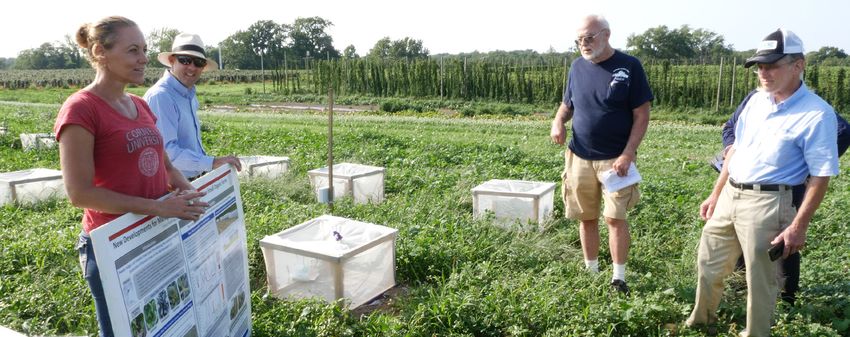
Agricultural Awareness
      Taste FLXpo
      Our second annual Taste FLXpo event, presented by Finger Lakes Farm Country, is a local food and
      beverage festival open to the public, which includes samples of locally grown food, wine, and craft
      beverages, food trucks, and a farmer’s market where guests can purchase locally-sourced products. The
      Taste FLXpo features local farmers, chef’s stations featuring prepared samples, and beverage producers
      inside the Corning Community College Commons Building. Of the attendees at the event surveyed, 98%
      purchased local products during the event, and 69% were new attendees from the previous year.

       Finger Lakes Farm Country
       As part of a regional ARC grant, CCE-Steuben continues to work with our local coalition of Extension
       and Tourism partners to promote agritourism and educate farmers with potential interest in agritourism.
       We held agritourism panel discussion workshops within Steuben and Yates/Schuyler regions and explored
       topics of being visitor-ready, marketing, and liability. A new Agritoursim Trail website devoted to
       agribusinesses and events in the region is slated for release early next spring before the harvest season. We
       currently have over 240 farm businesses to showcase on the website, surpassing our initial grant goals.

       Monarch Butterfly Pollinator Garden
       CCE-Steuben Master Gardeners established a new pollinator garden by partnering with Hakes C&D
       Landfill in Painted Post, NY. The garden focuses on Monarch butterfly habitat, with 15 plots planted with
       various species of 300 native milkweed plants. Monarch butterflies lay their eggs only on milkweed
       plants, and larvae feed exclusively on this plant after hatching. Monarch butterflies are a great showcase
       species for pollinators, because they are well-known all over the world and are eye-catching insects. This
       garden and similar projects bring attention to the importance of pollinators and their vital role in the
       production of our local fruits and vegetables. CCE-Steuben appreciates the staff at Hakes Landfill for the
       on-site help and planning, and we look forward to collaborating again on future projects at this site.

Agricultural Production
      Manure Application Training
      This informational meeting was developed for all farm owners, family members, and employees who
      manage their farm’s manure. All farms, regardless of size, were encouraged to attend. This was a DEC-
      approved Manure Applicator Training that is required for Concentrated Animal Feeding Operation
      (CAFO) farms. Each farm that participated in the meeting received a certificate. This educational program
      was a joint effort among CCE-Steuben, WNY Crop Management, CCE Harvest NY and Cornell PRO-
      DAIRY.

       Christmas Tree Farmers Association of New York (CTFANY)
       CCE-Steuben and CTFANY offered a Winter Workshop available to growers and individuals interested
       in the Christmas tree industry. The six-hour workshop, held at the Taylor Memorial Library in
       Hammondsport, NY, included lunch and covered marketing and Integrated Pest Management (IMP)
       techniques specific to growing and maintaining healthy evergreen trees.

                                                                                                          Page 5 of 8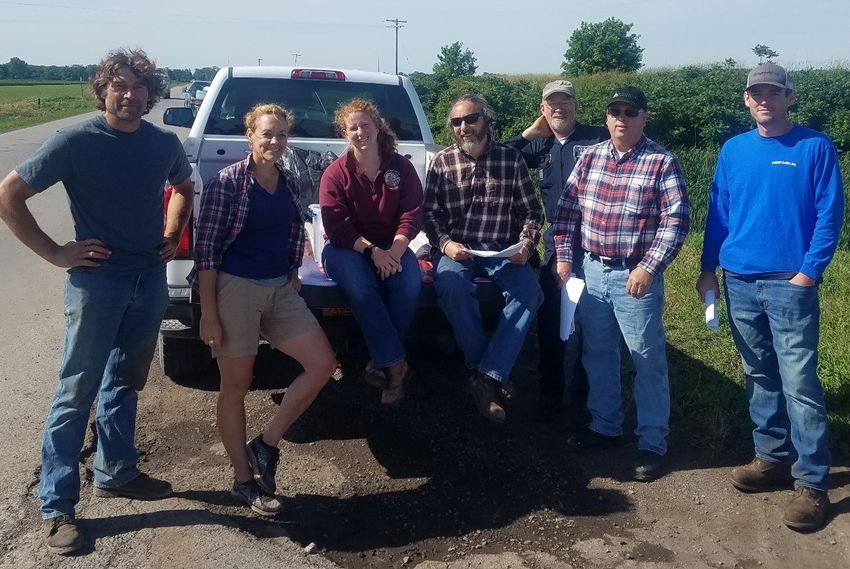
GAPS Training
       This spring CCE-Steuben and the Cornell Vegetable Team offered a two day Farm Food Safety Training
       with GAPS (Good Agricultural Practices), open to all fresh produce farms. Extension Vegetable
       Specialist, Robert Hadad led the presentation and training of the two-day workshop. The first day focused
       on assessing the risks and implementation of practices to reduce food safety risk on fresh produce farms.
       The second day focused on farm-specific GAPS plans with experts to assist with questions along the way.

       Project Grass Field Day
       Steuben and Allegany county CCE educators, along with Steuben County SWCD and PA Conservation
       districts are teaming up to present a grazing workshop and soil health presentation in October. We are
       pleased to be utilizing Fay Benson, Small Dairy Support staff from Cornell’s SCNY Regional Dairy &
       Field Crops Team. He utilizes the NY Soil Health Trailer, a traveling display and education unit
       demonstrating how prescribed grazing practices impacts pasture and range productivity, conservation, and
       soil health.

Youth Development
      4-H is America’s largest youth development organization—empowering nearly six million young people
      across the U.S. with the skills to lead for a lifetime. CCE-Steuben’s 4-H program is very strong with 15
      clubs and 358 youth enrolled. Our program coordinates several youth learning experiences and
      opportunities throughout the year including the example below:

       Victoria Kelly, Country Critters 4-H Club; and Rachel Eckler, Country Bunch 4-H Club, attended the
       2019 Citizenship-Washington Focus Trip (C.W.F.) on July 7-13, 2019. Laura Eckler was their chaperone.
       CWF is a week-long 4-H citizenship program for youth ages 14-19 that takes place at the National 4-H
       Youth Conference Center just miles from Washington, DC. CWF provides 4-H youth with opportunities
       to explore, develop, and refine their community and civic engagement skills to be outstanding leaders in
       their communities. Through hands-on educational workshops, and sightseeing tours in the “living
       classroom” of Washington, D.C., youth learn about the history of our nation, the leaders who have shaped
       it, and how they can apply the leadership and citizenship skills they learn during CWF when they return
       home.

       Rachel reflects, “Citizen Washington Focus was an educational time for me. Through writing mock bills,
       hosting a congressional session, and visiting some of our nation's most treasured artifacts and places, I
       learned a lot! CWF strengthened my skills in civility (a topic we focused on); having a chance to practice
       it when discussing controversial topics with other 4-Hers and even met some of New York State's
       representatives. My favorite portion of the trip was visiting the Thomas Jefferson memorial and learning
       about the legacy he left to our nation and the impact it left to many presidents after. Another memorable
       portion of my trip was being able to connect with other 4-Hers from around the United States and learn
       how 4-H functions around them."

       Victoria echoed “Citizenship-Washington Focus may be my favorite 4-H trip that I have been on. It was
       amazing to see the Capitol, the White House, and numerous monuments, but I also greatly enjoyed our
       mock 4-H Congress. We practiced writing bills, debating, reviewing and rewriting, and holding a
       Congressional session. The memories of the history I experienced, the lessons I learned, and the people I
       met will definitely remain with me for years to come.”
                                                                                                       Page 6 of 8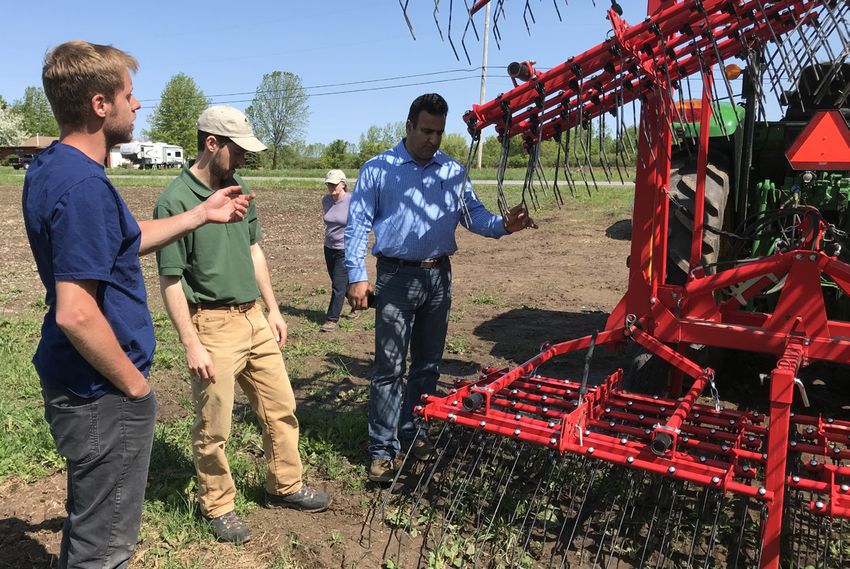
Lastly, Laura shared “Citizen Washington Focus is an amazing trip! 4-Hers spend a week in Washington
       DC, learning about our nation’s legislative branch, conducting their own congressional session, as they
       learn how to write, revise, question and vote on the bills they write. In addition to their hands-on learning,
       participants visit with New York State
       representatives, sharing with them their experiences
       in 4-H and its impact on their lives. Sightseeing
       tours into our nation’s capital highlight the history
       of our country and the impact of that history on our
       government today. It has been a fantastic week,
       watching our future leaders impact the world
       today!”

Financial Management
      CCE-Steuben’s Financial Literacy program provides financial coaching to people of all income levels,
      ages, and needs. In March 2019, a woman was referred to Nancy Reigelsperger, CCE-Steuben Financial
      and Consumer Educator, through the Steuben County DSS/BILT program. The young mom left Rochester
      and was sent to a domestic violence shelter in our area. She has a ten month old baby. She was in a dire
      situation and she left with only the clothes on her back with no savings or employment. She disclosed that
      she had been using credit cards to live on and had run up $11,000 in debt, with only $520 in monthly
      income.

      Nancy worked with her to understand her outstanding debt, counseled her about her credit, making a
      budget, controlling spending, needs vs wants etc. (Money Habitude card exercise indicated she was high
      in spontaneous, carefree personality.) Nancy also referred her to the CCE-Steuben EFNEP program to
      help her learn how to spend her SNAP food stamp dollars more wisely while making good food choices.
      The client indicated how extremely appreciative she was of the individual financial coaching she received
      and how beneficial it was for her.

                                                                                                           Page 7 of 8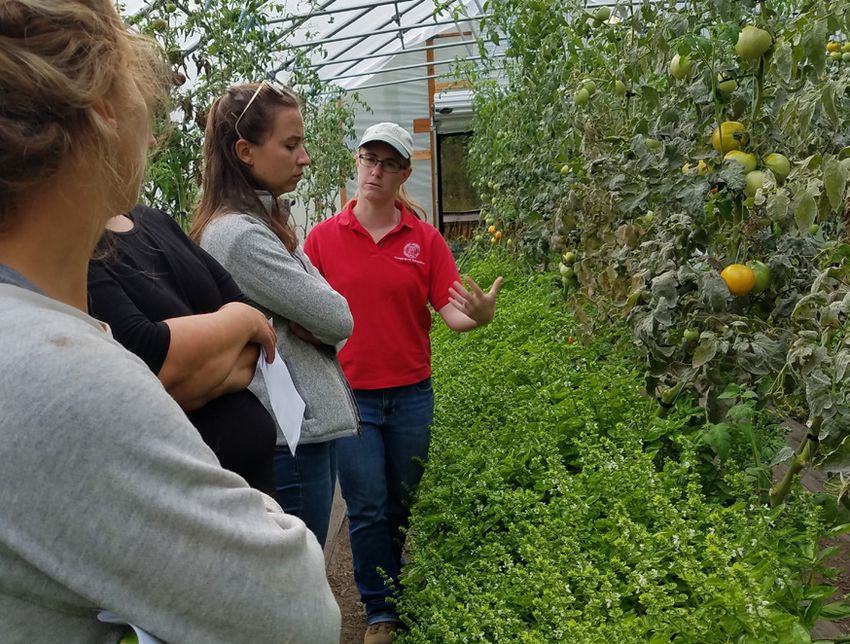
Nutrition Education
       The Finger Lakes Eat Smart NY (FLESNY) Steuben team accomplished the following during the 2018
       fiscal year (October 2017 – September 2018): 590 educational activities (direct and indirect), reaching
       5,097 adults and 8,528 youth in Steuben County. An example of programming in June 2019:

       FLESNY Nutritionists Jon Sterlace and Austin Nichols, and CCE-Steuben Farm to School Coordinator,
       Ainsley Robbins, provided joint educational workshops on adding more vegetables to your diet and how
       to start a container garden to grow your own vegetables and herbs at home. CCE-Steuben offered 11
       workshops for 68 people to a variety of audiences, including food pantries’ clients and volunteers from
       Painted Post, Woodhull, Corning, and Hornell, members of the Steuben County DSS Mobile Work Unit
       in Bath, 4H youth and their parents, and a group of developmentally challenged students and support staff
       in the Hornell Senior High School.

 In 2020, Cornell Cooperative Extension of Steuben County looks forward to continuing programming that
             has a positive impact on the lives of Steuben County farmers, families, and youth.

                                                                                                      Page 8 of 8
Cornell Cooperative Extension | Cornell Vegetable Program

        Re view                 2018

               CORNELL VEGETABLE PROGRAM SPECIALISTS PROVIDE
KNOWLEDGE IS   educational programs and information to growers, processors and agribusiness
      POWER    professionals, empowering them with the knowledge to profitably produce and market
               safe and healthful vegetable crops, contributing to the viability of farms and the
               economic wellbeing of New York State.
Highlights

The Cornell Vegetable Program,            CORNELL VEGETABLE PROGRAM PREVENTS ECONOMIC LOSSES CAUSED BY SWEDE MIDGE
a Cornell Cooperative Extension           ON ORGANIC BRASSICA FARMS
partnership between Cornell University    Swede midge (SM) is an invasive insect      small-plot trials and demonstrations were
and CCE Associations in 14 counties,      pest that is threatening the viability of   conducted on these farms to test various
serves the commercial vegetable,          organic production of broccoli, cabbage,    management strategies, including the use
greenhouse, potato and dry bean           kale, kohlrabi and turnip throughout the    of insect exclusion netting and feasibility of
industries in New York.                   northeastern United States. Feeding by      using preferred brassicas as trap crops.
                                          larvae results in scarring and distortion   At the end of the 2017 growing season,
This region accounts for more than half
                                          of plant tissues, including lack of head    5 out of the 7 farms (= 71%) no longer
the acres of the New York vegetable
                                          formation and unmarketable crops. Small-    suffered economic losses from SM. Insect
industry, with 1,017 vegetable farms
                                          scale organic growers are especially at     monitoring and demonstration of effective
and an estimated farm gate value of
                                          risk for economic loss from SM, because     management strategies allowed these
more than $250 million1.
                                          organic insecticides, analogous to the      growers to understand how to crash the SM
                                          systemic products that have proved vital to population on their farms.
                                          conventional management of SM, do not
                                          exist. Small acreage with a high proportion Results from this project led Hoepting
                                          cropped to brassicas in multiple plantings  to team up with University of Vermont
                                          season-long makes long and widely           Entomologist Yolanda Chen to investigate
                                          spaced crop rotations challenging and/or    feasibility of ground barriers such as plastic
                                          ineffective. Thus, swede midge can build to mulch, landscape fabric or tarps to crash SM
                                          devastating populations quickly.            populations as an affordable management
                                                                                      strategy for small organic brassica farms.
                                          From 2015 to 2017, Christy Hoepting         In 2018, this tactic was studied in the lab
                                          and her team worked intensively with        at UVM and in the field in New York. As
                                          seven small-scale organic farms that were   a result of Cornell Vegetable Program’s
                                          suffering significant economic losses from  dedication to finding effective strategies for
                                          SM. The project deployed 174 pheromone      managing SM, small organic farms will soon
                                          traps from early May until November over    have the tools to reduce economic losses
                                          three years to monitor and understand       from this invasive enemy of brassica crops.
                                          SM population dynamics as they related
                                          to management practices. Almost 20
1 2012 Ag Census
2,681 119 3,535
Farm visits and crop consultations made by Educational meetings and presentations People increased their knowledge by
the Cornell Vegetable Program team given by Cornell Vegetable Program attending presentations given by the Cornell
Specialists Vegetable Program
EDUCATE BEFORE YOU REGULATE: FSMA REPELLENCY TACTICS TO MINIMIZE BIRD IMPROVING THE SUSTAINABILITY OF HIGH
ON-FARM READINESS REVIEW EDUCATION IMPACTS ON SWEET CORN TUNNELS AND NEARBY WATERWAYS
To expand the farm food safety expertise Birds continue to wreak havoc in sweet In 2018, CVP Specialist Judson Reid
of the Cornell Vegetable Program, Fresh corn. CVP fresh market specialists Darcy completed a 2 -year project on managing
Market Specialist Robert Hadad was trained Telenko and Robert Hadad, along with NYS soil health in high tunnels for long-term
in the first class in New York under the new IPM specialist Marion Zuefle partnered productivity. Cooperating growers provided
Food Safety Modernization Act (FSMA) with 6 vegetable farms over a 3-yr period input and yield data via baseline and fall/
initiative called On-Farm Readiness Review to evaluate repellency tactics to minimize winter surveys and interviews. This data
(OFRR). The goal of this new program is to wildlife damage in sweet corn, a project tracked changes in management practices,
“Educate Before You Regulate”. Over the supported by NESARE and NYFVI. Various trends in soil and foliar nutrient levels,
next 3-5 years, specially trained CCE food tactics for bird deterrence were evaluated and allowed the CVP to correlate changes
safety educators will team with the New including a chemical deterrent, Avian in yield and quality with management
York Department of Agriculture & Markets Control; detasseling; scare-eye balloons; practices. Real time data was shared with
inspection division to visit interested farms and an air-dancer. Data was collected on the growers allowing them to react and shift
and provide one-on-one educational overall bird activity on the farm, specific fertility practices to maximize yield.
guidance regarding implementation of bird activity at each field location, crop Resulting economic gains were due to
FSMA regulations before actual compliance maturity at application, and damage increased yields, improved quality, and
inspections occur. The OFRR approach at harvest. Research conclusions are reduced inputs and labor costs due to a
hopes to ease growers through their summarized in a video produced by the shift in management style to a targeted,
apprehension and frustration over having to team, and an 8 page glossy report both minimal input approach tailored to the soil
comply with another set of regulations. available online https://cvp.cce.cornell.edu/ and plant conditions in each tunnel. These
The Cornell Vegetable Program will continue pests.php. Success of the four deterrence changes contributed to the sustainability
to work closely with growers to clarify the tactics was highly dependent on application of farm operations with phosphorus levels
differences between buyer-imposed food timing, placement and crop maturity. The decreasing by 100 lbs/acre, indicating that
safety programs, like GAPs and HGAPs, average reduction in ear damage over the growers responded to excess phosphorus
and government-enforced regulations like 3-year period was 85% for detasseling, levels and avoided additional applications.
FSMA. 77% airdancer, 63% balloon, and 38% This improves both the sustainability of
Avian control. Results were presented at the high tunnels, as excessive phosphorus
the Empire State Producers Expo and local levels limit long-term productivity, and
vegetable meetings. the environment, as excess phosphorus
applications pose a threat to waterways.Research Grants
Funding received October 2017 – September 2018
BEETS HIGH TUNNEL
Novel Seed Treatments for Early Disease Control and Increased BMP and Winter Cover Crop Integration in High Tunnel and Urban
Profitability of the Table Beet Industry in New York, NYS Specialty Vegetable Systems, Federal Capacity Funds, 9/1/18 - 8/31/21,
Crops Block Grant, 1/1/18 - 12/31/19, $99,834 (Pethybridge, Taylor, $30,000 (Reid)
Kikkert)
Enabling the Registration of Miravis Top for Cercospora Leaf ONIONS
Spot Control in Table Beet, New York State Vegetable Research Weed Management in Muck-Grown Onions, New York State
Association/Council, 4/1/18 - 3/31/19, $18,000 (Pethybridge, Onion Research and Development Program (ORDP), 4/1/2018 -
Kikkert) 3/31/2019, $16,000 (Hoepting)
Engaging the Enemy! Root Decay in Table Beets, Part II, New York Improving the Durability of Disease Management of Onion in
State Vegetable Research Association/Council, 4/1/18 - 3/31/19, New York Through Monitoring of Fungicide Resistance, New York
$18,000 (Pethybridge, Kikkert) Farm Viability Institute – Specialty Crops Block Grant (NYFVI-SCBG),
Screening Table Beet Cultivars for Susceptibility to Phoma Leaf 12/1/2018 - 11/30/2020, $97,567 (Hay, Grundberg, Hoepting)
Spot and Horticultural Characteristics Under New York Growing Interaction of Variety, Nitrogen Fertility and Bacterial Bulb Decay in
Conditions, Towards Sustainability Foundation (TSF), 2/1/18 - Onion, Monsanto, 4/28/18 - 11/5/18, $38,400 (Hoepting)
12/31/18, $7,624 (Kikkert, Pethybridge)
Evaluation of Fomesafen (tradename Reflex) for Weed Control and
Supporting the Expansion of the New York Table Beet Industry Crop Tolerance in Direct Seeded Onion in Muck Soil, IR-4, 9/1/18 -
through Tools for Quantifying Risk of Root Decay, NYSAES Research 8/31/19, $5,000 (Hoepting)
Venture Fund, 4/1/18 - 3/31/19, $31,371 (Pethybridge, Kikkert)
SNAP BEANS
CABBAGE & COLE CROPS Towards a Site-Specific Risk Model for White Mold in Processing
Testing Ground Barriers for Swede Midge IPM on At-Risk Small- Snap Bean in New York, New York State Vegetable Research
Scale Brassica Farms, Northeast Integrated Pest Management Association/Council, 4/1/18 - 3/31/19, $18,000 (Pethybridge,
(NE-IPM) Partnership Grant, 4/1/2018 - 3/1/2018, $50,000 (Chen Kikkert)
(University of Vermont) and Hoepting)
GENERAL / OTHER
DRY BEANS Quantifying Benefits of Biofungicides in Vegetable Disease
Towards a Durable Management Strategy for White Mold in Dry Management Using Novel Disease Detection Methods, New York
Beans in New York, Part II, NYS Dry Bean Endowment, 4/1/18 - Farm Viability Institute (NYFVI), 5/1/18 - 4/30/2020, $84,641
3/31/19, $8,000 (Pethybridge, Kikkert) (Dunn, McGrath, Stewart, Telenko, Kikkert, Buck)
Breaking Down the Barriers to Organic No-Till Soybean and Dry Evaluation of Vegetable Varieties for Organic Vegetable Production
Bean Production Through Improved White Mold Management, for Both Urban and Rural Farms, Towards Sustainability Foundation,
USDA NIFA Organic Transitions Program, 9/1/18 - 8/31/21, 4/1/18 - 3/31/19, $10,000 (Telenko, Burley, Reid)
$500,000 (Pethybridge, Ryan, Kikkert, Stanyard)
Refining Weed Control Tactics in New York Processing Vegetables,
New York State Vegetable Research Association/Council, 4/1/18 -
3/31/19, $35,000 (Wallace, Kikkert, Telenko)
Fostering Agricultural Remote Sensing (FARMS) Alliance, NSF PFI
(subcontract with Rochester Institute of Technology), 9/1/18 -
8/31/21, $119,441 (Pethybridge, Kikkert)
NY Crop Insurance and Risk Management Education Project 2018,
USDA Risk Management Agency – subaward, 10/1/17 - 9/30/18,
$6,500 (Kikkert, Telenko, Hoepting, Reid)“ Julie has been an extremely
critical part of our vegetable
production efforts. Her research
and trials have helped us and
our neighboring producers stay
on top of disease, pest, and
weed control options. We feel
very fortunate to have Julie
“
working on our behalf.
– Jason Gaylord, My-T Acres, Inc.
PARTNERSHIPS PROFIT NEW YORK PROCESSING VEGETABLE,
TABLE BEET AND DRY BEAN INDUSTRIES
Cornell Cooperative Extension (CCE) and Cornell University expertise of Cornell University’s Dr. Sarah Pethybridge with the
researchers have a long history of strong relationships that bring imaging science capability of Rochester Institute of Technology.
impactful research and best practices to New York farms. In working Growers/processors spend in excess of $500,000 annually in
with the processing vegetable, table beet and dry bean industries, fungicides to control white mold, plus more than $100,000 in crop
CCE’s Cornell Vegetable Program (CVP) maintains relationships with scouting efforts. Still, on average, processors lose 3-4% of the crop
growers, crop consultants, raw product managers, seed companies each year, with additional deficits in crop quality.
and a variety of other agribusiness representatives to ensure that Using drones, the collaborative research has identified the useful
production issues are brought to the forefront to be addressed by spectral bands to detect flowering in snap beans, the stage at
grower, state, and federally funded research. which a protective fungicide must be applied. This will make the
At the heart of this process are advisory meetings. Held with technology more cost effective for the grower.
each commodity group annually, the meetings are moderated by To ensure fungicides are only used when warranted, the group
CVP vegetable specialist Julie Kikkert. The groups discuss the past is building a risk model studying agronomic factors such as row
growing season, production concerns, and develop priorities for spacing and in-row plant density as it affects canopy closure and
research. Reports from industry funded research projects are also white mold incidence. The project is funded by a $299,692 USDA
shared. NIFA CARE grant. Building on that success, the group recently
Smaller groups meet throughout the year to work on specific received a large NSF funded grant to extend the efforts, which will
topics. In 2018, Kikkert brought in the expertise of a slug specialist include harvest maturity scheduling.
from Pennsylvania, arranging a series of videoconferences and Kikkert’s penchant for building relationships was again on display
other communications that resulted in processing industry led when the NYS table beet industry expanded with construction of
research trials in green pea fields this spring. Slugs are a serious the new Love Beets factory in Rochester, NY in 2015. In the project’s
contamination issue in the plant and create the need for costly early days, Kikkert arranged a series of advisory meetings with
cleaning steps. growers and researchers that cultivated strong industry support.
The CVP is a strong partner in applied research with faculty at Over the past three years, there have been 13 grant funded projects
Cornell and other institutions. Successful project funding requires with a total of $654,748 awarded to Pethybridge, Kikkert and
background information on the industry, research priorities and collaborators to study leaf disease, root rot, early season diseases,
letters of support, garnering in-kind support, and a clear research remote sensing, and weed management.
and extension plan. All these things are facilitated by the CVP, as In addition to advisory meetings, CCE outreach is conducted
evidenced by our research grants and grower-cooperators (see through on-farm visits, newsletter articles, videos, presentations,
separate listings in this report). responding to trouble calls and collecting disease samples for
A signature program is bringing precision agriculture to white mold identification. Providing research-based knowledge on grower and
management in snap beans. For the past two years, the CVP has industry identified needs, the CVP has helped the industry adapt to
been a partner in a project that brings together the plant pathology changes in crop production methods and markets.Generous Support
Without the financial and in-kind donations by area vegetable producers and agribusinesses, the Cornell Vegetable Program could not offer
the level of support that we provide to the New York vegetable industry. Thank you!
IN-KIND DONATIONS
A & L Garlic Farm, Adam McCallister – disease and Eriophyid mite Duyssen Farms, Bob Duyssen, Dan Duyssen – dry bean Western
control in garlic Bean Cutworm Trap Network
A. Ferlito Farms, Joe Ferlito – onion Stemphylium leaf blight product Eugene Hoover – produce auction education series
trial Farm Fresh First, Mike Gardinier, Buzz Lowe, Roger Ward, Steve
Abe Datthyn Farms, Mike Johnson – evaluation of Velum Prime for Lashbrook, Mike Lynch – processing vegetable research; Snap Bean
control of nematodes in onion Remote Sensing Project
Amos Stoltzfus – produce auction meeting host Fenton’s Produce, Paul Fenton – Application of Electromagnetic
Amos Zittel & Sons, David Zittel – Application of Electromagnetic Conductivity Measurements for Precision Irrigation
Conductivity Measurements for Precision Irrigation; transplant Finger Lakes Produce Auction, Board of Directors – produce auction
production for organic vegetable variety trial; Sweet Corn education series
Pheromone Trap Network Floyd Zimmerman – High Tunnel Sustainability
Andy E Yoder – produce auction meeting host Fraser’s Garlic Farm, Ed Fraser – garlic quality improvement
Bauman’s Farm Market, Bob Trier – Evaluation of Fungicides for Fresh Ayr Farm, George Ayres – Sweet Corn Pheromone Trap
Control of Alternaria Head Rot in Broccoli Network
Bickford Farm, Bob Bickford – dry bean Western Bean Cutworm G. Mortellaro & Sons, Matt Mortellaro – evaluation of pre- and
Trap Network post-emergent herbicides for mixed broadleaf control in onion;
Big O Farm, Max Torrey – evaluation of fungicide programs for SLB pre- and post-emergent herbicides for ragweed control in onion;
control; Onion Variety Nitrogen Rot Project; onion research scouting evaluation of select fungicides for control of SLB in direct seeded
program and muck donut hour onion; onion research scouting program and muck donut hour
Blowers Farm, Tim and Earl Blowers – dry bean Western Bean Gary Swede Farms, Jay Swede – dry bean Western Bean Cutworm
Cutworm Trap Network Trap Network
Clearview Farm, Kurt Forman – garlic disease trial; Developing BMPs Genesee Valley Produce Auction, Board of Directors – produce
on Cleaning Produce Wash Equipment auction education series
Craig Phelps – dry bean Western Bean Cutworm Trap Network Ground Work Market Garden, Mayda Pozentides – Evaluation of
CY Farms, Chuck Barie, Emma Long – onion research scounting Vegetable Varieties for Organic Vegetable Production for Both Urban
program and muck donut hour; Application of Electromagnetic and Rural Farms
Conductivity Measurements for Precision Irrigation Growmark FS, Knowlesville – product for research trials
David Fox – produce auction education series Harrington’s Produce, Andy Harrington – Management of Fusarium
David Hostetler – produce auction education series Disease in Garlic
Harvey Leid – produce auction education series
Henry W. Agle & Sons, David Agle – Application of Electromagnetic
Conductivity Measurements for Precision Irrigation
Hurtgam Farms, Jeff Hurtgam – Application of Electromagnetic
Conductivity Measurements for Precision Irrigation; Sweet Corn
Pheromone Trap Network
Jacobson Farms, Adam Jacobson – evaluation of Velum Prime for
control of nematodes in onion
Johnson Creek Farm – produce auction education series
Photo from Dan Starowitz, 7/3/18
Jonathan Sensenig – produce auction education series
Joseph DiSalvo Farms, Joe DiSalvo Jr., Joe DiSalvo III – onion variety
nitrogen rot project
Journey’s End – Evaluation of Vegetable Varieties for Organic
Vegetable Production for Both Urban and Rural Farms
Justin Zimmerman – produce auction education series50
Research grants and projects managed by the
Cornell Vegetable Program*
IN-KIND DONATIONS (continued)
Kirby’s Farm Market, Tim Kirby, Chad Kirby – Eastern Broccoli Project Large-
Scale On-Farm Variety Evaluation
255,087
Dollars received in newly funded grants to support
Klaas & Mary-Howell Martens Farm, Klaas Martens – Organic Processing vegetable research in our region*
Vegetable Scouting Project
Kreher’s Family Farms, Brett Kreher, Emily Reiss – Organic Processing Vegetable
Scouting Project; Application of Electromagnetic Conductivity Measurements
for Precision Irrigation
L. Art Christensen Farm, Larry Christensen – Sweet Corn Pheromone Trap 65
Network; NYVRAC Carrot Herbicide Trial Farms and organizations offered land, labor, and
L-Brooke Farm, R. B. Glazier, Patty Dills – NYVRAC Beet Root Rot Disease Survey supplies to support Cornell Vegetable Program
research trials and events
Mahlon C Byler – produce auction education series
Mahlon Giroud – produce auction education series
Maple Lane Produce, Nelson Hoover – produce auction education series; High
Tunnel Sustainability
Maxon Farms, Charles Maxon – Organic Processing Vegetable Scouting Project
1,200
Pounds of tomatoes, cucumbers, and acorn
McCracken Acres, Eric McCracken – Organic Processing Vegetable Scouting squash harvested from Cornell Vegetable Program
Project research plots was donated to the Friendly Kitchen
Mele Garlic Farms, Mike Mele – evaluation of bicylopyrone herbicide on garlic (Dunkirk), St. Susan Center (Jamestown), and
Morgan Brothers Farm, Mark Morgan – dry bean Western Bean Cutworm Trap Westfield Community Kitchen (Westfield)
Network
My-T Acres, Jason Gaylord, Pete Call – NYVRAC Beet Root Rot Disease Survey
Ontario Produce Auction, Board of Directors – produce auction education series CONTRIBUTIONS
Partridge’s on the Farm Market, Donald Partridge – Application of Allen Nolt
Electromagnetic Conductivity Measurements for Precision Irrigation Bob-Mar Farms, Phillip White
Pedersen Farms, Rick Pedersen – Sweet Corn Pheromone Trap Network; Bowman Farms, Larry Bowman
Organic Processing Vegetable Scouting Project Breslawski Farms, Nicholas Breslawski
Perry Farm, Bernard Perry – Organic Processing Vegetable Scouting Project Bruce Reed
Certis USA, Judy Collier
Perry-Dice Organics, Miles Perry – Organic Processing Vegetable Scouting
Evergreen Farms, Eugene Hoover
Project
Fisher Hill Farm, Phillip Munson
R. L. Jeffres & Sons, Tom Jeffres – Organic Processing Vegetable Scouting Project
Henry W. Agle & Sons, James and William Agle
Ray Hoover – produce auction education series Hu-Lane Farm, Hugh Dudley
Seneca Foods, Jeff Johnson, Jay Westfall – NYVRAC Beet Root Rot Disease Kreher’s Family Farms, Brett Kreher
Survey; Snap Bean Remote Sensing Project Kwilos Farm & Greenhouse, Joseph Kwilos
Seneca Produce Auction, Board of Directors – produce auction education series Lilyea Farms, Gary Lilyea
Star Growers, Leo Starowitz Jr., Dan Starowitz – onion research scouting Reeves Farms, Mark Reeves
program and muck donut hour Reukauf Farm, Charles Reukauf
Stein Farm, Paul Stein – dry bean Western Bean Cutworm Trap Network Root Brothers Farms, Robin Root
Sam Kostarellis
Triple G Farms, Guy Smith – Evaluation of Pre-Emergent Herbicides for Control
Vacco Farms, Carmen Vacco
of Yellow Nutsedge; onion research scounting program and muck donut hour
Veggies Galore, Karen Baase
W. D. Henry & Sons, Dan Henry, Mark Zittel – Application of Electromagnetic
Weiss Farms, Anthony Weiss
Conductivity Measurements for Precision Irrigation; Sweet Corn Pheromone * some are multi-year projects
Trap Network To make a donation to support the Cornell Vegetable Program, visit
Williams Farms, John Williams – Cornell Potato Variety Trial HTTP://CVP.CCE.CORNELL.EDU/DONATION_INVOICE_PAYMENT.PHPAbout
Cornell Vegetable Program regional Specialists work together with Cornell faculty and Extension
Educators to address the issues that impact the New York vegetable industry. The team offers
educational programs and information to growers, processors and agribusiness professionals in pest
management, variety evaluation, cultural practices, market development, and farm food safety.
TRUSTED SOURCE FOR RESEARCH-BASED KNOWLEDGE
JULIE KIKKERT, Vegetable Specialist, Team Leader
processing crops, dry beans, and interim potato contact | 585-313-8160 cell | 585-394-3977 x404 office | jrk2@cornell.edu
CHRISTY HOEPTING, Vegetable Specialist
onions, cabbage, broccoli, garlic, and pesticide management | 585-721-6953 cell | 585-798-4265 x38 office | cah59@cornell.edu
JUDSON REID, Vegetable Specialist
greenhouse production, produce auctions, and fresh market vegetables | 585-313-8912 cell | 315-536-5123 office | jer11@cornell.edu
ROBERT HADAD, Vegetable Specialist
food safety & quality, organic, business & marketing, and fresh market vegetables | 585-739-4065 cell | rgh26@cornell.edu
ELIZABETH BUCK, Vegetable Specialist
fresh market vegetables, weed science, and soil health | 585-406-3419 cell | emb273@cornell.edu
ALI NAFCHI, Precision Agriculture Specialist
precision ag in vegetables and field crops | 585-313-6197 cell | amn93@cornell.edu
AMY CELENTANO, JOHN GIBBONS, and CAITLIN VORE, Program Assistants
ANGELA OCHTERSKI, Administrative Assistant
2018 OPERATING BUDGET
O PERATING B Supporting County Association Shares, $276,961
AL U
Cornell University Federal Funds1, $135,500
U
DG
ACT
FORECASTED
E
Harvest New York2, $35,266
T
BUDGET Cornell Vegetable Program Grants and Funds3, $299,112
In-Kind Contributions, $79,276
1
USDA National Institute of Food and Agriculture Smith Lever Funds
2
New York State funds
3
Includes funds from industry, state and federal grants, event registrations, sponsor support, and Cornell
Vegetable Program reserve accounts
CVP.CCE.CORNELL.EDU
Cornell Cooperative Extension is an employer and educator recognized for valuing AA/EEO, Protected Veterans, and Individuals with Disabilities and provides equal program and employment opportunities.Cornell University, in partnership with the
Cornell Cooperative Extension Associations in Contact Our Specialists
the five county region, contribute to the SWNY
Team to offer producers in their counties access Business Management
to affordable production education. For more Katelyn Walley-Stoll
information about your local Cornell Cooperative Collaborating with the
3542 Turner Road Cornell Cooperative Extensions of:
Extension services, please contact the Executive Jamestown, NY 14701
Director for your county’s Association.
Allegany County
716-640-0522 585 - 268 - 7644
Allegany County Cattaraugus County kaw249@cornell.edu Cattaraugus County
Laura Hunsberger Dick Rivers 716 - 699 - 2377
lkh47@cornell.edu rer263@cornell.edu Field Crops Chautauqua County
585-268-7644 ext. 17 716-699-2377 ext. 122 Josh Putman
716 - 664 - 9502
28 Parkside Drive Erie County
Chautauqua County Erie County 716 - 652 - 5400
Emily Reynolds Diane Held Ellicottville, NY 14731
Steuben County
eck47@cornell.edu dbh24@cornell.edu 716-490-5572 607 - 664 - 2300
716-664-9502 ext. 201 716-652-5400 jap473@cornell.edu
Steuben County
Robert Shirley, Interim Dairy Management
rws25@cornell.edu
Position announcement coming soon!
607-664-2575
For more information on Dairy Management
5,455 Farms in the region. topics from Cornell University,
visit prodairy.cals.cornell.edu.
1,091,825 Acres in agriculture
production.
Livestock Management
$651 The total market value of
Position announcement coming soon!
million
agricultural products sold in
the region. For more information on Livestock
Dairy farms in the region that Management topics from Cornell University,
680+ meet the dietary needs of visit blogs.cornell.edu/beefcattle. Offering educational programming and
more than 2 million people. research based information to agricultural
swnydlfc.cce.cornell.edu producers, growers, and agribusinesses in
4,508 Farms that operate 641,205
acres of cropland in the region.
the Southwestern New York Region.
The Cornell Cooperative Extension educational system
Generated in the community enables people to improve their lives and communities
$2.29 for every dollar of income
created by the agricultural
through partnerships that put experience and research
knowledge to work.
industry. Cornell Cooperative Extension is an employer and
educator recognized for valuing AA/EEO, Protected
$1. 5 Billion Veterans, and Individuals with Disabilities and provides
Total Economic Impact of Agriculture in the equal program and employment opportunities.
Southwest New York RegionThe Southwest New York Dairy, Livestock and Field Crops regional specialists work with
Cornell faculty and Extension educators statewide to address the issues that impact the Inquiry Form
dairy, livestock and field crops industries in New York. RETURN TO:
Katelyn Walley-Stoll
swnydlfc.cce.cornell.edu
3542 Turner Road
Jamestown, NY 14701
716-640-0522
Stay connected: Follow us on social media, sign up for our newsletter, visit our website! kaw249@cornell.edu
Name:
Farm Name:
Please detach this portion and return.
Mailing Address:
Phone Number:
Best time to call:
Email Address:
Areas of Interest (check all that apply):
Farm Business Management Dairy Management __ Dairy __ Business Planning
Dairy & Beef Farm Business Summaries Calf and Heifer Management
__ Beef __ Financial Analysis
Financial Management Reproductive Management
__ Goats/Sheep __ Pesticide Training Credits
Production Economics Dairy Records Analysis
Risk Management Herd Health __ Poultry/Other __ FSA Borrower Credits
Business Planning Nutrition __ Corn __ Other (please describe)
Market Analysis Facilities __ Grass/Hay
__ Soil Health
Field Crops Production Livestock Management __ Small Grains
Soil, Water, and Nutrient Management Beef, Sheep, and Goat Production __ Soybeans
Pest and Disease Management Beginning Farmer Assistance
__ Other Crops
Forage Production Pasture and Grazing
__ Grazing/Pastures
Grain Production Management
Variety Selection Meat Quality Trainings __ Farm Mngmt
Soil Analysis Marketing __ Beginning FarmerYou can also read


