2020 Canadian Institutes for Health Research Rapid Response Knowledge Synthesis
←
→
Page content transcription
If your browser does not render page correctly, please read the page content below
2020 Canadian Institutes for Health Research
        Rapid Response Knowledge Synthesis

Translating Knowledge for Child Welfare Organizations Across
   the Prairies: Managing the Impacts of COVID-19 on the
      Mental Health of Children, Families, and Workers

                Dr. Lise Milne and Dr. Nathalie Reid
                       Susana Prado, MSW
                   Chantelle Priel, BSW student
                    Rayna Fisher, MSW student
                       University of Regina

                          June 22, 2020

1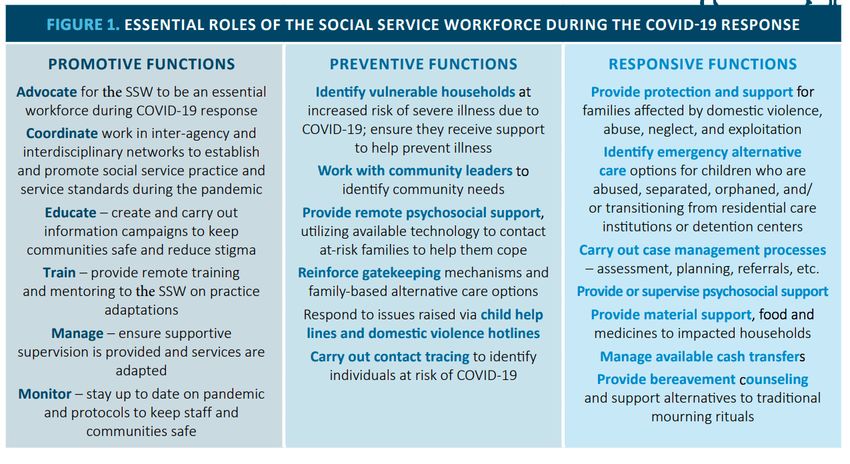
Table of Contents and List of Tables and Figures
Table of Contents and List of Tables and Figures ...................................................................................................... 2
Contributors ............................................................................................................................................................................... 6
    Dr. Lise Milne ........................................................................................................................................................................ 6
    Dr. Nathalie Reid.................................................................................................................................................................. 6
    Susana Prado ......................................................................................................................................................................... 6
    Chantelle Priel ...................................................................................................................................................................... 6
    Rayna Fisher .......................................................................................................................................................................... 6
Executive Summary ................................................................................................................................................................ 7
INTRODUCTION ........................................................................................................................................................................ 8
    Background/Context ......................................................................................................................................................... 8
    Objectives ............................................................................................................................................................................ 11
Methods ..................................................................................................................................................................................... 12
    Guiding Framework: The Socio-Ecological Model ............................................................................................. 12
    Search Strategy ................................................................................................................................................................. 13
         Stakeholders’ Perceptions of Emergent/Evolving Concerns in the Midst of COVID-19............... 14
    Vetting and Translation Process................................................................................................................................ 17
Organization of the Knowledge Synthesis.................................................................................................................. 17
Findings ..................................................................................................................................................................................... 18
    What is a Pandemic? ....................................................................................................................................................... 18
    What is COVID-19? .......................................................................................................................................................... 18
    The Canadian Prairies in Relation to COVID-19 ................................................................................................. 19
    Alberta................................................................................................................................................................................... 20
         The State of Child Welfare in Alberta ................................................................................................................. 20
         Factors Impacting Child Welfare in Alberta due to COVID-19 ................................................................ 20
    Saskatchewan .................................................................................................................................................................... 21
         The State of Child Welfare in Saskatchewan ................................................................................................... 21
         Factors Impacting Child Welfare in Saskatchewan due to COVID-19 .................................................. 22
    Manitoba .............................................................................................................................................................................. 22
         The State of Child Welfare in Manitoba ............................................................................................................. 22

2
Factors Impacting Child Welfare in Manitoba due to COVID-19 ............................................................ 23
Emergent Themes: COVID-19 and Child Welfare ................................................................................................... 24
    Theme 1: Mental Health and Substance Use during COVID-19.................................................................... 24
       Understanding Children and Youth’s Pandemic Grief ................................................................................. 24
       Mental Health at a Glance: Since the Outbreak of COVID-19 ................................................................... 25
       Child and Youth Mental Health.............................................................................................................................. 27
           General Strategies for Supporting Child and Youth Mental Health - What Kids are Saying: . 27
           COVID-19-Specific Strategies for Youth in Care - What Youth in Care are Saying ..................... 28
           COVID-19 Specific Strategies for Sustaining Child and Youth Mental Health - What
           Professionals are Saying ...................................................................................................................................... 28
       Parent/Caregiver Mental Health .......................................................................................................................... 29
       Potential Mental and Physical Health Challenges Faced by Service Providers ................................ 30
       Substance Use ............................................................................................................................................................... 33
       Child and Youth Substance Use and COVID-19 .............................................................................................. 34
           Supporting Youth Around Substance Use .................................................................................................... 34
           Substances Used by Youth .................................................................................................................................. 34
           Accessing Addiction Services ............................................................................................................................ 35
           What to Look for: Signs and Symptoms of Substance Abuse in Youth ............................................ 35
       Parents/Caregivers and Substance Use/Misuse during COVID-19 ....................................................... 36
       Conclusion ...................................................................................................................................................................... 36
    Theme 2: Caring for Children and Youth In and Out of Care During COVID-19 ................................... 37
       Increased Risks for Children - General .............................................................................................................. 37
       Potential Impact on Maltreatment and Maltreatment Reporting .......................................................... 38
       Children in Out-of-Home Care ............................................................................................................................... 39
           Increased Risks for Children in Care .............................................................................................................. 39
           Risks Resulting in Interim Care ........................................................................................................................ 40
       Protecting Youth Transitioning Out of Care .................................................................................................... 41
           Moratorium on Youth Transitioning out of Care in Canada ................................................................ 41
           How Service Providers Can Support Youth Transitioning Out of Care During and After the
           Pandemic .................................................................................................................................................................... 42
       Protecting Youth in Residential Settings........................................................................................................... 43

3
Protecting Youth Living in Communal Housing Settings and Pandemic Risks............................ 43
       Gender- and Sex-Based Risks during COVID-19 ............................................................................................ 45
           Child Sexual Assault, Intimate Partner, and other Violence Risks for Females ........................... 45
           International Recommendations regarding Gender-Based Violence .............................................. 45
    Schools and Education - Risks and Responses .................................................................................................... 46
           Learning Gaps and Learning Loss as Indicative of Heightened Inequity ....................................... 47
       Psychological First Aid (PFA) for Schools, Teachers, and Students: During the World-Wide
       Pandemic......................................................................................................................................................................... 48
           What is PFA? ............................................................................................................................................................. 48
           When PFA Might be Useful ................................................................................................................................. 49
           Models of PFA........................................................................................................................................................... 49
           Helpful Tips for Providing PFA ......................................................................................................................... 51
           PFA for Teachers, School Staff, any Adult Responsible for Children................................................ 51
       Protecting Children: From Response to Recovery ........................................................................................ 52
       Conclusion ...................................................................................................................................................................... 53
    Theme 3: Communication in the Time of COVID-19 ......................................................................................... 54
       Communicating with Children about COVID-19 ............................................................................................ 54
           Accessible, Child-Friendly Resources ............................................................................................................ 54
           Maintaining an Open Dialogue: *Concrete* Suggestions on What to Say ...................................... 54
       Strategies for Communicating with Children and Youth during COVID-19....................................... 57
       Strategies for Government regarding Children and Youth involved with Child Welfare during
       COVID-19 ........................................................................................................................................................................ 58
           Guidance for Governments................................................................................................................................. 58
       Strategies for Service Providers for Children and Youth in Child Welfare during COVID-19.... 58
       Strategies for Service Providers in Communicating with Children ....................................................... 60
       Digital Communication ............................................................................................................................................. 61
           Alberta ......................................................................................................................................................................... 61
           Saskatchewan........................................................................................................................................................... 62
           Manitoba .................................................................................................................................................................... 62
           The Most Common Issues: Tele-Communications with Youth in Child Welfare ........................ 63
       Tele-mental Health ..................................................................................................................................................... 64

4
Tips for Authentic Counselling Through Tele-health ............................................................................. 65
             Impacts on Service Providers who Offer Digital Support/Counselling .......................................... 66
Conclusion ................................................................................................................................................................................ 67
    Limitations and Areas for Further Investigation................................................................................................ 67
References ................................................................................................................................................................................ 68
Appendix 1 - Links to Indigenous Resources ............................................................................................................ 78
Appendix 2 ............................................................................................................................................................................... 81
    Communication with Stakeholders .......................................................................................................................... 81

5
Contributors Dr. Lise Milne Dr. Lise Milne is an Assistant Professor at the University of Regina in the Faculty of Social Work (Saskatoon Campus) and Faculty Associate at the Social Policy Research Centre and the McGill Centre for Research on Children and Families. She has 15 years of experience in child welfare in both Manitoba and Quebec as a child welfare worker, supervisor and trainer. Her research focuses on trauma-informed practices in child-serving organizations, the neurobiological impacts of trauma, and practice and policy responses to intimate partner violence. Dr. Nathalie Reid Dr. Nathalie Reid is the Director of the Child Trauma Research Centre at the University of Regina. Nathalie’s career as a Secondary teacher, in four provinces across Canada, often alongside at-risk youth, laid the foundation for her research program, and for her desire to think with and inquire into the complexities of children’s experiences as well the experiences of those entrusted to care for children. Susana Prado Susana Prado is the Program Manager of the Child Trauma Research Centre at the University of Regina. Susana focused her Masters of Social Work research on the developmental trauma experiences of youth in residential settings in Saskatchewan. Her career experience includes social work with families and youth at-risk in Chile. In Regina, she has worked within the non-profit sector, including family support and reunification, and work with newcomers, and women. Chantelle Priel Chantelle Priel is a fourth year Bachelor of Social Work student at the University of Regina. She is employed as a research assistant with the Child Trauma Research Centre at the University of Regina. Chantelle completed her first practicum at Sexual Assault Services of Saskatchewan and plans to finish off her degree in December 2020 with her final practicum at the Regina Sexual Assault Centre. Rayna Fisher Rayna Fisher is a Master of Social Work student through the University of Regina and has been a front-line child protection worker in Saskatoon, Saskatchewan for the past three years. Rayna has worked as a Teaching Assistant in the University of Regina’s undergraduate social work program and is currently developing as a research assistant. 6
Executive Summary
Background: The current COVID-19 global pandemic has arguably led to some of the most severe
impacts in the area of child welfare. A rapid proliferation of pandemic-related research and
resources has emerged, but organizations responsible for meeting the urgent needs of vulnerable
children and families typically have little time to find, evaluate, and translate knowledge to inform
services. Children involved with child welfare are typically experiencing or have histories of abuse
and neglect, which are linked to a multitude of behavioural and mental health problems. Their
caregivers have themselves often experienced impacts of abuse and other marginalizing
conditions, such as poverty, substance abuse, and mental health issues. Exacerbating the situation,
conditions brought on by COVID-19 have increased the possibility of separation, isolation, and
reduced social support, education, mental, and physical health services. Thus, children and families
are at heightened risk for trauma reactivation and deteriorating family conditions. Child-serving
organizations and staff also face many challenges ensuring the safety and well-being of families
and continuity of care during COVID-19. They have been forced to rapidly change practices to
respond to increasing demands and the growing complexity of cases, feeling both the professional
and personal strains of the work.
The Canadian Prairies experience challenges within the child welfare system such as
comparatively high rates of children in out-of-home care – with an extraordinarily high
overrepresentation of Indigenous children, interpersonal violence, mental health and substance
abuse. Moreover, the vast rural Prairie geographies contribute to a lack of services and isolation,
especially during this period of limited mobility and resource reductions.
Objectives: In close consultation with our existing and new partners, the main objective of this
Knowledge Synthesis was to undergo a rapid, month-long knowledge scan process of finding,
vetting, and synthesizing extant literature and resources regarding COVID-19 as it relates to child
welfare across the Canadian Prairies.
Methods: Guided by a Socio-Ecological framework, we used a three-pronged search strategy:
Stakeholder outreach, database searches for peer-reviewed publications, and online searches for
relevant reports, webinars, websites, and resources. The search was an iterative process, with
accumulated literature and resources pointing to other sources of knowledge. The knowledge was
then reviewed, vetted, and synthesized, reflecting emergent themes.
Findings: Our search revealed three major themes: (1) Mental Health and Substance Use during
COVID-19, related to youth and caregivers; (2) Caring for Children and Youth In and Out of Care
during COVID-19, related to risk factors and protective measures on multiple socio-ecological
levels, and (3) Communication during COVID-19, focusing on communication strategies with
children, youth, and professionals about COVID-19, including digital communication strategies that
have come to the forefront of child welfare practice during this period. This Knowledge Synthesis
report is the first in a series of bi-monthly updated reports for 2020. The Syntheses will inform our
knowledge mobilization strategy, that includes a Digital Connections Hub website at the University
of Regina Child Trauma Research Centre. The Hub will provide a single point of access to a variety
of accessible, consumable knowledge translation products to support organizations serving
vulnerable children and families in a child welfare context across the Prairies.
7
INTRODUCTION
Historically, pandemics have led to a wide range of health, social, and economic consequences,
with the greatest impacts experienced by the most vulnerable and marginalized populations. The
current COVID-19 global pandemic is no exception. Across Canada, conditions and health
restrictions put in place to protect humans from the spread of COVID-19 have drastically altered
the experiences and daily routines of individuals, severely limiting their ability to access resources,
services, and support. To date, the vast arena of child welfare has arguably been one of the hardest
hit by the pandemic.

This Knowledge Synthesis report is the outcome of a recent, rapid knowledge scan conducted on
the impact of COVID-19 on child welfare in the Canadian Prairies. The project is supported through
funding provided by the Canadian Institutes of Health Research and in-kind support by the
University of Regina.

Background/Context
The shifting circumstances surrounding COVID-19 have led to a rapid proliferation of research and
resources. However, organizations responsible for meeting the urgent needs of children and
families within the child welfare system typically have little time to find, evaluate, and translate
knowledge to inform services for vulnerable children and families. These children are currently
experiencing or have histories of abuse and neglect, which are linked to a multitude of behavioural
and mental health problems. Often, caregivers have themselves experienced impacts of childhood
maltreatment and other marginalizing conditions, such as poverty, substance abuse, and mental
health problems. Exacerbating the situation, the conditions brought on by COVID-19 have
increased the possibility of separation, isolation, and reduced social support, education, mental,
and physical health services. Thus, children and families are at heightened risk for trauma
reactivation and deteriorating family conditions.

Child-serving organizations and their staff also face many challenges in ensuring the safety and
well-being of families and assuring continuity of care during COVID-19. They have been forced to
rapidly change practices to respond to increasing demands and the growing complexity of cases
(O’Brien et al., 2007). The role of these individuals in supporting families during this health crisis
is critical. Indeed, in April 2020 the President of the Canadian Association of Social Workers
submitted a direct appeal to the Treasury Board of Canada, requesting that Registered Social
Workers (RSW) be recognized permanently as mental health practitioners within the Public
Service Health Care Plan. The letter of appeal argues that RSWs - particularly in the midst of
COVID-19 - are “working across all sectors to safely address immediate public health concerns and
protection….[and] addressing the compounding mental, psychological and emotional

8
consequences that our families, communities, and our nation are experiencing at this time of
uncertainty.” (Christianson-Wood, 2020, para. 3).

The following chart, published by the Alliance for Child Protection and Humanitarian Action
2020d), points to the essential roles that the social service workforce holds in the midst of COVID-
19. These demands are fluid as the knowledge of the virus and its social repercussions continue to
shift.

Though it is difficult at this stage to fully assess the full impacts of COVID-19 on the functioning of
various systems impacting child welfare, Kelly and Hansel (2020) reported findings from
consultations with stakeholders in the United States including youth, parents, foster and adoptive
parents, caseworkers, justice system staff and others. Some issues identified included:

    ● Difficulty finding childcare due to school closures, potentially resulting in an increase in
      child neglect reports for unsupervised/ unattended children, or replacement of children
      where foster carers have to work;
    ● compromised nutrition, in light of the absence of school breakfast and lunch programs for
      low-income families;
    ● reduced in-home services to support families within child welfare; lack of treatment for
      substance use disorders; reduced or cancelled visitation for children in care; delays in child
      welfare court proceedings; potential outbreaks in residential settings.

9
To provide a Canadian perspective, in March 2020 the University of Toronto Policy Bench: Fraser
Mustard Institute for Human Development produced a Pandemics and Child Welfare Literature
Scan (Sistovaris et al., 2020). The rapid scan took place over a period of three days and highlighted
the following:
● Children in care are at a heightened risk of harm from not only the current COVID-19
pandemic, but in many cases, from government policies being implemented to contain the
pandemic.
● Pandemics can significantly limit the capacity of public agencies to operate and provide
services and supports to populations during a period of heightened demand and
uncertainty.
● Pandemics can significantly limit the capacity of public agencies to operate and provide
services and supports to populations during a period of heightened demand and
uncertainty.
● System resources and capacity are under considerable pressure as agencies and child
welfare workers struggle to provide the necessary services and supports.
● Child welfare systems and agencies require policy makers to formulate, articulate and
implement child protection strategies that: allow for and encourage increased coordination
across all sectors that involve children in care; build on the strengths and positive coping
mechanisms of communities, families, caregivers and children; address the challenges of
highly vulnerable populations such as youth in residential care; and provide for the
required resources and supports to function not only during a pandemic but also in pre-and
post-pandemic environments.
● It is especially important for child welfare agencies responsible for vulnerable populations
to ensure continuity of care during this period.
This Knowledge Synthesis builds off the impressive work of the Pandemics and Child Welfare
Literature Scan. Our aim was to provide updated information regarding child welfare as it relates
specifically to COVID-19, as well as to focus our attention primarily on the Canadian Prairie
provinces of Manitoba, Saskatchewan and Alberta. The Prairies are a vibrant and important part of
the Canadian landscape. Though they share many of the same challenges as other provinces in
regards to ensuring the well-being of children, they experience some unique challenges. Compared
to many provinces, the Prairies – in particular Manitoba and Saskatchewan - experience high rates
of children in out-of-home care, domestic/interpersonal violence, mental health and substance
abuse, as well as extraordinarily high overrepresentation of Indigenous children in care and in
virtually all social service sectors. In addition, the vast rural Prairie geographies may contribute to
a lack of available services and isolation, especially during this period of limited mobility and
resource reductions.
10Objectives In close consultation with our existing and new partners, the main objective of this Knowledge Synthesis was to undergo a rapid, month-long knowledge scan process of finding, vetting, and synthesizing extant literature and resources regarding COVID-19 as it relates to child welfare across the Canadian Prairies. In addition to focusing specifically on the Canadian Prairie context, we also noted gender- and sex- specific information where relevant, given significant differences in the way many issues are experienced. Though our aim is to include knowledge specific to Indigenous individuals and communities, given the rapid nature of this Knowledge Synthesis and our intention to walk in good ways (Young, 2003) with Indigenous communities, we are working towards a process of consulting with Elders, Knowledge Keepers, and Indigenous organizations to ensure that any information included is relevant, supportive, and reflective of Indigenous values and ways of being. Thus, future iterations of this report will include more Indigenous-focused content. Finally, to reflect the sizable, yet oft-underserved population of French-speaking individuals in the Prairies, we will be seeking French language content. We will also translate a significant portion of our English content as we continue our knowledge scan for future iterations of this Knowledge Synthesis, as well as for other knowledge mobilization products. This Knowledge Synthesis is a first step towards ensuring that relevant information and resources are provided in an accessible manner to our partners (knowledge users), which include community, government and other child-serving organizations from across the Canadian Prairies. To further mobilize the knowledge located for this Knowledge Synthesis, the report will be sent to our partners, updated bi-monthly throughout 2020, and accessible via a Digital Connections Hub website hosted by the University of Regina Child Trauma Research Centre (CTRC) set to go live in August 2020. Knowledge products translated from our scan will also be available, including updatable information bulletins, infographics, toolkits, as well as links to webinars, resources, and published literature. Our overarching objective is to provide relevant, accurate, and timely information on policies and practices to better meet the mental, physical, and social health needs of children, families, caregivers, and workers during this critical period. 11
Methods
To ensure our Knowledge Synthesis met the requirements of a rapid response to the potential
impacts of COVID-19 on child welfare organizations across the Prairies, the scan, translation, and
synthesis was conducted over the period of May 23, 2020-June 19, 2020.

Guiding Framework: The Socio-Ecological Model
We drew on a socio-ecological framework to conduct the literature scan as well as to organize the
Knowledge Synthesis. According to the Centers for Disease Control (2020) in order to effectively
address, prevent, or mitigate risk factors and build upon protective factors, we should consider
concurrently the multiple levels of the individual, relationships, community, and society, which are
nested within each other (see Figure 1). Using this framework enabled us to engage with research
and resources that reflect these multiple levels. It also enabled us to honour the complexity of child
welfare and related issues, particularly in the context of a pandemic. Thus, attention was directed
to the myriad potential impacts of COVID-19 on the social, emotional, behavioural, educational and
physical health of children, as well as their families and workers. The framework permits the
identification and clustering of intervention strategies based on the ecological level in which they
are found (World Health Organization, 2020).

Figure 1. The Socio-Ecological Model: A Framework for Prevention (CDC, 2020)

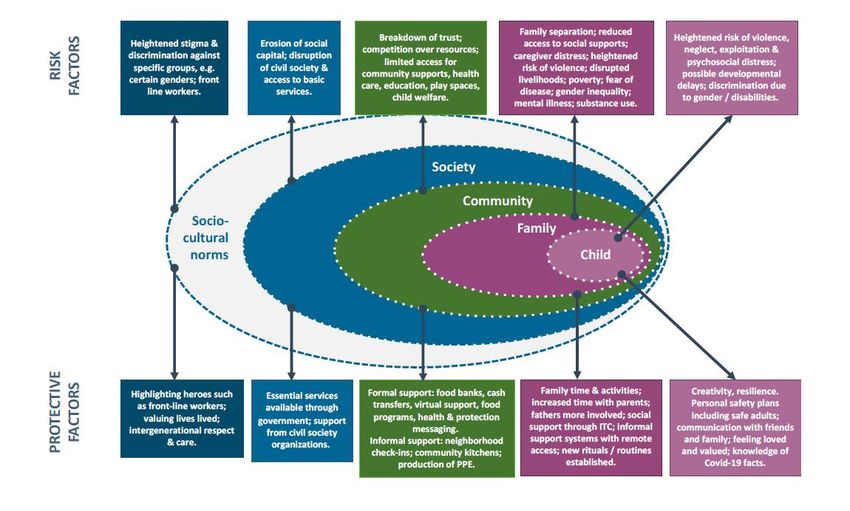
The socio-ecological model is further elaborated for the potential impacts of COVID-19 in a child
welfare context by the Alliance for Child Protection and Humanitarian Action (2020c). According
to the Alliance, COVID-19 can impact the child, family, and society, along with socio-cultural norms
(see Figure 2). These impacts are further elaborated within this Knowledge Synthesis.

12
Figure 2. Socio-ecological impacts of COVID-19. (The Alliance for Child Protection in Humanitarian,
2020c).

Search Strategy
We used a three-pronged search strategy to locate the knowledge included within this synthesis:
(1) Stakeholder Outreach; (2) Database Searches (searches for traditional, peer-reviewed
publications); and (3) Online/Website Searches for knowledge in the form of relevant reports,
webinars, websites, and resources. The latter stage revealed significantly more relevant
information, given the relative recency of the declared pandemic. This search was an iterative
process, with accumulated knowledge and resources pointing to other sources of knowledge. Each
of the stages is described in detail below.

13
Stage 1 – Stakeholder Outreach: First, to inform our overall search, we reached out to our
existing, new and potential stakeholder partners to capture the immediate, short- and long-term
needs for knowledge, as well as preferred dissemination methods. The project team identified
child welfare organizations in the government sector, as well as service provider organizations in
the non-profit sector that work with children, youth, families, and caregivers who are involved
with the child welfare system in the Prairie provinces. Some were based on previously developed
relationships. Other stakeholders were identified via online searches of child welfare-related organizations
across the provinces and contacted via email or telephone.

An email campaign via MailChimp platform involved 73 potential stakeholders. Recipients were
provided information on the project and asked the following two questions: (1) What are you
seeing in terms of urgent needs and populations accessing your services during COVID-19? (2)
What research resources do you need to help support your work? (see Appendix 2). Two
subsequent email reminders were sent, the most recent as a “Last Chance” reminder on June 12,
2020. We received responses from 11 organizations that aligned very closely with the themes that
had emerged from our concurrent database and other online searches, as well as additional
themes to further inform our search.

Stakeholders’ Perceptions of Emergent/Evolving Concerns in the Midst of
COVID-19
     (1) Access to Mental Health Support - Across sectors there is a call for attention to the mental
         health impacts of COVID-19, both in the short- and long-terms. Systems are struggling to
         recognize and mediate the difficulties in accessing mental health services. Here, there is a
         call for training in tele-mental health (see below).
     (2) Varying Financial Support - The fluctuation and unpredictability of funding support has
         been identified as a tension during this period of uncertainty, which prevents the planning
         and execution of some initiatives. Waiting lists in some sectors - which were already quite
         long - have become even longer. Mental health agencies supporting children and families
         are worried about being able to adequately meet their needs.
     (3) Best Practices Identification - As this situation is unprecedented, there are less evidence-
         based, vetted, and tested best practices to draw upon for service providers. While they
         recognize some of the gaps in knowledge, they lack the time to sort through the rapidly
         emerging resources.
     (4) Translation of Resources for Specific Audiences/ Users - On a related note, while a
         plethora of research and resources are emerging in the midst of the pandemic, service
         providers are finding it challenging to locate those specific to their populations of need (e.g.,
         dealing with youth in residential care settings who are struggling with social distancing;
         individuals in rural/remote communities).

14
(5) Maltreatment Investigations - As of June in Regina, the number of child welfare calls is
reported to be slightly down, which may be indicative of less surveillance and fewer
traditional reporting opportunities (e.g., schools, daycares).
(6) Moving into the Summer - Service providers are concerned about a reduction in service
personnel due to staff holidays, as well as funding restrictions and delays that may inhibit
service provision. They are also struggling to find ways to develop, assess, and implement
necessary programming. They are concerned about the lack of visibility of children and
youth over the summer, along with an increased lack of supervision, increased access to
and use of substances, and the possibility of heightened isolation.
(7) School Reopening and the Impacts of Learning Gaps and Loss - Our stakeholders are
concerned about the potential for reduced learning, in light of research confirming a direct
correlation between school closures and learning loss, particularly in relation to families
with low socio-economic status, or families struggling with substance abuse, violence, and a
host of other intersectional variables. This will be a particular challenge for children in care.
(8) Safe Use of Virtual Technologies for Service Provision, Virtual Visits, Services, and
Tele-forensic Interviewing - As the months of isolation continue, the turn toward virtual
technologies has been foregrounded for child welfare stakeholders as a possible way to
reduce isolation. However, the use of virtual technologies requires access to technology,
reliable internet and video chat capabilities, as well as engagement and focus. During this
period, our partners require faster and more comprehensive ways to provide services to
children living in rural and remote areas in the Prairies. Additionally, the impact(s) of the
cessation of training service personnel, particularly the police service for tele-forensic
interviewing, requires attention. There are increased calls for virtual support groups and
for training of service providers, foster parents, and group home staff in tele-mental health,
and ways to stay engaged in a digital space.
Stage 2 – Database Search: We searched for published, peer-reviewed literature from various
journal search engines relevant to our topic, including but not limited to ProQuest Social Sciences,
PsycInfo, Social Services Abstracts, EBSCO, JSTOR, the University of Regina library, as well as
Google Scholar. We also searched abstracts of highly relevant journals, including Child Abuse and
Neglect, Children and Youth Services Review, International Journal of Mental Health and Addictions,
and International Journal of Child and Adolescent Resilience).
To remain focused on COVID-19-specific publications, and in order to locate more recent literature
than that found in the March 2020 Pandemics and Child Welfare Literature Scan (Sistovaris et al.,
2020), search filters were then applied to include journal articles published only in 2020.
Unsurprisingly – given COVID-19 was not declared a global pandemic until March 11, 2020 - we
located very little relevant published research using this strategy.
Search terms included “child welfare” or “youth in care” and “Canada*” or “Manitoba” or “Alberta”
or “Saskatchewan” and “COVID-19” or “Coronavirus” or “pandemic” or “epidemic” or “SARS”. As
15our themes emerged, we used different combinations of terms and others to search for specific
information. We further refined our search by adding terms such as “child abuse” or “child
protection”, “substance abuse”, “mental health”, “tele-mental health”, “tele-forensic interviewing”,
“virtual communication”, “service providers”, “support”,” and “Prairies” or “Saskatchewan” or
“Manitoba” or “Alberta” or “Canada”.
Stage 3 – Online websites/resources: We searched for other knowledge and resources through
the following research centres and networks, all well-known and respected in the field of child
welfare:
● Child Welfare League of Canada - COVID-19, Resource Page (Canadian perspective): How
parents and caregivers can talk to children about COVID, resources to keep children busy
with play and education, provincial navigation system (quick links to support and crisis
helpline(s) and government websites for each province), physical and mental health for
children.
● International Society for the Prevention of Child Abuse and Neglect (ISPCAN) - ISPCAN’s
Recommendations on COVID-19 (international perspective): Risk and protective factors of
children in care in regard to COVID-19, gender-based violence (sexual
exploitation/trafficking of girls), abuse and maltreatment due to increased parental stress,
social isolation, decline in mental health, and tips for keeping children in care connected.
● Canadian Association for Social Workers - COVID-19 Resources (Canadian social work
perspective): Guidelines for health (physical and mental), support resources (counselling),
educational links for continuing education (links to keeping your practice skills sharp).
● National Child Traumatic Stress Network - COVID-19 Resources (American perspective):
Supporting the mental health of children who have been affected by trauma, tips for
supporting youth and families in the time of crisis, parent/ caregiver information for
supporting children, trauma grief related to COVID-19.
● Jack.org - COVID-19 Youth Mental Health Resource Hub (Canadian perspective): Youth and
mental health, self-care guides, reducing stress/anxiety tips, staying socially connected.
● Better Care Network - Alternative Care During COVID-19 (American perspective): Toolkits
in situations where children are separated from family during COVID, health procedures
(where abuse is a concern, when foster carers are ill, if child is
asymptomatic/symptomatic), and case management toolkit guidelines for service
providers (virtual monitoring, staff requirements).
● Child Trends – COVID-19 (American perspective): Resources for supporting children’s
emotional well-being during COVID-19, general information and resources for caregivers,
communities, childcare providers, educators, and children for supporting and explaining
COVID-19.
16● The Alliance for Child Protection and Humanitarian Action (International perspective):
Technical notes for supporting children, youth, and social service providers in the midst of
COVID-19.
Vetting and Translation Process
On an ongoing basis and subsequent to the general scan, we vetted the information for
applicability to this Knowledge Synthesis and the needs of our stakeholders. Themes and sub-
themes emerged that provide the sections of this report. Material was summarized, synthesized
and translated to best reflect the content. An assessment was also made as to how best to mobilize
these resources for stakeholder accessibility outside of this Knowledge Synthesis.
Organization of the Knowledge Synthesis
This Knowledge Synthesis begins with a general overview of Pandemics, and in particular COVID-
19. We then describe the context of child welfare and potential impacts of COVID-19 on the Prairie
provinces (Alberta, Saskatchewan, Manitoba). The remainder of the synthesis is separated into the
three (3) emergent themes and research/resource clusters that reflected the extant literature as
well as needs identified by stakeholders. These themes include (1) Mental Health and Substance
Use During COVID-19; (2) Caring for Children and Youth In and Out of Care During COVID-19; and,
(3) Communication During COVID-19. We fully anticipate that other themes will surface as we
continue our knowledge scan regarding the impact of COVID-19 on those involved with child
welfare.
17Findings
What is a Pandemic?
According to the Association for Professionals in Infection Control and Epidemiology (n.d.),
pandemics are a global disease outbreak that differs from an outbreak or epidemic in that it:
● affects a wider geographical area, often globally.
● infects more people than an epidemic.
● is often caused by a new virus or virus strain that has not circulated among people for long,
and for which humans usually have little to no immunity against it. The virus is transmitted
quickly from person-to-person worldwide.
● causes a higher rate of deaths than epidemics.
● often creates social disruption, economic loss, and general hardship.
What is COVID-19?
COVID-19 was first detected as a pneumonia of unknown cause in Wuhan, China and reported to
the World Health Organization (WHO) on December 31, 2019. The outbreak was declared a Public
Health Emergency of International Concern on January 30, 2020, named as a novel Coronavirus -
COVID-19 - on February 11, 2020, and declared a global pandemic on March 11, 2020
(Government of Canada, 2020).
As of June 19, 2020, there were 8,525,042 confirmed cases of COVID-19 reported worldwide
across 216 countries, with 456,973 deaths attributable to COVID-19 (WHO, 2020b). In Canada,
there were 100,629 confirmed cases and 8,346 deaths. In the Canadian Prairies, there were 8,652
confirmed cases and 172 deaths (Alberta-7,625 cases/152 deaths; Saskatchewan-716 cases/13
deaths; Manitoba-311 cases/7 deaths) (Government of Canada, 2020).
Though COVID-19 is a risk to all, Canadians with specific health circumstances are at an increased
risk of more severe outcomes, including individuals who are over age 65, have compromised
immune systems, and/or who have underlying medical conditions. However, social and economic
circumstances may also increase vulnerability, including those who experience:
● economic barriers
● difficulty accessing transportation
● difficulty accessing medical care or health advice
● unstable employment or inflexible working conditions
● insecure, inadequate, or nonexistent housing conditions
● ongoing specialized medical care or needs specific medical supplies
● social or geographic isolation, like in remote and isolated communities
18● difficulty reading, speaking, understanding or communicating
● ongoing supervision needs or support for maintaining independence
● difficulty doing preventive activities, like frequent hand washing and covering coughs and
sneezes (Government of Canada, 2020)
Thus, there is a strong likelihood that many individuals involved with the child welfare system,
who face many of the above-mentioned barriers and challenges, are at risk of contraction.
The Canadian Prairies in Relation to COVID-19
Research and practice have confirmed that involvement in child welfare can have myriad negative
effects on children and youth. Traumatic childhood events, including abuse, neglect and family
dysfunction, are among the most influential predictive and contributing factors for mental health
problems (Widom, 2000). In the Prairie Provinces, rates of families involved in the child welfare
system and children in care are high, with a substantial over-representation of Indigenous children
in care. The literature also overwhelmingly supports that children taken into care experience loss
and trauma from being separated from their family, friends, and community members. Studies in
Manitoba and elsewhere have found that children in care have poorer educational outcomes, more
frequent contact with the justice system, experience markedly higher hospitalization rates, and are
at greater risk of attempting or committing suicide than those not placed in care. A Manitoba-
based study also shows that mothers of children who are taken into care also see a significant
deterioration in their health and social situation after apprehension, such as increased rates of
depression, anxiety and substance use (Michlefield et al. 2018).
All of these factors are compounded by the issue of isolation and remoteness. The lack of
community services is most acutely felt in rural and northern communities where there are fewer
specialists, service providers and programs. Child welfare practice in remote areas include
potentially large travel distances to appointments that can aggravate service delivery, absorb time
and funding, and in poor weather conditions threaten social worker’s safety (Child Welfare
Information Gateway (2018). Services to Indigenous and First Nation families and children across
Canada are especially impacted by the limited services, programs and resources in rural and
remote communities.
Our rapid response scan reflects the fluid nature of the state of knowledge on COVID-19. Though
the vast majority of knowledge accrued was not specific to the Prairies (nor for that matter to
other geographic locations), we were able to locate some current information reported
provincially through reports, websites, and media reports. However, many of the issues presented
more broadly in relation to COVID-19 and child welfare are applicable to the Prairie context. We
begin by describing the context for each Alberta, Saskatchewan and Manitoba. .
19Alberta The State of Child Welfare in Alberta Child Welfare Organization: The Ministry of Human Services oversees the delivery of child intervention services in Alberta. Eight regional Child and Family Service Authorities, one of which is a Métis Authority, are delegated to provide services. Seventeen Delegated First Nations Authorities also provide services through agreements between the First Nations, the Government of Canada and the Government of Alberta (Canadian Child Welfare Research Portal, 2020). Rates of Child Welfare Involvement and Children in Care: In March 2020, there were 11,090 children receiving Child Intervention services, 62% of whom were Indigenous. Of those, 8,173 children and youth received services in care, 69% of whom were Indigenous. Just under 3,000 children and youth received services at home (not in care) (note that this is a point-in-time statistic which may vary across months) (Government of Alberta, 2020). As of 2019, 45% of Indigenous children in foster/kinship care are placed with Indigenous families (Alberta Children’s Services, 2019). Factors Impacting Child Welfare in Alberta due to COVID-19 Guidelines for Child and Family Service Providers: Since the start of the pandemic, Children’s Services and Child Intervention offices have been closed to the public. Case workers continue to work regular hours to ensure the safety and well-being of children, families, caregivers, staff and others. They have been instructed by the Children’s Services Ministry to conduct family meetings by phone or video chat. As of March 29, the guidelines stated that in-person visits may still occur, but only in the most urgent of situations (Malone, 2020). As a preparation initiative, Alberta has been focusing their efforts on implementing strategies for caregivers and the children they care for to reduce stress factors that often lead to child and domestic abuse during times like these (St- Onge, 2020). Families and Caregivers: According to the Child Intervention sector, parents and other caregivers struggling with stress associated with prolonged periods of isolation, or who have concerns about their health or finances should reach out for help from natural support systems, caseworkers, or support workers. A list of resources for mental health and family violence have also been provided on the COVID-19 info for Albertans page. Parents of Children in Care: According to Children’s Services, they are in frequent contact with all caregivers, including kinship and foster caregivers and group care providers. They are responding to any concerns or reports of COVID-19 infection and will report to parents any suspected or confirmed case of COVID-19. As indicated earlier, visits may occur using video chat tools or phone calls. Access to group or residential facilities is restricted to essential visitors and staff only. 20
Child Abuse Rates: There is an expectation that incident reports of child abuse will abruptly rise
after the summer is over and children are gradually exposed to more helping adults to notice signs
of abuse (St-Onge, 2020). The following table describes average expectations for reports and
changes since COVID-19.

 Average Expectation of Reports                     Results Since COVID-19

 Reports of child abuse usually decrease in the     Edmonton’s Zebra Child Protection Centre
 summer months, and abuse of children usually       has seen a 31% decline in child abuse cases
 increases during times of economic stress (St-     from mid-March to mid-April (St-Onge,
 Onge, 2020).                                       2020).

 The average number of child internet               Alberta’s Internet Exploitation Unit received
 exploitation reports has been 110 reports per      243 reports in April, 2020, doubling their
 month for the last two years (Rabson, 2020).       monthly average (Rabson, 2020).

Saskatchewan
The State of Child Welfare in Saskatchewan
Child Welfare Organization: The Ministry of Social Services in Saskatchewan is responsible for
providing protection services for children under the age of 16 (and 18 years of age in exceptional
circumstances). There are 19 Child Protection offices across the province within 3 service areas.
There are 17 First Nations Child and Family Service Agencies across the province that provide
mandated child protection services. Services include investigation, provision of family services
(referrals to community-based services), and placement in out of home care (Canadian Child
Welfare Research Portal, 2014; Canadian Child Welfare Research Portal, 2020b).

Rates of Child Welfare Involvement and Children in Care: As of March 2020, the total number
of children and youth in care was 5,442 , about 86% of whom were Indigenous. Just under 58% of
children in care are placed with extended family (Ministry of Social Services Saskatchewan, 2019).

21
Factors Impacting Child Welfare in Saskatchewan due to COVID-19
 Youth              As of March 31, 2020, Saskatchewan has placed a moratorium on
 Transitioning      youth aging out of care. No youth will be transitioned out of their
 Out of Care        current housing situation during the pandemic (Government of
                    Saskatchewan, 2020).

 Domestic Abuse     Saskatchewan had the highest rate per capita of domestic
                    violence among all Canadian provinces as of 2018. The rate of
                    domestic abuse in Saskatchewan is expected to rise even higher
                    due to the stress and isolation brought by the pandemic (James,
                    2020).

                    If shelters become full, Saskatchewan is prepared to adapt a
                    “Cold Weather Strategy” and pay for emergency hotel stay or
                    supply a vacant housing unit (Government of Saskatchewan,
                    2020).

 Guidelines for     Frontline child protection workers will have access to Personal
 Service Delivery   Protective Equipment.

                    Child and family services and supports should be provided via
                    alternative methods (e.g. video chats and phone calls) whenever
                    possible.

                    If home visits are essential, staff must ask a provided series of
                    screening questions before entering the home to determine
                    potential risk (Government of Saskatchewan, 2020).

Manitoba
The State of Child Welfare in Manitoba
Child Welfare Organization: The child welfare system in Manitoba is made up of four authorities
(First Nations Authority of Northern Manitoba, First Nations Authority of Southern Manitoba,
Metis Authority and General Authority) that oversee services, disperse funds and ensure that
culturally appropriate services are delivered by their respective agencies across the province
(Canadian Child Welfare Research Portal, 2020c).

22
You can also read


