2020 Quality in Action in Irish Higher Education - Collection of Case Studies from Higher Education Institutions - QQI
←
→
Page content transcription
If your browser does not render page correctly, please read the page content below
Quality in Action in
Irish Higher Education
2020
Collection of Case Studies from Higher Education Institutions
Quality in Action in Irish Higher Education 2020
                                                                  Collection of Case Studies from Higher Education Institutions

Case studies from the following institutions are included:

1. Athlone Institute of Technology (AIT)
2. Cork Institute of Technology (CIT)
3. Dublin City University (DCU)
4. Dún Laoghaire Institute of Art, Design and Technology (IADT)
5. Dundalk Institute of Technology (DkIT)
6. Galway-Mayo Institute of Technology (GMIT)
7. Institute of Technology, Carlow (IT Carlow)
8. Institute of Technology, Sligo (ITS)
9. Institute of Technology, Tralee (IT Tralee)
10. Letterkenny Institute of Technology (LYIT)
11. Limerick Institute of Technology (LIT)
12. Maynooth University (MU)
13. National University of Ireland, Galway (NUI Galway)
14. Royal College of Surgeons in Ireland (RCSI)
15. Trinity College Dublin (TCD)
16. Technological University Dublin (TU Dublin)
17. University College Cork (UCC)
18. University College Dublin (UCD)
19. University of Limerick (UL)
20. Waterford Institute of Technology (WIT)

                                                  [1]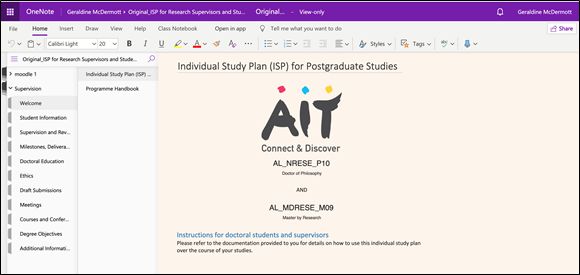
Quality in Action in Irish Higher Education 2020
Collection of Case Studies from Higher Education Institutions

    Contents
    Introduction                                                                                       4
    Case Studies                                                                                       5
    1. Process of Levelling Qualifications on the NFQ                                                  5
       CIT: Description of Validation and Professional Regulation of Taught Programmes                  5

    2. Teaching, Learning & Learner Assessment [and/or Technological Enhancements]                     7
       AIT: The Academic Writing Centre at Athlone Institute of Technology                              7
       AIT: An Enhancement Initiative: Taking a Programmatic Approach when Reviewing Assessment
       using TESTA                                                                                      8
       GMIT: First Year of Intake on BEng in Engineering (Common Entry)                                 9
       LIT: Blended and Online Learning Policy Highlights                                               9
       NUI Galway: Student Digital Pathways:                                                           10
       TU Dublin: Learning from and engaging with Assessment and Feedback (LEAF) Project               11
       UCD: Defining Educational Excellence (Curriculum Review and Enhancement Project)                13

    3. Learner Experience [Engagement, Impact, National and International]                             16
       AIT: ISSE in AIT – a Successful Collaboration to Enhance the Student Experience                 16
       AIT: International Mobility in the Department of Hospitality, Tourism and Leisure               17
       IADT: Final Year Matters – Moving on Programme for Final-Year Students                          18
       LIT: NStEP Institutional Development and Support in LIT                                         19
       LYIT: Embedding the Learner Voice in Review Panels                                              21
       MU: Annual Incoming Student Survey                                                              21
       MU: ISSE Workshop: What can the Data tell us about Student Experience?                          22
       RCSI: Library – Process Optimisation Interventions based on Themes arising in Student Surveys   22
       UCD: Student Engagement – Collaboration with the UCD Students’ Union (UCDSU)                    23
       UL: Transforming the Glucksman Library                                                          25

    4. Research – Ensuring Quality and Impact                                                          26
       AIT: Development of Individual Student Plans for L9/10 Structured Research Programmes           26
       CIT: Open Access Research                                                                       28
       IT Carlow: Research Development                                                                 29
       LYIT: New Quality Assurance for Doctoral Research                                               30

    5. Academic Integrity                                                                              32
       TU Dublin: Academic Integrity – Towards Effective Guidelines and Protocols for
       embedding Academic Integrity; Epigeum Online Resource                                           32

                                                                [2]
Quality in Action in Irish Higher Education 2020
                                                                      Collection of Case Studies from Higher Education Institutions

6. Assessing the Impact of Research                                                                                       35
  NUI Galway: Institutional Review of Research Performance (IRRP)                                                         35
  UCC: Development of an Assessment Strategy for Research                                                                 36
  UCC: Research-based Learning                                                                                            37

7. Engagement and Collaboration with Industry; Societal/Civic Engagement                                                  40
  DkIT: Industry and Academia, Stronger Together – DkIT Corporate Partnership Programme                                   40
  IADT: Inclusive Assessment of ‘Live-brief’ UG Projects                                                                  41
  IT Carlow: An Innovative Learning Partnership – UNUM and Institute of Technology Carlow                                 43
  IT Carlow: Collaborative Provision in the Public Sector – Defence Forces and IT Carlow                                  44

8. Widening Access, Progression and RPL                                                                                   46
  CIT: Extended Campus and VISKA, EVAVOL – Enhancement of Engagement Activity through the
  CIT Extended Campus                                                                                                     46
  IT Tralee: Continued Implementation of Access21@ITTralee                                                                47

9. Transnational Education                                                                                                49
  RCSI: Module Delivery in Years 1 & 2 of Soochow Programme                                                               49
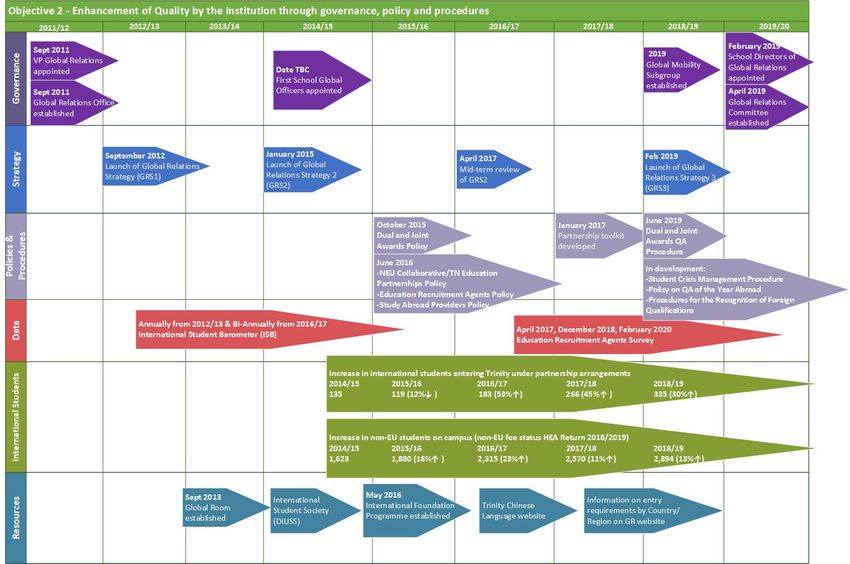
  TCD: Enhancement of Quality through Governance, Policy and Procedures – the Case of Global Relations                    49

10. Developing QA for merging or newly established institutions                                                           52
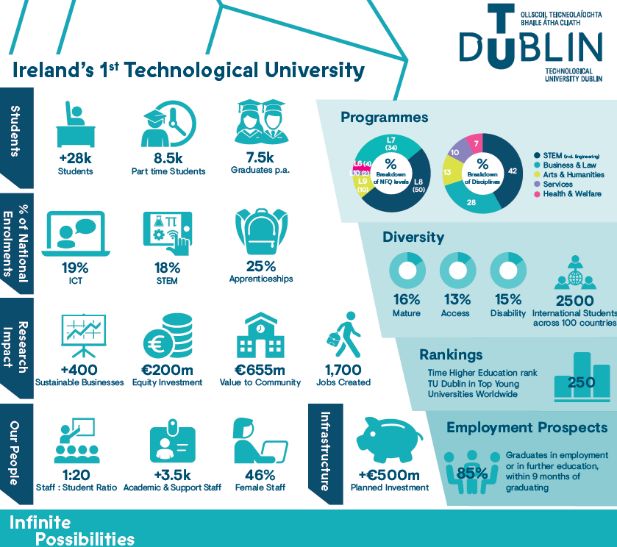
  TU Dublin: Development of a QA-QE Framework for TU Dublin                                                               52
  UCD: Proposal to establish South China-Dublin International College                                                     55

11. Additional Themes                                                                                                     58
  AIT: Data Protection Impact Assessments (DPIA)                                                                          58
  DCU: Data used to inform Annual and Periodic Programme Review                                                           59
  IADT: Changes to Deferral Processes leading to greater Quality Assurance                                                60
  IT Sligo: Teaching, Learning and Assessment – supporting the CPD of Staff                                               61
  UL: Annual Strategic Planning Process                                                                                   62
  UL: Preparing for CINNTE Review                                                                                         63
  WIT: Developing an Academic Risk Policy                                                                                 66

                                                       [3]
Quality in Action in Irish Higher Education 2020
Collection of Case Studies from Higher Education Institutions
Introduction
QQI is the Irish state agency with responsibility for the external quality assurance (QA) of tertiary
education in Ireland. As one of its functions, QQI monitors and reviews the internal QA of higher
education institutions (HEIs) and – as part of this remit – each publicly-regulated HEI in Ireland
submits to QQI an annual institutional quality report (AIQR) for the previous academic year.
In addition, this year, each institution was invited to submit up to three case studies of practice in
the following ten thematic areas:
1. Process of levelling qualifications on the NFQ (DABs)
2. Teaching, Learning & Learner Assessment [and/or technological enhancements]
3. Learner Experience [engagement, impact, national and international]
4. Research – Ensuring Quality and Impact
5. Academic Integrity
6. Assessing the impact of research
7. Engagement and Collaboration - with Industry; Societal/Civic Engagement
8. Widening access, progression and RPL
9. Transnational Education
10. Developing QA for merging or newly established institutions
Case studies were also submitted in respect of a number of additional themes and these are
included in section 11, ‘Additional Themes’.
This document contains all case studies received in response to QQI’s call that are not published
in full in QQI’s synthesis report, Quality in Irish Higher Education 2020. QQI has also included in this
collection a number of case studies extracted directly from the AIQRs.
Each case study is published in the name of the institution and has not been edited by QQI.
[4]Quality in Action in Irish Higher Education 2020
Collection of Case Studies from Higher Education Institutions
1. Process of Levelling
Qualifications in the NFQ
CIT: Description of Validation and Professional
Regulation of Taught Programmes
The validation (accreditation), monitoring and periodic review of academic programmes in Cork
Institute of Technology is carried out under CIT’s academic and quality assurance regulations as
agreed with Quality and Qualifications Ireland.
For new taught programmes, validation is predicated on successful completion of both internal and
independent external quality reviews. These include a review of the content and structure of the
proposed programme and of the staffing, resourcing levels and supports envisaged. The final decision
on validation is taken by the Governing Body of CIT on the advice of the Institute’s Academic Council.
Executive responsibility for the implementation of procedures for the validation and quality
assurance of programmes lies with the Office of the Registrar & Vice-President for Academic Affairs.
Programme validation is generally granted for five years, after which a review of the operation,
enduring quality and continuing relevance of the programme is carried out to establish its eligibility
for renewal of validation. This Programmatic Review is carried out on a school/college basis and
takes into account the operational and strategic context as well as programme-level elements.
The continuous monitoring and development of the academic programmes is a matter for the
programme boards, which are comprised of heads of academic unit, programme staff and learner
representatives. Assessment results and decisions on progression and award classification require
ratification by the Academic Council.
Feasibility Study
The CIT programme validation process requires that a Feasibility Study is produced for every
programme proposed for development. This study presents a detailed projection of the resource
requirements of the new programme, vis-à-vis the projected intake and demand trajectory over
a five-year period. The Feasibility Study is reviewed by a Working Party of the Institute Executive
Board. Except for those rare cases where a programme is of extraordinary strategic significance,
proposals require a sound business case to pass this feasibility review, otherwise they are halted by
the Institute Executive before they go into full development.
[5]Quality in Action in Irish Higher Education 2020
Collection of Case Studies from Higher Education Institutions
QA of Teaching and Learning Modules in Programmes
The design of the formal module descriptor enforces the systematic capture of fundamental
elements of the teaching and learning strategy at the module level, defining and describing the
module learning outcomes, indicative content, the assessment and re-assessment formats and
weightings, and the delivery formats, including the extent of independent learning expected.
At the programme level, CIT’s processes for initial programme validation and programmatic review
require departments to comment on the teaching and learning strategy for each programme in the
programme self-evaluation report submitted to the external expert panel. The information contained
therein, and the qualitative feedback obtained by the panels from their meetings with learners,
graduates and lecturing staff, is complemented by quantitative student performance data which
give an indication of the success of the programme teaching and learning strategy in relation to the
achievement of the learning outcomes by the different cohorts of learners.
The overall programme document provides a curriculum map showing where the intended
programme learning outcomes are achieved. Peer reviewers are asked to ascertain that each
programme outcome is supported by a sufficient number of modules to ensure it can be achieved
by the average learner, irrespective of elective choice. Furthermore, an assessment matrix for each
programme is reviewed to ensure that the time and nature of the assessment tasks is appropriate.
Reviewers will frequently address issues such as assessment clustering or over-reliance on one
form of assessment methodology.
At an earlier stage of programme (re-)development, the appropriateness of the proposed teaching and
learning strategies is investigated when academic units seek advice on their programme proposals
from employer groups or industry advisory panels. Thus, industry feedback was a significant factor in
the decision of the CIT Faculty of Business & Humanities to extend the inclusion of significant work
placement periods to the furthest extent possible across its complete portfolio of programmes.
Involvement of PRSBs
Where fields of employment are subject to professional regulation, or where successful professional
practice is predicated on professional registration, CIT programmes may also need to achieve and
maintain recognition or accreditation from professional bodies or from statutory regulators, such as
CORU or the Marine Survey Office in the Department of Transport, Tourism & Sport.
While CIT is cognisant of the primacy of its obligations as a public provider of higher education
and training under applicable HE legislation and academic quality frameworks, the Institute
also ascertains itself that the professional requirements of each field are taken into account to
the requisite degree in programme validation or review processes. Conversely, even outside of
regulatory contexts CIT endeavours to familiarise the relevant professional organisations with
its academic quality assurance procedures and criteria. In addition to inviting engagement in the
context of various industry liaison fora, the Institute may arrange for representatives of regulatory
or professional bodies to sit in on academic review panels as observers or, if appropriate, may
invite representatives of such bodies to participate in academic review as a panel member. CIT
programmes are currently recognised by ca. 30 separate professional organisations.
[6]Quality in Action in Irish Higher Education 2020
Collection of Case Studies from Higher Education Institutions
2. Teaching, Learning &
Learner Assessment
[and/or Technological
Enhancements]
AIT: The Academic Writing Centre at Athlone
Institute of Technology
The Academic Writing Centre (AWC) at Athlone Institute of Technology first opened its doors in
2015, at a time when many other third-level institutions in Ireland were developing similar services.
Over the past five years the centre has become firmly established, and is now central to fostering
academic excellence across the AIT student body. It delivers immediately tangible transformative
benefits to many students.
The AWC is run as part of the wider Student Resource Centre, but it has a distinct, stand-alone
identity – in the form of a highly visible physical presence (an office just off the main campus
canteen), and a dedicated writing tutor who handles the day-to-day running of the centre and
delivers the bulk of its engagements. This strong identity has been vital to its success: both students
and staff know where to find the AWC, and who the writing tutor is.
The writing tutor post is a part-time (20 hours per week) assistant lecturer position, and additional
tutoring is provided by other academic staff with appropriate expertise. Rather than using peer
tutors or postgraduate students for writing support (as is the case in some other institutions), at AIT
tutoring is provided entirely by lecturers, ensuring quality and consistency. Having a main appointed
writing tutor allows for new initiatives and continuous development of the writing centre project. It
also provides a single point of contact for academic staff looking to call on the AWC’s services, or
simply wanting to seek advice and discuss general ideas for improving students’ writing.
Currently, a total of 27 staff hours go into the writing centre, with 80 students on average reached
each week. The AWC provides a mixture of one-to-one appointments, one-off group workshops and
class sessions on request. It also provides an extensive and carefully curated set of digital resources
via the Moodle platform. One-to-one sessions are available to all students, bookable online on
a first-come, first-served basis via the highly effective Yellow Schedule booking system. Drop-in
slots are available whenever there are no pre-booked appointments. A marked shift in the nature of
student engagements over the last five years clearly indicates how well embedded in student life the
AWC has become: at the outset, most one-to-one appointments were referred by lecturers; today
the vast majority of students using the centre self-refer.
Class sessions – sometimes one-off, sometimes with follow-up sessions – are typically requested
by individual lecturers to address a specific writing or research skills issue, or to provide guidance
ahead of an upcoming assignment. There is considerable crossover here, with many students first
encountered during class sessions going on to become one-to-one attendees.
[7]Quality in Action in Irish Higher Education 2020
Collection of Case Studies from Higher Education Institutions
Although it is difficult quantitatively to assess the impact of the AWC on actual academic writing
standards across the institute, its value to students is plainly demonstrated in the most recent
Irish Survey of Student Engagement, where the centre’s services feature prominently amongst the
positive responses. And the flexible, highly accessible one-to-one service means that tutors are very
often able track dramatic and long-lasting benefits for individual returning students
AIT: An Enhancement Initiative: Taking a
Programmatic Approach when Reviewing
Assessment using TESTA
The Department of Sport and Health Sciences, in collaboration with the AIT Learning and Teaching
Unit, engaged in a review of assessment across all programmes in the department, using the TESTA
approach. This review involved the participation of key stakeholders including all teaching staff in
the department, students and the department administrator. The purpose of the review was two-
fold as in addition to examining assessment approaches across the department, using TESTA was
piloted by the department in order to determine suitability for replication across the institute as part
of a continuous review process.
TESTA is an evidence-led approach to understanding assessment patterns across full degree programmes
in order to improve the quality of student learning. The purpose of TESTA is to help programme teams
identify enhancements for student learning based on evidence and assessment principles.
Led by the Head of Department, the review involved 17 Sport & Health lecturers and 21 lecturers
from other discipline areas for 2018-2019. The review was facilitated by Professor Tansy Jessop, Pro
Vice Chancellor Education, University of Bristol. TESTA uses three methods to gather evidence about
the typical assessment experience of students:
• Programme audit (evidence from documents and the programme team)
• Assessment Experience Questionnaire (based on established assessment principles)
• Focus groups with students
After receiving ethical approval, the Learning and Teaching Unit and Department of Sport and Health
Sciences worked together to collect data between February and March. 131 (36%) of students from
across the four-degree programmes: BSc in Health Science & Nutrition; BSc in Sports Science &
Exercise Physiology; BSc in Athletic & Rehabilitation Therapy and BSc in Physical Activity & Health
completed the electronic Assessment Experience Questionnaire (AEQ). This was supplemented with
qualitative data from focus groups involving 13 students from the final and second years, conducted
by researchers in the Learning and Teaching Unit, with all programmes represented.
In April 2019, two days were allocated to undertaking the programme audit, which involved gathering
evidence from all programme coordinators. Due to the high response rate to the AEQ, the BSc Sport
Science and Exercise Physiology was selected as a case study for further examination, with lecturers
identifying common key areas for enhancement of all programmes. This process involved identifying
positive aspects of programmes from the staff perspective in addition to aspects which needed to be
addressed. The comprehensive case study report included a summary categorisation of all assessments
across the programme, a comparison between the assessment on the case study programme and
similar TESTA programmes. Finally, TESTA allowed for the identification features emerging from across
all programmes in relation to volume of assessment, the ratio between formative and summative
[8]Quality in Action in Irish Higher Education 2020
Collection of Case Studies from Higher Education Institutions
assessment, the variety of assessment and the role of feedback in learning. Key ideas were incorporated
into an action plan, which will form the basis of for the review of programmes in the department. The
TESTA experience, particularly the impact of the process for staff in one department in addition to
findings from the case study will be further disseminated in the institute through Academic Council, the
Academic Standards and Quality Committee and other relevant fora.
GMIT: First Year of Intake on BEng in Engineering
(Common Entry)
This was the first year of the intake on the BEng in Engineering (Common Entry for a range of
mechanical engineering programmes). The programme was introduced to aid student transition
through allowing students to choose the mechanical engineering specialisation they wish to pursue
at the end of their first year of study.
It helps students make an informed choice by introducing students to all the offered specialisms
within the first stage of their programme. This new entry route proved popular, with a third of
students choosing the undenominated programme entry route rather than a specialised degree.
Students will choose a specialist programme at the end of stage 1. The School Management will
monitor the impact this has on the distribution of students between the mechanical engineering
programmes and student retention.
LIT: Blended and Online Learning Policy Highlights
A key priority of LIT’s Strategic plan 2018-2022 is to “enhance our flexible model of education to
include new online and blended programmes that increase student enrolments, support continuous
professional development (CPD) and enable life-long learning”. This is also embedded in the Teaching
and Learning Strategy 2018-2023 as a goal to “develop a set of best practice principles to guide the
integration of TEL where appropriate”. To support this development a working group (16 members
from LIT Staff from various areas across the Institute) was set up in October 2017 to create a policy
on Blended and Online Learning. The working group met five times between October 2017 and May
2018 to discuss, review and develop the policy. The working group undertook an initial information
gathering exercise which included a review of policies and reports at a national and international
level across the sector. LIT’s Blended an Online Policy is in line with QQI Topic Specific Guidelines on
the Provision on Blended Learning Programmes.
The Blended and Online Policy 2018-2023 classifies and defines what Face-to-Face, Blended and
Online Learning is within the LIT context. Following on from this the policy looks at blended and online
learning within the organisation, programme and learner experience context. The policy provides an
overview of different learning design approaches/frameworks that can be used and recommends
that following a learning design model or framework should be done as part of the programme design
stage to ensure that judicious consideration has been applied to the structure and sequence of the
learning activities and assessment. To support the planning and design process of blended and online
modules/programmes at LIT, the policy includes templates as part of a mapping exercise to identify
any resources or technical setup that may be required for delivery or assessment. These templates
provide an opportunity to align the learning activities to the assessments strategy.
[9]Quality in Action in Irish Higher Education 2020
Collection of Case Studies from Higher Education Institutions
Programme Delivery Mode (Delivery Mode = F, B, O (F = face to face, B = blended, O =online))
Module Title:
Learning Design
Model / Framework:
Module Components Delivery Mode Details Resources Required
Induction
Lectures
Practical / Workshop
Tutorials
Work Placement
Other
The policy provides guidance on technical and operational supports that need to be considered
in the design stage and a number of support guides have also been developed to assist staff in
designing blended/online modules/programmes, as well as an overview of the different learning
design modes/frameworks that can be implemented. As part of the implementation of the policy
the templates have been integrated into the New Programme Design Guidelines to ensure that all
new online modules/programmes will have completed these templates and can be included in the
Validation programme document.
NUI Galway: Student Digital Pathways
NUI Galway has undertaken a project to look at improving the organisation, processes, and
underlying technology we use to manage our students’ journey at NUI Galway from registration
to graduation. Investing in our Student Records solution through the Student Digital Pathways
initiative will bring significant advantages in
• Understanding the capabilities (people, processes, technology & data) needed over the next
10 years
• Improvements in the administration of our students’ journey
• driving a significant reduction to complexity and risk
• allowing the development of more flexible modes of learning
The University Management Team has provided funding to progress this major review of the Student
records administration processes and systems. The 2018/19 funding enabled the project team to
progress the procurement preparation and institutional readiness phase of the project.
A governance structure has been established consisting of a Programme steering group which is
chaired by the Registrar and Deputy President and a Project Board for the current phase chaired by
the Academic Secretary. Alongside this, in recognition of the broad impact of the programme, a Sub-
Committee chaired by the Dean of the College of Business Public Policy and Law has been formed to
manage the policy and organisational aspects of the programme. A specific working group has been
set up from this committee to look at the two key areas of Curriculum Design and Management and
Class Scheduling and Timetabling.
[10]Quality in Action in Irish Higher Education 2020
Collection of Case Studies from Higher Education Institutions
Dedicated staff have been recruited to the project team and a number of workshops have been
completed focusing on the analysis of the current and future business capabilities which the
solution will be required to deliver. The project utilises a Capability model approach to identify and
develop requirements which will sustain for the next decade. The project is run on the Prince II
methodology. As part of this work a large number of University processes will be refined, changed
and implemented. The policies which underlie these processes will also be refined to reflect the
changes. The harmonisation of the Curriculum Design & Management, Class Scheduling and
Timetabling as well as the other aspects of the Student Lifecycle; Recruit, Enroll, Delivery of
Teaching and Learning, Progression, Graduation and the underlying support aspects of Student
& Academic Administration and Student Support and Wellbeing will all be addressed within the
project. This is being conducted through wide engagement within the University and bench-marking
to external similar 3rd level institutes. The project addresses all student types within NUI Galway.
The project has a timeline of four years.
TU Dublin: Learning from and Engaging with
Assessment and Feedback (LEAF) Project
Context
Assessment strategies have been shown to have a significant impact on shaping how students
learn and how they develop key employability skills. This is an issue that is being grappled with
internationally as academics, academic leaders and policy makers adapt to a changing environment.
Within the City Campus, this has been a focus for much discussion for a number of years, as the
national student survey, internal student surveys and other student-led fora have indicated that this
is an issue for students. The programme annual monitoring process, through the Q5 form, includes
provision for each Programme Committee to consider a particular theme of importance each year,
and Assessment Feedback was an agreed theme for the review of 2012/13 and again in 2014/15.
Following discussion of the responses of Programme Committees at the Learning, Teaching and
Assessment Strategies Committee and other fora, in 2017 it was agreed that they would invite
Teaching Fellowship submissions from multi-disciplinary cross-institutional teams to design and
implement an 18-month project to result in an Institute-wide strategy to enhance practices in
assessment and feedback.
The Project
The LEAF project team was the successful team, compromising 18 academics from across City
Campus, representing all colleges. Also included were two further members who represented the
student voice: the Director of Student Affairs and the Students’ Union Education Officer.
Learning from best practice nationally and internationally, and research from staff, students and
quality documents, this project has developed a set of recommendations to enhance practices in,
and experiences of, assessments and feedback in TU Dublin. This research led approach allowed the
student, academic and experts voices to inform the research in terms of identifying the key issues
and recommendations.
[11]Quality in Action in Irish Higher Education 2020
Collection of Case Studies from Higher Education Institutions
Findings
Key issues identified in the project include the following:
• The timeliness, amount and quality of assessment feedback.
• Expectations need to be aligned so that the student can identify what constitutes a successful
assessment.
• Most often there is a monologue rather than a dialogue approach to assessment feedback.
• The need to ensure the closure of the feedback loop.
• Assessment and feedback may not be consistent across a programme.
• Assessment and feedback are not core in the academic quality framework.
• Assessment and feedback need to be resourced.
• Assessment needs to be clearly aligned with graduate attributes.
• Organisational change, incorporating top down and bottom up approaches, is necessary to
effect change.
• The student voice is vital.
• Technology is not being used widely for assessments.
Assessment and Feedback tool trials
Nine Assessment and Feedback tools identified from the literature were trialled on more than 40
programmes across City Campus as part of this project. They included peer mentoring, successive
weighted assessments, video assessments, feedback and marking rubrics, audio and video
feedback online quizzes and feedback in place of a grade. Their usefulness was then examined from
both the student and academic perspective in terms of addressing the key issues outlined above.
Recommendations
In order to effect significant change, the report argues that a multi layered multi-faceted approach
is necessary. A wide range of recommendations is identified at university, programme, module and
student level and they can be seen at the end of the final report.
https://arrow.tudublin.ie/cgi/viewcontent.cgi?article=1018&context=tfschcafrep
It is recognized by the LEAF team that instigating change can be challenging, but this set of
recommendations provides a basis from which to initiate discussions across the whole university and
provides opportunities for a variety of strategies that will improve the learning and teaching experience.
[12]Quality in Action in Irish Higher Education 2020
Collection of Case Studies from Higher Education Institutions
UCD: Defining Educational Excellence
(Curriculum Review and Enhancement Project)
Situation
Under Strategic Initiative 2 of the UCD Strategy 2015-2020: Defining educational excellence, UCD
aims to deliver a world-class learning experience for its students. In setting out its objectives
and vision for 2020, UCD recognised that excellence in teaching and curriculum design must be
supported across governance and operational structures.
Task
UCD introduced a modularised curriculum in 2005. Ten years on, programmes had not been reviewed
at a University-wide level and there was a concern of an over-emphasis on modules to the detriment
of programme coherence and cohesion. To address the opportunities and challenges presented by
the maturing modular curriculum, UCD initiated a University-wide project in 2015: the Curriculum
Review and Enhancement Project (CRE process).
Recognising the CRE process as the pivotal point in this joined-up approach to reviewing the
educational content of the University, this case study addresses the adaptation of Academic
Regulations and systems around CMS (Curriculum Management System) in response to the project
and the adaptation of University governance (delegated authority) to drive the change. Additionally,
this case study interweaves curriculum review and enhancement, underscoring UCD’s commitment
to QA/QE. The CRE process demonstrates a commitment to the student learning experience and
to evaluating structures to determine if they are fit-for-purpose and capable of supporting the
delivery of four key themes identified to enhance that learning experience. It not only promoted
self-reflection and QA/QE ethos in curriculum design and delivery, the process employed by the
University was externally reviewed to inform future institutional-level projects.
Action
The CRE process provided the University with the opportunity to create greater programme cohesion
and coherence by identifying how individual modules fit into broader programme objectives. The
process placed a strong emphasis on the articulation of outcomes, with a focus on coherently
organising, delivering and assessing curricula to embed and assure these outcomes for students1.
Conducted over a 15-month period, with a four-stage methodology, the CRE process was led locally
by Project Champions. It resulted in the publication of programme vision and value statements
and programme learning outcomes for 598 taught programmes, as well as a curriculum mapping
exercise whereby contributing modules were mapped to the programme outcomes.
While Academic Regulations were kept under annual review, a full re-draft had last taken place
to support modularisation (September 2006). Informed by the learning from the CRE process,
the University decided it was timely to evaluate the regulations to determine whether they could
1 F
urther information about the CRE process is available at
www.ucd.ie/teaching/projects/archive/curriculumreviewandenhancement
[13]Quality in Action in Irish Higher Education 2020
Collection of Case Studies from Higher Education Institutions
make a more significant contribution to UCD’s current strategic priorities. In 2016, Academic
Council established a working group whose primary objective in reviewing the regulations was to
determine how new Academic Regulations could best support students to learn and progress in their
programmes. The working group was chaired by the Registrar and made up of student, faculty and
staff representatives from across the University. Informal and formal consultation was undertaken
with targeted individuals and groups, the Students’ Union, and all faculty and staff using a variety
of consultation and survey methods. Survey feedback and consequent actions were published for
faculty, staff and students to view.
As an outcome of the CRE process and the review of Academic Regulations, it was recognised that
the structures overseeing approval of academic programmes and their quality required review
and approval at various governance boards. The principle of allowing a governance board at the
appropriate level to approve changes within the broad Academic Regulations framework was agreed
allowing the University Boards to focus more on strategy and broader quality issues.
Recognising that education excellence requires operational and systems support, the University’s
structures and processes for implementing student-related delegated authority decisions have
been enhanced during this time. An Academic Regulations Implementation Group devised and
delivered the technical and operational solutions required to implement the new regulations (major
modifications were required to Banner, CMS, the Research Management System and SISWeb).
Results
In addition to the programme vision, value statements and learning outcomes mentioned above,
recommendations from the CRE Steering Committee were incorporated into the Education Strategy
2015-2020: Our Students’ Education and Experience. The process also provided an opportunity
for module co-ordinators to reflect on how their modules fitted into programmes as well as
opportunities to engage with students – further enhancements of the quality process. As highlighted
by the external reviewer, the CRE process encouraged faculty to see modules as important pieces
contributing to the programme, rather than as standalone elements. Some examples of key changes
made to programme design and enhancement
include the new four-year degree in Social Sciences, incorporation of more in-depth learning
experiences via the introduction of 10-credit modules across a range of programmes and
development of a Technology Enhanced Learning strategy. The external review indicated that the
process had enabled positive change as well as identifying learning points for any future large-scale
initiative of this nature.
Supporting UCD’s Vision for 2020 and its strategic initiatives, as well as the implementation of
recommendations from the CRE process, a new set of Academic Regulations was approved by
Academic Council in 2018, to come into effect from academic year 2019/20. They establish a single
set of regulations for all taught programmes in the University, and separate regulations for graduate
research students. Greater emphasis is placed on ensuring programme coherence, and specific
measures are introduced to ensure transparent and fair grading processes, in addition to providing
timely and effective feedback to students on all assessed work. New programme structures
were introduced to promote both depth and breadth in learning outcomes, and greater efficiency
is provided for by devolving decision-making. New possibilities are also provided for, such as
integrated assessment across multiple modules and the assessment of learning outcomes achieved
outside traditional module structures.
[14]Quality in Action in Irish Higher Education 2020
Collection of Case Studies from Higher Education Institutions
At an operational level, the new Academic Regulations are supported by a new curriculum system.
This allows the more comprehensive information required by the regulations at module, major
and programme level to be captured and reported on. Examples include key information on degree
aware calculation, method and timing of module remediation, feedback activity and timing, greater
detail on assessment strategies, grade scales and mark-to-grade conversions. This information
is reflected in the curriculum browser. It provides students with greater transparency around the
University’s academic offerings, allowing them to make informed choices about their majors and
modules. The advanced reporting and auditing capabilities facilitate improved governance, and
provide greater clarity, flexibility and coherence for faculty and staff.
With regard to governance structures, responsibility for the quality of programmes has been
delegated to the most appropriate level. UMT, College Executive, UPB and Governing Boards have
different responsibilities at different stages of new programme approval. Module approval lies with
module co-ordinators and Schools, with exceptions brought to Governing Boards. From a teaching
and learning aspect, responsibility is held by the Dean of Undergraduate Studies, VPT&Ls, University
and College level committees, as well as local College meetings with School Heads of T&L (support is
provided by the Teaching and Learning unit – see section 5 of the ISER).
For certain student-related matters, decision-making responsibility is delegated from UPB to
Governing Boards and communicated to UCD Registry for action. This had traditionally been a paper-
based system but, following consultation with the relevant Registry teams, Programme Offices,
Graduate Schools and Schools, has recently migrated online. This has delivered enhancements in
the quality of service provision and governance. A full suite of reports now ensures the University has
oversight over such student-related decisions, facilitating improved review, audit and monitoring. It
has also delivered a significant improvement in processing accuracy and turnaround time – further
enhancing the student experience.
[15]Quality in Action in Irish Higher Education 2020
Collection of Case Studies from Higher Education Institutions
3. Learner Experience
[Engagement, Impact,
National and International]
AIT: ISSE in AIT – a Successful Collaboration to
Enhance the Student Experience
Short Description
ISSE plays a key role to the enhancement of Quality Assurance within AIT. The Institute puts in a
significant effort into ensuring it captures and acts upon the voice of the student.
Long Description
The ISSE experience in AIT has been extremely positive since it was first introduced in 2014. Each
year the response rates have increased steadily. In 2019 AIT achieved its highest participation rate
to date, with 69% of the student cohort engaging in the survey. The survey is promoted on an ongoing
basis through social media, posters and face to face interaction with staff and students. Incentives
are also used as part of this promotion campaign. Another key motivation for the students is the €1
donated per survey completed to the Student Hardship fund.
A thorough analysis of the results of the survey is carried out annually by the quality office, and
a report is circulated to the relevant stakeholders within the institute. An action plan is then
implemented based on the information obtained, playing a key role in our continuous efforts to
enhance the student experience at AIT.
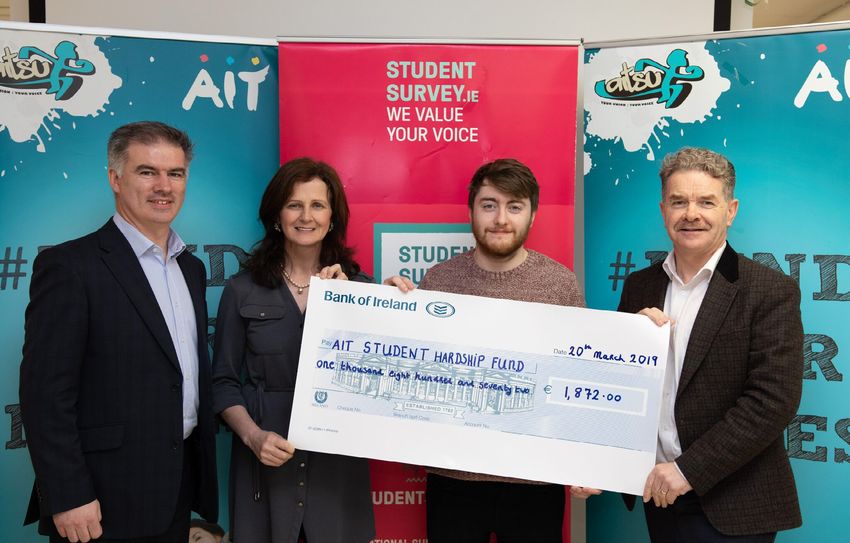
Presentation of cheque to the AIT Student Hardship Fund
(this represents 1 euro per survey completed in 2018/2019 academic year)
[16]Quality in Action in Irish Higher Education 2020
Collection of Case Studies from Higher Education Institutions
(this represents 1 euro per survey completed in 2018/2019 academic year)
Left to right: Dr Niall Seery, Vice-President Academic Affairs & Registrar, Cora McCormack, Quality
Left to right: Dr Niall Seery, Vice-President Academic Affairs & Registrar, Cora McCormack, Quality Officer, Oisín
Officer, Oisín
Moloughney, Moloughney,
SU President, SU President,
Professor Professor
Ciarán Ó Catháin, Ciarán
President of AIT.Ó Catháin, President of AIT.
AIT: International Mobility in the Department of
AIT: International Mobility in the Department of Hospitality, Tourism and Leisure
InHospitality, Tourism
the Department of Hospitality, Tourism and Leisure
and Leisure Studies, Athlone Institute of Technology, field
based international learning plays an important role in attracting and retaining students. Since 2016,
more
In thethan 200 students
Department have participated
of Hospitality, Tourism in anLeisure
and international experience,
Studies, including
Athlone Institute of non-credited short
Technology, field
residential study visits,
based international credited
learning semester
plays abroadrole
an important studies, creditedand
in attracting work placements
retaining and representing
students. Since
the Institute
2016, at competitions.
more than 200 students Students from theindepartment
have participated haveexperience,
an international visited more than 20non-
including countries,
including
credited France, Italy, Spain,
short residential thevisits,
study UK, and Polandsemester
credited in Europeabroad
and the UAE, India,
studies, Malaysia,
credited and China in
work placements
Asia, among others.
and representing the Institute at competitions. Students from the department have visited more
than 20 countries, including France, Italy, Spain, the UK, and Poland in Europe and the UAE, India,
The short residential
Malaysia, field
and China in visits
Asia, among have included 30 students visiting Beijing (2016), 50 visiting Dubai
others.
(2017 & 2019), 22 visiting Shanghai and 24 visiting Kuala Lumpur. These trips are not credited or
The short residential field visits have included 30 students visiting Beijing (2016), 50 visiting Dubai
formally examined, however preparatory work is expected. Students also submit written reflections.
(2017 & 2019), 22 visiting Shanghai and 24 visiting Kuala Lumpur. These trips are not credited or
The trips are self-funded, usually costing €1,200. Students are selected to participate through
formally examined, however preparatory work is expected. Students also submit written reflections.
monitoring of their attendance, engagement, and motivation. Interestingly, an entrepreneurial spirit
The trips are self-funded, usually costing €1,200. Students are selected to participate through
organically emerges among the students to help them subsidise the cost of the trip. This involves
monitoring of their attendance, engagement, and motivation. Interestingly, an entrepreneurial spirit
students running commercial events and using the profits towards their experience. The age range of
organically emerges among the students to help them subsidise the cost of the trip. This involves
students
studentsparticipating has beenevents
running commercial between
and 18 andthe
using 60,profits
with atowards
mean age of experience.
their 25 and a standard
The agedeviation
range
ofof10.81.
students participating has been between 18 and 60, with a mean age of 25 and a standard
deviation of 10.81.
The itineraries for the visits included a mixture of academic, cultural and industry related activities.
Each trip has five fundamental aims:
1. To enhance the student experience and develop bonds between disparate groups
15
[17]Quality in Action in Irish Higher Education 2020
Collection of Case Studies from Higher Education Institutions
The itineraries for the visits included a mixture of academic, cultural and industry related activities.
Each trip has five fundamental aims:
1. To enhance the student experience and develop bonds between disparate groups
2. To play a role in retention and progression
3. To promote the students of the Department of Hospitality, Tourism and Leisure Studies in AIT
to a wider audience
4. To encourage student mobility and develop placement and graduate pathway links
5. To act as a professional development opportunity for HTL staff
Qualitative analysis of the success of the trips indicates that passion, motivation, self-belief,
confidence, and planning skills are all enhanced through participation. From a quantitative
perspective, students participating on the trips appear to have excellent progression potential, with
94% of students participating completing their course or progressing to further study after their trip.
Students wrote very positively about the fieldtrips, describing them as ‘life-changing’, ‘eye-opening’
and ‘unforgettable’ with a participating lecturer noting that the fieldtrips were ‘exciting, educational
experiences for all, leaving students with lasting memories, a respect for the Chinese people and
their culture and the possibility for each student to pursue a working experience in China when they
graduate from AIT.
IADT: Final Year Matters – Moving On Programme
for Final-Year Students
The Students Union and the Student Experience Team piloted the ‘Final Year Matters – Moving On’
programme during 18/19. This is a complementary programme flanking ‘First Year Matters’, IADT’s
extended orientation for incoming students. The purpose of the final year programme is to facilitate
the launch of students into the world of craft, employability, further study and entrepreneurship.
Specifically targeting all undergraduate students in their final year, the programme aims to identify
the transferable skills across disciples, encourage strong mental health in transition and beyond,
allow networking opportunities with outside and community stakeholders and instil business and
advancement opportunities for the students post-graduation.
The 5-day event offers a variety of considered and valuable proceedings for the student body, and
creates a stronger network with external stakeholders in the wider community.
The three themes of IADT’s strategic plan into 2023 are Excellence, Growth and Community.
Creating global citizens through the arts, business and technological education is at the heart of the
institute’s mission. Final Year Matter, Moving On is proposed as a capstone event to complement
the three pillars of IADT’s strategic plan and host a unique programme aimed at further equipping
students with what they need to succeed beyond college. Within the journey, there are many
transitions; just as our First Year Matters programme addresses the needs of the incoming student
to foster a sense of belonging within the institute, FYM Moving On is the ‘bookend’ to launch our
graduates into the next part of their journey. As well as an expected impact on student and graduate
success, FYM Moving on findings will impact on the curriculum in terms of how disciplines can work
to ensure this transition is smooth, will bolster relationships between the institute, the Student’s
[18]Quality in Action in Irish Higher Education 2020
Collection of Case Studies from Higher Education Institutions
Union and the employers. A further leg of the initiative is to explore ways to harness the Alumni
networks within and across disciplines to engage with early career graduates.
In addition the programme aligns with the Ireland’s National Skills Strategy 2025 in recognising the
increasing importance of transversal skills and will foreground for participants the importance and
relevance of skills in creativity, innovation and entrepreneurship, critical and analytical thinking,
teamwork, communication and business acumen.
FYM Moving On aims to fill the gap between an undergraduate degree and what lies beyond;
employment, further education, entrepreneurship and whatever else the students imagine. The
initiative will embolden final year students and focus them on life after college, give them further
coping skills and reaffirm the importance of their education. Workshops on interviewing, tax, self-
promotion, self-care, networking and leadership will be on offer, with guest speakers, cross institute
facilitators and local enterprise partners. For lecturing staff, the FYM Moving On programme is an
opportunity to share with new student cohorts across the institute, empower students and develop
their teaching skills. How does an accounting lecturer create content for the purely visual learner
from film? How does the animation lecturer help the business student to incorporate ‘PowToons’
into presentations? These challenges are part of the learning for the teaching staff. By working with
students outside of a specific discipline, an appreciation for the value of our students across the whole
of the institute deepens. In addition, it will provide some insights into how final year curricula can
incorporate successful graduate transition into the teaching, learning and assessment practices.
The programme, which was successfully piloted in 18/19, is being further developed in 2019/2020
with funding under the Strategic Alignment of Teaching and Learning Enhancement Funding in
Higher Education, from the National Forum.
The further development of the programme will consist of three stages which will be conducted over
2019/20. These stages include:
Scoping exercise: to engage with the stakeholders internally and externally to fully establish what
are the key requirements from the initiative. This will also explore how the issues arising can be
feedback into the programmes of study at curriculum design stage.
Plan Initiative: A series of events, trainings and workshop will be designed and organized to meet the
needs of the IADT cohort.
Evaluation: there will be an evaluation undertaken at the end of the programme.
During the scoping exercise, students will have a real input on what they want for the programme.
By contextualizing their past 3 – 4 years with a view to their future, students come to value their
education and acquired skills in a new light, beyond their disciplines and known networks, in
conjunction with the support of IADT and fellow graduates.
LIT: NStEP Institutional Development and
Support in LIT
The National Student Engagement Programme (NStEP) is a collaborative initiative established
by the Union of Students in Ireland (USI), the Higher Education Authority (HEA), and Quality and
Qualifications Ireland (QQI). LIT became a participant institution in NStEP in 2017, alongside LIT
Students’ Union, after a call to the sector. On 19th November 2018, LIT undertook the NStEP
[19]Quality in Action in Irish Higher Education 2020
Collection of Case Studies from Higher Education Institutions
institutional analysis workshop bringing together staff and students from across the institute
in order to examine and self-assess current practices in student engagement, ensuring that
collaboration was at the heart of the partnership. Participants considered the areas of work that
should take priority for short to medium term strategic development, filling in short strategy
sheets that detailed the needs that had been identified and possible solutions to enhance student
engagement. The initial feedback established in the workshop identified that both students and
staff acknowledged that the LIT student community has a strong, engaged presence in their
programme of study and in their relationship with the Institute. Some of the immediate learning
from the workshop consultation was to consider structurally how a fluid channel of communication
between LIT, the Student Union, and the Student Council could be enabled. This would increase the
range, depth, and value of communication opportunities between the management of academic
affairs in the Institute and student representatives across the entire Institute.
The NStEP Strategy 2019-2021, and strategic objective 3, sets out that “supporting staff and
students across the sector to foster a culture of partnership” can be achieved by advancing our
institutional analysis work through bespoke institutional support that develops student engagement
strategically and systematically. Throughout 2020, NStEP’s institutional development stream will
focus on the theme of fostering a culture of partnership. Following a meeting in LIT in January 2020
with NStEP, discussions centred on a number of areas for consideration and potential collaboration,
as identified from the thematic analysis of the institutional analysis workshop outputs.
These areas included:
• The role of students in the design, review and delivery of academic programmes
• Student feedback opportunities in LIT, supported by data, evidence, and follow up
• The role of students in formal LIT processes and procedures, strategy and decision making
• The role of academic and student services in building the institutional capacity of student
engagement.
Since the initial workshop in late 2018, LIT has made progressive, significant changes to its
academic policies and procedures that enable students to be part of the quality assurance and
decision-making mechanisms that shape new programme development and programmatic reviews
in LIT. Students equally have a formal voice, through programme boards, to provide student
feedback on the conduct of their programme of study, and their teaching and learning therein. The
culture of partnership is deemed to prevail, which bodes well for embedding student engagement
activities more explicitly and distinctively in future collaborative plans between LIT and NStEP. A
number of future initiatives to foster and deepen a culture of staff-student partnership have been
identified as part of the LIT-NStEP programme. These include:
(i) Supporting class representatives in their roles
(ii) Supporting staff to support class representatives in their roles
(iii) Developing the communication channels for students to provide feedback and to close off the
communication feedback loops
(iv) T
o ensure that the data obtained from students, such as that from the annual Student Survey,
is utilised to inform, identify, and shape opportunities for improvement in the engagement
activities of students in LIT.
[20]Quality in Action in Irish Higher Education 2020
Collection of Case Studies from Higher Education Institutions
LYIT: Embedding the Learner Voice in Review
Panels
McManus and Vickery (2018) in their QQI report A Thematic Analysis of Reports on the Accreditation/
Approval/Review of Programmes of Higher Education identified the need for greater student
representation on review panels across the higher education sector. As part of the development
of our Quality Assurance Handbook (QAH) version 3.0 (September 2018) the institute committed
to student representation on all of our programme review and programme validation panels. In
September the Quality Office in conjunction with the Dept. of Law and Humanities developed a
Certificate in Academic Programme Evaluation and Validation (Special Purpose Award). The aim of
the programme was to provide learners with the key skills, knowledge and competencies required to
participate on a range of panels within an Irish Higher Education setting.
The programme encouraged learners to apply their developing knowledge, skills and competences
throughout a series of 3 workshops and in the module assessment. The Teaching and Learning
approach adopted key themes from informed national and international research and policy reports;
and shared understandings emerging from our grounded experience in teaching practice. This
programme utilised a blended learning approach and brought together the best of both face-to-face
and online strategies.
The programme was delivered in March/April 2019 with eleven postgraduate learners from a
range of subject areas participating. Ten of the learners successfully completed the programme
assessment (mock panel report and presentation). The learners have since participated in a range
of panels for the institute. Two students participated in Central Service Reviews and five different
students took part in 13 programme validations. The feedback from the learners is positive and
many of the panel chairs have commented on the excellent and valuable contribution of the learner
representatives. It is planned to run the next iteration of the training programme in March 2021.
MU: Annual Incoming Student Survey
The Institutional Research Office undertakes an annual survey of first year undergraduate students
registering in the University for the first time. Up to 2014/15 students were invited to complete the
survey via email, with the survey invite included in the students’ first welcome email to the University.
In 2015/16, a dedicated survey session was added to the student orientation week schedule
(students can also complete the HEA Equal Access Survey) and response rates to the incoming
survey are now in the region of 80% to 85% each year.
The survey is carried out in collaboration with internal stakeholders in the offices of Admissions,
Communications, Career Development, Experiential Learning, Curriculum Evaluation and
Accommodation. Each year the questions are reviewed and if necessary amendments made (for
example, a new question on the accommodation ‘home finder’ service in 2017; the inclusion of
Instagram as a communication tool in 2018).
The survey report is shared widely with internal stakeholders including the Education Officer of
Maynooth Student Union and provides invaluable information on students’ decision to study in
Maynooth: how students interact with the University; their preparedness and expectations with
[21]You can also read


