ALP Fellows Directory 2020-2021 - Big Ten Academic Alliance
←
→
Page content transcription
If your browser does not render page correctly, please read the page content below

Academic Leadership Program (ALP)

ALP Fellows Directory
2020-2021
WELCOME

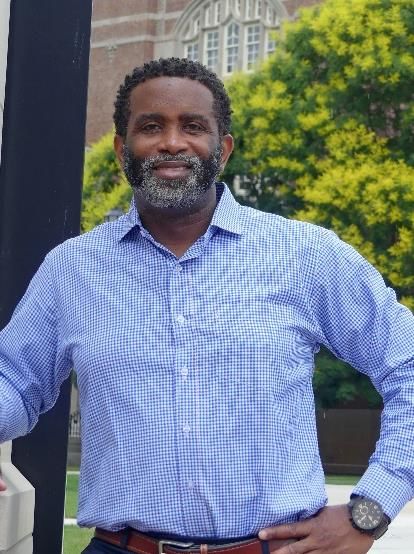
Keith Marshall
Executive Director
Big Ten Academic Alliance

                                  Greetings, and welcome to the Big Ten Academic Alliance 2020-2021
                                  Academic Leadership Program (ALP). Among the many successful
                                  programs of the Big Ten Academic Alliance, the ALP stands out
                                  because of its focus on enhancing our most precious resource—our
                                  faculty and staff. As one of a select few invited to participate in this
                                  program, you join an elite group preparing to lead the distinguished
                                  universities of the Big Ten.

                                  Since the Big Ten Academic Alliance ALP program began in 1989, over
                                  1,400 faculty leaders have participated in the program with a great
                                  many moving on to positions in university administration, and all
                                  leaving with a greater understanding of the complex nature of the
                                  research university. I hope you find your time with us equally
                                  rewarding and enlightening. I look forward to working with you in the
1819 South Neil Street, Suite D   coming years and to sharing with you the many benefits and rewards
Champaign, IL 61820
                                  of collaborative activity.
217-244-9240
keith.marshall@btaa.org
                                  On behalf of the Provosts of our member universities, our
                                  headquarters staff, and the ALP Liaisons, I wish you much success in
                                  your academic career, and I encourage you to find ways to participate
                                  in Big Ten Academic Alliance activities and programs.

                                  Best Wishes,

                                  Keith Marshall, Executive Director
                                  Big Ten Academic Alliance
ABOUT THE BIG TEN ACADEMIC ALLIANCE AND ALP

Big Ten          The Big Ten Academic Alliance is a consortium of the Big Ten universities guided by the
                 Provosts of the member universities. For over a half a century, these world-class
Academic         research institutions have advanced their academic missions, generated unique
Alliance         opportunities for students and faculty, and served the common good by sharing
                 expertise, leveraging campus resources and collaborating on innovative programs.

                 Deep levels of collaboration have resulted in multiple high-impact projects, including
                 the following:

                     •    Shared IT and library infrastructure
                     •    Shared procurement
                     •    Coordinated research
                     •    Faculty development
                     •    Shared communities of practice

                 The key strength of our coalition is that it leverages both investments and ideas. Our
                 joint projects reflect an understanding that there is power in shared purpose and that,
                 through aggregation of our resources, we can achieve far more than any one individual
                 campus could ever hope to do alone. The efficacy of this approach can be seen in a
                 growing array of transformative programs that expand educational opportunities,
                 advance research, enhance efficiency, reduce costs, and amplify our impact in the wider
                 world.

                 All consortium projects are voluntary. However, member universities share an
                 expectation of cooperation and accountability. They also regard each other as peer
                 institutions. Thus, despite the important distinctions, great similarities at the graduate
                 level and across research enterprises contribute to a collective sense of purpose. The
                 resulting collaborations benefit all of the member universities and serve the cause of
                 American higher education in innumerable ways.

Academic         Academic administrators at the Big Ten institutions have dual roles. They must be
                 educational leaders and at the same time act as managers of large complex
Leadership       organizations. They are challenged by tightening budgets, changing student
Program (ALP):   populations, and increasing pressures from external sources. To find creative, workable
Program          solutions to the problems that lie ahead, our universities must pay serious attention to
History          leadership development. Even though agencies, consulting firms, and institutions
                 currently offer many professional development programs that serve the overall higher
                 education community, our members wanted to create a program that would be
                 specifically oriented to the challenges of academic administration at major research
                 universities. The Academic Leadership Program (ALP) is one of the longest-serving
                 professional development programs offered by the Big Ten Academic Alliance and all
                 member institutions participate in the program. This intensive professional
                 development experience develops the leadership and managerial skills of faculty who
                 have demonstrated exceptional ability and administrative promise. The primary goal of
                 the program is to help a select group of talented and diverse faculty further develop
                 their ability to be effective academic leaders at all levels of research universities. Since
                 its inception over 1,400 participants have completed the program. Many of whom have
                 gone on to serve with distinction as college presidents, provosts, and deans.
Fellows          Each member institution establishes its own recruitment and selection process for
                 identifying five to six Fellows to participate in the program each year. Fellows are faculty
                 or select executive-level professional staff that are recognized as emerging academic
                 leaders. The Fellows represent tenured faculty from across divisions and with varying
                 levels and types of administrative and leadership experiences at the level of
                 department or major committee chair, governance role, program director, or assistant
                 or associate dean. Fellows are appointed for terms of one year and are expected to
                 participate fully in the Program by attending the 6 one-day virtual module sessions and
                 6 debrief group session and engaging in all aspects of the campus activities.

Program          The ALP Fellows attend six virtual session, each one day in length, and participate in
                 related activities on their home campuses between seminars. Over the course of the six
Format           modules and six debrief group sessions, a multitude of guest speakers address the
                 group on identified thematic topics through case studies, workshops, and other group
                 exercises, and the participants engage in small group discussions and networking
                 opportunities.

                 The seminar series for this fellowship year is listed below:

                     •   Module 1 - September 25, 2020
                     •   Module 2 - October 23, 2020
                     •   Module 3 - November 13, 2020
                     •   Module 4 - January 22, 2021
                     •   Module 5 - February 19, 2021
                     •   Module 6 - April 16, 2021

Liaisons         Institutional liaisons for the program have been appointed by each chief academic
                 officer to serve as the central coordinator for the program and serve as the campus
                 contact with the Big Ten Academic Alliance office. Liaisons supervise all aspects of the
                 fellows’ activities at their home institutions. Liaisons are responsible for the recruitment
                 and selection of fellows and are essential in the program planning and implementation
                 of the program and debrief groups, as well as the on-campus enrichment programs that
                 support the ALP experience.

Local Programs   Each member institution conducts its own series of on-campus enrichment programs,
                 with ALP liaisons serving as mentors throughout the fellowship year. These experiences
                 may include orientation meetings and/or social events, briefings and/or debriefings
                 before and after each seminar, local seminars focusing on University issues,
                 participation in other faculty development programs available on campus, and
                 individual projects or mentoring relationships with campus administrators.
BIG TEN ACADEMIC ALLIANCE MEMBERS

University of Illinois at Urbana-Champaign
Andreas Cangellaris, Vice Chancellor for Academic Affairs and Provost

Indiana University
Lauren Robel, Provost and Executive Vice President

University of Iowa
Kevin Kregel, Executive Vice President and Provost

University of Maryland
Mary Ann Rankin, Senior Vice President and Provost

University of Michigan
Susan M. Collins, Provost and Executive Vice President for Academic Affairs

Michigan State University
Teresa K. Woodruff, Provost and Executive Vice President for Academic Affairs

University of Minnesota
Rachel Croson, Executive Vice President and Provost

University of Nebraska-Lincoln
Elizabeth Spiller, Executive Vice Chancellor

Northwestern University
Kathleen Hagerty, Provost

Ohio State University
Bruce McPheron, Executive Vice President and Provost

Pennsylvania State University
Nicholas P. Jones, Executive Vice President and Provost

Purdue University
Jay T. Akridge, Provost and Executive Vice President for Academic Affairs and Diversity

Rutgers University-New Brunswick
Christopher J. Molloy, Chancellor

University of Wisconsin-Madison
Karl Scholz, Provost and Vice Chancellor for Academic Affairs

ALP Fellows 2020-2021

Linda Aldoory
University of Maryland
                                 Linda Aldoory, Ph.D., is Associate Dean for Research and Programming for the College of Arts
                                 and Humanities at the University of Maryland College Park, Professor in Communication, and
                                 Diversity and Inclusion Officer and Equity Administrator for her College. She holds affiliate
                                 appointments in the University of Maryland’s School of Medicine and School of Public
                                 Health. She is former Endowed Chair of the Horowitz Center for Health Literacy, and founder
                                 and former Director of the Center for Health Communication Research at Maryland.
                                 Aldoory’s research focuses on health communication and public relations. She studies the
                                 effects of health messages and campaigns on underserved populations and designs and
                                 evaluates tailored health messages. Aldoory received her Ph.D. in mass communications
                                 from Syracuse University, her masters in journalism from the University of Texas at Austin,
                                 and her bachelor’s degree in psychology and journalism from The George Washington
                                 University.

Associate Dean and Professor
College of Arts and Humanities
Linda
laldoory@umd.edu

Nicole Allen
University of Illinois
                                 Nicole E. Allen, Ph.D., is Professor and Associate Head and Director of Graduate Studies in
                                 the Department of Psychology at the University of Illinois at Urbana Champaign. Her
                                 research examines organizational and systems change processes in the response to intimate
                                 partner violence and sexual assault; cross-sector collaboration and its contributions to
                                 community change; survivors’ experiences as they navigate complex formal and informal
                                 systems; and the effectiveness of survivor-centered, advocacy interventions that aim to alter
                                 the contexts of individuals’ lives to promote health and well-being. Professor Allen often
                                 conducts research and evaluation in close collaboration with community partners. She
                                 values university/community research partnerships that aim to promote individual and
                                 community well-being and has also worked within the university community to address the
                                 complex issues associated with sexual misconduct on college campuses.

Professor/Associate Head and
Director of Graduate Studies
Psychology
Nicole
allenne@illinois.edu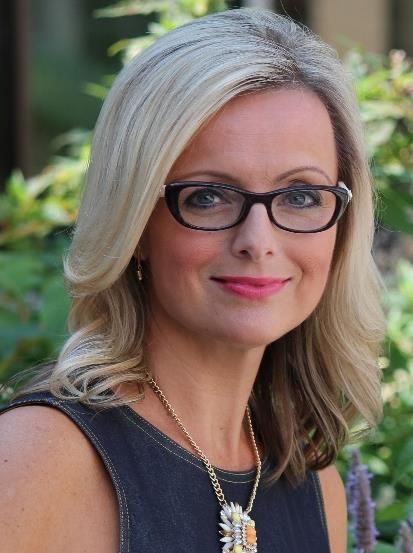
ALP Fellows 2020-2021

Karen Alter
Northwestern University
                                   Karen J. Alter is Professor of Political Science and Law at Northwestern University, a
                                   permanent visiting professor at the iCourts Center for Excellence, University of Copenhagen
                                   Faculty of Law, and co-director Research Group on Global Capitalism and Law at
                                   Northwestern University. Alter’s new research focuses on the construction of global
                                   economic rules regulating trade and money, and on the determinants of politically
                                   sustainable capitalism. Past and ongoing research concerns global and regional
                                   judicialization of international relations. Alter is author of the award-winning book The New
                                   Terrain of International Law: Courts, Politics, Rights (Princeton University Press, 2014);
                                   International Legal Transplants: Law and Politics of the Andean Tribunal of Justice (Oxford
                                   University Press, 2017, with Laurence Helfer); The European Court’s Political Power (Oxford
                                   University Press, 2009) and Establishing the Supremacy of European Law (Oxford University
                                   press, 2001), and more than fifty articles and book chapters on the politics of international
                                   law, comparative international courts, and international regime complexity. She is also co-
                                   editor of the Oxford Handbook on International Adjudication (Oxford University Press, 2014)
                                   and International Court Authority (Oxford University Press, 2018). Alter serves on the
                                   editorial boards of the American Journal of International Law, International Studies Review,
Lady Board of Managers of the      Journal of International Dispute Settlement, where she is an associate editor. She is a
Columbian Exposition               member of the Council of Foreign Relations, a former Guggenheim Fellow, winner of the
                                   Berlin Prize from the American Academy in Berlin, and winner of the American Society of
Professor of Political Science
                                   International Law’s Certificate of Merit for a Preeminent Contribution to Creative
and Law                            Scholarship.
Political Science
Karen
kalter@northwestern.edu

Heather Anderson
Ohio State University
                                   Heather A Anderson, OD, PhD is an Associate Professor and the Chair of Research and
                                   Graduate Studies at The Ohio State University, College of Optometry. She received her
                                   doctorate of optometry and PhD in physiological optics from the University of Houston. Dr.
                                   Anderson conducts research investigating the visual system and optical treatment strategies
                                   for individuals with Down syndrome. Her topical areas of interest include accommodation,
                                   binocular vision, pediatrics and special populations and is funded by the National Eye
                                   Institute. In addition to her independent research, Dr. Anderson is engaged in the conduct
                                   of vision research at the national level by serving as an Investigator in the Pediatric Eye
                                   Disease Investigator Group.

                                   Dr. Anderson is the instructor of record for the Clinical Procedures I course at the College of
                                   Optometry. She has more than 10 years of experience teaching clinical procedures and has
                                   been recognized nationally for her teaching as the 2019 recipient of the American Academy
                                   of Optometry Foundation’s Michael G Harris Family Award for Excellence in Optometric
Associate Professor and Chair of   Education. Dr. Anderson’s passion for research and teaching has also merged to yield two
Research and Graduate Studies      peer-reviewed publications on novel educational strategies in healthcare education.
in Vision Science
Optometry                          Dr. Anderson is involved in service within her profession and the scientific community by
                                   serving as the Chair of the American Optometric Association's Council on Research, serving
Heather
                                   as a member of the American Academy of Optometry Research Committee, and serving as a
anderson.3881@osu.edu              member of the National Down Syndrome Society's Scientific Advisory Board.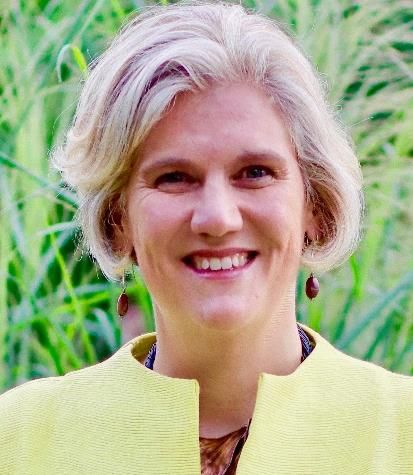
ALP Fellows 2020-2021

Amy Ando
University of Illinois
                                  Amy W. Ando is a Professor at the University of Illinois Urbana-Champaign in the
                                  Department of Agricultural and Consumer Economics. She earned a B.A. in economics from
                                  Williams College in 1990 and a Ph.D. in economics from MIT in 1996. Ando’s research
                                  focuses on the economics of nature conservation and ecosystem service values. She has had
                                  grants from sources including the NSF, EPA, and USDA-NIFA and has been published in
                                  journals such as Science, the Proceedings of the National Academy of Sciences, and the
                                  Journal of Environmental Economics and Management. Ando is a Co-Editor for the flagship
                                  American Journal of Agricultural Economics. She has served as an elected Board member
                                  and Vice President of the Association of Environmental and Resource Economists, worked on
                                  numerous multi-disciplinary review panels for the National Science Foundation, and
                                  provided expert advisory service to agencies and NGOs including the U.S. Environmental
                                  Protection Agency and the U.S. Department of Agriculture. At the University of Illinois, Ando
                                  had served as Director of Graduate Studies and Associate Head in her department, as Chair
                                  of the Campus Committee on Promotion and Tenure, and currently as a Provost Fellow
                                  leading a task force to transform the campus system of teaching evaluation.
Professor
Agricultural and Consumer
Economics
Amy
amyando@illinois.edu

Noelle Arnold
Ohio State University
                                  Noelle Arnold, PhD is the Associate Dean for Equity, Diversity and Global Engagement and
                                  Professor of Educational Administration in the College of Education and Human Ecology at
                                  The Ohio State University. Prior to this, appointment Dr. Arnold was the Director for the
                                  Education Doctorate (EdD) program in Educational Administration in the Department of
                                  Educational Studies at OSU. Dr. Arnold has written and presented extensively and has 9
                                  books published or in press and over 70 publications. Her most recent book is the 2nd
                                  Edition of the Handbook for Urban Educational Leadership and Companion Guide
                                  (forthcoming, 2021). A former administrator at the district and state level, Dr. Arnold also
                                  serves as a consultant throughout the US advising districts on diversity and inclusion, and
                                  teaching and leading in urban and rural contexts. Dr. Arnold’s research agenda terms
                                  context-based interdisciplinary research with a focus on disparities and her research has
                                  yielded $2.3 million in internal and external funding. In addition, Dr. Arnold’s scholarship
                                  was one of only four authors’ works submitted to the United States Senate for Emerging
                                  Peer Reviewed Research on Educational Leadership, Policy and Literacy in Black & Brown
                                  Communities. Dr. Arnold was the first African American female to serve as President for the
Asso Dean Equity, Diversity and   University Council for Educational Administration.
Global Engagement; Professor
Educational Studies
Noelle
arnold.1040@osu.edu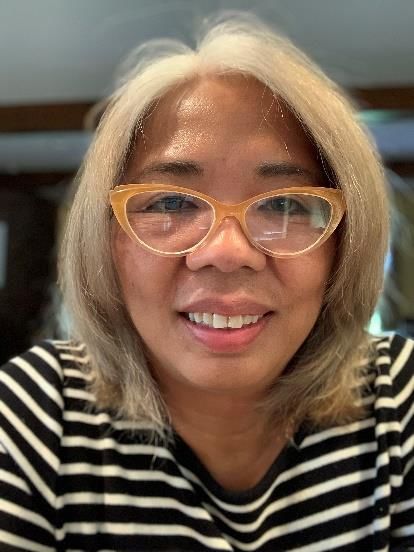
ALP Fellows 2020-2021

Maria Isabel Ayala
Michigan State University
                                   María Isabel Ayala is Director of the Chicano/Latino Studies Program and Associate Professor
                                   in the Department of Sociology at Michigan State University. Ayala’s work calls attention to
                                   the intra-group diversity and capital of Latinx people by examining the relationship between
                                   their unique and complex racialization and sociodemographic experiences and behaviors.
                                   Moreover, Ayala explores the role of Latinx identities in reconstructing structures, centering
                                   and highlighting agentive and resilient behaviors and cultures in the navigation of physical,
                                   symbolic, and social White spaces. Her humanistic and social justice commitment and her
                                   dedication to inclusivity shape her research, teaching, and leadership. Ayala is a 2020-21 Big
                                   Ten Academic Alliance Academic Leadership Program Fellow.

Director of Chicano/Latino
Studies and Associate Professor
of Sociology
Sociology and Chicano/Latino
Studies Program
Maria Isabel
ayalam@msu.edu

Jean Baum
Rutgers University-New Brunswick
                                   As Vice Dean of Research and Graduate Education, I work to advance research and graduate
                                   education across the School of Arts and Sciences (SAS) at Rutgers University–New Brunswick.
                                   The mission of the Office of Research and Graduate Education is to support SAS as a global
                                   leader in interdisciplinary research and technology transfer while creating opportunities for
                                   graduate students from all academic disciplines. We act as a resource for all faculty, staff
                                   and students, building universitywide partnerships, shaping effective policy and practices,
                                   and providing a strong voice nationally on behalf of SAS and Rutgers University–New
                                   Brunswick.

Vice Dean of Research and
Graduate Education
Deans Office, School of Arts and
Sciences
Jean
rgeoffice@sas.rutgers.edu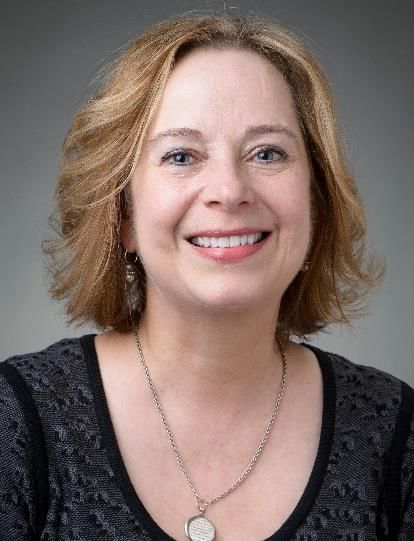
ALP Fellows 2020-2021

Audrey Bennett
University of Michigan
                                  Audrey Bennett is University Diversity and Social Transformation Professor and Professor of
                                  Art and Design at Penny W. Stamps School of Art and Design at the University of Michigan
                                  where she directs the graduate program in Integrative Design. She is also a former Andrew
                                  W. Mellon Distinguished Scholar of the University of Pretoria, South Africa, and a former
                                  College Art Association Professional Development Fellow. She studies the design of
                                  transformative images that, through interactive aesthetics, can permeate cultural
                                  boundaries and impact the way we think and behave. Her research publications include:
                                  How Design Education Can Use Generative Play to Innovate for Social Change; Engendering
                                  Interaction with Images; The Rise of Research in Graphic Design; Interactive Aesthetics; and
                                  Good Design is Good Social Change. She is the co-editor of the Icograda Design Education
                                  Manifesto 2011, and a member of the Editorial Boards of the journals Image and Text (South
                                  Africa), and New Design Ideas (Azerbaijan). She is currently the Vice President of Diversity
                                  and Inclusion on the CAA’s Board of Directors.

Graduate Program Director,
MDes
Stamps School of Art and Design
Audrey
agbennet@umich.edu

Peter Berg
Michigan State University
                                  Peter Berg is Professor of employment relations and Director of the School of Human
                                  Resources and Labor Relations at Michigan State University. His current research examines
                                  the implications of an aging workforce for organizations in the United States and Germany.
                                  He studies how organizations are responding to an aging workforce, the types of practices
                                  they implement, and the effect of aging on younger workers’ wage growth. He was recently
                                  selected to participate in a National Academy of Sciences consensus study on understanding
                                  the aging workforce and employment at older ages. In addition, Berg is coordinating an MSU
                                  interdisciplinary consortium on the Future of Work that brings together MSU researchers
                                  from several colleges and units to address questions about how technology affects jobs and
                                  the workplace. Also, he has been a Fulbright research scholar to Australia, served as an
                                  executive board member of the Labor and Employment Relations Association, and as
                                  President of the Industry Studies Association.

Director
School of Human Resources and
Labor Relations
Peter
bergp@msu.edu
ALP Fellows 2020-2021
Johanna Birnir
University of Maryland
Jóhanna Kristín Birnir is a Professor in the department of Government and Politics and the
director of GVPT Global Learning. Jóhanna studies the effect of identity (ethnicity, religion,
gender) on contentious political outcomes (elections and violence), and has done extensive
fieldwork in the Andes, South-East Europe and Indonesia. Jóhanna´s first book "Ethnic
Electoral Politics" (Cambridge University Press) examines the relationship between political
access and minority strategic choice of peaceful electoral participation, protest or violence
against the state. Her current book project (forthcoming Cambridge University Press and
supported by the Global Religion Research Initiative - University of Notre Dame) examines
the relationship between identity (ethnicity and religion) and minority peaceful and violent
political mobilization. Jóhanna´s articles on identity and politics are published in numerous
academic journals including the American Journal of Political Science, Comparative Political
Studies, Journal of Peace Research, Journal of Conflict Resolution, Party Politics, Latin
American Research Review, and Journal of Global Security Studies. Her research has been
supported by the National Science Foundation and The National Consortium for the Study of
Terrorism and Responses to Terrorism and Folke Bernadotte Academy.
Professor
Government and Politics
Johanna
jkbirnir@umd.edu
Norman Bishara
University of Michigan
Norm Bishara is the Associate Dean for Undergraduate Programs and an Associate Professor
of Business Law & Ethics at the Ross School of Business. He was the Faculty Director of the
Master of Management program before joining the school’s leadership team in 2017. Norm
oversees all aspects of undergraduate programs, including curriculum, admissions, student
life, advising, alumni relations, marketing efforts, and strategic planning activities. He is also
the director of the Carson Scholars Washington, D.C. course and the Executive Director of
the Jones Initiative for Innovation in Undergraduate Education.
Norm’s research is in the areas of corporate governance, corruption, and covenants not to
compete as an obstacle to employee mobility and knowledge transfer. His research has
focused on Middle East governance, the evolving role of the corporation and the employee
relationship to Benefit Corporations and B Corps, human rights and corruption, the Future of
Work, and noncompete agreement enforcement and the implications for highly skilled labor
mobility.
Associate Dean for Norm graduated from Cornell Law School, has a graduate degree from Michigan’s Gerald R.
Undergraduate Programs and Ford School of Public Policy, and holds an undergraduate degree from Colgate University.
During the 2016-17 he was a Visiting Professor at IESE Business School in Barcelona, Spain.
Associate Professor of Business
Law & Ethics
Ross School of Business
Norman
nbishara@umich.eduALP Fellows 2020-2021
Joanna Bosse
Michigan State University
Joanna Bosse serves as the Associate Dean for Academic Affairs in the Residential College in
the Arts and Humanities with responsibilities in the areas of academic programs, faculty
development, and operations.
She is also an ethnomusicologist and dance ethnographer committed to the notion that
sustained artistic practice is a necessary component of optimal wellness for everyone. Her
research focuses on partnership dance and the embodied nature of musical engagement.
Her book, Becoming Beautiful: Ballroom Dance in the American Heartland (University of
Illinois Press 2015), presents an ethnographic case study of amateur ballroom dancers who
experience personal transformation through artistic engagement. Her documentary film,
Becoming Beautiful (2017) has screened on three continents and received several awards.
Her research on whiteness, race, and performance appears in The Journal of American
Folklore, Dance Research Journal, Ethnomusicology Forum, and elsewhere. She is currently
establishing a new research area at the intersection of ethnomusicology, psychology and
neuroscience, and applied social work which explores the health and wellness benefits of
Associate Dean of Academic artistic engagement, with current research projects focusing on seniors, dementia patients,
and PTSD survivors.
Affairs/Professor of
Before joining MSU, Joanna served on the faculties of Bowdoin College and Millikin
Ethnomusicology and Dance University.
Studies
Residential College in the Arts
and Humanities
Joanna
jbosse@msu.edu
Eve Brank
University of Nebraska-Lincoln
Eve Brank is the Director of the Center on Children, Families, and the Law, a Professor in the
Department of Psychology, and has a Courtesy Appointment in the College of Law. Her
research primarily focuses on the way the law intervenes (and sometimes interferes) in
family and personal decision making. She recently published The Psychology of Family Law
with NYU Press. She serves as a Co-Editor of Court Review the official journal of the
American Judges Association. At UNL, she is a Co-Director for the Peer Review of Teaching
Project and the faculty advisor for Scientific Resources and the Law. She is an active
member of the American Psychology-Law Society (AP-LS) having served on its executive
board in several elected positions including President. She is also the recipient of the AP-LS
Teaching and Mentoring Award. Dr. Brank received her Bachelor of Arts in Psychology and
Sociology from Jacksonville University in Jacksonville, Florida, and her law degree and
doctorate in psychology from the University of Nebraska-Lincoln. Prior to joining the
Nebraska faculty, Dr. Brank was on the faculty in the Department of Criminology, Law and
Society at the University of Florida.
Director and Professor
Center on Children, Families, &
the Law and Psychology
Eve
ebrank2@unl.eduALP Fellows 2020-2021
Phil Buhlmann
University of Minnesota
Phil Buhlmann obtained a PhD from the Swiss Federal Institute of Technology (ETH) Zürich,
Switzerland, based on research in the field of chemical sensors. He was a postdoctoral fellow
of the Japan Society for the Promotion of Science (1993–1994) and a research associate
(1994–2000) at the Department of Chemistry, School of Science, The University of Tokyo.
Since 2000, he has been at the University of Minnesota (UMN), where is now full professor.
His research interests focus on the development of electrochemical sensors with high
selectivities, low detection limits, and long-term stabilities suitable for continuous in-situ
monitoring in the environment and on or in the human body. Through his role as director of
graduate studies in chemistry at the UMN 2012–2020, he made stress and mental health a
focal point for his department. The key to this initiative lied in the collaboration of students,
staff, faculty, and the university health services to address stress and mental health
together. Buhlmann is currently chair of the Faculty Consultative Committee for the UMN
system, and is one of two representatives from the UMN to the action collaborative on
preventing sexual harassment in higher education of the National Academies of Sciences,
Engineering, and Medicine.
Professor
Chemistry
Phil
buhlmann@umn.edu
Kimberly Buhman
Purdue University
Kimberly Buhman is a professor and the Associate Department Head of Nutrition Science at
Purdue University. She earned a BS in agricultural biochemistry from Iowa State University in
1992 and a PhD in nutrition science from Purdue University in 1999. She completed post-
doctoral studies at the Gladstone Institute of Cardiovascular Disease in San Francisco, CA
and at Washington University School of Medicine in St. Louis, MO. In 2005, she joined
Purdue’s faculty as an assistant professor, where her research focuses on lipid metabolism
with specific interests in understanding the molecular mechanisms of dietary fat absorption
and dysregulation of lipid metabolism in cancer. Her research program includes national and
international collaborations and funding from sources such as the American Heart
Association, American Diabetes Association, and National Institutes of Health. In 2013, she
received the E.L.R. Stokstad Award for outstanding fundamental research in nutrition from
the American Society for Nutrition. She chaired the 2nd Big Ten Academic Alliance
Conference for Lipid Research, the Federation of American Societies for Experimental
Biology Science Research Conference on Intestinal Lipid Metabolism, and the Energy and
Macronutrient Metabolism Research Interest Section for the American Society for Nutrition.
Professor At Purdue, she serves as Director of the Interdepartmental Nutrition Program, an
Nutrition Science interdisciplinary research and graduate program. She is also a member of the Purdue
University Teaching Academy, which recognizes and promotes outstanding teaching at
Kimberly
Purdue.
kbuhman@purdue.eduALP Fellows 2020-2021
Margherita Cantorna
Pennsylvania State University
Dr. Cantorna received her undergraduate degree in Chemistry from the University of Illinois
and then her PhD in Immunology from the University of Wisconsin. Dr. Cantorna came to
the Pennsylvania State University as an Assistant Professor where she rose through the
ranks to her current title of Distinguished Professor of Molecular Immunology. Dr. Cantorna
established a physiological role for vitamin D in immune mediated diseases including
multiple sclerosis and inflammatory bowel disease. She is a recognized expert in the area of
vitamin D, and vitamin D in the regulation of gastrointestinal immunity. In 2012 she received
the Osborne and Mendel Award from the American Society for Nutrition for her work to
understand the effects of vitamin D in the immune system. In 2014 she was recognized as
being in the top 10% of all faculty at the Pennsylvania State University and was awarded the
title of Distinguished Professor. She is frequently invited to speak at national and
international meetings in both Immunology and Nutrition. She currently is on the leadership
team for the vitamin D workshop and has served as associate editor, committee member,
meeting organizer and grant reviewer for several different organizations in both
Immunology and Nutrition.
Distinguished Professor
Veterinary and Biomedical
Sciences
Margherita
mxc69@psu.edu
Bethan Cantwell
Michigan State University
Bethan Cantwell is the Director of Institutional Research and an Assistant Director in the
Office of Planning and Budgets at Michigan State University. In this role Bethan leads a team
of analysts who provide timely and accurate analysis relating to student success, faculty
salaries, student credit hours, and rankings and peer comparison data to support data-
informed policy and decision making at MSU. Bethan sits on several key university
committees. As a member of MSU’s Student Information System (SIS) Steering Committee,
she and her staff work to ensure the new system will provide accurate and useful data
reporting for the campus community. Bethan also sits on the enrollment strategy and
student success committee, strategic student success workgroup steering committee,
university data governance committee, and is a member of the strategic planning project
team. Bethan represents MSU and research universities on two statewide committees and is
a member of the APLU’s Commission on Information, Measurement and Analysis (CIMA)
Executive Committee. Before joining MSU in 2011, Bethan worked at the University of
Arizona from 2006 – 2011 in the Office of Institutional Research and Decision Support.
Director, Institutional Research Bethan began her career in local government in Cardiff, in the United Kingdom.
Office of Planning and Budgets
Bethan
cantwelb@msu.eduALP Fellows 2020-2021
Glenn Chambers
Michigan State University
Dr. Chambers is a Professor of History and Associate Dean of Undergraduate Studies in the
Office of the Associate Provost for Undergraduate Education (APUE) at Michigan State
University (MSU). Prior to his role in APUE, he was director of the African American and
African Studies program at MSU.
As a historian of the Modern Caribbean specializing in the former British colonies post
emancipation, his work focuses specifically on the social and cultural history of African
descended populations during the period between the Spanish American War and WWII and
the political and economic expansion of the United States into the region, its impact on local
populations, and the immigration/migration patterns that emerged as a result of changes to
the labor situation of everyday citizens. Initially this work focused exclusively on West
Indian immigrants to the Republic of Honduras due to the growth of the U.S. dominated
banana industry. However, his work has transitioned in recent years to include Caribbean
and Central American populations on the U.S. Gulf Coast, specifically, New Orleans,
Louisiana. Dr. Chambers is the author of two books: Race, Nation, and West Indian
Immigration to Honduras, 1890-1940 (Baton Rouge: Louisiana State University Press, 2010)
and From the Banana Zones to the Big Easy: West Indian and Central American Immigration
Professor to Honduras, 1910-1940 (Baton Rouge: Louisiana State University Press, 2019). He has also
History co-edited a book, New Frontiers in the African Diaspora (East Lansing: Michigan State
Glenn University Press, 2018) in addition to publishing articles in academic journals.
chamb311@msu.edu
Rita Chin
University of Michigan
Rita Chin is Professor of History at the University of Michigan, where she serves as Associate
Dean for the Social Sciences at Rackham Graduate School. She is a historian of post-1945
Europe and focuses on issues of immigration, race, and cultural diversity. She is the author
of The Crisis of Multiculturalism in Europe: A History (2017) and The Guest Worker Question
in Postwar Germany (2007) and co-author of After the Nazi Racial State: Difference and
Democracy in Germany and Beyond (2009). She is at work on a new project, Original Sin,
Race, and Reparations in the U.S. and Germany, that compares how the United States and
Germany have grappled with their “original sins” of slavery and the Holocaust and argues
that each society’s efforts to come to terms with its past have shaped its contemporary race
relations. Her research has been supported by the SSRC, Woodrow Wilson International
Center for Scholars, ACLS, the Institute for Advanced Study, and the Guggenheim
Foundation. She is on the editorial boards of Central European History and the German
Studies Series for the University of Michigan Press. She was recently elected Vice President
for the Professional Division of the American Historical Association.
Professor
History
Rita
rchin@umich.eduALP Fellows 2020-2021
Margaret Chorazy
University of Iowa
Margaret Chorazy, PhD, MPH, received a doctoral degree in epidemiology from the
University of Iowa College of Public Health in 2010. She received a Master of Public Health
degree in 2004 from Yale University. She is currently Director of Undergraduate Programs
and a Clinical Associate Professor of Epidemiology at the University of Iowa College of Public
Health. She has demonstrated excellence in teaching and mentoring both undergraduate
and graduate students. Her passion for education and mentorship has helped transition
students with an interest in public health into those who want to pursue public health as a
career. Her research interests are in infectious disease epidemiology and curriculum
development. Her past work was centered on acute respiratory infections, novel respiratory
viral pathogens, and polymicrobial infections of the respiratory tract. Her current interests in
the scholarship of teaching and learning focus on public health education and curricular
innovation, contributions to pedagogy, and the development of the college’s undergraduate
program in public health. She is a member of the Association of Schools and Programs of
Public Health’s Scholarship of Teaching and Learning Task Force. She also serves on the
college’s executive committee, where she expresses the vision, strategies, and operational
approaches for the college’s new undergraduate programs.
Director, Undergraduate Programs;
Clinical Associate Professor of
Epidemiology
Public Health Administration;
Epidemiology
Margaret
margaret-chorazy@uiowa.edu
Deirdre Cooper Owens
University of Nebraska-Lincoln
Deirdre Cooper Owens is an award-winning author, historian, popular public speaker, and
administrator. Cooper Owens serves on a number of boards, works as an advocate for
reproductive justice, and writes for the popular press on issues of race, the history of
medicine, and reproductive justice. Her book Medical Bondage won the 2018 Darlene Clark
Hine Book Prize from the Organization of American Historians where she is also a
Distinguished Lecturer. Cooper Owens is also the Director of the Program in African
American History at The Library Company of Philadelphia.
Charles & Linda Wilson Prof. in the
History of Medicine
History/Humanities in Medicine
Program
Deirdre
dcooperowens2@unl.eduALP Fellows 2020-2021
David Corti
Purdue University
Prof. Corti is currently Professor, Executive Officer and Director of Undergraduate Studies
(DUGS) in the Davidson School of Chemical Engineering (CHE). He received a B.S. from the
University of Pennsylvania in 1991 and a Ph.D. from Princeton University in 1997, both in
Chemical Engineering. After a postdoctoral position at the University of California, Los
Angeles, he joined the faculty of CHE at Purdue University in 1998. He received the NSF
CAREER Award in 2002, the “Teaching for Tomorrow” Award in 2002 from Purdue University
and was named a Purdue University Faculty Scholar in 2011. He participated in the Provost’s
Leadership Program (Purdue University) in 2017-2018. He attended the 2011 Frontiers of
Engineering Education Symposium, sponsored by the National Academy of Engineering, and
received the Philip C. Wankat CHE Graduate Teaching Award in 2018. Prof. Corti coordinates
the ABET assessment process for CHE and serves as the faculty coordinator of CHE’s Co-op
program. He serves, or has served, on several School and College level committees, and is
the immediate supervisor of nine staff members in Chemical Engineering. His research
interests are in the areas of molecular thermodynamics, complex fluids, atomic force
Professor microscopy, nucleation phenomena and molecular simulation.
Chemical Engineering
David
dscorti@purdue.edu
Francesco Costanzo
Pennsylvania State University
Francesco Costanzo is a professor in the Department of Engineering Science and Mechanics
at Penn State with graduate appointments in the departments of Mathematics, Mechanical
Engineering, and Biomedical Engineering. He is a member of the Penn State Center for
Neural Engineering where he contributes computational modeling relevant to brain
physiology. Dr. Costanzo came to the USA in 1989 as a Fulbright Scholar, earned a Ph.D. in
Aerospace Engineering from Texas A&M University in 1993. He joined Penn state in 1995,
after a postdoc in Mathematics at Texas A&M. In 1998, he received the a CAREER Award
from the NSF. In the past seven years, his research has focused on biomedical applications
with grants from the NSF and the NIH. He has been active in engineering education, where
he has co-authored textbooks in Engineering Statics and Dynamics, and received several
awards including The General Electric Learning Excellence Award (1998 and 2003), the 1999
Outstanding New Mechanics Educator Award of the American Society of Engineering
Education, and the 2000 Outstanding Teaching Award as well as The 2007 Premier Teaching
Award of the Penn State Engineering Society. His service record includes chairing P&T
committees at the Department and College levels and participation in the Faculty Affairs
Associate Department Head Committee of the University Senate. Dr. Costanzo has a long service record with the Office
Engineering Science and of Student Conduct, including service on the Title IX Decision Panel. He is the current
Mechanics Associate Department Head of his department.
Francesco
fxc8@psu.eduALP Fellows 2020-2021
Ramona Denby-Brinson
Ohio State University
Dr. Ramona Denby-Brinson is professor and associate dean of academic affairs in the College
of Social Work at The Ohio State University. Prior to Ohio State, Denby-Brinson served at
Arizona State University where she was associate dean of research with Watts College of
Public Service and Community Solutions and professor in the School of Social Work. She
served for twenty years at the University of Nevada Las Vegas in various academic, research,
and administrative roles. Her scholarly interests include policy, programming, and treatment
issues relevant to children and families; child welfare; children’s mental health; and
culturally specific service delivery. She is one of the nation’s leading scholars in the area of
kinship care. Recognized as an expert in culturally adapted child welfare services, Denby-
Brinson has published extensively on that topic and is the recipient of the Senator Harry Reid
Silver State Research Award in recognition of her research, which is highly regarded and
responsive to the needs of local and national communities. Denby-Brinson has a diverse
funding portfolio including federal, state, foundation, and university awards; and has
secured over $32 million dollars in funding. Prior to her academic career, Denby-Brinson
Professor and Associate Dean of practiced as a licensed social worker serving children and families in various social service
settings. Currently, Denby-Brinson utilizes her experience and research knowledge, to assist
Academic Affairs
nonprofits and public agencies in building capacity to better serve clients. Likewise, using
College of Social Work curricular innovations, Denby-Brinson focuses on academic preparation that equips students
Ramona with solution- and evidence-oriented approaches to address protracted and emerging social
denby.1@osu.edu challenges.
Michael Dougherty
University of Maryland
Michael Dougherty received his Bachelor of Science in Psychology from Kansas State
University in 1993 and his doctorate, also in Psychology, from the University of Oklahoma in
1999. He migrated to the University of Maryland following graduate school, where he has
been ever since. He has participated in a variety of service activities at the University of
Maryland, including stints on the Graduate Council and University Senate, as well as serving
as Associate Chair and Director of Graduate Studies for the Department of Psychology. He is
currently Professor and Chair of the Department of Psychology. Outside the campus, he has
served on NSF’s Committee of Visitors and as a society representative to the Federation of
Associations of Behavioral and Brain Sciences (FABBS). Dr. Dougherty’s work falls broadly
into the category of memory, decision making, and metascience. His work is published in
journals such as Psychological Review, Perspectives in Psychological Science, Psychological
Science, Current Directions in Psychological Science, Psychonomic Bulletin and Review, and
Memory and Cognition, amongst others. He was also a recipient of a CAREER award from the
National Science Foundation. His teaching duties include courses on memory and cognition
and statistical methodology.
Professor
Psychology
Michael
mdougher@umd.eduALP Fellows 2020-2021
Mary Beth Easley
University of Iowa
Mary Beth is the DEO of the Department of Theatre Arts and Head of Directing. She came to
The University of Iowa from Brooklyn College, where she was the Artistic Director of the
Department of Theater. Focusing on new play development, intercultural theatre
expression, and outreach to under-represented urban and rural communities where she
utilizes devised theatre as a means to deepen awareness and foment change, Ms. Easley has
been directing plays, coaching, and teaching acting in New York City for many years. She has
directed Off-Broadway and in regional theatres throughout the Midwest. Her work has been
featured at The Bushwick Starr, Ensemble Studio Theatre, Circle Rep, The Women’s Project,
The New Federal Theater, and LaMama ETC, among others. A guest director and responder
at the Great Plains Theater Conference since 2013, Ms. Easley is currently working with
composer Mark Bruckner and author Diane Glancy (an alum of the UI Writer’s workshop) on
adapting Ms. Glancy’s novel Pushing the Bear into a multi-media musical.
DEO
Theatre Arts
Mary Beth
mary-easley@uiowa.edu
Levon Esters
Purdue University
Levon T. Esters is a Professor in the Department Agricultural Sciences Education and
Communication at Purdue University. He received a B.S. in Agricultural Business from Florida
A&M University, an M.S. in Agricultural Education from North Carolina A&T State University,
and a Ph.D. in Agricultural and Extension Education from Pennsylvania State University.
Levon serves as the Director of the Mentoring@Purdue (M@P) program which is designed to
increase the number of women and underrepresented minorities (URMs) receiving
advanced post-secondary STEM-based agricultural and life sciences degrees in Purdue’s
College of Agriculture. Levon is a nationally recognized scholar on mentoring, equity, and
diversity within the STEM-based agricultural and life sciences disciplines. His research
focuses on issues of educational equity and access of URM students with a concentration on
the mentoring of Black graduate students; STEM career development of students attending
Historically Black Land-Grant Colleges and Universities; and educational and professional
mobility of Black graduate students and faculty. Levon is among a few Black scholars in the
United States conducting research in these areas, and has been able to serve as a role model
for Black graduate students who are committed to broadening participation of URMs in the
Ag+STEM disciplines. He also serves as a Senior Research Associate at The Rutgers Center for
Professor Minority Serving Institutions.
Agricultural Science Education
and Communication
Levon
lesters@purdue.eduALP Fellows 2020-2021
Noel Estrada-Hernandez
University of Iowa
Dr. Noel Estrada-Hernandez is a Professor and the Department Executive Officer for
Rehabilitation and Counselor Education at the University of Iowa. His research focuses on
psychosocial adaptation to disability, particularly individuals with albinism, employment and
counseling outcomes for people with disabilities, as well as ethical decision making with
emphasis on consumer participation. Estrada-Hernández has been able to share his work in
international venues such as Human Right Commission on Albinism in Geneva. He is a
member of the American Counseling Association and is a Past President of the National
Council on Rehabilitation Education.
Department Excecutive Officer
Rehabilitation and Counselor
Education
Noel
noel-
estradahernandez@uiowa.edu
Ingrid Fulmer
Purdue University
Ingrid Fulmer is the Associate Dean for Academic Affairs and Professor of Human Resource
Management in the School of Management and Labor Relations (SMLR) at Rutgers
University. Previously, she served as the director of the Ph.D. program in SMLR. She has also
been a Professor and the Director of the Centre for Workplace Excellence at the University
of South Australia Business School in Adelaide, Australia, and has been a visiting professor at
other international institutions. She has held tenure track appointments in other business
schools in the U.S., as well. A member of the Board of Governors of the Academy of
Management, she also serves as International Co-chairperson of the European Institute of
Advanced Studies in Management (EIASM) annual workshop on Strategic Human Resource
Management, and recently completed a five-year term in the leadership track of the Human
Resources Division of Academy of Management.
Ingrid’s research and teaching are in the areas of human resource management,
organizational behavior, and business ethics. She currently has research projects studying
Associate Dean and Professor workplace compensation system design and effectiveness, pay transparency, valuation of
School of Management and organizational human capital, and strategic management of former (i.e., alumni) employees.
Labor Relations
Ingrid Academia is Ingrid’s second career. Prior to earning a PhD at Vanderbilt University, she
ifulmer@smlr.rutgers.edu worked as a certified public accountant (CPA) and consultant, with industry and client
experience in banking, real estate and healthcare. She holds a BBA (Accounting and
Marketing) from University of Memphis and a Masters of Tax Accounting from the University
of Alabama.ALP Fellows 2020-2021
James Gregory
Ohio State University
Dr. James W. Gregory is Professor and Chair of the Department of Mechanical and
Aerospace Engineering at The Ohio State University. The Department is home to academic
programs in Mechanical, Aerospace, and Nuclear engineering, with about 75 faculty and 30
staff educating and serving about 1700 undergraduate and 340 graduate students. Dr.
Gregory received his doctorate and masters degrees in Aeronautics and Astronautics from
Purdue University in 2005 and 2002, respectively. He received his Bachelor of Aerospace
Engineering from Georgia Tech in 1999, graduating with highest honors. He has been a
faculty member at Ohio State since 2008 (Assistant Prof 2008-13, Associate Prof 2013-2017,
Full Prof 2017-present), and served as Director of the Aerospace Research Center (ARC) from
2017-2020. Dr. Gregory’s research interests lie at the intersection of Unmanned Aircraft
Systems (drones) and unsteady aerodynamics, including flight testing of vehicle
performance, systems integration studies, robust flight of UAS in all weather conditions
(wind and icing), unsteady airfoil loading, and low-Reynolds number rotor wake studies. He
also led a team of researchers and students to set official world records for speed and
Professor and Chair distance for an autonomous drone in August 2017. Dr. Gregory’s teaching innovations
Department of Mechanical and include creation of a video lecture series on the Science of Flight, in collaboration with the
Aerospace Engineering Great Courses and the Smithsonian Institution’s Air & Space Museum. He has also “flipped”
the classroom in a large Introduction to Aerospace Engineering course, leading to a full letter
James
grade improvement in the class average.
gregory.234@osu.edu
John Hanson
Indiana University
John H. Hanson is executive associate dean of the Hamilton Lugar School of Global and
International Studies and professor in the African Studies Program and Department of
History at Indiana University. His scholarship concerns the religious imagination and social
initiatives of West African Muslims. His most recent book, The Ahmadiyya in the Gold Coast:
Muslim Cosmopolitans in the British Empire, explores the African contributions to the arrival
and expansion of a South Asian Muslim reform movement in colonial Ghana. His most recent
English translations of West African Arabic texts appear in the Africa Online Digital Library
(http://aodl.org). Hanson served for years as an editor of two journals, Africa Today and
History in Africa, as well as the director of the African Studies Program. He received the John
W. Ryan award for distinguished contributions to International Studies at Indiana University
in 2011.
Professor
History
John
jhhanson@indiana.eduALP Fellows 2020-2021
Eileen Hebets
University of Nebraska-Lincoln
Eileen Hebets is a newly named Charles Bessey Professor in the School of Biological Sciences
at the University of Nebraska-Lincoln (UNL), a courtesy faculty member in the Department of
Entomology (UNL), and a recently named Fellow of the American Association for the
Advancement of Science. Her research group uses arachnids to study a diversity of
evolutionary themes, including the evolution and function of animal communication, animal
mating systems, animal sensory systems, and the neural basis of complex behavior. Hebets
is also a pioneer of informal science education, capitalizing on arachnids’ natural charisma to
help students of all ages engage and persist in science. In 2017, Hebets received the
University’s Innovation, Development and Engagement Award, the NU system’s most
prestigious award for using academic expertise to enrich the broader community.
Hebets has received nearly continuous funding for her science as well as her science
communication and informal science education. She has taken on numerous leadership roles
both within and outside the university. Hebets is the president elect for the Animal Behavior
Charles Bessey Professor Society and the Director of the Engagement and Outreach Committee of the American
Arachnological Society. She is also the acting Chair for the UNL Chapter of the Association for
School of Biological Sciences
Women in Science and a lead organizer of UNL’s SciComm conference.
Eileen
ehebets2@unl.edu Hebets received her B.A. with honors from Albion College, MI; MS from the University of
Cincinnati, OH; and PhD in Ecology and Evolutionary Biology from the University of Arizona,
AZ. She was a NIH postdoctoral research fellow at Cornell University.
Andrea Hetling
Rutgers University-New Brunswick
Andrea Hetling, PhD, is Associate Professor and Public Policy Program Director at the Edward
J. Bloustein School of Planning and Public Policy at Rutgers University – New Brunswick. She
also directs the Social Policy and Family Well-being Lab, mentoring a team of seven graduate
students and supervising applied policy research on social welfare programs and policies,
with a strong focus on means-tested, human service, and income support policies. Andrea’s
research interests focus on how public programs and policies can support economic well-
being and financial stability among vulnerable populations, including families living in
poverty and survivors of intimate partner violence. Andrea holds a number of leadership
positions in the field of poverty research including appointments as a Research Affiliate of
the National Poverty Center at the University of Michigan and a Family Self-Sufficiency and
Stability Research Network (FSSRN) Scholar with the US Department of Health & Human
Services, Administration for Children and Families.
Andrea holds a BA in Political Science and a Master of International Affairs (MIA) from
Columbia University. She earned her PhD in Policy Studies from University of Maryland,
College Park. Before getting her Ph.D., Andrea worked as a program administrator at a
Associate Professor domestic violence agency, focusing on advocacy and development issues.
Bloustein School of Planning
and Public Policy
Andrea
ahetling@rutgers.eduALP Fellows 2020-2021
Mihoko Hosoi
Pennsylvania State University
Mihoko Hosoi works as the Associate Dean for Collections, Research, and Scholarly
Communications at the Pennsylvania State University Libraries, and is responsible for
managing over 100 employees and approximately $18 million in collections budget. She is
passionate about promoting open access to scholarly publications. She has over 20 years of
experience developing and managing academic library collections, earlier at the University of
California’s California Digital Library (CDL), Stanford, Cornell, University of California at Santa
Barbara, and Duke. Earlier, she worked in the airline and hotel industry in Japan. She has a
Master of Management in Hospitality degree from Cornell University, an M.L.S. from the
University of North Carolina at Chapel Hill, and a B.A. in Spanish Language and Literature
from Seisen University, Tokyo.
Associate Dean for Collections,
Research, and Scholarly
Communications
University Libraries
Mihoko
mxh5873@psu.edu
Vesa Kaartinen
University of Michigan
Dr. Kaartinen earned his Master of Science in biochemistry in 1986, and his PhD in
biochemistry and molecular biology in 1991, at the University of Kuopio in Finland. In 1996,
he completed a post-doctoral fellowship in molecular biology and mouse genetics at the
Keck School of Medicine at the University of Southern California. From 1997-2008 at USC, he
held several appointments: assistant professor of research pathology; assistant professor of
surgical research; assistant professor of pathology; and assistant professor of surgery. He
joined the faculty in the Department of Biologic and Materials Sciences and Prosthodontics
in 2008 and was promoted to associate professor in 2009 and to professor in 2014. Dr.
Kaartinen was appointed Associate Dean for Research in 2019 and has been Director of the
Oral Health Sciences PhD graduate program since 2018.
Dr. Kaartinen is a scholar with more than 25 years of experience in advanced mouse
genetics. His research program focuses on understanding the role of morphogens in the
pathogenesis of common human birth defects. His research has been continually funded
since 2000 by federal, industry and institutional grants. He has more than 100 peer-reviewed
publications and four book chapters. He is the co-director of cell and molecular biology, a
Professor foundation course presented to first-year dental students. He has mentored numerous
Biologic and Materials students, including 26 graduate and undergraduate students and nine post-doctoral fellows.
Sciences/Dentistry Many of his mentees received national awards and have continued in research-intensive
careers. He serves on the editorial board of PlosOne, Scientific Reports and Developmental
Vesa
Biology.
vesak@umich.eduYou can also read


