RHODE ISLAND COLLEGE - MEETING CHALLENGE WITH OPPORTUNITY - summer 2020 vol. 1 | no. 1 - RIC
←
→
Page content transcription
If your browser does not render page correctly, please read the page content below

RHODE
MAGAZINE
                   ISLAND
                   COLLEGE

  summer 2020
  vol. 1 | no. 1

  MEETING CHALLENGE
  WITH OPPORTUNITY           RHODE ISLAND COLLEGE MAGAZINE   1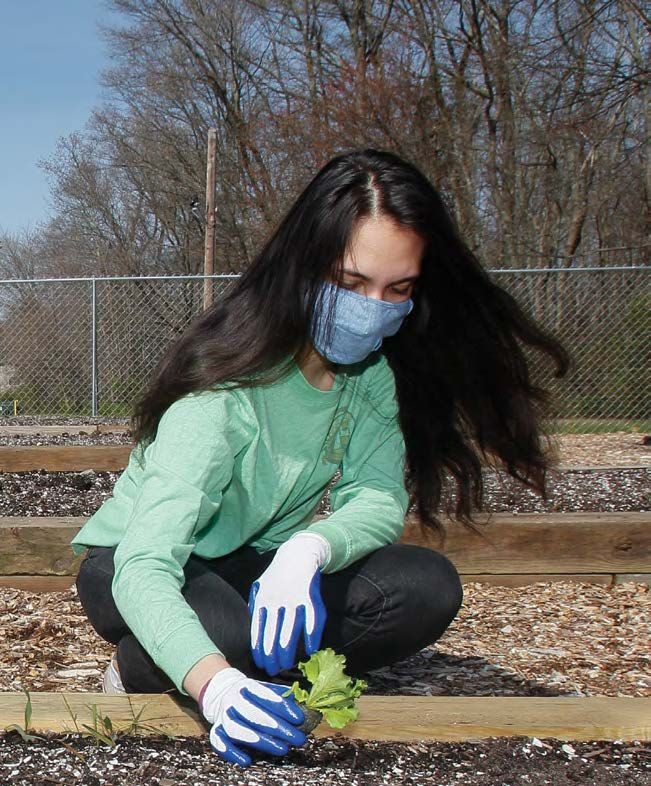
VIRTUAL CELEBRATION

2   SUMMER 2020
On Saturday, May 16, the graduates of the Class of 2020
celebrated a virtual commencement, featuring video
messages from Rhode Island Governor Gina Raimondo,
President Frank D. Sánchez, Class of 2020 President Jeni
Melo, the Rhode Island College Alumni Association and the
Golden Anniversary Class of 1970. School presentations
featured photos submitted by more than 500 graduating
students, some of which appear here. View them all
ric.edu/2020-virtual-celebration
4 SUMMER 2020
RHODE ISLAND COLLEGE MAGAZINE 5
INSIDE THIS ISSUE

     12                                  16                                  20                  24                          26                            32

     life sciences                       new visions                         language            workforce                   graduates                     response
     From Lisbon to                      A new dean                          RIC alumni are at   RIC reimagines              Five members of               FEMA
     Narragansett                        and a new                           the forefront of    a vacant space              the graduating                administrator
     Bay, Professor of                   curriculum put the                  dual-language       as a job training           class of 2020                 Peter Gaynor
     Biology Anabela                     Feinstein School                    education in        and continuing              talk about life               ’86 takes
     Maia unleashes                      of Education                        Rhode Island        education                   as a student in               learning on
     potential in                        and Human                           schools             institute for the           the wake of the               the job to a
     her students                        Development                                             residents of                pandemic                      new level
     through hands-on                    at the cutting                                          Blackstone Valley
     experiences and                     edge of teacher
     virtual lab studies                 preparation

                           SECTIONS                                                                                CONVERSATIONS

    Letter from the President ...................................... 6                                /rhodeislandcollege                   @RICNews

    Shout Outs from Social Media ............................. 7                                      @rhodeislandcollege               #   RICNews

    Rhode Island College Today ................................ 8
                                                                                                  Our RIC community is diverse—made up of students, faculty, staff, alumni
    RIC Foundation News ............................................ 48                           and parents. Let’s hear all your voices. Tell us what you think of the stories.
    Class Notes .............................................................. 58                 Let us know the topics you want to read about. Submit life's milestones for
                                                                                                  the Class Notes section by emailing alumni@ric.edu.
    Retirements & Weddings ...................................... 62

    Anchors Away ......................................................... 64                     Rhode Island College Magazine is published two times a year and produced by the
                                                                                                  Office of Marketing and Communications in cooperation with the Division of College
    Alumni Awards 2020 .............................................. 65                          Advancement and External Relations.

4     SUMMER 2020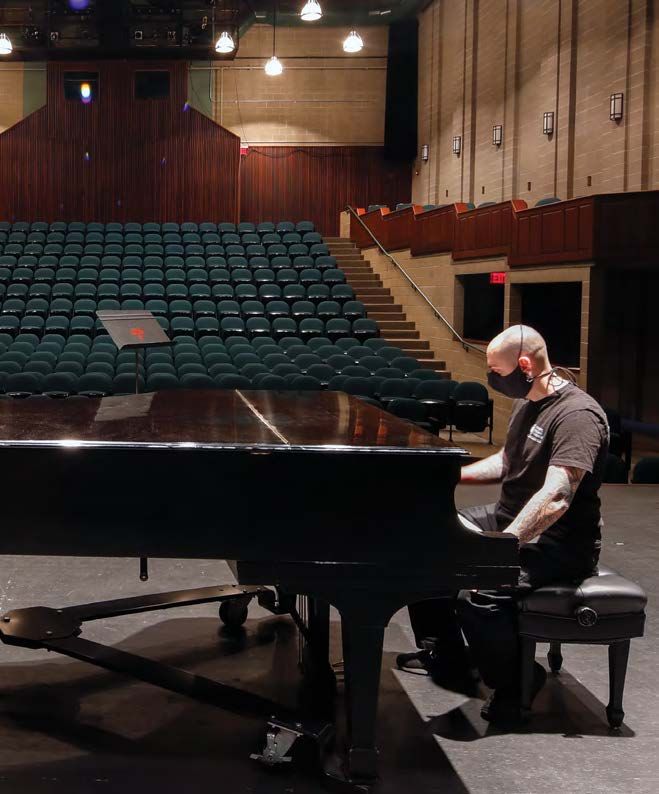
36                    44                     50                       52                        54                        58

campus-19             diy at ric             resilience               be bold                   business                  class notes
Photographer          With protective        From refugee to          From the Obama            Gregory                   Find out
Paul Connors          equipment in           graduate, one RIC        campaign to               Kittleson ‘97             what your
captures the          short supply, RIC      student comes            high-profile              talks travel,             classmates
people and            professor takes        full circle to help      foundations,              business,                 are up to and
places on             a “do-it-yourself”     others navigate          Raymonde                  and where to              submit news
campus in the         approach to            similar journeys         Charles ‘84               look for your             for the next
midst of              help those on                                   chases big                opportunities             issue via email:
the crisis            the front lines                                 ambitions                                           alumni@ric.edu

                MASTHEAD                                                                  COVER IMAGE

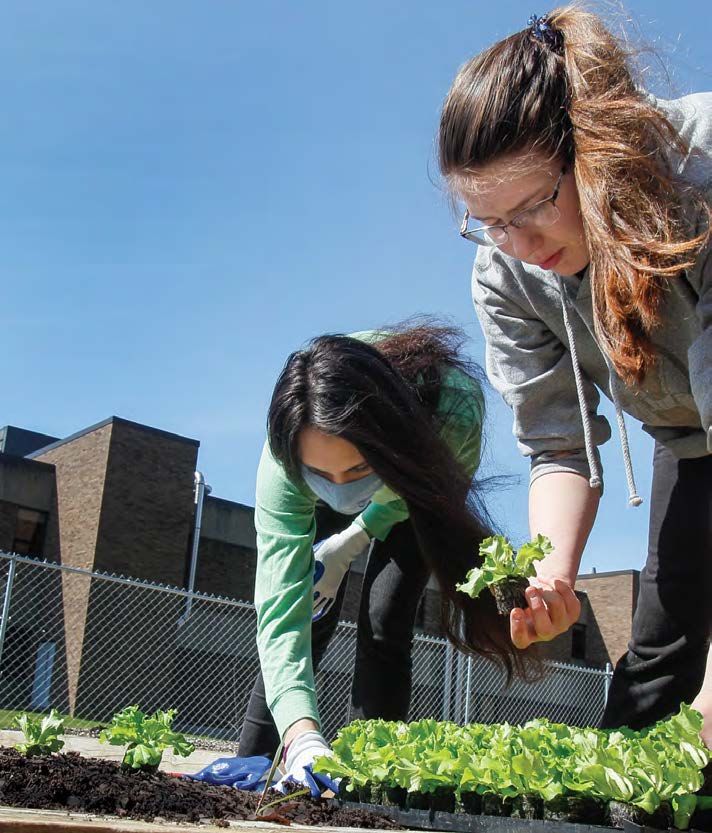
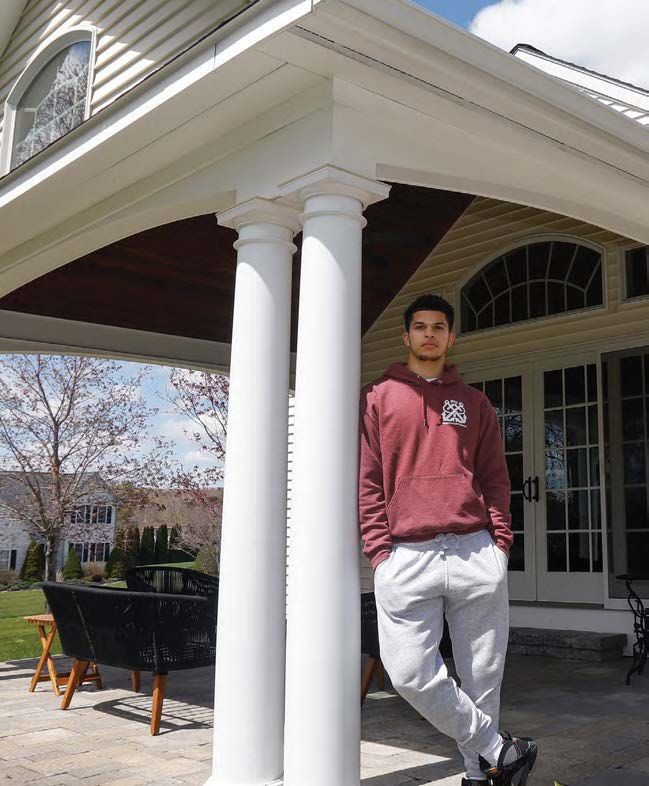
 art director,             contributors                   The cover photo was taken by Paul Connors in the RIC Campus Garden on April 29,
 editor in chief           Suzy Alba                      before Governor Raimondo's executive order mandating the use of cloth face coverings
 Chad Minnich              Gita Brown                     went into effect on May 8. We chose it for the cover because it represents so much
                           Jhon Cardona                   about our college community's experiences over the past few months: the difficult,
 editor                    Jenna Cipriano                 often confusing adjustment to "new norms" such as social distancing and covering our
 John Taraborelli                                         faces in public; the quiet stillness of a college campus without most of its students,
                           Kimberly Conway Dumpson
                                                          faculty and staff; the disruption to the spring semester, which is normally a time of
 design                    Grace Lentini
                                                          robust activity and celebration on campus. But we also chose it because it strikes a
 Ashley Mercado            Marcia Selinger
                                                          note of hope: the promise of renewal, the persistence of #RICSpirit, and the unwavering
                           Emily Synan                    belief that we can grow and flourish even in times of turmoil. The student in the mask is
 photography               John Taraborelli               Jeni Melo, President of the Class of 2020. A little more than two weeks after this photo
 Gene St. Pierre           Jeff Theodore                  was taken, she delivered a video address to her classmates during the first (and, we
 Paul Connors              Caylen Williams                hope, final) "virtual commencement" in the college's 166-year history.

                                                                                                                      RHODE ISLAND COLLEGE MAGAZINE   5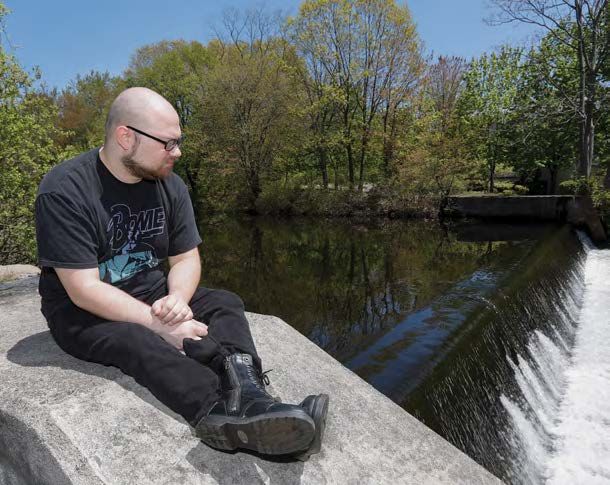
PRESIDENT’S MESSAGE
AN ANCHOR IN THE
COMMUNITY
COLLEGE OFFICERS
Dear Reader,
FRANK D. SÁNCHEZ
This first edition of the Rhode Island College
College President Magazine embodies our #RICSpirit and the true
character of our beloved college. It builds upon
SUE PEARLMUTTER the foundation of prior alumni magazines by
Interim Provost/Vice
broadening our reach and telling stories that
President showcase the impact of our college community as
we live our mission.
Academic Affairs
As Rhode Island’s first institution of public higher
STEPHEN NEDDER education, we have weathered many storms
Vice President since 1854. Through the Civil War, the Great
Administration and Finance Depression, the Vietnam War, 9/11, the financial
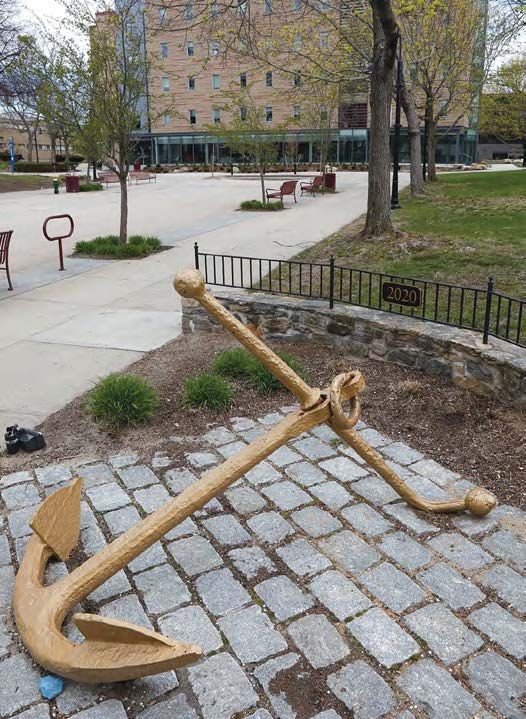
crash of 2008 and beyond, this college has remained a steadfast anchor for the community. We
know that in the midst of crisis and uncertainty, there is often opportunity to be realized. These
KIMBERLY CONWAY are the times to take bold action, affirm our mission and make a greater impact.
DUMPSON
Vice President The COVID-19 pandemic is an example of this. We are teaching and learning remotely, driven by
College Advancement and the innovation of our faculty and the resilience of our students. Our frontline staff are keeping
External Relations critical campus operations going while other staff are working remotely to ensure the success
of our mission. Our students and alumni are serving on the front lines as nurses, social workers,
first responders and educators. In support of the statewide response, even our main campus
ANNA CANO MORALES
in Providence and our Workforce Development Hub in Central Falls are supporting the state's
Associate Vice President
response and serving as COVID-19 testing sites.
Community, Equity and
Diversity For Rhode Island College and our community of students, faculty, staff, alumni and friends,
this crisis has highlighted three of our college’s strengths: our perseverance, our ability to
CLARK GREENE adapt, and our value to Rhode Island. We will not let the challenges of the moment stop us
Executive Director of
from fulfilling our mission, because it is not going to stop our students in achieving their goals.
Strategic Initiatives Instead, we will leverage our expertise to prepare and educate the workforce that will rebuild
our economy and lead our state. Indeed, the success of the state and region depends on it.
Office of the President
Through it all, we will continue to offer high-quality academic programs at the bachelors,
JENIFER GIROUX masters and doctoral levels. Whether our classes are in-person, online or hybrid, we will deliver
Associate Vice President the same high-value education and personalized experience that has made us one of the best
Professional Studies and postsecondary education values in the Northeast.
Continuing Education
We will persist, because it is who we are – and have been for 166 years.
ERIC RIVERA Yours in education,
Interim Vice President
Student Success
Frank D. Sánchez
President
Rhode Island College
6 SUMMER 2020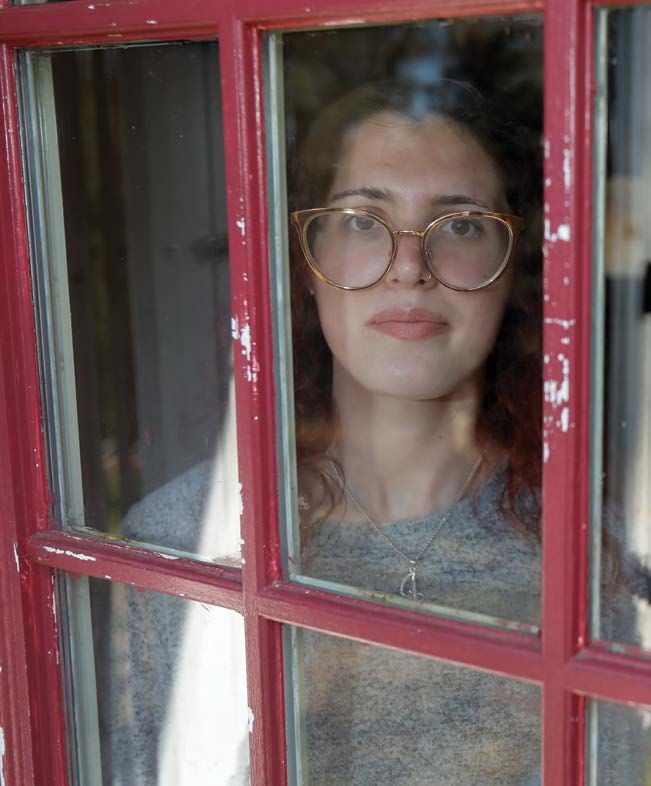
SOCIAL MEDIA
Y
/rhodeislandcollege
@rhodeislandcollege
@RICNews
^
Today is #NationalNursesDay and we want
to thank all the brave women and men who
serve on the frontlines of our #healthcare system every You did it! Congrats to
single day (not just during a pandemic). Here is a all who graduated in our
#waybackwednesday look at the very first graduating #virtualcommencement on Saturday!
class of the RIC School of Nursing, which celebrates its Even though we could not celebrate
#50thanniversary this year. in person, the #classof2020 did
an incredible job of showcasing Let’s have a salute to the brave, hardworking staff who are
#ThankYouNurses #RICnews #experienceRIC #RICspirit their #RICspirit from anywhere and keeping campus running even while most of us are away
#rhodeislandcollege #nationalnursesweek #throwbackthursday from it! Thank you to the folks in dining services, housekeeping,
#1970 #bandwphotography #archive #backintheday
everywhere.
maintenance, groundskeeping, facilities, and the library. We
#healthcareworkers #healthcareheroes #schoolofnursing #RICnews #experienceRIC #RICGrad2020 see you and we’re so grateful for your service to our campus
#commencement #collegegraduation
community! #RICnews #experienceRIC #RICspirit #frontlineworkers
#commencement2020 #schoolspirit
#frontlineheroes #everydayheroes #campus #college #essentialworkers
U 4
The RIC Dance Company is
home sitting & laying around
just like everyone else ... well,
not quite like everyone else!
Two generations of #RICspirit from incoming
#musicmajor Domenic Fusco & his dad! Are you
coming to RIC in the fall? Share your photos with us
using the hash tag #RICcepted2020! And be sure to
We don’t mean to brag, but this photo contains 4 tag and follow @ricadmissions too for the chance to
@Milken Award-winning @RICAlumni: @mich12420 enter their contest.
‘06, M.Ed. ‘14, Milken ‘18; Dr. Michael Barnes ‘87, M.Ed.
‘89, Milken ’97; @YanaizaGallant ‘01, M.Ed. ‘11, Milken #newanchors #rhodeislandcollege #classof2024
‘12; and the latest addition, @jent3112 ‘06, Milken ‘20! #incomingfreshmen #newstudents #fall2020
Paige Alston might not be the biggest player on the court
(just 3’3”), but she stands tall as an inspiration for @go_
anchorwbb! At just five years old she has undergone more than
20 surgeries. But that doesn’t stop her from loving #basketball.
@coachjcos, the #anchorwomen & @goteamimpact have made
her an honorary member of the team. She even signed a letter
of intent yesterday! “It’s just bigger than basketball at this
point,” Anchorwoman @macidorantes told @abc6wlne. “I think
“
“What are the proficiencies &
skill sets for the next generation
of highly effective teachers?
We launched a brand new
curriculum this year where 100%
of our grads will be endorsed in
Reba Mitchell ‘14 is a #rockmusician,
#emcee, salon #stylist, voiceover
artist, audiobook narrator, vocal coach and
founding board member of @girlsrockri,
a nonprofit that helps girls, women,
trans and nonbinary folks empower
themselves through music. She enrolled
special education or ELL.” at RIC intending to be a music teacher, but
it’s a big deal for her to be able to see that she’s not alone and
-Pres. @FrankDSanchez eventually a #gender and #womensstudies
that there’s people standing behind her at all times.” The entire
class with Prof. Leslie Schuster changed
@goanchormen community is behind you, Paige! #RICnews #rhodemaplive
@DanMcGowan @BostonGlobe Reba’s trajectory. “For the first time, I didn’t
#RICathletics #anchorstrong #GoPaige #teamimpact #inspiration feel gaslighted by society,” she says.
#womensbasketball #littleanchor #littleeastconference
RHODE ISLAND COLLEGE MAGAZINE 7
RHODE ISLAND COLLEGE TODAY
                     Members of the RIC community make a direct
                     impact on and off campus

               Nursing     In the fall, the School of Nursing piloted
              Students     an intergenerational service-learn-
                           ing course that placed students at
               Develop     Charlesgate Park West senior living
           Connections     facility in Providence. Hilda Mial, 84,
                           and Eileen MacCathy, 71, were able to
                Across     connect with eight students, includ-
           Generations     ing Maria Lako, a senior, and Rosilene
                           DeOliveira, a sophomore, through
                           weekly visits. “She’s funny and pretty
                           cool,” Lako says of Mial, a great-grand-
                           mother. “I love the way she carries
                           herself. She’s kind of like a grandmother
                           to me.” RIC Professor of Nursing Sharon
                           Galloway is working toward making the
                           course a fixture of the college’s general
                           education curriculum, hoping to attract
                           students of all majors.

                                                                                                                        Professor
                                                                        Bringing Math to                                Turki and
                                                                                                                        students
                                                                        Under-represented Groups                        have fun with
                                                                                                                        math at new
                                                                                                                        afterschool
                                                                        Salam Turki, a native of Lebanon and            program.
                                                                        assistant professor of mathematics,
                                                                        remembers her relatives questioning
                                                                        why she, a woman, would go into
                                                                        math. But Turki believes women and
                                                                        people of color will thrive in STEM
                                                                        fields, if they’re given the opportunity.
                                                                        That’s why she, along with two of her
                                                                        colleagues and math student Jamie
                                                                        Dobson, launched an afterschool
                                                                        program in the fall at Nathanael Greene
                                                                        Middle School to encourage the pursuit
       Maria Lako                                                       of mathematics among groups that
    (right) shares
     a laugh with                                                       are historically underrepresented in
      Hila Mial at                                                      the field. “If everyone had the same
      Charlesgate                                                       opportunity and resources, they would
        Park West.
                                                                        thrive,” Turki says. “We hope to be that
                                                                        extra resource for these children.”
8   SUMMER 2020
RHODE ISLAND COLLEGE TODAY
Professor Lauded by
School of Social Work
International Social Work Professor Frederic Reamer
Organization received the inaugural
Contributor Award from the
Association of Social Work
Boards (ASWB). Reamer, a
professor in the graduate
social work program since
1983, was chosen for the
honor because of his
long-standing voluntary
partnership with ASWB and
his leadership in the study
of professional ethics.
School Chaplain Advocates Equal Rights for Everyone
Behind Rhode Island College Sustainability Coordinator James Murphy are the
newly installed solar panels on the Donovan Dining Center roof.
RIC Sustained by Energy from
First Solar Panel Array
A 110 kW solar panel array atop the Donovan
Dining Center and Student Union is one of Rhode
The Rev. Dante Tavolaro ’11, who received the 2019 Young Alumni Award, serves as Island College’s latest investments in renewable
Rhode Island College chaplain and assistant rector of St. Luke’s Episcopal Church
energy. James Murphy, RIC’s sustainability
coordinator, said the array will produce
About 1.4 million Americans identify as trans, according approximately $25,000 in electricity annually. It
to a 2016 study by the Williams Institute at the UCLA will also reduce the college’s carbon footprint
School of Law, the most recent demographics available by 1,358 metric tons of carbon dioxide annually,
regarding the group. Rhode Island College Chaplain the the equivalent of erasing carbon emissions from
Rev. Dante Tavolaro ’11 counts himself among that number. 163 homes or taking 288 cars off the road. “This
As a member of the Unity Center team, he tries to create a initiative shows our students that we’re investing
safe and welcoming atmosphere for those still struggling in sustainable energy, looking at our carbon
with acceptance from mainstream society, including trans footprint and trying to do better, “ says Murphy.
students. “Equal rights for the trans community should be Our investment in saving energy and preserving
important for all Americans because everybody deserves the the environment at Rhode Island College through
right to feel safe when they leave their homes,” Tavolaro says. generating clean, renewable energy is a priority,”
added RIC President Frank D. Sánchez.
RHODE ISLAND COLLEGE MAGAZINE 9RHODE ISLAND COLLEGE TODAY
Faculty Member Tapped by U.S.
Department of Education
Associate Professor Julie Richardson
M.A. ’10, C.A.G.S. ’16, school
psychologist at the Henry Barnard
School, was awarded a School
Ambassador Fellowship by the U.S.
Department of Education in 2018-
2019 and now an extended fellowship
spanning 2019-2020. Richardson is the
first school psychologist ever selected
for this prestigious fellowship.
RIC Associate Professor
Julie Richardson meets with
the Assistant Secretary for
Elementary and Secondary
Education Frank Brogan.
Training the Next Generation in RIC Foundation Introduces
the Practice of Nonviolence Two English teachers and RIC alumni New Scholarship
– Aimee Marsland Ryan ’10 and her
husband Jason Lorenz Ryan ’09 – have
made North Providence High School
the first in Rhode Island to integrate
Kingian Nonviolence, a conflict-
resolution philosophy based on the
work of Martin Luther King Jr., into
the curriculum. Students who take
this training form bonds of friendship
with students they never would have
otherwise. “We find that assumptions
and misinformation are often the source
of conflict,” Aimee says. “One of the The Moran-Ventre
first things we get our students to do Charitable Foundation,
is humanize the other person. When which supports people
you can get two people to remember with intellectual and
that they have shared emotions and developmental disabilities,
experiences, it’s a lot easier to de- has appointed the RIC
escalate a conflict.” Foundation to manage
its Ben Moran Endowed
Scholarship. Moran-Ventre
Aimee (top)
and Jason Ryan
is contributing a $50,000
(left) would like gift toward the scholarship,
to see Kingian which will start in academic
Nonviolence
training in every
year 2020-21 and provide
elementary, $2,000 annually to RIC
secondary and students pursuing degrees
higher education
institution. in special education.
10 SUMMER 2020ATHLETICS
Alumni in Cyberspace
Student Athletes Earn Honors
Two alumni – Roberta Powell ’09 and
Maureen Taylor ’78, M.A. ’95, C.G.S.
’17 – are working to create web-
based resources that they hope will
make medical data and local history,
respectively, more accessible. Powell,
who returned to school to study nursing
after a career in finance, developed
an app called Q2Q (Quantitative to
Qualitative Health), which translates
complex medical information into
easy-to-understand layperson’s
terms and images so patients can
better understand their own health.
Meanwhile, Taylor, a historian and
genealogist dubbed the “nation’s from left: Nicole Grammas '20 and Eleni Grammas '20
foremost historical photo detective”
by the Wall Street Journal, launched RIC placed 126 student-athletes
OldPVD.com, on the Little East Conference
an interactive 2019 Fall Academic Honor Roll.
website on To be named on the Honor Roll,
which visitors a student-athlete must earn a
can explore top: Roberta semester GPA of 3.0 or better
Powell ’09, former
Providence’s nurse educator and have been an active member
architectural and atypical app of the team at the conclusion of
history. inventor. their fall semester season.
left: OldPVD.com,
an interactive
website created
by Maureen Taylor Bob Walsh
Inducted
’78, M.A. ’95,
C.G.S. ’17
into Little East
Conference Hall
McLarty’s Legacy Lives On of Fame
One of RIC’s most
Former Men’s Head
celebrated alumni, actor, Basketball Coach Bob
author and audio book Walsh (center) with
narrator Ron McLarty ’69 Director of Athetics Don
Tencher (left) and Associate
passed away in February at Commissioner of the
72. Fortunately, his legacy Little East Conference
lives on through the Adams Darryl Konicki
Library. In 2017 he donated
much of his work to the Former men’s basketball head coach
archives, including original Bob Walsh is officially in the Little East
manuscripts, plays, poems, Conference Hall of Fame. Walsh, who
audiobook narrations, acting was inducted in a pre-game ceremony
clips and more. in January where he addressed the
crowd, was joined by his family and
later celebrated the event with RIC
men’s basketball alumni.
RHODE ISLAND COLLEGE MAGAZINE 11NARRAGANSETT BAY 12 SUMMER 2020
BIOLOGY

FROM THE SHORES
OF LISBON TO
NARRAGANSETT BAY
Early experiences with nature shaped
marine biologist Anabela Maia in
profound ways

by grace lentini
photos by gene st. pierre

By the time Anabela Maia was 16,         walks in the neighboring Monsanto
she was SCUBA certified and began        Forest Park (not related to the chemical
sailing. By the time she was applying    company), also known as the green
to colleges, she wanted to study         lung of Portugal. Its 1,000 hectares
sharks as a marine biologist and         make it one of the largest urban
become a professor. Through her          forests in all of Europe. It’s there that
hard work and determination, she         students would collect moss, leaves
would eventually become an assistant     and pinecones.
professor at Rhode Island College
and focus her research in the marine     She was accepted into the University
environment.                             of Lisbon’s marine biology program.
                                         During her time there, she had
Maia’s childhood was filled with         numerous opportunities to intern with
moments in the natural world:            different professors. “I helped analyze
Splashing along the shores of Lisbon,    data on cricket hearing, measure fish
learning about the ecosystem on a        from biodiversity surveys and count
head of cabbage at her grandparents      mussels on the rocky shore,” she
farm in the north of Portugal, gazing    explains. Not only did she graduate
at the bear enclosure at the Lisbon      in the 100th percentile, her honor’s
Zoo from her bedroom window. There       thesis covered the foraging ecology
were always animals in her grade         and reproduction of the shortfin
school classroom. Gerbils, bunnies       mako shark off the southwest coast
and caterpillars, as you would expect.   of Portugal. She was well on her way
Not so expected were the goats and       to the career that she had always
chickens. The class would often take     dreamed of.

                                                             RHODE ISLAND COLLEGE MAGAZINE   13
For her Ph.D., she jumped the pond and found herself at the University
of Rhode Island. Her research focused on the functional morphology
of shark dorsal fins. After receiving her doctorate she researched
seahorse tail prehension and suction flow modeling in Belgium, the
effects of turbulence on swimming fish in Boston and the study of fish
biomechanics in Illinois. When an opportunity to return to the coast
presented itself, she jumped on it.
Now happily situated in her lab at RIC, she continues her research.
But being within driving distance of the ocean wasn’t the only draw. “I
think what mainly drew me to RIC is the impact that we can have on
students who might not have had everything handed to them,” she
says. “Being close to the ocean – but at the same time in a city setting
– helps recruit students that are interested in fish biology and marine
conservation.”
This translates to having a pool of students eager to get experience in
her lab. “I am always impressed by the commitment of the students in
my lab and how excited they are by research,” she explains. “They all
have different strengths and personalities, which, in my opinion, is what
makes the lab so special.”
One point she continually stresses to her students is the importance
of being able to explain the applications of their research. While
fundamental research is important, the application of research is key
to explaining to the public why tax dollars should be invested. Because
of that, Maia’s research covers three applied facets: conservation,
bioinspiration and neuromuscular control.
Her research as it pertains to conservation focuses on a few things. First,
how fish communities in Narragansett Bay are affected by medium- and
long-term temperature changes. Second, how fish movement and
distribution in the bay are affected by changes in turbulence. Third, how
Students native species are affected by humans.
conduct
research in
Asst. Prof. With bioinspiration, Maia is interested in what can be learned from fish
Anabela to make better underwater vehicles. Some of the discoveries can also
Maia’s lab be applied to cars, airplanes or even appliances. Fans, for example.
in Fogarty
Life Science
before it was In terms of neuromuscular control, she is interested in what we can
shuttered learn from fish fins, their muscles and their nerves that can be applied to
due to the
COVID-19 improve better prosthetics. “I think, as scientists, we want to be able to
crisis. inform policy and make an impact in our society,” she says.
As for her impact on students, Maia has watched as some have gone
on to pursue degrees in higher education or become successful in
the workforce. Former students of hers have been accepted to Duke
University and the University of Washington to pursue graduate
degrees in marine affairs. Others are now physician assistants,
optometrists, research assistants and occupational therapists.
She’s not only devoted to her research but to her students. And she still
lights up when talking about either. She loves the interaction with her
students. It’s incredible, she says, to see “the aha moment reflected on
their faces when they get an experiment to work for the first time or
when they make a significant discovery.”
14 SUMMER 2020BIOLOGY
by jhon cardona
THE ERA OF
VIRTUAL
LABS IS
HERE
From Sea to Screen
with Professor Maia
“The virtual lab is not very glamorous,”
says Anabela Maia, assistant professor
Screenshots from Professor Maia’s virtual
of biology at Rhode Island College. “We lab class, late March 2020
meet over Blackboard Collaborate, share
our screens to explain the analysis, check
on weekly progress and discuss papers.”
privately online) and enables students to Since the work in Maia’s lab is focused
Research in Maia’s lab, located in access the actual lab’s data to conduct on understanding fish movement and
Fogarty Life Science, has focused on fish analyses. habitat, she notes how the isolation
biomechanics since the summer of 2018. brought about by COVID-19 has a
Maia’s team uses functional morphology When the decision to close Maia’s lab in great impact on the water in places like
to learn about fish movement as well Fogarty was made, she had enough time Narraganset Bay, changing pollution
as the impact of habitat changes. The to grab data and set up computers that levels. “Pollution has a strong impact
team’s lab studies are complemented the students could access remotely. on fish populations, female fish
with fieldwork to bridge the gap between reproduction and water quality, even for
biomechanics and ecology. “We have asynchronous labs that I human consumption,” she explains.
prepare for the whole week so they are
Before RIC migrated to remote classes, available for the students,” Maia explains. The situation we are living in now “is a
Maia worked in her lab with seven “Student work in these labs is recorded great opportunity for us to understand
undergraduate students (one pre- at Blackboard Collaborate as evidence what we could do with better regulations
nursing and six biology students) and 16 of student participation. One of the of pollution,” she says.
specimens (14 bass, one scup and one students studies the fins and how the
bluegill). fish moves; so now the student is using Maia believes that although the
video previously captured at the lab and pandemic has created difficulties for us,
After March 23, the specimens were analyzing it.” this moment in history may actually be
released back to Narraganset Bay and good for the environment. “I hope it’s
Lincoln Woods. “We had to release them Now that everyone has settled into eye opening for people to realize that
because it would be very hard to take working remotely, Maia is using her lab there are measures we can take to help
care of them when everyone is staying at time to explain new analyses and talk our planet that wouldn’t involve too much
home,” she says. to students about their manuscripts, effort if we commit to it.”
helping them to organize their data.
Although the shift to teaching remotely “If we can reverse climate change,
was abrupt, Maia strives to keep her “So far, the students feel excited about especially in Narraganset Bay, we
classes as close to normal as possible their research and think that this is can bring back the species that were
with the same routine. She synchronizes a good opportunity to get the data here before, which could be more
with students during lecture time, uses analyzed and submit their papers by the economically profitable for fishermen
an open lab “room” (a virtual option that summer to actually have a chance to get and the fishing economy,” she concludes.
allows students to meet and talk more into graduate school.”
RHODE ISLAND COLLEGE MAGAZINE 15EDUCATION
NEW SCHOOL by john taraborelli
With a retooled curriculum and new
leadership, the Feinstein School of
Education and Human Development
is reinventing itself
Typically we think of spring as the season of new beginnings,
but this past fall semester marked the start of something
big at the Feinstein School of Education and Human
Development (FSEHD). After more than two years of
development, the school deployed a new curriculum
informed by best practices and innovations from around the
country, putting it at the cutting edge of teacher preparation.
At the same time, Jeannine Dingus-Eason arrived from
St. John Fisher College in Rochester, New York to become
FSEHD’s new dean, after an extensive nationwide search.
Of course, when Dingus-Eason accepted the job she had no
way of knowing that her arrival would happen concurrently
with the release of the devastating Johns Hopkins report on
Providence Schools and the subsequent state takeover of
that district, which thrust the issue of teacher education to
the forefront of local news and conversation. Suddenly, it felt
like the changes at FSEHD were a big moment not just for
Rhode Island College, but for the entire state.
“The creation and implementation of Feinstein’s conceptual
framework was one of my goals in deciding to come to RIC,”
Dingus-Eason says. Having served as chair of the Executive
Leadership Ed.D. program at Fisher, she is no stranger to
the kinds of big ideas needed to move education forward. “I
came from an institution where the conceptual framework
served as a guiding force across the school’s various
programs. I also ran my own consulting firm and took myself
through similar exercises. Now, I am able to extend those
skills to a larger organization.”
16 SUMMER 2020john de melim
machine graphic (2014)
RHODE ISLAND COLLEGE MAGAZINE 17EDUCATION
The innovations afoot at FSEHD are big, structural and
forward-thinking. One is an emphasis on getting teacher
candidates out into the field more frequently and earlier – as
early as their first semester, in fact. Another is an emphasis
on developing a talent pipeline for educators of color,
something that was specifically cited as an urgent need
for Providence Schools in the Johns Hopkins report. Also
aligned with the state’s needs, the curriculum is designed
so that graduates come out certified for either special
education or English language learners, two specializations
that are in short supply statewide.
Brianna Pagano is one of last fall’s incoming freshmen,
the first class to experience the new curriculum and to
benefit from the new approach to field experience, which
encompasses four types of placements: observation,
participation, practicum and student teaching. In her first
semester, Pagano had the opportunity to do observation at
two elementary schools, a middle school and high school.
She credits the experience with changing her direction early
in her education. “It really opened my eyes to what grade
level I want to teach,” she explains. “I thought I wanted
to teach high school, but I realized that I don’t. I want to
teach younger kids because they absorb so much more
information.”
Summer Brito also found her first semester eye-opening,
particularly the curriculum’s focus on issues of social justice
and diversity. Brito came to FSEHD through the Teacher
Academy at Mt. Pleasant High School, an existing program
that Dingus-Eason is leaning on as part of the pipeline for
recruiting teachers of color. Brito cites FNED 246: Schooling
for Social Justice course as an important early experience
for her. “This class enables you to go beyond what and
who you want to be as a teacher and actually allows you
to reflect upon deeper issues in society,” she says. “By
focusing on issues like privilege and prejudice, race, ableism,
multiculturalism and other more profound topics you are
able to get out of your comfort zone. This course really
“Genius is not emphasizes that not all students are given the same amount
of resources.”
limited
Dingus-Eason is equally bullish on the importance of these
by zip code.” issues. For example, all incoming students will receive a
special diversity reader to guide them for all four years of the
program. She believes it will “make them more aware and
— Jeannine Dingus-Eason,
socially conscious and adept at teaching a variety of kids.”
Dean of the Feinstein School
of Education and Human
This is especially important as the program that educates more
Development
teachers than any institution in the state prepares to meet
the needs of Rhode Island’s increasingly diverse classrooms.
18 SUMMER 2020Proposed
architectural
rendering of
redesigned,
renovated Horace
Mann Hall.
“If we aspire to be
educators, we should
strive to be all the
more understanding
“Genius is not limited by zip code,” Dingus-Eason is fond
of saying in response to the vast geographic disparities in that our future
achievement across the state’s school districts and even across
schools within the same district. students are more than
It’s a message that has clearly been imparted to new students just their social status,
like Brito. “If we aspire to be educators, we should strive to be
all the more understanding that our future students are more more than just their
than just their social status, more than just their skin color, more
than just their disability,” she declares. “They are significant in skin color, more than
every way and that they, too, deserve a better education.”
just their disability.
With one academic year under her belt, Dingus-Eason can
look towards a bright future for FSEHD. The long overdue They are significant
redesign and renovation of Horace Mann Hall, which voters
funded in November 2018, is on the horizon and, as this goes in every way and that
to press, students and teachers alike are adapting to the new
opportunities and challenges of distance learning made they, too, desrve a
necessary by the COVID-19 crisis. But she is ready to do
the work. better education”
“I am excited about all of these initiatives,” she says. “I am
— Summer Brito, freshman,
good about identifying needs, using data to do so, gathering
secondary education major,
the right people to achieve the goal and working towards
Feinstein School of Education and
accomplishing the goal. There is much work to be done
Human Development
internally within the Feinstein School and, most certainly,
externally, but 2020 is a transformational time.”
RHODE ISLAND COLLEGE MAGAZINE 1920 SUMMER 2020
EDUCATION

                                             IMMERSED
                                             IN LANGUAGE
                                             Teacher education programs and alumni
                                             respond to the bilingual needs in schools
                                             by jhon cardona and jeff theodore
                                             photography by chad minnich

                                                       “Every child deserves the opportunity to live up to their full
                                                        potential,” said Congressman James Langevin ’90 in 2018.
                                                       “It is clear, however, that Rhode Island’s English language
                                                        learners are facing significant barriers exacerbated by the
                                                        fact that our schools lack the resources, particularly teachers,
                                                        needed to keep pace with this growing population.”

                                                       According to Langevin, who in 2019 introduced federal
                                                       legislation that would forgive more than $17,000 worth of
                                                       student loans for ELL certified teachers, nearly 10 percent of
                                                       all students statewide and roughly 30 percent of students in
                                                       the Providence Public School Department (PPSD), the state’s
                                                       largest and most diverse district, require ELL instruction.
                                                       In short, the need for more teachers to instruct English
                                                       language learners (ELLs) has never been greater and will
                                                       continue to increase.

                                                       At the same time, the Rhode Island Department of Education
                                                       (RIDE) posited in its 2020 strategic plan that expanding
                                                       student access to dual language and world language
                                                       instruction creates more cultural, educational, economic,
                                                       cognitive and sociocultural advantages. “The diversity
                                                       of Rhode Island is an asset that will help us prepare our
                                                       graduates for success in a local and global society,” the
                                                       plan said.

                                                       Rhode Island College, both through its current educational
                                                       programs and expansive alumni network throughout the
                                                       state, is helping the state address both types of language
 Michelle Carvajal ’18 in her classroom at             learning needs. The new curriculum launched at the
   Nathanael Greene Elementary School,
   the only school in Pawtucket currently              Feinstein School of Education and Human Development
implementing a dual language program.                  (FSEHD) in fall 2019 will send every graduate out into the

                                                                                                           RHODE ISLAND COLLEGE MAGAZINE   21
Carvajal instructs
in two languages,
English and
Spanish, creating
more cultural, world endorsed for either special education or barrier and socioeconomic status,” Hernandez
educational, ELL, and RIC signed onto a partnership with RIDE says. “I understand what is important right
economic, cognitive and PPSD to ramp up ELL certifications among now for students’ overall education and social-
and socio-cultural current teachers in Providence schools. emotional state, and I remind them that the more
advantages. difficult path is not an impossible one. My goal is
Yet, even as FSEHD works to prepare more teacher to motivate all my students to live up to their full
candidates for multi-lingual classrooms, its alumni potential.”
are already out in the field demonstrating the
value ELL-certified teachers bring to their students. Meanwhile in Pawtucket, FSEHD grads Yury
Cardona ’18 and Michelle Carvajal ’18 shape their
“We’re ESL students but highly successful in students’ early educational experiences through
full immersion science classes, thanks to Ms. two languages at Nathanael Greene Elementary
Hernandez,” says Albert Rojas, a Woonsocket School – the only school in Pawtucket currently
High School senior who has taken ELL-integrated implementing a dual language program. The
science courses taught by Brigette Hernandez dual language English teacher is ELL-certified
’12, M.Ed ’18. “When she taught us in our and the dual language Spanish teacher has a
second language, she helped in multiple ways, bilingual certification.
simplifying words for us, using photos to explain.
She took the extra time.” The difference between ELL and dual language
instruction is nuanced, but important. ELL
Hernandez, who earned her master’s degree in programs use a bilingual approach to help
teaching English as a second language (TESL), students who are not English speakers learn
is a Providence native and the daughter of the language. Dual language programs provide
Dominican immigrants. Although she was raised instruction in both English and a partner
bicultural and bilingual (speaking both Spanish language – most commonly Spanish – to a
and English), she identifies with the needs of classroom that may contain a mix of both ELL
English language learners. students and native English-speaking students
who are trying to learn a second language.
“I know what it’s like for students from immigrant
families who have to learn to navigate the school “[Our] program is implemented in such a way that
system and pursue a college degree with little students are able to make meaning of the world
support from home because of their language they live in, creating cross-cultural competence
22 SUMMER 2020EDUCATION
and awareness,” says Carvajal. “By having an ESL-
certified teacher and a bilingual-certified Spanish
teacher, students receive grade-level content
that helps them make real-life connections…
We see our students developing proficiency
in both languages through relevant material
while improving communication skills, gaining
confidence in their speaking abilities and fostering
relationships with their classroom peers and
educators.”
The value of both ELL and dual language
programs in Rhode Island schools will only
continue to increase alongside the state’s diversity.
“Dual language programs help students learn
top: Woonsocket High
all content areas in two languages to develop
School science teacher bilingualism and bi-literacy in all students,”
Brigette Hernandez ’12, according to Sarah Hesson, director of FSEHD’s
M.Ed ’18. Teaching English as a Second Language (TESOL)
program. “Research consistently shows that
middle: Nathanael Greene students learning in dual language programs
Elementary School
outperform even their monolingual English-
fourth grade teacher Yury
Cardona ’18. speaking peers on English language standardized
tests… Dual language/bilingual programs are
bottom: (left) students in successful and critically important for bilingual
Cardona’s fourth-grade students and communities.”
class; (right) students in
Hernandez’s anatomy
Back in Woonsocket, Rojas, who aspires to be an
class.
anesthesiologist, is more succinct: “Watching Ms.
Hernandez has motivated me,” he says. “Because
she is successful, I want to be successful, too.”
RHODE ISLAND COLLEGE MAGAZINE 23COMMUNITY PARTNERSHIPS
DELIVERING
21ST CENTURY
SKILLS
With the future of job
training in mind, RIC opens
its Workforce Development
Hub in Central Falls
by jhon cardona Eight years ago, when James Diossa, mayor of résumé development, motivating students to
Central Falls, ran for office to lead the city with the become bilingual, and job search/workforce
largest percentage of Latinos in Rhode Island, he navigation for individuals recently arrived in
couldn’t have imagined partnering with Rhode the country.
Island College to develop the city’s, and state’s,
human resources. “It is necessary to reinvent the workforce, and for
the community to have the opportunity to educate
However, on January 29, Mayor Diossa and Rhode themselves in other types of work settings, thus
Island College President Frank D. Sánchez stood giving them the opportunity to become middle-
side by side at the opening ceremony of the class residents, gain more money and contribute
college’s Workforce Development Hub, located better to their families,” said Diossa.
on Dexter Street in Central Falls.
In fact, one of the most important reasons why
The Hub will serve as a job training and continuing Diossa advocated for partnering on the project
education institute for the residents of Central with Rhode Island College was because “higher
Falls and the Blackstone Valley. Courses offered education institutions help create confidence
include certificates in accounting, medical in the community, which engages them to have
assistance training, certificate of undergraduate more participation. Luckily, I found a great partner
studies in social and humanitarian services in President Sánchez,” he said.
assistance, three levels of intensive English as a
second language (ESL) programs and certified From the college’s perspective, the Hub “is an
behavioral health training programs, such as opportunity to expand access and really reach
training for community health workers, leadership out, very intentionally, to a multilingual community
development for health professionals and throughout the state,” remarked Sánchez. “Once
Microsoft Office. Staff at the Hub also assist in the Pawtucket/Central Falls rail station is in place,
24 SUMMER 2020Students in one of the
classrooms at the RIC Workforce
Development Hub, which turned
a former Dexter Credit Union
branch in Central Falls into a
center of learning.
it will provide tremendous access to training and
education for more Rhode Islanders.”
Diossa is very proud of the support Central Falls
received to make this project real. “The most beautiful
left: Reception
thing about this project is that it incorporates many area at the Hub.
of the organizations that are already working to help
people with lower income or who do not speak the right: Central
Falls Mayor James
language,” Diossa said. “The agreement with RIC will Diossa with RIC
help raise the stratum of citizens.” President Frank
D. Sánchez at the
Hub’s ribbon-
Committed to expanding college partnerships and cutting ceremony.
access to opportunity through education, Sánchez
similarly echoed gratitude toward the community. photos by
gene st. pierre
“Rarely do we see this kind of cross-sector collaboration
around a common vision to deliver such a compelling
result,” he said. “It is with deep gratitude that I thank all
our government, business, health care, education and
community leaders that made the Hub possible.”
The Hub enables
Rhode Island
“Let’s make sure that every Rhode Islander has a shot College to expand its
at participating in the prosperity that our state is now successful workforce
experiencing,” said Secretary of Commerce Stephan development
and continuing
Pryor. “It is impossible to understate the importance of education programs
this center.” in an underserved
urban setting.
RHODE ISLAND COLLEGE MAGAZINE 25“ Rather than just
assume that all
my future goals
will simply fall
into place, I
want to plan for
what is in my
control. Outside
interference
is real, and it
comes out
of nowhere.
— Zacary Abreu ‘20
26 SUMMER 2020STUDENT PERSPECTIVE
CLASS OF 2020,
QUARANTINED
by jenna cipriano ‘20 // photography by paul connors
Rapidly running through the country, the COVID-19 pandemic
uprooted students from their college careers, plunging them
into remote learning. For some, the transition to remote
education was easy. It was school from home. What’s the
harm in that? But for some Rhode Island College seniors, the
experience was an abrupt ending to their final year. I have
interviewed some who chose to share their experiences with
the rest of the Rhode Island College community.
For Zacary Abreu, the transition to remote learning was a
smooth one. “I really just went to school for classes and then
came right back home,” he says. “Every day was a ‘get in,
get out’ scenario, and I didn’t really want to stick around any
longer than I needed to.” He experienced the same course
load, but “some professors kept the same syllabus under a
now shorter time frame.” Though he found the workload was
ultimately maintainable, Zac experienced some frustration
while attempting to complete his assignments for the
remainder of the semester. In a way, it was a good thing he
has insomnia.
However Abigail Silva experienced a sense of confusion
during the time of transition from in-person lectures to
online Zoom meetings. “We just left for spring break and
never returned back to campus,” she explains.
“My professors have all handled the situation differently,” she
continues. “It creates a bit of mixture, which is interesting
to see, but at the same time, everyone has different
expectations, so it can become confusing.”
RHODE ISLAND COLLEGE MAGAZINE 27“
I'm telling my future self
to get more involved.
— Abigail Silva ‘20
My experience with the transition was similar
to Silva's. My time at RIC was spent with the
same professors each semester. They made the
transition manageable, but my only wish was that
I could have given them a proper “thank you” or
“goodbye” and walked the halls of Gaige one
last time.
Due to the transition to remote learning, the
topic of graduation became a worry as the weeks
of quarantine turned into months. With RIC
President Sánchez’s announcement that there
would be no in-person commencement, many
seniors felt frustrated, devastated and anxious.
While saddened by the cancellation of
graduation, Silva, Emily Corio and Caylen
Williams agree that because of the circumstances
that we as a country are facing, they would rather
stay safe and healthy than walk across a stage
that could potentially risk the lives of others.
Others, such as Abreu and Derek Sherlock, didn't
plan to attend graduation but still empathize with
fellow seniors who had been looking forward to
the event. “My heart goes out to everyone who
worked hard for so many years, especially those
who are first-generation graduates. I wish they
could have had a chance to shine properly,” says
Sherlock.
Corio enjoyed her time at RIC and she says she
will specifically miss Professor Schmeling of the
Political Science Department along with all of the
friends she did not get the opportunity to say
goodbye to.
Corio will be applying to law schools. Ready for
the next chapter in his life, Williams is applying
for jobs, though he admits it might be a struggle
at first. Taking this time to rest mentally and
physically, Sherlock has picked up some hobbies,
such as playing guitar and their journey after
graduation will also include accessing remote jobs.
28 SUMMER 2020— Derek Sherlock ‘20
“ Learn to adapt
because
everything is
not going to
go according
to your plan.
It’s good to
plan and have
goals, but
learn to adjust
the path you
will take to
reach your
goals.
— Caylen Williams ‘20
RHODE ISLAND COLLEGE MAGAZINE 29“ I'm telling my
future self that
the path she
is on is okay
even though
it’s not the path
she expected.
Everything
happens for a
reason, even if
we’re not quite
sure what that
reason is.
—Jenna Cipriano ‘20
30 SUMMER 2020“ I am an adult learner. When I came to RIC as a
transfer student I was already in my late 20s. Now
that I am 32 I have mellowed a bit more than when
I first walked into college eight years ago. But what
I would tell myself back then is do not give up, keep
fighting the good fight and never compromise on
your values. I guess that would be the same thing I
would say to my future self.
— Derek Sherlock ‘20
Like Sherlock, Abreu has taken this time to relax mentally Caylen will miss his professors and those he was not able
from school. His original plan was to journey onward to to say goodbye to before spring break.
graduate school, but since the pandemic he has decided
to join the world of employment, though he understands Abreu misses getting out of the house to come to campus,
he is competing with a much bigger audience. while Sherlock reminisces about the late professor of English
Daniel Scott and all of the faculty who helped them succeed
“It’s actually pretty funny – being stuck at home has made throughout their eight years at RIC. They created a personal,
me question my choices and career path and caused me family-like bond with their professors, and over the course
to reanalyze why I pursued my degree in the first place,” he of their time here at RIC they believe their professors helped
said. “So as of right now, my goal is to figure out what my shape them into the person they are today.
real goal is.”
Reflecting on their experiences at Rhode Island College, I want to thank all the RIC seniors who participated in this
Silva says she'll miss working in her favorite study spot: interview process. We will get through this tough time together.
the second floor lounge of Gaige Hall overlooking the You are not alone. – Jenna Cipriano ’20
campus from the giant window.
RHODE ISLAND COLLEGE MAGAZINE 31FEMA
Administrator
CURRENT
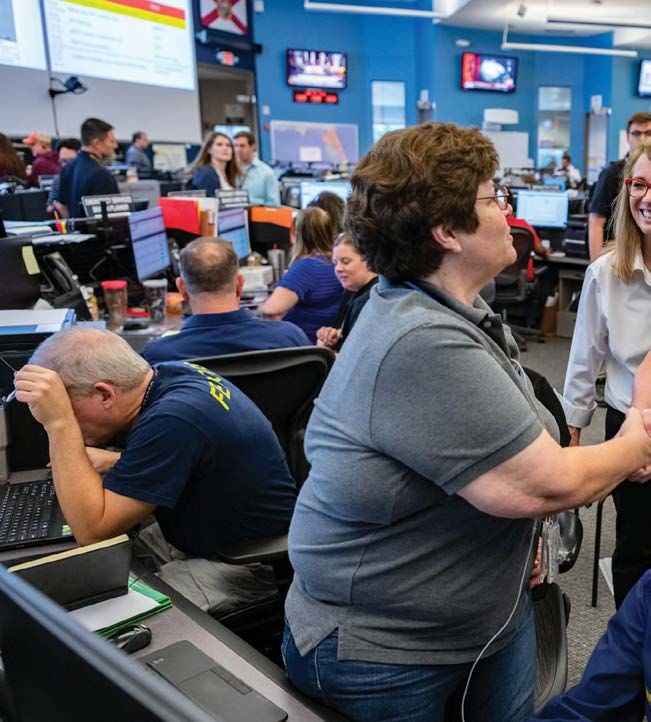
Peter Gaynor ‘86 FEMA DIRECTOR AND RIC ALUM Peter Gaynor
engages with
‘86 addresses continuents at a meeting held at FEMA
employees before
headquarters
the COVID-19 crisis in XXX photo by a person not yet named
forced the agency
to adopt strict
social distancing
measures.
32 SUMMER 2020LEARNING ON
THE JOB
Peter Gaynor ’86 is no stranger to
crisis, but his first months as FEMA
administrator are like nothing
anyone’s ever experienced
by john taraborelli
We’ve all experienced that overwhelming moment in
the early days of a new job: You’re still familiarizing
yourself with all your new responsibilities, trying to
catch up on the flood of emails you’ve already received,
memorizing the names and roles of your new coworkers,
balancing competing priorities – and, wait, where are the
bathrooms again? It’s a lot for anyone to handle.
Now imagine that your new job is overseeing the
Federal Emergency Management Agency (FEMA), the
principal emergency responder for the entire nation.
And your first official day on the job was five days before
the first confirmed case of the novel coronavirus on U.S.
soil. And you look up at the calendar and realize that the
start of hurricane season is just around the corner.
That is the position in which Peter Gaynor ’86 found
himself after being confirmed FEMA administrator, the
nation’s top disaster response official, in January 2020.
Of course, no one in the emergency response business
goes into the job unprepared, and Gaynor was
probably more ready than most. He had been serving
as the acting administrator of FEMA for 11 months,
ascending to that position from his prior post as deputy
administrator. Before that, he was head of the Rhode
Island Emergency Management Agency and prior to that
the Providence Emergency Management Agency. He
also brought with him 26 years of military experience,
both as an enlisted Marine and as a commissioned
officer, including deployment in Iraq. In the early 2000s
he even served as executive officer responsible for
security of the President at Camp David.
RHODE ISLAND COLLEGE MAGAZINE 33Gaynor in the field with a
response team after the
pandemic changed the way
the agency works to protect
its employees.
“I was fortunate enough to have some key personal and all levels of government and the private sector working
professional growth opportunities that are helping me now to save lives, protect property and support communities
as I lead FEMA during these unprecedented times,” Gaynor impacted by disasters.”
says, in typically understated fashion. “This ‘business’ of
disasters and emergency management is all about your On top of all this, FEMA, like every workplace right now, is
ability to embrace chaos and uncertainty. If you can be having to adapt its operations to maintain proper social
comfortable operating under those conditions, then you distancing and the safety of its employees. Two of the
likely can see through the fog and provide unique solutions agency’s primary modes of working – putting a lot of
for a number of interconnected problems.” people in one room and face-to-face interactions with the
public – are not compatible with Gaynor’s top priority as
These are indeed unprecedented times. For Gaynor and administrator: keeping his workforce safe. That has meant
his staff of 20,000, it’s not just that the scope and severity shifting more employees to telework, imposing more
of the COVID-19 crisis are like nothing anyone has ever social distancing guidelines and stepping up cleaning and
experienced. It’s also the fact that health crises are typically sanitizing facilities.
not even within FEMA’s purview.
“During a usual response, you would see our National
“Leading the operational coordination for the nation’s battle Response Coordination Center with about 200 FEMA and
against COVID-19 is not something many of us here had interagency partners working together in person,” he
planned for,” he explains. “Statutorily, FEMA is responsible explains. “Now, we’ve had to adapt our physical space to
to lead and coordinate the whole-of-government response make it safe, while still accomplishing what is usually a very
for natural disasters, such as hurricanes and earthquakes, face-to-face part of the job.”
not public health emergencies such as pandemics.”
For Gaynor, responding quickly and adapting on the fly is
Nonetheless, in the early days of his job Gaynor finds himself not so much an occupational hazard as it is exactly what he
overseeing a response that goes far beyond whole-of- signed up for when he accepted the job.
government. “Although many may see the FEMA name in
the news, it’s really a whole-of-nation response,” he says. “I believe a sense of urgency is part of any emergency
“I have nearly 40 government departments and agencies manager’s DNA. We are always running against the clock,
working with us here at FEMA headquarters, as well as making sure we are prepared and organized for several
several public-private partners, and nongovernmental different hazards and threats,” he says, noting that the
organizations working tirelessly each day to reduce the calendar is already not in the agency’s favor. “We are quickly
impact of COVID-19. It’s just not FEMA responding. There heading into hurricane season. We are also in tornado
are tens of thousands federal employees and partners from season. Every day is earthquake season at FEMA. One of the
34 SUMMER 2020You can also read


