GRADUATE CATALOG - Sirindhorn International Institute of Technology Thammasat University - SIIT
←
→
Page content transcription
If your browser does not render page correctly, please read the page content below
GRADUATE
  CATALOG

Sirindhorn International Institute of Technology
Thammasat University
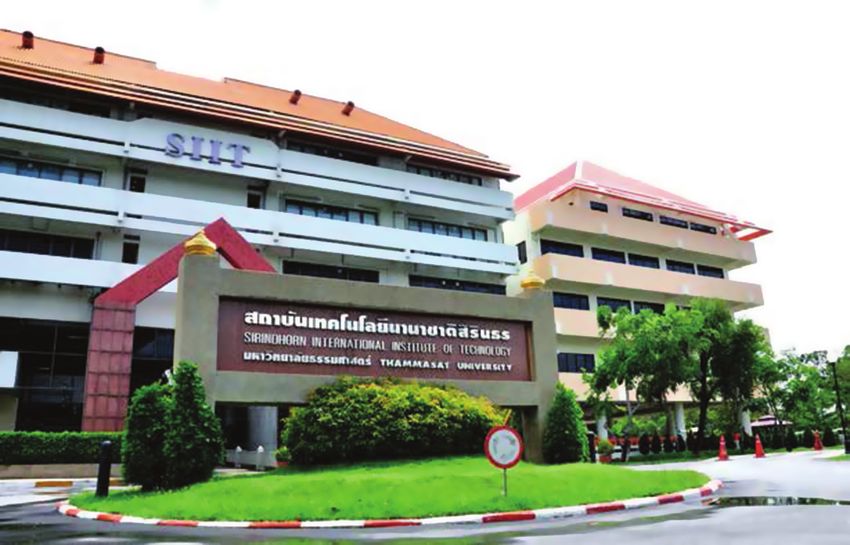
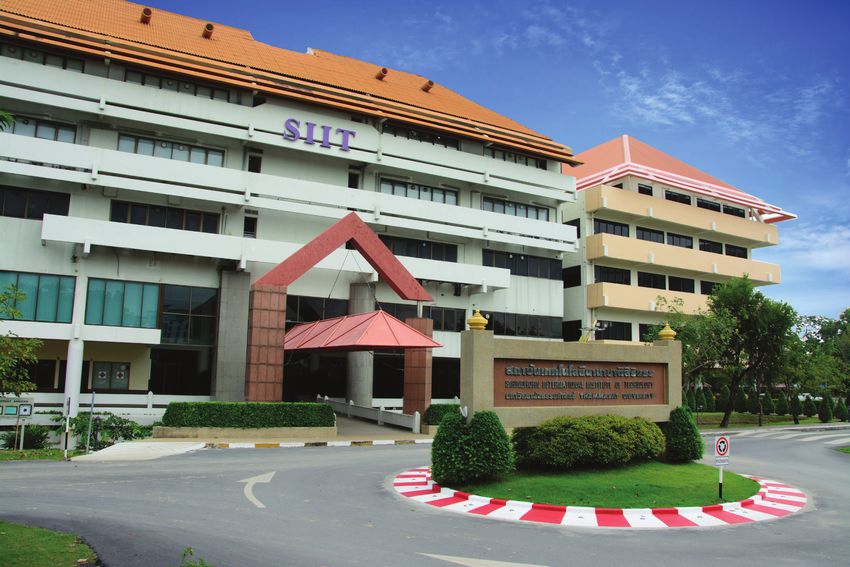
Sirindhorn International Institute of Technology (SIIT) Thammasat University

SIRINDHORN INTERNATIONAL INSTITUTE OF TECHNOLOGY (SIIT)
      SIIT at Rangsit
      Address :           Thammasat University, Rangsit Campus
                          99 Moo 18, Km. 41 on Paholyothin Highway
                          Khlong Luang, Pathum Thani 12120, Thailand
      Tel.     :          +66-2-986-9009, +66-2-564-3221~29
      Fax.     :          +66-2-986-9112-3
      SIIT at Bangkadi
      Address :           Bangkadi Industrail Park
                          131 Moo 5, Tiwanond Road
                          Mueang, Pathum Thani 12000, Thailand
      Tel.      :         +66-2-501-3505~20
      Fax.      :         +66-2-501-3524
      Mailing Address :   P.O. Box 22, Thammasat-Rangsit Post Office
                          Pathum Thani 12121, Thailand
      Email :             admission@siit.tu.ac.th
      Website :           http://www.siit.tu.ac.th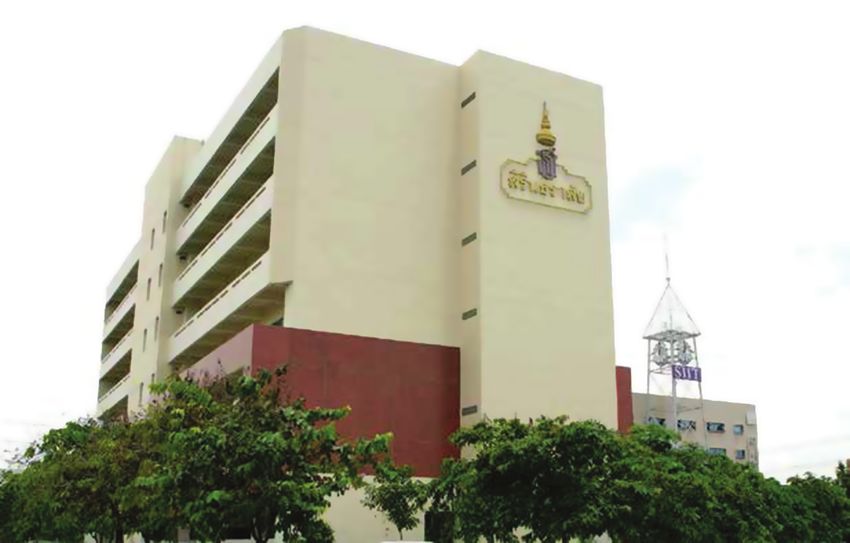
GRADUATE CATALOG
ACADEMIC YEAR
               2021
                Sirindhorn International Institute of Technology
                                          Thammasat University

  A Leading Teaching/Learning and Research Institute
Sirindhorn International Institute of Technology (SIIT)
SIIT at Rangsit
Address : Thammasat University, Rangsit Campus
99 Moo 18, Km. 41 on Paholyothin Highway
Khlong Luang, Pathum Thani 12120, Thailand
Tel. +66-2-986-9009, +66-2-564-3221~29
Fax. +66-2-986-9112
SIIT at Bangkadi
Address : Bangkadi Industrial Park
131 Moo 5, Tiwanond Road
Mueang, Pathum Thani 12000, Thailand
Tel. +66-2-501-3505~20
Fax. +66-2-501-3524
Mailing Address : P.O. Box 22, Thammasat-Rangsit Post Office
Pathum Thani 12121, Thailand
Email : admissions@siit.tu.ac.th
Website : http://www.siit.tu.ac.thSirindhorn International
Institute of Technology
Thammasat University
VISION
To be a leading international institute of technology for
both teaching/learning and research
MISSIONS
1. Primarily to produce high-quality bachelor’s degree engineers and related
technologists who are able to handle advanced industrial technologies
and use English as a working language
2. To educate graduate students to be able to conduct high quality and
innovative research in engineering and related technological development
3. To conduct research and development in engineering and related
technologies relevant to teaching, modern industries, and societal needsCONTENTS Graduate Catalog Academic Year 2021
Sirindhorn International Institute of Technology 5 Master of Science Program in 30
Rangsit Campus 7 Engineering and Technology
Bangkadi Campus 9 Curriculum Title 30
Degree Title 30
General Information 10 Academic System 30
Graduation Requirements 31
Admission Requirements and Process 10 Curriculum 32
Interview 11
Fees 11 Doctoral Degree Program 33
Financial Aid 12
Semester Periods 13 Doctor of Philosophy Program in 33
Academic Regulations 13 Engineering and Technology
Registration 13 Curriculum Title 33
Course Coding System 13 Degree Title 33
Evaluation of Academic Performance 13 Applicant’s Qualifications 33
Academic System 34
Master’s Degree Programs 15 Period of Study 34
Registration 34
General Information 15 Graduation Requirements 35
Applicant’s Qualifications 15 Transferred Credits 35
Period of Study 15 Study Plans 35
Transferred Credits 15 Curriculum 36
Study Plans 15
Course Descriptions 37
Master of Engineering Program in Artificial 16
Intelligence and Internet of Things Faculty Members 50
Curriculum Title 16
Degree Title 16 School of Bio-Chemical Engineering 50
Academic System 16 and Technology
Graduation Requirements 17 School of Civil Engineering and Technology 54
Curriculum 18 School of Information, Computer, and 62
Communication Technology
Master of Engineering Program in 22 School of Management Technology 76
Engineering Technology School of Manufacturing Systems and 81
Curriculum Title 22 Mechanical Engineering
Degree Title 22 Department of Comon and 86
Academic System 22 Graduate Studies English Training Unit
Graduation Requirements 23
Curriculum 24
Master of Engineering Program in 26
Logistics and Supply Chain Systems Engineering
Curriculum Title 26
Degree Title 26
Academic System 26
Graduation Requirements 27
Curriculum 28Graduate Catalog Academic Year 2021
Sirindhorn International
Institute of Technology
Thammasat University
During the 9th Japan-Thailand Joint Trade and Economic Committee Meeting held in Kobe, Japan in 1989, the delegates from the Japan
Federation of Economic Organizations (Keidanren - now Nippon Keidanren) and the Federation of Thai Industries (FTI) realized that in order
to enhance industrial development of Thailand, engineering programs, where all lecture and laboratory courses would be taught in English
by highly qualified faculty members with doctoral degrees, needed to be established.
A cooperation agreement among Keidanren, FTI, and Thammasat University was reached in 1992 to establish bachelor’s degree
programs in engineering at Thammasat University with initial funds provided by Keidanren and FTI. After two years of successful operation,
the “International Institute of Technology (IIT)” was founded on September 16, 1994. Her Royal Highness Princess Maha Chakri Sirindhorn
graciously presided over the Cornerstone Laying Ceremony of a new building at the Rangsit Center of Thammasat University. His Majesty,
the late King Bhumibol Adulyadej of Thailand, graciously granted the Institute a new name, “Sirindhorn International Institute of Technology
(SIIT),” on June 28, 1996.
On October 2, 1997, Her Royal Highness Princess Maha Chakri Sirindhorn graciously presided over the Sirindhorn International Institute of
Technology’s Inauguration Ceremony of its name and building. In 1999, FTI provided a parcel of land with an existing building at Bangkadi
Industrial Park (BKD) for SIIT’s use for 30 years. In June 2001, the former Prime Minister Anand Panyarachun inaugurated a new building
at Bangkadi for Information Technology and Computer Science programs.
Her Royal Highness Princess Maha Chakri Sirindhorn graciously presided over the inauguration of the Sirindhralai Building at Bangkadi on
June 28, 2006. This new six-story building houses the School of Information, Computer, and Communication Technology (ICT), the School
of Management Technology (MT), a library, a computer center, laboratories, and classrooms.
Backgrounds of the three founding organizations of Sirindhorn International Institute of Technology are briefly described as follows.
Thammasat University
Founded in 1934, Thammasat University was originally dedicated to the teaching of humanities and social sciences. The
University has produced a large number of graduates who have greatly contributed to the development and progress of
Thailand. Realizing the significant impact of science and technology on the country’s economic growth, in the 1980’s and
1990’s Thammasat University initiated degree programs in engineering, technology, physical sciences, and medical sciences
at its Rangsit Center, Pathum Thani.
The Japanese Business Federation (Nippon Keidanren)
Through the merger of several economic and industrial organizations, the Japan Federation of Economic Organizations (Keidanren)
was established in August 1946. Keidanren was a private, non-profit economic organization representing virtually all branches of
economic activities in Japan. Keidanren has maintained close contact with both public and private sectors at home and abroad,
and endeavored, not only to find practical solutions to economic problems, but also to contribute to the sound development of
economies of Japan and countries around the world.
In May 2002, Keidanren merged with Nikkeiren (Japan Federation of Employer’s Associations) to become Nippon Keidanren (The
Japanese Business Federation). Headed by internationally distinguished leaders of the Japanese business community, Nippon
Keidanren plays an active and influential role towards the achievement of harmonious economic prosperity for all mankind.
Sirindhorn International Institute of Technology 5
Thammasat UniversityGraduate Catalog Academic Year 2021
The Federation of Thai Industries
Formerly known as the Association of Thai Industries (ATI), the Federation of Thai Industries (FTI) came into existence on
December 29, 1987. It was a transformed body of ATI, which was created in 1967. FTI is an industrial private organization that
brings together industrial leaders to promote Thailand’s socioeconomic development. The main objectives of FTI are to represent
Thai manufacturers at both national and international levels, to help promote and develop industrial enterprises, to work with
the government in setting up national policies, and to offer consulting services to members.
FTI is a full-service organization that cooperates with the government to help mobilize Thai industries to reach international
markets. It acts as a “match-maker” between foreign industrialists and Thai resources, which combine the financial strength,
planning ability, and persuasive power of Thailand’s industrialists.
Sirindhorn International Institute of Technology (SIIT) offers undergraduate and graduate programs which lead to the Bachelor of Engineering
(BEng), Bachelor of Science (BSc), Master of Engineering (MEng), Master of Science (MSc), and Doctor of Philosophy (PhD) degrees. The
bachelor’s degree is offered in the following areas: chemical engineering (ChE), civil engineering (CE), computer engineering (CPE), digital
engineering (DE), electrical engineering (EE), engineering management (EM), industrial engineering and logistics systems (IE), management
technology (MT), and mechanical engineering (ME).
SIIT offers three master of engineering programs, namely, Master of Engineering Program in Artificial Intelligence and Internet of Things,
Master of Engineering Program in Engineering Technology, and Master of Engineering Program in Logistics and Supply Chain Systems
Engineering. It also offers Master of Science Program in Engineering and Technology, and a Doctor of Philosophy Program in Engineering
and Technology.
At the present time, the Institute has established faculty member, student, and staff exchange programs with a number of universities
in Asia, Australia, Europe, and North America. These programs allow, not only faculty members to collaborate with their counterparts in
research projects, but also students to have an opportunity to take courses at those universities. Additionally, invitations to visit and teach
SIIT courses are regularly extended to qualified foreign professors under such programs.
Although it is a unit of Thammasat University, SIIT is financially and administratively separate to a certain degree from the central university
system. SIIT’s policies and operations are guided and supervised by the Board of Trustees which consists of representatives from Thammasat
University, FTI, and Nippon Keidanren, and scholars appointed by the university. In addition, the SIIT Academic Committee comprising
reputable scholars in various fields, provides recommendations on rank promotions of faculty members and also reviews academic curricula.
The Institute, headed by the Director, consists of administrative divisions, a library and information services center, five academic schools,
and the Department of Common and Graduate Studies (CGS).
Operations of SIIT are carried out at two locations: Rangsit Campus (at the Rangsit Center of Thammasat University) and Bangkadi Campus
(at Bangkadi Industrial Park).
6 Sirindhorn International Institute of Technology
Thammasat UniversityGraduate Catalog Academic Year 2021
Rangsit Campus
Campus and Transportation
The Rangsit Center of Thammasat University (TU) is located at Km. 41 on Phaholyothin Road (northbound). The campus can be conveniently
reached by car via a multi-lane divided superhighway (Phaholyothin), the Chaengwattana-Bangsai Expressway, and both outer East-Ring
and West-Ring Highways. It can also be reached by buses No. 29, 39 (non air-conditioned), and 510 (air-conditioned). The nearest train
station, the Thammasat Station, is near the northwest corner of the Rangsit Campus.
Facilities
Buildings
Two five-story buildings and one four-story building are located at the SIIT Rangsit Campus. The first building is the main building
with an area of 20,677 m2, housing offices and classrooms. The first floor and a section of the second floor are mainly occupied
by the Library and Information Services Center, with an excellent collection of up-to-date textbooks, magazines, and journals.
SIIT’s academic programs and faculty members’ offices, as well as the Computer Center and administrative divisions, are located
on the second, third, and fourth floors. Classrooms of various sizes are on the first, third, fourth, and fifth floors of the building.
The second SIIT building, adjacent to the first one, is a five-story advanced laboratory building with a total area of about 3,000 m2.
It was dedicated by Keidanren and FTI to SIIT on October 6, 1998. The Advanced Laboratory Building I houses laboratories for
conducting senior projects of fourth-year students, research work of graduate students, and research projects of faculty members.
The third SIIT building, Edutivity, is a four-story building which is adjacent to the second one, with a total area of about 1,500
m2. This building houses a student activities center and the office of the Building and Ground Division on the first floor, and
classrooms of various sizes on the second, third, and fourth floors.
A new 8-story Advanced Laboratory Building II with a total area of approximately 7,000 m2 is equipped with advanced laboratory
and research equipment that are necessary for conducting advanced researchers by faculty members, graduate students and
senior-year undergraduate students.
Computer Center
The SIIT Computer Center is located on the third floor of the main SIIT building. The center is equipped with personal computers
in four separate rooms, two of which are used mainly for instruction on programming, mathematical problem solving, engineering
graphics design, and professional report preparation, while the other rooms are used by students for general computing purposes.
Up-to-date software packages are installed via servers on the local area network, allowing students to become proficient with
their applications. The local area network system supports both academic and administrative chores which include the library’s
computer-based services, intranet, and the internal email system for faculty members and staff. There are a number of servers
for academic purposes in various programs. The local area network is connected to the Internet via the Thammasat-Rangsit
fiber optic backbone. Students, faculty members, and staff are provided with an individual email address and service. Wireless
Internet (WiFi) is accessible from all areas of the SIIT buildings. A VPN service by which students can access SIIT’s online system
from their homes is also available. Information on the Institute can be viewed from the official web page at www.siit.tu.ac.th.
Library and Information Services Center
The Library and Information Services Center is located on the first and second floors of the main building. The Library has an
excellent collection of textbooks (in science and engineering), conference proceedings, reports, technical magazines, and journals.
Electronic access to several international databases is provided. The Library also has a computerized search system to assist
students in locating their information sources.
Students who would like to study by themselves or in groups will find it convenient to study in the Library. Individual study area,
which provide maximum privacy and minimum interference, located on the second floor. Co-learning space areas and group
study areas where students can meet and discuss in groups are located on the first floor.
Furthermore, students can use the main TU library, which is also located at the university’s Rangsit Center, for their study and
literature searches on social sciences and humanities.
Infirmary
The SIIT infirmary room is situated on the ground floor of the main building. It is staffed during office hours by a fully qualified
nurse. The nurse can assist with minor medical problems and, for more serious cases, can arrange a timely transfer to Thammasat
University Hospital.
Hospitals
Thammasat University Hospital, located at the Rangsit Center, provides outpatient, inpatient, and emergency medical services, as
well as other health care services such as X-ray, physical examination, and dental care. Physicians, nurses, and medical interns
are available 24 hours a day. Students are eligible to receive discounts for room charges and services. There are also several
private hospitals near the Navanakorn Industrial Estate, which is only a 5-minute drive from the Rangsit Center.
Sirindhorn International Institute of Technology 7
Thammasat UniversityGraduate Catalog Academic Year 2021
Student Activities Center
A student activities center is located on the first floor of the SIIT Edutivity Building. There is a range of facilities available for
student to use including air-conditioned meeting rooms, and a food and drink area. Student activities are coordinated by the
Student Committee under the supervision of the Assistant Director for Student Affairs and Alumni Relations. All student activities
must conform to SIIT and TU regulations.
University Bookstore
The TU Bookstore at the Rangsit Center is well stocked with publications and magazines in both Thai and English languages.
Textbooks used in individual courses can be purchased at the University Bookstore at competitive prices. Stationery and office
supplies are also available.
Post Office
The Thammasat-Rangsit Post Office is located at the Duen Bunnag Building. The post office offers complete postal services
such as regular mail service, express mail service (EMS), registered mail service, package service, and money orders during
business hours.
Convenience Stores
Students living in the dormitories will find that shopping is quite convenient. Many convenience stores are located on campus,
and nearby. At the Rangsit Campus of SIIT, there is a convenience store on the first floor of the Main Building.
Cafeterias and Canteens
Several cafeterias and canteens can be found throughout the Rangsit Center. A variety of food is offered by vendors at reasonable
prices, both on weekdays and weekends. Adjacent to the SIIT buildings is a cafeteria which serves both SIIT students and
students of the Faculty of Engineering.
Banking Services
For banking services such as cash withdrawal and balance inquiries, students can conveniently use the automated teller machines
(ATMs) which are located at various locations on campus and at the SIIT main building. For full services, students can go to
the on-campus branch offices of Bangkok Bank, Krung Thai Bank, and Thai Military Bank. Other banks with branches near the
campus are Kasikorn Bank, Thanachart Bank, and Siam Commercial Bank.
Dormitories
The Rangsit Center has on-campus dormitories for male and female students. Over 6,200 living units are available to accommodate
students, faculty members, and university staff. Within walking and short-driving distances, many private dormitories can be
found. These are co-ed dormitories, as well as dormitories with separate buildings for male and female students. Air-conditioned
units with bathrooms are also available.
Sport Facilities
The Rangsit Center has a wide range of sport facilities for students including swimming pools and practice fields for soccer,
basketball, volleyball, and tennis. All are in the vicinity of the student dormitories. Areas for indoor sports such as badminton and
table tennis are provided in the indoor gymnasiums. Students may also choose to exercise by biking, jogging, etc., especially
in the morning since the air is very refreshing. In addition, the Rangsit Campus of SIIT has an outdoor basketball court in front
of the main building.
8 Sirindhorn International Institute of Technology
Thammasat UniversityGraduate Catalog Academic Year 2021
Bangkadi Campus
Campus and Transportation
The Bangkadi Campus is located 14 kilometers from the Rangsit Campus on Tiwanon Road. The campus can be conveniently reached
by SIIT shuttle bus (air-conditioned) and can also be reached by bus No.6249 (no air-conditioned)
Facilities
Buildings
In 1999, FTI, with co-operation from Toshiba Thailand Co., Ltd., and Mitsui & Co. (Thailand), Ltd., provided 5.6 rai (0.9 hectare)
of land with an existing office building in the Bangkadi Industrial Park (BIP) for SIIT’s use for a period of 30 years. Later, SIIT
purchased two more parcels of land in the industrial park with areas of 4 rai (0.64 hectare) and 5 rai (0.8 hectare). The existing
building was renovated and enlarged. This building, which is called the IT&MT building, has a combined area of approximately
3,300 m2. The Computer Science and Information Technology programs moved to these new facilities in June 2002.
Another 6-story building with an area of 6,452 m2 was completed in October 2004. Her Royal Highness Princess Maha Chakri
Sirindhorn graciously granted the use of the name “Sirindhralai” for this new building and graciously presided over the inauguration
of this new building on June 28, 2006. It houses the School of Information, Computer, and Communication Technology (ICT),
the School of Management Technology (MT), the Library and Information Services Center, the Computer Center, classrooms,
and laboratories.
The third SIIT building is the SIIT Administration and Training Building, located in front of the Bangkadi Industrial Park on Tiwanond
Road. It is a four-story building which aims to be a research and training center. The first floor is for car parking. Bangkok Bank
is located on the second floor. On the upper floors, there are graduate student offices and research laboratories.
Computer Center
A Computer Center office is located on the second floor of the Sirindhralai building. It supervises and maintains two laboratories
for instruction and students’ use in mathematical and statistical problem solving, computer graphics, systems simulation,
database applications and programming, computer networking, and general computing purposes. In addition, there are network
access points in almost every room of the campus which connect to the Rangsit Campus of SIIT by a high-speed connection.
Students can easily access the Internet either from their notebook computers, using wireless hotspots in every building, or from
the computers in both the library and the computer laboratories.
Library and Information Services Center
The Library and Information Services Center at Bangkadi is located on the 3rd floor of the Sirindhralai Building. The Library has
an excellent collection of textbooks, technical books, conference proceedings, reports, technical magazines, and journals in
the fields of electronics and communication, instrumentation and control systems, computer science, information technology,
engineering management, and management technology. Computer facilities are provided for accessing the library catalog database,
online databases and full-text journals, and for self-study. The library also provides wireless facilities for students to access the
internet and online information. Group study areas are also provided, students can meet and discuss in the group study rooms,
which provide maximum privacy and minimum interference.
Infirmary
The infirmary room is on the ground floor of the IT&MT building. A fully qualified nurse is in charge during weekdays to assist
with minor medical problems and provide first-aid treatment.
Dormitory
The SIIT International Residence at Bangkadi has two five-story buildings, one for male residents and another for female residents.
There are 72 rooms on the 2nd-5th floors, which can accommodate up to 144 residents. Common rooms, canteen, and a
launderette are located on the first floor, with a convenience store nearby. In addition, free internet Wi-Fi is provided for the
residents on the ground floor.
Cafeteria and Canteen
A variety of foods, snacks, and beverages are provided from vendors at reasonable prices at a cafeteria on the ground floor
of the Sirindhralai building. Additionally, there is a coffee shop on the ground floor of the IT&MT building which serves snacks
and beverages.
Sport Facilities
There is a soccer field behind the Sirindhralai building. In addition, an outdoor basketball court is located next to the SIIT Inter-
national Residence. There is also a badminton gymnasium beside the dormitory buildings.
Sirindhorn International Institute of Technology 9
Thammasat UniversityGraduate Catalog Academic Year 2021
GENERAL INFORMATION
Sirindhorn International Institute of Technology offers 5 international graduate programs as follows:
Master of Engineering
• Master of Engineering Program in Artificial Intelligence and Internet of Things
• Master of Engineering Program in Engineering Technology
• Master of Engineering Program in Logistics and Supply Chain Systems Engineering
Master of Science
• Master of Science Program in Engineering and Technology
Doctor of Philosophy
• Doctor of Philosophy Program in Engineering and Technology
ADMISSION REQUIREMENTS AND PROCESS
1. Completed application online and upload required documents in a soft file as follows:
1.1 At least one page of a statement of purpose
1.2 Curriculum Vitae (CV) or Resume
1.3 A copy of official transcript
- Bachelor’s Degree (At least GPA. 2.75) for Master’s Degree application
- Master’s Degree (At least GPA. 3.50) for Ph.D. Degree application
1.4 A copy of an official certificate of English proficiency, as follows (if any):
TOEFL (PBT 400+) or (IBT 32+) or IELTS 4.5+, or TU-GET (PBT 400+) or (CBT 32+), or TOEIC 500+
1.5 A copy of citizen ID card/passport
1.6 Research papers, publications, or certificates (if any)
1.7 A recent photograph (1x1.5 inches’ size as .jpeg only)
Remark: Please provide your 2 referees’ names and official e-mail addresses in online application form for submitting letter of
recommendation online which will be delivered to your referees via e-mail address. (Letter of recommendation: At least
one from academic/thesis advisor and the other one from instructor from your university.)
2. Passing a screening process, which includes an interview conducted in English by an SIIT Committee, consisting of at least
3 faculty members
3. Final approval by the SIIT Executive Committees
Remark: Students who have inadequate knowledge in some areas may be required to take additional courses in those areas.
Application Deadline: First semester: last week of June
Second semester: last week of November
For further information, contact: Admission and Public Relations Division
Sirindhorn International Institute of Technology (SIIT)
Thammasat University - Rangsit Campus
P.O.Box 22, Thammasat-Rangsit Post Office
Pathum Thani 12121, Thailand
Tel. +66-2-986-9009; +66-2-986-9011-3 (Ext. 1006)
Fax. +66-2-986-9112~3
E-mail: admissions@siit.tu.ac.th
Website: http://www.siit.tu.ac.th
Online Application: https://graduateadmissions.siit.tu.ac.th/
10 Sirindhorn International Institute of Technology
Thammasat UniversityGraduate Catalog Academic Year 2021
INTERVIEW
All candidates who have received notification of an interview after having submitted their application forms shall be interviewed by at least
three faculty members. The interview is conducted in English.
FEES
The institute reserves the right to revise its charges for tuition and education support fees and to establish other fees as may be required
by increased educational costs.
TUITION FEE
The tuition fee, which includes charges for instruction and academic advice, is 3,600 Baht per credit.
EDUCATION SUPPORT FEES
The fees include services other than instruction, such as library, publications, thesis support, computing facility, counseling, and placement,
but do not cover the cost of damage or loss of university property. The fees are charged at the following rates:
Regular semester: 53,815 Baht per semester (or 41,315 Baht if the number of registered credits is less than or equal to 6 credits)
Summer session: 26,450 Baht for summer session (or 20,200 Baht if the number of registered credits is less than or equal to
3 credits)
Student status maintaining: 4,800 Baht per semester
The total tuition and education support fees per semester are approximately 86,215 Baht for 9 credits.
Other fees, such as late payment fee, late registration fee, and fines for overdue books may be charged when applicable.
TUITION FEE RATES FOR EXTERNAL STUDENTS
1. Tuition fees for an external student who is also a degree student of SIIT:
1.1 A graduate course 3,600 baht per credit
1.2 An undergraduate laboratory course 4,590 baht per credit
1.3 An undergraduate lecture course 3,370 baht per credit
2. Tuition fees for an external student who is a degree student of TU:
2.1 A graduate course 3,600 baht per credit
2.2 An undergraduate laboratory course 4,590 baht per credit
2.3 An undergraduate lecture course 3,370 baht per credit
3. Tuition fees for an external student who is not a degree student of TU:
3.1 A graduate course 4,500 baht per credit
3.2 An undergraduate laboratory course 5,600 baht per credit
3.3 An undergraduate lecture course 4,500 baht per credit
Sirindhorn International Institute of Technology 11
Thammasat UniversityGraduate Catalog Academic Year 2021
FINANCIAL AID
In principle, students have to contact faculty members in the field of their interest in advance to apply for a scholarship and/or other
financial aid.
Graduate Scholarship Program for Excellent Foreign Students (EFS)
Thirty EFS scholarships are annually available for excellent non-Thai students from reputable universities of any foreign country to study in
a master’s or a doctoral degree program at SIIT for all SIIT curriculums. The scholarship covers full SIIT tuition and educational support
fees with full thesis support, living allowance (including accommodation), round-trip airfare, VISA extension, medical insurance, English
proficiency test for graduation, and other benefits.
Graduate Scholarship Program for Excellent Thai Students (ETS)
The ETS scholarships are available for excellent Thai students from reputable universities to study in a master’s or a doctoral degree
program at SIIT for all SIIT curriculums. The scholarship covers full SIIT tuition and educational support fees with full thesis support, living
allowance, and accident insurance. Airfare and accommodation are not supported.
Graduate Scholarship Program for Students from Neighboring Countries (SSNC)
The SSNC scholarships are available for students from the People’s Republic of Lao and the People’s Republic of Cambodia to study in a
master’s or a doctoral degree program at SIIT for all SIIT curriculums. The scholarship covers full SIIT tuition and educational support fees
with full thesis support, living allowance (including accommodation), round-trip airfare, VISA extension, medical insurance, and other benefits.
SIIT Scholarships for Graduate Studies
More than 60 scholarships are annually available for graduate students to study in a master’s or a doctoral degree program at SIIT. The
scholarships are available to all SIIT Curriculums. The scholarship covers SIIT tuition and educational support fees. Airfare and monthly
allowance are not supported.
SIIT Young Researcher Grants (YRG)
SIIT Young Researcher Grants (YRG) are available for graduate students to study in a master’s or a doctoral degree program at SIIT. The
grant covers full tuition and educational support fees and other benefits as a research assistant.
TAIST-Tokyo Tech Scholarships (NSTDA)
TAIST-Tokyo Tech Scholarships are available for graduate students to study in a master’s degree program in the Artificial Intelligence and
Internet of Things (AI) or the Sustainable Energy and Resources Engineering Program (SERE) at SIIT. The scholarship covers full tuition
and educational support fees throughout the two-year curriculum. A full thesis allowance will be supported in the second academic year.
TAIST-JAIST Scholarships
SIIT and Japan Advanced Institute of Science and Technology (JAIST) are offering a dual degree doctoral program in the area of Service
Science, which includes various participating fields in Engineering and Technology. Duration of the program is 4 years: the 1st and 3rd years
will be spent at SIIT while the 2nd and 4th years will be spent at JAIST (Japan). The scholarship covers full tuition and educational support
fees for four years of studying, as an SIIT dual graduate education program scholarship. Students recommended by their supervisors can
be provided with a salary of part-time Research and/or Teaching Assistantships.
AUN/SEED-Net Collaborative Education Program (CEP) Scholarships
AUN/SEED-Net is mainly supported by the Japanese Government through the Japan International Cooperation Agency (JICA), and partially
supported by the ASEAN Foundation. The scholarship also provides integrative supports for faculty development and network establishment.
These scholarships are available for graduate students to study in a double-degree doctoral program at SIIT and Hokkaido University in
Japan. The scholarship covers full tuition and educational support fees with full thesis support, living allowance, round-trip airfare and
relocation allowance, medical insurance, English proficiency test for graduation, and other benefits.
ADB-Japan Scholarships
ADB-Japan scholarships, supported by The Asian Development Bank (ADB), are available for graduate students to study in a master’s degree
program at SIIT. The scholarship covers full tuition and educational support fees, living allowance (including accommodation), round-trip
airfare, medical insurance, book allowance, and other benefits.
For more details of the above scholarship programs and other additional scholarship programs, please obtain the information from the
following website: http://www.siit.tu.ac.th
12 Sirindhorn International Institute of Technology
Thammasat UniversityGraduate Catalog Academic Year 2021
SEMESTER PERIODS
First Semester: August - December
Second Semester: January - May
Summer Session: June - July
ACADEMIC REGULATIONS
Registration:
A full-time student may register for 6 to 15 credits per regular semester, and no more than 6 credits in summer.
A student who does not register for any courses in a semester must pay the “student status maintaining” fee.
Course Coding System
Sirindhorn International Institute of Technology sets up the course coding system as follows:
1. The subject code consists of alphabetical and numerical codes.
2. The alphabetical code consists of 2-3 characters, which refer to the following group of subjects:
ES indicates basic subjects.
ET indicates subjects in Engineering Technology.
ICT indicates subjects in Artificial Intelligence and Internet of Things .
SE indicates subjects in Logistics and Supply Chain Systems Engineering.
3. The numerical code contains 3 digits that can be described as follows:
• The first digit indicates the graduate program.
• The second digit indicates the subject group.
For the Master of Engineering Program in Engineering Technology, the subject groups are defined as follows:
0 General
1 Chemical Engineering
2 Civil Engineering
3 Electrical Engineering
4 Industrial Engineering and Manufacturing Systems
5 Mechanical Engineering
6-7 Sustainable Energy and Environment
8 Materials Science and Engineering
9 Computer Engineering
• The last digit indicates the subject order.
• For the Master of Engineering Program in Artificial Intelligence and Internet of Things, the numerical code contains 3 digits
that can be described as follows:
• The first digit indicates the subject order
• The second digit indicates the subject group.
• The last digit indicates the major.
Evaluation of Academic Performance
The academic performance of students on a taught course is measured by the grade point average (GPA) system or equivalent. The
following grades are used:
Grade Points
A 4.00
A- 3.67
B+ 3.33
B 3.00
B- 2.67
C+ 2.33
C 2.00
D 1.00
F 0.00
Sirindhorn International Institute of Technology 13
Thammasat UniversityGraduate Catalog Academic Year 2021
For thesis/dissertation/independent study, the academic performance is measured by the following grades:
Grade Points Significance
NP - No Progress
S - Satisfactory
SP - Satisfactory and Progress
U - Unsatisfactory
A grading system of “P” (Pass) and “N” (Not Pass) is applied only for evaluation of a qualification examination and English proficiency
requirements.
Note that for the “S,” “SP,” “U,” “P,” “N,” and “NP” grades, no points are given.
When receiving the “U” grade, the student’s status will be terminated.
A credit will be earned only if the grade is “S,” “SP,” or not lower than grade “C” for master’s degree programs or “B” for the doctoral
degree program. Grade “D” or “F” will be included in the calculation of the grade point average of each semester and for the cumulative
grade point average.
When receiving the “NP” grade in two consecutive semesters, an advisor approval for next semester registration is required.
Any master’s degree student who gets grade “U” or lower than grade “C” can re-enroll in the following cases:
1. For a compulsory course, the student can re-enroll in that course only one more time. His or her student status will be
terminated if he or she still fails to obtain grade “S” or at least “C” in the second enrollment.
2. For an elective course, the student can re-enroll in that course or another elective course and must obtain grade “S” or at
least “C.”
Any doctoral degree student who gets grade “U” or lower than grade “B” can re-enroll in the following cases:
1. For a compulsory course, the student can re-enroll in that course only one more time. His or her student status will be
terminated if he or she still fails to obtain grade “S” or at least “B” in the second enrollment.
2. For an elective course, the student can re-enroll in that course or another elective course and must obtain grade “S” or at
least “B.”
14 Sirindhorn International Institute of Technology
Thammasat UniversityGraduate Catalog Academic Year 2021
MASTER’S DEGREE PROGRAMS
GENERAL INFORMATION
APPLICANT’S QUALIFICATIONS
1. An applicant must hold a bachelor’s degree in engineering, science, or a related field that is accepted by the SIIT Executive
Committee.
2. The applicant must have the following qualifications:
2.1 Master of Science Program
2.1.1 Plan A1
• The applicant must receive a bachelor’s degree from SIIT.
• The applicant must have a top 20% class rank for a bachelor’s degree, or a cumulative GPA of at least 2.75, or 2.50
with sufficient relevant research or work experience as specified by the SIIT Executive Committee.
2.1.2 Plan A2
• The applicant must have a top 20% class rank for a bachelor’s degree, or a cumulative GPA of at least 2.75, or 2.50
with sufficient relevant research or work experience as specified by the SIIT Executive Committee.
2.2 Master of Engineering Program
The applicant must have a top 20% class rank for a bachelor’s degree, or a cumulative GPA of at least 2.75, or aresearch
work published or accepted for publications, or a research experience, or a working experience, or qualifications specified
by the SIIT Executive Committee.
2.3 Master of Engineering Program in Artificial Intelligence and Internet of Things
• The applicant must have a top 20% class rank for a bachelor’s degree, or a cumulative GPA of at least 2.75, or a
research work published or accepted for publications, or a research experience, or a working experience, or qualifications
specified by the SIIT Executive Committee.
• Plan B and Plan B (Online): research experience in Digital more than 1 year, or a working experience, or qualifications
specified by the SIIT Executive Committee.
3. The applicant must submit an official score of one of the following English language tests:
• TOEFL score of not less than 400 (paper-based), or 32 (internet-based)
• IELTS score of not less than 4.5
• TU-GET score of not less than 400 (paper-based) or 32 (computer-based)
• TOEIC score of not less than 500
The score must not be older than two years from the date on which it was issued to the date of the application for admission
to the program.
In the case of no English score or a score less than the above requirements, the applicant may be admitted with conditions
that he/she must take SIIT English remedial courses and/or SIIT English proficiency tests, and meet the requirements set by
the institute.
Exemption: An applicant who is a native English speaking student from Australia, Canada, New Zealand, United Kingdom, or USA may
be exempted from the above English proficiency requirements if he/she passes an interview by an SIIT interviewing committee
consisting of 3 native English speaking instructors.
PERIOD OF STUDY
The minimum period of study to complete master’s degree programs are as following:
• 1 academic year for Master of Engineering Program in Logistics and Supply Chain Systems Engineering
• 1.5 academic year for Master of Engineering Program in Artificial Intelligence and Internet of things and Master of Science
Program in Engineering and Technology
The maximum period of study for all master’s degree programs is 5 academic years.
TRANSFERRED CREDITS
A maximum of 12 credits of courses with all grades being “B” or better can be transferred.
STUDY PLANS
• Plan A1 (Thesis only)
• Plan A2 (Thesis and coursework)
• Plan B (Independent study)
• Plan B Online (Independent study)
Sirindhorn International Institute of Technology 15
Thammasat UniversityGraduate Catalog Academic Year 2021
MASTER OF ENGINEERING PROGRAM IN ARTIFICIAL INTELLIGENCE
AND INTERNET OF THINGS
CURRICULUM TITLE
Master of Engineering Program in Artificial Intelligence and Internet of Things (International Program)
DEGREE TITLE
Master of Engineering (Artificial Intelligence and Internet of Things)
ACADEMIC SYSTEM
1. All courses are conducted in English. An academic year is divided into 2 semesters. Each semester consists of 15 weeks.
Courses may be offered for a summer semester of at least 6 weeks duration. The total number of lecture hours required for
the summer semester is the same as that for the regular semester. Enrollment for summer courses is optional.
2. Curriculum
2.1 Study Plan A2
The study plan consists of prescribed coursework (24 credits) and thesis (15 credits). A total of 39 credits are required
for completion of the program.
2.2 Study Plan B and Plan B (Online)
This study plan focuses on coursework (30 credits) and independent study (6 credits). and a comprehensive examination
are required for completion of the program.
3. Thesis (Study Plan A2)
3.1 A student can register for a thesis after he or she has studied for at least 2 regular semesters or has gained 12 credits
with a minimum cumulative GPA of 3.00.
3.2 Thesis Committee
The thesis committee must consist of at least 3 members as follows:
• Principal advisor: The principal advisor must be a SIIT faculty member in a corresponding or related academic
program.
• Co-advisor (if any): A co-advisor must be a SIIT or TU faculty member, or an expert outside TU, with a doctoral
degree or equivalent, or with an academic rank of at least associate professor in a corresponding or related
academic program.
• Expert outside TU: The expert outside TU must hold a doctoral degree or equivalent with an academic rank of at
least assistant professor, or have an academic rank of associate professor or higher.
• Other thesis committee members: Other thesis committee members must be SIIT or TU faculty members with a
doctoral degree or equivalent, or with an academic rank of associate professor or higher.
The number of thesis committee members who are not the principal advisor or a co-advisor must not be fewer than
the number of those who are the principal advisor or a co-advisor.
The number of thesis committee members who are SIIT or TU faculty members must not be fewer than the number
of those who are experts outside TU.
The above thesis committee must also serve as the committees for both the proposal and final thesis defenses.
However, the chairpersons of both defenses must not be the principal advisor or a co-advisor.
4. Independent Study (Study Plan B and Plan B (Online))
4.1 A student can register for independent study after he or she has gained at least 12 credits for Plan B and at least 18
credits for Plan B (Online) for both Compulsory Courses and Compulsory Elective Course with a minimum cumulative
GPA of 3.00.
4.2 A student can take the final examination of an independent study only after he or she has obtained “P” (Pass) for his or
her comprehensive examination and satisfied English proficiency requirements.
4.3 Independent Study Examination
SIIT shall appoint a project advisor and, if required, a project co-advisor to advise the student on the independent study.
4.3.1 The project advisor must be a SIIT faculty member with a doctoral degree or equivalent, or has an academic rank
of at least associate professor in the program or a related program.
4.3.2 SIIT shall appoint a project committee of at least 2 persons, consisting of the project advisor, a project co-advisor
(if needed), faculty member(s) of SIIT, and an external member if necessary.
4.4 Comprehensive Examination
4.4.1 A comprehensive examination can be taken after the student has gained 12 credits for Plan B and at 18 credits
for Plan B (Online) for both Compulsory Courses and Compulsory Elective Course with a minimum cumulative
GPA of 3.00.
4.4.2 A student must pass the comprehensive examination within a maximum of three times. If the student cannot
pass the comprehensive examination within three times, the status of the student will be terminated. Results of all
comprehensive examinations will be recorded in the student’s academic record.
16 Sirindhorn International Institute of Technology
Thammasat UniversityGraduate Catalog Academic Year 2021
GRADUATION REQUIREMENTS
To graduate, students must meet the following minimum requirements:
Plan A2
1. Twenty-four credits of taught courses required by the curriculum with a cumulative GPA of at least 3.00. In addition, the grade of each
of these courses must be at least “C.”
2. Fifteen credits of thesis work and passing a thesis defense.
3. Approval of the thesis by the Thesis Committee.
4. Papers are published in one of the following:
4.1 At least one paper on thesis results must have been published or accepted for publication in a qualified international journal under
the regulations on classification of academic journals for research publications by the Higher Education Commission and the SIIT
Academic Committee, or
4.2 At least one paper on thesis results must have been published or accepted for publication in a qualified national journal un-
der the regulations on classification of academic journals for research publications by the Higher Education Commission
and the SIIT Academic Committee, or
4.3 At least one paper on thesis results must have been accepted and registered for presentation in an international
conference and also for publication of a full paper in international conference proceedings.
5. Having satisfied one of the following English proficiency requirements:
• A TOEFL (official or institutional) score of at least 550 (paper-based), or 79 (internet-based)
• An IELTS score of at least 6.5
• A TU-GET score of at least 550 (paper-based), or 79 (computer-based)
• A TOEIC score of not less than 750, and pass an English efficiency evaluation by an SIIT native English speaking instructor
• “P” grade in TU005 English 1 and TU006 English 2
The score must not be older than 2 years from the test date to the start of the academic semester prior to the student’s
first academic semester and must not be older than 2 years from the test date to the student’s entrance examination date.
Exemption: An applicant who is a native English speaking student from Australia, Canada, New Zealand, United Kingdom, or USA may
be exempted from the above English proficiency requirements if he/she passes an interview by an SIIT interviewing committee
consisting of 3 native English speaking instructors.
Plan B and Plan B (Online)
1. Thirty credits of courses required by the curriculum with a cumulative GPA of at least 3.00. In addition, the grade of each of these
courses must be at least “C”.
2. Having obtained “S” in his or her independent study for six credits and passing the comprehensive examination.
3. Papers are published in one of the following:
4.1 At least one paper on independent study results must have been published or accepted for publication in a qualified international
journal under the regulations on classification of academic journals for research publications by the Higher Education Commission
and the SIIT Academic Committee, or
4.2 At least one paper on independent study results must have been published or accepted for publication in a qualified national
journal under the regulations on classification of academic journals for research publications by the Higher Education Commission
and the SIIT Academic Committee, or
4.3 At least one paper on independent study results must have been accepted and registered for presentation in an
international conference and also for publication of a full paper in international conference proceedings.
4. Having satisfied one of the following English proficiency requirements:
• A TOEFL (official or institutional) score of at least 550 (paper-based), or 79 (internet-based)
• An IELTS score of at least 6.5
• A TU-GET score of at least 550 (paper-based), or 79 (computer-based)
• A TOEIC score of not less than 750, and pass an English efficiency evaluation by an SIIT native English speaking instructor
• “P” grade in TU005 English 1 and TU006 English 2
The score must not be older than 2 years from the test date to the start of the academic semester prior to the student’s
first academic semester and must not be older than 2 years from the test date to the student’s entrance examination date.
Students must satisfy one of the above English proficiency requirements before the final independent study examination.
Exemption: An applicant who is a native English speaking student from Australia, Canada, New Zealand, United Kingdom, or USA may
be exempted from the above English proficiency requirements if he/she passes an interview by an SIIT interviewing committee
consisting of 3 native English speaking instructors.
Sirindhorn International Institute of Technology 17
Thammasat UniversityGraduate Catalog Academic Year 2021
CURRICULUM
Plan A2
1. Total Credits Requirement
A total of 39 credits are required for completion of the program.
2. Structure and Components
2.1 Compulsory Courses 15 Credits
2.2 Compulsory Elective Course 3 Credits
2.3 Technical Elective Courses 6 Credits
2.4 Master’s Thesis 15 Credits
Total 39 Credits
3. List of Courses in the Curriculum
Major: Artificial Intelligence and Internet of Things (AI&IoT)
Credits (lecture-practice-self study hours)
3.1 Compulsory Courses, 15 credits
ICT710 Software Concepts for Artificial Intelligence and Internet of Things 3(3-0-9)
ICT720 Software Designs for Artificial Intelligence and Internet of Things 3(2-3-7)
ICT730 Hardware Concepts for Artificial Intelligence and Internet of Things 3(3-0-9)
ICT740 Hardware Designs for Artificial Intelligence and Internet of Things 3(2-3-7)
and
ES610 Research Methods and Communications 3(3-0-9)
or
ES605 Research Methodology 2(2-0-6)
ES606 Research Seminar 1(1-0-3)
3.2 Compulsory Elective Course, 3 credits
Select one of the following courses:
ES601 Advanced Engineering Mathematics 3(3-0-9)
ES611 Theory of Computation 3(3-0-9)
ES612 Advanced Business Statistics 3(3-0-9)
ET600 Numerical Methods for Engineers 3(3-0-9)
ET601 Computer Applications for Engineers 3(3-0-9)
ICT600 Computational Mathematics 3(3-0-9)
SE600 Decision Making and Optimization 3(3-0-9)
3.3 Technical Elective Courses, 6 credits
Select two courses from the following courses:
ICT750 Communication Theory and Connectivity 3(3-0-9)
ICT760 Digital Signal Processing and Internet of Things 3(3-0-9)
ICT770 Data Science and Intelligent Processing 3(3-0-9)
ICT780 Control Theory and Intelligent Control 3(3-0-9)
ICT791 Current Topics in Information and Communication Technology 3(3-0-9)
ICT792 Current Topics in Artificial Intelligence and Internet of Things 3(3-0-9)
ICT793 Advanced Topics in Artificial Intelligence and Internet of Things 3(3-0-9)
ICT794 Selected Topics in Artificial Intelligence and Internet of Things 3(3-0-9)
3.4 Master’s Thesis, 15 credits
ICT801 Thesis 15
Major: Applied Artificial Intelligence (Applied AI)
3.5 Compulsory Courses, 15 credits
ICT610 Fundamentals of Artificial Intelligence 3(3-0-9)
ICT620 Fundamentals of Machine Learning 3(2-3-7)
ICT630 Programming in Artificial Intelligence 3(3-0-9)
ICT640 Applications of Artificial Intelligence 3(2-3-7)
and
ES610 Research Methods and Communications 3(3-0-9)
or
ES605 Research Methodology 2(2-0-6)
ES606 Research Seminar 1(1-0-3)
3.6 Compulsory Elective Course, 3 credits
Select one of the following courses:
ES601 Advanced Engineering Mathematics 3(3-0-9)
ES611 Theory of Computation 3(3-0-9)
ES612 Advanced Business Statistics 3(3-0-9)
18 Sirindhorn International Institute of Technology
Thammasat UniversityGraduate Catalog Academic Year 2021
ET600 Numerical Methods for Engineers 3(3-0-9)
ET601 Computer Applications for Engineers 3(3-0-9)
ICT600 Computational Mathematics 3(3-0-9)
SE600 Decision Making and Optimization 3(3-0-9)
3.7 Technical Elective Courses, 6 credits
Select two courses from the following courses:
ICT650 Natural Language Processing and Its Applications 3(3-0-9)
ICT660 Computer Vision and Its Applications 3(3-0-9)
ICT670 Internet of Things, Signal Processing, and Its Applications 3(3-0-9)
ICT680 Robotics and Its Applications 3(3-0-9)
ICT691 Current Topics in Digital Technology 3(3-0-9)
ICT692 Current Topics in Applied Artificial Intelligence 3(3-0-9)
ICT693 Advanced Topics in Applied Artificial Intelligence 3(3-0-9)
ICT694 Selected Topics in Applied Artificial Intelligence 3(3-0-9)
3.8 Master’s Thesis, 15 credits
ICT801 Thesis 15
Plan B and Plan B (Online)
1. Total Credits Requirement
A total of 36 credits are required for completion of the program.
2. Structure and Components
2.1 Compulsory Courses 15 Credits
2.2 Compulsory Elective Course 3 Credits
2.3 Technical Elective Courses 12 Credits
2.4 Independent Study 6 Credits
Total 36 Credits
3. List of Courses in the Curriculum
Major: Artificial Intelligence and Internet of Things (AI&IoT)
Credits (lecture-practice-self study hours)
3.1 Compulsory Courses, 15 credits
ICT71X Software Concepts for Artificial Intelligence and Internet of Things
ICT711 Software Concepts in Artificial Intelligence 1(1-0-3)
ICT712 Software Concepts in Internet of Things 1(1-0-3)
ICT713 Software Integration for Artificial Intelligence and Internet of Things 1(1-0-3)
ICT72X Software Designs for Artificial Intelligence and Internet of Things
ICT721 Software Designs in Artificial Intelligence 1(1-0-3)
ICT722 Software Designs in Internet of Things 1(1-0-3)
ICT723 Software Integration Designs for Artificial Intelligence and Internet of Things 1(1-0-3)
ICT73X Hardware Concepts for Artificial Intelligence and Internet of Things
ICT731 Hardware Concepts in Artificial Intelligence 1(1-0-3)
ICT732 Hardware Concepts in Internet of Things 1(1-0-3)
ICT733 Hardware Integration for Artificial Intelligence and Internet of Things 1(1-0-3)
ICT74X Hardware Designs for Artificial Intelligence and Internet of Things
ICT741 Hardware Designs in Artificial Intelligence 1(1-0-3)
ICT742 Hardware Designs in Internet of Things 1(1-0-3)
ICT743 Hardware Integration Designs for Artificial Intelligence and Internet of Things 1(1-0-3)
and
ES610 Research Methods and Communications 3(3-0-9)
or
ES605 Research Methodology 2(2-0-6)
ES606 Research Seminar 1(1-0-3)
3.2 Compulsory Elective Course, 3 credits
Select one of the following courses:
ES601 Advanced Engineering Mathematics 3(3-0-9)
ES612 Advanced Business Statistics 3(3-0-9)
ET600 Numerical Methods for Engineers 3(3-0-9)
ET601 Computer Applications for Engineers 3(3-0-9)
ET673 Principle of Sustainable Environmental Engineering 3(3-0-9)
ICT600 Computational Mathematics 3(3-0-9)
SE600 Decision Making and Optimization 3(3-0-9)
Sirindhorn International Institute of Technology 19
Thammasat UniversityYou can also read


